Year: 2026

Thousands rally at Canada’s National March for Life in Ottawa – #Catholic – It took almost 25 minutes for a crowd that organizers said was in the thousands to inch its way from Parliament Hill down Wellington Street to Elgin Street during the National March for Life in Ottawa.Members of every ethnic background, young and elderly, priests, families and church groups carried pro-life signs and walked the streets of the Canadian capital to press for an end to abortion and euthanasia in Canada.The day began with liturgies celebrated at Notre Dame Cathedral, St. Patrick’s Basilica, and St. Clement. Ottawa-Cornwall Archbishop Marcel Damphousse was the main celebrant at the cathedral, joined by papal nuncio Archbishop Ivan Jurkovič, Ukrainian Catholic Bishop Bryan Bayda, and some 30 priests and deacons.
 
 Pro-life signs on Parliament Hill, May 14, 2026, at Canadaʼs March for Life. Organizer Debbie Duval told the crowd “Our legislators are sitting in the House of Commons. We want them to hear us. We want them to know we’re here.” | Credit: Peter Stockland
 
 At a midday rally before the march, organizer Debbie Duval told the crowd, “We march on a Thursday, in Ottawa, because that’s when our legislators are sitting in the House of Commons. We want them to hear us. We want them to know we’re here.”Matthew Wojciechoski, Project Manager at Campaign Life Coalition (CLC), which organizes the annual event, told the crowd, “We are here to call upon the members of Parliament to enact legal protections for all human beings from conception up to natural death. To remind Parliament of four simple words, ‘Thou shalt not kill.’”The March for Life takes place in May to mark the month in 1969 when the omnibus bill that decriminalized abortion in Canada was passed.This year’s march fell on the very anniversary of the vote and adopted as its theme Jesus’ command, “Follow me.”CLC national president Jeff Gunnarson asked the crowd to pray for founder and former president Jim Hughes who is in hospital with pneumonia and “not doing well.”“Jim devoted decades of his life to the unborn and building this movement in Canada. Many of us are standing here today because of sacrifices he made long before we arrived,” Gunnarson said.The featured speaker was Aleš Primc, co-founder of the Slovenian political party Voice for Children and Families that recently forced a referendum to overturn the country’s assisted suicide law. He led pro-lifers in a series of loud “hellos” to people of all ages, from unborn children to “people with gray hair like me.”“Saying “hello” is the start of recognizing our shared humanity,” he said.
 
 Some of the crowd on Parliament Hill for the March for Life, on May 14, 2026, in Ottawa. | Credit: Peter Stockland
 
 Speaker Rebecca Kiessling, a U.S. lawyer and founder of the organization Save the 1 — a reference to the one per cent of babies conceived in rape — said she narrowly escaped “the death penalty” in the womb at two abortion clinics.Kiessling, who was conceived in rape, has dedicated her legal career to advocating for the rights of mothers whose children were similarly conceived. She lobbies for abortion bans with no exceptions for rape or incest.Born four years prior to the landmark 1973 ruling Roe v. Wade, she said she survived only because “the (existing) law in Michigan protected me.”“I did not deserve the death penalty for the crime of the man who raped my mother. My mother chose abortion. I wasn’t lucky: I was protected. The law matters.”Conservative MP Arnold Viersen brought his two toddler children to the stage with him, one of them amusing the crowd by peeking through the railing and jumping around loudly enough to be heard over the public address system.The Parliament Hill speeches and the march through Ottawa are the centrepoint of four days of events, from a candlelight vigil the night before to pray and remember babies lost to abortion, a banquet Thursday evening, and a youth summit on Friday.Gunnarson summed up why the march continues each year. “Sometimes this work can feel difficult, sometimes we feel that no progress is being made, but then we gather here and we remember that truth does not expire, love does not quit, and courage inspires courage.”Pro-life supporters march in British ColumbiaAcross the country, ihundreds also gathered at the annual March for Life in Victoria, British Columbiaʼs capital city, where participants marched through downtown streets carrying pro-life signs and banners before rallying at the legislature to hear speakers, including Vancouver Archbishop Richard Smith.
 
 Hundreds gather at the British Columbia Legislature on May 14, 2026, for the Victoria March for Life. | Courtesy of the Diocese of Victoria
 
 The Victoria event drew families, clergy, students, and supporters from across the province for speeches, prayer, and music focused on the protection of unborn life and care for vulnerable people. Organizers also highlighted concerns surrounding euthanasia and assisted suicide.In his homily at St. Andrewʼs Cathedral in Victoria, Smith acknowledged that many pro-life advocates can feel discouraged by what he described as “a powerful juggernaut moving forward and expanding in a manner that appears irresistible,” pointing to abortion and the expansion of euthanasia in Canada.But he urged participants not to lose hope, saying, “God is at work, God is on the move, and God is an unstoppable force. His saving will simply cannot be thwarted by human iniquity.”“This is why we march,” he said. “It is incumbent upon all of us to look for any and every opportunity to witness to the truth of God’s own love for life.”
 
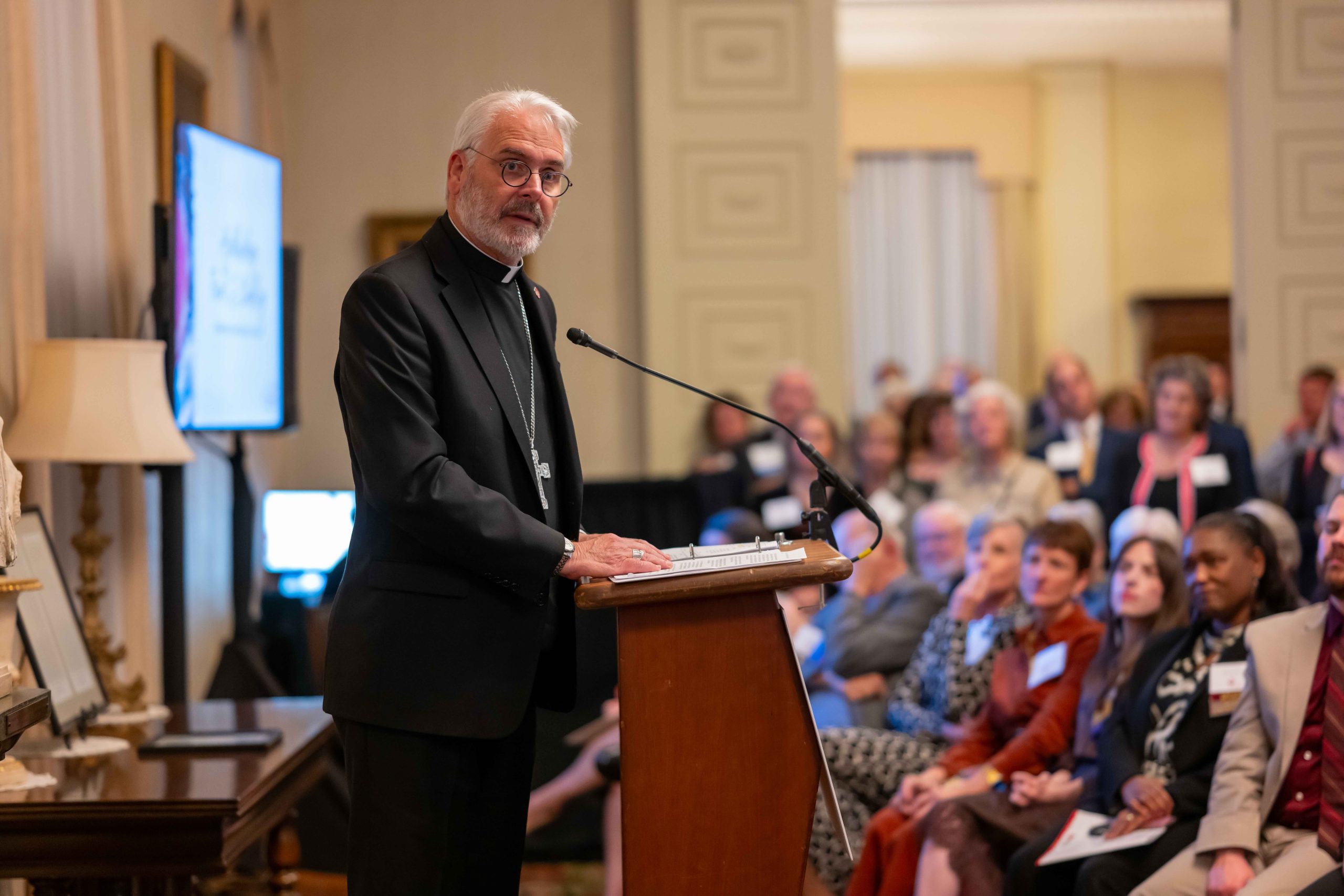
 Vancouverʼs Archbishop Richard Smith speaks in front of the legislature at the Victoria March for Life on May 14,2026. | Photo courtesy of the Diocese of Victoria
 
 Speaking later in front of the B.C. Legislature, Smith said the annual March for Life was part of a broader effort to build “a culture of life” through speaking, celebrating, and serving.“Our march is a very peaceful event, and a great occasion for us to witness to the beauty of all life,” he said, adding that every human being is “willed, loved and necessary.”He also said society needs “radically transformed human relationships, defined no longer by an extreme individualism and a false notion of freedom, but by a self-giving love that welcomes the other as gift.”Several other March for Life events are also scheduled across Canada later this month and into June.The Toronto March for Life will take place Saturday, May 23 at 11 a.m. at Queen’s Park North in Toronto. Organizers say a prayer service will be held beforehand at 9:30 a.m., along with workshops and educational events following the march.The Halifax March for Life in Nova Scotia is scheduled for Saturday, May 30 at 1 p.m. at St. Maryʼs Cathedral Basilica in Halifax.The Prince Edward Island March for Life will be held Saturday, June 6 at 2 p.m. at Central Christian Church in Charlottetown.The Catholic Register with B.C. Catholic filesThis article was orignally published by the B.C. Catholic and is reprinted here, with adaptations, with permission. 

Thousands rally at Canada’s National March for Life in Ottawa – #Catholic – It took almost 25 minutes for a crowd that organizers said was in the thousands to inch its way from Parliament Hill down Wellington Street to Elgin Street during the National March for Life in Ottawa.Members of every ethnic background, young and elderly, priests, families and church groups carried pro-life signs and walked the streets of the Canadian capital to press for an end to abortion and euthanasia in Canada.The day began with liturgies celebrated at Notre Dame Cathedral, St. Patrick’s Basilica, and St. Clement. Ottawa-Cornwall Archbishop Marcel Damphousse was the main celebrant at the cathedral, joined by papal nuncio Archbishop Ivan Jurkovič, Ukrainian Catholic Bishop Bryan Bayda, and some 30 priests and deacons. Pro-life signs on Parliament Hill, May 14, 2026, at Canadaʼs March for Life. Organizer Debbie Duval told the crowd “Our legislators are sitting in the House of Commons. We want them to hear us. We want them to know we’re here.” | Credit: Peter Stockland At a midday rally before the march, organizer Debbie Duval told the crowd, “We march on a Thursday, in Ottawa, because that’s when our legislators are sitting in the House of Commons. We want them to hear us. We want them to know we’re here.”Matthew Wojciechoski, Project Manager at Campaign Life Coalition (CLC), which organizes the annual event, told the crowd, “We are here to call upon the members of Parliament to enact legal protections for all human beings from conception up to natural death. To remind Parliament of four simple words, ‘Thou shalt not kill.’”The March for Life takes place in May to mark the month in 1969 when the omnibus bill that decriminalized abortion in Canada was passed.This year’s march fell on the very anniversary of the vote and adopted as its theme Jesus’ command, “Follow me.”CLC national president Jeff Gunnarson asked the crowd to pray for founder and former president Jim Hughes who is in hospital with pneumonia and “not doing well.”“Jim devoted decades of his life to the unborn and building this movement in Canada. Many of us are standing here today because of sacrifices he made long before we arrived,” Gunnarson said.The featured speaker was Aleš Primc, co-founder of the Slovenian political party Voice for Children and Families that recently forced a referendum to overturn the country’s assisted suicide law. He led pro-lifers in a series of loud “hellos” to people of all ages, from unborn children to “people with gray hair like me.”“Saying “hello” is the start of recognizing our shared humanity,” he said. Some of the crowd on Parliament Hill for the March for Life, on May 14, 2026, in Ottawa. | Credit: Peter Stockland Speaker Rebecca Kiessling, a U.S. lawyer and founder of the organization Save the 1 — a reference to the one per cent of babies conceived in rape — said she narrowly escaped “the death penalty” in the womb at two abortion clinics.Kiessling, who was conceived in rape, has dedicated her legal career to advocating for the rights of mothers whose children were similarly conceived. She lobbies for abortion bans with no exceptions for rape or incest.Born four years prior to the landmark 1973 ruling Roe v. Wade, she said she survived only because “the (existing) law in Michigan protected me.”“I did not deserve the death penalty for the crime of the man who raped my mother. My mother chose abortion. I wasn’t lucky: I was protected. The law matters.”Conservative MP Arnold Viersen brought his two toddler children to the stage with him, one of them amusing the crowd by peeking through the railing and jumping around loudly enough to be heard over the public address system.The Parliament Hill speeches and the march through Ottawa are the centrepoint of four days of events, from a candlelight vigil the night before to pray and remember babies lost to abortion, a banquet Thursday evening, and a youth summit on Friday.Gunnarson summed up why the march continues each year. “Sometimes this work can feel difficult, sometimes we feel that no progress is being made, but then we gather here and we remember that truth does not expire, love does not quit, and courage inspires courage.”Pro-life supporters march in British ColumbiaAcross the country, ihundreds also gathered at the annual March for Life in Victoria, British Columbiaʼs capital city, where participants marched through downtown streets carrying pro-life signs and banners before rallying at the legislature to hear speakers, including Vancouver Archbishop Richard Smith. Hundreds gather at the British Columbia Legislature on May 14, 2026, for the Victoria March for Life. | Courtesy of the Diocese of Victoria The Victoria event drew families, clergy, students, and supporters from across the province for speeches, prayer, and music focused on the protection of unborn life and care for vulnerable people. Organizers also highlighted concerns surrounding euthanasia and assisted suicide.In his homily at St. Andrewʼs Cathedral in Victoria, Smith acknowledged that many pro-life advocates can feel discouraged by what he described as “a powerful juggernaut moving forward and expanding in a manner that appears irresistible,” pointing to abortion and the expansion of euthanasia in Canada.But he urged participants not to lose hope, saying, “God is at work, God is on the move, and God is an unstoppable force. His saving will simply cannot be thwarted by human iniquity.”“This is why we march,” he said. “It is incumbent upon all of us to look for any and every opportunity to witness to the truth of God’s own love for life.” Vancouverʼs Archbishop Richard Smith speaks in front of the legislature at the Victoria March for Life on May 14,2026. | Photo courtesy of the Diocese of Victoria Speaking later in front of the B.C. Legislature, Smith said the annual March for Life was part of a broader effort to build “a culture of life” through speaking, celebrating, and serving.“Our march is a very peaceful event, and a great occasion for us to witness to the beauty of all life,” he said, adding that every human being is “willed, loved and necessary.”He also said society needs “radically transformed human relationships, defined no longer by an extreme individualism and a false notion of freedom, but by a self-giving love that welcomes the other as gift.”Several other March for Life events are also scheduled across Canada later this month and into June.The Toronto March for Life will take place Saturday, May 23 at 11 a.m. at Queen’s Park North in Toronto. Organizers say a prayer service will be held beforehand at 9:30 a.m., along with workshops and educational events following the march.The Halifax March for Life in Nova Scotia is scheduled for Saturday, May 30 at 1 p.m. at St. Maryʼs Cathedral Basilica in Halifax.The Prince Edward Island March for Life will be held Saturday, June 6 at 2 p.m. at Central Christian Church in Charlottetown.The Catholic Register with B.C. Catholic filesThis article was orignally published by the B.C. Catholic and is reprinted here, with adaptations, with permission. 

Canada’s March for Life takes in place in May to mark the month in 1969 when the omnibus bill that decriminalized abortion in Canada was passed. This year’s march fell on the anniversary of the vote.

Read More
Archbishop Hebda issues pastoral letter reminding families that ‘Only One Thing Is Necessary’ – #Catholic – Archbishop Bernard Hebda of Saint Paul and Minneapolis released a pastoral letter to families on May 13, the Feast of Our Lady of Fatima and the 10th anniversary of his installation as archbishop.Titled “Only One Thing Is Necessary: How Catholic Families Can Strive To Be United in This Life and the Next”, the letter emphasizes that strong Catholic families are essential to the future of both the Church and society. The archbishop says he wrote the letter in response to parents who desire the Church’s help in raising faithful families. Drawing from more than three decades of ministry, he notes the deep love and concern he has witnessed, recalling families "who want nothing more than to lead their families to Jesus" and who "instinctively understand and model what Jesus taught Martha in the midst of her anxiety: ‘only one thing is necessary,’ being with Jesus (Luke 10:42).”Hebda emphasizes that the future of the Church and society depends on strong families, quoting St. John Paul II:“The family is the first and vital cell of society. In its own way it is a living image and historical representation of the mystery of the Church. The future of the world and of the Church, therefore, passes through the family … As the family goes, so goes the nation, and so goes the whole world in which we live.”The archbishop outlines the urgent challenges facing modern families, such as “a general societal decline in religious practice and church affiliation,” the prioritizing of money over relationships, increasing fatherlessness, mental illness, and addictions, loneliness, and declining marriage and birthrates.“Raising a Christian family has never been easy,” he writes. “On top of those perennial challenges, today’s families are faced with challenges particular to our time.”Of the ubiquity of screens, the archbishop asks: “What would our families and our society look like if we spent but a fraction of what we spend on screens looking at the faces of our family members?” Despite the “uphill battle” families are fighting, he urges them not to lose heart: “Dear families, please take heart. You are not alone. The Church journeys with you, the Church loves you, and the Church needs you!”In the letter, Hebda encourages sacramental marriage as the foundation, calling on parishes to become “families of families,” and to help Catholic families by providing concrete support for passing on the faith.In this context, the archbishop invites the entire archdiocese to read and discuss the document over the coming year (July 2026–June 2027) as a pastoral priority.  Holy examples of family lifeThe archbishop draws on the examples of several holy couples, including the Ulma family, who along with their six children were killed by the Nazis in 1944 for giving refuge to Jews. Pope Francis beatified the whole family in 2023.  He calls the parents of St. Thérèse of Lisieux, Saints Louis and Zélie Martin, who were the first married couple to be canonized together, relatable models of ordinary holiness. He said the hardworking, middle class couple “made it a point to do three things very well: to love each other and their children unconditionally; to teach their children about God and the virtuous life; and to worship God at home and in the parish.”He encourages families to do the same.Hebda commends the letter to Our Lady, Seat of Wisdom, ending it with a prayer to the Holy Family of Nazareth composed by Pope Francis. The full letter is available as a free PDF download, in addition to a Spanish-language version, an audio version and a printed keepsake edition. Parish resources and small-group guides are also provided on the website.

Archbishop Hebda issues pastoral letter reminding families that ‘Only One Thing Is Necessary’ – #Catholic – Archbishop Bernard Hebda of Saint Paul and Minneapolis released a pastoral letter to families on May 13, the Feast of Our Lady of Fatima and the 10th anniversary of his installation as archbishop.Titled “Only One Thing Is Necessary: How Catholic Families Can Strive To Be United in This Life and the Next”, the letter emphasizes that strong Catholic families are essential to the future of both the Church and society. The archbishop says he wrote the letter in response to parents who desire the Church’s help in raising faithful families. Drawing from more than three decades of ministry, he notes the deep love and concern he has witnessed, recalling families "who want nothing more than to lead their families to Jesus" and who "instinctively understand and model what Jesus taught Martha in the midst of her anxiety: ‘only one thing is necessary,’ being with Jesus (Luke 10:42).”Hebda emphasizes that the future of the Church and society depends on strong families, quoting St. John Paul II:“The family is the first and vital cell of society. In its own way it is a living image and historical representation of the mystery of the Church. The future of the world and of the Church, therefore, passes through the family … As the family goes, so goes the nation, and so goes the whole world in which we live.”The archbishop outlines the urgent challenges facing modern families, such as “a general societal decline in religious practice and church affiliation,” the prioritizing of money over relationships, increasing fatherlessness, mental illness, and addictions, loneliness, and declining marriage and birthrates.“Raising a Christian family has never been easy,” he writes. “On top of those perennial challenges, today’s families are faced with challenges particular to our time.”Of the ubiquity of screens, the archbishop asks: “What would our families and our society look like if we spent but a fraction of what we spend on screens looking at the faces of our family members?” Despite the “uphill battle” families are fighting, he urges them not to lose heart: “Dear families, please take heart. You are not alone. The Church journeys with you, the Church loves you, and the Church needs you!”In the letter, Hebda encourages sacramental marriage as the foundation, calling on parishes to become “families of families,” and to help Catholic families by providing concrete support for passing on the faith.In this context, the archbishop invites the entire archdiocese to read and discuss the document over the coming year (July 2026–June 2027) as a pastoral priority.  Holy examples of family lifeThe archbishop draws on the examples of several holy couples, including the Ulma family, who along with their six children were killed by the Nazis in 1944 for giving refuge to Jews. Pope Francis beatified the whole family in 2023.  He calls the parents of St. Thérèse of Lisieux, Saints Louis and Zélie Martin, who were the first married couple to be canonized together, relatable models of ordinary holiness. He said the hardworking, middle class couple “made it a point to do three things very well: to love each other and their children unconditionally; to teach their children about God and the virtuous life; and to worship God at home and in the parish.”He encourages families to do the same.Hebda commends the letter to Our Lady, Seat of Wisdom, ending it with a prayer to the Holy Family of Nazareth composed by Pope Francis. The full letter is available as a free PDF download, in addition to a Spanish-language version, an audio version and a printed keepsake edition. Parish resources and small-group guides are also provided on the website.

Despite the “uphill battle” families face, Hebda encourages them: “Dear families, please take heart. You are not alone. The Church journeys with you, the Church loves you, and the Church needs you!”

Read More
Reflecting on meeting with Leo, Rubio emphasizes distinction between role of Church and nation state – #Catholic – In a May 13 interview on Fox News, U.S. Secretary of State Marco Rubio reflected on his May 7 meeting with Pope Leo XIV, emphasizing the different vantage points and distinct roles of the Church and a nation-state.In the interview, Rubio acknowledged the Catholic Church’s longstanding position advocating for peace and the avoidance of war while drawing a clear distinction between the Church’s role and the duties and responsibilities of nation states.While saying the U.S. also seeks peace, Rubio affirmed that the countryʼs position on war is “different,” because it is “a nation state.”“For a nation state, which is different from a religious office, for a nation state there are threats to your security and to the well-being of your people that have to be addressed, ideally through diplomatic means, but there are conflicts and issues in the world that cannot be solved diplomatically, no matter how hard you try,” Rubio said, pointing to years of failed diplomacy with Iran and other past examples.He said there have not been “any results” despite “over a decade of work done to try to diplomatically solve Iran’s desire and ambition to have a nuclear weapons program."Recalling World War II, Rubio asked: “What was the diplomatic solution for … Adolf Hitler, as an example? There was none, right? And unfortunately, it led to real war. So that’s where I think the realm of the geopolitical is different.”Nevertheless, he emphasized that Catholics, like himself, must balance their faith with their duty to their nation.“We are obviously guided by our faith, and we’re instructed by our faith. That’s the compass by which we live our lives,” Rubio said. “We also have an obligation to the national security of our country, and that has to be taken into account. That’s our primary job — is to keep Americans safe. And that’s why we’re involved in Iran. That’s why we’re involved in anything we do around the world.”Rubio described his meeting with the American pontiff as positive and unusually straightforward.“This is an American pope. We spoke for over an hour. We talked about a lot of topics," Rubio said. Rubioʼs remarks come amid ongoing U.S. actions in Iran and public differences between the Trump administration and the Holy See on the conflict.Ahead of Rubio’s meeting with Leo, President Trump told EWTN News that the secretary of state’s key message should be: “Iran cannot have a nuclear weapon.”On May 5, Pope Leo XIV said “The Church has spoken for years against all nuclear weapons, so there is no doubt there.”On May 8 the State Department posted a clip of Rubio on X following his meeting with the pope, in which he said “of course” he had wanted “to hear the perspective of the most important, far-reaching religious leader in the world … on what his bishops and others are hearing in the Western Hemisphere, the plight of Christians in Africa … and Lebanon.”On the subject of the U.S. position on the Iran war, Rubio said “We’re capable of having that position and expressing that position clearly and also working cooperatively, as we have for decades, with the Vatican, with the Catholic Church.”“We were able to talk about these different areas of the world where they have a presence, where they are engaged, and we are as well,” Rubio said.

Reflecting on meeting with Leo, Rubio emphasizes distinction between role of Church and nation state – #Catholic – In a May 13 interview on Fox News, U.S. Secretary of State Marco Rubio reflected on his May 7 meeting with Pope Leo XIV, emphasizing the different vantage points and distinct roles of the Church and a nation-state.In the interview, Rubio acknowledged the Catholic Church’s longstanding position advocating for peace and the avoidance of war while drawing a clear distinction between the Church’s role and the duties and responsibilities of nation states.While saying the U.S. also seeks peace, Rubio affirmed that the countryʼs position on war is “different,” because it is “a nation state.”“For a nation state, which is different from a religious office, for a nation state there are threats to your security and to the well-being of your people that have to be addressed, ideally through diplomatic means, but there are conflicts and issues in the world that cannot be solved diplomatically, no matter how hard you try,” Rubio said, pointing to years of failed diplomacy with Iran and other past examples.He said there have not been “any results” despite “over a decade of work done to try to diplomatically solve Iran’s desire and ambition to have a nuclear weapons program."Recalling World War II, Rubio asked: “What was the diplomatic solution for … Adolf Hitler, as an example? There was none, right? And unfortunately, it led to real war. So that’s where I think the realm of the geopolitical is different.”Nevertheless, he emphasized that Catholics, like himself, must balance their faith with their duty to their nation.“We are obviously guided by our faith, and we’re instructed by our faith. That’s the compass by which we live our lives,” Rubio said. “We also have an obligation to the national security of our country, and that has to be taken into account. That’s our primary job — is to keep Americans safe. And that’s why we’re involved in Iran. That’s why we’re involved in anything we do around the world.”Rubio described his meeting with the American pontiff as positive and unusually straightforward.“This is an American pope. We spoke for over an hour. We talked about a lot of topics," Rubio said. Rubioʼs remarks come amid ongoing U.S. actions in Iran and public differences between the Trump administration and the Holy See on the conflict.Ahead of Rubio’s meeting with Leo, President Trump told EWTN News that the secretary of state’s key message should be: “Iran cannot have a nuclear weapon.”On May 5, Pope Leo XIV said “The Church has spoken for years against all nuclear weapons, so there is no doubt there.”On May 8 the State Department posted a clip of Rubio on X following his meeting with the pope, in which he said “of course” he had wanted “to hear the perspective of the most important, far-reaching religious leader in the world … on what his bishops and others are hearing in the Western Hemisphere, the plight of Christians in Africa … and Lebanon.”On the subject of the U.S. position on the Iran war, Rubio said “We’re capable of having that position and expressing that position clearly and also working cooperatively, as we have for decades, with the Vatican, with the Catholic Church.”“We were able to talk about these different areas of the world where they have a presence, where they are engaged, and we are as well,” Rubio said.

“There are conflicts and issues in the world that cannot be solved diplomatically, no matter how hard you try,” Rubio said.

Read More

Following the roaring success of NASA’s Artemis 2 mission, the space agency is devising plans for a final test flight before attempting to land the first humans on the Moon in decades, as soon as 2028. Whereas Artemis 2 sent four astronauts slingshotting around the Moon and back — and farther from Earth than any human hasContinue reading “NASA shares new details on Artemis 3 pre-lunar landing mission”

The post NASA shares new details on Artemis 3 pre-lunar landing mission appeared first on Astronomy Magazine.

Read More
Catholic film star becomes first Christian chief minister of major Indian state #Catholic CHENNAI, India — The Catholic Church in the Indian state of Tamil Nadu is celebrating after Joseph Vijay, an actor-turned-politician raised in the Catholic faith, was sworn in as the stateʼs chief minister on May 10.“This is a historic development. We hope it will lead to positive changes as the chief minister has already promised,” Archbishop George Antonysamy of Madras and Mylapore told EWTN News on May 13.Vijayʼs new political party, Tamilaga Vettri Kazhagam (TVK), which translates to Victory Party of Tamil Nadu, was founded in 2024. In its electoral debut, the party stunned the Dravidian parties that had held power for nearly six decades between them, winning 107 seats in the 234-member state assembly.Acknowledging the mandate, five smaller parties withdrew their support from the ousted DMK and opposition AIADMK coalitions to back TVK, pushing it past the 118-seat majority mark and prompting the state governor to invite Vijay to form the government on May 9.The Vijay government won a crucial vote of confidence on May 13 with 144 votes, with a section of the AIADMK also voting in his favor.‘I wonʼt touch public money’“I wonʼt touch public money,” Vijay declared soon after his swearing-in on May 10, promising a “corruption-free” administration. Within hours, the new chief minister signed three orders subsidizing electricity for the poor, establishing a task force for womenʼs safety, and setting up anti-narcotics units to curb the drug menace.Welcoming “the steps the CM has promised,” Antonysamy said, “We cannot judge a person in a few days. Everything will depend on the performance. Vijay himself is new to government administration, and his legislators too, as most of them hail from his fan base.”Catholic identity in the spotlight“We are really rejoicing that we have a Catholic chief minister,” Father Vincent Chinnadurai, spokesperson of the Tamil Nadu Catholic Bishops' Council, told EWTN News.“Vijay is known as a popular actor. But his Catholic background came into public attention after the Hindu nationalists tried to polarize the voters, saying that Vijay is a Christian with the first name Joseph,” explained Chinnadurai, who is also the rector of the Santhome Basilica in Chennai, adjacent to the archbishopʼs residence.The Santhome Basilica is built over the traditional site of the tomb of St. Thomas the Apostle, who according to tradition was martyred at Mylapore in present-day Chennai in A.D. 72. It is one of three basilicas in the world built over tombs traditionally associated with apostles, along with St. Peterʼs Basilica at the Vatican and the Cathedral of Santiago de Compostela in Spain.“The people here are very happy, as we are privileged to be the first big state in India to have a Catholic chief minister, and at a time when Christians are facing troubles in different parts of the country,” Chinnadurai added. He is a former chairman of the Minorities Commission of Tamil Nadu.With approximately 77 million people, Tamil Nadu is the seventh most populous of Indiaʼs 28 states.The archbishop also acknowledged that “Vijay is not known much as a Catholic. But during the election time, it came out in a big way.”Hindu nationalists and the ‘Joseph’ factorThe name “Joseph” stood out prominently on the large stage at the Nehru Indoor Stadium during the swearing-in ceremony, which was broadcast live by major national television channels.When Hindu nationalists tried to brand Vijay as a Christian in the run-up to the election held on April 19, Chinnadurai pointed out that “he did not back off.”Instead, Vijay publicized a Christmas program in which he made a speech linking himself to the Old Testament figure of Joseph, who looked after his brothers even after they had thrown him into a well, while he was the ruler of Egypt. In the speech, Vijay also asserted that “Tamil Nadu is a mother; all children are equal,” promising to care for all, including those who opposed him.In the state, where popular film actors have massive fan followings with organized clubs, The Hindu, a national daily based in Chennai, noted in its May 10 edition that although Vijay set up TVK only two years ago, the party was built on more than 80,000 fan clubs established from 2009 across the state, carrying out social work and social campaigns.Faithful throng Marian shrineThousands of Vijayʼs fans thronged the Marian shrine of Vailankanni, known as the Lourdes of the East, about 200 miles south of Chennai, from the night of May 1, expecting him to visit the shrine on the morning of May 2 in thanksgiving after voting.The fans waited through the night and loudly chanted “TVK, TVK” inside the church premises before church authorities asked them to calm down. Vijay canceled the visit after hearing about the commotion at the shrine.“Vijay is an alumnus of our college, and his mother used to come to our college for Mass regularly,” Professor Gladstone Xavier of Chennaiʼs Loyola College told EWTN News.With Vijayʼs Catholic identity now public, Xavier hopes that “Vijayʼs performance as the chief minister should make the community proud.”

Catholic film star becomes first Christian chief minister of major Indian state #Catholic CHENNAI, India — The Catholic Church in the Indian state of Tamil Nadu is celebrating after Joseph Vijay, an actor-turned-politician raised in the Catholic faith, was sworn in as the stateʼs chief minister on May 10.“This is a historic development. We hope it will lead to positive changes as the chief minister has already promised,” Archbishop George Antonysamy of Madras and Mylapore told EWTN News on May 13.Vijayʼs new political party, Tamilaga Vettri Kazhagam (TVK), which translates to Victory Party of Tamil Nadu, was founded in 2024. In its electoral debut, the party stunned the Dravidian parties that had held power for nearly six decades between them, winning 107 seats in the 234-member state assembly.Acknowledging the mandate, five smaller parties withdrew their support from the ousted DMK and opposition AIADMK coalitions to back TVK, pushing it past the 118-seat majority mark and prompting the state governor to invite Vijay to form the government on May 9.The Vijay government won a crucial vote of confidence on May 13 with 144 votes, with a section of the AIADMK also voting in his favor.‘I wonʼt touch public money’“I wonʼt touch public money,” Vijay declared soon after his swearing-in on May 10, promising a “corruption-free” administration. Within hours, the new chief minister signed three orders subsidizing electricity for the poor, establishing a task force for womenʼs safety, and setting up anti-narcotics units to curb the drug menace.Welcoming “the steps the CM has promised,” Antonysamy said, “We cannot judge a person in a few days. Everything will depend on the performance. Vijay himself is new to government administration, and his legislators too, as most of them hail from his fan base.”Catholic identity in the spotlight“We are really rejoicing that we have a Catholic chief minister,” Father Vincent Chinnadurai, spokesperson of the Tamil Nadu Catholic Bishops' Council, told EWTN News.“Vijay is known as a popular actor. But his Catholic background came into public attention after the Hindu nationalists tried to polarize the voters, saying that Vijay is a Christian with the first name Joseph,” explained Chinnadurai, who is also the rector of the Santhome Basilica in Chennai, adjacent to the archbishopʼs residence.The Santhome Basilica is built over the traditional site of the tomb of St. Thomas the Apostle, who according to tradition was martyred at Mylapore in present-day Chennai in A.D. 72. It is one of three basilicas in the world built over tombs traditionally associated with apostles, along with St. Peterʼs Basilica at the Vatican and the Cathedral of Santiago de Compostela in Spain.“The people here are very happy, as we are privileged to be the first big state in India to have a Catholic chief minister, and at a time when Christians are facing troubles in different parts of the country,” Chinnadurai added. He is a former chairman of the Minorities Commission of Tamil Nadu.With approximately 77 million people, Tamil Nadu is the seventh most populous of Indiaʼs 28 states.The archbishop also acknowledged that “Vijay is not known much as a Catholic. But during the election time, it came out in a big way.”Hindu nationalists and the ‘Joseph’ factorThe name “Joseph” stood out prominently on the large stage at the Nehru Indoor Stadium during the swearing-in ceremony, which was broadcast live by major national television channels.When Hindu nationalists tried to brand Vijay as a Christian in the run-up to the election held on April 19, Chinnadurai pointed out that “he did not back off.”Instead, Vijay publicized a Christmas program in which he made a speech linking himself to the Old Testament figure of Joseph, who looked after his brothers even after they had thrown him into a well, while he was the ruler of Egypt. In the speech, Vijay also asserted that “Tamil Nadu is a mother; all children are equal,” promising to care for all, including those who opposed him.In the state, where popular film actors have massive fan followings with organized clubs, The Hindu, a national daily based in Chennai, noted in its May 10 edition that although Vijay set up TVK only two years ago, the party was built on more than 80,000 fan clubs established from 2009 across the state, carrying out social work and social campaigns.Faithful throng Marian shrineThousands of Vijayʼs fans thronged the Marian shrine of Vailankanni, known as the Lourdes of the East, about 200 miles south of Chennai, from the night of May 1, expecting him to visit the shrine on the morning of May 2 in thanksgiving after voting.The fans waited through the night and loudly chanted “TVK, TVK” inside the church premises before church authorities asked them to calm down. Vijay canceled the visit after hearing about the commotion at the shrine.“Vijay is an alumnus of our college, and his mother used to come to our college for Mass regularly,” Professor Gladstone Xavier of Chennaiʼs Loyola College told EWTN News.With Vijayʼs Catholic identity now public, Xavier hopes that “Vijayʼs performance as the chief minister should make the community proud.”

Church leaders in the southern Indian state of Tamil Nadu call the election of actor-turned-politician Joseph Vijay a source of pride in a country where Christians face growing persecution.

Read More
German Catholic congress approves bondage group’s booth #Catholic An ecumenical working group promoting “consensual BDSM culture” will again exhibit at Germanyʼs Catholic Congress in Würzburg this week after organizers said its guidelines pose “no contradiction with the Catechism.”BDSM is an acronym that stands for “bondage and discipline, dominance and submission, sadism and masochism.”“The Ecumenical Working Group BDSM and Christianity has been represented on the Kirchenmeile at several Catholic Congresses now,” Cosima Jagow-Duda, head of press and marketing at the Catholic Congress, told CNA Deutsch, the German-language sister service of EWTN News, in response to an inquiry.“All organizations with an explicitly Christian reference have this right in principle, provided they are not unconstitutional or hostile to specific groups.” The groupʼs guidelines, she added, contain “no contradiction with the Catechism.”The working group was founded in 1999, according to its own website. It also exhibited at the previous Catholic Congress in Erfurt in 2024.Organized by the Central Committee of German Catholics (ZdK), the German Catholic Congress (Katholikentag) is a biennial gathering led by laypeople and representing the countryʼs main umbrella organization for lay Catholic associations. The 104th edition is taking place from May 13 to 17 in Würzburg under the motto “Have Courage, Stand Up!” Around 20,000 people are expected to attend the event, which features approximately 900 events across 50 venues.The approved booth is listed in the official program as stand number MW-R-07 on the Kirchenmeile — a German term meaning “Church Mile” — an exhibitor area where approximately 300 organizations present themselves to attendees.‘Out of the taboo corner’On its website, the working group describes itself as “Christians from various denominations who deal with eroticism and sexuality, particularly in the area of sadomasochistic sexual preferences.”Its published guidelines open with a “preamble on the relationship with God,” affirm belief in “the love and salvation through Jesus Christ,” and state that the group “accepts and lives the diverse and consensual BDSM culture.” The group has also said it wants to take the topic “out of the taboo corner.”Jagow-Duda told CNA Deutsch that applications for the Kirchenmeile “follow clear rules and guidelines” and that the organizers do not admit, for example, “right-wing extremist or anti-democratic groups.”The printed program book states, on page 58, that “a diversity of opinions that encourages and enriches discourse on the cohesion of society is expressly desired,” with limits “where discriminatory, racist, or antisemitic convictions are represented, expressions of group-related misanthropy, or an ideological distance from the free democratic constitutional order are to be expected.”“This concerns a booth where Christians are entering into conversation about their faith,” Jagow-Duda said.Other groups presenting on the Kirchenmeile whose positions stand in tension with Catholic teaching on sexuality include the Network of Catholic Lesbians, the LGBT initiative #OutInChurch, and the Ecumenical Working Group Homosexuals and Church.The official program also lists a “Queer worship service” on May 16 under the title “Life is colorful — diversity in the Church?!” and a Bible workshop titled “Reading the Bible queerly. Why G*D is a fan of diversity.”Pro-life panels rejected, association still presentThe eventʼs panel program, meanwhile, turned down three proposals on surrogacy, abortion, and end-of-life care from the countryʼs largest lay pro-life association, citing limited slots, even as the association maintains its own booth at the congress.The proposals were submitted by the Action for the Right to Life for All (ALfA) in cooperation with the Association of Catholic German Teachers (VkdL).The proposals' titles, according to the Catholic weekly Die Tagespost, were “Life Without a Child? Is Surrogacy the Solution on the Way to a Wished-For Child?”, “Taboo Topic Abortion — ‘I didnʼt want to abort, I had to,’” and “My Death and My Dignity — Autonomy and Human Dignity at the End of Life.”Britta Baas, a spokeswoman for the ZdK, told Die Tagespost that the rejections were made on “capacity grounds.” Two-thirds of all applications had to be turned down because only 40 panel slots were available, she said.The Catholic Congress leadership had set up a so-called “topic convention” before the nationwide call for proposals opened, which pre-selected the 40 panel themes. About three times as many applications were submitted as there were slots, Baas said, and “the panel working group commissioned by the Catholic Congress leadership then had to make a selection.”According to Die Tagespost, ALfA and VkdL had already secured several speakers for the proposed panels, including psychiatrist Christian Spaemann, surgeon and medical ethicist Kai Witzel, and the jurist Felix Böllmann of Alliance Defending Freedom International.The Catholic Congress will, however, host one panel on assisted suicide, titled “Quo Vadis Assisted Suicide? General Regulations and Individual Wishes,” with Social Democratic Party (SPD) parliamentarian Lars Castellucci and the president of the German Caritas Association, Eva Maria Welskop-Deffaa, among the discussants.ALfA itself will be present at the Catholic Congress with a booth on the Kirchenmeile, located in the “Social Cohesion” theme area. In parallel to the official program, the association is holding its own events in cooperation with the VkdL and Die Tagespost, including a lecture on end-of-life autonomy by Witzel, a presentation on international surrogacy by ALfA national chair Cornelia Kaminski, and a panel discussion with Bishop Rudolf Voderholzer of Regensburg on the relationship between the Catholic Church and the German pro-life movement.“The commitment to the protection of human life belongs at the heart of the Church,” Kaminski said in a May 8 statement. “The Catholic Congress is therefore an important place to enter into conversation with people, to present our work, and to make clear how many areas there are in which the right to life and human dignity are under threat — and how needed Church members are who commit themselves to this cause.”Catholic teaching on sexualityThe Catechism of the Catholic Church teaches that sexual pleasure “is morally disordered when sought for itself, isolated from its procreative and unitive purposes” (No. 2351).Chastity, the Catechism teaches, “involves the integrity of the person and the integrality of the gift” and is realized in “the complete and lifelong mutual gift of a man and a woman” (No. 2337). It requires what the Catechism calls “an apprenticeship in self-mastery which is a training in human freedom” (No. 2339).Consent does not, in Catholic moral theology, automatically change the moral character of an act.

German Catholic congress approves bondage group’s booth #Catholic An ecumenical working group promoting “consensual BDSM culture” will again exhibit at Germanyʼs Catholic Congress in Würzburg this week after organizers said its guidelines pose “no contradiction with the Catechism.”BDSM is an acronym that stands for “bondage and discipline, dominance and submission, sadism and masochism.”“The Ecumenical Working Group BDSM and Christianity has been represented on the Kirchenmeile at several Catholic Congresses now,” Cosima Jagow-Duda, head of press and marketing at the Catholic Congress, told CNA Deutsch, the German-language sister service of EWTN News, in response to an inquiry.“All organizations with an explicitly Christian reference have this right in principle, provided they are not unconstitutional or hostile to specific groups.” The groupʼs guidelines, she added, contain “no contradiction with the Catechism.”The working group was founded in 1999, according to its own website. It also exhibited at the previous Catholic Congress in Erfurt in 2024.Organized by the Central Committee of German Catholics (ZdK), the German Catholic Congress (Katholikentag) is a biennial gathering led by laypeople and representing the countryʼs main umbrella organization for lay Catholic associations. The 104th edition is taking place from May 13 to 17 in Würzburg under the motto “Have Courage, Stand Up!” Around 20,000 people are expected to attend the event, which features approximately 900 events across 50 venues.The approved booth is listed in the official program as stand number MW-R-07 on the Kirchenmeile — a German term meaning “Church Mile” — an exhibitor area where approximately 300 organizations present themselves to attendees.‘Out of the taboo corner’On its website, the working group describes itself as “Christians from various denominations who deal with eroticism and sexuality, particularly in the area of sadomasochistic sexual preferences.”Its published guidelines open with a “preamble on the relationship with God,” affirm belief in “the love and salvation through Jesus Christ,” and state that the group “accepts and lives the diverse and consensual BDSM culture.” The group has also said it wants to take the topic “out of the taboo corner.”Jagow-Duda told CNA Deutsch that applications for the Kirchenmeile “follow clear rules and guidelines” and that the organizers do not admit, for example, “right-wing extremist or anti-democratic groups.”The printed program book states, on page 58, that “a diversity of opinions that encourages and enriches discourse on the cohesion of society is expressly desired,” with limits “where discriminatory, racist, or antisemitic convictions are represented, expressions of group-related misanthropy, or an ideological distance from the free democratic constitutional order are to be expected.”“This concerns a booth where Christians are entering into conversation about their faith,” Jagow-Duda said.Other groups presenting on the Kirchenmeile whose positions stand in tension with Catholic teaching on sexuality include the Network of Catholic Lesbians, the LGBT initiative #OutInChurch, and the Ecumenical Working Group Homosexuals and Church.The official program also lists a “Queer worship service” on May 16 under the title “Life is colorful — diversity in the Church?!” and a Bible workshop titled “Reading the Bible queerly. Why G*D is a fan of diversity.”Pro-life panels rejected, association still presentThe eventʼs panel program, meanwhile, turned down three proposals on surrogacy, abortion, and end-of-life care from the countryʼs largest lay pro-life association, citing limited slots, even as the association maintains its own booth at the congress.The proposals were submitted by the Action for the Right to Life for All (ALfA) in cooperation with the Association of Catholic German Teachers (VkdL).The proposals' titles, according to the Catholic weekly Die Tagespost, were “Life Without a Child? Is Surrogacy the Solution on the Way to a Wished-For Child?”, “Taboo Topic Abortion — ‘I didnʼt want to abort, I had to,’” and “My Death and My Dignity — Autonomy and Human Dignity at the End of Life.”Britta Baas, a spokeswoman for the ZdK, told Die Tagespost that the rejections were made on “capacity grounds.” Two-thirds of all applications had to be turned down because only 40 panel slots were available, she said.The Catholic Congress leadership had set up a so-called “topic convention” before the nationwide call for proposals opened, which pre-selected the 40 panel themes. About three times as many applications were submitted as there were slots, Baas said, and “the panel working group commissioned by the Catholic Congress leadership then had to make a selection.”According to Die Tagespost, ALfA and VkdL had already secured several speakers for the proposed panels, including psychiatrist Christian Spaemann, surgeon and medical ethicist Kai Witzel, and the jurist Felix Böllmann of Alliance Defending Freedom International.The Catholic Congress will, however, host one panel on assisted suicide, titled “Quo Vadis Assisted Suicide? General Regulations and Individual Wishes,” with Social Democratic Party (SPD) parliamentarian Lars Castellucci and the president of the German Caritas Association, Eva Maria Welskop-Deffaa, among the discussants.ALfA itself will be present at the Catholic Congress with a booth on the Kirchenmeile, located in the “Social Cohesion” theme area. In parallel to the official program, the association is holding its own events in cooperation with the VkdL and Die Tagespost, including a lecture on end-of-life autonomy by Witzel, a presentation on international surrogacy by ALfA national chair Cornelia Kaminski, and a panel discussion with Bishop Rudolf Voderholzer of Regensburg on the relationship between the Catholic Church and the German pro-life movement.“The commitment to the protection of human life belongs at the heart of the Church,” Kaminski said in a May 8 statement. “The Catholic Congress is therefore an important place to enter into conversation with people, to present our work, and to make clear how many areas there are in which the right to life and human dignity are under threat — and how needed Church members are who commit themselves to this cause.”Catholic teaching on sexualityThe Catechism of the Catholic Church teaches that sexual pleasure “is morally disordered when sought for itself, isolated from its procreative and unitive purposes” (No. 2351).Chastity, the Catechism teaches, “involves the integrity of the person and the integrality of the gift” and is realized in “the complete and lifelong mutual gift of a man and a woman” (No. 2337). It requires what the Catechism calls “an apprenticeship in self-mastery which is a training in human freedom” (No. 2339).Consent does not, in Catholic moral theology, automatically change the moral character of an act.

Organizers of the Würzburg congress told EWTN News the group’s guidelines contain ‘no contradiction with the Catechism.’

Read More
The saint who settled a violent conflict #Catholic – The little town of Cascia, Italy, in the mountainous region of Umbria, is a pilgrimage destination for those wishing to visit the relics of St. Rita of Cascia. Today, St. Rita’s incorrupt remains are housed in the Basilica that bears her name and which was built in the early 20th century. But the town of Cascia has been a destination for pilgrims ever since her death on May 22nd, 1457, and we now celebrate her feast day on May 22nd.
Pilgrims continue to visit Cascia to pray for St. Rita’s intercession just as they have for hundreds of years. Carved into the holy door and façade of the basilica are scenes from her life. Many turn to her in difficult circumstances because she is a patron of impossible causes.
St. Rita wanted to become a nun from a young age but was given in marriage to a violent man embroiled in feuding that consumed Cascia. She worked tirelessly to convert her husband—and there are reports that she succeeded to a degree. But he eventually died a violent death at the hands of his enemies. Rita’s sons took up their father’s feud but later died of illness before they could exact revenge.
Having publicly forgiven her husband’s killers, Rita was happy to see her sons follow in her footsteps on their deathbeds by renouncing their feud and offering forgiveness. She mourned the loss of her sons but hoped to meet them again in heaven, confident in the state of their souls as they passed.

Click here to subscribe to our weekly newsletter.

At the age of 36, Rita decided to pursue her childhood dream of becoming a nun. But the Augustinian convent in Cascia she sought to enter was wary of her association with the feuding families of the town, so the nuns made a stipulation: “Bring peace to Cascia and you may enter the convent.”
What Rita accomplished next earned her the title “Peacemaker of Cascia.” To many, it seemed almost miraculous that she was able to intercede with factions at the center of the conflict to bring peace to the town and earn acceptance into the convent. Some also considered it a near miracle that Abbess Maria Teresa Fasce, head of the Augustinian convent in Cascia from 1920 to 1947, succeeded in having a basilica built to honor the enduring impact of St. Rita’s life.
But those who have shared a devotion to St. Rita throughout the centuries have always understood the importance of her example and her worthiness of such an honor. When St. Rita passed away in 1457, a local carpenter who had been partially paralyzed lamented the simple preparations for burial being made for her.
“If only I were well,” he said, “I would have prepared a place more worthy of you.” The moment he spoke those words, the carpenter was healed, and he crafted a beautiful coffin for her.
Today, the Basilica of St. Rita of Cascia displays her incorrupt body behind glass, where pilgrims can glimpse the miraculous and meditate upon the hope of being restored and reunited in peace with those we love.
The life story of St. Rita of Cascia demonstrates the immense influence we have on the world when we devote ourselves to cultivating peace. St. Rita made such a profound mark that she continues to inspire devotion. May she intercede on behalf of all those who turn to her, especially those in trying circumstances seeking help from God with the most impossible causes.
For free copies of the Christopher News Note NURTURING SEEDS OF FAITH AND HOPE, write: The Christophers, 264 West 40th Street, Room 603, New York, NY 10018; or e-mail: mail@christophers.org
 

The saint who settled a violent conflict #Catholic – The little town of Cascia, Italy, in the mountainous region of Umbria, is a pilgrimage destination for those wishing to visit the relics of St. Rita of Cascia. Today, St. Rita’s incorrupt remains are housed in the Basilica that bears her name and which was built in the early 20th century. But the town of Cascia has been a destination for pilgrims ever since her death on May 22nd, 1457, and we now celebrate her feast day on May 22nd. Pilgrims continue to visit Cascia to pray for St. Rita’s intercession just as they have for hundreds of years. Carved into the holy door and façade of the basilica are scenes from her life. Many turn to her in difficult circumstances because she is a patron of impossible causes. St. Rita wanted to become a nun from a young age but was given in marriage to a violent man embroiled in feuding that consumed Cascia. She worked tirelessly to convert her husband—and there are reports that she succeeded to a degree. But he eventually died a violent death at the hands of his enemies. Rita’s sons took up their father’s feud but later died of illness before they could exact revenge. Having publicly forgiven her husband’s killers, Rita was happy to see her sons follow in her footsteps on their deathbeds by renouncing their feud and offering forgiveness. She mourned the loss of her sons but hoped to meet them again in heaven, confident in the state of their souls as they passed. Click here to subscribe to our weekly newsletter. At the age of 36, Rita decided to pursue her childhood dream of becoming a nun. But the Augustinian convent in Cascia she sought to enter was wary of her association with the feuding families of the town, so the nuns made a stipulation: “Bring peace to Cascia and you may enter the convent.” What Rita accomplished next earned her the title “Peacemaker of Cascia.” To many, it seemed almost miraculous that she was able to intercede with factions at the center of the conflict to bring peace to the town and earn acceptance into the convent. Some also considered it a near miracle that Abbess Maria Teresa Fasce, head of the Augustinian convent in Cascia from 1920 to 1947, succeeded in having a basilica built to honor the enduring impact of St. Rita’s life. But those who have shared a devotion to St. Rita throughout the centuries have always understood the importance of her example and her worthiness of such an honor. When St. Rita passed away in 1457, a local carpenter who had been partially paralyzed lamented the simple preparations for burial being made for her. “If only I were well,” he said, “I would have prepared a place more worthy of you.” The moment he spoke those words, the carpenter was healed, and he crafted a beautiful coffin for her. Today, the Basilica of St. Rita of Cascia displays her incorrupt body behind glass, where pilgrims can glimpse the miraculous and meditate upon the hope of being restored and reunited in peace with those we love. The life story of St. Rita of Cascia demonstrates the immense influence we have on the world when we devote ourselves to cultivating peace. St. Rita made such a profound mark that she continues to inspire devotion. May she intercede on behalf of all those who turn to her, especially those in trying circumstances seeking help from God with the most impossible causes. For free copies of the Christopher News Note NURTURING SEEDS OF FAITH AND HOPE, write: The Christophers, 264 West 40th Street, Room 603, New York, NY 10018; or e-mail: mail@christophers.org  

The saint who settled a violent conflict #Catholic –

The little town of Cascia, Italy, in the mountainous region of Umbria, is a pilgrimage destination for those wishing to visit the relics of St. Rita of Cascia. Today, St. Rita’s incorrupt remains are housed in the Basilica that bears her name and which was built in the early 20th century. But the town of Cascia has been a destination for pilgrims ever since her death on May 22nd, 1457, and we now celebrate her feast day on May 22nd.

Pilgrims continue to visit Cascia to pray for St. Rita’s intercession just as they have for hundreds of years. Carved into the holy door and façade of the basilica are scenes from her life. Many turn to her in difficult circumstances because she is a patron of impossible causes.

St. Rita wanted to become a nun from a young age but was given in marriage to a violent man embroiled in feuding that consumed Cascia. She worked tirelessly to convert her husband—and there are reports that she succeeded to a degree. But he eventually died a violent death at the hands of his enemies. Rita’s sons took up their father’s feud but later died of illness before they could exact revenge.

Having publicly forgiven her husband’s killers, Rita was happy to see her sons follow in her footsteps on their deathbeds by renouncing their feud and offering forgiveness. She mourned the loss of her sons but hoped to meet them again in heaven, confident in the state of their souls as they passed.


Click here to subscribe to our weekly newsletter.

At the age of 36, Rita decided to pursue her childhood dream of becoming a nun. But the Augustinian convent in Cascia she sought to enter was wary of her association with the feuding families of the town, so the nuns made a stipulation: “Bring peace to Cascia and you may enter the convent.”

What Rita accomplished next earned her the title “Peacemaker of Cascia.” To many, it seemed almost miraculous that she was able to intercede with factions at the center of the conflict to bring peace to the town and earn acceptance into the convent. Some also considered it a near miracle that Abbess Maria Teresa Fasce, head of the Augustinian convent in Cascia from 1920 to 1947, succeeded in having a basilica built to honor the enduring impact of St. Rita’s life.

But those who have shared a devotion to St. Rita throughout the centuries have always understood the importance of her example and her worthiness of such an honor. When St. Rita passed away in 1457, a local carpenter who had been partially paralyzed lamented the simple preparations for burial being made for her.

“If only I were well,” he said, “I would have prepared a place more worthy of you.” The moment he spoke those words, the carpenter was healed, and he crafted a beautiful coffin for her.

Today, the Basilica of St. Rita of Cascia displays her incorrupt body behind glass, where pilgrims can glimpse the miraculous and meditate upon the hope of being restored and reunited in peace with those we love.

The life story of St. Rita of Cascia demonstrates the immense influence we have on the world when we devote ourselves to cultivating peace. St. Rita made such a profound mark that she continues to inspire devotion. May she intercede on behalf of all those who turn to her, especially those in trying circumstances seeking help from God with the most impossible causes.

For free copies of the Christopher News Note NURTURING SEEDS OF FAITH AND HOPE, write: The Christophers, 264 West 40th Street, Room 603, New York, NY 10018; or e-mail: mail@christophers.org


The little town of Cascia, Italy, in the mountainous region of Umbria, is a pilgrimage destination for those wishing to visit the relics of St. Rita of Cascia. Today, St. Rita’s incorrupt remains are housed in the Basilica that bears her name and which was built in the early 20th century. But the town of Cascia has been a destination for pilgrims ever since her death on May 22nd, 1457, and we now celebrate her feast day on May 22nd. Pilgrims continue to visit Cascia to pray for St. Rita’s intercession just as they have for hundreds of years. Carved

Read More
Catholic bishops in Africa urge end to xenophobic attacks in South Africa #Catholic – (OSV News) — As xenophobic attacks continued to unfold in South Africa, Catholic bishops in Africa urged the government to quickly tame the violence, amid reports of deaths and injuries.
Cardinal Fridolin Ambongo Besungu, president of the Symposium of Episcopal Conferences of Africa and Madagascar, known as SECAM, condemned the violence as un-African amid armed groups marching to flush out the foreign black African migrants.
Cardinal Ambongo said SECAM is “deeply concerned” about the recent events, which “have been marked by acts of xenophobic violence against nationals of other African countries.”
The statement was issued May 5, following the attacks on black African migrants.
Such attacks are not new since the end of apartheid in South Africa, but fears have mounted as the latest wave continued to surge.

Click here to subscribe to our weekly newsletter.

Since late April, mobs — armed with clubs, machetes and spears — have been seen marching through the streets of key cities, demanding the departure of foreign nationals from other African countries. The protesters are rallying around lack of jobs, high unemployment and insecurity.
Attacks and intimidation have been reported in key towns, including Pretoria, Durban, Cape Town, East London and Johannesburg, among other places. In most regions, vigilantes have stopped people and asked them to present their documents before demanding they leave their country.
Properties believed to be owned by foreign nationals are being targeted, looted or vandalized, with several deaths confirmed, including five Ethiopians and two Nigerians, according to local press reports. The deaths and attacks have since drawn international concerns.
“Any violence directed against foreigners constitutes not only a grave violation of the human person but also a negation of the foundations of universal brotherhood and the Africa we want,” said the cardinal in the SECAM statement.
The cardinal expressed “fraternal and ecclesial solidarity” with the Southern African Catholic Bishops’ Conference “for its prophetic stance in support of African migrants who are victims of discrimination and xenophobia,” and extended SECAM’s sympathy “to all victims of this violence and to their families, who have been severely affected.”
South African Catholic bishops have frequently condemned the violence, describing it as acts against human dignity.
“Irrespective of legal status, all have a right in South Africa to access medical care and a right to schooling,” Cardinal Stephen Brislin of Johannesburg emphasized in October, when attacks were already occurring. “No group has the authority to abrogate the prerogative of law enforcement by mob action.”
South Africa’s national statistics agency indicated that there are about 3 million immigrants living in the country, roughly 5% of the population, including from Zimbabwe, Nigeria and Ghana.
Nigeria has since announced voluntary repatriation with at least 130 nationals registering to return home. Ghana has repatriated a national who was captured in a video being harassed in Johannesburg.
Cardinal Ambongo said the South African attacks violated African principles and continental law, undermined Africa’s fundamental rights and contradicted the continent’s core values, such as African solidarity, the spirit of Ubuntu — “I am because we are.”
He called on the African Union to fully assume its role as guardian of continental values, ensure the effective implementation of African legal instruments on human rights, and to encourage the establishment of prevention and early warning mechanisms against xenophobic violence.
“The credibility of Africa, which aspires to become a key player on the international stage, is at stake,” said Cardinal Ambongo as he called on the people to reject all forms of violence, hatred and stigmatization, discourses that divides African peoples, and to promote a culture of encounter, dialogue, and African brotherhood.
“We are all called to rediscover an ethic of closeness, where the stranger is not perceived as a threat but recognized as a brother or sister of whom we are the guardians,” he added.
The African Union, through its Commission on Human and People’s Rights, expressed a grave concern at the attacks. Solomon Ayele Dersso, the AU’s country rapporteur in South Africa, called on the South African government to take action with prompt, concrete and sustained measures to prevent recurrence and ensure accountability.
“Take decisive measures to dismantle and prevent the operation of vigilante groups engaging in unlawful enforcement activities,” urged Dersso in an April 27 statement.
Fredrick Nzwili writes for OSV News from Nairobi, Kenya.
 

Catholic bishops in Africa urge end to xenophobic attacks in South Africa #Catholic – (OSV News) — As xenophobic attacks continued to unfold in South Africa, Catholic bishops in Africa urged the government to quickly tame the violence, amid reports of deaths and injuries. Cardinal Fridolin Ambongo Besungu, president of the Symposium of Episcopal Conferences of Africa and Madagascar, known as SECAM, condemned the violence as un-African amid armed groups marching to flush out the foreign black African migrants. Cardinal Ambongo said SECAM is “deeply concerned” about the recent events, which “have been marked by acts of xenophobic violence against nationals of other African countries.” The statement was issued May 5, following the attacks on black African migrants. Such attacks are not new since the end of apartheid in South Africa, but fears have mounted as the latest wave continued to surge. Click here to subscribe to our weekly newsletter. Since late April, mobs — armed with clubs, machetes and spears — have been seen marching through the streets of key cities, demanding the departure of foreign nationals from other African countries. The protesters are rallying around lack of jobs, high unemployment and insecurity. Attacks and intimidation have been reported in key towns, including Pretoria, Durban, Cape Town, East London and Johannesburg, among other places. In most regions, vigilantes have stopped people and asked them to present their documents before demanding they leave their country. Properties believed to be owned by foreign nationals are being targeted, looted or vandalized, with several deaths confirmed, including five Ethiopians and two Nigerians, according to local press reports. The deaths and attacks have since drawn international concerns. “Any violence directed against foreigners constitutes not only a grave violation of the human person but also a negation of the foundations of universal brotherhood and the Africa we want,” said the cardinal in the SECAM statement. The cardinal expressed “fraternal and ecclesial solidarity” with the Southern African Catholic Bishops’ Conference “for its prophetic stance in support of African migrants who are victims of discrimination and xenophobia,” and extended SECAM’s sympathy “to all victims of this violence and to their families, who have been severely affected.” South African Catholic bishops have frequently condemned the violence, describing it as acts against human dignity. “Irrespective of legal status, all have a right in South Africa to access medical care and a right to schooling,” Cardinal Stephen Brislin of Johannesburg emphasized in October, when attacks were already occurring. “No group has the authority to abrogate the prerogative of law enforcement by mob action.” South Africa’s national statistics agency indicated that there are about 3 million immigrants living in the country, roughly 5% of the population, including from Zimbabwe, Nigeria and Ghana. Nigeria has since announced voluntary repatriation with at least 130 nationals registering to return home. Ghana has repatriated a national who was captured in a video being harassed in Johannesburg. Cardinal Ambongo said the South African attacks violated African principles and continental law, undermined Africa’s fundamental rights and contradicted the continent’s core values, such as African solidarity, the spirit of Ubuntu — “I am because we are.” He called on the African Union to fully assume its role as guardian of continental values, ensure the effective implementation of African legal instruments on human rights, and to encourage the establishment of prevention and early warning mechanisms against xenophobic violence. “The credibility of Africa, which aspires to become a key player on the international stage, is at stake,” said Cardinal Ambongo as he called on the people to reject all forms of violence, hatred and stigmatization, discourses that divides African peoples, and to promote a culture of encounter, dialogue, and African brotherhood. “We are all called to rediscover an ethic of closeness, where the stranger is not perceived as a threat but recognized as a brother or sister of whom we are the guardians,” he added. The African Union, through its Commission on Human and People’s Rights, expressed a grave concern at the attacks. Solomon Ayele Dersso, the AU’s country rapporteur in South Africa, called on the South African government to take action with prompt, concrete and sustained measures to prevent recurrence and ensure accountability. “Take decisive measures to dismantle and prevent the operation of vigilante groups engaging in unlawful enforcement activities,” urged Dersso in an April 27 statement. Fredrick Nzwili writes for OSV News from Nairobi, Kenya.  

Catholic bishops in Africa urge end to xenophobic attacks in South Africa #Catholic –

(OSV News) — As xenophobic attacks continued to unfold in South Africa, Catholic bishops in Africa urged the government to quickly tame the violence, amid reports of deaths and injuries.

Cardinal Fridolin Ambongo Besungu, president of the Symposium of Episcopal Conferences of Africa and Madagascar, known as SECAM, condemned the violence as un-African amid armed groups marching to flush out the foreign black African migrants.

Cardinal Ambongo said SECAM is “deeply concerned” about the recent events, which “have been marked by acts of xenophobic violence against nationals of other African countries.”

The statement was issued May 5, following the attacks on black African migrants.

Such attacks are not new since the end of apartheid in South Africa, but fears have mounted as the latest wave continued to surge.


Click here to subscribe to our weekly newsletter.

Since late April, mobs — armed with clubs, machetes and spears — have been seen marching through the streets of key cities, demanding the departure of foreign nationals from other African countries. The protesters are rallying around lack of jobs, high unemployment and insecurity.

Attacks and intimidation have been reported in key towns, including Pretoria, Durban, Cape Town, East London and Johannesburg, among other places. In most regions, vigilantes have stopped people and asked them to present their documents before demanding they leave their country.

Properties believed to be owned by foreign nationals are being targeted, looted or vandalized, with several deaths confirmed, including five Ethiopians and two Nigerians, according to local press reports. The deaths and attacks have since drawn international concerns.

“Any violence directed against foreigners constitutes not only a grave violation of the human person but also a negation of the foundations of universal brotherhood and the Africa we want,” said the cardinal in the SECAM statement.

The cardinal expressed “fraternal and ecclesial solidarity” with the Southern African Catholic Bishops’ Conference “for its prophetic stance in support of African migrants who are victims of discrimination and xenophobia,” and extended SECAM’s sympathy “to all victims of this violence and to their families, who have been severely affected.”

South African Catholic bishops have frequently condemned the violence, describing it as acts against human dignity.

“Irrespective of legal status, all have a right in South Africa to access medical care and a right to schooling,” Cardinal Stephen Brislin of Johannesburg emphasized in October, when attacks were already occurring. “No group has the authority to abrogate the prerogative of law enforcement by mob action.”

South Africa’s national statistics agency indicated that there are about 3 million immigrants living in the country, roughly 5% of the population, including from Zimbabwe, Nigeria and Ghana.

Nigeria has since announced voluntary repatriation with at least 130 nationals registering to return home. Ghana has repatriated a national who was captured in a video being harassed in Johannesburg.

Cardinal Ambongo said the South African attacks violated African principles and continental law, undermined Africa’s fundamental rights and contradicted the continent’s core values, such as African solidarity, the spirit of Ubuntu — “I am because we are.”

He called on the African Union to fully assume its role as guardian of continental values, ensure the effective implementation of African legal instruments on human rights, and to encourage the establishment of prevention and early warning mechanisms against xenophobic violence.

“The credibility of Africa, which aspires to become a key player on the international stage, is at stake,” said Cardinal Ambongo as he called on the people to reject all forms of violence, hatred and stigmatization, discourses that divides African peoples, and to promote a culture of encounter, dialogue, and African brotherhood.

“We are all called to rediscover an ethic of closeness, where the stranger is not perceived as a threat but recognized as a brother or sister of whom we are the guardians,” he added.

The African Union, through its Commission on Human and People’s Rights, expressed a grave concern at the attacks. Solomon Ayele Dersso, the AU’s country rapporteur in South Africa, called on the South African government to take action with prompt, concrete and sustained measures to prevent recurrence and ensure accountability.

“Take decisive measures to dismantle and prevent the operation of vigilante groups engaging in unlawful enforcement activities,” urged Dersso in an April 27 statement.

Fredrick Nzwili writes for OSV News from Nairobi, Kenya.


(OSV News) — As xenophobic attacks continued to unfold in South Africa, Catholic bishops in Africa urged the government to quickly tame the violence, amid reports of deaths and injuries. Cardinal Fridolin Ambongo Besungu, president of the Symposium of Episcopal Conferences of Africa and Madagascar, known as SECAM, condemned the violence as un-African amid armed groups marching to flush out the foreign black African migrants. Cardinal Ambongo said SECAM is “deeply concerned” about the recent events, which “have been marked by acts of xenophobic violence against nationals of other African countries.” The statement was issued May 5, following the attacks

Read More
U.S. Embassy debunks claim Vatican honored Iran with top diplomatic award – #Catholic – The U.S. Embassy to the Holy See has publicly rejected online claims that the Vatican granted Iran a unique or politically motivated diplomatic award, calling the allegation inaccurate and misleading.“Contrary to news reports, Pope Leo has not bestowed an exclusive special honor on the Iranian ambassador to the Holy See,” the U.S. Embassy to the Holy See said in a May 13 social media post. “This decoration is given to all accredited ambassadors to the Holy See after 2+ years of service and has been standard practice for many years.”TweetThe post comes after Iranian state media outlets reported that the Vatican honored Iran’s ambassador, Mohammad Hossein Mokhtari, with an award for “strengthening diplomatic ties and serving the cause of peace and dialogue.”The Islamic Republic News Agency (IRNA) reported that Pope Leo XIV awarded the “Vatican’s highest diplomatic honor to Iran’s ambassador” for his “efforts to promote peace, dialogue, and bilateral relations.”The report further claimed that “officials praised the Iranian embassy’s activities in advancing peaceful coexistence, wisdom, tolerance, and interfaith dialogue,” and that in the official decree, Leo “expressed appreciation for Ambassador Mokhtari’s services in strengthening ties with the Holy See." The Holy See has had diplomatic relations with Iran since May 1953.The U.S. Embassy explained that the award given to Mokhtari “is a personal recognition and does not imply support or opposition to any policy or country.”“Thirteen ambassadors were recently given this recognition. Previous U.S. ambassadors have all received the same,” the post noted. “Finally, the decoration was not given in person by the pope.”Vatican News reported that Mokhtari was among 13 ambassadors to receive the recognition for completing two years of service. The ceremony was presided over by Archbishop Paolo Rudelli, substitute for general affairs at the Secretariat of State, who presented insignia and official parchments to the diplomats.The Holy See Press Office did not immediately respond to a request for comment.Daily Wire commentator Michael Knowles, a Catholic, described the incident as “a reminder about the ubiquity and power of propaganda, especially when we’re talking about the Iran war.”Tweet“It’s all propaganda,” Knowles said. “The Iranians are clearly making hay out of this rote procedure that the Vatican presented.”

U.S. Embassy debunks claim Vatican honored Iran with top diplomatic award – #Catholic – The U.S. Embassy to the Holy See has publicly rejected online claims that the Vatican granted Iran a unique or politically motivated diplomatic award, calling the allegation inaccurate and misleading.“Contrary to news reports, Pope Leo has not bestowed an exclusive special honor on the Iranian ambassador to the Holy See,” the U.S. Embassy to the Holy See said in a May 13 social media post. “This decoration is given to all accredited ambassadors to the Holy See after 2+ years of service and has been standard practice for many years.”TweetThe post comes after Iranian state media outlets reported that the Vatican honored Iran’s ambassador, Mohammad Hossein Mokhtari, with an award for “strengthening diplomatic ties and serving the cause of peace and dialogue.”The Islamic Republic News Agency (IRNA) reported that Pope Leo XIV awarded the “Vatican’s highest diplomatic honor to Iran’s ambassador” for his “efforts to promote peace, dialogue, and bilateral relations.”The report further claimed that “officials praised the Iranian embassy’s activities in advancing peaceful coexistence, wisdom, tolerance, and interfaith dialogue,” and that in the official decree, Leo “expressed appreciation for Ambassador Mokhtari’s services in strengthening ties with the Holy See." The Holy See has had diplomatic relations with Iran since May 1953.The U.S. Embassy explained that the award given to Mokhtari “is a personal recognition and does not imply support or opposition to any policy or country.”“Thirteen ambassadors were recently given this recognition. Previous U.S. ambassadors have all received the same,” the post noted. “Finally, the decoration was not given in person by the pope.”Vatican News reported that Mokhtari was among 13 ambassadors to receive the recognition for completing two years of service. The ceremony was presided over by Archbishop Paolo Rudelli, substitute for general affairs at the Secretariat of State, who presented insignia and official parchments to the diplomats.The Holy See Press Office did not immediately respond to a request for comment.Daily Wire commentator Michael Knowles, a Catholic, described the incident as “a reminder about the ubiquity and power of propaganda, especially when we’re talking about the Iran war.”Tweet“It’s all propaganda,” Knowles said. “The Iranians are clearly making hay out of this rote procedure that the Vatican presented.”

“Contrary to news reports, Pope Leo has not bestowed an exclusive special honor on the Iranian ambassador to the Holy See,” the U.S. Embassy to the Holy See said.

Read More
FDA Acting Commissioner Kyle Diamantas promises pro-life agenda, calls advocates – #Catholic – Food and Drug Administration (FDA) Acting Commissioner Kyle Diamantas called pro-life organizations to offer reassurance about his commitment to life after some people in the movement raised concerns.“Acting Commissioner Kyle Diamantas is personally committed to delivering on President Trump’s pro-life and pro-family agenda at the FDA,” Andrew Nixon, deputy assistant secretary for media relations at the U.S. Department of Health and Human Services, told EWTN News.“Both he and other administration officials will continue regularly interacting with stakeholders in this community to inform FDA decision-making,” he said.Diamantas is serving as acting commissioner after the May 12 resignation of Commissioner Marty Makary, who faced criticism from within the pro-life movement for failure to impose stricter regulations on the  abortion drug mifepristone.Some pro-life leaders celebrated Makary’s departure but grew concerned about Diamantas because court records show him serving as legal counsel for a Planned Parenthood affiliate while working at the Baker Donelson law firm. The case was related to a property dispute.Alex Bruesewitz, an adviser to President Donald Trump, dismissed the concern in a post on X, saying he was a junior associate assigned to the case but removed himself because of his pro-life beliefs.Within the past two days, Diamantas has reached out to some pro-life advocates, including March for Life President Jennie Bradley Lichter. A spokesperson for Live Action confirmed he had scheduled a conversation with Live Action President Lila Rose as well. “Within a few hours of being handed this big new job, he was getting on the phone with pro-life leaders and that in itself, I think, is a really encouraging sign of where his priorities are going to be,” Lichter told “EWTN Pro-Life Weekly” host Abigail Galván.Lichter said she spoke with Diamantas about her concerns with mifepristone, specifically about “the lack of safety, the lack of guardrails, [and] its easy availability.”Under Makary, the FDA launched a study to review the 2023 deregulation of mifepristone, but so far no action has been taken to increase restrictions. Rather, in that same month, the FDA approved a generic version of the drug.Based on her conversation, Lichter said, “I think weʼre going to see real movement” on that study and “I think that the cause of life is going to have, you know, a real champion at the FDA” under Diamantas’ leadership.“I feel really comfortable that he is bringing in strong pro-life commitments and a commitment to transparency and to moving with all deliberate speed to take a close look at mifepristone and then take decisive action based on what that study shows,” she said.Mark Harrington, president of Created Equal, told EWTN News he had not received a call from Diamantas and expressed hesitations about his leadership of the FDA, saying his efforts “could just be viewed as nothing more than damage control.”“Talk is cheap,” he said. “But personnel is policy, and the fact that Diamantas [reportedly] represented Planned Parenthood makes me skeptical that he will advocate for the full mifepristone safety study. We will trust but verify. Action needs to be taken now on the abortion drug.”

FDA Acting Commissioner Kyle Diamantas promises pro-life agenda, calls advocates – #Catholic – Food and Drug Administration (FDA) Acting Commissioner Kyle Diamantas called pro-life organizations to offer reassurance about his commitment to life after some people in the movement raised concerns.“Acting Commissioner Kyle Diamantas is personally committed to delivering on President Trump’s pro-life and pro-family agenda at the FDA,” Andrew Nixon, deputy assistant secretary for media relations at the U.S. Department of Health and Human Services, told EWTN News.“Both he and other administration officials will continue regularly interacting with stakeholders in this community to inform FDA decision-making,” he said.Diamantas is serving as acting commissioner after the May 12 resignation of Commissioner Marty Makary, who faced criticism from within the pro-life movement for failure to impose stricter regulations on the  abortion drug mifepristone.Some pro-life leaders celebrated Makary’s departure but grew concerned about Diamantas because court records show him serving as legal counsel for a Planned Parenthood affiliate while working at the Baker Donelson law firm. The case was related to a property dispute.Alex Bruesewitz, an adviser to President Donald Trump, dismissed the concern in a post on X, saying he was a junior associate assigned to the case but removed himself because of his pro-life beliefs.Within the past two days, Diamantas has reached out to some pro-life advocates, including March for Life President Jennie Bradley Lichter. A spokesperson for Live Action confirmed he had scheduled a conversation with Live Action President Lila Rose as well. “Within a few hours of being handed this big new job, he was getting on the phone with pro-life leaders and that in itself, I think, is a really encouraging sign of where his priorities are going to be,” Lichter told “EWTN Pro-Life Weekly” host Abigail Galván.Lichter said she spoke with Diamantas about her concerns with mifepristone, specifically about “the lack of safety, the lack of guardrails, [and] its easy availability.”Under Makary, the FDA launched a study to review the 2023 deregulation of mifepristone, but so far no action has been taken to increase restrictions. Rather, in that same month, the FDA approved a generic version of the drug.Based on her conversation, Lichter said, “I think weʼre going to see real movement” on that study and “I think that the cause of life is going to have, you know, a real champion at the FDA” under Diamantas’ leadership.“I feel really comfortable that he is bringing in strong pro-life commitments and a commitment to transparency and to moving with all deliberate speed to take a close look at mifepristone and then take decisive action based on what that study shows,” she said.Mark Harrington, president of Created Equal, told EWTN News he had not received a call from Diamantas and expressed hesitations about his leadership of the FDA, saying his efforts “could just be viewed as nothing more than damage control.”“Talk is cheap,” he said. “But personnel is policy, and the fact that Diamantas [reportedly] represented Planned Parenthood makes me skeptical that he will advocate for the full mifepristone safety study. We will trust but verify. Action needs to be taken now on the abortion drug.”

Diamantas was elevated after Commissioner Marty Makary resigned.

Read More

Gospel and Word of the Day – 14 May 2026 – A reading from the Book of the Acts of the Apostles Acts 1:1-11 In the first book, Theophilus, I dealt with all that Jesus did and taught until the day he was taken up, after giving instructions through the Holy Spirit to the apostles whom he had chosen. He presented himself alive to them by many proofs after he had suffered, appearing to them during forty days and speaking about the kingdom of God. While meeting with them, he enjoined them not to depart from Jerusalem, but to wait for “the promise of the Father about which you have heard me speak; for John baptized with water, but in a few days you will be baptized with the Holy Spirit.” When they had gathered together they asked him, “Lord, are you at this time going to restore the kingdom to Israel?” He answered them, “It is not for you to know the times or seasons that the Father has established by his own authority. But you will receive power when the Holy Spirit comes upon you, and you will be my witnesses in Jerusalem, throughout Judea and Samaria, and to the ends of the earth.” When he had said this, as they were looking on, he was lifted up, and a cloud took him from their sight. While they were looking intently at the sky as he was going, suddenly two men dressed in white garments stood beside them. They said, “Men of Galilee, why are you standing there looking at the sky? This Jesus who has been taken up from you into heaven will return in the same way as you have seen him going into heaven.”   A reading from the Letter of Saint Paul to the Ephesians 1:17-23 Brothers and sisters: May the God of our Lord Jesus Christ, the Father of glory, give you a Spirit of wisdom and revelation resulting in knowledge of him. May the eyes of your hearts be enlightened, that you may know what is the hope that belongs to his call, what are the riches of glory in his inheritance among the holy ones, and what is the surpassing greatness of his power for us who believe, in accord with the exercise of his great might, which he worked in Christ, raising him from the dead and seating him at his right hand in the heavens, far above every principality, authority, power, and dominion, and every name that is named not only in this age but also in the one to come. And he put all things beneath his feet and gave him as head over all things to the church, which is his body, the fullness of the one who fills all things in every way.From the Gospel according to Matthew 28:16-20 The eleven disciples went to Galilee, to the mountain to which Jesus had ordered them. When they saw him, they worshiped, but they doubted. Then Jesus approached and said to them, “All power in heaven and on earth has been given to me. Go, therefore, and make disciples of all nations, baptizing them in the name of the Father, and of the Son, and of the Holy Spirit, teaching them to observe all that I have commanded you. And behold, I am with you always, until the end of the age.”With the Ascension, something new and beautiful happened: Jesus brought our humanity, our flesh, into heaven — this is the first time — that is, he brought it in God. That humanity that he had assumed on earth did not remain here. The risen Jesus was not a spirit, no. He had his human body, flesh and bones, everything. He will be there in God forever. We could say that from the day of the Ascension on, God himself “changed” — from then on, he is not only spirit, but such is his love for us that he bears our own flesh in himself, our humanity! The place awaiting us is thus indicated; that is our destiny. (…) What does Jesus do in heaven? He is there for us before the Father, continually showing our humanity to him — showing him his wounds. I like to think that Jesus, prays like this in front of the Father — showing him his wounds. “This is what I suffered for humanity: Do something!” He shows him the price of redemption and the Father is moved. This is something I like to think about. This is how Jesus prays. He did not leave us alone. In fact, before ascending, he told us, as the Gospel says today, “I am with you always, to the close of the age” (Mt 28:20). (Pope Francis, Regina caeli, 21 May 2023)

A reading from the Book of the Acts of the Apostles
Acts 1:1-11

In the first book, Theophilus,
I dealt with all that Jesus did and taught
until the day he was taken up,
after giving instructions through the Holy Spirit
to the apostles whom he had chosen.
He presented himself alive to them
by many proofs after he had suffered,
appearing to them during forty days
and speaking about the kingdom of God.
While meeting with them,
he enjoined them not to depart from Jerusalem,
but to wait for “the promise of the Father
about which you have heard me speak;
for John baptized with water,
but in a few days you will be baptized with the Holy Spirit.”

When they had gathered together they asked him,
“Lord, are you at this time going to restore the kingdom to Israel?”
He answered them, “It is not for you to know the times or seasons
that the Father has established by his own authority.
But you will receive power when the Holy Spirit comes upon you,
and you will be my witnesses in Jerusalem,
throughout Judea and Samaria,
and to the ends of the earth.”
When he had said this, as they were looking on,
he was lifted up, and a cloud took him from their sight.
While they were looking intently at the sky as he was going,
suddenly two men dressed in white garments stood beside them.
They said, “Men of Galilee,
why are you standing there looking at the sky?
This Jesus who has been taken up from you into heaven
will return in the same way as you have seen him going into heaven.”


A reading from the Letter of Saint Paul to the Ephesians
1:17-23

Brothers and sisters:
May the God of our Lord Jesus Christ, the Father of glory,
give you a Spirit of wisdom and revelation
resulting in knowledge of him.
May the eyes of your hearts be enlightened,
that you may know what is the hope that belongs to his call,
what are the riches of glory
in his inheritance among the holy ones,
and what is the surpassing greatness of his power
for us who believe,
in accord with the exercise of his great might,
which he worked in Christ,
raising him from the dead
and seating him at his right hand in the heavens,
far above every principality, authority, power, and dominion,
and every name that is named
not only in this age but also in the one to come.
And he put all things beneath his feet
and gave him as head over all things to the church,
which is his body,
the fullness of the one who fills all things in every way.

From the Gospel according to Matthew
28:16-20

The eleven disciples went to Galilee,
to the mountain to which Jesus had ordered them.
When they saw him, they worshiped, but they doubted.
Then Jesus approached and said to them,
“All power in heaven and on earth has been given to me.
Go, therefore, and make disciples of all nations,
baptizing them in the name of the Father,
and of the Son, and of the Holy Spirit,
teaching them to observe all that I have commanded you.
And behold, I am with you always, until the end of the age.”

With the Ascension, something new and beautiful happened: Jesus brought our humanity, our flesh, into heaven — this is the first time — that is, he brought it in God. That humanity that he had assumed on earth did not remain here. The risen Jesus was not a spirit, no. He had his human body, flesh and bones, everything. He will be there in God forever. We could say that from the day of the Ascension on, God himself “changed” — from then on, he is not only spirit, but such is his love for us that he bears our own flesh in himself, our humanity! The place awaiting us is thus indicated; that is our destiny. (…) What does Jesus do in heaven? He is there for us before the Father, continually showing our humanity to him — showing him his wounds. I like to think that Jesus, prays like this in front of the Father — showing him his wounds. “This is what I suffered for humanity: Do something!” He shows him the price of redemption and the Father is moved. This is something I like to think about. This is how Jesus prays. He did not leave us alone. In fact, before ascending, he told us, as the Gospel says today, “I am with you always, to the close of the age” (Mt 28:20). (Pope Francis, Regina caeli, 21 May 2023)

Read More
Legislation would ensure parents can arrange burial or cremation after pregnancy loss – #Catholic – Sen. Roger Marshall, R-Kansas, said he is introducing legislation to ensure hospitals and freestanding birth centers provide clear information about the rights that grieving parents have regarding the cremation or burial of their miscarried or stillborn child.Marshall, who practiced as an obstetrician-gynecologist for more than 25 years, said he is naming the bill the “Bereaved Parents Rights Act.” Rep. Kat Cammack, R-Florida, who personally suffered an ectopic pregnancy, said she is sponsoring a companion version in the House.Laws on the handling of fetal remains following a miscarriage or stillbirth vary state to state, and many states have no clear legal requirements regarding the disposition of remains, leaving hospitals to rely on internal policies and procedures, according to Marshall.Students for Life Action backs the measure and is leading lobbying on Capitol Hill to urge lawmakers to back it, said Kristan Hawkins, the organization’s president.The legislation would amend Title XVIII of the Social Security Act “to say that the hospital that she is birthing her child into, whether the childʼs born stillborn or miscarried … has to notify the parents no less than six hours after the event or before discharge“ and ”how she can get her babyʼs body to the funeral home to have a funeral if she would like to,” Hawkins said.A standardized form from the secretary of Health and Human Services would ensure a parent has the right to cremate the child after miscarriage or stillbirth, and it would apply in every state, Hawkins said.The legislation “is a no-brainer,” Cammack said. “This is very simple in my mind. Any parent who has lost a child needs the space, opportunity, and resources to properly grieve that child.”To “provide a burial for your child to recover the remains of your child” is “not a partisan issue,” she said. “I believe that is a human issue and something that, if we are serious about honoring life and protecting people, we really do champion and pass this legislation to give closure to so many families around the country.”Bill sponsors said they have been trying to find a Democratic cosponsor for the bill without success.“Thereʼs a culture around the issue that doesnʼt allow people to get to the facts. And while you are entitled, certainly, to your own opinion, you are not entitled to your own facts,” Cammack said.“And the fact is that these are children, these are human beings that have heartbeats, and they deserve the same dignity that a child who was born and has been lost deserves," she said.“It should be something very simple that every woman, regardless of where you are in the country, what hospital you find yourself in, is given the exact same rights as a woman who is in a state that values and protects life,” she said.Personal testimonies“I see tremendous value in women coming together and reaching across the aisle saying, ‘Weʼve all experienced loss in some form or fashion, whether yourself personally or you know someone who has,’” Cammack said.A briefing by Students for Life Action on May 13 included numerous personal testimonials from women who have been affected by miscarriage and stillbirth who are urging lawmakers to advance the bill.Sarah Wirtz said: “I could not go to the hospital. I actually waited three days to go to the hospital because I just was trying to research … if I was going to be allowed to have my son," she said. "He had passed away, but I still had him inside of me."“I knew within at least the medical system, after 20 weeks I was afforded more protection” and “I was absolutely terrified what this meant legally for my baby,” she said.Wirtz said she was asking: “Would I be given my baby? When I went in to give birth, would they take him from me?”Wirtz said she risked her own health to spend time finding resources to ensure she was able to keep her sonʼs body. Once she found Heavenʼs Gain Ministries, a Catholic organization that helps families with pregnancy loss, she was told “Youʼre very blessed to be in Ohio,” because state law ensured she had the right to her baby.“So I went to the hospital, I gave birth to my son Noah, and I was able to bury him,” she said. “But I was also told at the time, if [I] had been in California … I wouldnʼt be afforded the same rights under the law."“He would have been deemed as his gestational size, which is under 20 weeks, and I wouldnʼt have been guaranteed right to disposition and … what happened to his body,” she said.Language of miscarriageHawkins also noted the importance of the language when discussing abortion and miscarriage, and ensuring women know the difference and understand the procedures.“Something we saw in the fall of the Dobbs … was Planned Parenthood intentionally started changing the language around abortion, direct intentional abortion, and they started using the phrase ‘induced miscarriage,’” she said.“Thatʼs largely because of the invention and the shifting of the abortion industry to the chemical abortion pill, where we know at least 70% of these abortions, that are still killing about a million children a year, are being committed using these pills,” she said.“The way theyʼre framing these abortions to many young confused women, very scared women, is youʼre just going to ‘induce a miscarriage. Itʼs going to be just like a miscarriage,’” she said.“We know those are two very different things. And I think apart from the evil of Planned Parenthood killing children and harming women … this is the third greatest evil theyʼve ever committed, which is trying to use the pain and the tragedy of a miscarriage to then justify and try to change the hearts of millions of Americans on their issue, which is the intentional destruction of a human being,” Hawkins said.

Legislation would ensure parents can arrange burial or cremation after pregnancy loss – #Catholic – Sen. Roger Marshall, R-Kansas, said he is introducing legislation to ensure hospitals and freestanding birth centers provide clear information about the rights that grieving parents have regarding the cremation or burial of their miscarried or stillborn child.Marshall, who practiced as an obstetrician-gynecologist for more than 25 years, said he is naming the bill the “Bereaved Parents Rights Act.” Rep. Kat Cammack, R-Florida, who personally suffered an ectopic pregnancy, said she is sponsoring a companion version in the House.Laws on the handling of fetal remains following a miscarriage or stillbirth vary state to state, and many states have no clear legal requirements regarding the disposition of remains, leaving hospitals to rely on internal policies and procedures, according to Marshall.Students for Life Action backs the measure and is leading lobbying on Capitol Hill to urge lawmakers to back it, said Kristan Hawkins, the organization’s president.The legislation would amend Title XVIII of the Social Security Act “to say that the hospital that she is birthing her child into, whether the childʼs born stillborn or miscarried … has to notify the parents no less than six hours after the event or before discharge“ and ”how she can get her babyʼs body to the funeral home to have a funeral if she would like to,” Hawkins said.A standardized form from the secretary of Health and Human Services would ensure a parent has the right to cremate the child after miscarriage or stillbirth, and it would apply in every state, Hawkins said.The legislation “is a no-brainer,” Cammack said. “This is very simple in my mind. Any parent who has lost a child needs the space, opportunity, and resources to properly grieve that child.”To “provide a burial for your child to recover the remains of your child” is “not a partisan issue,” she said. “I believe that is a human issue and something that, if we are serious about honoring life and protecting people, we really do champion and pass this legislation to give closure to so many families around the country.”Bill sponsors said they have been trying to find a Democratic cosponsor for the bill without success.“Thereʼs a culture around the issue that doesnʼt allow people to get to the facts. And while you are entitled, certainly, to your own opinion, you are not entitled to your own facts,” Cammack said.“And the fact is that these are children, these are human beings that have heartbeats, and they deserve the same dignity that a child who was born and has been lost deserves," she said.“It should be something very simple that every woman, regardless of where you are in the country, what hospital you find yourself in, is given the exact same rights as a woman who is in a state that values and protects life,” she said.Personal testimonies“I see tremendous value in women coming together and reaching across the aisle saying, ‘Weʼve all experienced loss in some form or fashion, whether yourself personally or you know someone who has,’” Cammack said.A briefing by Students for Life Action on May 13 included numerous personal testimonials from women who have been affected by miscarriage and stillbirth who are urging lawmakers to advance the bill.Sarah Wirtz said: “I could not go to the hospital. I actually waited three days to go to the hospital because I just was trying to research … if I was going to be allowed to have my son," she said. "He had passed away, but I still had him inside of me."“I knew within at least the medical system, after 20 weeks I was afforded more protection” and “I was absolutely terrified what this meant legally for my baby,” she said.Wirtz said she was asking: “Would I be given my baby? When I went in to give birth, would they take him from me?”Wirtz said she risked her own health to spend time finding resources to ensure she was able to keep her sonʼs body. Once she found Heavenʼs Gain Ministries, a Catholic organization that helps families with pregnancy loss, she was told “Youʼre very blessed to be in Ohio,” because state law ensured she had the right to her baby.“So I went to the hospital, I gave birth to my son Noah, and I was able to bury him,” she said. “But I was also told at the time, if [I] had been in California … I wouldnʼt be afforded the same rights under the law."“He would have been deemed as his gestational size, which is under 20 weeks, and I wouldnʼt have been guaranteed right to disposition and … what happened to his body,” she said.Language of miscarriageHawkins also noted the importance of the language when discussing abortion and miscarriage, and ensuring women know the difference and understand the procedures.“Something we saw in the fall of the Dobbs … was Planned Parenthood intentionally started changing the language around abortion, direct intentional abortion, and they started using the phrase ‘induced miscarriage,’” she said.“Thatʼs largely because of the invention and the shifting of the abortion industry to the chemical abortion pill, where we know at least 70% of these abortions, that are still killing about a million children a year, are being committed using these pills,” she said.“The way theyʼre framing these abortions to many young confused women, very scared women, is youʼre just going to ‘induce a miscarriage. Itʼs going to be just like a miscarriage,’” she said.“We know those are two very different things. And I think apart from the evil of Planned Parenthood killing children and harming women … this is the third greatest evil theyʼve ever committed, which is trying to use the pain and the tragedy of a miscarriage to then justify and try to change the hearts of millions of Americans on their issue, which is the intentional destruction of a human being,” Hawkins said.

Sen. Roger Marshall, R-Kansas, who practiced as an obstetrician-gynecologist for more than 25 years, said he is naming the bill the “Bereaved Parents Rights Act.”

Read More
Pope Leo XIV appoints Capuchin priest and former missionary to lead Florida diocese #Catholic Pope Leo XIV appointed Father Emilio Biosca Agüero, OFM Cap, as the third bishop of Venice, Florida, on May 13. The Capuchin Franciscan priest has been pastor of the Shrine of the Sacred Heart in Washington, D.C., since 2018 and served for more than 20 years as a missionary in Papua New Guinea and Cuba.The pope also accepted the resignation of Bishop Frank J. Dewane, 76, who has reached the usual age of retirement after leading the diocese since 2007, after having first served for nine months as its coadjutor bishop.Agüero, who was born in Fairfax, Virginia, on Dec. 15, 1964, entered the Order of the Friars Minor Capuchin in 1987. He was ordained a priest on May 21, 1994.With his consecration and installation, the bishop-designate will become the second active Capuchin Franciscan bishop currently leading a U.S. diocese, the other being Bishop Marc V. Trudeau, auxiliary bishop of Los Angeles.Agüero begins his new role in Florida after having served as a missionary for more than two decades. He served as a missionary in Papua New Guinea from 1994–2006 and in Cuba from 2007–2019.According to a press release from the U.S. Conference of Catholic Bishops, Agüero speaks Spanish and Tok Pisin (a Creole language spoken throughout Papua New Guinea) in addition to English.The bishop-designate also holds several academic degrees, including a bachelor’s degree in philosophy from Borromeo College earned in 1987; masterʼs degrees in theology and divinity from Oblate College earned in 1992; and a licentiate in sacred theology from the John Paul II Institute for Studies on Marriage and Family in Washington, D.C., earned in 2007.His most recent assignment has been pastor of the Shrine of the Sacred Heart in Washington, D.C. He belongs to the Capuchin Franciscan Province of St. Augustine in Pittsburgh.

Pope Leo XIV appoints Capuchin priest and former missionary to lead Florida diocese #Catholic Pope Leo XIV appointed Father Emilio Biosca Agüero, OFM Cap, as the third bishop of Venice, Florida, on May 13. The Capuchin Franciscan priest has been pastor of the Shrine of the Sacred Heart in Washington, D.C., since 2018 and served for more than 20 years as a missionary in Papua New Guinea and Cuba.The pope also accepted the resignation of Bishop Frank J. Dewane, 76, who has reached the usual age of retirement after leading the diocese since 2007, after having first served for nine months as its coadjutor bishop.Agüero, who was born in Fairfax, Virginia, on Dec. 15, 1964, entered the Order of the Friars Minor Capuchin in 1987. He was ordained a priest on May 21, 1994.With his consecration and installation, the bishop-designate will become the second active Capuchin Franciscan bishop currently leading a U.S. diocese, the other being Bishop Marc V. Trudeau, auxiliary bishop of Los Angeles.Agüero begins his new role in Florida after having served as a missionary for more than two decades. He served as a missionary in Papua New Guinea from 1994–2006 and in Cuba from 2007–2019.According to a press release from the U.S. Conference of Catholic Bishops, Agüero speaks Spanish and Tok Pisin (a Creole language spoken throughout Papua New Guinea) in addition to English.The bishop-designate also holds several academic degrees, including a bachelor’s degree in philosophy from Borromeo College earned in 1987; masterʼs degrees in theology and divinity from Oblate College earned in 1992; and a licentiate in sacred theology from the John Paul II Institute for Studies on Marriage and Family in Washington, D.C., earned in 2007.His most recent assignment has been pastor of the Shrine of the Sacred Heart in Washington, D.C. He belongs to the Capuchin Franciscan Province of St. Augustine in Pittsburgh.

The pope also accepted Wednesday the resignation of Bishop Frank J. Dewane, 76, who led the Diocese of Venice, Florida, since 2007.

Read More
From seminarian in Nicaragua to priest in Miami: ‘I carry my people and my homeland in my heart’ #Catholic As a seminarian, Cristhian David Mendieta Hernández had to flee Nicaragua, persecuted by the very dictatorship that had recently exiled his bishop. The regime of President Daniel Ortega and his wife and vice president, Rosario Murillo, ramped up its persecution of the Catholic Church in 2018.After the dictatorship exiled Silvio Báez, the auxiliary bishop of Managua, from Nicaragua in April 2019, Mendieta, who as a seminarian often accompanied the bishop, was forced to flee the country as well, traveling first to Guatemala and then to Costa Rica. His journey concluded in Miami in January 2022, where, with the assistance of Báez and Father Marco Somarriba, pastor of St. Agatha Parish in Miami, he was able to continue his priestly formation.On May 9 at St. Mary’s Cathedral, he knelt before Archbishop Thomas Wenski and received the priestly ordination that the Nicaraguan dictatorship had attempted to deny him.“I carry my people and my homeland in my heart, and I will offer my first Mass for them,” the newly ordained Nicaraguan priest, who will serve as parochial vicar at St. Thomas the Apostle in Miami, told ACI Prensa, the Spanish-language sister service of EWTN News, on May 10.“This priesthood is a blessing for me, for my family, for the Church, and for the people of Nicaragua,” added Mendieta, who was born in La Concepción township in the Masaya district of Nicaragua. He celebrated his first Mass on May 10 at St. Agatha, accompanied by Báez and other Nicaraguan priests who attended the ordination.“I am grateful to the Archdiocese of Miami for welcoming me and giving me the opportunity to serve the people of God. Here we have a broader perspective that our ministry is for all of God’s people and that our people, especially those from Latin America, share the same aspirations for freedom, peace, and stability,” he emphasized. Father Edwing Román, parochial vicar at St. Agatha, told ACI Prensa that “it’s a source of great joy to have Father Cristhian as another brother in the priesthood. He is a young man of many virtues and a dedicated scholar.”“I admire his piety and humility as well as his ease in forming friendships with the faithful. May God bless him abundantly, and may he be a shepherd modeled after Jesus Christ, the eternal high priest,” Román said.In a video posted by the Archdiocese of Miami on May 6, Mendieta recalled that when he was 6 years old and attending a concert, he announced that he was thinking of becoming a priest, which surprised his family.Years later, while involved in his parishʼs youth ministry, the example of his hardworking parish priest, Father José Antonio, who strove to reach every community, no matter how remote, encouraged him to pursue his vocation and change his plans to become a doctor.The young priest also shared that he enjoys classical music and Frank Sinatra, and that when he is driving, he entertains himself by listening to the British band Queen.Along with Mendieta, the following men were ordained: Adam Cahill, Henry Cárdenas Afanador, Tomasz Kaziel, Arístides Lima, Carlos Luzardo, Saint-Clos Papouloute, Pietro Pironato, and Michele Sega.In his homily, Wenski highlighted the diverse origins of the new priests — Nicaragua, Italy, Poland, Haiti, Venezuela, Colombia, etc. — and noted that “in an increasingly secularized world, where many have lost the sense of the transcendent, the priest is an enigma, a symbol of great contradiction.”"Nowadays, many view religious faith with hostility or at best, with indifference. In such a world, the Church will always appear out of step and irrelevant. Often, such a Church will be viewed if not with contempt and mockery, with total incomprehension. As Jesus said: ‘If the world hates you, know that it hated me first,’” the archbishop said.“Face the challenges of your ministry without anxiety or mediocrity, and do not allow yourselves to be intimidated or influenced by those who make power, wealth, or pleasure the primary criteria of their lives,” he exhorted.After encouraging the new priests to lay down their lives for their faithful, Wenski urged them to be “generous with their time and available to hear the confessions of the faithful.”This story was first published by ACI Prensa, the Spanish-language sister service of EWTN News. It has been translated and adapted by EWTN News English.

From seminarian in Nicaragua to priest in Miami: ‘I carry my people and my homeland in my heart’ #Catholic As a seminarian, Cristhian David Mendieta Hernández had to flee Nicaragua, persecuted by the very dictatorship that had recently exiled his bishop. The regime of President Daniel Ortega and his wife and vice president, Rosario Murillo, ramped up its persecution of the Catholic Church in 2018.After the dictatorship exiled Silvio Báez, the auxiliary bishop of Managua, from Nicaragua in April 2019, Mendieta, who as a seminarian often accompanied the bishop, was forced to flee the country as well, traveling first to Guatemala and then to Costa Rica. His journey concluded in Miami in January 2022, where, with the assistance of Báez and Father Marco Somarriba, pastor of St. Agatha Parish in Miami, he was able to continue his priestly formation.On May 9 at St. Mary’s Cathedral, he knelt before Archbishop Thomas Wenski and received the priestly ordination that the Nicaraguan dictatorship had attempted to deny him.“I carry my people and my homeland in my heart, and I will offer my first Mass for them,” the newly ordained Nicaraguan priest, who will serve as parochial vicar at St. Thomas the Apostle in Miami, told ACI Prensa, the Spanish-language sister service of EWTN News, on May 10.“This priesthood is a blessing for me, for my family, for the Church, and for the people of Nicaragua,” added Mendieta, who was born in La Concepción township in the Masaya district of Nicaragua. He celebrated his first Mass on May 10 at St. Agatha, accompanied by Báez and other Nicaraguan priests who attended the ordination.“I am grateful to the Archdiocese of Miami for welcoming me and giving me the opportunity to serve the people of God. Here we have a broader perspective that our ministry is for all of God’s people and that our people, especially those from Latin America, share the same aspirations for freedom, peace, and stability,” he emphasized. Father Edwing Román, parochial vicar at St. Agatha, told ACI Prensa that “it’s a source of great joy to have Father Cristhian as another brother in the priesthood. He is a young man of many virtues and a dedicated scholar.”“I admire his piety and humility as well as his ease in forming friendships with the faithful. May God bless him abundantly, and may he be a shepherd modeled after Jesus Christ, the eternal high priest,” Román said.In a video posted by the Archdiocese of Miami on May 6, Mendieta recalled that when he was 6 years old and attending a concert, he announced that he was thinking of becoming a priest, which surprised his family.Years later, while involved in his parishʼs youth ministry, the example of his hardworking parish priest, Father José Antonio, who strove to reach every community, no matter how remote, encouraged him to pursue his vocation and change his plans to become a doctor.The young priest also shared that he enjoys classical music and Frank Sinatra, and that when he is driving, he entertains himself by listening to the British band Queen.Along with Mendieta, the following men were ordained: Adam Cahill, Henry Cárdenas Afanador, Tomasz Kaziel, Arístides Lima, Carlos Luzardo, Saint-Clos Papouloute, Pietro Pironato, and Michele Sega.In his homily, Wenski highlighted the diverse origins of the new priests — Nicaragua, Italy, Poland, Haiti, Venezuela, Colombia, etc. — and noted that “in an increasingly secularized world, where many have lost the sense of the transcendent, the priest is an enigma, a symbol of great contradiction.”"Nowadays, many view religious faith with hostility or at best, with indifference. In such a world, the Church will always appear out of step and irrelevant. Often, such a Church will be viewed if not with contempt and mockery, with total incomprehension. As Jesus said: ‘If the world hates you, know that it hated me first,’” the archbishop said.“Face the challenges of your ministry without anxiety or mediocrity, and do not allow yourselves to be intimidated or influenced by those who make power, wealth, or pleasure the primary criteria of their lives,” he exhorted.After encouraging the new priests to lay down their lives for their faithful, Wenski urged them to be “generous with their time and available to hear the confessions of the faithful.”This story was first published by ACI Prensa, the Spanish-language sister service of EWTN News. It has been translated and adapted by EWTN News English.

The Ortega regime’s repression of the Catholic Church could not silence God’s call to Cristhian Mendieta. Having fled Nicaragua as a seminarian, the young man was ordained to the priesthood in Miami.

Read More

Humanity has spent eons looking up at the stars and wondering whether we’re alone, or if there are others like us out there in the vast unknown. Our curiosity has only increased as we have become a technological civilization capable of scanning the heavens for potential signs or signals from other civilizations, called technosignatures. ButContinue reading “Should we keep looking for ET?”

The post Should we keep looking for ET? appeared first on Astronomy Magazine.

Read More
8 men to be ordained permanent deacons May 30 #Catholic – Bishop Kevin J. Sweeney will ordain eight men of diverse backgrounds to the permanent diaconate of the Paterson Diocese, N.J., on Saturday, May 30, at 10 a.m. in the Cathedral of St. John the Baptist in Paterson, N.J.
This class of permanent deacons is the first to be ordained in the diocese since 2023.
The men received their spiritual and pastoral formation through the Paterson Diocese diaconate formation program and received their academic formation in theology from Immaculate Conception Seminary School of Theology in South Orange, N.J. Depending on their educational background at the start of formation, the men received a Master of Arts in Theology, and/or a Certificate in Diaconal Studies or a Certificate in Spirituality from the Seminary.
The men to be ordained are: Stephen Deehan of St. Luke Parish in the Long Valley of Washington Township, N.J., Paul DePinto of St. Joseph Parish in Lincoln Park, N.J., Timothy P. Dunmyer of St. Jude Parish in Hopatcong, N.J., James Gillespie of St. Catherine of Siena Parish in Mountain Lakes, N.J., Tobi Ippolito of Holy Family Parish in Florham Park, N.J., Tom Kimble of St. Jude Thaddeus Parish in the Budd Lake neighborhood of Mount Olive Township, N.J., Gregory Marchesi of St. Therese Parish in the Succasunna neighborhood of Roxbury Township, N.J., Elmer Lopez Maximo of Sacred Heart of Jesus Parish in Rockaway, N.J.
“These are all men of deep faith and spiritual commitment,” said Deacon William Ruane, the director of the diocesan Office of the Permanent Diaconate. “They have studied and trained hard these past five years under the direction of the deacons in their formation team, led by Deacon John Mihalko. They will be a tremendous asset to the diocese and we take great joy in seeing them ordained to serve the Church of Paterson,” he said.
A permanent deacon is an ordained minister in the Catholic Church, belonging to the clergy but often married and holding a secular job. As a permanent member of the hierarchy—not on the way to priesthood — he acts as a “servant” to the bishop and pastor, focusing on the ministry of liturgy, word, and charity, according to the U.S. Conference of Catholic Bishops.
There are 125 active and retired permanent deacons serving 74 parishes in the diocese. The first were ordained in 1974. Since then, about 340 men have been ordained.
The permanent deacon candidates are:


DEEHAN

Stephen Deehan
Stephen Deehan, 59, belongs to St. Luke Parish in Washington Township. His faith journey started as an altar server and continued with years of ministry at St. Luke Parish. The call to pursue the diaconate grew in part from his and his family’s work establishing the St. Luke Food Pantry.
Deehan has been married to his wife, Yvonne, for 32 years, and together they are parents of four children: Patrick, 29, and his spouse, Nikki; Christian, 27; Stephen, 25, and his fiancée, Gillian; and Noelle, 22.
He graduated from Seton Hall Preparatory School in West Orange, N.J. and Seton Hall University in South Orange, N.J. He then earned his doctorate from the University of Medicine and Dentistry of New Jersey–New Jersey Dental School in Newark, N.J.
Deehan has operated a private dental practice in Hackettstown, N.J., for 31 years.
“I look forward to the challenges and blessings of serving God and his Church on the path guided by the Holy Spirit,” Deehan said.


DEPINTO

Paul DePinto
Paul DePinto, 57, and his wife, Loren, have been married since 1997 and have lived in Lincoln Park for 25 years as members of St. Joseph Parish.
DePinto earned a bachelor’s in psychology from Rutgers University, a master’s in counseling from Montclair University, a master’s in educational leadership from St. Elizabeth University in the Convent Station neighborhood of Morris Township, N.J.
Paul and Loren have two children: Gia, 26, and Alec, 23.
DePinto has worked for Strength For Change private counseling practice as a licensed professional counselor since 2004. He also spent more than 12 years in the public school system, serving as a student assistance counselor, psychology teacher, and vice principal from 2001 to 2014.


DUNMYER

Timothy P. Dunmyer
Timothy P. Dunmyer, 61, and his wife Lisa, married for 20 years, serve as lectors, catechists, and extraordinary ministers of Holy Communion at St. Jude Parish in Hopatcong, N.J.
Dunmyer was grand knight and district deputy in the Knights of Columbus. He now belongs to the Hopatcong Knights of Columbus Council 9914.
Dunmyer is a recently retired police lieutenant with 36 years of service in the Livingston Police Department in New Jersey.


GILLESPIE

James Gillespie
James Gillespie, 60, and Beth, his wife of 30 years, have been members of St. Catherine of Siena Parish in Mountain Lakes, N.J., for 30 years. They have three adult children.
At St. Catherine, Gillespie has served as an extraordinary minister of Holy Communion, a lector, and an usher. He is a member of the Lazarus ministry, the men’s group, and the Blessed Sacrament Society. He also belongs to Knights of Columbus Council 3359, which supports St. Catherine’s and other parishes in the diocese.
In 1984, Gillespie graduated from Morris Catholic High School in Denville, N.J. He earned an associate’s degree in business administration from the County College of Morris in Randolph.
For many years, Gillespie has worked with his father in a family-owned business in the flooring industry. For the past 28 years, he has also been a member of the United Brotherhood of Carpenters Local 251. He installs commercial flooring in many hospitals, schools, and corporate office spaces.
About his journey to the permanent diaconate, Gillespie thanked his wife for her encouragement, support, and love. He acknowledged the bond he and his wife have created with the men and their wives in his cohort, “allowing us to be united in our shared love of the Church and our faith.”
“I have been truly humbled by the endless gifts of prayer and support my cohort and I have received during our faith journey,” Gillespie said. “As an ordained minister, I look forward to serving my parish and the Diocese of Paterson. I want to share my love of the faith and the knowledge I have gained during five years of formation,” he said.


IPPOLITO

Tobi Ippolito
Tobi Ippolito, 58, and his wife, Anne Brauner, married in 1995, belong to Holy Family Parish in Florham Park, N.J., where they are active in several ministries. They live in East Hanover with their three children: Toby, Michael, and Jessica.
Ippolito graduated from DePaul Catholic High School in Wayne, N.J. He earned a bachelor’s degree in biology at St. Peter’s University in Jersey City, N.J, where he met Brauner, and a doctor of medicine from Rutgers-New Jersey Medical School in Newark.
Ippolito completed an internal medicine residency and now practices with RWJ Barnabas Medical Group.


KIMBLE

Tom Kimble
Tom Kimble belongs to St. Jude Thaddeus Parish in the Budd Lake neighborhood of Mount Olive Township, N.J., where he serves as pastoral ministries director and directs the Order of Christian Initiation of Adults’ (OCIA) catechesis. 
Previously, Kimble was director for Men’s Cornerstone at St. Jude’s, a parish trustee, and Diocesan Ministries Appeal chairman.
Kimble has been married to his wife, Karla, for 32 years; they have three children: Alex, 32, Cassie, 28, and Samie, 26. He is a mechanical Engineer who has been employed with Sealed Air Corporation since 1989.


MARCHESI

Gregory Marchesi
Gregory Marchesi, 57, belongs to St. Therese Parish in the Succasunna neighborhood of Roxbury Township, N.J., where he serves as the faith-formation director and co-director of OCIA. He also serves as a lector, an extraordinary minister of Holy Communion, and an acolyte. 
For 29 years, Marchesi has been married to his wife, Jennifer; together they have three children: Alexander, 27, Nicholas, 23, and Madison, 21.
Marchesi graduated from Manalapan High School in Englishtown, N.J. He earned a bachelor’s degree in health and physical education from Kean University, where he played men’s soccer and received Second Team honors. Marchesi also earned a certification for teaching of the handicapped from Kean and a master’s degree in education from Marygrove College in 2002.
Marchesi worked 29 years for the Board of Education of West Orange, N.J., before retiring in 2023. There, he coached baseball at various high school levels, concluding his career as the West Orange Boys’ varsity soccer assistant coach. He also coached with the Player Development Academy in Zarephath, N.J., where his team won the Under-19 State Championship.


MAXIMO

Elmer Lopez Maximo
Elmer Lopez Maximo, 58, was born and raised in the Philippines and now belongs to Sacred Heart of Jesus Parish in Rockaway, N.J. He serves as an extraordinary minister of Holy Communion, a lector, a liturgical coordinator, and a parish leader. He is also a member of the Rosary Society, the Pro-Life ministry, the Finance Board, and the Pastoral Council.
At the diocesan level, Maximo serves as president of the Diocesan Commission for Catholic Filipino Ministries. This group supports the faith formation and community life of Filipinos in our diocese.
Maximo earned a bachelor’s in commerce, specializing in business management, from San Beda College, now San Beda University, in Manila, the Philippines.
For 28 years, Maximo has been senior managing director of HR and administration at Seven Seven Softwares, Inc., an IT and global services company.
Reflecting on his call to the permanent diaconate, Maximo said, “My vocation developed through prayer, service, and love for the Eucharist.”
“Guided by the Blessed Virgin Mary, I learned to trust in God’s will. Through both joy and suffering, I came to see the diaconate as a call to serve as a bridge between the Church and the world,” Maximo said. “With gratitude, holiness, and humility, I offer my life in service to Christ and His people. I trust in His grace,” he said.
 

8 men to be ordained permanent deacons May 30 #Catholic – Bishop Kevin J. Sweeney will ordain eight men of diverse backgrounds to the permanent diaconate of the Paterson Diocese, N.J., on Saturday, May 30, at 10 a.m. in the Cathedral of St. John the Baptist in Paterson, N.J. This class of permanent deacons is the first to be ordained in the diocese since 2023. The men received their spiritual and pastoral formation through the Paterson Diocese diaconate formation program and received their academic formation in theology from Immaculate Conception Seminary School of Theology in South Orange, N.J. Depending on their educational background at the start of formation, the men received a Master of Arts in Theology, and/or a Certificate in Diaconal Studies or a Certificate in Spirituality from the Seminary. The men to be ordained are: Stephen Deehan of St. Luke Parish in the Long Valley of Washington Township, N.J., Paul DePinto of St. Joseph Parish in Lincoln Park, N.J., Timothy P. Dunmyer of St. Jude Parish in Hopatcong, N.J., James Gillespie of St. Catherine of Siena Parish in Mountain Lakes, N.J., Tobi Ippolito of Holy Family Parish in Florham Park, N.J., Tom Kimble of St. Jude Thaddeus Parish in the Budd Lake neighborhood of Mount Olive Township, N.J., Gregory Marchesi of St. Therese Parish in the Succasunna neighborhood of Roxbury Township, N.J., Elmer Lopez Maximo of Sacred Heart of Jesus Parish in Rockaway, N.J. “These are all men of deep faith and spiritual commitment,” said Deacon William Ruane, the director of the diocesan Office of the Permanent Diaconate. “They have studied and trained hard these past five years under the direction of the deacons in their formation team, led by Deacon John Mihalko. They will be a tremendous asset to the diocese and we take great joy in seeing them ordained to serve the Church of Paterson,” he said. A permanent deacon is an ordained minister in the Catholic Church, belonging to the clergy but often married and holding a secular job. As a permanent member of the hierarchy—not on the way to priesthood — he acts as a “servant” to the bishop and pastor, focusing on the ministry of liturgy, word, and charity, according to the U.S. Conference of Catholic Bishops. There are 125 active and retired permanent deacons serving 74 parishes in the diocese. The first were ordained in 1974. Since then, about 340 men have been ordained. The permanent deacon candidates are: DEEHAN Stephen Deehan Stephen Deehan, 59, belongs to St. Luke Parish in Washington Township. His faith journey started as an altar server and continued with years of ministry at St. Luke Parish. The call to pursue the diaconate grew in part from his and his family’s work establishing the St. Luke Food Pantry. Deehan has been married to his wife, Yvonne, for 32 years, and together they are parents of four children: Patrick, 29, and his spouse, Nikki; Christian, 27; Stephen, 25, and his fiancée, Gillian; and Noelle, 22. He graduated from Seton Hall Preparatory School in West Orange, N.J. and Seton Hall University in South Orange, N.J. He then earned his doctorate from the University of Medicine and Dentistry of New Jersey–New Jersey Dental School in Newark, N.J. Deehan has operated a private dental practice in Hackettstown, N.J., for 31 years. “I look forward to the challenges and blessings of serving God and his Church on the path guided by the Holy Spirit,” Deehan said. DEPINTO Paul DePinto Paul DePinto, 57, and his wife, Loren, have been married since 1997 and have lived in Lincoln Park for 25 years as members of St. Joseph Parish. DePinto earned a bachelor’s in psychology from Rutgers University, a master’s in counseling from Montclair University, a master’s in educational leadership from St. Elizabeth University in the Convent Station neighborhood of Morris Township, N.J. Paul and Loren have two children: Gia, 26, and Alec, 23. DePinto has worked for Strength For Change private counseling practice as a licensed professional counselor since 2004. He also spent more than 12 years in the public school system, serving as a student assistance counselor, psychology teacher, and vice principal from 2001 to 2014. DUNMYER Timothy P. Dunmyer Timothy P. Dunmyer, 61, and his wife Lisa, married for 20 years, serve as lectors, catechists, and extraordinary ministers of Holy Communion at St. Jude Parish in Hopatcong, N.J. Dunmyer was grand knight and district deputy in the Knights of Columbus. He now belongs to the Hopatcong Knights of Columbus Council 9914. Dunmyer is a recently retired police lieutenant with 36 years of service in the Livingston Police Department in New Jersey. GILLESPIE James Gillespie James Gillespie, 60, and Beth, his wife of 30 years, have been members of St. Catherine of Siena Parish in Mountain Lakes, N.J., for 30 years. They have three adult children. At St. Catherine, Gillespie has served as an extraordinary minister of Holy Communion, a lector, and an usher. He is a member of the Lazarus ministry, the men’s group, and the Blessed Sacrament Society. He also belongs to Knights of Columbus Council 3359, which supports St. Catherine’s and other parishes in the diocese. In 1984, Gillespie graduated from Morris Catholic High School in Denville, N.J. He earned an associate’s degree in business administration from the County College of Morris in Randolph. For many years, Gillespie has worked with his father in a family-owned business in the flooring industry. For the past 28 years, he has also been a member of the United Brotherhood of Carpenters Local 251. He installs commercial flooring in many hospitals, schools, and corporate office spaces. About his journey to the permanent diaconate, Gillespie thanked his wife for her encouragement, support, and love. He acknowledged the bond he and his wife have created with the men and their wives in his cohort, “allowing us to be united in our shared love of the Church and our faith.” “I have been truly humbled by the endless gifts of prayer and support my cohort and I have received during our faith journey,” Gillespie said. “As an ordained minister, I look forward to serving my parish and the Diocese of Paterson. I want to share my love of the faith and the knowledge I have gained during five years of formation,” he said. IPPOLITO Tobi Ippolito Tobi Ippolito, 58, and his wife, Anne Brauner, married in 1995, belong to Holy Family Parish in Florham Park, N.J., where they are active in several ministries. They live in East Hanover with their three children: Toby, Michael, and Jessica. Ippolito graduated from DePaul Catholic High School in Wayne, N.J. He earned a bachelor’s degree in biology at St. Peter’s University in Jersey City, N.J, where he met Brauner, and a doctor of medicine from Rutgers-New Jersey Medical School in Newark. Ippolito completed an internal medicine residency and now practices with RWJ Barnabas Medical Group. KIMBLE Tom Kimble Tom Kimble belongs to St. Jude Thaddeus Parish in the Budd Lake neighborhood of Mount Olive Township, N.J., where he serves as pastoral ministries director and directs the Order of Christian Initiation of Adults’ (OCIA) catechesis.  Previously, Kimble was director for Men’s Cornerstone at St. Jude’s, a parish trustee, and Diocesan Ministries Appeal chairman. Kimble has been married to his wife, Karla, for 32 years; they have three children: Alex, 32, Cassie, 28, and Samie, 26. He is a mechanical Engineer who has been employed with Sealed Air Corporation since 1989. MARCHESI Gregory Marchesi Gregory Marchesi, 57, belongs to St. Therese Parish in the Succasunna neighborhood of Roxbury Township, N.J., where he serves as the faith-formation director and co-director of OCIA. He also serves as a lector, an extraordinary minister of Holy Communion, and an acolyte.  For 29 years, Marchesi has been married to his wife, Jennifer; together they have three children: Alexander, 27, Nicholas, 23, and Madison, 21. Marchesi graduated from Manalapan High School in Englishtown, N.J. He earned a bachelor’s degree in health and physical education from Kean University, where he played men’s soccer and received Second Team honors. Marchesi also earned a certification for teaching of the handicapped from Kean and a master’s degree in education from Marygrove College in 2002. Marchesi worked 29 years for the Board of Education of West Orange, N.J., before retiring in 2023. There, he coached baseball at various high school levels, concluding his career as the West Orange Boys’ varsity soccer assistant coach. He also coached with the Player Development Academy in Zarephath, N.J., where his team won the Under-19 State Championship. MAXIMO Elmer Lopez Maximo Elmer Lopez Maximo, 58, was born and raised in the Philippines and now belongs to Sacred Heart of Jesus Parish in Rockaway, N.J. He serves as an extraordinary minister of Holy Communion, a lector, a liturgical coordinator, and a parish leader. He is also a member of the Rosary Society, the Pro-Life ministry, the Finance Board, and the Pastoral Council. At the diocesan level, Maximo serves as president of the Diocesan Commission for Catholic Filipino Ministries. This group supports the faith formation and community life of Filipinos in our diocese. Maximo earned a bachelor’s in commerce, specializing in business management, from San Beda College, now San Beda University, in Manila, the Philippines. For 28 years, Maximo has been senior managing director of HR and administration at Seven Seven Softwares, Inc., an IT and global services company. Reflecting on his call to the permanent diaconate, Maximo said, “My vocation developed through prayer, service, and love for the Eucharist.” “Guided by the Blessed Virgin Mary, I learned to trust in God’s will. Through both joy and suffering, I came to see the diaconate as a call to serve as a bridge between the Church and the world,” Maximo said. “With gratitude, holiness, and humility, I offer my life in service to Christ and His people. I trust in His grace,” he said.  

8 men to be ordained permanent deacons May 30 #Catholic –

Bishop Kevin J. Sweeney will ordain eight men of diverse backgrounds to the permanent diaconate of the Paterson Diocese, N.J., on Saturday, May 30, at 10 a.m. in the Cathedral of St. John the Baptist in Paterson, N.J.

This class of permanent deacons is the first to be ordained in the diocese since 2023.

The men received their spiritual and pastoral formation through the Paterson Diocese diaconate formation program and received their academic formation in theology from Immaculate Conception Seminary School of Theology in South Orange, N.J. Depending on their educational background at the start of formation, the men received a Master of Arts in Theology, and/or a Certificate in Diaconal Studies or a Certificate in Spirituality from the Seminary.

The men to be ordained are: Stephen Deehan of St. Luke Parish in the Long Valley of Washington Township, N.J., Paul DePinto of St. Joseph Parish in Lincoln Park, N.J., Timothy P. Dunmyer of St. Jude Parish in Hopatcong, N.J., James Gillespie of St. Catherine of Siena Parish in Mountain Lakes, N.J., Tobi Ippolito of Holy Family Parish in Florham Park, N.J., Tom Kimble of St. Jude Thaddeus Parish in the Budd Lake neighborhood of Mount Olive Township, N.J., Gregory Marchesi of St. Therese Parish in the Succasunna neighborhood of Roxbury Township, N.J., Elmer Lopez Maximo of Sacred Heart of Jesus Parish in Rockaway, N.J.

“These are all men of deep faith and spiritual commitment,” said Deacon William Ruane, the director of the diocesan Office of the Permanent Diaconate. “They have studied and trained hard these past five years under the direction of the deacons in their formation team, led by Deacon John Mihalko. They will be a tremendous asset to the diocese and we take great joy in seeing them ordained to serve the Church of Paterson,” he said.

A permanent deacon is an ordained minister in the Catholic Church, belonging to the clergy but often married and holding a secular job. As a permanent member of the hierarchy—not on the way to priesthood — he acts as a “servant” to the bishop and pastor, focusing on the ministry of liturgy, word, and charity, according to the U.S. Conference of Catholic Bishops.

There are 125 active and retired permanent deacons serving 74 parishes in the diocese. The first were ordained in 1974. Since then, about 340 men have been ordained.

The permanent deacon candidates are:

DEEHAN

Stephen Deehan

Stephen Deehan, 59, belongs to St. Luke Parish in Washington Township. His faith journey started as an altar server and continued with years of ministry at St. Luke Parish. The call to pursue the diaconate grew in part from his and his family’s work establishing the St. Luke Food Pantry.

Deehan has been married to his wife, Yvonne, for 32 years, and together they are parents of four children: Patrick, 29, and his spouse, Nikki; Christian, 27; Stephen, 25, and his fiancée, Gillian; and Noelle, 22.

He graduated from Seton Hall Preparatory School in West Orange, N.J. and Seton Hall University in South Orange, N.J. He then earned his doctorate from the University of Medicine and Dentistry of New Jersey–New Jersey Dental School in Newark, N.J.

Deehan has operated a private dental practice in Hackettstown, N.J., for 31 years.

“I look forward to the challenges and blessings of serving God and his Church on the path guided by the Holy Spirit,” Deehan said.

DEPINTO

Paul DePinto

Paul DePinto, 57, and his wife, Loren, have been married since 1997 and have lived in Lincoln Park for 25 years as members of St. Joseph Parish.

DePinto earned a bachelor’s in psychology from Rutgers University, a master’s in counseling from Montclair University, a master’s in educational leadership from St. Elizabeth University in the Convent Station neighborhood of Morris Township, N.J.

Paul and Loren have two children: Gia, 26, and Alec, 23.

DePinto has worked for Strength For Change private counseling practice as a licensed professional counselor since 2004. He also spent more than 12 years in the public school system, serving as a student assistance counselor, psychology teacher, and vice principal from 2001 to 2014.

DUNMYER

Timothy P. Dunmyer

Timothy P. Dunmyer, 61, and his wife Lisa, married for 20 years, serve as lectors, catechists, and extraordinary ministers of Holy Communion at St. Jude Parish in Hopatcong, N.J.

Dunmyer was grand knight and district deputy in the Knights of Columbus. He now belongs to the Hopatcong Knights of Columbus Council 9914.

Dunmyer is a recently retired police lieutenant with 36 years of service in the Livingston Police Department in New Jersey.

GILLESPIE

James Gillespie

James Gillespie, 60, and Beth, his wife of 30 years, have been members of St. Catherine of Siena Parish in Mountain Lakes, N.J., for 30 years. They have three adult children.

At St. Catherine, Gillespie has served as an extraordinary minister of Holy Communion, a lector, and an usher. He is a member of the Lazarus ministry, the men’s group, and the Blessed Sacrament Society. He also belongs to Knights of Columbus Council 3359, which supports St. Catherine’s and other parishes in the diocese.

In 1984, Gillespie graduated from Morris Catholic High School in Denville, N.J. He earned an associate’s degree in business administration from the County College of Morris in Randolph.

For many years, Gillespie has worked with his father in a family-owned business in the flooring industry. For the past 28 years, he has also been a member of the United Brotherhood of Carpenters Local 251. He installs commercial flooring in many hospitals, schools, and corporate office spaces.

About his journey to the permanent diaconate, Gillespie thanked his wife for her encouragement, support, and love. He acknowledged the bond he and his wife have created with the men and their wives in his cohort, “allowing us to be united in our shared love of the Church and our faith.”

“I have been truly humbled by the endless gifts of prayer and support my cohort and I have received during our faith journey,” Gillespie said. “As an ordained minister, I look forward to serving my parish and the Diocese of Paterson. I want to share my love of the faith and the knowledge I have gained during five years of formation,” he said.

IPPOLITO

Tobi Ippolito

Tobi Ippolito, 58, and his wife, Anne Brauner, married in 1995, belong to Holy Family Parish in Florham Park, N.J., where they are active in several ministries. They live in East Hanover with their three children: Toby, Michael, and Jessica.

Ippolito graduated from DePaul Catholic High School in Wayne, N.J. He earned a bachelor’s degree in biology at St. Peter’s University in Jersey City, N.J, where he met Brauner, and a doctor of medicine from Rutgers-New Jersey Medical School in Newark.

Ippolito completed an internal medicine residency and now practices with RWJ Barnabas Medical Group.

KIMBLE

Tom Kimble

Tom Kimble belongs to St. Jude Thaddeus Parish in the Budd Lake neighborhood of Mount Olive Township, N.J., where he serves as pastoral ministries director and directs the Order of Christian Initiation of Adults’ (OCIA) catechesis. 

Previously, Kimble was director for Men’s Cornerstone at St. Jude’s, a parish trustee, and Diocesan Ministries Appeal chairman.

Kimble has been married to his wife, Karla, for 32 years; they have three children: Alex, 32, Cassie, 28, and Samie, 26. He is a mechanical Engineer who has been employed with Sealed Air Corporation since 1989.

MARCHESI

Gregory Marchesi

Gregory Marchesi, 57, belongs to St. Therese Parish in the Succasunna neighborhood of Roxbury Township, N.J., where he serves as the faith-formation director and co-director of OCIA. He also serves as a lector, an extraordinary minister of Holy Communion, and an acolyte. 

For 29 years, Marchesi has been married to his wife, Jennifer; together they have three children: Alexander, 27, Nicholas, 23, and Madison, 21.

Marchesi graduated from Manalapan High School in Englishtown, N.J. He earned a bachelor’s degree in health and physical education from Kean University, where he played men’s soccer and received Second Team honors. Marchesi also earned a certification for teaching of the handicapped from Kean and a master’s degree in education from Marygrove College in 2002.

Marchesi worked 29 years for the Board of Education of West Orange, N.J., before retiring in 2023. There, he coached baseball at various high school levels, concluding his career as the West Orange Boys’ varsity soccer assistant coach. He also coached with the Player Development Academy in Zarephath, N.J., where his team won the Under-19 State Championship.

MAXIMO

Elmer Lopez Maximo

Elmer Lopez Maximo, 58, was born and raised in the Philippines and now belongs to Sacred Heart of Jesus Parish in Rockaway, N.J. He serves as an extraordinary minister of Holy Communion, a lector, a liturgical coordinator, and a parish leader. He is also a member of the Rosary Society, the Pro-Life ministry, the Finance Board, and the Pastoral Council.

At the diocesan level, Maximo serves as president of the Diocesan Commission for Catholic Filipino Ministries. This group supports the faith formation and community life of Filipinos in our diocese.

Maximo earned a bachelor’s in commerce, specializing in business management, from San Beda College, now San Beda University, in Manila, the Philippines.

For 28 years, Maximo has been senior managing director of HR and administration at Seven Seven Softwares, Inc., an IT and global services company.

Reflecting on his call to the permanent diaconate, Maximo said, “My vocation developed through prayer, service, and love for the Eucharist.”

“Guided by the Blessed Virgin Mary, I learned to trust in God’s will. Through both joy and suffering, I came to see the diaconate as a call to serve as a bridge between the Church and the world,” Maximo said. “With gratitude, holiness, and humility, I offer my life in service to Christ and His people. I trust in His grace,” he said.


Bishop Kevin J. Sweeney will ordain eight men of diverse backgrounds to the permanent diaconate of the Paterson Diocese, N.J., on Saturday, May 30, at 10 a.m. in the Cathedral of St. John the Baptist in Paterson, N.J. This class of permanent deacons is the first to be ordained in the diocese since 2023. The men received their spiritual and pastoral formation through the Paterson Diocese diaconate formation program and received their academic formation in theology from Immaculate Conception Seminary School of Theology in South Orange, N.J. Depending on their educational background at the start of formation, the men received

Read More
Brownback says China’s actions amount to systematic assault on freedom of belief – #Catholic – Former Ambassador for International Religious Freedom Sam Brownback said the U.S. is “in a battle today with the Chinese Communist Party” over religious persecution.“Weʼre in a battle today with the Chinese Communist Party and their authoritarian view, and their view that religion is an opium of the people, something that should be thrown out, discarded, persecuted, stomped on, and killed,” Brownback said at a May 12 event at the Hudson Institute. Brownback appeared at the event to promote his book “China’s War on Faith,” co-authored with journalist Michael Arkush.The book, released May 12, highlights “three genocides” taking place in China against the Tibetan Buddhist, Uyghur Muslims, and Falun Gong practitioners, as well as systematic persecution of Christians and other religious minorities.The event comes as U.S. President Donald Trump travels to China to meet with Chinese President Xi Jinping.Additional speakers included Nina Shea, Hudson Institute senior fellow; former Rep. Frank Wolf, R-Virginia; as well as individuals profiled in the book, such as Frances Hui, Hong Kong Foundation policy and advocacy manager; Mihrigul Tursun, a Uyghur woman once detained in Xinjiang; Arjia Rinpoche, Tibetan Mongolian Buddhist Cultural Center director; Falun Gong practitioner Wang Chunyan; and Chinese Christian “Born Again Movement” founder Peter Xu.“Their stories really merit movies being made about them,” Brownback said. “Itʼs my prayer that this book is the clarion call, is the trumpet sound, into the fight against persecution of people in faith, of all faiths in China, and for us to stand up on American principles against that persecution.”Brownback lauded the panelists for speaking out about their stories of persecution under the Chinese Communist Party, which he described as “a regime that has killed more of its own people than any other regime in the history of mankind; a regime that is at war with us, whether we realize we are at war with them or not.”“I hope the president’s trip is very successful,” he said. “The president has done more than any president of modern times to push for religious freedom. He believes the world needs more religion. Thatʼs the direct opposite of what the Chinese Communist Party believes. It believes there should be no religion whatsoever in the world. And those two systems are clashing with each other.”‘Critical’ international religious freedom post vacantBrownback told EWTN News “it is critical right now” for Trump to nominate an ambassador-at-large for international religious freedom, a post that has remained vacant since the start of the administration after Trump’s nominee, Mark Walker, saw his confirmation stall in the Senate.“We need to have that voice and that representation inside the administration and talking about what China is doing, and we need it right now,” he said, adding that he hopes the Trump administration will nominate someone quickly and that the Senate will proceed with a swift confirmation.“Iʼve talked to a person that theyʼre discussing, I understand, internally, and I think she would be excellent, but I donʼt know if that oneʼs moving forward or not, and Iʼm not at liberty to say,” Brownback said.Brownback’s remarks come after the U.S. Commission on International Religious Freedom (USCIRF) urged Trump to fill the position in a statement on May 11.

Brownback says China’s actions amount to systematic assault on freedom of belief – #Catholic – Former Ambassador for International Religious Freedom Sam Brownback said the U.S. is “in a battle today with the Chinese Communist Party” over religious persecution.“Weʼre in a battle today with the Chinese Communist Party and their authoritarian view, and their view that religion is an opium of the people, something that should be thrown out, discarded, persecuted, stomped on, and killed,” Brownback said at a May 12 event at the Hudson Institute. Brownback appeared at the event to promote his book “China’s War on Faith,” co-authored with journalist Michael Arkush.The book, released May 12, highlights “three genocides” taking place in China against the Tibetan Buddhist, Uyghur Muslims, and Falun Gong practitioners, as well as systematic persecution of Christians and other religious minorities.The event comes as U.S. President Donald Trump travels to China to meet with Chinese President Xi Jinping.Additional speakers included Nina Shea, Hudson Institute senior fellow; former Rep. Frank Wolf, R-Virginia; as well as individuals profiled in the book, such as Frances Hui, Hong Kong Foundation policy and advocacy manager; Mihrigul Tursun, a Uyghur woman once detained in Xinjiang; Arjia Rinpoche, Tibetan Mongolian Buddhist Cultural Center director; Falun Gong practitioner Wang Chunyan; and Chinese Christian “Born Again Movement” founder Peter Xu.“Their stories really merit movies being made about them,” Brownback said. “Itʼs my prayer that this book is the clarion call, is the trumpet sound, into the fight against persecution of people in faith, of all faiths in China, and for us to stand up on American principles against that persecution.”Brownback lauded the panelists for speaking out about their stories of persecution under the Chinese Communist Party, which he described as “a regime that has killed more of its own people than any other regime in the history of mankind; a regime that is at war with us, whether we realize we are at war with them or not.”“I hope the president’s trip is very successful,” he said. “The president has done more than any president of modern times to push for religious freedom. He believes the world needs more religion. Thatʼs the direct opposite of what the Chinese Communist Party believes. It believes there should be no religion whatsoever in the world. And those two systems are clashing with each other.”‘Critical’ international religious freedom post vacantBrownback told EWTN News “it is critical right now” for Trump to nominate an ambassador-at-large for international religious freedom, a post that has remained vacant since the start of the administration after Trump’s nominee, Mark Walker, saw his confirmation stall in the Senate.“We need to have that voice and that representation inside the administration and talking about what China is doing, and we need it right now,” he said, adding that he hopes the Trump administration will nominate someone quickly and that the Senate will proceed with a swift confirmation.“Iʼve talked to a person that theyʼre discussing, I understand, internally, and I think she would be excellent, but I donʼt know if that oneʼs moving forward or not, and Iʼm not at liberty to say,” Brownback said.Brownback’s remarks come after the U.S. Commission on International Religious Freedom (USCIRF) urged Trump to fill the position in a statement on May 11.

“We’re in a battle today with the Chinese Communist Party and their authoritarian view,” Former Ambassador for International Religious Freedom Sam Brownback said at an event at the Hudson Institute.

Read More
Pro-life groups praise FDA commissioner’s exit, flag acting leader’s Planned Parenthood role – #Catholic – Many pro-life advocates cheered Marty Makaryʼs resignation as commissioner of the Food and Drug Administration (FDA) while raising concerns that the agencyʼs acting leader once represented a Planned Parenthood affiliate in court.Makary, who resigned on May 12, drew the ire of the pro-life community throughout his tenure for inaction to reimpose regulations on the abortion pill mifepristone.Deputy Commissioner for Human Foods Kyle Diamantas will serve as the acting commissioner of the FDA until President Donald Trump nominates and the Senate confirms a replacement. Some pro-life advocates lamented Diamantas' elevation to acting commissioner, saying he once served as counsel for Planned Parenthood of Greater Orlando.Court documents show that while he worked at the Baker Donelson law firm, he was part of the legal team that represented the Planned Parenthood affiliate in a property dispute. He was not an employee of Planned Parenthood, and a Trump administration adviser says it was just an assignment that he eventually backed out of due to moral objections.Students for Life President Kristan Hawkins posted concerns about Diamantas on X, saying: “Quite frankly, this is why our team at Students for Life did not call for Dr. Makary to resign, because I know the FDA is filled with pro-abortion leftists.”“The new FDA commissioner must be 100% committed to protecting innocent children in the womb AND their mothers,” she said.Live Action President Lila Rose posted on X that “we cannot allow someone who represented Planned Parenthood to oversee rules surrounding the deadly abortion pill mifepristone that has killed MILLIONS of babies.”In response to the concerns, Trump adviser Alex Bruesewitz said in a post on X that Diamantas was working as a junior associate “but he later removed himself from the case because of his personal beliefs.”“Kyle is a good man, is pro-life, and he is focused on delivering on President Trump’s promise to MAKE AMERICA HEALTHY AGAIN,” he said.Makary’s tenureDuring his tenure, Makary faced repeated criticism from pro-life advocates, who are expressing hope that Trump will nominate someone who will take stronger action against abortion.Makary launched a study in coordination with Health Secretary Robert F. Kennedy Jr. to review the safety of the abortion drug mifepristone in September 2025. No action has been taken to restrict the drug, but the FDA did move in the opposite direction by approving a generic version of mifepristone that same month.The Department of Justice also filed a motion on behalf of the FDA in January asking a federal court to pause a lawsuit from Louisiana Attorney General Liz Murrill that challenged the 2023 deregulation of mifepristone based on claims that it led to harm against residents.Marjorie Dannenfelser, who has been one of Makaryʼs top critics for months, said on X that “we must return immediately to the [first] Trump administration standard of in-person dispensing to protect women from coercion and abuse and allow the enforcement of pro-life state laws.”Live Action President Lila Rose similarly rejoiced about Makaryʼs exit, saying: “He tragically continued to allow sending the abortion pill through the mail and approved a new version of the abortion pill.”“The abortion pill has killed over 7 million preborn American children and harmed countless mothers,” she said and appealed to Trump to appoint a pro-life commissioner who will “ban the abortion pill now!”Some pro-life senators joined the voices cheering his resignation, including Sen. Josh Hawley, R-Missouri, who called the announcement “welcome news” in a post on X and accused Makary of being “uniquely destructive to the pro-life movement.”Hawley, who initially supported Makaryʼs nomination in January 2025, has been publicly critical of his leadership since December. In his post, he said Makary “slow walked” the mifepristone review while approving a generic version in spite of safety risks.The senator called Makary’s resignation “an opportunity for the FDA to reset.” Sarah Zagorski, senior director of public relations and communications for Americans United for Life, told EWTN News the Trump administration “has the opportunity to demonstrate real moral leadership by appointing a commissioner dedicated to protecting women and girls from the harms associated with abortion drugs” upon Makary’s resignation.“With these drugs increasingly available online, the risks of coercion, misuse, and medical complications have grown substantially. Strong oversight and patient safety must come first,” she said.Sen. Bill Cassidy, R-Louisiana, called Makary’s tenure “part of a broader symptom of an administration that has not paid attention to pro-life issues” in a post on X.“I care deeply about life, and I anticipate the next FDA nominee shall as well,” he said.Although many pro-life advocates see an opportunity for change, it’s unclear whether their criticisms contributed to Makary’s resignation, considering Trump himself committed during his campaign to ensuring the FDA would not threaten access to the abortion pill.Trump did not reference the life issue when asked by reporters about Makary’s resignation and declined to say whether he asked him to step down.“He was having some difficulty,” Trump said. “You know he’s a great doctor and he was having some difficulty, but he’s going to go on and he’s going to do well. We have — everybody wants that job, everybody.”

Pro-life groups praise FDA commissioner’s exit, flag acting leader’s Planned Parenthood role – #Catholic – Many pro-life advocates cheered Marty Makaryʼs resignation as commissioner of the Food and Drug Administration (FDA) while raising concerns that the agencyʼs acting leader once represented a Planned Parenthood affiliate in court.Makary, who resigned on May 12, drew the ire of the pro-life community throughout his tenure for inaction to reimpose regulations on the abortion pill mifepristone.Deputy Commissioner for Human Foods Kyle Diamantas will serve as the acting commissioner of the FDA until President Donald Trump nominates and the Senate confirms a replacement. Some pro-life advocates lamented Diamantas' elevation to acting commissioner, saying he once served as counsel for Planned Parenthood of Greater Orlando.Court documents show that while he worked at the Baker Donelson law firm, he was part of the legal team that represented the Planned Parenthood affiliate in a property dispute. He was not an employee of Planned Parenthood, and a Trump administration adviser says it was just an assignment that he eventually backed out of due to moral objections.Students for Life President Kristan Hawkins posted concerns about Diamantas on X, saying: “Quite frankly, this is why our team at Students for Life did not call for Dr. Makary to resign, because I know the FDA is filled with pro-abortion leftists.”“The new FDA commissioner must be 100% committed to protecting innocent children in the womb AND their mothers,” she said.Live Action President Lila Rose posted on X that “we cannot allow someone who represented Planned Parenthood to oversee rules surrounding the deadly abortion pill mifepristone that has killed MILLIONS of babies.”In response to the concerns, Trump adviser Alex Bruesewitz said in a post on X that Diamantas was working as a junior associate “but he later removed himself from the case because of his personal beliefs.”“Kyle is a good man, is pro-life, and he is focused on delivering on President Trump’s promise to MAKE AMERICA HEALTHY AGAIN,” he said.Makary’s tenureDuring his tenure, Makary faced repeated criticism from pro-life advocates, who are expressing hope that Trump will nominate someone who will take stronger action against abortion.Makary launched a study in coordination with Health Secretary Robert F. Kennedy Jr. to review the safety of the abortion drug mifepristone in September 2025. No action has been taken to restrict the drug, but the FDA did move in the opposite direction by approving a generic version of mifepristone that same month.The Department of Justice also filed a motion on behalf of the FDA in January asking a federal court to pause a lawsuit from Louisiana Attorney General Liz Murrill that challenged the 2023 deregulation of mifepristone based on claims that it led to harm against residents.Marjorie Dannenfelser, who has been one of Makaryʼs top critics for months, said on X that “we must return immediately to the [first] Trump administration standard of in-person dispensing to protect women from coercion and abuse and allow the enforcement of pro-life state laws.”Live Action President Lila Rose similarly rejoiced about Makaryʼs exit, saying: “He tragically continued to allow sending the abortion pill through the mail and approved a new version of the abortion pill.”“The abortion pill has killed over 7 million preborn American children and harmed countless mothers,” she said and appealed to Trump to appoint a pro-life commissioner who will “ban the abortion pill now!”Some pro-life senators joined the voices cheering his resignation, including Sen. Josh Hawley, R-Missouri, who called the announcement “welcome news” in a post on X and accused Makary of being “uniquely destructive to the pro-life movement.”Hawley, who initially supported Makaryʼs nomination in January 2025, has been publicly critical of his leadership since December. In his post, he said Makary “slow walked” the mifepristone review while approving a generic version in spite of safety risks.The senator called Makary’s resignation “an opportunity for the FDA to reset.” Sarah Zagorski, senior director of public relations and communications for Americans United for Life, told EWTN News the Trump administration “has the opportunity to demonstrate real moral leadership by appointing a commissioner dedicated to protecting women and girls from the harms associated with abortion drugs” upon Makary’s resignation.“With these drugs increasingly available online, the risks of coercion, misuse, and medical complications have grown substantially. Strong oversight and patient safety must come first,” she said.Sen. Bill Cassidy, R-Louisiana, called Makary’s tenure “part of a broader symptom of an administration that has not paid attention to pro-life issues” in a post on X.“I care deeply about life, and I anticipate the next FDA nominee shall as well,” he said.Although many pro-life advocates see an opportunity for change, it’s unclear whether their criticisms contributed to Makary’s resignation, considering Trump himself committed during his campaign to ensuring the FDA would not threaten access to the abortion pill.Trump did not reference the life issue when asked by reporters about Makary’s resignation and declined to say whether he asked him to step down.“He was having some difficulty,” Trump said. “You know he’s a great doctor and he was having some difficulty, but he’s going to go on and he’s going to do well. We have — everybody wants that job, everybody.”

Pro-life advocates said they hope President Donald Trump replaces Marty Makary with someone who will further regulate the abortion pill mifepristone.

Read More

Gospel and Word of the Day – 13 May 2026 – A reading from the Book of the Acts of the Apostles Acts 17:15, 22—18:1 After Paul’s escorts had taken him to Athens, they came away with instructions for Silas and Timothy to join him as soon as possible. Then Paul stood up at the Areopagus and said: "You Athenians, I see that in every respect you are very religious. For as I walked around looking carefully at your shrines, I even discovered an altar inscribed, ‘To an Unknown God.’ What therefore you unknowingly worship, I proclaim to you. The God who made the world and all that is in it, the Lord of heaven and earth, does not dwell in sanctuaries made by human hands, nor is he served by human hands because he needs anything. Rather it is he who gives to everyone life and breath and everything. He made from one the whole human race to dwell on the entire surface of the earth, and he fixed the ordered seasons and the boundaries of their regions, so that people might seek God, even perhaps grope for him and find him, though indeed he is not far from any one of us. For ‘In him we live and move and have our being,’ as even some of your poets have said, ‘For we too are his offspring.’ Since therefore we are the offspring of God, we ought not to think that the divinity is like an image fashioned from gold, silver, or stone by human art and imagination. God has overlooked the times of ignorance, but now he demands that all people everywhere repent because he has established a day on which he will ‘judge the world with justice’ through a man he has appointed, and he has provided confirmation for all by raising him from the dead." When they heard about resurrection of the dead, some began to scoff, but others said, "We should like to hear you on this some other time." And so Paul left them. But some did join him, and became believers. Among them were Dionysius, a member of the Court of the Areopagus, a woman named Damaris, and others with them. After this he left Athens and went to Corinth. From the Gospel according to John 16:12-15 Jesus said to his disciples: "I have much more to tell you, but you cannot bear it now. But when he comes, the Spirit of truth, he will guide you to all truth. He will not speak on his own, but he will speak what he hears, and will declare to you the things that are coming. He will glorify me, because he will take from what is mine and declare it to you. Everything that the Father has is mine; for this reason I told you that he will take from what is mine and declare it to you."The Gospel of St John gives us part of the long farewell discourse pronounced by Jesus shortly before his Passion. In this discourse, he explains to the disciples the deepest truths about himself, and thus he outlines the relationship between Jesus, the Father and the Holy Spirit. Jesus knows that the fulfillment of the Father’s plan is approaching and will be completed with his death and resurrection. Because of this he wants to assure his followers that he won’t abandon them, because his mission will be prolonged by the Holy Spirit. It will be the Holy Spirit who continues the mission of Jesus, that is, guide the Church forward. Jesus reveals what this mission is. In the first place, the Spirit guides us to understand the many things that Jesus himself still had to say (cf. Jn 16:12). This doesn’t refer to new or special doctrines, but to a full understanding of all that the Son has heard from the Father and has made known to the disciples (cf. v. 15). The Spirit guides us in new existential situations with a gaze fixed on Jesus and at the same time, open to events and to the future. He helps us to walk in history, firmly rooted in the Gospel and with dynamic fidelity to our traditions and customs. (Pope Francis, Angelus, 22 May 2016)

A reading from the Book of the Acts of the Apostles
Acts 17:15, 22—18:1

After Paul’s escorts had taken him to Athens,
they came away with instructions for Silas and Timothy
to join him as soon as possible.

Then Paul stood up at the Areopagus and said:
"You Athenians, I see that in every respect
you are very religious.
For as I walked around looking carefully at your shrines,
I even discovered an altar inscribed, ‘To an Unknown God.’
What therefore you unknowingly worship, I proclaim to you.
The God who made the world and all that is in it,
the Lord of heaven and earth,
does not dwell in sanctuaries made by human hands,
nor is he served by human hands because he needs anything.
Rather it is he who gives to everyone life and breath and everything.
He made from one the whole human race
to dwell on the entire surface of the earth,
and he fixed the ordered seasons and the boundaries of their regions,
so that people might seek God,
even perhaps grope for him and find him,
though indeed he is not far from any one of us.
For ‘In him we live and move and have our being,’
as even some of your poets have said,
‘For we too are his offspring.’
Since therefore we are the offspring of God,
we ought not to think that the divinity is like an image
fashioned from gold, silver, or stone by human art and imagination.
God has overlooked the times of ignorance,
but now he demands that all people everywhere repent
because he has established a day on which he will ‘judge the world
with justice’ through a man he has appointed,
and he has provided confirmation for all
by raising him from the dead."

When they heard about resurrection of the dead,
some began to scoff, but others said,
"We should like to hear you on this some other time."
And so Paul left them.
But some did join him, and became believers.
Among them were Dionysius,
a member of the Court of the Areopagus,
a woman named Damaris, and others with them.

After this he left Athens and went to Corinth. 

From the Gospel according to John
16:12-15

Jesus said to his disciples:
"I have much more to tell you, but you cannot bear it now.
But when he comes, the Spirit of truth,
he will guide you to all truth.
He will not speak on his own,
but he will speak what he hears,
and will declare to you the things that are coming.
He will glorify me,
because he will take from what is mine and declare it to you.
Everything that the Father has is mine;
for this reason I told you that he will take from what is mine
and declare it to you."

The Gospel of St John gives us part of the long farewell discourse pronounced by Jesus shortly before his Passion. In this discourse, he explains to the disciples the deepest truths about himself, and thus he outlines the relationship between Jesus, the Father and the Holy Spirit. Jesus knows that the fulfillment of the Father’s plan is approaching and will be completed with his death and resurrection. Because of this he wants to assure his followers that he won’t abandon them, because his mission will be prolonged by the Holy Spirit. It will be the Holy Spirit who continues the mission of Jesus, that is, guide the Church forward. Jesus reveals what this mission is. In the first place, the Spirit guides us to understand the many things that Jesus himself still had to say (cf. Jn 16:12). This doesn’t refer to new or special doctrines, but to a full understanding of all that the Son has heard from the Father and has made known to the disciples (cf. v. 15). The Spirit guides us in new existential situations with a gaze fixed on Jesus and at the same time, open to events and to the future. He helps us to walk in history, firmly rooted in the Gospel and with dynamic fidelity to our traditions and customs. (Pope Francis, Angelus, 22 May 2016)

Read More
Venezuelan archbishop: Maduro’s gone, but the same people are still in charge – #Catholic – Four months after U.S. special forces captured and removed President Nicolás Maduro, Venezuela remains trapped in a political no-manʼs-land.The leadership of the Venezuelan Bishops’ Conference updated the pope at the Vatican on May 4 about the situation: “Change has arrived, yes — but democracy has not yet," Archbishop Jesús González de Zárate, president of the Venezuelan Bishops’ Conference, told ACI Prensa, the Spanish-language sister service of EWTN News. “Many unresolved questions remain regarding what Venezuela’s immediate future will be like,” Zárate explained, following the meeting with the leadership team held with Pope Leo XIV, to whom they laid out the complex and uncertain situation the country is currently facing.“Throughout these past months, we have asked ourselves many questions, and we still do not have sufficient answers,” he explained in a statement to ACI Prensa.The bishops “constantly” receive requests to mediate the release of political prisoners. However, “the channels are not always open,” Zárate said.More than 450 political prisoners remain behind bars, according to the count by Foro Penal, the promised amnesty has stalled, and fear of arbitrary detention persists in the streets.As pastors, he noted, the Venezuelan bishops “have highlighted the need to restore the primacy of human dignity, which is the fundamental point of the Church’s social doctrine.”“Upon this,” he clearly affirmed, “would rest the freedom of citizens, the right to participate, the paths toward democratization that we need, and overcoming of merely partisan or private interests for the sake of the common good.”Political continuity following Maduro’s departureAlthough he acknowledged that since Maduroʼs capture, “there is a change, a result of the fact that the person who previously held the highest office is no longer there,” he pointed out that “there is also continuity among the political actors,” which casts doubt on whether there will be political change.The prelate emphasized that the outlook remains uncertain: “More concrete decisions were expected in the political sphere, which have yet to materialize.”Relations with the United States have been normalized, but for Zárate, the advent of democracy does not appear to be imminent. “The reconstruction of political institutions, economic recovery, and the establishment of a new social dynamic constitute a slow, complex, and difficult undertaking,” he said.In this process, he insisted that “the participation of everyone is required,” particularly to overcome the “constant confrontation and conflict-ridden political rhetoric that have impoverished Venezuelan social life.”The prelate issued an urgent call to rebuild trust: “It is necessary to restore the population’s trust in institutions such as the National Electoral Council, the Supreme Tribunal of Justice, and other state institutions” in order to reestablish “healthy democratic coexistence.”The National Electoral Council tallies and announces election results and declared Maduro the winner of the last presidential election despite strong evidence to the contrary.The amnesty law passed in February benefited 8,616 people. However, that process appears to have stalled since Acting President Delcy Rodríguez announced that it had come to an end.For the Church, this represented a key opportunity to advance national reconciliation, even though the lawʼs implementation has been inconsistent. “What was particularly significant was the full liberty of political prisoners, not merely their release,” Zárate said.“Release would mean that they leave the detention facility, but their activities would still remain restricted; we are speaking of full liberty, that is, the recognition of full freedom for all,” the archbishop explained.The prelate acknowledged a loss of momentum after initial progress: “At first, there was greater diligence in the implementation of the amnesty law; subsequently, however, there has been something of a delay.”In light of this, he warned that as long as there remains a Venezuelan “imprisoned for their political ideas or personal opinions, we can hardly rest easy or build a better society in peace.”Víctor Hugo Quero, a Venezuelan political prisoner who died in custody, is one of many on a long list of citizens who have perished at the hands of the state over more than 25 years of authoritarian socialist rule.“Doubts therefore remain regarding the whereabouts of many others. At this moment, there is the open question whether those about whom there is no news may have met a similar fate,” he added.From initial hope to discouragementMaduro’s removal from power sparked a certain “hopeful expectation” among Venezuelans, he said, yet now there is growing frustration. “There is much talk of investments in oil, of better prices, and of agreements with various companies, but the concrete reality is the average Venezuelan continues to suffer from the same deprivations,” Zárate lamented.Among these difficulties, he cited “the constant rise in prices, the depreciation of buying power, the inability to access certain services, or the deficiencies within those very services” such as electricity or water supply. It’s a situation that “breeds discouragement.”The harsh reality of the Venezuelan diasporaAfter years of crisis, many who fled the country have been unable to return. “There are more than 8 million Venezuelans outside our country,” the archbishop noted.The impact of the diaspora is part of families' daily lives: “There are children who don’t have the opportunity to be close to their parents, and parents who cannot enjoy their children or their grandchildren.”This also impacts ecclesial life: “The migration of many Venezuelans also leaves parishes without catechists, without their ministers, and without the young people who were part of the youth ministry.” Economic deterioration further exacerbates this scenario. “The widespread impoverishment of the population — to which the Church has sought to respond through social programs [providing] food and healthcare — also affects the life of the Christian community,” he noted.Zárate said this reality even limits the Church’s pastoral outreach: “It finds itself weakened in its capacity to carry out its programs and to provide assistance to people.”The bishops’ priority: ‘Preserving internal unity’The president of the bishops’ conference stated that one of the episcopate’s constant efforts has been “to preserve internal unity."Unity was one of the key issues discussed during the meeting at the Vatican on May 4. The pope, he said, was “very attentive; he is well-informed about the reality in the country.”The pontiff centered his interest on the Church’s role as an agent of reconciliation: “His questions focused on the role we can play in the reunification of the Venezuelan people and in the internal unity of the Church.”Zárate emphasized that the credibility of the message depends on the witness: “We could hardly proclaim reunification, reconciliation, or harmonious coexistence if divergences were visible within the Church itself.”Some things never should have happenedZárate clarified that the Church’s message of reconciliation to Venezuelan society “is not that forgiving means forgetting.”“There are situations that never should have happened, and there are people who are responsible,” he pointed out.Nevertheless, Zárate emphasized that the response cannot be based on vengeance: “We cannot believe that revenge or retaliation will provide the answer. The healing of hearts must be based on the truth.”This story was first published by ACI Prensa, the Spanish-language sister service of EWTN News. It has been translated and adapted by EWTN News English.

Venezuelan archbishop: Maduro’s gone, but the same people are still in charge – #Catholic – Four months after U.S. special forces captured and removed President Nicolás Maduro, Venezuela remains trapped in a political no-manʼs-land.The leadership of the Venezuelan Bishops’ Conference updated the pope at the Vatican on May 4 about the situation: “Change has arrived, yes — but democracy has not yet," Archbishop Jesús González de Zárate, president of the Venezuelan Bishops’ Conference, told ACI Prensa, the Spanish-language sister service of EWTN News. “Many unresolved questions remain regarding what Venezuela’s immediate future will be like,” Zárate explained, following the meeting with the leadership team held with Pope Leo XIV, to whom they laid out the complex and uncertain situation the country is currently facing.“Throughout these past months, we have asked ourselves many questions, and we still do not have sufficient answers,” he explained in a statement to ACI Prensa.The bishops “constantly” receive requests to mediate the release of political prisoners. However, “the channels are not always open,” Zárate said.More than 450 political prisoners remain behind bars, according to the count by Foro Penal, the promised amnesty has stalled, and fear of arbitrary detention persists in the streets.As pastors, he noted, the Venezuelan bishops “have highlighted the need to restore the primacy of human dignity, which is the fundamental point of the Church’s social doctrine.”“Upon this,” he clearly affirmed, “would rest the freedom of citizens, the right to participate, the paths toward democratization that we need, and overcoming of merely partisan or private interests for the sake of the common good.”Political continuity following Maduro’s departureAlthough he acknowledged that since Maduroʼs capture, “there is a change, a result of the fact that the person who previously held the highest office is no longer there,” he pointed out that “there is also continuity among the political actors,” which casts doubt on whether there will be political change.The prelate emphasized that the outlook remains uncertain: “More concrete decisions were expected in the political sphere, which have yet to materialize.”Relations with the United States have been normalized, but for Zárate, the advent of democracy does not appear to be imminent. “The reconstruction of political institutions, economic recovery, and the establishment of a new social dynamic constitute a slow, complex, and difficult undertaking,” he said.In this process, he insisted that “the participation of everyone is required,” particularly to overcome the “constant confrontation and conflict-ridden political rhetoric that have impoverished Venezuelan social life.”The prelate issued an urgent call to rebuild trust: “It is necessary to restore the population’s trust in institutions such as the National Electoral Council, the Supreme Tribunal of Justice, and other state institutions” in order to reestablish “healthy democratic coexistence.”The National Electoral Council tallies and announces election results and declared Maduro the winner of the last presidential election despite strong evidence to the contrary.The amnesty law passed in February benefited 8,616 people. However, that process appears to have stalled since Acting President Delcy Rodríguez announced that it had come to an end.For the Church, this represented a key opportunity to advance national reconciliation, even though the lawʼs implementation has been inconsistent. “What was particularly significant was the full liberty of political prisoners, not merely their release,” Zárate said.“Release would mean that they leave the detention facility, but their activities would still remain restricted; we are speaking of full liberty, that is, the recognition of full freedom for all,” the archbishop explained.The prelate acknowledged a loss of momentum after initial progress: “At first, there was greater diligence in the implementation of the amnesty law; subsequently, however, there has been something of a delay.”In light of this, he warned that as long as there remains a Venezuelan “imprisoned for their political ideas or personal opinions, we can hardly rest easy or build a better society in peace.”Víctor Hugo Quero, a Venezuelan political prisoner who died in custody, is one of many on a long list of citizens who have perished at the hands of the state over more than 25 years of authoritarian socialist rule.“Doubts therefore remain regarding the whereabouts of many others. At this moment, there is the open question whether those about whom there is no news may have met a similar fate,” he added.From initial hope to discouragementMaduro’s removal from power sparked a certain “hopeful expectation” among Venezuelans, he said, yet now there is growing frustration. “There is much talk of investments in oil, of better prices, and of agreements with various companies, but the concrete reality is the average Venezuelan continues to suffer from the same deprivations,” Zárate lamented.Among these difficulties, he cited “the constant rise in prices, the depreciation of buying power, the inability to access certain services, or the deficiencies within those very services” such as electricity or water supply. It’s a situation that “breeds discouragement.”The harsh reality of the Venezuelan diasporaAfter years of crisis, many who fled the country have been unable to return. “There are more than 8 million Venezuelans outside our country,” the archbishop noted.The impact of the diaspora is part of families' daily lives: “There are children who don’t have the opportunity to be close to their parents, and parents who cannot enjoy their children or their grandchildren.”This also impacts ecclesial life: “The migration of many Venezuelans also leaves parishes without catechists, without their ministers, and without the young people who were part of the youth ministry.” Economic deterioration further exacerbates this scenario. “The widespread impoverishment of the population — to which the Church has sought to respond through social programs [providing] food and healthcare — also affects the life of the Christian community,” he noted.Zárate said this reality even limits the Church’s pastoral outreach: “It finds itself weakened in its capacity to carry out its programs and to provide assistance to people.”The bishops’ priority: ‘Preserving internal unity’The president of the bishops’ conference stated that one of the episcopate’s constant efforts has been “to preserve internal unity."Unity was one of the key issues discussed during the meeting at the Vatican on May 4. The pope, he said, was “very attentive; he is well-informed about the reality in the country.”The pontiff centered his interest on the Church’s role as an agent of reconciliation: “His questions focused on the role we can play in the reunification of the Venezuelan people and in the internal unity of the Church.”Zárate emphasized that the credibility of the message depends on the witness: “We could hardly proclaim reunification, reconciliation, or harmonious coexistence if divergences were visible within the Church itself.”Some things never should have happenedZárate clarified that the Church’s message of reconciliation to Venezuelan society “is not that forgiving means forgetting.”“There are situations that never should have happened, and there are people who are responsible,” he pointed out.Nevertheless, Zárate emphasized that the response cannot be based on vengeance: “We cannot believe that revenge or retaliation will provide the answer. The healing of hearts must be based on the truth.”This story was first published by ACI Prensa, the Spanish-language sister service of EWTN News. It has been translated and adapted by EWTN News English.

The leadership of the Venezuelan Bishops’ Conference updated Pope Leo XIV on the political situation in the country, noting that only limited progress has been made and the economy hasn’t improved.

Read More
The Solemnities of the Ascension and Pentecost #Catholic - “Accompany with your Blessing from this day forward O Lord those who have been anointed with the Holy Spirit and nourished by the Sacrament of your Son. So that, with all trials overcome, they may gladden your Church by their holiness and, by their works and their charity foster her growth in the world. Through Christ, Our Lord. Amen. 
— Prayer after Communion, Ritual Mass of Confirmation


BISHOP KEVIN J. SWEENEY

The Prayer cited above has become one of my favorite prayers. Often, as I say that prayer after Communion at a Mass when I have celebrated confirmation, I am tempted to give a “second homily.” As much as I love the prayer, I have not (yet) fallen to that temptation (one homily is enough). I am hoping that this column will give me the opportunity to say something I have been wanting to say about that prayer for the past few years.
If you take some time to consider the words of the prayer above and the context in which the words are prayed, the bishop (or celebrant) is certainly asking God to bless those who have just received the gifts of the Holy Spirit through the sacrament of confirmation and who have also received Jesus in Holy Communion – “…those who have been anointed with the Holy Spirit and nourished by the Sacrament of you Son…”
Is the prayer asking God to bless ONLY the newly confirmed? Or, is the prayer not asking that the Lord’s blessing “accompany” ALL (especially those in church at that moment) who have received the gifts of the Holy Spirit and have received Jesus in Holy Communion? Something I do try to say during the homily at confirmation is that the celebration of the Sacrament of Confirmation is a “blessed moment” for all in attendance. Whether someone was confirmed in the past year or many years ago, attending the celebration of the sacrament can be a reminder that we should all be prayerfully asking every day for the gifts of the Holy Spirit and praying that we can “live” or use those gifts so that they “bear fruit” in our lives so that, as the prayer asks, “… with all trials overcome, they (we – you and I) may gladden your Church by their holiness and, by their works and their charity foster her growth in the world…”
As we approach, in the Church’s calendar, the conclusion of the 50 days of the Easter season, the Solemnities of the Ascension of the Lord and Pentecost offer us a wonderful opportunity to consider the importance of the gifts and “fruits” of the Holy Spirit in our lives. I imagine that some readers of this column might continue to feel disappointed or upset by the decision of the bishops of New Jersey to “transfer” the Solemnity of the Ascension from a Thursday (10 days before Pentecost) to a Sunday (seven days before Pentecost). For those who may still have those feelings, I would ask your patience and understanding – a “fruit” and a gift of the Holy Spirit. I also invite you to try to “see the positive,” such as the beauty of the Solemnity of the Ascension, leading us to Pentecost, regardless of whether it is celebrated on a Thursday or Sunday.
As I ask for “patience and understanding,” I hope that provides an example of the circumstances and situations in which we find ourselves in our “day to day” lives when we need to ask that the sevenfold gifts of the Holy Spirit be “enflamed” in our lives so that our “works and charity” can “foster the growth of the Church in the world” by producing and sharing the “fruits” of the Holy Spirit.
One of the blessings of my ministry as bishop, especially during this time of year, is the opportunity to frequently celebrate the Sacrament of Confirmation. In the Prayer of Confirmation by which the bishop (or celebrant) “calls down” the gifts of the Holy Spirit on those being confirmed, the sevenfold Gifts are named: Wisdom, Understanding, Knowledge, Fortitude, Counsel, Piety, and Fear of the Lord. Can you recall the last time that you asked for or needed one of those gifts in particular? If you are not regularly in the habit of asking for or thinking about the gifts of the Holy Spirit, these days leading up to Pentecost are a great time to be reflecting upon and asking for the gifts of the Spirit in prayer.
I found a very interesting, informative, and thought-provoking article, available online, from the website “Catholic Answers,” with the subtitle: “What are the Seven Gifts of the Holy Spirit, and why do they matter?” After a brief description of each of the seven gifts, it says this:
“These are heroic character traits that Jesus Christ alone possesses in their plenitude but that he freely shares with the members of his mystical body (i.e., his Church). These traits are infused into every Christian as a permanent endowment at his baptism, nurtured by the practice of the seven virtues, and sealed in the sacrament of confirmation. They are also known as the sanctifying gifts of the Spirit, because they serve the purpose of rendering their recipients docile to the promptings of the Holy Spirit in their lives, helping them to grow in holiness and making them fit for heaven…” The Seven Gifts of the Holy Spirit      
I hope that most readers are aware that, as we speak of the seven gifts of the Holy Spirit, the Church also identifies 12 “fruits” of the Holy Spirit. The Catechism of the Catholic Church names the gifts in articles 1830-31, fruits of the Holy Spirit in article 1832: “The fruits of the Spirit are perfections that the Holy Spirit forms in us as the first fruits of eternal glory. the tradition of the Church lists twelve of them: “charity, joy, peace, patience, kindness, generosity, gentleness, faithfulness, modesty, self-control, chastity.” [ See: The Gifts and Fruits of the Holy Spirit.] 
Father Mike Schmitz offers a very good (19-minute) summary of the gifts and Fruits of the Holy Spirit in a chapter/episode of his Catechism in a Year podcast that can be found on YouTube here.
One way to meditate and reflect on the importance of the fruits of the Holy Spirit is to just slowly read the list of those 12 virtues or character-traits and ask how needed (and valued?) they are in our world and culture today. We might also review the list and choose to reflect on one or two each day as we move toward the celebration of the Ascension and Pentecost, or choose one, two, or three of the fruits that you may want to “practice” or live out in your life and relationships?
With each Confirmation Mass I celebrate, and each time I pray that beautiful Prayer after Communion, I am more convinced that each of us should be asking for the grace to use the gifts of the Holy Spirit, day by day, so that we may “produce” and share the fruits of the Holy Spirit. So that, “with all trials overcome, (we) may gladden (the) Church by (our) holiness and, by (our) works and charity foster her growth in the world.”

Click here to subscribe to our weekly newsletter.


The Solemnities of the Ascension and Pentecost #Catholic – “Accompany with your Blessing from this day forward O Lord those who have been anointed with the Holy Spirit and nourished by the Sacrament of your Son. So that, with all trials overcome, they may gladden your Church by their holiness and, by their works and their charity foster her growth in the world. Through Christ, Our Lord. Amen. — Prayer after Communion, Ritual Mass of Confirmation BISHOP KEVIN J. SWEENEY The Prayer cited above has become one of my favorite prayers. Often, as I say that prayer after Communion at a Mass when I have celebrated confirmation, I am tempted to give a “second homily.” As much as I love the prayer, I have not (yet) fallen to that temptation (one homily is enough). I am hoping that this column will give me the opportunity to say something I have been wanting to say about that prayer for the past few years. If you take some time to consider the words of the prayer above and the context in which the words are prayed, the bishop (or celebrant) is certainly asking God to bless those who have just received the gifts of the Holy Spirit through the sacrament of confirmation and who have also received Jesus in Holy Communion – “…those who have been anointed with the Holy Spirit and nourished by the Sacrament of you Son…” Is the prayer asking God to bless ONLY the newly confirmed? Or, is the prayer not asking that the Lord’s blessing “accompany” ALL (especially those in church at that moment) who have received the gifts of the Holy Spirit and have received Jesus in Holy Communion? Something I do try to say during the homily at confirmation is that the celebration of the Sacrament of Confirmation is a “blessed moment” for all in attendance. Whether someone was confirmed in the past year or many years ago, attending the celebration of the sacrament can be a reminder that we should all be prayerfully asking every day for the gifts of the Holy Spirit and praying that we can “live” or use those gifts so that they “bear fruit” in our lives so that, as the prayer asks, “… with all trials overcome, they (we – you and I) may gladden your Church by their holiness and, by their works and their charity foster her growth in the world…” As we approach, in the Church’s calendar, the conclusion of the 50 days of the Easter season, the Solemnities of the Ascension of the Lord and Pentecost offer us a wonderful opportunity to consider the importance of the gifts and “fruits” of the Holy Spirit in our lives. I imagine that some readers of this column might continue to feel disappointed or upset by the decision of the bishops of New Jersey to “transfer” the Solemnity of the Ascension from a Thursday (10 days before Pentecost) to a Sunday (seven days before Pentecost). For those who may still have those feelings, I would ask your patience and understanding – a “fruit” and a gift of the Holy Spirit. I also invite you to try to “see the positive,” such as the beauty of the Solemnity of the Ascension, leading us to Pentecost, regardless of whether it is celebrated on a Thursday or Sunday. As I ask for “patience and understanding,” I hope that provides an example of the circumstances and situations in which we find ourselves in our “day to day” lives when we need to ask that the sevenfold gifts of the Holy Spirit be “enflamed” in our lives so that our “works and charity” can “foster the growth of the Church in the world” by producing and sharing the “fruits” of the Holy Spirit. One of the blessings of my ministry as bishop, especially during this time of year, is the opportunity to frequently celebrate the Sacrament of Confirmation. In the Prayer of Confirmation by which the bishop (or celebrant) “calls down” the gifts of the Holy Spirit on those being confirmed, the sevenfold Gifts are named: Wisdom, Understanding, Knowledge, Fortitude, Counsel, Piety, and Fear of the Lord. Can you recall the last time that you asked for or needed one of those gifts in particular? If you are not regularly in the habit of asking for or thinking about the gifts of the Holy Spirit, these days leading up to Pentecost are a great time to be reflecting upon and asking for the gifts of the Spirit in prayer. I found a very interesting, informative, and thought-provoking article, available online, from the website “Catholic Answers,” with the subtitle: “What are the Seven Gifts of the Holy Spirit, and why do they matter?” After a brief description of each of the seven gifts, it says this: “These are heroic character traits that Jesus Christ alone possesses in their plenitude but that he freely shares with the members of his mystical body (i.e., his Church). These traits are infused into every Christian as a permanent endowment at his baptism, nurtured by the practice of the seven virtues, and sealed in the sacrament of confirmation. They are also known as the sanctifying gifts of the Spirit, because they serve the purpose of rendering their recipients docile to the promptings of the Holy Spirit in their lives, helping them to grow in holiness and making them fit for heaven…” The Seven Gifts of the Holy Spirit       I hope that most readers are aware that, as we speak of the seven gifts of the Holy Spirit, the Church also identifies 12 “fruits” of the Holy Spirit. The Catechism of the Catholic Church names the gifts in articles 1830-31, fruits of the Holy Spirit in article 1832: “The fruits of the Spirit are perfections that the Holy Spirit forms in us as the first fruits of eternal glory. the tradition of the Church lists twelve of them: “charity, joy, peace, patience, kindness, generosity, gentleness, faithfulness, modesty, self-control, chastity.” [ See: The Gifts and Fruits of the Holy Spirit.]  Father Mike Schmitz offers a very good (19-minute) summary of the gifts and Fruits of the Holy Spirit in a chapter/episode of his Catechism in a Year podcast that can be found on YouTube here. One way to meditate and reflect on the importance of the fruits of the Holy Spirit is to just slowly read the list of those 12 virtues or character-traits and ask how needed (and valued?) they are in our world and culture today. We might also review the list and choose to reflect on one or two each day as we move toward the celebration of the Ascension and Pentecost, or choose one, two, or three of the fruits that you may want to “practice” or live out in your life and relationships? With each Confirmation Mass I celebrate, and each time I pray that beautiful Prayer after Communion, I am more convinced that each of us should be asking for the grace to use the gifts of the Holy Spirit, day by day, so that we may “produce” and share the fruits of the Holy Spirit. So that, “with all trials overcome, (we) may gladden (the) Church by (our) holiness and, by (our) works and charity foster her growth in the world.” Click here to subscribe to our weekly newsletter.  

The Solemnities of the Ascension and Pentecost #Catholic –

“Accompany with your Blessing from this day forward O Lord those who have been anointed with the Holy Spirit and nourished by the Sacrament of your Son. So that, with all trials overcome, they may gladden your Church by their holiness and, by their works and their charity foster her growth in the world. Through Christ, Our Lord. Amen.

— Prayer after Communion, Ritual Mass of Confirmation

BISHOP KEVIN J. SWEENEY

The Prayer cited above has become one of my favorite prayers. Often, as I say that prayer after Communion at a Mass when I have celebrated confirmation, I am tempted to give a “second homily.” As much as I love the prayer, I have not (yet) fallen to that temptation (one homily is enough). I am hoping that this column will give me the opportunity to say something I have been wanting to say about that prayer for the past few years.

If you take some time to consider the words of the prayer above and the context in which the words are prayed, the bishop (or celebrant) is certainly asking God to bless those who have just received the gifts of the Holy Spirit through the sacrament of confirmation and who have also received Jesus in Holy Communion – “…those who have been anointed with the Holy Spirit and nourished by the Sacrament of you Son…”

Is the prayer asking God to bless ONLY the newly confirmed? Or, is the prayer not asking that the Lord’s blessing “accompany” ALL (especially those in church at that moment) who have received the gifts of the Holy Spirit and have received Jesus in Holy Communion? Something I do try to say during the homily at confirmation is that the celebration of the Sacrament of Confirmation is a “blessed moment” for all in attendance. Whether someone was confirmed in the past year or many years ago, attending the celebration of the sacrament can be a reminder that we should all be prayerfully asking every day for the gifts of the Holy Spirit and praying that we can “live” or use those gifts so that they “bear fruit” in our lives so that, as the prayer asks, “… with all trials overcome, they (we – you and I) may gladden your Church by their holiness and, by their works and their charity foster her growth in the world…”

As we approach, in the Church’s calendar, the conclusion of the 50 days of the Easter season, the Solemnities of the Ascension of the Lord and Pentecost offer us a wonderful opportunity to consider the importance of the gifts and “fruits” of the Holy Spirit in our lives. I imagine that some readers of this column might continue to feel disappointed or upset by the decision of the bishops of New Jersey to “transfer” the Solemnity of the Ascension from a Thursday (10 days before Pentecost) to a Sunday (seven days before Pentecost). For those who may still have those feelings, I would ask your patience and understanding – a “fruit” and a gift of the Holy Spirit. I also invite you to try to “see the positive,” such as the beauty of the Solemnity of the Ascension, leading us to Pentecost, regardless of whether it is celebrated on a Thursday or Sunday.

As I ask for “patience and understanding,” I hope that provides an example of the circumstances and situations in which we find ourselves in our “day to day” lives when we need to ask that the sevenfold gifts of the Holy Spirit be “enflamed” in our lives so that our “works and charity” can “foster the growth of the Church in the world” by producing and sharing the “fruits” of the Holy Spirit.

One of the blessings of my ministry as bishop, especially during this time of year, is the opportunity to frequently celebrate the Sacrament of Confirmation. In the Prayer of Confirmation by which the bishop (or celebrant) “calls down” the gifts of the Holy Spirit on those being confirmed, the sevenfold Gifts are named: Wisdom, Understanding, Knowledge, Fortitude, Counsel, Piety, and Fear of the Lord. Can you recall the last time that you asked for or needed one of those gifts in particular? If you are not regularly in the habit of asking for or thinking about the gifts of the Holy Spirit, these days leading up to Pentecost are a great time to be reflecting upon and asking for the gifts of the Spirit in prayer.

I found a very interesting, informative, and thought-provoking article, available online, from the website “Catholic Answers,” with the subtitle: “What are the Seven Gifts of the Holy Spirit, and why do they matter?” After a brief description of each of the seven gifts, it says this:

“These are heroic character traits that Jesus Christ alone possesses in their plenitude but that he freely shares with the members of his mystical body (i.e., his Church). These traits are infused into every Christian as a permanent endowment at his baptism, nurtured by the practice of the seven virtues, and sealed in the sacrament of confirmation. They are also known as the sanctifying gifts of the Spirit, because they serve the purpose of rendering their recipients docile to the promptings of the Holy Spirit in their lives, helping them to grow in holiness and making them fit for heaven…” The Seven Gifts of the Holy Spirit      

I hope that most readers are aware that, as we speak of the seven gifts of the Holy Spirit, the Church also identifies 12 “fruits” of the Holy Spirit. The Catechism of the Catholic Church names the gifts in articles 1830-31, fruits of the Holy Spirit in article 1832: “The fruits of the Spirit are perfections that the Holy Spirit forms in us as the first fruits of eternal glory. the tradition of the Church lists twelve of them: “charity, joy, peace, patience, kindness, generosity, gentleness, faithfulness, modesty, self-control, chastity.” [ See: The Gifts and Fruits of the Holy Spirit.] 

Father Mike Schmitz offers a very good (19-minute) summary of the gifts and Fruits of the Holy Spirit in a chapter/episode of his Catechism in a Year podcast that can be found on YouTube here.

One way to meditate and reflect on the importance of the fruits of the Holy Spirit is to just slowly read the list of those 12 virtues or character-traits and ask how needed (and valued?) they are in our world and culture today. We might also review the list and choose to reflect on one or two each day as we move toward the celebration of the Ascension and Pentecost, or choose one, two, or three of the fruits that you may want to “practice” or live out in your life and relationships?

With each Confirmation Mass I celebrate, and each time I pray that beautiful Prayer after Communion, I am more convinced that each of us should be asking for the grace to use the gifts of the Holy Spirit, day by day, so that we may “produce” and share the fruits of the Holy Spirit. So that, “with all trials overcome, (we) may gladden (the) Church by (our) holiness and, by (our) works and charity foster her growth in the world.”


Click here to subscribe to our weekly newsletter.


“Accompany with your Blessing from this day forward O Lord those who have been anointed with the Holy Spirit and nourished by the Sacrament of your Son. So that, with all trials overcome, they may gladden your Church by their holiness and, by their works and their charity foster her growth in the world. Through Christ, Our Lord. Amen. — Prayer after Communion, Ritual Mass of Confirmation BISHOP KEVIN J. SWEENEY The Prayer cited above has become one of my favorite prayers. Often, as I say that prayer after Communion at a Mass when I have celebrated confirmation, I am

Read More
Chicago priest removed after ‘inappropriate conversations’ with children, women #Catholic A priest in the Archdiocese of Chicago has been barred from ministry there after allegations he engaged in “inappropriate conversations” with both children and adults. Father Jose Molina, a priest of the Institute of the Incarnate Word, was accused of engaging in “improper and inappropriate conversations and communications with minors and adult women,” Chicago archbishop Cardinal Blase Cupich said in a May 9 letter. Cupich, in the letter addressed to parishioners at St. Francis of Assisi Parish on Chicagoʼs Near West Side, said he had sent Molina back to the provincial house of the Institute of the Incarnate Word and had removed Molinaʼs faculties to minister in the archdiocese. The letter also said the archdiocese has “reported the allegations to civil authorities,” while Molinaʼs accusers were “offered the services of the archdiocese’s Office of Assistance Ministry.”The archbishopʼs letter did not offer any further details about the allegations against Molina and indicated the investigation was ongoing.Priest in New Mexico also removed from ministryA priest in New Mexico was also recently removed from ministry amid allegations of the theft of diocesan records. In a May 8 letter to parishioners at the Basilica of San Albino, Las Cruces Bishop Peter Baldacchino said Father Chris Williams had been “relieved of all his duties” in the diocese and suspended as pastor of the basilica amid a controversy involving the reported theft of tens of thousands of diocesan files. The bishop said a civil discovery process revealed that Williams and “certain employees” of the basilica allegedly conspired to steal “over 60,000 private diocesan records,” specifically financial records. The diocese has referred the theft to law enforcement, he said. The alleged robbery “exposed the diocese and all parishes to a significant risk of misappropriation and theft,” the bishop said. Williams' brother, Father Michael Williams, would serve as the temporary pastor of the basilica, Baldacchino said, noting he was unable to share further details due to the ongoing investigation.

Chicago priest removed after ‘inappropriate conversations’ with children, women #Catholic A priest in the Archdiocese of Chicago has been barred from ministry there after allegations he engaged in “inappropriate conversations” with both children and adults. Father Jose Molina, a priest of the Institute of the Incarnate Word, was accused of engaging in “improper and inappropriate conversations and communications with minors and adult women,” Chicago archbishop Cardinal Blase Cupich said in a May 9 letter. Cupich, in the letter addressed to parishioners at St. Francis of Assisi Parish on Chicagoʼs Near West Side, said he had sent Molina back to the provincial house of the Institute of the Incarnate Word and had removed Molinaʼs faculties to minister in the archdiocese. The letter also said the archdiocese has “reported the allegations to civil authorities,” while Molinaʼs accusers were “offered the services of the archdiocese’s Office of Assistance Ministry.”The archbishopʼs letter did not offer any further details about the allegations against Molina and indicated the investigation was ongoing.Priest in New Mexico also removed from ministryA priest in New Mexico was also recently removed from ministry amid allegations of the theft of diocesan records. In a May 8 letter to parishioners at the Basilica of San Albino, Las Cruces Bishop Peter Baldacchino said Father Chris Williams had been “relieved of all his duties” in the diocese and suspended as pastor of the basilica amid a controversy involving the reported theft of tens of thousands of diocesan files. The bishop said a civil discovery process revealed that Williams and “certain employees” of the basilica allegedly conspired to steal “over 60,000 private diocesan records,” specifically financial records. The diocese has referred the theft to law enforcement, he said. The alleged robbery “exposed the diocese and all parishes to a significant risk of misappropriation and theft,” the bishop said. Williams' brother, Father Michael Williams, would serve as the temporary pastor of the basilica, Baldacchino said, noting he was unable to share further details due to the ongoing investigation.

Cardinal Blase Cupich said Father Jose Molina was accused of “improper communications” and was barred from ministering in Chicago.

Read More
Vatican urges religious leaders not to be ‘complicit through silence or fear’ amid division #Catholic The Vatican has called on religious leaders around the world to take an active role in promoting peace and urged them not to become “complicit through silence or fear” in the face of those who fuel division and confrontation.The appeal is contained in the message “Buddhists and Christians for an ‘Unarmed and Disarming’ Peace,” signed by Cardinal George Jacob Koovakad, prefect of the Dicastery for Interreligious Dialogue, and Monsignor Indunil Janakaratne Kodithuwakku Kankanamalage, secretary of the dicastery, for the Buddhist feast of Vesak.In the message, addressed to the Buddhist community and published Monday, May 11, the Vatican said religious leaders “are called to be authentic partners in dialogue and true agents of reconciliation.”The text stressed that a passive attitude is not enough. Together with all believers, it said, “we are invited to become artisans of peace — not passive observers but courageous witnesses capable of fostering encounter, healing wounds, and rebuilding trust.”“As citizens and believers, we share a responsibility to promote peace, challenge injustice, and urge those in positions of authority not to inflame division but to pursue dialogue over confrontation,” the message said. “We must also guard against becoming complicit through silence or fear.”A peace born in the heartThe message, issued for Vesak — which commemorates the birth, enlightenment, and passing of the Buddha — reflected on the meaning of peace, defining it not merely as the absence of war but as “a gift that seeks to dwell within the human heart” and “a quiet yet powerful presence that enlightens and transforms.”The message cited Pope Leo XIV’s words for the 2026 World Day of Peace: “Peace exists; it wants to dwell within us. It has the gentle power to enlighten and expand our understanding; it resists and overcomes violence. Peace is a breath of the eternal: While to evil we cry out ‘Enough,’ to peace we whisper ‘Forever.’”Even when peace appears fragile, the Vatican message said, it “must be protected and nurtured.” It described this peace as “an unarmed and disarming peace that does not rely on force but flows from truth, compassion, and mutual trust.”Facing the world’s shadowsThe Vatican did not ignore the gravity of the current international context, marked by conflicts and growing tensions.“We cannot ignore the shadows weighing upon the world,” the message said. “Wars, violence, rising ethno-religious nationalism, and the manipulation of religion continue to wound our common humanity.”In response, the Vatican emphasized the irreplaceable role of religious traditions, which it said “can offer a vital contribution.”“Goodness is truly disarming,” the message said. “It breaks the cycle of suspicion and opens paths where none seemed possible.”Buddhism and Christianity convergeThe message highlighted the deep harmony between Buddhist and Christian teachings on peace.It recalled the Buddha’s teaching: “Hatred is never appeased by hatred; by non-hatred alone is hatred appeased. This is an eternal law.” It also cited Jesus’ command to “love your enemies and pray for those who persecute you” and his proclamation “Blessed are the peacemakers.”Both traditions, the document said, point toward “a peace that is lived — one that disarms hearts before it disarms hands.”A concrete, daily commitmentThe message concluded with a call to translate these principles into concrete action, noting that peace is “lived daily — in gestures of kindness, in patience, in the refusal of hatred and vengeance, and in the courage to hope.”Far from being a utopia, the Vatican said, “peace is not an illusion or a distant ideal; it is a real possibility already placed within our reach, waiting to be welcomed and shared.”With that spirit, the Vatican expressed hope that Buddhists and Christians may “increasingly become witnesses of this disarming peace — one that heals wounds, restores relationships, and opens new horizons for humanity.”“May your celebration of Vesak be filled with serenity and joy, and may it inspire all of us to walk together on this path,” the message concluded. “We wish you a blessed and fruitful celebration of Vesak!”This story was first published by ACI Prensa, the Spanish-language sister service of EWTN News. It has been translated and adapted by EWTN News English.

Vatican urges religious leaders not to be ‘complicit through silence or fear’ amid division #Catholic The Vatican has called on religious leaders around the world to take an active role in promoting peace and urged them not to become “complicit through silence or fear” in the face of those who fuel division and confrontation.The appeal is contained in the message “Buddhists and Christians for an ‘Unarmed and Disarming’ Peace,” signed by Cardinal George Jacob Koovakad, prefect of the Dicastery for Interreligious Dialogue, and Monsignor Indunil Janakaratne Kodithuwakku Kankanamalage, secretary of the dicastery, for the Buddhist feast of Vesak.In the message, addressed to the Buddhist community and published Monday, May 11, the Vatican said religious leaders “are called to be authentic partners in dialogue and true agents of reconciliation.”The text stressed that a passive attitude is not enough. Together with all believers, it said, “we are invited to become artisans of peace — not passive observers but courageous witnesses capable of fostering encounter, healing wounds, and rebuilding trust.”“As citizens and believers, we share a responsibility to promote peace, challenge injustice, and urge those in positions of authority not to inflame division but to pursue dialogue over confrontation,” the message said. “We must also guard against becoming complicit through silence or fear.”A peace born in the heartThe message, issued for Vesak — which commemorates the birth, enlightenment, and passing of the Buddha — reflected on the meaning of peace, defining it not merely as the absence of war but as “a gift that seeks to dwell within the human heart” and “a quiet yet powerful presence that enlightens and transforms.”The message cited Pope Leo XIV’s words for the 2026 World Day of Peace: “Peace exists; it wants to dwell within us. It has the gentle power to enlighten and expand our understanding; it resists and overcomes violence. Peace is a breath of the eternal: While to evil we cry out ‘Enough,’ to peace we whisper ‘Forever.’”Even when peace appears fragile, the Vatican message said, it “must be protected and nurtured.” It described this peace as “an unarmed and disarming peace that does not rely on force but flows from truth, compassion, and mutual trust.”Facing the world’s shadowsThe Vatican did not ignore the gravity of the current international context, marked by conflicts and growing tensions.“We cannot ignore the shadows weighing upon the world,” the message said. “Wars, violence, rising ethno-religious nationalism, and the manipulation of religion continue to wound our common humanity.”In response, the Vatican emphasized the irreplaceable role of religious traditions, which it said “can offer a vital contribution.”“Goodness is truly disarming,” the message said. “It breaks the cycle of suspicion and opens paths where none seemed possible.”Buddhism and Christianity convergeThe message highlighted the deep harmony between Buddhist and Christian teachings on peace.It recalled the Buddha’s teaching: “Hatred is never appeased by hatred; by non-hatred alone is hatred appeased. This is an eternal law.” It also cited Jesus’ command to “love your enemies and pray for those who persecute you” and his proclamation “Blessed are the peacemakers.”Both traditions, the document said, point toward “a peace that is lived — one that disarms hearts before it disarms hands.”A concrete, daily commitmentThe message concluded with a call to translate these principles into concrete action, noting that peace is “lived daily — in gestures of kindness, in patience, in the refusal of hatred and vengeance, and in the courage to hope.”Far from being a utopia, the Vatican said, “peace is not an illusion or a distant ideal; it is a real possibility already placed within our reach, waiting to be welcomed and shared.”With that spirit, the Vatican expressed hope that Buddhists and Christians may “increasingly become witnesses of this disarming peace — one that heals wounds, restores relationships, and opens new horizons for humanity.”“May your celebration of Vesak be filled with serenity and joy, and may it inspire all of us to walk together on this path,” the message concluded. “We wish you a blessed and fruitful celebration of Vesak!”This story was first published by ACI Prensa, the Spanish-language sister service of EWTN News. It has been translated and adapted by EWTN News English.

The Vatican’s message for Vesak calls Buddhists and Christians to promote an “unarmed and disarming” peace rooted in truth, compassion, and mutual trust.

Read More
U.S. bishops release Archbishop Sample video, resources on consecrating nation to the Sacred Heart – #Catholic – Archbishop Alexander Sample of Portland, Oregon, described the U.S. bishops’ decision to consecrate America to the Sacred Heart of Jesus as “a way to recognize the kingship of Christ.”“In his encyclical instituting the solemnity of Christ the King, Pope Pius XI, drawing on the teaching of Pope Leo XIII, commended the pious custom of consecrating the nation to the Sacred Heart of Jesus as a way to recognize the kingship of Christ,” Sample said in the May 8 video message explaining the devotion.“By celebrating this important national anniversary with this devotion, we have the opportunity to encourage all Catholics to honor Our Lord and to infuse the spirit of the Gospel into various communities and departments of life,” Sample said.Sample’s message comes ahead of America’s 250th anniversary and after the U.S. Conference of Catholic Bishops (USCCB) voted on Nov. 11, 2025, at the USCCB Fall Plenary Assembly in Baltimore to consecrate the U.S. to the Sacred Heart of Jesus. The consecration will take place on June 11, according to the USCCB, which has released resources for local parishes across the U.S. to participate in the consecration in both English and Spanish.“Devotion to the Sacred Heart has developed over the centuries following the experiences of St. Margaret Mary Alacoque and the apparitions she witnessed in the 17th century,” he said, highlighting several popes, including Pope Leo XIII, Pope Francis, and Pope Leo XIV, who have “lauded” the devotion.“As we reflect with gratitude on the blessings God has bestowed on our country, our devotion to the Sacred Heart demands that we consider how we might foster truth, justice, and charity in American life. We are called to bring our faith into the actions we take and the lives we lead in our communities,” Sample said. “This anniversary and consecration gives us a special opportunity to promote the beautiful devotion to the Sacred Heart and to encourage the laity to offer their lives in service to God and their country.”

U.S. bishops release Archbishop Sample video, resources on consecrating nation to the Sacred Heart – #Catholic – Archbishop Alexander Sample of Portland, Oregon, described the U.S. bishops’ decision to consecrate America to the Sacred Heart of Jesus as “a way to recognize the kingship of Christ.”“In his encyclical instituting the solemnity of Christ the King, Pope Pius XI, drawing on the teaching of Pope Leo XIII, commended the pious custom of consecrating the nation to the Sacred Heart of Jesus as a way to recognize the kingship of Christ,” Sample said in the May 8 video message explaining the devotion.“By celebrating this important national anniversary with this devotion, we have the opportunity to encourage all Catholics to honor Our Lord and to infuse the spirit of the Gospel into various communities and departments of life,” Sample said.Sample’s message comes ahead of America’s 250th anniversary and after the U.S. Conference of Catholic Bishops (USCCB) voted on Nov. 11, 2025, at the USCCB Fall Plenary Assembly in Baltimore to consecrate the U.S. to the Sacred Heart of Jesus. The consecration will take place on June 11, according to the USCCB, which has released resources for local parishes across the U.S. to participate in the consecration in both English and Spanish.“Devotion to the Sacred Heart has developed over the centuries following the experiences of St. Margaret Mary Alacoque and the apparitions she witnessed in the 17th century,” he said, highlighting several popes, including Pope Leo XIII, Pope Francis, and Pope Leo XIV, who have “lauded” the devotion.“As we reflect with gratitude on the blessings God has bestowed on our country, our devotion to the Sacred Heart demands that we consider how we might foster truth, justice, and charity in American life. We are called to bring our faith into the actions we take and the lives we lead in our communities,” Sample said. “This anniversary and consecration gives us a special opportunity to promote the beautiful devotion to the Sacred Heart and to encourage the laity to offer their lives in service to God and their country.”

In a video message, Archbishop Alexander Sample reflected on the meaning and history of devotion to the Sacred Heart of Jesus.

Read More

Gospel and Word of the Day – 12 May 2026 – A reading from the Book of the Acts of the Apostles Acts 16:22-34 The crowd in Philippi joined in the attack on Paul and Silas, and the magistrates had them stripped and ordered them to be beaten with rods. After inflicting many blows on them, they threw them into prison and instructed the jailer to guard them securely. When he received these instructions, he put them in the innermost cell and secured their feet to a stake. About midnight, while Paul and Silas were praying and singing hymns to God as the prisoners listened, there was suddenly such a severe earthquake that the foundations of the jail shook; all the doors flew open, and the chains of all were pulled loose.  When the jailer woke up and saw the prison doors wide open, he drew his sword and was about to kill himself, thinking that the prisoners had escaped. But Paul shouted out in a loud voice, "Do no harm to yourself; we are all here." He asked for a light and rushed in and, trembling with fear, he fell down before Paul and Silas. Then he brought them out and said, "Sirs, what must I do to be saved?" And they said, "Believe in the Lord Jesus and you and your household will be saved." So they spoke the word of the Lord to him and to everyone in his house. He took them in at that hour of the night and bathed their wounds; then he and all his family were baptized at once. He brought them up into his house and provided a meal and with his household rejoiced at having come to faith in God.From the Gospel according to John 16:5-11 Jesus said to his disciples: "Now I am going to the one who sent me, and not one of you asks me, ‘Where are you going?’ But because I told you this, grief has filled your hearts. But I tell you the truth, it is better for you that I go. For if I do not go, the Advocate will not come to you. But if I go, I will send him to you. And when he comes he will convict the world in regard to sin and righteousness and condemnation: sin, because they do not believe in me;  righteousness, because I am going to the Father and you will no longer see me; condemnation, because the ruler of this world has been condemned."The Gospel passage takes us today to the Upper Room where, after the Last Supper, a sense of loss has saddened the Apostles. This is due to the fact that Jesus’ words arouse disturbing questions: He spoke of the world’s hatred of him and of his own, he spoke of his mysterious departure; and there were still many other things to be said, but for the time being the Apostles were not able to bear the weight (cf. Jn 16: 12). To console them, he explains the meaning of his departure: he will go, but he will return; meanwhile, he will not abandon them, will not leave them orphans. He will send the Consoler, the Spirit of the Father, and the Spirit will enable them to understand that Christ’s work is a work of love: love of the One who gave himself, love of the Father who has given him. (…) The Holy Spirit illuminates the human spirit and, by revealing Christ Crucified and Risen, indicates the way to become more like him, that is, to be "the image and instrument of the love which flows from Christ" (Deus Caritas Est, n. 33). (Benedict XVI, Homily on the Solemnity of Pentecost, 4 June 2006)

A reading from the Book of the Acts of the Apostles
Acts 16:22-34

The crowd in Philippi joined in the attack on Paul and Silas,
and the magistrates had them stripped
and ordered them to be beaten with rods.
After inflicting many blows on them,
they threw them into prison
and instructed the jailer to guard them securely.
When he received these instructions, he put them in the innermost cell
and secured their feet to a stake.

About midnight, while Paul and Silas were praying
and singing hymns to God as the prisoners listened,
there was suddenly such a severe earthquake
that the foundations of the jail shook;
all the doors flew open, and the chains of all were pulled loose. 
When the jailer woke up and saw the prison doors wide open,
he drew his sword and was about to kill himself,
thinking that the prisoners had escaped.
But Paul shouted out in a loud voice,
"Do no harm to yourself; we are all here."
He asked for a light and rushed in and,
trembling with fear, he fell down before Paul and Silas.
Then he brought them out and said,
"Sirs, what must I do to be saved?"
And they said, "Believe in the Lord Jesus
and you and your household will be saved."
So they spoke the word of the Lord to him and to everyone in his house.
He took them in at that hour of the night and bathed their wounds;
then he and all his family were baptized at once.
He brought them up into his house and provided a meal
and with his household rejoiced at having come to faith in God.

From the Gospel according to John
16:5-11

Jesus said to his disciples:
"Now I am going to the one who sent me,
and not one of you asks me, ‘Where are you going?’
But because I told you this, grief has filled your hearts.
But I tell you the truth, it is better for you that I go.
For if I do not go, the Advocate will not come to you.
But if I go, I will send him to you.
And when he comes he will convict the world
in regard to sin and righteousness and condemnation:
sin, because they do not believe in me; 
righteousness, because I am going to the Father
and you will no longer see me;
condemnation, because the ruler of this world has been condemned."

The Gospel passage takes us today to the Upper Room where, after the Last Supper, a sense of loss has saddened the Apostles. This is due to the fact that Jesus’ words arouse disturbing questions: He spoke of the world’s hatred of him and of his own, he spoke of his mysterious departure; and there were still many other things to be said, but for the time being the Apostles were not able to bear the weight (cf. Jn 16: 12). To console them, he explains the meaning of his departure: he will go, but he will return; meanwhile, he will not abandon them, will not leave them orphans. He will send the Consoler, the Spirit of the Father, and the Spirit will enable them to understand that Christ’s work is a work of love: love of the One who gave himself, love of the Father who has given him. (…) The Holy Spirit illuminates the human spirit and, by revealing Christ Crucified and Risen, indicates the way to become more like him, that is, to be "the image and instrument of the love which flows from Christ" (Deus Caritas Est, n. 33). (Benedict XVI, Homily on the Solemnity of Pentecost, 4 June 2006)

Read More