
CARACAS — Following the deposition of dictator Nicolas Maduro, the White House announced that Donald Trump would make his return to reality television to choose the next Venezuelan president in the inaugural season of El Aprendiz.
Read More
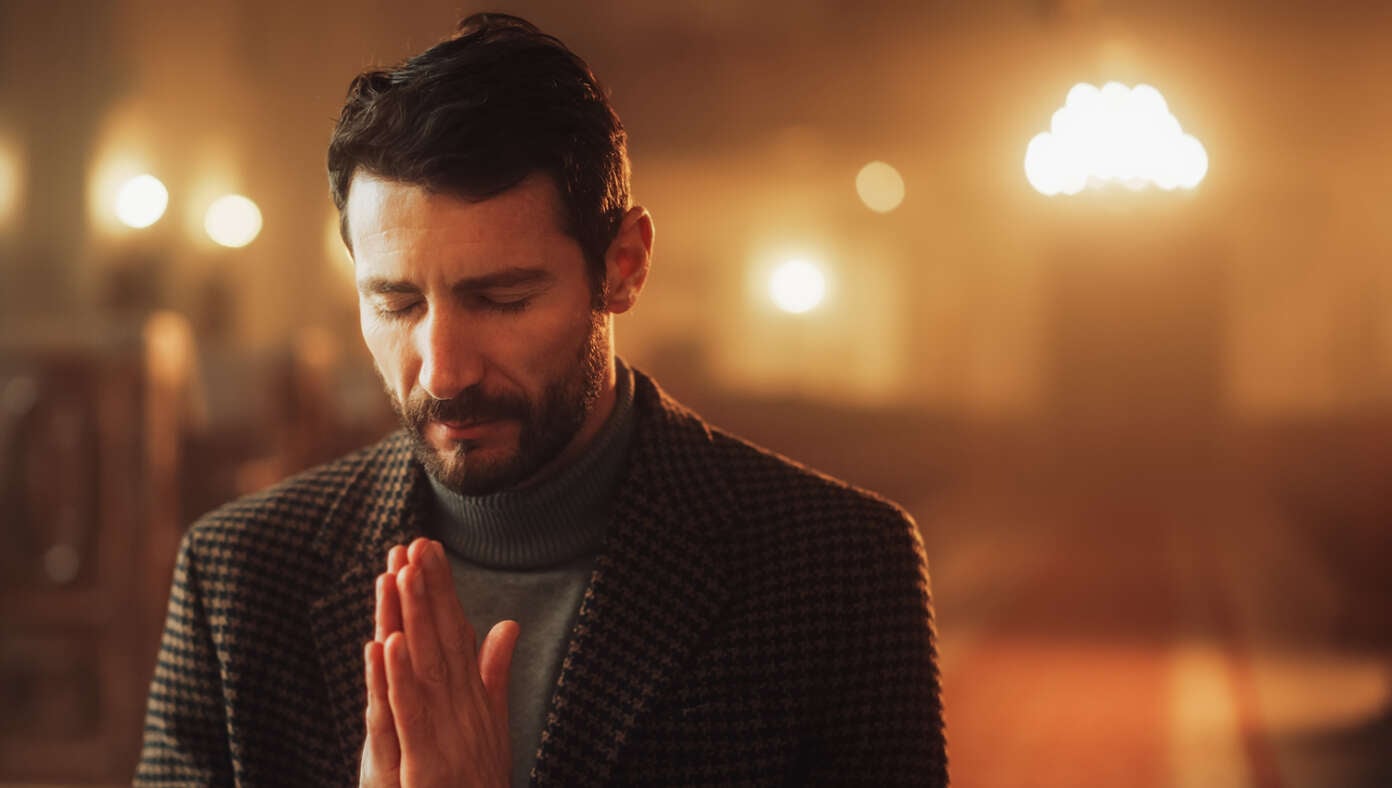
CARACAS — Following the deposition of dictator Nicolas Maduro, the White House announced that Donald Trump would make his return to reality television to choose the next Venezuelan president in the inaugural season of El Aprendiz.
Read More
If you’re hoping to make good on your New Year’s resolution to become a better Christian than you’ve come to the right place. The staff of The Babylon Bee has collectively read the Bible at least once, so we know a thing or two about being a better Christian.
Read MoreDear Angel at my side, my good and loyal friend, you have been with me since the moment I was born. You are my own personal guardian, given me by God as my guide and protector, and you will stay with me till I die. He who created you and me gave me to you as your particular charge. You assisted in great joy at my baptism, when I became part of the Mystical Body of Christ, and was made a member of the household of God and an heir of heaven. You saw the dangers that beset my path, and, if I …
Read More

Jan 5, 2026 / 18:52 pm (CNA).
Twenty years ago, Lauri Hauser, a Catholic mom of two and high school math teacher from Madison, Wisconsin, started a chant with her children — something simple and fun that would keep God and their faith at the forefront of their minds.
“I would chant ‘IC’ and they would respond, ‘2KG,’” Hauser told CNA in an interview.
“IC2KG,” which stands for “I choose to know God,” would be chanted around the Hauser household as chores would be done, while the kids played, and after flag football games in the backyard.
Fast forward 20 years and the family chant is now being shared with children in Catholic schools and, most recently, at the SEEK 2026 conference in Denver, which took place Jan. 1–5.
Hauser explained that it was her youngest son, Joe, who inspired his mother to start her IC2KG ministry. While in college, Joe was a part of an Athletes in Action group and asked his mom if she could make IC2KG shirts for the young men in the group.
“I said, ‘No. We don’t do T-shirts and this is just kind of a family thing and I’m kind of private with my faith,’” she recalled.
After breaking his arm before his senior year of college, Joe took it upon himself to create a T-shirt design with the “IC2KG” phrase printed on the front. One hundred shirts were made and they were a huge hit among the athletes. It was after this that Hauser thought this could become a ministry.
Despite attending a Catholic grade school and college, Hauser never felt completely comfortable sharing her faith publicly. After the success of the T-shirts, she began to think that “maybe these are the words, or the saying, that somebody needs to be bold and be brave and stand up and be strong and be courageous to share our faith.”
“I thought maybe this could be something that kids could catch on to or kids could keep in their heart — I choose to know God. We need to make that choice every day that we get up,” she added.
Using her background in education, Hauser created a program that she now takes to Catholic schools in Wisconsin and neighboring states, as well as through Zoom, in order to speak with schools that are further away.
The program aims to teach kids how to know, love, serve, and share God with others. Some of the elements of the program include testimonies from older kids to young children, teaching kids the IC2KG chant, pairing younger kids with an older IC2KG buddy, and playing games such as IC2KG bingo. Many elements of the program vary from school to school.
The program also includes a powerful demonstration where a child is asked to stand on a ball. The other kids observe and then share what they see, such as the child on the ball is wobbly, unsure of himself, or is shaky. That child then goes and stands on a prop Bible.
“Then the kids will observe and say, ‘Oh yeah, when you’re standing on the Bible, you are steadfast, you’re strong, you’re solid. This is the foundation,’” Hauser said.
Hauser has also designed more apparel with the IC2KG message. Her website includes T-shirts, hats, stickers, and wristbands with the hope that people will join her movement to inspire the faithful everywhere to know, love, serve, and share God with others.
During the SEEK 2026 conference, Hauser greeted college students from all over the country at the IC2KG booth. She called her first experience at SEEK “beautiful” and that her heart was “booming.”

“The response has been amazing. They’re all excited,” she added. “I’ve had conversations with kids and they’re like, ‘Yeah, I'm not really great at sharing.’ I said, ‘You know, neither am I, but it’s kind of time to take the duct tape off the word share — just take it off like a Band-Aid and let’s just do it because now is the time … It’s just going to be a more beautiful world if we all share our faith.’”
She said that as she folds each piece of clothing, she recites a prayer over it: “Bless the person who wears this shirt and help them spread your message.”
Hauser said she hopes her ministry will “help people to just take that little step forward” and act as a “little life raft to help us go to the public square and share our faith.”
Read More

Jan 5, 2026 / 18:32 pm (CNA).
The Archdiocese of New Orleans released a letter written to child sexual abuse claimants apologizing for the “inexcusable harm” they suffered.
“On behalf of the clergy, religious, and laity of the Archdiocese of New Orleans,” Archbishop Gregory Aymond of New Orleans expressed in the Dec. 26, 2025, letter his “profound regret over the tragic and inexcusable harm” child abuse survivors suffered.
The letter was made public on Jan. 4 and emphasized that the Archdiocese of New Orleans “takes responsibility for the abuse.” Aymond said the archdiocese “pledges to keep children and all vulnerable people safe in our ministry.”
“I sincerely apologize to you for the trauma caused to you and to those close to you as a survivor of sexual abuse perpetrated by a member of the clergy, a religious sister or brother, or a lay employee or volunteer working within the Catholic Church,” Aymond said.
“I am ashamed that you or anyone should have been sexually abused by someone working within the Catholic Church. Sexual abuse is an inexcusable evil, and I am ashamed that you or anyone should have been sexually abused by someone working within the Catholic Church.”
“Please know that you are not to blame for the abuse perpetrated on you,” Aymond said. “You were and are completely innocent and did nothing to deserve the pain you have suffered because of the hideous crime of sexual abuse of a minor.”
The public release of the letter is a part of an “extensive media outreach” to express the Archdiocese of New Orleans’ “commitment to the nonmonetary provisions laid out in its Chapter 11 settlement plan,” according to the Clarion Herald, the official newspaper of the archdiocese.
The letter follows the October 2025 approval for a $230 million bankruptcy settlement to pay out over 650 victims after five years of litigation.
The Chapter 11 case filed in 2020 highlights a number of procedures in its nonmonetary provisions “to foster child protection and prevent child sexual abuse.” Within its “recognition” section, the document calls for individual apology letters and a public apology letter.
“It is my fervent hope that as we bring these Chapter 11 proceedings to a close, you will achieve some sense of peace, justice, and healing,” Aymond wrote in the letter. “I hold you and all survivors of abuse in prayer daily and encourage all to join me in prayer for you.”
The letter will be shared through multiple media outlets over the upcoming days and weeks.
Read MoreA reading from the Letter of John
1 John 4:7-10
Beloved, let us love one another,
because love is of God;
everyone who loves is begotten by God and knows God.
Whoever is without love does not know God, for God is love.
In this way the love of God was revealed to us:
God sent his only-begotten Son into the world
so that we might have life through him.
In this is love:
not that we have loved God, but that he loved us
and sent his Son as expiation for our sins.
From the Gospel according to Mark
6:34-44
When Jesus saw the vast crowd, his heart was moved with pity for them,
for they were like sheep without a shepherd;
and he began to teach them many things.
By now it was already late and his disciples approached him and said,
“This is a deserted place and it is already very late.
Dismiss them so that they can go
to the surrounding farms and villages
and buy themselves something to eat.”
He said to them in reply,
“Give them some food yourselves.”
But they said to him,
“Are we to buy two hundred days’ wages worth of food
and give it to them to eat?”
He asked them, “How many loaves do you have? Go and see.”
And when they had found out they said,
“Five loaves and two fish.”
So he gave orders to have them sit down in groups on the green grass.
The people took their places in rows by hundreds and by fifties.
Then, taking the five loaves and the two fish and looking up to heaven,
he said the blessing, broke the loaves, and gave them to his disciples
to set before the people;
he also divided the two fish among them all.
They all ate and were satisfied.
And they picked up twelve wicker baskets full of fragments
and what was left of the fish.
Those who ate of the loaves were five thousand men.
The narrative of the multiplication of the loaves and fish ends with the verification that everyone is satisfied and with the collection of the leftover pieces (cf. v. 20).
When Jesus, with his compassion and his love, gives us a grace, forgives us our sins, embraces us, loves us; he does nothing halfway but completely. As it happens here: all are satisfied. Jesus fills our heart and our life with his love, with his forgiveness, with his compassion. Pope Francis, General Audience, 17 August 2016)
Read More
The March for Life … and two amazing interviews! #Catholic – ![]()
“Why Will We Continue to March? Even with the wonderful blessing of Roe v. Wade being overturned, which allows more freedom at the state level to enact pro-life laws, the necessary work to build a culture of life in the United States of America is not finished. Rather, it is focused differently … our most important work is changing hearts and minds. The goal of the national March for Life is to not only change laws at the state and federal level, but to change the culture to ultimately make abortion unthinkable.”
As we begin a New Year, we are less than three weeks away from the annual March for Life in Washington, D.C., which will take place on Friday, Jan. 23, 2026. Will you be joining us? If you are thinking about it, would like more information, and/or would like to register to participate with our diocese, you can click on this link.
Similar to other experiences, if you have never participated in the March for Life, it is difficult to explain how it can be truly life-changing. It can also be a pilgrimage and a sacrificial, prayerful offering that is of inestimable spiritual value. As indicated in the quote above, from the National March for Life website, while the focus of the march and some of the challenges to building a Culture of Life have changed over the years, there is so much that we still need to do and that can be done, beginning in our own lives, hearts and families, to build a true Culture of Life.
I was thinking that I would write in more detail about the importance of the March for Life and our efforts, as individual Catholic Christians, as families, the Church and as faithful citizens to build a Culture of Life, but I then had the privilege of listening to two recent interviews, one (Bishop Robert Barron and Supreme Court Justice Amy Coney Barrett) speaks directly to our responsibilities as Catholics and as faithful citizens, the other (Father Mike and Jonathan Roumie) is a wonderful testament to some good things that are happening in our current culture. I would like to share some thoughts about those interviews (and encourage you to watch and listen to both).
Bishop Barron Presents: Justice Amy Coney Barrett – Listening to the Law. Towards the end of December, an interview between Bishop Barron and Justice Barrett was released on Bishop Barron’s YouTube Channel. I watched the interview on the weekend after Christmas, and I listened to it a second time as I prepared to write this column. Just as there is reading that can be “dense” and require one’s “full attention,” the conversation between Bishop Barron and Justice Barrett covers some topics of American legal history, interpreting the Constitution, the separation of Church and State, and others that certainly require “careful listening.” It is “well worth” the time and effort.
I found the conversation to be fascinating and very informative. Bishop Barron shares that one of the reasons for the interview is a book, Listening to the Law, written by Justice Barrett and recently published (September 2025). Bishop Barron describes the book as “a combination … part autobiography, a bit about the pragmatics of The (Supreme) Court, a little bit of Philosophy of Law, so it makes for an interesting, compelling read…” and he uses those three “dimensions” as the structure for the interview.
A few personal things that we learn about Justice Barrett during the interview: she is a devout, practicing Catholic, a wife and mother of seven children – four still living at home, and one child with Down Syndrome. We also learn that, when she prays, she uses the Magnificat Series and listens to the Hallow app, and her father is a permanent deacon. I will not try to summarize the whole conversation. I will encourage you to take the time to listen to it and let you know that I found it very helpful to listen to it a second time. You can watch and listen to the interview here.
When we consider the rights (and obligations) that we have as citizens of the United States, how those rights are guaranteed by the Constitution and our system of government, given to us by our founders and tested over these 250 years, it is encouraging to hear a sitting Supreme Court justice describe the founding of our nation as the “Miracle at Philadelphia.” It is also very encouraging to hear a Catholic bishop and a Catholic Supreme Court justice discussing some of the key moments and figures in our nation’s history and then expanding that conversation to discuss Aristotle, St. Thomas Aquinas, St. Thomas More, and St. Thérèse of Lisieux, amongst others.
When Bishop Barron and Justice Barrett discuss the overturning of Roe v. Wade, the Dobbs, and Casey v. Planned Parenthood Supreme Court decisions and the relationships between those decisions, they also discuss the meaning of “liberty,” the interpretation of the Constitution, and the legislative process. In listening to their conversation, we can be reminded of and perhaps better appreciate our responsibilities as Catholics and as faithful citizens to exercise our freedom of speech and freedom of religion as part of our efforts to build a Culture of Life. I hope that you watch and enjoy the interview and that you might even decide to watch and listen twice.
The Cost of Playing Jesus in The Chosen – Jonathan Roumie and Father Mike Schmitz. If you are a “fan” of The Chosen (streaming/TV Series), I believe there is not much more I need to say to encourage you to listen to this interview. If you have not already watched it, I trust that you will not only enjoy it but be reminded that this particular actor and humble man of deep faith certainly seems to be “chosen” for this role.
For those who are not familiar with or have not watched The Chosen, first of all, you are not too late, and you can take your time watching all five seasons, usually about eight 45-minute to one-hour episodes per season. Yet, you do not need to be a fan of or watch The Chosen in order to appreciate, benefit from, and be inspired by this conversation between a (popular) priest, Father Mike Schmitz, and a Catholic layman, Jonathan Roumie, who is an accomplished, talented actor, but is first and foremost a person of mature and deep faith, who believes that his whole life, including being bullied as a young person and learning compassion and empathy, has prepared him for this “role” (an acting “job,” at first) to which he will devote 10 years of his life, leading him to a spiritual experience that, as he says, “is going to take the rest of my life to unpack.”
There is much more I could say and/or write, but, instead, I will just encourage you to take the time to watch and listen to this interview.
–
“Why Will We Continue to March? Even with the wonderful blessing of Roe v. Wade being overturned, which allows more freedom at the state level to enact pro-life laws, the necessary work to build a culture of life in the United States of America is not finished. Rather, it is focused differently … our most important work is changing hearts and minds. The goal of the national March for Life is to not only change laws at the state and federal level, but to change the culture to ultimately make abortion unthinkable.” National March for Life BISHOP KEVIN J. SWEENEY As we


ACI Prensa Staff, Jan 5, 2026 / 14:40 pm (CNA).
Every Jan. 5 the Church celebrates the feast of St. John Neumann, Redemptorist missionary, fourth bishop of the city of Philadelphia, and organizer of the first Catholic education network in the U.S.
John Nepomucene Neumann was born in Bohemia, now the Czech Republic, in 1811. He attended school in Budweis and years later, in 1831, entered the seminary in that same city.
Upon completing his preparation for the priesthood, he presented himself to his diocese but suffered an unexpected setback. The local bishop had fallen ill and priestly ordinations in his diocese were suspended until further notice.
Neumann, eager to serve the Lord, wrote letters to the bishops of the neighboring dioceses, but none of them wanted to accept him. Despite the obstacles, the saint was not discouraged.
To earn his living, he went to work in a factory where he met a few Americans from whom he learned some English. Later, he contacted some bishops in the United States. Neumann had a missionary soul and was ready to move to America.
The archbishop of New York agreed to receive and ordain Neumann, so he left his family and friends to embark on the adventure of proclaiming the Lord in a distant land. After being ordained in the U.S., Neumann joined 36 other priests who were to assist the almost 200,000 Catholics living in the U.S at the time.
The newly ordained was entrusted with the administration of a parish. The first pastoral difficulty he faced was the vast territory entrusted to him: His parish stretched from Ontario, Canada, to Pennsylvania.
Given the immense need, Neumann spent most of his time visiting villages and towns. He had to cross inhospitable territories, walk long distances in extreme cold and sweltering heat, and trek high mountains and majestic landscapes — all in order to watch over his flock and to assist those in need.
These were long years of providing catechesis, administering the sacraments, and celebrating the Eucharist. It was common to see Neumann preach both in churches and in abandoned huts. He even preached outside taverns, refuges for impenitent souls.
Neumann often had to celebrate Mass in dining rooms and kitchens.
With time and continued difficulties, the missionary priest discovered the need for the support of a religious community. He knew the Redemptorists well so he applied to join the Congregation of the Most Holy Redeemer. When the time came, he took his vows at the congregation’s house in Baltimore in 1842.
Neumann was noted for his piety and kindness as well as his versatility in understanding and accompanying his parishioners, most of whom were European immigrants. Neumann knew up to six languages, so it was not difficult for him to communicate with Catholics who did not speak English well.
In 1847, he was appointed visitator of the Redemptorists in the United States. At the end of his service, the Redemptorists were ready to form an autonomous “province or religious province,” which became a reality in 1850.
Neumann was then ordained bishop of Philadelphia, and from that city he organized the diocesan system of Catholic schools, becoming a great promoter of religious education in the country. He also founded the congregation of the Sisters of the Third Order of St. Francis, dedicated to teaching in schools, and was the promoter of the construction of more than 80 churches throughout the country.
Neumman was a simple man, short in stature and reportedly good-natured. Although he never had robust health, he carried out great pastoral and literary activity. He wrote many articles in magazines and newspapers, and published two catechisms and a history of the Bible for school children.
Once, in one of his articles, he wrote: “I have never regretted having dedicated myself to the mission in America.”
On Jan. 5, 1860, when he was just 48 years old, he suddenly collapsed in the street and went home to the Lord. He was beatified in 1963 and canonized in 1977 by Pope Paul VI.
This story was first published by ACI Prensa, CNA’s Spanish-language news partner. It has been translated and adapted by CNA.
Read More

Jan 5, 2026 / 13:06 pm (CNA).
With the signing of the law that recognizes that “the human being in gestation or the unborn child is a natural person,” Puerto Rico concluded 2025 with historic achievements in the defense of life. For Puerto Rican Sen. Joanne Rodríguez-Veve, it was a year “in which unprecedented progress was made.”
On Dec. 22, 2025, the governor of Puerto Rico, Jenniffer González, a Republican, signed Law 183-2025 — formerly Senate Bill 504 — which recognizes that the conceived child, “at any stage of gestation within the mother’s womb,” is a “natural person.”
A “natural person” is simply a human person as distinguished from a juridical person such as a corporation.
Three days earlier, on Dec. 20, Gov. González had signed Law 166-2025 — formerly Senate Bill 3 — which stipulates that it will be considered “first-degree murder when a crime is committed against a pregnant woman, resulting in the death of the unborn child at any stage of gestation within the mother’s womb.”
It will also be considered first-degree murder when the unborn child dies as a result of “the use of force or violence against the pregnant woman.”
These laws are in addition to the signing on Oct. 30, 2025, of Law 122-2025 — Senate Bill 297 — which establishes guidelines for abortion cases involving minors under 15 years of age, stipulating that at least one of the girl’s parents or legal guardians must sign an informed consent form and that authorities must be notified in cases of suspected rape.
Laws 166 and 183 were authored by the president of the Senate of Puerto Rico, Thomas Rivera-Schatz, and Rodríguez-Veve is listed as a co-author, among other legislators.
Sen. Rodríguez-Veve is also the author of the bill passed as Law 122.
In a Jan. 1, 2026, interview with ACI Prensa, CNA’s Spanish-language news partner, Rodríguez-Veve noted that “despite the fact that the majority of the population had consistently expressed itself in favor of protecting the lives of unborn children, the political class, dominated primarily by progressive factions, refused to pass any legislation that represented even the slightest step in defense of the human right to life.”
“Multiple legislative efforts were defeated for more than four decades, until 2025, when unprecedented progress was achieved. In just the first year of the new government, the Legislative Assembly approved three bills that address the issue of abortion,” she said.

Puerto Rico is a commonwealth of the United States; its constitution governs internally, but it is subordinate to the U.S. Constitution. Therefore, decisions of the U.S. Supreme Court, such as the now-overturned Roe v. Wade — which at the time opened the door to abortion throughout the United States — also apply in Puerto Rico and directly affect its legal system.
Rodríguez-Veve emphasized that the constitution of Puerto Rico “expressly recognizes the right to life, a recognition that, according to the legislative record during the drafting of the constitution, was included with the clear purpose of protecting the lives of human beings in the womb.”
“However, our constitutional intent was overridden by the now-obsolete U.S. Supreme Court precedent established in Roe v. Wade. Since then, Puerto Rico became one of the most permissive jurisdictions regarding abortion, allowing abortions at any stage of pregnancy, at any age, and for any reason.”
For the Puerto Rican senator, “the fundamental change” brought about by the laws signed in recent months “lies in the explicit recognition of the dignity of human life from conception, thus restoring the moral foundation that, as a people, we established in the drafting of our constitution in 1952.”
Rodríguez-Veve pointed out that “by recognizing the unborn child as a natural and legal person, and by classifying as first-degree murder an attack against a pregnant woman in which the baby dies, we are not only recognizing the human nature of the child in the womb, but also the dignity of its humanity.”
“In other words, it is not only about the importance of the new legal implications and the practical consequences in the application of the law, but about an even more profound change due to its ontological dimension,” she said. “The message is clear: In the womb of a pregnant woman there is not an indecipherable object without dignity but a subject, a developing human being, who has dignity and whose value is intrinsic to his or her human nature,” she added.
In response to the criticism that has circulated following the signing of the law that recognizes the unborn child as a person, the senator clarified that “no article of the new law alters the Medical Practice Act, the Medical Emergencies Act, or the standards of treatment in life-threatening situations.”
“Clinical decisions in emergency scenarios continue to be based exclusively on the risk to the patient’s life or health. The bill does not introduce anything that could prevent or delay such treatment,” she emphasized.
“It is the legal opinion of the current secretary of justice of Puerto Rico that, after the overturning of Roe v. Wade in the United States, abortion in Puerto Rico is governed by the Puerto Rican Penal Code. This interpretation means that abortion is only legal when performed to protect the life or health of the woman,” she said.
Rodríguez-Veve said “the passage of Law 63-2025 constituted another colossal achievement in defense of the dignity of human life, specifically of minors at risk from the currents of woke ideology that have reached our shores.”
Law 63-2025 — which bears the signatures of Rivera-Schatz, Rodríguez-Veve, and Sen. Jeison Rosa as authors — prohibits “surgical interventions or drug treatments that alter the biological sex of a minor under the pretext of a gender transition or as part of a treatment for gender dysphoria.”
“This law represents an absolute halt to the use of minors to promote unscientific and unnatural ideas that cause them irreversible physical harm,” Rodríguez-Veve emphasized.
“With the signing of this law, no minor under 21 years of age in Puerto Rico can be subjected to chemical or surgical mutilation treatments as part of a progressive trend that, through the denaturalization of the human being, uses the most vulnerable to advance its agendas,” she emphasized.
With the achievements accomplished in 2025 and with an eye on the future, Sen. Rodríguez-Vve sees her work as “continuing to contribute to the reconstruction of the moral and human fabric that has characterized us as a people since the dawn of our national identity.”
“Puerto Rico was forged in the crucible of Christianity, and it is from our cultural and spiritual heritage that I seek to continue upholding the values that were the cradle and foundation of Puerto Rican identity,” she affirmed.
In a Spanish-language article titled “The Courage to Legislate with Conviction,” published on the Puerto Rico Senate’s website, Rivera-Schatz emphasized that “this 2025 legislative year marked a turning point in the legal and moral history of Puerto Rico,” highlighting that these and other laws passed stem from “the commitment I made to the people to protect fundamental rights, the traditional family, and the reaffirmation of the principles and values that distinguish us as a society.”
“These laws reflect a vision of the state that recognizes that religious freedom is not an administrative concession but a fundamental right; that the family is not an abstract concept but the institution and backbone of a society; that childhood requires special protection from public authorities; and that human life, from its most vulnerable stage, deserves legal and moral respect.”
“From a Christian perspective, these laws are rooted in principles of conscience, responsibility, stewardship, and justice,” he affirmed.
After warning that “Puerto Rico faces the challenge of preserving its freedom without losing its legal and moral soul,” the Senate president said that “from the perspective of the Christian faith, it is proclaimed that the law must serve life, the family, and social peace. From a legal perspective, it is maintained that all legislation will be evaluated in the courts, as is appropriate in a democracy, but also in the court of history.”
The Puerto Rico Senate leader concluded his article by quoting St. John Paul II’s apostolic exhortation Familiaris Consortio: “The future of humanity passes by way of the family.”
This story was first published by ACI Prensa, CNA’s Spanish-language news partner. It has been translated and adapted by CNA.
Read More

Jan 5, 2026 / 12:34 pm (CNA).
Catholic bishops in Ethiopia have issued a far-reaching synodality message that speaks to the fear, suffering, and fragmentation gripping the Horn of Africa nation, repeatedly urging the people of God to “not be afraid.”
Dated Dec. 10, 2025, and obtained on Jan. 4 by ACI Africa, CNA’s news partner in Africa, the message was released at the conclusion of the 59th Plenary Assembly of the Catholic Bishops’ Conference of Ethiopia (CBCE) members, held in Emdibir Dec. 8–10. The gathering marked both the close of the jubilee year and the formal beginning of the implementation of the final document of the Synod on Synodality in Ethiopia.

A Catholic missionary source familiar with the Church in Ethiopia told ACI Africa that the CBCE members’ decision to circulate the message widely — and to request that it be read out at parish Masses — represents a significant shift.
“The fact that the Catholic bishops are circulating the statement and asking to have it read at parish Masses is something new,” the source said, adding that Catholic bishops in Ethiopia “were very fearful in the past. Maybe this ‘don’t be afraid’ is a new start for a marginal Church.”
The bishops’ message was addressed to clergy, women and men religious, and the laity — including Catholics in the diaspora and “all people of goodwill, ”and was inspired by the words of the angel to the shepherds: “Do not be afraid; I bring you good news of great joy for all people” (Lk 2:10).
Written during Advent to culminate in Christmas, which is celebrated on Jan. 7 in Ethiopia, the Catholic bishops situated their pastoral exhortation firmly within the concrete realities of Ethiopian life.
“In a nation burdened by many hardships — poverty, conflict, climate change, cultural confusion, and division — these words remind us that even amid darkness, the divine light of Christ shines forth, guiding us toward renewed hope and unity,” CBCE members said.
The bishops said their call to courage is not denial of suffering but rather a proclamation of faith. “We proclaim it not as a denial of the profound suffering and fear that grips our nation but as a faith-filled affirmation that God is with us,” they wrote.
The bishops described the “heavy burdens” afflicting the nation, beginning with the crushing cost of living.
“For so many families, daily life has become unbearable,” they said, adding that “soaring prices render basic provisions a luxury. Parents watch helplessly as children go to bed hungry.”
The Church leaders framed this reality as a violation of Catholic social teaching, emphasizing the preferential option for the poor and vulnerable and insisting that economic structures must serve human dignity.
They also drew attention to the devastating impact of climate change, particularly drought and environmental degradation.
“Imagine those who are dying of hunger in a country of plenty,” they wrote, calling for “ecological conversion” and quoting the May 2015 encyclical letter on care for our common home, Laudato Si’, on the need for “an overall personal conversion… which leads to heartfelt repentance and desire to change.”

The bishops warned that Ethiopia’s social fabric is fraying under the weight of tribal conflicts, ethnic hatred, and ideologies of division, compounded by uncritical adoption of modern digital culture.
“The new culture shaped by digitization is doing away with our long-standing values,” they observed, warning that an “us vs. them mentality” amplified by social media is eroding the sense of the common good.
“We risk losing the sense of common good — that the well-being of each is bound to the well-being of all,” they caution.
The CBCE members also addressed war and insecurity. “Our land is soaked in pain,” they said, pointing to civil war, ongoing local violence, and conflicts rooted in religion, ethnicity, and politics.
They insisted that peace is not simply the absence of war. “The Catholic Church teaches us that peace is not merely the absence of war but the presence of justice and the flourishing of human dignity.”
In their message, the bishops ask: “When will we have enough? When will we turn away from the cycle of violence and work towards healing and rebuilding?”
They described the social consequences of conflict — economic collapse, cultural erosion, and widespread displacement — highlighting the plight of internally displaced persons (IDPs) and Ethiopians forced into precarious lives abroad.
“As a Church, we cannot remain silent in the face of such suffering,” they declared. “We are called to be instruments of peace, to advocate for the voiceless, and to work tirelessly for reconciliation.”
Another wound CBCE members identified in their statement was the breakdown of communication at every level of society. “Our greatest failure may be our inability to dialogue,” they said, lamenting a “Babylon of confusion” where people no longer listen to one another.”
They cited Pope Francis’ encyclical on human fraternity and social friendship, Fratelli Tutti, stressing that authentic dialogue requires “the ability to respect the other’s point of view and to admit that it may include legitimate convictions and concerns.”
Against this backdrop of fear, division, and violence, the bishops presented synodality not as an abstract ecclesial process but as a prophetic response. “Walking together is an act of resistance against every force that divides and destroys,” they asserted.

Quoting the Synod Vademecum, they reminded the people of God that synodality is “the path along which the Church is called to walk … making everyone participate in a journey of common listening and discernment.”
They emphasized that this is “not merely a Church exercise; it is a prophetic witness and a concrete answer to the deep crises we face as a nation.”
In one of the most pastorally detailed sections of the CBCE members’ message, the Catholic bishops repeatedly exhort the people of God: “Do not be afraid.”
They urged Catholics to walk as “companions in the journey,” to listen deeply — especially to those on the peripheries — and to speak the truth “with courage and prudence.”
They insisted that liturgical life and prayer remain central, encouraging Catholics not to fear “to keep intact your identity as Catholics as expressed in your liturgical life.”
CBCE members also call for co-responsibility in mission, urging the baptized to participate actively in evangelization and integral human development “to benefit all humanity regardless of their creed, tribe, religion, or any background.”
Dialogue, ecumenism, renewed forms of authority as service, communal discernment, and formation in synodality are all framed by the same refrain: Do not be afraid.
The message culminates in a Marian vision of the Church.
“We see the features of a synodal, missionary, and merciful Church shining in full light in the Virgin Mary,” they write, describing her as the one who “listens, prays, meditates, dialogues, accompanies, discerns, decides, and acts.”
Invoking St. Paul VI, they recall that “the action of the Church in the world can be likened to an extension of Mary’s concern.”
By asking that their message be read aloud at Catholic Masses across the country, the bishops’ message of courage can reach even the smallest communities.
As the missionary source told ACI Africa: “Maybe this ‘don’t be afraid’ is a new start for a marginal Church.”
This story was first published by ACI Africa, CNA's news partner in Africa, and has been adapted by CNA.
Read More


An individual has been busted after perhaps trying to physically harm the vice-president of the United States.
The post NEW: Authorities Bust Hammer-Wielding Man for Trying to Break Into VP JD Vance’s Ohio Home – Vance Responds appeared first on The Gateway Pundit.
Read More


Maduro’s VP DELCY ELOÍNA RODRÍGUEZ GÓMEZ should not be anywhere near Venezuela’s presidency. Remember that a year ago, President Trump’s envoy for special missions, Richard Grennel, delivered a message in person to the former terrorist leader of Venezuela, Nicolás Maduro. In late January 2025, only a few weeks after President Trump’s inauguration, Grennel met with Maduro and worked out the release of 6 Americans.
The post Maduro’s Crooked VP Delcy Rodriguez Should Never Be Allowed to Run Venezuela appeared first on The Gateway Pundit.
Read More


(Note: Thank you for supporting businesses like the one presenting a sponsored message below and working with them through the links below which benefits Gateway Pundit.
The post Man Who Called Tesla Before It Soared 2,150%… Now Sees Something 14X Bigger Than ChatGPT appeared first on The Gateway Pundit.
Read MoreIn this episode, Astronomy magazine Editor Emeritus Dave Eicher invites you to head out in the evening of January 6 and find the Moon. Near Luna, glowing at magnitude 1.3, will be Regulus, the Alpha star of the constellation Leo the Lion. The distances between these two objects will change hourly, so maybe check them several times thatContinue reading “This Week in Astronomy with Dave Eicher: The Moon encounters Regulus”
The post This Week in Astronomy with Dave Eicher: The Moon encounters Regulus appeared first on Astronomy Magazine.
Read More![First Mass for Life of 2026 celebrated in Morristown #Catholic - On Jan. 3, Bishop Kevin J. Sweeney celebrated his first monthly Mass for Life of 2026 at St. Margaret of Scotland Church in Morristown, N.J. He then led an outdoor rosary procession for life to Planned Parenthood on Speedwell Avenue, where he prayed the rosary with congregants for an end to abortion.
Click here to subscribe to our weekly newsletter.
A Mass and procession for life are held on the first Saturday of the month at 8 a.m. at St. Margaret’s. Priests and faithful from around the diocese are invited to join.
Earlier in the week, Bishop Sweeney visited St. Margaret’s on Jan. 1, New Year’s Day, to celebrate its Spanish Mass for the Solemnity of Mary, Mother of God.
BEACON PHOTOS | JOE GIGLI
[See image gallery at beaconnj.org]](https://unitedyam.com/wp-content/uploads/2026/01/first-mass-for-life-of-2026-celebrated-in-morristown-catholic-on-jan-3-bishop-kevin-j-sweeney-celebrated-his-first-monthly-mass-for-life-of-2026-at-st-margaret-of-scotland-church-in-morristown.jpg)
First Mass for Life of 2026 celebrated in Morristown #Catholic – ![]()
On Jan. 3, Bishop Kevin J. Sweeney celebrated his first monthly Mass for Life of 2026 at St. Margaret of Scotland Church in Morristown, N.J. He then led an outdoor rosary procession for life to Planned Parenthood on Speedwell Avenue, where he prayed the rosary with congregants for an end to abortion.
A Mass and procession for life are held on the first Saturday of the month at 8 a.m. at St. Margaret’s. Priests and faithful from around the diocese are invited to join.
Earlier in the week, Bishop Sweeney visited St. Margaret’s on Jan. 1, New Year’s Day, to celebrate its Spanish Mass for the Solemnity of Mary, Mother of God.
–
On Jan. 3, Bishop Kevin J. Sweeney celebrated his first monthly Mass for Life of 2026 at St. Margaret of Scotland Church in Morristown, N.J. He then led an outdoor rosary procession for life to Planned Parenthood on Speedwell Avenue, where he prayed the rosary with congregants for an end to abortion. Click here to subscribe to our weekly newsletter. A Mass and procession for life are held on the first Saturday of the month at 8 a.m. at St. Margaret’s. Priests and faithful from around the diocese are invited to join. Earlier in the week, Bishop Sweeney visited St.

Jan 5, 2026 / 04:00 am (CNA).
Every Jan. 5 the Church celebrates the feast of St. John Neumann, Redemptorist missionary, fourth bishop of the city of Philadelphia, and organizer of the first Catholic education network in the U.S.
John Nepomucene Neumann was born in Bohemia, now the Czech Republic, in 1811. He attended school in Budweis and years later, in 1831, entered the seminary in that same city.
Upon completing his preparation for the priesthood, he presented himself to his diocese but suffered an unexpected setback. The local bishop had fallen ill and priestly ordinations in his diocese were suspended until further notice.
Neumann, eager to serve the Lord, wrote letters to the bishops of the neighboring dioceses, but none of them wanted to accept him. Despite the obstacles, the saint was not discouraged.
To earn his living, he went to work in a factory where he met a few Americans from whom he learned some English. Later, he contacted some bishops in the United States. Neumann had a missionary soul and was ready to move to America.
The archbishop of New York agreed to receive and ordain Neumann, so he left his family and friends to embark on the adventure of proclaiming the Lord in a distant land. After being ordained in the U.S., Neumann joined 36 other priests who were to assist the almost 200,000 Catholics living in the U.S. at the time.
The newly ordained was entrusted with the administration of a parish. The first pastoral difficulty he faced was the vast territory entrusted to him: His parish stretched from Ontario, Canada, to Pennsylvania.
Given the immense need, Neumann spent most of his time visiting villages and towns. He had to cross inhospitable territories, walk long distances in extreme cold and sweltering heat, and trek high mountains and majestic landscapes — all in order to watch over his flock and to assist those in need.
These were long years of providing catechesis, administering the sacraments, and celebrating the Eucharist. It was common to see Neumann preach both in churches and in abandoned huts. He even preached outside taverns, refuges for impenitent souls.
Neumann often had to celebrate Mass in dining rooms and kitchens.
With time and continued difficulties, the missionary priest discovered the need for the support of a religious community. He knew the Redemptorists well so he applied to join the Congregation of the Most Holy Redeemer. When the time came, he took his vows at the congregation’s house in Baltimore in 1842.
Neumann was noted for his piety and kindness as well as his versatility in understanding and accompanying his parishioners, most of whom were European immigrants. Neumann knew up to six languages, so it was not difficult for him to communicate with Catholics who did not speak English well.
In 1847, he was appointed visitator of the Redemptorists in the United States. At the end of his service, the Redemptorists were ready to form an autonomous “province or religious province,” which became a reality in 1850.
Neumann was then ordained bishop of Philadelphia, and from that city he organized the diocesan system of Catholic schools, becoming a great promoter of religious education in the country. He also founded the congregation of the Sisters of the Third Order of St. Francis, dedicated to teaching in schools, and was the promoter of the construction of more than 80 churches throughout the country.
Neumann was a simple man, short in stature and reportedly good-natured. Although he never had robust health, he carried out great pastoral and literary activity. He wrote many articles in magazines and newspapers, and published two catechisms and a history of the Bible for schoolchildren.
Once, in one of his articles, he wrote: “I have never regretted having dedicated myself to the mission in America.”
On Jan. 5, 1860, when he was just 48 years old, he suddenly collapsed in the street and went home to the Lord. He was beatified in 1963 and canonized in 1977 by Pope Paul VI.
This story was first published by ACI Prensa, CNA’s Spanish-language news partner. It has been translated and adapted by CNA.
Read More