My soul, the happy hour is arrived;
Jesus comes to dwell in my poor heart.
Behold the King of heaven,
thy Redeemer and thy God,
coming to thee;
prepare thyself to receive Him with love;
say to Him with the most ardent desire:
Come, O my Jesus,
come to me:
I desire to receive Thee,
before Thou dost give Thyself to me,
I desire to give Thee my miserable heart;
accept it,
come and take full possession of it.
Come, my God, make haste;
do not delay.
I would wish to …


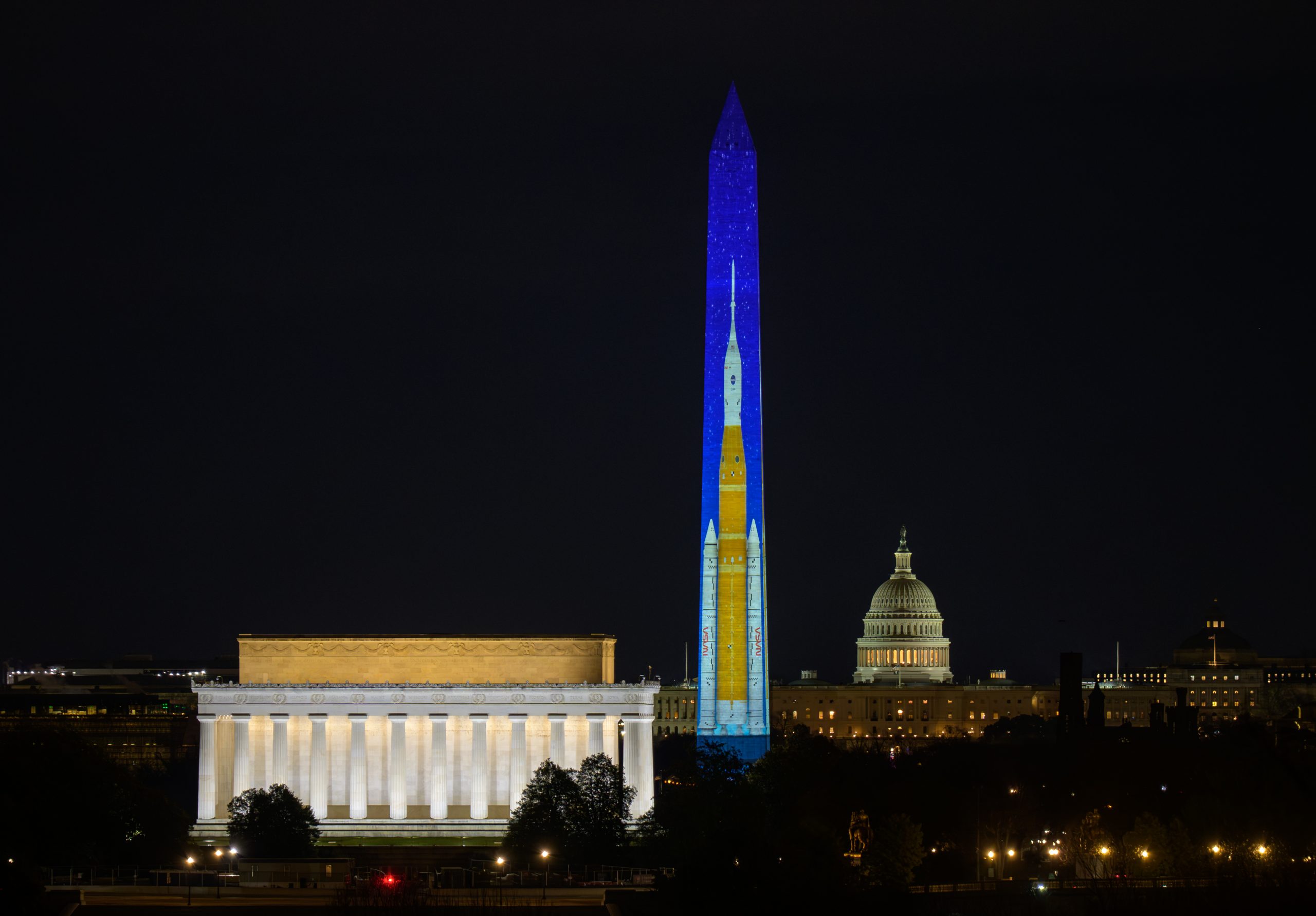
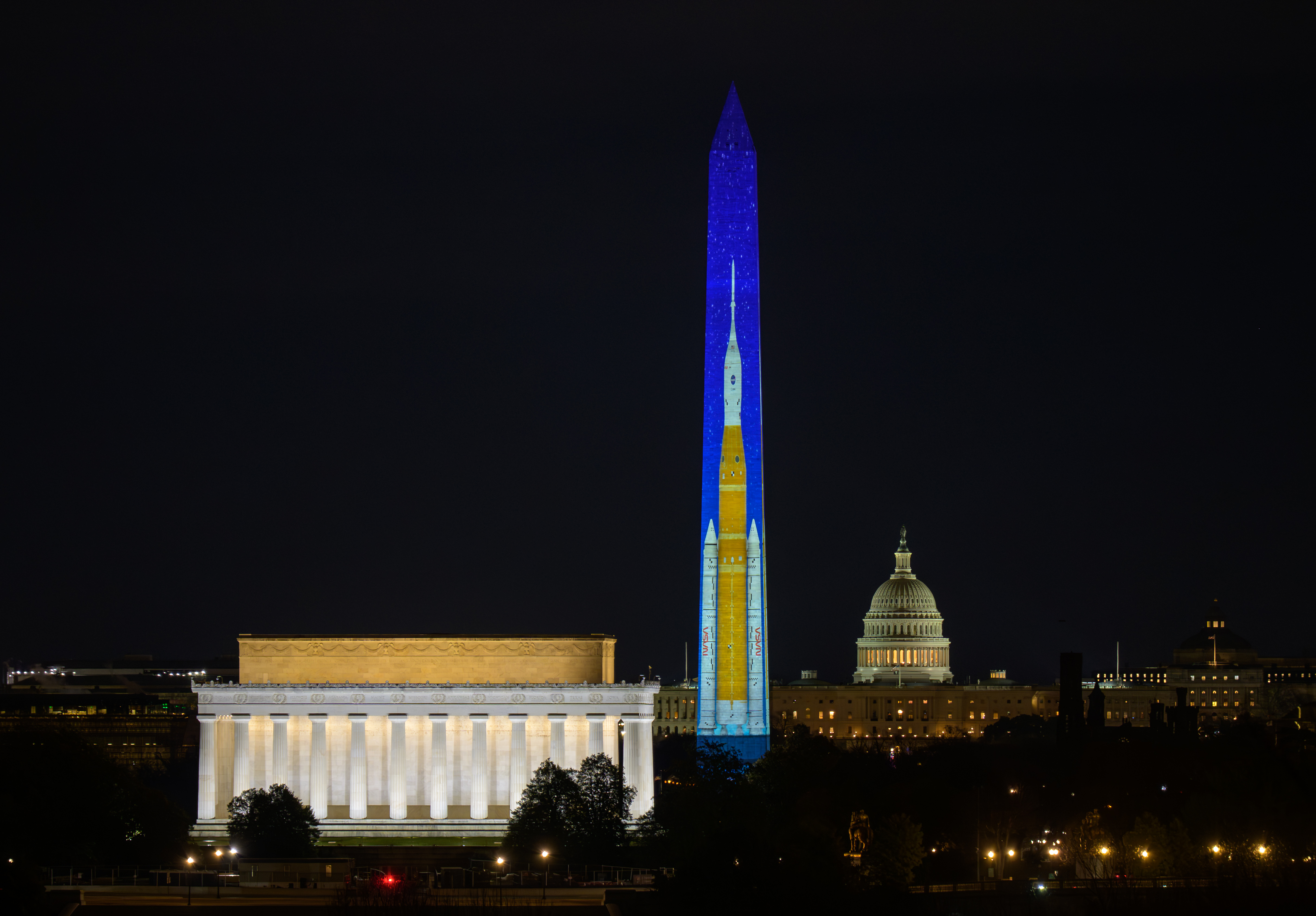
Images depicting NASA’s Space Launch System (SLS) rocket are projected onto the Washington Monument as part of an event to kick off the nation’s 250th birthday year, Wednesday, Dec. 31, 2025, in Washington.
Read More
University of Notre Dame professor Kathleen Sprows Cummings. Credit: Ken Oliver-Méndez/CNA
Jan 10, 2026 / 10:12 am (CNA).
Assessing the impact of the Catholic Church's first American pope was front and center at the 106th annual meeting of the American Catholic Historical Association (ACHA), which met in Pope Leo XIV's hometown of Chicago from Jan. 8-11.
During a panel on the subject, Catholic scholars noted some of the historic caricatures of what an American papacy would be like and compared that to the first eight months of Leo's actual papacy.

At the outset of the panel, University of Notre Dame history professor Kathleen Sprows Cummings referenced the 1894 Puck magazine cartoon titled “ The American Pope,” which depicts the first apostolic delegate to the United States, Cardinal Francesco Satolli, sitting atop a church labeled the “American headquarters” and casting a shadow of then Pope Leo XIII over the entire country.
Sprows Cummings noted the cartoon illustrates “fears about papal intervention in the United States” at a time when the country was receiving waves of Catholic immigrants from countries such as Ireland and Italy.
As Catholics became more settled in American society in the subsequent decades, she said some of those prejudices began to lessen and pointed to the 1918 election of Catholic Democrat Al Smith as New York’s governor. By this point, Catholics had become “much more confident about their place in American culture.”
During the same early 20th century period, the United States also began to rise as a superpower. Sprows Cummings noted that predominant concerns about an American pope shifted to Vatican concerns over the “Americanization of the Catholic Church.”
America magazine's Vatican correspondent, Colleen Dulle, said some of those concerns were evidently mitigated in the person of then Cardinal Robert Prevost, whose service to the Church included many years as a missionary and bishop in Peru as well as in Rome as the head of a global religious order, the Augustinians.
Sprows Cummings said the College of Cardinals clearly saw in Cardinal Prevost the "pastoral presence, administrative savvy and global vision" that the Church needed at this time and that he was “not elected in some flex of American power.”
Miguel Diaz, the John Courtney Murray, S.J. Chair in Public Service at Loyola University Chicago, noted that some of Leo’s actions have actually amounted to the opposite of flexing American power, such as his focus on the dignity of migrants, which he contrasted to the policies of the Trump administration.

Diaz, who served as U.S. ambassador to the Holy See under former President Barack Obama, said Leo is “a different symbol, from America first to America cares.”
He emphasized that having an American pope is significant amid the country’s political debates because “he can say things and he will be listened to.”
The panelists also discussed what Leo’s papacy may look like moving forward, with Dulle noting that only this year are there clear signs of him charting his own programmatic course, as the events and itinerary of the 2025 Jubilee were primarily developed for Pope Francis.
Up until now, she said, he has been mostly “continuing the Francis initiatives in a different style.”
She noted Pope Leo's management of this week's consistory — a meeting between the pope and the College of Cardinals — where the pontiff gave them four topics to choose from, which were all in line with Francis’s priorities: synodality, evangelization, reform of the curia, and the liturgy. The cardinals chose synodality and evangelization.
Dulle said Leo is seen as "a consensus builder” who aims to build consensus around the Church's priorities. She noted Pope Leo's announcement this week of a regular schedule of consistories, with the next one set for this June. This approach is emerging as a "hallmark of how he governs the Church" Dulle said.
Brian Flanagan, the John Cardinal Cody Chair of Catholic Theology at Loyola University Chicago, also emphasized Leo’s strong appeal to the cardinals and bishops in efforts to reach consensus, in keeping with the Pope's role as a preserver of unity.
Flanagan said he sees Leo exercising the papacy as not so much "at the top of the pyramid, but as at the center of conversation.” He said this is likely influenced by Leo's past as leader of a religious order — the Order of Saint Augustine — rather than a diocese because the orders are “global, diverse, and somewhat fractious.”
“You can’t govern a global religious community without getting people on board,” he said.
Read More
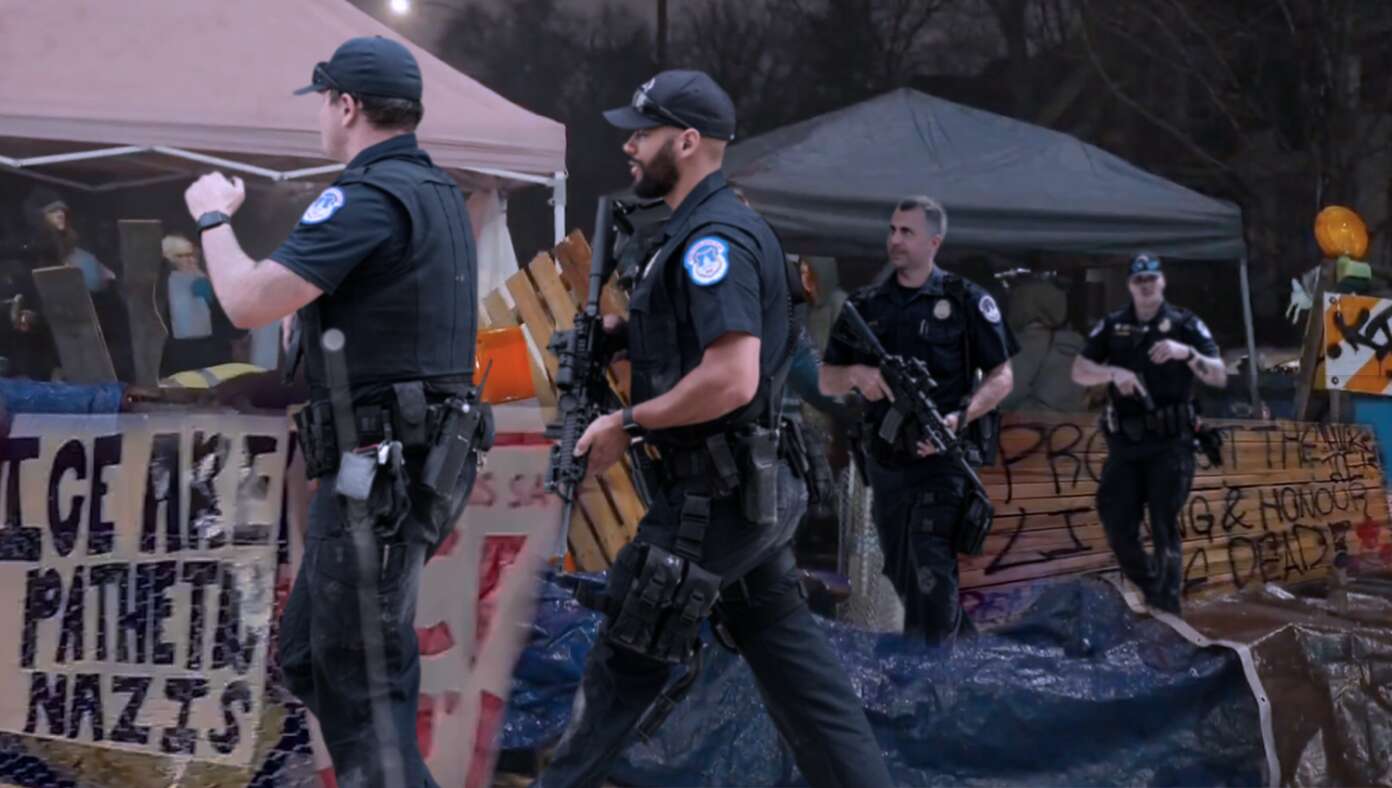
MINNEAPOLIS, MN — According to witnesses, federal ICE agents shifted their tactics slightly by donning Capitol Police uniforms so that Democrats would start defending them from being harmed.
Read More

RED ALERT! Everything you once believed is a lie. Your toddler is now capable of reaching your counters, and nothing in your home is safe anymore.
Read More
| Picture of the day |
|---|
|
|
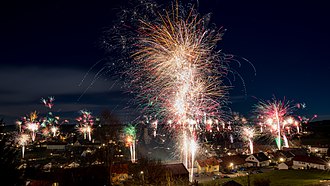
New Year’s fireworks over the Swabian village Eberhardzell near Biberach an der Riss. Today is New Year’s Day.
|


St. Joseph Cathedral, Buffalo. | Credit: CiEll/Shutterstock
Jan 10, 2026 / 06:00 am (CNA).
Catholics in the U.S. were witness to a rare Church decision in 2023 when Pope Francis elevated the Diocese of Las Vegas to a metropolitan archdiocese. Las Vegas had previously been a suffragan diocese of San Francisco, having been created by Pope John Paul II in 1995.
A suffragan diocese operates within an ecclesiastical province subordinate to a larger archdiocese and is led by a suffragan bishop who has the authority to lead his own diocese but works under the metropolitan archbishop.
In September 2025, Pope Leo XIV created a new Catholic diocese in northern China; though it goes by the same name as one established decades ago by Beijing without Vatican approval — a product of ongoing tensions between China and the Holy See — the move demonstrated the Holy See’s authority in creating local Church jurisdictions.
Outside of one’s own parish, a diocese or archdiocese is arguably the average Catholic’s most common point of interaction with the Church. These jurisdictions manage local Church life and administration, with bishops and archbishops offering both spiritual and temporal guidance and authority to Catholics under their care.
But how does the Catholic Church decide what becomes a diocese or an archdiocese? What are the roots of this ancient practice, and how does it function today?
Exclusively a papal right
Monsignor William King, JCD, KCHS, an assistant professor at the school of canon law at The Catholic University of America, told CNA that the right to erect (or suppress) a diocese “belongs exclusively to the successor of Peter, the bishop of Rome,” that is, the pope.
“Historically, secular rulers have intruded into the process and the autonomy of the Church in this action has been hard-won,” he said, pointing out that “even today in certain parts of the world, secular or civil rulers wish to have input into matters such as this.”
The pope never makes decisions regarding dioceses and archdioceses “without considerable study and consultation,” King said.
The history of diocesan administration stretches back to the earliest years of the Church, he said. In those days a diocese consisted of “a city larger than the surrounding cities and towns,” often a place of commerce or a center of government.
Throughout the centuries, including after the imperial legalization of the Church by Constantine, Church leaders refined the diocesan structure of “pastoral ministry and governance” in order to facilitate “communication and decision-making” throughout Christendom.
“This became increasingly important as the Church grew and encountered different systems of law, philosophy, and religious practice,” King said. Roman models of government structure proved useful and sufficient for Church governance; King noted that the Church structure even today more closely resembles a government than a corporation.
The process by determining which jurisdictions counted as archdioceses likely arose in earlier centuries organically, King said, with Church leaders identifying major centers of “culture, education, commerce, government, and transportation” as particularly significant jurisdictions.
The procedure for elevating a diocese to an archdiocese, meanwhile — as Pope Francis did to Las Vegas in 2023 — requires “significant study, discussion, and decision-making,” King said.
The Holy See conducts such reviews in part through a diocese’s “quinquennial report,” a detailed rundown of the diocese’s activities and administration. Such a report may indicate to the Holy See that a particular region is growing and could benefit from elevation to an archdiocese.
Local suffragan bishops will participate in discussions to that effect, King said, and the Roman Curia will work with bishops’ conferences as well as the local apostolic nuncio.
“The ultimate decision is that of the Roman pontiff, the bishop of Rome,” King said, “but is always done with his awareness of the conversations and consultations already conducted at every level.”
The priest pointed out that not every local jurisdiction of the Church is a diocese or archdiocese. At times, he said, the pope may establish a less common ecclesiastical administration “for a variety of reasons that relate to culture, legal acceptance or opposition, small numbers, and the like.”
Such jurisdictions include apostolic prefectures, apostolic vicariates, ordinariates, and other designations. Such areas may be governed by a bishop or a priest named by the pope, King said.
Read More


Minneapolis police officers, including Chief Brian O’Hara, were attacked and chased out of a downtown area by violent anti-ICE rioters on Friday night.
The post BREAKING: Minneapolis Police, INCLUDING THE CHIEF, Retreat After Anti-ICE Rioters Attack Them and Seize Control (VIDEOS) appeared first on The Gateway Pundit.
Read More