Day: January 11, 2026

Lord, one more day to love you!
Brother Charles de Foucauld

O Jesus, watch over me always, especially today, or I shall betray you like Judas.
St. Philip Neri

Lord, today is the day I begin!
St. Philip Neri

Jesus, shine through me and be so in me
that every person I come in contact with
may feel your presence in my soul.
John Henry Cardinal Newman

My God, send me thy Holy Spirit to teach me what I am and what thou art!
St. John Vianney

May the …

Read More

Gospel and Word of the Day – 12 January 2026 – A reading from the First Book of Samuel 1 Samuel 1:1-8 There was a certain man from Ramathaim, Elkanah by name, a Zuphite from the hill country of Ephraim. He was the son of Jeroham, son of Elihu, son of Tohu, son of Zuph, an Ephraimite. He had two wives, one named Hannah, the other Peninnah; Peninnah had children, but Hannah was childless. This man regularly went on pilgrimage from his city to worship the LORD of hosts and to sacrifice to him at Shiloh, where the two sons of Eli, Hophni and Phinehas, were ministering as priests of the LORD. When the day came for Elkanah to offer sacrifice, he used to give a portion each to his wife Peninnah and to all her sons and daughters, but a double portion to Hannah because he loved her, though the LORD had made her barren. Her rival, to upset her, turned it into a constant reproach to her that the LORD had left her barren. This went on year after year; each time they made their pilgrimage to the sanctuary of the LORD, Peninnah would approach her, and Hannah would weep and refuse to eat. Her husband Elkanah used to ask her: “Hannah, why do you weep, and why do you refuse to eat? Why do you grieve? Am I not more to you than ten sons?”From the Gospel according to Mark 1:14-20 After John had been arrested, Jesus came to Galilee proclaiming the Gospel of God: “This is the time of fulfillment. The Kingdom of God is at hand. Repent, and believe in the Gospel.” As he passed by the Sea of Galilee, he saw Simon and his brother Andrew casting their nets into the sea; they were fishermen. Jesus said to them, “Come after me, and I will make you fishers of men.” Then they left their nets and followed him. He walked along a little farther and saw James, the son of Zebedee, and his brother John. They too were in a boat mending their nets. Then he called them. So they left their father Zebedee in the boat along with the hired men and followed him.In this text of Mark the Evangelist, time is to be understood as the duration of the history of salvation worked by God; therefore, the time “fulfilled” is that in which this salvific action reaches its pinnacle, full realization: it is the historical moment in which God sent his Son into the world and his Kingdom was rendered more “close” than ever. The time of salvation was fulfilled because Jesus arrived. However, salvation is not automatic; salvation is a gift of love and as such, it is offered to human freedom. Always, when we speak of love, we speak of freedom: love without freedom is not love; it may be interest, it may be fear, many things, but love is always free, and being free it calls for a freely given response: it calls for our conversion. Thus, it means changing mentality — this is conversion, changing mentality — and changing life: no longer following the examples of the world but those of God, who is Jesus; following Jesus; “doing” as Jesus had done, and as Jesus taught us. (Pope Francis –   Angelus in the  Library of the Apostolic Palace, 24 January 2021)

A reading from the First Book of Samuel
1 Samuel 1:1-8

There was a certain man from Ramathaim, Elkanah by name,
a Zuphite from the hill country of Ephraim.
He was the son of Jeroham, son of Elihu,
son of Tohu, son of Zuph, an Ephraimite.
He had two wives, one named Hannah, the other Peninnah;
Peninnah had children, but Hannah was childless.
This man regularly went on pilgrimage from his city
to worship the LORD of hosts and to sacrifice to him at Shiloh,
where the two sons of Eli, Hophni and Phinehas,
were ministering as priests of the LORD.
When the day came for Elkanah to offer sacrifice,
he used to give a portion each to his wife Peninnah
and to all her sons and daughters,
but a double portion to Hannah because he loved her,
though the LORD had made her barren.
Her rival, to upset her, turned it into a constant reproach to her
that the LORD had left her barren.
This went on year after year;
each time they made their pilgrimage to the sanctuary of the LORD,
Peninnah would approach her,
and Hannah would weep and refuse to eat.
Her husband Elkanah used to ask her:
“Hannah, why do you weep, and why do you refuse to eat?
Why do you grieve?
Am I not more to you than ten sons?”

From the Gospel according to Mark
1:14-20

After John had been arrested,
Jesus came to Galilee proclaiming the Gospel of God:
“This is the time of fulfillment.
The Kingdom of God is at hand.
Repent, and believe in the Gospel.”

As he passed by the Sea of Galilee,
he saw Simon and his brother Andrew casting their nets into the sea;
they were fishermen.
Jesus said to them,
“Come after me, and I will make you fishers of men.”
Then they left their nets and followed him.
He walked along a little farther
and saw James, the son of Zebedee, and his brother John.
They too were in a boat mending their nets.
Then he called them.
So they left their father Zebedee in the boat
along with the hired men and followed him.

In this text of Mark the Evangelist, time is to be understood as the duration of the history of salvation worked by God; therefore, the time “fulfilled” is that in which this salvific action reaches its pinnacle, full realization: it is the historical moment in which God sent his Son into the world and his Kingdom was rendered more “close” than ever. The time of salvation was fulfilled because Jesus arrived. However, salvation is not automatic; salvation is a gift of love and as such, it is offered to human freedom. Always, when we speak of love, we speak of freedom: love without freedom is not love; it may be interest, it may be fear, many things, but love is always free, and being free it calls for a freely given response: it calls for our conversion. Thus, it means changing mentality — this is conversion, changing mentality — and changing life: no longer following the examples of the world but those of God, who is Jesus; following Jesus; “doing” as Jesus had done, and as Jesus taught us. (Pope Francis –   Angelus in the  Library of the Apostolic Palace, 24 January 2021)

Read More
Picture of the day


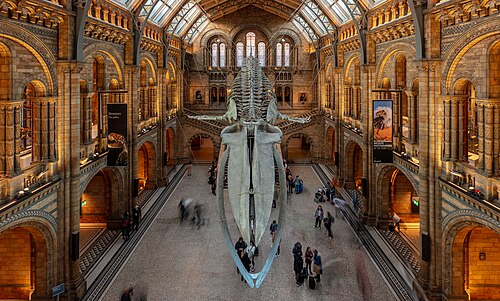
Blue whale skeleton at the Central Hall of the Natural History Museum, London, England. ‘Hope’, nickname of the blue whale skeleton, is 25.2 metres (83 ft) long and is suspended from the ceiling since July 14th 2017. Blue whales are the largest creature ever to have lived in the Earth. In the 1800s there was an estimated amount of 250,000 blue whales across the world’s oceans. After decades of commercial hunting the species was to the brink of extinction, with only around 400 surviving in 1966. That year the world took action in London and decided to legally protect blue whales from commercial hunting. Since then the population of blue whales has steadily grown to its current level of around 20,000.
 #ImageOfTheDay
Picture of the day
Blue whale skeleton at the Central Hall of the Natural History Museum, London, England. ‘Hope’, nickname of the blue whale skeleton, is 25.2 metres (83 ft) long and is suspended from the ceiling since July 14th 2017. Blue whales are the largest creature ever to have lived in the Earth. In the 1800s there was an estimated amount of 250,000 blue whales across the world’s oceans. After decades of commercial hunting the species was to the brink of extinction, with only around 400 surviving in 1966. That year the world took action in London and decided to legally protect blue whales from commercial hunting. Since then the population of blue whales has steadily grown to its current level of around 20,000.
Read More
Gänswein says he prays to Benedict XVI, confirms hope for beatification cause – #Catholic – 
 
 Archbishop Georg Gänswein speaks at an event hosted by the Catholic magazine Kelionė at the Lithuanian National Library in Vilnius, Lithuania, on Jan. 7, 2026. | Credit: L. Macevicienes/Zurnalaskelione.lt

Jan 11, 2026 / 10:32 am (CNA).
Archbishop Georg Gänswein, the apostolic nuncio to the Baltic states and longtime personal secretary to Pope Benedict XVI, said he now prays not for but to the late pontiff, asking for his intercession, and expressed hope the beatification cause will open soon.Speaking at an event hosted by the Catholic magazine Kelionė at the Lithuanian National Library on Jan. 7, Gänswein offered personal reflections on his new diplomatic mission, the celebration of Christmas in Lithuania, and his decades-long collaboration with Joseph Ratzinger.“I come from the most beautiful part of Germany, but I have lived in Rome for most of my life,” Gänswein said. “As a bonus and thanks for all my work, I received an assignment to work in the Baltic states,” he said jovially.Asked about differences between Christmas in Rome and in the Baltic region, the archbishop answered with characteristic humor: “I celebrated Christmas in Rome for 28 years, and in Vilnius for two. The first difference is the cold.” He added that Lithuania’s seasonal displays left a strong impression, drawing attention to “very beautiful Christmas decorations,” and saying the Christmas trees “are very beautiful, maybe even more beautiful than in St. Peter’s Square, in the Vatican.”Gänswein also expressed gratitude that the celebration of Christ’s birth in Lithuania is not merely cultural or superficial. He said he has sensed a reverence in which “its depth is felt here,” pointing to a faith that remains attentive to the mystery at the heart of the season.During the conversation, the nuncio returned to the influence of Benedict XVI, describing his years beside Ratzinger as a gift of divine providence.“All the years of cooperation together have left an indelible experience,” he said. “It was not only intellectual and theological formation, but also formation of the heart, soul, and everything that we can call life.”Gänswein recalled to the audience that his first encounter with Ratzinger came when he was still a young seminarian, reading the future pope’s articles and books while Ratzinger was a professor in Germany. “I tried to read and study all of his writings,” he said, explaining that he came to see Ratzinger not only as a theologian and academic, but as “a man full of faith and intelligence."After his priestly ordination in 1984, Gänswein served as an assistant parish priest before continuing his studies. He later completed doctoral work and eventually arrived in Rome, where he first met Ratzinger while the cardinal was serving as prefect of the Dicastery for the Doctrine of the Faith. Gänswein said Ratzinger invited him into collaboration, an invitation he regards as mysterious and grace filled.“What did he call me for? I don’t know,” he said, “but I see it as a great gift of Providence.” In 2003, he added, he became Ratzinger’s personal secretary.Speaking of Benedict XVI after the late pope’s death, Gänswein made a striking remark about prayer and spiritual closeness: “And now, when Pope Benedict XVI has departed to be with the Lord, I notice that I do not pray so much for him, but to him, asking for his help.” He said there were moments, including during his service in the Baltics, when he found himself asking for Benedict’s intercession.At the same time, he stressed the Church’s caution regarding sainthood causes. “The Church is a very wise and very prudent mother,” he said, noting that in beatification causes she is “twice wise and twice prudent,” and that time must pass to discern whether public esteem reflects genuine holiness rather than passing fame.In a December 2025 interview with German Catholic television network K-TV, Gänswein said, “Personally, I have great hopes that this process will be opened.” The interview aired shortly before a private audience he held with Pope Leo XIV during a discreet mid-December visit to Rome.The Kelionė gathering also featured talks from other invited speakers. Educator Vytautas Toleikis, who works as a moral education teacher at Vilnius St. Christopher Gymnasium, is the founder of the informal education group “Walkers.” He described taking students on weekly walks around Vilnius to encounter people he personally admires. He said the goal is to broaden students’ horizons through lived encounters with kindness and human warmth, adding that these meetings often surprise him as much as they do the young people.Singer Sasha Song, who represented Lithuania at the 2009 Eurovision, shared a brief personal testimony about his struggle with addiction and the transformation he experienced after rehabilitation. He said the experience taught him to value life differently, describing his current state as one marked by gratitude and a renewed sense of happiness.Prof. Robertas Badaras, a toxicologist with four decades of experience, reflected on how substance abuse has changed since the Soviet period. He noted that while alcohol once dominated, society now confronts an expanding array of substances, including a vast number of hallucinogens and stimulants.Actress Justė Liaugaudė, representing the “Red Noses Clown Doctors,” spoke about offering emotional support to patients of all ages, especially those who struggle to find joy amid illness. She described how the organization’s presence has expanded in clinical settings, including, she said, being the only non-medical personnel permitted to accompany children into operating rooms — a reminder that compassion can reach where words and medicine sometimes cannot.For Gänswein, however, the evening’s most enduring note returned to what he called the quiet, lifelong schooling he received at Benedict’s side, a formation not only of the mind, but of the whole person and the conviction that gratitude, faith, and truth are never merely ideas, but realities meant to be lived.

Gänswein says he prays to Benedict XVI, confirms hope for beatification cause – #Catholic – Archbishop Georg Gänswein speaks at an event hosted by the Catholic magazine Kelionė at the Lithuanian National Library in Vilnius, Lithuania, on Jan. 7, 2026. | Credit: L. Macevicienes/Zurnalaskelione.lt Jan 11, 2026 / 10:32 am (CNA). Archbishop Georg Gänswein, the apostolic nuncio to the Baltic states and longtime personal secretary to Pope Benedict XVI, said he now prays not for but to the late pontiff, asking for his intercession, and expressed hope the beatification cause will open soon.Speaking at an event hosted by the Catholic magazine Kelionė at the Lithuanian National Library on Jan. 7, Gänswein offered personal reflections on his new diplomatic mission, the celebration of Christmas in Lithuania, and his decades-long collaboration with Joseph Ratzinger.“I come from the most beautiful part of Germany, but I have lived in Rome for most of my life,” Gänswein said. “As a bonus and thanks for all my work, I received an assignment to work in the Baltic states,” he said jovially.Asked about differences between Christmas in Rome and in the Baltic region, the archbishop answered with characteristic humor: “I celebrated Christmas in Rome for 28 years, and in Vilnius for two. The first difference is the cold.” He added that Lithuania’s seasonal displays left a strong impression, drawing attention to “very beautiful Christmas decorations,” and saying the Christmas trees “are very beautiful, maybe even more beautiful than in St. Peter’s Square, in the Vatican.”Gänswein also expressed gratitude that the celebration of Christ’s birth in Lithuania is not merely cultural or superficial. He said he has sensed a reverence in which “its depth is felt here,” pointing to a faith that remains attentive to the mystery at the heart of the season.During the conversation, the nuncio returned to the influence of Benedict XVI, describing his years beside Ratzinger as a gift of divine providence.“All the years of cooperation together have left an indelible experience,” he said. “It was not only intellectual and theological formation, but also formation of the heart, soul, and everything that we can call life.”Gänswein recalled to the audience that his first encounter with Ratzinger came when he was still a young seminarian, reading the future pope’s articles and books while Ratzinger was a professor in Germany. “I tried to read and study all of his writings,” he said, explaining that he came to see Ratzinger not only as a theologian and academic, but as “a man full of faith and intelligence."After his priestly ordination in 1984, Gänswein served as an assistant parish priest before continuing his studies. He later completed doctoral work and eventually arrived in Rome, where he first met Ratzinger while the cardinal was serving as prefect of the Dicastery for the Doctrine of the Faith. Gänswein said Ratzinger invited him into collaboration, an invitation he regards as mysterious and grace filled.“What did he call me for? I don’t know,” he said, “but I see it as a great gift of Providence.” In 2003, he added, he became Ratzinger’s personal secretary.Speaking of Benedict XVI after the late pope’s death, Gänswein made a striking remark about prayer and spiritual closeness: “And now, when Pope Benedict XVI has departed to be with the Lord, I notice that I do not pray so much for him, but to him, asking for his help.” He said there were moments, including during his service in the Baltics, when he found himself asking for Benedict’s intercession.At the same time, he stressed the Church’s caution regarding sainthood causes. “The Church is a very wise and very prudent mother,” he said, noting that in beatification causes she is “twice wise and twice prudent,” and that time must pass to discern whether public esteem reflects genuine holiness rather than passing fame.In a December 2025 interview with German Catholic television network K-TV, Gänswein said, “Personally, I have great hopes that this process will be opened.” The interview aired shortly before a private audience he held with Pope Leo XIV during a discreet mid-December visit to Rome.The Kelionė gathering also featured talks from other invited speakers. Educator Vytautas Toleikis, who works as a moral education teacher at Vilnius St. Christopher Gymnasium, is the founder of the informal education group “Walkers.” He described taking students on weekly walks around Vilnius to encounter people he personally admires. He said the goal is to broaden students’ horizons through lived encounters with kindness and human warmth, adding that these meetings often surprise him as much as they do the young people.Singer Sasha Song, who represented Lithuania at the 2009 Eurovision, shared a brief personal testimony about his struggle with addiction and the transformation he experienced after rehabilitation. He said the experience taught him to value life differently, describing his current state as one marked by gratitude and a renewed sense of happiness.Prof. Robertas Badaras, a toxicologist with four decades of experience, reflected on how substance abuse has changed since the Soviet period. He noted that while alcohol once dominated, society now confronts an expanding array of substances, including a vast number of hallucinogens and stimulants.Actress Justė Liaugaudė, representing the “Red Noses Clown Doctors,” spoke about offering emotional support to patients of all ages, especially those who struggle to find joy amid illness. She described how the organization’s presence has expanded in clinical settings, including, she said, being the only non-medical personnel permitted to accompany children into operating rooms — a reminder that compassion can reach where words and medicine sometimes cannot.For Gänswein, however, the evening’s most enduring note returned to what he called the quiet, lifelong schooling he received at Benedict’s side, a formation not only of the mind, but of the whole person and the conviction that gratitude, faith, and truth are never merely ideas, but realities meant to be lived.


Archbishop Georg Gänswein speaks at an event hosted by the Catholic magazine Kelionė at the Lithuanian National Library in Vilnius, Lithuania, on Jan. 7, 2026. | Credit: L. Macevicienes/Zurnalaskelione.lt

Jan 11, 2026 / 10:32 am (CNA).

Archbishop Georg Gänswein, the apostolic nuncio to the Baltic states and longtime personal secretary to Pope Benedict XVI, said he now prays not for but to the late pontiff, asking for his intercession, and expressed hope the beatification cause will open soon.

Speaking at an event hosted by the Catholic magazine Kelionė at the Lithuanian National Library on Jan. 7, Gänswein offered personal reflections on his new diplomatic mission, the celebration of Christmas in Lithuania, and his decades-long collaboration with Joseph Ratzinger.

“I come from the most beautiful part of Germany, but I have lived in Rome for most of my life,” Gänswein said. “As a bonus and thanks for all my work, I received an assignment to work in the Baltic states,” he said jovially.

Asked about differences between Christmas in Rome and in the Baltic region, the archbishop answered with characteristic humor: “I celebrated Christmas in Rome for 28 years, and in Vilnius for two. The first difference is the cold.” He added that Lithuania’s seasonal displays left a strong impression, drawing attention to “very beautiful Christmas decorations,” and saying the Christmas trees “are very beautiful, maybe even more beautiful than in St. Peter’s Square, in the Vatican.”

Gänswein also expressed gratitude that the celebration of Christ’s birth in Lithuania is not merely cultural or superficial. He said he has sensed a reverence in which “its depth is felt here,” pointing to a faith that remains attentive to the mystery at the heart of the season.

During the conversation, the nuncio returned to the influence of Benedict XVI, describing his years beside Ratzinger as a gift of divine providence.

“All the years of cooperation together have left an indelible experience,” he said. “It was not only intellectual and theological formation, but also formation of the heart, soul, and everything that we can call life.”

Gänswein recalled to the audience that his first encounter with Ratzinger came when he was still a young seminarian, reading the future pope’s articles and books while Ratzinger was a professor in Germany. “I tried to read and study all of his writings,” he said, explaining that he came to see Ratzinger not only as a theologian and academic, but as “a man full of faith and intelligence."

After his priestly ordination in 1984, Gänswein served as an assistant parish priest before continuing his studies. He later completed doctoral work and eventually arrived in Rome, where he first met Ratzinger while the cardinal was serving as prefect of the Dicastery for the Doctrine of the Faith. Gänswein said Ratzinger invited him into collaboration, an invitation he regards as mysterious and grace filled.

“What did he call me for? I don’t know,” he said, “but I see it as a great gift of Providence.” In 2003, he added, he became Ratzinger’s personal secretary.

Speaking of Benedict XVI after the late pope’s death, Gänswein made a striking remark about prayer and spiritual closeness: “And now, when Pope Benedict XVI has departed to be with the Lord, I notice that I do not pray so much for him, but to him, asking for his help.” He said there were moments, including during his service in the Baltics, when he found himself asking for Benedict’s intercession.

At the same time, he stressed the Church’s caution regarding sainthood causes. “The Church is a very wise and very prudent mother,” he said, noting that in beatification causes she is “twice wise and twice prudent,” and that time must pass to discern whether public esteem reflects genuine holiness rather than passing fame.

In a December 2025 interview with German Catholic television network K-TV, Gänswein said, “Personally, I have great hopes that this process will be opened.” The interview aired shortly before a private audience he held with Pope Leo XIV during a discreet mid-December visit to Rome.

The Kelionė gathering also featured talks from other invited speakers. Educator Vytautas Toleikis, who works as a moral education teacher at Vilnius St. Christopher Gymnasium, is the founder of the informal education group “Walkers.” He described taking students on weekly walks around Vilnius to encounter people he personally admires. He said the goal is to broaden students’ horizons through lived encounters with kindness and human warmth, adding that these meetings often surprise him as much as they do the young people.

Singer Sasha Song, who represented Lithuania at the 2009 Eurovision, shared a brief personal testimony about his struggle with addiction and the transformation he experienced after rehabilitation. He said the experience taught him to value life differently, describing his current state as one marked by gratitude and a renewed sense of happiness.

Prof. Robertas Badaras, a toxicologist with four decades of experience, reflected on how substance abuse has changed since the Soviet period. He noted that while alcohol once dominated, society now confronts an expanding array of substances, including a vast number of hallucinogens and stimulants.

Actress Justė Liaugaudė, representing the “Red Noses Clown Doctors,” spoke about offering emotional support to patients of all ages, especially those who struggle to find joy amid illness. She described how the organization’s presence has expanded in clinical settings, including, she said, being the only non-medical personnel permitted to accompany children into operating rooms — a reminder that compassion can reach where words and medicine sometimes cannot.

For Gänswein, however, the evening’s most enduring note returned to what he called the quiet, lifelong schooling he received at Benedict’s side, a formation not only of the mind, but of the whole person and the conviction that gratitude, faith, and truth are never merely ideas, but realities meant to be lived.

Read More
Pope Leo XIV baptizes 20 infants in Sistine Chapel, tells parents faith is ‘more than necessary’ – #Catholic – 
 
 Pope Leo XIV baptizes a child in the Sistine Chapel at the Vatican on the Feast of the Baptism of the Lord, January 11, 2026. / Vatican Media

Vatican City, Jan 11, 2026 / 09:00 am (CNA).
Pope Leo XIV baptized 20 infants, the children of Vatican employees, during Mass in the Sistine Chapel on Sunday for the Feast of the Baptism of the Lord.In his homily, the pope urged parents to see faith as essential for their children’s lives, comparing it to the basic care no newborn can do without.“When we know that something good is essential, we immediately seek it for those we love,” he said. “Who among us, in fact, would leave newborns without clothes or without nourishment, waiting for them to choose when they are grown how to dress and what to eat?”“Dear friends, if food and clothing are necessary to live, faith is more than necessary, because with God life finds salvation,” the pope said.Baptism as God’s closenessReflecting on the Gospel account of Jesus’ baptism, Leo said the Lord chooses to be found where people least expect him — “the Holy One among sinners” — drawing near without keeping distance. He pointed to Jesus’ reply to John the Baptist: “Let it be so now, for it is proper for us to fulfill all righteousness,” explaining that God’s “righteousness” is his saving action, by which the Father makes humanity righteous through Christ.The pope described Jesus’ baptism in the Jordan as a sign renewed with deeper meaning — “death and resurrection, forgiveness and communion” — and said the sacrament celebrated for the infants is rooted in God’s love.“The children you now hold in your arms are transformed into new creatures,” Leo told parents. “Just as from you, their parents, they have received life, so now they receive the meaning for living it: faith.”A word to mothers and fathersLeo emphasized the role of parents as the first witnesses and educators of faith, saying God’s provident love becomes visible on earth through mothers and fathers who ask for faith for their children.He also noted the changing seasons of family life: “Certainly, the day will come when they will become heavy to hold in your arms; and the day will also come when they will be the ones to support you.”The pope prayed that the sacrament would strengthen families in lasting love: “May baptism, which unites us in the one family of the Church, sanctify all your families at all times, giving strength and constancy to the affection that unites you.”The signs of baptismTurning to the rites themselves, Leo explained the meaning of baptism’s symbols: “The water of the font is the washing in the Spirit, which purifies from every sin; the white garment is the new robe that God the Father gives us for the eternal feast of his Kingdom; the candle lit from the paschal candle is the light of the risen Christ, which illumines our path.”“I wish you to continue it with joy throughout the year that has just begun and for your whole life, certain that the Lord will always accompany your steps,” he said.The baptism of children of Vatican employees is a tradition begun in 1981 by St. John Paul II. The first ceremonies were held in the Pauline Chapel, and since 1983 the annual celebration has taken place in the Sistine Chapel.This story was first published by ACI Prensa, CNA’s Spanish-language news partner. It has been translated and adapted by CNA.

Pope Leo XIV baptizes 20 infants in Sistine Chapel, tells parents faith is ‘more than necessary’ – #Catholic – Pope Leo XIV baptizes a child in the Sistine Chapel at the Vatican on the Feast of the Baptism of the Lord, January 11, 2026. / Vatican Media Vatican City, Jan 11, 2026 / 09:00 am (CNA). Pope Leo XIV baptized 20 infants, the children of Vatican employees, during Mass in the Sistine Chapel on Sunday for the Feast of the Baptism of the Lord.In his homily, the pope urged parents to see faith as essential for their children’s lives, comparing it to the basic care no newborn can do without.“When we know that something good is essential, we immediately seek it for those we love,” he said. “Who among us, in fact, would leave newborns without clothes or without nourishment, waiting for them to choose when they are grown how to dress and what to eat?”“Dear friends, if food and clothing are necessary to live, faith is more than necessary, because with God life finds salvation,” the pope said.Baptism as God’s closenessReflecting on the Gospel account of Jesus’ baptism, Leo said the Lord chooses to be found where people least expect him — “the Holy One among sinners” — drawing near without keeping distance. He pointed to Jesus’ reply to John the Baptist: “Let it be so now, for it is proper for us to fulfill all righteousness,” explaining that God’s “righteousness” is his saving action, by which the Father makes humanity righteous through Christ.The pope described Jesus’ baptism in the Jordan as a sign renewed with deeper meaning — “death and resurrection, forgiveness and communion” — and said the sacrament celebrated for the infants is rooted in God’s love.“The children you now hold in your arms are transformed into new creatures,” Leo told parents. “Just as from you, their parents, they have received life, so now they receive the meaning for living it: faith.”A word to mothers and fathersLeo emphasized the role of parents as the first witnesses and educators of faith, saying God’s provident love becomes visible on earth through mothers and fathers who ask for faith for their children.He also noted the changing seasons of family life: “Certainly, the day will come when they will become heavy to hold in your arms; and the day will also come when they will be the ones to support you.”The pope prayed that the sacrament would strengthen families in lasting love: “May baptism, which unites us in the one family of the Church, sanctify all your families at all times, giving strength and constancy to the affection that unites you.”The signs of baptismTurning to the rites themselves, Leo explained the meaning of baptism’s symbols: “The water of the font is the washing in the Spirit, which purifies from every sin; the white garment is the new robe that God the Father gives us for the eternal feast of his Kingdom; the candle lit from the paschal candle is the light of the risen Christ, which illumines our path.”“I wish you to continue it with joy throughout the year that has just begun and for your whole life, certain that the Lord will always accompany your steps,” he said.The baptism of children of Vatican employees is a tradition begun in 1981 by St. John Paul II. The first ceremonies were held in the Pauline Chapel, and since 1983 the annual celebration has taken place in the Sistine Chapel.This story was first published by ACI Prensa, CNA’s Spanish-language news partner. It has been translated and adapted by CNA.


Pope Leo XIV baptizes a child in the Sistine Chapel at the Vatican on the Feast of the Baptism of the Lord, January 11, 2026. / Vatican Media

Vatican City, Jan 11, 2026 / 09:00 am (CNA).

Pope Leo XIV baptized 20 infants, the children of Vatican employees, during Mass in the Sistine Chapel on Sunday for the Feast of the Baptism of the Lord.

In his homily, the pope urged parents to see faith as essential for their children’s lives, comparing it to the basic care no newborn can do without.

“When we know that something good is essential, we immediately seek it for those we love,” he said. “Who among us, in fact, would leave newborns without clothes or without nourishment, waiting for them to choose when they are grown how to dress and what to eat?”

“Dear friends, if food and clothing are necessary to live, faith is more than necessary, because with God life finds salvation,” the pope said.

Baptism as God’s closeness

Reflecting on the Gospel account of Jesus’ baptism, Leo said the Lord chooses to be found where people least expect him — “the Holy One among sinners” — drawing near without keeping distance. He pointed to Jesus’ reply to John the Baptist: “Let it be so now, for it is proper for us to fulfill all righteousness,” explaining that God’s “righteousness” is his saving action, by which the Father makes humanity righteous through Christ.

The pope described Jesus’ baptism in the Jordan as a sign renewed with deeper meaning — “death and resurrection, forgiveness and communion” — and said the sacrament celebrated for the infants is rooted in God’s love.

“The children you now hold in your arms are transformed into new creatures,” Leo told parents. “Just as from you, their parents, they have received life, so now they receive the meaning for living it: faith.”

A word to mothers and fathers

Leo emphasized the role of parents as the first witnesses and educators of faith, saying God’s provident love becomes visible on earth through mothers and fathers who ask for faith for their children.

He also noted the changing seasons of family life: “Certainly, the day will come when they will become heavy to hold in your arms; and the day will also come when they will be the ones to support you.”

The pope prayed that the sacrament would strengthen families in lasting love: “May baptism, which unites us in the one family of the Church, sanctify all your families at all times, giving strength and constancy to the affection that unites you.”

The signs of baptism

Turning to the rites themselves, Leo explained the meaning of baptism’s symbols: “The water of the font is the washing in the Spirit, which purifies from every sin; the white garment is the new robe that God the Father gives us for the eternal feast of his Kingdom; the candle lit from the paschal candle is the light of the risen Christ, which illumines our path.”

“I wish you to continue it with joy throughout the year that has just begun and for your whole life, certain that the Lord will always accompany your steps,” he said.

The baptism of children of Vatican employees is a tradition begun in 1981 by St. John Paul II. The first ceremonies were held in the Pauline Chapel, and since 1983 the annual celebration has taken place in the Sistine Chapel.

This story was first published by ACI Prensa, CNA’s Spanish-language news partner. It has been translated and adapted by CNA.

Read More

In March of 1781, William Herschel spotted the seventh-known planet of our solar system. He wanted to name it Georgium sidus (George’s star), after King George III. Astronomers outside the U.K. weren’t keen on the planet being named for the British monarch, and recommended sticking with the tradition of naming planets for mythical characters; itContinue reading “Jan. 11, 1787: William Herschel discovers two moons of Uranus”

The post Jan. 11, 1787: William Herschel discovers two moons of Uranus appeared first on Astronomy Magazine.

Read More
Pope Leo XIV condemns violence in Iran, Syria, and Ukraine – #Catholic – 
 
 Pope Leo XIV greets pilgrims gathered in St. Peter's Square at the Vatican for the recitation of the Angelus on Jan. 11, 2026. / Vatican Media

Vatican City, Jan 11, 2026 / 08:25 am (CNA).
Pope Leo XIV on Sunday lamented escalating violence in Iran and Syria and renewed his appeal for peace in Ukraine, while also offering a special blessing for children receiving baptism and praying for those born into “difficult circumstances.”Speaking after the Angelus on Jan. 11, the pope said: “My thoughts turn to the situation currently unfolding in the Middle East, especially in Iran and Syria, where ongoing tensions continue to claim many lives.” He added: “I hope and pray that dialogue and peace may be patiently nurtured in pursuit of the common good of the whole of society.”The pope’s remarks came amid unrest in Tehran, where anti-government protests that began about two weeks ago have left more than 70 people dead, according to human rights organizations.He also pointed to renewed fighting in Syria, where international media reports say clashes have erupted in Aleppo between the interim government’s army and the Kurdish-led Syrian Democratic Forces over control of neighborhoods in the city center. At least 14 civilians have been killed, with dozens injured and tens of thousands displaced, according to those reports.Turning to the war in Ukraine, Leo warned of the mounting toll of Russian strikes as winter intensifies.“In Ukraine, new attacks – particularly severe ones aimed at energy infrastructure as the cold weather grows harsher – are taking a heavy toll on the civilian population,” he said. “I pray for those who suffer and renew my appeal for an end to the violence and for renewed efforts to achieve peace.”Recent attacks have left more than one million homes without water or heat in Ukraine’s Dnipropetrovsk region.Earlier in the day, the pope celebrated Mass for the Feast of the Baptism of the Lord and baptized 20 newborns, the children of Vatican employees, in the Sistine Chapel. After the Angelus, he said he wanted to extend his blessing “to all children who have received or will receive Baptism during these days – in Rome and throughout the world – entrusting them to the maternal care of the Virgin Mary.”He added: “In a particular way, I pray for children born into difficult circumstances, whether due to health conditions or external dangers. May the grace of Baptism, which unites them to the Paschal Mystery of Christ, bear fruit in their lives and in the lives of their families.”During his Angelus reflection, Leo spoke about the meaning of Christ’s baptism and how the sacrament of baptism makes believers “children of God through the power of his Spirit of life,” encouraging the faithful to remember “the great gift we have received” and to bear witness to it “with joy and authenticity.”This story was first published by ACI Prensa, CNA’s Spanish-language news partner. It has been translated and adapted by CNA.

Pope Leo XIV condemns violence in Iran, Syria, and Ukraine – #Catholic – Pope Leo XIV greets pilgrims gathered in St. Peter's Square at the Vatican for the recitation of the Angelus on Jan. 11, 2026. / Vatican Media Vatican City, Jan 11, 2026 / 08:25 am (CNA). Pope Leo XIV on Sunday lamented escalating violence in Iran and Syria and renewed his appeal for peace in Ukraine, while also offering a special blessing for children receiving baptism and praying for those born into “difficult circumstances.”Speaking after the Angelus on Jan. 11, the pope said: “My thoughts turn to the situation currently unfolding in the Middle East, especially in Iran and Syria, where ongoing tensions continue to claim many lives.” He added: “I hope and pray that dialogue and peace may be patiently nurtured in pursuit of the common good of the whole of society.”The pope’s remarks came amid unrest in Tehran, where anti-government protests that began about two weeks ago have left more than 70 people dead, according to human rights organizations.He also pointed to renewed fighting in Syria, where international media reports say clashes have erupted in Aleppo between the interim government’s army and the Kurdish-led Syrian Democratic Forces over control of neighborhoods in the city center. At least 14 civilians have been killed, with dozens injured and tens of thousands displaced, according to those reports.Turning to the war in Ukraine, Leo warned of the mounting toll of Russian strikes as winter intensifies.“In Ukraine, new attacks – particularly severe ones aimed at energy infrastructure as the cold weather grows harsher – are taking a heavy toll on the civilian population,” he said. “I pray for those who suffer and renew my appeal for an end to the violence and for renewed efforts to achieve peace.”Recent attacks have left more than one million homes without water or heat in Ukraine’s Dnipropetrovsk region.Earlier in the day, the pope celebrated Mass for the Feast of the Baptism of the Lord and baptized 20 newborns, the children of Vatican employees, in the Sistine Chapel. After the Angelus, he said he wanted to extend his blessing “to all children who have received or will receive Baptism during these days – in Rome and throughout the world – entrusting them to the maternal care of the Virgin Mary.”He added: “In a particular way, I pray for children born into difficult circumstances, whether due to health conditions or external dangers. May the grace of Baptism, which unites them to the Paschal Mystery of Christ, bear fruit in their lives and in the lives of their families.”During his Angelus reflection, Leo spoke about the meaning of Christ’s baptism and how the sacrament of baptism makes believers “children of God through the power of his Spirit of life,” encouraging the faithful to remember “the great gift we have received” and to bear witness to it “with joy and authenticity.”This story was first published by ACI Prensa, CNA’s Spanish-language news partner. It has been translated and adapted by CNA.


Pope Leo XIV greets pilgrims gathered in St. Peter's Square at the Vatican for the recitation of the Angelus on Jan. 11, 2026. / Vatican Media

Vatican City, Jan 11, 2026 / 08:25 am (CNA).

Pope Leo XIV on Sunday lamented escalating violence in Iran and Syria and renewed his appeal for peace in Ukraine, while also offering a special blessing for children receiving baptism and praying for those born into “difficult circumstances.”

Speaking after the Angelus on Jan. 11, the pope said: “My thoughts turn to the situation currently unfolding in the Middle East, especially in Iran and Syria, where ongoing tensions continue to claim many lives.” He added: “I hope and pray that dialogue and peace may be patiently nurtured in pursuit of the common good of the whole of society.”

The pope’s remarks came amid unrest in Tehran, where anti-government protests that began about two weeks ago have left more than 70 people dead, according to human rights organizations.

He also pointed to renewed fighting in Syria, where international media reports say clashes have erupted in Aleppo between the interim government’s army and the Kurdish-led Syrian Democratic Forces over control of neighborhoods in the city center. At least 14 civilians have been killed, with dozens injured and tens of thousands displaced, according to those reports.

Turning to the war in Ukraine, Leo warned of the mounting toll of Russian strikes as winter intensifies.

“In Ukraine, new attacks – particularly severe ones aimed at energy infrastructure as the cold weather grows harsher – are taking a heavy toll on the civilian population,” he said. “I pray for those who suffer and renew my appeal for an end to the violence and for renewed efforts to achieve peace.”

Recent attacks have left more than one million homes without water or heat in Ukraine’s Dnipropetrovsk region.

Earlier in the day, the pope celebrated Mass for the Feast of the Baptism of the Lord and baptized 20 newborns, the children of Vatican employees, in the Sistine Chapel. After the Angelus, he said he wanted to extend his blessing “to all children who have received or will receive Baptism during these days – in Rome and throughout the world – entrusting them to the maternal care of the Virgin Mary.”

He added: “In a particular way, I pray for children born into difficult circumstances, whether due to health conditions or external dangers. May the grace of Baptism, which unites them to the Paschal Mystery of Christ, bear fruit in their lives and in the lives of their families.”

During his Angelus reflection, Leo spoke about the meaning of Christ’s baptism and how the sacrament of baptism makes believers “children of God through the power of his Spirit of life,” encouraging the faithful to remember “the great gift we have received” and to bear witness to it “with joy and authenticity.”

This story was first published by ACI Prensa, CNA’s Spanish-language news partner. It has been translated and adapted by CNA.

Read More
‘Adopt a Bishop’ initiative invites faithful to pray for Church leaders #Catholic 
 
 Pope Leo XIV speaks to bishops gathered for the Jubilee of Bishops on June 25, 2025, in St. Peter’s Basilica at the Vatican. | Credit: Vatican Media

Jan 11, 2026 / 06:00 am (CNA).
Soon after the election of Pope Leo XIV, Cardinal Luis Antonio Tagle shared in a press conference that moments before then-Cardinal Robert Prevost was chosen to be pontiff, Tagle noticed the emotion by the soon-to-be-pope as it was becoming more clear he would be elected, so he reached into his pocket and offered Prevost a piece of candy.It was this simple moment that inspired Lauren Winter, founder of the Catholic company Brick House in the City, to start the Adopt a Bishop initiative.“It really reminded me that these are all human beings who made the choice one day to accept a very serious ‘yes,’” Winter told CNA in an interview.The Adopt a Bishop initiative, which has been launched in collaboration with The Dorothea Project, invites the faithful to adopt a bishop for the year and pray for that bishop throughout the year.“I think our bishops carry an enormous and often invisible spiritual weight,” she said. “They carry a responsibility that most of us never see — it’s pastoral and spiritual and it’s deeply personal and they’re holding entire dioceses in their prayer. And I think that kind of weight requires spiritual support.”This is the first year of the initiative and over 1,000 people have already signed up to adopt a bishop in prayer. When an individual signs up on the website that person is randomly assigned a bishop from anywhere in the world.Winter explained that she decided to use a random generator in order to “remove preference.”“I didn’t want anyone to choose a bishop that they already knew and admired and I wanted to leave that room for the Holy Spirit,” she said. “And it may be a bishop you are already familiar with. It may be a bishop that is someone that you have disagreed with. But the call to prayer is still there and I think receiving a bishop instead of choosing one, that felt more like a posture of reception, which I feel like it’s more aligned with how grace works in the Church — just leaving the room there for the Spirit to work.”The Catholic business owner highlighted the importance spiritual adoption plays in the Church in that it reminds us that “we are also being prayed for, it strengthens the bonds within the Church, and then I feel like it helps us to live more intentionally as one body of Christ.”Winter said she hopes that through this initiative “people feel more connected to their bishop, to the Church, to the quiet work of prayer, and how a small faithful commitment can really shape our faith.”“I imagine many people when they meet a bishop, they ask the good bishop to pray for them and I think it’s really beautiful that we can return that — the reciprocity of prayer. I think they need our prayers too.”

‘Adopt a Bishop’ initiative invites faithful to pray for Church leaders #Catholic Pope Leo XIV speaks to bishops gathered for the Jubilee of Bishops on June 25, 2025, in St. Peter’s Basilica at the Vatican. | Credit: Vatican Media Jan 11, 2026 / 06:00 am (CNA). Soon after the election of Pope Leo XIV, Cardinal Luis Antonio Tagle shared in a press conference that moments before then-Cardinal Robert Prevost was chosen to be pontiff, Tagle noticed the emotion by the soon-to-be-pope as it was becoming more clear he would be elected, so he reached into his pocket and offered Prevost a piece of candy.It was this simple moment that inspired Lauren Winter, founder of the Catholic company Brick House in the City, to start the Adopt a Bishop initiative.“It really reminded me that these are all human beings who made the choice one day to accept a very serious ‘yes,’” Winter told CNA in an interview.The Adopt a Bishop initiative, which has been launched in collaboration with The Dorothea Project, invites the faithful to adopt a bishop for the year and pray for that bishop throughout the year.“I think our bishops carry an enormous and often invisible spiritual weight,” she said. “They carry a responsibility that most of us never see — it’s pastoral and spiritual and it’s deeply personal and they’re holding entire dioceses in their prayer. And I think that kind of weight requires spiritual support.”This is the first year of the initiative and over 1,000 people have already signed up to adopt a bishop in prayer. When an individual signs up on the website that person is randomly assigned a bishop from anywhere in the world.Winter explained that she decided to use a random generator in order to “remove preference.”“I didn’t want anyone to choose a bishop that they already knew and admired and I wanted to leave that room for the Holy Spirit,” she said. “And it may be a bishop you are already familiar with. It may be a bishop that is someone that you have disagreed with. But the call to prayer is still there and I think receiving a bishop instead of choosing one, that felt more like a posture of reception, which I feel like it’s more aligned with how grace works in the Church — just leaving the room there for the Spirit to work.”The Catholic business owner highlighted the importance spiritual adoption plays in the Church in that it reminds us that “we are also being prayed for, it strengthens the bonds within the Church, and then I feel like it helps us to live more intentionally as one body of Christ.”Winter said she hopes that through this initiative “people feel more connected to their bishop, to the Church, to the quiet work of prayer, and how a small faithful commitment can really shape our faith.”“I imagine many people when they meet a bishop, they ask the good bishop to pray for them and I think it’s really beautiful that we can return that — the reciprocity of prayer. I think they need our prayers too.”


Pope Leo XIV speaks to bishops gathered for the Jubilee of Bishops on June 25, 2025, in St. Peter’s Basilica at the Vatican. | Credit: Vatican Media

Jan 11, 2026 / 06:00 am (CNA).

Soon after the election of Pope Leo XIV, Cardinal Luis Antonio Tagle shared in a press conference that moments before then-Cardinal Robert Prevost was chosen to be pontiff, Tagle noticed the emotion by the soon-to-be-pope as it was becoming more clear he would be elected, so he reached into his pocket and offered Prevost a piece of candy.

It was this simple moment that inspired Lauren Winter, founder of the Catholic company Brick House in the City, to start the Adopt a Bishop initiative.

“It really reminded me that these are all human beings who made the choice one day to accept a very serious ‘yes,’” Winter told CNA in an interview.

The Adopt a Bishop initiative, which has been launched in collaboration with The Dorothea Project, invites the faithful to adopt a bishop for the year and pray for that bishop throughout the year.

“I think our bishops carry an enormous and often invisible spiritual weight,” she said. “They carry a responsibility that most of us never see — it’s pastoral and spiritual and it’s deeply personal and they’re holding entire dioceses in their prayer. And I think that kind of weight requires spiritual support.”

This is the first year of the initiative and over 1,000 people have already signed up to adopt a bishop in prayer. When an individual signs up on the website that person is randomly assigned a bishop from anywhere in the world.

Winter explained that she decided to use a random generator in order to “remove preference.”

“I didn’t want anyone to choose a bishop that they already knew and admired and I wanted to leave that room for the Holy Spirit,” she said. “And it may be a bishop you are already familiar with. It may be a bishop that is someone that you have disagreed with. But the call to prayer is still there and I think receiving a bishop instead of choosing one, that felt more like a posture of reception, which I feel like it’s more aligned with how grace works in the Church — just leaving the room there for the Spirit to work.”

The Catholic business owner highlighted the importance spiritual adoption plays in the Church in that it reminds us that “we are also being prayed for, it strengthens the bonds within the Church, and then I feel like it helps us to live more intentionally as one body of Christ.”

Winter said she hopes that through this initiative “people feel more connected to their bishop, to the Church, to the quiet work of prayer, and how a small faithful commitment can really shape our faith.”

“I imagine many people when they meet a bishop, they ask the good bishop to pray for them and I think it’s really beautiful that we can return that — the reciprocity of prayer. I think they need our prayers too.”

Read More