



California Governor Gavin Newsom is now accusing President Trump of trying to ‘stoke’ a civil war.
The post PURE PROJECTION: Gavin Newsom Says ‘Trump is Trying to Stoke a Civil War’ (VIDEO) appeared first on The Gateway Pundit.
Read More


California Governor Gavin Newsom is now accusing President Trump of trying to ‘stoke’ a civil war.
The post PURE PROJECTION: Gavin Newsom Says ‘Trump is Trying to Stoke a Civil War’ (VIDEO) appeared first on The Gateway Pundit.
Read More


Writer and political analyst Michael Shellenberger appeared on the Jesse Watters show this week to talk about the unhinged anti-ICE protests and the consequences of them.
The post Michael Shellenberger on ICE Protests: ‘The Left is Getting People Killed’ (VIDEO) appeared first on The Gateway Pundit.
Read More


Left wing podcaster Jennifer Welch recently spoke with former CNN hack Jim Acosta and provided a preview of what Democrats will do if and when they retake power.
The post PAY CLOSE ATTENTION: Poisonous Left Wing Podcaster Jennifer Welch Reveals What Democrats Will Do When Back in Power (VIDEO) appeared first on The Gateway Pundit.
Read More
PGA West in the Coachella Valley and has not just incredible golf, but top-tier dining and a brand-new training facility to keep your game in great shape during the winter months.
Read MoreO God of goodness and mercy, to Thy fatherly guidance we commend our family, our household and all our belongings. We commit all to Thy love and keeping; do Thou fill this house with Thy blessings even as Thou didst fill the holy House of Nazareth with Thy presence.
Keep far from us, above all else, the blemish of sin, and do Thou alone reign in our midst by Thy law, by Thy most holy love and by the exercise of every Christian virtue. Let each one of us obey Thee, love Thee and set himself …
Read MoreA reading from the Book of Isaiah
49:3, 5-6
The LORD said to me: You are my servant,
Israel, through whom I show my glory.
Now the LORD has spoken
who formed me as his servant from the womb,
that Jacob may be brought back to him
and Israel gathered to him;
and I am made glorious in the sight of the LORD,
and my God is now my strength!
It is too little, the LORD says, for you to be my servant,
to raise up the tribes of Jacob,
and restore the survivors of Israel;
I will make you a light to the nations,
that my salvation may reach to the ends of the earth.
A reading from the Letter to the Corinthians
1:1-3
Paul, called to be an apostle of Christ Jesus by the will of God,
and Sosthenes our brother,
to the church of God that is in Corinth,
to you who have been sanctified in Christ Jesus, called to be holy,
with all those everywhere who call upon the name of our Lord Jesus Christ, their Lord and ours.
Grace to you and peace from God our Father
and the Lord Jesus Christ.
From the Gospel according to John
1:29-34
John the Baptist saw Jesus coming toward him and said,
“Behold, the Lamb of God, who takes away the sin of the world.
He is the one of whom I said,
‘A man is coming after me who ranks ahead of me
because he existed before me.’
I did not know him,
but the reason why I came baptizing with water
was that he might be made known to Israel.”
John testified further, saying,
“I saw the Spirit come down like a dove from heaven
and remain upon him.
I did not know him,
but the one who sent me to baptize with water told me,
‘On whomever you see the Spirit come down and remain,
he is the one who will baptize with the Holy Spirit.’
Now I have seen and testified that he is the Son of God.”
The Baptist cannot hold back the urgent desire to bear witness to Jesus and declares: “I have seen and have borne witness” (v. 34). John saw something shocking, that is, the beloved Son of God in solidarity with sinners; and the Holy Spirit made him understand this unheard-of novelty, a true reversal. In fact, while in all religions it is man who offers and sacrifices something to God, in the event Jesus is God Who offers His Son for the salvation of humanity. John manifests his astonishment and his consent to this newness brought by Jesus, through a meaningful expression that we repeat each time in the Mass: “Behold the Lamb of God, Who takes away the sin of the world!” (v. 29). The testimony of John the Baptist invites us to start out again and again on our journey of faith: to start afresh from Jesus Christ, the Lamb full of mercy that the Father gave for us. Let us be surprised once again by God’s choice to be on our side, to show solidarity with us sinners, and to save the world from evil by taking it on fully. Let us learn from John the Baptist not to assume that we already know Jesus, that we already know everything about Him (cf. v. 31). This is not so. Let us pause with the Gospel, perhaps even contemplating an icon of Christ, a “Holy face”. Let us contemplate with our eyes and yet more with our hearts; and let us allow ourselves to be instructed by the Holy Spirit, Who tells us inside: It is He! (Pope Francis – Angelus, 19 January 2020)
Read More

Jan 17, 2026 / 11:00 am (CNA).
Father Travis Moger has been a Catholic priest for just nine months, and his journey to ordination was a unique one. A former Baptist pastor and Navy chaplain, he was ordained in May 2025 in the Diocese of Wheeling-Charleston, West Virginia, seven years after he, his wife, and his son entered the Catholic Church.
“I didn’t come into the Church in order to be a priest; God used prayer to draw me to the Catholic Church,” Moger told EWTN News reporter Julia Convery.
During a military campaign as a Navy chaplain, Moger; his wife, Amelia; and his son, Mark, all separately began to feel the call toward Catholicism. While Moger was away, his wife had begun attending RCIA (Rite of Christian Initiation of Adults, which is now called OCIA — the Order of Christian Initiation of Adults).
Father Thomas Falkenthal, Moger’s former Navy chaplain supervisor, witnessed the seeds being planted in Moger’s heart.
“He was connecting with the liturgy. The Catholic Mass was certainly far from his tradition. I could tell it was touching him,” Falkenthal shared with Convery.
“He didn’t realize it, but all the way back home in the United States his wife, Amelia, was going to RCIA and preparing to join the Catholic Church. So when he came home from that deployment, they both had something to share with each other. Now I think that’s an amazing movement of the Spirit to keep that couple so close," Falkenthal said.
“It was definitely a God thing definitely to draw her towards the Catholic Church,” Moger added.
After a five-year journey of study and conversion, Moger, his wife, and his son were received into the Catholic Church on Easter Sunday 2018.
“I entered the Church not knowing if there would be a path to the priesthood for me,” Moger shared.
Bishop Mark Brennan of the Diocese of Wheeling-Charleston explained that Pope Francis eventually granted Moger a dispensation from the usual requirement of celibacy for the Catholic priesthood, allowing him to be ordained a priest.
The bishop also pointed out that he believes having a desire for a family is a trait that makes a good priest.
“When I was a vocations director, I always looked for would this man make a good husband and father? If he would, then he’d probably make a good priest,” Brennan said.
Moger also highlighted this trait as one that allows him to have a unique perspective into his now-spiritual fatherhood.
“There’s something about being able to bring a child into the world and then nurture them and you’re fully invested in another person. And I think that experience does inform the way you look at spiritual fatherhood and the way you look at God’s fatherhood,” Moger said.
Moger’s son, Mark, told EWTN News that his father’s newly found spiritual fatherhood has brought a “deeper spirituality” into their family.
Maddy Cordle, Moger’s daughter, added: “I’ve had the privilege of watching his conversion from the beginning — same with my mom and my brother —and I just got to watch how it brought them so much closer to each other in their marriage, together as a family, but also really, really strengthened their relationship with God.”
“To him there’s nothing more important than the impoverished and the cast aside. That’s his charism and you’ll see it throughout his ministry,” Mark added.
Despite his unconventional journey to the priesthood, Moger sees it as the result of saying “yes” to God.
“God honors it when we start moving in the direction that he’s leading us, trusting that he’s going to work it out,” he said.
Read More![Former U.S. ambassador to Holy See weighs in on Vatican diplomacy in Venezuela, U.S. - #Catholic -
Former United States Ambassador to the Holy See Francis Rooney speaks to “EWTN News Nightly” anchor Catherine Hadro on Monday, May 12, 2025. | Credit: “EWTN News Nightly”/Screenshot
Jan 17, 2026 / 10:00 am (CNA).
Francis Rooney, former U.S. ambassador to the Holy See, said Pope Leo XIV’s papacy marks a period of opportunity for the Church in the U.S. in an interview this week with “EWTN News In Depth.”The former diplomat and congressman highlighted Leo’s measured approach to diplomacy in light of U.S. involvement in Venezuela. “He’s always calm, he’s always careful, and he’s very judicious in his comments," Rooney said in a report that aired Jan. 16.“The Holy See has a long tradition of intervening in hostage situations and situations of marginalized people or people under great stress and change, like a regime change,” Rooney said.The Vatican’s move to host opposition leader María Corina Machado this week, he said, likely had diplomatic intentions to strengthen her standing. “I think it’s predictable that [Pope Leo XIV] would want to shore up her position on the international stage as well as he can,” Rooney said. “So a pre-Trump meeting with the Holy Father is a global expression of her importance right now.”Reacting to a speech by Pope Leo to diplomats at the Vatican, during which the Holy Father lamented that “peace is no longer sought as a gift and a desirable good,” Rooney pointed out that while Leo does not do so in the same manner as Pope Francis, “he speaks very clearly and says a lot of the same things.”“[Leo’s] willing to call out bad activities by world leaders. He’s willing to call out the actions of Trump undermining the post-World War II order and creating potential consequences of bad actions by other people like North Korea, Russia, China,” he said, adding: “He’s not at all like Pope Francis. He’s calm, deliberate.”Rooney served as U.S. ambassador to the Holy See from 2005 to 2008. He was a Republican member of the U.S. House from Florida from 2017 to 2021.“The Church has a love-hate relationship with the United States. They resent our power, but they love our money, and they love our number of Catholics in the United States,” he said. “So this is an opportunity for Pope Leo to close that gap, earn more respect for the United States for the important role it plays in the Church, and also in Latin America.”U.S. President Donald Trump met with Archbishop Paul Coakley, president of the U.S. Conference of Catholic Bishops, on Jan. 12. Rooney, whose congressional Florida district included Fort Myers and Naples, speculated the closed meeting likely revolved around immigration.“We have Alligator Alcatraz down here near where we live, and a lot of migrants are being kicked out of the country who have no criminal record,” Rooney said. “I think most Americans would agree that we need workers. If theyve been living here a long time, some of their kids have gone to school with our kids, they should be able to stay and have an orderly rational plan for citizenship like President George W. Bush tried to accomplish but didn’t get it done.”“On the other hand, if they’re criminals, they should go. I don’t think anybody would argue that we shouldn’t police the border and have a strong border,” he said, concluding that Coakley and the president likely “spoke about that a great deal.”](https://unitedyam.com/wp-content/uploads/2026/01/former-u-s-ambassador-to-holy-see-weighs-in-on-vatican-diplomacy-in-venezuela-u-s-catholic-former-united-states-ambassador-to-the-holy-see-francis-rooney-speaks-to-ewtn-news-night.png)

Jan 17, 2026 / 10:00 am (CNA).
Francis Rooney, former U.S. ambassador to the Holy See, said Pope Leo XIV’s papacy marks a period of opportunity for the Church in the U.S. in an interview this week with “EWTN News In Depth.”
The former diplomat and congressman highlighted Leo’s measured approach to diplomacy in light of U.S. involvement in Venezuela. “He’s always calm, he’s always careful, and he’s very judicious in his comments," Rooney said in a report that aired Jan. 16.
“The Holy See has a long tradition of intervening in hostage situations and situations of marginalized people or people under great stress and change, like a regime change,” Rooney said.
The Vatican’s move to host opposition leader María Corina Machado this week, he said, likely had diplomatic intentions to strengthen her standing.
“I think it’s predictable that [Pope Leo XIV] would want to shore up her position on the international stage as well as he can,” Rooney said. “So a pre-Trump meeting with the Holy Father is a global expression of her importance right now.”
Reacting to a speech by Pope Leo to diplomats at the Vatican, during which the Holy Father lamented that “peace is no longer sought as a gift and a desirable good,” Rooney pointed out that while Leo does not do so in the same manner as Pope Francis, “he speaks very clearly and says a lot of the same things.”
“[Leo’s] willing to call out bad activities by world leaders. He’s willing to call out the actions of Trump undermining the post-World War II order and creating potential consequences of bad actions by other people like North Korea, Russia, China,” he said, adding: “He’s not at all like Pope Francis. He’s calm, deliberate.”
Rooney served as U.S. ambassador to the Holy See from 2005 to 2008. He was a Republican member of the U.S. House from Florida from 2017 to 2021.
“The Church has a love-hate relationship with the United States. They resent our power, but they love our money, and they love our number of Catholics in the United States,” he said. “So this is an opportunity for Pope Leo to close that gap, earn more respect for the United States for the important role it plays in the Church, and also in Latin America.”
U.S. President Donald Trump met with Archbishop Paul Coakley, president of the U.S. Conference of Catholic Bishops, on Jan. 12. Rooney, whose congressional Florida district included Fort Myers and Naples, speculated the closed meeting likely revolved around immigration.
“We have Alligator Alcatraz down here near where we live, and a lot of migrants are being kicked out of the country who have no criminal record,” Rooney said. “I think most Americans would agree that we need workers. If theyve been living here a long time, some of their kids have gone to school with our kids, they should be able to stay and have an orderly rational plan for citizenship like President George W. Bush tried to accomplish but didn’t get it done.”
“On the other hand, if they’re criminals, they should go. I don’t think anybody would argue that we shouldn’t police the border and have a strong border,” he said, concluding that Coakley and the president likely “spoke about that a great deal.”
Read More![U.S. bishops say multimillion-dollar Eucharistic revival bore spiritual fruit #Catholic
Scene from the 2024 National Eucharistic Congress in Indianapolis. | Credit: “EWTN News in Depth”/Screenshot
Jan 17, 2026 / 09:00 am (CNA).
Catholic clergy and lay people reported a stronger devotion to the Eucharist after the National Eucharistic Revival.This week, the United States Conference of Catholic Bishops (USCCB) released the report for the National Eucharistic Revival Impact Study. Done in collaboration with the National Eucharistic Congress corporation and Vinea Research, the study surveyed nearly 2,500 lay Catholics, clergy, and Church staff during the summer and fall of 2025.The online survey asked questions about revival promotion, participation, and impact one year after the initial National Eucharistic Pilgrimage and Congress. The price tag of the Eucharistic congress was more than $10 million, organizers said.“Never in my tenure of working for the Church have I seen such deep impact,” said Jason Shanks, president of the National Eucharistic Congress, in a press release. “The fruits of the National Eucharistic Revival are real, lasting, and will continue to shape the life of the American Church for years to come.”The revival, sponsored by the USCCB, launched in June 2022 with the mission to “renew the Church by enkindling a living relationship with the Lord Jesus Christ in the holy Eucharist.”The three-year initiative, which concluded in 2025, included the 10th National Eucharistic Congress and the National Eucharistic Pilgrimage in 2024 and 2025.In a Jan. 16 interview on “EWTN News In Depth,” Bishop Andrew Cozzens, chair of the National Eucharistic Congress, said he was “extremely heartened” by the results of the study.“I had a sense that the revival had a big impact on people and especially on our Church,” he said. “But it was great to see that confirmed by the data and to see some of the actual statistics.”Impact on clergy membersOf 249 clergy members of priests and deacons surveyed, 49% reported feeling “more encouraged’ since the revival began. Specifically, 38% said they feel “somewhat more encouraged” and 11% said they feel “significantly more encouraged.”Nearly half, 48%, said they feel “more comfortable encouraging others to share their faith.”The research found the revival “refocused clergy on the Eucharist,” with the majority reporting changes to their pastoral approach since 2021. The report found that 70% of clergy reported a stronger “focus on the Eucharist in teaching [and] ministry,” and 69% said they have a stronger “emphasis on evangelization and outreach.”Clergy also reported personal advancements with their relationship with the Eucharist. More than half (51%) said their “time spent in personal adoration” is stronger now than it was in 2021. “I was so grateful when I saw that priests found it encouraging. They were encouraged by this opportunity to focus on the Eucharist,” Cozzens said. “I know so much more preaching and encouragement about Eucharistic devotion happened in our parishes during this time.”“If our priests are encouraged and they’re drawing closer to Jesus in the Eucharist, that’s going to help our people so much, and it’s going to help our Church so much,” he said.Impact on lay CatholicsAmong 1,758 of the lay Catholics surveyed, 874 were labeled as “national participants” who attended the National Eucharistic Pilgrimage, National Eucharistic Congress, or both. “We wanted Catholics to come together and to experience more deeply a profound love for Jesus in the Eucharist, and then from that, to be sent out on mission,” Cozzens said. The study “showed that anyone who attended one of our National Eucharistic Pilgrimages or National Eucharistic Congress said they were 50% more likely to do outreach, to share their faith, to do some act of service.”“I think the thing that most stood out to me is that we accomplished our goal,” he said. “Our goal was really to bring about a missionary conversion of Catholics.”Another 425 of lay Catholics were “local participants” who took part in local processions, small groups, and revival-specific Holy Hours. Most (83%) of the laypeople surveyed who participated at the national or local level said their “overall level of faith” is stronger now than it was in 2021.The other 459 laypeople surveyed were “nonparticipating contacts” who did not participate in any revival activities. Most came from the USCCB’s newsletter distribution list and they were aware of the revival but not involved. Even though they did not directly participate, 79% reported their “overall level of faith” was stronger following the revival.When asked to compare their faith practices with those in 2021, lay Catholics overwhelmingly reported praying more, attending adoration more frequently, and going to confession more often.The research took a deeper look at how lay Catholics’ faith evolved, examining the changes in the level of “importance” of faith-related activities over the last three years. The greatest growth in importance was observed in volunteering and spending time in Eucharistic adoration.In 2021, 57% of lay national participants reported “spending quiet time in Eucharistic adoration” was “very important” or “extremely important” to them. Following the revival, the number had jumped to 76%. There was also an increase for local participants with a rise from 65% to 82%. Among those who did not directly participate, there was the largest increase from 49% to 69%.Continuing to spread the ‘fire’The bishops have confirmed that the country’s second National Eucharistic Congress of the 21st century will take place in 2029.“As we continue to strengthen the core of our faith and those people who are committed, and they begin to draw closer to Jesus from Eucharist, what the study showed is that they get on fire, and then they start to spread that fire,” he said.“It’s the way Jesus worked himself. Jesus certainly did preach to crowds, but most of the time he spent with his 12 apostles and with those people who were with him. Because if he could convert and strengthen them, then they could go out and convert the world,” he said.“I think that’s really the goal of the whole Eucharistic movement that we have now is strengthening those people so that they can become the witnesses that we’re called to be,” he said.](https://unitedyam.com/wp-content/uploads/2026/01/u-s-bishops-say-multimillion-dollar-eucharistic-revival-bore-spiritual-fruit-catholic-scene-from-the-2024-national-eucharistic-congress-in-indianapolis-credit-ewtn-news-in-depth.jpg)

Jan 17, 2026 / 09:00 am (CNA).
Catholic clergy and lay people reported a stronger devotion to the Eucharist after the National Eucharistic Revival.
This week, the United States Conference of Catholic Bishops (USCCB) released the report for the National Eucharistic Revival Impact Study. Done in collaboration with the National Eucharistic Congress corporation and Vinea Research, the study surveyed nearly 2,500 lay Catholics, clergy, and Church staff during the summer and fall of 2025.
The online survey asked questions about revival promotion, participation, and impact one year after the initial National Eucharistic Pilgrimage and Congress. The price tag of the Eucharistic congress was more than $10 million, organizers said.
“Never in my tenure of working for the Church have I seen such deep impact,” said Jason Shanks, president of the National Eucharistic Congress, in a press release. “The fruits of the National Eucharistic Revival are real, lasting, and will continue to shape the life of the American Church for years to come.”
The revival, sponsored by the USCCB, launched in June 2022 with the mission to “renew the Church by enkindling a living relationship with the Lord Jesus Christ in the holy Eucharist.”
The three-year initiative, which concluded in 2025, included the 10th National Eucharistic Congress and the National Eucharistic Pilgrimage in 2024 and 2025.
In a Jan. 16 interview on “EWTN News In Depth,” Bishop Andrew Cozzens, chair of the National Eucharistic Congress, said he was “extremely heartened” by the results of the study.
“I had a sense that the revival had a big impact on people and especially on our Church,” he said. “But it was great to see that confirmed by the data and to see some of the actual statistics.”
Of 249 clergy members of priests and deacons surveyed, 49% reported feeling “more encouraged’ since the revival began. Specifically, 38% said they feel “somewhat more encouraged” and 11% said they feel “significantly more encouraged.”
Nearly half, 48%, said they feel “more comfortable encouraging others to share their faith.”
The research found the revival “refocused clergy on the Eucharist,” with the majority reporting changes to their pastoral approach since 2021. The report found that 70% of clergy reported a stronger “focus on the Eucharist in teaching [and] ministry,” and 69% said they have a stronger “emphasis on evangelization and outreach.”
Clergy also reported personal advancements with their relationship with the Eucharist. More than half (51%) said their “time spent in personal adoration” is stronger now than it was in 2021.
“I was so grateful when I saw that priests found it encouraging. They were encouraged by this opportunity to focus on the Eucharist,” Cozzens said. “I know so much more preaching and encouragement about Eucharistic devotion happened in our parishes during this time.”
“If our priests are encouraged and they’re drawing closer to Jesus in the Eucharist, that’s going to help our people so much, and it’s going to help our Church so much,” he said.
Among 1,758 of the lay Catholics surveyed, 874 were labeled as “national participants” who attended the National Eucharistic Pilgrimage, National Eucharistic Congress, or both.
“We wanted Catholics to come together and to experience more deeply a profound love for Jesus in the Eucharist, and then from that, to be sent out on mission,” Cozzens said. The study “showed that anyone who attended one of our National Eucharistic Pilgrimages or National Eucharistic Congress said they were 50% more likely to do outreach, to share their faith, to do some act of service.”
“I think the thing that most stood out to me is that we accomplished our goal,” he said. “Our goal was really to bring about a missionary conversion of Catholics.”
Another 425 of lay Catholics were “local participants” who took part in local processions, small groups, and revival-specific Holy Hours. Most (83%) of the laypeople surveyed who participated at the national or local level said their “overall level of faith” is stronger now than it was in 2021.
The other 459 laypeople surveyed were “nonparticipating contacts” who did not participate in any revival activities. Most came from the USCCB’s newsletter distribution list and they were aware of the revival but not involved. Even though they did not directly participate, 79% reported their “overall level of faith” was stronger following the revival.
When asked to compare their faith practices with those in 2021, lay Catholics overwhelmingly reported praying more, attending adoration more frequently, and going to confession more often.
The research took a deeper look at how lay Catholics’ faith evolved, examining the changes in the level of “importance” of faith-related activities over the last three years. The greatest growth in importance was observed in volunteering and spending time in Eucharistic adoration.
In 2021, 57% of lay national participants reported “spending quiet time in Eucharistic adoration” was “very important” or “extremely important” to them. Following the revival, the number had jumped to 76%. There was also an increase for local participants with a rise from 65% to 82%. Among those who did not directly participate, there was the largest increase from 49% to 69%.
The bishops have confirmed that the country’s second National Eucharistic Congress of the 21st century will take place in 2029.
“As we continue to strengthen the core of our faith and those people who are committed, and they begin to draw closer to Jesus from Eucharist, what the study showed is that they get on fire, and then they start to spread that fire,” he said.
“It’s the way Jesus worked himself. Jesus certainly did preach to crowds, but most of the time he spent with his 12 apostles and with those people who were with him. Because if he could convert and strengthen them, then they could go out and convert the world,” he said.
“I think that’s really the goal of the whole Eucharistic movement that we have now is strengthening those people so that they can become the witnesses that we’re called to be,” he said.
Read More

Jan 17, 2026 / 08:16 am (CNA).
Abortions in England and Wales hit a record high as use of the abortion pill continues to rise.
The number of abortions jumped 11% from 2022 to 2023, going from 250,000 to 270,000 according to figures from the Department of Health.
Almost 90% of these abortions were done via abortion pills, and most were performed on very young unborn children, usually aged two to nine weeks. Surgical abortions have been decreasing for the past two decades, according to the Department of Health
The abortion rate is estimated to be at 12.3 per 1,000 women in 2023, almost doubling the 2013 rate, which was 7.1 per 1,000 women. About 40% of women who had abortions in 2023 in England and Wales had already had an abortion in the past.
Heartbeat International’s pregnancy support helpline broke records with 1.3 million calls in 2025, according to a recent report by the group.
The Option Line tripled the number of calls it received in 2025 — calls which, more than 90% of the time, come from men and women who are at risk for abortion, according to the organization.
Via its High Risk Response Network, Option Line helps connect those in need to local pregnancy help centers for prompt telecare consultations, as well as in-person visits. According to Heartbeat International, 9 out of ten callers show up for virtual consultation appointments, and three in four callers show up for pregnancy help appointments after they call.
California Gov. Gavin Newsom refused to extradite a California abortionist who allegedly provided abortion pills to a man who coerced his girlfriend into having an abortion.
Newsom on Wednesday rejected Louisiana Attorney General Liz Murrill’s indictment for abortionist Remy Coeytaux, who was charged with criminal abortion in Louisiana after Rosalie Markezich’s boyfriend allegedly ordered abortion pills from him and forced her to take them. Newsom said in a statement that he would “never be complicit with Trump’s war on women.”
South Carolina lawmakers introduced several pro-life bills at the start of this year’s legislative session, including a bill to protect women from coerced abortions.
The bill would make it a crime to coerce a woman into having an abortion, with penalties up to one year in prison and $5,000 in fines, or higher if she is a minor or if the perpetrator is the father of the child.
This bill was among several other newly-introduced pro-life bills, including a bill to protect unborn children after conception. The Life Begins at Conception Act, sponsored by Sen Matt. Leber (R-District 41), would protect unborn children after conception unless they were conceived by rape or incest. Legislators also introduced a bill that would ban chemical abortion pills.
Lawmakers also introduced a bill to classify abortion drugs as a controlled substance. This bill, if passed, would make possession without a prescription a felony, while exempting pregnant women from prosecution.
Another bill would make it a felony to pay for or reimburse the cost of an abortion for a South Carolina resident and would criminalize donating to organizations who fund women crossing state lines for abortions. Another bill would permanently bar abortion clinics from receiving Medicaid funds for any services, codifying a 2017 executive order.
Read More![‘We only want treatment’: Catholics caught in Bangladesh-India visa crisis - #Catholic -
A Bangladeshi border post in Bagha, Rajshahi district, near the India-Bangladesh border on June 13, 2021. | Credit: Dewan Tirtho / Wikimedia (CC BY-SA 4.0)
Jan 17, 2026 / 08:00 am (CNA).
For decades, India was the most affordable and trusted destination for Bangladeshis seeking medical treatment abroad. Among them were thousands of Catholics who relied on Indian hospitals — many run by Christian institutions — for lifesaving care. But following political unrest in Bangladesh in July–August 2024 and the subsequent strain in relations with New Delhi, tightened Indian visa policies have sharply reduced access, leaving Catholic patients and families struggling both medically and emotionally.An average of 3.6 million Bangladeshis used to travel to India annually for tourism, medical treatment, and business. Since Aug. 5, 2024, however, the number of Bangladeshi travelers — especially medical patients — has dropped dramatically, largely due to stricter visa procedures.“I wanted to go to India for treatment of my heart disease, but I did not get a medical visa,” said Mita Corraya, a Catholic from Dhaka. “My cousin recovered after receiving treatment at Christian Medical College Vellore. Sadly, I was not given a visa.”Corraya told EWTN News that she is now receiving similar treatment in Dhaka, but at a much higher cost. “So far, my treatment has cost nearly 1 million taka [about $8,101]. If I had been able to go to India, it would have cost around 500,000 taka [about half],” she said.Cancer patients among the most affectedThe visa complications have hit cancer patients particularly hard. Rina Gomes, a Catholic from Tejgaon parish in Dhaka, said she has been unable to return to India for follow-up care for breast cancer.“I went to India for treatment in May 2024,” Gomes said. “Now I cannot go back. The political relationship between India and Bangladesh has become worse, and ordinary people are suffering. This should be stopped.”Bangladesh ranks 10th globally among countries whose citizens seek medical treatment abroad. According to health sector data, 51% of Bangladeshi patients travel to India, followed by Thailand and Singapore at 20% each. Smaller numbers go to the United Kingdom (3%), Japan and Malaysia (2%), and China and the United Arab Emirates (1%).More than half of Bangladeshi patients traveling abroad go primarily for diagnosis and medical checkups. Among those seeking treatment, heart disease, kidney ailments, cancer, and cataract surgeries are the most common reasons.‘People are suffering because of politics’“Previously, many patients traveled to India on tourist visas and consulted doctors,” said Dr. Edward Pallab Rozario, a Catholic Bangladeshi family medicine specialist and certified diabetologist as well as a children, skin, VD, sex, and burn physician. “Now they must apply for medical visas. About 80% receive approval, but 20% do not.”Rosario explained that Indian hospitals remain popular because of their affordability and patient-centered approach. “Patients tell us Indian doctors spend time with them and listen carefully. The cost is also lower. That is why people still want to go, despite the difficulties.”Beyond medical care, visa restrictions have strained family relationships within Bangladesh’s small Catholic community, which has long-standing cross-border ties with India.A Telugu Catholic living in Dhaka, who requested anonymity, told EWTN News that members of his family live in Andhra Pradesh. “One of my sisters married there, and two studied there. We used to visit once a year, but now we cannot get tourist visas.”“My mother has become ill because she has not seen her daughters for more than a year,” he said.He also described the distressing case of a Christian student who failed to obtain a visa extension in India and attempted to cross the border irregularly. The student was arrested and jailed by Indian authorities. “Community leaders are working for his release,” he said.He urged both governments to improve relations. “People are suffering because of politics. This should not happen.”Trade tensions deepen uncertaintyThe strain in bilateral relations has extended beyond visas into trade, further impacting livelihoods in Bangladesh.Following political changes on Aug. 5, 2024, India imposed trade restrictions. On April 8, it canceled transshipment facilities that allowed Bangladesh to export goods to third countries via Indian airports. India later imposed phased restrictions on Bangladeshi exports through land ports, affecting garments, processed food, jute products, cotton-yarn waste, plastic goods, and wooden furniture.Bangladesh responded by halting yarn imports from India through land ports on April 15.According to the Export Promotion Bureau (EPB), Bangladesh exported goods worth $760 million to India during the first five months of the current fiscal year (July–November), compared with $810 million in the same period last year — a decline of 6.68%.Exports of processed food products dropped by 13%, while jute and jute products fell by 37%.‘Economics should not be mixed with politics’Economists warn that continued restrictions could further weaken Bangladesh’s export capacity.Khandaker Golam Moazzem, research director at the Center for Policy Dialogue (CPD), told EWTN News that Bangladesh has limited export markets, making India strategically important.“Even after Bangladesh restricted yarn imports, imports from India increased,” he said. “But after India imposed restrictions, Bangladeshi exports declined. Economics should not always be mixed with political issues.”Kamruzzaman Kamal, director of marketing at PRAN-RFL Group, Bangladesh’s largest processed food exporter, said rising logistics costs have reduced profitability. “There are additional costs at land ports, and many products are no longer viable,” he told EWTN News. “We want initiatives to strengthen bilateral relations and reopen land ports.”Hope for dialogueDespite the current strain, business leaders in India have described the trade crisis as temporary. Economists on both sides argue that dialogue is essential — not only to revive trade but also to reduce the human cost borne by patients and families.For Bangladesh’s Catholic minority, the crisis is deeply personal.“We do not want conflict,” Corraya said quietly. “We only want treatment, dignity, and the chance to live.”](https://unitedyam.com/wp-content/uploads/2026/01/we-only-want-treatment-catholics-caught-in-bangladesh-india-visa-crisis-catholic-a-bangladeshi-border-post-in-bagha-rajshahi-district-near-the-india-bangladesh-border-on.jpg)

Jan 17, 2026 / 08:00 am (CNA).
For decades, India was the most affordable and trusted destination for Bangladeshis seeking medical treatment abroad. Among them were thousands of Catholics who relied on Indian hospitals — many run by Christian institutions — for lifesaving care. But following political unrest in Bangladesh in July–August 2024 and the subsequent strain in relations with New Delhi, tightened Indian visa policies have sharply reduced access, leaving Catholic patients and families struggling both medically and emotionally.
An average of 3.6 million Bangladeshis used to travel to India annually for tourism, medical treatment, and business. Since Aug. 5, 2024, however, the number of Bangladeshi travelers — especially medical patients — has dropped dramatically, largely due to stricter visa procedures.
“I wanted to go to India for treatment of my heart disease, but I did not get a medical visa,” said Mita Corraya, a Catholic from Dhaka. “My cousin recovered after receiving treatment at Christian Medical College Vellore. Sadly, I was not given a visa.”
Corraya told EWTN News that she is now receiving similar treatment in Dhaka, but at a much higher cost. “So far, my treatment has cost nearly 1 million taka [about $8,101]. If I had been able to go to India, it would have cost around 500,000 taka [about half],” she said.
The visa complications have hit cancer patients particularly hard. Rina Gomes, a Catholic from Tejgaon parish in Dhaka, said she has been unable to return to India for follow-up care for breast cancer.
“I went to India for treatment in May 2024,” Gomes said. “Now I cannot go back. The political relationship between India and Bangladesh has become worse, and ordinary people are suffering. This should be stopped.”
Bangladesh ranks 10th globally among countries whose citizens seek medical treatment abroad. According to health sector data, 51% of Bangladeshi patients travel to India, followed by Thailand and Singapore at 20% each. Smaller numbers go to the United Kingdom (3%), Japan and Malaysia (2%), and China and the United Arab Emirates (1%).
More than half of Bangladeshi patients traveling abroad go primarily for diagnosis and medical checkups. Among those seeking treatment, heart disease, kidney ailments, cancer, and cataract surgeries are the most common reasons.
“Previously, many patients traveled to India on tourist visas and consulted doctors,” said Dr. Edward Pallab Rozario, a Catholic Bangladeshi family medicine specialist and certified diabetologist as well as a children, skin, VD, sex, and burn physician. “Now they must apply for medical visas. About 80% receive approval, but 20% do not.”
Rosario explained that Indian hospitals remain popular because of their affordability and patient-centered approach. “Patients tell us Indian doctors spend time with them and listen carefully. The cost is also lower. That is why people still want to go, despite the difficulties.”
Beyond medical care, visa restrictions have strained family relationships within Bangladesh’s small Catholic community, which has long-standing cross-border ties with India.
A Telugu Catholic living in Dhaka, who requested anonymity, told EWTN News that members of his family live in Andhra Pradesh. “One of my sisters married there, and two studied there. We used to visit once a year, but now we cannot get tourist visas.”
“My mother has become ill because she has not seen her daughters for more than a year,” he said.
He also described the distressing case of a Christian student who failed to obtain a visa extension in India and attempted to cross the border irregularly. The student was arrested and jailed by Indian authorities. “Community leaders are working for his release,” he said.
He urged both governments to improve relations. “People are suffering because of politics. This should not happen.”
The strain in bilateral relations has extended beyond visas into trade, further impacting livelihoods in Bangladesh.
Following political changes on Aug. 5, 2024, India imposed trade restrictions. On April 8, it canceled transshipment facilities that allowed Bangladesh to export goods to third countries via Indian airports. India later imposed phased restrictions on Bangladeshi exports through land ports, affecting garments, processed food, jute products, cotton-yarn waste, plastic goods, and wooden furniture.
Bangladesh responded by halting yarn imports from India through land ports on April 15.
According to the Export Promotion Bureau (EPB), Bangladesh exported goods worth $760 million to India during the first five months of the current fiscal year (July–November), compared with $810 million in the same period last year — a decline of 6.68%.
Exports of processed food products dropped by 13%, while jute and jute products fell by 37%.
Economists warn that continued restrictions could further weaken Bangladesh’s export capacity.
Khandaker Golam Moazzem, research director at the Center for Policy Dialogue (CPD), told EWTN News that Bangladesh has limited export markets, making India strategically important.
“Even after Bangladesh restricted yarn imports, imports from India increased,” he said. “But after India imposed restrictions, Bangladeshi exports declined. Economics should not always be mixed with political issues.”
Kamruzzaman Kamal, director of marketing at PRAN-RFL Group, Bangladesh’s largest processed food exporter, said rising logistics costs have reduced profitability. “There are additional costs at land ports, and many products are no longer viable,” he told EWTN News. “We want initiatives to strengthen bilateral relations and reopen land ports.”
Despite the current strain, business leaders in India have described the trade crisis as temporary. Economists on both sides argue that dialogue is essential — not only to revive trade but also to reduce the human cost borne by patients and families.
For Bangladesh’s Catholic minority, the crisis is deeply personal.
“We do not want conflict,” Corraya said quietly. “We only want treatment, dignity, and the chance to live.”
Read More![CUA professor launches AI marketplace in line with Catholic social teaching #Catholic
Credit: David Gyung/Shutterstock
Jan 17, 2026 / 06:00 am (CNA).
An artificial intelligence (AI) marketplace launched by a business professor at The Catholic University of America seeks to offer products and services in a venue consistent with the social teachings of the Catholic Church — it is called Almma AI.Lucas Wall, who teaches finance at the university and has led several entrepreneurial ventures, began building Almma AI in mid-2023. The marketplace facilitates transactions for AI-related products, allowing people to upload their creations to be purchased or, in some cases, used for no charge.The types of products that can be offered on the marketplace include Large Language Models (LLMs) — similar to ChatGPT and Grok — along with AI prompts, personas, assistants, agents, and plugins.Although other marketplaces exist, Wall told EWTN News that Almma AI is designed to ensure the average person can “benefit from this new revolution that is coming” by selling or purchasing products in the marketplace.“With most technological revolutions and changes, there are only a handful of people who make fortunes,” Wall said.Almma’s mission statement is “AI profits for all,” and Wall said it is meant to “help people monetize their knowledge.” He said the marketplace can “build bridges across cultures” because people anywhere can access it, and “allows people to make solutions for their neighbors or for their parishes.”Almma does not exclusively offer Catholic-related products, but it does block the sale of anything that is immoral or could provoke sin, which Wall said was another major contrast with other AI marketplaces.“I want to be part of the group of people who help innovation meet morality,” he said.Among the examples of problems within larger AI companies, he noted, are the development of artificial romantic chatbots and the creation of erotica and artificial pornographic images and videos. He also expressed concern about AI consultation in end-of-life care.“I refuse to believe we don’t have enough imagination as a Catholic community and the courage to build something better,” Wall said.AI and Catholic social teachingWall said the development of Almma AI was “responding to the call of Pope Francis that he very clearly outlined in [the 2025 doctrinal note] Antiqua et Nova” and also took inspiration from Pope Leo XIII’s 1891 encyclical Rerum Novarum.In Antiqua et Nova, the Vatican holds that the development of AI should spur us to “a renewed appreciation of all that is human.” It teaches that AI should be used to serve the common good, promote human development, and not simply be used for individual or corporate gain.That note builds on the framework provided in Rerum Novarum, which expressed Catholic social teaching in the wake of the industrial revolution. At the time, Pope Leo XIII emphasized a need to seek the common good and safeguard the dignity of work when many laborers faced poor working conditions.“Wages ought not to be insufficient to support a frugal and well-behaved wage-earner,” Leo XIII writes. “... If a workman’s wages be sufficient to enable him comfortably to support himself, his wife, and his children, he will find it easy, if he be a sensible man, to practice thrift, and he will not fail, by cutting down expenses, to put by some little savings and thus secure a modest source of income.”Wall said Almma AI follows those guidelines by “trying to help people earn a decent living and keeping their dignity.” He added: “If you want to monetize a skill, we have the tools for you.”When the current pontiff Leo XIV chose the name “Leo,” he said he did so to honor Leo XIII, who “addressed the social question in the context of the first great industrial revolution.” He chose the name, in part, because AI developments pose “new challenges for the defense of human dignity, justice, and labor,” Leo XIV explained.Leo XIV has spoken at length about AI. This includes warnings about anti-human ideologies, the threat to human connections and interactions, and concern about the displacement of workers. However, he has also highlighted the potential benefits of AI if used to advance humanity and uphold the dignity of the human person.Wall welcomed continued guidance from the Vatican, saying the Church has “moral foundations … beyond what anyone in secular society can point at.” He expressed hope that Leo XIV will author a document similar to Rerum Novarum that addresses the changes AI is bringing about to the global economy“I pray daily for it,” Wall said.](https://unitedyam.com/wp-content/uploads/2026/01/cua-professor-launches-ai-marketplace-in-line-with-catholic-social-teaching-catholic-credit-david-gyung-shutterstockjan-17-2026-0600-am-cna-an-artificial-intelligence-ai-marketplace-l.jpg)

Jan 17, 2026 / 06:00 am (CNA).
An artificial intelligence (AI) marketplace launched by a business professor at The Catholic University of America seeks to offer products and services in a venue consistent with the social teachings of the Catholic Church — it is called Almma AI.
Lucas Wall, who teaches finance at the university and has led several entrepreneurial ventures, began building Almma AI in mid-2023. The marketplace facilitates transactions for AI-related products, allowing people to upload their creations to be purchased or, in some cases, used for no charge.
The types of products that can be offered on the marketplace include Large Language Models (LLMs) — similar to ChatGPT and Grok — along with AI prompts, personas, assistants, agents, and plugins.
Although other marketplaces exist, Wall told EWTN News that Almma AI is designed to ensure the average person can “benefit from this new revolution that is coming” by selling or purchasing products in the marketplace.
“With most technological revolutions and changes, there are only a handful of people who make fortunes,” Wall said.
Almma’s mission statement is “AI profits for all,” and Wall said it is meant to “help people monetize their knowledge.” He said the marketplace can “build bridges across cultures” because people anywhere can access it, and “allows people to make solutions for their neighbors or for their parishes.”
Almma does not exclusively offer Catholic-related products, but it does block the sale of anything that is immoral or could provoke sin, which Wall said was another major contrast with other AI marketplaces.
“I want to be part of the group of people who help innovation meet morality,” he said.
Among the examples of problems within larger AI companies, he noted, are the development of artificial romantic chatbots and the creation of erotica and artificial pornographic images and videos. He also expressed concern about AI consultation in end-of-life care.
“I refuse to believe we don’t have enough imagination as a Catholic community and the courage to build something better,” Wall said.
Wall said the development of Almma AI was “responding to the call of Pope Francis that he very clearly outlined in [the 2025 doctrinal note] Antiqua et Nova” and also took inspiration from Pope Leo XIII’s 1891 encyclical Rerum Novarum.
In Antiqua et Nova, the Vatican holds that the development of AI should spur us to “a renewed appreciation of all that is human.” It teaches that AI should be used to serve the common good, promote human development, and not simply be used for individual or corporate gain.
That note builds on the framework provided in Rerum Novarum, which expressed Catholic social teaching in the wake of the industrial revolution. At the time, Pope Leo XIII emphasized a need to seek the common good and safeguard the dignity of work when many laborers faced poor working conditions.
“Wages ought not to be insufficient to support a frugal and well-behaved wage-earner,” Leo XIII writes. “… If a workman’s wages be sufficient to enable him comfortably to support himself, his wife, and his children, he will find it easy, if he be a sensible man, to practice thrift, and he will not fail, by cutting down expenses, to put by some little savings and thus secure a modest source of income.”
Wall said Almma AI follows those guidelines by “trying to help people earn a decent living and keeping their dignity.” He added: “If you want to monetize a skill, we have the tools for you.”
When the current pontiff Leo XIV chose the name “Leo,” he said he did so to honor Leo XIII, who “addressed the social question in the context of the first great industrial revolution.” He chose the name, in part, because AI developments pose “new challenges for the defense of human dignity, justice, and labor,” Leo XIV explained.
Leo XIV has spoken at length about AI. This includes warnings about anti-human ideologies, the threat to human connections and interactions, and concern about the displacement of workers. However, he has also highlighted the potential benefits of AI if used to advance humanity and uphold the dignity of the human person.
Wall welcomed continued guidance from the Vatican, saying the Church has “moral foundations … beyond what anyone in secular society can point at.” He expressed hope that Leo XIV will author a document similar to Rerum Novarum that addresses the changes AI is bringing about to the global economy
“I pray daily for it,” Wall said.
Read More

NASA’s crawler-transporter 2 moves toward the Vehicle Assembly Building at NASA’s Kennedy Space Center in Florida on Friday, Jan. 9, 2026. The crawler will transport NASA’s SLS (Space Launch System) rocket with the Orion spacecraft to Launch Complex 39B ahead of the Artemis II launch.
Read More

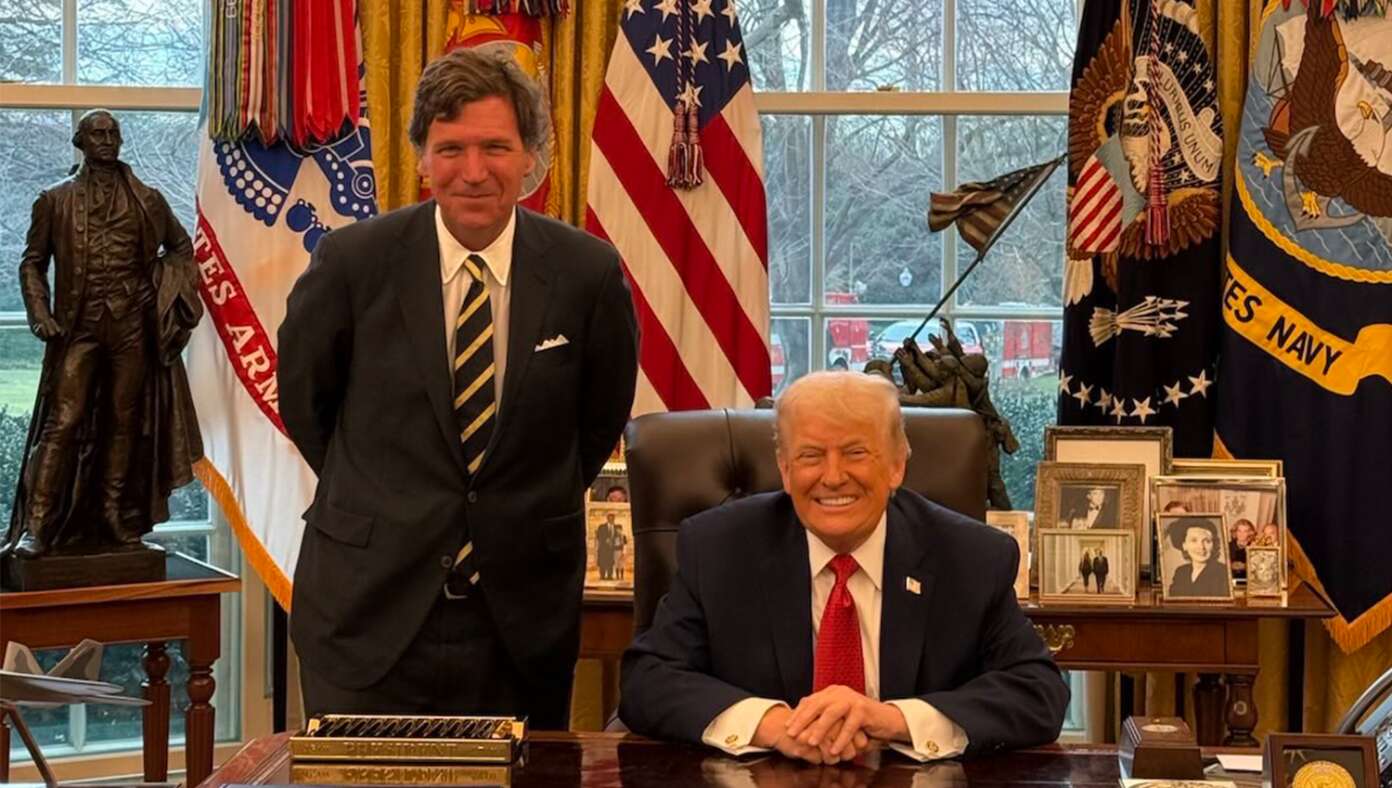
U.S. — To improve efficiency with their time management, sports journalists covering Major League Baseball announced that they would now only report on any free agents the Los Angeles Dodgers do not sign to their team.
Read More
WASHINGTON, D.C — According to sources, President Donald Trump met with a prominent Muslim leader in the Oval Office on Friday to discuss the ongoing protests and unrest in Iran.
Read More