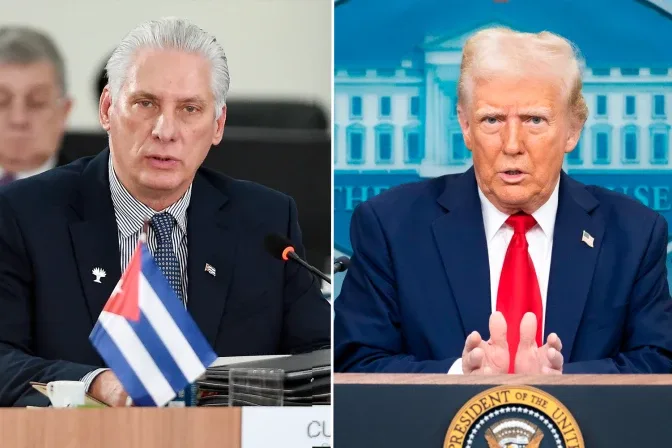
Cuban President Miguel Díaz-Canel stated on Feb. 5 that his government is willing to engage in dialogue with the United States without pressure and “on equal terms.”
“Cuba is open to dialogue with the United States, a dialogue on any topic they wish to discuss,” Díaz-Canel said during a lengthy press conference.
The press conference took place two weeks after U.S. President Donald Trump announced extraordinary tariffs on countries that send oil to Cuba, which is exacerbating the island’s fuel shortage.
On Jan. 31, the Cuban bishops published a message reiterating that the country needs urgent structural changes to prevent the crisis from deepening further. “The risk of social chaos and violence among the people of the same nation is real,” they stated.
Díaz-Canel said the dialogue would have to take place “without pressure; dialogue is impossible under pressure, without preconditions, on equal footing, with respect for our sovereignty, our independence, and our self-determination, and without addressing issues that are offensive and that we could consider interference in our internal affairs.”
After asserting that Cubans “do not hate the American people,” he said that from a dialogue “like that, a civilized relationship between neighbors can be built, one that could bring mutual benefit to our peoples, to the peoples of the region.”
“That is our position, it is also a position of continuity, and I believe it is possible,” he affirmed.
Díaz-Canel, 65, has been president of Cuba since October 2019. He succeeded Raúl Castro, brother of the late Fidel Castro, who seized power on the island in January 1959.
Yesterday, in an interview with NBC News, Trump stated that “we are talking with Cuba” and recalled the thousands of Cubans who were forced to emigrate to the United States because of communism.
However, on Feb. 4, Cuba’s deputy foreign minister, Carlos Fernández de Cossío, told CNN that a change in the system of government would not be discussed.
“We are not ready to discuss our constitutional system, just as we assume that the United States is not ready to discuss its constitutional system, its political system, or its economic reality,” Fernández de Cossío indicated.
While fuel shortages — exacerbated by Venezuelan oil shipments being cut off — are affecting the Cuban economy, the crisis on the island has been ongoing for several years, with continuous power outages due to a lack of electricity, insufficient supplies of medicine and food, and frequent repression of those who express dissenting opinions and call for free elections and an end to the communist dictatorship.
This story was first published by ACI Prensa, the Spanish-language sister service of EWTN News. It has been translated and adapted by EWTN News English.
Cuban government announces readiness to dialogue with U.S. – #Catholic –
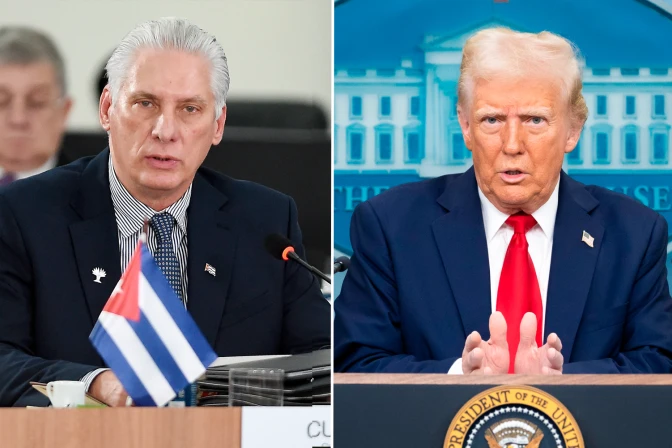
Cuban President Miguel Díaz-Canel stated on Feb. 5 that his government is willing to engage in dialogue with the United States without pressure and “on equal terms.”
“Cuba is open to dialogue with the United States, a dialogue on any topic they wish to discuss,” Díaz-Canel said during a lengthy press conference.
The press conference took place two weeks after U.S. President Donald Trump announced extraordinary tariffs on countries that send oil to Cuba, which is exacerbating the island’s fuel shortage.
On Jan. 31, the Cuban bishops published a message reiterating that the country needs urgent structural changes to prevent the crisis from deepening further. “The risk of social chaos and violence among the people of the same nation is real,” they stated.
Díaz-Canel said the dialogue would have to take place “without pressure; dialogue is impossible under pressure, without preconditions, on equal footing, with respect for our sovereignty, our independence, and our self-determination, and without addressing issues that are offensive and that we could consider interference in our internal affairs.”
After asserting that Cubans “do not hate the American people,” he said that from a dialogue “like that, a civilized relationship between neighbors can be built, one that could bring mutual benefit to our peoples, to the peoples of the region.”
“That is our position, it is also a position of continuity, and I believe it is possible,” he affirmed.
Díaz-Canel, 65, has been president of Cuba since October 2019. He succeeded Raúl Castro, brother of the late Fidel Castro, who seized power on the island in January 1959.
Yesterday, in an interview with NBC News, Trump stated that “we are talking with Cuba” and recalled the thousands of Cubans who were forced to emigrate to the United States because of communism.
However, on Feb. 4, Cuba’s deputy foreign minister, Carlos Fernández de Cossío, told CNN that a change in the system of government would not be discussed.
“We are not ready to discuss our constitutional system, just as we assume that the United States is not ready to discuss its constitutional system, its political system, or its economic reality,” Fernández de Cossío indicated.
While fuel shortages — exacerbated by Venezuelan oil shipments being cut off — are affecting the Cuban economy, the crisis on the island has been ongoing for several years, with continuous power outages due to a lack of electricity, insufficient supplies of medicine and food, and frequent repression of those who express dissenting opinions and call for free elections and an end to the communist dictatorship.
This story was first published by ACI Prensa, the Spanish-language sister service of EWTN News. It has been translated and adapted by EWTN News English.
Cuban President Miguel Díaz-Canel stated that his government is willing to engage in dialogue with the United States, but without pressure and without regime change.