Art

O dear Jesus,
I humbly implore You to grant Your special graces to our family.
May our home be the shrine of peace, purity, love, labor and faith.
I beg You, dear Jesus,
to protect and bless all of us,
absent and present,
living and dead.

O Mary,
loving Mother of Jesus,
and our Mother,
pray to Jesus for our family,
for all the families of the world,
to guard the cradle of the newborn,
the schools of the young and their vocations.
Blessed Saint Joseph,
holy …

Read More
Cuba’s bishops headed to Vatican this month to meet with Pope Leo XIV – #Catholic – Cuba’s bishops are scheduled to travel to Rome later this month to meet with Vatican dicasteries and present Pope Leo XIV with a report on the state of the dioceses on the island.In a message that will be read at Masses this weekend, the bishops will announce that they have been “called to Rome during Feb. 16–20 to pray in the four major basilicas, to meet for the first time with the Holy Father Leo XIV, and to share with him and with the heads of the Holy See’s dicasteries the vicissitudes, sorrows, joys, and hopes of the Church in Cuba.”The Cuban Conference of Catholic Bishops (COCC, by its Spanish acronym) states that the trip is part of the ad limina visit that bishops must make every five years to the See of St. Peter.“Every five years, the diocesan bishop must have a personal meeting with the Holy Father, present him with a report on the state of his diocese, and make a pilgrimage to the tombs of the apostles Peter and Paul,” the announcement states, citing the Code of Canon Law.The COCC reports that the meeting with Leo XIV will take place on the morning of Friday, Feb. 20. “We are filled with anticipation to listen to and converse with someone who, in a way, knows us, since he visited our country twice when he was the superior general of the Augustinian Fathers,” the announcement notes.The trip comes as the Catholic Church is the sole distributor of humanitarian aid sent by the United States government to people affected by Hurricane Melissa — a distribution that is taking place without the intervention of the Cuban government.This is in addition to the meetings that some bishops have held in recent days with the chargé d’affaires of the U.S. Embassy in Cuba, Mike Hammer.On Sunday, Feb. 1, Pope Leo XIV expressed his concern over “reports of increased tensions between Cuba and the United States of America.”The pontiff expressed his support for the bishops’ message of Jan. 31 and urged “all those responsible to promote a sincere and effective dialogue, to avoid violence and any action that could increase the sufferings of the dear Cuban people.”Prayer for their ad limina visit On the occasion of their trip to the Vatican, the bishops have asked the faithful to accompany them with their prayers and have published the following prayer on their website:Lord Jesus, Good Shepherd,who guide your Church along the paths of history,we pray for our bishops,who are making a pilgrimage to Rometo participate in the Ad Limina Apostolorum visit:May this visit be for them a time of grace and renewal in faith,of strengthening in communion with the successor of the Apostle Peter, Pope Leo XIV.Lord, assist our bishops with your grace,make this visit for thema moment of attentive listening and sincere conversion,of profound encounter with you and with their brotherswith Pope Leo and all his closest collaborators,so that upon their return, they may continue to inspire our life of faithand accompany the daily lives of our communities and people.May they, as they kneel before the tombs of the holy apostles,carry in their hearts the joys and sorrows,the hopes and wounds of this Church on pilgrimage in Cuba,and of all the Cuban people,especially the weakest and most weary,those who live in despair and poverty,violence or loneliness.Holy Mary, Virgin of charity,Mother of the Church and queen of the apostles,receive our bishops under your mantleand accompany them on this pilgrimage to Rome,so that, strengthened by the faith of Peter,they may return to our Church with renewed apostolic and missionary zeal.Amen.This story was first published by ACI Prensa, the Spanish-language sister service of EWTN News. It has been translated and adapted by EWTN News English.

Cuba’s bishops headed to Vatican this month to meet with Pope Leo XIV – #Catholic – Cuba’s bishops are scheduled to travel to Rome later this month to meet with Vatican dicasteries and present Pope Leo XIV with a report on the state of the dioceses on the island.In a message that will be read at Masses this weekend, the bishops will announce that they have been “called to Rome during Feb. 16–20 to pray in the four major basilicas, to meet for the first time with the Holy Father Leo XIV, and to share with him and with the heads of the Holy See’s dicasteries the vicissitudes, sorrows, joys, and hopes of the Church in Cuba.”The Cuban Conference of Catholic Bishops (COCC, by its Spanish acronym) states that the trip is part of the ad limina visit that bishops must make every five years to the See of St. Peter.“Every five years, the diocesan bishop must have a personal meeting with the Holy Father, present him with a report on the state of his diocese, and make a pilgrimage to the tombs of the apostles Peter and Paul,” the announcement states, citing the Code of Canon Law.The COCC reports that the meeting with Leo XIV will take place on the morning of Friday, Feb. 20. “We are filled with anticipation to listen to and converse with someone who, in a way, knows us, since he visited our country twice when he was the superior general of the Augustinian Fathers,” the announcement notes.The trip comes as the Catholic Church is the sole distributor of humanitarian aid sent by the United States government to people affected by Hurricane Melissa — a distribution that is taking place without the intervention of the Cuban government.This is in addition to the meetings that some bishops have held in recent days with the chargé d’affaires of the U.S. Embassy in Cuba, Mike Hammer.On Sunday, Feb. 1, Pope Leo XIV expressed his concern over “reports of increased tensions between Cuba and the United States of America.”The pontiff expressed his support for the bishops’ message of Jan. 31 and urged “all those responsible to promote a sincere and effective dialogue, to avoid violence and any action that could increase the sufferings of the dear Cuban people.”Prayer for their ad limina visit On the occasion of their trip to the Vatican, the bishops have asked the faithful to accompany them with their prayers and have published the following prayer on their website:Lord Jesus, Good Shepherd,who guide your Church along the paths of history,we pray for our bishops,who are making a pilgrimage to Rometo participate in the Ad Limina Apostolorum visit:May this visit be for them a time of grace and renewal in faith,of strengthening in communion with the successor of the Apostle Peter, Pope Leo XIV.Lord, assist our bishops with your grace,make this visit for thema moment of attentive listening and sincere conversion,of profound encounter with you and with their brotherswith Pope Leo and all his closest collaborators,so that upon their return, they may continue to inspire our life of faithand accompany the daily lives of our communities and people.May they, as they kneel before the tombs of the holy apostles,carry in their hearts the joys and sorrows,the hopes and wounds of this Church on pilgrimage in Cuba,and of all the Cuban people,especially the weakest and most weary,those who live in despair and poverty,violence or loneliness.Holy Mary, Virgin of charity,Mother of the Church and queen of the apostles,receive our bishops under your mantleand accompany them on this pilgrimage to Rome,so that, strengthened by the faith of Peter,they may return to our Church with renewed apostolic and missionary zeal.Amen.This story was first published by ACI Prensa, the Spanish-language sister service of EWTN News. It has been translated and adapted by EWTN News English.

The country’s bishops will travel to Rome from Feb. 16–20 to present to Pope Leo XIV “the vicissitudes, sorrows, joys, and hopes of the Church in Cuba.”

Read More
Zambia bishops instruct clergy and faithful to stay out of partisan politics – #Catholic – Here is a roundup of world news you may have missed this past week:Zambia bishops instruct clergy and faithful to stay out of partisan politicsCatholic bishops in Zambia issued a pastoral letter this past week telling priests to refrain from engaging in party politics as preparations for the country’s August presidential and general elections begin.“The Church is not and must never be a mouthpiece for any political party or candidate. Our duty is to form consciences, promote the common good, and speak truth to power,” the letter stated, adding that “clergy who align themselves with political interests risk compromising their sacred vocation.” The bishops further emphasized that Church property should never be used for political campaigns or meetings, that priests should never accept political donations in exchange for influence, and that preaching from the pulpit remain centered on the Gospel rather than politics.Vietnam has an abundance of priests, lack of missionaries, report saysThe Catholic Church in Vietnam is facing a critical lack in missionaries despite having massive vocational growth, a report this week said.There is “a dire shortage of the missionary spirit required to reach the ‘peripheries’” in Vietnam, according to a UCA News article on Tuesday by Catholic commentator Petrus Po. Though the country in January welcomed 76 new transitional deacons, who are all expected to be ordained in the next year to the priesthood, Po observed that Vietnam’s clergy are heavily concentrated in urban centers, leaving areas such as the Central Highlands and northwestern areas to “wait months for a single Mass.” Amid shortages in rural areas, Po said the local Church should “embrace” the Vietnamese bishops’ designation of 2026 as the year of “Every Christian as a Missionary Disciple” by sending more priests to live in rural areas rather than merely “lending” them.Rising violence in Pakistan prompts increased worry among ChristiansCatholics in Pakistan are experiencing heightened anxiety as conflict between armed militant separatist groups and Pakistan’s security forces continues to strike closer to home.Amar Mansoor Bhatti, a 35-year old Catholic man, told UCA news that he awoke to the sound of gunfire and explosions this past week from the armed clash that has left more than 190 people dead including civilians. “The firing continued for more than eight hours until late afternoon. We stayed inside. We were afraid to step outside the house until Sunday morning [Feb. 1],” he said.The ongoing violence has included suicide bombing attacks, grenade strikes, gunfire, and more. A Christian woman, Maria Shamoon, was abducted from her home in Balochistan by separatists before being later rescued, the report noted.Kenya bishop cautions politicians against disrespecting places of worshipThe auxiliary bishop of the Catholic Diocese of Wote, Bishop Simon Peter Kamomoe, has cautioned politicians against showing disrespect to places of worship, warning that such actions amount to mocking God and undermining the sanctity of the churches in Kenya, ACI Africa, the sister service of EWTN News in Africa, reported Wednesday.Kamomoe issued a stern rebuke of political figures during his homily on Sunday following an attack on former Deputy President Rigathi Gachagua during a Sunday church service at St. Peter’s Anglican Church in Othaya, Nyeri County, saying: “The leaders of this country don’t respect the sanctuaries of the Lord … That is mocking God, that is contempt, which is very unfortunate, and if they don’t change, they will see the results.”Filipino priest tapped to serve as new auxiliary bishop for Perth ArchdiocesePope Leo XIV has appointed Philippine-born priest Father Nelson Po to serve as an auxiliary bishop to the Archdiocese of Perth.“It was a big surprise to me. It was overwhelming and surreal because I have never dreamed of becoming a bishop. I went straight to the chapel and became very emotional. I felt so inadequate and unworthy, but I know that God’s strength will carry me through,” Nelson said regarding the news of his appointment, according to a Feb. 2 press release.Australian Catholic Bishops’ Conference president Archbishop Timothy Costelloe, SDB, welcomed the announcement, saying Nelson is “greeted with great joy and excitement by the whole Catholic community of the archdiocese.”Shifts in Syria’s Jazira region: Calm returns, crises remainThe entry of Syrian security forces into Qamishli, following similar deployments in Hasakah and Ayn al-Arab, marks a tangible step in implementing understandings between Damascus and the Syrian Democratic Forces under international pressure, ACI MENA, the Arabic-language sister service of EWTN News, reported Wednesday.For local Christians and other communities, the move has brought cautious relief, particularly with the end of compulsory service previously imposed under the label of “self-defense duty.” Yet stability on paper contrasts sharply with daily realities. Church sources report that around 12% of Jazira’s Christians emigrated in 2025, driven by insecurity and crushing costs, while those who remain face severe water shortages, near-total groundwater depletion, prolonged power cuts, environmental pollution, and persistent security incidents. Eastern Christian youth thrive in the Australian diasporaFrom Melbourne to Auckland, young people from Eastern Churches are finding creative ways to live their faith far from their ancestral homelands, ACI MENA recently reported.The Syriac Catholic youth festival in Australia combined prayer, theater, and open discussion on anxiety, technology, and Christian identity, drawing strong participation.Meanwhile, Chaldean youth gatherings in Australia and New Zealand focused on strengthening communion, daily liturgical life, and reflection on faith within multicultural societies. These initiatives show that, even in the diaspora, Eastern Christian youth are not merely preserving tradition but actively reshaping it for new contexts.

Zambia bishops instruct clergy and faithful to stay out of partisan politics – #Catholic – Here is a roundup of world news you may have missed this past week:Zambia bishops instruct clergy and faithful to stay out of partisan politicsCatholic bishops in Zambia issued a pastoral letter this past week telling priests to refrain from engaging in party politics as preparations for the country’s August presidential and general elections begin.“The Church is not and must never be a mouthpiece for any political party or candidate. Our duty is to form consciences, promote the common good, and speak truth to power,” the letter stated, adding that “clergy who align themselves with political interests risk compromising their sacred vocation.” The bishops further emphasized that Church property should never be used for political campaigns or meetings, that priests should never accept political donations in exchange for influence, and that preaching from the pulpit remain centered on the Gospel rather than politics.Vietnam has an abundance of priests, lack of missionaries, report saysThe Catholic Church in Vietnam is facing a critical lack in missionaries despite having massive vocational growth, a report this week said.There is “a dire shortage of the missionary spirit required to reach the ‘peripheries’” in Vietnam, according to a UCA News article on Tuesday by Catholic commentator Petrus Po. Though the country in January welcomed 76 new transitional deacons, who are all expected to be ordained in the next year to the priesthood, Po observed that Vietnam’s clergy are heavily concentrated in urban centers, leaving areas such as the Central Highlands and northwestern areas to “wait months for a single Mass.” Amid shortages in rural areas, Po said the local Church should “embrace” the Vietnamese bishops’ designation of 2026 as the year of “Every Christian as a Missionary Disciple” by sending more priests to live in rural areas rather than merely “lending” them.Rising violence in Pakistan prompts increased worry among ChristiansCatholics in Pakistan are experiencing heightened anxiety as conflict between armed militant separatist groups and Pakistan’s security forces continues to strike closer to home.Amar Mansoor Bhatti, a 35-year old Catholic man, told UCA news that he awoke to the sound of gunfire and explosions this past week from the armed clash that has left more than 190 people dead including civilians. “The firing continued for more than eight hours until late afternoon. We stayed inside. We were afraid to step outside the house until Sunday morning [Feb. 1],” he said.The ongoing violence has included suicide bombing attacks, grenade strikes, gunfire, and more. A Christian woman, Maria Shamoon, was abducted from her home in Balochistan by separatists before being later rescued, the report noted.Kenya bishop cautions politicians against disrespecting places of worshipThe auxiliary bishop of the Catholic Diocese of Wote, Bishop Simon Peter Kamomoe, has cautioned politicians against showing disrespect to places of worship, warning that such actions amount to mocking God and undermining the sanctity of the churches in Kenya, ACI Africa, the sister service of EWTN News in Africa, reported Wednesday.Kamomoe issued a stern rebuke of political figures during his homily on Sunday following an attack on former Deputy President Rigathi Gachagua during a Sunday church service at St. Peter’s Anglican Church in Othaya, Nyeri County, saying: “The leaders of this country don’t respect the sanctuaries of the Lord … That is mocking God, that is contempt, which is very unfortunate, and if they don’t change, they will see the results.”Filipino priest tapped to serve as new auxiliary bishop for Perth ArchdiocesePope Leo XIV has appointed Philippine-born priest Father Nelson Po to serve as an auxiliary bishop to the Archdiocese of Perth.“It was a big surprise to me. It was overwhelming and surreal because I have never dreamed of becoming a bishop. I went straight to the chapel and became very emotional. I felt so inadequate and unworthy, but I know that God’s strength will carry me through,” Nelson said regarding the news of his appointment, according to a Feb. 2 press release.Australian Catholic Bishops’ Conference president Archbishop Timothy Costelloe, SDB, welcomed the announcement, saying Nelson is “greeted with great joy and excitement by the whole Catholic community of the archdiocese.”Shifts in Syria’s Jazira region: Calm returns, crises remainThe entry of Syrian security forces into Qamishli, following similar deployments in Hasakah and Ayn al-Arab, marks a tangible step in implementing understandings between Damascus and the Syrian Democratic Forces under international pressure, ACI MENA, the Arabic-language sister service of EWTN News, reported Wednesday.For local Christians and other communities, the move has brought cautious relief, particularly with the end of compulsory service previously imposed under the label of “self-defense duty.” Yet stability on paper contrasts sharply with daily realities. Church sources report that around 12% of Jazira’s Christians emigrated in 2025, driven by insecurity and crushing costs, while those who remain face severe water shortages, near-total groundwater depletion, prolonged power cuts, environmental pollution, and persistent security incidents. Eastern Christian youth thrive in the Australian diasporaFrom Melbourne to Auckland, young people from Eastern Churches are finding creative ways to live their faith far from their ancestral homelands, ACI MENA recently reported.The Syriac Catholic youth festival in Australia combined prayer, theater, and open discussion on anxiety, technology, and Christian identity, drawing strong participation.Meanwhile, Chaldean youth gatherings in Australia and New Zealand focused on strengthening communion, daily liturgical life, and reflection on faith within multicultural societies. These initiatives show that, even in the diaspora, Eastern Christian youth are not merely preserving tradition but actively reshaping it for new contexts.

“The Church is not and must never be a mouthpiece for any political party or candidate,” the Zambian bishops stated. Read more in this roundup of world news that you may have missed this past week.

Read More
Canadian Catholic bishops join members of Parliament in push to restrict medical aid in dying – #Catholic – Two legislative efforts to limit Canada’s medical aid in dying (MAID) framework converged Thursday, with Conservative member of Parliament (MP) Garnett Genuis announcing a bill focused on MAID coercion and the Catholic bishops supporting legislation to prohibit assisted dying for mental illness.Genuis introduced a private member’s bill Feb. 5 that would amend the Criminal Code to prohibit any federal or provincial government employee in a position of authority, other than a doctor or nurse, from initiating a discussion about medical aid in dying.Genuis said Bill C-260, “An Act to amend the Criminal Code (medical assistance in dying — protection against coercion),” comes in response to numerous stories of counselors suggesting MAID to persons such as military veterans or disabled men and women who are seeking support, not death.Meanwhile, the Canadian Conference of Catholic Bishops (CCCB) issued a statement the same day strongly supporting Langley MP Tamara Jansen’s private member’s Bill C-218, which would prevent persons whose sole medical condition is mental illness from accessing euthanasia and physician-assisted suicide (MAID).The statement from the CCCB’s permanent council, its most authoritative body between annual plenary assemblies, said Bill C-218 “would be a constructive step” toward limiting euthanasia and protecting individuals with mental illness.The bishops noted the U.N. Committee on the Rights of Persons with Disabilities has called on Canada to rescind “Track 2 MAID,” which allows euthanasia for those whose natural death is not reasonably foreseeable, and to permanently exclude MAID for persons whose sole underlying medical condition is a mental illness.The bishops also called on the federal government “to allow free conscience voting on this matter, given its profound moral and social implications.”They said current research indicates mental illness is “not necessarily irremediable” and called for improved access to mental illness treatment and palliative care.At a news conference in Ottawa, Genuis said his Bill C-260 would clarify MAID laws by explicitly covering coercive situations such as counseling sessions.The member of Parliament for Sherwood Park-Fort Saskatchewan said the bill is aimed at countering the “discrimination and coercion” that “undermine the experience of persons trying to access supports that they are entitled to.”He cited the example of Nicolas Bergeron, a 46-year-old Quebec man who was not interested in medically-facilitated death. “But a social worker, who came to his house for an entirely different reason, repeatedly tried to push him to change his mind,” Genuis said.Genuis said the counselor presented Bergeron with “a very bleak, worst-case scenario for his illness and told him that sometimes you just have to stop fighting … This is wrong and this is not a one-off. This MAID coercion by nonexperts in positions of authority is part of a troubling pattern.”The bill states: “Every person who, being an officer or employee of the government of Canada or of a province, other than a medical practitioner or a registered nurse, including a nurse practitioner, initiates a discussion with a person about the availability to that person of medical assistance in dying is guilty of an offense punishable on summary conviction if they (a) by virtue of their profession, are in a position of trust or authority towards that person; and(b) know that the person has not specifically requested to have such a discussion with them.”While current law requires that a request for MAID be voluntary and free from external pressure, supporters of the bill argue that consent can be compromised when individuals feel they have no meaningful alternatives to relieve their suffering. Supporters say inadequate access to palliative care, disability supports, mental health treatment, or stable housing amounts to “systemic coercion.”The Criminal Code in Canada currently requires that individuals requesting MAID give informed consent and be advised of available means to relieve suffering, including palliative care. Proponents of Bill C-260 argue that explicitly naming coercion in the MAID context would make it a more enforceable criminal consideration rather than relying primarily on administrative checks and professional judgment.Genuis has repeatedly argued that MAID cannot be considered a genuine choice when people lack access to life-affirming supports. That concern was underscored during a House of Commons committee exchange last fall with Krista Carr, chief executive officer of Inclusion Canada.Appearing before the House of Commons Standing Committee on Finance, Carr told MPs that people with disabilities are already being placed at a disadvantage by public policy decisions that erode supports. Asked by Genuis whether people with disabilities would be “net worse off” as a result of proposed changes to disability tax credits, Carr replied: “Yes. I think it’s an unintended consequence of a bill meant to make life more affordable for Canadians. As a consequence of that, yes, in a net position they will be worse off than they are now.”The bill is being introduced amid ongoing debate over the scope and safeguards of Canada’s MAID regime, particularly for people whose natural death is not reasonably foreseeable. Disability advocates and organizations, including Inclusion Canada, have repeatedly warned that the expansion of MAID has outpaced the development of adequate social supports, placing people in precarious living situations at risk.As a private member’s bill, Bill C-260 must pass second reading in the House of Commons before proceeding to committee study.This story was first published by The B.C. Catholic on Feb. 5, 2026, and is reprinted here with permission.

Canadian Catholic bishops join members of Parliament in push to restrict medical aid in dying – #Catholic – Two legislative efforts to limit Canada’s medical aid in dying (MAID) framework converged Thursday, with Conservative member of Parliament (MP) Garnett Genuis announcing a bill focused on MAID coercion and the Catholic bishops supporting legislation to prohibit assisted dying for mental illness.Genuis introduced a private member’s bill Feb. 5 that would amend the Criminal Code to prohibit any federal or provincial government employee in a position of authority, other than a doctor or nurse, from initiating a discussion about medical aid in dying.Genuis said Bill C-260, “An Act to amend the Criminal Code (medical assistance in dying — protection against coercion),” comes in response to numerous stories of counselors suggesting MAID to persons such as military veterans or disabled men and women who are seeking support, not death.Meanwhile, the Canadian Conference of Catholic Bishops (CCCB) issued a statement the same day strongly supporting Langley MP Tamara Jansen’s private member’s Bill C-218, which would prevent persons whose sole medical condition is mental illness from accessing euthanasia and physician-assisted suicide (MAID).The statement from the CCCB’s permanent council, its most authoritative body between annual plenary assemblies, said Bill C-218 “would be a constructive step” toward limiting euthanasia and protecting individuals with mental illness.The bishops noted the U.N. Committee on the Rights of Persons with Disabilities has called on Canada to rescind “Track 2 MAID,” which allows euthanasia for those whose natural death is not reasonably foreseeable, and to permanently exclude MAID for persons whose sole underlying medical condition is a mental illness.The bishops also called on the federal government “to allow free conscience voting on this matter, given its profound moral and social implications.”They said current research indicates mental illness is “not necessarily irremediable” and called for improved access to mental illness treatment and palliative care.At a news conference in Ottawa, Genuis said his Bill C-260 would clarify MAID laws by explicitly covering coercive situations such as counseling sessions.The member of Parliament for Sherwood Park-Fort Saskatchewan said the bill is aimed at countering the “discrimination and coercion” that “undermine the experience of persons trying to access supports that they are entitled to.”He cited the example of Nicolas Bergeron, a 46-year-old Quebec man who was not interested in medically-facilitated death. “But a social worker, who came to his house for an entirely different reason, repeatedly tried to push him to change his mind,” Genuis said.Genuis said the counselor presented Bergeron with “a very bleak, worst-case scenario for his illness and told him that sometimes you just have to stop fighting … This is wrong and this is not a one-off. This MAID coercion by nonexperts in positions of authority is part of a troubling pattern.”The bill states: “Every person who, being an officer or employee of the government of Canada or of a province, other than a medical practitioner or a registered nurse, including a nurse practitioner, initiates a discussion with a person about the availability to that person of medical assistance in dying is guilty of an offense punishable on summary conviction if they (a) by virtue of their profession, are in a position of trust or authority towards that person; and(b) know that the person has not specifically requested to have such a discussion with them.”While current law requires that a request for MAID be voluntary and free from external pressure, supporters of the bill argue that consent can be compromised when individuals feel they have no meaningful alternatives to relieve their suffering. Supporters say inadequate access to palliative care, disability supports, mental health treatment, or stable housing amounts to “systemic coercion.”The Criminal Code in Canada currently requires that individuals requesting MAID give informed consent and be advised of available means to relieve suffering, including palliative care. Proponents of Bill C-260 argue that explicitly naming coercion in the MAID context would make it a more enforceable criminal consideration rather than relying primarily on administrative checks and professional judgment.Genuis has repeatedly argued that MAID cannot be considered a genuine choice when people lack access to life-affirming supports. That concern was underscored during a House of Commons committee exchange last fall with Krista Carr, chief executive officer of Inclusion Canada.Appearing before the House of Commons Standing Committee on Finance, Carr told MPs that people with disabilities are already being placed at a disadvantage by public policy decisions that erode supports. Asked by Genuis whether people with disabilities would be “net worse off” as a result of proposed changes to disability tax credits, Carr replied: “Yes. I think it’s an unintended consequence of a bill meant to make life more affordable for Canadians. As a consequence of that, yes, in a net position they will be worse off than they are now.”The bill is being introduced amid ongoing debate over the scope and safeguards of Canada’s MAID regime, particularly for people whose natural death is not reasonably foreseeable. Disability advocates and organizations, including Inclusion Canada, have repeatedly warned that the expansion of MAID has outpaced the development of adequate social supports, placing people in precarious living situations at risk.As a private member’s bill, Bill C-260 must pass second reading in the House of Commons before proceeding to committee study.This story was first published by The B.C. Catholic on Feb. 5, 2026, and is reprinted here with permission.

The Canadian bishops issued a statement Feb. 5 supporting Bill C-218, which would prevent persons whose sole medical condition is mental illness from accessing physician-assisted suicide.

Read More
Pope Leo XIV: Peace begins with dignity, not weapons – #Catholic – As the Church marks the 12th World Day of Prayer and Awareness against Human Trafficking, Pope Leo XIV renewed what he called the Church’s “urgent call” to end a crime that “gravely wounds human dignity” and undermines authentic peace.The annual day of prayer is observed on Feb. 8, the feast of St. Josephine Bakhita, a former slave whose life has become a universal symbol of the Church’s commitment to combating human trafficking. Events in Rome this year span several days and culminate Sunday with the Angelus prayer in St. Peter’s Square.In his message for the occasion, titled “Peace Begins with Dignity: A Global Call to End Human Trafficking,” the pope reflects on Christ’s greeting after the Resurrection: “Peace be with you.”“These words are more than a salutation; they offer a path toward a renewed humanity,” the pope writes. “True peace begins with the recognition and protection of the God-given dignity of every person.”He warns that contemporary conflicts often erode this vision of peace, noting that “in situations of conflict, the loss of human life is too often dismissed by warmongers as ‘collateral damage,’ sacrificed in the pursuit of political or economic interests.”According to the pope, the same logic fuels human trafficking worldwide. “Geopolitical instability and armed conflicts create fertile ground for traffickers to exploit the most vulnerable, especially displaced persons, migrants, and refugees,” he writes, adding that “within this broken paradigm, women and children are the most impacted by this heinous trade.”The pope also draws attention to newer forms of exploitation, including what he calls “cyber slavery,” in which victims are coerced into criminal activities such as online fraud or drug smuggling.“In such cases, the victim is coerced into assuming the role of perpetrator, exacerbating their spiritual wounds,” he writes. “These forms of violence are not isolated incidents but symptoms of a culture that has forgotten how to love as Christ loves.”Faced with these realities, Pope Leo XIV urges prayer and concrete awareness. “Prayer is the ‘small flame’ that we must guard amidst the storm, as it gives us the strength to resist indifference to injustice,” he writes, while awareness helps uncover “the hidden mechanisms of exploitation in our neighborhoods and in digital spaces.”The pope also expresses gratitude to those working on the front lines to assist victims of trafficking, including international Catholic networks such as Talitha Kum, and acknowledges survivors who now advocate for others.In Rome, events marking the World Day include an online global pilgrimage of prayer, a youth formation day, and public awareness initiatives. The observances conclude Sunday, Feb. 8, with the Angelus prayer with Pope Leo XIV in St. Peter’s Square, followed by a Mass celebrated by Cardinal Vincent Nichols in collaboration with the Santa Marta Group.Entrusting the initiative to the intercession of St. Josephine Bakhita, the pope calls Catholics to work for a peace that is more than the absence of war — a peace, he writes, that is “unarmed and disarming,” rooted in full respect for the dignity of every person.This story was first published by ACI Stampa, the Italian-language sister service of EWTN News. It has been translated and adapted by EWTN News English.

Pope Leo XIV: Peace begins with dignity, not weapons – #Catholic – As the Church marks the 12th World Day of Prayer and Awareness against Human Trafficking, Pope Leo XIV renewed what he called the Church’s “urgent call” to end a crime that “gravely wounds human dignity” and undermines authentic peace.The annual day of prayer is observed on Feb. 8, the feast of St. Josephine Bakhita, a former slave whose life has become a universal symbol of the Church’s commitment to combating human trafficking. Events in Rome this year span several days and culminate Sunday with the Angelus prayer in St. Peter’s Square.In his message for the occasion, titled “Peace Begins with Dignity: A Global Call to End Human Trafficking,” the pope reflects on Christ’s greeting after the Resurrection: “Peace be with you.”“These words are more than a salutation; they offer a path toward a renewed humanity,” the pope writes. “True peace begins with the recognition and protection of the God-given dignity of every person.”He warns that contemporary conflicts often erode this vision of peace, noting that “in situations of conflict, the loss of human life is too often dismissed by warmongers as ‘collateral damage,’ sacrificed in the pursuit of political or economic interests.”According to the pope, the same logic fuels human trafficking worldwide. “Geopolitical instability and armed conflicts create fertile ground for traffickers to exploit the most vulnerable, especially displaced persons, migrants, and refugees,” he writes, adding that “within this broken paradigm, women and children are the most impacted by this heinous trade.”The pope also draws attention to newer forms of exploitation, including what he calls “cyber slavery,” in which victims are coerced into criminal activities such as online fraud or drug smuggling.“In such cases, the victim is coerced into assuming the role of perpetrator, exacerbating their spiritual wounds,” he writes. “These forms of violence are not isolated incidents but symptoms of a culture that has forgotten how to love as Christ loves.”Faced with these realities, Pope Leo XIV urges prayer and concrete awareness. “Prayer is the ‘small flame’ that we must guard amidst the storm, as it gives us the strength to resist indifference to injustice,” he writes, while awareness helps uncover “the hidden mechanisms of exploitation in our neighborhoods and in digital spaces.”The pope also expresses gratitude to those working on the front lines to assist victims of trafficking, including international Catholic networks such as Talitha Kum, and acknowledges survivors who now advocate for others.In Rome, events marking the World Day include an online global pilgrimage of prayer, a youth formation day, and public awareness initiatives. The observances conclude Sunday, Feb. 8, with the Angelus prayer with Pope Leo XIV in St. Peter’s Square, followed by a Mass celebrated by Cardinal Vincent Nichols in collaboration with the Santa Marta Group.Entrusting the initiative to the intercession of St. Josephine Bakhita, the pope calls Catholics to work for a peace that is more than the absence of war — a peace, he writes, that is “unarmed and disarming,” rooted in full respect for the dignity of every person.This story was first published by ACI Stampa, the Italian-language sister service of EWTN News. It has been translated and adapted by EWTN News English.

In a message for the Church’s Feb. 8 World Day of Prayer and Awareness against Human Trafficking, the pope warns that conflict and inequality fuel exploitation.

Read More
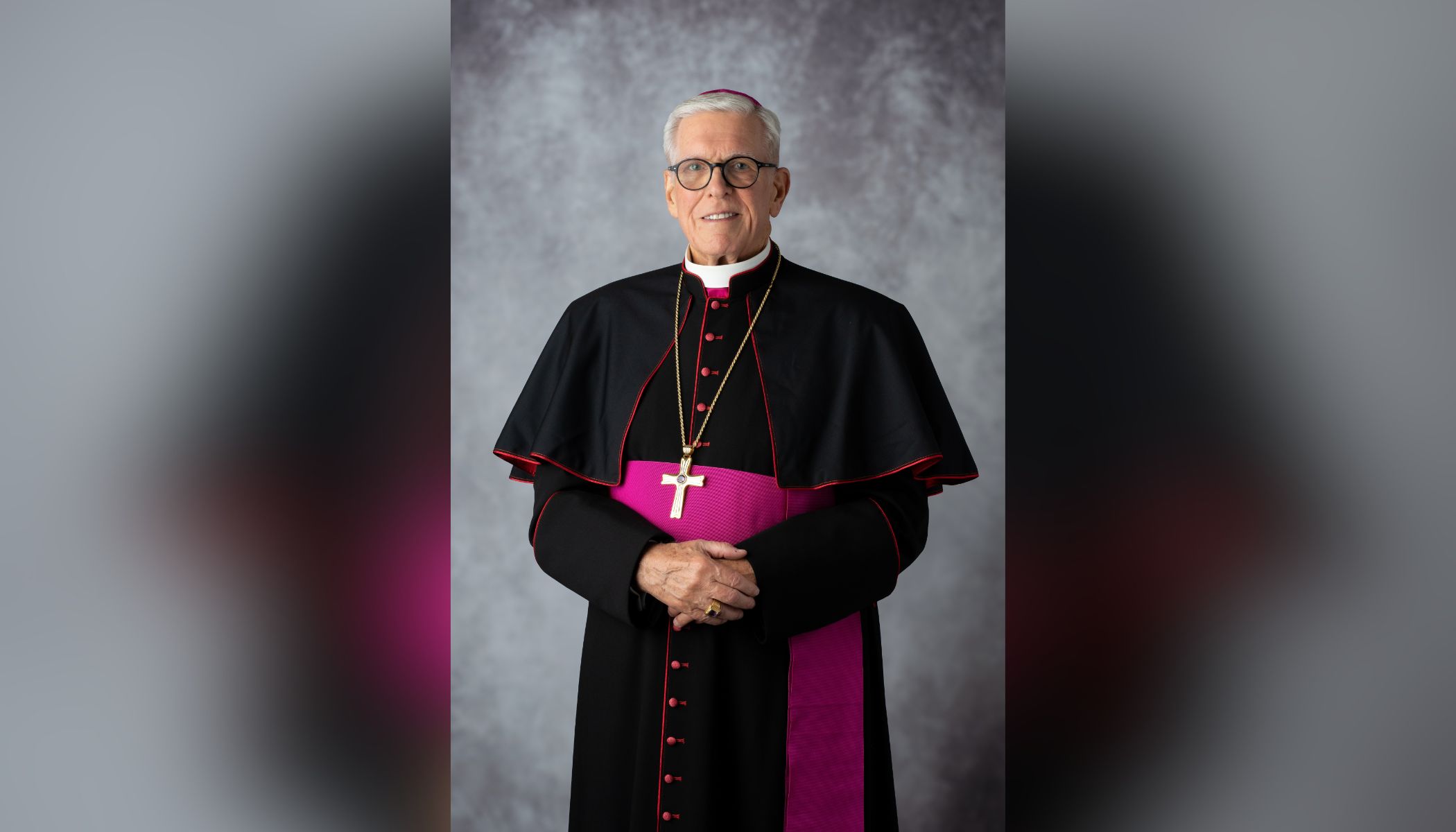
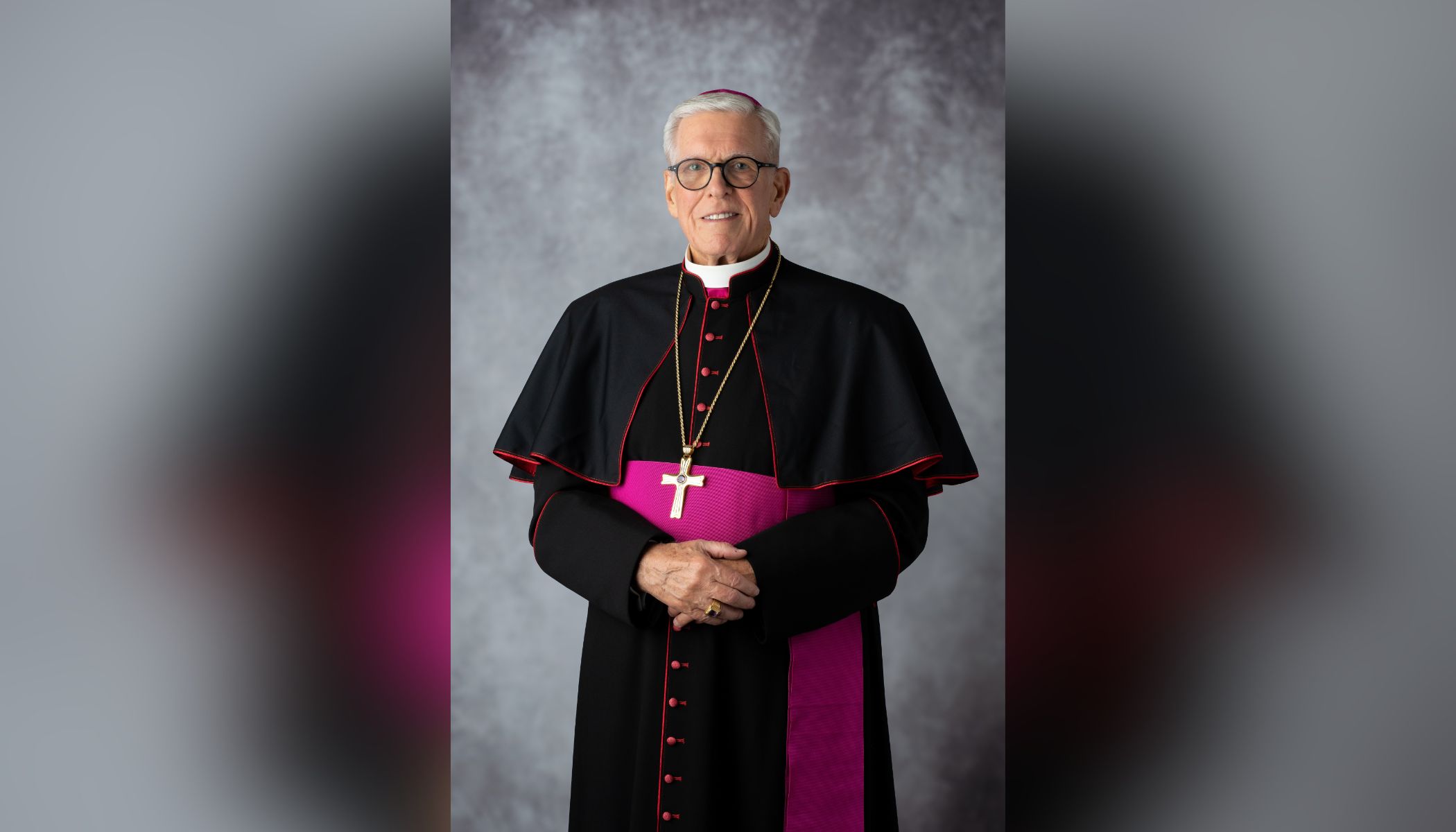
Archbishop Ronald Hicks takes helm of Archdiocese of New York – #Catholic – New York Catholics enjoyed an in-door moment of spiritual warmth, during an extreme cold spell in the region, with the installation mass of Archbishop Ronald Hicks on February 6. While many in the pews felt sad about losing their beloved Cardinal Timothy Dolan, there was also excitement about welcoming their new shepherd.One of the most moving moments of the ceremony happened at the beginning, when Archbishop Hicks stood outside the closed bronze doors of St. Patrick’s Cathedral. Cardinal Dolan stood at the back silently when a loud knock was heard. 
 
 Archbishop Hicks just prior to entering St. Patrick’s Cathedral. | Credit: Jeffrey Bruno/EWTN News
 
 The bronze doors were opened, with Cardinal Dolan welcoming Archbishop Hicks inside amidst a burst of sunlight and arctic air – on behalf of the clergy, religious and faithful for the Archdiocese of New York. Then the Reverand Monsignor Joseph LaMorte, vicar general of the Archdiocese of New York, presented Archbishop Hicks with a crucifix resting on a pillow, which he received and kissed.After the clergy processed to the front, the Apostolic Nuncio to the United States, Cardinal Christophe Pierre, welcomed the 2200 people inside St. Patrick’s Cathedral – including 68 bishops, 13 archbishops and 6 Cardinals. He thanked Cardinal Timothy Dolan for his years of service.“Before turning your attention to the future, it is fitting to pose in gratitude Cardinal Timothy Dolan who has served this archdiocese with generosity, conviction and pastoral zeal. His voice has been a strong and joyful witness to the Gospel both here in New York and far beyond it. And on behalf of the Holy Father, I express sincere thanks for these years of faithful ministry and for the love he has shown to the people entrusted to his care,” said Cardinal Pierre, to thunderous applause and a standing ovation.
 
 Cardinal Timothy Dolan welcoming his successor, Archbishop Ronald Hicks. | Credit: Jeffrey Bruno/EWTN News
 
 “And by the way, do you know that it is his birthday?” he said.In a memorable “New York” moment, the entire Cathedral spontaneously sang Happy Birthday to Cardinal Dolan, as he beamed and waved at the congregation.Cardinal Pierre then welcomed Archbishop Hicks as the new shepherd for New York.“His years as a bishop have already immersed him in the ordinary realities of pastoral governance where he has attended carefully to the life of the Church and has shown a steady commitment to the mission entrusted to him,” he said.“The See to which you have been called carries a great history and a living mission. New York is a place of remarkable diversity marked by deep faith and real challenges. You are entrusted to a people whose voices are many, and whose needs are real; the people whose hopes are rooted in the Gospel, Cardinal Pierre noted."As Pope Leo has reminded bishops: the gift they receive is never for themselves alone but always for service, service to the faith of the people, lived in communion with them. In such a setting, unity is not uniformity but a shared belonging to Christ and in Christ,” he continued.Cardinal Pierre then read the Apostolic Letter, an official papal document, which officially appoints Archbishop Hicks as the new Archbishop of New York. This letter signifies Archbishop Hicks’ mandate and authority to lead the Archdiocese of New York. After an emotional moment, whereby Archbishop Hicks walked around the altar and showed the Apostolic Letter to his brother bishops and then down the central aisle to the congregation of St. Patrick’s Cathedral, Archbishop Hicks then processed to the chair of Cardinal Dolan.They embraced warmly, and then Cardinal Dolan motioned for Archbishop Hicks to take his chair, where he sat down to the sound of trumpets and applause.During the installation mass, deference was given to Archbishop Hicks’ years of service as a missionary priest in El Salvador. The readings were read in both English and Spanish, and the St. Patrick Cathedral’s choir sang several songs in Spanish.During Archbishop Hicks’ homily, he spoke easily in both languages.“I love music. And I love all types of music. If you know something about me, I always have a song playing in my head,” said Archbishop Hicks.He referenced several iconic songs about New York, making them his own and saying "I am in a New York state of mind" and "start spreading the news. I am starting today. I want to be a part of it. New York. New York,” he said to applause.Then Archbishop Hicks told the congregation that he loves Jesus, the Church and people.“I also love the Eucharist: the true body, blood, soul and divinity of our Lord and Savior Jesus Christ, our source and our summit. The word Eucharist comes from a Greek word meaning to give thanks. So today, in the context of this Eucharist, my heart is filled with gratitude. And as I begin as the 11th bishop of the Archdiocese of NY, I want to start with gratitude,” he said.He thanked God, the Creator of life and giver of life eternal and Divine Mercy. He then thanked Cardinal Pierre for his years of service, and Cardinal Cupich for his example and mentorship during the past 11 years.“To Cardinal Dolan, thank you for your magnanimous leadership here for 17 years. In a particular way, I want to thank you for your gracious support for me both personally and publicly,” he said. “We had the opportunity to sing happy birthday to the Cardinal, and I just want to extend – ad moltos anos.”Archbishop Hicks thanked all the priests present.“Please know this: I love being a priest. To you I say – thank you for your ‘yes’ – and I look forward to getting to know the wonderful presbyterate here in the Archdiocese of New York,” he said.Archbishop Hicks thanked his parents and referred to them as “the best”. He also thanked family and friends, “You are one of the greatest gifts in my life. I love all of you.”He thanked members of different faith traditions who were present in the Cathedral to welcome him to New York. He told them that he looked forward to working with them in service of the common good.Archbishop Hicks spoke about the Gospel passage of the installation Mass, Matthew 29:16-20.

Archbishop Ronald Hicks takes helm of Archdiocese of New York – #Catholic – New York Catholics enjoyed an in-door moment of spiritual warmth, during an extreme cold spell in the region, with the installation mass of Archbishop Ronald Hicks on February 6. While many in the pews felt sad about losing their beloved Cardinal Timothy Dolan, there was also excitement about welcoming their new shepherd.One of the most moving moments of the ceremony happened at the beginning, when Archbishop Hicks stood outside the closed bronze doors of St. Patrick’s Cathedral. Cardinal Dolan stood at the back silently when a loud knock was heard. Archbishop Hicks just prior to entering St. Patrick’s Cathedral. | Credit: Jeffrey Bruno/EWTN News The bronze doors were opened, with Cardinal Dolan welcoming Archbishop Hicks inside amidst a burst of sunlight and arctic air – on behalf of the clergy, religious and faithful for the Archdiocese of New York. Then the Reverand Monsignor Joseph LaMorte, vicar general of the Archdiocese of New York, presented Archbishop Hicks with a crucifix resting on a pillow, which he received and kissed.After the clergy processed to the front, the Apostolic Nuncio to the United States, Cardinal Christophe Pierre, welcomed the 2200 people inside St. Patrick’s Cathedral – including 68 bishops, 13 archbishops and 6 Cardinals. He thanked Cardinal Timothy Dolan for his years of service.“Before turning your attention to the future, it is fitting to pose in gratitude Cardinal Timothy Dolan who has served this archdiocese with generosity, conviction and pastoral zeal. His voice has been a strong and joyful witness to the Gospel both here in New York and far beyond it. And on behalf of the Holy Father, I express sincere thanks for these years of faithful ministry and for the love he has shown to the people entrusted to his care,” said Cardinal Pierre, to thunderous applause and a standing ovation. Cardinal Timothy Dolan welcoming his successor, Archbishop Ronald Hicks. | Credit: Jeffrey Bruno/EWTN News “And by the way, do you know that it is his birthday?” he said.In a memorable “New York” moment, the entire Cathedral spontaneously sang Happy Birthday to Cardinal Dolan, as he beamed and waved at the congregation.Cardinal Pierre then welcomed Archbishop Hicks as the new shepherd for New York.“His years as a bishop have already immersed him in the ordinary realities of pastoral governance where he has attended carefully to the life of the Church and has shown a steady commitment to the mission entrusted to him,” he said.“The See to which you have been called carries a great history and a living mission. New York is a place of remarkable diversity marked by deep faith and real challenges. You are entrusted to a people whose voices are many, and whose needs are real; the people whose hopes are rooted in the Gospel, Cardinal Pierre noted."As Pope Leo has reminded bishops: the gift they receive is never for themselves alone but always for service, service to the faith of the people, lived in communion with them. In such a setting, unity is not uniformity but a shared belonging to Christ and in Christ,” he continued.Cardinal Pierre then read the Apostolic Letter, an official papal document, which officially appoints Archbishop Hicks as the new Archbishop of New York. This letter signifies Archbishop Hicks’ mandate and authority to lead the Archdiocese of New York. After an emotional moment, whereby Archbishop Hicks walked around the altar and showed the Apostolic Letter to his brother bishops and then down the central aisle to the congregation of St. Patrick’s Cathedral, Archbishop Hicks then processed to the chair of Cardinal Dolan.They embraced warmly, and then Cardinal Dolan motioned for Archbishop Hicks to take his chair, where he sat down to the sound of trumpets and applause.During the installation mass, deference was given to Archbishop Hicks’ years of service as a missionary priest in El Salvador. The readings were read in both English and Spanish, and the St. Patrick Cathedral’s choir sang several songs in Spanish.During Archbishop Hicks’ homily, he spoke easily in both languages.“I love music. And I love all types of music. If you know something about me, I always have a song playing in my head,” said Archbishop Hicks.He referenced several iconic songs about New York, making them his own and saying "I am in a New York state of mind" and "start spreading the news. I am starting today. I want to be a part of it. New York. New York,” he said to applause.Then Archbishop Hicks told the congregation that he loves Jesus, the Church and people.“I also love the Eucharist: the true body, blood, soul and divinity of our Lord and Savior Jesus Christ, our source and our summit. The word Eucharist comes from a Greek word meaning to give thanks. So today, in the context of this Eucharist, my heart is filled with gratitude. And as I begin as the 11th bishop of the Archdiocese of NY, I want to start with gratitude,” he said.He thanked God, the Creator of life and giver of life eternal and Divine Mercy. He then thanked Cardinal Pierre for his years of service, and Cardinal Cupich for his example and mentorship during the past 11 years.“To Cardinal Dolan, thank you for your magnanimous leadership here for 17 years. In a particular way, I want to thank you for your gracious support for me both personally and publicly,” he said. “We had the opportunity to sing happy birthday to the Cardinal, and I just want to extend – ad moltos anos.”Archbishop Hicks thanked all the priests present.“Please know this: I love being a priest. To you I say – thank you for your ‘yes’ – and I look forward to getting to know the wonderful presbyterate here in the Archdiocese of New York,” he said.Archbishop Hicks thanked his parents and referred to them as “the best”. He also thanked family and friends, “You are one of the greatest gifts in my life. I love all of you.”He thanked members of different faith traditions who were present in the Cathedral to welcome him to New York. He told them that he looked forward to working with them in service of the common good.Archbishop Hicks spoke about the Gospel passage of the installation Mass, Matthew 29:16-20.

Addressing his new flock directly, Hicks said “I desire to follow the heart of Christ, to be a good shepherd. I come to walk with you, to serve you, and to proclaim Jesus Christ to you.”

Read More

Glorious Saint Joseph,
pattern of all who are devoted to toil,
obtain for me the grace to toil in the spirit of penance,
in order thereby to atone for my many sins;
to toil conscientiously,
putting devotion to duty before my own inclinations;
to labour with thankfulness and joy,
deeming it an honour to employ and to develop,
by my labour, the gifts that I have received from Almighty God;
to work with order, peace, moderation, and patience,
without ever shrinking …

Read More
U.S. to send second shipment of humanitarian aid to Cuba to be distributed by the Church – #Catholic – The U.S. government announced that it will send a new shipment of humanitarian aid to Cuba worth  million, which will be delivered directly to the population through the Catholic Church.On its website, the U.S. State Department informed on Feb. 5 that the decision was made “following the success of the partnership” with the Catholic Church in Cuba in distributing the first  million in aid.The department explained that this second round of assistance “will be delivered through the same channel as the first  million, with prepackaged commodities transported from Miami and delivered by local parish representatives.”“This method has proven highly effective at ensuring that the failed Cuban regime cannot interfere with, or divert, assistance intended for the island’s needy population,” said the department, headed by Secretary of State Marco Rubio, the son of Cuban immigrants.As with the first delivery, “the regime must not make any effort to interfere with the provision of this lifesaving support. We remain vigilant in tracking any diversion or frustration of U.S. assistance efforts, and the regime will be accountable to the United States and its own people for any interference,” the statement warned.“Beyond this tranche of assistance, the United States stands ready to surge even greater direct support to the Cuban people. The corrupt regime must simply permit it,” it added.Following the announcement, Cuba’s deputy foreign minister, Carlos Fernández de Cossío, wrote on X that it was “hypocritical to apply coercive measures” and “then announce soup and canned goods for a few.”The official was referring to the tariffs announced by the United States on countries that send oil to the island as a way to further pressure the communist regime that has governed Cuba since 1959.On Jan. 14, Caritas Cuba — the charitable arm of the Church — received the first shipment of aid to assist those still suffering the consequences of Hurricane Melissa, which struck the island on Oct. 29, 2025.On the same day the first shipment arrived, the Cuban ministry of foreign affairs stated that there had been “no official communication” between the two governments to confirm the shipment.U.S. bishops’ role“It was the Cuban Catholic Church that contacted the country’s authorities with the information that the U.S. Conference of Catholic Bishops (USCCB) intended to serve as the channel for sending material assistance to Cuba, which would be provided by the U.S. government,” the ministry reported in a statement published in the official newspaper Granma.For its part, Caritas Cuba stated that day that the material assistance “will be distributed by the Catholic Church” and that it worked together “with Catholic Relief Services in organizing this shipment. Technical support from Caritas Germany was also received in the process.”The chargé d’affaires of the U.S. Embassy in Cuba, Mike Hammer, also reported that he had met with the president of the Cuban Bishops’ Conference, Bishop Arturo González Amador, and the archbishop of Havana, Cardinal Juan de la Caridad García, to “review the progress of the distribution of humanitarian aid.”The fact that international humanitarian aid is not passing through the regime’s controls marks an unprecedented event in Cuban history, since previous assistance had always required the participation and approval of the state.On Oct. 31, 2025, before this U.S. initiative began, the Cuban Observatory for Human Rights (OCDH, by its Spanish acronym) reported that the regime had “established ‘checkpoints’ at the exit of Las Tunas province and at the entrance to Granma province, to prevent the passage of people from the western and central parts of the island carrying food and other aid, especially from Christian churches,” intended to support those affected by Hurricane Melissa.“The OCDH demands that the Cuban government allow the flow of aid from civil society and refrain from attempting to control social initiatives,” the organization stated.Continued support for humanitarian channelsThe Christian Liberation Movement (MCL, by its Spanish acronym) expressed its support for the U.S. humanitarian aid effort and said that providing assistance to the population through humanitarian channels is the way to “break the relationship of forced dependence that the dictatorship has imposed for decades as a mechanism of domination.”“For the first time in history, this aid disconnects the dictatorship’s direct control over the people” and is truly humanitarian and not ideological, since “it doesn’t involve slogans” or require political allegiance. “For the first time, a Cuban can receive aid without supporting the regime, without thanking the regime, without being politically dependent on the regime,” the organization stated in a press release.The MCL recalled that in July 2021 — after the protests that the government responded to with repression — it called on the international community to implement “11 concrete actions to isolate the Cuban regime, in solidarity with the freedom of the Cuban people.”“In point 10 of those actions, we requested the creation of a humanitarian channel that would allow aid to be sent directly to the Cuban people while isolating the regime,” the MCL pointed out.The Christian Liberation Movement noted that “this aid, distributed by the Church and supervised by the donors, not by the Cuban state, makes concrete an essential idea: international pressure must be directed at the oppressive power, and solidarity must reach — without political intermediaries — those who are suffering.”This story was first published by ACI Prensa, the Spanish-language sister service of EWTN News. It has been translated and adapted by EWTN News English.

U.S. to send second shipment of humanitarian aid to Cuba to be distributed by the Church – #Catholic – The U.S. government announced that it will send a new shipment of humanitarian aid to Cuba worth $6 million, which will be delivered directly to the population through the Catholic Church.On its website, the U.S. State Department informed on Feb. 5 that the decision was made “following the success of the partnership” with the Catholic Church in Cuba in distributing the first $3 million in aid.The department explained that this second round of assistance “will be delivered through the same channel as the first $3 million, with prepackaged commodities transported from Miami and delivered by local parish representatives.”“This method has proven highly effective at ensuring that the failed Cuban regime cannot interfere with, or divert, assistance intended for the island’s needy population,” said the department, headed by Secretary of State Marco Rubio, the son of Cuban immigrants.As with the first delivery, “the regime must not make any effort to interfere with the provision of this lifesaving support. We remain vigilant in tracking any diversion or frustration of U.S. assistance efforts, and the regime will be accountable to the United States and its own people for any interference,” the statement warned.“Beyond this tranche of assistance, the United States stands ready to surge even greater direct support to the Cuban people. The corrupt regime must simply permit it,” it added.Following the announcement, Cuba’s deputy foreign minister, Carlos Fernández de Cossío, wrote on X that it was “hypocritical to apply coercive measures” and “then announce soup and canned goods for a few.”The official was referring to the tariffs announced by the United States on countries that send oil to the island as a way to further pressure the communist regime that has governed Cuba since 1959.On Jan. 14, Caritas Cuba — the charitable arm of the Church — received the first shipment of aid to assist those still suffering the consequences of Hurricane Melissa, which struck the island on Oct. 29, 2025.On the same day the first shipment arrived, the Cuban ministry of foreign affairs stated that there had been “no official communication” between the two governments to confirm the shipment.U.S. bishops’ role“It was the Cuban Catholic Church that contacted the country’s authorities with the information that the U.S. Conference of Catholic Bishops (USCCB) intended to serve as the channel for sending material assistance to Cuba, which would be provided by the U.S. government,” the ministry reported in a statement published in the official newspaper Granma.For its part, Caritas Cuba stated that day that the material assistance “will be distributed by the Catholic Church” and that it worked together “with Catholic Relief Services in organizing this shipment. Technical support from Caritas Germany was also received in the process.”The chargé d’affaires of the U.S. Embassy in Cuba, Mike Hammer, also reported that he had met with the president of the Cuban Bishops’ Conference, Bishop Arturo González Amador, and the archbishop of Havana, Cardinal Juan de la Caridad García, to “review the progress of the distribution of humanitarian aid.”The fact that international humanitarian aid is not passing through the regime’s controls marks an unprecedented event in Cuban history, since previous assistance had always required the participation and approval of the state.On Oct. 31, 2025, before this U.S. initiative began, the Cuban Observatory for Human Rights (OCDH, by its Spanish acronym) reported that the regime had “established ‘checkpoints’ at the exit of Las Tunas province and at the entrance to Granma province, to prevent the passage of people from the western and central parts of the island carrying food and other aid, especially from Christian churches,” intended to support those affected by Hurricane Melissa.“The OCDH demands that the Cuban government allow the flow of aid from civil society and refrain from attempting to control social initiatives,” the organization stated.Continued support for humanitarian channelsThe Christian Liberation Movement (MCL, by its Spanish acronym) expressed its support for the U.S. humanitarian aid effort and said that providing assistance to the population through humanitarian channels is the way to “break the relationship of forced dependence that the dictatorship has imposed for decades as a mechanism of domination.”“For the first time in history, this aid disconnects the dictatorship’s direct control over the people” and is truly humanitarian and not ideological, since “it doesn’t involve slogans” or require political allegiance. “For the first time, a Cuban can receive aid without supporting the regime, without thanking the regime, without being politically dependent on the regime,” the organization stated in a press release.The MCL recalled that in July 2021 — after the protests that the government responded to with repression — it called on the international community to implement “11 concrete actions to isolate the Cuban regime, in solidarity with the freedom of the Cuban people.”“In point 10 of those actions, we requested the creation of a humanitarian channel that would allow aid to be sent directly to the Cuban people while isolating the regime,” the MCL pointed out.The Christian Liberation Movement noted that “this aid, distributed by the Church and supervised by the donors, not by the Cuban state, makes concrete an essential idea: international pressure must be directed at the oppressive power, and solidarity must reach — without political intermediaries — those who are suffering.”This story was first published by ACI Prensa, the Spanish-language sister service of EWTN News. It has been translated and adapted by EWTN News English.

The U.S. government announced it will send a new shipment of humanitarian aid to Cuba worth $6 million, which will be delivered directly to the population through the Catholic Church.

Read More
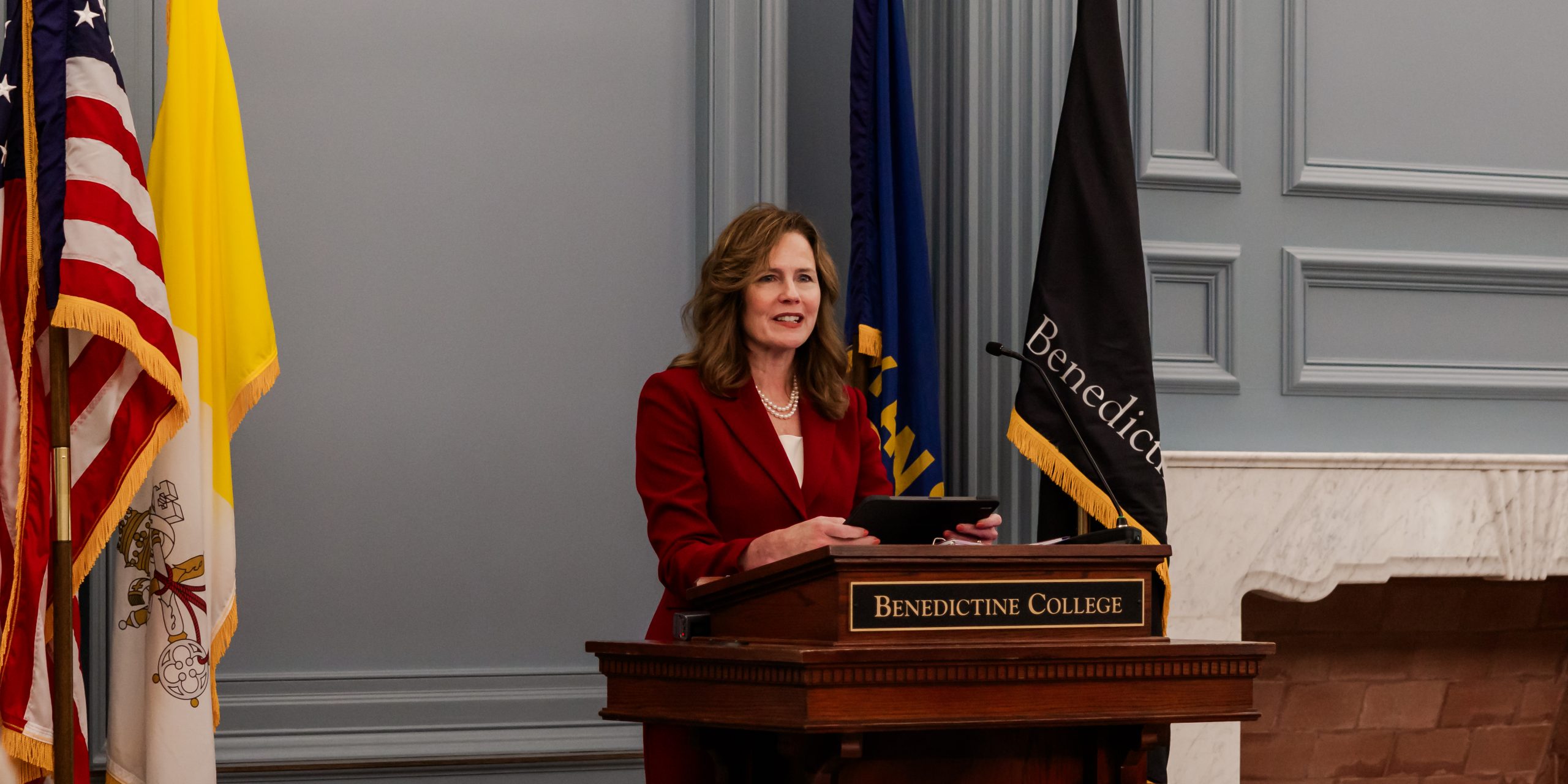
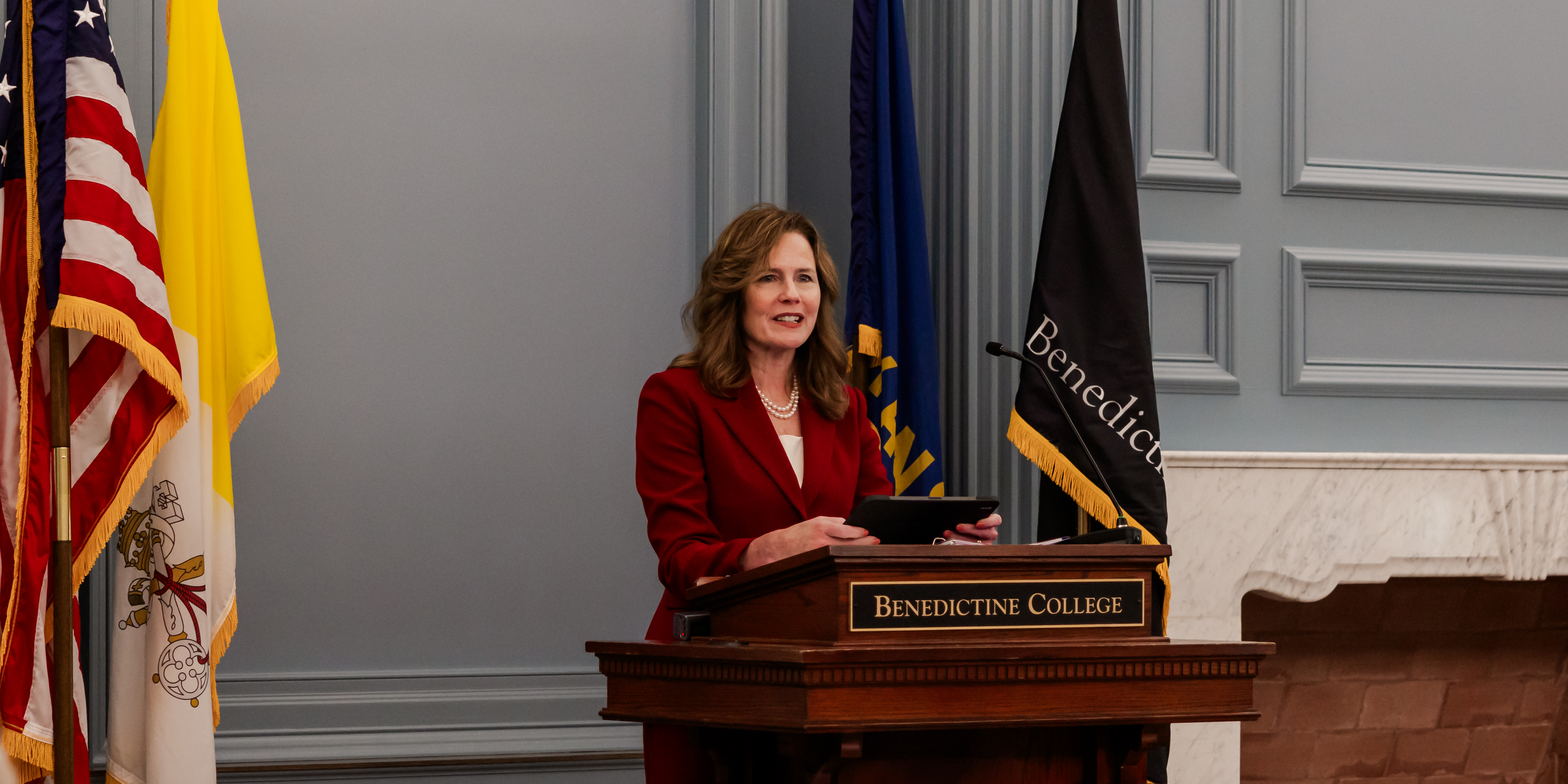
Sisters part ways with Benedictine College due to aging community, increased demands – #Catholic – Here’s a roundup of the latest Catholic education news in the United States:Sisters part ways with Benedictine due to aging community, demanding board, expansion effortsThe announcement of the decision by Mount St. Scholastica sisters to part ways with Benedictine College in Atchison, Kansas, came as no surprise to leadership at the institution, as the aging religious community has faced difficulties keeping up with the popular Newman Guide school’s growth.Dean of Students Joe Wurtz told EWTN News he believes the sisters have been discerning the move for more than a decade but ultimately informed the college of the decision a few days before the announcement. “I believe it’s because they saw the trajectory of their order and thought, ‘OK, we have to plan for the future.’”Wurtz, who is also the executive director of the Gregorian Fellows Leadership Program at Benedictine, said he believes the current demands of the college’s board of directors were ultimately too much for the sisters to handle alongside their current ministries. “I think they just felt it was too much,” he said.Benedictine’s board requires three sisters, the prioress and two sisters who rotate every four years, to be present at every board meeting as well as every executive meeting.“Again, with the complexity of the medical school, there’s a lot of terminology, there’s a lot of process, there’s a lot of things to consider, and it’s complicated if you’re not tracking all that detail and you’re making a big vote,” Wurtz said. While the sisters did not cite the proposed medical school specifically, “they did say the demands of the board are heavy compared to their other things,” he said.According to Wurtz, the sisters did not cite differences in mission or politics when informing the college of their decision.Dartmouth’s new provost a Catholic who says Ivies have been ‘negative’ role modelsDartmouth University’s new provost, Santiago Schnell, spoke with the National Catholic Register’s Jonathan Liedl on “EWTN News In Depth” about how his Catholic faith shapes his vision for higher education reform, discussing the Catholic foundations of the modern university and how higher education has gone “astray.”“We have been failing in the United States higher education. That’s why the general public and the government are responding negatively,” Schnell said. “The Ivies have served as a role model in a very negative way on how higher education should be moving forward, and the time for reform has arrived.”Schnell, a Venezuelan-born mathematical biologist and former dean at the University of Notre Dame, said the “primary challenge” causing the crisis in higher education has been “that we don’t have intellectual diversity as we used to” and that many university and faculty members have “unearned certainty” about their beliefs. “They are promoting their ideologies or their points of views instead of providing the tools and the perspectives to the students to actually question and seek the truth,” he said.Schnell called for a return to the historic roots of the university, which he emphasized “is a Catholic invention.”Iowa Catholic schools see enrollment boom after new law grants public funding accessCatholic schools in Iowa saw rising enrollment in the 2024-2025 school year thanks to a 2023 Iowa state law allowing families to use education savings accounts (ESAs) for private school expenses.Tweet“Enrollment in Iowa’s Catholic schools increased in the 2025-26 school year. As of October 2025, there were 26,095 students enrolled in Catholic schools, up a little more than 3% compared to the previous year. ESAs are being used increasingly by lower-income families,” the Iowa Catholic Conference said in a statement on X.According to data from the conference, 25,519 Catholic school students received an education savings account in the 2025-2026 school year. The accounts were also “used increasingly by lower-income families,” with the number of students eligible for reduced-price lunches increasing by 10%.Major gift allows Pittsburgh Diocese to offer all elementary school families financial aidThe Diocese of Pittsburgh has received “a significant Educational Improvement Tax Credit (EITC) gift from an anonymous donor” to go exclusively toward expanding long-term financial assistance to Catholic families for education costs across the diocese.“Combined with existing support and continued monitoring of potential new federal funding opportunities, this gift allows the diocese to make financial assistance available to everyone,” the diocese said in a Feb. 3 statement.“This extraordinary gift reflects a deep belief in the value of Catholic education and the families who depend on it,” Bishop Mark Eckman said. “We are deeply grateful for this generosity, which allows us to serve more children, strengthen our schools, and remain faithful to our mission of forming students in faith, knowledge, and service.”

Sisters part ways with Benedictine College due to aging community, increased demands – #Catholic – Here’s a roundup of the latest Catholic education news in the United States:Sisters part ways with Benedictine due to aging community, demanding board, expansion effortsThe announcement of the decision by Mount St. Scholastica sisters to part ways with Benedictine College in Atchison, Kansas, came as no surprise to leadership at the institution, as the aging religious community has faced difficulties keeping up with the popular Newman Guide school’s growth.Dean of Students Joe Wurtz told EWTN News he believes the sisters have been discerning the move for more than a decade but ultimately informed the college of the decision a few days before the announcement. “I believe it’s because they saw the trajectory of their order and thought, ‘OK, we have to plan for the future.’”Wurtz, who is also the executive director of the Gregorian Fellows Leadership Program at Benedictine, said he believes the current demands of the college’s board of directors were ultimately too much for the sisters to handle alongside their current ministries. “I think they just felt it was too much,” he said.Benedictine’s board requires three sisters, the prioress and two sisters who rotate every four years, to be present at every board meeting as well as every executive meeting.“Again, with the complexity of the medical school, there’s a lot of terminology, there’s a lot of process, there’s a lot of things to consider, and it’s complicated if you’re not tracking all that detail and you’re making a big vote,” Wurtz said. While the sisters did not cite the proposed medical school specifically, “they did say the demands of the board are heavy compared to their other things,” he said.According to Wurtz, the sisters did not cite differences in mission or politics when informing the college of their decision.Dartmouth’s new provost a Catholic who says Ivies have been ‘negative’ role modelsDartmouth University’s new provost, Santiago Schnell, spoke with the National Catholic Register’s Jonathan Liedl on “EWTN News In Depth” about how his Catholic faith shapes his vision for higher education reform, discussing the Catholic foundations of the modern university and how higher education has gone “astray.”“We have been failing in the United States higher education. That’s why the general public and the government are responding negatively,” Schnell said. “The Ivies have served as a role model in a very negative way on how higher education should be moving forward, and the time for reform has arrived.”Schnell, a Venezuelan-born mathematical biologist and former dean at the University of Notre Dame, said the “primary challenge” causing the crisis in higher education has been “that we don’t have intellectual diversity as we used to” and that many university and faculty members have “unearned certainty” about their beliefs. “They are promoting their ideologies or their points of views instead of providing the tools and the perspectives to the students to actually question and seek the truth,” he said.Schnell called for a return to the historic roots of the university, which he emphasized “is a Catholic invention.”Iowa Catholic schools see enrollment boom after new law grants public funding accessCatholic schools in Iowa saw rising enrollment in the 2024-2025 school year thanks to a 2023 Iowa state law allowing families to use education savings accounts (ESAs) for private school expenses.Tweet“Enrollment in Iowa’s Catholic schools increased in the 2025-26 school year. As of October 2025, there were 26,095 students enrolled in Catholic schools, up a little more than 3% compared to the previous year. ESAs are being used increasingly by lower-income families,” the Iowa Catholic Conference said in a statement on X.According to data from the conference, 25,519 Catholic school students received an education savings account in the 2025-2026 school year. The accounts were also “used increasingly by lower-income families,” with the number of students eligible for reduced-price lunches increasing by 10%.Major gift allows Pittsburgh Diocese to offer all elementary school families financial aidThe Diocese of Pittsburgh has received “a significant Educational Improvement Tax Credit (EITC) gift from an anonymous donor” to go exclusively toward expanding long-term financial assistance to Catholic families for education costs across the diocese.“Combined with existing support and continued monitoring of potential new federal funding opportunities, this gift allows the diocese to make financial assistance available to everyone,” the diocese said in a Feb. 3 statement.“This extraordinary gift reflects a deep belief in the value of Catholic education and the families who depend on it,” Bishop Mark Eckman said. “We are deeply grateful for this generosity, which allows us to serve more children, strengthen our schools, and remain faithful to our mission of forming students in faith, knowledge, and service.”

Here’s a roundup of the latest Catholic education news in the United States.

Read More

Most Holy and Adorable Trinity, one God in three Persons, I firmly believe that You are here present; I adore You with the most profound humility; I praise You and give You thanks with all my heart for the favors You have bestowed on me. Your Goodness has brought me safely to the beginning of this day. Behold, O Lord, I offer You my whole being and in particular all my thoughts, words and actions, together with such crosses and contradictions as I may meet with in the course of this day. Give …

Read More
Trump announces May 17 event to rededicate U.S. as ‘one nation, under God’ – #Catholic – President Donald Trump addressed the 74th annual National Prayer Breakfast on Thursday, Feb. 5, touting his record on religious issues and announcing that the United States will hold an event to rededicate the nation to God.“This prayer breakfast comes at a special time for our country as we prepare to celebrate the 250th anniversary of American independence,” Trump said five months ahead of the national celebration of the anniversary of the signing of the Declaration of Independence.“When our founders proclaimed the immortal truths that echoed around the world and down all the way through time, they declared that all of us are made free and equal by the hand of our Creator,” the president said.In honor of the occasion, Trump announced at the breakfast that he will hold an event, titled "Rededicate 250" on the National Mall in Washington, D.C., on May 17 “to rededicate America as one nation under God.”“We’re inviting Americans from all across the country to come together on our National Mall to pray, to give thanks,” he said.Earlier this year, Trump launched the “America Prays” initiative ahead of the anniversary, asking Americans to pray for the country and its citizens. The White House published a 22-page document at the time to highlight the Christian roots of the country, which contained historical prayers, sermons, and presidential proclamations.The president also announced new guidance from the U.S. Department of Education, which seeks to protect religious speech and prayer in public schools. He said he expects the guidance to face lawsuits but told the crowd: “We’ll win it.”He said the country is seeing a resurgence in the Christian faith and highlighted a rise in Bible sales in 2025 and a higher frequency of young people attending religious services. When asked about church attendance rates, a spokesperson for the White House cited one study from the Barna Group as an example, which showed millennial and Generation Z Christians attending religious services at higher rates.Two of Trump’s guests — Emma Foltz and London Smith — were invited to the breakfast to highlight examples of what the president called “young American patriots and believers.”Foltz and Smith, two counselors at Camp Mystic, are credited with saving 14 girls in the deadly July 2025 flood at the Christian summer camp that claimed 27 lives.“Emma bravely helped lead 14 precious little girls to safety, and London, seeing the water rise, gathered with other girls at the top of their building and prayed,” Trump said in the speech.“Almost 250 years after our Founding Fathers took one of the greatest leaps of faith in human history, the story of Emma and London shows us that faith of the American people remains unbroken, actually became stronger than ever,” he said. “And it reminds us that prayers strengthen, prayers heal, prayer empowers, and prayer saves. Quite simply, prayer is America’s superpower."
 
 “Prayer is America’s superpower.”
 
 Donald Trump45th and 47th president of the United States
 
 
 During his speech, Trump also took credit for accomplishments that he believes have benefited Christians in the United States and abroad.The president brought up his executive order related to the Johnson Amendment, which eased restrictions on pastors commenting on political issues. He also noted he expanded the Mexico City Policy to prevent taxpayer funds for international organizations that support abortion and “radical gender ideology.”Trump also touted his executive actions “to slash federal funding for any public school that pushes transgender insanity” on children and “stopped the mutilation of children” with policies that restrict hospitals from offering drugs and surgeries to minors to make them appear like the opposite sex. He also said: “We got men out of women’s sports.”“We’re still fighting it, but, you know, transgender for everybody — they want transgender for everybody,” he said. “We stopped it.”Trump also reminded that crowd that he created the White House Faith Office and the Religious Liberty Commission.“My administration is confronting head on the militant and really intolerant campaign that tried to drive religious believers out of public life and out of society,” Trump said.Trump also spoke about international affairs, specifically about the December 2025 military strikes on Nigeria, which was aimed at combatting the persecution of Christians. Another one of his guests was Nigerian First Lady Remi Tinubu, who is Christian.“We knocked the hell out of them the other day in Nigeria because they were killing Christians,” Trump said. “They were killing Christians. You can’t do that. When Christians come under attack, they know they’re going to be attacked violently and viciously by President Trump.”Several lawmakers, including House Speaker Mike Johnson, and members of Trump’s Cabinet, including Attorney General Pam Bondi, also attended the prayer breakfast.

Trump announces May 17 event to rededicate U.S. as ‘one nation, under God’ – #Catholic – President Donald Trump addressed the 74th annual National Prayer Breakfast on Thursday, Feb. 5, touting his record on religious issues and announcing that the United States will hold an event to rededicate the nation to God.“This prayer breakfast comes at a special time for our country as we prepare to celebrate the 250th anniversary of American independence,” Trump said five months ahead of the national celebration of the anniversary of the signing of the Declaration of Independence.“When our founders proclaimed the immortal truths that echoed around the world and down all the way through time, they declared that all of us are made free and equal by the hand of our Creator,” the president said.In honor of the occasion, Trump announced at the breakfast that he will hold an event, titled "Rededicate 250" on the National Mall in Washington, D.C., on May 17 “to rededicate America as one nation under God.”“We’re inviting Americans from all across the country to come together on our National Mall to pray, to give thanks,” he said.Earlier this year, Trump launched the “America Prays” initiative ahead of the anniversary, asking Americans to pray for the country and its citizens. The White House published a 22-page document at the time to highlight the Christian roots of the country, which contained historical prayers, sermons, and presidential proclamations.The president also announced new guidance from the U.S. Department of Education, which seeks to protect religious speech and prayer in public schools. He said he expects the guidance to face lawsuits but told the crowd: “We’ll win it.”He said the country is seeing a resurgence in the Christian faith and highlighted a rise in Bible sales in 2025 and a higher frequency of young people attending religious services. When asked about church attendance rates, a spokesperson for the White House cited one study from the Barna Group as an example, which showed millennial and Generation Z Christians attending religious services at higher rates.Two of Trump’s guests — Emma Foltz and London Smith — were invited to the breakfast to highlight examples of what the president called “young American patriots and believers.”Foltz and Smith, two counselors at Camp Mystic, are credited with saving 14 girls in the deadly July 2025 flood at the Christian summer camp that claimed 27 lives.“Emma bravely helped lead 14 precious little girls to safety, and London, seeing the water rise, gathered with other girls at the top of their building and prayed,” Trump said in the speech.“Almost 250 years after our Founding Fathers took one of the greatest leaps of faith in human history, the story of Emma and London shows us that faith of the American people remains unbroken, actually became stronger than ever,” he said. “And it reminds us that prayers strengthen, prayers heal, prayer empowers, and prayer saves. Quite simply, prayer is America’s superpower." “Prayer is America’s superpower.” Donald Trump45th and 47th president of the United States During his speech, Trump also took credit for accomplishments that he believes have benefited Christians in the United States and abroad.The president brought up his executive order related to the Johnson Amendment, which eased restrictions on pastors commenting on political issues. He also noted he expanded the Mexico City Policy to prevent taxpayer funds for international organizations that support abortion and “radical gender ideology.”Trump also touted his executive actions “to slash federal funding for any public school that pushes transgender insanity” on children and “stopped the mutilation of children” with policies that restrict hospitals from offering drugs and surgeries to minors to make them appear like the opposite sex. He also said: “We got men out of women’s sports.”“We’re still fighting it, but, you know, transgender for everybody — they want transgender for everybody,” he said. “We stopped it.”Trump also reminded that crowd that he created the White House Faith Office and the Religious Liberty Commission.“My administration is confronting head on the militant and really intolerant campaign that tried to drive religious believers out of public life and out of society,” Trump said.Trump also spoke about international affairs, specifically about the December 2025 military strikes on Nigeria, which was aimed at combatting the persecution of Christians. Another one of his guests was Nigerian First Lady Remi Tinubu, who is Christian.“We knocked the hell out of them the other day in Nigeria because they were killing Christians,” Trump said. “They were killing Christians. You can’t do that. When Christians come under attack, they know they’re going to be attacked violently and viciously by President Trump.”Several lawmakers, including House Speaker Mike Johnson, and members of Trump’s Cabinet, including Attorney General Pam Bondi, also attended the prayer breakfast.

On May 17, an event on the National Mall in Washington, D.C., will rededicate the United States as “one nation under God,” Trump announced at the National Prayer Breakfast.

Read More
Cuban government announces readiness to dialogue with U.S. – #Catholic – Cuban President Miguel Díaz-Canel stated on Feb. 5 that his government is willing to engage in dialogue with the United States without pressure and “on equal terms.”“Cuba is open to dialogue with the United States, a dialogue on any topic they wish to discuss,” Díaz-Canel said during a lengthy press conference.The press conference took place two weeks after U.S. President Donald Trump announced extraordinary tariffs on countries that send oil to Cuba, which is exacerbating the island’s fuel shortage.On Jan. 31, the Cuban bishops published a message reiterating that the country needs urgent structural changes to prevent the crisis from deepening further. “The risk of social chaos and violence among the people of the same nation is real,” they stated.Díaz-Canel said the dialogue would have to take place “without pressure; dialogue is impossible under pressure, without preconditions, on equal footing, with respect for our sovereignty, our independence, and our self-determination, and without addressing issues that are offensive and that we could consider interference in our internal affairs.”After asserting that Cubans “do not hate the American people,” he said that from a dialogue “like that, a civilized relationship between neighbors can be built, one that could bring mutual benefit to our peoples, to the peoples of the region.”“That is our position, it is also a position of continuity, and I believe it is possible,” he affirmed.Díaz-Canel, 65, has been president of Cuba since October 2019. He succeeded Raúl Castro, brother of the late Fidel Castro, who seized power on the island in January 1959.Yesterday, in an interview with NBC News, Trump stated that “we are talking with Cuba” and recalled the thousands of Cubans who were forced to emigrate to the United States because of communism.TweetHowever, on Feb. 4, Cuba’s deputy foreign minister, Carlos Fernández de Cossío, told CNN that a change in the system of government would not be discussed.“We are not ready to discuss our constitutional system, just as we assume that the United States is not ready to discuss its constitutional system, its political system, or its economic reality,” Fernández de Cossío indicated.While fuel shortages — exacerbated by Venezuelan oil shipments being cut off — are affecting the Cuban economy, the crisis on the island has been ongoing for several years, with continuous power outages due to a lack of electricity, insufficient supplies of medicine and food, and frequent repression of those who express dissenting opinions and call for free elections and an end to the communist dictatorship.This story was first published by ACI Prensa, the Spanish-language sister service of EWTN News. It has been translated and adapted by EWTN News English.

Cuban government announces readiness to dialogue with U.S. – #Catholic – Cuban President Miguel Díaz-Canel stated on Feb. 5 that his government is willing to engage in dialogue with the United States without pressure and “on equal terms.”“Cuba is open to dialogue with the United States, a dialogue on any topic they wish to discuss,” Díaz-Canel said during a lengthy press conference.The press conference took place two weeks after U.S. President Donald Trump announced extraordinary tariffs on countries that send oil to Cuba, which is exacerbating the island’s fuel shortage.On Jan. 31, the Cuban bishops published a message reiterating that the country needs urgent structural changes to prevent the crisis from deepening further. “The risk of social chaos and violence among the people of the same nation is real,” they stated.Díaz-Canel said the dialogue would have to take place “without pressure; dialogue is impossible under pressure, without preconditions, on equal footing, with respect for our sovereignty, our independence, and our self-determination, and without addressing issues that are offensive and that we could consider interference in our internal affairs.”After asserting that Cubans “do not hate the American people,” he said that from a dialogue “like that, a civilized relationship between neighbors can be built, one that could bring mutual benefit to our peoples, to the peoples of the region.”“That is our position, it is also a position of continuity, and I believe it is possible,” he affirmed.Díaz-Canel, 65, has been president of Cuba since October 2019. He succeeded Raúl Castro, brother of the late Fidel Castro, who seized power on the island in January 1959.Yesterday, in an interview with NBC News, Trump stated that “we are talking with Cuba” and recalled the thousands of Cubans who were forced to emigrate to the United States because of communism.TweetHowever, on Feb. 4, Cuba’s deputy foreign minister, Carlos Fernández de Cossío, told CNN that a change in the system of government would not be discussed.“We are not ready to discuss our constitutional system, just as we assume that the United States is not ready to discuss its constitutional system, its political system, or its economic reality,” Fernández de Cossío indicated.While fuel shortages — exacerbated by Venezuelan oil shipments being cut off — are affecting the Cuban economy, the crisis on the island has been ongoing for several years, with continuous power outages due to a lack of electricity, insufficient supplies of medicine and food, and frequent repression of those who express dissenting opinions and call for free elections and an end to the communist dictatorship.This story was first published by ACI Prensa, the Spanish-language sister service of EWTN News. It has been translated and adapted by EWTN News English.

Cuban President Miguel Díaz-Canel stated that his government is willing to engage in dialogue with the United States, but without pressure and without regime change.

Read More
Picture of the day


“Selection” of Hungarian Jews on the ramp at Auschwitz-II-Birkenau in German-occupied Poland, May/June 1944, during the final phase of the Holocaust. Jews were sent either to forced labor or the gas chambers. 81 years ago today, on January 27, 1945, Auschwitz was liberated by the Red Army. Today is also International Holocaust Remembrance Day.
 #ImageOfTheDay
Picture of the day
“Selection” of Hungarian Jews on the ramp at Auschwitz-II-Birkenau in German-occupied Poland, May/June 1944, during the final phase of the Holocaust. Jews were sent either to forced labor or the gas chambers. 81 years ago today, on January 27, 1945, Auschwitz was liberated by the Red Army. Today is also International Holocaust Remembrance Day.
Read More

Almighty and loving Father, I thank you for giving St. Gerard to us as a most appealing model and powerful friend. By his example, he showed us how to love and trust you. You have showered many blessings on those who call upon him. For your greater glory and my welfare, please grant me the favors which I ask in his name.
(Here mention them privately)
And you, my powerful patron, intercede for me before the throne of God. Draw near to that throne and do not leave it until you have been heard. …

Read More
U.S. bishops mark 100th anniversary of Black History Month – #Catholic – February 2026 marks 100 years of commemorating Black History Month in the United States and Catholic bishops are marking the milestone.Bishop Daniel E. Garcia, chairman of the U.S. Conference of Catholic Bishops’ (USCCB) Subcommittee for the Promotion of Racial Justice and Reconciliation, and Bishop Roy E. Campbell, chairman of the USCCB’s Subcommittee on African American Affairs, marked the anniversary by urging the faithful to “be faithful stewards of memory” and “courageous witnesses to truth.”In a statement released Feb. 3, the bishops highlighted the anniversary and called the milestone “an opportunity for us to prayerfully reflect on the ways history has been preserved, honored, and passed on across generations.”Reflecting on the U.S. bishops’ pastoral letter against racism, “Open Wide Our Hearts,” the bishops recognized “that the lived experience of the vast majority of African Americans bears the marks of our country’s original sin of racism.”“During this year’s observance of Black History Month, we encourage the faithful to consider the lessons of history, honoring our heroes of the past and learning from the mistakes of the past,” the bishops said. “Although we may at times encounter people or situations in our country that seek to erase ‘memory’ from our minds and books, it can never be erased from our hearts. May our reflections strengthen our faith and communities.” The bishops concluded: “Let us be faithful stewards of memory. Let us be courageous witnesses to truth. Let us pray and work to honor the inherent dignity of every person and the sacred stories of every people.”Black History Month first began in February 1926. At the time it was called Negro History Week and was created by Carter G. Woodson, who founded the Association for the Study of Negro Life and History (ASNLH).After attending a national celebration of the 50th anniversary of emancipation in 1915, Woodson was left inspired and decided to form an organization to promote the scientific study of Black life and history. From there, he formed ASNLH, launched The Journal of Negro History in 1916, and then in 1924 started Negro History and Literature Week, which was renamed Negro Achievement Week. Finally, in 1926, Woodson sent out a press release announcing Negro History Week, which was later renamed Black History Month by President Gerald Ford in 1976. Black History Month aims to honor the contributions of Black individuals to history, culture, and society. Additionally, it serves to educate the public, challenge systemic racism, highlight Black leaders, and celebrate the ongoing journey toward equality.

U.S. bishops mark 100th anniversary of Black History Month – #Catholic – February 2026 marks 100 years of commemorating Black History Month in the United States and Catholic bishops are marking the milestone.Bishop Daniel E. Garcia, chairman of the U.S. Conference of Catholic Bishops’ (USCCB) Subcommittee for the Promotion of Racial Justice and Reconciliation, and Bishop Roy E. Campbell, chairman of the USCCB’s Subcommittee on African American Affairs, marked the anniversary by urging the faithful to “be faithful stewards of memory” and “courageous witnesses to truth.”In a statement released Feb. 3, the bishops highlighted the anniversary and called the milestone “an opportunity for us to prayerfully reflect on the ways history has been preserved, honored, and passed on across generations.”Reflecting on the U.S. bishops’ pastoral letter against racism, “Open Wide Our Hearts,” the bishops recognized “that the lived experience of the vast majority of African Americans bears the marks of our country’s original sin of racism.”“During this year’s observance of Black History Month, we encourage the faithful to consider the lessons of history, honoring our heroes of the past and learning from the mistakes of the past,” the bishops said. “Although we may at times encounter people or situations in our country that seek to erase ‘memory’ from our minds and books, it can never be erased from our hearts. May our reflections strengthen our faith and communities.” The bishops concluded: “Let us be faithful stewards of memory. Let us be courageous witnesses to truth. Let us pray and work to honor the inherent dignity of every person and the sacred stories of every people.”Black History Month first began in February 1926. At the time it was called Negro History Week and was created by Carter G. Woodson, who founded the Association for the Study of Negro Life and History (ASNLH).After attending a national celebration of the 50th anniversary of emancipation in 1915, Woodson was left inspired and decided to form an organization to promote the scientific study of Black life and history. From there, he formed ASNLH, launched The Journal of Negro History in 1916, and then in 1924 started Negro History and Literature Week, which was renamed Negro Achievement Week. Finally, in 1926, Woodson sent out a press release announcing Negro History Week, which was later renamed Black History Month by President Gerald Ford in 1976. Black History Month aims to honor the contributions of Black individuals to history, culture, and society. Additionally, it serves to educate the public, challenge systemic racism, highlight Black leaders, and celebrate the ongoing journey toward equality.

February marks the 100th anniversary of Black History Month being commemorated in the U.S.

Read More
Church fresco angel that resembled Italian prime minister painted over to end controversy – #Catholic – The recent restoration of a fresco in an ancient baroque church in central Rome, just a short distance from the Spanish consulate and the Italian Parliament, has sparked an unexpected controversy after one of the angels depicted in the restoration bore a striking resemblance to Italian Prime Minister Giorgia Meloni.The figure in question holds a scroll with a map of Italy and is one of a pair of angels flanking the marble bust of Umberto II, the last king of Italy, who reigned briefly in 1946. The funerary monument includes the inscription “Acting like a Christian, resigned to the divine will.”TweetThe fresco is located in a side chapel of St. Lawrence Basilica in the Lucina area of Rome, which was built in the fourth century. In recent days, the cherub with features similar to those of Meloni became the focus of unexpected attention from numerous visitors, many of whom came out of curiosity rather than for religious reasons.
 
 Curious onlookers photograph the fresco of the angel that bore a striking resemblance to Italian Prime Minister Giorgia Meloni’s face. | Credit: Victoria Cardiel/EWTN News
 
 The Italian prime minister herself reacted with irony on social media. In a message posted on Instagram, accompanied by a smiling emoji, she wrote: “No, I certainly don’t look like an angel.”Instagram postThe image unleashed a flood of memes on the internet, where Meloni was even depicted as a version of the Mona Lisa.However, the fresco is not an ancient work of art but a relatively recent one: It was painted in 2000 as part of the funerary complex dedicated to Umberto II, installed in 1985 at the initiative of the then-parish priest, Pietro Pintus. Over the years, the painting had deteriorated and required restoration.The person responsible for the restoration was the church’s sacristan, Bruno Valentinetti, 83, who described himself to the Italian media as an amateur painter. Valentinetti insisted that he never intended to portray the prime minister and downplayed the resemblance, attributing it to a coincidence.On Jan. 31, the parish priest, Father Daniele Micheletti, was one of the first to speak publicly about the matter.Although he acknowledged the resemblance between the angel and the Italian leader, he initially downplayed the controversy. However, a few hours later, Cardinal Baldassare Reina, vicar of the Diocese of Rome, intervened, distancing himself from those remarks in an official statement.The cardinal expressed his “deep dismay” over what had happened and announced immediate measures. “It is firmly reiterated that images of sacred art and Christian tradition cannot be subject to improper use or instrumentalization, as they are intended exclusively to support liturgical life and personal and communal prayer,” he stated.Meanwhile, the church had been transformed into an impromptu tourist attraction, with dozens of people flocking there every day to see and photograph the angel, often for nonreligious reasons — without attending Mass or participating in prayer.The controversy finally came to an end on the evening of Tuesday, Feb. 3, when according to Italian newspapers, the restorer himself covered over the angel’s face with a layer of white paint. Micheletti later explained that the decision was made because the image had become divisive and because “there was a continuous stream of people coming in just to see it, not to pray or attend Mass; it was impossible to go on like this.”This story was first published by ACI Prensa, the Spanish-language sister service of EWTN News. It has been translated and adapted by EWTN News English.

Church fresco angel that resembled Italian prime minister painted over to end controversy – #Catholic – The recent restoration of a fresco in an ancient baroque church in central Rome, just a short distance from the Spanish consulate and the Italian Parliament, has sparked an unexpected controversy after one of the angels depicted in the restoration bore a striking resemblance to Italian Prime Minister Giorgia Meloni.The figure in question holds a scroll with a map of Italy and is one of a pair of angels flanking the marble bust of Umberto II, the last king of Italy, who reigned briefly in 1946. The funerary monument includes the inscription “Acting like a Christian, resigned to the divine will.”TweetThe fresco is located in a side chapel of St. Lawrence Basilica in the Lucina area of Rome, which was built in the fourth century. In recent days, the cherub with features similar to those of Meloni became the focus of unexpected attention from numerous visitors, many of whom came out of curiosity rather than for religious reasons. Curious onlookers photograph the fresco of the angel that bore a striking resemblance to Italian Prime Minister Giorgia Meloni’s face. | Credit: Victoria Cardiel/EWTN News The Italian prime minister herself reacted with irony on social media. In a message posted on Instagram, accompanied by a smiling emoji, she wrote: “No, I certainly don’t look like an angel.”Instagram postThe image unleashed a flood of memes on the internet, where Meloni was even depicted as a version of the Mona Lisa.However, the fresco is not an ancient work of art but a relatively recent one: It was painted in 2000 as part of the funerary complex dedicated to Umberto II, installed in 1985 at the initiative of the then-parish priest, Pietro Pintus. Over the years, the painting had deteriorated and required restoration.The person responsible for the restoration was the church’s sacristan, Bruno Valentinetti, 83, who described himself to the Italian media as an amateur painter. Valentinetti insisted that he never intended to portray the prime minister and downplayed the resemblance, attributing it to a coincidence.On Jan. 31, the parish priest, Father Daniele Micheletti, was one of the first to speak publicly about the matter.Although he acknowledged the resemblance between the angel and the Italian leader, he initially downplayed the controversy. However, a few hours later, Cardinal Baldassare Reina, vicar of the Diocese of Rome, intervened, distancing himself from those remarks in an official statement.The cardinal expressed his “deep dismay” over what had happened and announced immediate measures. “It is firmly reiterated that images of sacred art and Christian tradition cannot be subject to improper use or instrumentalization, as they are intended exclusively to support liturgical life and personal and communal prayer,” he stated.Meanwhile, the church had been transformed into an impromptu tourist attraction, with dozens of people flocking there every day to see and photograph the angel, often for nonreligious reasons — without attending Mass or participating in prayer.The controversy finally came to an end on the evening of Tuesday, Feb. 3, when according to Italian newspapers, the restorer himself covered over the angel’s face with a layer of white paint. Micheletti later explained that the decision was made because the image had become divisive and because “there was a continuous stream of people coming in just to see it, not to pray or attend Mass; it was impossible to go on like this.”This story was first published by ACI Prensa, the Spanish-language sister service of EWTN News. It has been translated and adapted by EWTN News English.

The restored fresco in an ancient church in Rome sparked controversy after one of the angels depicted in the restoration bore a striking resemblance to Italian Prime Minister Giorgia Meloni.

Read More
Archbishop Coakley urges U.S., Russia to renew nuclear arms control pact – #Catholic – Archbishop Paul Coakley, president of the U.S. Conference of Catholic Bishops (USCCB), called upon policymakers to pursue diplomatic negotiations to maintain limitations of the New Strategic Arms Reduction Treaty (New START) ahead of its expiration on Feb. 5.New START is the treaty between the United States and Russia that enhances U.S. national security by placing limits on Russian-deployed intercontinental-range nuclear weapons. The treaty was signed in 2010 by then-U.S. President Barack Obama and Russian President Dmitry Medvedev and is the last major nuclear arms control pact signed by the two nations.“The dangers posed by current conflicts around the world, including the devastating war in Ukraine, make the forthcoming expiration of New START simply unacceptable,” Coakley said in a Feb. 3 statement.He urged policymakers to “courageously pursue diplomatic negotiations” in order to maintain New START’s limits and open pathways toward disarmament.“I call on people of faith and all men and women of goodwill to ardently pray that we, as an international community, may develop the courage to pursue an authentic, transformative, and lasting peace,” Coakley said.“International policy disagreements, as serious as they are, cannot be used as excuses for diplomatic stalemates; on the contrary, they should spur us on to more vehemently pursue effective engagement and dialogue.” “May the Prince of Peace enlighten our hearts and minds to pursue peace around the world in a spirit of universal fraternity,” he said.Pope Leo XIV warns of ‘new global arms race’Pope Leo XIV has also called attention to the importance of renewing the treaty. In his address to the diplomatic corps this year, the Holy Father said there is a “need to follow up on the New START Treaty” and warned that “there is a danger of returning to the race of producing ever more sophisticated new weapons, also by means of artificial intelligence.”He also addressed the danger of a “new global arms race” at his general audience on Wednesday, Feb. 4. He urged world leaders not to allow the agreement to end without a credible and effective alternative.“Tomorrow the New START treaty reaches its expiration,” the pope said, noting that the agreement helped contain nuclear arsenals and strengthen international security. He called for “every constructive effort in favor of disarmament and mutual trust.”The pope stressed that the world must abandon “the logic of fear and distrust” and embrace “a shared ethic capable of guiding decisions toward the common good and making peace a heritage safeguarded by all.”During the same audience, Pope Leo also renewed his call for prayers for the people of Ukraine who are being “harshly tested” by continued Russian bombardments.

Archbishop Coakley urges U.S., Russia to renew nuclear arms control pact – #Catholic – Archbishop Paul Coakley, president of the U.S. Conference of Catholic Bishops (USCCB), called upon policymakers to pursue diplomatic negotiations to maintain limitations of the New Strategic Arms Reduction Treaty (New START) ahead of its expiration on Feb. 5.New START is the treaty between the United States and Russia that enhances U.S. national security by placing limits on Russian-deployed intercontinental-range nuclear weapons. The treaty was signed in 2010 by then-U.S. President Barack Obama and Russian President Dmitry Medvedev and is the last major nuclear arms control pact signed by the two nations.“The dangers posed by current conflicts around the world, including the devastating war in Ukraine, make the forthcoming expiration of New START simply unacceptable,” Coakley said in a Feb. 3 statement.He urged policymakers to “courageously pursue diplomatic negotiations” in order to maintain New START’s limits and open pathways toward disarmament.“I call on people of faith and all men and women of goodwill to ardently pray that we, as an international community, may develop the courage to pursue an authentic, transformative, and lasting peace,” Coakley said.“International policy disagreements, as serious as they are, cannot be used as excuses for diplomatic stalemates; on the contrary, they should spur us on to more vehemently pursue effective engagement and dialogue.” “May the Prince of Peace enlighten our hearts and minds to pursue peace around the world in a spirit of universal fraternity,” he said.Pope Leo XIV warns of ‘new global arms race’Pope Leo XIV has also called attention to the importance of renewing the treaty. In his address to the diplomatic corps this year, the Holy Father said there is a “need to follow up on the New START Treaty” and warned that “there is a danger of returning to the race of producing ever more sophisticated new weapons, also by means of artificial intelligence.”He also addressed the danger of a “new global arms race” at his general audience on Wednesday, Feb. 4. He urged world leaders not to allow the agreement to end without a credible and effective alternative.“Tomorrow the New START treaty reaches its expiration,” the pope said, noting that the agreement helped contain nuclear arsenals and strengthen international security. He called for “every constructive effort in favor of disarmament and mutual trust.”The pope stressed that the world must abandon “the logic of fear and distrust” and embrace “a shared ethic capable of guiding decisions toward the common good and making peace a heritage safeguarded by all.”During the same audience, Pope Leo also renewed his call for prayers for the people of Ukraine who are being “harshly tested” by continued Russian bombardments.

U.S. bishops’ conference president Archbishop Paul Coakley called for keeping limitations of the 2010 New Strategic Arms Reduction Treaty, which is set to expire on Feb. 5.

Read More
Picture of the day


Apple orchards after snowfall in Sangla in the northern Indian state of Himachal Pradesh. India has the second largest area under apple cultivation in the world and is the fifth largest producer of the fruit globally. More than 90% of India’s apple production comes from just two of its northern Himalayan states: Jammu and Kashmir, and Himachal Pradesh. Today is Republic Day in India.
 #ImageOfTheDay
Picture of the day
Apple orchards after snowfall in Sangla in the northern Indian state of Himachal Pradesh. India has the second largest area under apple cultivation in the world and is the fifth largest producer of the fruit globally. More than 90% of India’s apple production comes from just two of its northern Himalayan states: Jammu and Kashmir, and Himachal Pradesh. Today is Republic Day in India.
Read More

Almighty and eternal God,
You have promised that there will someday be but one fold and one Shepherd.
Hasten that day, we pray You,
in Your most merciful kindness and generosity.
Pour the light of Your grace
into the minds of our non-Catholic friends
so that they may see the truth,
and fully realize that the truth is one and undivided.
Give them also the strength of will
needed to follow in the direction of the light You give them.

Let us, their neighbors and …

Read More
International Religious Freedom Summit co-chairs assess current state of global religious liberty – #Catholic – 2026 International Religious Freedom (IRF) Summit co-chairs Sam Brownback and Katrina Lantos Swett offered a fresh assessment of the current state of global religious liberty and the movement’s growth.The IRF Summit, which concluded in Washington, D.C., on Tuesday, is a broad coalition of religious and human rights groups that advocate for religious freedom for all people across the globe. Co-chair Brownback previously served as ambassador at large for international religious freedom during the first Trump administration and Lantos Swett is president of the Lantos Foundation for Human Rights and Justice and a former chair of the United States Commission on International Religious Freedom (USCIRF).Assessing the current religious freedom panorama, “we see more countries putting resources into this issue, appointing high-level envoys focused on freedom of religion or belief,” Lantos Swett told EWTN News. “So that’s on the good side of the ledger.”“On the bad side of the ledger, the evidence now is that over 80% of the world’s population live in countries where there is some degree of repression, persecution, and societal and legal imposition on this fundamental human right,” she said.Current concerns right now include what is known as “transnational repression.” She explained: “We increasingly are seeing some of these very bad actors in the world reaching the long hand of violence, threat, intimidation, harassment beyond their national borders.”Lantos Swett detailed China, Iran, and Russia are at the “top of the list” of worst countries when it comes to religious freedom matters.“We’re very concerned about the efforts by the Chinese government to engage in what I would view as a hostile takeover of the Catholic Church by appointing their own bishops and controlling what the Catholic Church is allowed to do in China,” she indicated.There is also present “false propaganda” and even potential issues with artificial intelligence (AI) and how it “will impact for good and for ill, the defense of conscience rights.”Infringement upon religious freedom around the world is “a massive problem,” Brownback said. “It’s probably one of the most abused human rights in the world.”“It happens to all different faiths everywhere. It’s time the world wakes up and pushed us back against this,” Brownback said.Agreeing with Lantos Swett, Brownback said China is “No. 1” when it comes to the worst countries for religious freedom. He also noted Nigeria and the Indian subcontinent.In China, “they oppress their people, but then they also produce the technology that goes out to, we think, nearly 80 countries for oppression,” he said.How religious freedom movement can take actionThose involved in the IRF movement have “been climbing up the backside of the mountain where nobody could see us for a long period of time, and now we’re up at a perch that a lot of people are shooting at us,” Brownback said during a Feb. 2 summit panel.“Now that we’re in the center of the debate and the discussion, we’ve got to act like it. We’ve got to have our factual settings together. We’ve got to be careful and cautious, but bold and courageous,” he said.
 
 Jan Jekielek, senior editor with The Epoch Times, with International Religious Freedom (IRF) Summit co-chairs Sam Brownback and Katrina Lantos Swett at the 2026 IRF Summit in Washington, D.C., on Feb. 2, 2026, in Washington, D.C. | Credit: Photo courtesy of IRF Summit
 
 “At the same time, we’ve got to form alliances and pull people in, not just from religious freedom, but also from democracy movements, from security movements to make this … a global movement, a grassroots movement, because that’s where we win as a global grassroots movement.”Lantos Swett expanded further on what the movement needs to do next. She said the cause for religious liberty is bigger than the “politics of the day.” The cause “is more profound and ultimately more unifying than the many things that pull us apart.”“We have become deeply divided, deeply hostile towards those who don’t agree with us politically or on some other criteria. But Ambassador Brownback and I certainly have felt that as it relates to the fight to defend religious freedom for everyone everywhere, it is of paramount importance that this remain really not just a bipartisan cause but a nonpartisan cause,” she said.The “movement is growing” in part to “an unease about the pervasive nihilism we see in the world around us,” Lantos Swett said. “You know, nihilism, this philosophy, either moral nihilism, there’s no such thing as right and wrong. Or as existential nihilism, life itself has no meaning, no purpose. It’s a terrible way to live. It’s a terrible way for a community and a society to feel.”“I do think, especially maybe even among young people, that you sense that they’re moving away from that somewhat aimless and nihilistic view of life and searching for something more meaningful.”“I hope that that will also help us recruit a new generation of leaders to this movement because they are starting to understand how important it is to have a defining purpose and sense of meaning and consequence to your life,” she said.

International Religious Freedom Summit co-chairs assess current state of global religious liberty – #Catholic – 2026 International Religious Freedom (IRF) Summit co-chairs Sam Brownback and Katrina Lantos Swett offered a fresh assessment of the current state of global religious liberty and the movement’s growth.The IRF Summit, which concluded in Washington, D.C., on Tuesday, is a broad coalition of religious and human rights groups that advocate for religious freedom for all people across the globe. Co-chair Brownback previously served as ambassador at large for international religious freedom during the first Trump administration and Lantos Swett is president of the Lantos Foundation for Human Rights and Justice and a former chair of the United States Commission on International Religious Freedom (USCIRF).Assessing the current religious freedom panorama, “we see more countries putting resources into this issue, appointing high-level envoys focused on freedom of religion or belief,” Lantos Swett told EWTN News. “So that’s on the good side of the ledger.”“On the bad side of the ledger, the evidence now is that over 80% of the world’s population live in countries where there is some degree of repression, persecution, and societal and legal imposition on this fundamental human right,” she said.Current concerns right now include what is known as “transnational repression.” She explained: “We increasingly are seeing some of these very bad actors in the world reaching the long hand of violence, threat, intimidation, harassment beyond their national borders.”Lantos Swett detailed China, Iran, and Russia are at the “top of the list” of worst countries when it comes to religious freedom matters.“We’re very concerned about the efforts by the Chinese government to engage in what I would view as a hostile takeover of the Catholic Church by appointing their own bishops and controlling what the Catholic Church is allowed to do in China,” she indicated.There is also present “false propaganda” and even potential issues with artificial intelligence (AI) and how it “will impact for good and for ill, the defense of conscience rights.”Infringement upon religious freedom around the world is “a massive problem,” Brownback said. “It’s probably one of the most abused human rights in the world.”“It happens to all different faiths everywhere. It’s time the world wakes up and pushed us back against this,” Brownback said.Agreeing with Lantos Swett, Brownback said China is “No. 1” when it comes to the worst countries for religious freedom. He also noted Nigeria and the Indian subcontinent.In China, “they oppress their people, but then they also produce the technology that goes out to, we think, nearly 80 countries for oppression,” he said.How religious freedom movement can take actionThose involved in the IRF movement have “been climbing up the backside of the mountain where nobody could see us for a long period of time, and now we’re up at a perch that a lot of people are shooting at us,” Brownback said during a Feb. 2 summit panel.“Now that we’re in the center of the debate and the discussion, we’ve got to act like it. We’ve got to have our factual settings together. We’ve got to be careful and cautious, but bold and courageous,” he said. Jan Jekielek, senior editor with The Epoch Times, with International Religious Freedom (IRF) Summit co-chairs Sam Brownback and Katrina Lantos Swett at the 2026 IRF Summit in Washington, D.C., on Feb. 2, 2026, in Washington, D.C. | Credit: Photo courtesy of IRF Summit “At the same time, we’ve got to form alliances and pull people in, not just from religious freedom, but also from democracy movements, from security movements to make this … a global movement, a grassroots movement, because that’s where we win as a global grassroots movement.”Lantos Swett expanded further on what the movement needs to do next. She said the cause for religious liberty is bigger than the “politics of the day.” The cause “is more profound and ultimately more unifying than the many things that pull us apart.”“We have become deeply divided, deeply hostile towards those who don’t agree with us politically or on some other criteria. But Ambassador Brownback and I certainly have felt that as it relates to the fight to defend religious freedom for everyone everywhere, it is of paramount importance that this remain really not just a bipartisan cause but a nonpartisan cause,” she said.The “movement is growing” in part to “an unease about the pervasive nihilism we see in the world around us,” Lantos Swett said. “You know, nihilism, this philosophy, either moral nihilism, there’s no such thing as right and wrong. Or as existential nihilism, life itself has no meaning, no purpose. It’s a terrible way to live. It’s a terrible way for a community and a society to feel.”“I do think, especially maybe even among young people, that you sense that they’re moving away from that somewhat aimless and nihilistic view of life and searching for something more meaningful.”“I hope that that will also help us recruit a new generation of leaders to this movement because they are starting to understand how important it is to have a defining purpose and sense of meaning and consequence to your life,” she said.

As the sixth annual International Religious Freedom Summit wrapped up in Washington, D.C., the organization’s co-chairs addressed the current state of global religious liberty.

Read More
U.S. solicitor general backs Colorado Catholics in dispute over universal preschool program – #Catholic – The United States solicitor general urged the Supreme Court to stop Colorado from excluding Catholic schools from the state’s universal preschool (UPK) program in a brief on Friday.The 25-page amicus brief, submitted by Solicitor General John Sauer, Principal Deputy Solicitor General Sarah Harris, and Assistant to the Solicitor General Emily Hall, asked the Supreme Court to consider the religious discrimination case.The friend-of-the-court brief is the latest development in the yearslong legal troubles that religious preschools wanting to be involved in the UPK have faced. The UPK program pledges to provide tuition assistance to families for qualifying preschools, but several religious preschools have been excluded from the program due to its requirements related to its equal opportunity mandate.Most recently, the U.S Court of Appeals for the 10th Circuit upheld the UPK program in spite of alleged religious discrimination against faith-based preschools. In response, the parish-run preschools and the Catholic Archdiocese of Denver are appealing to the Supreme Court.The solicitor general’s brief highlighted the “severity of the court of appeals’ error.” The solicitor general noted that the UPK gives some exemptions from its equal access requirements to secular schools while withholding exemptions from religious schools.“Colorado’s exemptions allow differential treatment for some groups, e.g., low-income families or disabled children, but not others. Having departed from universal even-handedness, Colorado cannot claim that allowing Catholic preschools to apply a preference based on Catholic teachings on sexual orientation and gender identity would uniquely undermine its law,” the brief read.“Granting review in this case would allow this court to provide useful guidance on a subject that lower courts frequently confront,” the brief stated.Becket, the religious liberty legal group arguing the case, welcomed the brief.“The solicitor general’s filing in this case signals to the court just how egregious, illegal, and dangerous Colorado’s discrimination is,” Nick Reaves, senior counsel at Becket and lead attorney for the preschools and families, said in a statement.“The state is labeling a program ‘universal’ and then banning religious families and schools from it because of their faith,” Reaves continued. “If that kind of exclusion is allowed to stand, no religious group is safe from being pushed out of public life.”Twenty other parties have filed friend-of-the-court briefs on behalf of the preschools since December 2025, including Thomas More Society, the United States Conference of Catholic Bishops, the Notre Dame Education Law Project, and West Virginia and 21 other states.“Our preschools exist to help parents who want an education rooted in the Catholic faith for their children,” said Scott Elmer, chief mission officer for the Archdiocese of Denver, in a November 2025 statement. “All we ask is for the ability to offer families who choose a Catholic education the same access to free preschool services that’s available at thousands of other preschools across Colorado.”“We’re grateful the solicitor general recognized what’s at stake here and added his voice to a growing chorus urging the Supreme Court to hear this case,” Reaves concluded.

U.S. solicitor general backs Colorado Catholics in dispute over universal preschool program – #Catholic – The United States solicitor general urged the Supreme Court to stop Colorado from excluding Catholic schools from the state’s universal preschool (UPK) program in a brief on Friday.The 25-page amicus brief, submitted by Solicitor General John Sauer, Principal Deputy Solicitor General Sarah Harris, and Assistant to the Solicitor General Emily Hall, asked the Supreme Court to consider the religious discrimination case.The friend-of-the-court brief is the latest development in the yearslong legal troubles that religious preschools wanting to be involved in the UPK have faced. The UPK program pledges to provide tuition assistance to families for qualifying preschools, but several religious preschools have been excluded from the program due to its requirements related to its equal opportunity mandate.Most recently, the U.S Court of Appeals for the 10th Circuit upheld the UPK program in spite of alleged religious discrimination against faith-based preschools. In response, the parish-run preschools and the Catholic Archdiocese of Denver are appealing to the Supreme Court.The solicitor general’s brief highlighted the “severity of the court of appeals’ error.” The solicitor general noted that the UPK gives some exemptions from its equal access requirements to secular schools while withholding exemptions from religious schools.“Colorado’s exemptions allow differential treatment for some groups, e.g., low-income families or disabled children, but not others. Having departed from universal even-handedness, Colorado cannot claim that allowing Catholic preschools to apply a preference based on Catholic teachings on sexual orientation and gender identity would uniquely undermine its law,” the brief read.“Granting review in this case would allow this court to provide useful guidance on a subject that lower courts frequently confront,” the brief stated.Becket, the religious liberty legal group arguing the case, welcomed the brief.“The solicitor general’s filing in this case signals to the court just how egregious, illegal, and dangerous Colorado’s discrimination is,” Nick Reaves, senior counsel at Becket and lead attorney for the preschools and families, said in a statement.“The state is labeling a program ‘universal’ and then banning religious families and schools from it because of their faith,” Reaves continued. “If that kind of exclusion is allowed to stand, no religious group is safe from being pushed out of public life.”Twenty other parties have filed friend-of-the-court briefs on behalf of the preschools since December 2025, including Thomas More Society, the United States Conference of Catholic Bishops, the Notre Dame Education Law Project, and West Virginia and 21 other states.“Our preschools exist to help parents who want an education rooted in the Catholic faith for their children,” said Scott Elmer, chief mission officer for the Archdiocese of Denver, in a November 2025 statement. “All we ask is for the ability to offer families who choose a Catholic education the same access to free preschool services that’s available at thousands of other preschools across Colorado.”“We’re grateful the solicitor general recognized what’s at stake here and added his voice to a growing chorus urging the Supreme Court to hear this case,” Reaves concluded.

The United States solicitor general urged the Supreme Court to stop Colorado from excluding Catholic schools from the state’s universal preschool (UPK) program.

Read More
Bishops warn that Cuba risks social chaos if urgent changes are not made – #Catholic – The Conference of Catholic Bishops of Cuba (COCC, by its Spanish acronym) warned that the country risks descending into social chaos and violence if  increasingly urgent structural changes are not implemented.The Catholic Church’s warning came in a message released on Jan. 31, two days after U.S. President Donald Trump’s decision to impose extraordinary tariffs on countries that send oil to Cuba.Venezuela had stopped exporting oil to Cuba in November 2025, and with the capture of President Nicolás Maduro by U.S. forces in January and the pressure on the socialist regime that is still in place, a resumption of these exports is unlikely.Russia and Algeria stopped sending fuel to the Cuban regime in October and February 2025, respectively, leaving Mexico as the only remaining supplier, with its last shipment arriving in early January.The fuel shortage is stifling the already struggling Cuban economy, and according to statements reported by the Financial Times, Victoria Grabenwöger, an analyst at the market research firm Kpler, stated late last week that Cuba’s remaining reserves “could last 15 to 20 days.”The bishops recalled that in their June 15, 2025, message they had already called for “the structural, social, economic, and political changes that Cuba needs” to save it from the dire situation it has been facing for several years.The prelates noted at the time that they did not imagine “that things could get any worse,” yet, “the situation has deteriorated, and anguish and despair have intensified.”Furthermore, “recent news, which announces, among other things, the elimination of any possibility of oil entering the country, is raising alarms, especially for the least fortunate. The risk of social chaos and violence among the sons and daughters of the same nation is real. No Cuban of goodwill would rejoice at this,” the bishops said.The COCC stated that “Cuba needs changes, and they are becoming increasingly urgent, but it certainly doesn’t need any more anguish or suffering” for its people. The conference therefore expressed gratitude for the aid that arrived from the U.S. government and was distributed through the Catholic Church to those affected by Hurricane Melissa.On Jan. 30, the president of the COCC, Bishop Arturo Gonzalez Amador, and Cardinal Juan de la Caridad García met with the head of mission at the U.S. Embassy, ​​Mike Hammer, who wrote on X that “if everything goes well and the aid is reaching those most in need, the Trump administration is ready to send more assistance.”In their message, the bishops also addressed relations between states. “The unwavering position of the pope and the Holy See, consistent with international law, is that governments should be able to resolve their disagreements and conflicts through dialogue and diplomacy, not coercion or war,” they stated.However, they also said that “respect for the dignity and exercise of freedom of every human being within their own nation cannot be subject to or conditioned by the variables of external conflicts.”The bishops urged that “the good of Cuba be placed above partisan interests” and assured that the Catholic Church will continue to accompany the people, especially the most vulnerable, also offering “its willingness, if requested, to help de-escalate hostilities between the parties and create spaces for fruitful collaboration for the common good.”Pope Leo XIV addressed the rising tensions between Cuba and the United States at the end of the Feb. 1 Angelus, expressing his concern and echoing the bishops’ message he invited “all responsible parties to promote a sincere and effective dialogue, in order to avoid violence and every action that could increase the suffering of the dear Cuban people.”A situation more serious than during the ‘Special Period’Osvaldo Gallardo, a Cuban writer and analyst residing in the United States, stated that during the 40 years he lived on the island, he never experienced a crisis “like the one being experienced now,” with prolonged power outages, food shortages, the collapse of basic services, and a greater lack of freedom.He said that this social and economic situation can be considered worse than the one that occurred during the so-called “Special Period” of 1991–1994, which followed the collapse of the Soviet Union — which economically supported the island — and the fall of communism in Eastern Europe.“During the Special Period, it was difficult, but there was more of a sense of transiency. It was very difficult, but there was still a structure that responded to a reality that had been more stable; not better, but more stable,” he explained to ACI Prensa, the Spanish-language sister service of EWTN News.However, he noted that now the anthropological damage in Cuba “is real and evident,” and “all the human capital has been dissolved.” Furthermore, “this period is already lasting longer, from 2020 to 2026, since the pandemic,” and the country is not recovering.“That suffering did not begin with sanctions; it began with an exhausted model and a power structure that refuses to relinquish control,” Gallardo added in a post on Facebook.In this regard, he said that the bishops’ message “is a moral warning issued when the deterioration is reaching dangerous levels and the risk of social chaos ceases to be a hypothesis.”However, he noted that the communist regime “is not going to engage in dialogue,” just as it “hasn’t done so in more than six decades.” He pointed out that for the dictatorship, dialogue “has always been a strategy to buy time, not to change the country.”“It must be said unequivocally: The dictatorship has to go,” Gallardo stated. “Cuba needs urgent changes. It doesn’t need more useless sacrifices or a false peace bought at the price of resignation. True peace is not the absence of conflict: It is justice. And when injustice is prolonged in the name of order, what is being protected is not peace, but abuse,” he said.This story was first published by ACI Prensa, the Spanish-language sister service of EWTN News. It has been translated and adapted by EWTN News English.

Bishops warn that Cuba risks social chaos if urgent changes are not made – #Catholic – The Conference of Catholic Bishops of Cuba (COCC, by its Spanish acronym) warned that the country risks descending into social chaos and violence if  increasingly urgent structural changes are not implemented.The Catholic Church’s warning came in a message released on Jan. 31, two days after U.S. President Donald Trump’s decision to impose extraordinary tariffs on countries that send oil to Cuba.Venezuela had stopped exporting oil to Cuba in November 2025, and with the capture of President Nicolás Maduro by U.S. forces in January and the pressure on the socialist regime that is still in place, a resumption of these exports is unlikely.Russia and Algeria stopped sending fuel to the Cuban regime in October and February 2025, respectively, leaving Mexico as the only remaining supplier, with its last shipment arriving in early January.The fuel shortage is stifling the already struggling Cuban economy, and according to statements reported by the Financial Times, Victoria Grabenwöger, an analyst at the market research firm Kpler, stated late last week that Cuba’s remaining reserves “could last 15 to 20 days.”The bishops recalled that in their June 15, 2025, message they had already called for “the structural, social, economic, and political changes that Cuba needs” to save it from the dire situation it has been facing for several years.The prelates noted at the time that they did not imagine “that things could get any worse,” yet, “the situation has deteriorated, and anguish and despair have intensified.”Furthermore, “recent news, which announces, among other things, the elimination of any possibility of oil entering the country, is raising alarms, especially for the least fortunate. The risk of social chaos and violence among the sons and daughters of the same nation is real. No Cuban of goodwill would rejoice at this,” the bishops said.The COCC stated that “Cuba needs changes, and they are becoming increasingly urgent, but it certainly doesn’t need any more anguish or suffering” for its people. The conference therefore expressed gratitude for the aid that arrived from the U.S. government and was distributed through the Catholic Church to those affected by Hurricane Melissa.On Jan. 30, the president of the COCC, Bishop Arturo Gonzalez Amador, and Cardinal Juan de la Caridad García met with the head of mission at the U.S. Embassy, ​​Mike Hammer, who wrote on X that “if everything goes well and the aid is reaching those most in need, the Trump administration is ready to send more assistance.”In their message, the bishops also addressed relations between states. “The unwavering position of the pope and the Holy See, consistent with international law, is that governments should be able to resolve their disagreements and conflicts through dialogue and diplomacy, not coercion or war,” they stated.However, they also said that “respect for the dignity and exercise of freedom of every human being within their own nation cannot be subject to or conditioned by the variables of external conflicts.”The bishops urged that “the good of Cuba be placed above partisan interests” and assured that the Catholic Church will continue to accompany the people, especially the most vulnerable, also offering “its willingness, if requested, to help de-escalate hostilities between the parties and create spaces for fruitful collaboration for the common good.”Pope Leo XIV addressed the rising tensions between Cuba and the United States at the end of the Feb. 1 Angelus, expressing his concern and echoing the bishops’ message he invited “all responsible parties to promote a sincere and effective dialogue, in order to avoid violence and every action that could increase the suffering of the dear Cuban people.”A situation more serious than during the ‘Special Period’Osvaldo Gallardo, a Cuban writer and analyst residing in the United States, stated that during the 40 years he lived on the island, he never experienced a crisis “like the one being experienced now,” with prolonged power outages, food shortages, the collapse of basic services, and a greater lack of freedom.He said that this social and economic situation can be considered worse than the one that occurred during the so-called “Special Period” of 1991–1994, which followed the collapse of the Soviet Union — which economically supported the island — and the fall of communism in Eastern Europe.“During the Special Period, it was difficult, but there was more of a sense of transiency. It was very difficult, but there was still a structure that responded to a reality that had been more stable; not better, but more stable,” he explained to ACI Prensa, the Spanish-language sister service of EWTN News.However, he noted that now the anthropological damage in Cuba “is real and evident,” and “all the human capital has been dissolved.” Furthermore, “this period is already lasting longer, from 2020 to 2026, since the pandemic,” and the country is not recovering.“That suffering did not begin with sanctions; it began with an exhausted model and a power structure that refuses to relinquish control,” Gallardo added in a post on Facebook.In this regard, he said that the bishops’ message “is a moral warning issued when the deterioration is reaching dangerous levels and the risk of social chaos ceases to be a hypothesis.”However, he noted that the communist regime “is not going to engage in dialogue,” just as it “hasn’t done so in more than six decades.” He pointed out that for the dictatorship, dialogue “has always been a strategy to buy time, not to change the country.”“It must be said unequivocally: The dictatorship has to go,” Gallardo stated. “Cuba needs urgent changes. It doesn’t need more useless sacrifices or a false peace bought at the price of resignation. True peace is not the absence of conflict: It is justice. And when injustice is prolonged in the name of order, what is being protected is not peace, but abuse,” he said.This story was first published by ACI Prensa, the Spanish-language sister service of EWTN News. It has been translated and adapted by EWTN News English.

The Conference of Catholic Bishops of Cuba warned that the country risks descending into social chaos and violence if urgent structural changes are not made.

Read More

Lord, You invite all who are burdened to come to You. Allow your healing hand to heal me. Touch my soul with Your compassion for others. Touch my heart with Your courage and infinite love for all. Touch my mind with Your wisdom, that my mouth may always proclaim Your praise. Teach me to reach out to You in my need, and help me to lead others to You by my example. Most loving Heart of Jesus, bring me health in body and spirit that I may serve You with all my strength. Touch gently this life …

Read More

Bless, O Lord, these new fruits of the vine which Thou hast brought to maturity by the dew of heaven, by plentiful rains, and by tranquil and favorable weather. Thou hast given us this fruit for our use that we may receive it with thanks in the name of our Lord Jesus Christ, who liveth and reigneth with Thee in the unity of the Holy Spirit, world without end. Amen.

Read More

Almighty and Eternal God,
You are the everlasting health of those who believe in You.
Hear us for Your sick servant (N…)
for whom we implore the aid of Your tender mercy,
that being restored to bodily health,
he (she) may give thanks to You in Your Church.
Through Christ our Lord.

Read More

O glorious Saint John Bosco, who in order to lead young people to the feet of the divine Master and to mould them in the light of faith and Christian morality didst heroically sacrifice thyself to the very end of thy life and didst set up a proper religious Institute destined to endure and to bring to the farthest boundaries of the earth thy glorious work, obtain also for us from Our Lord a holy love for young people who are exposed to so many seductions in order that we may generously spend …

Read More

Holy Spirit,
Divine Consoler,
I adore You as my true God,
with God the Father and God the Son.
I adore You and unite myself to the adoration
You receive from the angels and saints.

I give You my heart
and I offer my ardent thanksgiving
for all the grace which You never cease to bestow on me.

O Giver of all supernatural gifts,
who filled the soul of the Blessed Virgin Mary,
Mother of God, with such immense favors,
I beg You to visit me with Your grace …

Read More

Omnipotent and eternal God, the everlasting Salvation of those who believe, hear us on behalf of Thy sick servant, N., for whom we beg the aid of Thy pitying mercy, that, with his bodily health restored, he may give thanks to Thee in Thy church. Through Christ our Lord. Amen.

Read More
Picture of the day


The Neckarfront in Tübingen, Germany, seen in the blue hour over the river Neckar. At the left the Hölderlinturm, followed by a row of historic town houses, at the top the tower of St. George’s Collegiate Church.
 #ImageOfTheDay
Picture of the day
The Neckarfront in Tübingen, Germany, seen in the blue hour over the river Neckar. At the left the Hölderlinturm, followed by a row of historic town houses, at the top the tower of St. George’s Collegiate Church.
Read More

O Jesus, lover of the young, the dearest Friend I have, in all confidence I open my heart to You to beg Your light and assistance in the important task of planning my future. Give me the light of Your grace, that I may decide wisely concerning the person who is to be my partner through life. Dearest Jesus, send me such a one whom in Your divine wisdom You judge best suited to be united with me in marriage. May her/his character reflect some of the traits of Your own Sacred Heart. May s/he be …

Read More

Come Holy Spirit,
fill the hearts of your faithful
and kindle in them the fire of your love.
Send forth your Spirit
and they shall be created.
And You shall renew the face of the earth.

O, God, who by the light of the Holy Spirit,
did instruct the hearts of the faithful,
grant that by the same Holy Spirit
we may be truly wise and ever enjoy His consolations,
Through Christ Our Lord.

Amen.

Read More
Picture of the day


The atmospheric plume from an underwater volcano eruption in the Pacific nation of Tonga is pictured from the International Space Station as it orbited 269 miles above the Pacific Ocean northwest of Auckland, New Zealand.
 #ImageOfTheDay
Picture of the day
The atmospheric plume from an underwater volcano eruption in the Pacific nation of Tonga is pictured from the International Space Station as it orbited 269 miles above the Pacific Ocean northwest of Auckland, New Zealand.
Read More

Bless the Lord, all you works of the Lord;
Praise and exalt him above all forever.
Angels of the Lord, bless the Lord;
You heavens, bless the Lord;
All you waters above the heavens, bless the Lord.
All you hosts of the Lord; bless the Lord.
Sun and moon, bless the Lord;
Stars of heaven, bless the Lord.
Every shower and dew, bless the Lord;
All you winds, bless the Lord.
Fire and heat, bless the Lord;
Cold and chill, bless the Lord.
Dew and rain, bless the …

Read More
EWTN News – #Catholic – 1/20Keynote speakers at “The Beauty of Truth: Navigating Society Today as a Catholic Woman” conference, held Jan. 9-10, 2026, in Houston (left to right): Erika Bachiochi, Mary Eberstadt, Angela Franks, Pia de Solenni, and Leah Sargeant. | Credit: Photo courtesy of the University of St. Thomas

1/20

Keynote speakers at “The Beauty of Truth: Navigating Society Today as a Catholic Woman” conference, held Jan. 9-10, 2026, in Houston (left to right): Erika Bachiochi, Mary Eberstadt, Angela Franks, Pia de Solenni, and Leah Sargeant. | Credit: Photo courtesy of the University of St. Thomas

Read More
Picture of the day


Yellowbar angelfish (Pomacanthus maculosus), Ras Muhammad National Park, Red Sea, Egypt. This marine angelfish is distributed throughout the Persian Gulf, the northwestern Indian Ocean, and the Red Sea south to 19°S. In 2009 it was recorded off the coast of Lebanon in the eastern Mediterranean, probably as a result of Lessepsian migration from the Red Sea through the Suez Canal. Pomacanthus maculosus is found at depths of between 4 and 50 metres (13 and 164 ft). It is a solitary species that lives in sheltered areas, often where there is a mixture of coral and silt. Their diet is dominated by sea sponges and tunicates, although other invertebrates will be eaten opportunistically. The females attain sexual maturity when the reach around 5.5 years of age and a total length of 21.6 centimetres (8.5 in). The maximum longevity is thought to be 36 years old. They are protogynous hermaphrodites and the older females can change sex to become males when there is a shortage of males. The larvae are planktonic. The yellowbar angelfish is occasionally collected for the aquarium trade and in some parts of the Persian Gulf it has been recorded in fish markets.
 #ImageOfTheDay
Picture of the day
Yellowbar angelfish (Pomacanthus maculosus), Ras Muhammad National Park, Red Sea, Egypt. This marine angelfish is distributed throughout the Persian Gulf, the northwestern Indian Ocean, and the Red Sea south to 19°S. In 2009 it was recorded off the coast of Lebanon in the eastern Mediterranean, probably as a result of Lessepsian migration from the Red Sea through the Suez Canal. Pomacanthus maculosus is found at depths of between 4 and 50 metres (13 and 164 ft). It is a solitary species that lives in sheltered areas, often where there is a mixture of coral and silt. Their diet is dominated by sea sponges and tunicates, although other invertebrates will be eaten opportunistically. The females attain sexual maturity when the reach around 5.5 years of age and a total length of 21.6 centimetres (8.5 in). The maximum longevity is thought to be 36 years old. They are protogynous hermaphrodites and the older females can change sex to become males when there is a shortage of males. The larvae are planktonic. The yellowbar angelfish is occasionally collected for the aquarium trade and in some parts of the Persian Gulf it has been recorded in fish markets.
Read More

O my God, I thank you and I praise
you for accomplishing your holy
and all-lovable will without any regard for mine.
With my whole heart,
in spite of my heart,
do I receive this cross I feared so much!

It is the cross of Your choice,
the cross of Your love.
I venerate it;
nor for anything in the world
would I wish that it had not come,
since You willed it.

I keep it with gratitude and with joy,
as I do everything that comes from Your hand;
and I …

Read More
Archbishop Gänswein: With Pope Leo, ‘normality’ is returning to the Vatican – #Catholic – 
 
 Archbishop Georg Gänswein, the Vatican’s nuncio to the Baltic states, gives an exclusive interview to EWTN News in Vilnius, Lithuania, on Jan. 20, 2026. Credit: Tim Hotzelmann/EWTN News.

Jan 23, 2026 / 06:27 am (CNA).
Archbishop Georg Gänswein says last year's change of popes has brought a "whole new positive dimension" to the Vatican."Above all, there has been a change for the better in the atmosphere" with Pope Leo XIV, the Vatican’s nuncio to the Baltic states and Pope Benedict XVI's former secretary told Rudolf Gehrig of EWTN News during a Jan. 20 interview in Vilnius, Lithuania.Gänswein said he met Leo twice last year, most recently in mid-December."Both meetings went very, very well. And the intervening period has made it very clear to me that — to put it somewhat idiosyncratically — normality is slowly returning," he said, calling it a sign for him that "faith and the Holy Spirit are indeed at work.""I used the term normalization. For me, it is important to see that Pope Leo has simply emphasized some matters that are not new, but which have been completely overlooked in recent years."Gänswein has been nuncio to Lithuania, Latvia, and Estonia, based out of Vilnius, since 2024. The archbishop’s diplomatic post follows 17 years as the personal secretary of Pope Benedict XVI and 11 years as the Vatican’s prefect of the Papal Household.The nuncio, originally from Germany, also praised Leo's "clear line when it comes to proclaiming the faith," which he does "joyfully and convincingly.""When you read his catechesis or sermons, you can sense that this is a man who lives and proclaims the faith with an Augustinian spirit," Gänswein said.German Synodal WayThe archbishop also addressed the Synodal Way in Germany, also known as the Synodal Path, which is set to hold its sixth and final assembly starting Jan. 29.Gänswein expressed concern that the process will lead to deeper division in society and the Church, and underlined that any possible reforms must always adhere to established Church teaching."Anyone who has followed the events surrounding the Synodal Path from the beginning to the present day can see one important thing, namely that a number of the demands of the Synodal Path lead away from the faith," he said."There is no doubt that there is indeed a need to change and reform certain things here and there. I agree with that," the nuncio said. "However, what has been shown so far on the Synodal Path is, for me, clear evidence that this is not about a return to a deepening of the faith, but about a watering down of the faith."He said any changes cannot differ from the Catholic Church's position on morality, ethics, the sacramental structure of the Church, or the official authority of bishops."I can only hope and pray that this wrong path will simply come to an end soon," he added.

Archbishop Gänswein: With Pope Leo, ‘normality’ is returning to the Vatican – #Catholic – Archbishop Georg Gänswein, the Vatican’s nuncio to the Baltic states, gives an exclusive interview to EWTN News in Vilnius, Lithuania, on Jan. 20, 2026. Credit: Tim Hotzelmann/EWTN News. Jan 23, 2026 / 06:27 am (CNA). Archbishop Georg Gänswein says last year's change of popes has brought a "whole new positive dimension" to the Vatican."Above all, there has been a change for the better in the atmosphere" with Pope Leo XIV, the Vatican’s nuncio to the Baltic states and Pope Benedict XVI's former secretary told Rudolf Gehrig of EWTN News during a Jan. 20 interview in Vilnius, Lithuania.Gänswein said he met Leo twice last year, most recently in mid-December."Both meetings went very, very well. And the intervening period has made it very clear to me that — to put it somewhat idiosyncratically — normality is slowly returning," he said, calling it a sign for him that "faith and the Holy Spirit are indeed at work.""I used the term normalization. For me, it is important to see that Pope Leo has simply emphasized some matters that are not new, but which have been completely overlooked in recent years."Gänswein has been nuncio to Lithuania, Latvia, and Estonia, based out of Vilnius, since 2024. The archbishop’s diplomatic post follows 17 years as the personal secretary of Pope Benedict XVI and 11 years as the Vatican’s prefect of the Papal Household.The nuncio, originally from Germany, also praised Leo's "clear line when it comes to proclaiming the faith," which he does "joyfully and convincingly.""When you read his catechesis or sermons, you can sense that this is a man who lives and proclaims the faith with an Augustinian spirit," Gänswein said.German Synodal WayThe archbishop also addressed the Synodal Way in Germany, also known as the Synodal Path, which is set to hold its sixth and final assembly starting Jan. 29.Gänswein expressed concern that the process will lead to deeper division in society and the Church, and underlined that any possible reforms must always adhere to established Church teaching."Anyone who has followed the events surrounding the Synodal Path from the beginning to the present day can see one important thing, namely that a number of the demands of the Synodal Path lead away from the faith," he said."There is no doubt that there is indeed a need to change and reform certain things here and there. I agree with that," the nuncio said. "However, what has been shown so far on the Synodal Path is, for me, clear evidence that this is not about a return to a deepening of the faith, but about a watering down of the faith."He said any changes cannot differ from the Catholic Church's position on morality, ethics, the sacramental structure of the Church, or the official authority of bishops."I can only hope and pray that this wrong path will simply come to an end soon," he added.


Archbishop Georg Gänswein, the Vatican’s nuncio to the Baltic states, gives an exclusive interview to EWTN News in Vilnius, Lithuania, on Jan. 20, 2026. Credit: Tim Hotzelmann/EWTN News.

Jan 23, 2026 / 06:27 am (CNA).

Archbishop Georg Gänswein says last year's change of popes has brought a "whole new positive dimension" to the Vatican.

"Above all, there has been a change for the better in the atmosphere" with Pope Leo XIV, the Vatican’s nuncio to the Baltic states and Pope Benedict XVI's former secretary told Rudolf Gehrig of EWTN News during a Jan. 20 interview in Vilnius, Lithuania.

Gänswein said he met Leo twice last year, most recently in mid-December.

"Both meetings went very, very well. And the intervening period has made it very clear to me that — to put it somewhat idiosyncratically — normality is slowly returning," he said, calling it a sign for him that "faith and the Holy Spirit are indeed at work."

"I used the term normalization. For me, it is important to see that Pope Leo has simply emphasized some matters that are not new, but which have been completely overlooked in recent years."

Gänswein has been nuncio to Lithuania, Latvia, and Estonia, based out of Vilnius, since 2024. The archbishop’s diplomatic post follows 17 years as the personal secretary of Pope Benedict XVI and 11 years as the Vatican’s prefect of the Papal Household.

The nuncio, originally from Germany, also praised Leo's "clear line when it comes to proclaiming the faith," which he does "joyfully and convincingly."

"When you read his catechesis or sermons, you can sense that this is a man who lives and proclaims the faith with an Augustinian spirit," Gänswein said.

German Synodal Way

The archbishop also addressed the Synodal Way in Germany, also known as the Synodal Path, which is set to hold its sixth and final assembly starting Jan. 29.

Gänswein expressed concern that the process will lead to deeper division in society and the Church, and underlined that any possible reforms must always adhere to established Church teaching.

"Anyone who has followed the events surrounding the Synodal Path from the beginning to the present day can see one important thing, namely that a number of the demands of the Synodal Path lead away from the faith," he said.

"There is no doubt that there is indeed a need to change and reform certain things here and there. I agree with that," the nuncio said. "However, what has been shown so far on the Synodal Path is, for me, clear evidence that this is not about a return to a deepening of the faith, but about a watering down of the faith."

He said any changes cannot differ from the Catholic Church's position on morality, ethics, the sacramental structure of the Church, or the official authority of bishops.

"I can only hope and pray that this wrong path will simply come to an end soon," he added.

Read More
Thousands attend Catholic March for Life vigil with goal ‘to make abortion unthinkable’ - #Catholic - 
 
 Bishop James D. Conley of the Diocese of the Diocese of Lincoln Nebraska, celebrates Mass at the National Prayer Vigil for Life at the National Shrine of the Immaculate Conception in Washington, D.C. on Thursday, Jan. 22. | Credit: EWTN

Jan 22, 2026 / 22:17 pm (CNA).
Thousands of young Catholics gathered at the National Shrine of the Immaculate Conception in Washington, D.C. on Thursday, Jan. 22 to worship at a vigil Mass on the eve of the March for Life.“Our goal is not only to make abortion illegal,” Diocese of Lincoln Bishop James D. Conley said during the homily. “Our goal is to make abortion unthinkable.”More than 5,000 people — many of whom are high school or college students — filled the upper church of the basilica to attend the Mass. Following Mass, many worshippers prayed at the National Holy Hour for Life, which was held in the crypt of the basilica during adoration of the Blessed Sacrament, which included praying the Luminous Mysteries of The Holy Rosary.The Jan. 22 service marked the 47th straight National Prayer Vigil for Life held at the basilica, which it began hosting in 1979 — six years after the Supreme Court decided Roe V. Wade. The Thursday night event marks the fourth post-Roe vigil.High school and college students gather for the Opening Mass of the National Prayer Vigil for Life at the Basilica of the National Shrine of the Immaculate Conception in Washington, D.C., on Thursday, Jan. 22, 2026. | Credit: EWTNThe first reading came from Isaiah 49, in which the prophet wrote: “Before birth the Lord called me; from my mother’s womb he gave me my name.”In his homily, Conley referred back to that reading a few times, and expressed joy at the number of young people who attended the vigil with the goal to “build a culture of life and a civilization of love, where babies are protected in their mothers’ wombs and women are loved, heard, and cared for when they find themselves faced with very difficult and life-changing decisions.”The bishop noted that there are many threats to the dignity of the human person prevalent in society, including euthanasia, gun violence, the death penalty, the suffering of the poor and of migrants, racism, and a lack of access to health care and education.“But our brothers and sisters in the womb are the most vulnerable and the most voiceless,” he said, noting that the United States Conference of Catholic Bishops (USCCB) has labeled the issue its preeminent priority in terms of political concerns.Religious sisters join pilgrims in worship during the National Prayer Vigil for Life at the Basilica of the National Shrine of the Immaculate Conception on Thursday, Jan. 22, 2026. | Credit: EWTNEven after the Supreme Court overturned Roe v. Wade, Conley noted there are still over one million abortions annually. Yet, he expressed hope that the young people in front of him “are the pro-life generation” and will help bring an end to abortion in the United States.“I firmly believe that 50 years from now when my generation will have gone to God, your grandchildren will ask you: ‘Is it true, that when you were my age, they put children to death in the womb?’” Conley said.Conley was the main celebrant of the Mass, but it was concelebrated by Cardinal Robert McElroy of the Archdiocese of Washington; Cardinal Sean O’Malley, the archbishop emeritus of the Archdiocese of Boston; Cardinal Christophe Pierre, the apostolic nuncio to the United States; and other archbishops, bishops, and priests.Pierre, at the start of Mass, read aloud a note offered by Pope Leo XIV to attendees of the vigil, in which the pontiff assured participants of his “spiritual closeness” as they gather “for this eloquent public witness to affirm that the protection of the right to life [is the] ... indispensable foundation of every other human right.” 
 There was an error serializing the imagefile_get_contents(http://216.87.32.61:8061/oembed?url=https%3A%2F%2Fx.com%2FEWTNNewsNightly%2Fstatus%2F2014503353154470182%3Fs%3D20&api_key=G2gW7Ea9ctOruLvOnzPoq48fUs26NxR9): Failed to open stream: HTTP request failed! HTTP/1.1 404 Not Found

 According to the note, Leo told participants that they are “fulfilling the Lord’s command to serve him in the least of our brothers and sisters” and bestowed an apostolic blessing on them.Many attendees traveled from other parts of the country to worship at the Jan. 22 vigil and attend the Jan. 23 March for Life.Miriam Ware, who is 16 years old, flew from Idaho with a local group called Teens for Life, and told EWTN that she has become “very interested in becoming a pro-life advocate.”She said she has attended the Idaho March for Life, but this is the first time she has come to the national March for Life in Washington, D.C. and enjoys seeing “how united we are” as a pro-life movement: “Just to see everyone here is awesome.”Gus Buell, a Catholic high school junior from Traverse City, Michigan, told EWTN that he arrived on Thursday after a 13-hour bus ride and will be attending the March for Life for the first time on Friday.He said the march helps build up the Catholic and pro-life community, and commented on the large number of young people active in the faith and the movement, saying “kids are finally starting to be inspired” and many are “trusting God more than they trust themselves.”The March for Life drew about 150,000 people last year. The 53rd March for Life is on Friday, Jan. 23. The March for Life rally will be held on the National Mall from 11 a.m. until about 1 p.m., after which attendees will march past the U.S. Capitol and conclude in front of the U.S. Supreme Court building.

Thousands attend Catholic March for Life vigil with goal ‘to make abortion unthinkable’ – #Catholic – Bishop James D. Conley of the Diocese of the Diocese of Lincoln Nebraska, celebrates Mass at the National Prayer Vigil for Life at the National Shrine of the Immaculate Conception in Washington, D.C. on Thursday, Jan. 22. | Credit: EWTN Jan 22, 2026 / 22:17 pm (CNA). Thousands of young Catholics gathered at the National Shrine of the Immaculate Conception in Washington, D.C. on Thursday, Jan. 22 to worship at a vigil Mass on the eve of the March for Life.“Our goal is not only to make abortion illegal,” Diocese of Lincoln Bishop James D. Conley said during the homily. “Our goal is to make abortion unthinkable.”More than 5,000 people — many of whom are high school or college students — filled the upper church of the basilica to attend the Mass. Following Mass, many worshippers prayed at the National Holy Hour for Life, which was held in the crypt of the basilica during adoration of the Blessed Sacrament, which included praying the Luminous Mysteries of The Holy Rosary.The Jan. 22 service marked the 47th straight National Prayer Vigil for Life held at the basilica, which it began hosting in 1979 — six years after the Supreme Court decided Roe V. Wade. The Thursday night event marks the fourth post-Roe vigil.High school and college students gather for the Opening Mass of the National Prayer Vigil for Life at the Basilica of the National Shrine of the Immaculate Conception in Washington, D.C., on Thursday, Jan. 22, 2026. | Credit: EWTNThe first reading came from Isaiah 49, in which the prophet wrote: “Before birth the Lord called me; from my mother’s womb he gave me my name.”In his homily, Conley referred back to that reading a few times, and expressed joy at the number of young people who attended the vigil with the goal to “build a culture of life and a civilization of love, where babies are protected in their mothers’ wombs and women are loved, heard, and cared for when they find themselves faced with very difficult and life-changing decisions.”The bishop noted that there are many threats to the dignity of the human person prevalent in society, including euthanasia, gun violence, the death penalty, the suffering of the poor and of migrants, racism, and a lack of access to health care and education.“But our brothers and sisters in the womb are the most vulnerable and the most voiceless,” he said, noting that the United States Conference of Catholic Bishops (USCCB) has labeled the issue its preeminent priority in terms of political concerns.Religious sisters join pilgrims in worship during the National Prayer Vigil for Life at the Basilica of the National Shrine of the Immaculate Conception on Thursday, Jan. 22, 2026. | Credit: EWTNEven after the Supreme Court overturned Roe v. Wade, Conley noted there are still over one million abortions annually. Yet, he expressed hope that the young people in front of him “are the pro-life generation” and will help bring an end to abortion in the United States.“I firmly believe that 50 years from now when my generation will have gone to God, your grandchildren will ask you: ‘Is it true, that when you were my age, they put children to death in the womb?’” Conley said.Conley was the main celebrant of the Mass, but it was concelebrated by Cardinal Robert McElroy of the Archdiocese of Washington; Cardinal Sean O’Malley, the archbishop emeritus of the Archdiocese of Boston; Cardinal Christophe Pierre, the apostolic nuncio to the United States; and other archbishops, bishops, and priests.Pierre, at the start of Mass, read aloud a note offered by Pope Leo XIV to attendees of the vigil, in which the pontiff assured participants of his “spiritual closeness” as they gather “for this eloquent public witness to affirm that the protection of the right to life [is the] … indispensable foundation of every other human right.” There was an error serializing the imagefile_get_contents(http://216.87.32.61:8061/oembed?url=https%3A%2F%2Fx.com%2FEWTNNewsNightly%2Fstatus%2F2014503353154470182%3Fs%3D20&api_key=G2gW7Ea9ctOruLvOnzPoq48fUs26NxR9): Failed to open stream: HTTP request failed! HTTP/1.1 404 Not Found According to the note, Leo told participants that they are “fulfilling the Lord’s command to serve him in the least of our brothers and sisters” and bestowed an apostolic blessing on them.Many attendees traveled from other parts of the country to worship at the Jan. 22 vigil and attend the Jan. 23 March for Life.Miriam Ware, who is 16 years old, flew from Idaho with a local group called Teens for Life, and told EWTN that she has become “very interested in becoming a pro-life advocate.”She said she has attended the Idaho March for Life, but this is the first time she has come to the national March for Life in Washington, D.C. and enjoys seeing “how united we are” as a pro-life movement: “Just to see everyone here is awesome.”Gus Buell, a Catholic high school junior from Traverse City, Michigan, told EWTN that he arrived on Thursday after a 13-hour bus ride and will be attending the March for Life for the first time on Friday.He said the march helps build up the Catholic and pro-life community, and commented on the large number of young people active in the faith and the movement, saying “kids are finally starting to be inspired” and many are “trusting God more than they trust themselves.”The March for Life drew about 150,000 people last year. The 53rd March for Life is on Friday, Jan. 23. The March for Life rally will be held on the National Mall from 11 a.m. until about 1 p.m., after which attendees will march past the U.S. Capitol and conclude in front of the U.S. Supreme Court building.


Bishop James D. Conley of the Diocese of the Diocese of Lincoln Nebraska, celebrates Mass at the National Prayer Vigil for Life at the National Shrine of the Immaculate Conception in Washington, D.C. on Thursday, Jan. 22. | Credit: EWTN

Jan 22, 2026 / 22:17 pm (CNA).

Thousands of young Catholics gathered at the National Shrine of the Immaculate Conception in Washington, D.C. on Thursday, Jan. 22 to worship at a vigil Mass on the eve of the March for Life.

“Our goal is not only to make abortion illegal,” Diocese of Lincoln Bishop James D. Conley said during the homily. “Our goal is to make abortion unthinkable.”

More than 5,000 people — many of whom are high school or college students — filled the upper church of the basilica to attend the Mass. Following Mass, many worshippers prayed at the National Holy Hour for Life, which was held in the crypt of the basilica during adoration of the Blessed Sacrament, which included praying the Luminous Mysteries of The Holy Rosary.

The Jan. 22 service marked the 47th straight National Prayer Vigil for Life held at the basilica, which it began hosting in 1979 — six years after the Supreme Court decided Roe V. Wade. The Thursday night event marks the fourth post-Roe vigil.

High school and college students gather for the Opening Mass of the National Prayer Vigil for Life at the Basilica of the National Shrine of the Immaculate Conception in Washington, D.C., on Thursday, Jan. 22, 2026. | Credit: EWTN

The first reading came from Isaiah 49, in which the prophet wrote: “Before birth the Lord called me; from my mother’s womb he gave me my name.”

In his homily, Conley referred back to that reading a few times, and expressed joy at the number of young people who attended the vigil with the goal to “build a culture of life and a civilization of love, where babies are protected in their mothers’ wombs and women are loved, heard, and cared for when they find themselves faced with very difficult and life-changing decisions.”

The bishop noted that there are many threats to the dignity of the human person prevalent in society, including euthanasia, gun violence, the death penalty, the suffering of the poor and of migrants, racism, and a lack of access to health care and education.

“But our brothers and sisters in the womb are the most vulnerable and the most voiceless,” he said, noting that the United States Conference of Catholic Bishops (USCCB) has labeled the issue its preeminent priority in terms of political concerns.

Religious sisters join pilgrims in worship during the National Prayer Vigil for Life at the Basilica of the National Shrine of the Immaculate Conception on Thursday, Jan. 22, 2026. | Credit: EWTN

Even after the Supreme Court overturned Roe v. Wade, Conley noted there are still over one million abortions annually. Yet, he expressed hope that the young people in front of him “are the pro-life generation” and will help bring an end to abortion in the United States.

“I firmly believe that 50 years from now when my generation will have gone to God, your grandchildren will ask you: ‘Is it true, that when you were my age, they put children to death in the womb?’” Conley said.

Conley was the main celebrant of the Mass, but it was concelebrated by Cardinal Robert McElroy of the Archdiocese of Washington; Cardinal Sean O’Malley, the archbishop emeritus of the Archdiocese of Boston; Cardinal Christophe Pierre, the apostolic nuncio to the United States; and other archbishops, bishops, and priests.

Pierre, at the start of Mass, read aloud a note offered by Pope Leo XIV to attendees of the vigil, in which the pontiff assured participants of his “spiritual closeness” as they gather “for this eloquent public witness to affirm that the protection of the right to life [is the] … indispensable foundation of every other human right.”

There was an error serializing the image

file_get_contents(http://216.87.32.61:8061/oembed?url=https%3A%2F%2Fx.com%2FEWTNNewsNightly%2Fstatus%2F2014503353154470182%3Fs%3D20&api_key=G2gW7Ea9ctOruLvOnzPoq48fUs26NxR9): Failed to open stream: HTTP request failed! HTTP/1.1 404 Not Found

According to the note, Leo told participants that they are “fulfilling the Lord’s command to serve him in the least of our brothers and sisters” and bestowed an apostolic blessing on them.

Many attendees traveled from other parts of the country to worship at the Jan. 22 vigil and attend the Jan. 23 March for Life.

Miriam Ware, who is 16 years old, flew from Idaho with a local group called Teens for Life, and told EWTN that she has become “very interested in becoming a pro-life advocate.”

She said she has attended the Idaho March for Life, but this is the first time she has come to the national March for Life in Washington, D.C. and enjoys seeing “how united we are” as a pro-life movement: “Just to see everyone here is awesome.”

Gus Buell, a Catholic high school junior from Traverse City, Michigan, told EWTN that he arrived on Thursday after a 13-hour bus ride and will be attending the March for Life for the first time on Friday.

He said the march helps build up the Catholic and pro-life community, and commented on the large number of young people active in the faith and the movement, saying “kids are finally starting to be inspired” and many are “trusting God more than they trust themselves.”

The March for Life drew about 150,000 people last year. The 53rd March for Life is on Friday, Jan. 23. The March for Life rally will be held on the National Mall from 11 a.m. until about 1 p.m., after which attendees will march past the U.S. Capitol and conclude in front of the U.S. Supreme Court building.

Read More

A Bernardine Sister was shown in spirit the vast desolation caused by the devil throughout the world, and at the same time she heard the Blessed Virgin telling her that it was true, hell had been let loose upon the earth; and that the time had come to pray to her as Queen of the Angels and to ask of her the assistance of the heavenly legions to fight against these deadly foes of God and of men.

“But my good Mother,” she replied, “you who are so kind, could you not send them without our …

Read More
Will your state vote on abortion in 2026? – #Catholic – 
 
 Credit: roibu/Shutterstock

Jan 22, 2026 / 18:30 pm (CNA).
The abortion issue will likely be on the ballot in several states this November.EWTN News took a look at which states have abortion-related measures in the works or on the ballot. Four states might vote to create a right to abortion this November. Only one state has a measure to protect life.Virginian lawmakers add abortion to the ballotThis November, Virginians will consider an amendment to enshrine a fundamental right to abortion in the state constitution. The amendment, if passed, could jeopardize already-existing laws protecting unborn children as well as Virginia’s parental notification law.The proposed abortion amendment would create a “fundamental right to reproductive freedom, including the ability to make and carry out decisions relating to one’s own prenatal care, childbirth, postpartum care, contraception, abortion care, miscarriage management, and fertility care.”Virginia lawmakers approved the amendment for a second time earlier this month, guaranteeing that it will be on the ballot. Virginia Catholic bishops promptly condemned the amendment, saying they “will fight” against its passage.Virginia protects life after 28 weeks of pregnancy, meaning that abortion is legal until the end of the second trimester and after in cases of serious risk to the woman’s health or life.Nevada looks to confirm abortion amendmentNevada is close to approving an abortion amendment that would recognize a right to abortion.The amendment would establish a “fundamental right” to an abortion, “without interference by state or local governments” up to viability, and up to birth for the sake of the health or life of the pregnant mother.In Nevada, the state constitution can be amended only after two affirmative public votes in consecutive even-year elections. About 64% of Nevadans voted in favor of the amendment in 2024, so a 2026 passage would enshrine the amendment. Abortion since the 1990s has been legal until the 24th week of pregnancy in Nevada. In addition to reinforcing pro-abortion laws, the new amendment could block other state laws including the parental notification requirement for minors seeking abortions.Idaho gathers signatures for abortion ballot measureIn Idaho, a measure to create a right to abortion may appear on the November ballot.Campaigners are gathering signatures for the measure to legalize abortion until viability, when the baby can survive outside of the womb.The measure guarantees “a right to make and carry out reproductive decisions, including a right to abortion up to fetus viability.”Idaho law protects unborn children at all stages of pregnancy, with exceptions if the mother’s life is at risk.Oregon measure could reinforce pro-abortion lawsA measure to affirm a right to abortion in Oregon may be on the November ballot.The measure states that “equality of rights under the law shall not be denied or abridged … on account of sex.”If passed, it would also affirm a right to contraception, in vitro fertilization, medical “gender transition,” and same-sex marriage. The measure would repeal a vestigial code in the constitution that defines marriage as between one man and one woman.Oregon does not protect life at any stage of pregnancy, and the state funds abortion.Potential ballot measure could repeal Missouri abortion amendmentIn November, Missourians will have the opportunity to repeal a 2024 amendment that created a right to abortion in the state constitution. If passed, the measure would repeal the state’s constitutional right to abortion and allow for laws to regulate abortion. It would also codify parental consent for minors seeking abortion and prohibit gender transition procedures for minors.The amendment would not protect unborn children younger than 12 weeks in cases of rape or incest. Abortion laws have been in flux in Missouri as the 2024 amendment was enforced amid legal challenges.Blocked from the ballot: Montana’s push for personhood A Montana measure defining unborn children as persons is not on the ballot this year, despite efforts to pass it.Despite Montana voters’ move to approve a right to abortion in 2024, lawmakers came close to approving the subsequent pro-life measure, which would have stipulated that the word “person” applies “to all members of mankind at any stage of development, beginning at the stage of fertilization or conception, regardless of age, health, level of functioning, or condition of dependency.”The amendment would have required that “no cause of action may arise as a consequence of harm caused to an unborn baby by an unintentional act of its mother.”The measure narrowly failed to pass in both the Montana House of Representatives and the state Senate in early 2025, receiving just less than the two-thirds majority needed for a measure to be added to the Montana ballot.

Will your state vote on abortion in 2026? – #Catholic – Credit: roibu/Shutterstock Jan 22, 2026 / 18:30 pm (CNA). The abortion issue will likely be on the ballot in several states this November.EWTN News took a look at which states have abortion-related measures in the works or on the ballot. Four states might vote to create a right to abortion this November. Only one state has a measure to protect life.Virginian lawmakers add abortion to the ballotThis November, Virginians will consider an amendment to enshrine a fundamental right to abortion in the state constitution. The amendment, if passed, could jeopardize already-existing laws protecting unborn children as well as Virginia’s parental notification law.The proposed abortion amendment would create a “fundamental right to reproductive freedom, including the ability to make and carry out decisions relating to one’s own prenatal care, childbirth, postpartum care, contraception, abortion care, miscarriage management, and fertility care.”Virginia lawmakers approved the amendment for a second time earlier this month, guaranteeing that it will be on the ballot. Virginia Catholic bishops promptly condemned the amendment, saying they “will fight” against its passage.Virginia protects life after 28 weeks of pregnancy, meaning that abortion is legal until the end of the second trimester and after in cases of serious risk to the woman’s health or life.Nevada looks to confirm abortion amendmentNevada is close to approving an abortion amendment that would recognize a right to abortion.The amendment would establish a “fundamental right” to an abortion, “without interference by state or local governments” up to viability, and up to birth for the sake of the health or life of the pregnant mother.In Nevada, the state constitution can be amended only after two affirmative public votes in consecutive even-year elections. About 64% of Nevadans voted in favor of the amendment in 2024, so a 2026 passage would enshrine the amendment. Abortion since the 1990s has been legal until the 24th week of pregnancy in Nevada. In addition to reinforcing pro-abortion laws, the new amendment could block other state laws including the parental notification requirement for minors seeking abortions.Idaho gathers signatures for abortion ballot measureIn Idaho, a measure to create a right to abortion may appear on the November ballot.Campaigners are gathering signatures for the measure to legalize abortion until viability, when the baby can survive outside of the womb.The measure guarantees “a right to make and carry out reproductive decisions, including a right to abortion up to fetus viability.”Idaho law protects unborn children at all stages of pregnancy, with exceptions if the mother’s life is at risk.Oregon measure could reinforce pro-abortion lawsA measure to affirm a right to abortion in Oregon may be on the November ballot.The measure states that “equality of rights under the law shall not be denied or abridged … on account of sex.”If passed, it would also affirm a right to contraception, in vitro fertilization, medical “gender transition,” and same-sex marriage. The measure would repeal a vestigial code in the constitution that defines marriage as between one man and one woman.Oregon does not protect life at any stage of pregnancy, and the state funds abortion.Potential ballot measure could repeal Missouri abortion amendmentIn November, Missourians will have the opportunity to repeal a 2024 amendment that created a right to abortion in the state constitution. If passed, the measure would repeal the state’s constitutional right to abortion and allow for laws to regulate abortion. It would also codify parental consent for minors seeking abortion and prohibit gender transition procedures for minors.The amendment would not protect unborn children younger than 12 weeks in cases of rape or incest. Abortion laws have been in flux in Missouri as the 2024 amendment was enforced amid legal challenges.Blocked from the ballot: Montana’s push for personhood A Montana measure defining unborn children as persons is not on the ballot this year, despite efforts to pass it.Despite Montana voters’ move to approve a right to abortion in 2024, lawmakers came close to approving the subsequent pro-life measure, which would have stipulated that the word “person” applies “to all members of mankind at any stage of development, beginning at the stage of fertilization or conception, regardless of age, health, level of functioning, or condition of dependency.”The amendment would have required that “no cause of action may arise as a consequence of harm caused to an unborn baby by an unintentional act of its mother.”The measure narrowly failed to pass in both the Montana House of Representatives and the state Senate in early 2025, receiving just less than the two-thirds majority needed for a measure to be added to the Montana ballot.


Credit: roibu/Shutterstock

Jan 22, 2026 / 18:30 pm (CNA).

The abortion issue will likely be on the ballot in several states this November.

EWTN News took a look at which states have abortion-related measures in the works or on the ballot. 

Four states might vote to create a right to abortion this November. Only one state has a measure to protect life.

Virginian lawmakers add abortion to the ballot

This November, Virginians will consider an amendment to enshrine a fundamental right to abortion in the state constitution. The amendment, if passed, could jeopardize already-existing laws protecting unborn children as well as Virginia’s parental notification law.

The proposed abortion amendment would create a “fundamental right to reproductive freedom, including the ability to make and carry out decisions relating to one’s own prenatal care, childbirth, postpartum care, contraception, abortion care, miscarriage management, and fertility care.”

Virginia lawmakers approved the amendment for a second time earlier this month, guaranteeing that it will be on the ballot. Virginia Catholic bishops promptly condemned the amendment, saying they “will fight” against its passage.

Virginia protects life after 28 weeks of pregnancy, meaning that abortion is legal until the end of the second trimester and after in cases of serious risk to the woman’s health or life.

Nevada looks to confirm abortion amendment

Nevada is close to approving an abortion amendment that would recognize a right to abortion.

The amendment would establish a “fundamental right” to an abortion, “without interference by state or local governments” up to viability, and up to birth for the sake of the health or life of the pregnant mother.

In Nevada, the state constitution can be amended only after two affirmative public votes in consecutive even-year elections. About 64% of Nevadans voted in favor of the amendment in 2024, so a 2026 passage would enshrine the amendment. 

Abortion since the 1990s has been legal until the 24th week of pregnancy in Nevada. In addition to reinforcing pro-abortion laws, the new amendment could block other state laws including the parental notification requirement for minors seeking abortions.

Idaho gathers signatures for abortion ballot measure

In Idaho, a measure to create a right to abortion may appear on the November ballot.

Campaigners are gathering signatures for the measure to legalize abortion until viability, when the baby can survive outside of the womb.

The measure guarantees “a right to make and carry out reproductive decisions, including a right to abortion up to fetus viability.”

Idaho law protects unborn children at all stages of pregnancy, with exceptions if the mother’s life is at risk.

Oregon measure could reinforce pro-abortion laws

A measure to affirm a right to abortion in Oregon may be on the November ballot.

The measure states that “equality of rights under the law shall not be denied or abridged … on account of sex.”

If passed, it would also affirm a right to contraception, in vitro fertilization, medical “gender transition,” and same-sex marriage. The measure would repeal a vestigial code in the constitution that defines marriage as between one man and one woman.

Oregon does not protect life at any stage of pregnancy, and the state funds abortion.

Potential ballot measure could repeal Missouri abortion amendment

In November, Missourians will have the opportunity to repeal a 2024 amendment that created a right to abortion in the state constitution. 

If passed, the measure would repeal the state’s constitutional right to abortion and allow for laws to regulate abortion. It would also codify parental consent for minors seeking abortion and prohibit gender transition procedures for minors.

The amendment would not protect unborn children younger than 12 weeks in cases of rape or incest. 

Abortion laws have been in flux in Missouri as the 2024 amendment was enforced amid legal challenges.

Blocked from the ballot: Montana’s push for personhood 

A Montana measure defining unborn children as persons is not on the ballot this year, despite efforts to pass it.

Despite Montana voters’ move to approve a right to abortion in 2024, lawmakers came close to approving the subsequent pro-life measure, which would have stipulated that the word “person” applies “to all members of mankind at any stage of development, beginning at the stage of fertilization or conception, regardless of age, health, level of functioning, or condition of dependency.”

The amendment would have required that “no cause of action may arise as a consequence of harm caused to an unborn baby by an unintentional act of its mother.”

The measure narrowly failed to pass in both the Montana House of Representatives and the state Senate in early 2025, receiving just less than the two-thirds majority needed for a measure to be added to the Montana ballot.

Read More