![‘Searching for the Messiah’ explores experiences of recent Jewish converts – #Catholic – The latest film from Goya Productions, “Searching for the Messiah” explores the experiences of people of Jewish origin who have embraced Jesus as the Anointed One (the Christ), in whom God’s promises to his people are fulfilled.The documentary, directed by Andrés Garrigó, is set to premiere in Spain on April 10. It is headed to Mexico and Central America later this month, followed by distribution in the United States later in the year. The film traces the journeys of figures from both the present day and recent history who, from their Jewish origins, traveled the path toward recognizing Jesus as the Messiah awaited by the people of the Old Covenant.The film takes an approach that is in keeping with the Second Vatican Council’s declaration Nostra Aetate. That document emphasizes that “the Church, mindful of the patrimony she shares with the Jews and moved not by political reasons but by the Gospelʼs spiritual love, decries hatred, persecutions, displays of anti-Semitism, directed against Jews at any time and by anyone.”Following that declaration, St. Paul VI became the first pope to travel to the Holy Land in the modern era. Subsequently, St. John Paul II visited Rome’s synagogue and established diplomatic relations with Israel. Both St. John Paul II and Benedict XVI visited the Auschwitz death camp. Pope Francis and Leo XIV further developed the path charted by Nostra Aetate.In a statement to ACI Prensa, the Spanish-language sister service of EWTN News, Goya Productions indicated that in the version of the film to be distributed in the United States, “only the testimonies originally in French, Spanish, and Portuguese will require dubbing” and that “more than half of the film will remain in its original English.”The U.S. version will also feature an additional testimony from Dr. Robin Pierucci, a Jewish convert and neonatologist living in Kalamazoo, Michigan. Other testimonies to be highlighted inlude those of French philosopher Fabrice Hadjadj, Harvard Business School professor Roy Schoeman, Brazilian philosopher Edgar Leite Ferreira, British literary critic Robert Asch, American author Dawn Eden Goldstein, and Argentine professor of biblical pastoral studies Luciana Rogowicz.Garrigó told ACI Prensa that the subject of the film is one “that hasn’t been explored in cinema; people are a bit wary of it.” He said the idea for the film originally came from a person in Mexico. “We didn’t think it would be possible, but after reflecting on it and later conducting research, we discovered that there were amazing people who had things to say about the Messiah and about discovering [him] from the point of view of Judaism,” he said.‘Our greatest loves are Jewish’Garrigó said the central narrative theme of the film is particularly captured in a recording of St. Josemaría Escrivá. In it, the Spanish saint, during one of his well-known informal gatherings, responds to a question from a young Jewish girl whose parents will not allow her to be baptized.“As St. Josemaría himself states right there, our greatest loves are Jewish, aren’t they? They are Jesus and the Virgin,” Garrigó said.From that standpoint, “everything else is an attitude of openness; and they — the moment they discover Jesus — become deeply committed, the ones who feel called to fulfill an eternal design: that of a chosen people who in the end complete their journey,” the director said.“They still feel Jewish after their conversion, yet Jewish in a way that fulfills what Jesus had envisioned for them,” he added.“Searching for the Messiah” also explores other figures of Jewish origin who embraced the Catholic faith, particularly during the last century: Rome’s chief rabbi, Eugenio Zolli; St. Edith Stein, a German philosopher who became a Carmelite nun and was canonized by St. John Paul II, who named her a patroness of Europe and a doctor of the Church; Dr. Bernard Nathanson, who before his conversion was known as one of the most staunch abortion advocates in U.S. history; and the French poet Max Jacob, whose baptismal godfather was his friend Pablo Picasso. This story was first published by ACI Prensa, the Spanish-language sister service of EWTN News. It has been translated and adapted by EWTN News English.](https://unitedyam.com/wp-content/uploads/2026/04/searching-for-the-messiah-explores-experiences-of-recent-jewish-converts-catholic-the-latest-film-from-goya-productions-searching-for-the-messiah-explores-the.jpg "‘Searching for the Messiah’ explores experiences of recent Jewish converts – #Catholic – The latest film from Goya Productions, “Searching for the Messiah” explores the experiences of people of Jewish origin who have embraced Jesus as the Anointed One (the Christ), in whom God’s promises to his people are fulfilled.The documentary, directed by Andrés Garrigó, is set to premiere in Spain on April 10. It is headed to Mexico and Central America later this month, followed by distribution in the United States later in the year. The film traces the journeys of figures from both the present day and recent history who, from their Jewish origins, traveled the path toward recognizing Jesus as the Messiah awaited by the people of the Old Covenant.The film takes an approach that is in keeping with the Second Vatican Council’s declaration Nostra Aetate. That document emphasizes that “the Church, mindful of the patrimony she shares with the Jews and moved not by political reasons but by the Gospelʼs spiritual love, decries hatred, persecutions, displays of anti-Semitism, directed against Jews at any time and by anyone.”Following that declaration, St. Paul VI became the first pope to travel to the Holy Land in the modern era. Subsequently, St. John Paul II visited Rome’s synagogue and established diplomatic relations with Israel. Both St. John Paul II and Benedict XVI visited the Auschwitz death camp. Pope Francis and Leo XIV further developed the path charted by Nostra Aetate.In a statement to ACI Prensa, the Spanish-language sister service of EWTN News, Goya Productions indicated that in the version of the film to be distributed in the United States, “only the testimonies originally in French, Spanish, and Portuguese will require dubbing” and that “more than half of the film will remain in its original English.”The U.S. version will also feature an additional testimony from Dr. Robin Pierucci, a Jewish convert and neonatologist living in Kalamazoo, Michigan. Other testimonies to be highlighted inlude those of French philosopher Fabrice Hadjadj, Harvard Business School professor Roy Schoeman, Brazilian philosopher Edgar Leite Ferreira, British literary critic Robert Asch, American author Dawn Eden Goldstein, and Argentine professor of biblical pastoral studies Luciana Rogowicz.Garrigó told ACI Prensa that the subject of the film is one “that hasn’t been explored in cinema; people are a bit wary of it.” He said the idea for the film originally came from a person in Mexico. “We didn’t think it would be possible, but after reflecting on it and later conducting research, we discovered that there were amazing people who had things to say about the Messiah and about discovering [him] from the point of view of Judaism,” he said.‘Our greatest loves are Jewish’Garrigó said the central narrative theme of the film is particularly captured in a recording of St. Josemaría Escrivá. In it, the Spanish saint, during one of his well-known informal gatherings, responds to a question from a young Jewish girl whose parents will not allow her to be baptized.“As St. Josemaría himself states right there, our greatest loves are Jewish, aren’t they? They are Jesus and the Virgin,” Garrigó said.From that standpoint, “everything else is an attitude of openness; and they — the moment they discover Jesus — become deeply committed, the ones who feel called to fulfill an eternal design: that of a chosen people who in the end complete their journey,” the director said.“They still feel Jewish after their conversion, yet Jewish in a way that fulfills what Jesus had envisioned for them,” he added.“Searching for the Messiah” also explores other figures of Jewish origin who embraced the Catholic faith, particularly during the last century: Rome’s chief rabbi, Eugenio Zolli; St. Edith Stein, a German philosopher who became a Carmelite nun and was canonized by St. John Paul II, who named her a patroness of Europe and a doctor of the Church; Dr. Bernard Nathanson, who before his conversion was known as one of the most staunch abortion advocates in U.S. history; and the French poet Max Jacob, whose baptismal godfather was his friend Pablo Picasso. This story was first published by ACI Prensa, the Spanish-language sister service of EWTN News. It has been translated and adapted by EWTN News English.")
The latest film from Goya Productions, “Searching for the Messiah” explores the experiences of people of Jewish origin who have embraced Jesus as the Anointed One (the Christ), in whom God’s promises to his people are fulfilled.
The documentary, directed by Andrés Garrigó, is set to premiere in Spain on April 10. It is headed to Mexico and Central America later this month, followed by distribution in the United States later in the year.
The film traces the journeys of figures from both the present day and recent history who, from their Jewish origins, traveled the path toward recognizing Jesus as the Messiah awaited by the people of the Old Covenant.
The film takes an approach that is in keeping with the Second Vatican Council’s declaration Nostra Aetate. That document emphasizes that “the Church, mindful of the patrimony she shares with the Jews and moved not by political reasons but by the Gospelʼs spiritual love, decries hatred, persecutions, displays of anti-Semitism, directed against Jews at any time and by anyone.”
Following that declaration, St. Paul VI became the first pope to travel to the Holy Land in the modern era. Subsequently, St. John Paul II visited Rome’s synagogue and established diplomatic relations with Israel. Both St. John Paul II and Benedict XVI visited the Auschwitz death camp. Pope Francis and Leo XIV further developed the path charted by Nostra Aetate.
In a statement to ACI Prensa, the Spanish-language sister service of EWTN News, Goya Productions indicated that in the version of the film to be distributed in the United States, “only the testimonies originally in French, Spanish, and Portuguese will require dubbing” and that “more than half of the film will remain in its original English.”
The U.S. version will also feature an additional testimony from Dr. Robin Pierucci, a Jewish convert and neonatologist living in Kalamazoo, Michigan.
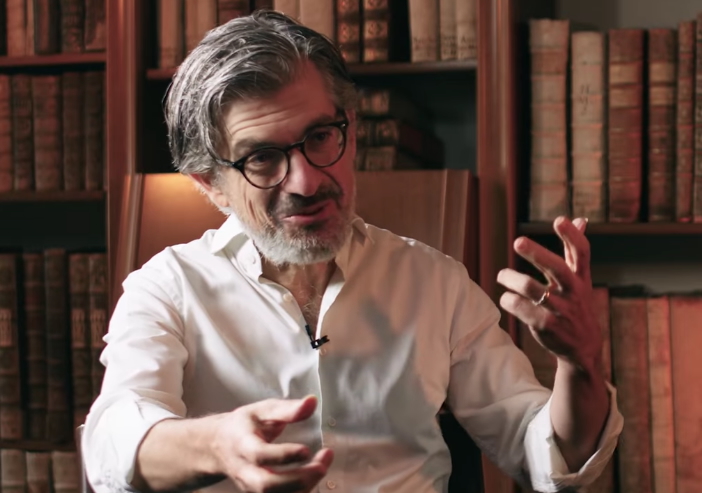
Other testimonies to be highlighted inlude those of French philosopher Fabrice Hadjadj, Harvard Business School professor Roy Schoeman, Brazilian philosopher Edgar Leite Ferreira, British literary critic Robert Asch, American author Dawn Eden Goldstein, and Argentine professor of biblical pastoral studies Luciana Rogowicz.
Garrigó told ACI Prensa that the subject of the film is one “that hasn’t been explored in cinema; people are a bit wary of it.”
He said the idea for the film originally came from a person in Mexico. “We didn’t think it would be possible, but after reflecting on it and later conducting research, we discovered that there were amazing people who had things to say about the Messiah and about discovering [him] from the point of view of Judaism,” he said.
‘Our greatest loves are Jewish’
Garrigó said the central narrative theme of the film is particularly captured in a recording of St. Josemaría Escrivá. In it, the Spanish saint, during one of his well-known informal gatherings, responds to a question from a young Jewish girl whose parents will not allow her to be baptized.
“As St. Josemaría himself states right there, our greatest loves are Jewish, aren’t they? They are Jesus and the Virgin,” Garrigó said.
From that standpoint, “everything else is an attitude of openness; and they — the moment they discover Jesus — become deeply committed, the ones who feel called to fulfill an eternal design: that of a chosen people who in the end complete their journey,” the director said.
“They still feel Jewish after their conversion, yet Jewish in a way that fulfills what Jesus had envisioned for them,” he added.
“Searching for the Messiah” also explores other figures of Jewish origin who embraced the Catholic faith, particularly during the last century: Rome’s chief rabbi, Eugenio Zolli; St. Edith Stein, a German philosopher who became a Carmelite nun and was canonized by St. John Paul II, who named her a patroness of Europe and a doctor of the Church; Dr. Bernard Nathanson, who before his conversion was known as one of the most staunch abortion advocates in U.S. history; and the French poet Max Jacob, whose baptismal godfather was his friend Pablo Picasso.
This story was first published by ACI Prensa, the Spanish-language sister service of EWTN News. It has been translated and adapted by EWTN News English.
‘Searching for the Messiah’ explores experiences of recent Jewish converts – #Catholic –
The latest film from Goya Productions, “Searching for the Messiah” explores the experiences of people of Jewish origin who have embraced Jesus as the Anointed One (the Christ), in whom God’s promises to his people are fulfilled.
The documentary, directed by Andrés Garrigó, is set to premiere in Spain on April 10. It is headed to Mexico and Central America later this month, followed by distribution in the United States later in the year.
The film traces the journeys of figures from both the present day and recent history who, from their Jewish origins, traveled the path toward recognizing Jesus as the Messiah awaited by the people of the Old Covenant.
The film takes an approach that is in keeping with the Second Vatican Council’s declaration Nostra Aetate. That document emphasizes that “the Church, mindful of the patrimony she shares with the Jews and moved not by political reasons but by the Gospelʼs spiritual love, decries hatred, persecutions, displays of anti-Semitism, directed against Jews at any time and by anyone.”
Following that declaration, St. Paul VI became the first pope to travel to the Holy Land in the modern era. Subsequently, St. John Paul II visited Rome’s synagogue and established diplomatic relations with Israel. Both St. John Paul II and Benedict XVI visited the Auschwitz death camp. Pope Francis and Leo XIV further developed the path charted by Nostra Aetate.
In a statement to ACI Prensa, the Spanish-language sister service of EWTN News, Goya Productions indicated that in the version of the film to be distributed in the United States, “only the testimonies originally in French, Spanish, and Portuguese will require dubbing” and that “more than half of the film will remain in its original English.”
The U.S. version will also feature an additional testimony from Dr. Robin Pierucci, a Jewish convert and neonatologist living in Kalamazoo, Michigan.
Other testimonies to be highlighted inlude those of French philosopher Fabrice Hadjadj, Harvard Business School professor Roy Schoeman, Brazilian philosopher Edgar Leite Ferreira, British literary critic Robert Asch, American author Dawn Eden Goldstein, and Argentine professor of biblical pastoral studies Luciana Rogowicz.
Garrigó told ACI Prensa that the subject of the film is one “that hasn’t been explored in cinema; people are a bit wary of it.”
He said the idea for the film originally came from a person in Mexico. “We didn’t think it would be possible, but after reflecting on it and later conducting research, we discovered that there were amazing people who had things to say about the Messiah and about discovering [him] from the point of view of Judaism,” he said.
‘Our greatest loves are Jewish’
Garrigó said the central narrative theme of the film is particularly captured in a recording of St. Josemaría Escrivá. In it, the Spanish saint, during one of his well-known informal gatherings, responds to a question from a young Jewish girl whose parents will not allow her to be baptized.
“As St. Josemaría himself states right there, our greatest loves are Jewish, aren’t they? They are Jesus and the Virgin,” Garrigó said.
From that standpoint, “everything else is an attitude of openness; and they — the moment they discover Jesus — become deeply committed, the ones who feel called to fulfill an eternal design: that of a chosen people who in the end complete their journey,” the director said.
“They still feel Jewish after their conversion, yet Jewish in a way that fulfills what Jesus had envisioned for them,” he added.
“Searching for the Messiah” also explores other figures of Jewish origin who embraced the Catholic faith, particularly during the last century: Rome’s chief rabbi, Eugenio Zolli; St. Edith Stein, a German philosopher who became a Carmelite nun and was canonized by St. John Paul II, who named her a patroness of Europe and a doctor of the Church; Dr. Bernard Nathanson, who before his conversion was known as one of the most staunch abortion advocates in U.S. history; and the French poet Max Jacob, whose baptismal godfather was his friend Pablo Picasso.
This story was first published by ACI Prensa, the Spanish-language sister service of EWTN News. It has been translated and adapted by EWTN News English.
A film that features the testimonies of people of Jewish origin who in recent times have professed faith in Jesus after coming to the conclusion that he is the long-awaited Messiah.