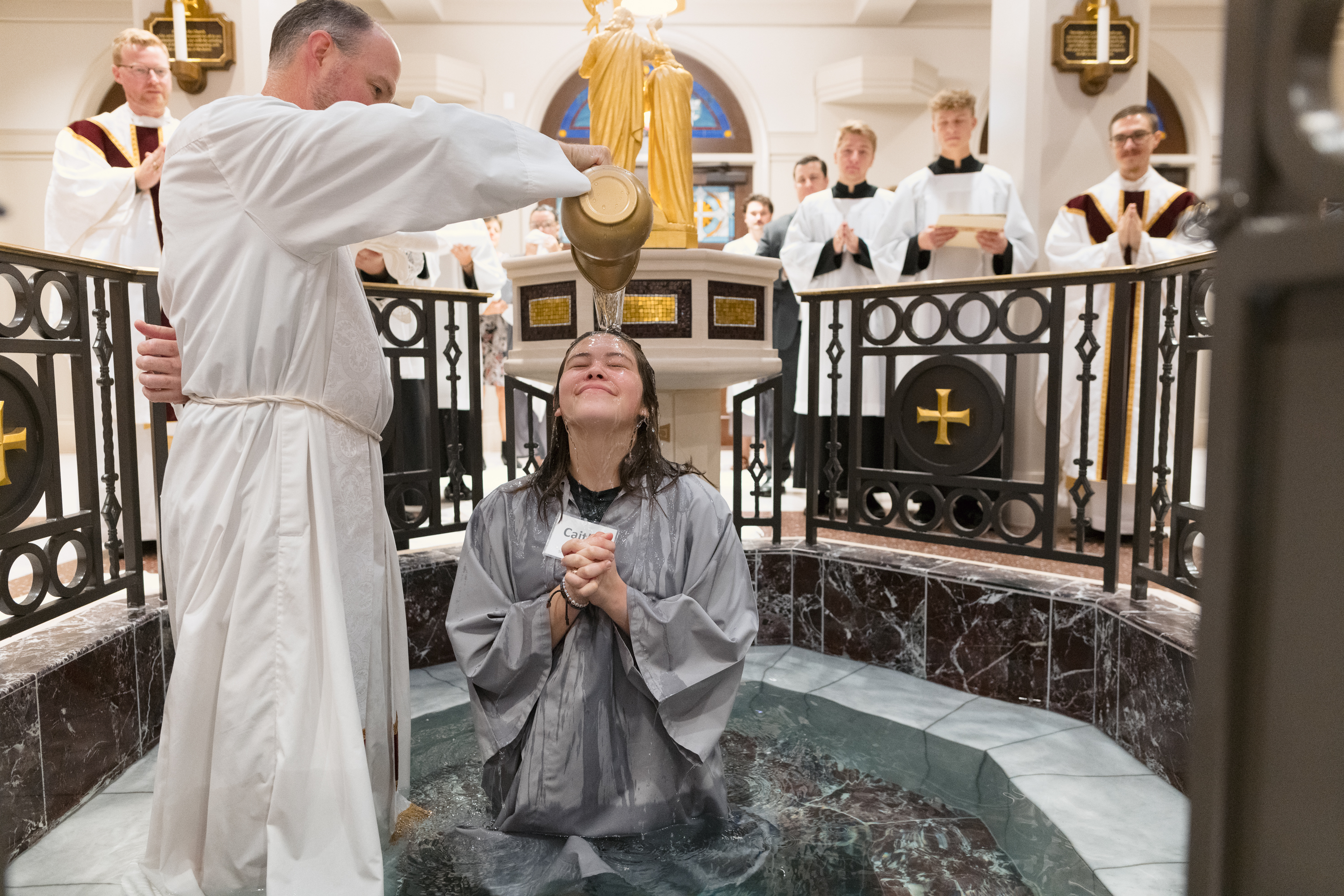
A survey of U.S. adults who participated in the Order of Christian Initiation of Adults (OCIA) in 2026 found that most were drawn to the Catholic Church either through a search for meaning and purpose or an attraction to the Churchʼs teachings, liturgy, and historical tradition.
“Personal growth in goodness, inner peace, and an understanding of truth emerged as some of the strongest motivations for exploring the Catholic faith,” said the report, titled “Why Are So Many People Becoming Catholic?”
About 85% of respondents said desire to grow closer to God was their primary reason for entering the Church and 77% listed “wanting to grow in goodness and virtue,” while 76% cited a desire for “a deeper understanding of truth” and 72% said they were looking for “a greater sense of inner peace.”
Led by the Archdiocese of Chicago, the survey conducted from Feb. 22 to May 31 included 2,127 responses from participants across 20 U.S. Catholic dioceses. The report did not list a margin of error.
About 68% of respondents named attraction to the Church’s sacred liturgy, prayer, ritual, and the sacraments as a significant factor in their conversion, while 65% said they were “attracted to the wisdom of a 2,000-year-old Church to help me navigate life.”
Fewer Catholics flirting to convert
Adult converts to the faith were less likely to cite dating or marrying a Catholic as a factor related to their conversion, researchers found.
“About 26% of catechumens and candidates for reception into full communion cited dating or marrying a Catholic as part of their journey to the Church,” the survey said. “By comparison, the Center for Applied Research in the Apostolate (CARA), using data from Pew Research Center’s 2007 Religious Landscape Study (Conversion Recontact Survey), found that 72% of Catholic converts at the time said marriage was an important reason for becoming Catholic.”
For respondents who did cite dating or marrying a Catholic as a part of their journey to the Catholic Church, the gender composition varied based on generation. Among Gen Z respondents, women represented a majority at 63%, while men comprised 37%. For millennials, the distribution was balanced, according to the survey, while men “represented a clear majority” among Gen X and baby boomer respondents.
Other motives
A little more than half of respondents identified the desire to belong to a church community or being inspired by the positive example of Catholic family, friends, or other personal connections.
The Church’s stance on social issues and its position as a worldwide provider of charitable services were ranked lowest among participants.
Challenges and fears among respondents
OCIA participants listed a variety of obstacles to their conversion, ranging from personal fears and apprehension about Church teaching to difficulty navigating parish systems and fitting OCIA classes into their schedules, according to the survey.
“Many expressed anxiety about navigating the liturgy itself, often feeling unfamiliar with and intimidated by the rituals of Mass. Others feared not belonging in a parish, worrying they would feel like outsiders within an established community,” researchers said. “Finally, some held back due to doctrinal uncertainty, unsure whether they could fully embrace all Catholic teachings and fearful of committing to a journey they might ultimately feel unable to complete.”
The study’s authors included Chicago archdiocesan employees Betsy Bohlen, chief operating officer; Pat Brown, strategy and research manager; and Tim Weiske, director of the department of parish vitality and mission.
Spiritual hunger, Church’s tradition cited as top drivers of U.S. adult conversions, survey finds – #Catholic –
A survey of U.S. adults who participated in the Order of Christian Initiation of Adults (OCIA) in 2026 found that most were drawn to the Catholic Church either through a search for meaning and purpose or an attraction to the Churchʼs teachings, liturgy, and historical tradition.
“Personal growth in goodness, inner peace, and an understanding of truth emerged as some of the strongest motivations for exploring the Catholic faith,” said the report, titled “Why Are So Many People Becoming Catholic?”
About 85% of respondents said desire to grow closer to God was their primary reason for entering the Church and 77% listed “wanting to grow in goodness and virtue,” while 76% cited a desire for “a deeper understanding of truth” and 72% said they were looking for “a greater sense of inner peace.”
Led by the Archdiocese of Chicago, the survey conducted from Feb. 22 to May 31 included 2,127 responses from participants across 20 U.S. Catholic dioceses. The report did not list a margin of error.
About 68% of respondents named attraction to the Church’s sacred liturgy, prayer, ritual, and the sacraments as a significant factor in their conversion, while 65% said they were “attracted to the wisdom of a 2,000-year-old Church to help me navigate life.”
Fewer Catholics flirting to convert
Adult converts to the faith were less likely to cite dating or marrying a Catholic as a factor related to their conversion, researchers found.
“About 26% of catechumens and candidates for reception into full communion cited dating or marrying a Catholic as part of their journey to the Church,” the survey said. “By comparison, the Center for Applied Research in the Apostolate (CARA), using data from Pew Research Center’s 2007 Religious Landscape Study (Conversion Recontact Survey), found that 72% of Catholic converts at the time said marriage was an important reason for becoming Catholic.”
For respondents who did cite dating or marrying a Catholic as a part of their journey to the Catholic Church, the gender composition varied based on generation. Among Gen Z respondents, women represented a majority at 63%, while men comprised 37%. For millennials, the distribution was balanced, according to the survey, while men “represented a clear majority” among Gen X and baby boomer respondents.
Other motives
A little more than half of respondents identified the desire to belong to a church community or being inspired by the positive example of Catholic family, friends, or other personal connections.
The Church’s stance on social issues and its position as a worldwide provider of charitable services were ranked lowest among participants.
Challenges and fears among respondents
OCIA participants listed a variety of obstacles to their conversion, ranging from personal fears and apprehension about Church teaching to difficulty navigating parish systems and fitting OCIA classes into their schedules, according to the survey.
“Many expressed anxiety about navigating the liturgy itself, often feeling unfamiliar with and intimidated by the rituals of Mass. Others feared not belonging in a parish, worrying they would feel like outsiders within an established community,” researchers said. “Finally, some held back due to doctrinal uncertainty, unsure whether they could fully embrace all Catholic teachings and fearful of committing to a journey they might ultimately feel unable to complete.”
The study’s authors included Chicago archdiocesan employees Betsy Bohlen, chief operating officer; Pat Brown, strategy and research manager; and Tim Weiske, director of the department of parish vitality and mission.
“Personal growth in goodness, inner peace, and an understanding of truth emerged as some of the strongest motivations for exploring the Catholic faith,” according to a survey of adult converts.