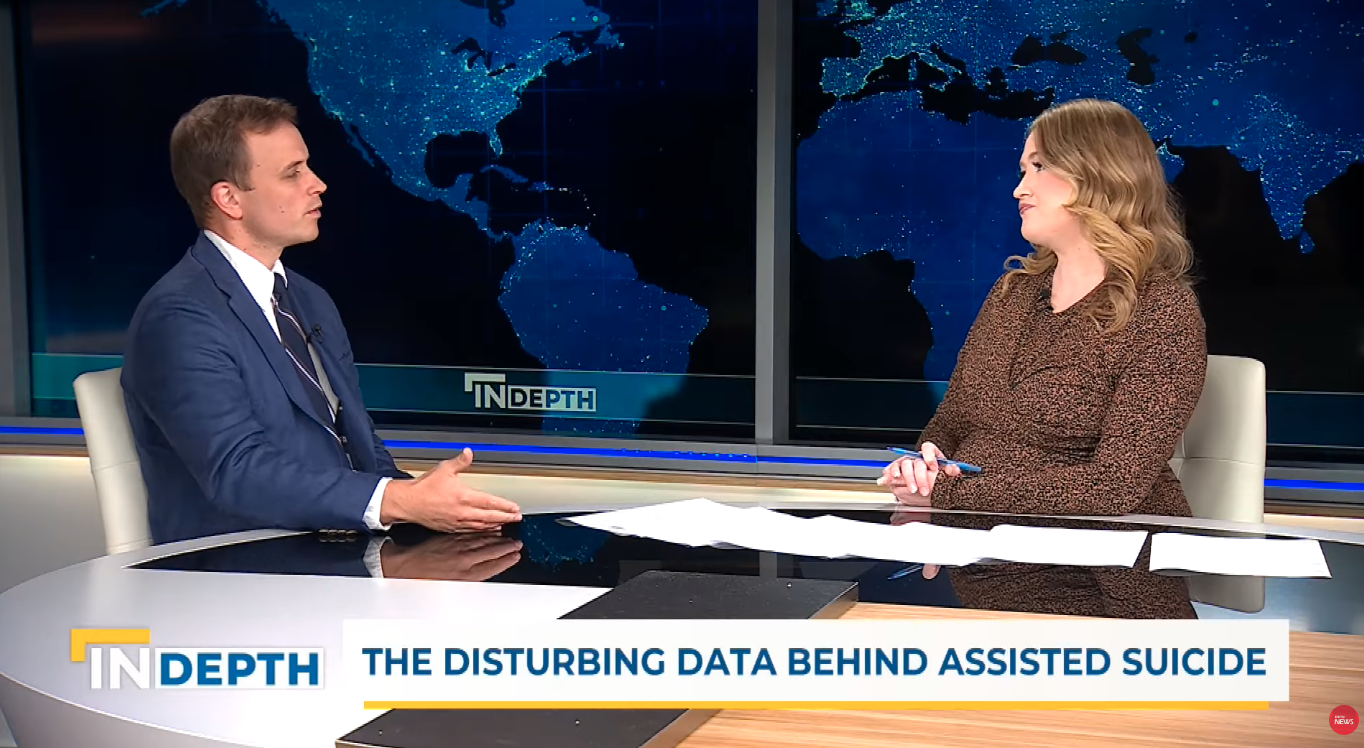
Ahead of New York’s assisted suicide law taking effect, Jamie Towey, president of Aging with Dignity, said the initial legislation “was easily the most dangerous bill ever written on assisted suicide.”
Aging with Dignity, a nonprofit organization, defends the rights of all people as they approach the end of life.
On Aug. 5, New York will become the 13th state in the country, along with the District of Columbia, to allow doctors to prescribe lethal doses of medication to terminally ill patients. Democratic New York Gov. Kathy Hochul signed the legislation (S.138/A.136) into law on Feb. 6, 2025.
“We shouldnʼt be offering the false solution of suicide. Suicide is not a real medical treatment. It is not a solution to suffering,” Towey said in an interview with Catherine Hadro of “EWTN News In Depth.”
When New York’s state Legislature passed its assisted suicide bill, “it didnʼt include any waiting periods out of the gate,” which are intended “to protect against rash decision-making,” he said.
There also “wasnʼt a residential requirement,” he said. So people “could come from any state in the country and get assisted suicide in New York without any waiting period.”
“Now, the law, as it was signed by Gov. Hochul, included certain stipulations for those. But I can promise you that this is just the beginning because theyʼre going to come back. They always do,” he said.
Aging with Dignity
Founded in 1996 by Jim Towey, legal counsel and close adviser to St. Teresa of Calcutta, also known as Mother Teresa, the Aging with Dignity organization “was informed almost entirely by his experiences working with Mother Teresa of Calcutta for the last 12 years of her life,” said Jamie Towey, son of Jim Towey.
For Mother Teresa, “dying was more than a medical moment. It was an emotional and a spiritual moment where people werenʼt just there to have their pain managed or their checklist of symptoms addressed … They needed to be accompanied,” he said.
“They needed, in Motherʼs words, to love and to be loved. And so when dad founded Aging with Dignity, he wanted to take Motherʼs example and bring that to the United States and give people the right to have that opportunity to age with dignity,” he said.

Today, the organization continues its mission through numerous programs including its Assisted Suicide Watch. The program tracks the data and researches the consequences that follow when physician-assisted suicide becomes law.
Its research has found that the situation is “a mess,” Jamie Towey said. “We were promised that this would be transparent,” but "in reality we have very poor insights into whatʼs happening with the data.”
New Mexico and Montana have “never submitted an annual report on assisted suicide data,” he said. “Our nationʼs capital of Washington, D.C., hasnʼt submitted one in years.”
Washington state has lifted some of its reporting requirements, Hawaii’s health department has recommended repealing portions of its reporting rules, and Vermont releases its data biennially.
There are also “tremendously conflicting reporting standards across the states,” because “one state will report who died from the drugs, one state will report just how many people were prescribed the drugs,” he said.
“But for the data that we do have, you see some very concerning things,” he said.
Even though “every law has a requirement for psychiatric evaluations, “only one out of the 13 where this is legal tracks psychiatric evaluations, and thatʼs Oregon,” he said. “Last year, between four and 500 people were prescribed these drugs in Oregon. Two were referred for psychiatric evaluations.”
Some studies show “as high as 20% of people with a terminal cancer diagnosis suffer from severe depression,” he said. “One of the symptoms of severe depression is suicidal ideation. So this is a population that is very exposed to suicide. And Oregon is doing nothing to screen for that.”
Increase in assisted suicide led by ‘culture of death’
“To take a step back and put yourself in the shoes of someone who has a terminal diagnosis or whoʼs just living in a nursing home … and is aging alone,” Towey said. “Maybe they donʼt have good access to pain control” or “they donʼt have good access to care.”
“If you put yourself in those shoes, you can understand the impulse of wanting to just escape somehow,” he said.
“Now, those desires are playing out in a culture of death. And we have organizations like Compassion and Choices, which are $20 million a year organizations, tens of millions in assets, that have been behind this push in every single state where itʼs been legalized. And so theyʼre moving in on the vulnerable,” he said.
To people who feel this way, Towey’s message is to remember that “your life has meaning, and itʼs hard, and that suffering is real and that you deserve accompaniment.”
“You deserve to be shepherded through this. You deserve a real person. You deserve access to care. And if youʼre not getting those, thatʼs an indictment on our healthcare system, and thatʼs what we ought to fix,” he said.
You deserve to be shepherded through this. You deserve a real person. You deserve access to care. And if you’re not getting those, that’s an indictment on our healthcare system, and that’s what we ought to fix.”
Jamie TowiePresident, Aging with Dignity
To combat the culture of death, the organization offers its Five Wishes legal document, which is an advanced care planning program so people can establish their wishes for care ahead of a serious illness.
“Every patient has the right to determine the kind of care that he or she wants. Thatʼs guaranteed in federal law,” he said.
Five Wishes “has been used by 44 million Americans” and “40,000 organizations,” he said. “We are just trying to empower patients to make decisions about the kind of care that they want, and to name the people that can speak for them.”
“I think for Catholics in particular, every Catholic wants to finish life faithfully. They want to be in a position where they can have that hopeful vision at the end of life and really live out those moments with their loved ones,” he said.
Catholic advocate warns of safety risks as New York assisted suicide law looms – #Catholic –
Ahead of New York’s assisted suicide law taking effect, Jamie Towey, president of Aging with Dignity, said the initial legislation “was easily the most dangerous bill ever written on assisted suicide.”
Aging with Dignity, a nonprofit organization, defends the rights of all people as they approach the end of life.
On Aug. 5, New York will become the 13th state in the country, along with the District of Columbia, to allow doctors to prescribe lethal doses of medication to terminally ill patients. Democratic New York Gov. Kathy Hochul signed the legislation (S.138/A.136) into law on Feb. 6, 2025.
“We shouldnʼt be offering the false solution of suicide. Suicide is not a real medical treatment. It is not a solution to suffering,” Towey said in an interview with Catherine Hadro of “EWTN News In Depth.”
When New York’s state Legislature passed its assisted suicide bill, “it didnʼt include any waiting periods out of the gate,” which are intended “to protect against rash decision-making,” he said.
There also “wasnʼt a residential requirement,” he said. So people “could come from any state in the country and get assisted suicide in New York without any waiting period.”
“Now, the law, as it was signed by Gov. Hochul, included certain stipulations for those. But I can promise you that this is just the beginning because theyʼre going to come back. They always do,” he said.
Aging with Dignity
Founded in 1996 by Jim Towey, legal counsel and close adviser to St. Teresa of Calcutta, also known as Mother Teresa, the Aging with Dignity organization “was informed almost entirely by his experiences working with Mother Teresa of Calcutta for the last 12 years of her life,” said Jamie Towey, son of Jim Towey.
For Mother Teresa, “dying was more than a medical moment. It was an emotional and a spiritual moment where people werenʼt just there to have their pain managed or their checklist of symptoms addressed … They needed to be accompanied,” he said.
“They needed, in Motherʼs words, to love and to be loved. And so when dad founded Aging with Dignity, he wanted to take Motherʼs example and bring that to the United States and give people the right to have that opportunity to age with dignity,” he said.
Today, the organization continues its mission through numerous programs including its Assisted Suicide Watch. The program tracks the data and researches the consequences that follow when physician-assisted suicide becomes law.
Its research has found that the situation is “a mess,” Jamie Towey said. “We were promised that this would be transparent,” but "in reality we have very poor insights into whatʼs happening with the data.”
New Mexico and Montana have “never submitted an annual report on assisted suicide data,” he said. “Our nationʼs capital of Washington, D.C., hasnʼt submitted one in years.”
Washington state has lifted some of its reporting requirements, Hawaii’s health department has recommended repealing portions of its reporting rules, and Vermont releases its data biennially.
There are also “tremendously conflicting reporting standards across the states,” because “one state will report who died from the drugs, one state will report just how many people were prescribed the drugs,” he said.
“But for the data that we do have, you see some very concerning things,” he said.
Even though “every law has a requirement for psychiatric evaluations, “only one out of the 13 where this is legal tracks psychiatric evaluations, and thatʼs Oregon,” he said. “Last year, between four and 500 people were prescribed these drugs in Oregon. Two were referred for psychiatric evaluations.”
Some studies show “as high as 20% of people with a terminal cancer diagnosis suffer from severe depression,” he said. “One of the symptoms of severe depression is suicidal ideation. So this is a population that is very exposed to suicide. And Oregon is doing nothing to screen for that.”
Increase in assisted suicide led by ‘culture of death’
“To take a step back and put yourself in the shoes of someone who has a terminal diagnosis or whoʼs just living in a nursing home … and is aging alone,” Towey said. “Maybe they donʼt have good access to pain control” or “they donʼt have good access to care.”
“If you put yourself in those shoes, you can understand the impulse of wanting to just escape somehow,” he said.
“Now, those desires are playing out in a culture of death. And we have organizations like Compassion and Choices, which are $20 million a year organizations, tens of millions in assets, that have been behind this push in every single state where itʼs been legalized. And so theyʼre moving in on the vulnerable,” he said.
To people who feel this way, Towey’s message is to remember that “your life has meaning, and itʼs hard, and that suffering is real and that you deserve accompaniment.”
“You deserve to be shepherded through this. You deserve a real person. You deserve access to care. And if youʼre not getting those, thatʼs an indictment on our healthcare system, and thatʼs what we ought to fix,” he said.
You deserve to be shepherded through this. You deserve a real person. You deserve access to care. And if you’re not getting those, that’s an indictment on our healthcare system, and that’s what we ought to fix.”
Jamie TowiePresident, Aging with Dignity
To combat the culture of death, the organization offers its Five Wishes legal document, which is an advanced care planning program so people can establish their wishes for care ahead of a serious illness.
“Every patient has the right to determine the kind of care that he or she wants. Thatʼs guaranteed in federal law,” he said.
Five Wishes “has been used by 44 million Americans” and “40,000 organizations,” he said. “We are just trying to empower patients to make decisions about the kind of care that they want, and to name the people that can speak for them.”
“I think for Catholics in particular, every Catholic wants to finish life faithfully. They want to be in a position where they can have that hopeful vision at the end of life and really live out those moments with their loved ones,” he said.
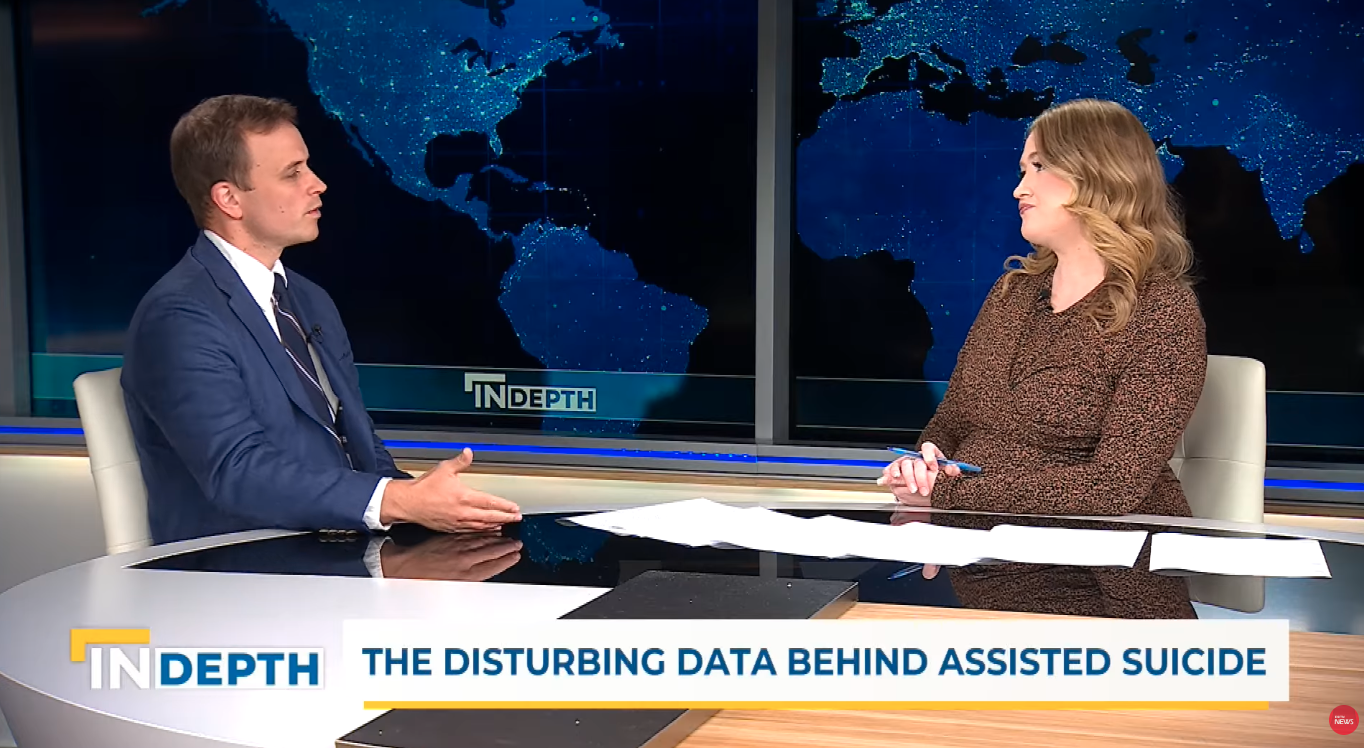
“Suicide is not a real medical treatment. It is not a solution to suffering,” Jamie Towey, president of Aging with Dignity, said in an interview with “EWTN News In Depth.”