![U.S. bishops ask for ‘intense prayers’ for Hamas-Israel peace amid Gaza’s ‘disastrous’ conditions – #Catholic – In response to President Donald Trump’s announcement last week of a deal between the U.S.-led Board of Peace, Israel, and Hamas, the United States Conference of Catholic Bishops (USCCB) called for “intense prayers” for the deal’s success as Gaza faces a worsening humanitarian crisis.In an Aug. 3 statement, Bishop A. Elias Zaidan, chairman of the USCCB’s Committee on International Justice and Peace, said he is “heartened by news of an agreement which aims at the disarmament of Hamas and Israel’s military withdrawal from the [Gaza] Strip,” calling for “intense prayers for the success of these negotiations.”“As I previously articulated, as ‘people of faith who deeply care for all our brothers and sisters who live in the land of Christ’s life, death, and glorious resurrection, we cannot lose this opportunity for peace,’” Zaidan continued, calling on the U.S., Israel, and the international community “to facilitate greater amounts of humanitarian and development assistance to the Strip.”U.S. President Donald Trump announced on July 30 that his Board of Peace had reached a deal for Hamas to fully disarm after nearly three years of war. “The agreement will be carried out in carefully structured phases,” Trump indicated. “As disarmament is completed, Israeli forces will withdraw, and the International Stabilization Force will work with a new Palestinian police force to take responsibility for Gaza being safe for its residents and its neighbors.”Though a Hamas official confirmed the disarmament pact the next day, according to the Associated Press, significant hurdles remain, leaving the deal’s implementation uncertain despite U.S. optimism. Israel has not publicly endorsed the agreement and has continued airstrikes, killing at least 17 people, including children, in Gaza Sunday night.‘People are living with nothing’“Alleviating the suffering of the Gazan people is not only a vital moral imperative but is also necessary for the consolidation of peace in the Holy Land and the entire region,” Zaidan declared. “This should include restoring educational opportunities for children and youths, jobs, and clean water.”In an interview last week with Vatican Media, Father Gabriel Romanelli, pastor of Holy Family Church in Gaza, begged for humanitarian aid for the region, emphasizing that “when people say the situation here is disastrous, believe me: It really is disastrous — if anything, it calls for an even stronger word.”“People are living with nothing,” Romanelli said. “Reconstruction is certainly essential, but so too are all the basic necessities of everyday life.”Former U.S. ambassador and EWTN contributor on Middle East issues Alberto Fernandez told EWTN News that while the deal is “extraordinarily shaky from both sides,” he is hopeful because “the situation of the civilian public in Gaza is so dire,” Fernandez said. “Gaza is destroyed, people are traumatized, there’s no economy.”‘Deeply conflicting agendas’ “The agreement on paper is a positive, concrete step in the right direction,” Fernández said, pointing out that the issue of which side will act first “is a small part of a bigger problem. There is no trust between the two sides, and deeply conflicting agendas.”In Zaidan’s statement, the bishop wrote that the “agreement’s successful implementation, as its principles statement says, has the potential of finally providing the Palestinian people with a ‘credible political path that achieves self-determination and Statehood.’ This would be a major milestone.”Hamas said Friday that it would give up its heavy weapons, including rockets, contingent on Israel’s withdrawal from Gaza and the creation of a Palestinian state, the latter condition one Netanyahu’s government strongly rejects.“The two-state solution among the Israeli public is moribund,” the ambassador continued. “We’re not there at all in a situation where they will compromise. They’ve become more intransigent. That’s a reality.”“It’s not time for celebration, but time to recognize there is small progress being made, and huge obstacles remain,” Fernandez said.‘Serious security concerns’Doron Spielman, a spokesperson for Israeli Prime Minister Benjamin Netanyahu, told the AP on Aug. 2 that Israel has “serious security concerns” surrounding the deal. Spielman said Israel believes Hamas is still committed to building up its military, not demilitarizing, and said Israel would not withdraw from the Gaza Strip, where it controls more than half the territory, before Hamas disarms.“Disarming means physically giving up the weapons. Nothing less,” he said.“Our assessment is that if we redeploy before Hamas is truly disarmed, it will quickly expand its presence throughout Gaza, rebuild its terrorist infrastructure, once again threaten Israeli communities, and seek to carry out another Oct. 7-style attack,” Spielman told the AP.Zaidan concluded his statement acknowledging the “extreme challenges inherent in this ongoing peace process” but called on all to “entrust the hearts and minds of the negotiators to the maternal care of Our Lady of Wisdom, that she may illumine and enliven their efforts to finally achieve peace in those sacred lands.”](https://unitedyam.com/wp-content/uploads/2026/08/u-s-bishops-ask-for-intense-prayers-for-hamas-israel-peace-amid-gazas-disastrous-conditions-catholic-in-response-to-president-donald-trumps.jpg "U.S. bishops ask for ‘intense prayers’ for Hamas-Israel peace amid Gaza’s ‘disastrous’ conditions – #Catholic – In response to President Donald Trump’s announcement last week of a deal between the U.S.-led Board of Peace, Israel, and Hamas, the United States Conference of Catholic Bishops (USCCB) called for “intense prayers” for the deal’s success as Gaza faces a worsening humanitarian crisis.In an Aug. 3 statement, Bishop A. Elias Zaidan, chairman of the USCCB’s Committee on International Justice and Peace, said he is “heartened by news of an agreement which aims at the disarmament of Hamas and Israel’s military withdrawal from the [Gaza] Strip,” calling for “intense prayers for the success of these negotiations.”“As I previously articulated, as ‘people of faith who deeply care for all our brothers and sisters who live in the land of Christ’s life, death, and glorious resurrection, we cannot lose this opportunity for peace,’” Zaidan continued, calling on the U.S., Israel, and the international community “to facilitate greater amounts of humanitarian and development assistance to the Strip.”U.S. President Donald Trump announced on July 30 that his Board of Peace had reached a deal for Hamas to fully disarm after nearly three years of war. “The agreement will be carried out in carefully structured phases,” Trump indicated. “As disarmament is completed, Israeli forces will withdraw, and the International Stabilization Force will work with a new Palestinian police force to take responsibility for Gaza being safe for its residents and its neighbors.”Though a Hamas official confirmed the disarmament pact the next day, according to the Associated Press, significant hurdles remain, leaving the deal’s implementation uncertain despite U.S. optimism. Israel has not publicly endorsed the agreement and has continued airstrikes, killing at least 17 people, including children, in Gaza Sunday night.‘People are living with nothing’“Alleviating the suffering of the Gazan people is not only a vital moral imperative but is also necessary for the consolidation of peace in the Holy Land and the entire region,” Zaidan declared. “This should include restoring educational opportunities for children and youths, jobs, and clean water.”In an interview last week with Vatican Media, Father Gabriel Romanelli, pastor of Holy Family Church in Gaza, begged for humanitarian aid for the region, emphasizing that “when people say the situation here is disastrous, believe me: It really is disastrous — if anything, it calls for an even stronger word.”“People are living with nothing,” Romanelli said. “Reconstruction is certainly essential, but so too are all the basic necessities of everyday life.”Former U.S. ambassador and EWTN contributor on Middle East issues Alberto Fernandez told EWTN News that while the deal is “extraordinarily shaky from both sides,” he is hopeful because “the situation of the civilian public in Gaza is so dire,” Fernandez said. “Gaza is destroyed, people are traumatized, there’s no economy.”‘Deeply conflicting agendas’ “The agreement on paper is a positive, concrete step in the right direction,” Fernández said, pointing out that the issue of which side will act first “is a small part of a bigger problem. There is no trust between the two sides, and deeply conflicting agendas.”In Zaidan’s statement, the bishop wrote that the “agreement’s successful implementation, as its principles statement says, has the potential of finally providing the Palestinian people with a ‘credible political path that achieves self-determination and Statehood.’ This would be a major milestone.”Hamas said Friday that it would give up its heavy weapons, including rockets, contingent on Israel’s withdrawal from Gaza and the creation of a Palestinian state, the latter condition one Netanyahu’s government strongly rejects.“The two-state solution among the Israeli public is moribund,” the ambassador continued. “We’re not there at all in a situation where they will compromise. They’ve become more intransigent. That’s a reality.”“It’s not time for celebration, but time to recognize there is small progress being made, and huge obstacles remain,” Fernandez said.‘Serious security concerns’Doron Spielman, a spokesperson for Israeli Prime Minister Benjamin Netanyahu, told the AP on Aug. 2 that Israel has “serious security concerns” surrounding the deal. Spielman said Israel believes Hamas is still committed to building up its military, not demilitarizing, and said Israel would not withdraw from the Gaza Strip, where it controls more than half the territory, before Hamas disarms.“Disarming means physically giving up the weapons. Nothing less,” he said.“Our assessment is that if we redeploy before Hamas is truly disarmed, it will quickly expand its presence throughout Gaza, rebuild its terrorist infrastructure, once again threaten Israeli communities, and seek to carry out another Oct. 7-style attack,” Spielman told the AP.Zaidan concluded his statement acknowledging the “extreme challenges inherent in this ongoing peace process” but called on all to “entrust the hearts and minds of the negotiators to the maternal care of Our Lady of Wisdom, that she may illumine and enliven their efforts to finally achieve peace in those sacred lands.”")
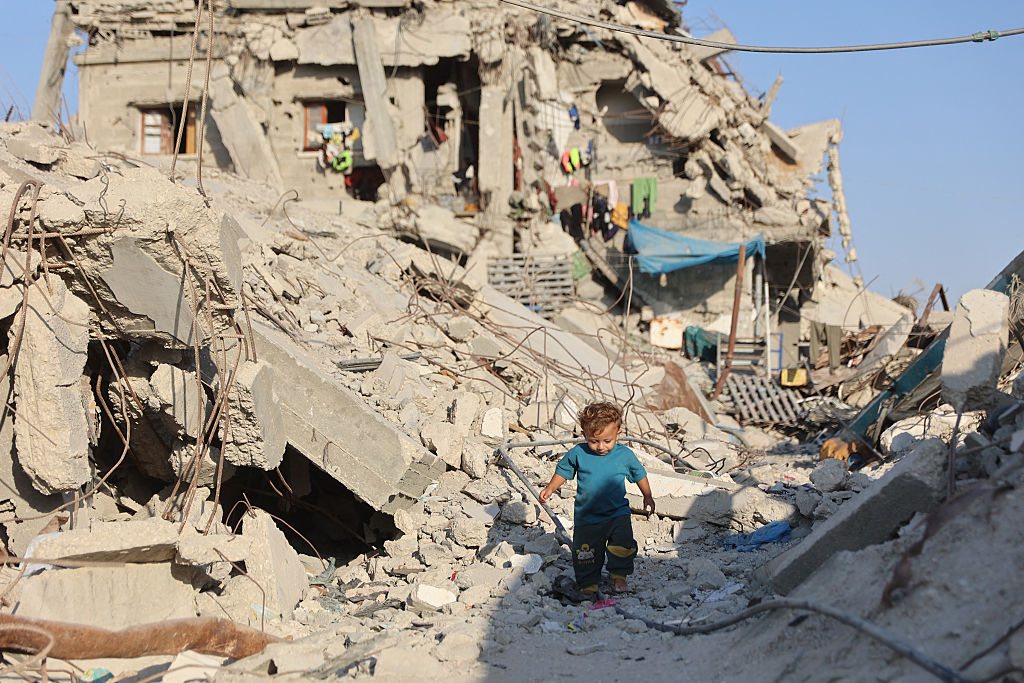
In response to President Donald Trump’s announcement last week of a deal between the U.S.-led Board of Peace, Israel, and Hamas, the United States Conference of Catholic Bishops (USCCB) called for “intense prayers” for the deal’s success as Gaza faces a worsening humanitarian crisis.
In an Aug. 3 statement, Bishop A. Elias Zaidan, chairman of the USCCB’s Committee on International Justice and Peace, said he is “heartened by news of an agreement which aims at the disarmament of Hamas and Israel’s military withdrawal from the [Gaza] Strip,” calling for “intense prayers for the success of these negotiations.”
“As I previously articulated, as ‘people of faith who deeply care for all our brothers and sisters who live in the land of Christ’s life, death, and glorious resurrection, we cannot lose this opportunity for peace,’” Zaidan continued, calling on the U.S., Israel, and the international community “to facilitate greater amounts of humanitarian and development assistance to the Strip.”
U.S. President Donald Trump announced on July 30 that his Board of Peace had reached a deal for Hamas to fully disarm after nearly three years of war.
“The agreement will be carried out in carefully structured phases,” Trump indicated. “As disarmament is completed, Israeli forces will withdraw, and the International Stabilization Force will work with a new Palestinian police force to take responsibility for Gaza being safe for its residents and its neighbors.”
Though a Hamas official confirmed the disarmament pact the next day, according to the Associated Press, significant hurdles remain, leaving the deal’s implementation uncertain despite U.S. optimism. Israel has not publicly endorsed the agreement and has continued airstrikes, killing at least 17 people, including children, in Gaza Sunday night.
‘People are living with nothing’
“Alleviating the suffering of the Gazan people is not only a vital moral imperative but is also necessary for the consolidation of peace in the Holy Land and the entire region,” Zaidan declared. “This should include restoring educational opportunities for children and youths, jobs, and clean water.”
In an interview last week with Vatican Media, Father Gabriel Romanelli, pastor of Holy Family Church in Gaza, begged for humanitarian aid for the region, emphasizing that “when people say the situation here is disastrous, believe me: It really is disastrous — if anything, it calls for an even stronger word.”
“People are living with nothing,” Romanelli said. “Reconstruction is certainly essential, but so too are all the basic necessities of everyday life.”
Former U.S. ambassador and EWTN contributor on Middle East issues Alberto Fernandez told EWTN News that while the deal is “extraordinarily shaky from both sides,” he is hopeful because “the situation of the civilian public in Gaza is so dire,” Fernandez said. “Gaza is destroyed, people are traumatized, there’s no economy.”
‘Deeply conflicting agendas’
“The agreement on paper is a positive, concrete step in the right direction,” Fernández said, pointing out that the issue of which side will act first “is a small part of a bigger problem. There is no trust between the two sides, and deeply conflicting agendas.”
In Zaidan’s statement, the bishop wrote that the “agreement’s successful implementation, as its principles statement says, has the potential of finally providing the Palestinian people with a ‘credible political path that achieves self-determination and Statehood.’ This would be a major milestone.”
Hamas said Friday that it would give up its heavy weapons, including rockets, contingent on Israel’s withdrawal from Gaza and the creation of a Palestinian state, the latter condition one Netanyahu’s government strongly rejects.
“The two-state solution among the Israeli public is moribund,” the ambassador continued. “We’re not there at all in a situation where they will compromise. They’ve become more intransigent. That’s a reality.”
“It’s not time for celebration, but time to recognize there is small progress being made, and huge obstacles remain,” Fernandez said.
‘Serious security concerns’
Doron Spielman, a spokesperson for Israeli Prime Minister Benjamin Netanyahu, told the AP on Aug. 2 that Israel has “serious security concerns” surrounding the deal. Spielman said Israel believes Hamas is still committed to building up its military, not demilitarizing, and said Israel would not withdraw from the Gaza Strip, where it controls more than half the territory, before Hamas disarms.
“Disarming means physically giving up the weapons. Nothing less,” he said.
“Our assessment is that if we redeploy before Hamas is truly disarmed, it will quickly expand its presence throughout Gaza, rebuild its terrorist infrastructure, once again threaten Israeli communities, and seek to carry out another Oct. 7-style attack,” Spielman told the AP.
Zaidan concluded his statement acknowledging the “extreme challenges inherent in this ongoing peace process” but called on all to “entrust the hearts and minds of the negotiators to the maternal care of Our Lady of Wisdom, that she may illumine and enliven their efforts to finally achieve peace in those sacred lands.”
U.S. bishops ask for ‘intense prayers’ for Hamas-Israel peace amid Gaza’s ‘disastrous’ conditions – #Catholic –
In response to President Donald Trump’s announcement last week of a deal between the U.S.-led Board of Peace, Israel, and Hamas, the United States Conference of Catholic Bishops (USCCB) called for “intense prayers” for the deal’s success as Gaza faces a worsening humanitarian crisis.
In an Aug. 3 statement, Bishop A. Elias Zaidan, chairman of the USCCB’s Committee on International Justice and Peace, said he is “heartened by news of an agreement which aims at the disarmament of Hamas and Israel’s military withdrawal from the [Gaza] Strip,” calling for “intense prayers for the success of these negotiations.”
“As I previously articulated, as ‘people of faith who deeply care for all our brothers and sisters who live in the land of Christ’s life, death, and glorious resurrection, we cannot lose this opportunity for peace,’” Zaidan continued, calling on the U.S., Israel, and the international community “to facilitate greater amounts of humanitarian and development assistance to the Strip.”
U.S. President Donald Trump announced on July 30 that his Board of Peace had reached a deal for Hamas to fully disarm after nearly three years of war.
“The agreement will be carried out in carefully structured phases,” Trump indicated. “As disarmament is completed, Israeli forces will withdraw, and the International Stabilization Force will work with a new Palestinian police force to take responsibility for Gaza being safe for its residents and its neighbors.”
Though a Hamas official confirmed the disarmament pact the next day, according to the Associated Press, significant hurdles remain, leaving the deal’s implementation uncertain despite U.S. optimism. Israel has not publicly endorsed the agreement and has continued airstrikes, killing at least 17 people, including children, in Gaza Sunday night.
‘People are living with nothing’
“Alleviating the suffering of the Gazan people is not only a vital moral imperative but is also necessary for the consolidation of peace in the Holy Land and the entire region,” Zaidan declared. “This should include restoring educational opportunities for children and youths, jobs, and clean water.”
In an interview last week with Vatican Media, Father Gabriel Romanelli, pastor of Holy Family Church in Gaza, begged for humanitarian aid for the region, emphasizing that “when people say the situation here is disastrous, believe me: It really is disastrous — if anything, it calls for an even stronger word.”
“People are living with nothing,” Romanelli said. “Reconstruction is certainly essential, but so too are all the basic necessities of everyday life.”
Former U.S. ambassador and EWTN contributor on Middle East issues Alberto Fernandez told EWTN News that while the deal is “extraordinarily shaky from both sides,” he is hopeful because “the situation of the civilian public in Gaza is so dire,” Fernandez said. “Gaza is destroyed, people are traumatized, there’s no economy.”
‘Deeply conflicting agendas’
“The agreement on paper is a positive, concrete step in the right direction,” Fernández said, pointing out that the issue of which side will act first “is a small part of a bigger problem. There is no trust between the two sides, and deeply conflicting agendas.”
In Zaidan’s statement, the bishop wrote that the “agreement’s successful implementation, as its principles statement says, has the potential of finally providing the Palestinian people with a ‘credible political path that achieves self-determination and Statehood.’ This would be a major milestone.”
Hamas said Friday that it would give up its heavy weapons, including rockets, contingent on Israel’s withdrawal from Gaza and the creation of a Palestinian state, the latter condition one Netanyahu’s government strongly rejects.
“The two-state solution among the Israeli public is moribund,” the ambassador continued. “We’re not there at all in a situation where they will compromise. They’ve become more intransigent. That’s a reality.”
“It’s not time for celebration, but time to recognize there is small progress being made, and huge obstacles remain,” Fernandez said.
‘Serious security concerns’
Doron Spielman, a spokesperson for Israeli Prime Minister Benjamin Netanyahu, told the AP on Aug. 2 that Israel has “serious security concerns” surrounding the deal. Spielman said Israel believes Hamas is still committed to building up its military, not demilitarizing, and said Israel would not withdraw from the Gaza Strip, where it controls more than half the territory, before Hamas disarms.
“Disarming means physically giving up the weapons. Nothing less,” he said.
“Our assessment is that if we redeploy before Hamas is truly disarmed, it will quickly expand its presence throughout Gaza, rebuild its terrorist infrastructure, once again threaten Israeli communities, and seek to carry out another Oct. 7-style attack,” Spielman told the AP.
Zaidan concluded his statement acknowledging the “extreme challenges inherent in this ongoing peace process” but called on all to “entrust the hearts and minds of the negotiators to the maternal care of Our Lady of Wisdom, that she may illumine and enliven their efforts to finally achieve peace in those sacred lands.”
Israel has not publicly endorsed the agreement and has continued airstrikes, killing at least 17 people, including children, in Gaza Sunday night.