
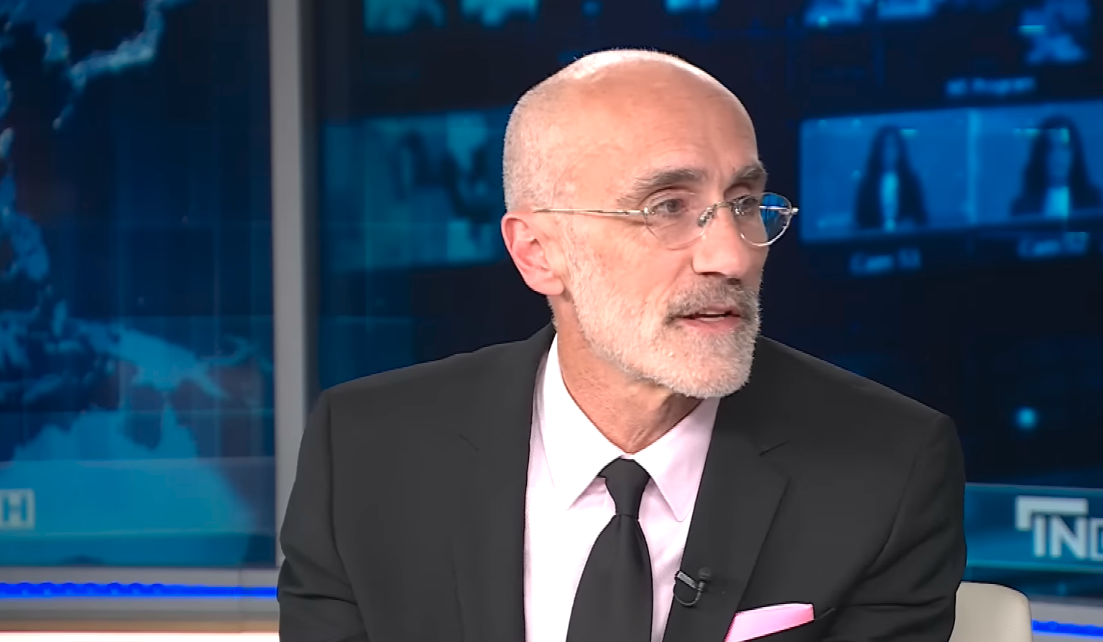
Now is the time to invite people to the faith, as it “is the moment for the American Catholic Church,” says bestselling author, Harvard professor, and renowned social scientist Arthur Brooks.
Catholics must have “the entrepreneurial zeal to go out and get souls and to promise people what they actually deeply want,” Brooks said. “This is so critically important, but the way it could fail is because we just donʼt have the guts for it. We donʼt have the stomach for it. We donʼt have the heart for it.”
In an April 10 interview with “EWTN News In Depth,” Brooks spoke about the increasing numbers of Catholics. He also shared what is driving people to the Church and how the Church can best reach new people in natural and simple ways.
While there have been increasing numbers of baptisms and confirmations, Brooks said Catholics “canʼt just rest on our laurels,” as there are still “trends largely going in the other direction with respect to people coming to church,” he said.
The Pew Research Center “shows us that 840 Catholics left last year for every 100 who came into the Church. These are not good statistics. But what we see thatʼs really encouraging is a lot of young people, especially young men, coming into the Church searching for a sense of transcendence and really looking for in-real-life community,” he said.
People want meaning, because the “sense of meaninglessness is characteristic of why people are feeling depression, anxiety, loneliness, addiction,“ Brooks said. “And people are starting to fight back.”
Brooks said: “Theyʼre starting to recognize that the little friend in their pocket, the supercomputer thatʼs their smartphone, is not doing them any favors because itʼs mediating their relationship with other people and they want real-life life.”
“We need meaning, and we have these natural questions: ‘Why am I alive? For what would I give my life? Why does my life matter?’ … And weʼre starting to figure out after about 15 years that you canʼt Google these questions,” he said.
People “feel that thereʼs something bigger,” he said. “Young people today, they have a craving for something thatʼs bigger and bigger. And if we donʼt feed it, then weʼre not feeding our sheep. Then weʼre not following the teachings of Christ.”
Bring back boredom, but not ‘in a bad way’
In his newest book, “The Meaning of Your Life: Finding Purpose in an Age of Emptiness,” Brooks discusses how he wants to bring back “boredom.”
“We have actual protocols built into the Catholic Church that give us moments of peace, that give us moments of perspective that most people just donʼt have,” he said. Catholics have prayer, Mass, and Communion that offer us these moments throughout our days.
“The first thing that I do is I get up very early, then I exercise, and then I go to Mass every day,” Brooks said. “Iʼve been a daily communicant for a long time and so has my wife. And we finish the day, even when Iʼm on the road … we pray the rosary together on the phone before we go to sleep.”
“These are the moments,” and “when I say boredom, I donʼt mean boredom in a bad way,” he said.
“Iʼm not casting aspersions at all. Iʼm talking about blank space. Iʼm talking about turning on the structures in the brain called the default mode network that you need to understand your life. ‘When do I understand my life the most?’ When Iʼm at holy Mass. ‘When do I understand it the most?’ When Iʼm in conversation with God,” he said.
This time in prayer can actually benefit brain function, because “you only have access to certain parts of your brain that you need to find meaning and to love your life when you have these metaphysical experiences,” he said.
"Thereʼs a lot of research on this," he said. "This is not speculation. Thereʼs a ton of neuroscience research that shows that you only have access to certain parts of your brain that you need to find meaning and to love your life when you have these metaphysical experiences.”
Evangelization should be ‘as natural as putting on your shirt’
Brooks also discussed his personal conversion and how through simple ways of “friendship and excellence,” people can invite others to the Church.
“When I was 15, I had an experience at the Shrine of Guadalupe in Mexico City on a music trip,” Brooks said. “I came into the Church when I was 16. I went and told my parents, ‘Iʼve discovered that Iʼm Catholic.’”
“I come from a good, strong, Christian background, good evangelical background. I had missionaries on both sides of the family. And my parents looked at each other and they said, ‘I guess itʼs better than drugs.’ They just thought it was rebellion, but the truth is I was called to it. I really was,” he said.
As people now come to the Church the question is: “‘Do you want to go deeper?’ I have something deeper. I have something more profound. I have something that has more historical significance. I have something that has more structure. Come with me, come with me … youʼre hungry and Iʼm going to give you real food,” he said.
“Itʼs the only thing that can fill this hollowness thatʼs in our lives. Itʼs the only thing that can break us out of the simulation,” he said. “People know it in their hearts, and we just have to show that to them. We have to take them by the hand and bring them along.”
As a professor, Brooks said he uses his role to guide students but does not force his faith and beliefs on them.
“I tell them on the first day of class at Harvard, my Catholic faith is the single most important thing in my life. And then I go on and I teach them science,” he said.
“The science of human happiness is what I teach. And they look it up and they say, ‘you know, thatʼs not weird. Itʼs not weird with him. Heʼs doing a good job with his life … He also has a good family life. He loves his wife a lot. Heʼs got kids and grandkids. Thatʼs apostolate. Thatʼs how apostolate actually works,” he said.
“Live your life and live it right and let people see your Catholic faith and donʼt make it weird … Just make it as natural as putting on your shirt. Thatʼs the deal. And thatʼs what Iʼm trying to do every day," he said.
“When my students come to me in office hours, the No. 1 question they ask me is not about my paper, my term project. The No. 1 question they ask me is, ‘How do I fall in love, stay in love, start a family?’ Which, of course, the university doesnʼt teach them, but thatʼs the single most important thing in their lives,” Brooks said.
“No. 2, ‘How do I find my faith?“ Brooks said. ”What do I do to find my faith? They want to be led. You know, this is what it means to be a shepherd … We all have an ability to actually influence other people. And the question is, ‘Am I influencing other people to get them a little closer to heaven? Am I cracking the door that the Holy Spirit in his wisdom can kick in or not?’”
Arthur Brooks: ‘The world needs American Catholicism’ – #Catholic –
Now is the time to invite people to the faith, as it “is the moment for the American Catholic Church,” says bestselling author, Harvard professor, and renowned social scientist Arthur Brooks.
Catholics must have “the entrepreneurial zeal to go out and get souls and to promise people what they actually deeply want,” Brooks said. “This is so critically important, but the way it could fail is because we just donʼt have the guts for it. We donʼt have the stomach for it. We donʼt have the heart for it.”
In an April 10 interview with “EWTN News In Depth,” Brooks spoke about the increasing numbers of Catholics. He also shared what is driving people to the Church and how the Church can best reach new people in natural and simple ways.
While there have been increasing numbers of baptisms and confirmations, Brooks said Catholics “canʼt just rest on our laurels,” as there are still “trends largely going in the other direction with respect to people coming to church,” he said.
The Pew Research Center “shows us that 840 Catholics left last year for every 100 who came into the Church. These are not good statistics. But what we see thatʼs really encouraging is a lot of young people, especially young men, coming into the Church searching for a sense of transcendence and really looking for in-real-life community,” he said.
People want meaning, because the “sense of meaninglessness is characteristic of why people are feeling depression, anxiety, loneliness, addiction,“ Brooks said. “And people are starting to fight back.”
Brooks said: “Theyʼre starting to recognize that the little friend in their pocket, the supercomputer thatʼs their smartphone, is not doing them any favors because itʼs mediating their relationship with other people and they want real-life life.”
“We need meaning, and we have these natural questions: ‘Why am I alive? For what would I give my life? Why does my life matter?’ … And weʼre starting to figure out after about 15 years that you canʼt Google these questions,” he said.
People “feel that thereʼs something bigger,” he said. “Young people today, they have a craving for something thatʼs bigger and bigger. And if we donʼt feed it, then weʼre not feeding our sheep. Then weʼre not following the teachings of Christ.”
Bring back boredom, but not ‘in a bad way’
In his newest book, “The Meaning of Your Life: Finding Purpose in an Age of Emptiness,” Brooks discusses how he wants to bring back “boredom.”
“We have actual protocols built into the Catholic Church that give us moments of peace, that give us moments of perspective that most people just donʼt have,” he said. Catholics have prayer, Mass, and Communion that offer us these moments throughout our days.
“The first thing that I do is I get up very early, then I exercise, and then I go to Mass every day,” Brooks said. “Iʼve been a daily communicant for a long time and so has my wife. And we finish the day, even when Iʼm on the road … we pray the rosary together on the phone before we go to sleep.”
“These are the moments,” and “when I say boredom, I donʼt mean boredom in a bad way,” he said.
“Iʼm not casting aspersions at all. Iʼm talking about blank space. Iʼm talking about turning on the structures in the brain called the default mode network that you need to understand your life. ‘When do I understand my life the most?’ When Iʼm at holy Mass. ‘When do I understand it the most?’ When Iʼm in conversation with God,” he said.
This time in prayer can actually benefit brain function, because “you only have access to certain parts of your brain that you need to find meaning and to love your life when you have these metaphysical experiences,” he said.
"Thereʼs a lot of research on this," he said. "This is not speculation. Thereʼs a ton of neuroscience research that shows that you only have access to certain parts of your brain that you need to find meaning and to love your life when you have these metaphysical experiences.”
Evangelization should be ‘as natural as putting on your shirt’
Brooks also discussed his personal conversion and how through simple ways of “friendship and excellence,” people can invite others to the Church.
“When I was 15, I had an experience at the Shrine of Guadalupe in Mexico City on a music trip,” Brooks said. “I came into the Church when I was 16. I went and told my parents, ‘Iʼve discovered that Iʼm Catholic.’”
“I come from a good, strong, Christian background, good evangelical background. I had missionaries on both sides of the family. And my parents looked at each other and they said, ‘I guess itʼs better than drugs.’ They just thought it was rebellion, but the truth is I was called to it. I really was,” he said.
As people now come to the Church the question is: “‘Do you want to go deeper?’ I have something deeper. I have something more profound. I have something that has more historical significance. I have something that has more structure. Come with me, come with me … youʼre hungry and Iʼm going to give you real food,” he said.
“Itʼs the only thing that can fill this hollowness thatʼs in our lives. Itʼs the only thing that can break us out of the simulation,” he said. “People know it in their hearts, and we just have to show that to them. We have to take them by the hand and bring them along.”
As a professor, Brooks said he uses his role to guide students but does not force his faith and beliefs on them.
“I tell them on the first day of class at Harvard, my Catholic faith is the single most important thing in my life. And then I go on and I teach them science,” he said.
“The science of human happiness is what I teach. And they look it up and they say, ‘you know, thatʼs not weird. Itʼs not weird with him. Heʼs doing a good job with his life … He also has a good family life. He loves his wife a lot. Heʼs got kids and grandkids. Thatʼs apostolate. Thatʼs how apostolate actually works,” he said.
“Live your life and live it right and let people see your Catholic faith and donʼt make it weird … Just make it as natural as putting on your shirt. Thatʼs the deal. And thatʼs what Iʼm trying to do every day," he said.
“When my students come to me in office hours, the No. 1 question they ask me is not about my paper, my term project. The No. 1 question they ask me is, ‘How do I fall in love, stay in love, start a family?’ Which, of course, the university doesnʼt teach them, but thatʼs the single most important thing in their lives,” Brooks said.
“No. 2, ‘How do I find my faith?“ Brooks said. ”What do I do to find my faith? They want to be led. You know, this is what it means to be a shepherd … We all have an ability to actually influence other people. And the question is, ‘Am I influencing other people to get them a little closer to heaven? Am I cracking the door that the Holy Spirit in his wisdom can kick in or not?’”
“Young people today, they have a craving for something that’s bigger and bigger. And if we don’t feed it, then we’re not feeding our sheep,” Brooks said.
