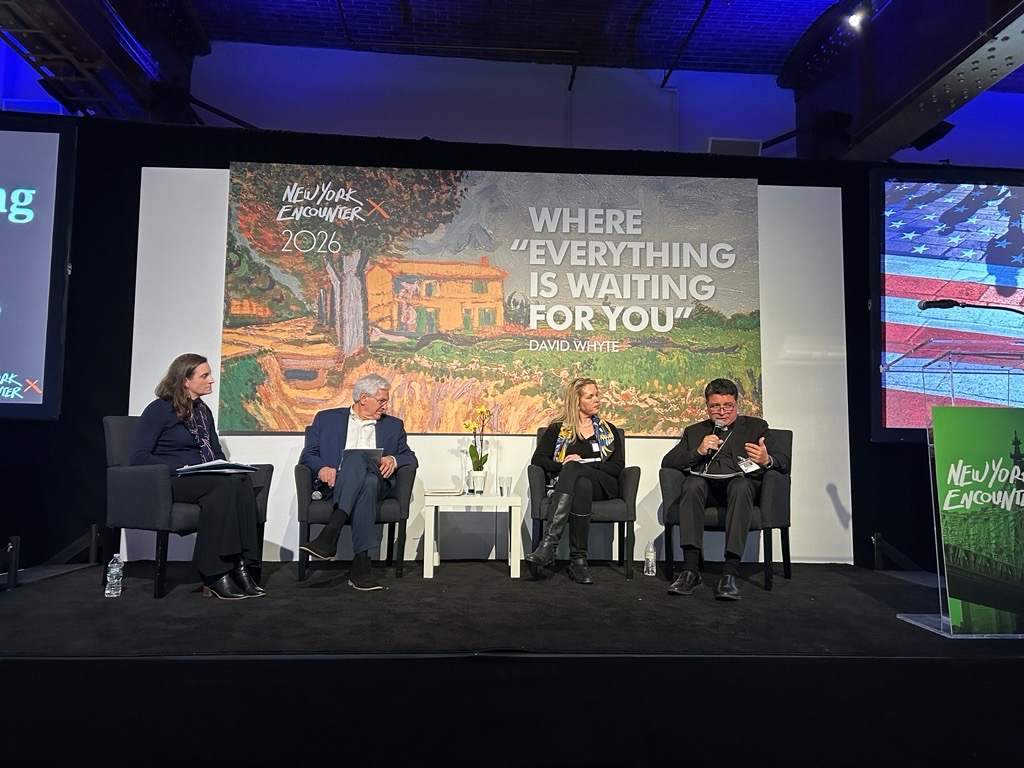
NEW YORK — Catholics must educate themselves on “the facts” regarding the U.S. immigration system and the Church’s teachings on the matter, according to Washington, D.C., Auxiliary Bishop Evelio Menjivar-Ayala.
Following his participation in a panel at the New York Encounter titled “Seeking a Home: A Catholic View on the Status of Immigration to the U.S.,” Menjivar-Ayala told EWTN News that he is “very hopeful” about the future of immigration in the U.S. “When people show up for a talk like this, and you see standing room only, that tells you of the great desire of people to get informed, to get educated.”
The D.C. auxiliary bishop emphasized the need to “get the facts,” not only about the immigration system in the U.S. but also where the Church stands on the issue. “For the Church, the first and the most important thing is human dignity,” he said. “It is the dignity of every person, undocumented or citizen.”
While the government must enforce its laws and protect its sovereignty, Menjivar-Ayala said, it is necessary for the government to “look at the eyes of the person, the dignity of every human being,” and to ensure that enforcement is “done in a humane way that respects the dignity of the human person.”
“Let us educate ourselves,” he said, adding: “As they say, the social doctrine of the Church is the best-kept secret. And the Church teaches, has beautiful teachings, about the social dimension of our faith.”
Dialogue with Catholics in the Trump administration
Menjivar-Ayala noted that previous administrations in the past had participated in dialogue with the Catholic Church, consulting with organizations such as the Catholic Legal Immigration Network Inc. (CLINIC) on the issue of immigration. However, he said, the current administration has not.
Menjivar-Ayala noted the disparity between the Church’s emphasis on human dignity and the Trump administration’s position that every unauthorized border crossing is a criminal act.
He said we should be careful about narratives surrounding the issue and refrain from categorizing those who cross the border without authorization the same way as perpetrators of crimes such as murder, rape, or theft.
Menjivar-Ayala said criminals should be prosecuted as criminals and not categorized in the same way as immigrants, noting that “immigration laws are a different set of laws than criminal laws” but that the current administration is now “pulling them together.”
Responding to high-ranking officials who are Catholic, such as “border czar” Tom Homan, who has described the Catholic Church as being “wrong” about immigration, Menjivar-Ayala said he believes “it’s a question for them” about “how are you living the Gospel?”
“I would say that the question is not for me, because for me and for the bishops it is very clear. Every person has dignity, and in every migrant, no matter if they are documented or undocumented, we should see the face of Christ,” he said. “So the question is for them, for those who claim to be Catholic but are not seeing the face of Christ in the migrants.”
Menjivar-Ayala stressed the need for one’s politics to be informed by the Gospels and faith, rather than one’s faith being informed by politics or one’s personal views. “It is the Gospel that needs to tell me how I should see the world and not politics,” he said.
Life for the immigrant community in Washington, D.C.
Immigration enforcement among Catholic migrant communities in D.C. is “dying down a bit,” according to Menjivar-Ayala.
Sacred Heart Shrine in the Columbia Heights neighborhood reported that six of its parishioners were detained by Immigrations and Customs Enforcement (ICE) agents in August 2025, including an usher who was on his way to evening Mass.
Menjivar-Ayala said the immigrant community at Sacred Heart Shrine “has been affected the most” in the city but has also become the most tight-knit. During the panel, Menjivar-Ayala described parishioners in immigrant communities banding together to bring food and provide other support for one another. “I was thinking about that parish,” he said.
“I believe right now it’s dying down a bit, but nobody knows when you are going to have ICE in the streets,” he concluded.
Panel highlights broken system, need for congressional action
For the panel, Menjivar-Ayala was joined by Mario Russell, executive director of the Center for Migration Studies, and Ashley Feasley, a legal expert in residence at The Catholic University of America’s Immigration Law and Policy Initiative.
During her remarks, Feasley described the U.S. immigration system as “old,” having not been reformed since the late 1990s.
“What has happened here is people may have many perspectives about the failures of one president or another on immigration reform,” she said. “But the one place where I think we can really circle in on is the failure of Congress to act regardless of who is in the White House or who controls Congress.”
Feasley noted the presence of a number of comprehensive bills seeking to address border security and asylum but have had a difficult time garnering bipartisan support. This, she said, has ultimately been “one of the biggest problems.”
During his remarks Russell, similarly to Menjivar-Ayala, encouraged Catholics to inform themselves about the immigration system by reading reports such as those from the Center for Migration Studies or from diocesan sources.
“What is happening is basically what is happening,” he said. “Robert Reich, the old labor secretary, recently said, ‘Why would the Immigration Customs Enforcement go to Home Depot to find criminals? Why would they go to a posada or a corner to find criminals? Those are workers,’ so the evidence doesn’t support the narrative.”
DC bishop: Catholics should ‘get the facts’ on immigration, Church teachings – #Catholic –
NEW YORK — Catholics must educate themselves on “the facts” regarding the U.S. immigration system and the Church’s teachings on the matter, according to Washington, D.C., Auxiliary Bishop Evelio Menjivar-Ayala.
Following his participation in a panel at the New York Encounter titled “Seeking a Home: A Catholic View on the Status of Immigration to the U.S.,” Menjivar-Ayala told EWTN News that he is “very hopeful” about the future of immigration in the U.S. “When people show up for a talk like this, and you see standing room only, that tells you of the great desire of people to get informed, to get educated.”
The D.C. auxiliary bishop emphasized the need to “get the facts,” not only about the immigration system in the U.S. but also where the Church stands on the issue. “For the Church, the first and the most important thing is human dignity,” he said. “It is the dignity of every person, undocumented or citizen.”
While the government must enforce its laws and protect its sovereignty, Menjivar-Ayala said, it is necessary for the government to “look at the eyes of the person, the dignity of every human being,” and to ensure that enforcement is “done in a humane way that respects the dignity of the human person.”
“Let us educate ourselves,” he said, adding: “As they say, the social doctrine of the Church is the best-kept secret. And the Church teaches, has beautiful teachings, about the social dimension of our faith.”
Dialogue with Catholics in the Trump administration
Menjivar-Ayala noted that previous administrations in the past had participated in dialogue with the Catholic Church, consulting with organizations such as the Catholic Legal Immigration Network Inc. (CLINIC) on the issue of immigration. However, he said, the current administration has not.
Menjivar-Ayala noted the disparity between the Church’s emphasis on human dignity and the Trump administration’s position that every unauthorized border crossing is a criminal act.
He said we should be careful about narratives surrounding the issue and refrain from categorizing those who cross the border without authorization the same way as perpetrators of crimes such as murder, rape, or theft.
Menjivar-Ayala said criminals should be prosecuted as criminals and not categorized in the same way as immigrants, noting that “immigration laws are a different set of laws than criminal laws” but that the current administration is now “pulling them together.”
Responding to high-ranking officials who are Catholic, such as “border czar” Tom Homan, who has described the Catholic Church as being “wrong” about immigration, Menjivar-Ayala said he believes “it’s a question for them” about “how are you living the Gospel?”
“I would say that the question is not for me, because for me and for the bishops it is very clear. Every person has dignity, and in every migrant, no matter if they are documented or undocumented, we should see the face of Christ,” he said. “So the question is for them, for those who claim to be Catholic but are not seeing the face of Christ in the migrants.”
Menjivar-Ayala stressed the need for one’s politics to be informed by the Gospels and faith, rather than one’s faith being informed by politics or one’s personal views. “It is the Gospel that needs to tell me how I should see the world and not politics,” he said.
Life for the immigrant community in Washington, D.C.
Immigration enforcement among Catholic migrant communities in D.C. is “dying down a bit,” according to Menjivar-Ayala.
Sacred Heart Shrine in the Columbia Heights neighborhood reported that six of its parishioners were detained by Immigrations and Customs Enforcement (ICE) agents in August 2025, including an usher who was on his way to evening Mass.
Menjivar-Ayala said the immigrant community at Sacred Heart Shrine “has been affected the most” in the city but has also become the most tight-knit. During the panel, Menjivar-Ayala described parishioners in immigrant communities banding together to bring food and provide other support for one another. “I was thinking about that parish,” he said.
“I believe right now it’s dying down a bit, but nobody knows when you are going to have ICE in the streets,” he concluded.
Panel highlights broken system, need for congressional action
For the panel, Menjivar-Ayala was joined by Mario Russell, executive director of the Center for Migration Studies, and Ashley Feasley, a legal expert in residence at The Catholic University of America’s Immigration Law and Policy Initiative.
During her remarks, Feasley described the U.S. immigration system as “old,” having not been reformed since the late 1990s.
“What has happened here is people may have many perspectives about the failures of one president or another on immigration reform,” she said. “But the one place where I think we can really circle in on is the failure of Congress to act regardless of who is in the White House or who controls Congress.”
Feasley noted the presence of a number of comprehensive bills seeking to address border security and asylum but have had a difficult time garnering bipartisan support. This, she said, has ultimately been “one of the biggest problems.”
During his remarks Russell, similarly to Menjivar-Ayala, encouraged Catholics to inform themselves about the immigration system by reading reports such as those from the Center for Migration Studies or from diocesan sources.
“What is happening is basically what is happening,” he said. “Robert Reich, the old labor secretary, recently said, ‘Why would the Immigration Customs Enforcement go to Home Depot to find criminals? Why would they go to a posada or a corner to find criminals? Those are workers,’ so the evidence doesn’t support the narrative.”
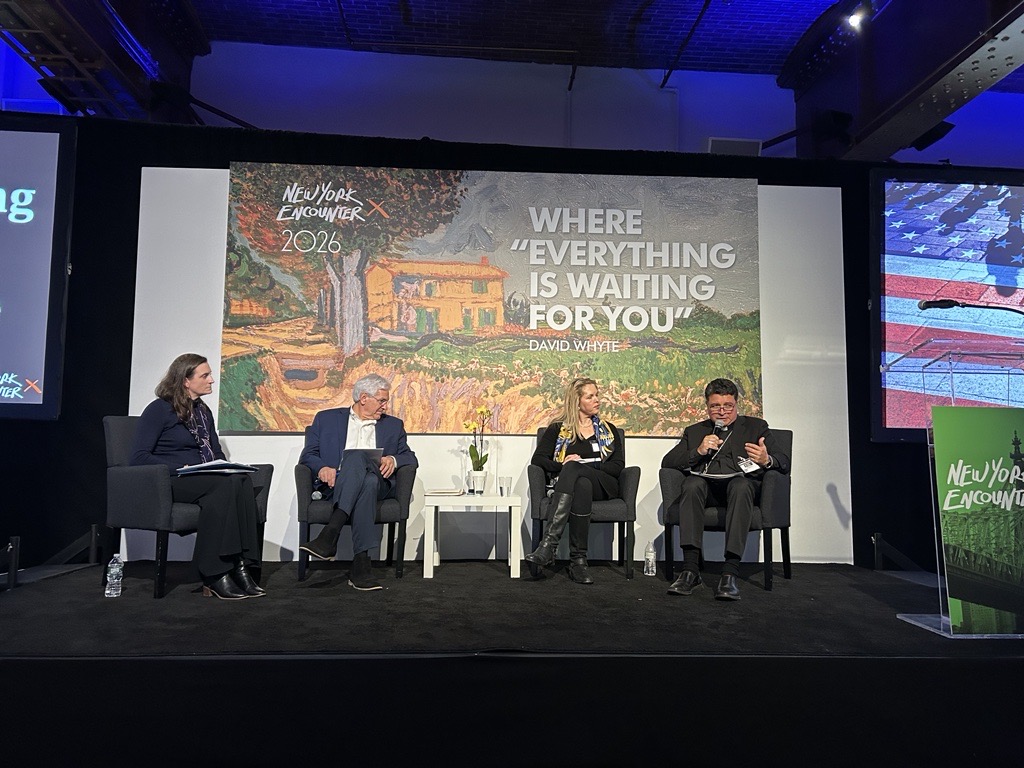
Washington, D.C., Auxiliary Bishop Evelio Menjivar-Ayala talks immigration and dialogue with high-ranking Catholics in the Trump administration.