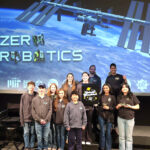
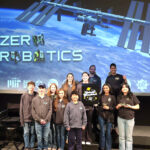
Pope John Zero Robotics place fourth in World Finals #Catholic – The Zero Robotics Team Kühlschrank of Pope John XXIII Regional High School from Sparta, N.J., placed fourth in the world finals competition at the Massachusetts Institute of Technology (MIT) in Cambridge, Mass., on Feb. 21.
Ninety-one teams from 17 countries applied to participate in the zero-gravity programming competition sponsored by MIT and NASA. The program centers on small robotic satellites called Astrobees aboard the International Space Station, which can be programmed to perform tasks in microgravity.
According to the official Zero Robotics website, the competing teams of high school students must “Write code to control satellite speed, rotation, and direction” and “navigate obstacles, collect virtual objects, and manage resources like fuel and power.” Then MIT will “Test strategies in a simulation environment that mimics real satellites,” as successful teams “advance through virtual rounds to earn a spot in the finals.” Finally, the code of the finalist alliances is run head-to-head using drones to determine which solutions are most effective, and declare a winner.

Click here to subscribe to our weekly newsletter.

The purpose of this year’s competition was to simulate greenhouse farming in space using the Astrobees. It is an initiative NASA is exploring to enable astronauts to have access to fresh produce in the harsh conditions of space.
Using carefully crafted strategy and programming, Team Kühlschrank planted, watered, and harvested crops within a 4-minute window, optimizing resource use and meeting time constraints for the best possible outcome. It successfully harvested more produce and earned more points than most of the competing teams, earning its place in the semi-finals. They were then defeated by the second-place alliance, finishing fourth.
“I am extremely proud of the team’s hard work and dedication that they showed throughout the competition,” said Joseph Giovannone, coach of Pope John Zero Robotics and head of the Pope John math department. “Many of the students were new to Zero Robotics this year, but their ability and willingness to work together to strategize and solve a challenging problem contributed greatly to their success. I am very excited to see what the team is capable of next year now that they have had this valuable experience.”
Team Kühlschrank was established in 2011, in the early years of Pope John’s Zero Robotics program, and has had success in competition finals many times since.
The 2026 team is comprised of 8th-12th-grade students. Assisting Giovannone are alum team members Suraj Bose, Evan Rizzo, and Michael Pacholarz.
Team Kühlschrank members are Mia Rizzo, Ak Burke, John Lubchansky, Maci Gnecco, Artem Taylor, Rylan Chintada, Diana Renninger, Chance Cosenza-Schaming, Adrian Oozeerally, William Franco, and Matthew Gazzillo.
Pope John Zero Robotics place fourth in World Finals #Catholic - <img width="150" height="150" src="https://beaconnj.org/wp-content/uploads/2026/02/PJ_Robotics-1-150x150.jpg" class="attachment-thumbnail size-thumbnail wp-post-image" alt="" loading="lazy" /><p><strong>The Zero Robotics Team Kühlschrank</strong> of Pope John XXIII Regional High School from Sparta, N.J., placed fourth in the world finals competition at the Massachusetts Institute of Technology (MIT) in Cambridge, Mass., on Feb. 21.</p> <p>Ninety-one teams from 17 countries applied to participate in the zero-gravity programming competition sponsored by MIT and NASA. The program centers on small robotic satellites called Astrobees aboard the International Space Station, which can be programmed to perform tasks in microgravity.</p> <p>According to the official Zero Robotics website, the competing teams of high school students must “Write code to control satellite speed, rotation, and direction” and “navigate obstacles, collect virtual objects, and manage resources like fuel and power.” Then MIT will “Test strategies in a simulation environment that mimics real satellites,” as successful teams “advance through virtual rounds to earn a spot in the finals.” Finally, the code of the finalist alliances is run head-to-head using drones to determine which solutions are most effective, and declare a winner.</p> <hr> <h6 style="text-align: center"><a href="https://beaconnj.org/subscribe/" target="_blank" rel="noopener"><span data-olk-copy-source="MessageBody">Click here to subscribe to our weekly newsletter.</span></a></h6> <hr> <p>The purpose of this year’s competition was to simulate greenhouse farming in space using the Astrobees. It is an initiative NASA is exploring to enable astronauts to have access to fresh produce in the harsh conditions of space.</p> <p>Using carefully crafted strategy and programming, Team Kühlschrank planted, watered, and harvested crops within a 4-minute window, optimizing resource use and meeting time constraints for the best possible outcome. It successfully harvested more produce and earned more points than most of the competing teams, earning its place in the semi-finals. They were then defeated by the second-place alliance, finishing fourth.</p> <p>“I am extremely proud of the team’s hard work and dedication that they showed throughout the competition,” said Joseph Giovannone, coach of Pope John Zero Robotics and head of the Pope John math department. “Many of the students were new to Zero Robotics this year, but their ability and willingness to work together to strategize and solve a challenging problem contributed greatly to their success. I am very excited to see what the team is capable of next year now that they have had this valuable experience.”</p> <p>Team Kühlschrank was established in 2011, in the early years of Pope John’s Zero Robotics program, and has had success in competition finals many times since.</p> <p>The 2026 team is comprised of 8th-12th-grade students. Assisting Giovannone are alum team members Suraj Bose, Evan Rizzo, and Michael Pacholarz.</p> <p>Team Kühlschrank members are Mia Rizzo, Ak Burke, John Lubchansky, Maci Gnecco, Artem Taylor, Rylan Chintada, Diana Renninger, Chance Cosenza-Schaming, Adrian Oozeerally, William Franco, and Matthew Gazzillo.</p> - <img width="150" height="150" src="https://beaconnj.org/wp-content/uploads/2026/02/PJ_Robotics-1-150x150.jpg" class="attachment-thumbnail size-thumbnail wp-post-image" alt="" />The Zero Robotics Team Kühlschrank of Pope John XXIII Regional High School from Sparta, N.J., placed fourth in the world finals competition at the Massachusetts Institute of Technology (MIT) in Cambridge, Mass., on Feb. 21. Ninety-one teams from 17 countries applied to participate in the zero-gravity programming competition sponsored by MIT and NASA. The program centers on small robotic satellites called Astrobees aboard the International Space Station, which can be programmed to perform tasks in microgravity. According to the official Zero Robotics website, the competing teams of high school students must “Write code to control satellite speed, rotation, and direction”

The Zero Robotics Team Kühlschrank of Pope John XXIII Regional High School from Sparta, N.J., placed fourth in the world finals competition at the Massachusetts Institute of Technology (MIT) in Cambridge, Mass., on Feb. 21.

Ninety-one teams from 17 countries applied to participate in the zero-gravity programming competition sponsored by MIT and NASA. The program centers on small robotic satellites called Astrobees aboard the International Space Station, which can be programmed to perform tasks in microgravity.

According to the official Zero Robotics website, the competing teams of high school students must “Write code to control satellite speed, rotation, and direction” and “navigate obstacles, collect virtual objects, and manage resources like fuel and power.” Then MIT will “Test strategies in a simulation environment that mimics real satellites,” as successful teams “advance through virtual rounds to earn a spot in the finals.” Finally, the code of the finalist alliances is run head-to-head using drones to determine which solutions are most effective, and declare a winner.


Click here to subscribe to our weekly newsletter.

The purpose of this year’s competition was to simulate greenhouse farming in space using the Astrobees. It is an initiative NASA is exploring to enable astronauts to have access to fresh produce in the harsh conditions of space.

Using carefully crafted strategy and programming, Team Kühlschrank planted, watered, and harvested crops within a 4-minute window, optimizing resource use and meeting time constraints for the best possible outcome. It successfully harvested more produce and earned more points than most of the competing teams, earning its place in the semi-finals. They were then defeated by the second-place alliance, finishing fourth.

“I am extremely proud of the team’s hard work and dedication that they showed throughout the competition,” said Joseph Giovannone, coach of Pope John Zero Robotics and head of the Pope John math department. “Many of the students were new to Zero Robotics this year, but their ability and willingness to work together to strategize and solve a challenging problem contributed greatly to their success. I am very excited to see what the team is capable of next year now that they have had this valuable experience.”

Team Kühlschrank was established in 2011, in the early years of Pope John’s Zero Robotics program, and has had success in competition finals many times since.

The 2026 team is comprised of 8th-12th-grade students. Assisting Giovannone are alum team members Suraj Bose, Evan Rizzo, and Michael Pacholarz.

Team Kühlschrank members are Mia Rizzo, Ak Burke, John Lubchansky, Maci Gnecco, Artem Taylor, Rylan Chintada, Diana Renninger, Chance Cosenza-Schaming, Adrian Oozeerally, William Franco, and Matthew Gazzillo.

Pope John Zero Robotics place fourth in World Finals #Catholic –

The Zero Robotics Team Kühlschrank of Pope John XXIII Regional High School from Sparta, N.J., placed fourth in the world finals competition at the Massachusetts Institute of Technology (MIT) in Cambridge, Mass., on Feb. 21.

Ninety-one teams from 17 countries applied to participate in the zero-gravity programming competition sponsored by MIT and NASA. The program centers on small robotic satellites called Astrobees aboard the International Space Station, which can be programmed to perform tasks in microgravity.

According to the official Zero Robotics website, the competing teams of high school students must “Write code to control satellite speed, rotation, and direction” and “navigate obstacles, collect virtual objects, and manage resources like fuel and power.” Then MIT will “Test strategies in a simulation environment that mimics real satellites,” as successful teams “advance through virtual rounds to earn a spot in the finals.” Finally, the code of the finalist alliances is run head-to-head using drones to determine which solutions are most effective, and declare a winner.


Click here to subscribe to our weekly newsletter.

The purpose of this year’s competition was to simulate greenhouse farming in space using the Astrobees. It is an initiative NASA is exploring to enable astronauts to have access to fresh produce in the harsh conditions of space.

Using carefully crafted strategy and programming, Team Kühlschrank planted, watered, and harvested crops within a 4-minute window, optimizing resource use and meeting time constraints for the best possible outcome. It successfully harvested more produce and earned more points than most of the competing teams, earning its place in the semi-finals. They were then defeated by the second-place alliance, finishing fourth.

“I am extremely proud of the team’s hard work and dedication that they showed throughout the competition,” said Joseph Giovannone, coach of Pope John Zero Robotics and head of the Pope John math department. “Many of the students were new to Zero Robotics this year, but their ability and willingness to work together to strategize and solve a challenging problem contributed greatly to their success. I am very excited to see what the team is capable of next year now that they have had this valuable experience.”

Team Kühlschrank was established in 2011, in the early years of Pope John’s Zero Robotics program, and has had success in competition finals many times since.

The 2026 team is comprised of 8th-12th-grade students. Assisting Giovannone are alum team members Suraj Bose, Evan Rizzo, and Michael Pacholarz.

Team Kühlschrank members are Mia Rizzo, Ak Burke, John Lubchansky, Maci Gnecco, Artem Taylor, Rylan Chintada, Diana Renninger, Chance Cosenza-Schaming, Adrian Oozeerally, William Franco, and Matthew Gazzillo.