16th Century

2 historic churches in Mexico City reopen almost 9 years after earthquake damage #Catholic Almost nine years after the earthquakes that shook central and southwestern Mexico in September 2017, St. John of God Church and Holy True Cross Church, both located in Mexico City, have reopened their doors for worship.On July 8, a Mass was celebrated at Holy Cross Church, marking the communityʼs return to their church and concluding a lengthy restoration process.
 
 Start of the reopening Mass at Holy Cross Parish. | Credit: Holy True Cross Parish, Mexico City
 
 The earthquakes of Sept. 7 and 19, 2017, resulted in 468 deaths and caused damage to thousands of buildings.In Mexico City alone, around 160 Catholic churches suffered structural damage of varying severity such as these two churches located just a short distance apart.
 
 Restoration work at the Holy True Cross Parish. | Credit: Holy True Cross Parish, Mexico City
 
 5 centuries of historyHoly True Cross Church is considered one of the oldest churches in the country.According to tradition, the explorer and conquistador Hernán Cortés ordered the construction of a small chapel to commemorate the landing of the Spanish expedition at the port of what is now known as the state of Veracruz. Over time, that chapel gave rise to the parish as it is known today.Facebook postThe church also houses important works of sacred art, such as the Christ of the Seven Veils, which is said to have been a gift from Pope Paul III to King Carlos V of Spain. Additionally, a relic of the true cross is preserved there, considered by Christian tradition to be a fragment of the cross on which Jesus Christ died.
 
 Reliquary containing a splinter of the true cross. | Credit: “EWTN Noticias”
 
 In an interview with ACI Prensa, the Spanish-language sister service of EWTN News, Father Juan Carlos Guerrero Ugalde, the pastor of Holy True Cross and St. John of God, stated that restoring the churches was a priority of “not only ecclesiastical but also civic interest.”“This church [Holy True Cross] was the third parish established in the city and, therefore, holds a tradition of faith dating back to the 16th century,” he explained.9 years to returnGuerrero described the restoration process as “meticulous and slow” due to the complexity of the damage.Among other measures, the bell towers, which were at risk of collapse, were reinforced, cracks were repaired, the hydraulic piles supporting both structures were serviced, the roofs were waterproofed, and work was carried out to correct the effects of the ground settling.Facebook postThe work was overseen by the National Institute of Anthropology and History, as both buildings are part of the nationʼs historical heritage.In Mexico, religious buildings constructed prior to the 1992 constitutional reforms are state property, although they remain places of worship and are used by religious associations.The restoration of the Holy True Cross church faced an additional challenge: a fire in August 2020 caused by individuals living on the street. Reports indicate that a campfire spiraled out of control, damaging the choir loft, the dome, and sacred art.Today, those walking through the historic central part of Mexico City can once again enter the church. Marcela Eduardo, who works in the area and took a moment of free time to stop in and pray, did just that.“It brought me great joy to see it open and to see that repairs are underway,” she noted in an interview with ACI Prensa. She said that when she saw the parish church open, her first thought was to go in to see Christ and “greet him, make the sign of the cross, and ask him for something: that he give me more energy.” Much more than a churchThese churches are surrounded by some of Mexico’s most important cultural landmarks, such as the Franz Mayer Museum, the Palace of Fine Arts, and the Alameda Central, a large city park.
 
 Visible in the background of the photo are the Torre Latinoamericana, the Palace of Fine Arts, and part of the Alameda Central. | Credit: “EWTN Noticias”
 
 Although Holy True Cross and St. John of God churches might go unnoticed by some tourists amid so many other buildings, Guerrero noted that their value has been “significant for both the faith and the city.”He explained that, following the 1985 earthquake, the area welcomed numerous families from various places, necessitating the construction of a new community identity. Pastoral work at the time “consisted of gradually integrating the way of life of longtime residents and that of those who were newly arriving.”Over the years, he added, violence, drug trafficking, and social breakdown affected life in the neighborhood, making the Church’s presence even more necessary.Facebook postFor Betsabé Jara, who visited the church after touring the Franz Mayer Museum, the reopening represents an opportunity to regain a place for encountering God.“It brings peace of mind that the church is open, that one can enter and pray. Especially for people who couldnʼt go elsewhere because there wasnʼt a church nearby,” she said in an interview with ACI Prensa.Building the communityThe priest noted that reactivating community life will be the next challenge. He explained that a “call has already gone out to neighborhood residents to come for formation as pastoral workers.”
 
 Interior of Holy True Cross Church. | Credit: “EWTN Noticias”
 
 He also noted that they aim to develop social programs such as job training for individuals who did not complete their formal education as well as cultural initiatives in collaboration with nearby museums.“We want the spaces we have in both churches to be truly utilized and filled with formation programs,” Guerrero said.As the community gradually restores life to these churches, Masses are currently held regularly on Sundays, whereas weekday Masses take place only upon the request of the faithful.This story was first published by ACI Prensa, the Spanish-language sister service of EWTN News. It has been translated and adapted by EWTN News English.

2 historic churches in Mexico City reopen almost 9 years after earthquake damage #Catholic Almost nine years after the earthquakes that shook central and southwestern Mexico in September 2017, St. John of God Church and Holy True Cross Church, both located in Mexico City, have reopened their doors for worship.On July 8, a Mass was celebrated at Holy Cross Church, marking the communityʼs return to their church and concluding a lengthy restoration process. Start of the reopening Mass at Holy Cross Parish. | Credit: Holy True Cross Parish, Mexico City The earthquakes of Sept. 7 and 19, 2017, resulted in 468 deaths and caused damage to thousands of buildings.In Mexico City alone, around 160 Catholic churches suffered structural damage of varying severity such as these two churches located just a short distance apart. Restoration work at the Holy True Cross Parish. | Credit: Holy True Cross Parish, Mexico City 5 centuries of historyHoly True Cross Church is considered one of the oldest churches in the country.According to tradition, the explorer and conquistador Hernán Cortés ordered the construction of a small chapel to commemorate the landing of the Spanish expedition at the port of what is now known as the state of Veracruz. Over time, that chapel gave rise to the parish as it is known today.Facebook postThe church also houses important works of sacred art, such as the Christ of the Seven Veils, which is said to have been a gift from Pope Paul III to King Carlos V of Spain. Additionally, a relic of the true cross is preserved there, considered by Christian tradition to be a fragment of the cross on which Jesus Christ died. Reliquary containing a splinter of the true cross. | Credit: “EWTN Noticias” In an interview with ACI Prensa, the Spanish-language sister service of EWTN News, Father Juan Carlos Guerrero Ugalde, the pastor of Holy True Cross and St. John of God, stated that restoring the churches was a priority of “not only ecclesiastical but also civic interest.”“This church [Holy True Cross] was the third parish established in the city and, therefore, holds a tradition of faith dating back to the 16th century,” he explained.9 years to returnGuerrero described the restoration process as “meticulous and slow” due to the complexity of the damage.Among other measures, the bell towers, which were at risk of collapse, were reinforced, cracks were repaired, the hydraulic piles supporting both structures were serviced, the roofs were waterproofed, and work was carried out to correct the effects of the ground settling.Facebook postThe work was overseen by the National Institute of Anthropology and History, as both buildings are part of the nationʼs historical heritage.In Mexico, religious buildings constructed prior to the 1992 constitutional reforms are state property, although they remain places of worship and are used by religious associations.The restoration of the Holy True Cross church faced an additional challenge: a fire in August 2020 caused by individuals living on the street. Reports indicate that a campfire spiraled out of control, damaging the choir loft, the dome, and sacred art.Today, those walking through the historic central part of Mexico City can once again enter the church. Marcela Eduardo, who works in the area and took a moment of free time to stop in and pray, did just that.“It brought me great joy to see it open and to see that repairs are underway,” she noted in an interview with ACI Prensa. She said that when she saw the parish church open, her first thought was to go in to see Christ and “greet him, make the sign of the cross, and ask him for something: that he give me more energy.” Much more than a churchThese churches are surrounded by some of Mexico’s most important cultural landmarks, such as the Franz Mayer Museum, the Palace of Fine Arts, and the Alameda Central, a large city park. Visible in the background of the photo are the Torre Latinoamericana, the Palace of Fine Arts, and part of the Alameda Central. | Credit: “EWTN Noticias” Although Holy True Cross and St. John of God churches might go unnoticed by some tourists amid so many other buildings, Guerrero noted that their value has been “significant for both the faith and the city.”He explained that, following the 1985 earthquake, the area welcomed numerous families from various places, necessitating the construction of a new community identity. Pastoral work at the time “consisted of gradually integrating the way of life of longtime residents and that of those who were newly arriving.”Over the years, he added, violence, drug trafficking, and social breakdown affected life in the neighborhood, making the Church’s presence even more necessary.Facebook postFor Betsabé Jara, who visited the church after touring the Franz Mayer Museum, the reopening represents an opportunity to regain a place for encountering God.“It brings peace of mind that the church is open, that one can enter and pray. Especially for people who couldnʼt go elsewhere because there wasnʼt a church nearby,” she said in an interview with ACI Prensa.Building the communityThe priest noted that reactivating community life will be the next challenge. He explained that a “call has already gone out to neighborhood residents to come for formation as pastoral workers.” Interior of Holy True Cross Church. | Credit: “EWTN Noticias” He also noted that they aim to develop social programs such as job training for individuals who did not complete their formal education as well as cultural initiatives in collaboration with nearby museums.“We want the spaces we have in both churches to be truly utilized and filled with formation programs,” Guerrero said.As the community gradually restores life to these churches, Masses are currently held regularly on Sundays, whereas weekday Masses take place only upon the request of the faithful.This story was first published by ACI Prensa, the Spanish-language sister service of EWTN News. It has been translated and adapted by EWTN News English.

Work was slow and meticulous due to the complexity of the damage, but the two churches in the historic city center of Mexico City are now open to the faithful.

Read More
Irish bishops call for calm in Belfast following racially motivated civil unrest #Catholic Following its summer 2026 general meeting, the Irish Bishops’ Conference voiced its deep concern about the attack on human life and the wider violence and social disorder that has taken place in Belfast and across Northern Ireland this past week.The civil unrest followed a brutal knife attack in Belfast carried out by a Sudanese national. Footage of the incident has been widely circulated globally and on social media. Bishop Alan McGuckian, SJ, of Down and Connor said: “My thoughts and prayers are firstly with Stephen Ogilvie, who sustained life-changing devastating injuries in a brutal and horrific attack.”Referring to the rioting, intimidation, and vandalism toward immigrant people that followed, he said: “So many newcomers make an outstanding contribution to our communities, including our parishes. They are our friends. Shame on all those who have sought to mobilize, agitate, weaponize, and politicize the fear and concerns of others over the last few days. All of us have a responsibility to de-escalate societal tension rather than stoke the flames of racism.”Lebanese priest says ‘situation drastically deteriorating’ for ChristiansFather Youssef Semaan, parish priest of Kfour, Nabatieh District, in Lebanon, said the situation for Christians remaining in the country is continuing to worsen.“Every week is more dangerous than the last. The situation has become unbearable,” Semaan said, according to a press release from Aid to the Church in Need on Thursday. The priest, who was forced to leave Kfour due to safety reasons, said he has managed to return on two occasions. He said many Christians have been faced with the difficult decision to “stay and risk their lives or abandon our land without any guarantee that we will ever get our houses or our goods back.” In Kfour, the Christian population has dropped from 120 to around 12, ACN noted. “We still have hope,” Semaan said. “But hope itself is not enough. It has to be based on solid foundations that allow us to rebuild and go on living. We are human after all.”Zimbabwe bishops consecrate nation to Mary, a ‘model of courage’ in difficult timesMembers of the Zimbabwe Catholic Bishops’ Conference (ZCBC) have consecrated the Southern African nation to the Immaculate Heart of the Blessed Virgin Mary, entrusting the country to her maternal protection and presenting her as a model of faith, hope, courage, and love amid ongoing challenges.The consecration took place during a Mass marking the conclusion of the bishops’ 2026 plenary assembly at the Sacred Heart of Jesus Cathedral of the Archdiocese of Harare on June 10, ACI Africa, the sister service of EWTN News in Africa, reported Thursday. In his homily, ZCBC president Bishop Raymond Tapiwa Mupandasekwa said the bishops identified Mary as a fitting patroness for Zimbabwe, saying: “The act of surrender to God is indeed an imitation of this Holy Virgin. She is the woman who not only shows her total surrender to God in faith, but she is also a woman of great hope. At the foot of the cross she stands. A great sign of courage in a very difficult moment.”Legislation threatening the seal of confession in France failsA provision in a bill proposed to the French National Assembly that would have compelled priests to violate the seal of confession to report instances of abuse against minors has failed.The bill, aimed at preventing and combating violence in schools in the wake of a sex abuse scandal at a Catholic boarding school in southern France, was adopted on June 1 without the proposed clause that would have removed exemptions for priests from mandatory reporting of information regarding sexual abuse heard during the sacrament of confession. The French Bishops’ Conference expressed “grave concern” ahead of a debate on the bill, noting several articles in the bill that “call into question several fundamental freedoms,” including the right to secrecy under the seal of confession.Christians in Tyre face new wave of uncertaintyThe Christian community in the southern Lebanese city of Tyre is watching recent developments with growing concern after the area was included in an Israeli evacuation warning for the first time, ACI MENA, the Arabic-language sister service of EWTN News, reported Thursday.Church leaders fear that any military escalation could have lasting consequences for one of Lebanon’s oldest Christian communities, which has already endured years of economic hardship and emigration. Melkite Greek Catholic Archbishop Georges Iskandar called for urgent efforts to protect civilians and preserve the city’s historic and religious character, warning that further instability could accelerate the decline of the local Christian presence.Victims of clergy abuse in Australia clash with diocese over memorialA group representing victim survivors of clergy abuse has announced its agreement with the Diocese of Ballarat in Australia to build a memorial for victims “null and void” after an alleged communication breakdown with the diocese.“Throughout the memorial process, we have sought to engage with Church representatives in a respectful, transparent, and constructive manner. We have acted in good faith and demonstrated a genuine willingness to work collaboratively towards memorials at both sites: St. Patrick’s Cathedral and St. Alipius Old Boys School,” the Ballarat and District Survivors Memorial Committee said in a June 6 Facebook post. “Regrettably, we do not believe the same level of transparency and good faith has been demonstrated by the Church during these negotiations.”British National Trust reopens 420-year-old Catholic lodgeLyveden, a three-story Tudor lodge in Northamptonshire, England, known for its Catholic symbolism, has been reopened following conservation work.“Weʼre very excited to open Lyveden Lodge after 18 months and welcome visitors back inside this remarkable building,” Matthew Glasgow, senior building surveyor, said in a BBC News report on Friday. “While further conservation work will be needed in the coming years, the completed repairs mean visitors can once again enjoy this extraordinary unfinished vision of Sir Thomas Tresham.” Conservationists conducted repairs to the lodge’s stonework, replaced timber, and restored its Elizabethan garden. Constructed in the 16th century by Sir Thomas Tresham, a practicing Catholic who faced persecution for refusing to attend Anglican church services during the late 1500s and early 1600s, Lyveden is built in the shape of a Greek cross and features references to Christian numerology, according to the National Trust’s website.Rebaptisms raise questions in Syria’s Maronite communityReports that several Maronites in the Latakia countryside of Syria joined Protestant groups and underwent “rebaptism” have sparked discussion within the local Church about the challenges facing parish life in the region.The situation came to light in the village of Ain Halaqim, where community members pointed to years of pastoral difficulties, including the absence of a resident priest and limited opportunities for ongoing catechesis, ACI MENA reported Friday. Rather than focusing solely on the individuals who left, many local voices are asking broader questions about how the Church can better accompany the faithful, especially in communities affected by economic struggles and migration.

Irish bishops call for calm in Belfast following racially motivated civil unrest #Catholic Following its summer 2026 general meeting, the Irish Bishops’ Conference voiced its deep concern about the attack on human life and the wider violence and social disorder that has taken place in Belfast and across Northern Ireland this past week.The civil unrest followed a brutal knife attack in Belfast carried out by a Sudanese national. Footage of the incident has been widely circulated globally and on social media. Bishop Alan McGuckian, SJ, of Down and Connor said: “My thoughts and prayers are firstly with Stephen Ogilvie, who sustained life-changing devastating injuries in a brutal and horrific attack.”Referring to the rioting, intimidation, and vandalism toward immigrant people that followed, he said: “So many newcomers make an outstanding contribution to our communities, including our parishes. They are our friends. Shame on all those who have sought to mobilize, agitate, weaponize, and politicize the fear and concerns of others over the last few days. All of us have a responsibility to de-escalate societal tension rather than stoke the flames of racism.”Lebanese priest says ‘situation drastically deteriorating’ for ChristiansFather Youssef Semaan, parish priest of Kfour, Nabatieh District, in Lebanon, said the situation for Christians remaining in the country is continuing to worsen.“Every week is more dangerous than the last. The situation has become unbearable,” Semaan said, according to a press release from Aid to the Church in Need on Thursday. The priest, who was forced to leave Kfour due to safety reasons, said he has managed to return on two occasions. He said many Christians have been faced with the difficult decision to “stay and risk their lives or abandon our land without any guarantee that we will ever get our houses or our goods back.” In Kfour, the Christian population has dropped from 120 to around 12, ACN noted. “We still have hope,” Semaan said. “But hope itself is not enough. It has to be based on solid foundations that allow us to rebuild and go on living. We are human after all.”Zimbabwe bishops consecrate nation to Mary, a ‘model of courage’ in difficult timesMembers of the Zimbabwe Catholic Bishops’ Conference (ZCBC) have consecrated the Southern African nation to the Immaculate Heart of the Blessed Virgin Mary, entrusting the country to her maternal protection and presenting her as a model of faith, hope, courage, and love amid ongoing challenges.The consecration took place during a Mass marking the conclusion of the bishops’ 2026 plenary assembly at the Sacred Heart of Jesus Cathedral of the Archdiocese of Harare on June 10, ACI Africa, the sister service of EWTN News in Africa, reported Thursday. In his homily, ZCBC president Bishop Raymond Tapiwa Mupandasekwa said the bishops identified Mary as a fitting patroness for Zimbabwe, saying: “The act of surrender to God is indeed an imitation of this Holy Virgin. She is the woman who not only shows her total surrender to God in faith, but she is also a woman of great hope. At the foot of the cross she stands. A great sign of courage in a very difficult moment.”Legislation threatening the seal of confession in France failsA provision in a bill proposed to the French National Assembly that would have compelled priests to violate the seal of confession to report instances of abuse against minors has failed.The bill, aimed at preventing and combating violence in schools in the wake of a sex abuse scandal at a Catholic boarding school in southern France, was adopted on June 1 without the proposed clause that would have removed exemptions for priests from mandatory reporting of information regarding sexual abuse heard during the sacrament of confession. The French Bishops’ Conference expressed “grave concern” ahead of a debate on the bill, noting several articles in the bill that “call into question several fundamental freedoms,” including the right to secrecy under the seal of confession.Christians in Tyre face new wave of uncertaintyThe Christian community in the southern Lebanese city of Tyre is watching recent developments with growing concern after the area was included in an Israeli evacuation warning for the first time, ACI MENA, the Arabic-language sister service of EWTN News, reported Thursday.Church leaders fear that any military escalation could have lasting consequences for one of Lebanon’s oldest Christian communities, which has already endured years of economic hardship and emigration. Melkite Greek Catholic Archbishop Georges Iskandar called for urgent efforts to protect civilians and preserve the city’s historic and religious character, warning that further instability could accelerate the decline of the local Christian presence.Victims of clergy abuse in Australia clash with diocese over memorialA group representing victim survivors of clergy abuse has announced its agreement with the Diocese of Ballarat in Australia to build a memorial for victims “null and void” after an alleged communication breakdown with the diocese.“Throughout the memorial process, we have sought to engage with Church representatives in a respectful, transparent, and constructive manner. We have acted in good faith and demonstrated a genuine willingness to work collaboratively towards memorials at both sites: St. Patrick’s Cathedral and St. Alipius Old Boys School,” the Ballarat and District Survivors Memorial Committee said in a June 6 Facebook post. “Regrettably, we do not believe the same level of transparency and good faith has been demonstrated by the Church during these negotiations.”British National Trust reopens 420-year-old Catholic lodgeLyveden, a three-story Tudor lodge in Northamptonshire, England, known for its Catholic symbolism, has been reopened following conservation work.“Weʼre very excited to open Lyveden Lodge after 18 months and welcome visitors back inside this remarkable building,” Matthew Glasgow, senior building surveyor, said in a BBC News report on Friday. “While further conservation work will be needed in the coming years, the completed repairs mean visitors can once again enjoy this extraordinary unfinished vision of Sir Thomas Tresham.” Conservationists conducted repairs to the lodge’s stonework, replaced timber, and restored its Elizabethan garden. Constructed in the 16th century by Sir Thomas Tresham, a practicing Catholic who faced persecution for refusing to attend Anglican church services during the late 1500s and early 1600s, Lyveden is built in the shape of a Greek cross and features references to Christian numerology, according to the National Trust’s website.Rebaptisms raise questions in Syria’s Maronite communityReports that several Maronites in the Latakia countryside of Syria joined Protestant groups and underwent “rebaptism” have sparked discussion within the local Church about the challenges facing parish life in the region.The situation came to light in the village of Ain Halaqim, where community members pointed to years of pastoral difficulties, including the absence of a resident priest and limited opportunities for ongoing catechesis, ACI MENA reported Friday. Rather than focusing solely on the individuals who left, many local voices are asking broader questions about how the Church can better accompany the faithful, especially in communities affected by economic struggles and migration.

Bishops in Northern Ireland call for peace, abuse victims in Australia clash with diocese, anti-Catholic legislation in France fails, Zimbabwe, and more in this week’s Catholic world news roundup.

Read More
Picture of the day


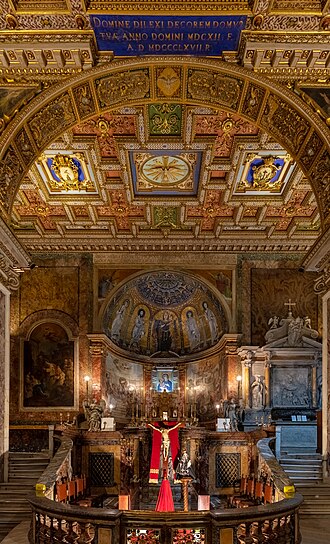
Basilica of Santa Francesca, Rome, Italy. A church at the site was known by the tenth century. It was named Santa Maria Nova (“New St Mary”), to distinguish it from the other church inside the Roman forum devoted to St Mary, Santa Maria Antiqua (“Ancient St Mary”), which had fallen into ruin by then. The relics from the ancient church were moved to this church under Pope Leo. Santa Maria Nuova was enlarged in the second half of the tenth century, and then rebuilt by Pope Honorius III in the thirteenth century, adding the campanile and the apse, as well as being decorated with a mosaic Maestà, a depiction of the Madonna enthroned accompanied by saints (as seen in the picture). Since 1352 the church has been in the care of the Olivetans. In the 16th century, the church was rededicated to Frances of Rome (Francesca Buzzi), who was canonized in 1608 and whose relics are in the crypt. The interior of the church has undergone many refurbishments.
 #ImageOfTheDay
Picture of the day
Basilica of Santa Francesca, Rome, Italy. A church at the site was known by the tenth century. It was named Santa Maria Nova (“New St Mary”), to distinguish it from the other church inside the Roman forum devoted to St Mary, Santa Maria Antiqua (“Ancient St Mary”), which had fallen into ruin by then. The relics from the ancient church were moved to this church under Pope Leo. Santa Maria Nuova was enlarged in the second half of the tenth century, and then rebuilt by Pope Honorius III in the thirteenth century, adding the campanile and the apse, as well as being decorated with a mosaic Maestà, a depiction of the Madonna enthroned accompanied by saints (as seen in the picture). Since 1352 the church has been in the care of the Olivetans. In the 16th century, the church was rededicated to Frances of Rome (Francesca Buzzi), who was canonized in 1608 and whose relics are in the crypt. The interior of the church has undergone many refurbishments.
Read More
Picture of the day


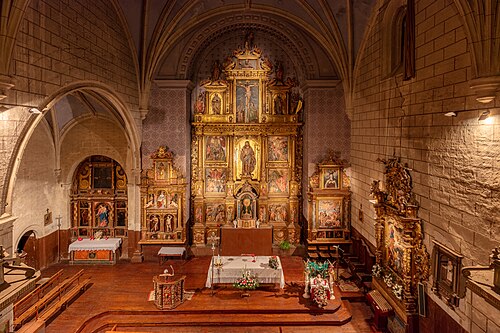
Church of El Salvador, Luesia, Zaragoza, Spain. The church is located in the highest area of the nucleus of the village of Luesia, next to the remains of the old medieval castle, to which it is historically and constructively associated. Its origin dates back to the end of the 11th century with the construction of the semicircular triple apse head with a double crypt at the bottom, while the body with three naves was built throughout the 12th century and the two portals on its southern fronts and occidental already respond to models from the beginning of the 13th century. The Romanesque building underwent a profound reform though in the mid-16th century. The main altarpiece is a Romanesque piece carved in wood; polychrome and gilt. The work is attributed to Gaspar Ramos, a sculptor from Sangüesa, who executed it around 1630.
 #ImageOfTheDay
Picture of the day
Church of El Salvador, Luesia, Zaragoza, Spain. The church is located in the highest area of the nucleus of the village of Luesia, next to the remains of the old medieval castle, to which it is historically and constructively associated. Its origin dates back to the end of the 11th century with the construction of the semicircular triple apse head with a double crypt at the bottom, while the body with three naves was built throughout the 12th century and the two portals on its southern fronts and occidental already respond to models from the beginning of the 13th century. The Romanesque building underwent a profound reform though in the mid-16th century. The main altarpiece is a Romanesque piece carved in wood; polychrome and gilt. The work is attributed to Gaspar Ramos, a sculptor from Sangüesa, who executed it around 1630.
Read More