![Pope Leo in Lourdes: The Church must heal her ‘wounds, infidelities, and painful errors’ #Catholic LOURDES, France — Pope Leo XIV issued a firm call to conversion from sin and error in the Church, and invited all to repent and do penance, at the Sanctuary of Our Lady of Lourdes on Sunday.Mary’s call to conversion in her message to St. Bernadette “also concerns the Church herself as she makes her earthly journey. She must have the courage to begin with herself,” he said at Mass on Sept. 27.“In order to heal the deep wounds, infidelities and painful errors that have occurred within her, we must humbly place ourselves under the Lord’s purifying gaze. Recognizing our own faults is essential to our spiritual growth,” the pontiff said.In 2021, the Independent Commission on Sexual Abuse in the Church (CIASE) published a nearly 2,500-page final report, estimating that 216,000 children were abused by priests, deacons, monks, or nuns in France from 1950 to 2020.TweetLeo is scheduled to meet later on Sunday with seven victims of clerical sexual abuse in France.Lourdes is an evocative backdrop to the private meeting, since it is among the first shrines to cover artwork by the accused sexual abuser Father Marko Rupnik, currently on trial at the Vatican.Rupnik’s mosaics decorating the front of the Basilica of the Rosary were covered ahead of Leo’s visit and will remain covered indefinitely, according to the local bishop.The pope celebrated Mass on a prairie across the river Gave de Pau from the grotto of the apparitions on the third day of his Sept. 25-28 visit to France.Pilgrims from France and around the world gathered on the grassy hill and along the streets of the shrine. Some waved flags or held banners of sacred images. A number of pilgrims arrived in wheelchairs. Around 150,000 people attended the Mass, according to the Vatican.Claire Banks, a nurse from the UK, said she has traveled over 100 times to Lourdes.“It was too good of an opportunity to miss coming here and seeing the pope. I think he’s wonderful,” she told EWTN News. She described an “electric atmosphere” at the shrine since Leo’s arrival.Libby Frank, another Mass attendee, is also from the UK, but has lived in Lourdes for 40 years. She recently retired after working for a charity that brings sick people to the shrine.“I worked for three papal visits and now I’ve come to one papal visit to enjoy it with my family and friends and just be part of the community,” she said, referencing two visits by St. Pope John Paul II in 1983 and 2004, and one by Pope Benedict in 2008.“There’s been a phenomenal amount of excitement locally waiting for Leo to come visit. The town [of Lourdes] has really gotten behind everything that’s happening,” she said.TweetThe Sanctuary of Our Lady of Lourdes is among the most popular Catholic shrines in the world, built on the site of Mary’s apparitions to St. Bernadette in 1858. It is particularly visited by the sick, who come to bathe in or drink its healing spring water.In his homily, Pope Leo noted that a “call to conversion, both tender and urgent,” was a central part of the message the Virgin Mary entrusted to Bernadette, and that “it is today, not tomorrow, that we must repent.”He said Jesus is quite direct about the call to repentance: “As St. Luke tells us, ‘Unless you repent, you will all perish.’ But he also extends our horizon beyond this earthly life to the horizon of eternal life.”“Did not the Virgin Mary say to St. Bernadette, ‘I do not promise to make you happy in this world but in the next’?” Leo said.The pope noted that we can often forget this in an age and society focused on progress and material wellbeing.Eternal life is already won for us by Jesus’ sacrifice, he continued, but “the obstacle to grace and eternal life — the only obstacle to this love — is sin.”The Holy Father called everyone to do penance, an act of love for God and for our brothers and sisters, “who do not heed this call to conversion, and whose sins lead them towards death.”“We want to make amends for the wounds our sins have dealt to [God’s] heart,” he said.Addressing the many sick, elderly, and disabled people present at the Mass, Leo said their suffering, if lived in a “spirit of offering,” can take part “in the redemptive work that the world so greatly needs.”“In this way, you are truly at the heart of the Church, and your role is irreplaceable,” he said.“In the face of current trends that seek to redefine the value of human life in illness, suffering and old age, the grotto of Massabielle stands as a place of Christian hope,” he said. “Here, no one is turned away due to their frailty.”Earlier in the morning, Leo met with France’s bishops at the shrine, where he praised their courage in opposing the recent legalization of euthanasia and assisted suicide in the country.“I encourage you to persevere, together with all people of good will who uphold the same values,” he told the bishops’ conference.At the end of Mass, before praying the Angelus, the pope invited those present to pray the rosary for peace, and to offer concrete acts of penance and mercy.“It was here that the Immaculate Virgin appeared to St. Bernadette with the rosary and, as it were, guided her in prayer,” he said. “For this reason, today I invite all the faithful and all Christian communities to pray the holy rosary throughout the coming month of October, with the particular intention that wars may cease and that peace may be established among peoples in conflict.”Elliot Hartley contributed to this report.This story was updated at 7:14 a.m. ET with more information about the Mass and the pope’s meeting with bishops.](https://unitedyam.com/wp-content/uploads/2026/09/pope-leo-in-lourdes-the-church-must-heal-her-wounds-infidelities-and-painful-errors-catholic-lourdes-france-pope-leo-xiv-issued-a-firm-call-to-conversion-from-sin-and.jpg "Pope Leo in Lourdes: The Church must heal her ‘wounds, infidelities, and painful errors’ #Catholic LOURDES, France — Pope Leo XIV issued a firm call to conversion from sin and error in the Church, and invited all to repent and do penance, at the Sanctuary of Our Lady of Lourdes on Sunday.Mary’s call to conversion in her message to St. Bernadette “also concerns the Church herself as she makes her earthly journey. She must have the courage to begin with herself,” he said at Mass on Sept. 27.“In order to heal the deep wounds, infidelities and painful errors that have occurred within her, we must humbly place ourselves under the Lord’s purifying gaze. Recognizing our own faults is essential to our spiritual growth,” the pontiff said.In 2021, the Independent Commission on Sexual Abuse in the Church (CIASE) published a nearly 2,500-page final report, estimating that 216,000 children were abused by priests, deacons, monks, or nuns in France from 1950 to 2020.TweetLeo is scheduled to meet later on Sunday with seven victims of clerical sexual abuse in France.Lourdes is an evocative backdrop to the private meeting, since it is among the first shrines to cover artwork by the accused sexual abuser Father Marko Rupnik, currently on trial at the Vatican.Rupnik’s mosaics decorating the front of the Basilica of the Rosary were covered ahead of Leo’s visit and will remain covered indefinitely, according to the local bishop.The pope celebrated Mass on a prairie across the river Gave de Pau from the grotto of the apparitions on the third day of his Sept. 25-28 visit to France.Pilgrims from France and around the world gathered on the grassy hill and along the streets of the shrine. Some waved flags or held banners of sacred images. A number of pilgrims arrived in wheelchairs. Around 150,000 people attended the Mass, according to the Vatican.Claire Banks, a nurse from the UK, said she has traveled over 100 times to Lourdes.“It was too good of an opportunity to miss coming here and seeing the pope. I think he’s wonderful,” she told EWTN News. She described an “electric atmosphere” at the shrine since Leo’s arrival.Libby Frank, another Mass attendee, is also from the UK, but has lived in Lourdes for 40 years. She recently retired after working for a charity that brings sick people to the shrine.“I worked for three papal visits and now I’ve come to one papal visit to enjoy it with my family and friends and just be part of the community,” she said, referencing two visits by St. Pope John Paul II in 1983 and 2004, and one by Pope Benedict in 2008.“There’s been a phenomenal amount of excitement locally waiting for Leo to come visit. The town [of Lourdes] has really gotten behind everything that’s happening,” she said.TweetThe Sanctuary of Our Lady of Lourdes is among the most popular Catholic shrines in the world, built on the site of Mary’s apparitions to St. Bernadette in 1858. It is particularly visited by the sick, who come to bathe in or drink its healing spring water.In his homily, Pope Leo noted that a “call to conversion, both tender and urgent,” was a central part of the message the Virgin Mary entrusted to Bernadette, and that “it is today, not tomorrow, that we must repent.”He said Jesus is quite direct about the call to repentance: “As St. Luke tells us, ‘Unless you repent, you will all perish.’ But he also extends our horizon beyond this earthly life to the horizon of eternal life.”“Did not the Virgin Mary say to St. Bernadette, ‘I do not promise to make you happy in this world but in the next’?” Leo said.The pope noted that we can often forget this in an age and society focused on progress and material wellbeing.Eternal life is already won for us by Jesus’ sacrifice, he continued, but “the obstacle to grace and eternal life — the only obstacle to this love — is sin.”The Holy Father called everyone to do penance, an act of love for God and for our brothers and sisters, “who do not heed this call to conversion, and whose sins lead them towards death.”“We want to make amends for the wounds our sins have dealt to [God’s] heart,” he said.Addressing the many sick, elderly, and disabled people present at the Mass, Leo said their suffering, if lived in a “spirit of offering,” can take part “in the redemptive work that the world so greatly needs.”“In this way, you are truly at the heart of the Church, and your role is irreplaceable,” he said.“In the face of current trends that seek to redefine the value of human life in illness, suffering and old age, the grotto of Massabielle stands as a place of Christian hope,” he said. “Here, no one is turned away due to their frailty.”Earlier in the morning, Leo met with France’s bishops at the shrine, where he praised their courage in opposing the recent legalization of euthanasia and assisted suicide in the country.“I encourage you to persevere, together with all people of good will who uphold the same values,” he told the bishops’ conference.At the end of Mass, before praying the Angelus, the pope invited those present to pray the rosary for peace, and to offer concrete acts of penance and mercy.“It was here that the Immaculate Virgin appeared to St. Bernadette with the rosary and, as it were, guided her in prayer,” he said. “For this reason, today I invite all the faithful and all Christian communities to pray the holy rosary throughout the coming month of October, with the particular intention that wars may cease and that peace may be established among peoples in conflict.”Elliot Hartley contributed to this report.This story was updated at 7:14 a.m. ET with more information about the Mass and the pope’s meeting with bishops.")

The pontiff spoke about the urgency of repentance and conversion at a Mass on the third day of his visit to France.
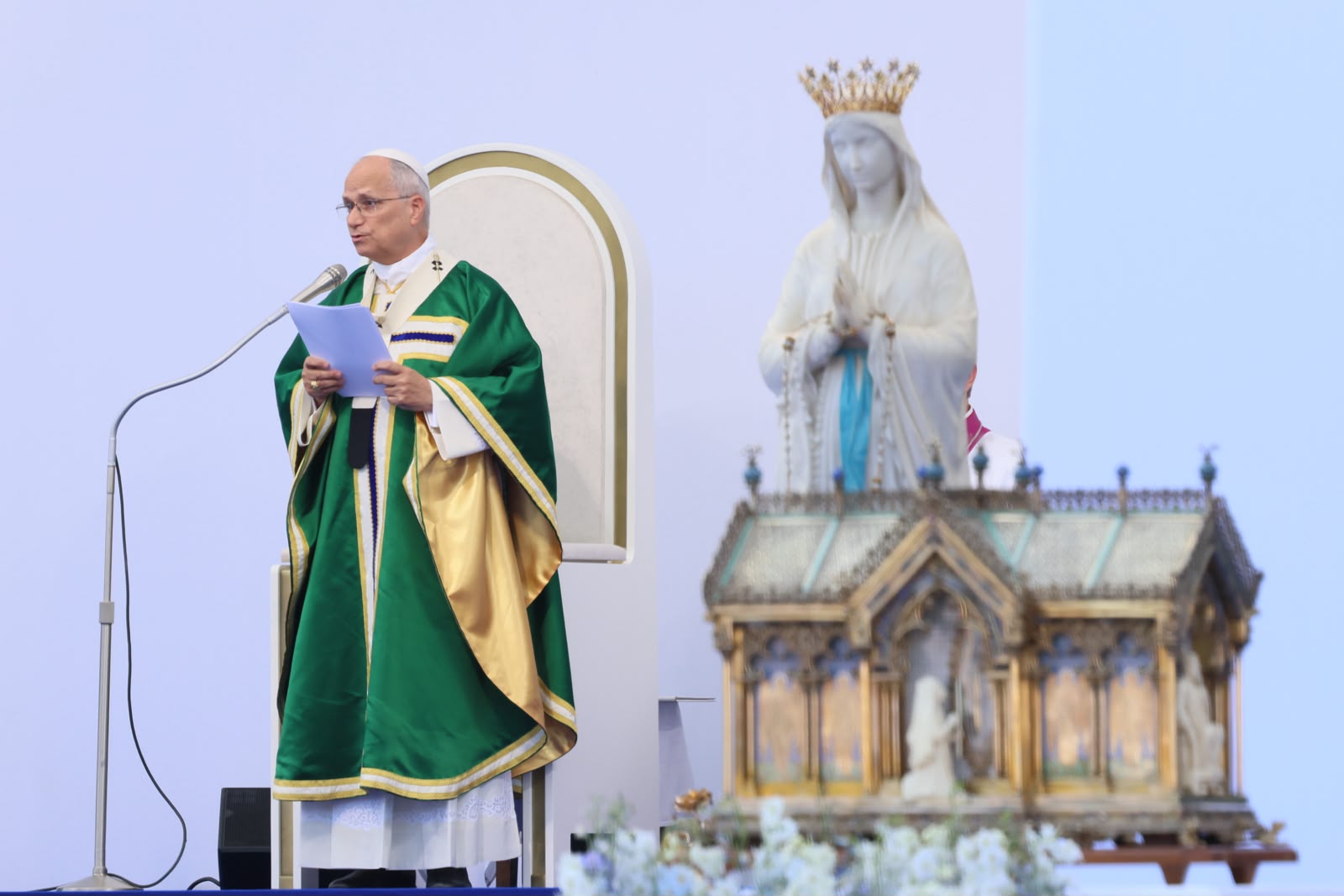
The pontiff spoke about the urgency of repentance and conversion at a Mass on the third day of his visit to France.
![Over 150,000 visitors prepare to welcome Pope Leo in Lourdes #Catholic LOURDES, France — As Pope Leo XIV lands in Paris to begin the first official papal visit to France since 2008, pilgrims, organizers, and business owners in Lourdes are preparing for his arrival in the town expected on Saturday night.Patrick Vinuales, owner of Hôtels Vinuales — the largest hotel chain in Lourdes — told EWTN News: “The average number of people who would be staying in Lourdes is roughly 20,000. But for the Sunday Mass, there will be something like 150,000 people. We expect altogether an attendance of nearly a quarter of a million people over the weekend.”“What I think is very important is the enthusiasm of people. A lot of people have been calling us saying even if they couldnʼt come, they were so happy for the pope to come to Lourdes, to reveal more about the message of Our Lady to Bernadette,” he told EWTN News.Tourism is a big business in Lourdes. The town is widely considered to be the area with the highest concentration of hotels in France outside of Paris — rather unusual for a town with a population of 10,000. Hotel owners have been making the most of the increase in numbers.Joseph Tedesco, owner of the Grand Hôtel Moderne, built in 1896 by the nephew of St. Bernadette, told EWTN News: “Everybody increased their prices… We made a huge effort to welcome individuals, because usually itʼs mostly big dioceses… but this event made more individuals come and thatʼs a completely different type of business.”For the major ceremonies, tourists will need to have registered in advance, or they won’t be allowed into the sanctuary. “The biggest challenge is the people who organized the pilgrimage before they knew the pope was coming. There are a lot of people who donʼt have their ticket,” he said. “Our hotel is in the red area, so it wonʼt be accessible [by car].”Pope John Paul II visited Lourdes in 1983 and 2004. In 2007, Pope Benedict XVI visited, which Tedesco recalls. “Two months after I bought the hotel 18 years ago, Pope Benedict XVI arrived… We didnʼt have all this security for sure. But thatʼs maybe because we didnʼt have the geopolitical problem that we have today.”
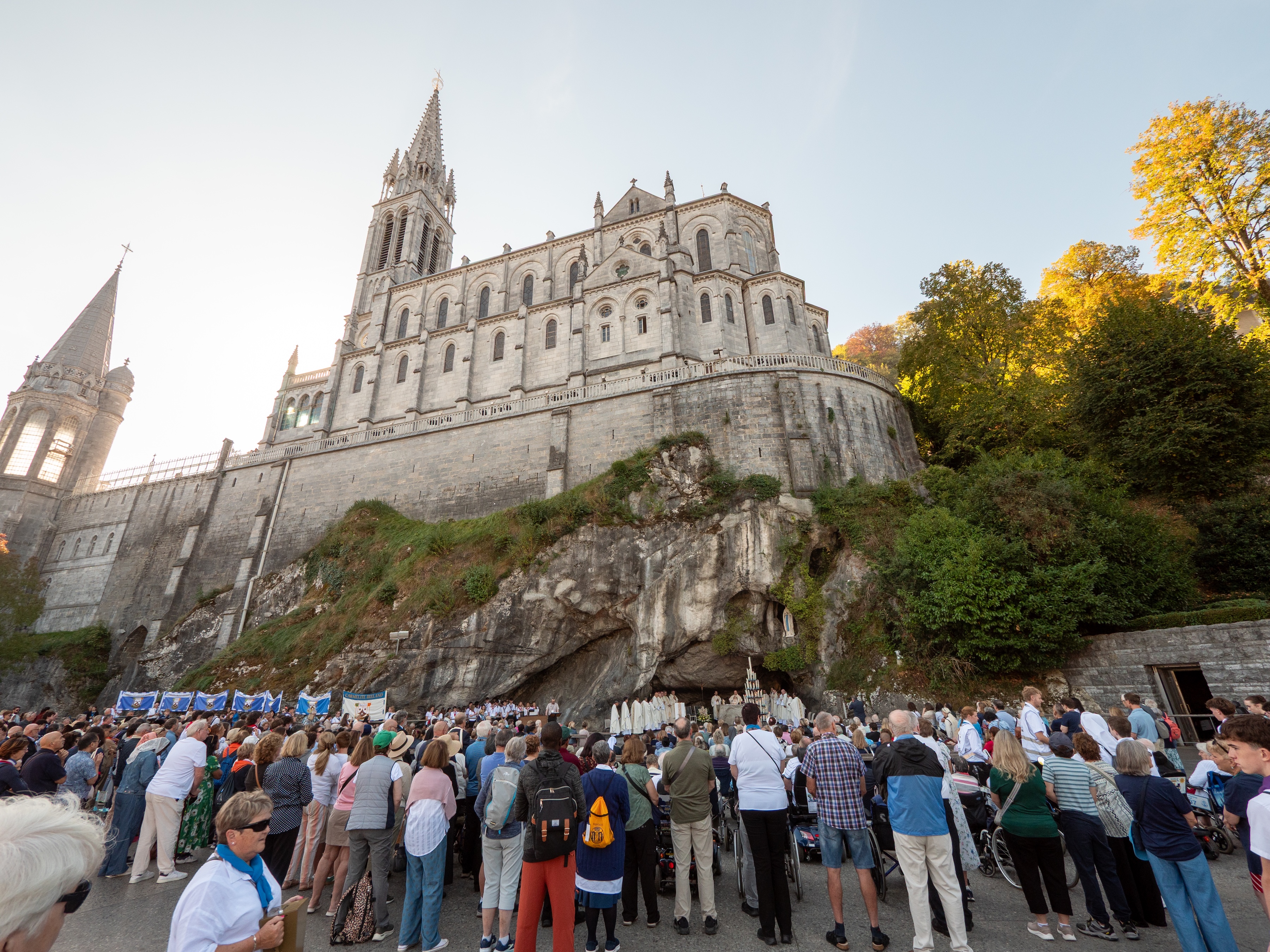
Pilgrims gather to pray before Pope Leo arrives in Lourdes, France, during his papal trip to France Sept. 25-28, 2026. | Credit: Elliot Hartley
“This visit is, first and foremost, a visit by the Successor of Peter to strengthen his brothers in the faith and to address our society as a whole,” said Monsignor Jean-Marc Micas, bishop of Tarbes and Lourdes.During this visit, Pope Leo will pray at the grotto and take part in the torchlight procession, meet with bishops of the French Episcopal Conference, celebrate Holy Mass, and meet the staff and sick community at Accueil Notre Dame, the main hospital for sick pilgrims.He also will meet privately with seven survivors of sexual abuse in the Church — a major focus for critics who argue the Church hasn’t confronted the problem fully.The visit also marks an increase in the number of attendees on organized pilgrimage groups. Most visitors to Lourdes come as part of an organized group, often with their local diocese.Caroline Trainor, a Lourdes organizer for Joe Walsh Tours, told EWTN News she had seen a huge increase in sign-ups. “When they heard that the pope was visiting, they were signing up to come back to be here over the weekend,” she said. “So thatʼs really positive for the future because it brings Lourdes back into the spotlight… Even coming in this morning, you can kind of feel this little ripple of excitement.”Lourdes’ story can be traced back to 1858, when St. Bernadette Soubirous, a 14-year-old peasant girl, had apparitions of Our Lady in a small cave. A shrine was built there, and the Pyrenean town became a pilgrimage site known for its miraculous healings.Paul Eaton, president of Ireland’s national Carmelite pilgrimage, told EWTN News: “It’s just electrifying. You really have to come here to experience it. It’s just something else… weʼre so blessed to have this honor.”“When the news first came out, we thought ‘this is not happening!’ That increased our numbers, which was fantastic… Weʼre very lucky because we have an awful lot of the same people that come with us every year who are actually hooked… They love Lourdes. They really, really do.”Michael Murphy has been coming on pilgrimage to Lourdes for 19 years. He told EWTN News: “Thereʼs a draw that continually brings me back. Itʼs difficult to explain. Itʼs just the serenity and the atmosphere. For the dates and to align with the pope as well, it just made it extra special.”Organized pilgrimages to Lourdes often have two sides. Pilgrims can either join as someone in need of assistance or as a volunteer. Those with learning or physical disabilities spend the week being assisted by volunteers, who help them with their daily needs.Clíona, a first-time pilgrim, told EWTN News: “I heard people describing Lourdes before, but I never expected it just to be like this. Thereʼs something about it. Itʼs like a magical place.”“Itʼs a different experience than Iʼve ever experienced before,” Harry Lynch, another first-time pilgrim, told EWTN News. “I wasnʼt expecting it to be this busy. Everyoneʼs very excited about everything thatʼs about to happen.”Martin has been visiting Lourdes for 20 years from Ireland. He told EWTN News: “Weʼve got more youth coming now than we had years ago, which is great. With the visit of the pope, we’re getting two trips in one! Thereʼs so much excitement, so much talk about it, and itʼs a great thing for everyone. Some people donʼt get the chance to go to Rome, so they’re getting a real run for their money this year.”The visit is expected to provide a huge boost to Lourdes’ economy. Natasha Afonso, a local souvenir shop owner, told EWTN News: “When tourists found out the pope was coming, many delayed their trips to align the dates. So, we lost a lot of business in the middle [of the] season, but now it’s growing again.”“Lourdes is known for its miracles, so it’s good for the publicity, for the young people, and the new generations to come.”](https://unitedyam.com/wp-content/uploads/2026/09/over-150000-visitors-prepare-to-welcome-pope-leo-in-lourdes-catholic-lourdes-france-as-pope-leo-xiv-lands-in-paris-to-begin-the-first-official-papal-visit-to-france-since-2008-pilgrims.jpg "Over 150,000 visitors prepare to welcome Pope Leo in Lourdes #Catholic LOURDES, France — As Pope Leo XIV lands in Paris to begin the first official papal visit to France since 2008, pilgrims, organizers, and business owners in Lourdes are preparing for his arrival in the town expected on Saturday night.Patrick Vinuales, owner of Hôtels Vinuales — the largest hotel chain in Lourdes — told EWTN News: “The average number of people who would be staying in Lourdes is roughly 20,000. But for the Sunday Mass, there will be something like 150,000 people. We expect altogether an attendance of nearly a quarter of a million people over the weekend.”“What I think is very important is the enthusiasm of people. A lot of people have been calling us saying even if they couldnʼt come, they were so happy for the pope to come to Lourdes, to reveal more about the message of Our Lady to Bernadette,” he told EWTN News.Tourism is a big business in Lourdes. The town is widely considered to be the area with the highest concentration of hotels in France outside of Paris — rather unusual for a town with a population of 10,000. Hotel owners have been making the most of the increase in numbers.Joseph Tedesco, owner of the Grand Hôtel Moderne, built in 1896 by the nephew of St. Bernadette, told EWTN News: “Everybody increased their prices… We made a huge effort to welcome individuals, because usually itʼs mostly big dioceses… but this event made more individuals come and thatʼs a completely different type of business.”For the major ceremonies, tourists will need to have registered in advance, or they won’t be allowed into the sanctuary. “The biggest challenge is the people who organized the pilgrimage before they knew the pope was coming. There are a lot of people who donʼt have their ticket,” he said. “Our hotel is in the red area, so it wonʼt be accessible [by car].”Pope John Paul II visited Lourdes in 1983 and 2004. In 2007, Pope Benedict XVI visited, which Tedesco recalls. “Two months after I bought the hotel 18 years ago, Pope Benedict XVI arrived… We didnʼt have all this security for sure. But thatʼs maybe because we didnʼt have the geopolitical problem that we have today.”
Pilgrims gather to pray before Pope Leo arrives in Lourdes, France, during his papal trip to France Sept. 25-28, 2026. | Credit: Elliot Hartley
“This visit is, first and foremost, a visit by the Successor of Peter to strengthen his brothers in the faith and to address our society as a whole,” said Monsignor Jean-Marc Micas, bishop of Tarbes and Lourdes.During this visit, Pope Leo will pray at the grotto and take part in the torchlight procession, meet with bishops of the French Episcopal Conference, celebrate Holy Mass, and meet the staff and sick community at Accueil Notre Dame, the main hospital for sick pilgrims.He also will meet privately with seven survivors of sexual abuse in the Church — a major focus for critics who argue the Church hasn’t confronted the problem fully.The visit also marks an increase in the number of attendees on organized pilgrimage groups. Most visitors to Lourdes come as part of an organized group, often with their local diocese.Caroline Trainor, a Lourdes organizer for Joe Walsh Tours, told EWTN News she had seen a huge increase in sign-ups. “When they heard that the pope was visiting, they were signing up to come back to be here over the weekend,” she said. “So thatʼs really positive for the future because it brings Lourdes back into the spotlight… Even coming in this morning, you can kind of feel this little ripple of excitement.”Lourdes’ story can be traced back to 1858, when St. Bernadette Soubirous, a 14-year-old peasant girl, had apparitions of Our Lady in a small cave. A shrine was built there, and the Pyrenean town became a pilgrimage site known for its miraculous healings.Paul Eaton, president of Ireland’s national Carmelite pilgrimage, told EWTN News: “It’s just electrifying. You really have to come here to experience it. It’s just something else… weʼre so blessed to have this honor.”“When the news first came out, we thought ‘this is not happening!’ That increased our numbers, which was fantastic… Weʼre very lucky because we have an awful lot of the same people that come with us every year who are actually hooked… They love Lourdes. They really, really do.”Michael Murphy has been coming on pilgrimage to Lourdes for 19 years. He told EWTN News: “Thereʼs a draw that continually brings me back. Itʼs difficult to explain. Itʼs just the serenity and the atmosphere. For the dates and to align with the pope as well, it just made it extra special.”Organized pilgrimages to Lourdes often have two sides. Pilgrims can either join as someone in need of assistance or as a volunteer. Those with learning or physical disabilities spend the week being assisted by volunteers, who help them with their daily needs.Clíona, a first-time pilgrim, told EWTN News: “I heard people describing Lourdes before, but I never expected it just to be like this. Thereʼs something about it. Itʼs like a magical place.”“Itʼs a different experience than Iʼve ever experienced before,” Harry Lynch, another first-time pilgrim, told EWTN News. “I wasnʼt expecting it to be this busy. Everyoneʼs very excited about everything thatʼs about to happen.”Martin has been visiting Lourdes for 20 years from Ireland. He told EWTN News: “Weʼve got more youth coming now than we had years ago, which is great. With the visit of the pope, we’re getting two trips in one! Thereʼs so much excitement, so much talk about it, and itʼs a great thing for everyone. Some people donʼt get the chance to go to Rome, so they’re getting a real run for their money this year.”The visit is expected to provide a huge boost to Lourdes’ economy. Natasha Afonso, a local souvenir shop owner, told EWTN News: “When tourists found out the pope was coming, many delayed their trips to align the dates. So, we lost a lot of business in the middle [of the] season, but now it’s growing again.”“Lourdes is known for its miracles, so it’s good for the publicity, for the young people, and the new generations to come.”")
As Pope Leo XIV makes his way to Lourdes later on Sept. 26 as part of his four-day trip to France, pilgrims, local residents, and business owners in the famous town prepare with excitement.
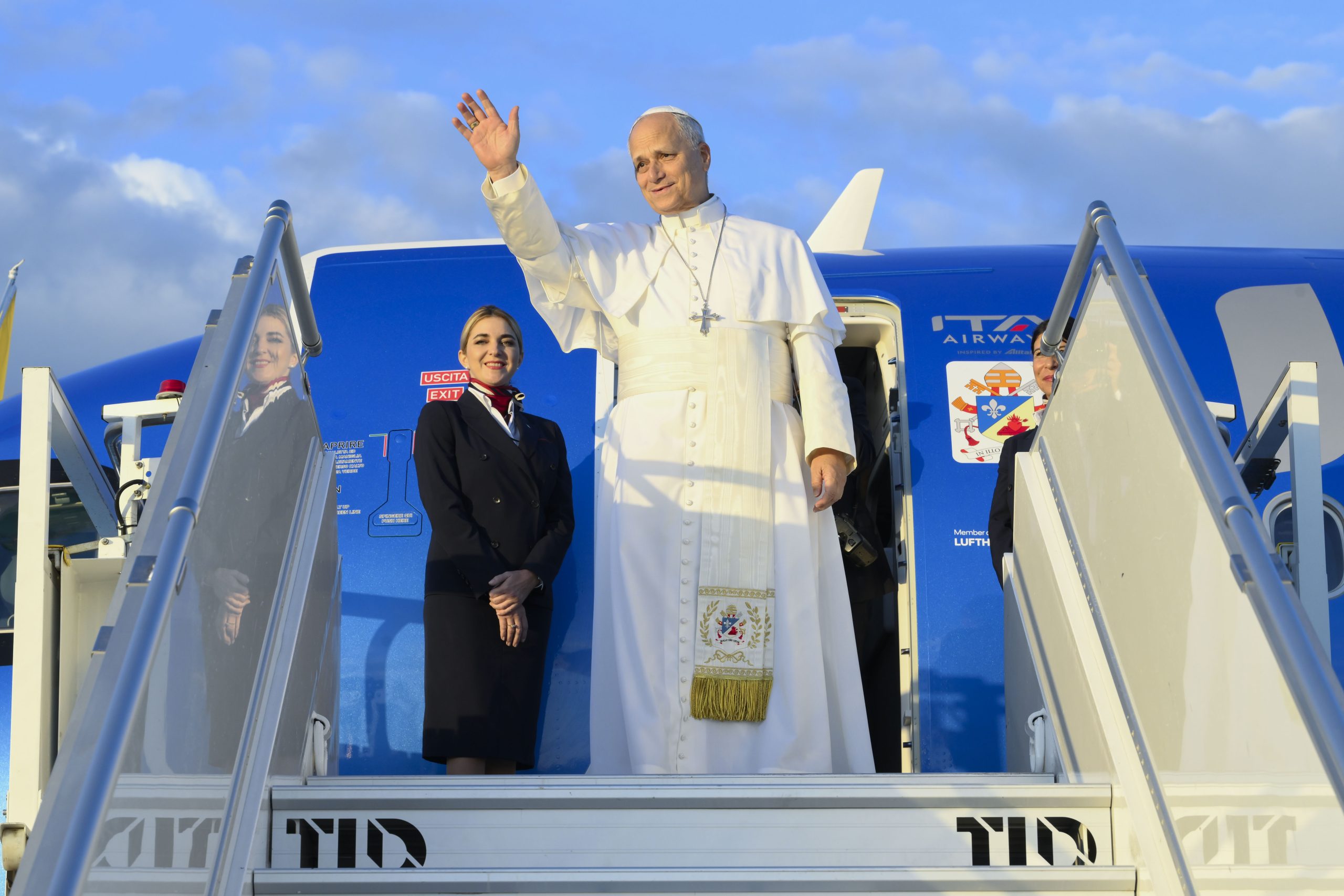
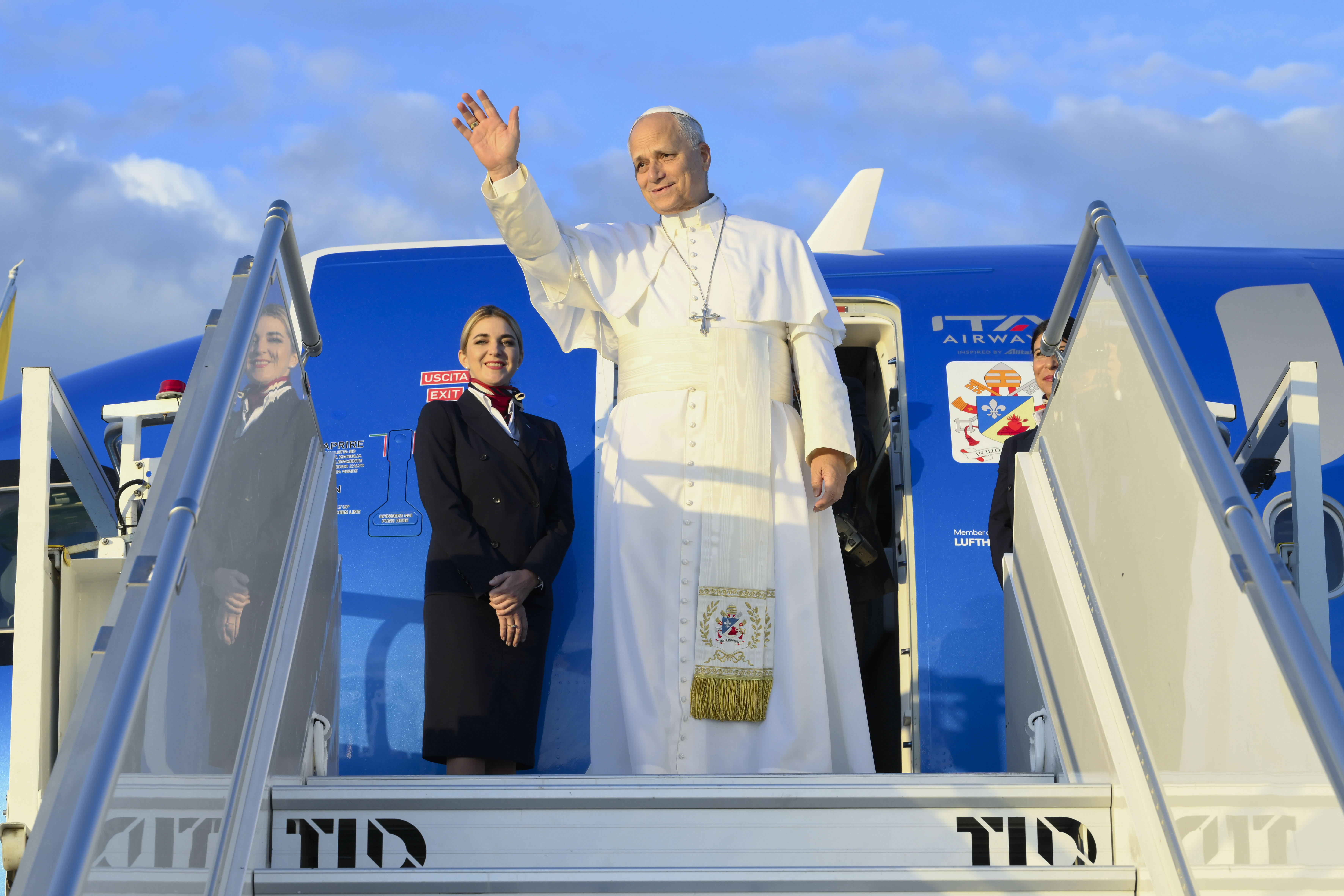
The pontiff is expected to proclaim Catholic social teaching to a secular country showing signs of Christian revival.
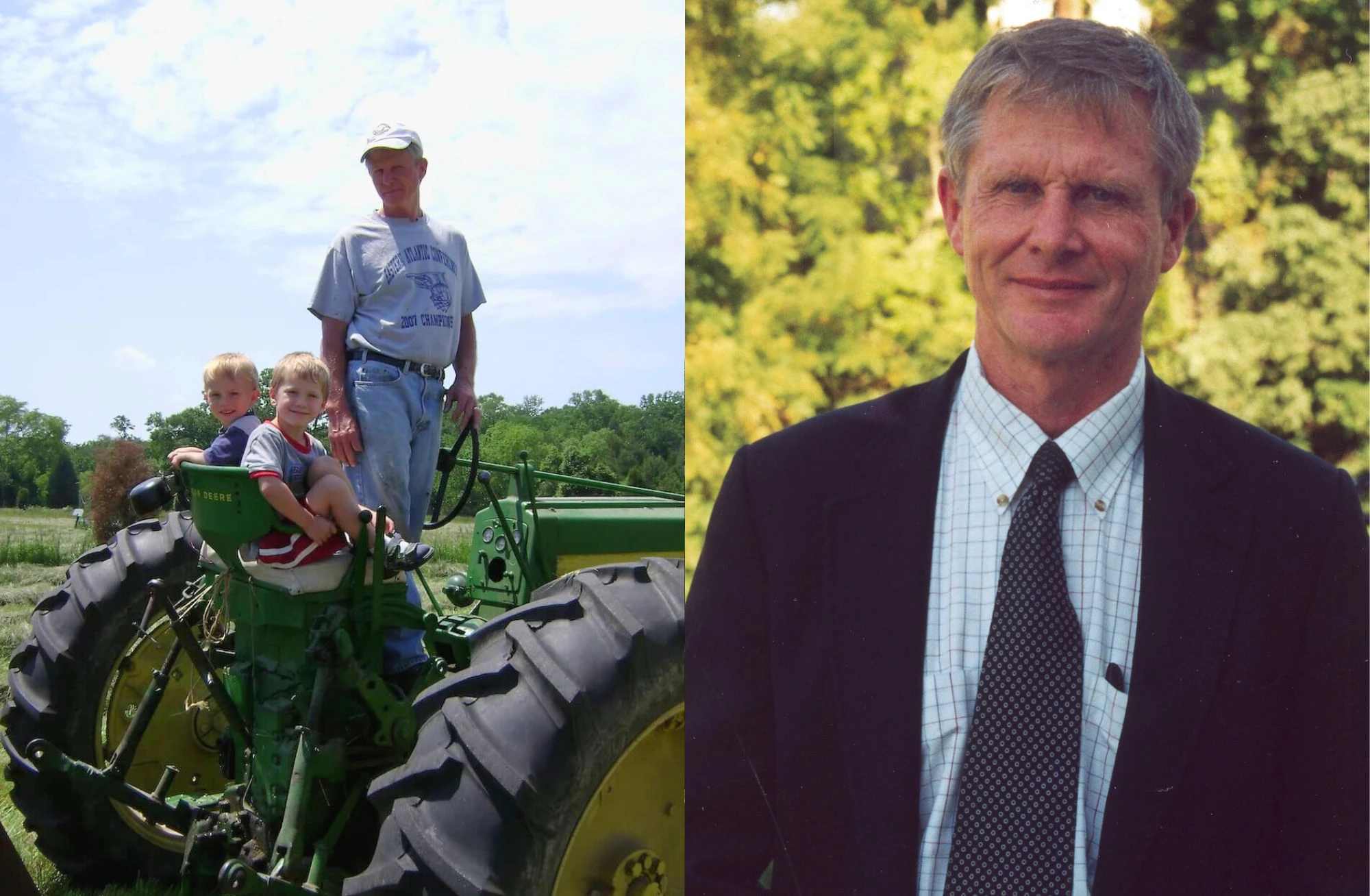
The sainthood cause for Tom Vander Woude, a Catholic father of seven who died saving his youngest son, moves to the information gathering stage.
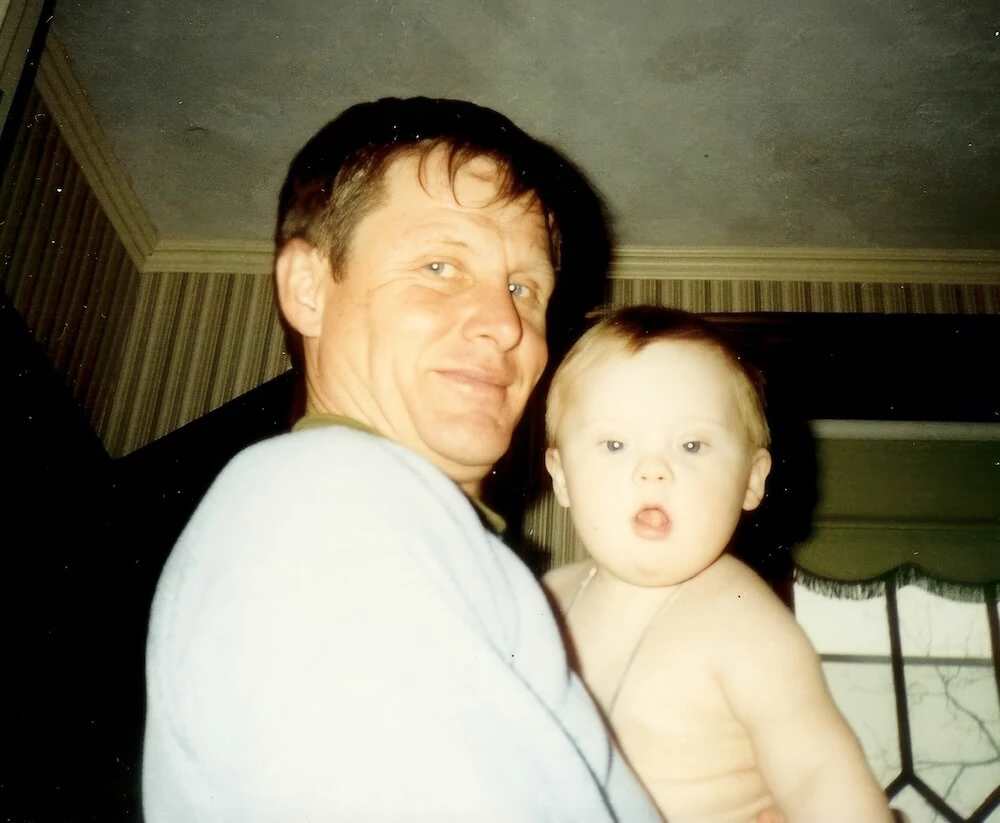
![Vatican vegetable garden goes 100% organic #Catholic A vegetable garden and orchard inside the Vatican walls, which historically provided food for the pope’s household, is now cultivated using exclusively organic farming techniques.The private garden covers almost a tenth of an acre of cultivable land inside the Mater Ecclesiae Monastery property, where Pope Benedict XVI lived during his retirement and now reside cloistered Benedictine nuns from the Abbey of St. Scholastica in Victoria, Argentina.Sometimes known as “the pope’s garden,” the vegetable plot “has always been a defining feature of the Vatican Gardens because, in fact, the Vatican Gardens were originally created primarily for that purpose — to provide sustenance for the [Apostolic] Palace,” Stefano Giampaolo, a forestry expert and head of the Gardens and Environment Service of the Vatican, told EWTN News.Giampaolo explained that now the plot is more accurately understood as the vegetable garden of the Vatican Gardens — an area that covers roughly half of Vatican City at 57 acres.
Mater Ecclesiae Monastery, built inside Vatican City in the 1990s to house nuns who support the ministry of the pope through prayer, has an adjoining vegetable garden and orchard. | Credit: Hannah Brockhaus/EWTN News
The Benedictine nuns at Mater Ecclesiae Monastery, who pray for the pope, eat the fruit and vegetables grown in the garden and use them to make jams and other food preserves. The excess produce is given to a Vatican soup kitchen run by the Missionaries of Charity.The move to biological farming techniques has been underway for several years, partly in response to Pope Francis’ 2015 encyclical Laudato Si’, Giampaolo said.The challenges of organicAccording to Gilberto Bianchi, the gardener responsible for the orchard and vegetable patch since 2008, the Vatican has a “desire to respect nature” in how it cares for the plants and trees on its land.But it’s far from easy.“Clearly, running a completely organic vegetable garden presents challenges, partly because insects are aggressive, and we use natural predators in the soil to control them,” Bianchi said. “No chemical fertilizers or insecticides are used.”He added that soil drainage and water conservation are also challenges.“This type of soil drains very well, so to conserve water, we add coconut fiber to retain moisture. And it’s watered with a drip irrigation system specifically to target the plants and avoid wasting water,” he said.Part of an organic agriculture also means respecting the seasons, he said. “Right now, the winter crops are being planted, while the summer crops are being harvested.”
The fresh produce grown in the vegetable garden and orchard in Vatican City feeds the Benedictine nuns living in the Mater Ecclesiae Monastery and supports the nearby Missionaries of Charity-run soup kitchen. | Credit: Governorate of Vatican City State
The end-of-summer harvest includes tomatoes, eggplants, green beans, zucchini, cucumbers, and peppers, while the fall and winter crop has broccoli, spinach, lettuce, and pumpkins.According to Vatican Media, the garden also includes garlic, basil, and a Peruvian variety of chili peppers known for its intensity. Kiwi plants were also added recently at the request of the Argentinian nuns.Next to the garden is a small orchard of around 15 citrus trees, some of which are 150 years old.“At this time, we’re planting savoy cabbage,” Bianchi said. “In short, whatever is in season. … So whatever is planted is because nature dictates it at that moment. The plants are grown from seed. We don’t use lab-grown plants.”A historic collection of gardensBianchi, who has worked for more than three decades in the Vatican Gardens, “is the one with the most expertise in this field, and he is now passing that knowledge on to a new gardener,” Giampaolo said.The expert gardener is part of a team of around 35 gardeners and administrators who oversee the Vatican’s green spaces and provide the flower arrangements for papal ceremonies.
Stefano Giampaolo, left, head of the Gardens and Environment Service of Vatican City, and expert gardener Gilberto Bianchi, right, the main caretaker of the orchard and vegetable garden commonly known as “the pope’s garden,” share their expertise with EWTN News in the Vatican Gardens on Sept. 9, 2026. | Credit: Hannah Brockhaus/EWTN News
“People expect to see a single garden, but in reality, as the name suggests, they are the Vatican Gardens — a collection of gardens,” Giampaolo said.The Gardens date to the mid-13th century, when Pope Nicolas III moved the papal residence from the Lateran Palace to the Vatican, had the city state’s walls built, and ordered the creation of a lawn, orchard, and “viridarium” — a Roman-style garden with flowerbeds and a fountain.Today, Giampaolo said, “there are countless different species, both trees and flowers. This is because, over time, the gardens have been enriched by donations and the search for specific botanical material, to the point of becoming a true botanical garden.”“Visitors are often struck by the diversity of the spaces — so many different gardens contained within this small area.”Ultimately, he said, the gardeners hope to one day eliminate all synthetic fertilizers and pesticides from their care of the entire Vatican territory.“It’s a process — the transformation of all the Gardens into organic ones,” he said.](https://unitedyam.com/wp-content/uploads/2026/09/vatican-vegetable-garden-goes-100-organic-catholic-a-vegetable-garden-and-orchard-inside-the-vatican-walls-which-historically-provided-food-for-the-popes-household-is-now-cultivated-using-scaled.jpg "Vatican vegetable garden goes 100% organic #Catholic A vegetable garden and orchard inside the Vatican walls, which historically provided food for the pope’s household, is now cultivated using exclusively organic farming techniques.The private garden covers almost a tenth of an acre of cultivable land inside the Mater Ecclesiae Monastery property, where Pope Benedict XVI lived during his retirement and now reside cloistered Benedictine nuns from the Abbey of St. Scholastica in Victoria, Argentina.Sometimes known as “the pope’s garden,” the vegetable plot “has always been a defining feature of the Vatican Gardens because, in fact, the Vatican Gardens were originally created primarily for that purpose — to provide sustenance for the [Apostolic] Palace,” Stefano Giampaolo, a forestry expert and head of the Gardens and Environment Service of the Vatican, told EWTN News.Giampaolo explained that now the plot is more accurately understood as the vegetable garden of the Vatican Gardens — an area that covers roughly half of Vatican City at 57 acres.
Mater Ecclesiae Monastery, built inside Vatican City in the 1990s to house nuns who support the ministry of the pope through prayer, has an adjoining vegetable garden and orchard. | Credit: Hannah Brockhaus/EWTN News
The Benedictine nuns at Mater Ecclesiae Monastery, who pray for the pope, eat the fruit and vegetables grown in the garden and use them to make jams and other food preserves. The excess produce is given to a Vatican soup kitchen run by the Missionaries of Charity.The move to biological farming techniques has been underway for several years, partly in response to Pope Francis’ 2015 encyclical Laudato Si’, Giampaolo said.The challenges of organicAccording to Gilberto Bianchi, the gardener responsible for the orchard and vegetable patch since 2008, the Vatican has a “desire to respect nature” in how it cares for the plants and trees on its land.But it’s far from easy.“Clearly, running a completely organic vegetable garden presents challenges, partly because insects are aggressive, and we use natural predators in the soil to control them,” Bianchi said. “No chemical fertilizers or insecticides are used.”He added that soil drainage and water conservation are also challenges.“This type of soil drains very well, so to conserve water, we add coconut fiber to retain moisture. And it’s watered with a drip irrigation system specifically to target the plants and avoid wasting water,” he said.Part of an organic agriculture also means respecting the seasons, he said. “Right now, the winter crops are being planted, while the summer crops are being harvested.”
The fresh produce grown in the vegetable garden and orchard in Vatican City feeds the Benedictine nuns living in the Mater Ecclesiae Monastery and supports the nearby Missionaries of Charity-run soup kitchen. | Credit: Governorate of Vatican City State
The end-of-summer harvest includes tomatoes, eggplants, green beans, zucchini, cucumbers, and peppers, while the fall and winter crop has broccoli, spinach, lettuce, and pumpkins.According to Vatican Media, the garden also includes garlic, basil, and a Peruvian variety of chili peppers known for its intensity. Kiwi plants were also added recently at the request of the Argentinian nuns.Next to the garden is a small orchard of around 15 citrus trees, some of which are 150 years old.“At this time, we’re planting savoy cabbage,” Bianchi said. “In short, whatever is in season. … So whatever is planted is because nature dictates it at that moment. The plants are grown from seed. We don’t use lab-grown plants.”A historic collection of gardensBianchi, who has worked for more than three decades in the Vatican Gardens, “is the one with the most expertise in this field, and he is now passing that knowledge on to a new gardener,” Giampaolo said.The expert gardener is part of a team of around 35 gardeners and administrators who oversee the Vatican’s green spaces and provide the flower arrangements for papal ceremonies.
Stefano Giampaolo, left, head of the Gardens and Environment Service of Vatican City, and expert gardener Gilberto Bianchi, right, the main caretaker of the orchard and vegetable garden commonly known as “the pope’s garden,” share their expertise with EWTN News in the Vatican Gardens on Sept. 9, 2026. | Credit: Hannah Brockhaus/EWTN News
“People expect to see a single garden, but in reality, as the name suggests, they are the Vatican Gardens — a collection of gardens,” Giampaolo said.The Gardens date to the mid-13th century, when Pope Nicolas III moved the papal residence from the Lateran Palace to the Vatican, had the city state’s walls built, and ordered the creation of a lawn, orchard, and “viridarium” — a Roman-style garden with flowerbeds and a fountain.Today, Giampaolo said, “there are countless different species, both trees and flowers. This is because, over time, the gardens have been enriched by donations and the search for specific botanical material, to the point of becoming a true botanical garden.”“Visitors are often struck by the diversity of the spaces — so many different gardens contained within this small area.”Ultimately, he said, the gardeners hope to one day eliminate all synthetic fertilizers and pesticides from their care of the entire Vatican territory.“It’s a process — the transformation of all the Gardens into organic ones,” he said.")
The move to biological farming techniques has been underway for several years in response to Pope Francis’ 2015 encyclical Laudato Si’.

Chad Pecknold, a longtime professor at The Catholic University of America, has begun working for the government agency that oversees immigration enforcement.

![U.S. bishops urge Supreme Court to allow communities to regulate firearms under Second Amendment #Catholic The U.S. Conference of Catholic Bishops is urging the U.S. Supreme Court to allow local communities to regulate firearm ownership, weighing in on a high-profile federal case that could significantly reshape the nation’s gun laws. The case before the high court, Viramontes v. Cook County, concerns a regulation enacted by Cook County, Illinois, banning more than 100 types of semiautomatic weapons, including the popular AR-15 platform.Two plaintiffs, Cutberto Viramontes and Christopher Khaya, sued to dispute the regulations under the Second and 14th amendments to the U.S. Constitution. The lawsuit argues that the Supreme Court should rule on the case “to guarantee fundamental Second Amendment rights and to address the confusion in the lower courts” regarding Supreme Court precedent.In their amicus brief regarding the legal dispute, the U.S. bishops urge the court to “[preserve] the traditional authority of political communities to regulate weapons.” The “autonomy of local authority” is a significant part of “America’s historical tradition of federalism,” the bishops write, comparing it to the long-standing Catholic principle of subsidiarity, which holds that the authority closest to a local need is best suited to tackle the issue. The principle of federalism does not allow for the wholesale redefinition of the Second Amendment, the bishops write. But, they argue, a “uniform constitutional standard need not require uniform firearm policy.” Guns have historically been regulated differently throughout the U.S. depending on the locality, the bishops say, and the U.S. Constitution “does not require every community to exercise … its authority to regulate weapons identically.” The prelates further argue that modern advances in weaponry mean firearms like AR-15s are “fundamentally dissimilar” from the standards of the 18th century; such weapons are “dangerous and unusual,” the bishops suggest, and are thus open to reasonable regulation. Though the issue was brought to trial due to the local regulation, the ultimate question before the Supreme Court is whether the Second Amendment “guarantee[s] the right to possess [the] AR-15 platform and similar semiautomatic rifles.” In the past 20 years the Supreme Court has significantly affirmed Second Amendment rights under the U.S. Constitution, including in the landmark 2008 case District of Columbia v. Heller, which upheld the right to own a firearm unconnected with service in a state militia. Those rights were broadly expanded in subsequent Supreme Court rulings such as 2010’s McDonald v. Chicago and the 2022 decision NYSRPA v. Bruen. The latter decision upheld a constitutional right to carry firearms for self-defense. In the 2024 decision United States v. Rahimi, on the other hand, the Supreme Court ruled that the Second Amendment does allow for individuals to be disarmed if they have been found to pose a credible threat to the physical safety of someone else.](https://unitedyam.com/wp-content/uploads/2026/09/u-s-bishops-urge-supreme-court-to-allow-communities-to-regulate-firearms-under-second-amendment-catholic-the-u-s-conference-of-catholic-bishops-is-urging-the-u-s-supreme-court-to-allow-local-commu.jpg "U.S. bishops urge Supreme Court to allow communities to regulate firearms under Second Amendment #Catholic The U.S. Conference of Catholic Bishops is urging the U.S. Supreme Court to allow local communities to regulate firearm ownership, weighing in on a high-profile federal case that could significantly reshape the nation’s gun laws. The case before the high court, Viramontes v. Cook County, concerns a regulation enacted by Cook County, Illinois, banning more than 100 types of semiautomatic weapons, including the popular AR-15 platform.Two plaintiffs, Cutberto Viramontes and Christopher Khaya, sued to dispute the regulations under the Second and 14th amendments to the U.S. Constitution. The lawsuit argues that the Supreme Court should rule on the case “to guarantee fundamental Second Amendment rights and to address the confusion in the lower courts” regarding Supreme Court precedent.In their amicus brief regarding the legal dispute, the U.S. bishops urge the court to “[preserve] the traditional authority of political communities to regulate weapons.” The “autonomy of local authority” is a significant part of “America’s historical tradition of federalism,” the bishops write, comparing it to the long-standing Catholic principle of subsidiarity, which holds that the authority closest to a local need is best suited to tackle the issue. The principle of federalism does not allow for the wholesale redefinition of the Second Amendment, the bishops write. But, they argue, a “uniform constitutional standard need not require uniform firearm policy.” Guns have historically been regulated differently throughout the U.S. depending on the locality, the bishops say, and the U.S. Constitution “does not require every community to exercise … its authority to regulate weapons identically.” The prelates further argue that modern advances in weaponry mean firearms like AR-15s are “fundamentally dissimilar” from the standards of the 18th century; such weapons are “dangerous and unusual,” the bishops suggest, and are thus open to reasonable regulation. Though the issue was brought to trial due to the local regulation, the ultimate question before the Supreme Court is whether the Second Amendment “guarantee[s] the right to possess [the] AR-15 platform and similar semiautomatic rifles.” In the past 20 years the Supreme Court has significantly affirmed Second Amendment rights under the U.S. Constitution, including in the landmark 2008 case District of Columbia v. Heller, which upheld the right to own a firearm unconnected with service in a state militia. Those rights were broadly expanded in subsequent Supreme Court rulings such as 2010’s McDonald v. Chicago and the 2022 decision NYSRPA v. Bruen. The latter decision upheld a constitutional right to carry firearms for self-defense. In the 2024 decision United States v. Rahimi, on the other hand, the Supreme Court ruled that the Second Amendment does allow for individuals to be disarmed if they have been found to pose a credible threat to the physical safety of someone else.")
The Supreme Court is set to consider whether or not Americans are permitted to possess AR-15 rifles and similar firearms.

| Picture of the day |
|---|
,_Windsor,_Ontario,_2025-08-31_01.jpg)
|
|
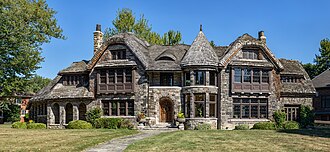
Devonshire Lodge (Low-Martin House), Windsor, Ontario, Canada. Commissioned by the rum-runner Harry Low in 1927, the building was designed in the style of a Cotswold cottage and completed in 1928. It served as the home of Member of Parliament Paul Martin Sr. for almost three decades. It was designated under the Ontario Heritage Act in 2008.
|