2009

SSPX rejects Vatican’s excommunication, calls it ‘objectively’ unjust and invalid #Catholic The Society of St. Pius X (SSPX), whose members are known as “Lefebvrians,” rejected the recent excommunications decreed by the Vatican after consecrating four bishops without papal authorization on July 1 and asserted that the sanctions imposed are “objectively unjust and invalid.”In a letter addressed to Pope Leo XIV, released on July 3, Father Davide Pagliarani, superior general of the SSPX, justified the episcopal consecrations that prompted the Vatican’s decree declaring the group to be in schism as “an extreme measure to save souls, amid the doctrinal and moral confusion in which the Church finds itself.”“We in no way intend to replace the Church, and our sole purpose is to remain faithful to her,” wrote Pagliarani, who leads the group founded in 1970 by Archbishop Marcel Lefebvre, who died in 1991.The group founded by Lefebvre aims to preserve the traditional liturgy as it existed prior to the reforms implemented after the Second Vatican Council while maintaining its opposition to aspects of the council’s teachings on ecumenism, religious freedom, and collegiality.Lefebvre was excommunicated in 1988 after ordaining, without the permission of Pope John Paul II, four bishops: Alfonso de Galarreta of Spain, Bernard Fellay of Switzerland, Richard Williamson of England, and Bernard Tissier de Mallerais of France.Amid attempts to build bridges of dialogue with the SSPX, Pope Benedict XVI lifted the excommunications in 2009 against the four bishops consecrated by Lefebvre.Tissier de Mallerais and Williamson died in 2024 and 2025, respectively. Galarreta and Fellay, on the other hand, participated in the recent consecration of four new bishops on July 1, for which they were excommunicated once again.‘We had asked for bread’Using as the central theme of his argument the passage from the Gospel according to St. Luke (11:11–13), in which Jesus reminds his disciples that “if you, who are evil, know how to give good gifts to your children, how much more will the Father in heaven give the Holy Spirit to those who ask him,” Pagliarani asserted that “we had asked for bread — that is, a little understanding in the face of a sincere case of conscience, a gesture of fatherly compassion.”“Unfortunately, we have received a stone,” he continued, noting that, instead of “fish” — that is, “the possibility of temporarily obtaining the necessary means to continue forming good priests … unfortunately, we have received a snake.”“We had asked for an egg, promising to return it as soon as possible,” he added. He affirmed that “the holy tradition we preserve in our souls belongs to the Church, our Mother” but “unfortunately, we have received a scorpion.”The superior of the SSPX assured Leo XIV that the society does not accept the Vatican’s sanctions “in a spirit of bitterness or rebellion” but rather feel encouraged “to love the holy Church even more and to attend to her needs more than ever with all our strength.”“We are certain that one day you yourself or one of your successors will wish to embrace the program of St. Pius X: ‘To restore all things in Christ,’” he said, noting that “on that day, the Holy Father will discover, with great joy and deep consolation, authentically Catholic souls — souls whose bond with the Church was never founded on the shifting sands of ambiguous dialogue but on the rock of Peter’s faith.”‘Turn back!’: Leo XIV’s plea the SSPX ignoredIn his letter, Pagliarani makes no mention of the Catholic Church’s repeated calls for dialogue, which date back to the pontificate of St. John Paul II with the creation of the Ecclesia Dei Commission and which reached one of their highest points in Benedict XVI’s decision to lift the excommunications of the four bishops consecrated by Lefebvre.Pope Francis also reached out to the SSPX with decisions such as allowing sacramental confessions with its priests to be valid and lawful during the Jubilee of Mercy in 2016 — a decision he later extended beyond that year.Pagliarani also did not address Pope Leo XIV’s direct plea to the Society of St. Pius X, asking the group not to commit “a schismatic act.”“In this spirit, and filled with Christian affection, I implore and ask you with all my heart: Turn back!” the Holy Father wrote to them on June 30.“I urge you to carefully consider the spiritual good of the faithful, because the schismatic act you would carry out would deprive them of the lawful — and in some cases, even valid — reception of the sacraments that they love and seek for their own sanctification,” the pope stated.This story was first published by ACI Prensa, the Spanish-language sister service of EWTN News. It has been translated and adapted by EWTN News English.

SSPX rejects Vatican’s excommunication, calls it ‘objectively’ unjust and invalid #Catholic The Society of St. Pius X (SSPX), whose members are known as “Lefebvrians,” rejected the recent excommunications decreed by the Vatican after consecrating four bishops without papal authorization on July 1 and asserted that the sanctions imposed are “objectively unjust and invalid.”In a letter addressed to Pope Leo XIV, released on July 3, Father Davide Pagliarani, superior general of the SSPX, justified the episcopal consecrations that prompted the Vatican’s decree declaring the group to be in schism as “an extreme measure to save souls, amid the doctrinal and moral confusion in which the Church finds itself.”“We in no way intend to replace the Church, and our sole purpose is to remain faithful to her,” wrote Pagliarani, who leads the group founded in 1970 by Archbishop Marcel Lefebvre, who died in 1991.The group founded by Lefebvre aims to preserve the traditional liturgy as it existed prior to the reforms implemented after the Second Vatican Council while maintaining its opposition to aspects of the council’s teachings on ecumenism, religious freedom, and collegiality.Lefebvre was excommunicated in 1988 after ordaining, without the permission of Pope John Paul II, four bishops: Alfonso de Galarreta of Spain, Bernard Fellay of Switzerland, Richard Williamson of England, and Bernard Tissier de Mallerais of France.Amid attempts to build bridges of dialogue with the SSPX, Pope Benedict XVI lifted the excommunications in 2009 against the four bishops consecrated by Lefebvre.Tissier de Mallerais and Williamson died in 2024 and 2025, respectively. Galarreta and Fellay, on the other hand, participated in the recent consecration of four new bishops on July 1, for which they were excommunicated once again.‘We had asked for bread’Using as the central theme of his argument the passage from the Gospel according to St. Luke (11:11–13), in which Jesus reminds his disciples that “if you, who are evil, know how to give good gifts to your children, how much more will the Father in heaven give the Holy Spirit to those who ask him,” Pagliarani asserted that “we had asked for bread — that is, a little understanding in the face of a sincere case of conscience, a gesture of fatherly compassion.”“Unfortunately, we have received a stone,” he continued, noting that, instead of “fish” — that is, “the possibility of temporarily obtaining the necessary means to continue forming good priests … unfortunately, we have received a snake.”“We had asked for an egg, promising to return it as soon as possible,” he added. He affirmed that “the holy tradition we preserve in our souls belongs to the Church, our Mother” but “unfortunately, we have received a scorpion.”The superior of the SSPX assured Leo XIV that the society does not accept the Vatican’s sanctions “in a spirit of bitterness or rebellion” but rather feel encouraged “to love the holy Church even more and to attend to her needs more than ever with all our strength.”“We are certain that one day you yourself or one of your successors will wish to embrace the program of St. Pius X: ‘To restore all things in Christ,’” he said, noting that “on that day, the Holy Father will discover, with great joy and deep consolation, authentically Catholic souls — souls whose bond with the Church was never founded on the shifting sands of ambiguous dialogue but on the rock of Peter’s faith.”‘Turn back!’: Leo XIV’s plea the SSPX ignoredIn his letter, Pagliarani makes no mention of the Catholic Church’s repeated calls for dialogue, which date back to the pontificate of St. John Paul II with the creation of the Ecclesia Dei Commission and which reached one of their highest points in Benedict XVI’s decision to lift the excommunications of the four bishops consecrated by Lefebvre.Pope Francis also reached out to the SSPX with decisions such as allowing sacramental confessions with its priests to be valid and lawful during the Jubilee of Mercy in 2016 — a decision he later extended beyond that year.Pagliarani also did not address Pope Leo XIV’s direct plea to the Society of St. Pius X, asking the group not to commit “a schismatic act.”“In this spirit, and filled with Christian affection, I implore and ask you with all my heart: Turn back!” the Holy Father wrote to them on June 30.“I urge you to carefully consider the spiritual good of the faithful, because the schismatic act you would carry out would deprive them of the lawful — and in some cases, even valid — reception of the sacraments that they love and seek for their own sanctification,” the pope stated.This story was first published by ACI Prensa, the Spanish-language sister service of EWTN News. It has been translated and adapted by EWTN News English.

In a letter addressed to Pope Leo XIV, released on July 3, Father Davide Pagliarani, superior general of the SSPX, justified the episcopal consecrations that prompted the Vatican’s decree.

Read More
Former Russian Orthodox ‘foreign minister’ freed after Czech drug probe #Catholic Czech police arrested Metropolitan Hilarion, a prominent clergyman of the Russian Orthodox Church, on suspicion of drug possession during a vehicle stop on May 24. Officers acted “on anonymous information” about the alleged “transportation of narcotics and psychotropic substances.”A few grams of an unidentified substance were found in the vehicle, though the discovery “does not answer the central question: how the items ended up in the vehicle,” Hilarion said, denying “any involvement in the illegal possession or transportation of prohibited substances.”He was released May 26 after protests from the Russian Ministry of Foreign Affairs, which called the detention a “deliberate, orchestrated provocation” and summoned a Czech diplomat in Moscow. The Russian Orthodox Church likewise defended him, saying the incident “looks like a classic farce” since drug smuggling is often used by “unscrupulous police officers around the world.”No charges have been brought, and Hilarion is free without restrictions while the investigation continues, according to a statement on his Telegram account. His team also called the arrest “a provocation,” claiming he had received anonymous death threats demanding he leave the country.Who is Hilarion?Metropolitan Hilarion, whose secular name is Grigory Alfeyev, headed the Moscow Patriarchateʼs Department for External Church Relations from 2009 to 2022, a role often described as the Russian Orthodox Churchʼs “foreign minister.” He was widely regarded as a close ally of Patriarch Kirill and a possible successor.In June 2022, he was removed from the post and appointed to the Budapest diocese, a move widely interpreted as a demotion. During Pope Francis' apostolic trip to Budapest in April 2023, the two held a private meeting at the apostolic nunciature.In July 2024, Hilarion was accused of sexual harassment by George Suzuki, a former personal attendant. Hilarion denied the allegations. The Holy Synod of the Russian Orthodox Church subsequently declared “the inconsistency of the nature of his relations with his immediate environment and his life with the image of a monk and clergyman” and removed him from the Budapest diocese on Dec. 27, 2024. He has since been serving at the Church of Sts. Peter and Paul in Karlovy Vary, a spa town in western Czech Republic.Rising tensions over the Russian Orthodox Church in Czech RepublicSergei Chapnin, a Russian church affairs scholar at Fordham University and former employee of the Moscow Patriarchate, offered two possible explanations for the incident. First, Hilarion may serve “as a high-level courier” who “moves sensitive documents and other items around Western Europe” since “Russian diplomats are closely monitored and constrained in their movements.” Second, Hilarion was operating “inside a very rough political and ecclesiastical game … over assets and influence” involving local Orthodox communities.The Church of Sts. Peter and Paul was recently registered under the Russian Orthodox Church in Hungary to prevent Czech authorities from freezing Russian assets. Patriarch Kirill, the churchʼs head, is personally listed on the Czech national sanctions list for his support of Russiaʼs invasion of Ukraine.Concerns about the churchʼs role in Czech Republic have been escalating. The Czech security agencyʼs annual report said the Russian Orthodox Churchʼs local representatives are loyal to the Moscow leadership and their “support for the Russian official line is evident.”A study titled “Security Risks of the Orthodox Church,” published by the Czech Academy of Sciences in 2025, called for systematic monitoring of the Russian Orthodox Church in the country. The authors recommended investigating “activities with regard to the danger of money laundering, purposeful export of funds and property, smuggling of goods and people, passing information to the enemy, for example the Russian side, [and] influencing the opinions of Czech society through social networks.”The study also noted that the Church of Sts. Peter and Paul in Karlovy Vary allegedly hosted meetings involving Russian military intelligence (GRU) officials.In a related case, a Prague court recently convicted former Orthodox abbess Taťána Hanhur for the unauthorized transfer of a monastery and property worth 73 million Czech crowns (approximately $3.2 million). The property had belonged to the autocephalous Orthodox Church of the Czech Lands and Slovakia.

Former Russian Orthodox ‘foreign minister’ freed after Czech drug probe #Catholic Czech police arrested Metropolitan Hilarion, a prominent clergyman of the Russian Orthodox Church, on suspicion of drug possession during a vehicle stop on May 24. Officers acted “on anonymous information” about the alleged “transportation of narcotics and psychotropic substances.”A few grams of an unidentified substance were found in the vehicle, though the discovery “does not answer the central question: how the items ended up in the vehicle,” Hilarion said, denying “any involvement in the illegal possession or transportation of prohibited substances.”He was released May 26 after protests from the Russian Ministry of Foreign Affairs, which called the detention a “deliberate, orchestrated provocation” and summoned a Czech diplomat in Moscow. The Russian Orthodox Church likewise defended him, saying the incident “looks like a classic farce” since drug smuggling is often used by “unscrupulous police officers around the world.”No charges have been brought, and Hilarion is free without restrictions while the investigation continues, according to a statement on his Telegram account. His team also called the arrest “a provocation,” claiming he had received anonymous death threats demanding he leave the country.Who is Hilarion?Metropolitan Hilarion, whose secular name is Grigory Alfeyev, headed the Moscow Patriarchateʼs Department for External Church Relations from 2009 to 2022, a role often described as the Russian Orthodox Churchʼs “foreign minister.” He was widely regarded as a close ally of Patriarch Kirill and a possible successor.In June 2022, he was removed from the post and appointed to the Budapest diocese, a move widely interpreted as a demotion. During Pope Francis' apostolic trip to Budapest in April 2023, the two held a private meeting at the apostolic nunciature.In July 2024, Hilarion was accused of sexual harassment by George Suzuki, a former personal attendant. Hilarion denied the allegations. The Holy Synod of the Russian Orthodox Church subsequently declared “the inconsistency of the nature of his relations with his immediate environment and his life with the image of a monk and clergyman” and removed him from the Budapest diocese on Dec. 27, 2024. He has since been serving at the Church of Sts. Peter and Paul in Karlovy Vary, a spa town in western Czech Republic.Rising tensions over the Russian Orthodox Church in Czech RepublicSergei Chapnin, a Russian church affairs scholar at Fordham University and former employee of the Moscow Patriarchate, offered two possible explanations for the incident. First, Hilarion may serve “as a high-level courier” who “moves sensitive documents and other items around Western Europe” since “Russian diplomats are closely monitored and constrained in their movements.” Second, Hilarion was operating “inside a very rough political and ecclesiastical game … over assets and influence” involving local Orthodox communities.The Church of Sts. Peter and Paul was recently registered under the Russian Orthodox Church in Hungary to prevent Czech authorities from freezing Russian assets. Patriarch Kirill, the churchʼs head, is personally listed on the Czech national sanctions list for his support of Russiaʼs invasion of Ukraine.Concerns about the churchʼs role in Czech Republic have been escalating. The Czech security agencyʼs annual report said the Russian Orthodox Churchʼs local representatives are loyal to the Moscow leadership and their “support for the Russian official line is evident.”A study titled “Security Risks of the Orthodox Church,” published by the Czech Academy of Sciences in 2025, called for systematic monitoring of the Russian Orthodox Church in the country. The authors recommended investigating “activities with regard to the danger of money laundering, purposeful export of funds and property, smuggling of goods and people, passing information to the enemy, for example the Russian side, [and] influencing the opinions of Czech society through social networks.”The study also noted that the Church of Sts. Peter and Paul in Karlovy Vary allegedly hosted meetings involving Russian military intelligence (GRU) officials.In a related case, a Prague court recently convicted former Orthodox abbess Taťána Hanhur for the unauthorized transfer of a monastery and property worth 73 million Czech crowns (approximately $3.2 million). The property had belonged to the autocephalous Orthodox Church of the Czech Lands and Slovakia.

Metropolitan Hilarion, once tipped as successor to Patriarch Kirill, was released without charges after Czech police found an unidentified substance in his vehicle.

Read More
Picture of the day


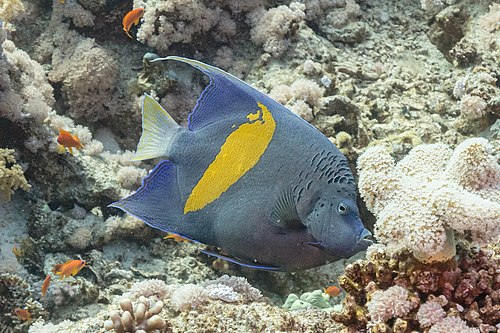
Yellowbar angelfish (Pomacanthus maculosus), Ras Muhammad National Park, Red Sea, Egypt. This marine angelfish is distributed throughout the Persian Gulf, the northwestern Indian Ocean, and the Red Sea south to 19°S. In 2009 it was recorded off the coast of Lebanon in the eastern Mediterranean, probably as a result of Lessepsian migration from the Red Sea through the Suez Canal. Pomacanthus maculosus is found at depths of between 4 and 50 metres (13 and 164 ft). It is a solitary species that lives in sheltered areas, often where there is a mixture of coral and silt. Their diet is dominated by sea sponges and tunicates, although other invertebrates will be eaten opportunistically. The females attain sexual maturity when the reach around 5.5 years of age and a total length of 21.6 centimetres (8.5 in). The maximum longevity is thought to be 36 years old. They are protogynous hermaphrodites and the older females can change sex to become males when there is a shortage of males. The larvae are planktonic. The yellowbar angelfish is occasionally collected for the aquarium trade and in some parts of the Persian Gulf it has been recorded in fish markets.
 #ImageOfTheDay
Picture of the day
Yellowbar angelfish (Pomacanthus maculosus), Ras Muhammad National Park, Red Sea, Egypt. This marine angelfish is distributed throughout the Persian Gulf, the northwestern Indian Ocean, and the Red Sea south to 19°S. In 2009 it was recorded off the coast of Lebanon in the eastern Mediterranean, probably as a result of Lessepsian migration from the Red Sea through the Suez Canal. Pomacanthus maculosus is found at depths of between 4 and 50 metres (13 and 164 ft). It is a solitary species that lives in sheltered areas, often where there is a mixture of coral and silt. Their diet is dominated by sea sponges and tunicates, although other invertebrates will be eaten opportunistically. The females attain sexual maturity when the reach around 5.5 years of age and a total length of 21.6 centimetres (8.5 in). The maximum longevity is thought to be 36 years old. They are protogynous hermaphrodites and the older females can change sex to become males when there is a shortage of males. The larvae are planktonic. The yellowbar angelfish is occasionally collected for the aquarium trade and in some parts of the Persian Gulf it has been recorded in fish markets.
Read More