20th Century

At annual meeting, Catholic historians assess impact of first American pope #Catholic 
 
 University of Notre Dame professor Kathleen Sprows Cummings. Credit: Ken Oliver-Méndez/CNA

Jan 10, 2026 / 10:12 am (CNA).
Assessing the impact of the Catholic Church's first American pope was front and center at the 106th annual meeting of the American Catholic Historical Association (ACHA), which met in Pope Leo XIV's hometown of Chicago from Jan. 8-11.During a panel on the subject, Catholic scholars noted some of the historic caricatures of what an American papacy would be like and compared that to the first eight months of Leo's actual papacy.American Catholic History Association panelists (from left to right) Brian Flanagan, Colleen Dulle, Miguel Diaz and Kathleen Sprows Cummings. Credit: Ken Oliver-Méndez/CNAAt the outset of the panel, University of Notre Dame history professor Kathleen Sprows Cummings referenced the 1894 Puck magazine cartoon titled “ The American Pope,” which depicts the first apostolic delegate to the United States, Cardinal Francesco Satolli, sitting atop a church labeled the “American headquarters” and casting a shadow of then Pope Leo XIII over the entire country.Sprows Cummings noted the cartoon illustrates “fears about papal intervention in the United States” at a time when the country was receiving waves of Catholic immigrants from countries such as Ireland and Italy.As Catholics became more settled in American society in the subsequent decades, she said some of those prejudices began to lessen and pointed to the 1918 election of Catholic Democrat Al Smith as New York’s governor. By this point, Catholics had become “much more confident about their place in American culture.” During the same early 20th century period, the United States also began to rise as a superpower. Sprows Cummings noted that predominant concerns about an American pope shifted to Vatican concerns over the “Americanization of the Catholic Church.”America magazine's Vatican correspondent, Colleen Dulle, said some of those concerns were evidently mitigated in the person of then Cardinal Robert Prevost, whose service to the Church included many years as a missionary and bishop in Peru as well as in Rome as the head of a global religious order, the Augustinians.Sprows Cummings said the College of Cardinals clearly saw in Cardinal Prevost the "pastoral presence, administrative savvy and global vision" that the Church needed at this time and that he was “not elected in some flex of American power.”Miguel Diaz, the John Courtney Murray, S.J. Chair in Public Service at Loyola University Chicago, noted that some of Leo’s actions have actually amounted to the opposite of flexing American power, such as his focus on the dignity of migrants, which he contrasted to the policies of the Trump administration.Former U.S. Ambassador to the Holy See Miguel Diaz. Credit: Ken Oliver-Méndez/CNADiaz, who served as U.S. ambassador to the Holy See under former President Barack Obama, said Leo is “a different symbol, from America first to America cares.”He emphasized that having an American pope is significant amid the country’s political debates because “he can say things and he will be listened to.”The panelists also discussed what Leo’s papacy may look like moving forward, with Dulle noting that only this year are there clear signs of him charting his own programmatic course, as the events and itinerary of the 2025 Jubilee were primarily developed for Pope Francis. Up until now, she said, he has been mostly “continuing the Francis initiatives in a different style.”She noted Pope Leo's management of this week's consistory — a meeting between the pope and the College of Cardinals — where the pontiff gave them four topics to choose from, which were all in line with Francis’s priorities: synodality, evangelization, reform of the curia, and the liturgy. The cardinals chose synodality and evangelization.Dulle said Leo is seen as "a consensus builder” who aims to build consensus around the Church's priorities. She noted Pope Leo's announcement this week of a regular schedule of consistories, with the next one set for this June. This approach is emerging as a "hallmark of how he governs the Church" Dulle said.Brian Flanagan, the John Cardinal Cody Chair of Catholic Theology at Loyola University Chicago, also emphasized Leo’s strong appeal to the cardinals and bishops in efforts to reach consensus, in keeping with the Pope's role as a preserver of unity.Flanagan said he sees Leo exercising the papacy as not so much "at the top of the pyramid, but as at the center of conversation.” He said this is likely influenced by Leo's past as leader of a religious order — the Order of Saint Augustine — rather than a diocese because the orders are “global, diverse, and somewhat fractious.”“You can’t govern a global religious community without getting people on board,” he said.

At annual meeting, Catholic historians assess impact of first American pope #Catholic University of Notre Dame professor Kathleen Sprows Cummings. Credit: Ken Oliver-Méndez/CNA Jan 10, 2026 / 10:12 am (CNA). Assessing the impact of the Catholic Church's first American pope was front and center at the 106th annual meeting of the American Catholic Historical Association (ACHA), which met in Pope Leo XIV's hometown of Chicago from Jan. 8-11.During a panel on the subject, Catholic scholars noted some of the historic caricatures of what an American papacy would be like and compared that to the first eight months of Leo's actual papacy.American Catholic History Association panelists (from left to right) Brian Flanagan, Colleen Dulle, Miguel Diaz and Kathleen Sprows Cummings. Credit: Ken Oliver-Méndez/CNAAt the outset of the panel, University of Notre Dame history professor Kathleen Sprows Cummings referenced the 1894 Puck magazine cartoon titled “ The American Pope,” which depicts the first apostolic delegate to the United States, Cardinal Francesco Satolli, sitting atop a church labeled the “American headquarters” and casting a shadow of then Pope Leo XIII over the entire country.Sprows Cummings noted the cartoon illustrates “fears about papal intervention in the United States” at a time when the country was receiving waves of Catholic immigrants from countries such as Ireland and Italy.As Catholics became more settled in American society in the subsequent decades, she said some of those prejudices began to lessen and pointed to the 1918 election of Catholic Democrat Al Smith as New York’s governor. By this point, Catholics had become “much more confident about their place in American culture.” During the same early 20th century period, the United States also began to rise as a superpower. Sprows Cummings noted that predominant concerns about an American pope shifted to Vatican concerns over the “Americanization of the Catholic Church.”America magazine's Vatican correspondent, Colleen Dulle, said some of those concerns were evidently mitigated in the person of then Cardinal Robert Prevost, whose service to the Church included many years as a missionary and bishop in Peru as well as in Rome as the head of a global religious order, the Augustinians.Sprows Cummings said the College of Cardinals clearly saw in Cardinal Prevost the "pastoral presence, administrative savvy and global vision" that the Church needed at this time and that he was “not elected in some flex of American power.”Miguel Diaz, the John Courtney Murray, S.J. Chair in Public Service at Loyola University Chicago, noted that some of Leo’s actions have actually amounted to the opposite of flexing American power, such as his focus on the dignity of migrants, which he contrasted to the policies of the Trump administration.Former U.S. Ambassador to the Holy See Miguel Diaz. Credit: Ken Oliver-Méndez/CNADiaz, who served as U.S. ambassador to the Holy See under former President Barack Obama, said Leo is “a different symbol, from America first to America cares.”He emphasized that having an American pope is significant amid the country’s political debates because “he can say things and he will be listened to.”The panelists also discussed what Leo’s papacy may look like moving forward, with Dulle noting that only this year are there clear signs of him charting his own programmatic course, as the events and itinerary of the 2025 Jubilee were primarily developed for Pope Francis. Up until now, she said, he has been mostly “continuing the Francis initiatives in a different style.”She noted Pope Leo's management of this week's consistory — a meeting between the pope and the College of Cardinals — where the pontiff gave them four topics to choose from, which were all in line with Francis’s priorities: synodality, evangelization, reform of the curia, and the liturgy. The cardinals chose synodality and evangelization.Dulle said Leo is seen as "a consensus builder” who aims to build consensus around the Church's priorities. She noted Pope Leo's announcement this week of a regular schedule of consistories, with the next one set for this June. This approach is emerging as a "hallmark of how he governs the Church" Dulle said.Brian Flanagan, the John Cardinal Cody Chair of Catholic Theology at Loyola University Chicago, also emphasized Leo’s strong appeal to the cardinals and bishops in efforts to reach consensus, in keeping with the Pope's role as a preserver of unity.Flanagan said he sees Leo exercising the papacy as not so much "at the top of the pyramid, but as at the center of conversation.” He said this is likely influenced by Leo's past as leader of a religious order — the Order of Saint Augustine — rather than a diocese because the orders are “global, diverse, and somewhat fractious.”“You can’t govern a global religious community without getting people on board,” he said.


University of Notre Dame professor Kathleen Sprows Cummings. Credit: Ken Oliver-Méndez/CNA

Jan 10, 2026 / 10:12 am (CNA).

Assessing the impact of the Catholic Church's first American pope was front and center at the 106th annual meeting of the American Catholic Historical Association (ACHA), which met in Pope Leo XIV's hometown of Chicago from Jan. 8-11.

During a panel on the subject, Catholic scholars noted some of the historic caricatures of what an American papacy would be like and compared that to the first eight months of Leo's actual papacy.

American Catholic History Association panelists (from left to right) Brian Flanagan, Colleen Dulle, Miguel Diaz and Kathleen Sprows Cummings. Credit: Ken Oliver-Méndez/CNA

At the outset of the panel, University of Notre Dame history professor Kathleen Sprows Cummings referenced the 1894 Puck magazine cartoon titled “ The American Pope,” which depicts the first apostolic delegate to the United States, Cardinal Francesco Satolli, sitting atop a church labeled the “American headquarters” and casting a shadow of then Pope Leo XIII over the entire country.

Sprows Cummings noted the cartoon illustrates “fears about papal intervention in the United States” at a time when the country was receiving waves of Catholic immigrants from countries such as Ireland and Italy.

As Catholics became more settled in American society in the subsequent decades, she said some of those prejudices began to lessen and pointed to the 1918 election of Catholic Democrat Al Smith as New York’s governor. By this point, Catholics had become “much more confident about their place in American culture.”

During the same early 20th century period, the United States also began to rise as a superpower. Sprows Cummings noted that predominant concerns about an American pope shifted to Vatican concerns over the “Americanization of the Catholic Church.”

America magazine's Vatican correspondent, Colleen Dulle, said some of those concerns were evidently mitigated in the person of then Cardinal Robert Prevost, whose service to the Church included many years as a missionary and bishop in Peru as well as in Rome as the head of a global religious order, the Augustinians.

Sprows Cummings said the College of Cardinals clearly saw in Cardinal Prevost the "pastoral presence, administrative savvy and global vision" that the Church needed at this time and that he was “not elected in some flex of American power.”

Miguel Diaz, the John Courtney Murray, S.J. Chair in Public Service at Loyola University Chicago, noted that some of Leo’s actions have actually amounted to the opposite of flexing American power, such as his focus on the dignity of migrants, which he contrasted to the policies of the Trump administration.

Former U.S. Ambassador to the Holy See Miguel Diaz. Credit: Ken Oliver-Méndez/CNA

Diaz, who served as U.S. ambassador to the Holy See under former President Barack Obama, said Leo is “a different symbol, from America first to America cares.”

He emphasized that having an American pope is significant amid the country’s political debates because “he can say things and he will be listened to.”

The panelists also discussed what Leo’s papacy may look like moving forward, with Dulle noting that only this year are there clear signs of him charting his own programmatic course, as the events and itinerary of the 2025 Jubilee were primarily developed for Pope Francis.

Up until now, she said, he has been mostly “continuing the Francis initiatives in a different style.”

She noted Pope Leo's management of this week's consistory — a meeting between the pope and the College of Cardinals — where the pontiff gave them four topics to choose from, which were all in line with Francis’s priorities: synodality, evangelization, reform of the curia, and the liturgy. The cardinals chose synodality and evangelization.

Dulle said Leo is seen as "a consensus builder” who aims to build consensus around the Church's priorities. She noted Pope Leo's announcement this week of a regular schedule of consistories, with the next one set for this June. This approach is emerging as a "hallmark of how he governs the Church" Dulle said.

Brian Flanagan, the John Cardinal Cody Chair of Catholic Theology at Loyola University Chicago, also emphasized Leo’s strong appeal to the cardinals and bishops in efforts to reach consensus, in keeping with the Pope's role as a preserver of unity.

Flanagan said he sees Leo exercising the papacy as not so much "at the top of the pyramid, but as at the center of conversation.” He said this is likely influenced by Leo's past as leader of a religious order — the Order of Saint Augustine — rather than a diocese because the orders are “global, diverse, and somewhat fractious.”

“You can’t govern a global religious community without getting people on board,” he said.

Read More
CNA’s top Catholic moments of 2025 #Catholic 
 
 Pope Leo XIV greets a girl in a wheelchair during an audience with members of Italian Catholic Action on Dec. 19, 2025 at the Vatican. Credit: Vatican Media

Dec 31, 2025 / 08:00 am (CNA).
2025 was filled with impactful moments — from the death of Pope Francis to the election of the first American-born pope, Leo XIV, to hundreds of thousands of young people who gathered in Rome for the Jubilee of Youth to the canonization of the Church’s first millennial saint.Here are some of the top Catholic moments of 2025:Death of Pope FrancisThe new year began with Catholics around the world uniting in prayer for Pope Francis’ health as he entered the hospital on Feb. 14. He was admitted to Gemelli Hospital in Rome due to a respiratory infection that progressed to bilateral pneumonia, requiring a prolonged hospitalization that lasted almost six weeks. 
         View this post on Instagram            
 
 On March 23, Pope Francis was discharged from the hospital and gave a blessing from the hospital window to the faithful who were gathered. 
         View this post on Instagram            
 
 Soon after, on March 29, the late pontiff was readmitted to the hospital with difficulty breathing. On April 21, the day after Easter, Pope Francis passed away at the age of 88 from a stroke, coma, and irreversible cardiovascular collapse, according to the death certificate published just over 12 hours after Francis’ death.More than 400,000 people filled St. Peter’s Square for the funeral of Pope Francis on April 26 as the world said goodbye to the first Latin American pope, who led the Catholic Church for 12 years.Conclave and election of Pope Leo XIVOn May 7, 133 cardinal electors gathered in the Sistine Chapel for the start of the conclave. After four ballots, Cardinal Robert Prevost was elected on May 8 as the 267th pope of the Catholic Church and took the name Pope Leo XIV. A Chicago native, he became the first American pope in Church history.Thousands gathered in St. Peter’s Square erupted in cheers as the bells of the basilica began to toll, confirming the election of a new pontiff. The crowds gathered as word spread throughout Rome that a new pope had been chosen. 
         View this post on Instagram            
 
 Jubilee of YouthOne of Pope Leo’s first major events was the Jubilee of Youth, which was held in Rome from July 28 to Aug. 3. Roughly 1 million young adults from around the world filled the streets of Rome as each day was filled with different opportunities and events for the young people to experience the richness of the Catholic faith.On Aug. 2, Pope Leo XIV was greeted by the largest crowd he had addressed during his pontificate thus far for the evening vigil at Tor Vergata, an outdoor venue 10 miles east of Rome. An estimated 1 million people were in attendance. The Holy Father arrived by helicopter and then drove through the grounds on the popemobile, waving to the cheering young people before the prayer service began.Pope Leo XIV approaches Tor Vergata in Rome by helicopter on Saturday, Aug. 2, 2025. | Credit: Vatican MediaMinneapolis school shootingThe Catholic community was shaken when a school shooting took place on Aug. 27 at Annunciation Catholic Church in Minneapolis. Two children were killed and 20 were injured. The shooter was identified as Robin Westman — who was born “Robert” and identified as a transgender woman — who died by suicide shortly after shooting through the windows of the church during a weekday school Mass.The Holy Father sent his condolences and offered prayers for the victims. He described the event as an “extremely difficult” and “terrible” tragedy.People attend a vigil at Lynnhurst Park to mourn the dead and pray for the wounded after a gunman opened fire on students at Annunciation Catholic School on Aug. 27, 2025, in Minneapolis. | Credit: Scott Olson/Getty ImagesCanonization of Carlo Acutis and Pier Giorgio FrassatiOn Sept. 7, two of the Church’s most beloved blesseds became saints: Carlo Acutis and Pier Giorgio Frassati. The canonizations of the two men, promulgated before an estimated 70,000 people in St. Peter’s Square, were the first of Leo XIV’s pontificate.During his homily, the pope said: “Today we look to St. Pier Giorgio Frassati and St. Carlo Acutis: a young man from the early 20th century and a teenager from our own day, both in love with Jesus and ready to give everything for him.”“Dear friends, Sts. Pier Giorgio Frassati and Carlo Acutis are an invitation to all of us, especially young people, not to squander our lives but to direct them upwards and make them masterpieces,” he added. 
         View this post on Instagram            
 
 Newman made doctor of the ChurchThe Catholic Church gained a new doctor of the Church on Nov. 1 , when Pope Leo XIV declared St. John Henry Newman a doctor of the Church, recognizing the English cardinal and theologian — one of the most influential converts from Anglicanism — as a towering figure of faith and intellect in modern Catholicism.“Newman’s impressive spiritual and cultural stature will surely serve as an inspiration to new generations whose hearts thirst for the infinite and who, through research and knowledge, are willing to undertake that journey which, as the ancients said, takes us ‘per aspera ad astra,’ through difficulties to the stars,” the pope said in his homily.On All Saints’ Day 2025, St. John Henry Newman was proclaimed a doctor of the Church by Pope Leo XIV. | Credit: Vatican MediaPope Leo featured at NCYCOn Nov. 21, Pope Leo took part in his first digital encounter with American youth during the National Catholic Youth Conference, which took place Nov. 20–22 in Indianapolis.The conference featured Catholic speakers, daily Mass and adoration, music and worship, breakout groups and workshops, and interactive exhibits with games, vendors, meetups, and live radio shows.The main attraction of the conference was the hourlong live, virtual dialogue the pope had with those in attendance. Five young people were chosen to ask the Holy Father questions, which ranged from prayer to technology to friendships and the future of the Church. Pope Leo gave those gathered invaluable advice regarding the several different topics discussed.First papal trip to Turkey and LebanonPope Leo visited Turkey and Lebanon during his first papal trip from Nov. 27–Dec. 2. The wide-ranging international visit included historic ecumenical encounters, deeply symbolic gestures of prayer, and pastoral visits to Christian communities under pressure. The Holy Father highlighted the importance of unity, peace, and fraternity, and brought encouragement to a region marked by ancient faith and present suffering.Pope Leo XIV visits the Sultan Ahmed Mosque, also known as the “Blue Mosque,” in Istanbul, Turkey, on Nov. 29, 2025. Credit: Vatican Media

CNA’s top Catholic moments of 2025 #Catholic Pope Leo XIV greets a girl in a wheelchair during an audience with members of Italian Catholic Action on Dec. 19, 2025 at the Vatican. Credit: Vatican Media Dec 31, 2025 / 08:00 am (CNA). 2025 was filled with impactful moments — from the death of Pope Francis to the election of the first American-born pope, Leo XIV, to hundreds of thousands of young people who gathered in Rome for the Jubilee of Youth to the canonization of the Church’s first millennial saint.Here are some of the top Catholic moments of 2025:Death of Pope FrancisThe new year began with Catholics around the world uniting in prayer for Pope Francis’ health as he entered the hospital on Feb. 14. He was admitted to Gemelli Hospital in Rome due to a respiratory infection that progressed to bilateral pneumonia, requiring a prolonged hospitalization that lasted almost six weeks. View this post on Instagram On March 23, Pope Francis was discharged from the hospital and gave a blessing from the hospital window to the faithful who were gathered. View this post on Instagram Soon after, on March 29, the late pontiff was readmitted to the hospital with difficulty breathing. On April 21, the day after Easter, Pope Francis passed away at the age of 88 from a stroke, coma, and irreversible cardiovascular collapse, according to the death certificate published just over 12 hours after Francis’ death.More than 400,000 people filled St. Peter’s Square for the funeral of Pope Francis on April 26 as the world said goodbye to the first Latin American pope, who led the Catholic Church for 12 years.Conclave and election of Pope Leo XIVOn May 7, 133 cardinal electors gathered in the Sistine Chapel for the start of the conclave. After four ballots, Cardinal Robert Prevost was elected on May 8 as the 267th pope of the Catholic Church and took the name Pope Leo XIV. A Chicago native, he became the first American pope in Church history.Thousands gathered in St. Peter’s Square erupted in cheers as the bells of the basilica began to toll, confirming the election of a new pontiff. The crowds gathered as word spread throughout Rome that a new pope had been chosen. View this post on Instagram Jubilee of YouthOne of Pope Leo’s first major events was the Jubilee of Youth, which was held in Rome from July 28 to Aug. 3. Roughly 1 million young adults from around the world filled the streets of Rome as each day was filled with different opportunities and events for the young people to experience the richness of the Catholic faith.On Aug. 2, Pope Leo XIV was greeted by the largest crowd he had addressed during his pontificate thus far for the evening vigil at Tor Vergata, an outdoor venue 10 miles east of Rome. An estimated 1 million people were in attendance. The Holy Father arrived by helicopter and then drove through the grounds on the popemobile, waving to the cheering young people before the prayer service began.Pope Leo XIV approaches Tor Vergata in Rome by helicopter on Saturday, Aug. 2, 2025. | Credit: Vatican MediaMinneapolis school shootingThe Catholic community was shaken when a school shooting took place on Aug. 27 at Annunciation Catholic Church in Minneapolis. Two children were killed and 20 were injured. The shooter was identified as Robin Westman — who was born “Robert” and identified as a transgender woman — who died by suicide shortly after shooting through the windows of the church during a weekday school Mass.The Holy Father sent his condolences and offered prayers for the victims. He described the event as an “extremely difficult” and “terrible” tragedy.People attend a vigil at Lynnhurst Park to mourn the dead and pray for the wounded after a gunman opened fire on students at Annunciation Catholic School on Aug. 27, 2025, in Minneapolis. | Credit: Scott Olson/Getty ImagesCanonization of Carlo Acutis and Pier Giorgio FrassatiOn Sept. 7, two of the Church’s most beloved blesseds became saints: Carlo Acutis and Pier Giorgio Frassati. The canonizations of the two men, promulgated before an estimated 70,000 people in St. Peter’s Square, were the first of Leo XIV’s pontificate.During his homily, the pope said: “Today we look to St. Pier Giorgio Frassati and St. Carlo Acutis: a young man from the early 20th century and a teenager from our own day, both in love with Jesus and ready to give everything for him.”“Dear friends, Sts. Pier Giorgio Frassati and Carlo Acutis are an invitation to all of us, especially young people, not to squander our lives but to direct them upwards and make them masterpieces,” he added. View this post on Instagram Newman made doctor of the ChurchThe Catholic Church gained a new doctor of the Church on Nov. 1 , when Pope Leo XIV declared St. John Henry Newman a doctor of the Church, recognizing the English cardinal and theologian — one of the most influential converts from Anglicanism — as a towering figure of faith and intellect in modern Catholicism.“Newman’s impressive spiritual and cultural stature will surely serve as an inspiration to new generations whose hearts thirst for the infinite and who, through research and knowledge, are willing to undertake that journey which, as the ancients said, takes us ‘per aspera ad astra,’ through difficulties to the stars,” the pope said in his homily.On All Saints’ Day 2025, St. John Henry Newman was proclaimed a doctor of the Church by Pope Leo XIV. | Credit: Vatican MediaPope Leo featured at NCYCOn Nov. 21, Pope Leo took part in his first digital encounter with American youth during the National Catholic Youth Conference, which took place Nov. 20–22 in Indianapolis.The conference featured Catholic speakers, daily Mass and adoration, music and worship, breakout groups and workshops, and interactive exhibits with games, vendors, meetups, and live radio shows.The main attraction of the conference was the hourlong live, virtual dialogue the pope had with those in attendance. Five young people were chosen to ask the Holy Father questions, which ranged from prayer to technology to friendships and the future of the Church. Pope Leo gave those gathered invaluable advice regarding the several different topics discussed.First papal trip to Turkey and LebanonPope Leo visited Turkey and Lebanon during his first papal trip from Nov. 27–Dec. 2. The wide-ranging international visit included historic ecumenical encounters, deeply symbolic gestures of prayer, and pastoral visits to Christian communities under pressure. The Holy Father highlighted the importance of unity, peace, and fraternity, and brought encouragement to a region marked by ancient faith and present suffering.Pope Leo XIV visits the Sultan Ahmed Mosque, also known as the “Blue Mosque,” in Istanbul, Turkey, on Nov. 29, 2025. Credit: Vatican Media


Pope Leo XIV greets a girl in a wheelchair during an audience with members of Italian Catholic Action on Dec. 19, 2025 at the Vatican. Credit: Vatican Media

Dec 31, 2025 / 08:00 am (CNA).

2025 was filled with impactful moments — from the death of Pope Francis to the election of the first American-born pope, Leo XIV, to hundreds of thousands of young people who gathered in Rome for the Jubilee of Youth to the canonization of the Church’s first millennial saint.

Here are some of the top Catholic moments of 2025:

Death of Pope Francis

The new year began with Catholics around the world uniting in prayer for Pope Francis’ health as he entered the hospital on Feb. 14. He was admitted to Gemelli Hospital in Rome due to a respiratory infection that progressed to bilateral pneumonia, requiring a prolonged hospitalization that lasted almost six weeks.

On March 23, Pope Francis was discharged from the hospital and gave a blessing from the hospital window to the faithful who were gathered.

Soon after, on March 29, the late pontiff was readmitted to the hospital with difficulty breathing. On April 21, the day after Easter, Pope Francis passed away at the age of 88 from a stroke, coma, and irreversible cardiovascular collapse, according to the death certificate published just over 12 hours after Francis’ death.

More than 400,000 people filled St. Peter’s Square for the funeral of Pope Francis on April 26 as the world said goodbye to the first Latin American pope, who led the Catholic Church for 12 years.

Conclave and election of Pope Leo XIV

On May 7, 133 cardinal electors gathered in the Sistine Chapel for the start of the conclave. After four ballots, Cardinal Robert Prevost was elected on May 8 as the 267th pope of the Catholic Church and took the name Pope Leo XIV. A Chicago native, he became the first American pope in Church history.

Thousands gathered in St. Peter’s Square erupted in cheers as the bells of the basilica began to toll, confirming the election of a new pontiff. The crowds gathered as word spread throughout Rome that a new pope had been chosen.

Jubilee of Youth

One of Pope Leo’s first major events was the Jubilee of Youth, which was held in Rome from July 28 to Aug. 3. Roughly 1 million young adults from around the world filled the streets of Rome as each day was filled with different opportunities and events for the young people to experience the richness of the Catholic faith.

On Aug. 2, Pope Leo XIV was greeted by the largest crowd he had addressed during his pontificate thus far for the evening vigil at Tor Vergata, an outdoor venue 10 miles east of Rome. An estimated 1 million people were in attendance. The Holy Father arrived by helicopter and then drove through the grounds on the popemobile, waving to the cheering young people before the prayer service began.

Pope Leo XIV approaches Tor Vergata in Rome by helicopter on Saturday, Aug. 2, 2025. | Credit: Vatican Media

Minneapolis school shooting

The Catholic community was shaken when a school shooting took place on Aug. 27 at Annunciation Catholic Church in Minneapolis. Two children were killed and 20 were injured. The shooter was identified as Robin Westman — who was born “Robert” and identified as a transgender woman — who died by suicide shortly after shooting through the windows of the church during a weekday school Mass.

The Holy Father sent his condolences and offered prayers for the victims. He described the event as an “extremely difficult” and “terrible” tragedy.

People attend a vigil at Lynnhurst Park to mourn the dead and pray for the wounded after a gunman opened fire on students at Annunciation Catholic School on Aug. 27, 2025, in Minneapolis. | Credit: Scott Olson/Getty Images

Canonization of Carlo Acutis and Pier Giorgio Frassati

On Sept. 7, two of the Church’s most beloved blesseds became saints: Carlo Acutis and Pier Giorgio Frassati. The canonizations of the two men, promulgated before an estimated 70,000 people in St. Peter’s Square, were the first of Leo XIV’s pontificate.

During his homily, the pope said: “Today we look to St. Pier Giorgio Frassati and St. Carlo Acutis: a young man from the early 20th century and a teenager from our own day, both in love with Jesus and ready to give everything for him.”

“Dear friends, Sts. Pier Giorgio Frassati and Carlo Acutis are an invitation to all of us, especially young people, not to squander our lives but to direct them upwards and make them masterpieces,” he added.

Newman made doctor of the Church

The Catholic Church gained a new doctor of the Church on Nov. 1 , when Pope Leo XIV declared St. John Henry Newman a doctor of the Church, recognizing the English cardinal and theologian — one of the most influential converts from Anglicanism — as a towering figure of faith and intellect in modern Catholicism.

“Newman’s impressive spiritual and cultural stature will surely serve as an inspiration to new generations whose hearts thirst for the infinite and who, through research and knowledge, are willing to undertake that journey which, as the ancients said, takes us ‘per aspera ad astra,’ through difficulties to the stars,” the pope said in his homily.

On All Saints’ Day 2025, St. John Henry Newman was proclaimed a doctor of the Church by Pope Leo XIV. | Credit: Vatican Media

Pope Leo featured at NCYC

On Nov. 21, Pope Leo took part in his first digital encounter with American youth during the National Catholic Youth Conference, which took place Nov. 20–22 in Indianapolis.

The conference featured Catholic speakers, daily Mass and adoration, music and worship, breakout groups and workshops, and interactive exhibits with games, vendors, meetups, and live radio shows.

The main attraction of the conference was the hourlong live, virtual dialogue the pope had with those in attendance. Five young people were chosen to ask the Holy Father questions, which ranged from prayer to technology to friendships and the future of the Church. Pope Leo gave those gathered invaluable advice regarding the several different topics discussed.

First papal trip to Turkey and Lebanon

Pope Leo visited Turkey and Lebanon during his first papal trip from Nov. 27–Dec. 2. The wide-ranging international visit included historic ecumenical encounters, deeply symbolic gestures of prayer, and pastoral visits to Christian communities under pressure. The Holy Father highlighted the importance of unity, peace, and fraternity, and brought encouragement to a region marked by ancient faith and present suffering.

Pope Leo XIV visits the Sultan Ahmed Mosque, also known as the “Blue Mosque,” in Istanbul, Turkey, on Nov. 29, 2025. Credit: Vatican Media
Read More
CNA explains: What is natural family planning? #Catholic 
 
 Credit: Chinnapong/Shutterstock

CNA Staff, Dec 20, 2025 / 07:00 am (CNA).
In an era when artificial contraception often dominates public discussions on family planning, the Catholic Church continues to champion natural family planning (NFP). Far from merely another birth control technique, NFP invites couples to cooperate with God’s plan for married love, which “is a ‘great mystery,’ a sign of the love between Christ and his Church (Eph 5:32),” according to the U.S. Conference of Catholic Bishops (USCCB).  NFP — also known as a fertility awareness-based method (FABM) — relies on observing and measuring a woman’s natural signs of fertility, such as basal body temperature, cervical mucus, and hormone levels, in order to identify fertile and infertile phases of her menstrual cycle. Unlike chemical or mechanical contraceptives, which suppress or block fertility, NFP respects the woman’s body and its natural rhythms and allows spouses to achieve or postpone pregnancy, after mutual discernment, through informed abstinence during fertile windows. Most importantly, NFP honors the sacredness of the unitive and procreative aspects of the conjugal act, which the Church teaches must always be a total gift of self between the spouses and open to the gift of new human life. “Suppressing fertility by using contraception denies part of the inherent meaning of married sexuality and does harm to the couple’s unity,” according to the USCCB. “The total giving of oneself, body and soul, to one’s beloved is no time to say: ‘I give you everything I am — except…’ The Church’s teaching is not only about observing a rule but about preserving that total, mutual gift of two persons in its integrity.”In his 1968 encyclical Humanae Vitae, St. Paul VI affirmed that couples may space births for serious reasons, using natural methods that honor the “inseparable connection between the unitive and procreative meanings” of the marital act. The USCCB explains that “NFP is not a contraceptive, it does nothing to suppress or block conception.”“On the surface, there may seem to be little difference (between NFP and contraception),” according to the bishops. “But the end result is not the only thing that matters, and the way we get to that result may make an enormous moral difference. Some ways respect God’s gifts to us while others do not.”The bishops continue: “When couples use contraception, either physical or chemical, they suppress their fertility, asserting that they alone have ultimate control over this power to create a new human life. With NFP, spouses respect God’s design for life and love. They may choose to refrain from sexual union during the woman’s fertile time, doing nothing to destroy the love-giving or life-giving meaning that is present. This is the difference between choosing to falsify the full marital language of the body and choosing at certain times not to speak that language.”The practice of NFP traces its modern roots to the mid-20th century, evolving from early, relatively unreliable calendar-based methods in the 1930s to the smartphone app-based approaches of today. Common methods include the Billings Ovulation Method, which tracks cervical mucus changes, and sympto-thermal methods, which combine the charting of mucus observations, temperature shifts, and cervical changes. The Marquette Model uses “several different biomarker devices to detect urinary biomarkers (estrogen, LH, and progesterone),” according to its website.Per USCCB data, NFP, with perfect use, yields 88% to 100% effectiveness in avoiding pregnancy, with imperfect use at 70% to 98%. For couples trying to achieve pregnancy, it typically occurs in about one year for approximately 85% of couples not using NFP, and within three to six months for those who are. Pope Francis praised the Billings method in 2023 as “a valuable tool” for “responsible management of procreative choices,” urging a “new revolution in our way of thinking” to value the body’s “great book of nature.” He noted its simplicity amid a “contraceptive culture,” promoting tenderness between the spouses and an authentic freedom.Beyond efficacy at planning, preventing, or postponing pregnancy in a morally licit way, couples who use NFP acknowledge that it can be difficult but say it builds intimacy and improves communication as well as self-mastery, transforming what can be otherwise difficult times of periodic abstinence into opportunities for deeper intimacy.Jessica Vanderhyde, a nurse and mother of seven who is using the Marquette method because she and her husband do not feel ready to welcome another child, told CNA that while NFP can be frustrating because of the periods of abstinence it requires, it also “leads to a lot more closeness in the marriage.”“If it’s been a long period of abstinence, we try to come up with other ways to be close. I need to make sure I’m more affectionate with him because sexual intimacy is one of the primary ways he feels I love him. If that can’t happen, I have to be conscious of that,” she said.“We have become good at taking each other’s feelings and needs into consideration. I work at providing what he needs as much as I can.”Vanderhyde also noted how charting symptoms can bring the couple closer as it allows the husband to really appreciate his wife’s body as well as her needs.“The husband should be involved in the tracking of it,” she continued, “so that he fully participates in the process and doesn’t feel like he’s at the whims of his wife’s moods.”She said it can also reveal underlying health issues like infertility or hormonal imbalances, which artificial forms of birth control can mask.

CNA explains: What is natural family planning? #Catholic Credit: Chinnapong/Shutterstock CNA Staff, Dec 20, 2025 / 07:00 am (CNA). In an era when artificial contraception often dominates public discussions on family planning, the Catholic Church continues to champion natural family planning (NFP). Far from merely another birth control technique, NFP invites couples to cooperate with God’s plan for married love, which “is a ‘great mystery,’ a sign of the love between Christ and his Church (Eph 5:32),” according to the U.S. Conference of Catholic Bishops (USCCB).  NFP — also known as a fertility awareness-based method (FABM) — relies on observing and measuring a woman’s natural signs of fertility, such as basal body temperature, cervical mucus, and hormone levels, in order to identify fertile and infertile phases of her menstrual cycle. Unlike chemical or mechanical contraceptives, which suppress or block fertility, NFP respects the woman’s body and its natural rhythms and allows spouses to achieve or postpone pregnancy, after mutual discernment, through informed abstinence during fertile windows. Most importantly, NFP honors the sacredness of the unitive and procreative aspects of the conjugal act, which the Church teaches must always be a total gift of self between the spouses and open to the gift of new human life. “Suppressing fertility by using contraception denies part of the inherent meaning of married sexuality and does harm to the couple’s unity,” according to the USCCB. “The total giving of oneself, body and soul, to one’s beloved is no time to say: ‘I give you everything I am — except…’ The Church’s teaching is not only about observing a rule but about preserving that total, mutual gift of two persons in its integrity.”In his 1968 encyclical Humanae Vitae, St. Paul VI affirmed that couples may space births for serious reasons, using natural methods that honor the “inseparable connection between the unitive and procreative meanings” of the marital act. The USCCB explains that “NFP is not a contraceptive, it does nothing to suppress or block conception.”“On the surface, there may seem to be little difference (between NFP and contraception),” according to the bishops. “But the end result is not the only thing that matters, and the way we get to that result may make an enormous moral difference. Some ways respect God’s gifts to us while others do not.”The bishops continue: “When couples use contraception, either physical or chemical, they suppress their fertility, asserting that they alone have ultimate control over this power to create a new human life. With NFP, spouses respect God’s design for life and love. They may choose to refrain from sexual union during the woman’s fertile time, doing nothing to destroy the love-giving or life-giving meaning that is present. This is the difference between choosing to falsify the full marital language of the body and choosing at certain times not to speak that language.”The practice of NFP traces its modern roots to the mid-20th century, evolving from early, relatively unreliable calendar-based methods in the 1930s to the smartphone app-based approaches of today. Common methods include the Billings Ovulation Method, which tracks cervical mucus changes, and sympto-thermal methods, which combine the charting of mucus observations, temperature shifts, and cervical changes. The Marquette Model uses “several different biomarker devices to detect urinary biomarkers (estrogen, LH, and progesterone),” according to its website.Per USCCB data, NFP, with perfect use, yields 88% to 100% effectiveness in avoiding pregnancy, with imperfect use at 70% to 98%. For couples trying to achieve pregnancy, it typically occurs in about one year for approximately 85% of couples not using NFP, and within three to six months for those who are. Pope Francis praised the Billings method in 2023 as “a valuable tool” for “responsible management of procreative choices,” urging a “new revolution in our way of thinking” to value the body’s “great book of nature.” He noted its simplicity amid a “contraceptive culture,” promoting tenderness between the spouses and an authentic freedom.Beyond efficacy at planning, preventing, or postponing pregnancy in a morally licit way, couples who use NFP acknowledge that it can be difficult but say it builds intimacy and improves communication as well as self-mastery, transforming what can be otherwise difficult times of periodic abstinence into opportunities for deeper intimacy.Jessica Vanderhyde, a nurse and mother of seven who is using the Marquette method because she and her husband do not feel ready to welcome another child, told CNA that while NFP can be frustrating because of the periods of abstinence it requires, it also “leads to a lot more closeness in the marriage.”“If it’s been a long period of abstinence, we try to come up with other ways to be close. I need to make sure I’m more affectionate with him because sexual intimacy is one of the primary ways he feels I love him. If that can’t happen, I have to be conscious of that,” she said.“We have become good at taking each other’s feelings and needs into consideration. I work at providing what he needs as much as I can.”Vanderhyde also noted how charting symptoms can bring the couple closer as it allows the husband to really appreciate his wife’s body as well as her needs.“The husband should be involved in the tracking of it,” she continued, “so that he fully participates in the process and doesn’t feel like he’s at the whims of his wife’s moods.”She said it can also reveal underlying health issues like infertility or hormonal imbalances, which artificial forms of birth control can mask.


Credit: Chinnapong/Shutterstock

CNA Staff, Dec 20, 2025 / 07:00 am (CNA).

In an era when artificial contraception often dominates public discussions on family planning, the Catholic Church continues to champion natural family planning (NFP). 

Far from merely another birth control technique, NFP invites couples to cooperate with God’s plan for married love, which “is a ‘great mystery,’ a sign of the love between Christ and his Church (Eph 5:32),” according to the U.S. Conference of Catholic Bishops (USCCB).  

NFP — also known as a fertility awareness-based method (FABM) — relies on observing and measuring a woman’s natural signs of fertility, such as basal body temperature, cervical mucus, and hormone levels, in order to identify fertile and infertile phases of her menstrual cycle. 

Unlike chemical or mechanical contraceptives, which suppress or block fertility, NFP respects the woman’s body and its natural rhythms and allows spouses to achieve or postpone pregnancy, after mutual discernment, through informed abstinence during fertile windows. 

Most importantly, NFP honors the sacredness of the unitive and procreative aspects of the conjugal act, which the Church teaches must always be a total gift of self between the spouses and open to the gift of new human life. 

“Suppressing fertility by using contraception denies part of the inherent meaning of married sexuality and does harm to the couple’s unity,” according to the USCCB. “The total giving of oneself, body and soul, to one’s beloved is no time to say: ‘I give you everything I am — except…’ The Church’s teaching is not only about observing a rule but about preserving that total, mutual gift of two persons in its integrity.”

In his 1968 encyclical Humanae Vitae, St. Paul VI affirmed that couples may space births for serious reasons, using natural methods that honor the “inseparable connection between the unitive and procreative meanings” of the marital act. 

The USCCB explains that “NFP is not a contraceptive, it does nothing to suppress or block conception.”

“On the surface, there may seem to be little difference (between NFP and contraception),” according to the bishops. “But the end result is not the only thing that matters, and the way we get to that result may make an enormous moral difference. Some ways respect God’s gifts to us while others do not.”

The bishops continue: “When couples use contraception, either physical or chemical, they suppress their fertility, asserting that they alone have ultimate control over this power to create a new human life. With NFP, spouses respect God’s design for life and love. They may choose to refrain from sexual union during the woman’s fertile time, doing nothing to destroy the love-giving or life-giving meaning that is present. This is the difference between choosing to falsify the full marital language of the body and choosing at certain times not to speak that language.”

The practice of NFP traces its modern roots to the mid-20th century, evolving from early, relatively unreliable calendar-based methods in the 1930s to the smartphone app-based approaches of today. 

Common methods include the Billings Ovulation Method, which tracks cervical mucus changes, and sympto-thermal methods, which combine the charting of mucus observations, temperature shifts, and cervical changes. The Marquette Model uses “several different biomarker devices to detect urinary biomarkers (estrogen, LH, and progesterone),” according to its website.

Per USCCB data, NFP, with perfect use, yields 88% to 100% effectiveness in avoiding pregnancy, with imperfect use at 70% to 98%. For couples trying to achieve pregnancy, it typically occurs in about one year for approximately 85% of couples not using NFP, and within three to six months for those who are. 

Pope Francis praised the Billings method in 2023 as “a valuable tool” for “responsible management of procreative choices,” urging a “new revolution in our way of thinking” to value the body’s “great book of nature.” He noted its simplicity amid a “contraceptive culture,” promoting tenderness between the spouses and an authentic freedom.

Beyond efficacy at planning, preventing, or postponing pregnancy in a morally licit way, couples who use NFP acknowledge that it can be difficult but say it builds intimacy and improves communication as well as self-mastery, transforming what can be otherwise difficult times of periodic abstinence into opportunities for deeper intimacy.

Jessica Vanderhyde, a nurse and mother of seven who is using the Marquette method because she and her husband do not feel ready to welcome another child, told CNA that while NFP can be frustrating because of the periods of abstinence it requires, it also “leads to a lot more closeness in the marriage.”

“If it’s been a long period of abstinence, we try to come up with other ways to be close. I need to make sure I’m more affectionate with him because sexual intimacy is one of the primary ways he feels I love him. If that can’t happen, I have to be conscious of that,” she said.

“We have become good at taking each other’s feelings and needs into consideration. I work at providing what he needs as much as I can.”

Vanderhyde also noted how charting symptoms can bring the couple closer as it allows the husband to really appreciate his wife’s body as well as her needs.

“The husband should be involved in the tracking of it,” she continued, “so that he fully participates in the process and doesn’t feel like he’s at the whims of his wife’s moods.”

She said it can also reveal underlying health issues like infertility or hormonal imbalances, which artificial forms of birth control can mask.

Read More
Picture of the day


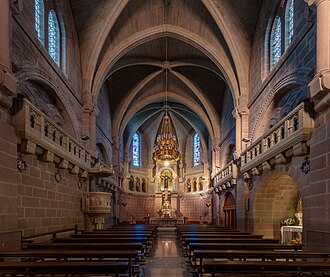
Basilica, Xavier, Navarre, Spain. The basilica belongs to the ensemble of the Castle of Xavier, built in the 10th century, although the basilica was not built until end of the 19th and beginning of the 20th century. Of eclectic style, the interior has a unique neogothic nave built with grey stone and white marble. The stained glass is a work of painter Marcelino Santamaría from Burgos. The main altar is an artistic decorative work, carved in stone inlaid with mosaics, bronzes and enamels by the Biais house in Paris. The tabernacle is located on a high relief that represents San Francisco baptizing and preaching.
 #ImageOfTheDay
Picture of the day
Basilica, Xavier, Navarre, Spain. The basilica belongs to the ensemble of the Castle of Xavier, built in the 10th century, although the basilica was not built until end of the 19th and beginning of the 20th century. Of eclectic style, the interior has a unique neogothic nave built with grey stone and white marble. The stained glass is a work of painter Marcelino Santamaría from Burgos. The main altar is an artistic decorative work, carved in stone inlaid with mosaics, bronzes and enamels by the Biais house in Paris. The tabernacle is located on a high relief that represents San Francisco baptizing and preaching.
Read More