20th Century

Czech court to weigh clearing cardinal jailed by communists #Catholic A second cardinal and a third senior churchman may be rehabilitated this year for mistreatment under the communist regime in Czechoslovakia. The District Court in Litoměřice, in what is now the Czech Republic, will consider a proposal for the rehabilitation of Cardinal Štěpán Trochta, the former bishop of Litoměřice, over his internment between 1950 and 1953.The public prosecutor asked the relevant authorities to carry out an investigation into the archives and, based on the outcome, found the initiative reasonable. He has already submitted a proposal for the judicial rehabilitation of Trochta over the illegal deprivation of his personal freedom. A date for consideration of the proposal has not yet been set.“I firmly believe that the name of Štěpán Trochta, my predecessor in Litoměřice, will be cleared through the courts,” said Archbishop Stanislav Přibyl of Prague, who is also apostolic administrator of Litoměřice.The verdict that sent Trochta to prison, handed down in a political trial for “treason and conspiracy,” was overturned in 1968, but the Czech courts have not dealt with his earlier illegal internment. The initiative for full rehabilitation came from Jan Kratochvil, director of the Museum of Czech, Slovak, and Ruthenian Exile of the 20th Century, and the lawyer Lubomír Müller.It is “important to clean his name in this way as well,” said Kratochvil, whose family was friends with the prelate.Salesian, prisoner, cardinalŠtěpán Trochta (1905–1974) was one of the first Czech members of the Society of St. Francis de Sales, the so-called Salesians. He studied in Turin, Italy, where he obtained a doctorate in theology. He returned to Czechoslovakia, and when Nazi Germany occupied the country, he was arrested for his contacts with and support for the resistance and was sent to several concentration camps.He was “ready to work, full of energy, enthusiasm, and willing to work hard.” Trochta was also a good organizer and a gifted speaker and writer who “enjoyed being among the boys, even though he gradually had to spend more time in administration,” according to “Life and Legacy,” a booklet published by the Salesians on the 50th anniversary of the prelate’s death.Shortly before the communists took over in Czechoslovakia, he was appointed bishop of Litoměřice. He became the spokesman for the episcopate of Czechoslovakia in difficult negotiations with the new government. In the end, the regime interned him in his residence and later imprisoned him. Although he was released sooner than expected, he was not allowed to continue as a bishop and had to work as a manual laborer.In 1969, when he was already back in the Diocese of Litoměřice, Pope Paul VI created him a cardinal “in pectore” — that is, secretly.When Trochta died five years later, the funeral was attended by many of the faithful, including cardinals from Berlin, Krakow, and Vienna. Archbishop Karol Wojtyła of Krakow, who later became Pope John Paul II, reportedly asked to concelebrate but was not permitted to do so. Wojtyła then defied the ban on foreign participants speaking, delivering a short address over the coffin in which he called the deceased prelate a martyr. The funeral Mass was celebrated by the Czech bishop and future Cardinal František Tomášek.A series of Czech rehabilitationsThe case may become one more in a recent series of rehabilitations in the Czech Republic.In February, the District Court of Prague recognized the unjust treatment of Cardinal Josef Beran, the former archbishop of Prague, who was interned in several locations. Last month, the District Court in Olomouc rehabilitated Archbishop Josef Karel Matocha of Olomouc, also over his internment.In 2024, the Regional Court in Hradec Králové rehabilitated Father Josef Toufar, who was illegally arrested and tortured to death.

Czech court to weigh clearing cardinal jailed by communists #Catholic A second cardinal and a third senior churchman may be rehabilitated this year for mistreatment under the communist regime in Czechoslovakia. The District Court in Litoměřice, in what is now the Czech Republic, will consider a proposal for the rehabilitation of Cardinal Štěpán Trochta, the former bishop of Litoměřice, over his internment between 1950 and 1953.The public prosecutor asked the relevant authorities to carry out an investigation into the archives and, based on the outcome, found the initiative reasonable. He has already submitted a proposal for the judicial rehabilitation of Trochta over the illegal deprivation of his personal freedom. A date for consideration of the proposal has not yet been set.“I firmly believe that the name of Štěpán Trochta, my predecessor in Litoměřice, will be cleared through the courts,” said Archbishop Stanislav Přibyl of Prague, who is also apostolic administrator of Litoměřice.The verdict that sent Trochta to prison, handed down in a political trial for “treason and conspiracy,” was overturned in 1968, but the Czech courts have not dealt with his earlier illegal internment. The initiative for full rehabilitation came from Jan Kratochvil, director of the Museum of Czech, Slovak, and Ruthenian Exile of the 20th Century, and the lawyer Lubomír Müller.It is “important to clean his name in this way as well,” said Kratochvil, whose family was friends with the prelate.Salesian, prisoner, cardinalŠtěpán Trochta (1905–1974) was one of the first Czech members of the Society of St. Francis de Sales, the so-called Salesians. He studied in Turin, Italy, where he obtained a doctorate in theology. He returned to Czechoslovakia, and when Nazi Germany occupied the country, he was arrested for his contacts with and support for the resistance and was sent to several concentration camps.He was “ready to work, full of energy, enthusiasm, and willing to work hard.” Trochta was also a good organizer and a gifted speaker and writer who “enjoyed being among the boys, even though he gradually had to spend more time in administration,” according to “Life and Legacy,” a booklet published by the Salesians on the 50th anniversary of the prelate’s death.Shortly before the communists took over in Czechoslovakia, he was appointed bishop of Litoměřice. He became the spokesman for the episcopate of Czechoslovakia in difficult negotiations with the new government. In the end, the regime interned him in his residence and later imprisoned him. Although he was released sooner than expected, he was not allowed to continue as a bishop and had to work as a manual laborer.In 1969, when he was already back in the Diocese of Litoměřice, Pope Paul VI created him a cardinal “in pectore” — that is, secretly.When Trochta died five years later, the funeral was attended by many of the faithful, including cardinals from Berlin, Krakow, and Vienna. Archbishop Karol Wojtyła of Krakow, who later became Pope John Paul II, reportedly asked to concelebrate but was not permitted to do so. Wojtyła then defied the ban on foreign participants speaking, delivering a short address over the coffin in which he called the deceased prelate a martyr. The funeral Mass was celebrated by the Czech bishop and future Cardinal František Tomášek.A series of Czech rehabilitationsThe case may become one more in a recent series of rehabilitations in the Czech Republic.In February, the District Court of Prague recognized the unjust treatment of Cardinal Josef Beran, the former archbishop of Prague, who was interned in several locations. Last month, the District Court in Olomouc rehabilitated Archbishop Josef Karel Matocha of Olomouc, also over his internment.In 2024, the Regional Court in Hradec Králové rehabilitated Father Josef Toufar, who was illegally arrested and tortured to death.

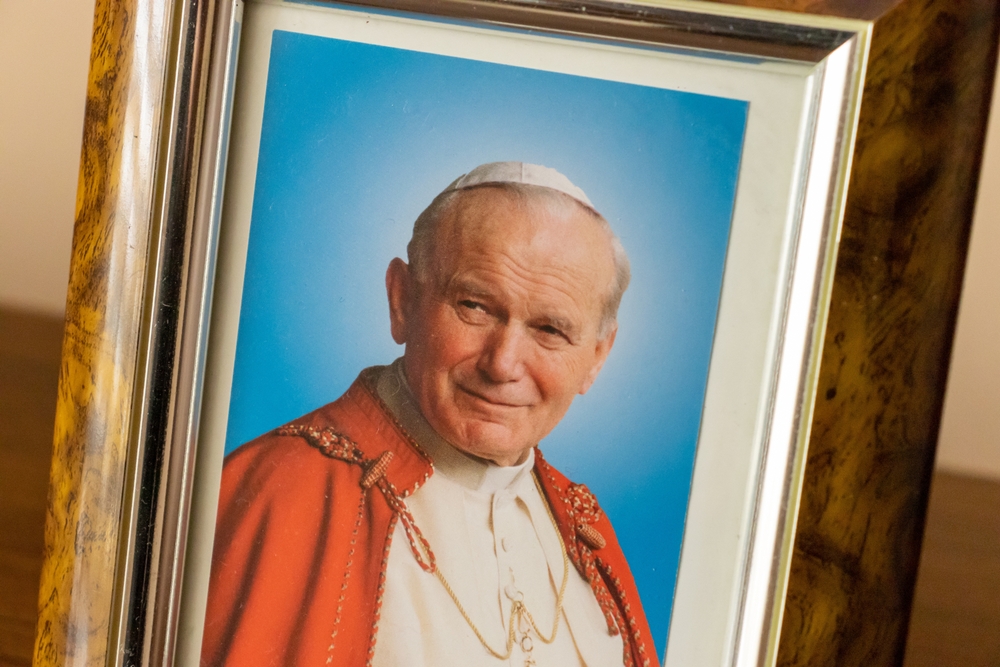
A district court will weigh whether Cardinal Štěpán Trochta, imprisoned by the Nazis and later by the communists, was unlawfully interned in the 1950s.

Read More
Catholic scholar says classical learning can help renew America #Catholic ANN ARBOR, Michigan — Catholics should be proud of their contributions to the United States, especially for the intellectual tradition inherited from philosophers, theologians, and saints who contributed to the ideas leading to the Declaration of Independence and the Constitution, author and Hillsdale College Professor Matthew Mehan told EWTN News leading up to the 250th anniversary of the nation.Mehan is associate dean and professor of government studies at Hillsdale College’s Washington, D.C. campus. He holds a doctorate in literature from the University of Dallas and recently authored The American Book of Fables, a book for all ages that reflects Mehan’s desire to contribute to national renewal. The fables are set in the American landscape, framed by the Declaration of Independence, and accompanied by historical documents illustrating the country’s history, complexity, and geographical regions. In interviews with EWTN News, the author and scholar said the book grew out of his broader efforts to promote culture renewal through educational reform.“In a sense, it is an unsurprisingly Catholic endeavour of ‘fides et ratio,’” he said. “I wanted something like in church, where there is a papal flag and an American flag, representing faith, morals, love of country, and love of neighbor.” “I’ve always thought that way. I’ve also thought a lot about a combination of those things, with beautiful images and beautiful moral sentiments, and how those come together. So when the semiquinquicentennial was coming up, I thought it would be a great gift to the country.”. Mehan won the America 250 Innovation Prize from the Heritage Foundation for the work.The educator and father of eight said he shares the concerns of many teachers and parents dismayed by the current culture and how education has failed to cultivate virtue, civic pride and responsibility. He and his wife founded a school cooperative in Reston, Virginia that now has 38 participating families. He has also designed curricula for schools across the country. The role of educators is essential, Mehan said, while noting that doctorates are now the equivalent of 19th-century master’s degrees in terms of academic formation. “Catholic academics don’t know their own traditions very well,” he argued. “They know Greek philosophers, and the moderns who reject the Greco-Roman, Judeo-Christian, and Catholic vision of Western civilization and human nature, and may know the Summa Theologica and St. Augustine. But what they don’t know is the poetical and rhetorical tradition which moves people toward a common vision, which is an indispensable part of good letters and a healthy citizenry.” “And they don’t know the Romans,” he added. Drawing on the classical tradition, Mehan noted that Roman thinkers such as Cicero and Seneca prepared the “good soil,” the intellectual antecedents that inspired America’s founders. “Cicero, for instance, was taught in all seminaries until the 1900s,” while Seneca was praised by St. Jerome, he said. And ideas found in Cicero were the underpinnings of the theory of natural rights that informed later Catholic philosophers. Seneca’s De Clementia, for example, contributed to concepts of constitutional democracy and rights that shaped the American experiment in government. These classical authors, he argues, still have relevance and deserve renewed attention in universities and seminaries.
 
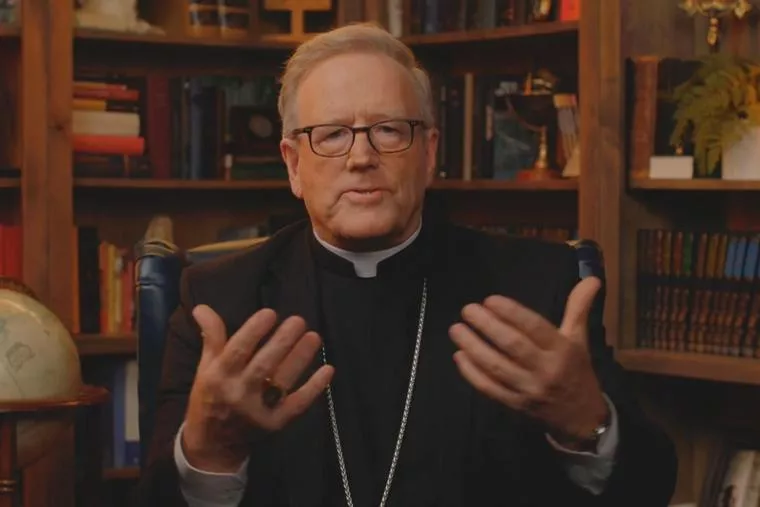
 Matthew Mehan is associate dean and professor of government studies at Hillsdale College’s Washington, D.C. campus. | Photo courtesy of Matthew Megan
 
 Asked about the future of Catholic education and how it can play a role in a national renewal, despite the closing of Catholic parishes and schools, Mehan said: “Catholic education is displaying a nascent energy.”“It’s very dynamic and full of people who have reoriented education towards what the Christian humanists of the Catholic tradition understood as their goal, which is to help students have a clean conscience and thus have the most joyful life possible in this life and the next,” he said.For Mehan, moral formation must take precedence over the mere transmission of information. He argues that Catholic education drifted from this mission in the 20th century as it increasingly followed secular models of education.Subjects such as calculus, computer coding, and the sciences are valuable, he said, but they should not be the primary focus of Catholic schools. “If you aim at them, ironically, you won’t get them. If you aim high, you’ll get the high and the low. If you aim for the low, you’ll get nothing. That is why education has collapsed except where the moral life is, ideally, centered around Christ.”Catholics holding doctorates who complain that tenured positions at colleges and universities are scarce should look to K-12 schools to make national renewal a reality, Mehan said.The renewal of Catholic education, and how it can contribute to national renewal, depends on placing Christ at the center and embracing the universal call to holiness emphasized by the Second Vatican Council, he argued. Movements such as Opus Dei and the Neo-catechumenal Way serve as “an enormous engine,” Mehan said, to plant holiness in students and encourage teachers themselves to be saints. It will change “how people teach, how they design curricula, and how they bring forward the richness of the Catholic faith and tradition.” “Actually, I’m very hopeful,” he said.To Catholics who may think of themselves as strangers in the United States, Mehan said, “No, brother, you built this too.” “Your people, your religious tradition, are at home here,” he said. “And you are meant for republican self-government. Augustine’s City of God laid the groundwork, St. Thomas Aquinas built the scaffolding, and St. Thomas More made it shine. American Catholics built this country with sweat, blood, and their arms.” “This is your patrimony too,” he said.

Catholic scholar says classical learning can help renew America #Catholic ANN ARBOR, Michigan — Catholics should be proud of their contributions to the United States, especially for the intellectual tradition inherited from philosophers, theologians, and saints who contributed to the ideas leading to the Declaration of Independence and the Constitution, author and Hillsdale College Professor Matthew Mehan told EWTN News leading up to the 250th anniversary of the nation.Mehan is associate dean and professor of government studies at Hillsdale College’s Washington, D.C. campus. He holds a doctorate in literature from the University of Dallas and recently authored The American Book of Fables, a book for all ages that reflects Mehan’s desire to contribute to national renewal. The fables are set in the American landscape, framed by the Declaration of Independence, and accompanied by historical documents illustrating the country’s history, complexity, and geographical regions. In interviews with EWTN News, the author and scholar said the book grew out of his broader efforts to promote culture renewal through educational reform.“In a sense, it is an unsurprisingly Catholic endeavour of ‘fides et ratio,’” he said. “I wanted something like in church, where there is a papal flag and an American flag, representing faith, morals, love of country, and love of neighbor.” “I’ve always thought that way. I’ve also thought a lot about a combination of those things, with beautiful images and beautiful moral sentiments, and how those come together. So when the semiquinquicentennial was coming up, I thought it would be a great gift to the country.”. Mehan won the America 250 Innovation Prize from the Heritage Foundation for the work.The educator and father of eight said he shares the concerns of many teachers and parents dismayed by the current culture and how education has failed to cultivate virtue, civic pride and responsibility. He and his wife founded a school cooperative in Reston, Virginia that now has 38 participating families. He has also designed curricula for schools across the country. The role of educators is essential, Mehan said, while noting that doctorates are now the equivalent of 19th-century master’s degrees in terms of academic formation. “Catholic academics don’t know their own traditions very well,” he argued. “They know Greek philosophers, and the moderns who reject the Greco-Roman, Judeo-Christian, and Catholic vision of Western civilization and human nature, and may know the Summa Theologica and St. Augustine. But what they don’t know is the poetical and rhetorical tradition which moves people toward a common vision, which is an indispensable part of good letters and a healthy citizenry.” “And they don’t know the Romans,” he added. Drawing on the classical tradition, Mehan noted that Roman thinkers such as Cicero and Seneca prepared the “good soil,” the intellectual antecedents that inspired America’s founders. “Cicero, for instance, was taught in all seminaries until the 1900s,” while Seneca was praised by St. Jerome, he said. And ideas found in Cicero were the underpinnings of the theory of natural rights that informed later Catholic philosophers. Seneca’s De Clementia, for example, contributed to concepts of constitutional democracy and rights that shaped the American experiment in government. These classical authors, he argues, still have relevance and deserve renewed attention in universities and seminaries. Matthew Mehan is associate dean and professor of government studies at Hillsdale College’s Washington, D.C. campus. | Photo courtesy of Matthew Megan Asked about the future of Catholic education and how it can play a role in a national renewal, despite the closing of Catholic parishes and schools, Mehan said: “Catholic education is displaying a nascent energy.”“It’s very dynamic and full of people who have reoriented education towards what the Christian humanists of the Catholic tradition understood as their goal, which is to help students have a clean conscience and thus have the most joyful life possible in this life and the next,” he said.For Mehan, moral formation must take precedence over the mere transmission of information. He argues that Catholic education drifted from this mission in the 20th century as it increasingly followed secular models of education.Subjects such as calculus, computer coding, and the sciences are valuable, he said, but they should not be the primary focus of Catholic schools. “If you aim at them, ironically, you won’t get them. If you aim high, you’ll get the high and the low. If you aim for the low, you’ll get nothing. That is why education has collapsed except where the moral life is, ideally, centered around Christ.”Catholics holding doctorates who complain that tenured positions at colleges and universities are scarce should look to K-12 schools to make national renewal a reality, Mehan said.The renewal of Catholic education, and how it can contribute to national renewal, depends on placing Christ at the center and embracing the universal call to holiness emphasized by the Second Vatican Council, he argued. Movements such as Opus Dei and the Neo-catechumenal Way serve as “an enormous engine,” Mehan said, to plant holiness in students and encourage teachers themselves to be saints. It will change “how people teach, how they design curricula, and how they bring forward the richness of the Catholic faith and tradition.” “Actually, I’m very hopeful,” he said.To Catholics who may think of themselves as strangers in the United States, Mehan said, “No, brother, you built this too.” “Your people, your religious tradition, are at home here,” he said. “And you are meant for republican self-government. Augustine’s City of God laid the groundwork, St. Thomas Aquinas built the scaffolding, and St. Thomas More made it shine. American Catholics built this country with sweat, blood, and their arms.” “This is your patrimony too,” he said.

Author and professor calls on Catholics to revive American culture through faith and classical learning.

Read More
Czech court clears archbishop persecuted by communist regime #Catholic The district court in Olomouc, Czech Republic, has rehabilitated Josef Karel Matocha, the city’s former archbishop, recognizing his internment under the communist regime as unlawful more than six decades after his death.The court’s decision, based on the Judicial Rehabilitation Act, confirms that the prelate was a victim of unlawful deprivation of liberty in the 1950s by the communist regime in what was then Czechoslovakia. He was not formally convicted, yet he was forced to remain in the archbishop’s palace under surveillance by the State Security, and this was recognized as imprisonment.The current archbishop of Olomouc, Josef Nuzík, said he is “very happy that after so many years we have managed to complete this procedural step and achieve justice” in civil law as well.Matocha is “constantly present in our palace and in the hearts of believers,” and guests “are often moved when they realize that these beautiful spaces were his prison,” said Nuzík, who is also president of the Czech Bishops’ Conference.
 
 U.S. bishop joins Slovaks honoring blessed bishop tortured by communists
 
 The rehabilitation is an important sign “also for the entire society,” he added, one that shows “the heroism and suffering of people who did not let themselves be broken must not be forgotten.”Ladislav Müller filed the initial motion for rehabilitation at the request of Jan Kratochvil, director of the Museum of Czech, Slovak, and Ruthenian Exile of the 20th Century in Brno.Decades of isolationMatocha, who held doctorates in philosophy and theology, was appointed archbishop of Olomouc by Pope Pius XII in 1948. He was deeply dedicated in his pastoral visits, initiated the beatification process of Archbishop Antonín Stojan, and secretly ordained František Tomášek as a bishop, who later became a cardinal and archbishop of Prague, according to the Archdiocese of Olomouc.After his internment in 1950, he could not read newspapers or listen to the radio, and visits to the garden were permitted only sporadically. The isolation lasted until his death from a heart attack in 1961, which was also due to the denial of medical care. In 1999, then-Czech President Václav Havel posthumously awarded Matocha the first class of the Order of Tomáš Garrigue Masaryk for outstanding services to democracy and human rights.The press office of the Archdiocese of Olomouc told EWTN News that no special event regarding Matocha is planned at present, but it noted that a rehabilitation process is underway for Cardinal Štěpán Trochta. Trochta also suffered internment as the bishop of Litoměřice, but “we consider him ours,” the press office said, because he was born within the Archdiocese of Olomouc.A wider reckoningThe unjust treatment of two other churchmen by the communist regime in Czechoslovakia has recently been recognized. Cardinal Josef Beran, the former archbishop of Prague, who was interned in several locations, was rehabilitated in February, the District Court of Prague confirmed to EWTN News. In 2024, the regional court in Hradec Králové rehabilitated the priest Josef Toufar, who was illegally arrested and tortured to death.

Czech court clears archbishop persecuted by communist regime #Catholic The district court in Olomouc, Czech Republic, has rehabilitated Josef Karel Matocha, the city’s former archbishop, recognizing his internment under the communist regime as unlawful more than six decades after his death.The court’s decision, based on the Judicial Rehabilitation Act, confirms that the prelate was a victim of unlawful deprivation of liberty in the 1950s by the communist regime in what was then Czechoslovakia. He was not formally convicted, yet he was forced to remain in the archbishop’s palace under surveillance by the State Security, and this was recognized as imprisonment.The current archbishop of Olomouc, Josef Nuzík, said he is “very happy that after so many years we have managed to complete this procedural step and achieve justice” in civil law as well.Matocha is “constantly present in our palace and in the hearts of believers,” and guests “are often moved when they realize that these beautiful spaces were his prison,” said Nuzík, who is also president of the Czech Bishops’ Conference. U.S. bishop joins Slovaks honoring blessed bishop tortured by communists The rehabilitation is an important sign “also for the entire society,” he added, one that shows “the heroism and suffering of people who did not let themselves be broken must not be forgotten.”Ladislav Müller filed the initial motion for rehabilitation at the request of Jan Kratochvil, director of the Museum of Czech, Slovak, and Ruthenian Exile of the 20th Century in Brno.Decades of isolationMatocha, who held doctorates in philosophy and theology, was appointed archbishop of Olomouc by Pope Pius XII in 1948. He was deeply dedicated in his pastoral visits, initiated the beatification process of Archbishop Antonín Stojan, and secretly ordained František Tomášek as a bishop, who later became a cardinal and archbishop of Prague, according to the Archdiocese of Olomouc.After his internment in 1950, he could not read newspapers or listen to the radio, and visits to the garden were permitted only sporadically. The isolation lasted until his death from a heart attack in 1961, which was also due to the denial of medical care. In 1999, then-Czech President Václav Havel posthumously awarded Matocha the first class of the Order of Tomáš Garrigue Masaryk for outstanding services to democracy and human rights.The press office of the Archdiocese of Olomouc told EWTN News that no special event regarding Matocha is planned at present, but it noted that a rehabilitation process is underway for Cardinal Štěpán Trochta. Trochta also suffered internment as the bishop of Litoměřice, but “we consider him ours,” the press office said, because he was born within the Archdiocese of Olomouc.A wider reckoningThe unjust treatment of two other churchmen by the communist regime in Czechoslovakia has recently been recognized. Cardinal Josef Beran, the former archbishop of Prague, who was interned in several locations, was rehabilitated in February, the District Court of Prague confirmed to EWTN News. In 2024, the regional court in Hradec Králové rehabilitated the priest Josef Toufar, who was illegally arrested and tortured to death.

More than six decades after Archbishop Josef Karel Matocha died under communist internment, a Czech court has formally recognized his imprisonment as unlawful.

Read More
Picture of the day


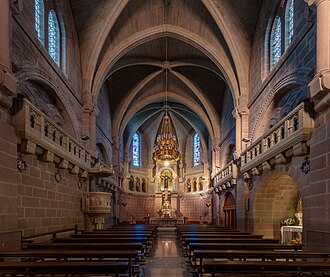
Basilica, Xavier, Navarre, Spain. The basilica belongs to the ensemble of the Castle of Xavier, built in the 10th century, although the basilica was not built until end of the 19th and beginning of the 20th century. Of eclectic style, the interior has a unique neogothic nave built with grey stone and white marble. The stained glass is a work of painter Marcelino Santamaría from Burgos. The main altar is an artistic decorative work, carved in stone inlaid with mosaics, bronzes and enamels by the Biais house in Paris. The tabernacle is located on a high relief that represents San Francisco baptizing and preaching.
 #ImageOfTheDay
Picture of the day
Basilica, Xavier, Navarre, Spain. The basilica belongs to the ensemble of the Castle of Xavier, built in the 10th century, although the basilica was not built until end of the 19th and beginning of the 20th century. Of eclectic style, the interior has a unique neogothic nave built with grey stone and white marble. The stained glass is a work of painter Marcelino Santamaría from Burgos. The main altar is an artistic decorative work, carved in stone inlaid with mosaics, bronzes and enamels by the Biais house in Paris. The tabernacle is located on a high relief that represents San Francisco baptizing and preaching.
Read More