Activity

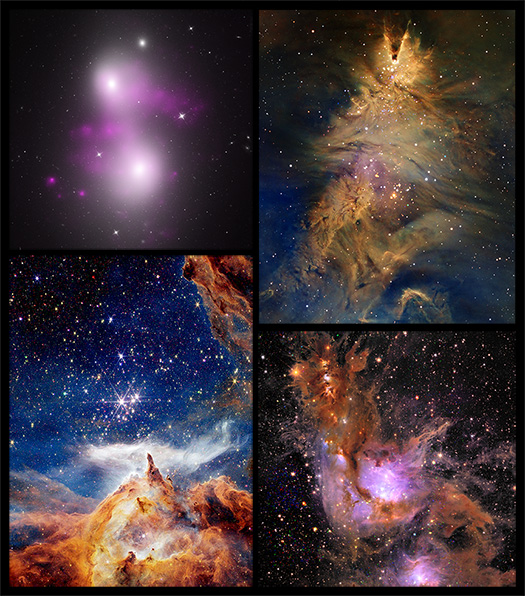
Chandra, Webb Catch Twinkling Lights – This stellar landscape is reminiscent of a winter vista in a view from NASA’s James Webb Space Telescope (red, green, and blue). Chandra data (red, green and blue) punctuate the scene with bursts of colored lights representing high-energy activity from the active stars.

This stellar landscape is reminiscent of a winter vista in a view from NASA’s James Webb Space Telescope (red, green, and blue). Chandra data (red, green and blue) punctuate the scene with bursts of colored lights representing high-energy activity from the active stars.

Read More
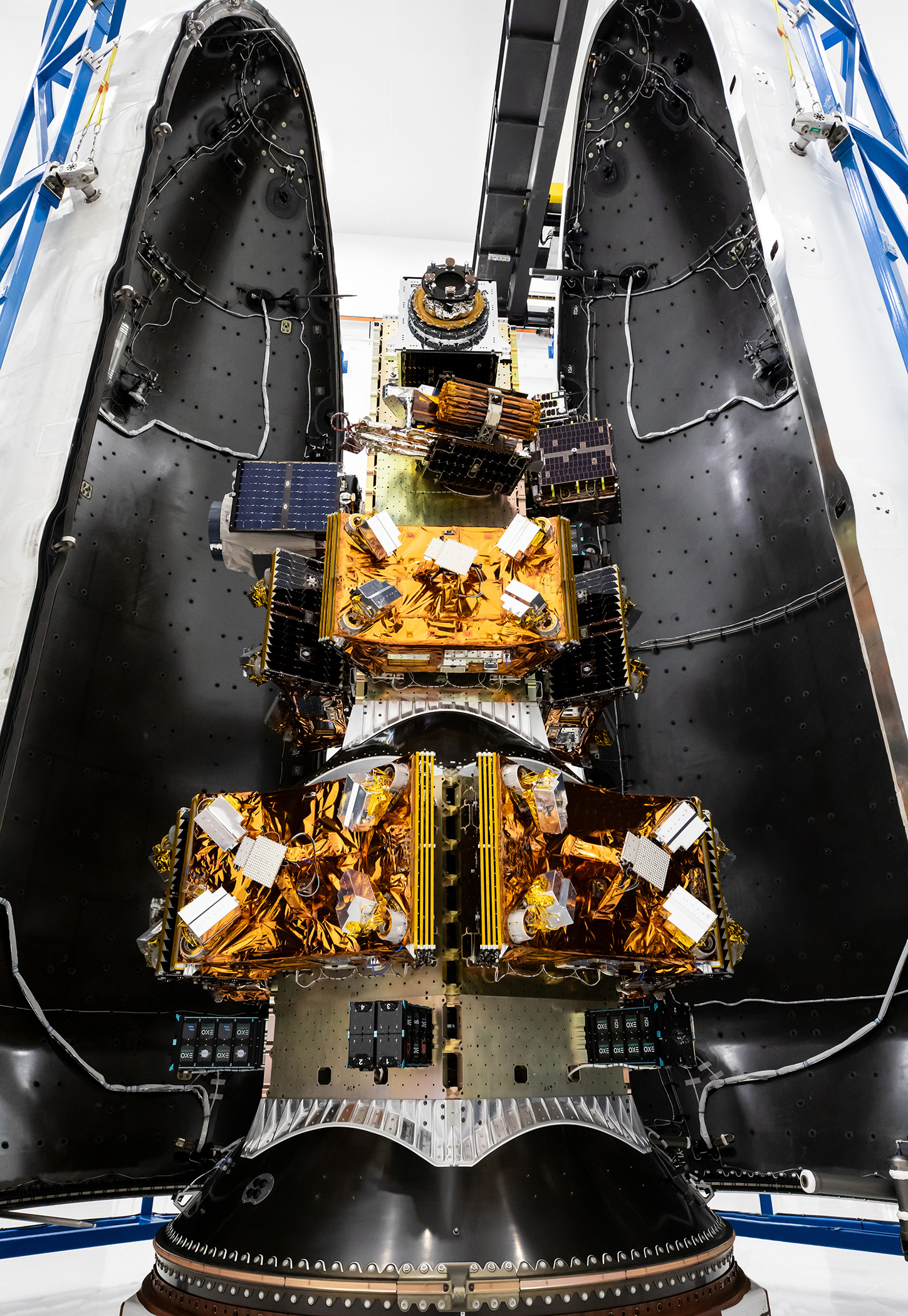
NASA’s Pandora Small Satellite Launched – NASA’s Pandora small satellite, and NASA-sponsored Star-Planet Activity Research CubeSat (SPARCS), and Black Hole Coded Aperture Telescope (BlackCAT) CubeSat, are ready to be encapsulated inside a SpaceX Falcon 9 payload fairing in this early January 2026 photo. Pandora and the CubeSats launched Sunday, Jan. 11, from Vandenberg Space Force Base located on California’s central coast.

NASA’s Pandora small satellite, and NASA-sponsored Star-Planet Activity Research CubeSat (SPARCS), and Black Hole Coded Aperture Telescope (BlackCAT) CubeSat, are ready to be encapsulated inside a SpaceX Falcon 9 payload fairing in this early January 2026 photo. Pandora and the CubeSats launched Sunday, Jan. 11, from Vandenberg Space Force Base located on California’s central coast.

Read More
St. John Neumann, promoter of Catholic education in the U.S., is celebrated today #Catholic 
 
 The National Shrine of St. John Neumann at St. Peter the Apostle Church in Philadelphia. | Credit: Farragutful, CC BY-SA 4.0, via Wikimedia Commons

Jan 5, 2026 / 04:00 am (CNA).
Every Jan. 5 the Church celebrates the feast of St. John Neumann, Redemptorist missionary, fourth bishop of the city of Philadelphia, and organizer of the first Catholic education network in the U.S.John Nepomucene Neumann was born in Bohemia, now the Czech Republic, in 1811. He attended school in Budweis and years later, in 1831, entered the seminary in that same city. Upon completing his preparation for the priesthood, he presented himself to his diocese but suffered an unexpected setback. The local bishop had fallen ill and priestly ordinations in his diocese were suspended until further notice.Neumann, eager to serve the Lord, wrote letters to the bishops of the neighboring dioceses, but none of them wanted to accept him. Despite the obstacles, the saint was not discouraged.To earn his living, he went to work in a factory where he met a few Americans from whom he learned some English. Later, he contacted some bishops in the United States. Neumann had a missionary soul and was ready to move to America.Priest and missionary in North AmericaThe archbishop of New York agreed to receive and ordain Neumann, so he left his family and friends to embark on the adventure of proclaiming the Lord in a distant land. After being ordained in the U.S., Neumann joined 36 other priests who were to assist the almost 200,000 Catholics living in the U.S. at the time.The newly ordained was entrusted with the administration of a parish. The first pastoral difficulty he faced was the vast territory entrusted to him: His parish stretched from Ontario, Canada, to Pennsylvania.Given the immense need, Neumann spent most of his time visiting villages and towns. He had to cross inhospitable territories, walk long distances in extreme cold and sweltering heat, and trek high mountains and majestic landscapes — all in order to watch over his flock and to assist those in need.These were long years of providing catechesis, administering the sacraments, and celebrating the Eucharist. It was common to see Neumann preach both in churches and in abandoned huts. He even preached outside taverns, refuges for impenitent souls.Neumann often had to celebrate Mass in dining rooms and kitchens.RedemptoristWith time and continued difficulties, the missionary priest discovered the need for the support of a religious community. He knew the Redemptorists well so he applied to join the Congregation of the Most Holy Redeemer. When the time came, he took his vows at the congregation’s house in Baltimore in 1842.Neumann was noted for his piety and kindness as well as his versatility in understanding and accompanying his parishioners, most of whom were European immigrants. Neumann knew up to six languages, so it was not difficult for him to communicate with Catholics who did not speak English well.In 1847, he was appointed visitator of the Redemptorists in the United States. At the end of his service, the Redemptorists were ready to form an autonomous “province or religious province,” which became a reality in 1850.Promoter of Catholic education in the U.S.Neumann was then ordained bishop of Philadelphia, and from that city he organized the diocesan system of Catholic schools, becoming a great promoter of religious education in the country. He also founded the congregation of the Sisters of the Third Order of St. Francis, dedicated to teaching in schools, and was the promoter of the construction of more than 80 churches throughout the country.Neumann was a simple man, short in stature and reportedly good-natured. Although he never had robust health, he carried out great pastoral and literary activity. He wrote many articles in magazines and newspapers, and published two catechisms and a history of the Bible for schoolchildren.Once, in one of his articles, he wrote: “I have never regretted having dedicated myself to the mission in America.”On Jan. 5, 1860, when he was just 48 years old, he suddenly collapsed in the street and went home to the Lord. He was beatified in 1963 and canonized in 1977 by Pope Paul VI.This story was first published by ACI Prensa, CNA’s Spanish-language news partner. It has been translated and adapted by CNA.

St. John Neumann, promoter of Catholic education in the U.S., is celebrated today #Catholic The National Shrine of St. John Neumann at St. Peter the Apostle Church in Philadelphia. | Credit: Farragutful, CC BY-SA 4.0, via Wikimedia Commons Jan 5, 2026 / 04:00 am (CNA). Every Jan. 5 the Church celebrates the feast of St. John Neumann, Redemptorist missionary, fourth bishop of the city of Philadelphia, and organizer of the first Catholic education network in the U.S.John Nepomucene Neumann was born in Bohemia, now the Czech Republic, in 1811. He attended school in Budweis and years later, in 1831, entered the seminary in that same city. Upon completing his preparation for the priesthood, he presented himself to his diocese but suffered an unexpected setback. The local bishop had fallen ill and priestly ordinations in his diocese were suspended until further notice.Neumann, eager to serve the Lord, wrote letters to the bishops of the neighboring dioceses, but none of them wanted to accept him. Despite the obstacles, the saint was not discouraged.To earn his living, he went to work in a factory where he met a few Americans from whom he learned some English. Later, he contacted some bishops in the United States. Neumann had a missionary soul and was ready to move to America.Priest and missionary in North AmericaThe archbishop of New York agreed to receive and ordain Neumann, so he left his family and friends to embark on the adventure of proclaiming the Lord in a distant land. After being ordained in the U.S., Neumann joined 36 other priests who were to assist the almost 200,000 Catholics living in the U.S. at the time.The newly ordained was entrusted with the administration of a parish. The first pastoral difficulty he faced was the vast territory entrusted to him: His parish stretched from Ontario, Canada, to Pennsylvania.Given the immense need, Neumann spent most of his time visiting villages and towns. He had to cross inhospitable territories, walk long distances in extreme cold and sweltering heat, and trek high mountains and majestic landscapes — all in order to watch over his flock and to assist those in need.These were long years of providing catechesis, administering the sacraments, and celebrating the Eucharist. It was common to see Neumann preach both in churches and in abandoned huts. He even preached outside taverns, refuges for impenitent souls.Neumann often had to celebrate Mass in dining rooms and kitchens.RedemptoristWith time and continued difficulties, the missionary priest discovered the need for the support of a religious community. He knew the Redemptorists well so he applied to join the Congregation of the Most Holy Redeemer. When the time came, he took his vows at the congregation’s house in Baltimore in 1842.Neumann was noted for his piety and kindness as well as his versatility in understanding and accompanying his parishioners, most of whom were European immigrants. Neumann knew up to six languages, so it was not difficult for him to communicate with Catholics who did not speak English well.In 1847, he was appointed visitator of the Redemptorists in the United States. At the end of his service, the Redemptorists were ready to form an autonomous “province or religious province,” which became a reality in 1850.Promoter of Catholic education in the U.S.Neumann was then ordained bishop of Philadelphia, and from that city he organized the diocesan system of Catholic schools, becoming a great promoter of religious education in the country. He also founded the congregation of the Sisters of the Third Order of St. Francis, dedicated to teaching in schools, and was the promoter of the construction of more than 80 churches throughout the country.Neumann was a simple man, short in stature and reportedly good-natured. Although he never had robust health, he carried out great pastoral and literary activity. He wrote many articles in magazines and newspapers, and published two catechisms and a history of the Bible for schoolchildren.Once, in one of his articles, he wrote: “I have never regretted having dedicated myself to the mission in America.”On Jan. 5, 1860, when he was just 48 years old, he suddenly collapsed in the street and went home to the Lord. He was beatified in 1963 and canonized in 1977 by Pope Paul VI.This story was first published by ACI Prensa, CNA’s Spanish-language news partner. It has been translated and adapted by CNA.


The National Shrine of St. John Neumann at St. Peter the Apostle Church in Philadelphia. | Credit: Farragutful, CC BY-SA 4.0, via Wikimedia Commons

Jan 5, 2026 / 04:00 am (CNA).

Every Jan. 5 the Church celebrates the feast of St. John Neumann, Redemptorist missionary, fourth bishop of the city of Philadelphia, and organizer of the first Catholic education network in the U.S.

John Nepomucene Neumann was born in Bohemia, now the Czech Republic, in 1811. He attended school in Budweis and years later, in 1831, entered the seminary in that same city.

Upon completing his preparation for the priesthood, he presented himself to his diocese but suffered an unexpected setback. The local bishop had fallen ill and priestly ordinations in his diocese were suspended until further notice.

Neumann, eager to serve the Lord, wrote letters to the bishops of the neighboring dioceses, but none of them wanted to accept him. Despite the obstacles, the saint was not discouraged.

To earn his living, he went to work in a factory where he met a few Americans from whom he learned some English. Later, he contacted some bishops in the United States. Neumann had a missionary soul and was ready to move to America.

Priest and missionary in North America

The archbishop of New York agreed to receive and ordain Neumann, so he left his family and friends to embark on the adventure of proclaiming the Lord in a distant land. After being ordained in the U.S., Neumann joined 36 other priests who were to assist the almost 200,000 Catholics living in the U.S. at the time.

The newly ordained was entrusted with the administration of a parish. The first pastoral difficulty he faced was the vast territory entrusted to him: His parish stretched from Ontario, Canada, to Pennsylvania.

Given the immense need, Neumann spent most of his time visiting villages and towns. He had to cross inhospitable territories, walk long distances in extreme cold and sweltering heat, and trek high mountains and majestic landscapes — all in order to watch over his flock and to assist those in need.

These were long years of providing catechesis, administering the sacraments, and celebrating the Eucharist. It was common to see Neumann preach both in churches and in abandoned huts. He even preached outside taverns, refuges for impenitent souls.

Neumann often had to celebrate Mass in dining rooms and kitchens.

Redemptorist

With time and continued difficulties, the missionary priest discovered the need for the support of a religious community. He knew the Redemptorists well so he applied to join the Congregation of the Most Holy Redeemer. When the time came, he took his vows at the congregation’s house in Baltimore in 1842.

Neumann was noted for his piety and kindness as well as his versatility in understanding and accompanying his parishioners, most of whom were European immigrants. Neumann knew up to six languages, so it was not difficult for him to communicate with Catholics who did not speak English well.

In 1847, he was appointed visitator of the Redemptorists in the United States. At the end of his service, the Redemptorists were ready to form an autonomous “province or religious province,” which became a reality in 1850.

Promoter of Catholic education in the U.S.

Neumann was then ordained bishop of Philadelphia, and from that city he organized the diocesan system of Catholic schools, becoming a great promoter of religious education in the country. He also founded the congregation of the Sisters of the Third Order of St. Francis, dedicated to teaching in schools, and was the promoter of the construction of more than 80 churches throughout the country.

Neumann was a simple man, short in stature and reportedly good-natured. Although he never had robust health, he carried out great pastoral and literary activity. He wrote many articles in magazines and newspapers, and published two catechisms and a history of the Bible for schoolchildren.

Once, in one of his articles, he wrote: “I have never regretted having dedicated myself to the mission in America.”

On Jan. 5, 1860, when he was just 48 years old, he suddenly collapsed in the street and went home to the Lord. He was beatified in 1963 and canonized in 1977 by Pope Paul VI.

This story was first published by ACI Prensa, CNA’s Spanish-language news partner. It has been translated and adapted by CNA.

Read More
Bishop of Columbus grants Mass dispensation to immigrants who fear deportation #Catholic 
 
 Bishop Earl Fernandes of Columbus, Ohio, carries the Blessed Sacrament during a procession at Pickaway Correctional Institution on June 28, 2024, at one of the stops on the Seton Route of the National Eucharistic Pilgrimage. Credit: Catholic Times/Ken Snow

Dec 29, 2025 / 14:18 pm (CNA).
The bishop of the Diocese of Columbus, Ohio, has granted a dispensation from Mass for parishioners who fear deportation by immigration enforcement officers, who have increased activity in the area since mid-December.Bishop Earl Fernandes announced in a letter and video last week that those who fear immigration enforcement action are free from the obligation to attend Sunday Mass until Jan. 11, 2026. The bishop said the dispensation was precipitated by increased immigration enforcement activity in Ohio stemming from Operation Buckeye, a U.S. Immigration and Customs Enforcement (ICE) initiative launched Dec. 16 that is allegedly targeting “the worst of the worst criminal illegal aliens in Columbus and throughout Ohio.”Fernandes told EWTN News on Monday that after he began receiving messages from pastors throughout his diocese informing him that Hispanic parishioners were afraid to attend Mass due to the increased enforcement by ICE officers, he asked diocesan personnel in the Office of Catholic Social Doctrine and the Hispanic ministry office to help him get a clearer picture of “what is happening on the ground.”“They told me there were ICE trucks in front of parishes; even in front of schools,” Fernandes said. “All of a sudden, there were half or fewer attendees at the Posadas [traditional pre-Christmas] celebrations.”He said he decided to issue the dispensation “even though I did not want to” because “people need Mass and the sacraments more than ever” and he wanted families to be together without fear for Christmas.During a Mass he celebrated on Saturday, Dec. 20, Fernandes told EWTN News the pastor of the church remained at the front door and saw an ICE truck nearby. Because of this, the Posada [traditional pre-Christmas] procession was moved from outdoors to a hallway inside the building because “the people were too afraid to go outside.”The procession took place inside the building. “We had a meal, there was a piñata and some celebrations,” Fernandes said. “But it was clear there were a lot of people who weren’t there.”The bishop said he began receiving calls from pastors more than two hours from Columbus who were reporting ICE’s presence.Sharp drops in Mass attendance“The atmosphere of fear was keeping people away,” he said. One pastor reported that only one-third of his congregation attended weekend Mass. Another said only one-quarter were present, Fernandes said.Of the increased enforcement against immigrants, Fernandes reflected: “It’s easy to say immigrants should have come to our country legally. But what if your parents came here illegally and you are a U.S. citizen? … What if one spouse is documented and the other is not. What’s in the best interest of their children and society at large?”Of the Mexican population in Columbus, Fernandes said that “many are the grandchildren of the Cristeros,” resistors to the Mexican government’s attempts in the 1920s to suppress Catholicism in the country.He said a large group of Hispanics came to the midnight Mass on Christmas at the cathedral because they did not think ICE would be there. “I think they felt safe at the cathedral.”Fernandes said the Diocese of Columbus also has large numbers of Catholic African migrants who have “tons of children” and make up “young communities full of life and full of faith.”Fernandes said he talked to the pastor of a multiethnic parish made up of Nigerians, Filipinos, and others, and “they’re afraid too.”He is concerned for the Haitian community as well, whose temporary protected status (TPS) is set to expire on Feb. 3, 2026.He said the Mass dispensation expires on Jan. 11, the end of the Christmas season, at which time he will reevaluate the situation.

Bishop of Columbus grants Mass dispensation to immigrants who fear deportation #Catholic Bishop Earl Fernandes of Columbus, Ohio, carries the Blessed Sacrament during a procession at Pickaway Correctional Institution on June 28, 2024, at one of the stops on the Seton Route of the National Eucharistic Pilgrimage. Credit: Catholic Times/Ken Snow Dec 29, 2025 / 14:18 pm (CNA). The bishop of the Diocese of Columbus, Ohio, has granted a dispensation from Mass for parishioners who fear deportation by immigration enforcement officers, who have increased activity in the area since mid-December.Bishop Earl Fernandes announced in a letter and video last week that those who fear immigration enforcement action are free from the obligation to attend Sunday Mass until Jan. 11, 2026. The bishop said the dispensation was precipitated by increased immigration enforcement activity in Ohio stemming from Operation Buckeye, a U.S. Immigration and Customs Enforcement (ICE) initiative launched Dec. 16 that is allegedly targeting “the worst of the worst criminal illegal aliens in Columbus and throughout Ohio.”Fernandes told EWTN News on Monday that after he began receiving messages from pastors throughout his diocese informing him that Hispanic parishioners were afraid to attend Mass due to the increased enforcement by ICE officers, he asked diocesan personnel in the Office of Catholic Social Doctrine and the Hispanic ministry office to help him get a clearer picture of “what is happening on the ground.”“They told me there were ICE trucks in front of parishes; even in front of schools,” Fernandes said. “All of a sudden, there were half or fewer attendees at the Posadas [traditional pre-Christmas] celebrations.”He said he decided to issue the dispensation “even though I did not want to” because “people need Mass and the sacraments more than ever” and he wanted families to be together without fear for Christmas.During a Mass he celebrated on Saturday, Dec. 20, Fernandes told EWTN News the pastor of the church remained at the front door and saw an ICE truck nearby. Because of this, the Posada [traditional pre-Christmas] procession was moved from outdoors to a hallway inside the building because “the people were too afraid to go outside.”The procession took place inside the building. “We had a meal, there was a piñata and some celebrations,” Fernandes said. “But it was clear there were a lot of people who weren’t there.”The bishop said he began receiving calls from pastors more than two hours from Columbus who were reporting ICE’s presence.Sharp drops in Mass attendance“The atmosphere of fear was keeping people away,” he said. One pastor reported that only one-third of his congregation attended weekend Mass. Another said only one-quarter were present, Fernandes said.Of the increased enforcement against immigrants, Fernandes reflected: “It’s easy to say immigrants should have come to our country legally. But what if your parents came here illegally and you are a U.S. citizen? … What if one spouse is documented and the other is not. What’s in the best interest of their children and society at large?”Of the Mexican population in Columbus, Fernandes said that “many are the grandchildren of the Cristeros,” resistors to the Mexican government’s attempts in the 1920s to suppress Catholicism in the country.He said a large group of Hispanics came to the midnight Mass on Christmas at the cathedral because they did not think ICE would be there. “I think they felt safe at the cathedral.”Fernandes said the Diocese of Columbus also has large numbers of Catholic African migrants who have “tons of children” and make up “young communities full of life and full of faith.”Fernandes said he talked to the pastor of a multiethnic parish made up of Nigerians, Filipinos, and others, and “they’re afraid too.”He is concerned for the Haitian community as well, whose temporary protected status (TPS) is set to expire on Feb. 3, 2026.He said the Mass dispensation expires on Jan. 11, the end of the Christmas season, at which time he will reevaluate the situation.


Bishop Earl Fernandes of Columbus, Ohio, carries the Blessed Sacrament during a procession at Pickaway Correctional Institution on June 28, 2024, at one of the stops on the Seton Route of the National Eucharistic Pilgrimage. Credit: Catholic Times/Ken Snow

Dec 29, 2025 / 14:18 pm (CNA).

The bishop of the Diocese of Columbus, Ohio, has granted a dispensation from Mass for parishioners who fear deportation by immigration enforcement officers, who have increased activity in the area since mid-December.

Bishop Earl Fernandes announced in a letter and video last week that those who fear immigration enforcement action are free from the obligation to attend Sunday Mass until Jan. 11, 2026. The bishop said the dispensation was precipitated by increased immigration enforcement activity in Ohio stemming from Operation Buckeye, a U.S. Immigration and Customs Enforcement (ICE) initiative launched Dec. 16 that is allegedly targeting “the worst of the worst criminal illegal aliens in Columbus and throughout Ohio.”

Fernandes told EWTN News on Monday that after he began receiving messages from pastors throughout his diocese informing him that Hispanic parishioners were afraid to attend Mass due to the increased enforcement by ICE officers, he asked diocesan personnel in the Office of Catholic Social Doctrine and the Hispanic ministry office to help him get a clearer picture of “what is happening on the ground.”

“They told me there were ICE trucks in front of parishes; even in front of schools,” Fernandes said. “All of a sudden, there were half or fewer attendees at the Posadas [traditional pre-Christmas] celebrations.”

He said he decided to issue the dispensation “even though I did not want to” because “people need Mass and the sacraments more than ever” and he wanted families to be together without fear for Christmas.

During a Mass he celebrated on Saturday, Dec. 20, Fernandes told EWTN News the pastor of the church remained at the front door and saw an ICE truck nearby. Because of this, the Posada [traditional pre-Christmas] procession was moved from outdoors to a hallway inside the building because “the people were too afraid to go outside.”

The procession took place inside the building. “We had a meal, there was a piñata and some celebrations,” Fernandes said. “But it was clear there were a lot of people who weren’t there.”

The bishop said he began receiving calls from pastors more than two hours from Columbus who were reporting ICE’s presence.

Sharp drops in Mass attendance

“The atmosphere of fear was keeping people away,” he said. One pastor reported that only one-third of his congregation attended weekend Mass. Another said only one-quarter were present, Fernandes said.

Of the increased enforcement against immigrants, Fernandes reflected: “It’s easy to say immigrants should have come to our country legally. But what if your parents came here illegally and you are a U.S. citizen? … What if one spouse is documented and the other is not. What’s in the best interest of their children and society at large?”

Of the Mexican population in Columbus, Fernandes said that “many are the grandchildren of the Cristeros,” resistors to the Mexican government’s attempts in the 1920s to suppress Catholicism in the country.

He said a large group of Hispanics came to the midnight Mass on Christmas at the cathedral because they did not think ICE would be there. “I think they felt safe at the cathedral.”

Fernandes said the Diocese of Columbus also has large numbers of Catholic African migrants who have “tons of children” and make up “young communities full of life and full of faith.”

Fernandes said he talked to the pastor of a multiethnic parish made up of Nigerians, Filipinos, and others, and “they’re afraid too.”

He is concerned for the Haitian community as well, whose temporary protected status (TPS) is set to expire on Feb. 3, 2026.

He said the Mass dispensation expires on Jan. 11, the end of the Christmas season, at which time he will reevaluate the situation.

Read More
Picture of the day


Redstart (Phoenicurus phoenicurus) male ringed, Għadira Nature Reserve, Malta. Bird ringing is a vital activity that helps protect birds. In Malta, birds are humanely caught in mist nets which are checked every ten minutes. Each bird is ringed and weighed before being released. About 10% are retraps (i.e. they have been ringed before). The programme is carried on by BirdLife Malta.Ringing has shown that birds from at least 48 countries use Malta during migration. Unfortunately, Malta has the densest population of bird hunters in the European Union. The high numbers of wild birds illegally shot in Malta has led to the European Commission taking legal infringement proceedings against the Maltese Government over Article 5 of the Birds Directive.
 #ImageOfTheDay
Picture of the day
Redstart (Phoenicurus phoenicurus) male ringed, Għadira Nature Reserve, Malta. Bird ringing is a vital activity that helps protect birds. In Malta, birds are humanely caught in mist nets which are checked every ten minutes. Each bird is ringed and weighed before being released. About 10% are retraps (i.e. they have been ringed before). The programme is carried on by BirdLife Malta.
Ringing has shown that birds from at least 48 countries use Malta during migration. Unfortunately, Malta has the densest population of bird hunters in the European Union. The high numbers of wild birds illegally shot in Malta has led to the European Commission taking legal infringement proceedings against the Maltese Government over Article 5 of the Birds Directive.
Read More
Geyser Season on Mars

Springtime in the South Polar region of Mars is a season of exciting activity. The thick coating of carbon dioxide ice that accumulated over the winter begins to sublimate (turn to vapor) as the sun rises higher in the sky and warms the ice. Sunlight penetrates through the transparent ice, and is absorbed at the base of the ice layer. The gas that forms as a result of the warming escapes through weaknesses in the ice and erupts in the form of magnificent geysers of gas and dust.

Read More