Activity

Government favors natural family planning over contraception in key health funding #Catholic New 2027 guidelines by the U.S. Department of Health and Human Services (HHS) will ban key federal abortion funding while favoring fertility education and natural family planning.The April 3 “2027 Notice of Funding Opportunity” for Title X, the federal family planning grant program, bans funds from being used “in programs where abortion is a method of family planning.”The move came days after the Trump administration released the fifth and final year of grant funding to Planned Parenthood under Title X, a decision that garnered criticism throughout the pro-life movement. The White House cited legal challenges for the controversial decision to continue the funding.“The administration has issued the fifth and final year of Title X grants that were locked in place during the Biden presidency,” the White House told EWTN News in a statement. “The administration faced significant legal challenges in stopping any of these dollars from going out.”Previous Republican administrations, including that of Trump’s first term, also banned abortion funding via Title X. What makes this year’s criteria unique is that it encourages fertility education in place of contraception.The notice highlighted “fertility-awareness-based methods” or “natural family planning,” a method encouraged by the Catholic Church that involves tracking a woman’s biological markers to determine when ovulation occurs.The administration also teased a new pro-family grant that will be announced soon.“HHS will soon be releasing a new Title X funding opportunity for the next five-year funding cycle that prioritizes life and promotes the pro-family agenda,” the White House statement read.The notice also promoted “body literacy” on fertility-related conditions, such as “education on menstrual cycle physiology, hormonal health, male and female fertility awareness, and early indicators of reproductive disorders such as endometriosis, polycystic ovary syndrome (PCOS), thyroid dysfunction, metabolic disorders, and other conditions that often first emerge in adolescence.”An estimated 1 in 10 women have endometriosis; 1 in 8 women develop a thyroid disorder; and roughly 1 in 10 have PCOS — all conditions that can negatively affect fertility and overall health.“For example, endometriosis often goes undiagnosed for years because symptoms such as severe menstrual pain or irregular bleeding are frequently normalized or minimized,” the HHS notice read.“Body literacy counseling helps patients recognize that these experiences are not ‘normal’ features” but instead “potential indicators of an underlying condition, prompting earlier discussion with providers, timely diagnosis, appropriate treatment, and improved long-term reproductive and overall health outcomes,” the notice continued.The 2027 plan is not prioritizing contraception funding; instead the government said that contraception is part of an overreliance on “pharmaceutical and surgical treatments.” The health department noted that fewer women than in previous years are using contraception (54% of reproductive-age women) and that “the most common reason women reported discontinuing use related to dissatisfaction was side effects.” For instance, hormonal contraception can cause depression in some patients, among other negative side effects.“This approach has failed to adequately address the root causes of the nation’s chronic disease burden, resulting in ongoing health challenges that affect fertility, pregnancy outcomes, and long-term health outcomes,” the notice read.HHS said it will focus instead on “underlying behavioral and lifestyle factors of health — such as nutrition, sleep, physical activity, stress management, and environmental factors.”The White House told EWTN News that “the administration remains committed to realigning the Title X program with the president’s pro-life and pro-family agenda going forward.”Michael New, an assistant professor of practice at the Busch School of Business at The Catholic University of America as well as a Charlotte Lozier Institute senior associate scholar, called the decrease in Planned Parenthood funding “a win for the pro-life movement,” though with a caveat.“Cutting funding to Planned Parenthood may not have a large impact on the incidence of abortion in the short term due the increasing prevalence of telehealth abortions,” New said.The professor also noted that “defunding contraception programs and supporting natural family planning is a win for pro-lifers.”“Since the Title X program started in 1970, the federal government has spent hundreds of millions of dollars, if not billions of dollars, into promoting contraception,” New said. “This money has been poorly spent. Many places that distribute contraception also perform abortions, so some of this money indirectly funds abortion.”“Many Catholics do not want their tax dollars spent on programs, such as contraception programs, they find morally objectionable,” New continued. “Even though many Americans support contraceptive use, pro-life Catholics would like the government to stay out of the issue: no funding, no mandates, no distribution. As such, defunding contraception programs has been a longtime policy goal for many pro-life Catholics.”“​​Natural family planning, when done correctly, has a strong track record of success,” New said. “However, it has been marginalized in many secular public health circles. The fact that HHS is promoting natural family planning will give NFP more visibility and credibility.”

Government favors natural family planning over contraception in key health funding #Catholic New 2027 guidelines by the U.S. Department of Health and Human Services (HHS) will ban key federal abortion funding while favoring fertility education and natural family planning.The April 3 “2027 Notice of Funding Opportunity” for Title X, the federal family planning grant program, bans funds from being used “in programs where abortion is a method of family planning.”The move came days after the Trump administration released the fifth and final year of grant funding to Planned Parenthood under Title X, a decision that garnered criticism throughout the pro-life movement. The White House cited legal challenges for the controversial decision to continue the funding.“The administration has issued the fifth and final year of Title X grants that were locked in place during the Biden presidency,” the White House told EWTN News in a statement. “The administration faced significant legal challenges in stopping any of these dollars from going out.”Previous Republican administrations, including that of Trump’s first term, also banned abortion funding via Title X. What makes this year’s criteria unique is that it encourages fertility education in place of contraception.The notice highlighted “fertility-awareness-based methods” or “natural family planning,” a method encouraged by the Catholic Church that involves tracking a woman’s biological markers to determine when ovulation occurs.The administration also teased a new pro-family grant that will be announced soon.“HHS will soon be releasing a new Title X funding opportunity for the next five-year funding cycle that prioritizes life and promotes the pro-family agenda,” the White House statement read.The notice also promoted “body literacy” on fertility-related conditions, such as “education on menstrual cycle physiology, hormonal health, male and female fertility awareness, and early indicators of reproductive disorders such as endometriosis, polycystic ovary syndrome (PCOS), thyroid dysfunction, metabolic disorders, and other conditions that often first emerge in adolescence.”An estimated 1 in 10 women have endometriosis; 1 in 8 women develop a thyroid disorder; and roughly 1 in 10 have PCOS — all conditions that can negatively affect fertility and overall health.“For example, endometriosis often goes undiagnosed for years because symptoms such as severe menstrual pain or irregular bleeding are frequently normalized or minimized,” the HHS notice read.“Body literacy counseling helps patients recognize that these experiences are not ‘normal’ features” but instead “potential indicators of an underlying condition, prompting earlier discussion with providers, timely diagnosis, appropriate treatment, and improved long-term reproductive and overall health outcomes,” the notice continued.The 2027 plan is not prioritizing contraception funding; instead the government said that contraception is part of an overreliance on “pharmaceutical and surgical treatments.” The health department noted that fewer women than in previous years are using contraception (54% of reproductive-age women) and that “the most common reason women reported discontinuing use related to dissatisfaction was side effects.” For instance, hormonal contraception can cause depression in some patients, among other negative side effects.“This approach has failed to adequately address the root causes of the nation’s chronic disease burden, resulting in ongoing health challenges that affect fertility, pregnancy outcomes, and long-term health outcomes,” the notice read.HHS said it will focus instead on “underlying behavioral and lifestyle factors of health — such as nutrition, sleep, physical activity, stress management, and environmental factors.”The White House told EWTN News that “the administration remains committed to realigning the Title X program with the president’s pro-life and pro-family agenda going forward.”Michael New, an assistant professor of practice at the Busch School of Business at The Catholic University of America as well as a Charlotte Lozier Institute senior associate scholar, called the decrease in Planned Parenthood funding “a win for the pro-life movement,” though with a caveat.“Cutting funding to Planned Parenthood may not have a large impact on the incidence of abortion in the short term due the increasing prevalence of telehealth abortions,” New said.The professor also noted that “defunding contraception programs and supporting natural family planning is a win for pro-lifers.”“Since the Title X program started in 1970, the federal government has spent hundreds of millions of dollars, if not billions of dollars, into promoting contraception,” New said. “This money has been poorly spent. Many places that distribute contraception also perform abortions, so some of this money indirectly funds abortion.”“Many Catholics do not want their tax dollars spent on programs, such as contraception programs, they find morally objectionable,” New continued. “Even though many Americans support contraceptive use, pro-life Catholics would like the government to stay out of the issue: no funding, no mandates, no distribution. As such, defunding contraception programs has been a longtime policy goal for many pro-life Catholics.”“​​Natural family planning, when done correctly, has a strong track record of success,” New said. “However, it has been marginalized in many secular public health circles. The fact that HHS is promoting natural family planning will give NFP more visibility and credibility.”

New directives by the U.S. Department of Health and Human Services ban Title X abortion funding while favoring fertility education and “body literacy.”

Read More
Angola parish prepares to host historic meeting of pope and Church leaders #Catholic LUANDA, Angola — Our Lady of Fátima Parish in the Archdiocese of Luanda is at the center of preparations for a historic moment in Angola as it prepares to host Pope Leo XIV’s meeting with bishops, priests, women and men religious, and catechists during his planned April 18–21 apostolic visit.The encounter, scheduled for April 20, places the parish — run by members of the Order of Friars Minor Capuchin (OFM Cap) — in the spotlight, drawing attention from across the country and around the world.For Father Diogo Messias, pastor of the parish, the choice of Our Lady of Fátima as host is both an honor and a profound spiritual moment for the local Church.“The visit of the Holy Father to our community is a moment of great significance, joy, and pride for all the faithful,” he said in an interview with ACI Africa, the sister service of EWTN News in Africa, on March 18.“The pope’s presence is a blessing for our parish and for all of Angola,” he said. “The visit marks a historic moment, and seeing our parish chosen for this meeting is a cause of joy and renewal for our community.”
 
 Father Diogo Messias is pastor of Our Lady of Fátima Parish in the Archdiocese of Luanda in Angola. | Credit: Photo courtesy of ACI Africa
 
 As the largest Capuchin fraternity in Angola, the parish has become a hive of activity, with preparations focused on ensuring that the venue is ready to welcome hundreds of Church leaders and participants expected for the encounter.“The preparations are focused both inside and outside the church,” Messias explained, adding: “Visible work includes improving the courtyard, pavement, and chairs. The essential part, however, is the interior, where the meeting with the Holy Father will take place.”The parish’s infrastructure is old, but efforts are underway to enhance the space and ensure it reflects the dignity of the occasion.“It is not a case of serious deterioration, but we want to give dignity to the Capuchin house and the place of prayer for the faithful. Every touch and detail matters,” the priest said.
 
 Preparations are being made both inside and outside of Our Lady of Fátima Parish in the Archdiocese of Luanda, Angola, to prepare for Pope Leo XIV’s historic apostolic visit April 18–21, 2026. | Credit: Photo courtesy of ACI Africa
 
 Renovation works include painting, structural repairs, and adapting the church to accommodate the expected influx of participants. At the same time, improvements are ongoing in surrounding areas, particularly at Largo Rainha Ginga, where access routes and walkways are being upgraded.“These works aim to improve access and movement for everyone and enhance the appearance of the church that will receive the pope on April 20,” Messias said.Beyond logistics, Messias underscored the significance of the gathering, describing it as a moment that brings together the entire Church in Angola and beyond.“The meeting with the Holy Father involves the entire Church in Angola, including religious sisters, catechists, and members from other dioceses and neighboring countries, such as São Tomé,” he said. “The event will have national and international impact, showing the unity of the Church and the richness of Angolan culture.”While the parish prepares physically, the emphasis remains on spiritual renewal for those who will take part in the encounter.“Despite the great mobilization, the most important thing is the experience of renewal for all those present. Those who participate will leave strengthened in spirit, committed to the community, and motivated to live values of fraternity and respect,” Messias said.The April 20 meeting is expected to be one of the defining moments of the pope’s visit to Angola, offering a unique opportunity for direct engagement with Church leaders and pastoral agents.“Bishops, women and men religious, and catechists in Angola expect Pope Leo XIV to bring a message centered above all on unity, hope, and community commitment,” Messias said.He said the visit is widely seen as an opportunity for deeper reflection and renewal within the Church.
 
 Our Lady of Fátima Parish in Angola’s Archdiocese of Luanda will host Pope Leo XIV’s meeting with Church leaders during the pope’s planned apostolic visit April 18–21, 2026. | Credit: Photo courtesy of ACI Africa
 
 “The visit of the Holy Father is seen as a moment that goes beyond a simple meeting, being understood as an opportunity for inner renewal,” he said, adding: “It is expected that the Holy Father’s message will help consecrated persons renew their vocation, strengthen their dedication to service, and assume with greater responsibility the role they play in the life of the Church and the country.”Meanwhile, members of the local community are playing an active role in the preparations. Among them is David Afonso, a young carpenter overseeing the restoration of church benches.“Working to receive the Holy Father is a great responsibility, and we are doing our best to ensure everything is in good condition,” he said.Although not a Catholic, Afonso expressed pride in contributing to the preparations.“It is a pleasure to take part in an event of this magnitude. Every detail matters, and we want the space to be worthy and memorable for all the faithful and visitors,” he said.This story was first published by ACI Africa, the sister service of EWTN News in Africa, and has been adapted by EWTN News.

Angola parish prepares to host historic meeting of pope and Church leaders #Catholic LUANDA, Angola — Our Lady of Fátima Parish in the Archdiocese of Luanda is at the center of preparations for a historic moment in Angola as it prepares to host Pope Leo XIV’s meeting with bishops, priests, women and men religious, and catechists during his planned April 18–21 apostolic visit.The encounter, scheduled for April 20, places the parish — run by members of the Order of Friars Minor Capuchin (OFM Cap) — in the spotlight, drawing attention from across the country and around the world.For Father Diogo Messias, pastor of the parish, the choice of Our Lady of Fátima as host is both an honor and a profound spiritual moment for the local Church.“The visit of the Holy Father to our community is a moment of great significance, joy, and pride for all the faithful,” he said in an interview with ACI Africa, the sister service of EWTN News in Africa, on March 18.“The pope’s presence is a blessing for our parish and for all of Angola,” he said. “The visit marks a historic moment, and seeing our parish chosen for this meeting is a cause of joy and renewal for our community.” Father Diogo Messias is pastor of Our Lady of Fátima Parish in the Archdiocese of Luanda in Angola. | Credit: Photo courtesy of ACI Africa As the largest Capuchin fraternity in Angola, the parish has become a hive of activity, with preparations focused on ensuring that the venue is ready to welcome hundreds of Church leaders and participants expected for the encounter.“The preparations are focused both inside and outside the church,” Messias explained, adding: “Visible work includes improving the courtyard, pavement, and chairs. The essential part, however, is the interior, where the meeting with the Holy Father will take place.”The parish’s infrastructure is old, but efforts are underway to enhance the space and ensure it reflects the dignity of the occasion.“It is not a case of serious deterioration, but we want to give dignity to the Capuchin house and the place of prayer for the faithful. Every touch and detail matters,” the priest said. Preparations are being made both inside and outside of Our Lady of Fátima Parish in the Archdiocese of Luanda, Angola, to prepare for Pope Leo XIV’s historic apostolic visit April 18–21, 2026. | Credit: Photo courtesy of ACI Africa Renovation works include painting, structural repairs, and adapting the church to accommodate the expected influx of participants. At the same time, improvements are ongoing in surrounding areas, particularly at Largo Rainha Ginga, where access routes and walkways are being upgraded.“These works aim to improve access and movement for everyone and enhance the appearance of the church that will receive the pope on April 20,” Messias said.Beyond logistics, Messias underscored the significance of the gathering, describing it as a moment that brings together the entire Church in Angola and beyond.“The meeting with the Holy Father involves the entire Church in Angola, including religious sisters, catechists, and members from other dioceses and neighboring countries, such as São Tomé,” he said. “The event will have national and international impact, showing the unity of the Church and the richness of Angolan culture.”While the parish prepares physically, the emphasis remains on spiritual renewal for those who will take part in the encounter.“Despite the great mobilization, the most important thing is the experience of renewal for all those present. Those who participate will leave strengthened in spirit, committed to the community, and motivated to live values of fraternity and respect,” Messias said.The April 20 meeting is expected to be one of the defining moments of the pope’s visit to Angola, offering a unique opportunity for direct engagement with Church leaders and pastoral agents.“Bishops, women and men religious, and catechists in Angola expect Pope Leo XIV to bring a message centered above all on unity, hope, and community commitment,” Messias said.He said the visit is widely seen as an opportunity for deeper reflection and renewal within the Church. Our Lady of Fátima Parish in Angola’s Archdiocese of Luanda will host Pope Leo XIV’s meeting with Church leaders during the pope’s planned apostolic visit April 18–21, 2026. | Credit: Photo courtesy of ACI Africa “The visit of the Holy Father is seen as a moment that goes beyond a simple meeting, being understood as an opportunity for inner renewal,” he said, adding: “It is expected that the Holy Father’s message will help consecrated persons renew their vocation, strengthen their dedication to service, and assume with greater responsibility the role they play in the life of the Church and the country.”Meanwhile, members of the local community are playing an active role in the preparations. Among them is David Afonso, a young carpenter overseeing the restoration of church benches.“Working to receive the Holy Father is a great responsibility, and we are doing our best to ensure everything is in good condition,” he said.Although not a Catholic, Afonso expressed pride in contributing to the preparations.“It is a pleasure to take part in an event of this magnitude. Every detail matters, and we want the space to be worthy and memorable for all the faithful and visitors,” he said.This story was first published by ACI Africa, the sister service of EWTN News in Africa, and has been adapted by EWTN News.

Our Lady of Fatima Parish in the Archdiocese of Luanda is preparing to host Pope Leo XIV’s meeting with bishops, priests, women and men religious, and catechists during his April 18–21 visit.

Read More
Chandra, Webb Catch Twinkling Lights – This stellar landscape is reminiscent of a winter vista in a view from NASA’s James Webb Space Telescope (red, green, and blue). Chandra data (red, green and blue) punctuate the scene with bursts of colored lights representing high-energy activity from the active stars.

This stellar landscape is reminiscent of a winter vista in a view from NASA’s James Webb Space Telescope (red, green, and blue). Chandra data (red, green and blue) punctuate the scene with bursts of colored lights representing high-energy activity from the active stars.

Read More
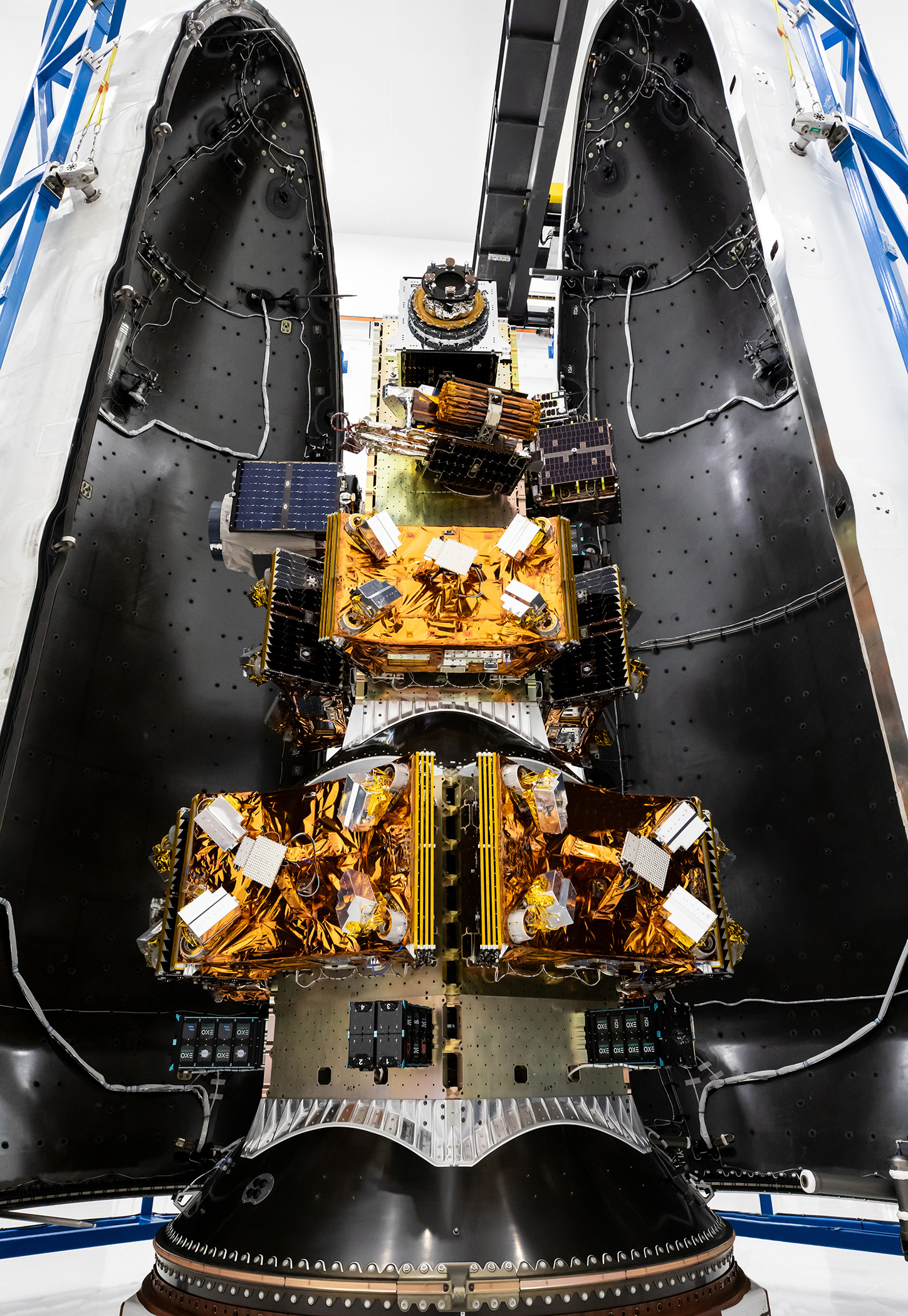
NASA’s Pandora Small Satellite Launched – NASA’s Pandora small satellite, and NASA-sponsored Star-Planet Activity Research CubeSat (SPARCS), and Black Hole Coded Aperture Telescope (BlackCAT) CubeSat, are ready to be encapsulated inside a SpaceX Falcon 9 payload fairing in this early January 2026 photo. Pandora and the CubeSats launched Sunday, Jan. 11, from Vandenberg Space Force Base located on California’s central coast.

NASA’s Pandora small satellite, and NASA-sponsored Star-Planet Activity Research CubeSat (SPARCS), and Black Hole Coded Aperture Telescope (BlackCAT) CubeSat, are ready to be encapsulated inside a SpaceX Falcon 9 payload fairing in this early January 2026 photo. Pandora and the CubeSats launched Sunday, Jan. 11, from Vandenberg Space Force Base located on California’s central coast.

Read More
Picture of the day


Redstart (Phoenicurus phoenicurus) male ringed, Għadira Nature Reserve, Malta. Bird ringing is a vital activity that helps protect birds. In Malta, birds are humanely caught in mist nets which are checked every ten minutes. Each bird is ringed and weighed before being released. About 10% are retraps (i.e. they have been ringed before). The programme is carried on by BirdLife Malta.Ringing has shown that birds from at least 48 countries use Malta during migration. Unfortunately, Malta has the densest population of bird hunters in the European Union. The high numbers of wild birds illegally shot in Malta has led to the European Commission taking legal infringement proceedings against the Maltese Government over Article 5 of the Birds Directive.
 #ImageOfTheDay
Picture of the day
Redstart (Phoenicurus phoenicurus) male ringed, Għadira Nature Reserve, Malta. Bird ringing is a vital activity that helps protect birds. In Malta, birds are humanely caught in mist nets which are checked every ten minutes. Each bird is ringed and weighed before being released. About 10% are retraps (i.e. they have been ringed before). The programme is carried on by BirdLife Malta.
Ringing has shown that birds from at least 48 countries use Malta during migration. Unfortunately, Malta has the densest population of bird hunters in the European Union. The high numbers of wild birds illegally shot in Malta has led to the European Commission taking legal infringement proceedings against the Maltese Government over Article 5 of the Birds Directive.
Read More