America

Catholic historians reflect on the Church’s role as America marks 250 years #Catholic As the United States prepares to celebrate the 250th anniversary of its founding, two Catholic historians say the nationʼs story cannot be fully understood without recognizing the role Catholics have played in shaping American life.In a July 3 “EWTN News in Depth” interview with Catherine Hadro, Kathleen Sprows Cummings of the University of Notre Dame and Christopher Shannon of Christendom College reflected on the complex history of Catholicism in the United States. Cummings, director of Notre Dameʼs Global Catholic Research Initiative, said it is difficult for many Americans today to imagine the level of hostility Catholics once faced.“It’s hard to imagine today the extent to which Catholics were seen as not welcome in the United States,” she said. Nineteenth-century Catholic immigrants, particularly those arriving from Ireland, Italy, and Eastern Europe, were often viewed with suspicion because they were poor, came from “undesirable” countries, and were believed to be “loyal to the pope.”“Anti-Catholicism in the 19th century often meant anti-papist,” Cummings explained, noting that many Americans feared the pope harbored “imperial designs on the United States.”Despite that prejudice, Catholics gradually demonstrated their loyalty to the nation through military service, civic life, and public leadership, she said.Shannon, author of “American Pilgrimage: A Historical Journey Through Catholic Life in a New World,” said Catholics ultimately proved themselves to be deeply patriotic, though often “on their own terms.”“Catholics seem just so darn American now,” he said.The conversation also highlighted the witness of American saints, including St. Frances Xavier Cabrini, St. Elizabeth Ann Seton, and St. John Neumann, whose lives demonstrated, Cummings said, the harmony between “patriotism and sanctity.”The historians also discussed Catholic political leaders from Al Smith to President John F. Kennedy, the challenges of living an authentically Catholic public life, and what the election of Pope Leo XIV, the first U.S.-born pope, means for American Catholics.Calling the moment “truly astonishing,” Cummings said an American pope “would have been a travesty at home and an absurdity in Rome” for much of U.S. history. Yet she emphasized that Catholics should remember Pope Leo “views the world not primarily through an American filter, but through a Catholic lens.”

Catholic historians reflect on the Church’s role as America marks 250 years #Catholic As the United States prepares to celebrate the 250th anniversary of its founding, two Catholic historians say the nationʼs story cannot be fully understood without recognizing the role Catholics have played in shaping American life.In a July 3 “EWTN News in Depth” interview with Catherine Hadro, Kathleen Sprows Cummings of the University of Notre Dame and Christopher Shannon of Christendom College reflected on the complex history of Catholicism in the United States. Cummings, director of Notre Dameʼs Global Catholic Research Initiative, said it is difficult for many Americans today to imagine the level of hostility Catholics once faced.“It’s hard to imagine today the extent to which Catholics were seen as not welcome in the United States,” she said. Nineteenth-century Catholic immigrants, particularly those arriving from Ireland, Italy, and Eastern Europe, were often viewed with suspicion because they were poor, came from “undesirable” countries, and were believed to be “loyal to the pope.”“Anti-Catholicism in the 19th century often meant anti-papist,” Cummings explained, noting that many Americans feared the pope harbored “imperial designs on the United States.”Despite that prejudice, Catholics gradually demonstrated their loyalty to the nation through military service, civic life, and public leadership, she said.Shannon, author of “American Pilgrimage: A Historical Journey Through Catholic Life in a New World,” said Catholics ultimately proved themselves to be deeply patriotic, though often “on their own terms.”“Catholics seem just so darn American now,” he said.The conversation also highlighted the witness of American saints, including St. Frances Xavier Cabrini, St. Elizabeth Ann Seton, and St. John Neumann, whose lives demonstrated, Cummings said, the harmony between “patriotism and sanctity.”The historians also discussed Catholic political leaders from Al Smith to President John F. Kennedy, the challenges of living an authentically Catholic public life, and what the election of Pope Leo XIV, the first U.S.-born pope, means for American Catholics.Calling the moment “truly astonishing,” Cummings said an American pope “would have been a travesty at home and an absurdity in Rome” for much of U.S. history. Yet she emphasized that Catholics should remember Pope Leo “views the world not primarily through an American filter, but through a Catholic lens.”

Dr. Kathleen Sprows Cummings of the University of Notre Dame and Dr. Christopher Shannon of Christendom College reflected on the complex history of Catholicism in the United States.

Read More
Perpetual Eucharistic pilgrims reflect on ‘being with Christ 24/7’ as pilgrimage nears end #Catholic When John Paul Flynn, a rising junior at The Catholic University of America, decided to do mission work, he did not realize he would be doing it with Christ himself.Since May 24, Flynn has been part of a nine-person team taking the Blessed Sacrament across 18 dioceses as part of the National Eucharistic Pilgrimage, which will finish in Philadelphia on Sunday in celebration of the country’s 250th anniversary celebrations. Pope Leo XIV will deliver a video message prior to the closing Mass in the  Cathedral Basilica of Saints Peter and Paul. 
 
 Perpetual pilgrim John Paul Flynn. Photo credit: Simple Heart Photography in partnership with the National Eucharistic Congress.
 
 The 2026 pilgrimage is under the patronage of Saint Frances Xavier Cabrini, the first United States citizen to be canonized. During Pope Leo XIV’s visit to Pavia on June 20th, he venerated a relic of the heart of Saint Frances Xavier Cabrini brought from Codogno. The pope’s veneration of St. Frances’ relic occurred the same week that Flynn and his fellow perpetual pilgrims accompanied the Eucharist to a private retreat at the Mother Cabrini National Shrine in Manhattan, where the saint is buried.The procession crossed the Delaware River in homage to the route George Washington took during his iconic crossing there in 1776.Another highlight for Flynn was when the monstrance was lifted high in front of the Washington Monument. “I knew I wanted to do mission work. I saw an application, prayed about it, and applied to be a part of the team,” Flynn, a social media coordinator and photographer, told EWTN News. “I knew I wanted to use my talents for Christ. This is a special opportunity to be with Christ 24/7.”In this case, “24/7” means taking the Tabernacle by van in between pilgrimage stops and accompanying the Eucharist down city streets, country roads, even into retirement homes, and encountering people of “diverse communities,” he said. When Flynn and the team recently walked through Boston, including down the Freedom Trail, they were joined by some 3,000 fellow believers, the biggest showing on the pilgrimage yet.Pilgrim Raymond Martinez, II, a fourth-year seminarian at Conception Seminary College in Conception, Missouri, said the processions and the timing around the nation’s milestone made him reflect on the history of the Church in America, and how far Catholics had come from, being excluded from public office to being able to worship freely like they did this summer.
 
 Perpetual pilgrim Raymond Martinez. Photo credit: Simple Heart Photography in partnership with the National Eucharistic Congress.
 
 The closing events in Philadelphia on Independence Day weekend will draw pilgrims to two shrines that speak to the legacy of the Church in America: the tomb of St. Katharine Drexel, the first native-born United States citizen to be canonized, and the shrine of Saint John Neumann, the first canonized American bishop.Martinez and Flynn both said they encountered the occasional heckler as well as commuters annoyed by street closures, but overall, the reception in the processions was positive and conducive to evangelization. "If youʼve pulled off all these logistics, there must be divine help,“ they recalled an atheist telling them in Georgia.While Flynn managed social media, Martinez was tasked with missionary work from handing out prayer cards, t-shirts and food to homeless people watching from the sidelines to answering questions from curious bystanders who had never seen the Eucharist.Flynn and Martinez said that the response they received from non-Catholics — as well as those estranged from the Church — was worth the long days, many in extreme heat. One bystander told pilgrims he was Catholic but had never actually attended Mass. Another they encountered on a boardwalk explained he had been away from the Church for years but felt inspired to return.The pilgrimage will continue next year, with the goal of visiting all fifty states. The next National Eucharistic Congress will take place in 2029 and is still collecting prayer intentions from across the country and Holy Hour pledges as part of its goal of offering 250,000 Holy Hours in honor of the anniversary year.

Perpetual Eucharistic pilgrims reflect on ‘being with Christ 24/7’ as pilgrimage nears end #Catholic When John Paul Flynn, a rising junior at The Catholic University of America, decided to do mission work, he did not realize he would be doing it with Christ himself.Since May 24, Flynn has been part of a nine-person team taking the Blessed Sacrament across 18 dioceses as part of the National Eucharistic Pilgrimage, which will finish in Philadelphia on Sunday in celebration of the country’s 250th anniversary celebrations. Pope Leo XIV will deliver a video message prior to the closing Mass in the  Cathedral Basilica of Saints Peter and Paul. Perpetual pilgrim John Paul Flynn. Photo credit: Simple Heart Photography in partnership with the National Eucharistic Congress. The 2026 pilgrimage is under the patronage of Saint Frances Xavier Cabrini, the first United States citizen to be canonized. During Pope Leo XIV’s visit to Pavia on June 20th, he venerated a relic of the heart of Saint Frances Xavier Cabrini brought from Codogno. The pope’s veneration of St. Frances’ relic occurred the same week that Flynn and his fellow perpetual pilgrims accompanied the Eucharist to a private retreat at the Mother Cabrini National Shrine in Manhattan, where the saint is buried.The procession crossed the Delaware River in homage to the route George Washington took during his iconic crossing there in 1776.Another highlight for Flynn was when the monstrance was lifted high in front of the Washington Monument. “I knew I wanted to do mission work. I saw an application, prayed about it, and applied to be a part of the team,” Flynn, a social media coordinator and photographer, told EWTN News. “I knew I wanted to use my talents for Christ. This is a special opportunity to be with Christ 24/7.”In this case, “24/7” means taking the Tabernacle by van in between pilgrimage stops and accompanying the Eucharist down city streets, country roads, even into retirement homes, and encountering people of “diverse communities,” he said. When Flynn and the team recently walked through Boston, including down the Freedom Trail, they were joined by some 3,000 fellow believers, the biggest showing on the pilgrimage yet.Pilgrim Raymond Martinez, II, a fourth-year seminarian at Conception Seminary College in Conception, Missouri, said the processions and the timing around the nation’s milestone made him reflect on the history of the Church in America, and how far Catholics had come from, being excluded from public office to being able to worship freely like they did this summer. Perpetual pilgrim Raymond Martinez. Photo credit: Simple Heart Photography in partnership with the National Eucharistic Congress. The closing events in Philadelphia on Independence Day weekend will draw pilgrims to two shrines that speak to the legacy of the Church in America: the tomb of St. Katharine Drexel, the first native-born United States citizen to be canonized, and the shrine of Saint John Neumann, the first canonized American bishop.Martinez and Flynn both said they encountered the occasional heckler as well as commuters annoyed by street closures, but overall, the reception in the processions was positive and conducive to evangelization. "If youʼve pulled off all these logistics, there must be divine help,“ they recalled an atheist telling them in Georgia.While Flynn managed social media, Martinez was tasked with missionary work from handing out prayer cards, t-shirts and food to homeless people watching from the sidelines to answering questions from curious bystanders who had never seen the Eucharist.Flynn and Martinez said that the response they received from non-Catholics — as well as those estranged from the Church — was worth the long days, many in extreme heat. One bystander told pilgrims he was Catholic but had never actually attended Mass. Another they encountered on a boardwalk explained he had been away from the Church for years but felt inspired to return.The pilgrimage will continue next year, with the goal of visiting all fifty states. The next National Eucharistic Congress will take place in 2029 and is still collecting prayer intentions from across the country and Holy Hour pledges as part of its goal of offering 250,000 Holy Hours in honor of the anniversary year.

A nine-person team has taken the Blessed Sacrament across 18 dioceses as part of the National Eucharistic Pilgrimage, which will come to an end in Philadelphia on July 5.

Read More
Pope Leo XIV accepts Constitution Center’s 2026 Liberty Medal: ‘I am honored’ #Catholic PHILADELPHIA — Pope Leo XIV said he was “honored” to accept the 2026 Liberty Medal from the National Constitution Center (NCC) in livestreamed remarks delivered for the ceremony in Philadelphia on July 3.“I am honored to accept the Liberty Medal of the National Constitution Center in this year that marks the 250th anniversary of the founding of the United States of America with the signing of the Declaration of Independence on July 4, 1776,” the Holy Father said.Leo was born in Chicago but earned a bachelor’s degree at Villanova University in the Philadelphia suburbs. The NCC presented the award to the pontiff in person at the Vatican on April 30, ahead of the ceremony.In his remarks, Leo thanked those gathered in Philadelphia for the occasion. The NCC building overlooks the Liberty Bell and Independence Hall, where the country’s founders developed and adopted the Declaration of Independence, the Constitution, and the Bill of Rights.“As a son of this great country, founded by courageous men and women who dreamed of liberty and of a better life for themselves and for their children, I join you in asking God’s blessings upon America’s future, that the lofty ideals enshrined at the beginning of the Declaration of Independence may continue to guide the flourishing of the nation in unity, justice, and peace,” Leo said.“From our youth, most of us have admired the eloquence of those words, with their resounding appeal to the law of nature and to nature’s God as the basis of their assertion that all men and women are created equal and endowed by their Creator with certain inalienable rights, including the right to life, liberty, and the pursuit of happiness,” he said.The pontiff said that although the text employed “the language of the Enlightenment,” the claim is “ultimately grounded in an understanding of the human person inspired by the great biblical vision of man and woman being created in the divine image.”“It is indeed here that we discover the basis of human dignity; dignity which precedes the establishment of any state and whose custody constitutes its very purpose,” Leo said.
 
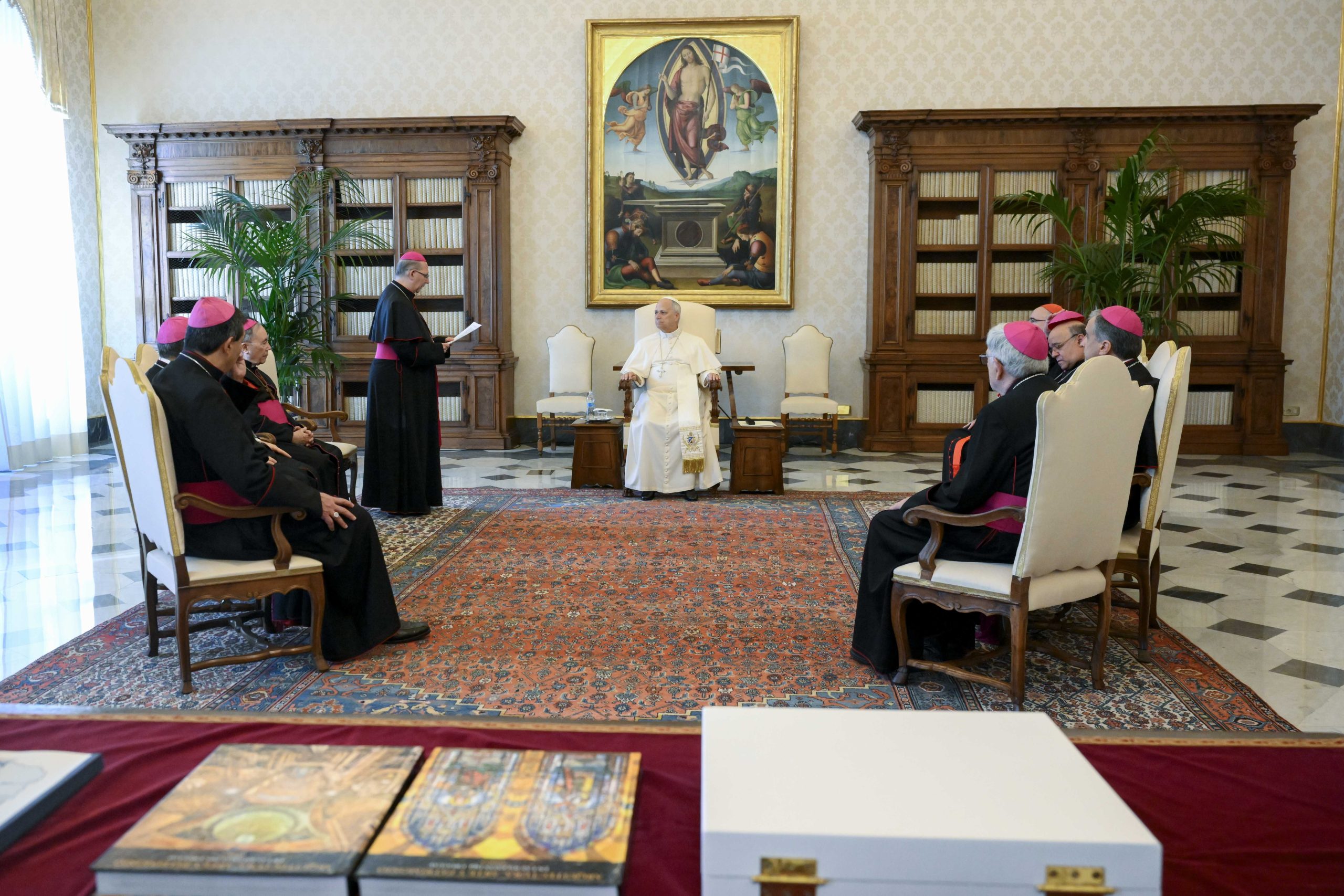
 Pope Leo XIV watches the livestreamed ceremony between the Vatican and the National Constitution Center in Philadelphia on July 3, 2026. | Credit: Vatican Media
 
 Respecting the right to life “in every form and condition,” he said, is directly tied to the nation’s vitality. He said society must cultivate a reverence for life that “sways the hearts of individuals and inspires laws that recognize and safeguard this gift from the moment of conception to natural death.”The right to liberty, the pontiff said, is much deeper than simply doing what one wants. It is “founded upon the human person’s capacity to know the truth and adhere to what is good, even at great cost — a sacrifice well known to many who have labored to shape this country,” he said.“The desire for truth and freedom, as well as the very pursuit of happiness, continues to inspire people of all generations to ask fundamental questions regarding the meaning of life, our ultimate purpose, and indeed about God, and it is proper for magnanimous hearts to endeavor to answer these questions with sincerity,” Leo said.The Holy Father said that religious freedom, to be “free from fear and coercion, as enshrined in the First Amendment to the United States Constitution,” is needed to answer those questions.“It is my hope that this tradition will continue to bear fruit in a public discourse marked by moderation, respect for the views of others, and an ongoing effort to find common ground in promoting the cause of peace and reconciliation, at home and abroad,” he added.The pope said he is praying that the 250th anniversary of the United States “may be the occasion of a solemn recommitment to these ideals that have made America a country that values peace and prosperity, a country characterized by generosity and nobility of heart.”Archbishop Perez, Gov. Shapiro speakThe ceremony was attended by a few hundred guests and included other speakers, such as Philadelphia Archbishop Nelson J. Perez, Pennsylvania Gov. Josh Shapiro, state Attorney General Dave Sunday, Philadelphia Mayor Cherelle L. Parker, and local Christian, Muslim, and Jewish religious leaders.Perez said throughout Leo’s life — as priest, bishop, cardinal, and pope — he has defended the “inherent dignity of all people and building pathways to peace,” including a defense of religious freedom.“True freedom stems from defending dignity and the value of every human being,” he said.Perez told EWTN News following the event that the pope’s words “bring us back to our origins” as Americans regarding the right to life, liberty, and the pursuit of happiness.“It was wonderful to hear him once again bring us back to center, that we all were created in a very image and likeness of God,” the archbishop said. “Our human dignity and our rights flow from that. They flow from being created in Godʼs image and likeness and from there flows our freedom and the heart that seeks God.”“Itʼs a wonderful day for Philadelphia,” Perez said. “Itʼs a wonderful day for the country. Itʼs a wonderful day for the world.”Shapiro congratulated the pope on receiving the award and thanked the Holy Father, on behalf of Pennsylvania, “for using your voice, your power, to advance religious liberty for all people.”The ceremony included the ringing of a replica of the Liberty Bell just outside the building. It was rung by Sunday, the attorney general, who recalled the words of Benjamin Franklin when the Founding Father was asked what form of government they had created after the constitutional convention: “A republic, if you can keep it.”“Our Constitution is the rock upon which we will build in the next 250 years,” Sunday said.

Pope Leo XIV accepts Constitution Center’s 2026 Liberty Medal: ‘I am honored’ #Catholic PHILADELPHIA — Pope Leo XIV said he was “honored” to accept the 2026 Liberty Medal from the National Constitution Center (NCC) in livestreamed remarks delivered for the ceremony in Philadelphia on July 3.“I am honored to accept the Liberty Medal of the National Constitution Center in this year that marks the 250th anniversary of the founding of the United States of America with the signing of the Declaration of Independence on July 4, 1776,” the Holy Father said.Leo was born in Chicago but earned a bachelor’s degree at Villanova University in the Philadelphia suburbs. The NCC presented the award to the pontiff in person at the Vatican on April 30, ahead of the ceremony.In his remarks, Leo thanked those gathered in Philadelphia for the occasion. The NCC building overlooks the Liberty Bell and Independence Hall, where the country’s founders developed and adopted the Declaration of Independence, the Constitution, and the Bill of Rights.“As a son of this great country, founded by courageous men and women who dreamed of liberty and of a better life for themselves and for their children, I join you in asking God’s blessings upon America’s future, that the lofty ideals enshrined at the beginning of the Declaration of Independence may continue to guide the flourishing of the nation in unity, justice, and peace,” Leo said.“From our youth, most of us have admired the eloquence of those words, with their resounding appeal to the law of nature and to nature’s God as the basis of their assertion that all men and women are created equal and endowed by their Creator with certain inalienable rights, including the right to life, liberty, and the pursuit of happiness,” he said.The pontiff said that although the text employed “the language of the Enlightenment,” the claim is “ultimately grounded in an understanding of the human person inspired by the great biblical vision of man and woman being created in the divine image.”“It is indeed here that we discover the basis of human dignity; dignity which precedes the establishment of any state and whose custody constitutes its very purpose,” Leo said. Pope Leo XIV watches the livestreamed ceremony between the Vatican and the National Constitution Center in Philadelphia on July 3, 2026. | Credit: Vatican Media Respecting the right to life “in every form and condition,” he said, is directly tied to the nation’s vitality. He said society must cultivate a reverence for life that “sways the hearts of individuals and inspires laws that recognize and safeguard this gift from the moment of conception to natural death.”The right to liberty, the pontiff said, is much deeper than simply doing what one wants. It is “founded upon the human person’s capacity to know the truth and adhere to what is good, even at great cost — a sacrifice well known to many who have labored to shape this country,” he said.“The desire for truth and freedom, as well as the very pursuit of happiness, continues to inspire people of all generations to ask fundamental questions regarding the meaning of life, our ultimate purpose, and indeed about God, and it is proper for magnanimous hearts to endeavor to answer these questions with sincerity,” Leo said.The Holy Father said that religious freedom, to be “free from fear and coercion, as enshrined in the First Amendment to the United States Constitution,” is needed to answer those questions.“It is my hope that this tradition will continue to bear fruit in a public discourse marked by moderation, respect for the views of others, and an ongoing effort to find common ground in promoting the cause of peace and reconciliation, at home and abroad,” he added.The pope said he is praying that the 250th anniversary of the United States “may be the occasion of a solemn recommitment to these ideals that have made America a country that values peace and prosperity, a country characterized by generosity and nobility of heart.”Archbishop Perez, Gov. Shapiro speakThe ceremony was attended by a few hundred guests and included other speakers, such as Philadelphia Archbishop Nelson J. Perez, Pennsylvania Gov. Josh Shapiro, state Attorney General Dave Sunday, Philadelphia Mayor Cherelle L. Parker, and local Christian, Muslim, and Jewish religious leaders.Perez said throughout Leo’s life — as priest, bishop, cardinal, and pope — he has defended the “inherent dignity of all people and building pathways to peace,” including a defense of religious freedom.“True freedom stems from defending dignity and the value of every human being,” he said.Perez told EWTN News following the event that the pope’s words “bring us back to our origins” as Americans regarding the right to life, liberty, and the pursuit of happiness.“It was wonderful to hear him once again bring us back to center, that we all were created in a very image and likeness of God,” the archbishop said. “Our human dignity and our rights flow from that. They flow from being created in Godʼs image and likeness and from there flows our freedom and the heart that seeks God.”“Itʼs a wonderful day for Philadelphia,” Perez said. “Itʼs a wonderful day for the country. Itʼs a wonderful day for the world.”Shapiro congratulated the pope on receiving the award and thanked the Holy Father, on behalf of Pennsylvania, “for using your voice, your power, to advance religious liberty for all people.”The ceremony included the ringing of a replica of the Liberty Bell just outside the building. It was rung by Sunday, the attorney general, who recalled the words of Benjamin Franklin when the Founding Father was asked what form of government they had created after the constitutional convention: “A republic, if you can keep it.”“Our Constitution is the rock upon which we will build in the next 250 years,” Sunday said.

The pope delivered livestreamed remarks, praising the values enshrined in the Declaration of Independence: the rights to life, liberty, and the pursuit of happiness.

Read More
Wyoming Catholic College student wins Presidential 1776 Award #Catholic Incoming Wyoming Catholic College student Miriam Washut took home a 0,000 scholarship after winning first place in the first-ever Presidential 1776 Awards, a nationwide civics competition.Washut, who is the daughter of Wyoming Catholic College President Kyle Washut, emerged triumphant from among 20 finalists and over 8,000 students from all 50 states and territories who entered the competition.Washut, along with the second and third place winners, met with President Donald Trump in the Oval Office July 1 alongside U.S. Secretary of Education Linda McMahon.TweetMcMahon said the award “recognizes students who have demonstrated a deep understanding of America’s founding principles and enthusiasm for learning America’s story. What better way to celebrate 250 years of this great nation than by honoring those who will carry us into the next 250!”University of Mary launches graduate school of theology in ArizonaThe University of Mary has announced it will open a graduate school of theology in Phoenix in the fall.The satellite graduate school will offer a four-year master of divinity degree and a 36-credit master of arts in theology, taught in person at the Arizona Center, located across from St. Mary’s Basilica and the diocesan pastoral center, the university announced on June 30. The university described the move as a further development of its “long-standing partnership with the Diocese of Phoenix and Nazareth Seminary,” and an expansion of its Arizona mission. “What originally started as undergraduate formation for the seminarians of the diocese has blossomed into an academic program that now includes master’s-level work,” said Eric Westby, associate professor of theology at the university. “This formation will help students know their faith more deeply and be equipped to pass it on in a variety of settings,” he added. Benedictine College to open Independence Hall-themed library  Benedictine College in Atchison, Kansas, will hold a soft-launch opening of its new library, built to resemble Independence Hall in Philadelphia, on July 4.
 
 Benedictine Collegeʼs new library is designed to simultaneously honor the Catholic intellectual tradition and the principles of American liberty. | Credit: Courtesy of Benedictine College
 
 The interior of the new library includes an exact replica of Independence Hall’s historic Assembly Room, where America’s Declaration of Independence was debated and signed. The Assembly Room will be open to the public from 9 a.m. to noon, the college said in a press release. Visitors to the library, which is in the final stages of construction, will also be able to view a replica of the Liberty Bell. Visitors will also have the opportunity to view a collection of historic documents through an exhibit titled “Celebrating the American Experiment.”“Thirty-nine documents trace the story of the American founding and its origins in centuries of Western political thought,” the exhibit page states. “Among them are works by Aristotle, Cicero, John Locke, and Algernon Sidney, as well as the Declaration of Independence, the Federalist Papers, and a rare 1788 printing of the Constitution of the United States, one of only five known copies in existence.”DeSantis blocks funding for security improvements at Catholic schoolsRepublican Florida Gov. Ron DeSantis has vetoed a bill that would have allocated  million in state funding for security improvements at Catholic schools in Miami-Dade County. The veto came after the Florida Legislature passed the bill on May 29.The Archdiocese of Miami expressed its disappointment with the veto and thanked lawmakers for their efforts to pass legislation to protect its more than 37,000 students. “Security enhancements are not a luxury; they are an essential component of providing safe environments where students can learn and thrive,” the Archdiocese of Miami said in a June 29 statement. The archdiocese noted that it does not receive any funding to offset security costs, despite other privately-run public charter schools in the state receiving government aid.

Wyoming Catholic College student wins Presidential 1776 Award #Catholic Incoming Wyoming Catholic College student Miriam Washut took home a $150,000 scholarship after winning first place in the first-ever Presidential 1776 Awards, a nationwide civics competition.Washut, who is the daughter of Wyoming Catholic College President Kyle Washut, emerged triumphant from among 20 finalists and over 8,000 students from all 50 states and territories who entered the competition.Washut, along with the second and third place winners, met with President Donald Trump in the Oval Office July 1 alongside U.S. Secretary of Education Linda McMahon.TweetMcMahon said the award “recognizes students who have demonstrated a deep understanding of America’s founding principles and enthusiasm for learning America’s story. What better way to celebrate 250 years of this great nation than by honoring those who will carry us into the next 250!”University of Mary launches graduate school of theology in ArizonaThe University of Mary has announced it will open a graduate school of theology in Phoenix in the fall.The satellite graduate school will offer a four-year master of divinity degree and a 36-credit master of arts in theology, taught in person at the Arizona Center, located across from St. Mary’s Basilica and the diocesan pastoral center, the university announced on June 30. The university described the move as a further development of its “long-standing partnership with the Diocese of Phoenix and Nazareth Seminary,” and an expansion of its Arizona mission. “What originally started as undergraduate formation for the seminarians of the diocese has blossomed into an academic program that now includes master’s-level work,” said Eric Westby, associate professor of theology at the university. “This formation will help students know their faith more deeply and be equipped to pass it on in a variety of settings,” he added. Benedictine College to open Independence Hall-themed library  Benedictine College in Atchison, Kansas, will hold a soft-launch opening of its new library, built to resemble Independence Hall in Philadelphia, on July 4. Benedictine Collegeʼs new library is designed to simultaneously honor the Catholic intellectual tradition and the principles of American liberty. | Credit: Courtesy of Benedictine College The interior of the new library includes an exact replica of Independence Hall’s historic Assembly Room, where America’s Declaration of Independence was debated and signed. The Assembly Room will be open to the public from 9 a.m. to noon, the college said in a press release. Visitors to the library, which is in the final stages of construction, will also be able to view a replica of the Liberty Bell. Visitors will also have the opportunity to view a collection of historic documents through an exhibit titled “Celebrating the American Experiment.”“Thirty-nine documents trace the story of the American founding and its origins in centuries of Western political thought,” the exhibit page states. “Among them are works by Aristotle, Cicero, John Locke, and Algernon Sidney, as well as the Declaration of Independence, the Federalist Papers, and a rare 1788 printing of the Constitution of the United States, one of only five known copies in existence.”DeSantis blocks funding for security improvements at Catholic schoolsRepublican Florida Gov. Ron DeSantis has vetoed a bill that would have allocated $15 million in state funding for security improvements at Catholic schools in Miami-Dade County. The veto came after the Florida Legislature passed the bill on May 29.The Archdiocese of Miami expressed its disappointment with the veto and thanked lawmakers for their efforts to pass legislation to protect its more than 37,000 students. “Security enhancements are not a luxury; they are an essential component of providing safe environments where students can learn and thrive,” the Archdiocese of Miami said in a June 29 statement. The archdiocese noted that it does not receive any funding to offset security costs, despite other privately-run public charter schools in the state receiving government aid.

A Wyoming Catholic College student wins a White House civics competition, Benedictine College shows off its new library, and more in this week’s roundup of Catholic education news in the U.S.

Read More
Procession urges dignity and respect for migrants at border crossing #Catholic Catholic bishops, clergy, and hundreds of faithful processed across the U.S.–Mexico border to celebrate the contribution of immigrants in America ahead of the 250th anniversary of the nation.
 
 Catholic bishops, clergy, and hundreds of faithful attended the Border Mass 250 at Sacred Heart Church in Nogales, Arizona, on June 26, 2026. | Credit: Photo courtesy of Brett Meister/Diocese of Phoenix
 
 “Weʼre here as shepherds and as pastors to walk with people, to listen to people, and to be well together with the people of God here at the border,” Bishop James Misko of Tucson, Arizona, said at the event.“We call ourselves Christians. To be called a Christian means to be like Christ — to be living a life as conformed to Christ as possible. And we know that justice is being in right relationship with God and one another,” Misko said.Organized by the dioceses of Tucson and Phoenix in partnership with the Kino Border Initiative, the Hope Border Institute, and the Center for Migration Studies, the June 26 event included a conversation on immigration with U.S. Catholic bishops, Mass at Sacred Heart Church in Nogales, Arizona, and a rosary procession across the international line.The pastoral conversation on migration and human dignity “was a great conversation with five bishops about what the Church holds to be true when it comes to migration and human dignity,” Misko said.Misko and Bishop John Dolan of Phoenix were joined in conversation by Archbishop John Wester of Santa Fe, New Mexico; Bishop Mark Seitz of El Paso, Texas; and Bishop Emeritus Gerald Kicanas of Tucson.
 
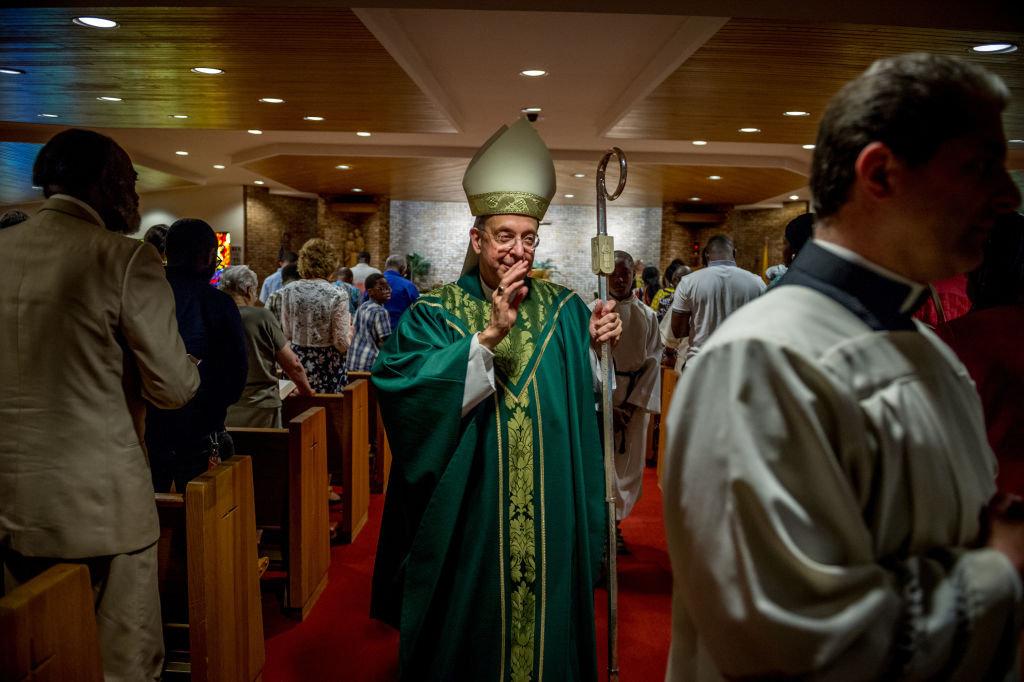
 Bishop Mark Seitz of El Paso, Texas; Archbishop John Wester of Santa Fe, New Mexico; Bishop James Misko of Tucson, Arizona; Bishop John Dolan of Phoenix; and Bishop Gerald Kicanas of Tucson, Arizona, gather for the Border Mass 250 in Nogales, Arizona on June 26, 2026. | Credit: Photo courtesy of Brett Meister/Diocese of Phoenix
 
 “As we mark the 250th anniversary of the Declaration of Independence, we are reminded that we are made by our Creator with certain inalienable rights. Theyʼre given by God,” Seitz said at the event.“That is a fundamental reality that we in the Church always have in mind and that no policy, no executive order or Supreme Court decision can take away,” Seitz said.After the bishops celebrated Mass, the procession began at the Arizona parish and concluded at Parroquia De Pa Purísima Concepción — a Catholic church in Nogales, Sonora, Mexico. The group ended the event with a meal with migrants hosted by the Kino Border Initiative.Mexican bishops José Luis Cerra Luna of Nogales and Enrique Sanchez Martinez of Mexicali also participated in the binational event.
 
 U.S. and Mexican bishops celebrate the Border Mass 250 at Sacred Heart Church in Nogales, Arizona, on June 26, 2026. | Credit: Photo courtesy of Brett Meister/Diocese of Phoenix
 
 U.S. bishops have ‘almost complete unanimity’ on immigration matter“What is discouraging for me is that as a country, we have not yet been able to address the issue of immigration,” Kicanas said. “The conference of bishops has been clamoring, crying out, for comprehensive immigration reform, and we have not yet been able to accomplish that.”“We have to address the immigration policy of our country — as [do] most countries around the world today. Itʼs a serious concern. All of us want this situation to improve,” Kicanas said.
 
 Bishop Mark Seitz of El Paso, Texas; Archbishop John Wester of Santa Fe, New Mexico; Bishop John Dolan of Phoenix; and Bishop James Misko of Tucson, Arizona, lead the Border Mass 250 rosary procession from Nogales, Arizona, to Nogales, Sonora, Mexico, on June 26, 2026. | Credit: Photo courtesy of Brett Meister/Diocese of Phoenix
 
 “The bishops have been advocating for comprehensive immigration reform for a long, long time,” and Border Mass 250 “was just one more example of that,” Wester said.The event followed other calls for reform including pastoral letters on immigration and a special message from the United States Conference of Catholic Bishops highlighting their opposition to “the indiscriminate mass deportation of people.”The bishops approved the message at their 2025 fall plenary assembly on Nov. 12, 2025, where the motion passed with support from more than 95% of the American bishops who voted.“One of the key principles of Catholic social teaching is solidarity — that weʼre together,” Wester said. “But this is an issue, Iʼd say, that enjoys almost complete unanimity in the bishops’ conference.”The bishops are addressing the matter as communities across the country “are looking for a clear moral response to the human cost of mass detention and deportation,” Dylan Corbett, executive director at Hope Border Institute, told EWTN News.“In union with Pope Leo XIV, who will soon go to Lampedusa, the border Mass in Nogales was a way for the Catholic community to name the suffering, affirm the dignity of those affected by these policies, and commit to working for reform,” said Corbett, who is also a member of the Vatican Dicastery for Promoting Integral Human Development.“In this moment, moral clarity must be matched by ongoing action that recognizes the contributions of immigrants to our country and the urgent need to work for justice,” he said.

Procession urges dignity and respect for migrants at border crossing #Catholic Catholic bishops, clergy, and hundreds of faithful processed across the U.S.–Mexico border to celebrate the contribution of immigrants in America ahead of the 250th anniversary of the nation. Catholic bishops, clergy, and hundreds of faithful attended the Border Mass 250 at Sacred Heart Church in Nogales, Arizona, on June 26, 2026. | Credit: Photo courtesy of Brett Meister/Diocese of Phoenix “Weʼre here as shepherds and as pastors to walk with people, to listen to people, and to be well together with the people of God here at the border,” Bishop James Misko of Tucson, Arizona, said at the event.“We call ourselves Christians. To be called a Christian means to be like Christ — to be living a life as conformed to Christ as possible. And we know that justice is being in right relationship with God and one another,” Misko said.Organized by the dioceses of Tucson and Phoenix in partnership with the Kino Border Initiative, the Hope Border Institute, and the Center for Migration Studies, the June 26 event included a conversation on immigration with U.S. Catholic bishops, Mass at Sacred Heart Church in Nogales, Arizona, and a rosary procession across the international line.The pastoral conversation on migration and human dignity “was a great conversation with five bishops about what the Church holds to be true when it comes to migration and human dignity,” Misko said.Misko and Bishop John Dolan of Phoenix were joined in conversation by Archbishop John Wester of Santa Fe, New Mexico; Bishop Mark Seitz of El Paso, Texas; and Bishop Emeritus Gerald Kicanas of Tucson. Bishop Mark Seitz of El Paso, Texas; Archbishop John Wester of Santa Fe, New Mexico; Bishop James Misko of Tucson, Arizona; Bishop John Dolan of Phoenix; and Bishop Gerald Kicanas of Tucson, Arizona, gather for the Border Mass 250 in Nogales, Arizona on June 26, 2026. | Credit: Photo courtesy of Brett Meister/Diocese of Phoenix “As we mark the 250th anniversary of the Declaration of Independence, we are reminded that we are made by our Creator with certain inalienable rights. Theyʼre given by God,” Seitz said at the event.“That is a fundamental reality that we in the Church always have in mind and that no policy, no executive order or Supreme Court decision can take away,” Seitz said.After the bishops celebrated Mass, the procession began at the Arizona parish and concluded at Parroquia De Pa Purísima Concepción — a Catholic church in Nogales, Sonora, Mexico. The group ended the event with a meal with migrants hosted by the Kino Border Initiative.Mexican bishops José Luis Cerra Luna of Nogales and Enrique Sanchez Martinez of Mexicali also participated in the binational event. U.S. and Mexican bishops celebrate the Border Mass 250 at Sacred Heart Church in Nogales, Arizona, on June 26, 2026. | Credit: Photo courtesy of Brett Meister/Diocese of Phoenix U.S. bishops have ‘almost complete unanimity’ on immigration matter“What is discouraging for me is that as a country, we have not yet been able to address the issue of immigration,” Kicanas said. “The conference of bishops has been clamoring, crying out, for comprehensive immigration reform, and we have not yet been able to accomplish that.”“We have to address the immigration policy of our country — as [do] most countries around the world today. Itʼs a serious concern. All of us want this situation to improve,” Kicanas said. Bishop Mark Seitz of El Paso, Texas; Archbishop John Wester of Santa Fe, New Mexico; Bishop John Dolan of Phoenix; and Bishop James Misko of Tucson, Arizona, lead the Border Mass 250 rosary procession from Nogales, Arizona, to Nogales, Sonora, Mexico, on June 26, 2026. | Credit: Photo courtesy of Brett Meister/Diocese of Phoenix “The bishops have been advocating for comprehensive immigration reform for a long, long time,” and Border Mass 250 “was just one more example of that,” Wester said.The event followed other calls for reform including pastoral letters on immigration and a special message from the United States Conference of Catholic Bishops highlighting their opposition to “the indiscriminate mass deportation of people.”The bishops approved the message at their 2025 fall plenary assembly on Nov. 12, 2025, where the motion passed with support from more than 95% of the American bishops who voted.“One of the key principles of Catholic social teaching is solidarity — that weʼre together,” Wester said. “But this is an issue, Iʼd say, that enjoys almost complete unanimity in the bishops’ conference.”The bishops are addressing the matter as communities across the country “are looking for a clear moral response to the human cost of mass detention and deportation,” Dylan Corbett, executive director at Hope Border Institute, told EWTN News.“In union with Pope Leo XIV, who will soon go to Lampedusa, the border Mass in Nogales was a way for the Catholic community to name the suffering, affirm the dignity of those affected by these policies, and commit to working for reform,” said Corbett, who is also a member of the Vatican Dicastery for Promoting Integral Human Development.“In this moment, moral clarity must be matched by ongoing action that recognizes the contributions of immigrants to our country and the urgent need to work for justice,” he said.

The Border Mass 250 included a conversation on immigration with U.S. Catholic bishops, celebration of a Mass, and a rosary procession across the international line.

Read More
Catholic scholar says classical learning can help renew America #Catholic ANN ARBOR, Michigan — Catholics should be proud of their contributions to the United States, especially for the intellectual tradition inherited from philosophers, theologians, and saints who contributed to the ideas leading to the Declaration of Independence and the Constitution, author and Hillsdale College Professor Matthew Mehan told EWTN News leading up to the 250th anniversary of the nation.Mehan is associate dean and professor of government studies at Hillsdale College’s Washington, D.C. campus. He holds a doctorate in literature from the University of Dallas and recently authored The American Book of Fables, a book for all ages that reflects Mehan’s desire to contribute to national renewal. The fables are set in the American landscape, framed by the Declaration of Independence, and accompanied by historical documents illustrating the country’s history, complexity, and geographical regions. In interviews with EWTN News, the author and scholar said the book grew out of his broader efforts to promote culture renewal through educational reform.“In a sense, it is an unsurprisingly Catholic endeavour of ‘fides et ratio,’” he said. “I wanted something like in church, where there is a papal flag and an American flag, representing faith, morals, love of country, and love of neighbor.” “I’ve always thought that way. I’ve also thought a lot about a combination of those things, with beautiful images and beautiful moral sentiments, and how those come together. So when the semiquinquicentennial was coming up, I thought it would be a great gift to the country.”. Mehan won the America 250 Innovation Prize from the Heritage Foundation for the work.The educator and father of eight said he shares the concerns of many teachers and parents dismayed by the current culture and how education has failed to cultivate virtue, civic pride and responsibility. He and his wife founded a school cooperative in Reston, Virginia that now has 38 participating families. He has also designed curricula for schools across the country. The role of educators is essential, Mehan said, while noting that doctorates are now the equivalent of 19th-century master’s degrees in terms of academic formation. “Catholic academics don’t know their own traditions very well,” he argued. “They know Greek philosophers, and the moderns who reject the Greco-Roman, Judeo-Christian, and Catholic vision of Western civilization and human nature, and may know the Summa Theologica and St. Augustine. But what they don’t know is the poetical and rhetorical tradition which moves people toward a common vision, which is an indispensable part of good letters and a healthy citizenry.” “And they don’t know the Romans,” he added. Drawing on the classical tradition, Mehan noted that Roman thinkers such as Cicero and Seneca prepared the “good soil,” the intellectual antecedents that inspired America’s founders. “Cicero, for instance, was taught in all seminaries until the 1900s,” while Seneca was praised by St. Jerome, he said. And ideas found in Cicero were the underpinnings of the theory of natural rights that informed later Catholic philosophers. Seneca’s De Clementia, for example, contributed to concepts of constitutional democracy and rights that shaped the American experiment in government. These classical authors, he argues, still have relevance and deserve renewed attention in universities and seminaries.
 
 Matthew Mehan is associate dean and professor of government studies at Hillsdale College’s Washington, D.C. campus. | Photo courtesy of Matthew Megan
 
 Asked about the future of Catholic education and how it can play a role in a national renewal, despite the closing of Catholic parishes and schools, Mehan said: “Catholic education is displaying a nascent energy.”“It’s very dynamic and full of people who have reoriented education towards what the Christian humanists of the Catholic tradition understood as their goal, which is to help students have a clean conscience and thus have the most joyful life possible in this life and the next,” he said.For Mehan, moral formation must take precedence over the mere transmission of information. He argues that Catholic education drifted from this mission in the 20th century as it increasingly followed secular models of education.Subjects such as calculus, computer coding, and the sciences are valuable, he said, but they should not be the primary focus of Catholic schools. “If you aim at them, ironically, you won’t get them. If you aim high, you’ll get the high and the low. If you aim for the low, you’ll get nothing. That is why education has collapsed except where the moral life is, ideally, centered around Christ.”Catholics holding doctorates who complain that tenured positions at colleges and universities are scarce should look to K-12 schools to make national renewal a reality, Mehan said.The renewal of Catholic education, and how it can contribute to national renewal, depends on placing Christ at the center and embracing the universal call to holiness emphasized by the Second Vatican Council, he argued. Movements such as Opus Dei and the Neo-catechumenal Way serve as “an enormous engine,” Mehan said, to plant holiness in students and encourage teachers themselves to be saints. It will change “how people teach, how they design curricula, and how they bring forward the richness of the Catholic faith and tradition.” “Actually, I’m very hopeful,” he said.To Catholics who may think of themselves as strangers in the United States, Mehan said, “No, brother, you built this too.” “Your people, your religious tradition, are at home here,” he said. “And you are meant for republican self-government. Augustine’s City of God laid the groundwork, St. Thomas Aquinas built the scaffolding, and St. Thomas More made it shine. American Catholics built this country with sweat, blood, and their arms.” “This is your patrimony too,” he said.

Catholic scholar says classical learning can help renew America #Catholic ANN ARBOR, Michigan — Catholics should be proud of their contributions to the United States, especially for the intellectual tradition inherited from philosophers, theologians, and saints who contributed to the ideas leading to the Declaration of Independence and the Constitution, author and Hillsdale College Professor Matthew Mehan told EWTN News leading up to the 250th anniversary of the nation.Mehan is associate dean and professor of government studies at Hillsdale College’s Washington, D.C. campus. He holds a doctorate in literature from the University of Dallas and recently authored The American Book of Fables, a book for all ages that reflects Mehan’s desire to contribute to national renewal. The fables are set in the American landscape, framed by the Declaration of Independence, and accompanied by historical documents illustrating the country’s history, complexity, and geographical regions. In interviews with EWTN News, the author and scholar said the book grew out of his broader efforts to promote culture renewal through educational reform.“In a sense, it is an unsurprisingly Catholic endeavour of ‘fides et ratio,’” he said. “I wanted something like in church, where there is a papal flag and an American flag, representing faith, morals, love of country, and love of neighbor.” “I’ve always thought that way. I’ve also thought a lot about a combination of those things, with beautiful images and beautiful moral sentiments, and how those come together. So when the semiquinquicentennial was coming up, I thought it would be a great gift to the country.”. Mehan won the America 250 Innovation Prize from the Heritage Foundation for the work.The educator and father of eight said he shares the concerns of many teachers and parents dismayed by the current culture and how education has failed to cultivate virtue, civic pride and responsibility. He and his wife founded a school cooperative in Reston, Virginia that now has 38 participating families. He has also designed curricula for schools across the country. The role of educators is essential, Mehan said, while noting that doctorates are now the equivalent of 19th-century master’s degrees in terms of academic formation. “Catholic academics don’t know their own traditions very well,” he argued. “They know Greek philosophers, and the moderns who reject the Greco-Roman, Judeo-Christian, and Catholic vision of Western civilization and human nature, and may know the Summa Theologica and St. Augustine. But what they don’t know is the poetical and rhetorical tradition which moves people toward a common vision, which is an indispensable part of good letters and a healthy citizenry.” “And they don’t know the Romans,” he added. Drawing on the classical tradition, Mehan noted that Roman thinkers such as Cicero and Seneca prepared the “good soil,” the intellectual antecedents that inspired America’s founders. “Cicero, for instance, was taught in all seminaries until the 1900s,” while Seneca was praised by St. Jerome, he said. And ideas found in Cicero were the underpinnings of the theory of natural rights that informed later Catholic philosophers. Seneca’s De Clementia, for example, contributed to concepts of constitutional democracy and rights that shaped the American experiment in government. These classical authors, he argues, still have relevance and deserve renewed attention in universities and seminaries. Matthew Mehan is associate dean and professor of government studies at Hillsdale College’s Washington, D.C. campus. | Photo courtesy of Matthew Megan Asked about the future of Catholic education and how it can play a role in a national renewal, despite the closing of Catholic parishes and schools, Mehan said: “Catholic education is displaying a nascent energy.”“It’s very dynamic and full of people who have reoriented education towards what the Christian humanists of the Catholic tradition understood as their goal, which is to help students have a clean conscience and thus have the most joyful life possible in this life and the next,” he said.For Mehan, moral formation must take precedence over the mere transmission of information. He argues that Catholic education drifted from this mission in the 20th century as it increasingly followed secular models of education.Subjects such as calculus, computer coding, and the sciences are valuable, he said, but they should not be the primary focus of Catholic schools. “If you aim at them, ironically, you won’t get them. If you aim high, you’ll get the high and the low. If you aim for the low, you’ll get nothing. That is why education has collapsed except where the moral life is, ideally, centered around Christ.”Catholics holding doctorates who complain that tenured positions at colleges and universities are scarce should look to K-12 schools to make national renewal a reality, Mehan said.The renewal of Catholic education, and how it can contribute to national renewal, depends on placing Christ at the center and embracing the universal call to holiness emphasized by the Second Vatican Council, he argued. Movements such as Opus Dei and the Neo-catechumenal Way serve as “an enormous engine,” Mehan said, to plant holiness in students and encourage teachers themselves to be saints. It will change “how people teach, how they design curricula, and how they bring forward the richness of the Catholic faith and tradition.” “Actually, I’m very hopeful,” he said.To Catholics who may think of themselves as strangers in the United States, Mehan said, “No, brother, you built this too.” “Your people, your religious tradition, are at home here,” he said. “And you are meant for republican self-government. Augustine’s City of God laid the groundwork, St. Thomas Aquinas built the scaffolding, and St. Thomas More made it shine. American Catholics built this country with sweat, blood, and their arms.” “This is your patrimony too,” he said.

Author and professor calls on Catholics to revive American culture through faith and classical learning.

Read More
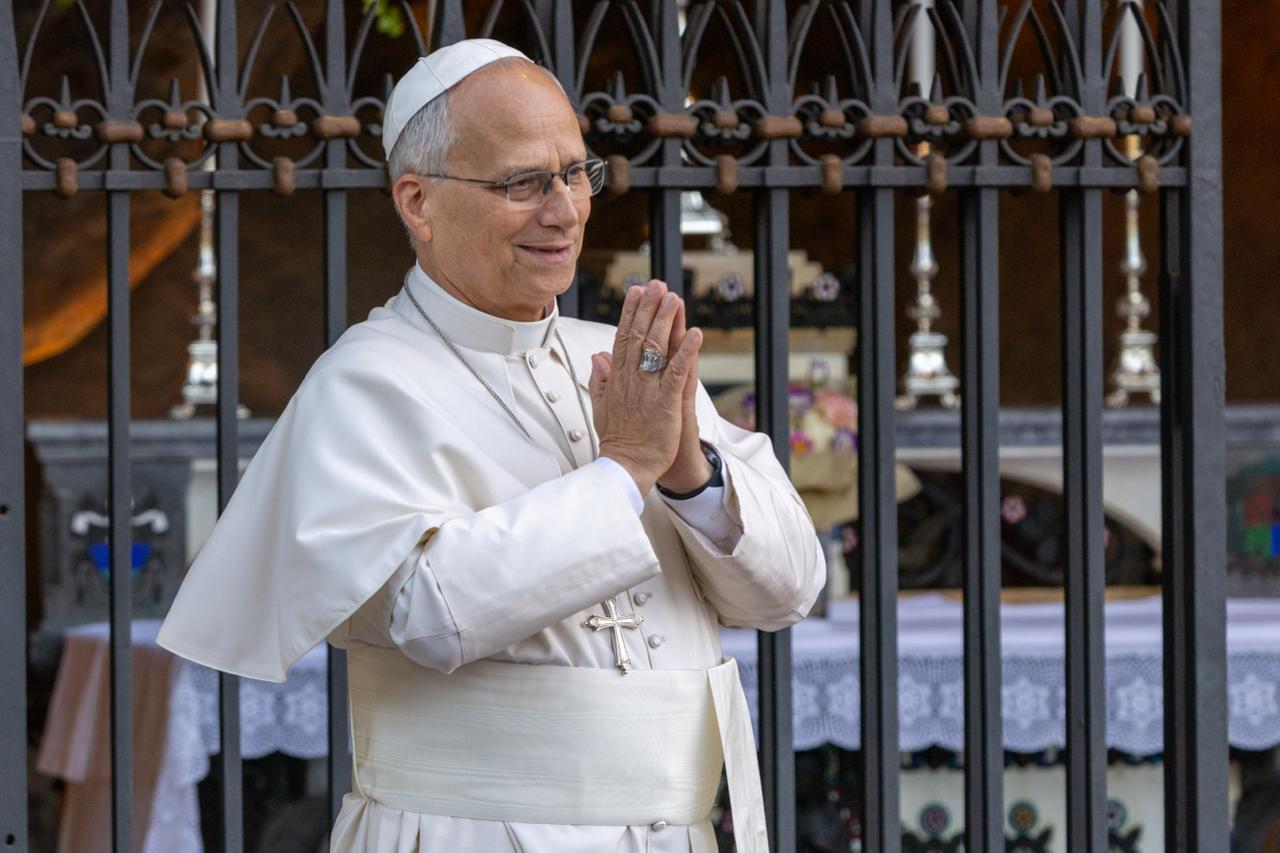
Leo XIV encourages representatives of North American Jesuit colleges as they confront challenges #Catholic In an audience with representatives of Jesuit colleges and universities in North America, Pope Leo XIV proposed four ways to address current challenges.In his address on June 25, the Holy Father referenced several of the major challenges facing humanity, which he said is undergoing an “epochal change.” Specifically, he pointed to the secularization of societies, where many people are “seeking to push any mention of God out of the public sphere and beyond popular culture.”In addition, he pointed to the failure of political systems to address the needs of migrants and the marginalized, as well as the lack of hope among young people, the degradation of the planetʼs resources, and the challenges posed by artificial intelligence.The pope encouraged representatives of Jesuit colleges and universities to confront these challenges by looking to the Society of Jesus’ four Universal Apostolic Preferences, which are four focus areas that are to guide the Jesuits’ mission worldwide from 2019 to 2029. They were developed through a two-year global discernment process involving Jesuits and their lay partners, then confirmed by Pope Francis in 2019.The four Universal Apostolic Preferences are to show the way to God through the Spiritual Exercises and discernment; to walk with the poor, the outcasts, and those whose dignity has been violated in a mission of reconciliation and justice; to accompany young people in the creation of a hope-filled future, and to collaborate in the care of our common home.First, the pontiff reflected on the Spiritual Exercises of St. Ignatius and the importance of discernment, encouraging members of academic communities to have the opportunity to participate in them and thus come to know “the One who is Truth.”“Those who conduct research, those who pursue studies and those who seek the truth are ultimately seeking God, whether they realize it or not,” he emphasized.He also referred to the “thirst for God” that is increasingly palpable among young people, something he noted he had witnessed firsthand during his recent visit to Spain. Consequently, he encouraged them to offer the Spiritual Exercises to young people on university campuses.The pope also pointed out that it is essential to “walk with the poor and the outcasts of the world.” For this reason, he urged them to “offer opportunities for immigrants, refugees and those of a lower socioeconomic status to have the benefit of an advanced education.”
 
 “The resurrection of Christ is the ultimate source of hope.”
 
 Pope Leo XIV
 
 
 He emphasized that Jesuit schools and universities must be places where young people find “a hope-filled future,” and thus must foster opportunities for dialogue, service, and prayer, “remembering always that the resurrection of Christ is the ultimate source of hope.”As another urgent duty, the pontiff underscored the need to educate about the care of creation, primarily due to the effects of climate change as well as “the exploitation of resources by a few at the expense of the common good.”Finally, in citing the advances in artificial intelligence, he appealed to the essential role of colleges and universities and noted that it is “important to begin now to address the consequences, both positive and negative, that come from these advances.”“With the help of the prayers of St. Ignatius of Loyola, may you continue the Jesuit tradition of forming those entrusted to your care to be ‘men and women for others,’” the Holy Father encouraged.This story was first published by ACI Prensa, the Spanish-language sister service of EWTN News. It has been translated and adapted by EWTN News English.

Leo XIV encourages representatives of North American Jesuit colleges as they confront challenges #Catholic In an audience with representatives of Jesuit colleges and universities in North America, Pope Leo XIV proposed four ways to address current challenges.In his address on June 25, the Holy Father referenced several of the major challenges facing humanity, which he said is undergoing an “epochal change.” Specifically, he pointed to the secularization of societies, where many people are “seeking to push any mention of God out of the public sphere and beyond popular culture.”In addition, he pointed to the failure of political systems to address the needs of migrants and the marginalized, as well as the lack of hope among young people, the degradation of the planetʼs resources, and the challenges posed by artificial intelligence.The pope encouraged representatives of Jesuit colleges and universities to confront these challenges by looking to the Society of Jesus’ four Universal Apostolic Preferences, which are four focus areas that are to guide the Jesuits’ mission worldwide from 2019 to 2029. They were developed through a two-year global discernment process involving Jesuits and their lay partners, then confirmed by Pope Francis in 2019.The four Universal Apostolic Preferences are to show the way to God through the Spiritual Exercises and discernment; to walk with the poor, the outcasts, and those whose dignity has been violated in a mission of reconciliation and justice; to accompany young people in the creation of a hope-filled future, and to collaborate in the care of our common home.First, the pontiff reflected on the Spiritual Exercises of St. Ignatius and the importance of discernment, encouraging members of academic communities to have the opportunity to participate in them and thus come to know “the One who is Truth.”“Those who conduct research, those who pursue studies and those who seek the truth are ultimately seeking God, whether they realize it or not,” he emphasized.He also referred to the “thirst for God” that is increasingly palpable among young people, something he noted he had witnessed firsthand during his recent visit to Spain. Consequently, he encouraged them to offer the Spiritual Exercises to young people on university campuses.The pope also pointed out that it is essential to “walk with the poor and the outcasts of the world.” For this reason, he urged them to “offer opportunities for immigrants, refugees and those of a lower socioeconomic status to have the benefit of an advanced education.” “The resurrection of Christ is the ultimate source of hope.” Pope Leo XIV He emphasized that Jesuit schools and universities must be places where young people find “a hope-filled future,” and thus must foster opportunities for dialogue, service, and prayer, “remembering always that the resurrection of Christ is the ultimate source of hope.”As another urgent duty, the pontiff underscored the need to educate about the care of creation, primarily due to the effects of climate change as well as “the exploitation of resources by a few at the expense of the common good.”Finally, in citing the advances in artificial intelligence, he appealed to the essential role of colleges and universities and noted that it is “important to begin now to address the consequences, both positive and negative, that come from these advances.”“With the help of the prayers of St. Ignatius of Loyola, may you continue the Jesuit tradition of forming those entrusted to your care to be ‘men and women for others,’” the Holy Father encouraged.This story was first published by ACI Prensa, the Spanish-language sister service of EWTN News. It has been translated and adapted by EWTN News English.

The pope reflected on the Jesuits’ four Universal Apostolic Preferences to address today’s challenges: the Spiritual Exercises, walking with the poor, a hope-filled future, and the care of creation.

Read More
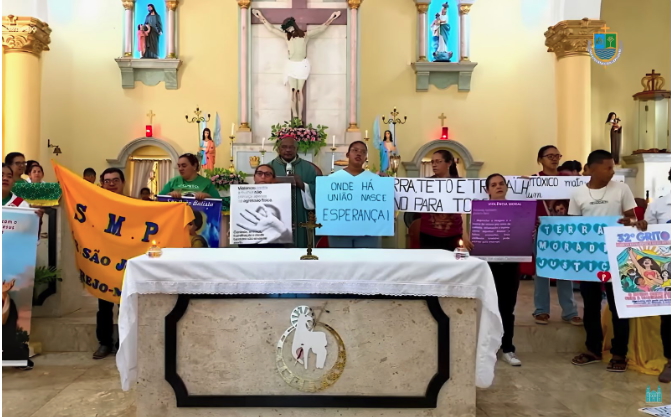
Parents sentenced to prison in Brazil after excluding gender content in homeschool curriculum #Catholic A Brazilian couple was sentenced to 50 days in prison related to the homeschooling of their two daughters in an unprecedented case that has raised concerns regarding educational freedom and parental rights in Brazil.Audato and Ieda Denardi were found guilty of the crime of “intellectual neglect” by a court in the state of São Paulo, even though the prosecution itself had requested their acquittal after concluding that the minors were not suffering from any neglect and were demonstrating appropriate academic and social development.The Christian legal organization ADF International, which is representing the family in the appeal, denounced the case as “a grotesque abuse of criminal law” and stated that it would continue defending the couple.The conviction, initially handed down in April 2026 and currently under appeal before the Seventh Criminal Court Chamber of the São Paulo State Court of Justice, will remain suspended while the appeal is being resolved.‘I cannot conceive of a more dictatorial state’Ieda Denardi expressed her distress and defended the right of parents to choose their childrenʼs education.“As a mother, I cannot conceive of a more dictatorial state than the one that wants me in jail because I chose to exercise my right to direct the education and upbringing of my daughters,” she told ADF International.“My husband and I are hopeful the court will recognize our right to choose the best education for our children and overturn this unjust conviction,” she added.The couple began homeschooling their daughters in 2020 after realizing the limitations of the remote public education imposed during the COVID-19 pandemic.Since then, they report a significant improvement in their daughters' academic performance and have been able to incorporate family values ​​and faith into their education.Judge takes into account the girls’ music preferencesOne of the most striking aspects of the case is the reasoning the judge used to reach the verdict. According to the ruling, the educational program provided by the parents did not include content regarding “gender and sex education” or “tolerance and diversity.”Furthermore, the court concluded that the fact that the girls, aged 15 and 11, do not enjoy popular musical genres such as “trap” or “sertanejo” demonstrated an alleged deficiency in their cultural education.The judge cited this despite the fact that both girls are pianists with advanced training and are fluent in several languages.In his ruling, the judge further accused the parents of “using their daughters as pawns in an ideological struggle, subjecting them to a form of unregulated education, the effectiveness and quality of which lack adequate metrics within the Brazilian legal system, while completely excluding the state’s involvement.”The prosecution sought the parents' acquittal“The prosecutor examined the witnesses and recommended acquittal. An independent educational psychologist found no sign of neglect. The girls themselves described rigorous daily education,” explained Julio Pohl, legal counsel for Latin America at ADF International.However, “the judge convicted anyway,” he said, “because a fifteen-year-old said she finds some music lyrics morally questionable, and because the curriculum didn’t include state-approved content on gender.”“A parent has been sentenced to prison not for failing to educate her children, but for educating them according to her own values. This is a grotesque abuse of the criminal law, and we will not let it stand.” Pohl pledged.First criminal prosecution against homeschooling familiesAccording to ADF International, more than 70,000 children are currently being homeschooled in Brazil. However, a lack of regulation has left thousands of families in a state of uncertainty.The Denardi case sets a precedent as the first criminal conviction of parents for homeschooling their children.The situation has even reached the country’s legislature, where hearings were recently held on the matter, and the Denardis asked lawmakers to pass a law guaranteeing families the right to choose this educational model.Although a homeschooling bill was passed by the Chamber of Deputies (lower house) in 2022, the initiative remains stalled in the Senate.This story was first published by ACI Prensa, the Spanish-language sister service of EWTN News. It has been translated and adapted by EWTN News English.

Parents sentenced to prison in Brazil after excluding gender content in homeschool curriculum #Catholic A Brazilian couple was sentenced to 50 days in prison related to the homeschooling of their two daughters in an unprecedented case that has raised concerns regarding educational freedom and parental rights in Brazil.Audato and Ieda Denardi were found guilty of the crime of “intellectual neglect” by a court in the state of São Paulo, even though the prosecution itself had requested their acquittal after concluding that the minors were not suffering from any neglect and were demonstrating appropriate academic and social development.The Christian legal organization ADF International, which is representing the family in the appeal, denounced the case as “a grotesque abuse of criminal law” and stated that it would continue defending the couple.The conviction, initially handed down in April 2026 and currently under appeal before the Seventh Criminal Court Chamber of the São Paulo State Court of Justice, will remain suspended while the appeal is being resolved.‘I cannot conceive of a more dictatorial state’Ieda Denardi expressed her distress and defended the right of parents to choose their childrenʼs education.“As a mother, I cannot conceive of a more dictatorial state than the one that wants me in jail because I chose to exercise my right to direct the education and upbringing of my daughters,” she told ADF International.“My husband and I are hopeful the court will recognize our right to choose the best education for our children and overturn this unjust conviction,” she added.The couple began homeschooling their daughters in 2020 after realizing the limitations of the remote public education imposed during the COVID-19 pandemic.Since then, they report a significant improvement in their daughters' academic performance and have been able to incorporate family values ​​and faith into their education.Judge takes into account the girls’ music preferencesOne of the most striking aspects of the case is the reasoning the judge used to reach the verdict. According to the ruling, the educational program provided by the parents did not include content regarding “gender and sex education” or “tolerance and diversity.”Furthermore, the court concluded that the fact that the girls, aged 15 and 11, do not enjoy popular musical genres such as “trap” or “sertanejo” demonstrated an alleged deficiency in their cultural education.The judge cited this despite the fact that both girls are pianists with advanced training and are fluent in several languages.In his ruling, the judge further accused the parents of “using their daughters as pawns in an ideological struggle, subjecting them to a form of unregulated education, the effectiveness and quality of which lack adequate metrics within the Brazilian legal system, while completely excluding the state’s involvement.”The prosecution sought the parents' acquittal“The prosecutor examined the witnesses and recommended acquittal. An independent educational psychologist found no sign of neglect. The girls themselves described rigorous daily education,” explained Julio Pohl, legal counsel for Latin America at ADF International.However, “the judge convicted anyway,” he said, “because a fifteen-year-old said she finds some music lyrics morally questionable, and because the curriculum didn’t include state-approved content on gender.”“A parent has been sentenced to prison not for failing to educate her children, but for educating them according to her own values. This is a grotesque abuse of the criminal law, and we will not let it stand.” Pohl pledged.First criminal prosecution against homeschooling familiesAccording to ADF International, more than 70,000 children are currently being homeschooled in Brazil. However, a lack of regulation has left thousands of families in a state of uncertainty.The Denardi case sets a precedent as the first criminal conviction of parents for homeschooling their children.The situation has even reached the country’s legislature, where hearings were recently held on the matter, and the Denardis asked lawmakers to pass a law guaranteeing families the right to choose this educational model.Although a homeschooling bill was passed by the Chamber of Deputies (lower house) in 2022, the initiative remains stalled in the Senate.This story was first published by ACI Prensa, the Spanish-language sister service of EWTN News. It has been translated and adapted by EWTN News English.

The judge said the fact that the 15- and 11-year-old girls do not enjoy popular music demonstrated an alleged deficiency in their cultural education.

Read More
Pro-life advocates defend unborn babies with Down syndrome after YouTuber goes public with abortion #Catholic Pro-life advocates defend unborn babies with Down syndromePro-life advocates are defending unborn children with Down syndrome after a YouTuber told the world that he and his wife aborted their child who had been diagnosed with the condition.YouTube creator Jesse Ridgway went viral for posting about how he and his wife decided to abort their unborn baby after they learned the child would likely have Down syndrome. Advocates on X reacted by sharing posts celebrating the worth of individuals with the medical diagnosis."Down syndrome shouldn’t mean a death sentence,” Live Action Founder and President Lila Rose said.SBA Pro-Life America posted in response to Ridgway’s post: “This is so sad and awful. We CANʼT stand silently by.”“Research shows 99% of people with Down syndrome are happy with their lives, and their families love them,” the pro-life group continued. “Families deserve truthful information & support. People with Down syndrome deserve to live. They should never be targets for discrimination, inside the womb or out. Period.”“Babies with Down syndrome arenʼt a ‘glitch.’ Theyʼre a blessing.” Live Action posted. “Yet 67-80% of these beautiful babies are killed for their disability before they are born."Study: Women aren’t informed on emotional, physical impact of abortionWomen want information on abortion symptoms and the emotional impacts associated with the procedure, but they often aren’t given it, according to a recent peer-reviewed study.The study by scholars associated with the Charlotte Lozier Institute found women experience significant informed consent gaps when they are given abortion drugs.The researchers found that three in 10 women report experiencing unexpected levels of pain and bleeding.“Because they didn’t know what was ‘normal,’ many women turned to the internet for information about abortion side effects like excessive pain and bleeding, help processing difficult emotions, and urgent reassurance during the abortion process,” the study read.Tessa Cox, senior research associate at the institute and one of the authors of the study emphasized the risks associated with this lack of medical information-sharing. “The stakes are too high for informed consent to be treated as a formality,” Cox said in a statement.Fourteen attorneys general call for clean water protections from abortion drugsFourteen attorneys general called on the federal government to track water pollution from abortion pills this week.The attorneys general asked the U.S. Environmental Protection Agency to track pollution from the drugs dumped into the U.S. water supply. They argued that “loosened regulations” have “increased the number of chemical abortions occurring in the home,” resulting in “tons of chemically tainted medical waste being flushed into American waterways.”Students for Life President Kristan Hawkins, who spearheaded the movement, called the request “commonsense.”“Because of negligent FDA policy and the failure to enforce the Comstock Act, more than 50 tons of chemically tainted blood, placenta tissue, and human remains go into our waterways every year. With infertility on the rise, we need to know: what is the extent of the damage?” Hawkins said in a statement shared with EWTN News.The letter was signed by attorneys general of Alabama, Alaska, Arkansas, Florida, Idaho, Indiana, Kansas, Kentucky, Louisiana, Missouri, Nebraska, Oklahoma, South Carolina, and Texas.Head of Knights of Columbus awarded for ‘building up a culture of life’The Sisters of Life, a religious organization centered around affirming the life of every human being, gave an award to the head of the Knights of Columbus, Supreme Knight Patrick Kelly, for his life-affirming work.Kelly received the John Cardinal O’Connor Award on on June 5 at the annual Friends of the Sisters of Life Gala in Rye, New York.“His Eminence John Cardinal O’Connor was a towering pillar of the pro-life movement,” Kelly said in a press release. “With an unshakable resolve, he dedicated so much of his ministry as bishop to proclaiming the sanctity of every human life, made in the image and likeness of God.”“Speaking for the Knights, we will keep doing everything we can to support the Sisters of Life, and to protect vulnerable mothers and their children,” Kelly said. "As we prepare for the work ahead, we take comfort in the knowledge that Jesus Christ will continue to guide us.”Alabama attorney general launches legal challenge against abortion drug companiesAlabama Attorney General Steve Marshall issued cease-and-desist letters to six companies that have been allegedly illegally distributing abortion drugs.According to a June 9 press release, the companies were providing chemical abortion drugs in Alabama, where abortion is illegal.“These companies are not only breaking the law, they are deceiving Alabama consumers about the very real dangers of these drugs,” said Marshall in a statement. “That stops now.”The letters were sent to abortion drug providers across the United States, as well as one company based in the United Arab Emirates. Several companies were based in California or New York, which have “shield laws” designed to protect abortion companies.

Pro-life advocates defend unborn babies with Down syndrome after YouTuber goes public with abortion #Catholic Pro-life advocates defend unborn babies with Down syndromePro-life advocates are defending unborn children with Down syndrome after a YouTuber told the world that he and his wife aborted their child who had been diagnosed with the condition.YouTube creator Jesse Ridgway went viral for posting about how he and his wife decided to abort their unborn baby after they learned the child would likely have Down syndrome. Advocates on X reacted by sharing posts celebrating the worth of individuals with the medical diagnosis."Down syndrome shouldn’t mean a death sentence,” Live Action Founder and President Lila Rose said.SBA Pro-Life America posted in response to Ridgway’s post: “This is so sad and awful. We CANʼT stand silently by.”“Research shows 99% of people with Down syndrome are happy with their lives, and their families love them,” the pro-life group continued. “Families deserve truthful information & support. People with Down syndrome deserve to live. They should never be targets for discrimination, inside the womb or out. Period.”“Babies with Down syndrome arenʼt a ‘glitch.’ Theyʼre a blessing.” Live Action posted. “Yet 67-80% of these beautiful babies are killed for their disability before they are born."Study: Women aren’t informed on emotional, physical impact of abortionWomen want information on abortion symptoms and the emotional impacts associated with the procedure, but they often aren’t given it, according to a recent peer-reviewed study.The study by scholars associated with the Charlotte Lozier Institute found women experience significant informed consent gaps when they are given abortion drugs.The researchers found that three in 10 women report experiencing unexpected levels of pain and bleeding.“Because they didn’t know what was ‘normal,’ many women turned to the internet for information about abortion side effects like excessive pain and bleeding, help processing difficult emotions, and urgent reassurance during the abortion process,” the study read.Tessa Cox, senior research associate at the institute and one of the authors of the study emphasized the risks associated with this lack of medical information-sharing. “The stakes are too high for informed consent to be treated as a formality,” Cox said in a statement.Fourteen attorneys general call for clean water protections from abortion drugsFourteen attorneys general called on the federal government to track water pollution from abortion pills this week.The attorneys general asked the U.S. Environmental Protection Agency to track pollution from the drugs dumped into the U.S. water supply. They argued that “loosened regulations” have “increased the number of chemical abortions occurring in the home,” resulting in “tons of chemically tainted medical waste being flushed into American waterways.”Students for Life President Kristan Hawkins, who spearheaded the movement, called the request “commonsense.”“Because of negligent FDA policy and the failure to enforce the Comstock Act, more than 50 tons of chemically tainted blood, placenta tissue, and human remains go into our waterways every year. With infertility on the rise, we need to know: what is the extent of the damage?” Hawkins said in a statement shared with EWTN News.The letter was signed by attorneys general of Alabama, Alaska, Arkansas, Florida, Idaho, Indiana, Kansas, Kentucky, Louisiana, Missouri, Nebraska, Oklahoma, South Carolina, and Texas.Head of Knights of Columbus awarded for ‘building up a culture of life’The Sisters of Life, a religious organization centered around affirming the life of every human being, gave an award to the head of the Knights of Columbus, Supreme Knight Patrick Kelly, for his life-affirming work.Kelly received the John Cardinal O’Connor Award on on June 5 at the annual Friends of the Sisters of Life Gala in Rye, New York.“His Eminence John Cardinal O’Connor was a towering pillar of the pro-life movement,” Kelly said in a press release. “With an unshakable resolve, he dedicated so much of his ministry as bishop to proclaiming the sanctity of every human life, made in the image and likeness of God.”“Speaking for the Knights, we will keep doing everything we can to support the Sisters of Life, and to protect vulnerable mothers and their children,” Kelly said. "As we prepare for the work ahead, we take comfort in the knowledge that Jesus Christ will continue to guide us.”Alabama attorney general launches legal challenge against abortion drug companiesAlabama Attorney General Steve Marshall issued cease-and-desist letters to six companies that have been allegedly illegally distributing abortion drugs.According to a June 9 press release, the companies were providing chemical abortion drugs in Alabama, where abortion is illegal.“These companies are not only breaking the law, they are deceiving Alabama consumers about the very real dangers of these drugs,” said Marshall in a statement. “That stops now.”The letters were sent to abortion drug providers across the United States, as well as one company based in the United Arab Emirates. Several companies were based in California or New York, which have “shield laws” designed to protect abortion companies.

Pro-life and abortion-related news you may have missed this week.

Read More
First Steps: America’s Grueling Second Spacewalk – A year after America’s first spacewalk, Gemini IX-A Eugene Cernan stepped outside his spacecraft for an ambitious extravehicular activity scheduled for 167 minutes. The challenges he faced led NASA to reevaluate plans, equipment, and training for future spacewalks.

A year after America’s first spacewalk, Gemini IX-A Eugene Cernan stepped outside his spacecraft for an ambitious extravehicular activity scheduled for 167 minutes. The challenges he faced led NASA to reevaluate plans, equipment, and training for future spacewalks.

Read More
U.S. bishops unveil prayer service for America’s 250th anniversary centered on migrants #Catholic The U.S. Conference of Catholic Bishops (USCCB) has released a national prayer service for the country’s upcoming 250th anniversary that places immigration, justice, and the dignity of migrants at the center of America’s semiquincentennial observance.Titled “A National Prayer Service Honoring the Many Journeys that Shaped America,” the resource was developed by the Committee on Migration and the Subcommittee for the Promotion of Racial Justice and Reconciliation.Designed as a template for dioceses and parishes across the country, the prayer service invites Catholics to reflect on the nation’s history through the lens of migration, displacement, slavery, and faith while encouraging advocacy for vulnerable migrant populations.“In observance of the United States’ 250th anniversary in 2026, and rooted in the Church’s pastoral mission of welcome, accompaniment, and solidarity,” the instructions state, the service seeks “to acknowledge and honor the many diverse communities that have journeyed to the United States in search of hope, safety, and opportunity.”The document also highlights “the voices, sufferings, and enduring contributions of those who were forcibly brought to this land.”A prayer service rooted in hospitalityThe proposed service combines hymns, Scripture readings, intercessory prayers, testimonies, and guided reflections focused heavily on migrants, refugees, victims of trafficking, and immigrant communities.Organizers are encouraged to adapt the service to local needs and cultures by incorporating music and devotional practices that reflect “the lived experiences of migration, displacement, resilience, and faith.”The service opens with the hymn “All Are Welcome” by Marty Haugen and includes prayers asking Catholics to “walk in deeper solidarity with immigrant communities” and to advocate for “greater protection, justice, and accompaniment for vulnerable and at-risk migrant populations.”A prayer to St. Frances Xavier Cabrini — patroness of immigrants and herself an immigrant to the United States — asks for protection for migrant families separated from one another and for the grace to “welcome every stranger as Christ in our midst.”The document also includes a “call to action” encouraging Catholics to reflect on “concrete and compassionate ways to welcome, protect, promote, and integrate migrants, immigrants, and refugees” while advocating for “just and humane immigration reform that upholds the dignity of every human person created in the image of God.”The service concludes with a “Prayer for Migrants” asking God to help the Church “welcome, protect, promote, and integrate those who knock at our doors.”Scripture and civil rights themes woven throughoutThe Scripture passages selected for the service strongly emphasize hospitality toward foreigners and care for society’s most vulnerable.A reading from Deuteronomy 10:12-22 exhorts believers: “So you too must befriend the alien, for you were once aliens yourselves in the land of Egypt.”  The Gospel reading from Matthew 25:31-46 centers on Christ’s words, “I was thirsty and you gave me drink, a stranger and you welcomed me.”The template also incorporates themes of racial justice and historical memory. Intercessions address slavery and modern human trafficking, praying both for victims of exploitation and for “perpetrators of slavery” to repent.The service further recommends “Lift Every Voice and Sing,” often referred to as the Black national anthem and rooted in Black church worship and civic life in the U.S., as an intermediate hymn. It also includes optional excerpts from Dr. Martin Luther King Jr.’s “I Have a Dream" speech for use in a homily or guided reflection, alongside passages from the bishops’ 2025 special pastoral message on immigration.Dignity of migrantsIn recent years, U.S. bishops have consistently advocated for immigration reform while emphasizing the dignity of migrants, opposition to family separation, and support for refugees and trafficking victims.The prayer service places those concerns within the broader context of the nation’s identity ahead of America’s 250th anniversary observances.“This prayer service seeks to provide a sacred space for reflection, remembrance, lament, and hope,” the document states, inviting participants to encounter one another “as members of the one human family and the one body of Christ.”EWTN News reached out to the USCCB for comment but did not receive a response by publication time.

U.S. bishops unveil prayer service for America’s 250th anniversary centered on migrants #Catholic The U.S. Conference of Catholic Bishops (USCCB) has released a national prayer service for the country’s upcoming 250th anniversary that places immigration, justice, and the dignity of migrants at the center of America’s semiquincentennial observance.Titled “A National Prayer Service Honoring the Many Journeys that Shaped America,” the resource was developed by the Committee on Migration and the Subcommittee for the Promotion of Racial Justice and Reconciliation.Designed as a template for dioceses and parishes across the country, the prayer service invites Catholics to reflect on the nation’s history through the lens of migration, displacement, slavery, and faith while encouraging advocacy for vulnerable migrant populations.“In observance of the United States’ 250th anniversary in 2026, and rooted in the Church’s pastoral mission of welcome, accompaniment, and solidarity,” the instructions state, the service seeks “to acknowledge and honor the many diverse communities that have journeyed to the United States in search of hope, safety, and opportunity.”The document also highlights “the voices, sufferings, and enduring contributions of those who were forcibly brought to this land.”A prayer service rooted in hospitalityThe proposed service combines hymns, Scripture readings, intercessory prayers, testimonies, and guided reflections focused heavily on migrants, refugees, victims of trafficking, and immigrant communities.Organizers are encouraged to adapt the service to local needs and cultures by incorporating music and devotional practices that reflect “the lived experiences of migration, displacement, resilience, and faith.”The service opens with the hymn “All Are Welcome” by Marty Haugen and includes prayers asking Catholics to “walk in deeper solidarity with immigrant communities” and to advocate for “greater protection, justice, and accompaniment for vulnerable and at-risk migrant populations.”A prayer to St. Frances Xavier Cabrini — patroness of immigrants and herself an immigrant to the United States — asks for protection for migrant families separated from one another and for the grace to “welcome every stranger as Christ in our midst.”The document also includes a “call to action” encouraging Catholics to reflect on “concrete and compassionate ways to welcome, protect, promote, and integrate migrants, immigrants, and refugees” while advocating for “just and humane immigration reform that upholds the dignity of every human person created in the image of God.”The service concludes with a “Prayer for Migrants” asking God to help the Church “welcome, protect, promote, and integrate those who knock at our doors.”Scripture and civil rights themes woven throughoutThe Scripture passages selected for the service strongly emphasize hospitality toward foreigners and care for society’s most vulnerable.A reading from Deuteronomy 10:12-22 exhorts believers: “So you too must befriend the alien, for you were once aliens yourselves in the land of Egypt.”  The Gospel reading from Matthew 25:31-46 centers on Christ’s words, “I was thirsty and you gave me drink, a stranger and you welcomed me.”The template also incorporates themes of racial justice and historical memory. Intercessions address slavery and modern human trafficking, praying both for victims of exploitation and for “perpetrators of slavery” to repent.The service further recommends “Lift Every Voice and Sing,” often referred to as the Black national anthem and rooted in Black church worship and civic life in the U.S., as an intermediate hymn. It also includes optional excerpts from Dr. Martin Luther King Jr.’s “I Have a Dream" speech for use in a homily or guided reflection, alongside passages from the bishops’ 2025 special pastoral message on immigration.Dignity of migrantsIn recent years, U.S. bishops have consistently advocated for immigration reform while emphasizing the dignity of migrants, opposition to family separation, and support for refugees and trafficking victims.The prayer service places those concerns within the broader context of the nation’s identity ahead of America’s 250th anniversary observances.“This prayer service seeks to provide a sacred space for reflection, remembrance, lament, and hope,” the document states, inviting participants to encounter one another “as members of the one human family and the one body of Christ.”EWTN News reached out to the USCCB for comment but did not receive a response by publication time.

The prayer service invites Catholics to reflect on the nation’s history through the lens of migration, displacement, slavery, and faith while encouraging advocacy for vulnerable migrant populations.

Read More
Fulton Sheen’s missionary legacy hailed by Pope Leo XIV #Catholic Pope Leo XIV on Monday praised the missionary legacy of Venerable Archbishop Fulton J. Sheen, the famed American evangelist who will be beatified Sept. 24 in St. Louis, calling him “a light of faith, hope, and love.”The pope made his remarks June 1 during an audience with participants in the general assembly of the Pontifical Mission Societies, recalling Sheen’s long service as national director of the societies in the United States.The pope noted that this year marks the 100th anniversary of Pope Pius XI’s establishment of the penultimate Sunday of October as World Mission Sunday, a day devoted to “prayer, reflection, and contributing to the Church’s mission of evangelization.”Leo expressed his gratitude to those who promote the annual observance, which supports the Church’s missionary work throughout the world.“For 100 years, this day has been set apart for prayer, reflection, and contributing to the Church’s mission of evangelization, especially in areas where the proclamation of the Gospel is only just beginning and where the Church is still young,” the pope said.He added that “every Catholic community is invited to pray and offer spiritual and material sacrifices for the missionary efforts in areas of first evangelization and for the support of young Churches.”World Mission Sunday also reminds older and more established Churches “how important it is that they too join in the missionary spirit of the whole Church,” he said.The pope said the funds raised through World Mission Sunday make it possible for the Pontifical Society of the Propagation of the Faith to assist more than 1,130 ecclesiastical jurisdictions that depend on the Dicastery for Evangelization’s section for first evangelization and new particular Churches.Those funds, he said, help establish Church infrastructure, support missionary initiatives, and contribute to the administration of five colleges in Rome for the ongoing formation of priests and consecrated men and women who later return to serve their local Churches.Leo also highlighted the 110th anniversary of the Pontifical Missionary Union, founded by Blessed Paolo Manna, later declared pontifical by Pope Pius XII and described by St. Paul VI as the “soul” of the other Pontifical Mission Societies.“I encourage all to participate in its mission of fostering among all the baptized an ever more fervent missionary spirituality and a deeper commitment to the Church’s universal mission of evangelization in this new missionary age,” he said.The pope then turned again to Sheen, noting that his beatification is scheduled for Sept. 24 in St. Louis.“It is also providential that this year, on 24 September, in St. Louis, Missouri, a renowned national director of the Pontifical Mission Societies in the United States of America, the Venerable Fulton J. Sheen, will be beatified,” Leo said.“Archbishop Sheen was a light of faith, hope, and love that shone through the radio and television media for decades,” the pope continued. “I myself am a witness of his evangelization when I was growing up. His broadcasts touched millions with the hope of the Gospel and his initiatives and efforts resulted in enormous spiritual and material aid to the Churches in areas of first evangelization.”“May our new blessed be an example for all of the national and diocesan directors of the Pontifical Mission Societies throughout the world,” he added.Leo also underscored the importance of the Pontifical Mission Societies in a world “increasingly marked by division, war, and conflict among nations and peoples.”He said the Pontifical Mission Society of the Holy Childhood carries out “a particularly precious mission” by bringing faith and Christian charity to children around the world, especially in places afflicted by hatred and violence. He also praised the Pontifical Mission Society of St. Peter the Apostle for sustaining the formation of Indigenous clergy and consecrated religious in mission territories.The theme for this year’s World Mission Sunday, “One in Christ, United in Mission,” highlights the unity of believers and the 100th anniversary of the global celebration, the pope said.The theme “invites all of the members of the Church to a deeper communion in Christ and to a fuller unity in his divine mission of love,” he said.“I therefore encourage you to keep this teaching in mind, to live an authentic spirituality of missionary unity and communion centered on Christ, and to promote it through your activities among the faithful,” Leo told the assembly.Citing the Second Vatican Council’s decree Ad Gentes, the pope recalled that the “Church on earth is by her very nature missionary since, according to the plan of the Father, it has her origin in the mission of the Son and the Holy Spirit.”He urged participants to recognize “the urgency of embracing an ongoing missionary conversion” and to seek together ways of “being a missionary Church for the healing of our world, so fraught with tensions, conflicts, and wars.”“In all that we do for the work of evangelization, may we always place Jesus Christ at the center,” Leo said, invoking the words of St. John the Baptist: “He must increase, but I must decrease.”This story was first published by ACI Prensa, the Spanish-language sister service of EWTN News. It has been translated and adapted by EWTN News English.

Fulton Sheen’s missionary legacy hailed by Pope Leo XIV #Catholic Pope Leo XIV on Monday praised the missionary legacy of Venerable Archbishop Fulton J. Sheen, the famed American evangelist who will be beatified Sept. 24 in St. Louis, calling him “a light of faith, hope, and love.”The pope made his remarks June 1 during an audience with participants in the general assembly of the Pontifical Mission Societies, recalling Sheen’s long service as national director of the societies in the United States.The pope noted that this year marks the 100th anniversary of Pope Pius XI’s establishment of the penultimate Sunday of October as World Mission Sunday, a day devoted to “prayer, reflection, and contributing to the Church’s mission of evangelization.”Leo expressed his gratitude to those who promote the annual observance, which supports the Church’s missionary work throughout the world.“For 100 years, this day has been set apart for prayer, reflection, and contributing to the Church’s mission of evangelization, especially in areas where the proclamation of the Gospel is only just beginning and where the Church is still young,” the pope said.He added that “every Catholic community is invited to pray and offer spiritual and material sacrifices for the missionary efforts in areas of first evangelization and for the support of young Churches.”World Mission Sunday also reminds older and more established Churches “how important it is that they too join in the missionary spirit of the whole Church,” he said.The pope said the funds raised through World Mission Sunday make it possible for the Pontifical Society of the Propagation of the Faith to assist more than 1,130 ecclesiastical jurisdictions that depend on the Dicastery for Evangelization’s section for first evangelization and new particular Churches.Those funds, he said, help establish Church infrastructure, support missionary initiatives, and contribute to the administration of five colleges in Rome for the ongoing formation of priests and consecrated men and women who later return to serve their local Churches.Leo also highlighted the 110th anniversary of the Pontifical Missionary Union, founded by Blessed Paolo Manna, later declared pontifical by Pope Pius XII and described by St. Paul VI as the “soul” of the other Pontifical Mission Societies.“I encourage all to participate in its mission of fostering among all the baptized an ever more fervent missionary spirituality and a deeper commitment to the Church’s universal mission of evangelization in this new missionary age,” he said.The pope then turned again to Sheen, noting that his beatification is scheduled for Sept. 24 in St. Louis.“It is also providential that this year, on 24 September, in St. Louis, Missouri, a renowned national director of the Pontifical Mission Societies in the United States of America, the Venerable Fulton J. Sheen, will be beatified,” Leo said.“Archbishop Sheen was a light of faith, hope, and love that shone through the radio and television media for decades,” the pope continued. “I myself am a witness of his evangelization when I was growing up. His broadcasts touched millions with the hope of the Gospel and his initiatives and efforts resulted in enormous spiritual and material aid to the Churches in areas of first evangelization.”“May our new blessed be an example for all of the national and diocesan directors of the Pontifical Mission Societies throughout the world,” he added.Leo also underscored the importance of the Pontifical Mission Societies in a world “increasingly marked by division, war, and conflict among nations and peoples.”He said the Pontifical Mission Society of the Holy Childhood carries out “a particularly precious mission” by bringing faith and Christian charity to children around the world, especially in places afflicted by hatred and violence. He also praised the Pontifical Mission Society of St. Peter the Apostle for sustaining the formation of Indigenous clergy and consecrated religious in mission territories.The theme for this year’s World Mission Sunday, “One in Christ, United in Mission,” highlights the unity of believers and the 100th anniversary of the global celebration, the pope said.The theme “invites all of the members of the Church to a deeper communion in Christ and to a fuller unity in his divine mission of love,” he said.“I therefore encourage you to keep this teaching in mind, to live an authentic spirituality of missionary unity and communion centered on Christ, and to promote it through your activities among the faithful,” Leo told the assembly.Citing the Second Vatican Council’s decree Ad Gentes, the pope recalled that the “Church on earth is by her very nature missionary since, according to the plan of the Father, it has her origin in the mission of the Son and the Holy Spirit.”He urged participants to recognize “the urgency of embracing an ongoing missionary conversion” and to seek together ways of “being a missionary Church for the healing of our world, so fraught with tensions, conflicts, and wars.”“In all that we do for the work of evangelization, may we always place Jesus Christ at the center,” Leo said, invoking the words of St. John the Baptist: “He must increase, but I must decrease.”This story was first published by ACI Prensa, the Spanish-language sister service of EWTN News. It has been translated and adapted by EWTN News English.

The pontiff praised Venerable Sheen, who will be beatified Sept. 24, as “a light of faith, hope, and love” whose radio and television broadcasts brought the Gospel to millions.

Read More

Moon rocks are seen during a March 24, 2026, event where NASA is outlining how the agency is executing the National Space Policy and accelerating preparations for America’s return to the surface of the Moon by 2028.

Read More

NASA Heat Shield Tech Contributes to America’s Space Industry – The Varda Space Industries W-5 capsule returned to Earth in Koonibba in South Australia on Jan. 29, 2026, with the protection of a heat shield made of C-PICA, a cutting-edge material licensed from NASA and manufactured by Varda. The capsule’s successful return marks the first time a capsule protected entirely by Varda-made C-PICA has come back to Earth.

The Varda Space Industries W-5 capsule returned to Earth in Koonibba in South Australia on Jan. 29, 2026, with the protection of a heat shield made of C-PICA, a cutting-edge material licensed from NASA and manufactured by Varda. The capsule’s successful return marks the first time a capsule protected entirely by Varda-made C-PICA has come back to Earth.

Read More