Anxious

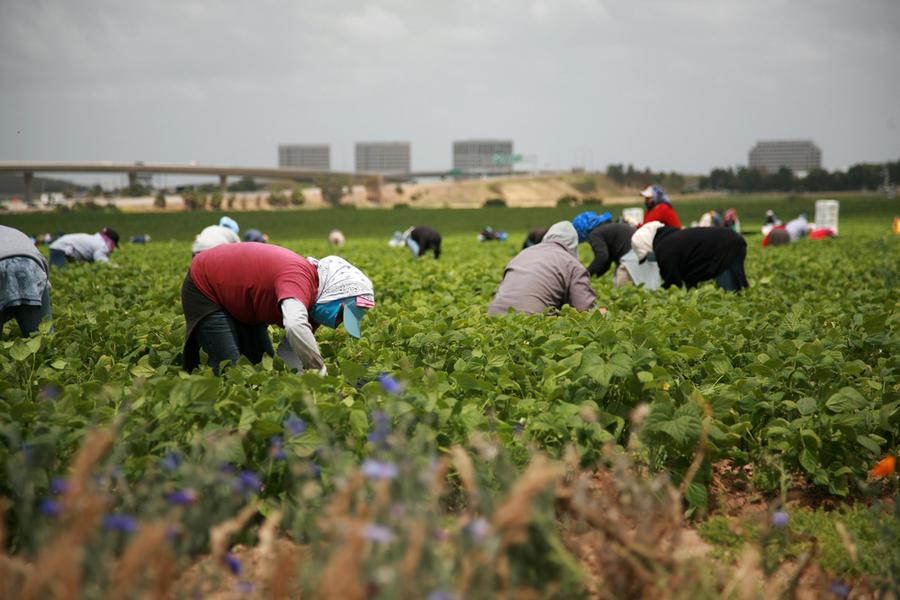
The Catholic Church has a lot to say about Labor Day — why? #Catholic As the U.S. celebrates Labor Day, Catholics have a wealth of resources in biblical interpretation, Church teaching, and social thought that address the nature of work and the place of the worker in society and in God’s creation.But are Catholics, and others, aware of these resources?One Catholic leader considering such questions is Father Sinclair Oubre, a priest of the Diocese of Beaumont, Texas. He is the spiritual moderator of the Catholic Labor Network, a Catholic association that promotes Catholic teaching about work and labor unions. It also supports labor organizing.“All work, no matter what the work is, is essential,” Oubre likes to say. In his view, if a woman in janitorial work at a major software company does not show up to clean the toilets and empty the trash, all production in the office will nosedive.Centuries of Catholic teaching about labor can be found compiled in the Compendium of the Social Doctrine of the Church, published in 2004 by the Pontifical Commission for Justice and Peace. It dedicates its entire sixth chapter to human work and labor, its place in God’s plan, its role in society, and the rights and duties of workers.“The Compendium gathers together in one place those rights that are found in Catholic social teaching, whether it’s Rerum Novarum, or Quadragesimo Anno, or Centesimus Annus, and synthesizes them,” Oubre told EWTN News, referring to the respective encyclicals of popes Leo XIII, Pius XI, and John Paul II.“It’s a beautiful reflection on human work in the world and a very mature and in-depth discussion of the place of work, the place of labor, and the communal nature of it,” Oubre said.Labor, politics, and spiritualityOubre said Catholic teaching is a challenge regardless of people’s political views.“It’s a challenge to the right, but it’s also a challenge to the left,” he said. Catholicism encourages those on the political right not simply to pray novenas and commit themselves to spiritual actions. It is a challenge not to leave other questions about work and labor to the market.For the political left, Catholic social teaching “means you have to enter into a more intimate relationship with your Church and your relationship with Jesus and not just be as a social justice person by throwing a couple of little quotes around. It requires you to enter into that deeper spiritual relationship.”Oubre stressed the importance of starting from the view of Catholic spirituality, not only social justice, because if we don’t, our approach “becomes ideological and polemic.” The spiritual approach “brings us closer to Jesus Christ.”“No matter how dirty, how uncomfortable, how awful the job is, we are participating in God’s ongoing creation. It’s important that we do that job in a way that gives glory to God,” Oubre said.God and man at workThe Compendium’s reflection on work begins with its biblical aspects: There is a human duty to “cultivate and care for the earth” and other good things created by God, it says. Work existed before the fall of Adam and Eve, and it is not a punishment or curse until the break with God transforms it into “toil and pain.” However, God’s rest on the seventh day of creation is the sign of the “fuller freedom” of the “eternal Sabbath.”The life of Jesus Christ is a mission of work, from his early life helping St. Joseph in the work of a carpenter to his ministry of preaching and healing, and most of all in his redemptive labors on the cross.The Compendium presents human labor as a way of supporting oneself and one’s loved ones but also a way to serve those in need. Work is a way to make God’s creation more beautiful, since humankind shares in God’s art and wisdom.“Human work, directed to charity as its final goal, becomes an occasion for contemplation, it becomes devout prayer, vigilantly rising towards and in anxious hope of the day that will not end,” the Compendium says.The rights of laborGod’s rest on the seventh day of creation, the Compendium says, means men and women must enjoy “sufficient rest and free time that will allow them to tend to their family, cultural, social, and religious life.”The Compendium outlines and explains the many rights of workers: the right to rest from work; the right to a working environment that is not harmful to a worker’s health or moral integrity; the right to unemployment protections; the right to a pension and insurance for old age, disability, and work-related accidents; the right to social security for working mothers; and the right to assemble and form associations; the right to just wages and remuneration; and the right to strike.Labor unions play a “fundamental role” in serving the common good and promoting social order and solidarity, though they must not abuse their role in society or become simply arms of a political party.“The recognition of workers’ rights has always been a difficult problem to resolve because this recognition takes place within complex historical and institutional processes, and still today it remains incomplete,” the Compendium says. “This makes the practice of authentic solidarity among workers more fitting and necessary than ever.”A challenge for Catholics and institutionsCatholic teaching has a lengthy paper record. But as in other areas, there is a challenge to practice it.“What I find over and over again that the Church — our Church — gives us wonderful documents of guidance… and we never go back and read them,” Oubre told EWTN News.He cited the U.S. Conference of Catholic Bishops’ 1996 pastoral letter “Economic Justice for All,” which says the Church should be a model for labor rights and treating workers justly.However, Oubre said that in his experience Catholic parishes often neglect to provide unemployment insurance to employees if the law allows them to opt out. Catholic institutions often act as “at-will” employers in which management can fire employees for any reason. They may show preferences for nonunion labor over unionized labor when planning and funding construction projects.“You’re going to undercut the guy who has actually followed the Church’s teachings in regards to work by hiring somebody who may be not offering medical insurance for his employees,” the priest lamented.For Labor Day, Oubre encouraged parishes, dioceses, and other institutions to make sure to adopt policies that put Catholic labor teaching into practice.This story was first published on Sept. 4, 2023, and has been updated.

The Catholic Church has a lot to say about Labor Day — why? #Catholic As the U.S. celebrates Labor Day, Catholics have a wealth of resources in biblical interpretation, Church teaching, and social thought that address the nature of work and the place of the worker in society and in God’s creation.But are Catholics, and others, aware of these resources?One Catholic leader considering such questions is Father Sinclair Oubre, a priest of the Diocese of Beaumont, Texas. He is the spiritual moderator of the Catholic Labor Network, a Catholic association that promotes Catholic teaching about work and labor unions. It also supports labor organizing.“All work, no matter what the work is, is essential,” Oubre likes to say. In his view, if a woman in janitorial work at a major software company does not show up to clean the toilets and empty the trash, all production in the office will nosedive.Centuries of Catholic teaching about labor can be found compiled in the Compendium of the Social Doctrine of the Church, published in 2004 by the Pontifical Commission for Justice and Peace. It dedicates its entire sixth chapter to human work and labor, its place in God’s plan, its role in society, and the rights and duties of workers.“The Compendium gathers together in one place those rights that are found in Catholic social teaching, whether it’s Rerum Novarum, or Quadragesimo Anno, or Centesimus Annus, and synthesizes them,” Oubre told EWTN News, referring to the respective encyclicals of popes Leo XIII, Pius XI, and John Paul II.“It’s a beautiful reflection on human work in the world and a very mature and in-depth discussion of the place of work, the place of labor, and the communal nature of it,” Oubre said.Labor, politics, and spiritualityOubre said Catholic teaching is a challenge regardless of people’s political views.“It’s a challenge to the right, but it’s also a challenge to the left,” he said. Catholicism encourages those on the political right not simply to pray novenas and commit themselves to spiritual actions. It is a challenge not to leave other questions about work and labor to the market.For the political left, Catholic social teaching “means you have to enter into a more intimate relationship with your Church and your relationship with Jesus and not just be as a social justice person by throwing a couple of little quotes around. It requires you to enter into that deeper spiritual relationship.”Oubre stressed the importance of starting from the view of Catholic spirituality, not only social justice, because if we don’t, our approach “becomes ideological and polemic.” The spiritual approach “brings us closer to Jesus Christ.”“No matter how dirty, how uncomfortable, how awful the job is, we are participating in God’s ongoing creation. It’s important that we do that job in a way that gives glory to God,” Oubre said.God and man at workThe Compendium’s reflection on work begins with its biblical aspects: There is a human duty to “cultivate and care for the earth” and other good things created by God, it says. Work existed before the fall of Adam and Eve, and it is not a punishment or curse until the break with God transforms it into “toil and pain.” However, God’s rest on the seventh day of creation is the sign of the “fuller freedom” of the “eternal Sabbath.”The life of Jesus Christ is a mission of work, from his early life helping St. Joseph in the work of a carpenter to his ministry of preaching and healing, and most of all in his redemptive labors on the cross.The Compendium presents human labor as a way of supporting oneself and one’s loved ones but also a way to serve those in need. Work is a way to make God’s creation more beautiful, since humankind shares in God’s art and wisdom.“Human work, directed to charity as its final goal, becomes an occasion for contemplation, it becomes devout prayer, vigilantly rising towards and in anxious hope of the day that will not end,” the Compendium says.The rights of laborGod’s rest on the seventh day of creation, the Compendium says, means men and women must enjoy “sufficient rest and free time that will allow them to tend to their family, cultural, social, and religious life.”The Compendium outlines and explains the many rights of workers: the right to rest from work; the right to a working environment that is not harmful to a worker’s health or moral integrity; the right to unemployment protections; the right to a pension and insurance for old age, disability, and work-related accidents; the right to social security for working mothers; and the right to assemble and form associations; the right to just wages and remuneration; and the right to strike.Labor unions play a “fundamental role” in serving the common good and promoting social order and solidarity, though they must not abuse their role in society or become simply arms of a political party.“The recognition of workers’ rights has always been a difficult problem to resolve because this recognition takes place within complex historical and institutional processes, and still today it remains incomplete,” the Compendium says. “This makes the practice of authentic solidarity among workers more fitting and necessary than ever.”A challenge for Catholics and institutionsCatholic teaching has a lengthy paper record. But as in other areas, there is a challenge to practice it.“What I find over and over again that the Church — our Church — gives us wonderful documents of guidance… and we never go back and read them,” Oubre told EWTN News.He cited the U.S. Conference of Catholic Bishops’ 1996 pastoral letter “Economic Justice for All,” which says the Church should be a model for labor rights and treating workers justly.However, Oubre said that in his experience Catholic parishes often neglect to provide unemployment insurance to employees if the law allows them to opt out. Catholic institutions often act as “at-will” employers in which management can fire employees for any reason. They may show preferences for nonunion labor over unionized labor when planning and funding construction projects.“You’re going to undercut the guy who has actually followed the Church’s teachings in regards to work by hiring somebody who may be not offering medical insurance for his employees,” the priest lamented.For Labor Day, Oubre encouraged parishes, dioceses, and other institutions to make sure to adopt policies that put Catholic labor teaching into practice.This story was first published on Sept. 4, 2023, and has been updated.

“All work, no matter what the work is, is essential,” said Father Sinclair Oubre, spiritual moderator of the Catholic Labor Network.
Read More
Why the feast of St. Dominic is not actually the Dominicans’ biggest feast day #Catholic Aug. 8 marks the feast day of St. Dominic, the 13th-century priest known for founding the Order of Preachers, commonly called the Dominicans, and for spreading devotion to the rosary.Surprisingly, though, the Dominicans don’t usually do much to celebrate the saint’s Aug. 8 feast day.While the August feast “is for us certainly always a feast,” Dominican Father Angelo Giuseppe Urru told EWTN News in 2018, it’s not the primary one.Instead, the order celebrates “more solemnly” May 24, which is the solemnity of the Translation of St. Dominic.This unusual feast day commemorates the day St. Dominic’s remains were moved, or “translated,” from their original burial spot behind an altar of the church of San Nicolo della Vigne in Bologna, Italy, to a more prominent place in the church in 1233.For many Dominican provinces, this day is the big celebration, Urru said.The move of St. Dominic’s body was carried out at the request of Pope Gregory IX about one year before the saint’s canonization on July 13, 1234, only 13 years after his death.As recorded in a letter by Blessed Jordan of Saxony, one of the first leaders of the Dominicans, the brothers were very anxious before the move of the body, because they were worried that when the wooden coffin was un-interred from the stone sepulcher, the body would give off a foul odor, since it had been buried in a poorly constructed tomb, exposed to water and heat.But they received a great surprise, because when the tomb was opened, a wonderful and sweet perfume emanated from the coffin instead.“Its sweetness astonished those present, and they were filled with wonder at this strange occurrence. Everyone shed tears of joy, and fear and hope rose in all hearts,” Blessed Jordan wrote.He reported that the odor remained and if anyone touched a hand or some object to the body, the odor immediately attached itself and lingered for a long time.“The body was carried to the marble sepulcher where it would rest — it and the perfume that it poured forth. This marvelous aroma which the holy body emitted was evidence to all how much the saint had truly been the good odor of Christ,” he wrote.By 1240, the church containing St. Dominic’s remains had been expanded into a basilica and renamed for the saint.Now, every year Dominican friars, sisters, and laity all over the world celebrate St. Dominic on May 24.Mass is celebrated at the Basilica of Santa Sabina, the mother church of the Dominicans in Rome, for this feast.The tradition is for a priest of the Order of Friars Minor, commonly called the Franciscans, to say the Mass and preach. After Mass, the procession of friars stops at the first side chapel, where the Blessed Sacrament is kept, to sing the “O Lumen,” the Dominican antiphon to St. Dominic.Besides the tomb with the saint’s body, which is in the basilica in Bologna, there are few relics of St. Dominic in existence.One relic, a piece of his skull, can be found in Rome. It is at the church of Santa Maria del Rosario, part of a Dominican monastery located on Monte Mario, the tallest hill of Rome.Urru said he was not sure how it came to be kept in the monastery but that it originated when some students in Bologna stole it to have in their chapel.“There is also the breviary of St. Dominic, a small breviary,” he said.In 2016, the Dominicans celebrated the 800th anniversary of their founding with a jubilee year, culminating in an International Congress for the Mission of the Order, which took place Jan. 17–21 in Rome.Urru voiced gratitude for the blessing of vocations, which allow the order’s work to continue.Thankfully, though there are some provinces that are very small, many are growing and are very strong, he noted, such as those in Vietnam and Africa. The United States as well has seen a good number of new vocations, he said.Around the world, “there are many initiatives of the order,” and they are working hard still, just as they have the last 800 years.Ultimately, though, he said, the future of the order is “in the hands of God.”This story was first published on Aug. 8, 2017, and has been updated.

Why the feast of St. Dominic is not actually the Dominicans’ biggest feast day #Catholic Aug. 8 marks the feast day of St. Dominic, the 13th-century priest known for founding the Order of Preachers, commonly called the Dominicans, and for spreading devotion to the rosary.Surprisingly, though, the Dominicans don’t usually do much to celebrate the saint’s Aug. 8 feast day.While the August feast “is for us certainly always a feast,” Dominican Father Angelo Giuseppe Urru told EWTN News in 2018, it’s not the primary one.Instead, the order celebrates “more solemnly” May 24, which is the solemnity of the Translation of St. Dominic.This unusual feast day commemorates the day St. Dominic’s remains were moved, or “translated,” from their original burial spot behind an altar of the church of San Nicolo della Vigne in Bologna, Italy, to a more prominent place in the church in 1233.For many Dominican provinces, this day is the big celebration, Urru said.The move of St. Dominic’s body was carried out at the request of Pope Gregory IX about one year before the saint’s canonization on July 13, 1234, only 13 years after his death.As recorded in a letter by Blessed Jordan of Saxony, one of the first leaders of the Dominicans, the brothers were very anxious before the move of the body, because they were worried that when the wooden coffin was un-interred from the stone sepulcher, the body would give off a foul odor, since it had been buried in a poorly constructed tomb, exposed to water and heat.But they received a great surprise, because when the tomb was opened, a wonderful and sweet perfume emanated from the coffin instead.“Its sweetness astonished those present, and they were filled with wonder at this strange occurrence. Everyone shed tears of joy, and fear and hope rose in all hearts,” Blessed Jordan wrote.He reported that the odor remained and if anyone touched a hand or some object to the body, the odor immediately attached itself and lingered for a long time.“The body was carried to the marble sepulcher where it would rest — it and the perfume that it poured forth. This marvelous aroma which the holy body emitted was evidence to all how much the saint had truly been the good odor of Christ,” he wrote.By 1240, the church containing St. Dominic’s remains had been expanded into a basilica and renamed for the saint.Now, every year Dominican friars, sisters, and laity all over the world celebrate St. Dominic on May 24.Mass is celebrated at the Basilica of Santa Sabina, the mother church of the Dominicans in Rome, for this feast.The tradition is for a priest of the Order of Friars Minor, commonly called the Franciscans, to say the Mass and preach. After Mass, the procession of friars stops at the first side chapel, where the Blessed Sacrament is kept, to sing the “O Lumen,” the Dominican antiphon to St. Dominic.Besides the tomb with the saint’s body, which is in the basilica in Bologna, there are few relics of St. Dominic in existence.One relic, a piece of his skull, can be found in Rome. It is at the church of Santa Maria del Rosario, part of a Dominican monastery located on Monte Mario, the tallest hill of Rome.Urru said he was not sure how it came to be kept in the monastery but that it originated when some students in Bologna stole it to have in their chapel.“There is also the breviary of St. Dominic, a small breviary,” he said.In 2016, the Dominicans celebrated the 800th anniversary of their founding with a jubilee year, culminating in an International Congress for the Mission of the Order, which took place Jan. 17–21 in Rome.Urru voiced gratitude for the blessing of vocations, which allow the order’s work to continue.Thankfully, though there are some provinces that are very small, many are growing and are very strong, he noted, such as those in Vietnam and Africa. The United States as well has seen a good number of new vocations, he said.Around the world, “there are many initiatives of the order,” and they are working hard still, just as they have the last 800 years.Ultimately, though, he said, the future of the order is “in the hands of God.”This story was first published on Aug. 8, 2017, and has been updated.

While the August feast is “always a feast” for Dominicans, it’s not the primary one.

Read More
Have no anxiety at all, but in everything, by prayer and petition, with thanksgiving, make your requests known to God.

Have no anxiety at all, but in everything, by prayer and petition, with thanksgiving, make your requests known to God.
Let your modesty be known to all men. The Lord is nigh. Be nothing solicitous: but in every thing, by prayer and supplication, with thanksgiving, let your petitions be made known to God. And the peace of God, which surpasseth all understanding, keep your hearts and minds in Christ Jesus

Read More