![Yad Vashem chief: Holocaust memory is key to fighting antisemitism #Catholic Dani Dayan, chairman of Yad Vashem, said that remembering and honoring the Holocaust is essential to combating rising antisemitism worldwide.Dayan, who met with Pope Leo XIV on March 23 together with Israel’s ambassador to the Holy See, Yaron Sideman, said their conversation focused on “two issues: the historical remembrance, the need to remember, to know about the Holocaust — but not just for the sake of history, also for the sake of the present and the sake of the future.”We have to make sure that an “atrocity like this cannot happen again — not to the Jewish people, not to any other people,” he said.He added that antisemitism is “raising its ugly head again all over the world” and that the two issues are closely linked.“I think that knowing about the Holocaust, learning about the Holocaust, remembering, honoring the Holocaust is one of the tools to combat antisemitism,” Dayan said.‘Antisemitism is bigotry’Asked whether Israeli policy risks fueling antisemitism, Dayan rejected the premise.“I think antisemitism should not have palliative reasons. Antisemitism is bigotry, antisemitism is racism, and it’s completely independent of anything that Israel does or does not,” he said.He described antisemitism as a unifying force among otherwise opposed extremist groups.“In many sectors in the world, antisemitism has become the common denominator, the lingua franca of all the extremists in the world — left-wing extremists, right-wing extremists, religious extremists, Islamist extremists, and many others,” he said.“They hate each other on any other issue… [but] they don’t only agree, they even collaborate.”“Antisemitism should not be understood. It should be combated without any reservation,” he added, noting he found “full agreement” with Pope Leo XIV on the point.Memory, politics, and responsibilityDayan emphasized the distinction between Holocaust remembrance and contemporary political debates.“The policy and Holocaust remembrance are two completely different things,” he said, while noting that the Holocaust remains “omnipresent in the back of our minds” for many Jews and continues to shape collective identity.He said the obligation to remember the Holocaust is “threefold”: for the future, to build a world free of bigotry and genocide; for the present, amid resurging antisemitism; and as a moral duty to the victims.“Six million victims that were massacred by Nazi Germany and its collaborators during the Shoah deserve to be remembered,” he said. “It’s a debt that we have to maintain.”A shared history and a future visit?Reflecting on relations between the Catholic Church and the Jewish people, Dayan pointed to the significance of papal visits to Yad Vashem.He presented Pope Leo XIV with a painting by Jewish artist Carol Deutsch, created during the Shoah, depicting the biblical question “Adam, where are you?”He linked the image to Pope Francis’ address at Yad Vashem, in which the late pope asked: “Where was humanity?”Dayan expressed hope that Pope Leo XIV would visit Yad Vashem in the future, “when circumstances allow it.”‘Peace is an imperative’Asked about the role of believers in promoting peace, Dayan said the memory of the Holocaust underscores the urgency of that mission.“To yearn for it and to act for it,” he said. “Learning about the Holocaust… is one of the greatest motivations a person can have to understand that peace is an imperative.”He acknowledged that he once believed the devastation of World War II and the Holocaust would end war and antisemitism.“Unfortunately… I was very naive in that respect. We have to work harder, all of us, in order to make that a reality in the future,” he said.This story was first published by ACI Stampa, the Italian-language sister service of EWTN News. It has been translated and adapted by EWTN News English.](https://unitedyam.com/wp-content/uploads/2026/03/yad-vashem-chief-holocaust-memory-is-key-to-fighting-antisemitism-catholic-dani-dayan-chairman-of-yad-vashem-said-that-remembering-and-honoring-the-holocaust-is-essential-to-combating-rising-antis-scaled.jpg "Yad Vashem chief: Holocaust memory is key to fighting antisemitism #Catholic Dani Dayan, chairman of Yad Vashem, said that remembering and honoring the Holocaust is essential to combating rising antisemitism worldwide.Dayan, who met with Pope Leo XIV on March 23 together with Israel’s ambassador to the Holy See, Yaron Sideman, said their conversation focused on “two issues: the historical remembrance, the need to remember, to know about the Holocaust — but not just for the sake of history, also for the sake of the present and the sake of the future.”We have to make sure that an “atrocity like this cannot happen again — not to the Jewish people, not to any other people,” he said.He added that antisemitism is “raising its ugly head again all over the world” and that the two issues are closely linked.“I think that knowing about the Holocaust, learning about the Holocaust, remembering, honoring the Holocaust is one of the tools to combat antisemitism,” Dayan said.‘Antisemitism is bigotry’Asked whether Israeli policy risks fueling antisemitism, Dayan rejected the premise.“I think antisemitism should not have palliative reasons. Antisemitism is bigotry, antisemitism is racism, and it’s completely independent of anything that Israel does or does not,” he said.He described antisemitism as a unifying force among otherwise opposed extremist groups.“In many sectors in the world, antisemitism has become the common denominator, the lingua franca of all the extremists in the world — left-wing extremists, right-wing extremists, religious extremists, Islamist extremists, and many others,” he said.“They hate each other on any other issue… [but] they don’t only agree, they even collaborate.”“Antisemitism should not be understood. It should be combated without any reservation,” he added, noting he found “full agreement” with Pope Leo XIV on the point.Memory, politics, and responsibilityDayan emphasized the distinction between Holocaust remembrance and contemporary political debates.“The policy and Holocaust remembrance are two completely different things,” he said, while noting that the Holocaust remains “omnipresent in the back of our minds” for many Jews and continues to shape collective identity.He said the obligation to remember the Holocaust is “threefold”: for the future, to build a world free of bigotry and genocide; for the present, amid resurging antisemitism; and as a moral duty to the victims.“Six million victims that were massacred by Nazi Germany and its collaborators during the Shoah deserve to be remembered,” he said. “It’s a debt that we have to maintain.”A shared history and a future visit?Reflecting on relations between the Catholic Church and the Jewish people, Dayan pointed to the significance of papal visits to Yad Vashem.He presented Pope Leo XIV with a painting by Jewish artist Carol Deutsch, created during the Shoah, depicting the biblical question “Adam, where are you?”He linked the image to Pope Francis’ address at Yad Vashem, in which the late pope asked: “Where was humanity?”Dayan expressed hope that Pope Leo XIV would visit Yad Vashem in the future, “when circumstances allow it.”‘Peace is an imperative’Asked about the role of believers in promoting peace, Dayan said the memory of the Holocaust underscores the urgency of that mission.“To yearn for it and to act for it,” he said. “Learning about the Holocaust… is one of the greatest motivations a person can have to understand that peace is an imperative.”He acknowledged that he once believed the devastation of World War II and the Holocaust would end war and antisemitism.“Unfortunately… I was very naive in that respect. We have to work harder, all of us, in order to make that a reality in the future,” he said.This story was first published by ACI Stampa, the Italian-language sister service of EWTN News. It has been translated and adapted by EWTN News English.")

Dani Dayan speaks after meeting Pope Leo XIV, says antisemitism is “bigotry” independent of Israeli policy.
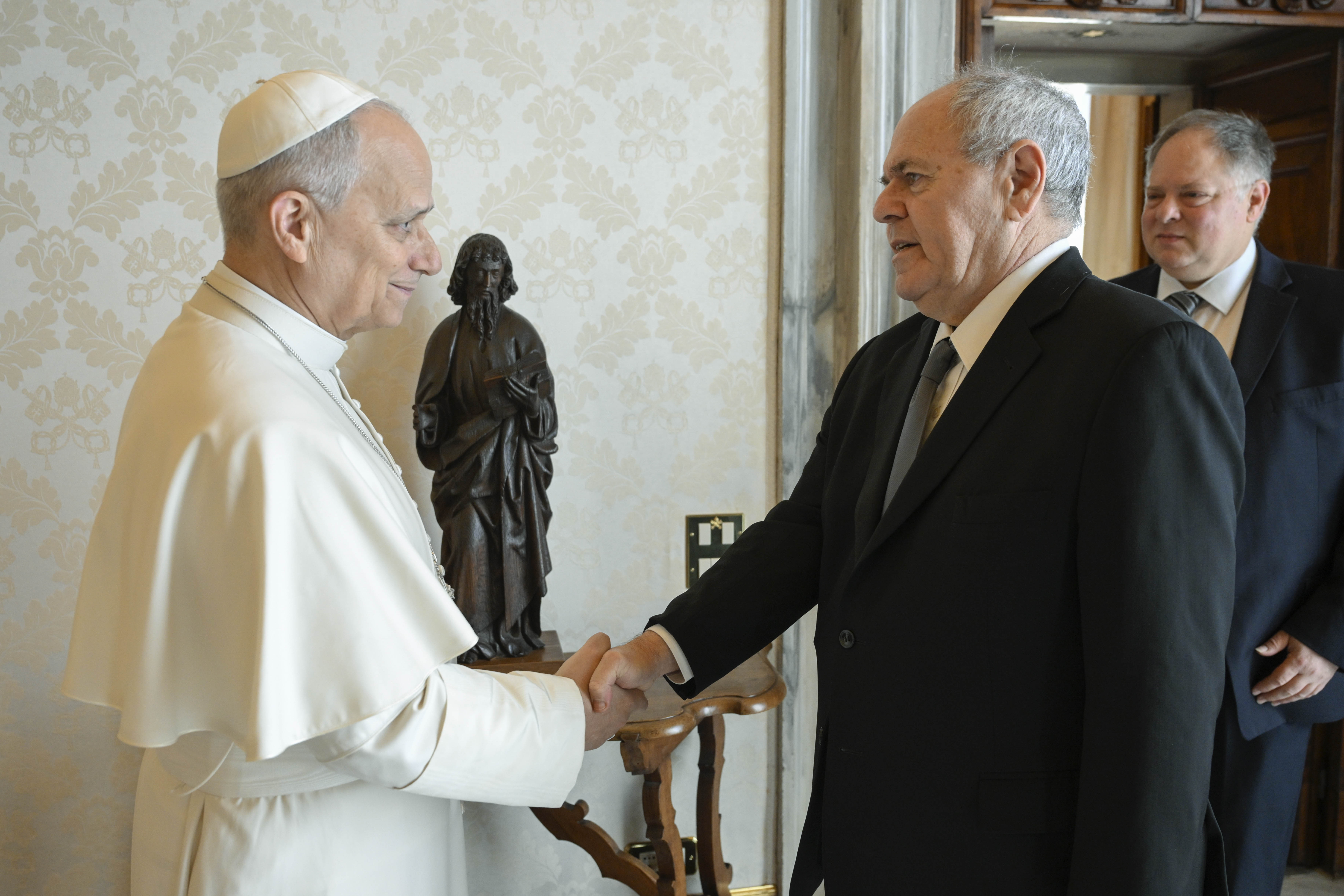
Dani Dayan speaks after meeting Pope Leo XIV, says antisemitism is “bigotry” independent of Israeli policy.
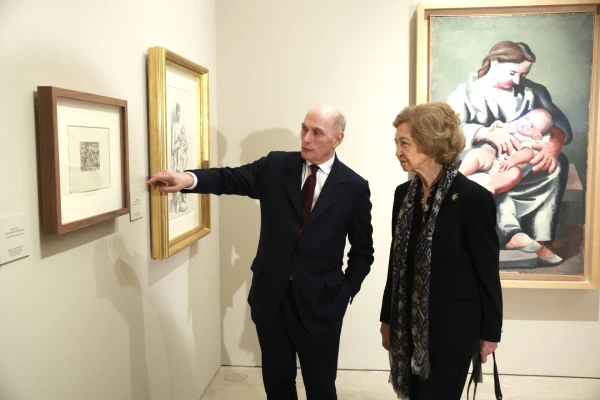
While Pablo Picasso was a professed atheist, a new exhibit in Spain highlights the spiritual sensibilities of his art.
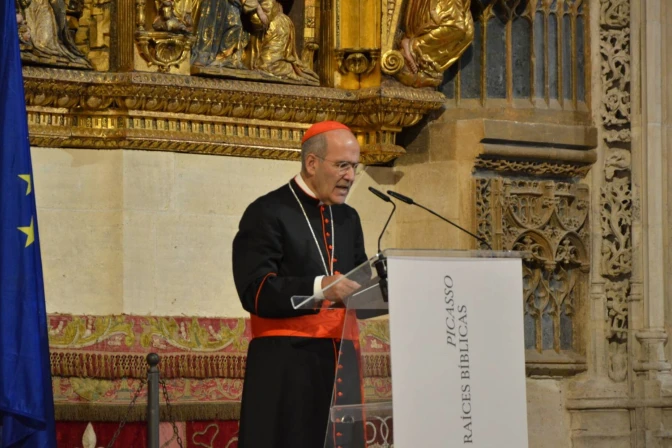
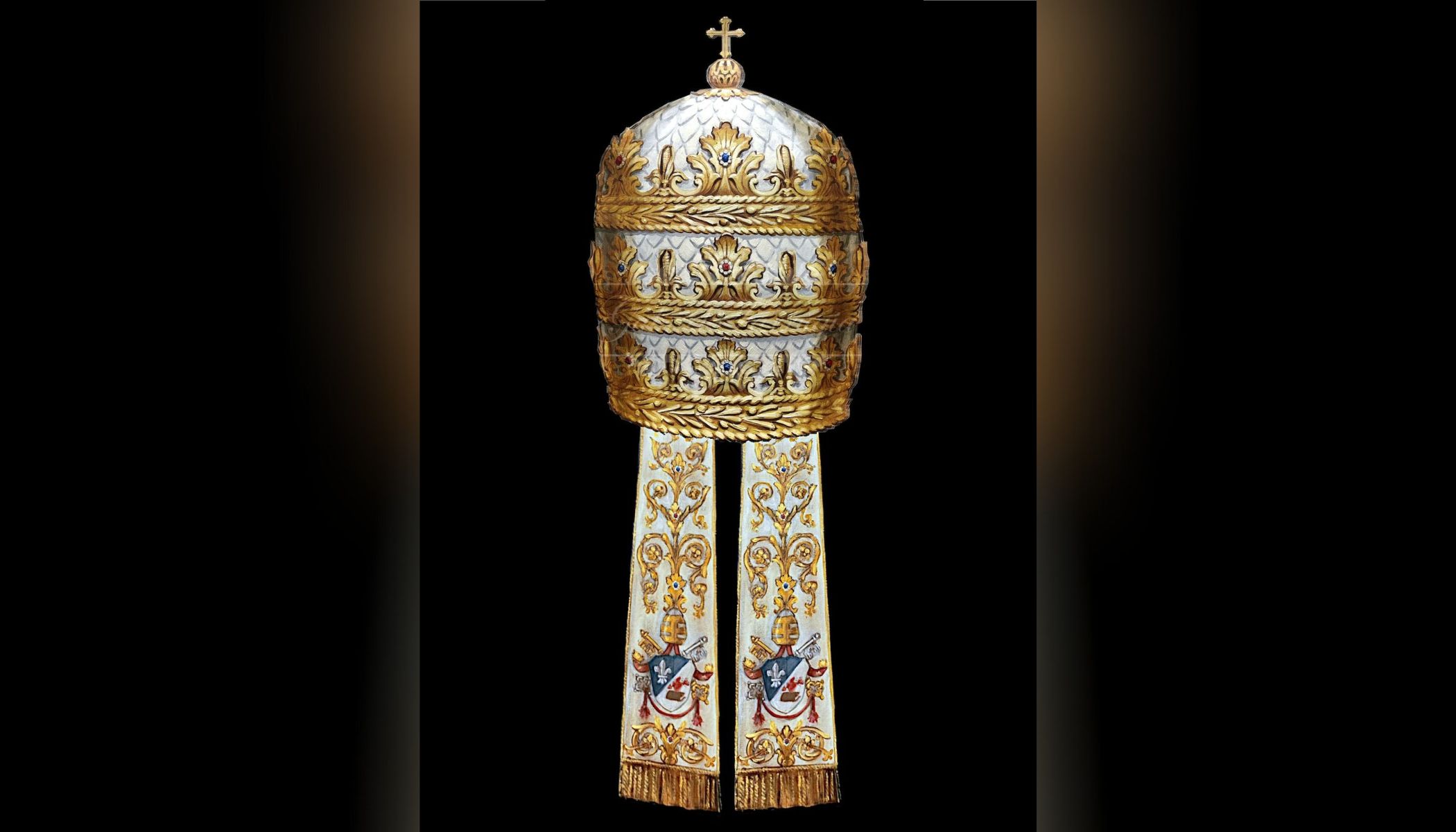
![American Catholics launch crowdfunding effort to gift Pope Leo XIV papal tiara #Catholic A newly established nonprofit launched a crowdfunding effort to construct a papal tiara that will contain Catholic and American symbolism, with the plan to offer it to Pope Leo XIV as a gift from American Catholics for the first pontiff from the United States.“Historically, the majority of papal tiaras are gifts, usually from the home diocese of the pope or from religious [communities] they may be affiliated with,” Isaac Smith, a convert to Catholicism and the founder of Amici Vaticani, told EWTN News.Smith said he was motivated to launch the project to provide Leo with a papal tiara based on the desire for “us, as Americans, to continue that tradition.” He said the first American pope is “such a historical milestone” for Catholicism in the United States.The history of papal crowns dates back to at least the eighth century with the word “tiara” first used in the 12th century. A second crown was added to the tiara in the 13th century to symbolize that the pope holds authority in both spiritual and temporal matters.A three-crown tiara first appeared in the 14th century. One interpretation of the three crowns is that they represent the threefold office of Christ: priest, prophet, and king. Another suggests it represents the militant, the suffering, and the triumphant Church.The proposed tiara commissioned by Amici Vaticani maintains the 14th-century tradition of three crowns. The tiara will be constructed with sterling silver and the crowns will be gold-plated.Because the gift is meant to honor Leo’s American heritage, the tiara will have red, white, and blue stones, which represent the colors of the American flag. It will incorporate other American symbols: oak leaves, representing the national tree; and corn stalks, representing the national crop.Some of the symbols included in the tiara have dual meanings relevant to both the papacy and the United States. It will incorporate roses, which is a symbol of the Virgin Mary and the national flower; and it will incorporate olives, which is a symbol of the pontiff’s commitment to peace and appears on the Great Seal of the United States.A buttony cross will sit atop the crown as a symbol of American Catholicism. The cross is used in the coat of arms for the Archdiocese of Baltimore, the country’s first Catholic diocese, and is featured on the flag of Maryland, which is the location of the first English Catholic colonies.The design, Smith explained, is meant to be “elegant and traditional” to honor the office of the papacy but is also meant to “incorporate distinctively American elements” to honor the pope’s American heritage.
Maltese jeweler Gabriel Farrugia works on a project. | Credit: Photo courtesy of Gabriel Farrugia
Smith said he hopes to fund the project through small donations from the American Catholic faithful so the pontiff can see “this was a group effort” and a gift from Catholics in his home country. This project, he said, provides “a tangible way for people to connect with the successor of Peter.”He also said he plans to compile the names of every person who donates more than $20 into a book, which would be presented to the Holy Father along with the crown and would say on the cover: “Holy Father, please pray for these people.”Smith said his intention is that the tiara can “hopefully [be] put on display in a place of honor” after it is constructed “and presented to the pope when he visits.” When Leo met Vice President JD Vance, the pontiff said he would travel to the United States at some point, although the Holy Father does not have any specific publicly announced plans to visit as of yet.The tiara will be constructed by a Maltese jeweler and artist named Gabriel Farrugia, who has a background in creating religious art, including an Our Lady of Fátima crown, which was used in a coronation ceremony in Guardamangia, Malta. He has also been commissioned by Catholic churches for artistic projects.“Making sacred art is a type of thanksgiving to the One who created us,” Farrugia told EWTN News.“For the God that created us and gave us life, I think we should give him something,” he said, adding that sacred art provides “something that will be left there for ages” and something for “people to admire, to enjoy, and to reflect [upon].”The construction of the crown has not yet begun, as Amici Vaticani is still in the early stages of the crowdfunding effort.Amici Vaticani was launched in 2025 for the purpose of constructing the tiara. According to its website, the nonprofit also seeks to build up “the awakening of a Catholic spirit in the United States.”“Our country, once defined by its Protestant heritage, is now witnessing a boon of conversions,” the website notes. “Men and women rediscovering the depth, beauty, and authority of the Catholic faith.”](https://unitedyam.com/wp-content/uploads/2026/03/american-catholics-launch-crowdfunding-effort-to-gift-pope-leo-xiv-papal-tiara-catholic-a-newly-established-nonprofit-launched-a-crowdfunding-effort-to-construct-a-papal-tiara-that-will-contain-catho.jpg)
A nonprofit hopes to generate enough small donations to construct a papal tiara for Pope Leo XIV as a gift from American Catholics.


This artist’s concept depicts a smaller white dwarf star pulling material from a larger star, right, into an accretion disk. Scientists used NASA’s IXPE (Imaging X-ray Polarization Explorer) to study a white dwarf star and its X-ray polarization.
Read More
| Picture of the day |
|---|
.jpg)
|
|
Silk painting of Heungseon Daewongun, now in the collection of the National Museum of Korea, created by an unknown artist circa 1869. It is designated a Treasure of Korea.
|

| Picture of the day |
|---|
| (purge this page’s cache) |

|
|
Interrupted Reading by French artist Jean-Baptiste-Camille Corot. Today is World Book Day.
|