Asia

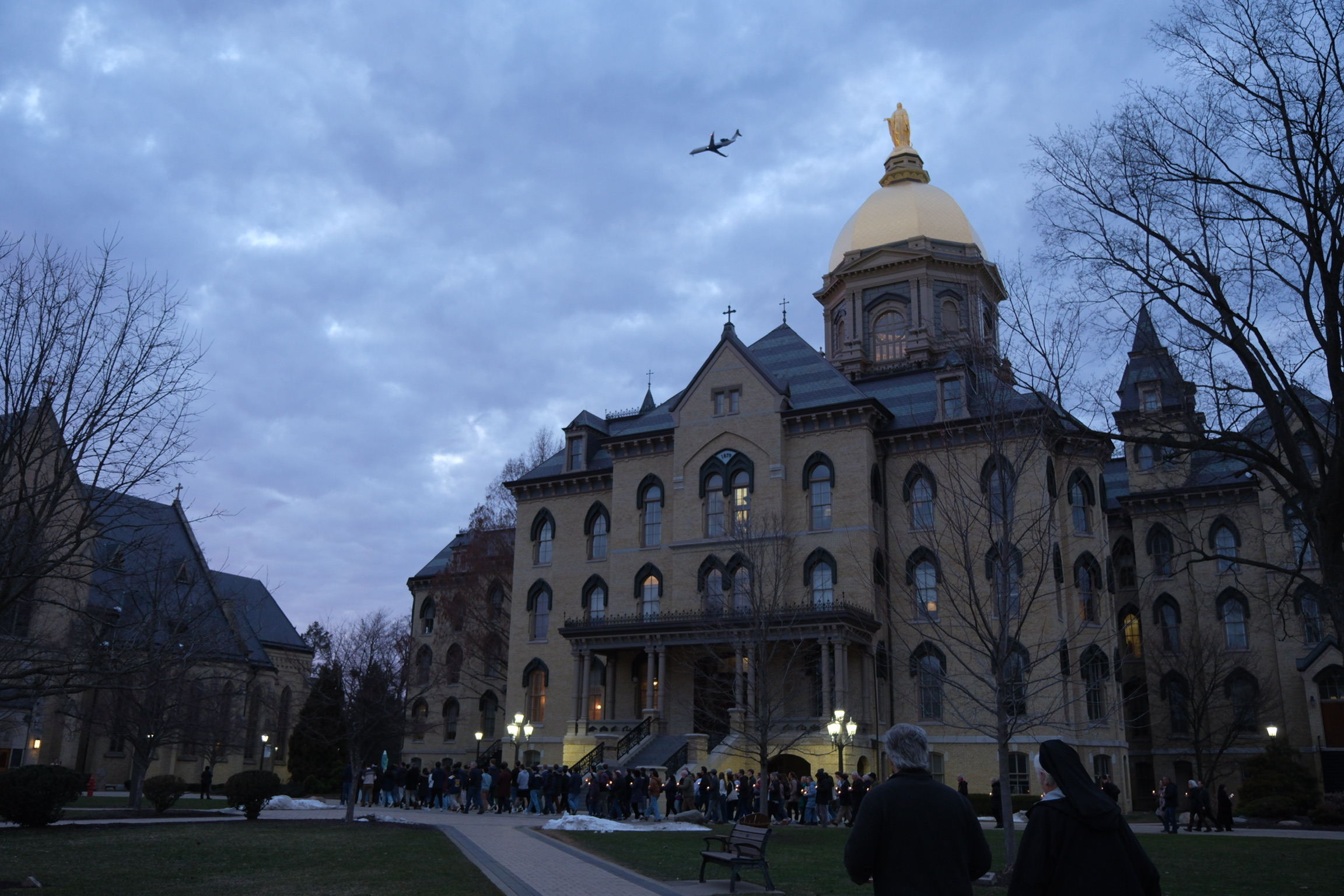
Students pray for Notre Dame’s Catholic identity after dispute over pro-abortion professor #Catholic Students at the University of Notre Dame gathered on Feb. 27 for a candlelit prayer service to offer thanksgiving for the university’s Catholic identity.The event was originally planned as a protest in response to the university’s appointment of abortion advocate Professor Susan Ostermann as the head of the Liu Institute for Asia and Asian Studies. After Ostermann withdrew from the position earlier this week, the student organizers turned the event into a prayer vigil offered “in thanksgiving and support for Notre Dame’s Catholic mission.”A group of about 150 students, community members, faculty and priests from the Congregation of Holy Cross met on the south quad of campus, where they were greeted by students Luke Woodyard and Gabe Ortner, the event’s organizers. After a blessing of candles, those present processed to the Grotto of Our Lady of Lourdes, where they prayed the Rosary.
 
 Students gather to pray the Rosary at the Grotto of Our Lady of Lourdes at the University of Notre Dame, Friday, Feb. 27, 2026 | Credit: Notre Dame Right to Life
 
 The event was co-sponsored by the major Catholic clubs on campus: Right to Life, Militia Immaculata, Children of Mary, the Knights of Columbus, and Students for Child-Oriented Policy.According to Woodyard, while a protest would have drawn a greater number of attendees, organizers agreed that changing the event to a prayer vigil would be a more appropriate response to the news of Ostermann’s withdrawal.“The big reason we changed the protest to a prayer vigil was because we won, we got Ostermann to not be appointed. And even though this was a victory in a battle, not the [larger] war, we can celebrate this victory now," Woodyard said.“If we came here with a bunch of protests, it would make us seem like we weren't grateful for the university listening to us," he added. "And we really are. We praise [President] Father [Robert] Dowd for any impact that he had on Ostermann withdrawing, and we pray for the future of Notre Dame.”Ostermann, whose appointment was announced in January, has publicly supported abortion on multiple occasions, calling it “freedom-enhancing” and “consistent with integral human development that emphasizes social justice and human dignity."She has also argued that the pro-life movement has its roots in “white supremacy and racism” and has described pregnancy resource centers “anti-abortion propaganda sites."Since the appointment was announced in January, the university has faced backlash from Catholics across the country, including students, alumni, faculty, and more than a dozen bishops. The university continued to defend Ostermann’s promotion amid the criticism, citing her expertise in Asian studies and her past research. When Ostermann withdrew from the position on Feb. 26, students were surprised at the unexpected reversal but grateful for the desired outcome.Maria Madigan, a sophomore who serves as the head of service for Notre Dame Right to Life, told EWTN News that the grateful and loving spirit of the prayer service was the same spirit in which the protest had been planned.“[The planned protest] was never filled with hate or any [kind of] malicious intent. …We love Notre Dame because of her Catholic mission and her identity," she said. "We wanted to protest the Ostermann appointment because we felt it that went against our mission. And then when Ostermann withdrew, the focus shifted, because… we want to think about having a positive vision going forward for Notre Dame.”Regarding Ostermann’s withdrawal, Woodyard said: “We don't know what happened behind the scenes — hopefully that will come out in the coming weeks — but what we do know is that she did withdraw, and so we're thankful for that, and that's why we're here, but at some point, we have to make sure this doesn't happen again.”Organizer Gabe Ortner emphasized that although the planned protest was turned into a prayer vigil, the defense of Notre Dame’s Catholic mission is far from over.“We have to recognize the work that Father Dowd has done in leading this university. He's clearly been working tirelessly on this with Bishop Rhoades, and I admire the direction that he seems to be taking Notre Dame in, and that gives me a lot of hope," Ortner said. "However, at the same time, there also seem to be particular members of the administration who do not entirely share the Catholic vision of Notre Dame," he said.“Ultimately, Notre Dame should be united in its Catholic identity among all of the members of administration, with no exception.”If the protest had gone forward, speakers would have included Anna Kelley,  president of the school's Right to Life group; Lucy Spence, editor-in-chief of the Irish Rover student newspaper; and Theo Austin, vice president of Students for Child-Oriented Policy.Students have expressed concern that the appointment shows a willingness of university administration — particularly on the part of Provost John McGreevy, who approved the appointment — to deviate from the university’s Catholic mission.Max McNiff, a student who attended the prayer vigil, shared his hopes that the controversy that precipitated Ostermann’s withdrawal would send a clear signal to the university.“I think this sets a sets a good precedent for stuff like this in the future. I think that the administration is going to be very cautious, and hopefully nothing like this will happen again.”“I think this also sets a precedent that researchers who are considered maybe ‘elite’ by secular academic standards, but who very manifestly publicly contradict Catholic doctrine [on matters] such as abortion, should not expect to come into leadership positions at Notre Dame," he said. Ultimately, however, students expressed their gratitude at the reversal of Ostermann’s appointment, calling it a “victory” in the battle for Notre Dame’s Catholic identity.“Having the opportunity to gather together and to thank God for his faithfulness, and the faithfulness of the university, is really beautiful, and I think you can see it in the passion of the students," Madigan said. "Everyone here knew it wasn’t a protest anymore, but they were still coming.”“We're all here because we care and we love this university and we want to uphold its Catholic mission and its pro-life mission as much as possible," she said. "And at the end of the day, whether one person showed up, or whether 200 people showed up, this was a prayer service, and it was to God, and the words that were said here were to him." "And that's what I really want the focus of this whole event to be on, praise and thanksgiving to the Lord for his faithfulness and to Our Lady for protecting her university.”

Students pray for Notre Dame’s Catholic identity after dispute over pro-abortion professor #Catholic Students at the University of Notre Dame gathered on Feb. 27 for a candlelit prayer service to offer thanksgiving for the university’s Catholic identity.The event was originally planned as a protest in response to the university’s appointment of abortion advocate Professor Susan Ostermann as the head of the Liu Institute for Asia and Asian Studies. After Ostermann withdrew from the position earlier this week, the student organizers turned the event into a prayer vigil offered “in thanksgiving and support for Notre Dame’s Catholic mission.”A group of about 150 students, community members, faculty and priests from the Congregation of Holy Cross met on the south quad of campus, where they were greeted by students Luke Woodyard and Gabe Ortner, the event’s organizers. After a blessing of candles, those present processed to the Grotto of Our Lady of Lourdes, where they prayed the Rosary. Students gather to pray the Rosary at the Grotto of Our Lady of Lourdes at the University of Notre Dame, Friday, Feb. 27, 2026 | Credit: Notre Dame Right to Life The event was co-sponsored by the major Catholic clubs on campus: Right to Life, Militia Immaculata, Children of Mary, the Knights of Columbus, and Students for Child-Oriented Policy.According to Woodyard, while a protest would have drawn a greater number of attendees, organizers agreed that changing the event to a prayer vigil would be a more appropriate response to the news of Ostermann’s withdrawal.“The big reason we changed the protest to a prayer vigil was because we won, we got Ostermann to not be appointed. And even though this was a victory in a battle, not the [larger] war, we can celebrate this victory now," Woodyard said.“If we came here with a bunch of protests, it would make us seem like we weren't grateful for the university listening to us," he added. "And we really are. We praise [President] Father [Robert] Dowd for any impact that he had on Ostermann withdrawing, and we pray for the future of Notre Dame.”Ostermann, whose appointment was announced in January, has publicly supported abortion on multiple occasions, calling it “freedom-enhancing” and “consistent with integral human development that emphasizes social justice and human dignity."She has also argued that the pro-life movement has its roots in “white supremacy and racism” and has described pregnancy resource centers “anti-abortion propaganda sites."Since the appointment was announced in January, the university has faced backlash from Catholics across the country, including students, alumni, faculty, and more than a dozen bishops. The university continued to defend Ostermann’s promotion amid the criticism, citing her expertise in Asian studies and her past research. When Ostermann withdrew from the position on Feb. 26, students were surprised at the unexpected reversal but grateful for the desired outcome.Maria Madigan, a sophomore who serves as the head of service for Notre Dame Right to Life, told EWTN News that the grateful and loving spirit of the prayer service was the same spirit in which the protest had been planned.“[The planned protest] was never filled with hate or any [kind of] malicious intent. …We love Notre Dame because of her Catholic mission and her identity," she said. "We wanted to protest the Ostermann appointment because we felt it that went against our mission. And then when Ostermann withdrew, the focus shifted, because… we want to think about having a positive vision going forward for Notre Dame.”Regarding Ostermann’s withdrawal, Woodyard said: “We don't know what happened behind the scenes — hopefully that will come out in the coming weeks — but what we do know is that she did withdraw, and so we're thankful for that, and that's why we're here, but at some point, we have to make sure this doesn't happen again.”Organizer Gabe Ortner emphasized that although the planned protest was turned into a prayer vigil, the defense of Notre Dame’s Catholic mission is far from over.“We have to recognize the work that Father Dowd has done in leading this university. He's clearly been working tirelessly on this with Bishop Rhoades, and I admire the direction that he seems to be taking Notre Dame in, and that gives me a lot of hope," Ortner said. "However, at the same time, there also seem to be particular members of the administration who do not entirely share the Catholic vision of Notre Dame," he said.“Ultimately, Notre Dame should be united in its Catholic identity among all of the members of administration, with no exception.”If the protest had gone forward, speakers would have included Anna Kelley,  president of the school's Right to Life group; Lucy Spence, editor-in-chief of the Irish Rover student newspaper; and Theo Austin, vice president of Students for Child-Oriented Policy.Students have expressed concern that the appointment shows a willingness of university administration — particularly on the part of Provost John McGreevy, who approved the appointment — to deviate from the university’s Catholic mission.Max McNiff, a student who attended the prayer vigil, shared his hopes that the controversy that precipitated Ostermann’s withdrawal would send a clear signal to the university.“I think this sets a sets a good precedent for stuff like this in the future. I think that the administration is going to be very cautious, and hopefully nothing like this will happen again.”“I think this also sets a precedent that researchers who are considered maybe ‘elite’ by secular academic standards, but who very manifestly publicly contradict Catholic doctrine [on matters] such as abortion, should not expect to come into leadership positions at Notre Dame," he said. Ultimately, however, students expressed their gratitude at the reversal of Ostermann’s appointment, calling it a “victory” in the battle for Notre Dame’s Catholic identity.“Having the opportunity to gather together and to thank God for his faithfulness, and the faithfulness of the university, is really beautiful, and I think you can see it in the passion of the students," Madigan said. "Everyone here knew it wasn’t a protest anymore, but they were still coming.”“We're all here because we care and we love this university and we want to uphold its Catholic mission and its pro-life mission as much as possible," she said. "And at the end of the day, whether one person showed up, or whether 200 people showed up, this was a prayer service, and it was to God, and the words that were said here were to him." "And that's what I really want the focus of this whole event to be on, praise and thanksgiving to the Lord for his faithfulness and to Our Lady for protecting her university.”

The event was originally planned as a protest in response to the university’s appointment of abortion advocate Professor Susan Ostermann as the head of the Liu Institute for Asia and Asian Studies.
Read More
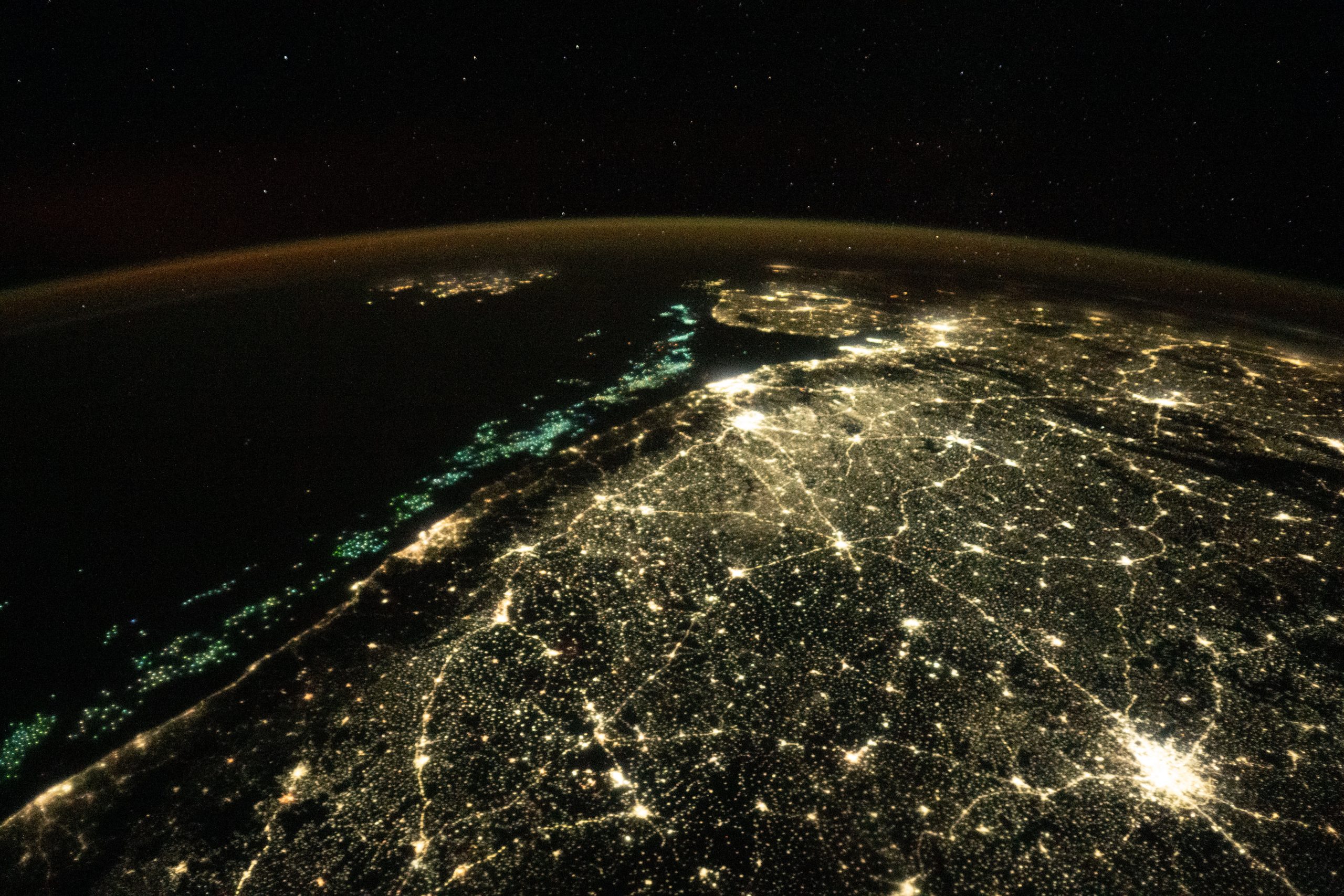
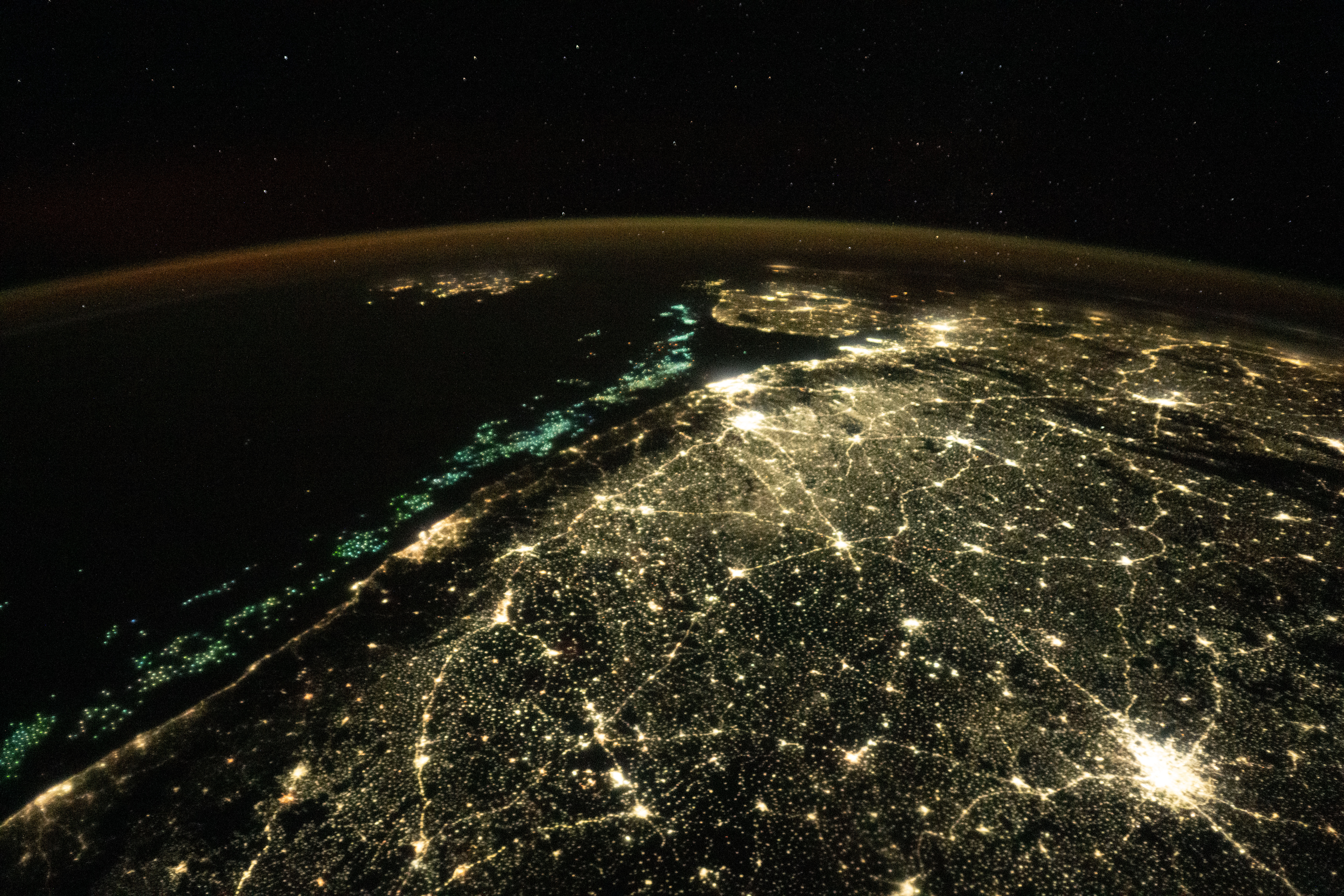
Fishing Boats and City Lights – Fishing boats illuminate the Arabian Sea along India’s west coast with green lights designed to attract squid, shrimp, sardines, and mackerel in this nighttime photograph from the International Space Station, orbiting 259 miles above Earth. At lower right, the city lights of Hyderabad—renowned for its historic diamond and pearl trade—stretch westward toward the Mumbai Metropolitan Region, home to over 26 million people and the heart of Bollywood.

Fishing boats illuminate the Arabian Sea along India’s west coast with green lights designed to attract squid, shrimp, sardines, and mackerel in this nighttime photograph from the International Space Station, orbiting 259 miles above Earth. At lower right, the city lights of Hyderabad—renowned for its historic diamond and pearl trade—stretch westward toward the Mumbai Metropolitan Region, home to over 26 million people and the heart of Bollywood.

Read More
Head of U.S. bishops joins call for Notre Dame to drop appointment of pro-abortion professor #Catholic U.S. Conference of Catholic Bishops President Archbishop Paul Coakley is urging the University of Notre Dame to drop the leadership appointment of an outspoken pro-abortion professor, joining nearly a dozen bishops in calling on the historic Catholic university to back away from the controversial decision. The controversy at Notre Dame exploded this week after Fort Wayne-South Bend, Indiana, Bishop Kevin Rhoades on Feb. 11 expressed “dismay” and “strong opposition” to the school's appointment of Professor Susan Ostermann as director of the school’s Liu Institute for Asia and Asian Studies.Ostermann has in the past spoken out strongly in favor of abortion and sharply criticized the pro-life movement, at times suggesting that its roots are in "white supremacy" and misogyny. Rhoades said Ostermann's beliefs, coupled with her leadership promotion at the Catholic school, were “causing scandal to the faithful of our diocese and beyond.”Multiple U.S. bishops from around the country backed Rhoades's call throughout the week, with Coakley himself speaking out about the controversy on Feb. 13. "I fully support Bishop Kevin Rhoades in his challenge to Notre Dame to rectify its poor judgement in hiring a professor who openly stands against Catholic teaching when it comes to the sanctity of life, in this case protection of the unborn," Coakley said in a statement on X. TweetThe statement was shared hundreds of times on X, including by Cardinal Joseph Zen Ze-kiun, the bishop emeritus of Hong Kong. Though criticism against Notre Dame's decision has come from top Catholic leadership in the U.S. throughout the week, the school has indicated that it will be standing by its plan to have Ostermann lead the institute. Notre Dame told EWTN News on Feb. 13 that Ostermann is "a highly regarded political scientist and legal scholar" who is "well prepared" to serve in the role. At the same time the university stressed its “unwavering” commitment “to upholding the inherent dignity of the human person and the sanctity of life at every stage.” Ostermann herself has told media that she “respect[s] Notre Dame’s institutional position on the sanctity of life at every stage." She has described herself as "fully committed to maintaining an environment of academic freedom where a plurality of voices can flourish."

Head of U.S. bishops joins call for Notre Dame to drop appointment of pro-abortion professor #Catholic U.S. Conference of Catholic Bishops President Archbishop Paul Coakley is urging the University of Notre Dame to drop the leadership appointment of an outspoken pro-abortion professor, joining nearly a dozen bishops in calling on the historic Catholic university to back away from the controversial decision. The controversy at Notre Dame exploded this week after Fort Wayne-South Bend, Indiana, Bishop Kevin Rhoades on Feb. 11 expressed “dismay” and “strong opposition” to the school's appointment of Professor Susan Ostermann as director of the school’s Liu Institute for Asia and Asian Studies.Ostermann has in the past spoken out strongly in favor of abortion and sharply criticized the pro-life movement, at times suggesting that its roots are in "white supremacy" and misogyny. Rhoades said Ostermann's beliefs, coupled with her leadership promotion at the Catholic school, were “causing scandal to the faithful of our diocese and beyond.”Multiple U.S. bishops from around the country backed Rhoades's call throughout the week, with Coakley himself speaking out about the controversy on Feb. 13. "I fully support Bishop Kevin Rhoades in his challenge to Notre Dame to rectify its poor judgement in hiring a professor who openly stands against Catholic teaching when it comes to the sanctity of life, in this case protection of the unborn," Coakley said in a statement on X. TweetThe statement was shared hundreds of times on X, including by Cardinal Joseph Zen Ze-kiun, the bishop emeritus of Hong Kong. Though criticism against Notre Dame's decision has come from top Catholic leadership in the U.S. throughout the week, the school has indicated that it will be standing by its plan to have Ostermann lead the institute. Notre Dame told EWTN News on Feb. 13 that Ostermann is "a highly regarded political scientist and legal scholar" who is "well prepared" to serve in the role. At the same time the university stressed its “unwavering” commitment “to upholding the inherent dignity of the human person and the sanctity of life at every stage.” Ostermann herself has told media that she “respect[s] Notre Dame’s institutional position on the sanctity of life at every stage." She has described herself as "fully committed to maintaining an environment of academic freedom where a plurality of voices can flourish."

The school has indicated it will stick by its decision for Professor Susan Ostermann to lead a university institute.

Read More
Amid criticism by bishops, Notre Dame says pro-abortion professor ‘well prepared’ to lead institute #Catholic The University of Notre Dame is signaling that it will stick by its appointment of an outspoken pro-abortion advocate to lead a university institute even after bishops from around the U.S. have criticized the decision and urged the school to change course.Multiple bishops have lamented the school’s decision to appoint global affairs Professor Susan Ostermann as director of the school’s Liu Institute for Asia and Asian Studies. The school announced the appointment in January.On Feb. 11 Fort Wayne-South Bend, Indiana, Bishop Kevin Rhoades, whose diocesan territory includes the university, expressed “dismay” and “strong opposition” to the appointment and called on the school to rescind the assignment, citing Ostermann’s public support for abortion.Several of Rhoades’ brother bishops followed suit, commending Rhoades for his statement and similarly calling on the university to reverse course on Ostermann’s appointment.Yet in a Feb. 13 statement to EWTN News, the school indicated that it would not pull Ostermann’s nomination to the leadership post.Ostermann “is a highly regarded political scientist and legal scholar whose insightful research on regulatory compliance … demonstrates the rigorous, interdisciplinary expertise required to lead the Liu Institute,” the school said.Calling Ostermann a “deeply committed educator,” the school said she is “well prepared to expand the institute’s global partnerships and create impactful research opportunities that advance our dedication to serving as the preeminent global Catholic research institution.”The university stressed its “unwavering” commitment “to upholding the inherent dignity of the human person and the sanctity of life at every stage.”“Those who serve in leadership positions at Notre Dame do so with the clear understanding that their decision-making as leaders must be guided by and consistent with the university’s Catholic mission,” the school said.The school did not immediately respond when asked for direct confirmation that it was continuing with Ostermann’s appointment to lead the Liu Institute.But its statement suggested the school is not backing down from the controversial decision, one that has brought withering criticism from both U.S. bishops and pro-life advocates and has seen the departure of at least two academics from the storied Catholic institution.Robert Gimello, a research professor emeritus of theology who is an expert on Buddhism, told the National Catholic Register that his “continued formal association with a unit of the university led by such a person is, for me, simply unconscionable.”Diane Desierto, a professor of law and of global affairs, also told the Register that she had cut ties with the institute over the appointment.Ostermann’s outspoken abortion advocacy has included instances where she has linked the pro-life movement to white supremacy and misogyny.The professor told the National Catholic Register in January that she “respect[s] Notre Dame’s institutional position on the sanctity of life at every stage” and described herself as “inspired by the university’s focus on integral human development, which calls us to promote the dignity and flourishing of every person.”She told the Register that her role at the school “is to support the diverse research of our scholars and students, not to advance a personal political agenda.”Ostermann had no further comment beyond her earlier statement, according to a university spokesperson.
Amid criticism by bishops, Notre Dame says pro-abortion professor ‘well prepared’ to lead institute #Catholic The University of Notre Dame is signaling that it will stick by its appointment of an outspoken pro-abortion advocate to lead a university institute even after bishops from around the U.S. have criticized the decision and urged the school to change course.Multiple bishops have lamented the school’s decision to appoint global affairs Professor Susan Ostermann as director of the school’s Liu Institute for Asia and Asian Studies. The school announced the appointment in January.On Feb. 11 Fort Wayne-South Bend, Indiana, Bishop Kevin Rhoades, whose diocesan territory includes the university, expressed “dismay” and “strong opposition” to the appointment and called on the school to rescind the assignment, citing Ostermann’s public support for abortion.Several of Rhoades’ brother bishops followed suit, commending Rhoades for his statement and similarly calling on the university to reverse course on Ostermann’s appointment.Yet in a Feb. 13 statement to EWTN News, the school indicated that it would not pull Ostermann’s nomination to the leadership post.Ostermann “is a highly regarded political scientist and legal scholar whose insightful research on regulatory compliance … demonstrates the rigorous, interdisciplinary expertise required to lead the Liu Institute,” the school said.Calling Ostermann a “deeply committed educator,” the school said she is “well prepared to expand the institute’s global partnerships and create impactful research opportunities that advance our dedication to serving as the preeminent global Catholic research institution.”The university stressed its “unwavering” commitment “to upholding the inherent dignity of the human person and the sanctity of life at every stage.”“Those who serve in leadership positions at Notre Dame do so with the clear understanding that their decision-making as leaders must be guided by and consistent with the university’s Catholic mission,” the school said.The school did not immediately respond when asked for direct confirmation that it was continuing with Ostermann’s appointment to lead the Liu Institute.But its statement suggested the school is not backing down from the controversial decision, one that has brought withering criticism from both U.S. bishops and pro-life advocates and has seen the departure of at least two academics from the storied Catholic institution.Robert Gimello, a research professor emeritus of theology who is an expert on Buddhism, told the National Catholic Register that his “continued formal association with a unit of the university led by such a person is, for me, simply unconscionable.”Diane Desierto, a professor of law and of global affairs, also told the Register that she had cut ties with the institute over the appointment.Ostermann’s outspoken abortion advocacy has included instances where she has linked the pro-life movement to white supremacy and misogyny.The professor told the National Catholic Register in January that she “respect[s] Notre Dame’s institutional position on the sanctity of life at every stage” and described herself as “inspired by the university’s focus on integral human development, which calls us to promote the dignity and flourishing of every person.”She told the Register that her role at the school “is to support the diverse research of our scholars and students, not to advance a personal political agenda.”Ostermann had no further comment beyond her earlier statement, according to a university spokesperson.
Multiple U.S. bishops have criticized the school’s decision and urged it to rescind the appointment.

Read More
More bishops call for Notre Dame to drop appointment of pro-abortion professor #Catholic Nearly half a dozen more bishops have joined the growing backlash against the University of Notre Dame over its controversial appointment of an outspoken abortion advocate to lead a university department.Fort Wayne-South Bend, Indiana, Bishop Kevin Rhoades on Feb. 11 issued a statement criticizing the university for appointing global affairs Professor Susan Ostermann as director of the school’s Liu Institute for Asia and Asian Studies.Three of Rhoades’ fellow bishops quickly backed the prelate’s remarks, voicing support on social media and calling on the university to drop Ostermann’s nomination. On Feb. 12, five more bishops commended Rhoades for his statement and expressed hope that the historic Catholic university would rescind the appointment. Gallup, New Mexico, Bishop James Wall praised Rhoades for his stance, with the western U.S. prelate offering a quote attributed to Pope Leo XIV: “We cannot build a just society if we discard the weakest, whether the child in the womb or the old man in his fragility, for both are gifts from God.”TweetSan Francisco Archbishop Salvatore Cordileone also thanked Rhoades for “speaking up.” “Holy Mary, Mother of God and Our Lady, pray for the university that bears your name,” Cordileone said. TweetGreen Bay, Wisconsin, Bishop David Ricken, meanwhile, wrote: “I fully affirm and stand in solidarity with my brother bishop [Rhoades].” He said Rhoades spoke “with clarity, courage, and fidelity to the Church’s mission.”“[L]et us turn with confidence to our Blessed Mother. Our Lady, pray for us! You are our loving Mother — we love you and entrust this to your Immaculate Heart,” Ricken wrote.TweetMadison, Wisconsin, Bishop Donald Hying described Rhoades’ statement as “a profound reflection on human dignity and the culture of life.”Tweet“We pray that all of our educational institutions support Catholic teaching, especially regarding human life,” he said. Lincoln, Nebraska, Bishop James Conley said he “stand[s] in support of Bishop Rhoades” while sharing his concern over the appointment. “Catholic institutions must faithfully reflect the truth of the dignity of every human life in both their mission and their leadership,” he said. TweetThe University of Notre Dame has continued to stand by its appointment of Ostermann, whose post is scheduled to take effect July 1. Rhoades on Feb. 11 said there is “still time [for the university] to make things right.”Ostermann, meanwhile, told the National Catholic Register in January that her role at the school “is to support the diverse research of our scholars and students, not to advance a personal political agenda.”The professor said she “respect[s] Notre Dame’s institutional position on the sanctity of life at every stage” and described herself as “inspired by the university’s focus on integral human development, which calls us to promote the dignity and flourishing of every person.”

More bishops call for Notre Dame to drop appointment of pro-abortion professor #Catholic Nearly half a dozen more bishops have joined the growing backlash against the University of Notre Dame over its controversial appointment of an outspoken abortion advocate to lead a university department.Fort Wayne-South Bend, Indiana, Bishop Kevin Rhoades on Feb. 11 issued a statement criticizing the university for appointing global affairs Professor Susan Ostermann as director of the school’s Liu Institute for Asia and Asian Studies.Three of Rhoades’ fellow bishops quickly backed the prelate’s remarks, voicing support on social media and calling on the university to drop Ostermann’s nomination. On Feb. 12, five more bishops commended Rhoades for his statement and expressed hope that the historic Catholic university would rescind the appointment. Gallup, New Mexico, Bishop James Wall praised Rhoades for his stance, with the western U.S. prelate offering a quote attributed to Pope Leo XIV: “We cannot build a just society if we discard the weakest, whether the child in the womb or the old man in his fragility, for both are gifts from God.”TweetSan Francisco Archbishop Salvatore Cordileone also thanked Rhoades for “speaking up.” “Holy Mary, Mother of God and Our Lady, pray for the university that bears your name,” Cordileone said. TweetGreen Bay, Wisconsin, Bishop David Ricken, meanwhile, wrote: “I fully affirm and stand in solidarity with my brother bishop [Rhoades].” He said Rhoades spoke “with clarity, courage, and fidelity to the Church’s mission.”“[L]et us turn with confidence to our Blessed Mother. Our Lady, pray for us! You are our loving Mother — we love you and entrust this to your Immaculate Heart,” Ricken wrote.TweetMadison, Wisconsin, Bishop Donald Hying described Rhoades’ statement as “a profound reflection on human dignity and the culture of life.”Tweet“We pray that all of our educational institutions support Catholic teaching, especially regarding human life,” he said. Lincoln, Nebraska, Bishop James Conley said he “stand[s] in support of Bishop Rhoades” while sharing his concern over the appointment. “Catholic institutions must faithfully reflect the truth of the dignity of every human life in both their mission and their leadership,” he said. TweetThe University of Notre Dame has continued to stand by its appointment of Ostermann, whose post is scheduled to take effect July 1. Rhoades on Feb. 11 said there is “still time [for the university] to make things right.”Ostermann, meanwhile, told the National Catholic Register in January that her role at the school “is to support the diverse research of our scholars and students, not to advance a personal political agenda.”The professor said she “respect[s] Notre Dame’s institutional position on the sanctity of life at every stage” and described herself as “inspired by the university’s focus on integral human development, which calls us to promote the dignity and flourishing of every person.”

The university has endured sustained backlash for nominating the outspoken abortion advocate to lead an academic department.

Read More
Pew report finds Christians are often largest group in the world’s most religiously diverse places #Catholic The Pew Research Center released a report examining the most and least religiously diverse countries and territories across the globe.The Feb. 12 report found that the United States is not among the 10 most religiously diverse countries in the world, but when examining only the 10 most populous nations, the U.S. ranks first in religious diversity.The report, “Religious Diversity Around the World,” describes levels of religious diversity in 201 countries and territories. It measures how evenly each country’s population is distributed among seven groups including Christians, Muslims, Hindus, Buddhists, Jews, adherents of all other religions, and people with no religious affiliation.The research is part of the Pew-Templeton Global Religious Futures project, which analyzes religious change and its impact on societies around the world.Most of the analysis is from Pew’s Religious Diversity Index (RDI). Pew calculated the religious diversity of 201 areas that together are home to 99.98% of the world’s population based on the size of seven religious groups to give them scores for religious diversity.
 
 In the world’s most religiously diverse places, Christians are often the largest group, a Feb. 12, 2026, Pew Research Center report finds. | Credit: Courtesy of Pew Research Center
 
 Overall, religious diversity levels around the world did not substantially change  between 2010 and 2020, as the religious composition of most countries remained fairly stable, the report said. The research found that while some places around the world have diverse populations of religious groups, it is more common for nations to primarily consist of a single religious group.In 194 countries and territories, 50% or more of the population falls into one religious category, the report said. This includes 43 places where at least 95% of the population is in the same religious group. These places are predominantly Muslim (25), Christian (17), or Buddhist (1).Most religiously diverse countriesThe research found that Singapore is the most religiously diverse country overall, while the United States ranks 32nd.In the world’s most religiously diverse places, Christians are often the largest group. Out of the 10 most religiously diverse counties overall, half have a majority Christian population, the report said.Singapore is the world’s most religiously diverse country as of 2020, with Buddhists (31%) as the largest religious group, the report said. Its population also includes substantial shares of religiously unaffiliated people (20%), Christians (19%), Muslims (16%), Hindus (5%), and adherents of all other religions (9%), the report said.Most of the other places in the top 10 are in the Asia-Pacific region or sub-Saharan Africa region including Suriname, Taiwan, South Korea, Mauritius, Guinea-Bissau, Togo, Benin, Australia, and France.
 
 A Pew Research Center report Feb. 12, 2026, identifies 10 countries where 90% of the population falls most evenly into a pair of religious categories. | Credit: Courtesy of Pew Research Center
 
 France is the only European country in the top 10 list. Its population is largely Christian (46%) and religiously unaffiliated (43%). In Suriname, another country in the top 10, about half of its residents (53%) are Christians and the rest are mainly Hindus (22%), Muslims (13%), and religiously unaffiliated people (8%). Christians are also the largest groups in Togo (57%), Benin (53%), and Australia (47%), which all fall in the top 10 most diverse places, the report said.Least religiously diverse countriesThe Middle East-North Africa region was found to be the least diverse of the regions Pew studied, with a population that is 94% Muslim. This region includes five of the world’s 10 least religiously diverse countries and territories.Eight of the least religiously diverse places have populations that are almost entirely Muslim, including Tunisia, Iraq, Western Sahara, Morocco, Iran, Somalia, Afghanistan, and Yemen, which all have a Muslim population of more than 99%, the report said.The other two countries with the least diverse scores were found to have very high majorities of Christians including Moldova and Timor-Lester, which both have populations made up of 99.5% of Christians.U.S. ranks high for religious diversity among largest nationsThe United States is not among the 10 most religiously diverse countries in the world, ranking 32nd overall. However, the U.S. is the most religiously diverse nation among the most populous countries, each of which has a population of at least 120 million. It is followed by Nigeria, Russia, India, and Brazil, the report said.Christians make up an estimated 64% of the U.S. population as of 2020, while religiously unaffiliated people account for about 30%, the report said. The remaining 6% are Muslims, Hindus, Buddhists, Jews, and people who practice other religions, the report said.The research showed the growth of religiously unaffiliated people and the decline of the Christian majority by 14% in the U.S. yielded an increase in the country’s religious diversity between 2010 and 2020.Nigeria is the second-most religiously diverse of the largely populated countries and is among the nations where 90% of the population is fairly evenly divided between two religious categories, the report said. The most populous religious groups in Nigeria are Muslims (56%) and Christians (43%), the report said.Out of the other nine countries where most of the population falls most into a pair of religious categories, seven include Christianity among the two religious groups. Eritrea, Bosnia-Herzegovina, Uruguay, Estonia, Chad, Ivory Coast, and Ethiopia, all include Christianity and one other group as their top religious groups as of 2020, the report said.Pakistan was found to be the least religiously diverse among the most populous countries, with Muslims making up a high majority (97%) of its residents.

Pew report finds Christians are often largest group in the world’s most religiously diverse places #Catholic The Pew Research Center released a report examining the most and least religiously diverse countries and territories across the globe.The Feb. 12 report found that the United States is not among the 10 most religiously diverse countries in the world, but when examining only the 10 most populous nations, the U.S. ranks first in religious diversity.The report, “Religious Diversity Around the World,” describes levels of religious diversity in 201 countries and territories. It measures how evenly each country’s population is distributed among seven groups including Christians, Muslims, Hindus, Buddhists, Jews, adherents of all other religions, and people with no religious affiliation.The research is part of the Pew-Templeton Global Religious Futures project, which analyzes religious change and its impact on societies around the world.Most of the analysis is from Pew’s Religious Diversity Index (RDI). Pew calculated the religious diversity of 201 areas that together are home to 99.98% of the world’s population based on the size of seven religious groups to give them scores for religious diversity. In the world’s most religiously diverse places, Christians are often the largest group, a Feb. 12, 2026, Pew Research Center report finds. | Credit: Courtesy of Pew Research Center Overall, religious diversity levels around the world did not substantially change  between 2010 and 2020, as the religious composition of most countries remained fairly stable, the report said. The research found that while some places around the world have diverse populations of religious groups, it is more common for nations to primarily consist of a single religious group.In 194 countries and territories, 50% or more of the population falls into one religious category, the report said. This includes 43 places where at least 95% of the population is in the same religious group. These places are predominantly Muslim (25), Christian (17), or Buddhist (1).Most religiously diverse countriesThe research found that Singapore is the most religiously diverse country overall, while the United States ranks 32nd.In the world’s most religiously diverse places, Christians are often the largest group. Out of the 10 most religiously diverse counties overall, half have a majority Christian population, the report said.Singapore is the world’s most religiously diverse country as of 2020, with Buddhists (31%) as the largest religious group, the report said. Its population also includes substantial shares of religiously unaffiliated people (20%), Christians (19%), Muslims (16%), Hindus (5%), and adherents of all other religions (9%), the report said.Most of the other places in the top 10 are in the Asia-Pacific region or sub-Saharan Africa region including Suriname, Taiwan, South Korea, Mauritius, Guinea-Bissau, Togo, Benin, Australia, and France. A Pew Research Center report Feb. 12, 2026, identifies 10 countries where 90% of the population falls most evenly into a pair of religious categories. | Credit: Courtesy of Pew Research Center France is the only European country in the top 10 list. Its population is largely Christian (46%) and religiously unaffiliated (43%). In Suriname, another country in the top 10, about half of its residents (53%) are Christians and the rest are mainly Hindus (22%), Muslims (13%), and religiously unaffiliated people (8%). Christians are also the largest groups in Togo (57%), Benin (53%), and Australia (47%), which all fall in the top 10 most diverse places, the report said.Least religiously diverse countriesThe Middle East-North Africa region was found to be the least diverse of the regions Pew studied, with a population that is 94% Muslim. This region includes five of the world’s 10 least religiously diverse countries and territories.Eight of the least religiously diverse places have populations that are almost entirely Muslim, including Tunisia, Iraq, Western Sahara, Morocco, Iran, Somalia, Afghanistan, and Yemen, which all have a Muslim population of more than 99%, the report said.The other two countries with the least diverse scores were found to have very high majorities of Christians including Moldova and Timor-Lester, which both have populations made up of 99.5% of Christians.U.S. ranks high for religious diversity among largest nationsThe United States is not among the 10 most religiously diverse countries in the world, ranking 32nd overall. However, the U.S. is the most religiously diverse nation among the most populous countries, each of which has a population of at least 120 million. It is followed by Nigeria, Russia, India, and Brazil, the report said.Christians make up an estimated 64% of the U.S. population as of 2020, while religiously unaffiliated people account for about 30%, the report said. The remaining 6% are Muslims, Hindus, Buddhists, Jews, and people who practice other religions, the report said.The research showed the growth of religiously unaffiliated people and the decline of the Christian majority by 14% in the U.S. yielded an increase in the country’s religious diversity between 2010 and 2020.Nigeria is the second-most religiously diverse of the largely populated countries and is among the nations where 90% of the population is fairly evenly divided between two religious categories, the report said. The most populous religious groups in Nigeria are Muslims (56%) and Christians (43%), the report said.Out of the other nine countries where most of the population falls most into a pair of religious categories, seven include Christianity among the two religious groups. Eritrea, Bosnia-Herzegovina, Uruguay, Estonia, Chad, Ivory Coast, and Ethiopia, all include Christianity and one other group as their top religious groups as of 2020, the report said.Pakistan was found to be the least religiously diverse among the most populous countries, with Muslims making up a high majority (97%) of its residents.

Among the most populous nations, the U.S. ranks first in religious diversity. Singapore is the most religiously diverse country overall, and the U.S. ranks 32nd.

Read More
Multiple U.S. bishops join call for Notre Dame to rescind appointment of pro-abortion advocate #Catholic A growing chorus of U.S. bishops on Feb. 11 called on the University of Notre Dame to rescind the controversial appointment of a pro-abortion advocate to lead one of the revered Catholic institution’s academic departments. Earlier in the day Fort Wayne-South Bend, Indiana, Bishop Kevin Rhoades issued a statement criticizing the university for appointing global affairs Professor Susan Ostermann as director of the school’s Liu Institute for Asia and Asian Studies.Rhoades said the school’s appointment of Ostermann — in spite of her public and uncompromising support for abortion — had caused a scandal and threatened Notre Dame’s Catholic identity and mission. He urged the school to rescind the nomination before it goes into effect on July 1.Several of Rhoades’ fellow prelates subsequently joined the call for Notre Dame to reverse Ostermann’s appointment. Among them was Denver Archbishop Samuel Aquila, who in a post on X thanked Rhoades for his statement and said that the school’s decision “tarnishes Our Lady’s university and what it means to be Catholic.”“I pray that those who can rescind this terrible appointment will do so! Pray for the conversion of hearts!” the archbishop wrote.TweetWinona-Rochester, Minnesota, Bishop Robert Barron similarly offered his “strong support” for Rhoades’ statement, arguing that Ostermann is “not simply ‘pro-choice’” on the question of abortion. Rather, “she is a sharp critic of the pro-life position and those who advocate it,” Barron said, pointing out that Ostermann has “characterize[d] the anti-abortion stance as rooted in white supremacy and racism” and “insinuated that the Catholic commitment to integral human development implies the support of abortion rights.”TweetBarron said he has “strong connections to and deep affections” for the university. “I believe that going ahead with this appointment is repugnant to the identity and mission of that great center of Catholic learning,” he wrote. Fort Worth, Texas, Bishop Michael Olson also offered his support for Rhoades “in his carrying out of his pastoral responsibility.”TweetThe bishop called for prayers that the university might “reconsider this distressing decision.” Support for Rhoades did not just come from his brother bishops. Actress and outspoken Catholic pro-life advocate Patricia Heaton thanked both Barron and Rhoades for their statements on Feb. 11.Former U.S. Rep. Dan Lipinski, who was named as a Pope Leo XIII Fellow on Social Thought at the University of Dallas in 2023, also thanked Rhoades, writing on X: “Public witness is extremely powerful and must be used to point all to the truth.”Though backlash to the appointment has been growing for weeks, the university has not backed off the controversial decision. The school told the Irish Rover as recently as Feb. 8 that it had “not changed its position” on Ostermann’s leadership of the department. Ostermann herself told the National Catholic Register on Jan. 29 that her role at the school “is to support the diverse research of our scholars and students, not to advance a personal political agenda.”“I respect Notre Dame’s institutional position on the sanctity of life at every stage,” she told the Register, describing herself as “inspired by the university’s focus on integral human development, which calls us to promote the dignity and flourishing of every person.”

Multiple U.S. bishops join call for Notre Dame to rescind appointment of pro-abortion advocate #Catholic A growing chorus of U.S. bishops on Feb. 11 called on the University of Notre Dame to rescind the controversial appointment of a pro-abortion advocate to lead one of the revered Catholic institution’s academic departments. Earlier in the day Fort Wayne-South Bend, Indiana, Bishop Kevin Rhoades issued a statement criticizing the university for appointing global affairs Professor Susan Ostermann as director of the school’s Liu Institute for Asia and Asian Studies.Rhoades said the school’s appointment of Ostermann — in spite of her public and uncompromising support for abortion — had caused a scandal and threatened Notre Dame’s Catholic identity and mission. He urged the school to rescind the nomination before it goes into effect on July 1.Several of Rhoades’ fellow prelates subsequently joined the call for Notre Dame to reverse Ostermann’s appointment. Among them was Denver Archbishop Samuel Aquila, who in a post on X thanked Rhoades for his statement and said that the school’s decision “tarnishes Our Lady’s university and what it means to be Catholic.”“I pray that those who can rescind this terrible appointment will do so! Pray for the conversion of hearts!” the archbishop wrote.TweetWinona-Rochester, Minnesota, Bishop Robert Barron similarly offered his “strong support” for Rhoades’ statement, arguing that Ostermann is “not simply ‘pro-choice’” on the question of abortion. Rather, “she is a sharp critic of the pro-life position and those who advocate it,” Barron said, pointing out that Ostermann has “characterize[d] the anti-abortion stance as rooted in white supremacy and racism” and “insinuated that the Catholic commitment to integral human development implies the support of abortion rights.”TweetBarron said he has “strong connections to and deep affections” for the university. “I believe that going ahead with this appointment is repugnant to the identity and mission of that great center of Catholic learning,” he wrote. Fort Worth, Texas, Bishop Michael Olson also offered his support for Rhoades “in his carrying out of his pastoral responsibility.”TweetThe bishop called for prayers that the university might “reconsider this distressing decision.” Support for Rhoades did not just come from his brother bishops. Actress and outspoken Catholic pro-life advocate Patricia Heaton thanked both Barron and Rhoades for their statements on Feb. 11.Former U.S. Rep. Dan Lipinski, who was named as a Pope Leo XIII Fellow on Social Thought at the University of Dallas in 2023, also thanked Rhoades, writing on X: “Public witness is extremely powerful and must be used to point all to the truth.”Though backlash to the appointment has been growing for weeks, the university has not backed off the controversial decision. The school told the Irish Rover as recently as Feb. 8 that it had “not changed its position” on Ostermann’s leadership of the department. Ostermann herself told the National Catholic Register on Jan. 29 that her role at the school “is to support the diverse research of our scholars and students, not to advance a personal political agenda.”“I respect Notre Dame’s institutional position on the sanctity of life at every stage,” she told the Register, describing herself as “inspired by the university’s focus on integral human development, which calls us to promote the dignity and flourishing of every person.”

Though backlash to the appointment has been growing for weeks, the university has not backed off the controversial decision.

Read More
BREAKING: Bishop Rhoades expresses ‘strong opposition’ to professor’s appointment at Notre Dame #Catholic Fort Wayne-South Bend, Indiana, Bishop Kevin Rhoades on Feb. 11 expressed “dismay” and “strong opposition” to the University of Notre Dame’s appointment of a pro-abortion professor to a leadership position at the school, with the bishop urging the university to “make things right” and rescind the appointment. Notre Dame has been at the center of controversy since early January when it named global affairs Professor Susan Ostermann as director of the school’s Liu Institute for Asia and Asian Studies. Ostermann is an outspoken pro-abortion advocate who has regularly criticized the pro-life movement, up to and including linking it to white supremacy and misogyny. The university has come under fire for the appointment, including from Catholic advocates and pro-life students at Notre Dame. Bishop urges school to retract appointmentIn his Feb. 11 statement, Rhoades — whose diocesan territory includes the university — said that since the controversy began he has read many of Ostermann’s pro-abortion op-eds and was moved to “express my dismay and my strong opposition to this appointment,” which he said is “causing scandal to the faithful of our diocese and beyond.”Ostermann’s public support of abortion and her “disparaging and inflammatory” criticism of the pro-life movement “go against a core principle of justice that is central to Notre Dame’s Catholic identity and mission,” the prelate said. The professor’s pro-abortion advocacy and her remarks about pro-life advocates “should disqualify her from an administrative and leadership role at a Catholic university,” Rhoades said.While expressing hope that Ostermann would “explicitly retract” her pro-abortion advocacy and change her mind on abortion, the bishop said that the appointment “understandably creates confusion” regarding Notre Dame’s Catholic mission and identity.Leadership appointments “have [a] profound impact on the integrity of Notre Dame’s public witness as a Catholic university,” Rhoades said.The bishop in issuing the letter cited the apostolic constitution Ex Corde Ecclesiae, which directs in part that bishops “have a particular responsibility to promote Catholic universities, and especially to promote and assist in the preservation and strengthening of their Catholic identity.”“I call upon the leadership of Notre Dame to rectify this situation,” Rhoades said. Noting that Ostermann’s appointment is not scheduled to go into effect until July 1, the prelate wrote: “There is still time to make things right.”The university did not immediately respond to a request for comment from EWTN News. Yet the school has defended Ostermann’s appointment since the controversy erupted, telling media that she is “a highly regarded political scientist and legal scholar” who is qualified to lead the Liu Institute. “Those who serve in leadership positions at Notre Dame do so with the clear understanding that their decision-making as leaders must be guided by and consistent with the university’s Catholic mission,” the school said. Among criticism from both within and without the school, at least two scholars have resigned their position at the Asian studies institute in response to the appointment. Robert Gimello, a research professor emeritus of theology who is an expert on Buddhism, told the National Catholic Register that his “continued formal association with a unit of the university led by such a person is, for me, simply unconscionable.”Diane Desierto, a professor of law and of global affairs, also told the Register that she had cut ties with the institute over the appointment.

BREAKING: Bishop Rhoades expresses ‘strong opposition’ to professor’s appointment at Notre Dame #Catholic Fort Wayne-South Bend, Indiana, Bishop Kevin Rhoades on Feb. 11 expressed “dismay” and “strong opposition” to the University of Notre Dame’s appointment of a pro-abortion professor to a leadership position at the school, with the bishop urging the university to “make things right” and rescind the appointment. Notre Dame has been at the center of controversy since early January when it named global affairs Professor Susan Ostermann as director of the school’s Liu Institute for Asia and Asian Studies. Ostermann is an outspoken pro-abortion advocate who has regularly criticized the pro-life movement, up to and including linking it to white supremacy and misogyny. The university has come under fire for the appointment, including from Catholic advocates and pro-life students at Notre Dame. Bishop urges school to retract appointmentIn his Feb. 11 statement, Rhoades — whose diocesan territory includes the university — said that since the controversy began he has read many of Ostermann’s pro-abortion op-eds and was moved to “express my dismay and my strong opposition to this appointment,” which he said is “causing scandal to the faithful of our diocese and beyond.”Ostermann’s public support of abortion and her “disparaging and inflammatory” criticism of the pro-life movement “go against a core principle of justice that is central to Notre Dame’s Catholic identity and mission,” the prelate said. The professor’s pro-abortion advocacy and her remarks about pro-life advocates “should disqualify her from an administrative and leadership role at a Catholic university,” Rhoades said.While expressing hope that Ostermann would “explicitly retract” her pro-abortion advocacy and change her mind on abortion, the bishop said that the appointment “understandably creates confusion” regarding Notre Dame’s Catholic mission and identity.Leadership appointments “have [a] profound impact on the integrity of Notre Dame’s public witness as a Catholic university,” Rhoades said.The bishop in issuing the letter cited the apostolic constitution Ex Corde Ecclesiae, which directs in part that bishops “have a particular responsibility to promote Catholic universities, and especially to promote and assist in the preservation and strengthening of their Catholic identity.”“I call upon the leadership of Notre Dame to rectify this situation,” Rhoades said. Noting that Ostermann’s appointment is not scheduled to go into effect until July 1, the prelate wrote: “There is still time to make things right.”The university did not immediately respond to a request for comment from EWTN News. Yet the school has defended Ostermann’s appointment since the controversy erupted, telling media that she is “a highly regarded political scientist and legal scholar” who is qualified to lead the Liu Institute. “Those who serve in leadership positions at Notre Dame do so with the clear understanding that their decision-making as leaders must be guided by and consistent with the university’s Catholic mission,” the school said. Among criticism from both within and without the school, at least two scholars have resigned their position at the Asian studies institute in response to the appointment. Robert Gimello, a research professor emeritus of theology who is an expert on Buddhism, told the National Catholic Register that his “continued formal association with a unit of the university led by such a person is, for me, simply unconscionable.”Diane Desierto, a professor of law and of global affairs, also told the Register that she had cut ties with the institute over the appointment.

Notre Dame has been at the center of controversy since early January when it named global affairs Professor Susan Ostermann as director of the school’s Liu Institute for Asia and Asian Studies.

Read More
Archbishop Wenski makes case for ‘permanent’ solution for Haitian refugees in U.S. #Catholic Archbishop Thomas Wenski of Miami is calling on Congress to find a “permanent” solution for Haitian refugees in the United States.On Feb. 2 a federal judge blocked the Trump administration from ending Temporary Protected Status (TPS) for hundreds of thousands of Haitian immigrants that was given in 2010. TPS provides eligible Haitians in the U.S. with protection from deportation and work authorization, due to ongoing safety concerns in Haiti.As Florida has the largest Haitian population in the country, Wenski said there is “relief” after the judge blocked the order. Ending TPS “would affect possibly 300,000 Haitians, not only here in South Florida but throughout the United States,” he said in an interview with “EWTN News Nightly.”“It’s not the final solution … because the administration, I think, has the intention of making an appeal, and what is given could be quickly taken away as well. While the Haitians are breathing a sigh of relief, at the same time, we realize that it’s a temporary relief.”Now, Wenski said, it is up to Congress “to step up to the plate and provide a more permanent solution to the plight of these Haitians.” The administration “is applying the laws as they understand them, but it is Congress that makes the laws.”“If the laws are unfair, unjust, or inadequate to the real needs of our country, then they should be changed, and that’s a prerogative of Congress. So I would urge Congress to step up to provide a solution, because the Haitians being forced back to Haiti with very perilous, dangerous conditions right now … puts their lives in danger.”The Haitians “leaving South Florida and other places in the United States so abruptly would cause great economic damage to the United States,” Wenski said. He detailed that Haitians in the U.S. with TPS are working gainfully, paying taxes, and participating in the economy.“It is also important to remember, these people have temporary protective status, which also grants them a work permit. They are not illegals. They’re not violating any law because they have been given a status by the government,” Wenski said.TPS status does put them “in limbo,” Wenski said. It “doesn’t provide any path to permanent residency. If they would leave the country, they would not be able to return.”Concerns in HaitiAs the U.S. State Department tells Americans not to travel to Haiti, when “the Trump administration puts a travel ban, trying to stop people from Haiti,” it “shows the perilousness of the country conditions,” Wenski said.“For instance, the capital city, where there’s about 3 million people residing, is in the hands of gangs,” he said. “Here’s a country that has its school system in disarray because gangs make it impossible for kids to go to school.”Wenski also highlighted the issue of “almost nonexistent health care” as “doctors have been forced to flee and hospitals have been closed” in the country.“It is a place where there is no rule of law, no government, where these gangs and other criminals operate with impunity. For many people, the only lifeline that they have that allows them to survive is the remittances, small as they might be, that the Haitians in the United States are sending home to support families,” Wenski said.“It’s a real problem, not only in Haiti, but the Caribbean region,” Wenski said. He specifically noted Mexico, Venezuela, Colombia, and Ecuador.“We see the drugs that are being transported into Europe from Asia and also Africa. It is a worldwide problem. What I think we have to recognize is that the poorest people are not the ones that are driving the problem. They are the victims of the problem.”The Haitians in the U.S. seeking refuge and protection “did not create the problems, but they were the ones that have been victimized by the problems,” Wenski said. “We have to be careful that we don’t blame the victims because it’s easier to do that sometimes because they don’t have the strength to oppose us,” Wenski said.

Archbishop Wenski makes case for ‘permanent’ solution for Haitian refugees in U.S. #Catholic Archbishop Thomas Wenski of Miami is calling on Congress to find a “permanent” solution for Haitian refugees in the United States.On Feb. 2 a federal judge blocked the Trump administration from ending Temporary Protected Status (TPS) for hundreds of thousands of Haitian immigrants that was given in 2010. TPS provides eligible Haitians in the U.S. with protection from deportation and work authorization, due to ongoing safety concerns in Haiti.As Florida has the largest Haitian population in the country, Wenski said there is “relief” after the judge blocked the order. Ending TPS “would affect possibly 300,000 Haitians, not only here in South Florida but throughout the United States,” he said in an interview with “EWTN News Nightly.”“It’s not the final solution … because the administration, I think, has the intention of making an appeal, and what is given could be quickly taken away as well. While the Haitians are breathing a sigh of relief, at the same time, we realize that it’s a temporary relief.”Now, Wenski said, it is up to Congress “to step up to the plate and provide a more permanent solution to the plight of these Haitians.” The administration “is applying the laws as they understand them, but it is Congress that makes the laws.”“If the laws are unfair, unjust, or inadequate to the real needs of our country, then they should be changed, and that’s a prerogative of Congress. So I would urge Congress to step up to provide a solution, because the Haitians being forced back to Haiti with very perilous, dangerous conditions right now … puts their lives in danger.”The Haitians “leaving South Florida and other places in the United States so abruptly would cause great economic damage to the United States,” Wenski said. He detailed that Haitians in the U.S. with TPS are working gainfully, paying taxes, and participating in the economy.“It is also important to remember, these people have temporary protective status, which also grants them a work permit. They are not illegals. They’re not violating any law because they have been given a status by the government,” Wenski said.TPS status does put them “in limbo,” Wenski said. It “doesn’t provide any path to permanent residency. If they would leave the country, they would not be able to return.”Concerns in HaitiAs the U.S. State Department tells Americans not to travel to Haiti, when “the Trump administration puts a travel ban, trying to stop people from Haiti,” it “shows the perilousness of the country conditions,” Wenski said.“For instance, the capital city, where there’s about 3 million people residing, is in the hands of gangs,” he said. “Here’s a country that has its school system in disarray because gangs make it impossible for kids to go to school.”Wenski also highlighted the issue of “almost nonexistent health care” as “doctors have been forced to flee and hospitals have been closed” in the country.“It is a place where there is no rule of law, no government, where these gangs and other criminals operate with impunity. For many people, the only lifeline that they have that allows them to survive is the remittances, small as they might be, that the Haitians in the United States are sending home to support families,” Wenski said.“It’s a real problem, not only in Haiti, but the Caribbean region,” Wenski said. He specifically noted Mexico, Venezuela, Colombia, and Ecuador.“We see the drugs that are being transported into Europe from Asia and also Africa. It is a worldwide problem. What I think we have to recognize is that the poorest people are not the ones that are driving the problem. They are the victims of the problem.”The Haitians in the U.S. seeking refuge and protection “did not create the problems, but they were the ones that have been victimized by the problems,” Wenski said. “We have to be careful that we don’t blame the victims because it’s easier to do that sometimes because they don’t have the strength to oppose us,” Wenski said.

The Haitians “leaving South Florida and other places in the United States so abruptly would cause great economic damage to the United States,” Archbishop Thomas Wenski said.

Read More