bills

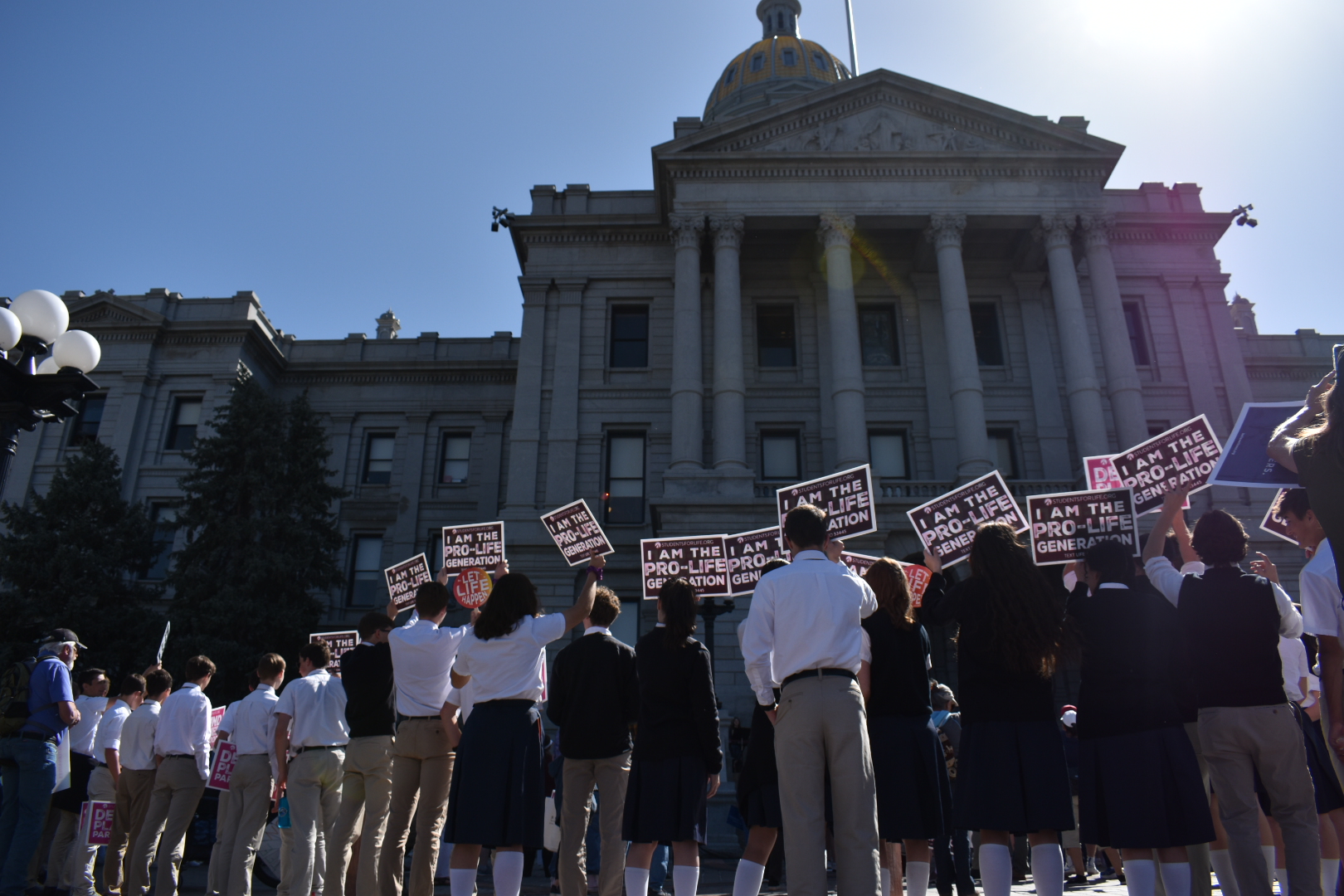
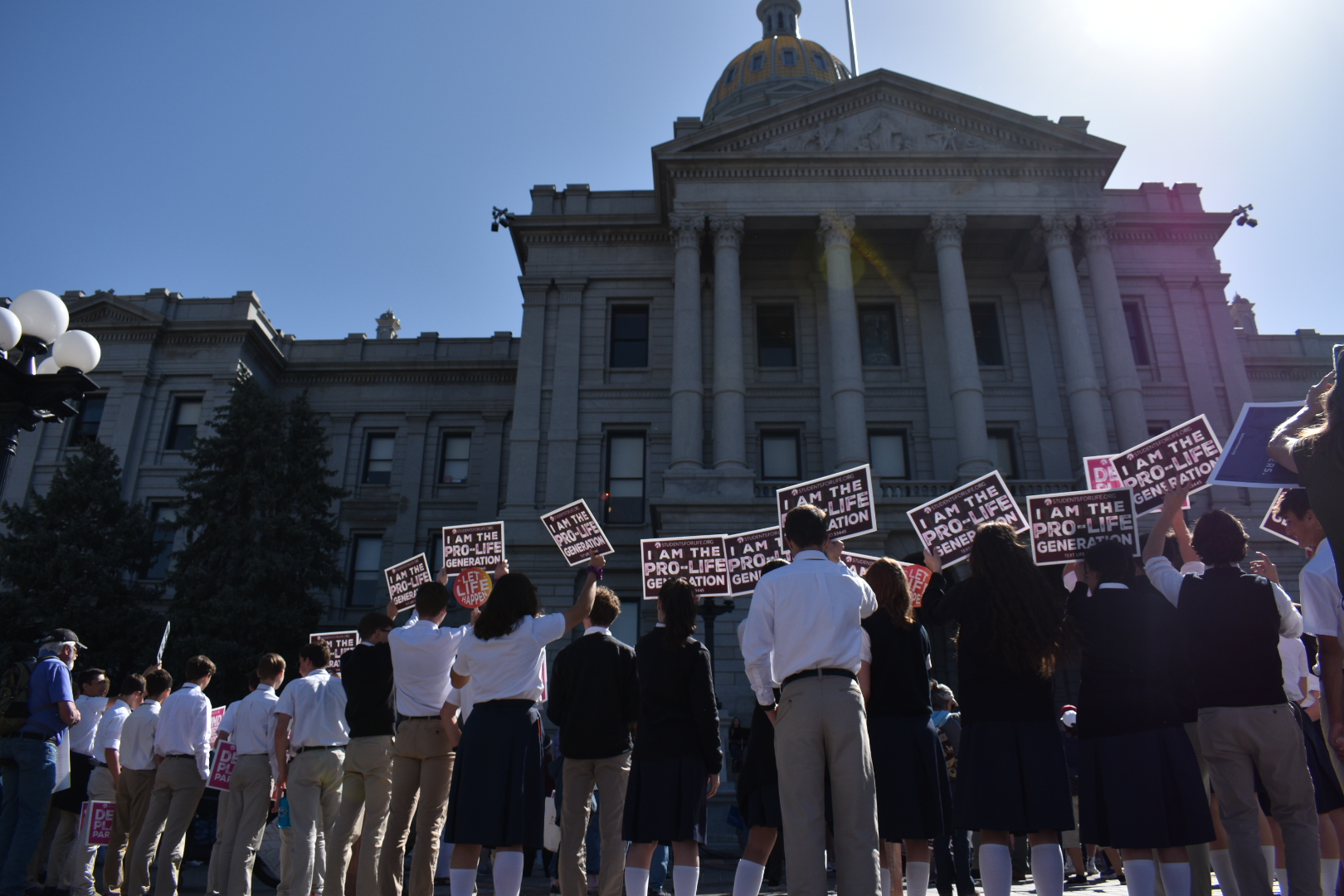
Watchdog group flags safety concerns at Colorado abortion clinics after death of teenager #Catholic In Colorado, advocates for life are gathering to remember a young woman who died during a second-trimester abortion at a Planned Parenthood — and to call for better safety regulations.Alexis “Lexi” Arguello died of complications during an abortion at the Planned Parenthood in Fort Collins; her grandparents claimed the clinic waited too long to call 911.The three-day “Justice for Lexi” campaign, taking place Aug. 27–29, aims to draw attention to the “the tragic death of Lexi Arguello and the numerous abortion injuries sustained by other unprotected women in unregulated abortion clinics across the state,” according to Operation Rescue, a watchdog group working to end abortion in the U.S. In the 1980s and 1990s, the group organized peaceful sit-ins and blockades in front of abortion clinics, which sometimes led to arrests.A press conference on Aug. 28 will be held on the sidewalk in front of the Fort Collins Planned Parenthood, where 12 other women have been injured, according to the group. Auxiliary Bishop Jorge Rodriguez-Novelo of the Archdiocese of Denver will speak at the prayer rally following the press conference.Dr. Catherine Wheeler, a former abortionist who now heads the Colorado Chapter of the American Association of Pro-Life Obstetricians and Gynecologists, a group that promotes patients’ rights for unborn babies and mothers, is set to speak at the event.“The tragic loss of Lexi’s life and at least 13 ambulances from Fort Collins since January 2025 witness to the dangers of later abortion, magnified by lack of oversight, transparency and accountability,” Wheeler stated in an Aug. 24 press release.“Women and Coloradans do not understand the dangers of abortion after the first trimester, and are not told the facilities are not regulated or inspected to be sure that anesthesia is safe, sterilization protocols are enforced, clinicians are adequately trained, or that the staff and facility are prepared, equipped and capable to manage emergencies like hemorrhage, uterine perforation or acute respiratory failure, known complications,” Wheeler continued.Dr. Tom Perille, who heads Democrats for Life of Colorado, insists that women’s safety must come first.“For two consecutive years, bills have been introduced in the Colorado Assembly to grant the Colorado Department of Public Health and Environment the authority to license, regulate, and inspect second and third trimester abortion facilities like they do other high risk healthcare facilities,” Perille said in the release. “Both times, the bills were defeated along party lines at the bequest of the abortion industry.”“Putting the abortion industry’s financial interests above the health and safety of Colorado women must stop,” he said.Operation Rescue has been monitoring the Fort Collins Planned Parenthood since Arguello’s death last year, according to the press release.“Since Lexi’s tragic death, our team has documented at least 12 more women injured at this same Planned Parenthood,” Sarah Neely, COO of Operation Rescue, said in a statement. “Another late-term Planned Parenthood located in Denver has injured nine women. Not one incident has been investigated, not even the death of Lexi, when evidence and testimony suggested Planned Parenthood staff waited too long to call 911.”In one case on July 9, Planned Parenthood in Fort Collins called 911 for a “hemorrhaging” patient.Attorney Alexandra Snyder of Life Legal Defense Foundation, a pro-life nonprofit defending unborn children, called for more safety regulations for abortion.“The need for adequate regulations is most pronounced in facilities that perform second- and third-trimester abortions, like the one that treated Lexi before she died,” Snyder said. “Colorado’s legislature has twice rejected attempts to impose even basic safety requirements. We will continue to fight for laws that protect women in Colorado from this unconscionable neglect on the part of the Legislature.”“We hope that Lexi’s death will finally compel lawmakers to require abortion clinics to meet the same patient safety standards required of other medical facilities,” Snyder said.

Watchdog group flags safety concerns at Colorado abortion clinics after death of teenager #Catholic In Colorado, advocates for life are gathering to remember a young woman who died during a second-trimester abortion at a Planned Parenthood — and to call for better safety regulations.Alexis “Lexi” Arguello died of complications during an abortion at the Planned Parenthood in Fort Collins; her grandparents claimed the clinic waited too long to call 911.The three-day “Justice for Lexi” campaign, taking place Aug. 27–29, aims to draw attention to the “the tragic death of Lexi Arguello and the numerous abortion injuries sustained by other unprotected women in unregulated abortion clinics across the state,” according to Operation Rescue, a watchdog group working to end abortion in the U.S. In the 1980s and 1990s, the group organized peaceful sit-ins and blockades in front of abortion clinics, which sometimes led to arrests.A press conference on Aug. 28 will be held on the sidewalk in front of the Fort Collins Planned Parenthood, where 12 other women have been injured, according to the group. Auxiliary Bishop Jorge Rodriguez-Novelo of the Archdiocese of Denver will speak at the prayer rally following the press conference.Dr. Catherine Wheeler, a former abortionist who now heads the Colorado Chapter of the American Association of Pro-Life Obstetricians and Gynecologists, a group that promotes patients’ rights for unborn babies and mothers, is set to speak at the event.“The tragic loss of Lexi’s life and at least 13 ambulances from Fort Collins since January 2025 witness to the dangers of later abortion, magnified by lack of oversight, transparency and accountability,” Wheeler stated in an Aug. 24 press release.“Women and Coloradans do not understand the dangers of abortion after the first trimester, and are not told the facilities are not regulated or inspected to be sure that anesthesia is safe, sterilization protocols are enforced, clinicians are adequately trained, or that the staff and facility are prepared, equipped and capable to manage emergencies like hemorrhage, uterine perforation or acute respiratory failure, known complications,” Wheeler continued.Dr. Tom Perille, who heads Democrats for Life of Colorado, insists that women’s safety must come first.“For two consecutive years, bills have been introduced in the Colorado Assembly to grant the Colorado Department of Public Health and Environment the authority to license, regulate, and inspect second and third trimester abortion facilities like they do other high risk healthcare facilities,” Perille said in the release. “Both times, the bills were defeated along party lines at the bequest of the abortion industry.”“Putting the abortion industry’s financial interests above the health and safety of Colorado women must stop,” he said.Operation Rescue has been monitoring the Fort Collins Planned Parenthood since Arguello’s death last year, according to the press release.“Since Lexi’s tragic death, our team has documented at least 12 more women injured at this same Planned Parenthood,” Sarah Neely, COO of Operation Rescue, said in a statement. “Another late-term Planned Parenthood located in Denver has injured nine women. Not one incident has been investigated, not even the death of Lexi, when evidence and testimony suggested Planned Parenthood staff waited too long to call 911.”In one case on July 9, Planned Parenthood in Fort Collins called 911 for a “hemorrhaging” patient.Attorney Alexandra Snyder of Life Legal Defense Foundation, a pro-life nonprofit defending unborn children, called for more safety regulations for abortion.“The need for adequate regulations is most pronounced in facilities that perform second- and third-trimester abortions, like the one that treated Lexi before she died,” Snyder said. “Colorado’s legislature has twice rejected attempts to impose even basic safety requirements. We will continue to fight for laws that protect women in Colorado from this unconscionable neglect on the part of the Legislature.”“We hope that Lexi’s death will finally compel lawmakers to require abortion clinics to meet the same patient safety standards required of other medical facilities,” Snyder said.

Last year, 18-year-old Lexi Arguello died after complications from a late-term abortion. Activists say staff waited too long to call 911 — and note that women continue to be injured at the clinic.
Read More
Archbishop Wenski meets lawmakers to gain support for Haitian migrants amid deportation fears #Catholic Miami Archbishop Thomas Wenski traveled to Washington, D.C., on July 28 to advocate on behalf of Haitian migrants who fear they will soon be targets of President Donald Trump’s mass deportation efforts.Wenski’s meetings with lawmakers came one day after the expiration of the automatic work‑permit extension under temporary protected status (TPS) for Haitians. The Supreme Court ruled last month that the administration has the authority to terminate TPS, which ended their work authorization and could subject them to deportation orders. “Haiti is a house on fire,” Wenski told “EWTN News Nightly” Capitol Hill correspondent Erik Rosales before entering the office of Sen. Tim Kaine, D-Virginia.The archbishop said TPS expiration and possible deportation of hundreds of thousands of Haitians is bad for the migrants — who would be sent back to an unstable country — and for the American communities in which the migrants live and work. About 353,000 Haitian nationals hold TPS status in the U.S., according to the Department of Homeland Security (DHS).“To think that we can send 350,000 people back to Haiti without that having very bad consequences in Haiti — but also here because these people are working, they’re not on the dole, they’re working, and if they’re removed from their jobs, if they lose their work permits, that’s going to have a negative economic impact on the communities in which they live,” Wenski said.As Haitian TPS status ends, some lawmakers have introduced bills to compel the DHS to extend the status. In April, the U.S. House of Representatives passed legislation, H.R. 1689, that would extend TPS for Haitians for three more years. No legislative efforts have gained traction in the Senate.The U.S. Conference of Catholic Bishops (USCCB) has advocated strongly on behalf of Haitian migrants, asking the Trump administration and lawmakers to extend TPS. About two-thirds of Haiti is Catholic.Chieko Noguchi, spokeswoman for the USCCB, told EWTN News that Bishop Brendan J. Cahill, USCCB Committee on Migration chair, “has encouraged his brother bishops across the country to engage with their elected officials” on Haitian TPS status and broader immigration reform efforts.“As pastors committed to upholding the common good, the bishops are actively engaging in this dialogue and continue to be grateful for the opportunity to do so, which they acknowledged in their special message last November,” she said.In November 2025, the USCCB adopted a message in a 216-5 vote that opposed the “indiscriminate mass deportation of people” and policies that revoke the legal status of migrants, such as the terminations of TPS for various groups of migrants.Kaine, an advocate for extending TPS, told EWTN News after meeting with Wenski that he was glad “to discuss the critical need for Congress to do what is right and protect TPS holders who have been in the U.S. legally for years” and looks forward to working with the USCCB to advocate for TPS holders.TPS holders “have made countless contributions in important sectors such as healthcare and construction, and developed deep roots in our communities through their U.S. citizen families and businesses,” he added. “Many TPS holders, such as those from Haiti, should not be forced to return to the extremely dangerous conditions that made them seek safety in the United States.”Status of Haitian migrantsOn July 27, DHS Secretary Markwayne Mullin reposted a DHS post on X, which said “temporary protected status is exactly that — TEMPORARY” and urged anyone whose TPS has expired to self-deport out of the U.S.“For those with terminated TPS: it’s closing time,” the post read. “You don’t have to go home, but you can’t stay here.”When asked whether DHS intends to specifically target Haitians for deportation amid the TPS expiration, a spokesperson told EWTN News that the department “does not discuss ongoing or future operations” but is conducting law enforcement activities daily.“For too long, TPS has been allowed to function as a de facto amnesty program despite Congress never intending it to be permanent,” the spokesperson said.Andrew Arthur, a former immigration judge and a resident fellow in law and policy for the Center for Immigration Studies, told EWTN News that TPS was initially approved for Haiti in 2010 after a devastating earthquake.Although Haiti continues to face serious safety and political stability concerns, he said the effects of the earthquake no longer impact the country. He noted that Haitians can apply for permanent status under other programs, such as if they are eligible for asylum, but that TPS is not a permanent resettlement program.Arthur said Haitians who are in the U.S. under temporary legal status “had the opportunity to work in the United States and make money” and learn skills, which they can take back “to Haiti and [it can] help them make Haiti a better country.”The former judge said he expects immigration enforcement toward Haitians to be part of “the larger enforcement efforts” rather than a targeted campaign against Haitians, with a priority toward people who have been convicted of crimes.“The response [now] is foreign aid on the part of the United States and aid from the Catholic Church toward making Haiti a better place,” Arthur said.TPS status for Syrian migrants also ended on July 27. El Salvador’s TPS designation is set to expire Sept. 9.

Archbishop Wenski meets lawmakers to gain support for Haitian migrants amid deportation fears #Catholic Miami Archbishop Thomas Wenski traveled to Washington, D.C., on July 28 to advocate on behalf of Haitian migrants who fear they will soon be targets of President Donald Trump’s mass deportation efforts.Wenski’s meetings with lawmakers came one day after the expiration of the automatic work‑permit extension under temporary protected status (TPS) for Haitians. The Supreme Court ruled last month that the administration has the authority to terminate TPS, which ended their work authorization and could subject them to deportation orders. “Haiti is a house on fire,” Wenski told “EWTN News Nightly” Capitol Hill correspondent Erik Rosales before entering the office of Sen. Tim Kaine, D-Virginia.The archbishop said TPS expiration and possible deportation of hundreds of thousands of Haitians is bad for the migrants — who would be sent back to an unstable country — and for the American communities in which the migrants live and work. About 353,000 Haitian nationals hold TPS status in the U.S., according to the Department of Homeland Security (DHS).“To think that we can send 350,000 people back to Haiti without that having very bad consequences in Haiti — but also here because these people are working, they’re not on the dole, they’re working, and if they’re removed from their jobs, if they lose their work permits, that’s going to have a negative economic impact on the communities in which they live,” Wenski said.As Haitian TPS status ends, some lawmakers have introduced bills to compel the DHS to extend the status. In April, the U.S. House of Representatives passed legislation, H.R. 1689, that would extend TPS for Haitians for three more years. No legislative efforts have gained traction in the Senate.The U.S. Conference of Catholic Bishops (USCCB) has advocated strongly on behalf of Haitian migrants, asking the Trump administration and lawmakers to extend TPS. About two-thirds of Haiti is Catholic.Chieko Noguchi, spokeswoman for the USCCB, told EWTN News that Bishop Brendan J. Cahill, USCCB Committee on Migration chair, “has encouraged his brother bishops across the country to engage with their elected officials” on Haitian TPS status and broader immigration reform efforts.“As pastors committed to upholding the common good, the bishops are actively engaging in this dialogue and continue to be grateful for the opportunity to do so, which they acknowledged in their special message last November,” she said.In November 2025, the USCCB adopted a message in a 216-5 vote that opposed the “indiscriminate mass deportation of people” and policies that revoke the legal status of migrants, such as the terminations of TPS for various groups of migrants.Kaine, an advocate for extending TPS, told EWTN News after meeting with Wenski that he was glad “to discuss the critical need for Congress to do what is right and protect TPS holders who have been in the U.S. legally for years” and looks forward to working with the USCCB to advocate for TPS holders.TPS holders “have made countless contributions in important sectors such as healthcare and construction, and developed deep roots in our communities through their U.S. citizen families and businesses,” he added. “Many TPS holders, such as those from Haiti, should not be forced to return to the extremely dangerous conditions that made them seek safety in the United States.”Status of Haitian migrantsOn July 27, DHS Secretary Markwayne Mullin reposted a DHS post on X, which said “temporary protected status is exactly that — TEMPORARY” and urged anyone whose TPS has expired to self-deport out of the U.S.“For those with terminated TPS: it’s closing time,” the post read. “You don’t have to go home, but you can’t stay here.”When asked whether DHS intends to specifically target Haitians for deportation amid the TPS expiration, a spokesperson told EWTN News that the department “does not discuss ongoing or future operations” but is conducting law enforcement activities daily.“For too long, TPS has been allowed to function as a de facto amnesty program despite Congress never intending it to be permanent,” the spokesperson said.Andrew Arthur, a former immigration judge and a resident fellow in law and policy for the Center for Immigration Studies, told EWTN News that TPS was initially approved for Haiti in 2010 after a devastating earthquake.Although Haiti continues to face serious safety and political stability concerns, he said the effects of the earthquake no longer impact the country. He noted that Haitians can apply for permanent status under other programs, such as if they are eligible for asylum, but that TPS is not a permanent resettlement program.Arthur said Haitians who are in the U.S. under temporary legal status “had the opportunity to work in the United States and make money” and learn skills, which they can take back “to Haiti and [it can] help them make Haiti a better country.”The former judge said he expects immigration enforcement toward Haitians to be part of “the larger enforcement efforts” rather than a targeted campaign against Haitians, with a priority toward people who have been convicted of crimes.“The response [now] is foreign aid on the part of the United States and aid from the Catholic Church toward making Haiti a better place,” Arthur said.TPS status for Syrian migrants also ended on July 27. El Salvador’s TPS designation is set to expire Sept. 9.

The Department of Homeland Security defended its policy, saying temporary protected status was not meant to be permanent.

Read More