Brazil

At a time of conflict, Pope Leo sends a bridge-builder to the United States #Catholic Archbishop Gabriele Caccia, the recently appointed apostolic nuncio to the United States, takes up his new role at a time of heightened tension between the Vatican and the White House over issues including immigration to the U.S. and war in the Middle East.Former collaborators say Caccia’s personal qualities and wide diplomatic experience — including in Lebanon and the Philippines — make him well suited for this crucial assignment.The 68-year-old diplomat recently served as the permanent observer of the Holy See Mission to the United Nations in New York after Pope Francis appointed him there in 2019. His new job is important as a liaison between the Vatican and the U.S., where recent federal policies have faced growing resistance from Church leaders.Pope Leo’s new man on a high-stakes missionA veteran diplomat, Caccia will serve as Pope Leo XIV’s chief representative to the Trump administration. Like his predecessor, Cardinal Christophe Pierre, he assumes office amid ongoing tension between the administration and the Church, especially on immigration enforcement and foreign policy.In a public statement in November 2025, U.S. bishops strongly opposed the administration’s treatment of migrants during mass deportations. Pope Leo expressed support for the statement and denounced the treatment of migrants as “extremely disrespectful, and with instances of violence.”The U.S. bishops have also voiced concern over recent foreign policy moves, including interventions in the Middle East. In January of this year, three U.S. cardinals — Blase Cupich, Joseph Tobin, and Robert McElroy — jointly condemned the administration’s foreign policy in a public statement. In recent addresses, Pope Leo has also called for a ceasefire in the Middle East, deploring on March 15 a “widespread climate of hatred and fear.”Monsignor Roger Landry, who served at the Holy See Mission from 2015 to 2022 and now heads the Pontifical Mission Societies, expressed confidence in the nuncio’s ability to communicate the Holy See’s concerns effectively to the U.S. government while supporting the bishops.“He will represent Pope Leo very well to the U.S. government and the U.S. Church, be a great listener and effective relayer of what’s happening in the United States to Pope Leo, and be a steady source of counsel and support to U.S. bishops,” he told EWTN News.Dálida Morales, who interned at the mission and now works at the Ministry of Industry and Commerce in the Dominican Republic, conveyed hope for the archbishop’s potential to build international dialogue.“He is genuinely a bridge-builder for peace. At a time when dialogue, moral clarity, and principled leadership are urgently needed in the United States, his appointment there is both timely and hopeful,” she said.A diplomat forged in complex geopoliticsHaving worked in the diplomatic service of the Holy See since 1991, Caccia previously served in challenging posts before his appointment to the U.N. He served as apostolic nuncio to Lebanon and the Philippines, two countries with sensitive political climates.His service in Lebanon occurred during the outbreak of the Syrian Civil War in 2011. There, he helped coordinate the Church’s humanitarian response to support over 1.5 million Syrian refugees in Lebanon. His service also included helping maintain peace in a country constitutionally divided among Maronite Christians, Muslims, and Druze.He served in the Philippines at the height of President Rodrigo Duterte’s highly aggressive and controversial anti-narcotics campaign, which resulted in thousands of extrajudicial killings. As the nuncio, he helped to support the bishops, who were vocal critics against the government, while maintaining the country’s diplomatic relations with the Holy See.During his time at the U.N., he promoted the Vatican’s diplomatic stance. Father Mark Knestout, who served with Caccia as a former attaché for the Holy See Mission, noted the importance of his diplomatic experience in his new role.“He was in Lebanon for eight years, which is a complex situation because you have multiple denominations of Catholics there, alongside the situation with Muslims,” he told EWTN News. “So I see him being personable and striving to get to know everyone in the United States as best he can.”An inclusive leader and sports loverFormer staff of Caccia also shared with EWTN News some personal anecdotes from their time serving with him in New York. Vitória Volpato, a former intern at the mission who serves at the Prefecture of São Paulo in Brazil, noted with gratitude the archbishop’s insights on leadership.“He said something that stayed with me: ‘I do not choose the people I work with, but I work with the people I have.’ That made me reflect on what a good leader must be, something the archbishop clearly is,” she said.Ashley Campbell, who interned at the mission and now works at the Religious Freedom Institute, reflected on his love of sports. “I remember once walking with him back to the Holy See Mission building from the U.N., and we talked about how we both grew up playing sports and how amazing it would be if Vatican City could send athletes to the Olympics.”Fidelity to the Holy FatherOne trait consistently praised by those who have worked with the archbishop is his fidelity to the Holy Father. Knestout described the archbishop as a “true Churchman who wants to represent the desires and the intentions of the Holy Father.”Morales added: “Every Wednesday, he would ask us about the Holy Father’s general audience. In this way, he reminded us that one of the most meaningful ways to remain united to the Church is by listening to the voice of the pope. It is a habit I continue to keep today thanks to him.”

At a time of conflict, Pope Leo sends a bridge-builder to the United States #Catholic Archbishop Gabriele Caccia, the recently appointed apostolic nuncio to the United States, takes up his new role at a time of heightened tension between the Vatican and the White House over issues including immigration to the U.S. and war in the Middle East.Former collaborators say Caccia’s personal qualities and wide diplomatic experience — including in Lebanon and the Philippines — make him well suited for this crucial assignment.The 68-year-old diplomat recently served as the permanent observer of the Holy See Mission to the United Nations in New York after Pope Francis appointed him there in 2019. His new job is important as a liaison between the Vatican and the U.S., where recent federal policies have faced growing resistance from Church leaders.Pope Leo’s new man on a high-stakes missionA veteran diplomat, Caccia will serve as Pope Leo XIV’s chief representative to the Trump administration. Like his predecessor, Cardinal Christophe Pierre, he assumes office amid ongoing tension between the administration and the Church, especially on immigration enforcement and foreign policy.In a public statement in November 2025, U.S. bishops strongly opposed the administration’s treatment of migrants during mass deportations. Pope Leo expressed support for the statement and denounced the treatment of migrants as “extremely disrespectful, and with instances of violence.”The U.S. bishops have also voiced concern over recent foreign policy moves, including interventions in the Middle East. In January of this year, three U.S. cardinals — Blase Cupich, Joseph Tobin, and Robert McElroy — jointly condemned the administration’s foreign policy in a public statement. In recent addresses, Pope Leo has also called for a ceasefire in the Middle East, deploring on March 15 a “widespread climate of hatred and fear.”Monsignor Roger Landry, who served at the Holy See Mission from 2015 to 2022 and now heads the Pontifical Mission Societies, expressed confidence in the nuncio’s ability to communicate the Holy See’s concerns effectively to the U.S. government while supporting the bishops.“He will represent Pope Leo very well to the U.S. government and the U.S. Church, be a great listener and effective relayer of what’s happening in the United States to Pope Leo, and be a steady source of counsel and support to U.S. bishops,” he told EWTN News.Dálida Morales, who interned at the mission and now works at the Ministry of Industry and Commerce in the Dominican Republic, conveyed hope for the archbishop’s potential to build international dialogue.“He is genuinely a bridge-builder for peace. At a time when dialogue, moral clarity, and principled leadership are urgently needed in the United States, his appointment there is both timely and hopeful,” she said.A diplomat forged in complex geopoliticsHaving worked in the diplomatic service of the Holy See since 1991, Caccia previously served in challenging posts before his appointment to the U.N. He served as apostolic nuncio to Lebanon and the Philippines, two countries with sensitive political climates.His service in Lebanon occurred during the outbreak of the Syrian Civil War in 2011. There, he helped coordinate the Church’s humanitarian response to support over 1.5 million Syrian refugees in Lebanon. His service also included helping maintain peace in a country constitutionally divided among Maronite Christians, Muslims, and Druze.He served in the Philippines at the height of President Rodrigo Duterte’s highly aggressive and controversial anti-narcotics campaign, which resulted in thousands of extrajudicial killings. As the nuncio, he helped to support the bishops, who were vocal critics against the government, while maintaining the country’s diplomatic relations with the Holy See.During his time at the U.N., he promoted the Vatican’s diplomatic stance. Father Mark Knestout, who served with Caccia as a former attaché for the Holy See Mission, noted the importance of his diplomatic experience in his new role.“He was in Lebanon for eight years, which is a complex situation because you have multiple denominations of Catholics there, alongside the situation with Muslims,” he told EWTN News. “So I see him being personable and striving to get to know everyone in the United States as best he can.”An inclusive leader and sports loverFormer staff of Caccia also shared with EWTN News some personal anecdotes from their time serving with him in New York. Vitória Volpato, a former intern at the mission who serves at the Prefecture of São Paulo in Brazil, noted with gratitude the archbishop’s insights on leadership.“He said something that stayed with me: ‘I do not choose the people I work with, but I work with the people I have.’ That made me reflect on what a good leader must be, something the archbishop clearly is,” she said.Ashley Campbell, who interned at the mission and now works at the Religious Freedom Institute, reflected on his love of sports. “I remember once walking with him back to the Holy See Mission building from the U.N., and we talked about how we both grew up playing sports and how amazing it would be if Vatican City could send athletes to the Olympics.”Fidelity to the Holy FatherOne trait consistently praised by those who have worked with the archbishop is his fidelity to the Holy Father. Knestout described the archbishop as a “true Churchman who wants to represent the desires and the intentions of the Holy Father.”Morales added: “Every Wednesday, he would ask us about the Holy Father’s general audience. In this way, he reminded us that one of the most meaningful ways to remain united to the Church is by listening to the voice of the pope. It is a habit I continue to keep today thanks to him.”

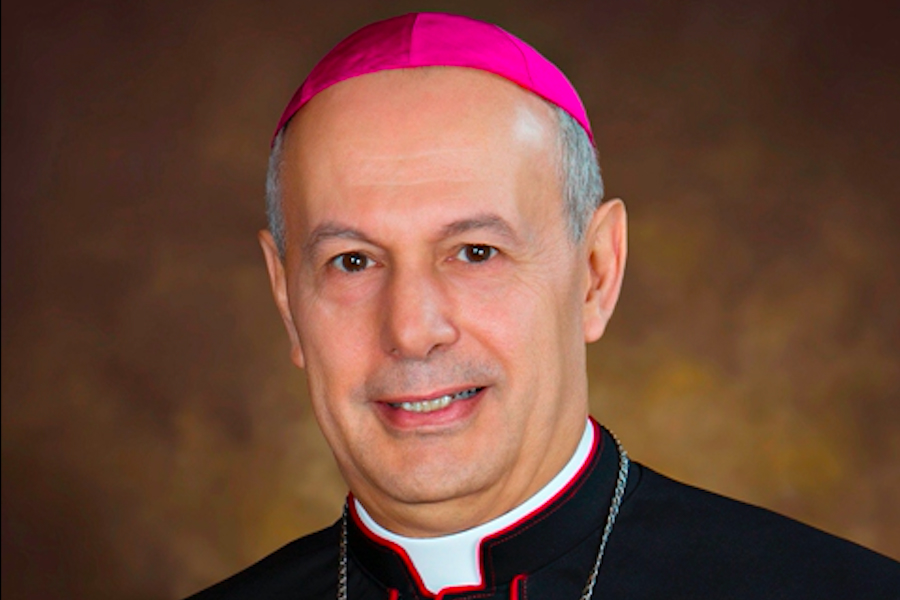
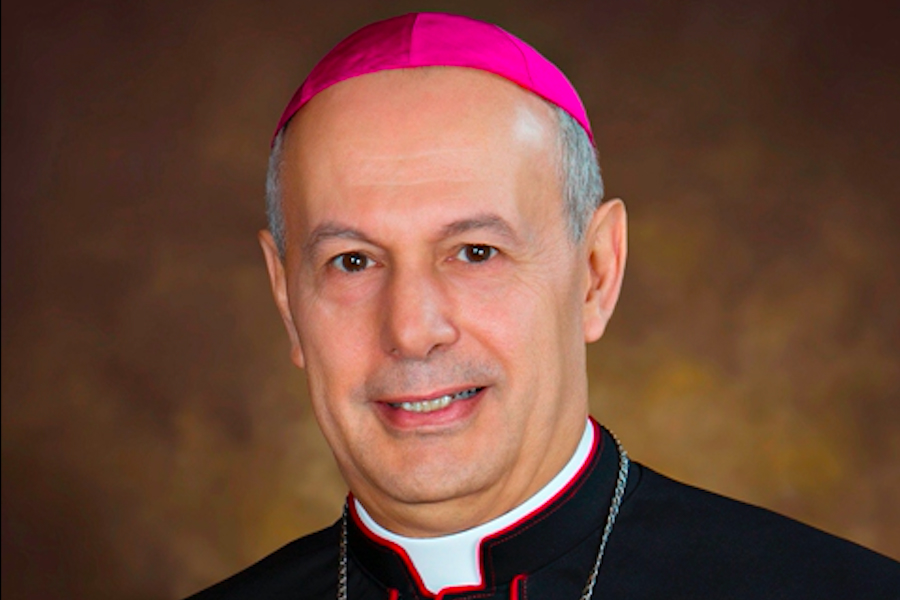
Archbishop Gabriele Caccia, the new papal envoy to Washington, has been shaped by a diplomatic career in geopolitical hot spots.
Read More
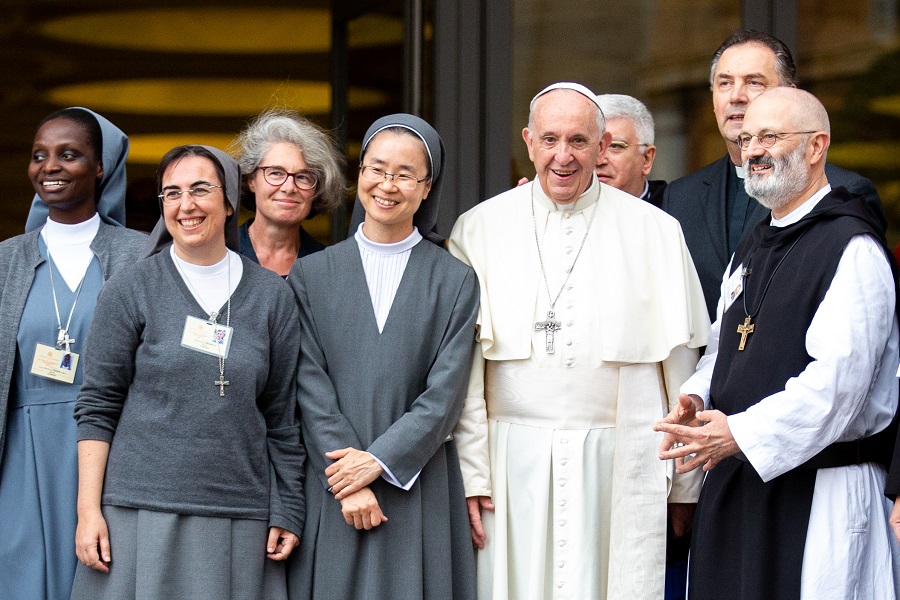
The religious sisters in Vatican leadership #Catholic VATICAN CITY — Religious sisters and consecrated women are a formidable presence inside Vatican City State and the Roman Curia, with recent years seeing their number and prominence rise.The increasing presence of women in the Vatican has been well documented. According to the Vatican, the percentage of women grew from 19.2% to 23.4% during the first decade of Pope Francis’ pontificate.According to a study done at the end of 2024, there were 1,318 women in a total workforce of around 6,000. There is no publicly available data on how big a share of the female presence is composed of consecrated women and religious sisters.Sister Nathalie Becquart, XMCJ, was one of the first women to be appointed to a major role at the Vatican when she was named undersecretary of the General Secretariat of the Synod of Bishops in 2021. She was also the first woman to vote at a synodal assembly.Becquart told EWTN News that during her five years at the Vatican not only have women been given more key positions, but they are also serving in less visible, though no less important, roles.“At the Vatican now, you have more women as consultors to the different dicasteries or member of the dicasteries, on different commissions,” she said. “We had women in all our commissions as experts, as facilitators, inside the synod.”In August 2025, Pope Leo appointed Sister Iuliana Sarosi, CMD, and Sister Martha Driscoll, OCSO, consultors of the Dicastery for Clergy.
 
 Sister Raffaella Petrini, FSE, president of the Governorate and of the Pontifical Commission for Vatican City State. | Credit: Daniel Ibáñez/EWTN News
 
 Sister Raffaella Petrini of the Franciscan Sisters of the Eucharist is the first woman in the history of the Church to head the Vatican City State.She was appointed president of the Governorate and of the Pontifical Commission for Vatican City State — the equivalent of a kind of governor — in March 2025 after serving as secretary general of the city state for four years.Petrini is also one of the first women to be a member of the Dicastery for Bishops. Pope Francis appointed Petrini, consecrated virgin María Lía Zervino, and Sister Yvonne Reungoat, FMA, members in July 2022.Since 2023, the undersecretary of the Administration of the Patrimony of the Apostolic See (APSA) is also a religious sister: Sister Silvana Piro, FMGB.Serving at the VaticanBecquart described coming to the Vatican to work as “an adventure.”“For me, being appointed at the Vatican has been a little bit like being sent to be a missionary in Papua New Guinea or in Brazil. It’s arriving in a new context, a new experience, learning a new language, new ways of working. A new culture, I would say, a new environment,” the sister said.
 
 Sister Nathalie Becquart, XMCJ, is an undersecretary for the General Secretariat of the Synod of Bishops. | Credit: Daniel Ibañez/EWTN News
 
 Becquart noted that one of the qualities religious sisters in general bring to their service at the Vatican is “a deep connection with real life.” As well, many “have started at the grassroots [ministering to] the people where they are. So we bring also this experience of being with others, especially with the poor and the most marginalized.”Margherita Romanelli, a non-religious sister who recently retired after working for 31 years in the Dicastery for Promoting Integral Human Development, told EWTN News “the recent appointments of women to top positions have greatly helped other women working [in the Vatican] to feel valued and to commit themselves to working for the common good, alongside men.”Romanelli, who is also president of the Women in the Vatican Association (DIVA), said the association was founded in 2016 because some women “felt the need to come together to respond to the needs of their female colleagues and, above all, to gain greater visibility within the Vatican. Their goal is therefore to create a network of friendship and solidarity.”In the Dicastery for Promoting Integral Human Development, where Romanelli worked, economist Sister Alessandra Smerilli, FMA, is the first woman to hold the No. 2 position.Smerilli was named secretary in April 2022 after serving for eight months as interim secretary and, prior to that, almost half a year as undersecretary, starting in March 2021. Before starting in the Roman Curia, Smerilli was also a councilor of the Vatican City State.
 
 Sister Alessandra Smerilli, FMA, secretary of the Vatican Dicastery for Promoting Integral Human Development. | Credit: Daniel Ibáñez/EWTN News
 
 Religious sisters serving religiousIn one department at the Vatican, there has been a revolution of women religious in leadership over the last year.In 2025, first Pope Francis, and then Pope Leo XIV, put two religious sisters in charge of the Dicastery for Institutes of Consecrated Life and Societies of Apostolic Life, starting with Sister Simona Brambilla of the Consolata Missionaries.Appointed prefect in January 2025, Brambilla is the first woman ever named prefect of a dicastery. She leads together with Cardinal Ángel Fernández Artime, SDB, who is pro-prefect of the same dicastery.Brambilla, who served as superior general of the Consolata Missionary Sisters from 2011 to 2023, was secretary of the dicastery for religious and consecrated life since October 2023.The sister, who trained as a nurse before entering religious life, was a missionary in Mozambique in the late 1990s. She then returned to Italy, where, with her advanced degree in psychology, she taught at the Pontifical Gregorian University in its Institute of Psychology. She was head of the institute of Consolata Missionary Sisters from 2011 until May 2023.In May 2025, Pope Leo XIV named Sister Tiziana Merletti, a Franciscan Sister of the Poor, secretary of the same dicastery.Merletti, a former superior general of her order, is an expert in canon law who taught at the Pontifical University Antonianum.With Sister Carmen Ros Nortes, NSC, who has been undersecretary of the same dicastery since 2018, three of the department’s top five positions are filled by religious sisters.

The religious sisters in Vatican leadership #Catholic VATICAN CITY — Religious sisters and consecrated women are a formidable presence inside Vatican City State and the Roman Curia, with recent years seeing their number and prominence rise.The increasing presence of women in the Vatican has been well documented. According to the Vatican, the percentage of women grew from 19.2% to 23.4% during the first decade of Pope Francis’ pontificate.According to a study done at the end of 2024, there were 1,318 women in a total workforce of around 6,000. There is no publicly available data on how big a share of the female presence is composed of consecrated women and religious sisters.Sister Nathalie Becquart, XMCJ, was one of the first women to be appointed to a major role at the Vatican when she was named undersecretary of the General Secretariat of the Synod of Bishops in 2021. She was also the first woman to vote at a synodal assembly.Becquart told EWTN News that during her five years at the Vatican not only have women been given more key positions, but they are also serving in less visible, though no less important, roles.“At the Vatican now, you have more women as consultors to the different dicasteries or member of the dicasteries, on different commissions,” she said. “We had women in all our commissions as experts, as facilitators, inside the synod.”In August 2025, Pope Leo appointed Sister Iuliana Sarosi, CMD, and Sister Martha Driscoll, OCSO, consultors of the Dicastery for Clergy. Sister Raffaella Petrini, FSE, president of the Governorate and of the Pontifical Commission for Vatican City State. | Credit: Daniel Ibáñez/EWTN News Sister Raffaella Petrini of the Franciscan Sisters of the Eucharist is the first woman in the history of the Church to head the Vatican City State.She was appointed president of the Governorate and of the Pontifical Commission for Vatican City State — the equivalent of a kind of governor — in March 2025 after serving as secretary general of the city state for four years.Petrini is also one of the first women to be a member of the Dicastery for Bishops. Pope Francis appointed Petrini, consecrated virgin María Lía Zervino, and Sister Yvonne Reungoat, FMA, members in July 2022.Since 2023, the undersecretary of the Administration of the Patrimony of the Apostolic See (APSA) is also a religious sister: Sister Silvana Piro, FMGB.Serving at the VaticanBecquart described coming to the Vatican to work as “an adventure.”“For me, being appointed at the Vatican has been a little bit like being sent to be a missionary in Papua New Guinea or in Brazil. It’s arriving in a new context, a new experience, learning a new language, new ways of working. A new culture, I would say, a new environment,” the sister said. Sister Nathalie Becquart, XMCJ, is an undersecretary for the General Secretariat of the Synod of Bishops. | Credit: Daniel Ibañez/EWTN News Becquart noted that one of the qualities religious sisters in general bring to their service at the Vatican is “a deep connection with real life.” As well, many “have started at the grassroots [ministering to] the people where they are. So we bring also this experience of being with others, especially with the poor and the most marginalized.”Margherita Romanelli, a non-religious sister who recently retired after working for 31 years in the Dicastery for Promoting Integral Human Development, told EWTN News “the recent appointments of women to top positions have greatly helped other women working [in the Vatican] to feel valued and to commit themselves to working for the common good, alongside men.”Romanelli, who is also president of the Women in the Vatican Association (DIVA), said the association was founded in 2016 because some women “felt the need to come together to respond to the needs of their female colleagues and, above all, to gain greater visibility within the Vatican. Their goal is therefore to create a network of friendship and solidarity.”In the Dicastery for Promoting Integral Human Development, where Romanelli worked, economist Sister Alessandra Smerilli, FMA, is the first woman to hold the No. 2 position.Smerilli was named secretary in April 2022 after serving for eight months as interim secretary and, prior to that, almost half a year as undersecretary, starting in March 2021. Before starting in the Roman Curia, Smerilli was also a councilor of the Vatican City State. Sister Alessandra Smerilli, FMA, secretary of the Vatican Dicastery for Promoting Integral Human Development. | Credit: Daniel Ibáñez/EWTN News Religious sisters serving religiousIn one department at the Vatican, there has been a revolution of women religious in leadership over the last year.In 2025, first Pope Francis, and then Pope Leo XIV, put two religious sisters in charge of the Dicastery for Institutes of Consecrated Life and Societies of Apostolic Life, starting with Sister Simona Brambilla of the Consolata Missionaries.Appointed prefect in January 2025, Brambilla is the first woman ever named prefect of a dicastery. She leads together with Cardinal Ángel Fernández Artime, SDB, who is pro-prefect of the same dicastery.Brambilla, who served as superior general of the Consolata Missionary Sisters from 2011 to 2023, was secretary of the dicastery for religious and consecrated life since October 2023.The sister, who trained as a nurse before entering religious life, was a missionary in Mozambique in the late 1990s. She then returned to Italy, where, with her advanced degree in psychology, she taught at the Pontifical Gregorian University in its Institute of Psychology. She was head of the institute of Consolata Missionary Sisters from 2011 until May 2023.In May 2025, Pope Leo XIV named Sister Tiziana Merletti, a Franciscan Sister of the Poor, secretary of the same dicastery.Merletti, a former superior general of her order, is an expert in canon law who taught at the Pontifical University Antonianum.With Sister Carmen Ros Nortes, NSC, who has been undersecretary of the same dicastery since 2018, three of the department’s top five positions are filled by religious sisters.

The percentage of Vatican employees who are women grew from 19.2% to 23.4% during the first decade of the last pontificate.
Read More
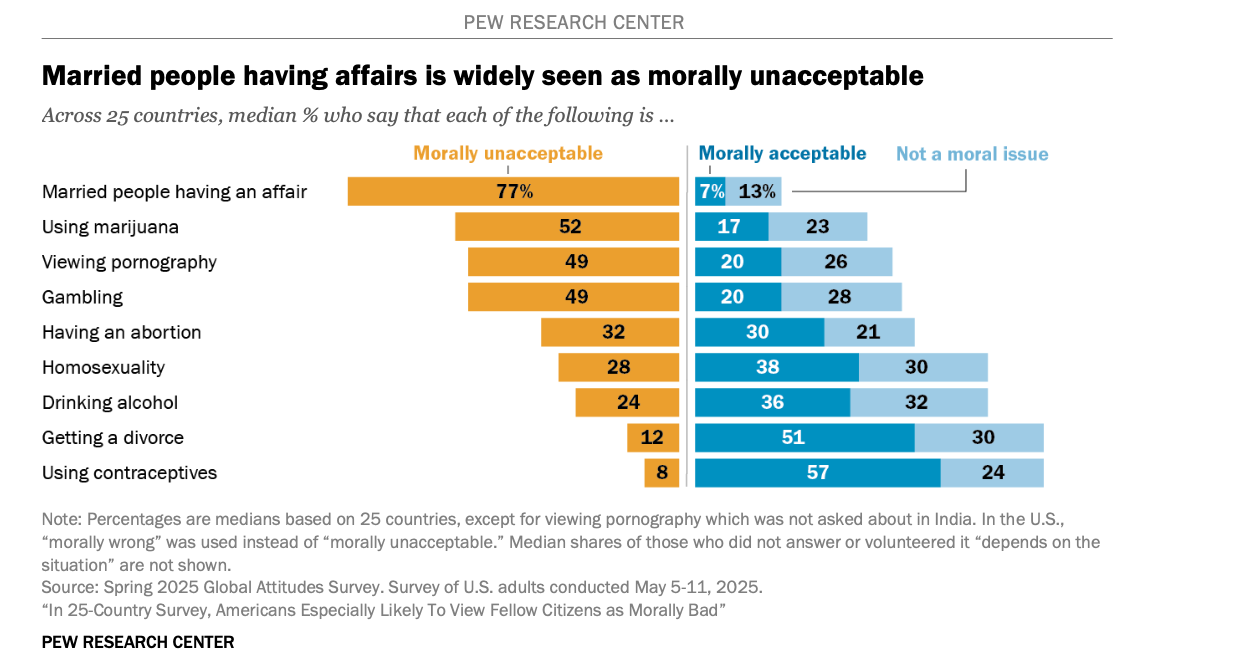
Pew report examines how people rate fellow citizens’ morals #Catholic A Pew Research Center study found ​​Americans are more likely than people in other countries to question the morality of their fellow citizens.The report, “In 25-Country Survey, Americans Especially Likely To View Fellow Citizens as Morally Bad,” explores how adults in 25 countries rate the morality of others in their nation. It also examines if people consider different behaviors to be morally wrong including drinking alcohol, gambling, having extramarital affairs, using marijuana, viewing pornography, having abortions, homosexuality, getting divorces, and using contraceptives.The research was based on data from participants in Argentina, Australia, Brazil, Canada, France, Germany, Greece, Hungary, India, Indonesia, Israel, Italy, Japan, Kenya, Mexico, Netherlands, Nigeria, Poland, South Africa, South Korea, Spain, Sweden, Turkey, the United Kingdom, and the United States.Surveys conducted outside the U.S. were based on nationally representative surveys of 28,333 adults conducted from Jan. 8 to April 26, 2025. In the U.S., Pew surveyed 3,605 adults who are members of the Center’s American Trends Panel (ATP) from March 24–30, 2025.
 
 A March 2026 Pew report, “In 25-Country Survey, Americans Especially Likely To View Fellow Citizens as Morally Bad,” explores if adults in 25 countries consider nine behaviors to be morally unacceptable or acceptable. | Credit: Courtesy of Pew Research Center
 
 The report also includes some findings from a separate ATP survey of 8,937 U.S. adults conducted from May 5–11, 2025. The margin of sampling error for the full sample of 3,605 respondents is plus or minus 1.9 percentage points.According to the research, 47% of U.S. adults reported Americans have “very good” or “somewhat good” morals and ethics, which was the lowest of all countries. The majority of adults in Canada and Indonesia (92%) said the same of the people in their countries.Most and least accepted behaviors across the globeGetting a divorce and the use of contraception were found to be the most widely accepted of the nine behaviors. Only 12% of adults overall said getting a divorce is morally wrong, and 8% said using contraceptives is. The only countries with a slight majority that believe getting a divorce is morally unacceptable are India with 65% holding this view and Nigeria with 55%.Of the nine behaviors Pew asked participants about, married people having affairs had the strongest overall disapproval. Across the 25 countries, a median of 77% of adults said married people having affairs is morally unacceptable, with at least half of adults in every country holding this view.U.S. adults were among those to be most likely to condemn extramarital affairs as immoral. Nine in 10 Americans said having an affair is morally wrong, similar to the share of people in Indonesia and in Turkey (92%) who believe the same.
 
 A March 2026 Pew report, “In 25-Country Survey, Americans Especially Likely To View Fellow Citizens as Morally Bad,” explores how adults in 25 countries rate the morality of others in their country. | Credit: Courtesy of Pew Research Center
 
 Adults in Germany (55%) and France (53%) are among the least likely to believe having an affair is morally unacceptable.Behaviors with least international consensusThe report found that for most behaviors asked about, there is not an international consensus if they are morally acceptable or not.In the Latin American and African countries surveyed, half or more of adults said they believe abortions are morally unacceptable, but in most European countries, the vast majority of adults view abortions as either morally acceptable or not a moral issue at all. In the U.S., the group was fairly split with 47% reporting it is morally unacceptable to have an abortion.In the U.S., adults are the most accepting of using marijuana and gambling. Only 23% of Americans said using marijuana is morally unacceptable, and 29% said the same in regard to gambling. In most other countries surveyed, more than 40% of adults said they consider gambling and marijuana use to be morally wrong.In 10 countries, a majority said gambling is morally wrong, including 89% in Indonesia and 71% in Italy. In Australia, 25% said gambling is morally acceptable, and 43% do not see gambling as a moral issue.In the U.S., 39% of adults reported homosexuality is morally wrong, which was found to be much more than those who hold the same belief in Germany (5%) or Sweden (5%). In other nations including Indonesia (93%) and Nigeria (96%), the majority reported it is morally wrong.In regard to drinking alcohol, the majority of adults in Indonesia (83%) reported it is a morally unacceptable act. In contrast, only 7% of adults in Australia and Sweden reported the same. In the U.S., a small share of 16% said it is morally unacceptable.What factors affect views of behaviors?According to the report, a number of factors seem to affect how adults view the morality of behaviors including political party, religion, and gender.Democrats and independents who lean toward the Democratic Party are more likely than Republicans and Republican leaners to rate fellow Americans as morally and ethically bad (60% vs. 46%).Pew examined citizens’ stances based on religious belief and found those who said religion is very important in their lives were more likely to view the behaviors as morally wrong.In 13 of the 25 countries surveyed, the research looked specifically at the differences between Protestants and Catholics. The report detailed that Protestants are typically more likely than Catholics in the same country to believe homosexuality is wrong. In the U.S., 59% of Protestants reported homosexuality is morally wrong, while 34% of Catholics did.There is a large variation between Christians in different countries. The majority of Christians surveyed in Africa, Latin America, and the U.S. said having an abortion is morally wrong, but across Europe, the share of Christians who hold this view ranges from 40% in Spain to 7% in Sweden.Gender is also a factor in how people view moral behaviors. Women tend to be more likely than men to believe some behaviors are morally unacceptable. In nearly every country surveyed, women were more likely than men to say that viewing pornography is wrong. In contrast, men were more likely than women to report homosexuality is morally unacceptable. Overall, older adults were more likely than younger adults to report the behaviors are morally unacceptable. This is the case with using marijuana in 19 of the 25 surveyed countries. In Germany, adults ages 40 and older are twice as likely as younger adults to believe marijuana use is morally wrong, with 30% of older adults holding this belief and 15% of younger adults.

Pew report examines how people rate fellow citizens’ morals #Catholic A Pew Research Center study found ​​Americans are more likely than people in other countries to question the morality of their fellow citizens.The report, “In 25-Country Survey, Americans Especially Likely To View Fellow Citizens as Morally Bad,” explores how adults in 25 countries rate the morality of others in their nation. It also examines if people consider different behaviors to be morally wrong including drinking alcohol, gambling, having extramarital affairs, using marijuana, viewing pornography, having abortions, homosexuality, getting divorces, and using contraceptives.The research was based on data from participants in Argentina, Australia, Brazil, Canada, France, Germany, Greece, Hungary, India, Indonesia, Israel, Italy, Japan, Kenya, Mexico, Netherlands, Nigeria, Poland, South Africa, South Korea, Spain, Sweden, Turkey, the United Kingdom, and the United States.Surveys conducted outside the U.S. were based on nationally representative surveys of 28,333 adults conducted from Jan. 8 to April 26, 2025. In the U.S., Pew surveyed 3,605 adults who are members of the Center’s American Trends Panel (ATP) from March 24–30, 2025. A March 2026 Pew report, “In 25-Country Survey, Americans Especially Likely To View Fellow Citizens as Morally Bad,” explores if adults in 25 countries consider nine behaviors to be morally unacceptable or acceptable. | Credit: Courtesy of Pew Research Center The report also includes some findings from a separate ATP survey of 8,937 U.S. adults conducted from May 5–11, 2025. The margin of sampling error for the full sample of 3,605 respondents is plus or minus 1.9 percentage points.According to the research, 47% of U.S. adults reported Americans have “very good” or “somewhat good” morals and ethics, which was the lowest of all countries. The majority of adults in Canada and Indonesia (92%) said the same of the people in their countries.Most and least accepted behaviors across the globeGetting a divorce and the use of contraception were found to be the most widely accepted of the nine behaviors. Only 12% of adults overall said getting a divorce is morally wrong, and 8% said using contraceptives is. The only countries with a slight majority that believe getting a divorce is morally unacceptable are India with 65% holding this view and Nigeria with 55%.Of the nine behaviors Pew asked participants about, married people having affairs had the strongest overall disapproval. Across the 25 countries, a median of 77% of adults said married people having affairs is morally unacceptable, with at least half of adults in every country holding this view.U.S. adults were among those to be most likely to condemn extramarital affairs as immoral. Nine in 10 Americans said having an affair is morally wrong, similar to the share of people in Indonesia and in Turkey (92%) who believe the same. A March 2026 Pew report, “In 25-Country Survey, Americans Especially Likely To View Fellow Citizens as Morally Bad,” explores how adults in 25 countries rate the morality of others in their country. | Credit: Courtesy of Pew Research Center Adults in Germany (55%) and France (53%) are among the least likely to believe having an affair is morally unacceptable.Behaviors with least international consensusThe report found that for most behaviors asked about, there is not an international consensus if they are morally acceptable or not.In the Latin American and African countries surveyed, half or more of adults said they believe abortions are morally unacceptable, but in most European countries, the vast majority of adults view abortions as either morally acceptable or not a moral issue at all. In the U.S., the group was fairly split with 47% reporting it is morally unacceptable to have an abortion.In the U.S., adults are the most accepting of using marijuana and gambling. Only 23% of Americans said using marijuana is morally unacceptable, and 29% said the same in regard to gambling. In most other countries surveyed, more than 40% of adults said they consider gambling and marijuana use to be morally wrong.In 10 countries, a majority said gambling is morally wrong, including 89% in Indonesia and 71% in Italy. In Australia, 25% said gambling is morally acceptable, and 43% do not see gambling as a moral issue.In the U.S., 39% of adults reported homosexuality is morally wrong, which was found to be much more than those who hold the same belief in Germany (5%) or Sweden (5%). In other nations including Indonesia (93%) and Nigeria (96%), the majority reported it is morally wrong.In regard to drinking alcohol, the majority of adults in Indonesia (83%) reported it is a morally unacceptable act. In contrast, only 7% of adults in Australia and Sweden reported the same. In the U.S., a small share of 16% said it is morally unacceptable.What factors affect views of behaviors?According to the report, a number of factors seem to affect how adults view the morality of behaviors including political party, religion, and gender.Democrats and independents who lean toward the Democratic Party are more likely than Republicans and Republican leaners to rate fellow Americans as morally and ethically bad (60% vs. 46%).Pew examined citizens’ stances based on religious belief and found those who said religion is very important in their lives were more likely to view the behaviors as morally wrong.In 13 of the 25 countries surveyed, the research looked specifically at the differences between Protestants and Catholics. The report detailed that Protestants are typically more likely than Catholics in the same country to believe homosexuality is wrong. In the U.S., 59% of Protestants reported homosexuality is morally wrong, while 34% of Catholics did.There is a large variation between Christians in different countries. The majority of Christians surveyed in Africa, Latin America, and the U.S. said having an abortion is morally wrong, but across Europe, the share of Christians who hold this view ranges from 40% in Spain to 7% in Sweden.Gender is also a factor in how people view moral behaviors. Women tend to be more likely than men to believe some behaviors are morally unacceptable. In nearly every country surveyed, women were more likely than men to say that viewing pornography is wrong. In contrast, men were more likely than women to report homosexuality is morally unacceptable. Overall, older adults were more likely than younger adults to report the behaviors are morally unacceptable. This is the case with using marijuana in 19 of the 25 surveyed countries. In Germany, adults ages 40 and older are twice as likely as younger adults to believe marijuana use is morally wrong, with 30% of older adults holding this belief and 15% of younger adults.

U.S. adults were among those most likely to condemn extramarital affairs as immoral in a study of 25 countries.


Read More
Picture of the day


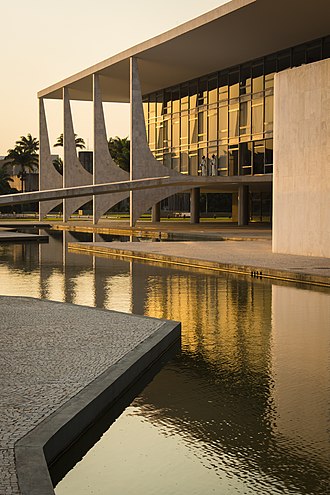
Palácio do Planalto, seat of the Brazilian Federal Executive. In late September afternoon, the height of the dry season, the setting sun gives a special color to the monument. Today is Independence Day in Brazil.
 #ImageOfTheDay
Picture of the day
Palácio do Planalto, seat of the Brazilian Federal Executive. In late September afternoon, the height of the dry season, the setting sun gives a special color to the monument. Today is Independence Day in Brazil.
Read More
Central Brazil Cerrado

Amid a patchwork of fields, towns, and winding rivers and roads in central Brazil stands a monolithic oval-shaped plateau. This conspicuous feature, the Serra de Caldas (also known as the Caldas Novas dome and Caldas Ridge), is perched about 300 meters (1,000 feet) above the surrounding landscape in the state of Goiás.

Read More
Picture of the day


Fresh water collecting in the valleys between sand dunes in the Lençóis Maranhenses National Park in Brazil. A layer of rock beneath the sand prevents the rain water from dissipating during the rainy season, resulting in a broad expanse of lagoons.
 #ImageOfTheDay
Picture of the day
Fresh water collecting in the valleys between sand dunes in the Lençóis Maranhenses National Park in Brazil. A layer of rock beneath the sand prevents the rain water from dissipating during the rainy season, resulting in a broad expanse of lagoons.
Read More