bullying

Pope Leo XIV to 60,000 young Peruvians: Christ’s Passion shows the way to your calling #Catholic LIMA, Peru — Pope Leo XIV drew an exuberant crowd of young people to Peruʼs national stadium on Thursday and told them that friendship with Christ was the key to discovering their path in life.“Learning to recognize the Lordʼs voice is essential,” Leo said Nov. 12 at a youth prayer vigil, his third such event during his tour of South America. “… Speak to him about your plans and allow his word to question you. Do not be afraid to ask him what he expects of you. He will call some to the priesthood or the consecrated life, others to marriage and to forming a family. All are called to put their abilities at the service of others.”According to local authorities, some 60,000 people attended the event in the stadium, and another 300,000 followed the proceedings in the surrounding area.The pope spoke after hearing the testimonies of three young adults who had experienced bullying, depression or the loss of loved ones before finding roles in the Church.
 
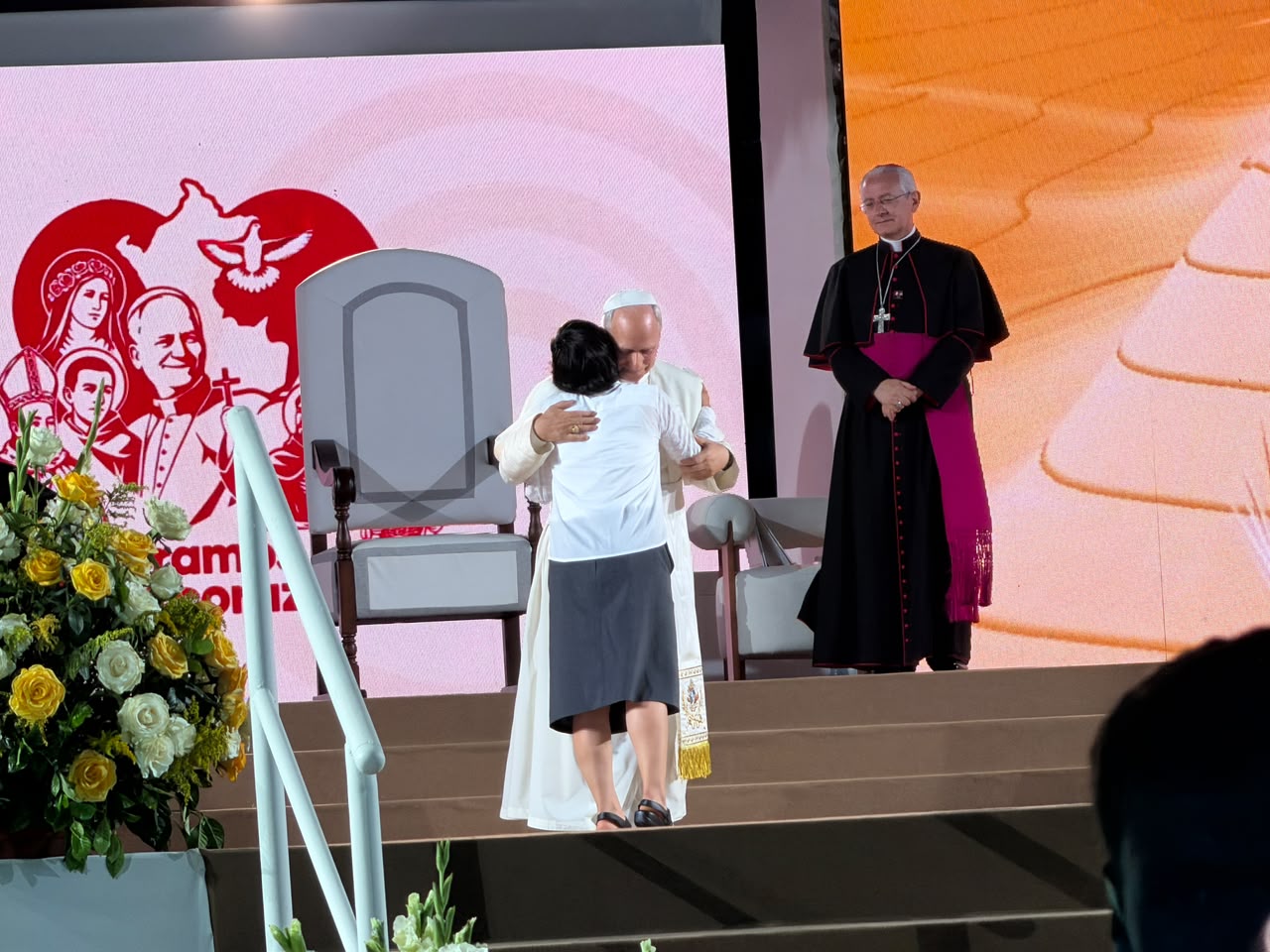
 Pope Leo XIV embraces Sister Luzbinda Ramos Zurita, superior of the Ursuline Sisters, Daughters of Mary Immaculate, at the prayer vigil with young people in Lima, on Nov. 12, 2026. | Credit: Nathali Paredes/EWTN News
 
 Leo noted the ambiguity of the word “passion,” which young people are commonly encouraged to discover and pursue.“We use it to speak of what we love deeply, what awakens our enthusiasm and moves us to give the best of ourselves. But the word also reminds us of suffering, of experiences that seem to extinguish our desire to keep going,” he said.The pope pointed to Christʼs Passion as the model for distinguishing between the distinct but linked senses of the word.“He did not desire the cross; he desired our salvation. Out of love for us, he accepted it and bore it to the end. Thus, through his self-giving, that instrument of death became the place where his passionate love was revealed, a love capable of conquering death.”Leo acknowledged that the Christian path can be a forbidding one.“At times, we wonder whether following Godʼs will means giving up our dreams. This fear can give rise to an even more dangerous suspicion: thinking that God is depriving us of something and that, in order to enjoy life fully, we also need to experience sin,” the pope said.“Do not be deceived. How could something that harms us make us happy? God knows our deepest desires, even better than we know them ourselves. He has placed within us the desire to love and to be happy, and he wants to bring that desire to fulfillment,” he said.

Pope Leo XIV to 60,000 young Peruvians: Christ’s Passion shows the way to your calling #Catholic LIMA, Peru — Pope Leo XIV drew an exuberant crowd of young people to Peruʼs national stadium on Thursday and told them that friendship with Christ was the key to discovering their path in life.“Learning to recognize the Lordʼs voice is essential,” Leo said Nov. 12 at a youth prayer vigil, his third such event during his tour of South America. “… Speak to him about your plans and allow his word to question you. Do not be afraid to ask him what he expects of you. He will call some to the priesthood or the consecrated life, others to marriage and to forming a family. All are called to put their abilities at the service of others.”According to local authorities, some 60,000 people attended the event in the stadium, and another 300,000 followed the proceedings in the surrounding area.The pope spoke after hearing the testimonies of three young adults who had experienced bullying, depression or the loss of loved ones before finding roles in the Church. Pope Leo XIV embraces Sister Luzbinda Ramos Zurita, superior of the Ursuline Sisters, Daughters of Mary Immaculate, at the prayer vigil with young people in Lima, on Nov. 12, 2026. | Credit: Nathali Paredes/EWTN News Leo noted the ambiguity of the word “passion,” which young people are commonly encouraged to discover and pursue.“We use it to speak of what we love deeply, what awakens our enthusiasm and moves us to give the best of ourselves. But the word also reminds us of suffering, of experiences that seem to extinguish our desire to keep going,” he said.The pope pointed to Christʼs Passion as the model for distinguishing between the distinct but linked senses of the word.“He did not desire the cross; he desired our salvation. Out of love for us, he accepted it and bore it to the end. Thus, through his self-giving, that instrument of death became the place where his passionate love was revealed, a love capable of conquering death.”Leo acknowledged that the Christian path can be a forbidding one.“At times, we wonder whether following Godʼs will means giving up our dreams. This fear can give rise to an even more dangerous suspicion: thinking that God is depriving us of something and that, in order to enjoy life fully, we also need to experience sin,” the pope said.“Do not be deceived. How could something that harms us make us happy? God knows our deepest desires, even better than we know them ourselves. He has placed within us the desire to love and to be happy, and he wants to bring that desire to fulfillment,” he said.

“Learning to recognize the Lord’s voice is essential,” the pope told some 60,000 young people at a Lima stadium vigil, pointing to Christ’s Passion as the model.


Read More
Coptic youths freed after video sparks accusations of insulting Islam #Catholic After less than three weeks in detention, six Coptic young men — one a minor — were released, bringing to a close a case that had raised fears of sectarian tensions in the countryside of Egypt’s Minya province. The case followed the young men’s posting of a video in which they reenacted a scene from an Egyptian film.In an interview with ACI MENA, the Arabic-language sister service of EWTN News, Nader Shukry, a citizenship researcher and writer specializing in Coptic affairs, described the case and its broader implications. He highlighted challenges around understanding Egyptian law and using social media.Shukry said the young men, who live in Ezbet Tanious in the village of Taha al-Amda, in the Samalut district of Minya, reenacted a scene from the 2018 film “Khalawis.” The scene does not mock religion, he said; it depicts prisoners known for bullying and violence trying to pray without knowing how.Dozens of Egyptian Muslims also reenacted and posted the scene without provoking similar reactions, Shukry said. But when the Coptic young men posted it, one village resident objected and accused them of insulting Islam.The young men deleted the video shortly after posting it because they did not realize some viewers might find it offensive, Shukry said. But incitement continued, prompting security forces to detain them in an effort to contain anger and prevent possible attacks on Christians and their property. He said extremist currents in Minya seek to inflame religious sentiment and create disorder.Shukry said the young men were not held for long once it became clear they had not intended to insult religion. A de-escalation meeting was also held in the village, with the church taking part. He distinguished this meeting from customary reconciliation sessions, saying it aimed to counter incitement on social media and ease tensions among residents.Shukry stressed the danger of attributing an individual’s actions, whether the person is guilty or innocent, to an entire religious community. A citizen should be held accountable for what that person did, he said; Christians as a whole, or an entire village, should not bear responsibility for one person’s actions.He also pointed to pages that publish content insulting Christians without facing legal consequences comparable to those a Christian might face for discussing Islam. The case involving the six young men remains open until the prosecutor general issues a decision to close it, Shukry said, although it has largely concluded in practice. He cited the short length of their detention compared with other cases involving alleged contempt of religion.Shukry urged young people to exercise caution when dealing with religious matters and to avoid discussions that others might exploit or present as insults to religion. He distinguished such discussions from interreligious dialogue conducted by specialists.Egyptian society faces a challenge of awareness, he said, noting that many Christians have previously become involved in cases involving alleged contempt of religion because they were unfamiliar with Egyptian law and how to use social media.This story was first published by ACI MENA, the Arabic-language sister service of EWTN News. It has been translated and adapted by EWTN News English.

Coptic youths freed after video sparks accusations of insulting Islam #Catholic After less than three weeks in detention, six Coptic young men — one a minor — were released, bringing to a close a case that had raised fears of sectarian tensions in the countryside of Egypt’s Minya province. The case followed the young men’s posting of a video in which they reenacted a scene from an Egyptian film.In an interview with ACI MENA, the Arabic-language sister service of EWTN News, Nader Shukry, a citizenship researcher and writer specializing in Coptic affairs, described the case and its broader implications. He highlighted challenges around understanding Egyptian law and using social media.Shukry said the young men, who live in Ezbet Tanious in the village of Taha al-Amda, in the Samalut district of Minya, reenacted a scene from the 2018 film “Khalawis.” The scene does not mock religion, he said; it depicts prisoners known for bullying and violence trying to pray without knowing how.Dozens of Egyptian Muslims also reenacted and posted the scene without provoking similar reactions, Shukry said. But when the Coptic young men posted it, one village resident objected and accused them of insulting Islam.The young men deleted the video shortly after posting it because they did not realize some viewers might find it offensive, Shukry said. But incitement continued, prompting security forces to detain them in an effort to contain anger and prevent possible attacks on Christians and their property. He said extremist currents in Minya seek to inflame religious sentiment and create disorder.Shukry said the young men were not held for long once it became clear they had not intended to insult religion. A de-escalation meeting was also held in the village, with the church taking part. He distinguished this meeting from customary reconciliation sessions, saying it aimed to counter incitement on social media and ease tensions among residents.Shukry stressed the danger of attributing an individual’s actions, whether the person is guilty or innocent, to an entire religious community. A citizen should be held accountable for what that person did, he said; Christians as a whole, or an entire village, should not bear responsibility for one person’s actions.He also pointed to pages that publish content insulting Christians without facing legal consequences comparable to those a Christian might face for discussing Islam. The case involving the six young men remains open until the prosecutor general issues a decision to close it, Shukry said, although it has largely concluded in practice. He cited the short length of their detention compared with other cases involving alleged contempt of religion.Shukry urged young people to exercise caution when dealing with religious matters and to avoid discussions that others might exploit or present as insults to religion. He distinguished such discussions from interreligious dialogue conducted by specialists.Egyptian society faces a challenge of awareness, he said, noting that many Christians have previously become involved in cases involving alleged contempt of religion because they were unfamiliar with Egyptian law and how to use social media.This story was first published by ACI MENA, the Arabic-language sister service of EWTN News. It has been translated and adapted by EWTN News English.

Coptic researcher urges caution as religious contempt cases persist in Egypt.

Read More