car

Cleveland father and son live out sacrificial faith after mother’s near-death illness #Catholic In a time when the meaning of masculinity is often misunderstood and undervalued, Joe Soltis and his 15-year-old son, Jake, are a father/son pair from Cleveland, Ohio, who have made service to others the focus of their lives.After his mother’s serious illness, Jake, almost entirely by himself, built her a sauna and exercise room in the family’s basement in order to help her recover. Joe, the CEO of a marketing company, serves on the board of an ecumenical project that unites Catholics and Protestants called Prayer At The Heart, with the aim of igniting “a great spiritual awakening out of a national movement of unified, humble, desperate prayer, unity and evangelism.”The pair spoke with EWTN News about how their Catholic faith inspires them to be men who make it their mission to love as Jesus loves, and about how they hope to inspire others to do the same.‘There’s a good chance Mom won’t be coming home’In 2020, Joe’s wife and Jake’s mom, Becky, almost died after multiple medical issues led doctors to estimate she had only a 10% chance of survival. Joe said she was diagnosed with lupus, Lyme disease, a burst gall bladder, sepsis, and pancreatitis.“We weren’t allowed to see her in the hospital because it was during Covid,” said Joe, the father of five boys and one daughter, who had to tell his kids “there’s a good chance Mom won’t be coming home.”
 
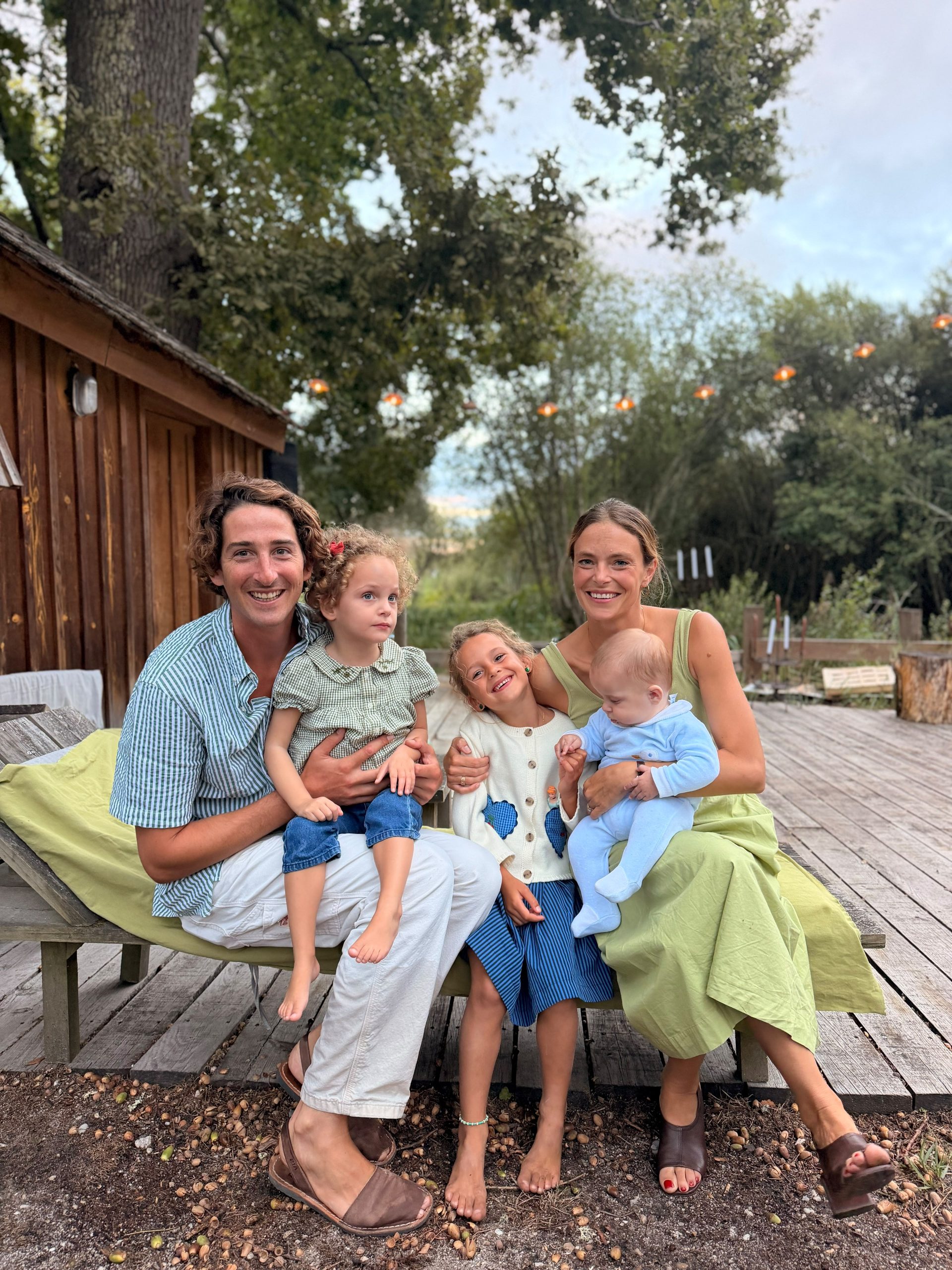
 The Soltis family. | Credit: Photo courtesy of the Soltis family
 
 After weeks in the hospital, Becky began to recover, Joe said, and “by the grace of God, she pulled through.”“Out of that hardship, I have found a woman who is incredibly holy,” Joe said of his wife, who, though mostly recovered, still suffers ongoing symptoms from lupus. “She is an incredible mom and an incredible wife. I couldn’t ask for anyone better. She is a blessing to all of us.”Joe said that time “brought our family tremendously closer together.” A plan to ‘mobilize Christians’As Becky recovered from her health crisis, Joe watched the race riots that erupted all over the country that summer, leading him to conclude that “there are evil forces” at work leading to such division between Americans.“That’s not what Christ wants,” he said, and he wondered whether such division was “manufactured and intentional.” He read Saul Alinsky’s Rules for Radicals, which he called “diabolically brilliant.”On July 4, 2020, between his work, family, and other responsibilities, Joe “happened to be free to sit down and think.” He felt inspired to write out a plan that would address how to “mobilize Christians” in a “Catholic, Christian, biblical manner.” Becky helped him fine tune the plan, which Joe then sent to various Christian leaders. Tom Phillips, vice president of the Billy Graham Evangelistic Association, called him back and put him in touch with Doug Small, a Pentecostal leader with a similar vision who also lives in Ohio. Together, the men came up with Prayer at the Heart, an evangelistic endeavor with the goal of “one million Christians praying for one million friends to know Christ.”Of the ecumenical nature of their ministry, he said there is “great unity among” the team. “We can all unite around Christ.”  “Each congregation-denomination-ministry would brand the effort calling their constituents to prayer, evangelism-mission in their own way,” reads the website, on which Christians can sign up to pray for unbelievers. “The early apostles didn’t just stay in their church and pray,” Joe said. “They went out and evangelized. It’s time for Christians to get out of their homes and churches and bring Jesus to people.”The ministry’s strategy also involves other practical initiatives, such as the organization of local gatherings and outdoor prayer meetings, as well as a prayer request line available 24 hours a day, seven days a week.In addition, the ministry is organizing neighborhood prayer walks, weekly groups of Christians praying for coworkers, and a new missionary and mentorship program to train young adults in prayer and evangelism.“There’s no person or political party that’s going to save us. The only thing that’s going to save us is the love of Jesus Christ and the love of others,” Joe said.A message to fathers: ‘Love your wife’This Father’s Day, Joe has encouraging words for fathers: “Love your wife and kids the way Christ loved the Church.” “Sacrifice, be willing to lay your life down. Strive to love like Christ, knowing you will sometimes fall short,” he said. “Go to church every Sunday. Your kids wonʼt know faith is important if you don’t show it. Pray every day with your kids.”“Every night we say the Seven Sorrows of Mary, the St. Michael prayer, and the Angel of God prayer,” he said. “Then we say what we’re thankful for, and this is what we’d like God to help us with.”The Soltis’ also say a rosary once a week as a family, as well as in the car on long trips. “If your family is going through a difficult time, strongly follow the lead of the United States Conference of Catholic Bishops and consecrate your family to the Sacred Heart of Jesus,” Joe said.“One of the promises of that consecration is peace within your family. Ours didn’t have peace for a while but it does now, thank the Lord.”‘If I start, God will help me and guide me through it’Jake told EWTN News that “my dad and mom have always shown what love is. It’s a choice, You choose to love others, to love your enemy. Love is a choice and not an emotional feeling.”When he decided to build the sauna and exercise room for his mother in the family’s basement, he said he had “no idea what I was getting into.”Before beginning the basement renovation, Jake said he only “knew how to build a sub par table.” During the work, he said he “was just inspired. I just wanted to help my mom.”
 
 Becky Soltis and her son, Jake, in their basement, where Jake built a sauna and exercise room to aid in his motherʼs recovery. | Credit: Photo courtesy of the Soltis family
 
 Joe said his son “put a lot of pressure on himself because his mom’s health was at stake.” Becky had a grand mal seizure in 2025, which Joe called “scary.”“I have based the majority of my life on the saying ‘I will figure it out,’” Jake said. "I know that if I start something, and use the gifts I was given from God, I will be able to figure it out. I’m not wasting my ability, and I trust that if I start, God will help me and guide me through it.”His father said Jake “looked at two Google images” before starting the project. “He has the knack and ability to do this stuff. He would come home from school and work for thousands of hours.” “The only thing I did was I loaded the stuff in the back of the Chevy Tahoe at the hardware store. Every now and then I helped him out,” Joe laughed.“As an 8th grader, he took an unfinished basement, and now we have a fitness center, sauna, theater room, and theyʼre beautiful! They look professional. He did it all himself, for his mother,” Joe said proudly.

Cleveland father and son live out sacrificial faith after mother’s near-death illness #Catholic In a time when the meaning of masculinity is often misunderstood and undervalued, Joe Soltis and his 15-year-old son, Jake, are a father/son pair from Cleveland, Ohio, who have made service to others the focus of their lives.After his mother’s serious illness, Jake, almost entirely by himself, built her a sauna and exercise room in the family’s basement in order to help her recover. Joe, the CEO of a marketing company, serves on the board of an ecumenical project that unites Catholics and Protestants called Prayer At The Heart, with the aim of igniting “a great spiritual awakening out of a national movement of unified, humble, desperate prayer, unity and evangelism.”The pair spoke with EWTN News about how their Catholic faith inspires them to be men who make it their mission to love as Jesus loves, and about how they hope to inspire others to do the same.‘There’s a good chance Mom won’t be coming home’In 2020, Joe’s wife and Jake’s mom, Becky, almost died after multiple medical issues led doctors to estimate she had only a 10% chance of survival. Joe said she was diagnosed with lupus, Lyme disease, a burst gall bladder, sepsis, and pancreatitis.“We weren’t allowed to see her in the hospital because it was during Covid,” said Joe, the father of five boys and one daughter, who had to tell his kids “there’s a good chance Mom won’t be coming home.” The Soltis family. | Credit: Photo courtesy of the Soltis family After weeks in the hospital, Becky began to recover, Joe said, and “by the grace of God, she pulled through.”“Out of that hardship, I have found a woman who is incredibly holy,” Joe said of his wife, who, though mostly recovered, still suffers ongoing symptoms from lupus. “She is an incredible mom and an incredible wife. I couldn’t ask for anyone better. She is a blessing to all of us.”Joe said that time “brought our family tremendously closer together.” A plan to ‘mobilize Christians’As Becky recovered from her health crisis, Joe watched the race riots that erupted all over the country that summer, leading him to conclude that “there are evil forces” at work leading to such division between Americans.“That’s not what Christ wants,” he said, and he wondered whether such division was “manufactured and intentional.” He read Saul Alinsky’s Rules for Radicals, which he called “diabolically brilliant.”On July 4, 2020, between his work, family, and other responsibilities, Joe “happened to be free to sit down and think.” He felt inspired to write out a plan that would address how to “mobilize Christians” in a “Catholic, Christian, biblical manner.” Becky helped him fine tune the plan, which Joe then sent to various Christian leaders. Tom Phillips, vice president of the Billy Graham Evangelistic Association, called him back and put him in touch with Doug Small, a Pentecostal leader with a similar vision who also lives in Ohio. Together, the men came up with Prayer at the Heart, an evangelistic endeavor with the goal of “one million Christians praying for one million friends to know Christ.”Of the ecumenical nature of their ministry, he said there is “great unity among” the team. “We can all unite around Christ.”  “Each congregation-denomination-ministry would brand the effort calling their constituents to prayer, evangelism-mission in their own way,” reads the website, on which Christians can sign up to pray for unbelievers. “The early apostles didn’t just stay in their church and pray,” Joe said. “They went out and evangelized. It’s time for Christians to get out of their homes and churches and bring Jesus to people.”The ministry’s strategy also involves other practical initiatives, such as the organization of local gatherings and outdoor prayer meetings, as well as a prayer request line available 24 hours a day, seven days a week.In addition, the ministry is organizing neighborhood prayer walks, weekly groups of Christians praying for coworkers, and a new missionary and mentorship program to train young adults in prayer and evangelism.“There’s no person or political party that’s going to save us. The only thing that’s going to save us is the love of Jesus Christ and the love of others,” Joe said.A message to fathers: ‘Love your wife’This Father’s Day, Joe has encouraging words for fathers: “Love your wife and kids the way Christ loved the Church.” “Sacrifice, be willing to lay your life down. Strive to love like Christ, knowing you will sometimes fall short,” he said. “Go to church every Sunday. Your kids wonʼt know faith is important if you don’t show it. Pray every day with your kids.”“Every night we say the Seven Sorrows of Mary, the St. Michael prayer, and the Angel of God prayer,” he said. “Then we say what we’re thankful for, and this is what we’d like God to help us with.”The Soltis’ also say a rosary once a week as a family, as well as in the car on long trips. “If your family is going through a difficult time, strongly follow the lead of the United States Conference of Catholic Bishops and consecrate your family to the Sacred Heart of Jesus,” Joe said.“One of the promises of that consecration is peace within your family. Ours didn’t have peace for a while but it does now, thank the Lord.”‘If I start, God will help me and guide me through it’Jake told EWTN News that “my dad and mom have always shown what love is. It’s a choice, You choose to love others, to love your enemy. Love is a choice and not an emotional feeling.”When he decided to build the sauna and exercise room for his mother in the family’s basement, he said he had “no idea what I was getting into.”Before beginning the basement renovation, Jake said he only “knew how to build a sub par table.” During the work, he said he “was just inspired. I just wanted to help my mom.” Becky Soltis and her son, Jake, in their basement, where Jake built a sauna and exercise room to aid in his motherʼs recovery. | Credit: Photo courtesy of the Soltis family Joe said his son “put a lot of pressure on himself because his mom’s health was at stake.” Becky had a grand mal seizure in 2025, which Joe called “scary.”“I have based the majority of my life on the saying ‘I will figure it out,’” Jake said. "I know that if I start something, and use the gifts I was given from God, I will be able to figure it out. I’m not wasting my ability, and I trust that if I start, God will help me and guide me through it.”His father said Jake “looked at two Google images” before starting the project. “He has the knack and ability to do this stuff. He would come home from school and work for thousands of hours.” “The only thing I did was I loaded the stuff in the back of the Chevy Tahoe at the hardware store. Every now and then I helped him out,” Joe laughed.“As an 8th grader, he took an unfinished basement, and now we have a fitness center, sauna, theater room, and theyʼre beautiful! They look professional. He did it all himself, for his mother,” Joe said proudly.

The pair spoke with EWTN News about how their faith inspires them to be men who make it their mission to love as Jesus loves, and about how they hope to inspire others to do the same.

Read More
Pope Leo XIV prayed with this young man’s rosary in Barcelona — and gave it back #Catholic Sergi, a young Catalan man, was surprised by an encounter with Pope Leo XIV in Spain on June 10 he will never forget.During the pope’s visit to the Shrine of Our Lady of Montserrat, an abbey northwest of Barcelona, Sergi handed Leo his rosary. The pontiff slipped it into his pocket before using it minutes later to pray.Unexpectedly, the story did not end there — after the event, Sergi managed to recover his prized sacramental, now prayed with by the pope.Sergi (who asked that his last name not be shared) told EWTN News he had not planned to go to the shrine on the day of the papal visit. He is from Terrassa, a city between Barcelona and Montserrat.The invitation to go to the popeʼs prayer came unexpectedly through a volunteer with the Missionaries of Charity, connected to his youth group, who encouraged both him and his girlfriend, María, to join the gathering. The night before, they attended the pope’s event at the Olympic Stadium in Barcelona and returned so tired that they almost decided not to go again.However, they felt they could not miss the chance to see Pope Leo during his visit to their homeland, and in order to attend they both had to take the day off from work. They never imagined what would happen or the gift they would receive.Sergi, María, and their friend secured a spot in the atrium of the basilica, and when the pope arrived, Sergi managed to get very close to the mini-popemobile as it passed by. At that moment he took out his rosary, hoping it would be blessed.“I just wanted him to bless it, that’s all, but he asked me, ‘Is it for me?’ And I’m not going to say no, so of course I said yes, and he kept it,” the young man said.Indeed, in a video recorded by EWTN News, the pope can be seen taking the rosary and putting it in his pocket. A few minutes later, to the young couple’s total surprise, they saw the pope praying with Sergi’s rosary in his hands.“When we saw it on the screen, we realized it was the same one he was using to pray!” Sergi said.
 
 Pope Leo XIV prays with a simple, wooden rosary during a prayer at the Abbey of Our Lady of Montserrat, northwest of Barcelona, Spain, on June 10, 2026. The rosary belongs to Sergi, a young Catalan man who gave it to the pope to be blessed. | Credit: Vatican Media.
 
 But the story did not end there. María had the idea of trying to get the rosary back, and when the event ended, they tried. However, the pope was already in the official car, and the security caravan would not allow anyone to approach.“We tried to tell him, but he just passed us by,” Sergi told EWTN News.At that moment, the run of his life began. Montserrat, as its name suggests, is set on a mountain range, so he had to run downhill.“I ran the whole way down until I said, ‘Well, let the pope keep it,’ and I gave up, but my girlfriend told me, ‘Keep trying.’”So Sergi started running again, sprinting and shouting to the pope to give it back. Knowing the caravan could not stop, he took an extreme measure: asking the pope to throw it to him.“At that moment I wasn’t thinking — I just knew I wanted to get the rosary back, knowing the pope had prayed with it. I was overwhelmed with excitement by the moment and the situation.”The pope granted his request, tossing the rosary from the car window as he drove by. Then, with the help of a police officer, Sergi recovered his rosary, now prayed with by the pope.“We went without expecting anything, and we came back with the greatest gift we could have received,” the young man said, still moved by the experience.This story was first published by ACI Prensa, EWTN News' Spanish sister service. It has been translated and adapted by EWTN News English.

Pope Leo XIV prayed with this young man’s rosary in Barcelona — and gave it back #Catholic Sergi, a young Catalan man, was surprised by an encounter with Pope Leo XIV in Spain on June 10 he will never forget.During the pope’s visit to the Shrine of Our Lady of Montserrat, an abbey northwest of Barcelona, Sergi handed Leo his rosary. The pontiff slipped it into his pocket before using it minutes later to pray.Unexpectedly, the story did not end there — after the event, Sergi managed to recover his prized sacramental, now prayed with by the pope.Sergi (who asked that his last name not be shared) told EWTN News he had not planned to go to the shrine on the day of the papal visit. He is from Terrassa, a city between Barcelona and Montserrat.The invitation to go to the popeʼs prayer came unexpectedly through a volunteer with the Missionaries of Charity, connected to his youth group, who encouraged both him and his girlfriend, María, to join the gathering. The night before, they attended the pope’s event at the Olympic Stadium in Barcelona and returned so tired that they almost decided not to go again.However, they felt they could not miss the chance to see Pope Leo during his visit to their homeland, and in order to attend they both had to take the day off from work. They never imagined what would happen or the gift they would receive.Sergi, María, and their friend secured a spot in the atrium of the basilica, and when the pope arrived, Sergi managed to get very close to the mini-popemobile as it passed by. At that moment he took out his rosary, hoping it would be blessed.“I just wanted him to bless it, that’s all, but he asked me, ‘Is it for me?’ And I’m not going to say no, so of course I said yes, and he kept it,” the young man said.Indeed, in a video recorded by EWTN News, the pope can be seen taking the rosary and putting it in his pocket. A few minutes later, to the young couple’s total surprise, they saw the pope praying with Sergi’s rosary in his hands.“When we saw it on the screen, we realized it was the same one he was using to pray!” Sergi said. Pope Leo XIV prays with a simple, wooden rosary during a prayer at the Abbey of Our Lady of Montserrat, northwest of Barcelona, Spain, on June 10, 2026. The rosary belongs to Sergi, a young Catalan man who gave it to the pope to be blessed. | Credit: Vatican Media. But the story did not end there. María had the idea of trying to get the rosary back, and when the event ended, they tried. However, the pope was already in the official car, and the security caravan would not allow anyone to approach.“We tried to tell him, but he just passed us by,” Sergi told EWTN News.At that moment, the run of his life began. Montserrat, as its name suggests, is set on a mountain range, so he had to run downhill.“I ran the whole way down until I said, ‘Well, let the pope keep it,’ and I gave up, but my girlfriend told me, ‘Keep trying.’”So Sergi started running again, sprinting and shouting to the pope to give it back. Knowing the caravan could not stop, he took an extreme measure: asking the pope to throw it to him.“At that moment I wasn’t thinking — I just knew I wanted to get the rosary back, knowing the pope had prayed with it. I was overwhelmed with excitement by the moment and the situation.”The pope granted his request, tossing the rosary from the car window as he drove by. Then, with the help of a police officer, Sergi recovered his rosary, now prayed with by the pope.“We went without expecting anything, and we came back with the greatest gift we could have received,” the young man said, still moved by the experience.This story was first published by ACI Prensa, EWTN News' Spanish sister service. It has been translated and adapted by EWTN News English.

“We went without expecting anything, and we came back with the greatest gift we could have received,” Sergi told EWTN News.

Read More
Students, father killed in southern Lebanon as Tyre’s Christian quarter faces new threat #Catholic A new tragedy struck southern Lebanon after an Israeli strike killed Dr. James George Karam and his two university-aged children, Tony and Theodosia, as they returned from university exams, ACI MENA, the Arabic-language sister service of EWTN News, reported Wednesday. The family, from the Christian town of Qlayaa, were traveling back from Sidon when their car was reportedly targeted, deepening fears among Christians in Lebanon’s border villages. In a statement, Qlayaa’s municipality said the road linking the southern villages to Lebanon’s capital and educational centers has become a place of danger for civilians. The killing has intensified anger among students and families who say safer arrangements are needed for exams in border areas. On the same day, an Israeli warning concerning the Christian quarter of Tyre added to the anxiety, leaving civilians feeling caught between Hezbollah’s presence and Israeli military action.French lawmakers remove bill provision requiring priests to break seal of confessionLawmakers in France voted to removed a controversial provision in a bill that would have required clergy to report information learned while administering the sacrament of confession. According to Zenit, the proposal, which engendered heated debate in French Parliament, was drafted in the aftermath of a sexual abuse scandal involving hundreds of allegations linked to a Catholic school.Canon law dictates that priests may never reveal the contents of a penitentʼs confession under pain of the Church’s most severe penalties. 9 Salesians to be beatified in Poland on June 6Nine Salesians who were killed during World War II by the German Nazis will be beatified on June 6 at the Shrine of St. John Paul II in Kraków, Poland, according to Vatican News. “Despite hunger, humiliation, and torture, they continued to support their fellow prisoners, pray, and bear witness to their faith,” the report said.  Karol Wojtyła, before he became Pope John Paul II, witnessed the arrest of six of the nine men in Krakow. Cardinal Grzegorz Ryś, archbishop of Kraków, said of the connection between the former saint-pope and the soon-to-be new blesseds: "I firmly believe that the priestly vocation of St. John Paul II was also born from their martyrdom.” Kenyan bioethicist-priest issues warning about Ebola facilityA priest and bioethics scholar in Kenya has raised suspicions over a controversial proposal for a U.S.-linked Ebola quarantine and treatment facility in Kenya, arguing that “the initiative raises profound ethical questions that require broader scrutiny beyond political and diplomatic considerations.”According to ACI Africa, the sister service of EWTN News in Africa, Father Pascal Mwakio is concerned that the 50-bed Ebola quarantine and treatment center at the Laikipia Air Base in central Kenya may involve "ethical dumping," a term used when developed nations "unethically conduct research in low-setting resource countries or third-world countries.”  Patriarch Hoyek remembered as ‘pastor who helped shape modern Lebanon’The announcement of the beatification of Maronite Patriarch Elias Hoyek has renewed attention to one of the defining Church figures in Lebanon’s modern history, according to ACI MENA. Hoyek’s legacy is closely tied to the emergence of Greater Lebanon, especially through his advocacy at the Paris Peace Conference after World War I, where he defended the right of his people to a homeland rooted in dignity, freedom, and pluralism.More than a political figure, Hoyek is remembered as a pastor who saw faith as a force for building both the human person and the nation. His life joined ecclesial service with national responsibility, leaving a witness that still speaks to Lebanon’s search for hope amid crisis.First Chaldean synod under new patriarch looks to renewal Patriarch Paul III Nona presided over the first synod of Chaldean bishops since his installation, gathering 14 bishops at the patriarchal residence in Baghdad while travel difficulties prevented the participation of bishops from the United States, ACI MENA reported. Opening the meeting with a reflection on his patriarchal motto, “Do not be afraid; only believe,” Nona called the Chaldean Church to face present challenges with hope, unity, and confidence in God’s care. The bishops discussed pastoral, administrative, and institutional priorities for the coming stage, including clergy formation, the role of the patriarchal seminary, synodal structures, the selection of bishops, and the relationship between the Church in Iraq and its diaspora communities.The synod also announced that Rome will host its next gathering following the Mass of ecclesial communion presided over by Pope Leo on Oct. 14.5 bishops forced to leave dioceses in Myanmar due to violenceA civil war has been raging in Myanmar, previously called Burma, since 2021 and five bishops from the countryʼs 17 dioceses have now had to leave their dioceses to take up residences in safer areas away from the violence. According to Fides news agency, the bishops are from the dioceses ofPekhon, Loikaw, Banmaw, Mindat, and Lashio. Bishop Felice Ba Htoo of Pekhon, in Shan state, told Fides that pastors there have endured hardship as clashes between the army and rebel groups continue to wreak havoc in the country. “We bishops have not been immune to this reality either," Ba Htoo told Fides. "Many of our parishes have been closed because they have been damaged, attacked, or because they have lost their faithful."Syrian Christian villages celebrate return after 14 years The people of Hallouz and Qastal al-Burj in Syria’s Idlib countryside marked a long-awaited return after 14 years of war and displacement, gathering with Greek Orthodox Metropolitan Athanasius Fahd of Latakia for a recent celebration that carried deep symbolic weight.Amid damaged homes and ruined churches, residents sang, danced, prayed, and raised crosses, icons, and the Syrian flag, expressing hope that permanent return will become possible once reconstruction support is available, according to ACI MENA.In his remarks, Fahd said the villages are not merely places of residence but part of a centuries-old history rooted in the land, comparing the people’s attachment to their villages to the olive and oak trees planted by generations before them.

Students, father killed in southern Lebanon as Tyre’s Christian quarter faces new threat #Catholic A new tragedy struck southern Lebanon after an Israeli strike killed Dr. James George Karam and his two university-aged children, Tony and Theodosia, as they returned from university exams, ACI MENA, the Arabic-language sister service of EWTN News, reported Wednesday. The family, from the Christian town of Qlayaa, were traveling back from Sidon when their car was reportedly targeted, deepening fears among Christians in Lebanon’s border villages. In a statement, Qlayaa’s municipality said the road linking the southern villages to Lebanon’s capital and educational centers has become a place of danger for civilians. The killing has intensified anger among students and families who say safer arrangements are needed for exams in border areas. On the same day, an Israeli warning concerning the Christian quarter of Tyre added to the anxiety, leaving civilians feeling caught between Hezbollah’s presence and Israeli military action.French lawmakers remove bill provision requiring priests to break seal of confessionLawmakers in France voted to removed a controversial provision in a bill that would have required clergy to report information learned while administering the sacrament of confession. According to Zenit, the proposal, which engendered heated debate in French Parliament, was drafted in the aftermath of a sexual abuse scandal involving hundreds of allegations linked to a Catholic school.Canon law dictates that priests may never reveal the contents of a penitentʼs confession under pain of the Church’s most severe penalties. 9 Salesians to be beatified in Poland on June 6Nine Salesians who were killed during World War II by the German Nazis will be beatified on June 6 at the Shrine of St. John Paul II in Kraków, Poland, according to Vatican News. “Despite hunger, humiliation, and torture, they continued to support their fellow prisoners, pray, and bear witness to their faith,” the report said.  Karol Wojtyła, before he became Pope John Paul II, witnessed the arrest of six of the nine men in Krakow. Cardinal Grzegorz Ryś, archbishop of Kraków, said of the connection between the former saint-pope and the soon-to-be new blesseds: "I firmly believe that the priestly vocation of St. John Paul II was also born from their martyrdom.” Kenyan bioethicist-priest issues warning about Ebola facilityA priest and bioethics scholar in Kenya has raised suspicions over a controversial proposal for a U.S.-linked Ebola quarantine and treatment facility in Kenya, arguing that “the initiative raises profound ethical questions that require broader scrutiny beyond political and diplomatic considerations.”According to ACI Africa, the sister service of EWTN News in Africa, Father Pascal Mwakio is concerned that the 50-bed Ebola quarantine and treatment center at the Laikipia Air Base in central Kenya may involve "ethical dumping," a term used when developed nations "unethically conduct research in low-setting resource countries or third-world countries.”  Patriarch Hoyek remembered as ‘pastor who helped shape modern Lebanon’The announcement of the beatification of Maronite Patriarch Elias Hoyek has renewed attention to one of the defining Church figures in Lebanon’s modern history, according to ACI MENA. Hoyek’s legacy is closely tied to the emergence of Greater Lebanon, especially through his advocacy at the Paris Peace Conference after World War I, where he defended the right of his people to a homeland rooted in dignity, freedom, and pluralism.More than a political figure, Hoyek is remembered as a pastor who saw faith as a force for building both the human person and the nation. His life joined ecclesial service with national responsibility, leaving a witness that still speaks to Lebanon’s search for hope amid crisis.First Chaldean synod under new patriarch looks to renewal Patriarch Paul III Nona presided over the first synod of Chaldean bishops since his installation, gathering 14 bishops at the patriarchal residence in Baghdad while travel difficulties prevented the participation of bishops from the United States, ACI MENA reported. Opening the meeting with a reflection on his patriarchal motto, “Do not be afraid; only believe,” Nona called the Chaldean Church to face present challenges with hope, unity, and confidence in God’s care. The bishops discussed pastoral, administrative, and institutional priorities for the coming stage, including clergy formation, the role of the patriarchal seminary, synodal structures, the selection of bishops, and the relationship between the Church in Iraq and its diaspora communities.The synod also announced that Rome will host its next gathering following the Mass of ecclesial communion presided over by Pope Leo on Oct. 14.5 bishops forced to leave dioceses in Myanmar due to violenceA civil war has been raging in Myanmar, previously called Burma, since 2021 and five bishops from the countryʼs 17 dioceses have now had to leave their dioceses to take up residences in safer areas away from the violence. According to Fides news agency, the bishops are from the dioceses ofPekhon, Loikaw, Banmaw, Mindat, and Lashio. Bishop Felice Ba Htoo of Pekhon, in Shan state, told Fides that pastors there have endured hardship as clashes between the army and rebel groups continue to wreak havoc in the country. “We bishops have not been immune to this reality either," Ba Htoo told Fides. "Many of our parishes have been closed because they have been damaged, attacked, or because they have lost their faithful."Syrian Christian villages celebrate return after 14 years The people of Hallouz and Qastal al-Burj in Syria’s Idlib countryside marked a long-awaited return after 14 years of war and displacement, gathering with Greek Orthodox Metropolitan Athanasius Fahd of Latakia for a recent celebration that carried deep symbolic weight.Amid damaged homes and ruined churches, residents sang, danced, prayed, and raised crosses, icons, and the Syrian flag, expressing hope that permanent return will become possible once reconstruction support is available, according to ACI MENA.In his remarks, Fahd said the villages are not merely places of residence but part of a centuries-old history rooted in the land, comparing the people’s attachment to their villages to the olive and oak trees planted by generations before them.

Family members killed in southern Lebanon, French lawmakers protect the seal of confession, Salesian martyrs to be beatified in Poland, and more in this week’s roundup of Catholic world news.

Read More
More than 50 children celebrate first Communion amid ongoing missile attacks in southern Lebanon #Catholic Amid a rocket attack launched by Hezbollah on residential homes in the village of Rmeish in southern Lebanon, more than 50 children celebrated their first Communion in a testament to faith, resilience, and hope in the midst of war.In comments to local media, Rmeish Municipality Head Hanna Al-Amil said a missile fell between inhabited homes on Sunday morning and “narrowly avoided causing a major disaster.”Al-Amil stressed that the village contains no military forces, armed groups, or weapons, emphasizing that residents “simply want to live safely on their land, away from confrontation and escalation.”The people of Rmeish remain attached to their land and continue their lives “despite difficult circumstances,” he said, calling for the protection of civilians and for the village and its residents not to be placed at risk. The incident is not an isolated one. It comes amid a series of missile launches affecting Christian villages in the south, increasing fears among local residents. On Friday, several Hezbollah rockets fired toward Israeli forces operating in the town of Dibbin landed in residential and civilian areas of Marjayoun, causing significant property damage. According to local reports, one rocket struck the Greek Orthodox Church of St. George, damaging parts of the church, while another landed within the grounds of the Sacred Hearts Secondary School, leaving extensive destruction to the building and its surroundings.Speaking to ACI MENA, the Arabic-language sister service of EWTN News, Rizkallah Alam, a resident of Rmeish whose daughter received her first Communion, said villagers have effectively been living in a state of war since Oct. 8, 2023. “We have been living the reality of war since then,” he said, adding that the village has not experienced a genuine ceasefire at any point. “The children and their parents live in constant anxiety. We asked to postpone the first Communion to another time, but our parish priest refused and insisted that it take place.”Alam described the daily reality facing children in the village, saying they live without a sense of security or psychological stability. “My children pray and sing hymns all the time, and they live according to the news cycle. Some days schools are open, and other days they are not. Today the situation has become even worse because of the siege.”He said the restrictions affecting the village have impacted even the most basic aspects of daily life. “Everything has become unavailable. We wait for the aid convoy and hope it will be allowed to reach the village.”In previous years, families would hold large celebrations for first Communion. This year, however, circumstances forced them to scale back their plans. “This year the celebration was limited to family homes, with no large festivities,” he said. “The number of children was also lower than in previous years because families are scattered. Some are in Beirut, while others have left the country.”Alam described the immense uncertainty facing both parents and children. “The situation is extremely difficult. We cannot even plan for tomorrow,” he said. “As we speak, rockets have fallen in Rmeish again, one person has been injured, and a car has caught fire.”Between missiles and first Communion, Rmeish embodies one of southern Lebanonʼs most painful paradoxes: a village that wants to live, families determined to remain, and children learning faith in a time of fear. This story was first published by ACI MENA, the Arabic-language sister service of EWTN News, and has been translated for and adapted by EWTN News English.

More than 50 children celebrate first Communion amid ongoing missile attacks in southern Lebanon #Catholic Amid a rocket attack launched by Hezbollah on residential homes in the village of Rmeish in southern Lebanon, more than 50 children celebrated their first Communion in a testament to faith, resilience, and hope in the midst of war.In comments to local media, Rmeish Municipality Head Hanna Al-Amil said a missile fell between inhabited homes on Sunday morning and “narrowly avoided causing a major disaster.”Al-Amil stressed that the village contains no military forces, armed groups, or weapons, emphasizing that residents “simply want to live safely on their land, away from confrontation and escalation.”The people of Rmeish remain attached to their land and continue their lives “despite difficult circumstances,” he said, calling for the protection of civilians and for the village and its residents not to be placed at risk. The incident is not an isolated one. It comes amid a series of missile launches affecting Christian villages in the south, increasing fears among local residents. On Friday, several Hezbollah rockets fired toward Israeli forces operating in the town of Dibbin landed in residential and civilian areas of Marjayoun, causing significant property damage. According to local reports, one rocket struck the Greek Orthodox Church of St. George, damaging parts of the church, while another landed within the grounds of the Sacred Hearts Secondary School, leaving extensive destruction to the building and its surroundings.Speaking to ACI MENA, the Arabic-language sister service of EWTN News, Rizkallah Alam, a resident of Rmeish whose daughter received her first Communion, said villagers have effectively been living in a state of war since Oct. 8, 2023. “We have been living the reality of war since then,” he said, adding that the village has not experienced a genuine ceasefire at any point. “The children and their parents live in constant anxiety. We asked to postpone the first Communion to another time, but our parish priest refused and insisted that it take place.”Alam described the daily reality facing children in the village, saying they live without a sense of security or psychological stability. “My children pray and sing hymns all the time, and they live according to the news cycle. Some days schools are open, and other days they are not. Today the situation has become even worse because of the siege.”He said the restrictions affecting the village have impacted even the most basic aspects of daily life. “Everything has become unavailable. We wait for the aid convoy and hope it will be allowed to reach the village.”In previous years, families would hold large celebrations for first Communion. This year, however, circumstances forced them to scale back their plans. “This year the celebration was limited to family homes, with no large festivities,” he said. “The number of children was also lower than in previous years because families are scattered. Some are in Beirut, while others have left the country.”Alam described the immense uncertainty facing both parents and children. “The situation is extremely difficult. We cannot even plan for tomorrow,” he said. “As we speak, rockets have fallen in Rmeish again, one person has been injured, and a car has caught fire.”Between missiles and first Communion, Rmeish embodies one of southern Lebanonʼs most painful paradoxes: a village that wants to live, families determined to remain, and children learning faith in a time of fear. This story was first published by ACI MENA, the Arabic-language sister service of EWTN News, and has been translated for and adapted by EWTN News English.

A resident of Rmeish whose daughter received her first Communion said villagers there have effectively been living in a state of war since Oct. 8, 2023.

Read More
In Italy’s ‘Land of Fires,’ Pope Leo XIV laments ‘the cry of creation and the poor’ #Catholic Pope Leo XIV arrived in Italyʼs “Terra dei Fuochi,” or “Land of Fires,” for a one-day visit on May 23, the first pope in history to meet with this population amid a yearslong battle against illegal waste disposal.The pope arrived in Acerra around 8:45 a.m., landing at the Arcoleo sports field, where he was immediately welcomed by Acerra Bishop Antonio Di Donna.Numerous dignitaries were also present, including Tito d’Errico, the mayor of Acerra.Pope Leo XIVʼs visit to the region also marks the 11th anniversary of the publication of the late Pope Francis’ landmark environmental encyclical Laudato Si'.Pope Francis himself was originally scheduled to visit the area for the encyclical’s fifth anniversary, though the visit was canceled due to the COVID-19 pandemic. From the sports field, Pope Leo XIV traveled immediately by car to the Cathedral of St. Mary of the Assumption in Acerra, where he met with bishops, clergy, members of religious orders, and the families of victims of environmental pollution. Approximately 12,000 faithful were present for the occasion.
 
 Pope Leo XIV greets the faithful at the Cathedral of Santa Maria Assunta in Acerra, Italy, May 23, 2026. The pope was visiting the so-called “Land of Fires” near Naples where illegal waste dumping has created a yearslong health crisis. | Credit: Daniel Ibáñez/EWTN News
 
 "Today we wish to fulfill Pope Francis’ desire, recognizing the great gift that the encyclical Laudato Si’ has represented for the Church’s mission in this land," the Holy Father said."Indeed, the cry of creation and of the poor among you has been felt most dramatically due to a deadly concentration of shadowy interests and indifference toward the common good — forces that have poisoned both the natural and social environments," he said, adding: "It is a cry that calls for conversion!” Di Donna himself recounted the history of the region at the cathedral, stating that the “environmental tragedy” began in the 1980s, “when certain industrialists in the north needed to dispose of vast quantities of toxic waste.”“Over the span of roughly 30 years, hundreds of thousands of tons of toxic waste arrived from numerous industries across northern Italy, only to be dumped in a specific part of this territory,” the bishop said. The environmental crisis triggered “a collapse of the agricultural industry,” the bishop said, describing the “Terra dei Fuochi” label as “a mark of infamy for our region.” Pope Leo XIV told the assembly he had come to listen to those in the region who have lost loved ones to the environmental devastation. The pope said he also wished to “thank those who have responded to evil with good.” 
 
 Pope Leo XIV greets crowds in Acerra, Italy, May 23, 2026. The pope was visiting the so-called “Land of Fires” near Naples where illegal waste dumping has created a yearslong health crisis. | Credit: Daniel Ibáñez/EWTN News
 
 “We suffer because of the devastation that has compromised a marvelous ecosystem — places, histories, and memories,” the pope said. “Faced with this reality, there are two possible attitudes: indifference or responsibility,” he continued. “You have chosen responsibility, and — with God’s help — you have embarked upon a path of commitment and the pursuit of justice.”“Can these lands come back to life?” the pope continued. “Be the answer yourselves: a united community, in faith and in commitment. Then life will multiply.”The pope was scheduled to return to Rome after his visit to Acerra, located a little over 130 miles southeast of Rome. The Holy Father also met with civic leaders and local residents of Acerra. This story was first published by ACI Stampa, the Italian-language sister service of EWTN News. It has been translated and adapted by EWTN News English.

In Italy’s ‘Land of Fires,’ Pope Leo XIV laments ‘the cry of creation and the poor’ #Catholic Pope Leo XIV arrived in Italyʼs “Terra dei Fuochi,” or “Land of Fires,” for a one-day visit on May 23, the first pope in history to meet with this population amid a yearslong battle against illegal waste disposal.The pope arrived in Acerra around 8:45 a.m., landing at the Arcoleo sports field, where he was immediately welcomed by Acerra Bishop Antonio Di Donna.Numerous dignitaries were also present, including Tito d’Errico, the mayor of Acerra.Pope Leo XIVʼs visit to the region also marks the 11th anniversary of the publication of the late Pope Francis’ landmark environmental encyclical Laudato Si'.Pope Francis himself was originally scheduled to visit the area for the encyclical’s fifth anniversary, though the visit was canceled due to the COVID-19 pandemic. From the sports field, Pope Leo XIV traveled immediately by car to the Cathedral of St. Mary of the Assumption in Acerra, where he met with bishops, clergy, members of religious orders, and the families of victims of environmental pollution. Approximately 12,000 faithful were present for the occasion. Pope Leo XIV greets the faithful at the Cathedral of Santa Maria Assunta in Acerra, Italy, May 23, 2026. The pope was visiting the so-called “Land of Fires” near Naples where illegal waste dumping has created a yearslong health crisis. | Credit: Daniel Ibáñez/EWTN News "Today we wish to fulfill Pope Francis’ desire, recognizing the great gift that the encyclical Laudato Si’ has represented for the Church’s mission in this land," the Holy Father said."Indeed, the cry of creation and of the poor among you has been felt most dramatically due to a deadly concentration of shadowy interests and indifference toward the common good — forces that have poisoned both the natural and social environments," he said, adding: "It is a cry that calls for conversion!” Di Donna himself recounted the history of the region at the cathedral, stating that the “environmental tragedy” began in the 1980s, “when certain industrialists in the north needed to dispose of vast quantities of toxic waste.”“Over the span of roughly 30 years, hundreds of thousands of tons of toxic waste arrived from numerous industries across northern Italy, only to be dumped in a specific part of this territory,” the bishop said. The environmental crisis triggered “a collapse of the agricultural industry,” the bishop said, describing the “Terra dei Fuochi” label as “a mark of infamy for our region.” Pope Leo XIV told the assembly he had come to listen to those in the region who have lost loved ones to the environmental devastation. The pope said he also wished to “thank those who have responded to evil with good.” Pope Leo XIV greets crowds in Acerra, Italy, May 23, 2026. The pope was visiting the so-called “Land of Fires” near Naples where illegal waste dumping has created a yearslong health crisis. | Credit: Daniel Ibáñez/EWTN News “We suffer because of the devastation that has compromised a marvelous ecosystem — places, histories, and memories,” the pope said. “Faced with this reality, there are two possible attitudes: indifference or responsibility,” he continued. “You have chosen responsibility, and — with God’s help — you have embarked upon a path of commitment and the pursuit of justice.”“Can these lands come back to life?” the pope continued. “Be the answer yourselves: a united community, in faith and in commitment. Then life will multiply.”The pope was scheduled to return to Rome after his visit to Acerra, located a little over 130 miles southeast of Rome. The Holy Father also met with civic leaders and local residents of Acerra. This story was first published by ACI Stampa, the Italian-language sister service of EWTN News. It has been translated and adapted by EWTN News English.

The Holy Father said Pope Francis’ encyclical Laudato Si’ is a framework for addressing the social and environmental crises of the region.

Read More