Circle

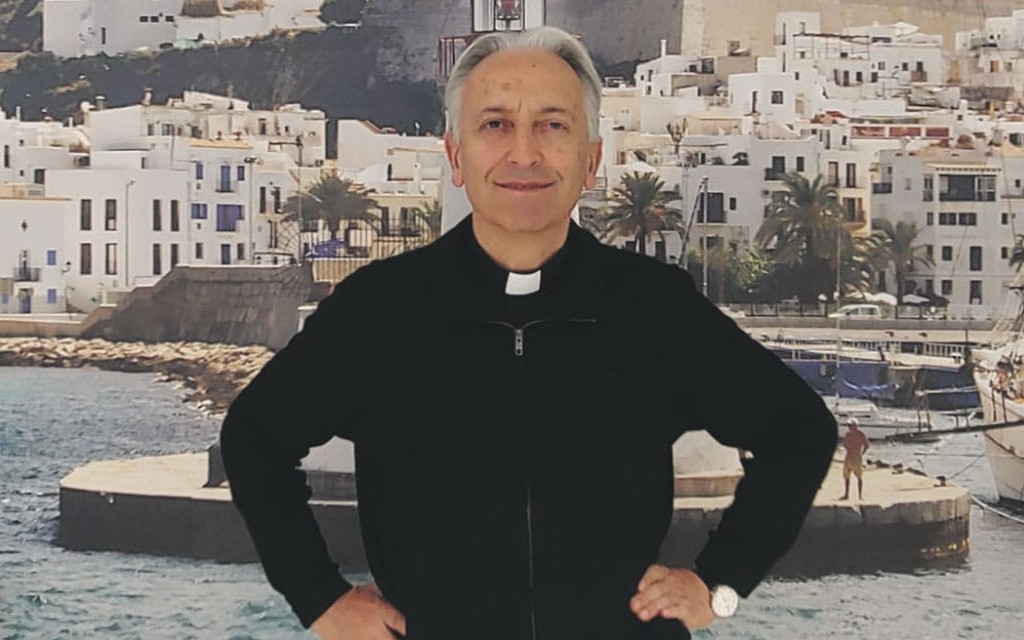
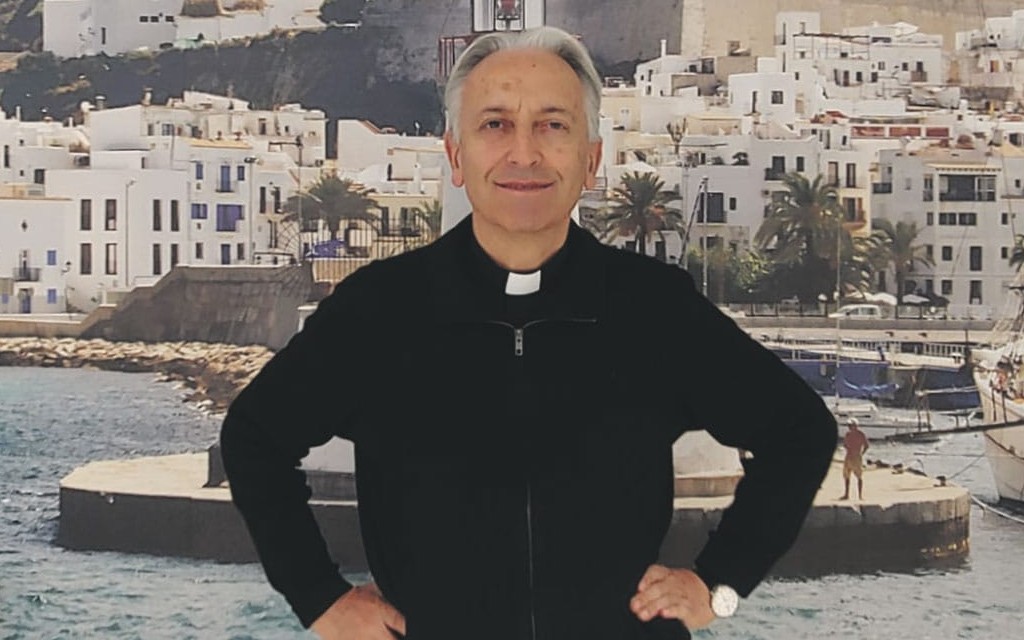
Spanish priest helps over 1,200 people find a spouse using WhatsApp #Catholic Spanish priest Father Fernando Cuevas has helped 1,280 single people find a spouse and get married over the past 15 years using WhatsApp and a simple questionnaire.“There are many people longing for true and everlasting love in Christ,” he told ACI Prensa, the Spanish-language sister service of EWTN News.Now over 70, the priest, who is from the island of Ibiza and is a member of Opus Dei, acknowledges that this providential pastoral work has transformed his ministry: “This has totally changed my life,” he said.In addition to serving as chaplain for two schools near Valencia and two youth clubs, for the past 15 years he has been receiving dozens of requests from single Catholics — “on a normal day, 60 WhatsApp messages” — at the number +34 609 765 284.Despite the sheer volume, he said he approaches it with great peace of mind: “I don’t let myself get overwhelmed,” he said. “The two requirements I set are that they be over 25 and attend Mass on Sundays,” he explained. From there, he asks about their age, their level of church involvement, and where they live, cross-referencing the information whenever possible.At times, he has to ask those who come to him for patience. “Wait — your turn will come,” he tells those who express a particularly strong desire to find a life partner.When it comes to exchanging numbers, the first thing he looks at is the city where they live, as this usually makes things easier, though not always. He also tries to ensure the men are taller and two or three years older than the women.Then there are “people with a strong sense of spirituality” — another factor that really helps ensure that the candidates hit it off.‘I’m a priest; I completely trust in Providence’Cuevas sets no limits on divine plans and serves people of all ages, though men are scarce in certain age groups. “I have few men in their 30s. A great many in their 40s. And fewer from age 50 onwards.” Women are less scarce.Despite his success, the priest approaches this pastoral work with humility: “I have no special gift,” he said.“I’m a priest; I completely trust in Providence and know that God calls every person, that there is a specific plan from the Lord for them from before they were born. Just as someone might have a vocation to a religious order, a movement, or anything else, God has someone in mind for that person, so that they may attain holiness.”The priest, dubbed the “Tinder priest” or a matchmaker, is clear that the vocation to marriage is no less significant than others: “It’s a call to total self-giving. Just as a priest or a nun has discovered that deep longing of the human heart.”It has happened on occasion that phone numbers got mixed up during the exchange. Someone called the wrong person, not the one originally intended. They met up, had a meal, and got to know each other. Obviously, they realized the photos and certain profile details didnʼt match, but they didnʼt mind. “I donʼt know what happened, but itʼs perfect,” one of them wrote to him.Requests from around the worldAt the start of this pastoral work, Cuevas sought to help people in his immediate circle within the Archdiocese of Valencia. However, many people write to him from other countries, particularly from Spanish-speaking America.To better handle these requests, he relies on the assistance of another priest, Father Vicente Huerta, who is based in Spain and spends many nights speaking with people in Argentina, Mexico, Colombia, and Peru, among other places.But they have also had candidates from places that might seem unexpected at first glance, such as India.‘People want to love truly’In a society like Spain’s, which is experiencing a major crisis regarding marriage and the family, Cuevas said he draws a clear lesson from this apostolate: “People are looking for true love. There is a yearning, an enormous need to love. People are in great need. They want to love truly, to forget themselves, to give of themselves, and to bring Christ into their lives.”He continued: “The vast majority are looking for someone who places Christ at the center of their lives. There are so many people longing for that. It moves me to see the number of people who say: ‘It doesn’t matter to me if he has blue eyes, is very handsome, or is very smart. If he doesn’t have Christ at the center of his life — forget it.’ That is the hierarchy of values.”This story was first published by ACI Prensa, the Spanish-language sister service of EWTN News. It has been translated and adapted by EWTN News English.

Spanish priest helps over 1,200 people find a spouse using WhatsApp #Catholic Spanish priest Father Fernando Cuevas has helped 1,280 single people find a spouse and get married over the past 15 years using WhatsApp and a simple questionnaire.“There are many people longing for true and everlasting love in Christ,” he told ACI Prensa, the Spanish-language sister service of EWTN News.Now over 70, the priest, who is from the island of Ibiza and is a member of Opus Dei, acknowledges that this providential pastoral work has transformed his ministry: “This has totally changed my life,” he said.In addition to serving as chaplain for two schools near Valencia and two youth clubs, for the past 15 years he has been receiving dozens of requests from single Catholics — “on a normal day, 60 WhatsApp messages” — at the number +34 609 765 284.Despite the sheer volume, he said he approaches it with great peace of mind: “I don’t let myself get overwhelmed,” he said. “The two requirements I set are that they be over 25 and attend Mass on Sundays,” he explained. From there, he asks about their age, their level of church involvement, and where they live, cross-referencing the information whenever possible.At times, he has to ask those who come to him for patience. “Wait — your turn will come,” he tells those who express a particularly strong desire to find a life partner.When it comes to exchanging numbers, the first thing he looks at is the city where they live, as this usually makes things easier, though not always. He also tries to ensure the men are taller and two or three years older than the women.Then there are “people with a strong sense of spirituality” — another factor that really helps ensure that the candidates hit it off.‘I’m a priest; I completely trust in Providence’Cuevas sets no limits on divine plans and serves people of all ages, though men are scarce in certain age groups. “I have few men in their 30s. A great many in their 40s. And fewer from age 50 onwards.” Women are less scarce.Despite his success, the priest approaches this pastoral work with humility: “I have no special gift,” he said.“I’m a priest; I completely trust in Providence and know that God calls every person, that there is a specific plan from the Lord for them from before they were born. Just as someone might have a vocation to a religious order, a movement, or anything else, God has someone in mind for that person, so that they may attain holiness.”The priest, dubbed the “Tinder priest” or a matchmaker, is clear that the vocation to marriage is no less significant than others: “It’s a call to total self-giving. Just as a priest or a nun has discovered that deep longing of the human heart.”It has happened on occasion that phone numbers got mixed up during the exchange. Someone called the wrong person, not the one originally intended. They met up, had a meal, and got to know each other. Obviously, they realized the photos and certain profile details didnʼt match, but they didnʼt mind. “I donʼt know what happened, but itʼs perfect,” one of them wrote to him.Requests from around the worldAt the start of this pastoral work, Cuevas sought to help people in his immediate circle within the Archdiocese of Valencia. However, many people write to him from other countries, particularly from Spanish-speaking America.To better handle these requests, he relies on the assistance of another priest, Father Vicente Huerta, who is based in Spain and spends many nights speaking with people in Argentina, Mexico, Colombia, and Peru, among other places.But they have also had candidates from places that might seem unexpected at first glance, such as India.‘People want to love truly’In a society like Spain’s, which is experiencing a major crisis regarding marriage and the family, Cuevas said he draws a clear lesson from this apostolate: “People are looking for true love. There is a yearning, an enormous need to love. People are in great need. They want to love truly, to forget themselves, to give of themselves, and to bring Christ into their lives.”He continued: “The vast majority are looking for someone who places Christ at the center of their lives. There are so many people longing for that. It moves me to see the number of people who say: ‘It doesn’t matter to me if he has blue eyes, is very handsome, or is very smart. If he doesn’t have Christ at the center of his life — forget it.’ That is the hierarchy of values.”This story was first published by ACI Prensa, the Spanish-language sister service of EWTN News. It has been translated and adapted by EWTN News English.

Using a questionnaire and a few important criteria, Father Fernando Cuevas has helped singles who want Christ at the center of their lives to find each other.
Read More
How the St. Benedict medal became a shield against the powers of darkness #Catholic Temptations in a fallen city, memories of a beautiful woman, a poisoned chalice, the attacks of an envious priest, curses from a pagan priest, a rock that won’t budge and another that falls on a young monk, a kitchen in flames, a dragon that lurks to devour a fleeing monk, threats from Gothic warlords, and the prospect of a destroyed monastery.These are some of the attacks that St. Benedict, whose feast the Catholic Church celebrates on July 11, endured throughout his life.Benedict even had to use force to manifest his authority as abbot over his monks oppressed by the enemy, as related in Father Robert Nixon’s book “The Cross and Medal of Saint Benedict: A Mystical Sign of Divine Power” (TAN, 2024):“Benedict found this monk outside wandering around aimlessly when he should have been in the oratory in prayer. With a certain degree of paternal severity and charitable discipline, he reprimanded him for his lack of wisdom and discernment and struck him with his staff. At this, the monk fell down, motionless. And after that, the devil … never troubled him again. It was as if the staff of Benedict had not struck the hapless monk but had rather driven away the wicked tempter himself!” (p. 14).St. Benedict has come to be recognized for the power of his actions against the enemy, alongside St. Michael the Archangel, as a major protector against evil — particularly through the medal that bears his image.Nixon’s book offers an overview of how the medal rose to prominence as a Catholic devotion and received papal approval, couching it within the story of St. Benedict’s life and the rise of his order of monks.The St. Benedict medalIf you’ve seen the back of a St. Benedict medal, you may have noticed a series of letters. The first set is arranged in and around the shape of the cross: C S P B C S S M L N D S M D. The next set is arranged in a circle around the cross: V R S N S M V S M Q L I V B.This arrangement first came to serious attention in the year 1647 in relation to the Benedictine Abbey of Metten in Bavaria, Germany, when it was believed to have prevented a series of diabolic attacks.Although some of the laity already had medals with these letters engraved, no one at the time understood their meaning. It was only in researching the library’s manuscripts that a 15th-century illustration of St. Benedict pointed to the full prayer they abbreviated:“Cross of our Holy Father Benedict. May the cross be light to me. May the dragon not be a leader to me. Get behind me, Satan: Never persuade me to vain things. What you like is evil; may you yourself drink your venom!”Due to a widespread story of the medal preventing the effect of curses and bringing about exorcisms and healings, which Nixon details in his book, its use spread across Europe, with Pope Benedict XIV approving an official blessing for it and granting it indulgences in 1741.The great father of modern Benedictine monasticism, Dom Prosper Guéranger, speculated why God would grant so many favors to those who invoke his help through St. Benedict’s medal. In an age when “rationalism is so rife,” God has deigned to offer help to those “who put their confidence in the sacred signs marked on the medal” with “strong and simple” faith (Guéranger, “The Medal or Cross of St. Benedict,” author’s preface). It’s as if to laugh at the devil and his plans to pull people away from God through the alleged sophistication of the modern world, overcoming them with simple signs pointing us to the cross and the protection of a holy monk.Of course, the medal should not be used in a superstitious way. It expresses our faith and confidence in God, which conquers the power of the enemy through the blood of Christ. Within God’s plan of salvation, there are certain key defenders of God’s people. St. Benedict proved himself as one over his own monks in spiritual combat. Through the efficacy of his medal, he has manifested himself as a fatherly defender of all who invoke his help.Throughout history, the monastic life has served as a constant beacon calling us to greater conversion of life and prayer. Turning to St. Benedict can lead us to embrace some of his spiritual principles, such as humility, obedience, stability, hospitality, the prayerful reading of Scripture in “lectio divina,” and viewing our work as a means of honoring God.While St. Benedict faced trials in his life as a monk, we all face trials and attacks from the enemy in the Christian life. Sacramentals can help us in our journey of faith, including our efforts to keep evil far away.St. Benedict medals and rosaries with the medal affixed can be purchased at religious gift stores and can be blessed after purchase. Medals are also available at EWTN’s Religious Catalogue site.This story was first published by the National Catholic Register, the sister partner of EWTN News, and has been adapted by EWTN News.

How the St. Benedict medal became a shield against the powers of darkness #Catholic Temptations in a fallen city, memories of a beautiful woman, a poisoned chalice, the attacks of an envious priest, curses from a pagan priest, a rock that won’t budge and another that falls on a young monk, a kitchen in flames, a dragon that lurks to devour a fleeing monk, threats from Gothic warlords, and the prospect of a destroyed monastery.These are some of the attacks that St. Benedict, whose feast the Catholic Church celebrates on July 11, endured throughout his life.Benedict even had to use force to manifest his authority as abbot over his monks oppressed by the enemy, as related in Father Robert Nixon’s book “The Cross and Medal of Saint Benedict: A Mystical Sign of Divine Power” (TAN, 2024):“Benedict found this monk outside wandering around aimlessly when he should have been in the oratory in prayer. With a certain degree of paternal severity and charitable discipline, he reprimanded him for his lack of wisdom and discernment and struck him with his staff. At this, the monk fell down, motionless. And after that, the devil … never troubled him again. It was as if the staff of Benedict had not struck the hapless monk but had rather driven away the wicked tempter himself!” (p. 14).St. Benedict has come to be recognized for the power of his actions against the enemy, alongside St. Michael the Archangel, as a major protector against evil — particularly through the medal that bears his image.Nixon’s book offers an overview of how the medal rose to prominence as a Catholic devotion and received papal approval, couching it within the story of St. Benedict’s life and the rise of his order of monks.The St. Benedict medalIf you’ve seen the back of a St. Benedict medal, you may have noticed a series of letters. The first set is arranged in and around the shape of the cross: C S P B C S S M L N D S M D. The next set is arranged in a circle around the cross: V R S N S M V S M Q L I V B.This arrangement first came to serious attention in the year 1647 in relation to the Benedictine Abbey of Metten in Bavaria, Germany, when it was believed to have prevented a series of diabolic attacks.Although some of the laity already had medals with these letters engraved, no one at the time understood their meaning. It was only in researching the library’s manuscripts that a 15th-century illustration of St. Benedict pointed to the full prayer they abbreviated:“Cross of our Holy Father Benedict. May the cross be light to me. May the dragon not be a leader to me. Get behind me, Satan: Never persuade me to vain things. What you like is evil; may you yourself drink your venom!”Due to a widespread story of the medal preventing the effect of curses and bringing about exorcisms and healings, which Nixon details in his book, its use spread across Europe, with Pope Benedict XIV approving an official blessing for it and granting it indulgences in 1741.The great father of modern Benedictine monasticism, Dom Prosper Guéranger, speculated why God would grant so many favors to those who invoke his help through St. Benedict’s medal. In an age when “rationalism is so rife,” God has deigned to offer help to those “who put their confidence in the sacred signs marked on the medal” with “strong and simple” faith (Guéranger, “The Medal or Cross of St. Benedict,” author’s preface). It’s as if to laugh at the devil and his plans to pull people away from God through the alleged sophistication of the modern world, overcoming them with simple signs pointing us to the cross and the protection of a holy monk.Of course, the medal should not be used in a superstitious way. It expresses our faith and confidence in God, which conquers the power of the enemy through the blood of Christ. Within God’s plan of salvation, there are certain key defenders of God’s people. St. Benedict proved himself as one over his own monks in spiritual combat. Through the efficacy of his medal, he has manifested himself as a fatherly defender of all who invoke his help.Throughout history, the monastic life has served as a constant beacon calling us to greater conversion of life and prayer. Turning to St. Benedict can lead us to embrace some of his spiritual principles, such as humility, obedience, stability, hospitality, the prayerful reading of Scripture in “lectio divina,” and viewing our work as a means of honoring God.While St. Benedict faced trials in his life as a monk, we all face trials and attacks from the enemy in the Christian life. Sacramentals can help us in our journey of faith, including our efforts to keep evil far away.St. Benedict medals and rosaries with the medal affixed can be purchased at religious gift stores and can be blessed after purchase. Medals are also available at EWTN’s Religious Catalogue site.This story was first published by the National Catholic Register, the sister partner of EWTN News, and has been adapted by EWTN News.

St. Benedict, whose feast the Catholic Church celebrates on July 11, endured constant attacks from the enemy throughout his life.

Read More