Civil War

At a time of conflict, Pope Leo sends a bridge-builder to the United States #Catholic Archbishop Gabriele Caccia, the recently appointed apostolic nuncio to the United States, takes up his new role at a time of heightened tension between the Vatican and the White House over issues including immigration to the U.S. and war in the Middle East.Former collaborators say Caccia’s personal qualities and wide diplomatic experience — including in Lebanon and the Philippines — make him well suited for this crucial assignment.The 68-year-old diplomat recently served as the permanent observer of the Holy See Mission to the United Nations in New York after Pope Francis appointed him there in 2019. His new job is important as a liaison between the Vatican and the U.S., where recent federal policies have faced growing resistance from Church leaders.Pope Leo’s new man on a high-stakes missionA veteran diplomat, Caccia will serve as Pope Leo XIV’s chief representative to the Trump administration. Like his predecessor, Cardinal Christophe Pierre, he assumes office amid ongoing tension between the administration and the Church, especially on immigration enforcement and foreign policy.In a public statement in November 2025, U.S. bishops strongly opposed the administration’s treatment of migrants during mass deportations. Pope Leo expressed support for the statement and denounced the treatment of migrants as “extremely disrespectful, and with instances of violence.”The U.S. bishops have also voiced concern over recent foreign policy moves, including interventions in the Middle East. In January of this year, three U.S. cardinals — Blase Cupich, Joseph Tobin, and Robert McElroy — jointly condemned the administration’s foreign policy in a public statement. In recent addresses, Pope Leo has also called for a ceasefire in the Middle East, deploring on March 15 a “widespread climate of hatred and fear.”Monsignor Roger Landry, who served at the Holy See Mission from 2015 to 2022 and now heads the Pontifical Mission Societies, expressed confidence in the nuncio’s ability to communicate the Holy See’s concerns effectively to the U.S. government while supporting the bishops.“He will represent Pope Leo very well to the U.S. government and the U.S. Church, be a great listener and effective relayer of what’s happening in the United States to Pope Leo, and be a steady source of counsel and support to U.S. bishops,” he told EWTN News.Dálida Morales, who interned at the mission and now works at the Ministry of Industry and Commerce in the Dominican Republic, conveyed hope for the archbishop’s potential to build international dialogue.“He is genuinely a bridge-builder for peace. At a time when dialogue, moral clarity, and principled leadership are urgently needed in the United States, his appointment there is both timely and hopeful,” she said.A diplomat forged in complex geopoliticsHaving worked in the diplomatic service of the Holy See since 1991, Caccia previously served in challenging posts before his appointment to the U.N. He served as apostolic nuncio to Lebanon and the Philippines, two countries with sensitive political climates.His service in Lebanon occurred during the outbreak of the Syrian Civil War in 2011. There, he helped coordinate the Church’s humanitarian response to support over 1.5 million Syrian refugees in Lebanon. His service also included helping maintain peace in a country constitutionally divided among Maronite Christians, Muslims, and Druze.He served in the Philippines at the height of President Rodrigo Duterte’s highly aggressive and controversial anti-narcotics campaign, which resulted in thousands of extrajudicial killings. As the nuncio, he helped to support the bishops, who were vocal critics against the government, while maintaining the country’s diplomatic relations with the Holy See.During his time at the U.N., he promoted the Vatican’s diplomatic stance. Father Mark Knestout, who served with Caccia as a former attaché for the Holy See Mission, noted the importance of his diplomatic experience in his new role.“He was in Lebanon for eight years, which is a complex situation because you have multiple denominations of Catholics there, alongside the situation with Muslims,” he told EWTN News. “So I see him being personable and striving to get to know everyone in the United States as best he can.”An inclusive leader and sports loverFormer staff of Caccia also shared with EWTN News some personal anecdotes from their time serving with him in New York. Vitória Volpato, a former intern at the mission who serves at the Prefecture of São Paulo in Brazil, noted with gratitude the archbishop’s insights on leadership.“He said something that stayed with me: ‘I do not choose the people I work with, but I work with the people I have.’ That made me reflect on what a good leader must be, something the archbishop clearly is,” she said.Ashley Campbell, who interned at the mission and now works at the Religious Freedom Institute, reflected on his love of sports. “I remember once walking with him back to the Holy See Mission building from the U.N., and we talked about how we both grew up playing sports and how amazing it would be if Vatican City could send athletes to the Olympics.”Fidelity to the Holy FatherOne trait consistently praised by those who have worked with the archbishop is his fidelity to the Holy Father. Knestout described the archbishop as a “true Churchman who wants to represent the desires and the intentions of the Holy Father.”Morales added: “Every Wednesday, he would ask us about the Holy Father’s general audience. In this way, he reminded us that one of the most meaningful ways to remain united to the Church is by listening to the voice of the pope. It is a habit I continue to keep today thanks to him.”

At a time of conflict, Pope Leo sends a bridge-builder to the United States #Catholic Archbishop Gabriele Caccia, the recently appointed apostolic nuncio to the United States, takes up his new role at a time of heightened tension between the Vatican and the White House over issues including immigration to the U.S. and war in the Middle East.Former collaborators say Caccia’s personal qualities and wide diplomatic experience — including in Lebanon and the Philippines — make him well suited for this crucial assignment.The 68-year-old diplomat recently served as the permanent observer of the Holy See Mission to the United Nations in New York after Pope Francis appointed him there in 2019. His new job is important as a liaison between the Vatican and the U.S., where recent federal policies have faced growing resistance from Church leaders.Pope Leo’s new man on a high-stakes missionA veteran diplomat, Caccia will serve as Pope Leo XIV’s chief representative to the Trump administration. Like his predecessor, Cardinal Christophe Pierre, he assumes office amid ongoing tension between the administration and the Church, especially on immigration enforcement and foreign policy.In a public statement in November 2025, U.S. bishops strongly opposed the administration’s treatment of migrants during mass deportations. Pope Leo expressed support for the statement and denounced the treatment of migrants as “extremely disrespectful, and with instances of violence.”The U.S. bishops have also voiced concern over recent foreign policy moves, including interventions in the Middle East. In January of this year, three U.S. cardinals — Blase Cupich, Joseph Tobin, and Robert McElroy — jointly condemned the administration’s foreign policy in a public statement. In recent addresses, Pope Leo has also called for a ceasefire in the Middle East, deploring on March 15 a “widespread climate of hatred and fear.”Monsignor Roger Landry, who served at the Holy See Mission from 2015 to 2022 and now heads the Pontifical Mission Societies, expressed confidence in the nuncio’s ability to communicate the Holy See’s concerns effectively to the U.S. government while supporting the bishops.“He will represent Pope Leo very well to the U.S. government and the U.S. Church, be a great listener and effective relayer of what’s happening in the United States to Pope Leo, and be a steady source of counsel and support to U.S. bishops,” he told EWTN News.Dálida Morales, who interned at the mission and now works at the Ministry of Industry and Commerce in the Dominican Republic, conveyed hope for the archbishop’s potential to build international dialogue.“He is genuinely a bridge-builder for peace. At a time when dialogue, moral clarity, and principled leadership are urgently needed in the United States, his appointment there is both timely and hopeful,” she said.A diplomat forged in complex geopoliticsHaving worked in the diplomatic service of the Holy See since 1991, Caccia previously served in challenging posts before his appointment to the U.N. He served as apostolic nuncio to Lebanon and the Philippines, two countries with sensitive political climates.His service in Lebanon occurred during the outbreak of the Syrian Civil War in 2011. There, he helped coordinate the Church’s humanitarian response to support over 1.5 million Syrian refugees in Lebanon. His service also included helping maintain peace in a country constitutionally divided among Maronite Christians, Muslims, and Druze.He served in the Philippines at the height of President Rodrigo Duterte’s highly aggressive and controversial anti-narcotics campaign, which resulted in thousands of extrajudicial killings. As the nuncio, he helped to support the bishops, who were vocal critics against the government, while maintaining the country’s diplomatic relations with the Holy See.During his time at the U.N., he promoted the Vatican’s diplomatic stance. Father Mark Knestout, who served with Caccia as a former attaché for the Holy See Mission, noted the importance of his diplomatic experience in his new role.“He was in Lebanon for eight years, which is a complex situation because you have multiple denominations of Catholics there, alongside the situation with Muslims,” he told EWTN News. “So I see him being personable and striving to get to know everyone in the United States as best he can.”An inclusive leader and sports loverFormer staff of Caccia also shared with EWTN News some personal anecdotes from their time serving with him in New York. Vitória Volpato, a former intern at the mission who serves at the Prefecture of São Paulo in Brazil, noted with gratitude the archbishop’s insights on leadership.“He said something that stayed with me: ‘I do not choose the people I work with, but I work with the people I have.’ That made me reflect on what a good leader must be, something the archbishop clearly is,” she said.Ashley Campbell, who interned at the mission and now works at the Religious Freedom Institute, reflected on his love of sports. “I remember once walking with him back to the Holy See Mission building from the U.N., and we talked about how we both grew up playing sports and how amazing it would be if Vatican City could send athletes to the Olympics.”Fidelity to the Holy FatherOne trait consistently praised by those who have worked with the archbishop is his fidelity to the Holy Father. Knestout described the archbishop as a “true Churchman who wants to represent the desires and the intentions of the Holy Father.”Morales added: “Every Wednesday, he would ask us about the Holy Father’s general audience. In this way, he reminded us that one of the most meaningful ways to remain united to the Church is by listening to the voice of the pope. It is a habit I continue to keep today thanks to him.”

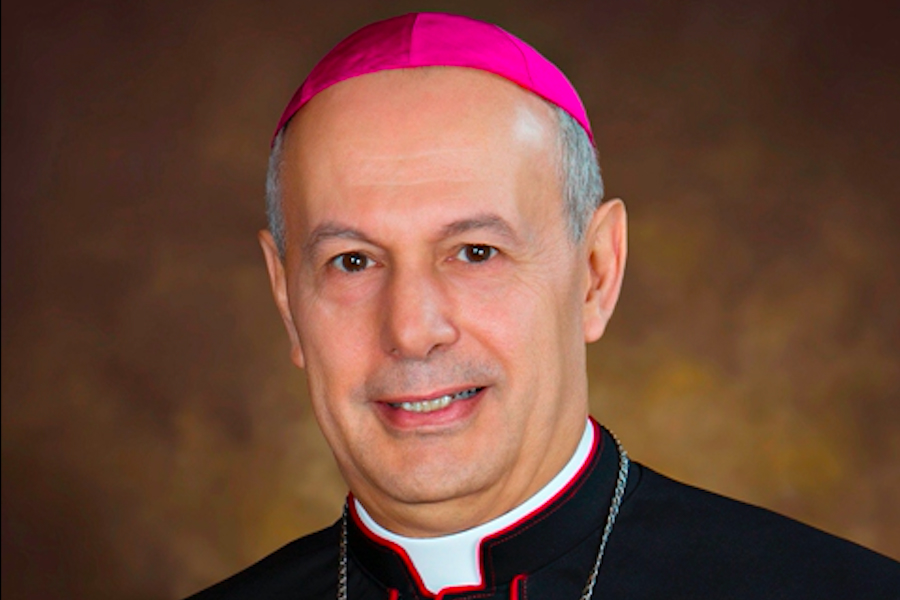
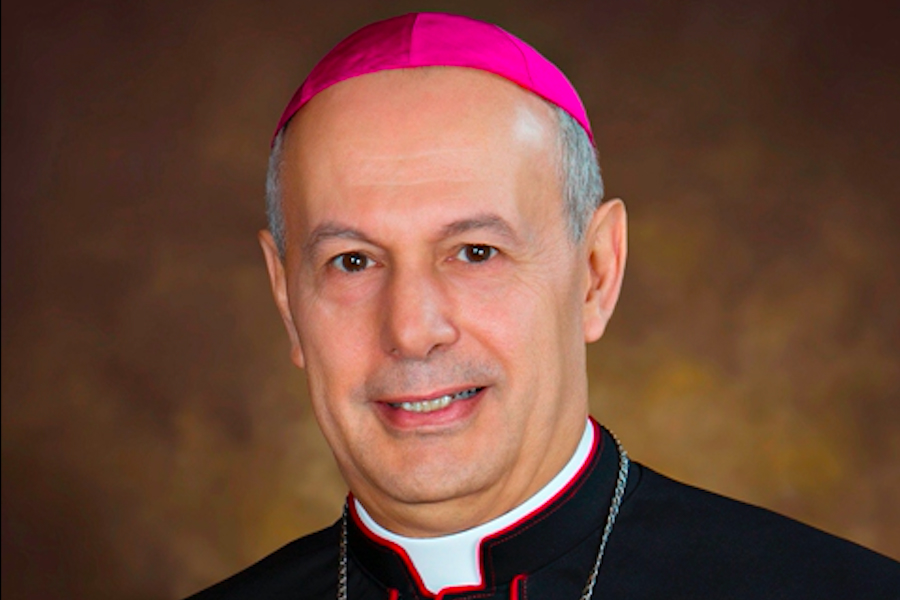
Archbishop Gabriele Caccia, the new papal envoy to Washington, has been shaped by a diplomatic career in geopolitical hot spots.
Read More
University of Dallas panel explores American exceptionalism through a Catholic lens #Catholic In a standing-room-only event, college students lined the walls of a large room at the University of Dallas to hear three Catholic academics and an apologist  reflect on what makes America exceptional in a celebration marking the 250th anniversary of the founding of the United States.Liam Ritter, a junior and the founder of the university’s Young Americans for Freedom chapter, which hosted the discussion, told EWTN News that the March 4 panel of speakers served as the capstone of three days of celebrations at the university.The panel was comprised of University President Jonathan Sanford; Trent Horn, staff apologist with Catholic Answers; Burt Folsom, distinguished fellow at Hillsdale College and economic historian; and Susan Hanssen, associate professor of history at the University of Dallas.‘We have a population of people who know what is at stake’In response to Ritter’s question, “Why [is it] that our political regime has been so stable for so long,” Hanssen recalled America’s first immigrants. “I think the first thing that makes America exceptional, and its political regime exceptional, is the fact that America was first populated by people who fled the rise of the modern nation state and totalitarianism … and so we have a population of people who know what is at stake in political liberty," she said.“Theyʼve seen what happened to their ancestors,” she continued. “They remember the stories. And America has been blessed in its political constitution with the regime of liberty, which has made possible the flourishing of subsidiary communities and societies.”Hanssen said we should not take for granted today that we still “have a free people." “We need to listen to our latest immigrants … those who have fled Venezuela, those who have fled Iran, like my uncle, a Persian Jew, who refuses to call himself Iranian because he associates modern Iran with the regime of the Ayatollah.”‘Get married, have children, raise them well’Sanford said that though we are a nation of immigrants, “there won’t be enough to pull in to make up for” the continuing demographic decline.“Get married, have children, raise them well,” he said to chuckles from a receptive audience, which was mostly composed of college students.He encouraged the students not to focus on “one big step,” but rather, to take smaller steps: “Get up early. Pray. Exercise. Go through the day in an ordered fashion, give Caesar what is Caesarʼs, and God what is God’s.”“Do the little things thousands and thousands of times,” he said.“In order to exercise liberty properly,” he continued, one has to ask, "How should I live my life?” and then rely on the institutions that “help you do that.”He called the family the “foundational institution” of America. “Recover the family,” he said.In addition, “we need to see those institutions that mediate the virtues — schools, universities — that embrace fully the idea of what [the virtues] are.”Horn also encouraged students to focus on family relationships, telling them “get off the phones and the internet. They’re killing all of us. They’re rewiring our brains.”
 
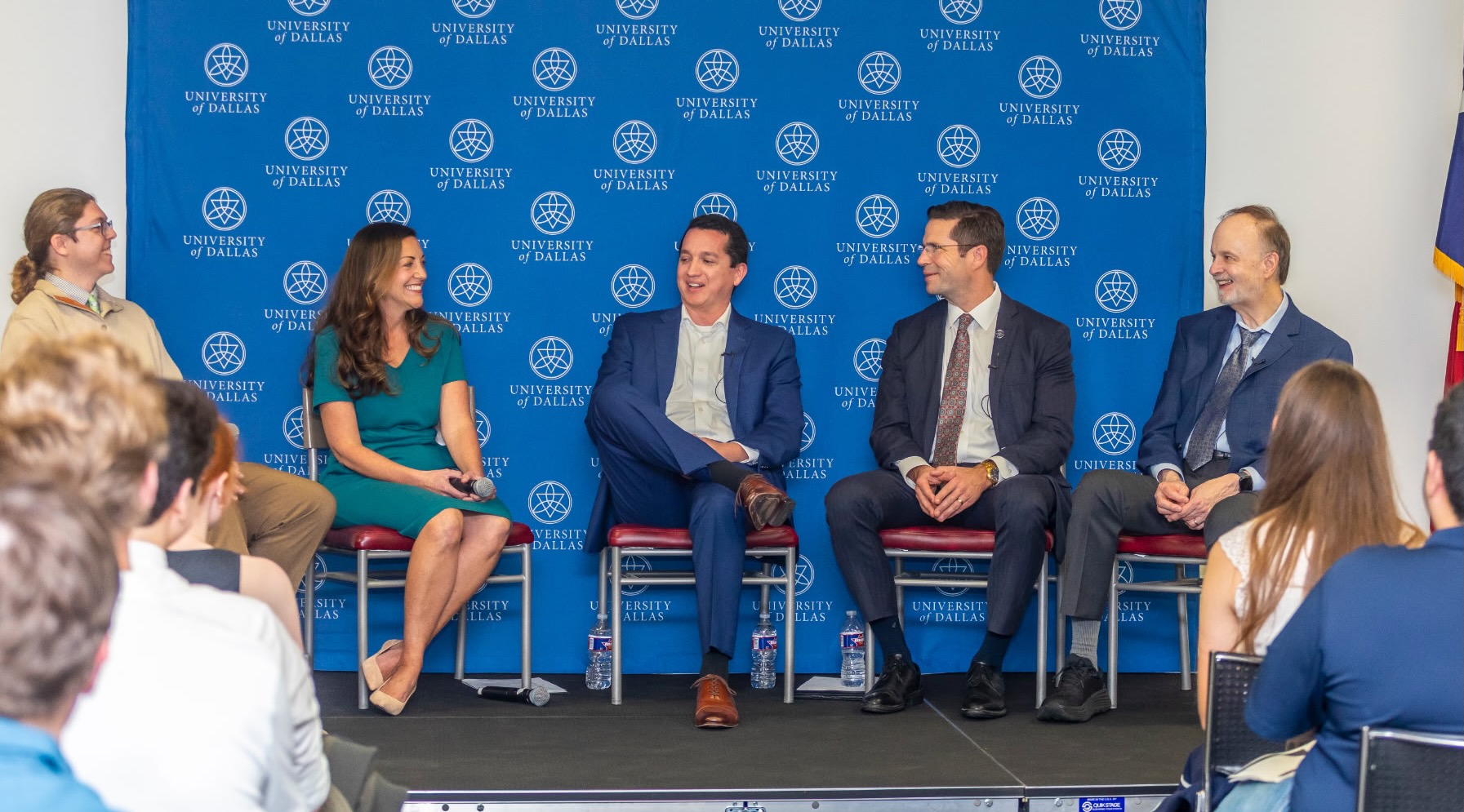
 Trent Horn (left), an apologist at Catholic Answers, and University of Dallas President Jonathan Sanford participate in a panel on American exceptionalism at the University of Dallas on March 4, 2026. | Credit: Courtesy of University of Dallas Young Americans for Freedom Chapter
 
 Of people currently in their 20s in America, "one in three will never have children,” he lamented, implying too much technology use is partly to blame.The Catholic Answers apologist pointed out, however, that though the Second Industrial Revolution “broke the family” by encouraging workers to move away from their homes and families to pursue careers, the internet “post-Covid,” in the age of “Zoom and telecommuting … might be good” because many people no longer have to choose between a job and staying near their extended families.“Maybe tech can help build up family networks,” he said.‘The greatest outpouring of economic development’ in historyRitter told EWTN news that he chose speakers who could address “the wonderful things the U.S. has contributed” to the world because “a lot of young people don’t have appropriate gratitude for the country.”Ritter asked Folsom, a historian who focuses on economics and industrial affairs, about what the professor believes the U.S. has contributed to world economics and world innovations.Folsom said that the generation after the Civil War, from 1865 to 1905, was responsible for “the greatest outpouring of economic development … in world history” and “gave us the rise of an America that became a world power” by World War I.He listed inventions that facilitated the rapid development of industry and infrastructure in the country during the Second Industrial Revolution, including the typewriter, the telephone, adding machines, the light bulb, electricity, factory-produced cars, and recording devices for music and movies, among other innovations.Through the Declaration of Independence and the U.S. Constitution, “the founders gave us the freedom” to develop these technologies, he said. “We had amazing infrastructure that allowed people to produce, and not have government get in their way.”The professor said the post-Civil War period could be eclipsed in the present day “because with artificial intelligence, this generation may yet be able to come up with more.”‘A responsibility for this political regime of freedom’At the conclusion of the panel discussion, Hanssen called the feeling in the room “electric, it’s teeming with patriotism. This isn’t a normal college campus.”Referring to Sanford’s earlier admonition to ”get married and have kids,” she said: “I agree, be fruitful and multiply … Preach the Gospel, and baptize in the name of Jesus, but also, go into politics!” she exclaimed.She encouraged the students to develop “the ability to love something so much that you would die for it: God, family, country.”“Recognize what is at stake. We have a responsibility for this political regime of freedom, to the immigrants who come here … to our children… to preserve the rule of law.”She concluded to loud applause: “So family; yes! Faith; yes, but to the barricades, ladies and gentlemen!"

University of Dallas panel explores American exceptionalism through a Catholic lens #Catholic In a standing-room-only event, college students lined the walls of a large room at the University of Dallas to hear three Catholic academics and an apologist  reflect on what makes America exceptional in a celebration marking the 250th anniversary of the founding of the United States.Liam Ritter, a junior and the founder of the university’s Young Americans for Freedom chapter, which hosted the discussion, told EWTN News that the March 4 panel of speakers served as the capstone of three days of celebrations at the university.The panel was comprised of University President Jonathan Sanford; Trent Horn, staff apologist with Catholic Answers; Burt Folsom, distinguished fellow at Hillsdale College and economic historian; and Susan Hanssen, associate professor of history at the University of Dallas.‘We have a population of people who know what is at stake’In response to Ritter’s question, “Why [is it] that our political regime has been so stable for so long,” Hanssen recalled America’s first immigrants. “I think the first thing that makes America exceptional, and its political regime exceptional, is the fact that America was first populated by people who fled the rise of the modern nation state and totalitarianism … and so we have a population of people who know what is at stake in political liberty," she said.“Theyʼve seen what happened to their ancestors,” she continued. “They remember the stories. And America has been blessed in its political constitution with the regime of liberty, which has made possible the flourishing of subsidiary communities and societies.”Hanssen said we should not take for granted today that we still “have a free people." “We need to listen to our latest immigrants … those who have fled Venezuela, those who have fled Iran, like my uncle, a Persian Jew, who refuses to call himself Iranian because he associates modern Iran with the regime of the Ayatollah.”‘Get married, have children, raise them well’Sanford said that though we are a nation of immigrants, “there won’t be enough to pull in to make up for” the continuing demographic decline.“Get married, have children, raise them well,” he said to chuckles from a receptive audience, which was mostly composed of college students.He encouraged the students not to focus on “one big step,” but rather, to take smaller steps: “Get up early. Pray. Exercise. Go through the day in an ordered fashion, give Caesar what is Caesarʼs, and God what is God’s.”“Do the little things thousands and thousands of times,” he said.“In order to exercise liberty properly,” he continued, one has to ask, "How should I live my life?” and then rely on the institutions that “help you do that.”He called the family the “foundational institution” of America. “Recover the family,” he said.In addition, “we need to see those institutions that mediate the virtues — schools, universities — that embrace fully the idea of what [the virtues] are.”Horn also encouraged students to focus on family relationships, telling them “get off the phones and the internet. They’re killing all of us. They’re rewiring our brains.” Trent Horn (left), an apologist at Catholic Answers, and University of Dallas President Jonathan Sanford participate in a panel on American exceptionalism at the University of Dallas on March 4, 2026. | Credit: Courtesy of University of Dallas Young Americans for Freedom Chapter Of people currently in their 20s in America, "one in three will never have children,” he lamented, implying too much technology use is partly to blame.The Catholic Answers apologist pointed out, however, that though the Second Industrial Revolution “broke the family” by encouraging workers to move away from their homes and families to pursue careers, the internet “post-Covid,” in the age of “Zoom and telecommuting … might be good” because many people no longer have to choose between a job and staying near their extended families.“Maybe tech can help build up family networks,” he said.‘The greatest outpouring of economic development’ in historyRitter told EWTN news that he chose speakers who could address “the wonderful things the U.S. has contributed” to the world because “a lot of young people don’t have appropriate gratitude for the country.”Ritter asked Folsom, a historian who focuses on economics and industrial affairs, about what the professor believes the U.S. has contributed to world economics and world innovations.Folsom said that the generation after the Civil War, from 1865 to 1905, was responsible for “the greatest outpouring of economic development … in world history” and “gave us the rise of an America that became a world power” by World War I.He listed inventions that facilitated the rapid development of industry and infrastructure in the country during the Second Industrial Revolution, including the typewriter, the telephone, adding machines, the light bulb, electricity, factory-produced cars, and recording devices for music and movies, among other innovations.Through the Declaration of Independence and the U.S. Constitution, “the founders gave us the freedom” to develop these technologies, he said. “We had amazing infrastructure that allowed people to produce, and not have government get in their way.”The professor said the post-Civil War period could be eclipsed in the present day “because with artificial intelligence, this generation may yet be able to come up with more.”‘A responsibility for this political regime of freedom’At the conclusion of the panel discussion, Hanssen called the feeling in the room “electric, it’s teeming with patriotism. This isn’t a normal college campus.”Referring to Sanford’s earlier admonition to ”get married and have kids,” she said: “I agree, be fruitful and multiply … Preach the Gospel, and baptize in the name of Jesus, but also, go into politics!” she exclaimed.She encouraged the students to develop “the ability to love something so much that you would die for it: God, family, country.”“Recognize what is at stake. We have a responsibility for this political regime of freedom, to the immigrants who come here … to our children… to preserve the rule of law.”She concluded to loud applause: “So family; yes! Faith; yes, but to the barricades, ladies and gentlemen!"

The speakers encouraged the college students to get married, have children, stay off the internet (unless it enables them to telework and stay near their extended families), and be political.
Read More