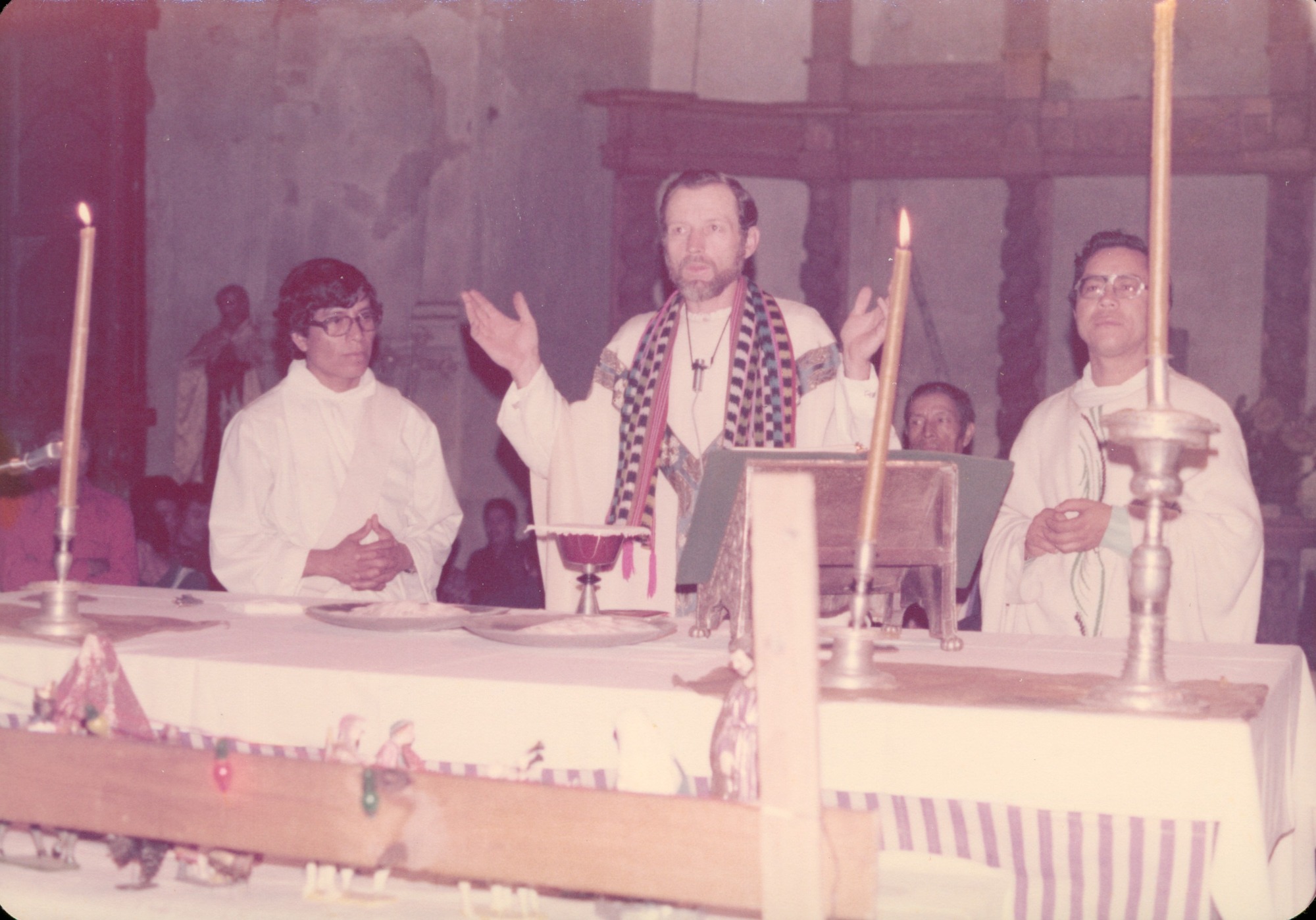
Read More New film ‘American Martyr’ tells story of Oklahoma priest and martyr Blessed Stanley Rother #Catholic Hundreds gathered late last month in Oklahoma City for the premiere of the new film “American Martyr: The Stanley Rother Story,” a feature-length documentary depicting the inspiring life of Blessed Stanley Rother.“This has been a long time coming,” Archbishop Paul Coakley of Oklahoma City told EWTN News on the red carpet July 28.Born in Okarche, Oklahoma, Rother was a farmer before he attended Mount St. Mary’s Seminary in Emmitsburg, Maryland, and was ordained a priest in 1963. After serving as an associate pastor at a parish in Oklahoma for five years, Rother received permission to join the staff at the Oklahoma diocese’s mission in Santiago Atitlán, Guatemala.He served the Tz’utujil people, who are descendants of the Mayans, in Guatemala, learning their native Tz’utujil language as well as Spanish. As their pastor, Rother celebrated Mass and helped translate the New Testament into the Tz’utujil language. He quickly gained the trust and love of the local people, ministering to them in their homes, sharing meals, helping them in the fields, and visiting the sick.While Rother was in Guatemala, a civil war broke out and the Catholic Church was caught in its crosshairs. The priest’s name was placed on a death list. On July 28, 1981, three men entered the rectory at night and killed the beloved priest.Rother’s cause for canonization opened in 2007 by the Archdiocese of Oklahoma City, and in 2016 Pope Francis recognized Rother as a martyr for the faith. He became the first American-born priest to be recognized as a martyr by the Catholic Church. The Warren Theater in Oklahoma City hosted the premiere of “American Martyr: The Stanley Rother Story” on July 28, 2026. | Credit: Photo courtesy of Chris Porter “We’ve been very intentionally promoting the cause of Blessed Stanley Rother for many years,” Coakley said. “He’s been beatified and now we’re working toward his canonization, and in order for that ever to happen we need more and more people seeking the intercession of Blessed Stanley Rother and seeking his divine favor so that miracles may be performed through his intercession. So that’s why we undertook this production, to introduce him to more and more people.”The archbishop added that the film is “a beautiful depiction of the life of an ordinary Catholic who responded generously and faithfully to Godʼs grace and mercy and allowed the Lord to transform him and form him into the saint ultimately that we hope he will finally be named.”Michael Scaperlanda, chancellor at the Archdiocese of Oklahoma City, said: “This is an exciting moment for the archdiocese to have a nationwide release … of this wonderful documentary narrated by Martin Sheen.”He highlighted the importance of sharing Rother’s story to a wider audience because it serves as a reminder that “even ordinary people can become saints.” For Felipe Coche Pablo, the documentary is particularly personal. Pablo is a native of Santiago Atitlan and was baptized by Rother when he was 6 months old. He was 2 years old when Rother was killed.When Rother’s cause was opened, Pablo was appointed to serve as the official church notary for Rother’s parish in Santiago Atitlán. It was then that he learned about the potential saint’s life and legacy.Pablo said learning about Rother deeply impacted his life and taught him “to keep fighting in life. There are always stumbles, but you have to pick yourself back up, like he [Rother] did.” Archbishop Paul Coakley of Oklahoma City, left, and Felipe Coche Pablo, right, at the premiere of “American Martyr: The Stanley Rother Story” on July 28, 2026. | Credit: Photo courtesy of Chris Porter Today, Pablo is the administrator at Colegio Católico Padre Aplaʼs — also known as the Blessed Stanley Rother Catholic School — in Santiago Atitlán. This school is part of the parish in which Rother served, Santiago Apóstol, or St. James the Apostle Church.“We have 435 students and the education is trilingual — Tz’utujil, Spanish, and English,” he explained. “Our first language is the Mayan language, Tz’utujil. And he [Rother] was a priest that was very loved by the people because he learned the Mayan language Tz’utujil, like us, like what I speak.”Pablo said he hopes viewers of the film will be inspired by Rother’s “service to others” and to “carry peace, love, evangelize, and what is most needed in life — look for God.”Coakley added that he hopes viewers will leave the theater reminded that “all of us are called to holiness.”“Stanley Rother would not have been the one in high school in the yearbook that said most likely to become a saint … And yet all of us are called, it’s our vocation if you’re baptized, you’re called to be a saint. All of us are called to be saints. And Stanley Rother gives us a hope that for each one of us that is a possibility that is real.”“American Martyr” can be seen in theaters across the U.S. on Aug. 25 and 26 in English and in Spanish on Aug. 27. unitedyam August 17, 2026August 18, 2026 “American Martyr” can be seen in theaters Aug. 25-26 in English and in Spanish on Aug. 27. Read More
![New film ‘American Martyr’ tells story of Oklahoma priest and martyr Blessed Stanley Rother #Catholic Hundreds gathered late last month in Oklahoma City for the premiere of the new film “American Martyr: The Stanley Rother Story,” a feature-length documentary depicting the inspiring life of Blessed Stanley Rother.“This has been a long time coming,” Archbishop Paul Coakley of Oklahoma City told EWTN News on the red carpet July 28.Born in Okarche, Oklahoma, Rother was a farmer before he attended Mount St. Mary’s Seminary in Emmitsburg, Maryland, and was ordained a priest in 1963. After serving as an associate pastor at a parish in Oklahoma for five years, Rother received permission to join the staff at the Oklahoma diocese’s mission in Santiago Atitlán, Guatemala.He served the Tz’utujil people, who are descendants of the Mayans, in Guatemala, learning their native Tz’utujil language as well as Spanish. As their pastor, Rother celebrated Mass and helped translate the New Testament into the Tz’utujil language. He quickly gained the trust and love of the local people, ministering to them in their homes, sharing meals, helping them in the fields, and visiting the sick.While Rother was in Guatemala, a civil war broke out and the Catholic Church was caught in its crosshairs. The priest’s name was placed on a death list. On July 28, 1981, three men entered the rectory at night and killed the beloved priest.Rother’s cause for canonization opened in 2007 by the Archdiocese of Oklahoma City, and in 2016 Pope Francis recognized Rother as a martyr for the faith. He became the first American-born priest to be recognized as a martyr by the Catholic Church.
The Warren Theater in Oklahoma City hosted the premiere of “American Martyr: The Stanley Rother Story” on July 28, 2026. | Credit: Photo courtesy of Chris Porter
“We’ve been very intentionally promoting the cause of Blessed Stanley Rother for many years,” Coakley said. “He’s been beatified and now we’re working toward his canonization, and in order for that ever to happen we need more and more people seeking the intercession of Blessed Stanley Rother and seeking his divine favor so that miracles may be performed through his intercession. So that’s why we undertook this production, to introduce him to more and more people.”The archbishop added that the film is “a beautiful depiction of the life of an ordinary Catholic who responded generously and faithfully to Godʼs grace and mercy and allowed the Lord to transform him and form him into the saint ultimately that we hope he will finally be named.”Michael Scaperlanda, chancellor at the Archdiocese of Oklahoma City, said: “This is an exciting moment for the archdiocese to have a nationwide release … of this wonderful documentary narrated by Martin Sheen.”He highlighted the importance of sharing Rother’s story to a wider audience because it serves as a reminder that “even ordinary people can become saints.” For Felipe Coche Pablo, the documentary is particularly personal. Pablo is a native of Santiago Atitlan and was baptized by Rother when he was 6 months old. He was 2 years old when Rother was killed.When Rother’s cause was opened, Pablo was appointed to serve as the official church notary for Rother’s parish in Santiago Atitlán. It was then that he learned about the potential saint’s life and legacy.Pablo said learning about Rother deeply impacted his life and taught him “to keep fighting in life. There are always stumbles, but you have to pick yourself back up, like he [Rother] did.”
Archbishop Paul Coakley of Oklahoma City, left, and Felipe Coche Pablo, right, at the premiere of “American Martyr: The Stanley Rother Story” on July 28, 2026. | Credit: Photo courtesy of Chris Porter
Today, Pablo is the administrator at Colegio Católico Padre Aplaʼs — also known as the Blessed Stanley Rother Catholic School — in Santiago Atitlán. This school is part of the parish in which Rother served, Santiago Apóstol, or St. James the Apostle Church.“We have 435 students and the education is trilingual — Tz’utujil, Spanish, and English,” he explained. “Our first language is the Mayan language, Tz’utujil. And he [Rother] was a priest that was very loved by the people because he learned the Mayan language Tz’utujil, like us, like what I speak.”Pablo said he hopes viewers of the film will be inspired by Rother’s “service to others” and to “carry peace, love, evangelize, and what is most needed in life — look for God.”Coakley added that he hopes viewers will leave the theater reminded that “all of us are called to holiness.”“Stanley Rother would not have been the one in high school in the yearbook that said most likely to become a saint … And yet all of us are called, it’s our vocation if you’re baptized, you’re called to be a saint. All of us are called to be saints. And Stanley Rother gives us a hope that for each one of us that is a possibility that is real.”“American Martyr” can be seen in theaters across the U.S. on Aug. 25 and 26 in English and in Spanish on Aug. 27.](https://unitedyam.com/wp-content/uploads/2026/08/new-film-american-martyr-tells-story-of-oklahoma-priest-and-martyr-blessed-stanley-rother-catholic-hundreds-gathered-late-last-month-in-oklahoma-city-for-the-premiere-of-the-new-fil-scaled.png "New film ‘American Martyr’ tells story of Oklahoma priest and martyr Blessed Stanley Rother #Catholic Hundreds gathered late last month in Oklahoma City for the premiere of the new film “American Martyr: The Stanley Rother Story,” a feature-length documentary depicting the inspiring life of Blessed Stanley Rother.“This has been a long time coming,” Archbishop Paul Coakley of Oklahoma City told EWTN News on the red carpet July 28.Born in Okarche, Oklahoma, Rother was a farmer before he attended Mount St. Mary’s Seminary in Emmitsburg, Maryland, and was ordained a priest in 1963. After serving as an associate pastor at a parish in Oklahoma for five years, Rother received permission to join the staff at the Oklahoma diocese’s mission in Santiago Atitlán, Guatemala.He served the Tz’utujil people, who are descendants of the Mayans, in Guatemala, learning their native Tz’utujil language as well as Spanish. As their pastor, Rother celebrated Mass and helped translate the New Testament into the Tz’utujil language. He quickly gained the trust and love of the local people, ministering to them in their homes, sharing meals, helping them in the fields, and visiting the sick.While Rother was in Guatemala, a civil war broke out and the Catholic Church was caught in its crosshairs. The priest’s name was placed on a death list. On July 28, 1981, three men entered the rectory at night and killed the beloved priest.Rother’s cause for canonization opened in 2007 by the Archdiocese of Oklahoma City, and in 2016 Pope Francis recognized Rother as a martyr for the faith. He became the first American-born priest to be recognized as a martyr by the Catholic Church.
The Warren Theater in Oklahoma City hosted the premiere of “American Martyr: The Stanley Rother Story” on July 28, 2026. | Credit: Photo courtesy of Chris Porter
“We’ve been very intentionally promoting the cause of Blessed Stanley Rother for many years,” Coakley said. “He’s been beatified and now we’re working toward his canonization, and in order for that ever to happen we need more and more people seeking the intercession of Blessed Stanley Rother and seeking his divine favor so that miracles may be performed through his intercession. So that’s why we undertook this production, to introduce him to more and more people.”The archbishop added that the film is “a beautiful depiction of the life of an ordinary Catholic who responded generously and faithfully to Godʼs grace and mercy and allowed the Lord to transform him and form him into the saint ultimately that we hope he will finally be named.”Michael Scaperlanda, chancellor at the Archdiocese of Oklahoma City, said: “This is an exciting moment for the archdiocese to have a nationwide release … of this wonderful documentary narrated by Martin Sheen.”He highlighted the importance of sharing Rother’s story to a wider audience because it serves as a reminder that “even ordinary people can become saints.” For Felipe Coche Pablo, the documentary is particularly personal. Pablo is a native of Santiago Atitlan and was baptized by Rother when he was 6 months old. He was 2 years old when Rother was killed.When Rother’s cause was opened, Pablo was appointed to serve as the official church notary for Rother’s parish in Santiago Atitlán. It was then that he learned about the potential saint’s life and legacy.Pablo said learning about Rother deeply impacted his life and taught him “to keep fighting in life. There are always stumbles, but you have to pick yourself back up, like he [Rother] did.”
Archbishop Paul Coakley of Oklahoma City, left, and Felipe Coche Pablo, right, at the premiere of “American Martyr: The Stanley Rother Story” on July 28, 2026. | Credit: Photo courtesy of Chris Porter
Today, Pablo is the administrator at Colegio Católico Padre Aplaʼs — also known as the Blessed Stanley Rother Catholic School — in Santiago Atitlán. This school is part of the parish in which Rother served, Santiago Apóstol, or St. James the Apostle Church.“We have 435 students and the education is trilingual — Tz’utujil, Spanish, and English,” he explained. “Our first language is the Mayan language, Tz’utujil. And he [Rother] was a priest that was very loved by the people because he learned the Mayan language Tz’utujil, like us, like what I speak.”Pablo said he hopes viewers of the film will be inspired by Rother’s “service to others” and to “carry peace, love, evangelize, and what is most needed in life — look for God.”Coakley added that he hopes viewers will leave the theater reminded that “all of us are called to holiness.”“Stanley Rother would not have been the one in high school in the yearbook that said most likely to become a saint … And yet all of us are called, it’s our vocation if you’re baptized, you’re called to be a saint. All of us are called to be saints. And Stanley Rother gives us a hope that for each one of us that is a possibility that is real.”“American Martyr” can be seen in theaters across the U.S. on Aug. 25 and 26 in English and in Spanish on Aug. 27.")