clean

Czech court to weigh clearing cardinal jailed by communists #Catholic A second cardinal and a third senior churchman may be rehabilitated this year for mistreatment under the communist regime in Czechoslovakia. The District Court in Litoměřice, in what is now the Czech Republic, will consider a proposal for the rehabilitation of Cardinal Štěpán Trochta, the former bishop of Litoměřice, over his internment between 1950 and 1953.The public prosecutor asked the relevant authorities to carry out an investigation into the archives and, based on the outcome, found the initiative reasonable. He has already submitted a proposal for the judicial rehabilitation of Trochta over the illegal deprivation of his personal freedom. A date for consideration of the proposal has not yet been set.“I firmly believe that the name of Štěpán Trochta, my predecessor in Litoměřice, will be cleared through the courts,” said Archbishop Stanislav Přibyl of Prague, who is also apostolic administrator of Litoměřice.The verdict that sent Trochta to prison, handed down in a political trial for “treason and conspiracy,” was overturned in 1968, but the Czech courts have not dealt with his earlier illegal internment. The initiative for full rehabilitation came from Jan Kratochvil, director of the Museum of Czech, Slovak, and Ruthenian Exile of the 20th Century, and the lawyer Lubomír Müller.It is “important to clean his name in this way as well,” said Kratochvil, whose family was friends with the prelate.Salesian, prisoner, cardinalŠtěpán Trochta (1905–1974) was one of the first Czech members of the Society of St. Francis de Sales, the so-called Salesians. He studied in Turin, Italy, where he obtained a doctorate in theology. He returned to Czechoslovakia, and when Nazi Germany occupied the country, he was arrested for his contacts with and support for the resistance and was sent to several concentration camps.He was “ready to work, full of energy, enthusiasm, and willing to work hard.” Trochta was also a good organizer and a gifted speaker and writer who “enjoyed being among the boys, even though he gradually had to spend more time in administration,” according to “Life and Legacy,” a booklet published by the Salesians on the 50th anniversary of the prelate’s death.Shortly before the communists took over in Czechoslovakia, he was appointed bishop of Litoměřice. He became the spokesman for the episcopate of Czechoslovakia in difficult negotiations with the new government. In the end, the regime interned him in his residence and later imprisoned him. Although he was released sooner than expected, he was not allowed to continue as a bishop and had to work as a manual laborer.In 1969, when he was already back in the Diocese of Litoměřice, Pope Paul VI created him a cardinal “in pectore” — that is, secretly.When Trochta died five years later, the funeral was attended by many of the faithful, including cardinals from Berlin, Krakow, and Vienna. Archbishop Karol Wojtyła of Krakow, who later became Pope John Paul II, reportedly asked to concelebrate but was not permitted to do so. Wojtyła then defied the ban on foreign participants speaking, delivering a short address over the coffin in which he called the deceased prelate a martyr. The funeral Mass was celebrated by the Czech bishop and future Cardinal František Tomášek.A series of Czech rehabilitationsThe case may become one more in a recent series of rehabilitations in the Czech Republic.In February, the District Court of Prague recognized the unjust treatment of Cardinal Josef Beran, the former archbishop of Prague, who was interned in several locations. Last month, the District Court in Olomouc rehabilitated Archbishop Josef Karel Matocha of Olomouc, also over his internment.In 2024, the Regional Court in Hradec Králové rehabilitated Father Josef Toufar, who was illegally arrested and tortured to death.

Czech court to weigh clearing cardinal jailed by communists #Catholic A second cardinal and a third senior churchman may be rehabilitated this year for mistreatment under the communist regime in Czechoslovakia. The District Court in Litoměřice, in what is now the Czech Republic, will consider a proposal for the rehabilitation of Cardinal Štěpán Trochta, the former bishop of Litoměřice, over his internment between 1950 and 1953.The public prosecutor asked the relevant authorities to carry out an investigation into the archives and, based on the outcome, found the initiative reasonable. He has already submitted a proposal for the judicial rehabilitation of Trochta over the illegal deprivation of his personal freedom. A date for consideration of the proposal has not yet been set.“I firmly believe that the name of Štěpán Trochta, my predecessor in Litoměřice, will be cleared through the courts,” said Archbishop Stanislav Přibyl of Prague, who is also apostolic administrator of Litoměřice.The verdict that sent Trochta to prison, handed down in a political trial for “treason and conspiracy,” was overturned in 1968, but the Czech courts have not dealt with his earlier illegal internment. The initiative for full rehabilitation came from Jan Kratochvil, director of the Museum of Czech, Slovak, and Ruthenian Exile of the 20th Century, and the lawyer Lubomír Müller.It is “important to clean his name in this way as well,” said Kratochvil, whose family was friends with the prelate.Salesian, prisoner, cardinalŠtěpán Trochta (1905–1974) was one of the first Czech members of the Society of St. Francis de Sales, the so-called Salesians. He studied in Turin, Italy, where he obtained a doctorate in theology. He returned to Czechoslovakia, and when Nazi Germany occupied the country, he was arrested for his contacts with and support for the resistance and was sent to several concentration camps.He was “ready to work, full of energy, enthusiasm, and willing to work hard.” Trochta was also a good organizer and a gifted speaker and writer who “enjoyed being among the boys, even though he gradually had to spend more time in administration,” according to “Life and Legacy,” a booklet published by the Salesians on the 50th anniversary of the prelate’s death.Shortly before the communists took over in Czechoslovakia, he was appointed bishop of Litoměřice. He became the spokesman for the episcopate of Czechoslovakia in difficult negotiations with the new government. In the end, the regime interned him in his residence and later imprisoned him. Although he was released sooner than expected, he was not allowed to continue as a bishop and had to work as a manual laborer.In 1969, when he was already back in the Diocese of Litoměřice, Pope Paul VI created him a cardinal “in pectore” — that is, secretly.When Trochta died five years later, the funeral was attended by many of the faithful, including cardinals from Berlin, Krakow, and Vienna. Archbishop Karol Wojtyła of Krakow, who later became Pope John Paul II, reportedly asked to concelebrate but was not permitted to do so. Wojtyła then defied the ban on foreign participants speaking, delivering a short address over the coffin in which he called the deceased prelate a martyr. The funeral Mass was celebrated by the Czech bishop and future Cardinal František Tomášek.A series of Czech rehabilitationsThe case may become one more in a recent series of rehabilitations in the Czech Republic.In February, the District Court of Prague recognized the unjust treatment of Cardinal Josef Beran, the former archbishop of Prague, who was interned in several locations. Last month, the District Court in Olomouc rehabilitated Archbishop Josef Karel Matocha of Olomouc, also over his internment.In 2024, the Regional Court in Hradec Králové rehabilitated Father Josef Toufar, who was illegally arrested and tortured to death.

A district court will weigh whether Cardinal Štěpán Trochta, imprisoned by the Nazis and later by the communists, was unlawfully interned in the 1950s.

Read More
Catholic scholar says classical learning can help renew America #Catholic ANN ARBOR, Michigan — Catholics should be proud of their contributions to the United States, especially for the intellectual tradition inherited from philosophers, theologians, and saints who contributed to the ideas leading to the Declaration of Independence and the Constitution, author and Hillsdale College Professor Matthew Mehan told EWTN News leading up to the 250th anniversary of the nation.Mehan is associate dean and professor of government studies at Hillsdale College’s Washington, D.C. campus. He holds a doctorate in literature from the University of Dallas and recently authored The American Book of Fables, a book for all ages that reflects Mehan’s desire to contribute to national renewal. The fables are set in the American landscape, framed by the Declaration of Independence, and accompanied by historical documents illustrating the country’s history, complexity, and geographical regions. In interviews with EWTN News, the author and scholar said the book grew out of his broader efforts to promote culture renewal through educational reform.“In a sense, it is an unsurprisingly Catholic endeavour of ‘fides et ratio,’” he said. “I wanted something like in church, where there is a papal flag and an American flag, representing faith, morals, love of country, and love of neighbor.” “I’ve always thought that way. I’ve also thought a lot about a combination of those things, with beautiful images and beautiful moral sentiments, and how those come together. So when the semiquinquicentennial was coming up, I thought it would be a great gift to the country.”. Mehan won the America 250 Innovation Prize from the Heritage Foundation for the work.The educator and father of eight said he shares the concerns of many teachers and parents dismayed by the current culture and how education has failed to cultivate virtue, civic pride and responsibility. He and his wife founded a school cooperative in Reston, Virginia that now has 38 participating families. He has also designed curricula for schools across the country. The role of educators is essential, Mehan said, while noting that doctorates are now the equivalent of 19th-century master’s degrees in terms of academic formation. “Catholic academics don’t know their own traditions very well,” he argued. “They know Greek philosophers, and the moderns who reject the Greco-Roman, Judeo-Christian, and Catholic vision of Western civilization and human nature, and may know the Summa Theologica and St. Augustine. But what they don’t know is the poetical and rhetorical tradition which moves people toward a common vision, which is an indispensable part of good letters and a healthy citizenry.” “And they don’t know the Romans,” he added. Drawing on the classical tradition, Mehan noted that Roman thinkers such as Cicero and Seneca prepared the “good soil,” the intellectual antecedents that inspired America’s founders. “Cicero, for instance, was taught in all seminaries until the 1900s,” while Seneca was praised by St. Jerome, he said. And ideas found in Cicero were the underpinnings of the theory of natural rights that informed later Catholic philosophers. Seneca’s De Clementia, for example, contributed to concepts of constitutional democracy and rights that shaped the American experiment in government. These classical authors, he argues, still have relevance and deserve renewed attention in universities and seminaries.
 
 Matthew Mehan is associate dean and professor of government studies at Hillsdale College’s Washington, D.C. campus. | Photo courtesy of Matthew Megan
 
 Asked about the future of Catholic education and how it can play a role in a national renewal, despite the closing of Catholic parishes and schools, Mehan said: “Catholic education is displaying a nascent energy.”“It’s very dynamic and full of people who have reoriented education towards what the Christian humanists of the Catholic tradition understood as their goal, which is to help students have a clean conscience and thus have the most joyful life possible in this life and the next,” he said.For Mehan, moral formation must take precedence over the mere transmission of information. He argues that Catholic education drifted from this mission in the 20th century as it increasingly followed secular models of education.Subjects such as calculus, computer coding, and the sciences are valuable, he said, but they should not be the primary focus of Catholic schools. “If you aim at them, ironically, you won’t get them. If you aim high, you’ll get the high and the low. If you aim for the low, you’ll get nothing. That is why education has collapsed except where the moral life is, ideally, centered around Christ.”Catholics holding doctorates who complain that tenured positions at colleges and universities are scarce should look to K-12 schools to make national renewal a reality, Mehan said.The renewal of Catholic education, and how it can contribute to national renewal, depends on placing Christ at the center and embracing the universal call to holiness emphasized by the Second Vatican Council, he argued. Movements such as Opus Dei and the Neo-catechumenal Way serve as “an enormous engine,” Mehan said, to plant holiness in students and encourage teachers themselves to be saints. It will change “how people teach, how they design curricula, and how they bring forward the richness of the Catholic faith and tradition.” “Actually, I’m very hopeful,” he said.To Catholics who may think of themselves as strangers in the United States, Mehan said, “No, brother, you built this too.” “Your people, your religious tradition, are at home here,” he said. “And you are meant for republican self-government. Augustine’s City of God laid the groundwork, St. Thomas Aquinas built the scaffolding, and St. Thomas More made it shine. American Catholics built this country with sweat, blood, and their arms.” “This is your patrimony too,” he said.

Catholic scholar says classical learning can help renew America #Catholic ANN ARBOR, Michigan — Catholics should be proud of their contributions to the United States, especially for the intellectual tradition inherited from philosophers, theologians, and saints who contributed to the ideas leading to the Declaration of Independence and the Constitution, author and Hillsdale College Professor Matthew Mehan told EWTN News leading up to the 250th anniversary of the nation.Mehan is associate dean and professor of government studies at Hillsdale College’s Washington, D.C. campus. He holds a doctorate in literature from the University of Dallas and recently authored The American Book of Fables, a book for all ages that reflects Mehan’s desire to contribute to national renewal. The fables are set in the American landscape, framed by the Declaration of Independence, and accompanied by historical documents illustrating the country’s history, complexity, and geographical regions. In interviews with EWTN News, the author and scholar said the book grew out of his broader efforts to promote culture renewal through educational reform.“In a sense, it is an unsurprisingly Catholic endeavour of ‘fides et ratio,’” he said. “I wanted something like in church, where there is a papal flag and an American flag, representing faith, morals, love of country, and love of neighbor.” “I’ve always thought that way. I’ve also thought a lot about a combination of those things, with beautiful images and beautiful moral sentiments, and how those come together. So when the semiquinquicentennial was coming up, I thought it would be a great gift to the country.”. Mehan won the America 250 Innovation Prize from the Heritage Foundation for the work.The educator and father of eight said he shares the concerns of many teachers and parents dismayed by the current culture and how education has failed to cultivate virtue, civic pride and responsibility. He and his wife founded a school cooperative in Reston, Virginia that now has 38 participating families. He has also designed curricula for schools across the country. The role of educators is essential, Mehan said, while noting that doctorates are now the equivalent of 19th-century master’s degrees in terms of academic formation. “Catholic academics don’t know their own traditions very well,” he argued. “They know Greek philosophers, and the moderns who reject the Greco-Roman, Judeo-Christian, and Catholic vision of Western civilization and human nature, and may know the Summa Theologica and St. Augustine. But what they don’t know is the poetical and rhetorical tradition which moves people toward a common vision, which is an indispensable part of good letters and a healthy citizenry.” “And they don’t know the Romans,” he added. Drawing on the classical tradition, Mehan noted that Roman thinkers such as Cicero and Seneca prepared the “good soil,” the intellectual antecedents that inspired America’s founders. “Cicero, for instance, was taught in all seminaries until the 1900s,” while Seneca was praised by St. Jerome, he said. And ideas found in Cicero were the underpinnings of the theory of natural rights that informed later Catholic philosophers. Seneca’s De Clementia, for example, contributed to concepts of constitutional democracy and rights that shaped the American experiment in government. These classical authors, he argues, still have relevance and deserve renewed attention in universities and seminaries. Matthew Mehan is associate dean and professor of government studies at Hillsdale College’s Washington, D.C. campus. | Photo courtesy of Matthew Megan Asked about the future of Catholic education and how it can play a role in a national renewal, despite the closing of Catholic parishes and schools, Mehan said: “Catholic education is displaying a nascent energy.”“It’s very dynamic and full of people who have reoriented education towards what the Christian humanists of the Catholic tradition understood as their goal, which is to help students have a clean conscience and thus have the most joyful life possible in this life and the next,” he said.For Mehan, moral formation must take precedence over the mere transmission of information. He argues that Catholic education drifted from this mission in the 20th century as it increasingly followed secular models of education.Subjects such as calculus, computer coding, and the sciences are valuable, he said, but they should not be the primary focus of Catholic schools. “If you aim at them, ironically, you won’t get them. If you aim high, you’ll get the high and the low. If you aim for the low, you’ll get nothing. That is why education has collapsed except where the moral life is, ideally, centered around Christ.”Catholics holding doctorates who complain that tenured positions at colleges and universities are scarce should look to K-12 schools to make national renewal a reality, Mehan said.The renewal of Catholic education, and how it can contribute to national renewal, depends on placing Christ at the center and embracing the universal call to holiness emphasized by the Second Vatican Council, he argued. Movements such as Opus Dei and the Neo-catechumenal Way serve as “an enormous engine,” Mehan said, to plant holiness in students and encourage teachers themselves to be saints. It will change “how people teach, how they design curricula, and how they bring forward the richness of the Catholic faith and tradition.” “Actually, I’m very hopeful,” he said.To Catholics who may think of themselves as strangers in the United States, Mehan said, “No, brother, you built this too.” “Your people, your religious tradition, are at home here,” he said. “And you are meant for republican self-government. Augustine’s City of God laid the groundwork, St. Thomas Aquinas built the scaffolding, and St. Thomas More made it shine. American Catholics built this country with sweat, blood, and their arms.” “This is your patrimony too,” he said.

Author and professor calls on Catholics to revive American culture through faith and classical learning.

Read More
Pro-life advocates defend unborn babies with Down syndrome after YouTuber goes public with abortion #Catholic Pro-life advocates defend unborn babies with Down syndromePro-life advocates are defending unborn children with Down syndrome after a YouTuber told the world that he and his wife aborted their child who had been diagnosed with the condition.YouTube creator Jesse Ridgway went viral for posting about how he and his wife decided to abort their unborn baby after they learned the child would likely have Down syndrome. Advocates on X reacted by sharing posts celebrating the worth of individuals with the medical diagnosis."Down syndrome shouldn’t mean a death sentence,” Live Action Founder and President Lila Rose said.SBA Pro-Life America posted in response to Ridgway’s post: “This is so sad and awful. We CANʼT stand silently by.”“Research shows 99% of people with Down syndrome are happy with their lives, and their families love them,” the pro-life group continued. “Families deserve truthful information & support. People with Down syndrome deserve to live. They should never be targets for discrimination, inside the womb or out. Period.”“Babies with Down syndrome arenʼt a ‘glitch.’ Theyʼre a blessing.” Live Action posted. “Yet 67-80% of these beautiful babies are killed for their disability before they are born."Study: Women aren’t informed on emotional, physical impact of abortionWomen want information on abortion symptoms and the emotional impacts associated with the procedure, but they often aren’t given it, according to a recent peer-reviewed study.The study by scholars associated with the Charlotte Lozier Institute found women experience significant informed consent gaps when they are given abortion drugs.The researchers found that three in 10 women report experiencing unexpected levels of pain and bleeding.“Because they didn’t know what was ‘normal,’ many women turned to the internet for information about abortion side effects like excessive pain and bleeding, help processing difficult emotions, and urgent reassurance during the abortion process,” the study read.Tessa Cox, senior research associate at the institute and one of the authors of the study emphasized the risks associated with this lack of medical information-sharing. “The stakes are too high for informed consent to be treated as a formality,” Cox said in a statement.Fourteen attorneys general call for clean water protections from abortion drugsFourteen attorneys general called on the federal government to track water pollution from abortion pills this week.The attorneys general asked the U.S. Environmental Protection Agency to track pollution from the drugs dumped into the U.S. water supply. They argued that “loosened regulations” have “increased the number of chemical abortions occurring in the home,” resulting in “tons of chemically tainted medical waste being flushed into American waterways.”Students for Life President Kristan Hawkins, who spearheaded the movement, called the request “commonsense.”“Because of negligent FDA policy and the failure to enforce the Comstock Act, more than 50 tons of chemically tainted blood, placenta tissue, and human remains go into our waterways every year. With infertility on the rise, we need to know: what is the extent of the damage?” Hawkins said in a statement shared with EWTN News.The letter was signed by attorneys general of Alabama, Alaska, Arkansas, Florida, Idaho, Indiana, Kansas, Kentucky, Louisiana, Missouri, Nebraska, Oklahoma, South Carolina, and Texas.Head of Knights of Columbus awarded for ‘building up a culture of life’The Sisters of Life, a religious organization centered around affirming the life of every human being, gave an award to the head of the Knights of Columbus, Supreme Knight Patrick Kelly, for his life-affirming work.Kelly received the John Cardinal O’Connor Award on on June 5 at the annual Friends of the Sisters of Life Gala in Rye, New York.“His Eminence John Cardinal O’Connor was a towering pillar of the pro-life movement,” Kelly said in a press release. “With an unshakable resolve, he dedicated so much of his ministry as bishop to proclaiming the sanctity of every human life, made in the image and likeness of God.”“Speaking for the Knights, we will keep doing everything we can to support the Sisters of Life, and to protect vulnerable mothers and their children,” Kelly said. "As we prepare for the work ahead, we take comfort in the knowledge that Jesus Christ will continue to guide us.”Alabama attorney general launches legal challenge against abortion drug companiesAlabama Attorney General Steve Marshall issued cease-and-desist letters to six companies that have been allegedly illegally distributing abortion drugs.According to a June 9 press release, the companies were providing chemical abortion drugs in Alabama, where abortion is illegal.“These companies are not only breaking the law, they are deceiving Alabama consumers about the very real dangers of these drugs,” said Marshall in a statement. “That stops now.”The letters were sent to abortion drug providers across the United States, as well as one company based in the United Arab Emirates. Several companies were based in California or New York, which have “shield laws” designed to protect abortion companies.

Pro-life advocates defend unborn babies with Down syndrome after YouTuber goes public with abortion #Catholic Pro-life advocates defend unborn babies with Down syndromePro-life advocates are defending unborn children with Down syndrome after a YouTuber told the world that he and his wife aborted their child who had been diagnosed with the condition.YouTube creator Jesse Ridgway went viral for posting about how he and his wife decided to abort their unborn baby after they learned the child would likely have Down syndrome. Advocates on X reacted by sharing posts celebrating the worth of individuals with the medical diagnosis."Down syndrome shouldn’t mean a death sentence,” Live Action Founder and President Lila Rose said.SBA Pro-Life America posted in response to Ridgway’s post: “This is so sad and awful. We CANʼT stand silently by.”“Research shows 99% of people with Down syndrome are happy with their lives, and their families love them,” the pro-life group continued. “Families deserve truthful information & support. People with Down syndrome deserve to live. They should never be targets for discrimination, inside the womb or out. Period.”“Babies with Down syndrome arenʼt a ‘glitch.’ Theyʼre a blessing.” Live Action posted. “Yet 67-80% of these beautiful babies are killed for their disability before they are born."Study: Women aren’t informed on emotional, physical impact of abortionWomen want information on abortion symptoms and the emotional impacts associated with the procedure, but they often aren’t given it, according to a recent peer-reviewed study.The study by scholars associated with the Charlotte Lozier Institute found women experience significant informed consent gaps when they are given abortion drugs.The researchers found that three in 10 women report experiencing unexpected levels of pain and bleeding.“Because they didn’t know what was ‘normal,’ many women turned to the internet for information about abortion side effects like excessive pain and bleeding, help processing difficult emotions, and urgent reassurance during the abortion process,” the study read.Tessa Cox, senior research associate at the institute and one of the authors of the study emphasized the risks associated with this lack of medical information-sharing. “The stakes are too high for informed consent to be treated as a formality,” Cox said in a statement.Fourteen attorneys general call for clean water protections from abortion drugsFourteen attorneys general called on the federal government to track water pollution from abortion pills this week.The attorneys general asked the U.S. Environmental Protection Agency to track pollution from the drugs dumped into the U.S. water supply. They argued that “loosened regulations” have “increased the number of chemical abortions occurring in the home,” resulting in “tons of chemically tainted medical waste being flushed into American waterways.”Students for Life President Kristan Hawkins, who spearheaded the movement, called the request “commonsense.”“Because of negligent FDA policy and the failure to enforce the Comstock Act, more than 50 tons of chemically tainted blood, placenta tissue, and human remains go into our waterways every year. With infertility on the rise, we need to know: what is the extent of the damage?” Hawkins said in a statement shared with EWTN News.The letter was signed by attorneys general of Alabama, Alaska, Arkansas, Florida, Idaho, Indiana, Kansas, Kentucky, Louisiana, Missouri, Nebraska, Oklahoma, South Carolina, and Texas.Head of Knights of Columbus awarded for ‘building up a culture of life’The Sisters of Life, a religious organization centered around affirming the life of every human being, gave an award to the head of the Knights of Columbus, Supreme Knight Patrick Kelly, for his life-affirming work.Kelly received the John Cardinal O’Connor Award on on June 5 at the annual Friends of the Sisters of Life Gala in Rye, New York.“His Eminence John Cardinal O’Connor was a towering pillar of the pro-life movement,” Kelly said in a press release. “With an unshakable resolve, he dedicated so much of his ministry as bishop to proclaiming the sanctity of every human life, made in the image and likeness of God.”“Speaking for the Knights, we will keep doing everything we can to support the Sisters of Life, and to protect vulnerable mothers and their children,” Kelly said. "As we prepare for the work ahead, we take comfort in the knowledge that Jesus Christ will continue to guide us.”Alabama attorney general launches legal challenge against abortion drug companiesAlabama Attorney General Steve Marshall issued cease-and-desist letters to six companies that have been allegedly illegally distributing abortion drugs.According to a June 9 press release, the companies were providing chemical abortion drugs in Alabama, where abortion is illegal.“These companies are not only breaking the law, they are deceiving Alabama consumers about the very real dangers of these drugs,” said Marshall in a statement. “That stops now.”The letters were sent to abortion drug providers across the United States, as well as one company based in the United Arab Emirates. Several companies were based in California or New York, which have “shield laws” designed to protect abortion companies.

Pro-life and abortion-related news you may have missed this week.

Read More
Monsignor Vaccari cites rising humanitarian strain as Middle East violence intensifies #Catholic Monsignor Peter Vaccari reported rising humanitarian needs during a recent Middle East visit, describing disrupted daily life as conflicts intensified.Vaccari, president of Catholic Near East Welfare Association (CNEWA), a papal agency that delivers humanitarian aid, described the realities facing those living amid ongoing regional tensions in an interview with “EWTN News Nightly” anchor Veronica Dudo, an excerpt of which was broadcast on June 8. Vaccari said about a visit to Jerusalem: “The day began with the sound of large sirens. Loud sirens going off, letting us know that rockets, drones, and missiles were on their way.” The situation, he said, dramatically altered the day’s plans for residents and aid workers alike.Despite the challenges, Vaccari continued his journey throughout the region, emphasizing the importance of maintaining a visible Church presence among suffering communities.CNEWA maintains offices throughout the Middle East, including in Jerusalem, Amman, and Beirut. According to Vaccari, the organization’s local presence enables it to respond quickly to changing circumstances and coordinate assistance directly with Church leaders on the ground.“The work that we do is on the ground,” Vaccari said, noting that local staff and Church partners remain deeply connected to the communities they serve.Much of CNEWA’s work focuses on humanitarian relief in Gaza, the West Bank, Jordan, and Lebanon. The organization provides assistance ranging from food and clean water to medicine, medical equipment, and emergency relief for families displaced by conflict.Beyond material aid, CNEWA has increasingly emphasized psychosocial and emotional support programs. Vaccari said such healing initiatives have become especially important as communities continue to endure the trauma associated with war and displacement.“To whatever extent we can work to try to provide clean water, medicine, food, medical relief, medical equipment, weʼre trying to do that,” he said. “Psychosocial healing, which as you can well imagine under the circumstances right now, is [also] a very needed entity.”Founded by Pope Pius XI in 1926, CNEWA works on behalf of the Holy See to support Eastern Catholic Churches and provide humanitarian assistance throughout the Middle East, Northeast Africa, India, and Eastern Europe. The organization partners closely with local bishops, religious communities, and lay leaders to deliver aid where it is most needed.“We work with the local Church,” Vaccari said. “We’re working with local bishops, lay leadership, consecrated religious, and the nuncios.”The organization’s work is funded largely through donations from Catholics and other benefactors around the world.“Never, in a typical mission, do we work alone,” Vaccari said. He expressed gratitude for local partners and donors whose support makes the organization’s humanitarian and pastoral outreach possible.

Monsignor Vaccari cites rising humanitarian strain as Middle East violence intensifies #Catholic Monsignor Peter Vaccari reported rising humanitarian needs during a recent Middle East visit, describing disrupted daily life as conflicts intensified.Vaccari, president of Catholic Near East Welfare Association (CNEWA), a papal agency that delivers humanitarian aid, described the realities facing those living amid ongoing regional tensions in an interview with “EWTN News Nightly” anchor Veronica Dudo, an excerpt of which was broadcast on June 8. Vaccari said about a visit to Jerusalem: “The day began with the sound of large sirens. Loud sirens going off, letting us know that rockets, drones, and missiles were on their way.” The situation, he said, dramatically altered the day’s plans for residents and aid workers alike.Despite the challenges, Vaccari continued his journey throughout the region, emphasizing the importance of maintaining a visible Church presence among suffering communities.CNEWA maintains offices throughout the Middle East, including in Jerusalem, Amman, and Beirut. According to Vaccari, the organization’s local presence enables it to respond quickly to changing circumstances and coordinate assistance directly with Church leaders on the ground.“The work that we do is on the ground,” Vaccari said, noting that local staff and Church partners remain deeply connected to the communities they serve.Much of CNEWA’s work focuses on humanitarian relief in Gaza, the West Bank, Jordan, and Lebanon. The organization provides assistance ranging from food and clean water to medicine, medical equipment, and emergency relief for families displaced by conflict.Beyond material aid, CNEWA has increasingly emphasized psychosocial and emotional support programs. Vaccari said such healing initiatives have become especially important as communities continue to endure the trauma associated with war and displacement.“To whatever extent we can work to try to provide clean water, medicine, food, medical relief, medical equipment, weʼre trying to do that,” he said. “Psychosocial healing, which as you can well imagine under the circumstances right now, is [also] a very needed entity.”Founded by Pope Pius XI in 1926, CNEWA works on behalf of the Holy See to support Eastern Catholic Churches and provide humanitarian assistance throughout the Middle East, Northeast Africa, India, and Eastern Europe. The organization partners closely with local bishops, religious communities, and lay leaders to deliver aid where it is most needed.“We work with the local Church,” Vaccari said. “We’re working with local bishops, lay leadership, consecrated religious, and the nuncios.”The organization’s work is funded largely through donations from Catholics and other benefactors around the world.“Never, in a typical mission, do we work alone,” Vaccari said. He expressed gratitude for local partners and donors whose support makes the organization’s humanitarian and pastoral outreach possible.

Monsignor Peter Vaccari, president of Catholic Near East Welfare Association (CNEWA), a papal agency that delivers humanitarian aid, described situation in Jerusalem.

Read More
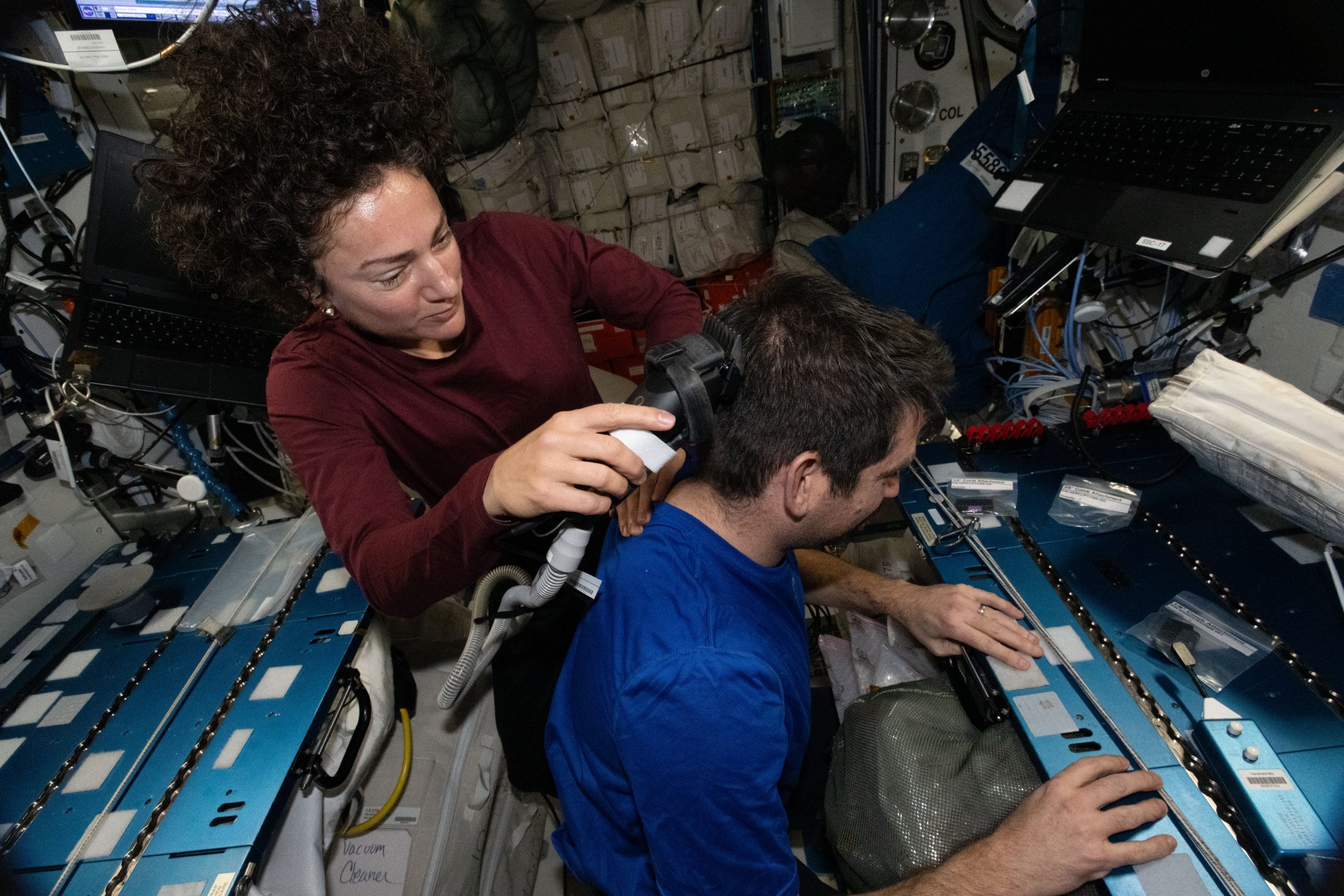
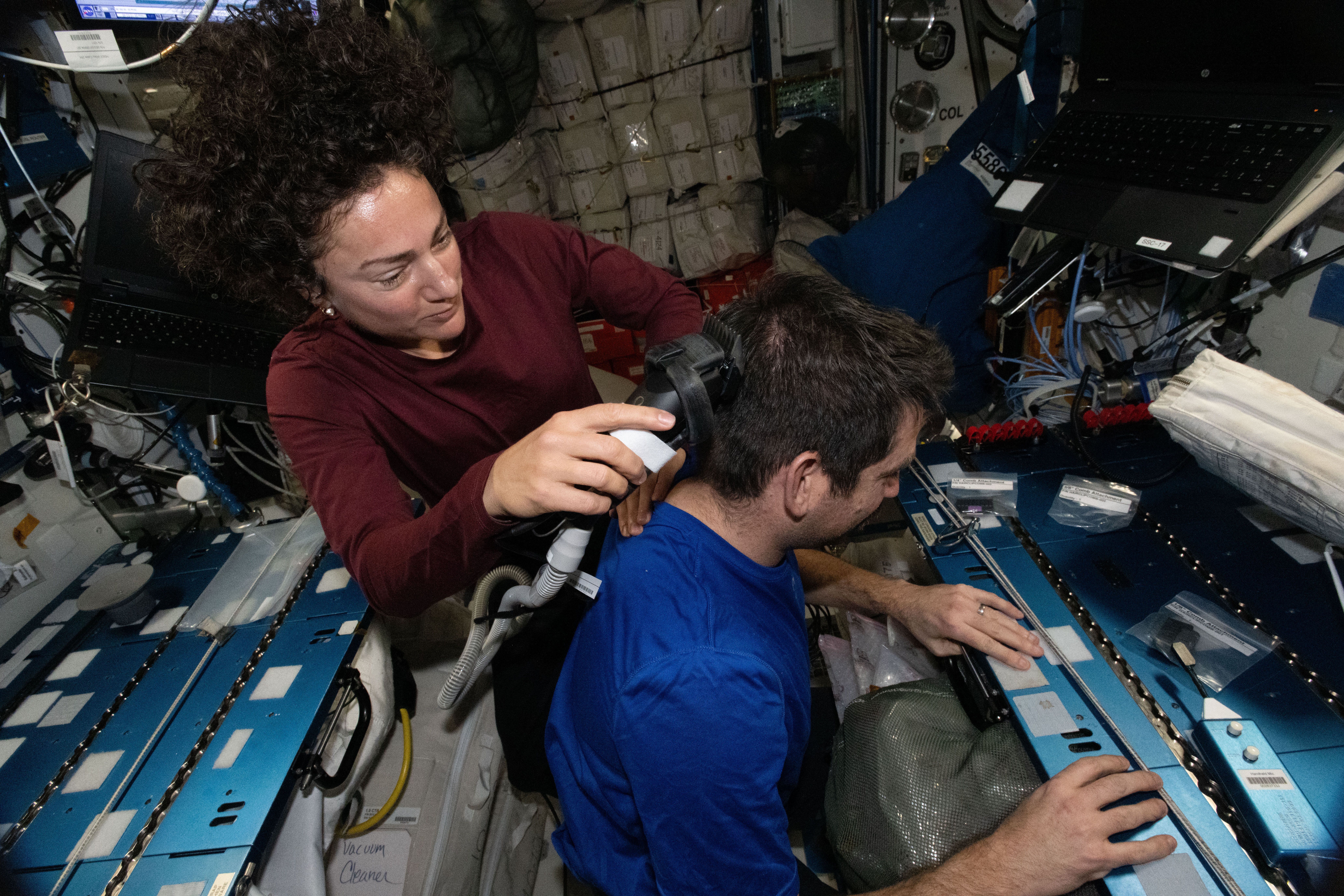
Weekends on the Space Station – Weekends on the International Space Station are for housecleaning and haircuts. NASA astronaut Jessica Meir trims the hair of fellow NASA astronaut Jack Hathaway, both Expedition 74 flight engineers, using an electric razor attached to a vacuum that collects loose clippings to keep the station’s atmosphere clean in microgravity.

Weekends on the International Space Station are for housecleaning and haircuts. NASA astronaut Jessica Meir trims the hair of fellow NASA astronaut Jack Hathaway, both Expedition 74 flight engineers, using an electric razor attached to a vacuum that collects loose clippings to keep the station’s atmosphere clean in microgravity.

Read More
NASA’s Artemis II Crew Trains in Orion

The Artemis II crew (from left to right) CSA (Canadian Space Agency) Jeremy Hansen, mission specialist; Christina Koch, mission specialist; Victor Glover, pilot; and Reid Wiseman, commander, don their Orion Crew Survival System Suits for a multi-day crew module training beginning Thursday, July 31, 2025, at NASA’s Kennedy Space Center in Florida. Behind the crew, wearing clean room apparel, are members of the Artemis II closeout crew.

Read More