contemplation

The Catholic Church has a lot to say about Labor Day — why? #Catholic As the U.S. celebrates Labor Day, Catholics have a wealth of resources in biblical interpretation, Church teaching, and social thought that address the nature of work and the place of the worker in society and in God’s creation.But are Catholics, and others, aware of these resources?One Catholic leader considering such questions is Father Sinclair Oubre, a priest of the Diocese of Beaumont, Texas. He is the spiritual moderator of the Catholic Labor Network, a Catholic association that promotes Catholic teaching about work and labor unions. It also supports labor organizing.“All work, no matter what the work is, is essential,” Oubre likes to say. In his view, if a woman in janitorial work at a major software company does not show up to clean the toilets and empty the trash, all production in the office will nosedive.Centuries of Catholic teaching about labor can be found compiled in the Compendium of the Social Doctrine of the Church, published in 2004 by the Pontifical Commission for Justice and Peace. It dedicates its entire sixth chapter to human work and labor, its place in God’s plan, its role in society, and the rights and duties of workers.“The Compendium gathers together in one place those rights that are found in Catholic social teaching, whether it’s Rerum Novarum, or Quadragesimo Anno, or Centesimus Annus, and synthesizes them,” Oubre told EWTN News, referring to the respective encyclicals of popes Leo XIII, Pius XI, and John Paul II.“It’s a beautiful reflection on human work in the world and a very mature and in-depth discussion of the place of work, the place of labor, and the communal nature of it,” Oubre said.Labor, politics, and spiritualityOubre said Catholic teaching is a challenge regardless of people’s political views.“It’s a challenge to the right, but it’s also a challenge to the left,” he said. Catholicism encourages those on the political right not simply to pray novenas and commit themselves to spiritual actions. It is a challenge not to leave other questions about work and labor to the market.For the political left, Catholic social teaching “means you have to enter into a more intimate relationship with your Church and your relationship with Jesus and not just be as a social justice person by throwing a couple of little quotes around. It requires you to enter into that deeper spiritual relationship.”Oubre stressed the importance of starting from the view of Catholic spirituality, not only social justice, because if we don’t, our approach “becomes ideological and polemic.” The spiritual approach “brings us closer to Jesus Christ.”“No matter how dirty, how uncomfortable, how awful the job is, we are participating in God’s ongoing creation. It’s important that we do that job in a way that gives glory to God,” Oubre said.God and man at workThe Compendium’s reflection on work begins with its biblical aspects: There is a human duty to “cultivate and care for the earth” and other good things created by God, it says. Work existed before the fall of Adam and Eve, and it is not a punishment or curse until the break with God transforms it into “toil and pain.” However, God’s rest on the seventh day of creation is the sign of the “fuller freedom” of the “eternal Sabbath.”The life of Jesus Christ is a mission of work, from his early life helping St. Joseph in the work of a carpenter to his ministry of preaching and healing, and most of all in his redemptive labors on the cross.The Compendium presents human labor as a way of supporting oneself and one’s loved ones but also a way to serve those in need. Work is a way to make God’s creation more beautiful, since humankind shares in God’s art and wisdom.“Human work, directed to charity as its final goal, becomes an occasion for contemplation, it becomes devout prayer, vigilantly rising towards and in anxious hope of the day that will not end,” the Compendium says.The rights of laborGod’s rest on the seventh day of creation, the Compendium says, means men and women must enjoy “sufficient rest and free time that will allow them to tend to their family, cultural, social, and religious life.”The Compendium outlines and explains the many rights of workers: the right to rest from work; the right to a working environment that is not harmful to a worker’s health or moral integrity; the right to unemployment protections; the right to a pension and insurance for old age, disability, and work-related accidents; the right to social security for working mothers; and the right to assemble and form associations; the right to just wages and remuneration; and the right to strike.Labor unions play a “fundamental role” in serving the common good and promoting social order and solidarity, though they must not abuse their role in society or become simply arms of a political party.“The recognition of workers’ rights has always been a difficult problem to resolve because this recognition takes place within complex historical and institutional processes, and still today it remains incomplete,” the Compendium says. “This makes the practice of authentic solidarity among workers more fitting and necessary than ever.”A challenge for Catholics and institutionsCatholic teaching has a lengthy paper record. But as in other areas, there is a challenge to practice it.“What I find over and over again that the Church — our Church — gives us wonderful documents of guidance… and we never go back and read them,” Oubre told EWTN News.He cited the U.S. Conference of Catholic Bishops’ 1996 pastoral letter “Economic Justice for All,” which says the Church should be a model for labor rights and treating workers justly.However, Oubre said that in his experience Catholic parishes often neglect to provide unemployment insurance to employees if the law allows them to opt out. Catholic institutions often act as “at-will” employers in which management can fire employees for any reason. They may show preferences for nonunion labor over unionized labor when planning and funding construction projects.“You’re going to undercut the guy who has actually followed the Church’s teachings in regards to work by hiring somebody who may be not offering medical insurance for his employees,” the priest lamented.For Labor Day, Oubre encouraged parishes, dioceses, and other institutions to make sure to adopt policies that put Catholic labor teaching into practice.This story was first published on Sept. 4, 2023, and has been updated.

The Catholic Church has a lot to say about Labor Day — why? #Catholic As the U.S. celebrates Labor Day, Catholics have a wealth of resources in biblical interpretation, Church teaching, and social thought that address the nature of work and the place of the worker in society and in God’s creation.But are Catholics, and others, aware of these resources?One Catholic leader considering such questions is Father Sinclair Oubre, a priest of the Diocese of Beaumont, Texas. He is the spiritual moderator of the Catholic Labor Network, a Catholic association that promotes Catholic teaching about work and labor unions. It also supports labor organizing.“All work, no matter what the work is, is essential,” Oubre likes to say. In his view, if a woman in janitorial work at a major software company does not show up to clean the toilets and empty the trash, all production in the office will nosedive.Centuries of Catholic teaching about labor can be found compiled in the Compendium of the Social Doctrine of the Church, published in 2004 by the Pontifical Commission for Justice and Peace. It dedicates its entire sixth chapter to human work and labor, its place in God’s plan, its role in society, and the rights and duties of workers.“The Compendium gathers together in one place those rights that are found in Catholic social teaching, whether it’s Rerum Novarum, or Quadragesimo Anno, or Centesimus Annus, and synthesizes them,” Oubre told EWTN News, referring to the respective encyclicals of popes Leo XIII, Pius XI, and John Paul II.“It’s a beautiful reflection on human work in the world and a very mature and in-depth discussion of the place of work, the place of labor, and the communal nature of it,” Oubre said.Labor, politics, and spiritualityOubre said Catholic teaching is a challenge regardless of people’s political views.“It’s a challenge to the right, but it’s also a challenge to the left,” he said. Catholicism encourages those on the political right not simply to pray novenas and commit themselves to spiritual actions. It is a challenge not to leave other questions about work and labor to the market.For the political left, Catholic social teaching “means you have to enter into a more intimate relationship with your Church and your relationship with Jesus and not just be as a social justice person by throwing a couple of little quotes around. It requires you to enter into that deeper spiritual relationship.”Oubre stressed the importance of starting from the view of Catholic spirituality, not only social justice, because if we don’t, our approach “becomes ideological and polemic.” The spiritual approach “brings us closer to Jesus Christ.”“No matter how dirty, how uncomfortable, how awful the job is, we are participating in God’s ongoing creation. It’s important that we do that job in a way that gives glory to God,” Oubre said.God and man at workThe Compendium’s reflection on work begins with its biblical aspects: There is a human duty to “cultivate and care for the earth” and other good things created by God, it says. Work existed before the fall of Adam and Eve, and it is not a punishment or curse until the break with God transforms it into “toil and pain.” However, God’s rest on the seventh day of creation is the sign of the “fuller freedom” of the “eternal Sabbath.”The life of Jesus Christ is a mission of work, from his early life helping St. Joseph in the work of a carpenter to his ministry of preaching and healing, and most of all in his redemptive labors on the cross.The Compendium presents human labor as a way of supporting oneself and one’s loved ones but also a way to serve those in need. Work is a way to make God’s creation more beautiful, since humankind shares in God’s art and wisdom.“Human work, directed to charity as its final goal, becomes an occasion for contemplation, it becomes devout prayer, vigilantly rising towards and in anxious hope of the day that will not end,” the Compendium says.The rights of laborGod’s rest on the seventh day of creation, the Compendium says, means men and women must enjoy “sufficient rest and free time that will allow them to tend to their family, cultural, social, and religious life.”The Compendium outlines and explains the many rights of workers: the right to rest from work; the right to a working environment that is not harmful to a worker’s health or moral integrity; the right to unemployment protections; the right to a pension and insurance for old age, disability, and work-related accidents; the right to social security for working mothers; and the right to assemble and form associations; the right to just wages and remuneration; and the right to strike.Labor unions play a “fundamental role” in serving the common good and promoting social order and solidarity, though they must not abuse their role in society or become simply arms of a political party.“The recognition of workers’ rights has always been a difficult problem to resolve because this recognition takes place within complex historical and institutional processes, and still today it remains incomplete,” the Compendium says. “This makes the practice of authentic solidarity among workers more fitting and necessary than ever.”A challenge for Catholics and institutionsCatholic teaching has a lengthy paper record. But as in other areas, there is a challenge to practice it.“What I find over and over again that the Church — our Church — gives us wonderful documents of guidance… and we never go back and read them,” Oubre told EWTN News.He cited the U.S. Conference of Catholic Bishops’ 1996 pastoral letter “Economic Justice for All,” which says the Church should be a model for labor rights and treating workers justly.However, Oubre said that in his experience Catholic parishes often neglect to provide unemployment insurance to employees if the law allows them to opt out. Catholic institutions often act as “at-will” employers in which management can fire employees for any reason. They may show preferences for nonunion labor over unionized labor when planning and funding construction projects.“You’re going to undercut the guy who has actually followed the Church’s teachings in regards to work by hiring somebody who may be not offering medical insurance for his employees,” the priest lamented.For Labor Day, Oubre encouraged parishes, dioceses, and other institutions to make sure to adopt policies that put Catholic labor teaching into practice.This story was first published on Sept. 4, 2023, and has been updated.

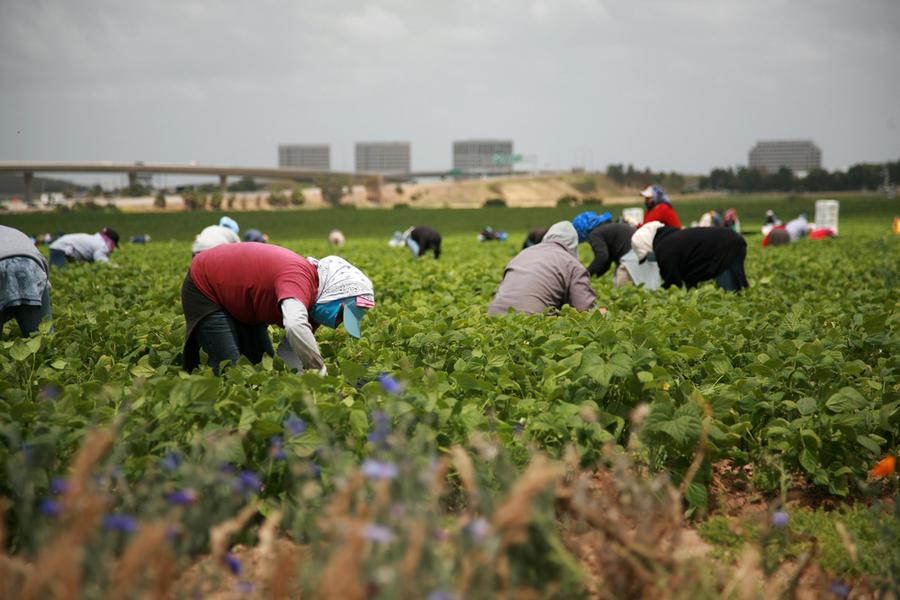
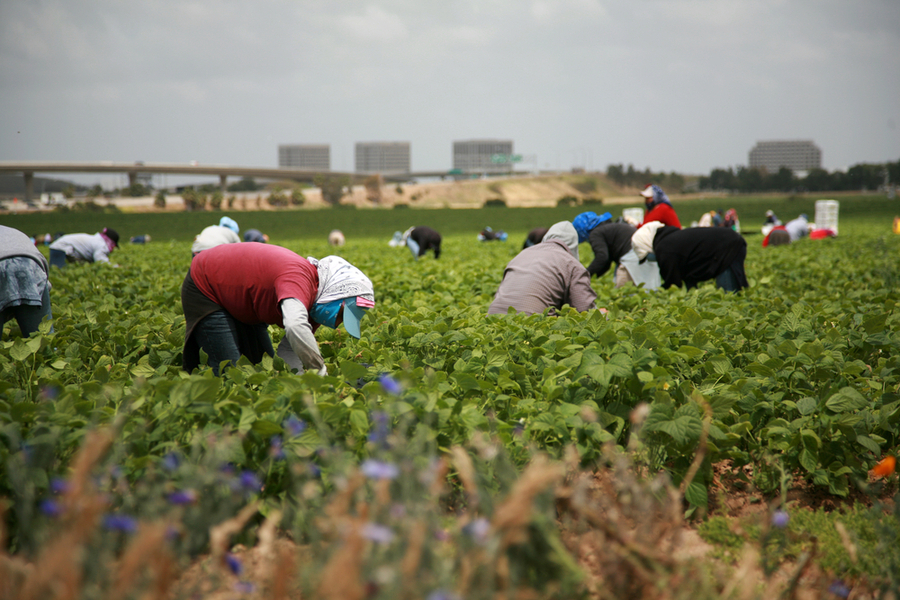
“All work, no matter what the work is, is essential,” said Father Sinclair Oubre, spiritual moderator of the Catholic Labor Network.
Read More
Pope Leo: Take time out of the daily bustle to ‘listen to the melodious voice’ of creation #Catholic Pope Leo XIV invited people to take time out from the daily bustle of their lives to listen to “the melodious voice of creation,” through which God speaks, as the World Day of Prayer for the Care of Creation is observed on Sept. 1.TweetThe Holy Father noted that this day also marks the beginning of the “Season of Creation,” a five-week period dedicated “to prayer and commitment to caring for our ‘common home’” that extends until Oct. 4, the feast of St. Francis of Assisi, coinciding with the 800th anniversary of his death.“On this day, therefore, and in the weeks ahead, let us set aside a few moments to pause from the frenzy of our daily lives in order to savor the profound harmony of which we ourselves are a part,” the pope encouraged during the Mass celebrated in the Madonnina Garden of the Borgo Laudato Si’ within the pontifical gardens of Castel Gandolfo.
 
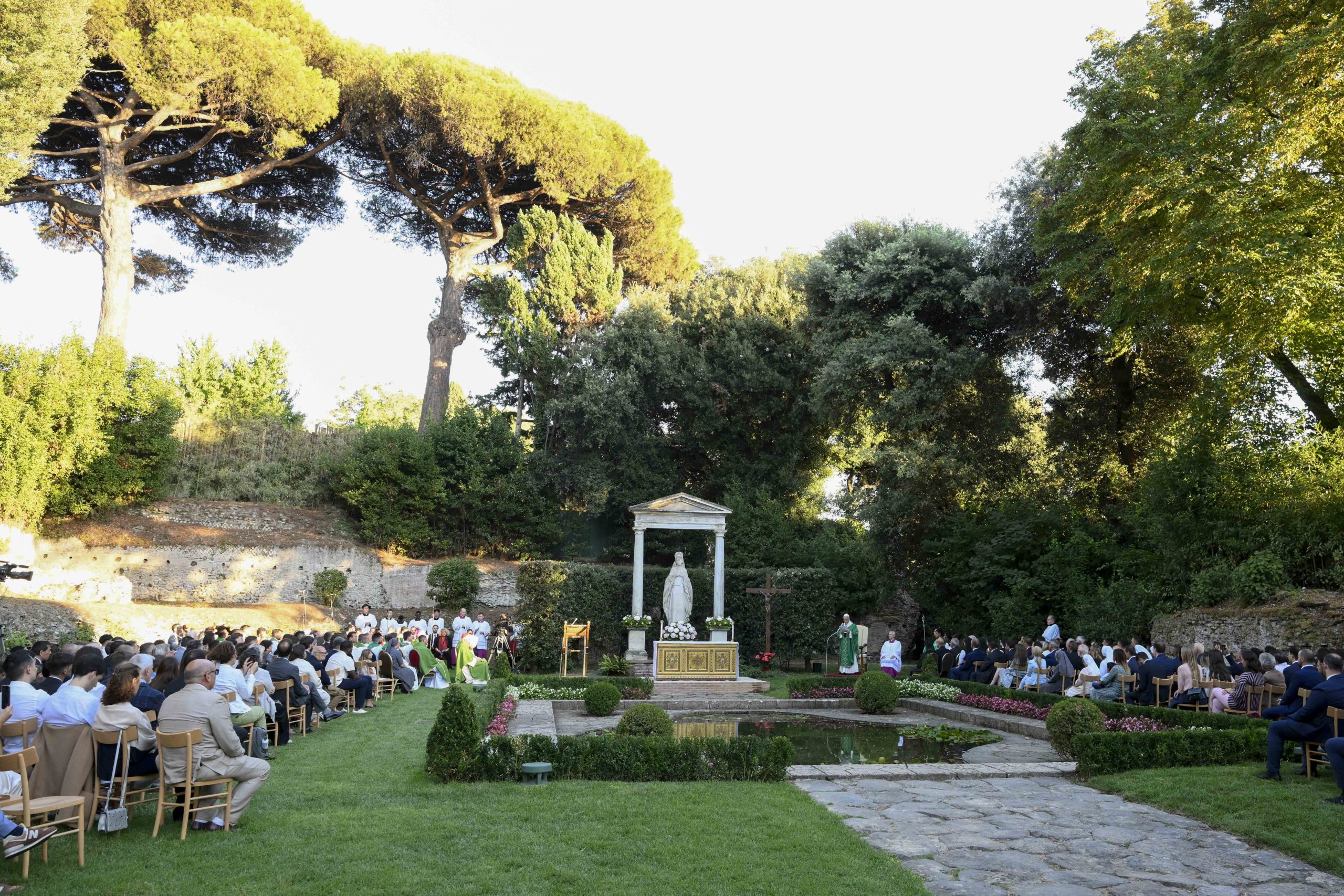
 Pope Leo XIV celebrates Mass for the World Day of Prayer for the Care of Creation on Sept. 1, 2026, in the Madonnina Garden of the Borgo Laudato Si’ within the pontifical gardens of Castel Gandolfo. | Credit: Vatican Media
 
 “Let us place in ‘silent mode’ the many noises generated by human activity, so that we may hear the melodious voice of creation, through which God, the author of all things, speaks to us,” the pontiff encouraged.Referring to his message issued for this 11th World Day of Prayer for the Care of Creation, the pope highlighted that “this contemplative exercise” is a first step toward an “authentic ecological conversion, where the effects of our encounter with Jesus Christ become evident in our relationship with the world around us.”In his homily, the pope also highlighted that the readings for this Mass — Psalm 18, the passage from the Book of Wisdom (Wis 13:1–9), and the Gospel of Matthew (Mt 6:24–34) — recall the grandeur of creation and the “Creator of so many wonders,” such as air and fire.
 
 Pope Leo XIV prayers during the Mass for the World Day of Prayer for the Care of Creation on Sept. 1, 2026, in the Madonnina Garden of the Borgo Laudato Si’ within the pontifical gardens of Castel Gandolfo. | Credit: Vatican Media
 
 He noted that they allow us to renew the idea that “if the Lord does not fail to bestow such splendid beauty upon plants and animals and provide for all their needs, how much more attentive will he be to the needs of his beloved sons and daughters!”The Holy Father also noted that “from contemplating creation and encountering its Creator, there arises an awareness of our particular place within God’s wondrous plan, and of the responsibility that we bear both personally and collectively for preserving the original harmony. Thus, as we become conscious of our shortcomings and failures, we can renew our commitment to restoring the relationships among all creatures according to the will of their Creator.”“It is not yet too late, and the Season of Creation calls us to a profound conversion,” he emphasized.
 
 Pope Leo XIV prays at the Mass for the World Day of Prayer for the Care of Creation on Sept. 1, 2026, in the Madonnina Garden of the Borgo Laudato Si’ within the pontifical gardens of Castel Gandolfo. | Credit: Vatican Media
 
 After explaining that Pope Francis drew inspiration from St. Francis of Assisi in writing his 2015 encyclical Laudato Si’, which addresses the care of our common home, Leo XIV quoted the “Poverello of Assisi’s” praises to God for the moon, stars, wind, earth, fire, and water, among other elements.“With St. Francis, let us renew our commitment to living and promoting that universal fraternity which is inseparably bound to the task of caring for creation,” the pope encouraged.This story was first published by ACI Prensa, the Spanish-language sister service of EWTN News. It has been translated and adapted by EWTN News English.

Pope Leo: Take time out of the daily bustle to ‘listen to the melodious voice’ of creation #Catholic Pope Leo XIV invited people to take time out from the daily bustle of their lives to listen to “the melodious voice of creation,” through which God speaks, as the World Day of Prayer for the Care of Creation is observed on Sept. 1.TweetThe Holy Father noted that this day also marks the beginning of the “Season of Creation,” a five-week period dedicated “to prayer and commitment to caring for our ‘common home’” that extends until Oct. 4, the feast of St. Francis of Assisi, coinciding with the 800th anniversary of his death.“On this day, therefore, and in the weeks ahead, let us set aside a few moments to pause from the frenzy of our daily lives in order to savor the profound harmony of which we ourselves are a part,” the pope encouraged during the Mass celebrated in the Madonnina Garden of the Borgo Laudato Si’ within the pontifical gardens of Castel Gandolfo. Pope Leo XIV celebrates Mass for the World Day of Prayer for the Care of Creation on Sept. 1, 2026, in the Madonnina Garden of the Borgo Laudato Si’ within the pontifical gardens of Castel Gandolfo. | Credit: Vatican Media “Let us place in ‘silent mode’ the many noises generated by human activity, so that we may hear the melodious voice of creation, through which God, the author of all things, speaks to us,” the pontiff encouraged.Referring to his message issued for this 11th World Day of Prayer for the Care of Creation, the pope highlighted that “this contemplative exercise” is a first step toward an “authentic ecological conversion, where the effects of our encounter with Jesus Christ become evident in our relationship with the world around us.”In his homily, the pope also highlighted that the readings for this Mass — Psalm 18, the passage from the Book of Wisdom (Wis 13:1–9), and the Gospel of Matthew (Mt 6:24–34) — recall the grandeur of creation and the “Creator of so many wonders,” such as air and fire. Pope Leo XIV prayers during the Mass for the World Day of Prayer for the Care of Creation on Sept. 1, 2026, in the Madonnina Garden of the Borgo Laudato Si’ within the pontifical gardens of Castel Gandolfo. | Credit: Vatican Media He noted that they allow us to renew the idea that “if the Lord does not fail to bestow such splendid beauty upon plants and animals and provide for all their needs, how much more attentive will he be to the needs of his beloved sons and daughters!”The Holy Father also noted that “from contemplating creation and encountering its Creator, there arises an awareness of our particular place within God’s wondrous plan, and of the responsibility that we bear both personally and collectively for preserving the original harmony. Thus, as we become conscious of our shortcomings and failures, we can renew our commitment to restoring the relationships among all creatures according to the will of their Creator.”“It is not yet too late, and the Season of Creation calls us to a profound conversion,” he emphasized. Pope Leo XIV prays at the Mass for the World Day of Prayer for the Care of Creation on Sept. 1, 2026, in the Madonnina Garden of the Borgo Laudato Si’ within the pontifical gardens of Castel Gandolfo. | Credit: Vatican Media After explaining that Pope Francis drew inspiration from St. Francis of Assisi in writing his 2015 encyclical Laudato Si’, which addresses the care of our common home, Leo XIV quoted the “Poverello of Assisi’s” praises to God for the moon, stars, wind, earth, fire, and water, among other elements.“With St. Francis, let us renew our commitment to living and promoting that universal fraternity which is inseparably bound to the task of caring for creation,” the pope encouraged.This story was first published by ACI Prensa, the Spanish-language sister service of EWTN News. It has been translated and adapted by EWTN News English.

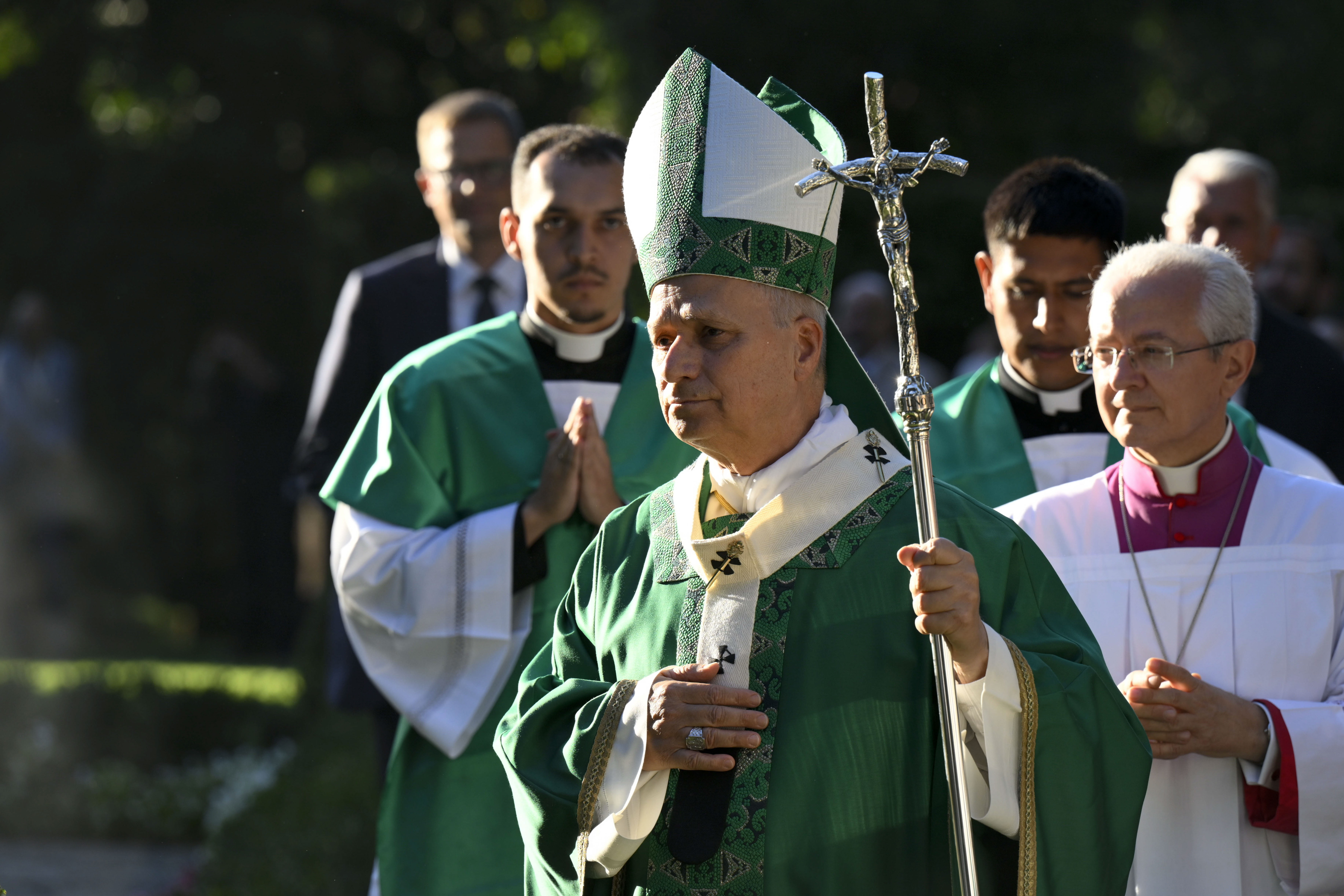
The Holy Father encouraged silent contemplation of the wonders and harmony of the created world, which can lead to authentic ecological conversion and awareness of our responsibility for creation.
Read More
7 things to know about St. Clare of Assisi, the patron saint of television #Catholic On Aug. 11, the Catholic Church celebrates St. Clare of Assisi, one of the most beloved saints of the Middle Ages. Best known as the founder of the Poor Clares and a close friend of St. Francis of Assisi, Clareʼs life was marked by radical trust in God, profound Eucharistic devotion, and remarkable courage.Here are seven things to know about the woman whose witness continues to inspire Catholics more than 800 years later:1. She came from a wealthy noble family — but left everything behind.Clare was born in Assisi, Italy, on July 16, 1194, into one of the cityʼs most prominent noble families. As a young woman, she enjoyed a privileged upbringing and was expected to marry into another wealthy household.Instead, after hearing Francis — who is now known as St. Francis of Assisi — preach about living the Gospel with radical simplicity, Clare felt called to dedicate her life entirely to Christ. At age 18, she secretly left her family home on Palm Sunday night in 1212 to begin a new life of poverty.Her family attempted to bring her home by force, but Clare firmly refused and cut off her hair as a sign that she belonged to God alone.2. She founded the Poor Clares.With Francis' guidance, Clare established a community of women at the Church of San Damiano outside Assisi that would become known as the Poor Clares. She eventually became abbess and led the monastery for more than 40 years.Despite their similarities, Franciscans and Poor Clares have distinctive differences.The Franciscans, founded by St. Francis of Assisi in 1209, include men who are called to live the Gospel through poverty, fraternity, and service, often ministering in parishes, schools, missions, and charitable works around the world. The Poor Clares, founded by St. Clare of Assisi in 1212 with the guidance of St. Francis, are a contemplative order of women who live a cloistered life centered on prayer, the Eucharist, and community life.While both embrace the Franciscan ideals of simplicity and poverty, the Franciscans are primarily active in apostolic ministry, whereas the Poor Clares dedicate their lives to supporting the Church through prayer and contemplation.3. She was the first woman to write a rule for a religious order that received papal approval.One of St. Clareʼs most significant contributions to the Church was authoring the Rule for the Poor Clares. While many womenʼs religious communities of the time followed rules adapted from existing monastic traditions, Clare aimed to preserve the distinctive charism she had embraced alongside St. Francis.For decades, Clare resisted pressure from Church authorities to modify her communityʼs way of life by accepting property or financial endowments. Instead, she carefully composed a rule that reflected the Franciscan ideal while providing practical guidance for the sisters' communal life, prayer, governance, and observance of enclosure.On Aug. 9, 1253, just two days before Clareʼs death, Pope Innocent IV formally approved her rule, making her the first woman in the history of the Church to write a rule for a religious order that received papal approval. The rule remains the foundation of Poor Clare communities throughout the world and stands as a lasting testament to Clareʼs spiritual leadership and unwavering commitment to the Franciscan vision.4. She had an extraordinary devotion to the Eucharist.Perhaps no aspect of Clareʼs spirituality stands out more than her love for Jesus in the Blessed Sacrament. She spent countless hours in prayer before the Eucharist and encouraged her sisters to center their lives on Christʼs real presence.This Eucharistic devotion became especially evident during one of the most famous events of her life.One of the best-known stories about Clare occurred when invading Saracen mercenaries threatened the convent of San Damiano. Although seriously ill, Clare asked that the Blessed Sacrament be brought to her. Holding the monstrance before the attackers, she prayed for Godʼs protection, and the invaders fled.5. She is the patron saint of television.Near the end of Clare’s life, illness prevented her from attending Mass. According to tradition, she was miraculously able to see and hear the Christmas midnight Mass in 1252 being celebrated on the wall of her room in the convent. Because of this extraordinary supernatural event, Pope Pius XII declared her the patron saint of television in 1958.6. She and St. Francis shared one of the Churchʼs most remarkable friendships.The friendship between St. Clare and St. Francis of Assisi is one of the most enduring examples of holy companionship in Church history. Although Francis played a pivotal role in Clareʼs discernment and inspired her embrace of a life of poverty, their relationship was marked by mutual respect and a shared desire to follow Christ above all else. Francis entrusted Clare with establishing and leading the community at San Damiano, while Clare remained a steadfast guardian of the Franciscan charism, especially after Francis' death in 1226.Despite living separate vocations, the two maintained a deep spiritual bond rooted in prayer, humility, and service to the Gospel. More than eight centuries later, their example continues to inspire men and women to support one another in faithfully responding to Godʼs call.7. Her influence continues more than 800 years later.On Aug. 11, 1253, Clare died at the age of 59. She was canonized by Pope Alexander IV on Sept. 26, 1255.More than 800 years after she left her family home to follow Christ, St. Clareʼs witness continues to resonate with Catholics across the globe. Her unwavering trust in Godʼs providence, profound love for the Eucharist, and commitment to a life of simplicity remain as relevant today as they were in the 13th century.Through the monasteries of the Poor Clares, her spirit of contemplative prayer and poverty lives on, with thousands of religious sisters dedicating their lives to praying for the needs of the Church and the world.Today, there are approximately 20,000 Poor Clare nuns worldwide. They live in more than 500 monasteries in over 70 countries.

7 things to know about St. Clare of Assisi, the patron saint of television #Catholic On Aug. 11, the Catholic Church celebrates St. Clare of Assisi, one of the most beloved saints of the Middle Ages. Best known as the founder of the Poor Clares and a close friend of St. Francis of Assisi, Clareʼs life was marked by radical trust in God, profound Eucharistic devotion, and remarkable courage.Here are seven things to know about the woman whose witness continues to inspire Catholics more than 800 years later:1. She came from a wealthy noble family — but left everything behind.Clare was born in Assisi, Italy, on July 16, 1194, into one of the cityʼs most prominent noble families. As a young woman, she enjoyed a privileged upbringing and was expected to marry into another wealthy household.Instead, after hearing Francis — who is now known as St. Francis of Assisi — preach about living the Gospel with radical simplicity, Clare felt called to dedicate her life entirely to Christ. At age 18, she secretly left her family home on Palm Sunday night in 1212 to begin a new life of poverty.Her family attempted to bring her home by force, but Clare firmly refused and cut off her hair as a sign that she belonged to God alone.2. She founded the Poor Clares.With Francis' guidance, Clare established a community of women at the Church of San Damiano outside Assisi that would become known as the Poor Clares. She eventually became abbess and led the monastery for more than 40 years.Despite their similarities, Franciscans and Poor Clares have distinctive differences.The Franciscans, founded by St. Francis of Assisi in 1209, include men who are called to live the Gospel through poverty, fraternity, and service, often ministering in parishes, schools, missions, and charitable works around the world. The Poor Clares, founded by St. Clare of Assisi in 1212 with the guidance of St. Francis, are a contemplative order of women who live a cloistered life centered on prayer, the Eucharist, and community life.While both embrace the Franciscan ideals of simplicity and poverty, the Franciscans are primarily active in apostolic ministry, whereas the Poor Clares dedicate their lives to supporting the Church through prayer and contemplation.3. She was the first woman to write a rule for a religious order that received papal approval.One of St. Clareʼs most significant contributions to the Church was authoring the Rule for the Poor Clares. While many womenʼs religious communities of the time followed rules adapted from existing monastic traditions, Clare aimed to preserve the distinctive charism she had embraced alongside St. Francis.For decades, Clare resisted pressure from Church authorities to modify her communityʼs way of life by accepting property or financial endowments. Instead, she carefully composed a rule that reflected the Franciscan ideal while providing practical guidance for the sisters' communal life, prayer, governance, and observance of enclosure.On Aug. 9, 1253, just two days before Clareʼs death, Pope Innocent IV formally approved her rule, making her the first woman in the history of the Church to write a rule for a religious order that received papal approval. The rule remains the foundation of Poor Clare communities throughout the world and stands as a lasting testament to Clareʼs spiritual leadership and unwavering commitment to the Franciscan vision.4. She had an extraordinary devotion to the Eucharist.Perhaps no aspect of Clareʼs spirituality stands out more than her love for Jesus in the Blessed Sacrament. She spent countless hours in prayer before the Eucharist and encouraged her sisters to center their lives on Christʼs real presence.This Eucharistic devotion became especially evident during one of the most famous events of her life.One of the best-known stories about Clare occurred when invading Saracen mercenaries threatened the convent of San Damiano. Although seriously ill, Clare asked that the Blessed Sacrament be brought to her. Holding the monstrance before the attackers, she prayed for Godʼs protection, and the invaders fled.5. She is the patron saint of television.Near the end of Clare’s life, illness prevented her from attending Mass. According to tradition, she was miraculously able to see and hear the Christmas midnight Mass in 1252 being celebrated on the wall of her room in the convent. Because of this extraordinary supernatural event, Pope Pius XII declared her the patron saint of television in 1958.6. She and St. Francis shared one of the Churchʼs most remarkable friendships.The friendship between St. Clare and St. Francis of Assisi is one of the most enduring examples of holy companionship in Church history. Although Francis played a pivotal role in Clareʼs discernment and inspired her embrace of a life of poverty, their relationship was marked by mutual respect and a shared desire to follow Christ above all else. Francis entrusted Clare with establishing and leading the community at San Damiano, while Clare remained a steadfast guardian of the Franciscan charism, especially after Francis' death in 1226.Despite living separate vocations, the two maintained a deep spiritual bond rooted in prayer, humility, and service to the Gospel. More than eight centuries later, their example continues to inspire men and women to support one another in faithfully responding to Godʼs call.7. Her influence continues more than 800 years later.On Aug. 11, 1253, Clare died at the age of 59. She was canonized by Pope Alexander IV on Sept. 26, 1255.More than 800 years after she left her family home to follow Christ, St. Clareʼs witness continues to resonate with Catholics across the globe. Her unwavering trust in Godʼs providence, profound love for the Eucharist, and commitment to a life of simplicity remain as relevant today as they were in the 13th century.Through the monasteries of the Poor Clares, her spirit of contemplative prayer and poverty lives on, with thousands of religious sisters dedicating their lives to praying for the needs of the Church and the world.Today, there are approximately 20,000 Poor Clare nuns worldwide. They live in more than 500 monasteries in over 70 countries.

The Catholic Church celebrates the feast of St. Clare of Assisi on Aug. 11.

Read More