dates

Pakistani Christians join Muslims for Ramadan meals amid Iran war fallout #Catholic LAHORE, Pakistan — White bedsheets for Muslim worshippers were laid on the grassy lawn outside the Dominican Peace Center in Punjab an hour before the annual interfaith iftar — the fast-breaking meal during Ramadan.The aroma of crispy pakoras (fritters), dried dates, rose-flavored Rooh Afza, and dahi bhallay (lentil dumplings in yogurt) drew guests to the dining tables after they finished reciting their iftar prayers in Lahore, the provincial capital.Dominican Father James Channan, director of the center, has hosted such interfaith gatherings for 25 years in a country where religious tensions have periodically turned violent.
 
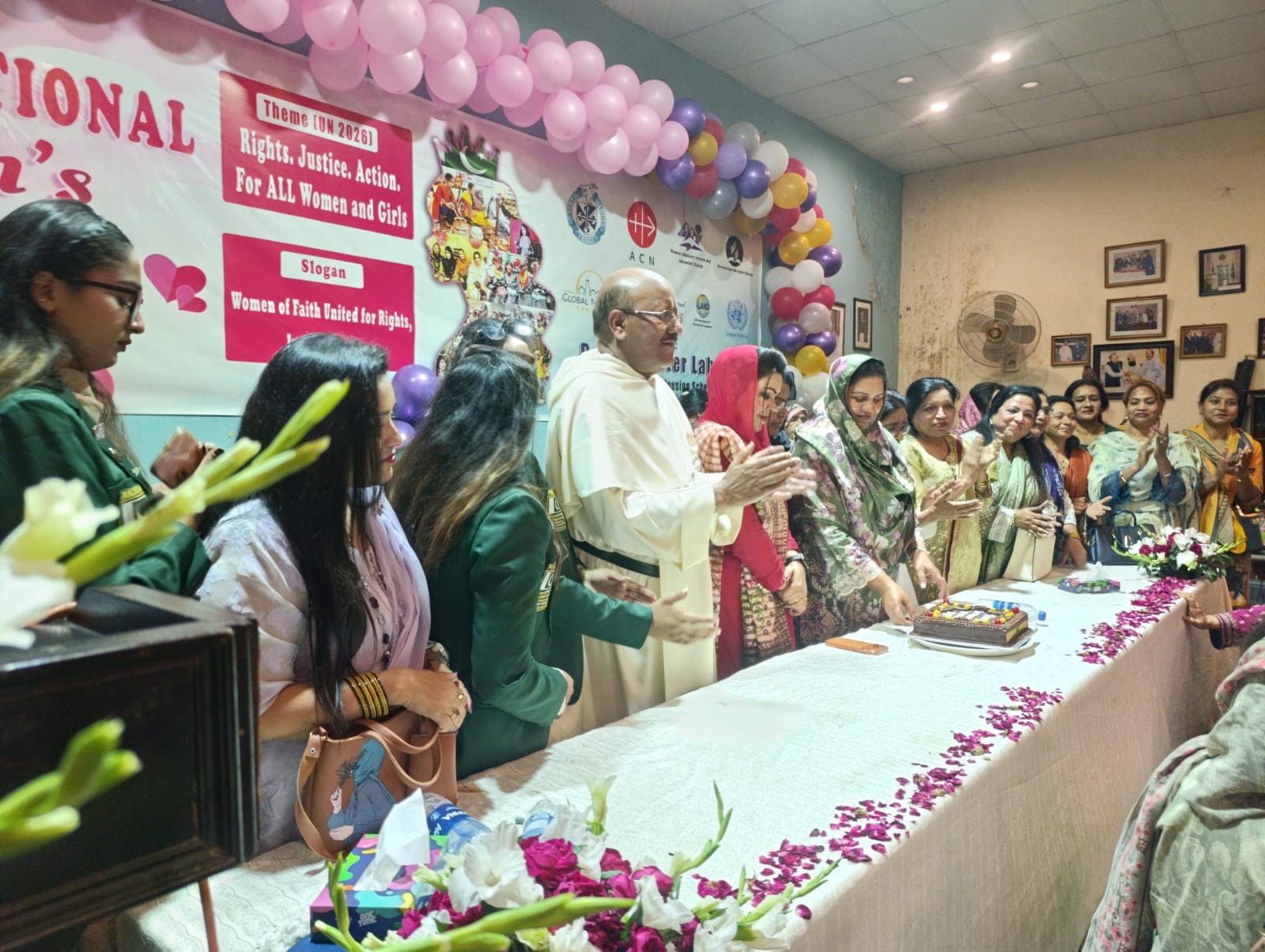
 Dominican Father James Channan speaks at a combined International Women’s Day and interfaith iftar program at the Dominican Peace Center in Lahore, Pakistan, on March 8, 2026. | Credit: Kamran Chaudhry
 
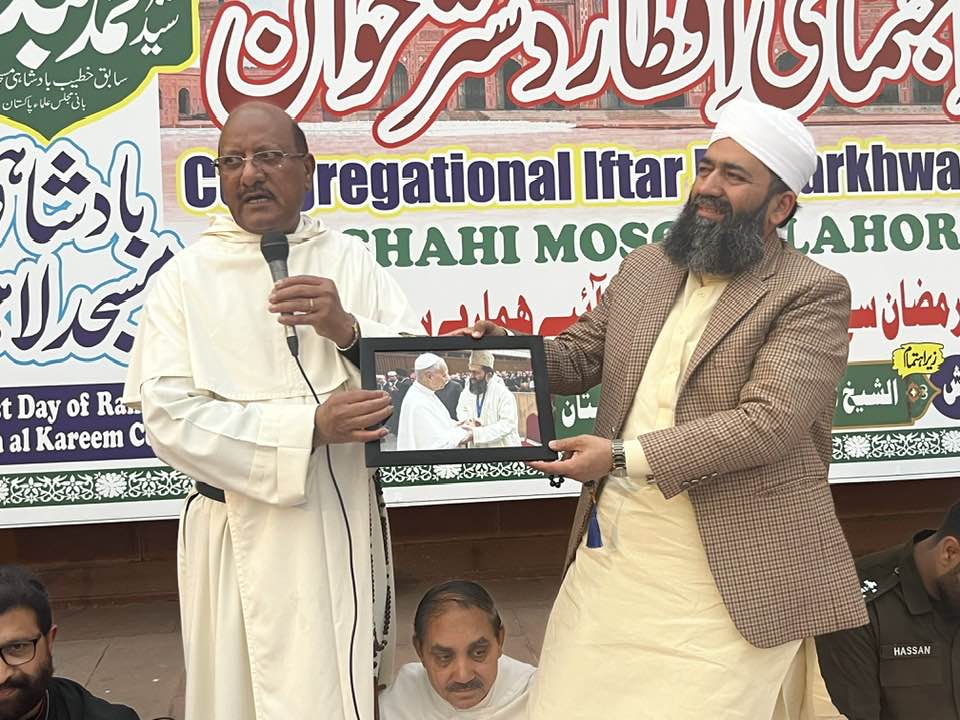
 “Table friendships are very important in our context. People attending such forums highlight them on social media, reaching millions,” he told EWTN News at the sidelines of the program, timed with International Women’s Day on March 8.“The combined meals and prayer services have helped curb trends of church attacks that followed U.S. wars in Muslim countries.”Pakistani Christians have faced multiple terrorist attacks since October 2001, after the United States — seen by many Pakistani Muslims as a Christian nation — launched its military campaign in Afghanistan.“It’s a bitter past. Churches and Christian settlements were considered soft targets. The ongoing conflicts are not crusades; they are wars of interest,” Channan said.Interfaith meals continue despite unrestInterfaith gatherings continued this year even as protests against U.S. and Israeli strikes on Iran left 26 dead in Pakistan.Church leaders joined clerics in prayers for peace and shared meals at mosques, church premises, and hotels across six dioceses and one apostolic vicariate, as Middle East air travel disruption and rising fuel prices added regional tension.Many Pakistanis view the United States and Western Europe as Christian nations, and some militant groups target local Christians as linked to these “Christian countries.”Communal tensions have also erupted locally. In May 2024, a mob attacked 74-year-old Christian Nazir Masih over alleged blasphemy in Sargodha. He later died of his injuries. In August 2023, violence in Jaranwala destroyed 26 churches and 80 Christian homes following allegations of Quran desecration.In a Feb. 17 message, Archbishop Joseph Arshad of Rawalpindi-Islamabad invited Christians and Muslims to offer special prayers for peace as Lent and Ramadan coincided this year. He encouraged people of both faiths “to visit one another, exchange greetings with respect, and unite in serving vulnerable segments of society.”Joint events across PakistanIn Multan, over 82 participants attended a Feb. 28 iftar jointly organized by the Catholic Commission for Inter-Religious Dialogue and Ecumenism; Saiban-e-Pakistan, a state peace initiative; and the Centre of Excellence on Countering Violent Extremism.A day earlier in Lahore, Channan and four Catholic priests attended the fast-breaking event at the Badshahi Mosque, the country’s second-largest mosque. He presented a framed photo of Abdul Khabeer Azad, the mosque’s “khateeb” (prayer leader), who met Pope Leo XIV in October 2025 at the “Christian-Muslim Dialogue and Daring Peace” conference in Rome organized by the Community of Sant’Egidio.
 
 Guests share the interfaith iftar meal at the Dominican Peace Center in Lahore on March 8, 2026. | Credit: Kamran Chaudhry
 
 Among 120 guests at the Dominican iftar was Muslim speaker Shehzad Qaiser. The event, held in collaboration with groups including the Seventh-day Adventist Church, highlighted ongoing social challenges.The head of external affairs at Sundas Foundation, which supports patients with blood disorders, agreed that Christians face discrimination in some offices and some Muslims refuse the food prepared by Christians.“It is very important to share our common practices, joys, and sorrows. Religious leaders have the duty to raise awareness. Sadly some mistake local Christians as ‘kafir’ (infidels),” Qaiser said.“During Ramadan, people distribute free meals to everyone without asking their religion. Blood donors don’t discriminate either. This is the real spirit of Ramadan and Lent.”

Pakistani Christians join Muslims for Ramadan meals amid Iran war fallout #Catholic LAHORE, Pakistan — White bedsheets for Muslim worshippers were laid on the grassy lawn outside the Dominican Peace Center in Punjab an hour before the annual interfaith iftar — the fast-breaking meal during Ramadan.The aroma of crispy pakoras (fritters), dried dates, rose-flavored Rooh Afza, and dahi bhallay (lentil dumplings in yogurt) drew guests to the dining tables after they finished reciting their iftar prayers in Lahore, the provincial capital.Dominican Father James Channan, director of the center, has hosted such interfaith gatherings for 25 years in a country where religious tensions have periodically turned violent. Dominican Father James Channan speaks at a combined International Women’s Day and interfaith iftar program at the Dominican Peace Center in Lahore, Pakistan, on March 8, 2026. | Credit: Kamran Chaudhry “Table friendships are very important in our context. People attending such forums highlight them on social media, reaching millions,” he told EWTN News at the sidelines of the program, timed with International Women’s Day on March 8.“The combined meals and prayer services have helped curb trends of church attacks that followed U.S. wars in Muslim countries.”Pakistani Christians have faced multiple terrorist attacks since October 2001, after the United States — seen by many Pakistani Muslims as a Christian nation — launched its military campaign in Afghanistan.“It’s a bitter past. Churches and Christian settlements were considered soft targets. The ongoing conflicts are not crusades; they are wars of interest,” Channan said.Interfaith meals continue despite unrestInterfaith gatherings continued this year even as protests against U.S. and Israeli strikes on Iran left 26 dead in Pakistan.Church leaders joined clerics in prayers for peace and shared meals at mosques, church premises, and hotels across six dioceses and one apostolic vicariate, as Middle East air travel disruption and rising fuel prices added regional tension.Many Pakistanis view the United States and Western Europe as Christian nations, and some militant groups target local Christians as linked to these “Christian countries.”Communal tensions have also erupted locally. In May 2024, a mob attacked 74-year-old Christian Nazir Masih over alleged blasphemy in Sargodha. He later died of his injuries. In August 2023, violence in Jaranwala destroyed 26 churches and 80 Christian homes following allegations of Quran desecration.In a Feb. 17 message, Archbishop Joseph Arshad of Rawalpindi-Islamabad invited Christians and Muslims to offer special prayers for peace as Lent and Ramadan coincided this year. He encouraged people of both faiths “to visit one another, exchange greetings with respect, and unite in serving vulnerable segments of society.”Joint events across PakistanIn Multan, over 82 participants attended a Feb. 28 iftar jointly organized by the Catholic Commission for Inter-Religious Dialogue and Ecumenism; Saiban-e-Pakistan, a state peace initiative; and the Centre of Excellence on Countering Violent Extremism.A day earlier in Lahore, Channan and four Catholic priests attended the fast-breaking event at the Badshahi Mosque, the country’s second-largest mosque. He presented a framed photo of Abdul Khabeer Azad, the mosque’s “khateeb” (prayer leader), who met Pope Leo XIV in October 2025 at the “Christian-Muslim Dialogue and Daring Peace” conference in Rome organized by the Community of Sant’Egidio. Guests share the interfaith iftar meal at the Dominican Peace Center in Lahore on March 8, 2026. | Credit: Kamran Chaudhry Among 120 guests at the Dominican iftar was Muslim speaker Shehzad Qaiser. The event, held in collaboration with groups including the Seventh-day Adventist Church, highlighted ongoing social challenges.The head of external affairs at Sundas Foundation, which supports patients with blood disorders, agreed that Christians face discrimination in some offices and some Muslims refuse the food prepared by Christians.“It is very important to share our common practices, joys, and sorrows. Religious leaders have the duty to raise awareness. Sadly some mistake local Christians as ‘kafir’ (infidels),” Qaiser said.“During Ramadan, people distribute free meals to everyone without asking their religion. Blood donors don’t discriminate either. This is the real spirit of Ramadan and Lent.”

Church leaders and Muslim clerics shared Ramadan fast-breaking meals across six Pakistani dioceses this year as the overlap of Lent and Ramadan inspired joint prayers for peace.
Read More
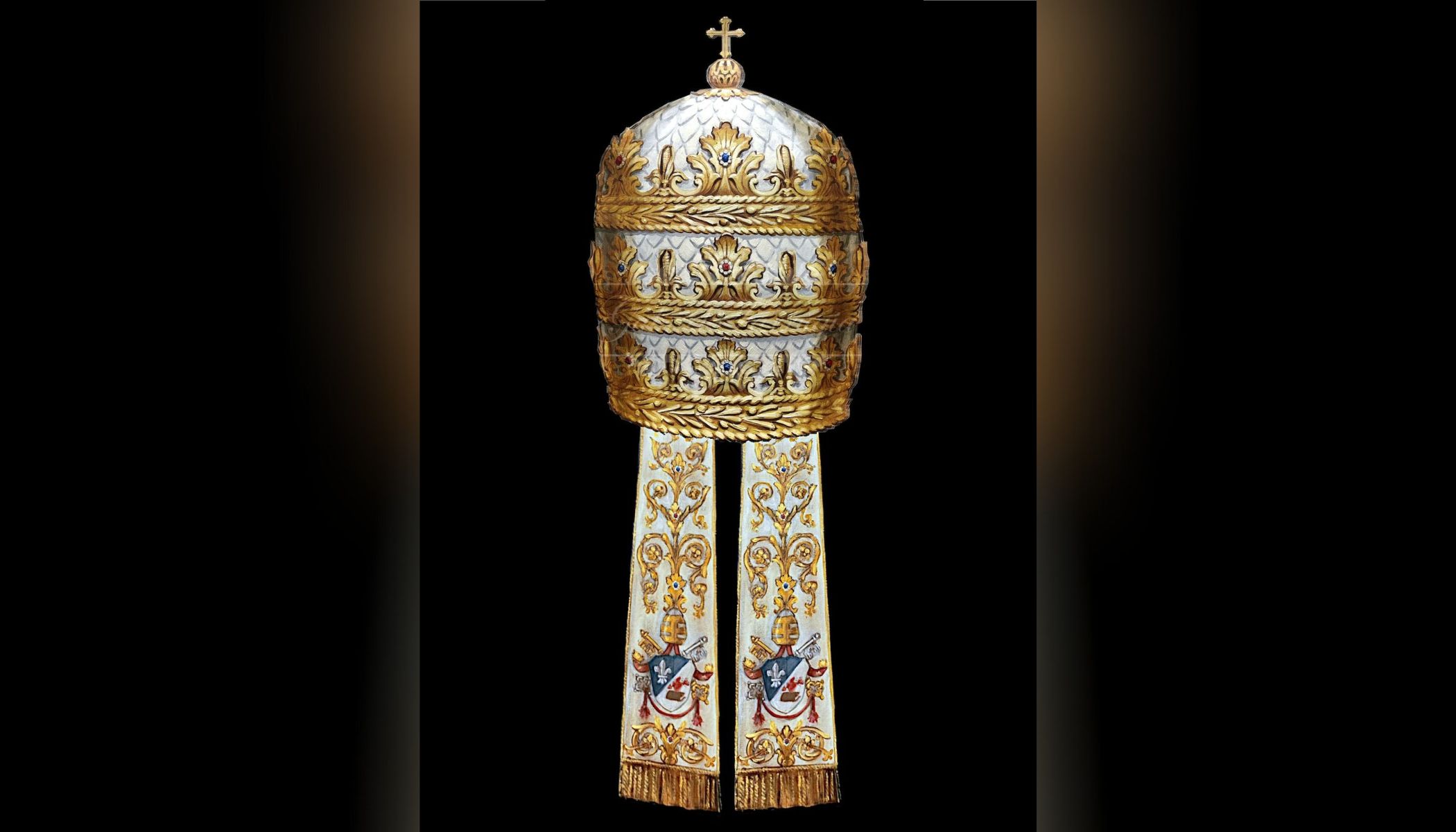
American Catholics launch crowdfunding effort to gift Pope Leo XIV papal tiara #Catholic A newly established nonprofit launched a crowdfunding effort to construct a papal tiara that will contain Catholic and American symbolism, with the plan to offer it to Pope Leo XIV as a gift from American Catholics for the first pontiff from the United States.“Historically, the majority of papal tiaras are gifts, usually from the home diocese of the pope or from religious [communities] they may be affiliated with,” Isaac Smith, a convert to Catholicism and the founder of Amici Vaticani, told EWTN News.Smith said he was motivated to launch the project to provide Leo with a papal tiara based on the desire for “us, as Americans, to continue that tradition.” He said the first American pope is “such a historical milestone” for Catholicism in the United States.The history of papal crowns dates back to at least the eighth century with the word “tiara” first used in the 12th century. A second crown was added to the tiara in the 13th century to symbolize that the pope holds authority in both spiritual and temporal matters.A three-crown tiara first appeared in the 14th century. One interpretation of the three crowns is that they represent the threefold office of Christ: priest, prophet, and king. Another suggests it represents the militant, the suffering, and the triumphant Church.The proposed tiara commissioned by Amici Vaticani maintains the 14th-century tradition of three crowns. The tiara will be constructed with sterling silver and the crowns will be gold-plated.Because the gift is meant to honor Leo’s American heritage, the tiara will have red, white, and blue stones, which represent the colors of the American flag. It will incorporate other American symbols: oak leaves, representing the national tree; and corn stalks, representing the national crop.Some of the symbols included in the tiara have dual meanings relevant to both the papacy and the United States. It will incorporate roses, which is a symbol of the Virgin Mary and the national flower; and it will incorporate olives, which is a symbol of the pontiff’s commitment to peace and appears on the Great Seal of the United States.A buttony cross will sit atop the crown as a symbol of American Catholicism. The cross is used in the coat of arms for the Archdiocese of Baltimore, the country’s first Catholic diocese, and is featured on the flag of Maryland, which is the location of the first English Catholic colonies.The design, Smith explained, is meant to be “elegant and traditional” to honor the office of the papacy but is also meant to “incorporate distinctively American elements” to honor the pope’s American heritage.
 
 Maltese jeweler Gabriel Farrugia works on a project. | Credit: Photo courtesy of Gabriel Farrugia
 
 Smith said he hopes to fund the project through small donations from the American Catholic faithful so the pontiff can see “this was a group effort” and a gift from Catholics in his home country. This project, he said, provides “a tangible way for people to connect with the successor of Peter.”He also said he plans to compile the names of every person who donates more than $20 into a book, which would be presented to the Holy Father along with the crown and would say on the cover: “Holy Father, please pray for these people.”Smith said his intention is that the tiara can “hopefully [be] put on display in a place of honor” after it is constructed “and presented to the pope when he visits.” When Leo met Vice President JD Vance, the pontiff said he would travel to the United States at some point, although the Holy Father does not have any specific publicly announced plans to visit as of yet.The tiara will be constructed by a Maltese jeweler and artist named Gabriel Farrugia, who has a background in creating religious art, including an Our Lady of Fátima crown, which was used in a coronation ceremony in Guardamangia, Malta. He has also been commissioned by Catholic churches for artistic projects.“Making sacred art is a type of thanksgiving to the One who created us,” Farrugia told EWTN News.“For the God that created us and gave us life, I think we should give him something,” he said, adding that sacred art provides “something that will be left there for ages” and something for “people to admire, to enjoy, and to reflect [upon].”The construction of the crown has not yet begun, as Amici Vaticani is still in the early stages of the crowdfunding effort.Amici Vaticani was launched in 2025 for the purpose of constructing the tiara. According to its website, the nonprofit also seeks to build up “the awakening of a Catholic spirit in the United States.”“Our country, once defined by its Protestant heritage, is now witnessing a boon of conversions,” the website notes. “Men and women rediscovering the depth, beauty, and authority of the Catholic faith.”

American Catholics launch crowdfunding effort to gift Pope Leo XIV papal tiara #Catholic A newly established nonprofit launched a crowdfunding effort to construct a papal tiara that will contain Catholic and American symbolism, with the plan to offer it to Pope Leo XIV as a gift from American Catholics for the first pontiff from the United States.“Historically, the majority of papal tiaras are gifts, usually from the home diocese of the pope or from religious [communities] they may be affiliated with,” Isaac Smith, a convert to Catholicism and the founder of Amici Vaticani, told EWTN News.Smith said he was motivated to launch the project to provide Leo with a papal tiara based on the desire for “us, as Americans, to continue that tradition.” He said the first American pope is “such a historical milestone” for Catholicism in the United States.The history of papal crowns dates back to at least the eighth century with the word “tiara” first used in the 12th century. A second crown was added to the tiara in the 13th century to symbolize that the pope holds authority in both spiritual and temporal matters.A three-crown tiara first appeared in the 14th century. One interpretation of the three crowns is that they represent the threefold office of Christ: priest, prophet, and king. Another suggests it represents the militant, the suffering, and the triumphant Church.The proposed tiara commissioned by Amici Vaticani maintains the 14th-century tradition of three crowns. The tiara will be constructed with sterling silver and the crowns will be gold-plated.Because the gift is meant to honor Leo’s American heritage, the tiara will have red, white, and blue stones, which represent the colors of the American flag. It will incorporate other American symbols: oak leaves, representing the national tree; and corn stalks, representing the national crop.Some of the symbols included in the tiara have dual meanings relevant to both the papacy and the United States. It will incorporate roses, which is a symbol of the Virgin Mary and the national flower; and it will incorporate olives, which is a symbol of the pontiff’s commitment to peace and appears on the Great Seal of the United States.A buttony cross will sit atop the crown as a symbol of American Catholicism. The cross is used in the coat of arms for the Archdiocese of Baltimore, the country’s first Catholic diocese, and is featured on the flag of Maryland, which is the location of the first English Catholic colonies.The design, Smith explained, is meant to be “elegant and traditional” to honor the office of the papacy but is also meant to “incorporate distinctively American elements” to honor the pope’s American heritage. Maltese jeweler Gabriel Farrugia works on a project. | Credit: Photo courtesy of Gabriel Farrugia Smith said he hopes to fund the project through small donations from the American Catholic faithful so the pontiff can see “this was a group effort” and a gift from Catholics in his home country. This project, he said, provides “a tangible way for people to connect with the successor of Peter.”He also said he plans to compile the names of every person who donates more than $20 into a book, which would be presented to the Holy Father along with the crown and would say on the cover: “Holy Father, please pray for these people.”Smith said his intention is that the tiara can “hopefully [be] put on display in a place of honor” after it is constructed “and presented to the pope when he visits.” When Leo met Vice President JD Vance, the pontiff said he would travel to the United States at some point, although the Holy Father does not have any specific publicly announced plans to visit as of yet.The tiara will be constructed by a Maltese jeweler and artist named Gabriel Farrugia, who has a background in creating religious art, including an Our Lady of Fátima crown, which was used in a coronation ceremony in Guardamangia, Malta. He has also been commissioned by Catholic churches for artistic projects.“Making sacred art is a type of thanksgiving to the One who created us,” Farrugia told EWTN News.“For the God that created us and gave us life, I think we should give him something,” he said, adding that sacred art provides “something that will be left there for ages” and something for “people to admire, to enjoy, and to reflect [upon].”The construction of the crown has not yet begun, as Amici Vaticani is still in the early stages of the crowdfunding effort.Amici Vaticani was launched in 2025 for the purpose of constructing the tiara. According to its website, the nonprofit also seeks to build up “the awakening of a Catholic spirit in the United States.”“Our country, once defined by its Protestant heritage, is now witnessing a boon of conversions,” the website notes. “Men and women rediscovering the depth, beauty, and authority of the Catholic faith.”

A nonprofit hopes to generate enough small donations to construct a papal tiara for Pope Leo XIV as a gift from American Catholics.
Read More
Picture of the day


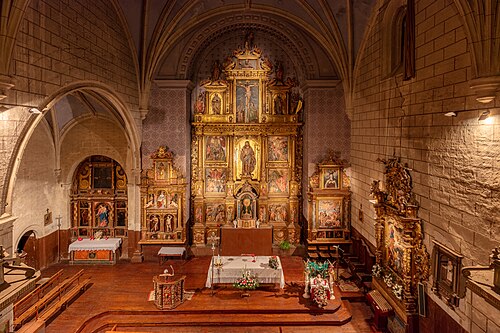
Church of El Salvador, Luesia, Zaragoza, Spain. The church is located in the highest area of the nucleus of the village of Luesia, next to the remains of the old medieval castle, to which it is historically and constructively associated. Its origin dates back to the end of the 11th century with the construction of the semicircular triple apse head with a double crypt at the bottom, while the body with three naves was built throughout the 12th century and the two portals on its southern fronts and occidental already respond to models from the beginning of the 13th century. The Romanesque building underwent a profound reform though in the mid-16th century. The main altarpiece is a Romanesque piece carved in wood; polychrome and gilt. The work is attributed to Gaspar Ramos, a sculptor from Sangüesa, who executed it around 1630.
 #ImageOfTheDay
Picture of the day
Church of El Salvador, Luesia, Zaragoza, Spain. The church is located in the highest area of the nucleus of the village of Luesia, next to the remains of the old medieval castle, to which it is historically and constructively associated. Its origin dates back to the end of the 11th century with the construction of the semicircular triple apse head with a double crypt at the bottom, while the body with three naves was built throughout the 12th century and the two portals on its southern fronts and occidental already respond to models from the beginning of the 13th century. The Romanesque building underwent a profound reform though in the mid-16th century. The main altarpiece is a Romanesque piece carved in wood; polychrome and gilt. The work is attributed to Gaspar Ramos, a sculptor from Sangüesa, who executed it around 1630.
Read More