dates

Kicked out of Mass as a mischievous child, Pope Leo will ordain him Sunday #Catholic The Diocese of Rome shared the testimonies of eight seminarians who, on April 26, Good Shepherd Sunday, will be ordained priests by Pope Leo XIV. Among them is Christian Sguazzino, who as a child was once kicked out of Mass by a priest because he was causing "chaos.”Sguazzino, together with Deacon Danilo Defant and Sister Ester Maddalena Iapenna, will share their testimonies on Friday, April 24, at St. John Lateran Basilica, the cathedral church of Rome, during the prayer vigil for vocations.Sguazzino discovered his vocation at St. John of the Cross Parish. “When I was a child — after having made my first Communion — I would go play soccer and then attend Mass every day, always bringing a friend along,” the future priest recounted.“At that time, there wasn’t even a proper church building; instead, services were held in tents. My friends and I, naturally, caused a bit of chaos. So, one day the assistant pastor kicked us out and told us we would be excommunicated!” he shared with a smile.Recalling that time of mischief, Sguazzino said that “even then — despite everything — I felt the joy of being in church; I loved looking at the altar and the tabernacle.” Along his journey, he emphasized, it was crucial to meet “so many priests who were happy to be priests. Their witness was fundamental.”An uncle who was a priest always supported himYordan Camilo Medina is Colombian and has an uncle who is a priest. As a child, he recounted, “I used to accompany him to take Communion to the mountain communities, and the joy of the faithful upon receiving the body of Christ was incredible.”“Now he, too, is in Rome, and I have followed him here on my path of priestly formation. He has always supported me,” he added.He dreamed of becoming a friarGiovanni Emanuele Nunziante is 32 years old. He was born in Rome but spent part of his childhood in England. “If I had to tell you how my vocation began, my earliest memory dates back to when I was a child,“ he said. ”I didn’t yet fully understand what it meant to be a priest, but I dreamed of being close to the Lord and toyed with the idea of ​​becoming a friar. Then, it all faded into oblivion!”The call returned with force in 2016, during the Fourth Sunday of Easter. “Upon hearing the Gospel of the Good Shepherd, that desire to be close to the Lord in a special way returned … I realized that my deepest desire was to offer my life just as Jesus did — the Good Shepherd,” he said.The influence of the Neocatechumenal WayAntonino Ordine, 27, related that his vocation was born within the faith formation program known as the Neocatechumenal Way: “I was born and raised in a very practicing family, and this led me to appreciate the beauty of the work the Church carries out on a daily basis. I was fortunate enough to meet priests and missionary families especially during a mission in Sweden who were fundamental to my discernment.”He had wanted to become a doctor and after having served on missions in Latin America, the Middle East, and India, he realized that God was calling him to give himself completely out of love for him.He was born in Africa into a non-Catholic familyJos Emanuel Nleme Sabate was born in Cameroon. “My father was Protestant and we often prayed at home,” he said. “When I was 11 years old, I entered the minor seminary of my home diocese because it had a reputation as an excellent school. It was there that I learned about Catholicism.”“I was baptized at the age of 12 and I believe it was during that rite, which was unfamiliar to me at the time, that I decided to become a priest,” he shared. He is now studying sign language and helping people with disabilities.He was a pianist of international stature“I come from a Catholic family,” Daniele Riscica related, “and I have always participated in parish activities; however, I studied at the Frosinone Conservatory and completed my piano studies in classical music. From there, I continued my career as a concert pianist.”Regarded as a rising star of the international piano scene by the age of 24, he said, “I had already achieved many goals in life, yet I was not satisfied. I felt that God was calling me to something more. So I tried entering the seminary — almost as a test … and there I felt happy.”He is grateful for his parents' faithGiorgio Larosa is 30 years old and said that his “vocation was born out of attending the parish, thanks to the faith my parents instilled in me.” His parents' example, as well as “the example of other Christians, laypeople and priests, was also very powerful. In their stories, I saw the power of the Gospel,” he recounted.He left his job and entered the seminaryGuglielmo Lapenna is 35 years old and worked in a liquor factory before beginning his formation for the priesthood.“During World Youth Day 2016 in Kraków, I decided to leave my job and enter the seminary,” he shared, adding: “And the Lord has reaffirmed my vocation every day.”This story was first published by ACI Prensa, the Spanish-language sister service of EWTN News. It has been translated and adapted by EWTN News English.

Kicked out of Mass as a mischievous child, Pope Leo will ordain him Sunday #Catholic The Diocese of Rome shared the testimonies of eight seminarians who, on April 26, Good Shepherd Sunday, will be ordained priests by Pope Leo XIV. Among them is Christian Sguazzino, who as a child was once kicked out of Mass by a priest because he was causing "chaos.”Sguazzino, together with Deacon Danilo Defant and Sister Ester Maddalena Iapenna, will share their testimonies on Friday, April 24, at St. John Lateran Basilica, the cathedral church of Rome, during the prayer vigil for vocations.Sguazzino discovered his vocation at St. John of the Cross Parish. “When I was a child — after having made my first Communion — I would go play soccer and then attend Mass every day, always bringing a friend along,” the future priest recounted.“At that time, there wasn’t even a proper church building; instead, services were held in tents. My friends and I, naturally, caused a bit of chaos. So, one day the assistant pastor kicked us out and told us we would be excommunicated!” he shared with a smile.Recalling that time of mischief, Sguazzino said that “even then — despite everything — I felt the joy of being in church; I loved looking at the altar and the tabernacle.” Along his journey, he emphasized, it was crucial to meet “so many priests who were happy to be priests. Their witness was fundamental.”An uncle who was a priest always supported himYordan Camilo Medina is Colombian and has an uncle who is a priest. As a child, he recounted, “I used to accompany him to take Communion to the mountain communities, and the joy of the faithful upon receiving the body of Christ was incredible.”“Now he, too, is in Rome, and I have followed him here on my path of priestly formation. He has always supported me,” he added.He dreamed of becoming a friarGiovanni Emanuele Nunziante is 32 years old. He was born in Rome but spent part of his childhood in England. “If I had to tell you how my vocation began, my earliest memory dates back to when I was a child,“ he said. ”I didn’t yet fully understand what it meant to be a priest, but I dreamed of being close to the Lord and toyed with the idea of ​​becoming a friar. Then, it all faded into oblivion!”The call returned with force in 2016, during the Fourth Sunday of Easter. “Upon hearing the Gospel of the Good Shepherd, that desire to be close to the Lord in a special way returned … I realized that my deepest desire was to offer my life just as Jesus did — the Good Shepherd,” he said.The influence of the Neocatechumenal WayAntonino Ordine, 27, related that his vocation was born within the faith formation program known as the Neocatechumenal Way: “I was born and raised in a very practicing family, and this led me to appreciate the beauty of the work the Church carries out on a daily basis. I was fortunate enough to meet priests and missionary families especially during a mission in Sweden who were fundamental to my discernment.”He had wanted to become a doctor and after having served on missions in Latin America, the Middle East, and India, he realized that God was calling him to give himself completely out of love for him.He was born in Africa into a non-Catholic familyJos Emanuel Nleme Sabate was born in Cameroon. “My father was Protestant and we often prayed at home,” he said. “When I was 11 years old, I entered the minor seminary of my home diocese because it had a reputation as an excellent school. It was there that I learned about Catholicism.”“I was baptized at the age of 12 and I believe it was during that rite, which was unfamiliar to me at the time, that I decided to become a priest,” he shared. He is now studying sign language and helping people with disabilities.He was a pianist of international stature“I come from a Catholic family,” Daniele Riscica related, “and I have always participated in parish activities; however, I studied at the Frosinone Conservatory and completed my piano studies in classical music. From there, I continued my career as a concert pianist.”Regarded as a rising star of the international piano scene by the age of 24, he said, “I had already achieved many goals in life, yet I was not satisfied. I felt that God was calling me to something more. So I tried entering the seminary — almost as a test … and there I felt happy.”He is grateful for his parents' faithGiorgio Larosa is 30 years old and said that his “vocation was born out of attending the parish, thanks to the faith my parents instilled in me.” His parents' example, as well as “the example of other Christians, laypeople and priests, was also very powerful. In their stories, I saw the power of the Gospel,” he recounted.He left his job and entered the seminaryGuglielmo Lapenna is 35 years old and worked in a liquor factory before beginning his formation for the priesthood.“During World Youth Day 2016 in Kraków, I decided to leave my job and enter the seminary,” he shared, adding: “And the Lord has reaffirmed my vocation every day.”This story was first published by ACI Prensa, the Spanish-language sister service of EWTN News. It has been translated and adapted by EWTN News English.

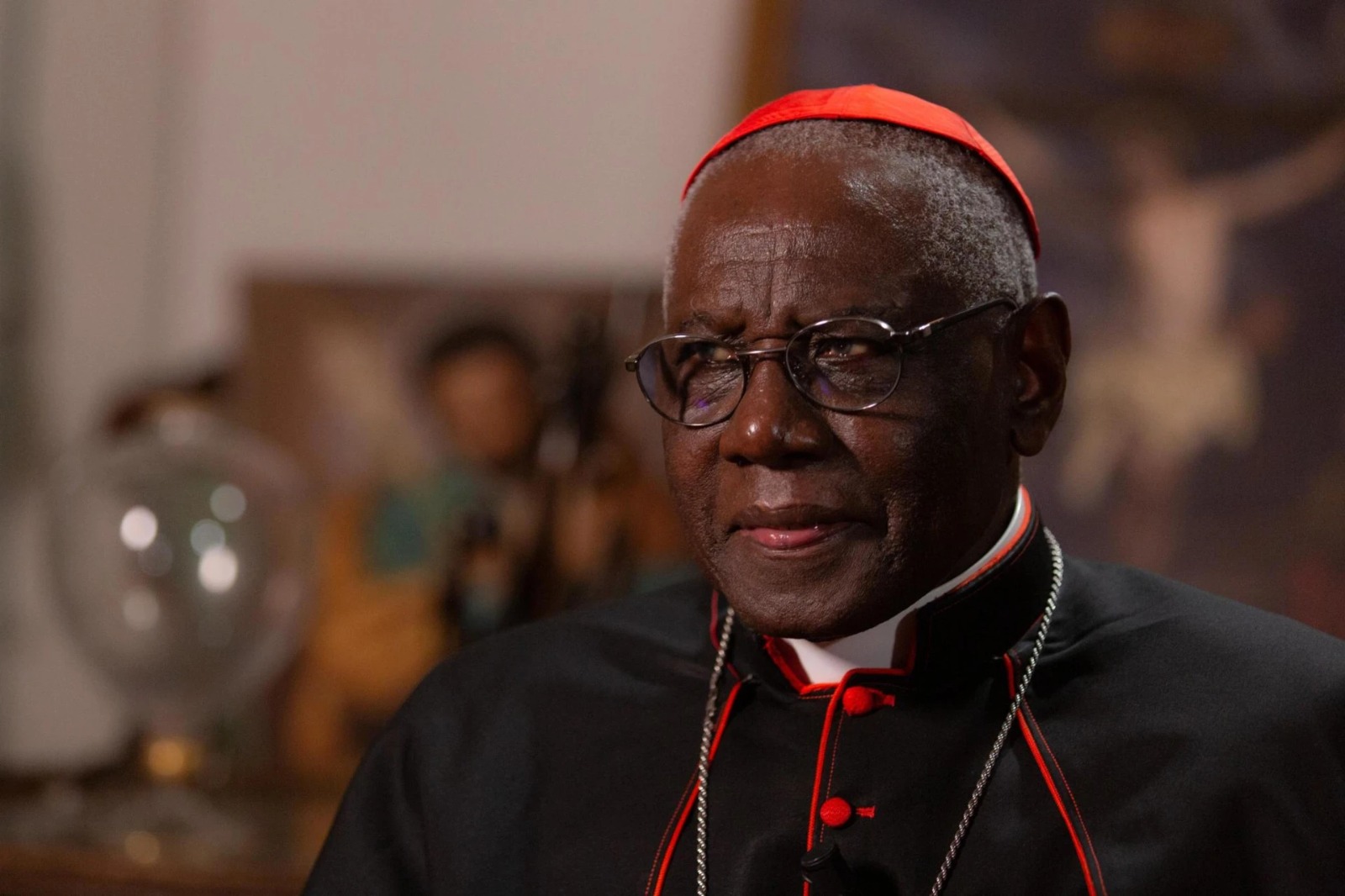
Seminarians shared their personal stories of hearing and responding to God’s call to the priesthood.

Read More
Why Pakistan’s bishops doubt government will act on minor’s forced marriage #Catholic LAHORE, Pakistan — The head of the Catholic Church in Pakistan has expressed a guarded response to government committees formed to review a recent ruling by the country’s top constitutional court that upheld the marriage and conversion of a Christian minor.Federal Minister for Information and Broadcasting Attaullah Tarar announced on Easter Sunday, April 5, that the government had constituted a committee to examine the March 25 judgment of the Federal Constitutional Court validating the marriage of 13-year-old Maria Shahbaz to 30-year-old Shaheryar Ahmad.
 
 A protest for Maria Shahbaz outside Hyderabad Press Club, organized by the Catholic Bishops’ National Commission for Justice and Peace, on April 4, 2026, in Pakistan. | Credit: Bishop Samson Shukardin
 
 Bishop Samson Shukardin of Hyderabad, president of the Pakistan Catholic Bishops’ Conference (PCBC), voiced skepticism about the initiative.“These issues often subside by the time such committees make their reports public. The process is deliberately delayed so that people forget,” he told EWTN News.“This is fundamentally a religious freedom issue. Consent is often coerced from minors. We await a genuine response from the government. Many Muslim clerics support us but have avoided joining public protests,” he added.A father’s accountAccording to Maria’s father, Shehbaz Masih, his daughter was abducted, forcibly converted to Islam, and married without consent.A certificate issued by the National Database and Registration Authority (NADRA) submitted by the family states that Maria was 13 at the time of the marriage — below the legal minimum age of 18. The family has since taken refuge in a shelter and was unavailable for comment.The case dates back to July 2025, when Masih, a resident of Lahore, reported that his daughter had been abducted by a Muslim man after stepping out to a nearby shop.Dismissing a petition filed by the father seeking custody, the court ruled that the marriage was valid under “Muhammadan law” and that the husband held lawful guardianship.Protests and backlashThe judgment triggered widespread reaction on social media, along with protests, press conferences, and conventions across the country. At least three Catholic bishops, along with the PCBC, issued statements urging authorities to review the ruling.The backlash prompted government engagement with the concerns of the country’s Christian minority, estimated at 1.37% (3.28 million people).Addressing an interfaith Easter gathering in Lahore, Tarar assured Christian leaders of his support, saying the committee’s recommendations would be submitted to the Ministry of Law and Justice within a week.
 
 Archbishop Azad Marshall, moderator/president bishop of the Church of Pakistan, a united Protestant denomination, meets with ecumenical leaders and Christian politicians following an April 6, 2026, consultation on the Maria Shahbaz case at Waris Road, Lahore. | Credit: Church of Pakistan
 
 Legal dimensionsMeanwhile, Punjab Minister for Minorities Affairs Ramesh Singh Arora said his department was forming a parallel committee to examine the legal dimensions of the case.Mary James Gill, a Christian lawyer, former lawmaker, and executive director of the Center for Law and Justice who serves on the committee, welcomed the move as a “genuine concern to find a way forward.”“It is highly encouraging that a state representative personally took up the issue. However, we are still in a consultative process,” she told EWTN News, noting shortcomings in both the lower courts and within the affected community.“The petition was filed under Section 491 of the Criminal Procedure Code, which pertains to habeas corpus, and not to determining the exact age of the girl — a question that remains disputed,” Gill said.“Regrettably, no such verification was carried out in the lower courts. In cases where documentation is ambiguous, magistrates and sessions judges tend to rely on in-person statements, consent, and their own observations.”She noted that the Christian Marriage Act of 1872 governs the solemnization of marriages involving one or more Christians.“Similarly, the personal laws of both Christianity and Islam in Pakistan remain silent on the age of conversion. Church leaders need to revisit and update these frameworks. At the same time, parents must place greater emphasis on the ideological and moral formation of their children,” she added.In an April 6 letter to the law ministry, Anthony Naveed, deputy speaker of the Sindh Assembly, urged the federal government to address “serious legal gaps” exposed by the ruling and called for uniform amendments aligning provincial laws with Balochistan’s legislation, which explicitly invalidates child marriages.A pattern of abuseFor decades, rights advocates have called for stronger legal and administrative measures to prevent the abduction and forced religious conversion of girls from minority communities.At least 515 cases of abduction and forced conversion of minority girls and women were reported between 2021 and 2025, according to the Center for Social Justice. Hindu girls accounted for 69% (353 cases), followed by Christian girls at 31% (160 cases). Most victims were under 18, with cases concentrated in Sindh and Punjab.Shukardin said courts in the Muslim-majority country are not consistently applying laws prohibiting marriage under 18.“The Church is not in favor of marriages involving conversion under such circumstances. We demand safety for our daughters and will continue to raise our voice for underage brides of any religion,” he said.

Why Pakistan’s bishops doubt government will act on minor’s forced marriage #Catholic LAHORE, Pakistan — The head of the Catholic Church in Pakistan has expressed a guarded response to government committees formed to review a recent ruling by the country’s top constitutional court that upheld the marriage and conversion of a Christian minor.Federal Minister for Information and Broadcasting Attaullah Tarar announced on Easter Sunday, April 5, that the government had constituted a committee to examine the March 25 judgment of the Federal Constitutional Court validating the marriage of 13-year-old Maria Shahbaz to 30-year-old Shaheryar Ahmad. A protest for Maria Shahbaz outside Hyderabad Press Club, organized by the Catholic Bishops’ National Commission for Justice and Peace, on April 4, 2026, in Pakistan. | Credit: Bishop Samson Shukardin Bishop Samson Shukardin of Hyderabad, president of the Pakistan Catholic Bishops’ Conference (PCBC), voiced skepticism about the initiative.“These issues often subside by the time such committees make their reports public. The process is deliberately delayed so that people forget,” he told EWTN News.“This is fundamentally a religious freedom issue. Consent is often coerced from minors. We await a genuine response from the government. Many Muslim clerics support us but have avoided joining public protests,” he added.A father’s accountAccording to Maria’s father, Shehbaz Masih, his daughter was abducted, forcibly converted to Islam, and married without consent.A certificate issued by the National Database and Registration Authority (NADRA) submitted by the family states that Maria was 13 at the time of the marriage — below the legal minimum age of 18. The family has since taken refuge in a shelter and was unavailable for comment.The case dates back to July 2025, when Masih, a resident of Lahore, reported that his daughter had been abducted by a Muslim man after stepping out to a nearby shop.Dismissing a petition filed by the father seeking custody, the court ruled that the marriage was valid under “Muhammadan law” and that the husband held lawful guardianship.Protests and backlashThe judgment triggered widespread reaction on social media, along with protests, press conferences, and conventions across the country. At least three Catholic bishops, along with the PCBC, issued statements urging authorities to review the ruling.The backlash prompted government engagement with the concerns of the country’s Christian minority, estimated at 1.37% (3.28 million people).Addressing an interfaith Easter gathering in Lahore, Tarar assured Christian leaders of his support, saying the committee’s recommendations would be submitted to the Ministry of Law and Justice within a week. Archbishop Azad Marshall, moderator/president bishop of the Church of Pakistan, a united Protestant denomination, meets with ecumenical leaders and Christian politicians following an April 6, 2026, consultation on the Maria Shahbaz case at Waris Road, Lahore. | Credit: Church of Pakistan Legal dimensionsMeanwhile, Punjab Minister for Minorities Affairs Ramesh Singh Arora said his department was forming a parallel committee to examine the legal dimensions of the case.Mary James Gill, a Christian lawyer, former lawmaker, and executive director of the Center for Law and Justice who serves on the committee, welcomed the move as a “genuine concern to find a way forward.”“It is highly encouraging that a state representative personally took up the issue. However, we are still in a consultative process,” she told EWTN News, noting shortcomings in both the lower courts and within the affected community.“The petition was filed under Section 491 of the Criminal Procedure Code, which pertains to habeas corpus, and not to determining the exact age of the girl — a question that remains disputed,” Gill said.“Regrettably, no such verification was carried out in the lower courts. In cases where documentation is ambiguous, magistrates and sessions judges tend to rely on in-person statements, consent, and their own observations.”She noted that the Christian Marriage Act of 1872 governs the solemnization of marriages involving one or more Christians.“Similarly, the personal laws of both Christianity and Islam in Pakistan remain silent on the age of conversion. Church leaders need to revisit and update these frameworks. At the same time, parents must place greater emphasis on the ideological and moral formation of their children,” she added.In an April 6 letter to the law ministry, Anthony Naveed, deputy speaker of the Sindh Assembly, urged the federal government to address “serious legal gaps” exposed by the ruling and called for uniform amendments aligning provincial laws with Balochistan’s legislation, which explicitly invalidates child marriages.A pattern of abuseFor decades, rights advocates have called for stronger legal and administrative measures to prevent the abduction and forced religious conversion of girls from minority communities.At least 515 cases of abduction and forced conversion of minority girls and women were reported between 2021 and 2025, according to the Center for Social Justice. Hindu girls accounted for 69% (353 cases), followed by Christian girls at 31% (160 cases). Most victims were under 18, with cases concentrated in Sindh and Punjab.Shukardin said courts in the Muslim-majority country are not consistently applying laws prohibiting marriage under 18.“The Church is not in favor of marriages involving conversion under such circumstances. We demand safety for our daughters and will continue to raise our voice for underage brides of any religion,” he said.

Bishop Samson Shukardin said government committees are often delayed so people forget, as protests continue over the marriage of 13-year-old Maria Shahbaz.

Read More
King Felipe VI of Spain installed as protocanon of the Basilica of St. Mary Major #Catholic VATICAN CITY — King Felipe VI of Spain on Friday was installed as protocanon of the Basilica of St. Mary Major in a solemn ceremony that underscores the historic link of the Spanish monarchy with the oldest Marian church in the West.“Protocanon” is an honorary title reserved exclusively for the Spanish head of state, recognizing the monarch as a collaborator of the pope without bestowing executive functions or decision-making power. The investiture March 20 renewed a relationship that dates back centuries and that last took place with Juan Carlos I of Spain in 1977.The king arrived at the Marian basilica, one of four papal basilicas in Rome, after a 50-minute audience with Pope Leo XIV at the Apostolic Palace in the Vatican. The meeting served as a prelude to the pontiff’s upcoming apostolic journey to Spain, scheduled for June 6–12.Upon their arrival at the basilica, the king and his wife, Queen Letizia, were received at the Bronze Gate by the Spanish canon of the chapter, Monsignor José Jaime Brosel, and the archpriest of the basilica, Cardinal Rolandas Makrickas.The king and queen viewed a statue of Philip IV of Spain, ancestor of the current monarch, a work designed by Gian Lorenzo Bernini and one of the pieces of evidence that show the centuries-old historical and spiritual relationship between Spain and the oldest Marian temple in the West.During the ceremony, Makrickas stressed that “authentic tradition is not stagnation but the living transmission of a gift that transcends time” and recalled that the basilica is entrusted with prayer for Spain and its head of state.Parts of the bull Hispaniarum Fidelitas were also read at the ceremony. Pope Pius XII signed the important document, which renewed and confirmed the historic ties of devotion and protection between the Spanish nation and the Basilica of St. Mary Major, in Rome on Aug. 5, 1953.In a short speech, King Felipe VI reaffirmed his commitment to the historic Roman basilica and appealed for “clarity of deed and word, of heart and conscience” in the current context. He also invited people to overcome selfishness and indifference in order to become “a small beacon of concord, generosity, and dedication to the common good.”Spain’s connection to the Basilica of St. Mary MajorFew know that the Basilica of St. Mary Major has close ties to the Spanish crown. Proof of this lies in the statue of Philip IV — an ancestor of the current king — which stands in the atrium.The work was inaugurated in 1692 during the tenure of the Spanish ambassador, the Duke of Medinaceli.The duke “was one of the main benefactors of St. Mary Major,” Brosel, a canon of the basilica and rector of the Spanish National Church of Santiago and Monserrat in Rome, told EWTN News ahead of the March 20 event.“In fact, it was in 1647 that Pope Innocent X formally established the Spanish Charitable Foundation in this basilica. Furthermore, the pope established an annual income in exchange for certain privileges for the Spanish monarchy,” Brosel explained.From that moment onward, the kings of Spain have held the title of “honorary protocanon.” This was a gesture of support for the pope during the Counter-Reformation but also a guarantee to safeguard the influence of the Spanish monarchy within the Holy See.The last time a Spanish head of state took possession as protocanon of the basilica was the father of the current king, Juan Carlos I, on Feb. 10, 1977.Brosel emphasized that Spain’s bond with the basilica “is born from the heart of Spain and its deep Marian devotion, where Spaniards feel St. Mary Major is their home.”
 
 King Felipe VI and Queen Letizia of Spain meet Pope Leo XIV at the Vatican on March 20, 2026. | Credit: Vatican Media
 
 Papal audienceThe investiture ceremony for the king took place following a visit to the Vatican and private audience with Pope Leo XIV.Leo’s upcoming trip to Spain — which is expected to include stops in Madrid, Barcelona, and the Canary Islands — will be the first papal journey to Spain in 15 years.Benedict XVI was the last pope to visit the country, traveling to Madrid for World Youth Day in 2011. At that time, Felipe VI was still a prince and the king was his father, Juan Carlos I.Queen Letizia at Friday’s papal audience wore white, a privilege reserved for Catholic queens, although without a mantilla or hair comb.The private conversation and exchange of gifts with Pope Leo was followed by talks with Cardinal Pietro Parolin and Archbishop Paul Gallagher in the Secretariat of State.This story was first published as three articles by ACI Prensa, the Spanish-language sister agency of EWTN News. It was translated and adapted by EWTN News English.

King Felipe VI of Spain installed as protocanon of the Basilica of St. Mary Major #Catholic VATICAN CITY — King Felipe VI of Spain on Friday was installed as protocanon of the Basilica of St. Mary Major in a solemn ceremony that underscores the historic link of the Spanish monarchy with the oldest Marian church in the West.“Protocanon” is an honorary title reserved exclusively for the Spanish head of state, recognizing the monarch as a collaborator of the pope without bestowing executive functions or decision-making power. The investiture March 20 renewed a relationship that dates back centuries and that last took place with Juan Carlos I of Spain in 1977.The king arrived at the Marian basilica, one of four papal basilicas in Rome, after a 50-minute audience with Pope Leo XIV at the Apostolic Palace in the Vatican. The meeting served as a prelude to the pontiff’s upcoming apostolic journey to Spain, scheduled for June 6–12.Upon their arrival at the basilica, the king and his wife, Queen Letizia, were received at the Bronze Gate by the Spanish canon of the chapter, Monsignor José Jaime Brosel, and the archpriest of the basilica, Cardinal Rolandas Makrickas.The king and queen viewed a statue of Philip IV of Spain, ancestor of the current monarch, a work designed by Gian Lorenzo Bernini and one of the pieces of evidence that show the centuries-old historical and spiritual relationship between Spain and the oldest Marian temple in the West.During the ceremony, Makrickas stressed that “authentic tradition is not stagnation but the living transmission of a gift that transcends time” and recalled that the basilica is entrusted with prayer for Spain and its head of state.Parts of the bull Hispaniarum Fidelitas were also read at the ceremony. Pope Pius XII signed the important document, which renewed and confirmed the historic ties of devotion and protection between the Spanish nation and the Basilica of St. Mary Major, in Rome on Aug. 5, 1953.In a short speech, King Felipe VI reaffirmed his commitment to the historic Roman basilica and appealed for “clarity of deed and word, of heart and conscience” in the current context. He also invited people to overcome selfishness and indifference in order to become “a small beacon of concord, generosity, and dedication to the common good.”Spain’s connection to the Basilica of St. Mary MajorFew know that the Basilica of St. Mary Major has close ties to the Spanish crown. Proof of this lies in the statue of Philip IV — an ancestor of the current king — which stands in the atrium.The work was inaugurated in 1692 during the tenure of the Spanish ambassador, the Duke of Medinaceli.The duke “was one of the main benefactors of St. Mary Major,” Brosel, a canon of the basilica and rector of the Spanish National Church of Santiago and Monserrat in Rome, told EWTN News ahead of the March 20 event.“In fact, it was in 1647 that Pope Innocent X formally established the Spanish Charitable Foundation in this basilica. Furthermore, the pope established an annual income in exchange for certain privileges for the Spanish monarchy,” Brosel explained.From that moment onward, the kings of Spain have held the title of “honorary protocanon.” This was a gesture of support for the pope during the Counter-Reformation but also a guarantee to safeguard the influence of the Spanish monarchy within the Holy See.The last time a Spanish head of state took possession as protocanon of the basilica was the father of the current king, Juan Carlos I, on Feb. 10, 1977.Brosel emphasized that Spain’s bond with the basilica “is born from the heart of Spain and its deep Marian devotion, where Spaniards feel St. Mary Major is their home.” King Felipe VI and Queen Letizia of Spain meet Pope Leo XIV at the Vatican on March 20, 2026. | Credit: Vatican Media Papal audienceThe investiture ceremony for the king took place following a visit to the Vatican and private audience with Pope Leo XIV.Leo’s upcoming trip to Spain — which is expected to include stops in Madrid, Barcelona, and the Canary Islands — will be the first papal journey to Spain in 15 years.Benedict XVI was the last pope to visit the country, traveling to Madrid for World Youth Day in 2011. At that time, Felipe VI was still a prince and the king was his father, Juan Carlos I.Queen Letizia at Friday’s papal audience wore white, a privilege reserved for Catholic queens, although without a mantilla or hair comb.The private conversation and exchange of gifts with Pope Leo was followed by talks with Cardinal Pietro Parolin and Archbishop Paul Gallagher in the Secretariat of State.This story was first published as three articles by ACI Prensa, the Spanish-language sister agency of EWTN News. It was translated and adapted by EWTN News English.

“Protocanon” is an honorary title reserved exclusively for the Spanish head of state, recognizing the monarch as a collaborator of the pope.

Read More
Picture of the day


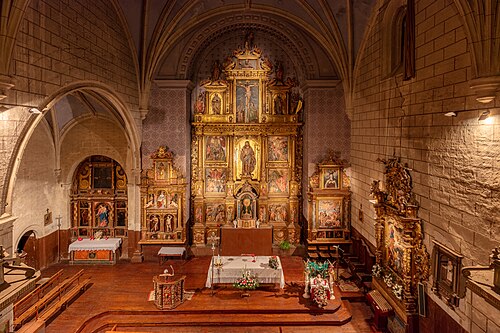
Church of El Salvador, Luesia, Zaragoza, Spain. The church is located in the highest area of the nucleus of the village of Luesia, next to the remains of the old medieval castle, to which it is historically and constructively associated. Its origin dates back to the end of the 11th century with the construction of the semicircular triple apse head with a double crypt at the bottom, while the body with three naves was built throughout the 12th century and the two portals on its southern fronts and occidental already respond to models from the beginning of the 13th century. The Romanesque building underwent a profound reform though in the mid-16th century. The main altarpiece is a Romanesque piece carved in wood; polychrome and gilt. The work is attributed to Gaspar Ramos, a sculptor from Sangüesa, who executed it around 1630.
 #ImageOfTheDay
Picture of the day
Church of El Salvador, Luesia, Zaragoza, Spain. The church is located in the highest area of the nucleus of the village of Luesia, next to the remains of the old medieval castle, to which it is historically and constructively associated. Its origin dates back to the end of the 11th century with the construction of the semicircular triple apse head with a double crypt at the bottom, while the body with three naves was built throughout the 12th century and the two portals on its southern fronts and occidental already respond to models from the beginning of the 13th century. The Romanesque building underwent a profound reform though in the mid-16th century. The main altarpiece is a Romanesque piece carved in wood; polychrome and gilt. The work is attributed to Gaspar Ramos, a sculptor from Sangüesa, who executed it around 1630.
Read More