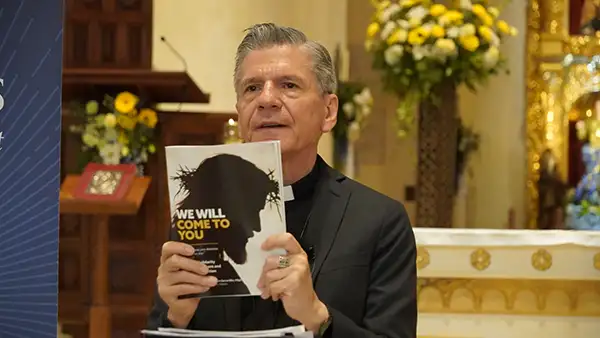
![Nicaraguan dictatorship detains Bishop Abelardo Mata again #Catholic Nicaraguan police detained Bishop Emeritus Abelardo Mata again on June 30, just one day after his initial detention and subsequent release on June 29. The 80-year-old prelate is reportedly now under house arrest.Mata, bishop emeritus of Estelí, was arrested at a clinic where he had gone for a checkup for his pacemaker. This occurred the day after he celebrated a Mass in which he prayed for the persecuted Church in Nicaragua, an act that may have provoked the ire of the dictatorship of President Daniel Ortega and his wife and vice president, Rosario Murillo.Following the new detention, the bishop is reportedly under house arrest at his home in the town of Tisma, according to the Nicaraguan newspaper La Prensa.In addition to the bishop, Father Francisco Morales, pastor of Calvary’s Cross Church in Estelí, where Mata celebrated Mass on June 28, and Deacon Wilfred Arauz Rodríguez were also detained. Both were released but remain subject to conditions.“Bishop Mata holds no administrative responsibilities within the Diocese of Estelí but continues to assist that diocese with its pastoral needs. He thus went to celebrate Mass last Sunday at the request of the parish priest. However, the Sandinista dictatorship has forbidden him from being in the department of Estelí,” Martha Patricia Molina explained on July 2 to ACI Prensa, the Spanish-language sister service of EWTN News. She is the author of the report “Nicaragua: A Persecuted Church,” which documents thousands of attacks by the dictatorship against Catholics since 2018.Molina further highlighted that “the Diocese of Estelí has always been a target of repression by the Sandinista dictatorship due to the hatred the dictatorial couple harbors toward Bishop Rolando José Álvarez, the apostolic administrator. Although Álvarez is not voicing opinions, the dictatorship views him as a constant focus of their attention.”Álvarez, apostolic administrator of Estelí since 2021, following Mata’s resignation, currently lives in Rome after being exiled in January 2024 while serving a 26-year prison sentence. The prelate was a consistent critic of the Ortega-Murillo dictatorship.Even though Álvarez is living in exile, Pope Francis confirmed him in his position as bishop of Matagalpa and apostolic administrator of Estelí.Molina also told ACI Prensa that the situation in Estelí “is being aggravated because Mata has been critical of the arbitrary actions committed by the Sandinista dictatorship. Currently, we only learn of 10% of the attacks committed against the Catholic Church because the rest go unreported due to the fear and caution priests and laypeople have about speaking out in the news media or on social media.”The researcher noted that the number of reports could reach “400 a day” if Catholics were able to speak freely in public.The ‘dire’ situation in EstelíMolina noted that the dictatorship is now persecuting the Church in a different way: “They had stopped abducting priests, but now they have gone back to it; furthermore, there are cases of priests having to report to police stations to give statements, and also there’s the constant monitoring and harassment of priests across the countryʼs various dioceses by the police.”The researcher pointed out that the Diocese of Estelí, “the one most persecuted by the Ortega-Murillo dictatorship after Matagalpa,” is currently forced to “operate without [its bishop] and with only 42% of its clergy. This makes pastoral work difficult and places a heavier workload on the active priests.”These priests must also take on “the duties of those who are in exile due to persecution, those who have passed away, or those who, for one reason or another, are not exercising their ministry in Nicaragua,” she pointed out.“The situation is worsening because the Sandinista dictatorship has banned diaconal and priestly ordinations in that diocese,” she emphasized. Ordinations are also forbidden in Matagalpa, Jinotega, and Siuna. None of the four dioceses has its bishop present, as they have all been exiled from Nicaragua.The need to be vigilant“We have to remain vigilant regarding Bishop Mata because his health is fragile and requires professional care. What worries me is that the last individuals who have been under surveillance by the dictatorship or the police have ended up in worse condition or even dead,” Arturo McFields, Nicaragua’s former ambassador to the Organization of American States (OAS), told ACI Prensa on July 2.A recent example of this situation is the case of Brooklyn Rivera, an Indigenous leader and political prisoner whom the Ortega-Murillo dictatorship held incommunicado for over 970 days. He passed away in late May at the age of 73, following several statements from the regime regarding his critical health condition.“If the dictatorship’s actions are not strongly denounced, the regime would not hesitate to bring about the death of Bishop Mata, as they harbor deep resentment toward this man of God because of his courage and clarity for many years,” McFields emphasized.An exiled Nicaraguan priest who prefers to remain anonymous to avoid reprisals told ACI Prensa that the situation involving Mata “is sad, but it can also be viewed as a sign of the fear the dictatorship has of an elderly bishop, an 80-year-old (with health issues) because his presence as a shepherd strengthens the lives of the faithful,” ensuring that “the faith remains alive.”The priest emphasized that he continues to prepare “our hearts for a future in which we can rebuild the Church in Nicaragua not only socially but also through faith because spiritual and pastoral reconstruction work must also be done.”Call for releaseFélix Maradiaga, president of the Freedom for Nicaragua Foundation, issued “an urgent call to the international community, human rights organizations, the world’s democracies, and all people of goodwill to remain vigilant, demand the immediate release of Bishop Juan Abelardo Mata and all arbitrarily detained members of the clergy, and firmly condemn this new escalation of repression.”“Nicaragua cannot normalize a dictatorship imprisoning priests, silencing pulpits, and persecuting the faith. The moral voice of the Church has historically stood with the Nicaraguan people during their most difficult times, and that is precisely why the regime seeks to intimidate it,” Maradiaga told ACI Prensa.This story was first published by ACI Prensa, the Spanish-language sister service of EWTN News. It has been translated and adapted by EWTN News English. Nicaraguan dictatorship detains Bishop Abelardo Mata again #Catholic Nicaraguan police detained Bishop Emeritus Abelardo Mata again on June 30, just one day after his initial detention and subsequent release on June 29. The 80-year-old prelate is reportedly now under house arrest.Mata, bishop emeritus of Estelí, was arrested at a clinic where he had gone for a checkup for his pacemaker. This occurred the day after he celebrated a Mass in which he prayed for the persecuted Church in Nicaragua, an act that may have provoked the ire of the dictatorship of President Daniel Ortega and his wife and vice president, Rosario Murillo.Following the new detention, the bishop is reportedly under house arrest at his home in the town of Tisma, according to the Nicaraguan newspaper La Prensa.In addition to the bishop, Father Francisco Morales, pastor of Calvary’s Cross Church in Estelí, where Mata celebrated Mass on June 28, and Deacon Wilfred Arauz Rodríguez were also detained. Both were released but remain subject to conditions.“Bishop Mata holds no administrative responsibilities within the Diocese of Estelí but continues to assist that diocese with its pastoral needs. He thus went to celebrate Mass last Sunday at the request of the parish priest. However, the Sandinista dictatorship has forbidden him from being in the department of Estelí,” Martha Patricia Molina explained on July 2 to ACI Prensa, the Spanish-language sister service of EWTN News. She is the author of the report “Nicaragua: A Persecuted Church,” which documents thousands of attacks by the dictatorship against Catholics since 2018.Molina further highlighted that “the Diocese of Estelí has always been a target of repression by the Sandinista dictatorship due to the hatred the dictatorial couple harbors toward Bishop Rolando José Álvarez, the apostolic administrator. Although Álvarez is not voicing opinions, the dictatorship views him as a constant focus of their attention.”Álvarez, apostolic administrator of Estelí since 2021, following Mata’s resignation, currently lives in Rome after being exiled in January 2024 while serving a 26-year prison sentence. The prelate was a consistent critic of the Ortega-Murillo dictatorship.Even though Álvarez is living in exile, Pope Francis confirmed him in his position as bishop of Matagalpa and apostolic administrator of Estelí.Molina also told ACI Prensa that the situation in Estelí “is being aggravated because Mata has been critical of the arbitrary actions committed by the Sandinista dictatorship. Currently, we only learn of 10% of the attacks committed against the Catholic Church because the rest go unreported due to the fear and caution priests and laypeople have about speaking out in the news media or on social media.”The researcher noted that the number of reports could reach “400 a day” if Catholics were able to speak freely in public.The ‘dire’ situation in EstelíMolina noted that the dictatorship is now persecuting the Church in a different way: “They had stopped abducting priests, but now they have gone back to it; furthermore, there are cases of priests having to report to police stations to give statements, and also there’s the constant monitoring and harassment of priests across the countryʼs various dioceses by the police.”The researcher pointed out that the Diocese of Estelí, “the one most persecuted by the Ortega-Murillo dictatorship after Matagalpa,” is currently forced to “operate without [its bishop] and with only 42% of its clergy. This makes pastoral work difficult and places a heavier workload on the active priests.”These priests must also take on “the duties of those who are in exile due to persecution, those who have passed away, or those who, for one reason or another, are not exercising their ministry in Nicaragua,” she pointed out.“The situation is worsening because the Sandinista dictatorship has banned diaconal and priestly ordinations in that diocese,” she emphasized. Ordinations are also forbidden in Matagalpa, Jinotega, and Siuna. None of the four dioceses has its bishop present, as they have all been exiled from Nicaragua.The need to be vigilant“We have to remain vigilant regarding Bishop Mata because his health is fragile and requires professional care. What worries me is that the last individuals who have been under surveillance by the dictatorship or the police have ended up in worse condition or even dead,” Arturo McFields, Nicaragua’s former ambassador to the Organization of American States (OAS), told ACI Prensa on July 2.A recent example of this situation is the case of Brooklyn Rivera, an Indigenous leader and political prisoner whom the Ortega-Murillo dictatorship held incommunicado for over 970 days. He passed away in late May at the age of 73, following several statements from the regime regarding his critical health condition.“If the dictatorship’s actions are not strongly denounced, the regime would not hesitate to bring about the death of Bishop Mata, as they harbor deep resentment toward this man of God because of his courage and clarity for many years,” McFields emphasized.An exiled Nicaraguan priest who prefers to remain anonymous to avoid reprisals told ACI Prensa that the situation involving Mata “is sad, but it can also be viewed as a sign of the fear the dictatorship has of an elderly bishop, an 80-year-old (with health issues) because his presence as a shepherd strengthens the lives of the faithful,” ensuring that “the faith remains alive.”The priest emphasized that he continues to prepare “our hearts for a future in which we can rebuild the Church in Nicaragua not only socially but also through faith because spiritual and pastoral reconstruction work must also be done.”Call for releaseFélix Maradiaga, president of the Freedom for Nicaragua Foundation, issued “an urgent call to the international community, human rights organizations, the world’s democracies, and all people of goodwill to remain vigilant, demand the immediate release of Bishop Juan Abelardo Mata and all arbitrarily detained members of the clergy, and firmly condemn this new escalation of repression.”“Nicaragua cannot normalize a dictatorship imprisoning priests, silencing pulpits, and persecuting the faith. The moral voice of the Church has historically stood with the Nicaraguan people during their most difficult times, and that is precisely why the regime seeks to intimidate it,” Maradiaga told ACI Prensa.This story was first published by ACI Prensa, the Spanish-language sister service of EWTN News. It has been translated and adapted by EWTN News English.](https://unitedyam.com/wp-content/uploads/2026/07/nicaraguan-dictatorship-detains-bishop-abelardo-mata-again-catholic-nicaraguan-police-detained-bishop-emeritus-abelardo-mata-again-on-june-30-just-one-day-after-his-initial-detention-and-subsequent.webp)
Mata was detained on June 29, released the same day, and as of June 30 reportedly is under house arrest. At a June 28 Mass he asked for prayers for the persecuted Church, triggering retaliation.

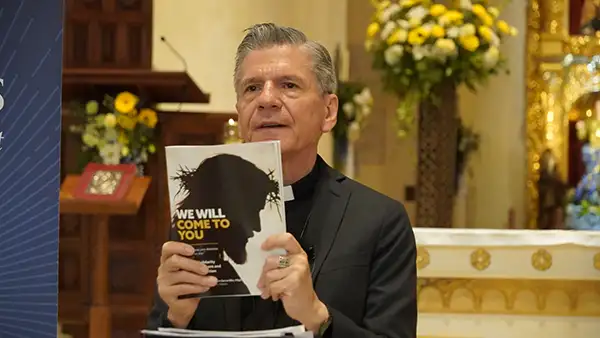
![Nicaraguan dictatorship detains Bishop Abelardo Mata again #Catholic Nicaraguan police detained Bishop Emeritus Abelardo Mata again on June 30, just one day after his initial detention and subsequent release on June 29. The 80-year-old prelate is reportedly now under house arrest.Mata, bishop emeritus of Estelí, was arrested at a clinic where he had gone for a checkup for his pacemaker. This occurred the day after he celebrated a Mass in which he prayed for the persecuted Church in Nicaragua, an act that may have provoked the ire of the dictatorship of President Daniel Ortega and his wife and vice president, Rosario Murillo.Following the new detention, the bishop is reportedly under house arrest at his home in the town of Tisma, according to the Nicaraguan newspaper La Prensa.In addition to the bishop, Father Francisco Morales, pastor of Calvary’s Cross Church in Estelí, where Mata celebrated Mass on June 28, and Deacon Wilfred Arauz Rodríguez were also detained. Both were released but remain subject to conditions.“Bishop Mata holds no administrative responsibilities within the Diocese of Estelí but continues to assist that diocese with its pastoral needs. He thus went to celebrate Mass last Sunday at the request of the parish priest. However, the Sandinista dictatorship has forbidden him from being in the department of Estelí,” Martha Patricia Molina explained on July 2 to ACI Prensa, the Spanish-language sister service of EWTN News. She is the author of the report “Nicaragua: A Persecuted Church,” which documents thousands of attacks by the dictatorship against Catholics since 2018.Molina further highlighted that “the Diocese of Estelí has always been a target of repression by the Sandinista dictatorship due to the hatred the dictatorial couple harbors toward Bishop Rolando José Álvarez, the apostolic administrator. Although Álvarez is not voicing opinions, the dictatorship views him as a constant focus of their attention.”Álvarez, apostolic administrator of Estelí since 2021, following Mata’s resignation, currently lives in Rome after being exiled in January 2024 while serving a 26-year prison sentence. The prelate was a consistent critic of the Ortega-Murillo dictatorship.Even though Álvarez is living in exile, Pope Francis confirmed him in his position as bishop of Matagalpa and apostolic administrator of Estelí.Molina also told ACI Prensa that the situation in Estelí “is being aggravated because Mata has been critical of the arbitrary actions committed by the Sandinista dictatorship. Currently, we only learn of 10% of the attacks committed against the Catholic Church because the rest go unreported due to the fear and caution priests and laypeople have about speaking out in the news media or on social media.”The researcher noted that the number of reports could reach “400 a day” if Catholics were able to speak freely in public.The ‘dire’ situation in EstelíMolina noted that the dictatorship is now persecuting the Church in a different way: “They had stopped abducting priests, but now they have gone back to it; furthermore, there are cases of priests having to report to police stations to give statements, and also there’s the constant monitoring and harassment of priests across the countryʼs various dioceses by the police.”The researcher pointed out that the Diocese of Estelí, “the one most persecuted by the Ortega-Murillo dictatorship after Matagalpa,” is currently forced to “operate without [its bishop] and with only 42% of its clergy. This makes pastoral work difficult and places a heavier workload on the active priests.”These priests must also take on “the duties of those who are in exile due to persecution, those who have passed away, or those who, for one reason or another, are not exercising their ministry in Nicaragua,” she pointed out.“The situation is worsening because the Sandinista dictatorship has banned diaconal and priestly ordinations in that diocese,” she emphasized. Ordinations are also forbidden in Matagalpa, Jinotega, and Siuna. None of the four dioceses has its bishop present, as they have all been exiled from Nicaragua.The need to be vigilant“We have to remain vigilant regarding Bishop Mata because his health is fragile and requires professional care. What worries me is that the last individuals who have been under surveillance by the dictatorship or the police have ended up in worse condition or even dead,” Arturo McFields, Nicaragua’s former ambassador to the Organization of American States (OAS), told ACI Prensa on July 2.A recent example of this situation is the case of Brooklyn Rivera, an Indigenous leader and political prisoner whom the Ortega-Murillo dictatorship held incommunicado for over 970 days. He passed away in late May at the age of 73, following several statements from the regime regarding his critical health condition.“If the dictatorship’s actions are not strongly denounced, the regime would not hesitate to bring about the death of Bishop Mata, as they harbor deep resentment toward this man of God because of his courage and clarity for many years,” McFields emphasized.An exiled Nicaraguan priest who prefers to remain anonymous to avoid reprisals told ACI Prensa that the situation involving Mata “is sad, but it can also be viewed as a sign of the fear the dictatorship has of an elderly bishop, an 80-year-old (with health issues) because his presence as a shepherd strengthens the lives of the faithful,” ensuring that “the faith remains alive.”The priest emphasized that he continues to prepare “our hearts for a future in which we can rebuild the Church in Nicaragua not only socially but also through faith because spiritual and pastoral reconstruction work must also be done.”Call for releaseFélix Maradiaga, president of the Freedom for Nicaragua Foundation, issued “an urgent call to the international community, human rights organizations, the world’s democracies, and all people of goodwill to remain vigilant, demand the immediate release of Bishop Juan Abelardo Mata and all arbitrarily detained members of the clergy, and firmly condemn this new escalation of repression.”“Nicaragua cannot normalize a dictatorship imprisoning priests, silencing pulpits, and persecuting the faith. The moral voice of the Church has historically stood with the Nicaraguan people during their most difficult times, and that is precisely why the regime seeks to intimidate it,” Maradiaga told ACI Prensa.This story was first published by ACI Prensa, the Spanish-language sister service of EWTN News. It has been translated and adapted by EWTN News English. Nicaraguan dictatorship detains Bishop Abelardo Mata again #Catholic Nicaraguan police detained Bishop Emeritus Abelardo Mata again on June 30, just one day after his initial detention and subsequent release on June 29. The 80-year-old prelate is reportedly now under house arrest.Mata, bishop emeritus of Estelí, was arrested at a clinic where he had gone for a checkup for his pacemaker. This occurred the day after he celebrated a Mass in which he prayed for the persecuted Church in Nicaragua, an act that may have provoked the ire of the dictatorship of President Daniel Ortega and his wife and vice president, Rosario Murillo.Following the new detention, the bishop is reportedly under house arrest at his home in the town of Tisma, according to the Nicaraguan newspaper La Prensa.In addition to the bishop, Father Francisco Morales, pastor of Calvary’s Cross Church in Estelí, where Mata celebrated Mass on June 28, and Deacon Wilfred Arauz Rodríguez were also detained. Both were released but remain subject to conditions.“Bishop Mata holds no administrative responsibilities within the Diocese of Estelí but continues to assist that diocese with its pastoral needs. He thus went to celebrate Mass last Sunday at the request of the parish priest. However, the Sandinista dictatorship has forbidden him from being in the department of Estelí,” Martha Patricia Molina explained on July 2 to ACI Prensa, the Spanish-language sister service of EWTN News. She is the author of the report “Nicaragua: A Persecuted Church,” which documents thousands of attacks by the dictatorship against Catholics since 2018.Molina further highlighted that “the Diocese of Estelí has always been a target of repression by the Sandinista dictatorship due to the hatred the dictatorial couple harbors toward Bishop Rolando José Álvarez, the apostolic administrator. Although Álvarez is not voicing opinions, the dictatorship views him as a constant focus of their attention.”Álvarez, apostolic administrator of Estelí since 2021, following Mata’s resignation, currently lives in Rome after being exiled in January 2024 while serving a 26-year prison sentence. The prelate was a consistent critic of the Ortega-Murillo dictatorship.Even though Álvarez is living in exile, Pope Francis confirmed him in his position as bishop of Matagalpa and apostolic administrator of Estelí.Molina also told ACI Prensa that the situation in Estelí “is being aggravated because Mata has been critical of the arbitrary actions committed by the Sandinista dictatorship. Currently, we only learn of 10% of the attacks committed against the Catholic Church because the rest go unreported due to the fear and caution priests and laypeople have about speaking out in the news media or on social media.”The researcher noted that the number of reports could reach “400 a day” if Catholics were able to speak freely in public.The ‘dire’ situation in EstelíMolina noted that the dictatorship is now persecuting the Church in a different way: “They had stopped abducting priests, but now they have gone back to it; furthermore, there are cases of priests having to report to police stations to give statements, and also there’s the constant monitoring and harassment of priests across the countryʼs various dioceses by the police.”The researcher pointed out that the Diocese of Estelí, “the one most persecuted by the Ortega-Murillo dictatorship after Matagalpa,” is currently forced to “operate without [its bishop] and with only 42% of its clergy. This makes pastoral work difficult and places a heavier workload on the active priests.”These priests must also take on “the duties of those who are in exile due to persecution, those who have passed away, or those who, for one reason or another, are not exercising their ministry in Nicaragua,” she pointed out.“The situation is worsening because the Sandinista dictatorship has banned diaconal and priestly ordinations in that diocese,” she emphasized. Ordinations are also forbidden in Matagalpa, Jinotega, and Siuna. None of the four dioceses has its bishop present, as they have all been exiled from Nicaragua.The need to be vigilant“We have to remain vigilant regarding Bishop Mata because his health is fragile and requires professional care. What worries me is that the last individuals who have been under surveillance by the dictatorship or the police have ended up in worse condition or even dead,” Arturo McFields, Nicaragua’s former ambassador to the Organization of American States (OAS), told ACI Prensa on July 2.A recent example of this situation is the case of Brooklyn Rivera, an Indigenous leader and political prisoner whom the Ortega-Murillo dictatorship held incommunicado for over 970 days. He passed away in late May at the age of 73, following several statements from the regime regarding his critical health condition.“If the dictatorship’s actions are not strongly denounced, the regime would not hesitate to bring about the death of Bishop Mata, as they harbor deep resentment toward this man of God because of his courage and clarity for many years,” McFields emphasized.An exiled Nicaraguan priest who prefers to remain anonymous to avoid reprisals told ACI Prensa that the situation involving Mata “is sad, but it can also be viewed as a sign of the fear the dictatorship has of an elderly bishop, an 80-year-old (with health issues) because his presence as a shepherd strengthens the lives of the faithful,” ensuring that “the faith remains alive.”The priest emphasized that he continues to prepare “our hearts for a future in which we can rebuild the Church in Nicaragua not only socially but also through faith because spiritual and pastoral reconstruction work must also be done.”Call for releaseFélix Maradiaga, president of the Freedom for Nicaragua Foundation, issued “an urgent call to the international community, human rights organizations, the world’s democracies, and all people of goodwill to remain vigilant, demand the immediate release of Bishop Juan Abelardo Mata and all arbitrarily detained members of the clergy, and firmly condemn this new escalation of repression.”“Nicaragua cannot normalize a dictatorship imprisoning priests, silencing pulpits, and persecuting the faith. The moral voice of the Church has historically stood with the Nicaraguan people during their most difficult times, and that is precisely why the regime seeks to intimidate it,” Maradiaga told ACI Prensa.This story was first published by ACI Prensa, the Spanish-language sister service of EWTN News. It has been translated and adapted by EWTN News English.](https://unitedyam.com/wp-content/uploads/2026/07/nicaraguan-dictatorship-detains-bishop-abelardo-mata-again-catholic-nicaraguan-police-detained-bishop-emeritus-abelardo-mata-again-on-june-30-just-one-day-after-his-initial-detention-and-subsequent.webp)
Mata was detained on June 29, released the same day, and as of June 30 reportedly is under house arrest. At a June 28 Mass he asked for prayers for the persecuted Church, triggering retaliation.

![Procession urges dignity and respect for migrants at border crossing #Catholic Catholic bishops, clergy, and hundreds of faithful processed across the U.S.–Mexico border to celebrate the contribution of immigrants in America ahead of the 250th anniversary of the nation.
Catholic bishops, clergy, and hundreds of faithful attended the Border Mass 250 at Sacred Heart Church in Nogales, Arizona, on June 26, 2026. | Credit: Photo courtesy of Brett Meister/Diocese of Phoenix
“Weʼre here as shepherds and as pastors to walk with people, to listen to people, and to be well together with the people of God here at the border,” Bishop James Misko of Tucson, Arizona, said at the event.“We call ourselves Christians. To be called a Christian means to be like Christ — to be living a life as conformed to Christ as possible. And we know that justice is being in right relationship with God and one another,” Misko said.Organized by the dioceses of Tucson and Phoenix in partnership with the Kino Border Initiative, the Hope Border Institute, and the Center for Migration Studies, the June 26 event included a conversation on immigration with U.S. Catholic bishops, Mass at Sacred Heart Church in Nogales, Arizona, and a rosary procession across the international line.The pastoral conversation on migration and human dignity “was a great conversation with five bishops about what the Church holds to be true when it comes to migration and human dignity,” Misko said.Misko and Bishop John Dolan of Phoenix were joined in conversation by Archbishop John Wester of Santa Fe, New Mexico; Bishop Mark Seitz of El Paso, Texas; and Bishop Emeritus Gerald Kicanas of Tucson.
Bishop Mark Seitz of El Paso, Texas; Archbishop John Wester of Santa Fe, New Mexico; Bishop James Misko of Tucson, Arizona; Bishop John Dolan of Phoenix; and Bishop Gerald Kicanas of Tucson, Arizona, gather for the Border Mass 250 in Nogales, Arizona on June 26, 2026. | Credit: Photo courtesy of Brett Meister/Diocese of Phoenix
“As we mark the 250th anniversary of the Declaration of Independence, we are reminded that we are made by our Creator with certain inalienable rights. Theyʼre given by God,” Seitz said at the event.“That is a fundamental reality that we in the Church always have in mind and that no policy, no executive order or Supreme Court decision can take away,” Seitz said.After the bishops celebrated Mass, the procession began at the Arizona parish and concluded at Parroquia De Pa Purísima Concepción — a Catholic church in Nogales, Sonora, Mexico. The group ended the event with a meal with migrants hosted by the Kino Border Initiative.Mexican bishops José Luis Cerra Luna of Nogales and Enrique Sanchez Martinez of Mexicali also participated in the binational event.
U.S. and Mexican bishops celebrate the Border Mass 250 at Sacred Heart Church in Nogales, Arizona, on June 26, 2026. | Credit: Photo courtesy of Brett Meister/Diocese of Phoenix
U.S. bishops have ‘almost complete unanimity’ on immigration matter“What is discouraging for me is that as a country, we have not yet been able to address the issue of immigration,” Kicanas said. “The conference of bishops has been clamoring, crying out, for comprehensive immigration reform, and we have not yet been able to accomplish that.”“We have to address the immigration policy of our country — as [do] most countries around the world today. Itʼs a serious concern. All of us want this situation to improve,” Kicanas said.
Bishop Mark Seitz of El Paso, Texas; Archbishop John Wester of Santa Fe, New Mexico; Bishop John Dolan of Phoenix; and Bishop James Misko of Tucson, Arizona, lead the Border Mass 250 rosary procession from Nogales, Arizona, to Nogales, Sonora, Mexico, on June 26, 2026. | Credit: Photo courtesy of Brett Meister/Diocese of Phoenix
“The bishops have been advocating for comprehensive immigration reform for a long, long time,” and Border Mass 250 “was just one more example of that,” Wester said.The event followed other calls for reform including pastoral letters on immigration and a special message from the United States Conference of Catholic Bishops highlighting their opposition to “the indiscriminate mass deportation of people.”The bishops approved the message at their 2025 fall plenary assembly on Nov. 12, 2025, where the motion passed with support from more than 95% of the American bishops who voted.“One of the key principles of Catholic social teaching is solidarity — that weʼre together,” Wester said. “But this is an issue, Iʼd say, that enjoys almost complete unanimity in the bishops’ conference.”The bishops are addressing the matter as communities across the country “are looking for a clear moral response to the human cost of mass detention and deportation,” Dylan Corbett, executive director at Hope Border Institute, told EWTN News.“In union with Pope Leo XIV, who will soon go to Lampedusa, the border Mass in Nogales was a way for the Catholic community to name the suffering, affirm the dignity of those affected by these policies, and commit to working for reform,” said Corbett, who is also a member of the Vatican Dicastery for Promoting Integral Human Development.“In this moment, moral clarity must be matched by ongoing action that recognizes the contributions of immigrants to our country and the urgent need to work for justice,” he said.](https://unitedyam.com/wp-content/uploads/2026/06/procession-urges-dignity-and-respect-for-migrants-at-border-crossing-catholic-catholic-bishops-clergy-and-hundreds-of-faithful-processed-across-the-u-s-mexico-border-to-celebrate-the-contr-scaled.jpg)
The Border Mass 250 included a conversation on immigration with U.S. Catholic bishops, celebration of a Mass, and a rosary procession across the international line.

![Human dignity, national security ‘not in conflict,’ U.S. bishops say amid Trump ‘aliens’ campaign #Catholic The U.S. bishops are reiterating their calls for immigrants in the U.S. to be treated with dignity as the Trump administration launched a campaign that likens immigrants living in the country illegally to extraterrestrials.The White House on May 28 launched a government website “Aliens.gov,” a retro sci-fi-styled site that claims the government has “kept a closely guarded secret” about “aliens” and an “invasion” for decades. The site mimics sci‑fi aesthetics, with a bold, geometric sans‑serif typeface in neon green and black, like 1950s movie posters used to advertise Cold‑War‑era sci‑fi films featuring monstrous extraterrestrials.“Aliens have been walking among us, living in our neighborhoods, and interacting with us in our daily lives,” the site claims, alleging that “aliens” have “shopped in the same stores, attended the same classes as our children, and lived seemingly normal human existences.”Promoting an “alien arrest map” of immigrant detentions around the country, the site states bluntly that people without legal status “do not belong here.”The website urges visitors to “report suspicious aliens” to an “ICE tip line.” In U.S. law, the word alien is a formal legal classification meaning a person who is not a U.S. citizen or national, a definition that appears in the Immigration and Nationality Act and is used in statutes, regulations, and court decisions.Dignity, national security ‘not in conflict,’ bishops saysImmigrants have long been portrayed through metaphors in U.S. culture, from 19th‑century political cartoons that depicted Irish, Italian, and Chinese newcomers as monsters or subhuman creatures to modern rhetoric framing migrant groups as “invaders,” “infestations,” or something other than fully human.The U.S. Conference of Catholic Bishops (USCCB) lamented “the state of contemporary debate and the vilification of immigrants” in a special message in November 2025. In February, the bishops condemned a plan from U.S. Immigration and Customs Enforcement to increase the capacity of migrant detention centers around the U.S. The government earlier this year indicated it would spend about $38 billion to bolster detention space. Victoria, Texas Bishop Brendan Cahill, chair of the bishops' immigration committee, called the plans “deeply troubling” at the time.“The thought of holding thousands of families in massive warehouses should challenge the conscience of every American," the bishop said. Asked about the governmentʼs new “aliens” campaign on May 29, USCCB spokeswoman Chieko Noguchi told EWTN News that the bishops have “continuously condemned vilification of immigrants and dehumanizing rhetoric and consistently advocated for a meaningful reform of our nation’s immigration laws and procedures.” “They’ve also repeatedly asserted that human dignity and national security are not in conflict,” she said, pointing to the bishops' special message. The bishops at that time said they “oppose[d] the indiscriminate mass deportation of people,” with the prelates praying “for an end to dehumanizing rhetoric and violence, whether directed at immigrants or at law enforcement.”The bishops in February urged the U.S. Supreme Court to uphold the U.S. constitutional policy of “birthright citizenship” wherein any individual born on U.S. soil is counted as an American citizen. The dispute before the court was launched after Trump in January 2025 signed an order directing that children born to parents in the country illegally were not entitled to U.S. citizenship. Pope Leo XIV — the first pope in history from the United States — has also weighed in, affirming in November 2025 that while nations have “a right to determine who and how and when people enter,” countries “have to look for ways of treating people humanely, treating people with the dignity that they have.”“When people are living good lives — and many of them (in the United States) for 10, 15, 20 years — to treat them in a way that is extremely disrespectful, to say the least,” is not acceptable, the pope said on Nov. 18, 2025.Regarding the bishops' Nov. 12, 2025 message on immigration, the pope remarked: “I appreciate very much what the bishops have said. I think it’s a very important statement. I would invite, especially all Catholics, but people of goodwill to listen carefully to what they said."In a statement to EWTN News, meanwhile, a spokesperson for the U.S. Department of Homeland Security on May 29 argued that news reports “too often” ignore “the victims [of illegal immigration] and their stories.” "These victims and their families are why we work around the clock to arrest and deport illegal aliens from our communities," the department said, describing crimes committed by undocumented immigrants as "completely preventable.”“What makes someone a target of ICE is if they are in the U.S. illegally,” the statement continued, arguing that “nearly 70% of ICE arrests are of criminal illegal aliens who have been convicted or have pending charges.”ICE data shows most people arrested and booked into ICE custody do not have criminal convictions, and some analyses show the 70% figure comes from redefining “criminal” to include pending charges, foreign allegations untested in a U.S. court, and people who have never been found guilty of a crime. Roughly 25–30% of people arrested by ICE have a prior conviction, according to analyses of ICE arrest and detention data, including work by the Cato Institute and the Transactional Records Access Clearinghouse based on ICE data. Human dignity, national security ‘not in conflict,’ U.S. bishops say amid Trump ‘aliens’ campaign #Catholic The U.S. bishops are reiterating their calls for immigrants in the U.S. to be treated with dignity as the Trump administration launched a campaign that likens immigrants living in the country illegally to extraterrestrials.The White House on May 28 launched a government website “Aliens.gov,” a retro sci-fi-styled site that claims the government has “kept a closely guarded secret” about “aliens” and an “invasion” for decades. The site mimics sci‑fi aesthetics, with a bold, geometric sans‑serif typeface in neon green and black, like 1950s movie posters used to advertise Cold‑War‑era sci‑fi films featuring monstrous extraterrestrials.“Aliens have been walking among us, living in our neighborhoods, and interacting with us in our daily lives,” the site claims, alleging that “aliens” have “shopped in the same stores, attended the same classes as our children, and lived seemingly normal human existences.”Promoting an “alien arrest map” of immigrant detentions around the country, the site states bluntly that people without legal status “do not belong here.”The website urges visitors to “report suspicious aliens” to an “ICE tip line.” In U.S. law, the word alien is a formal legal classification meaning a person who is not a U.S. citizen or national, a definition that appears in the Immigration and Nationality Act and is used in statutes, regulations, and court decisions.Dignity, national security ‘not in conflict,’ bishops saysImmigrants have long been portrayed through metaphors in U.S. culture, from 19th‑century political cartoons that depicted Irish, Italian, and Chinese newcomers as monsters or subhuman creatures to modern rhetoric framing migrant groups as “invaders,” “infestations,” or something other than fully human.The U.S. Conference of Catholic Bishops (USCCB) lamented “the state of contemporary debate and the vilification of immigrants” in a special message in November 2025. In February, the bishops condemned a plan from U.S. Immigration and Customs Enforcement to increase the capacity of migrant detention centers around the U.S. The government earlier this year indicated it would spend about $38 billion to bolster detention space. Victoria, Texas Bishop Brendan Cahill, chair of the bishops' immigration committee, called the plans “deeply troubling” at the time.“The thought of holding thousands of families in massive warehouses should challenge the conscience of every American," the bishop said. Asked about the governmentʼs new “aliens” campaign on May 29, USCCB spokeswoman Chieko Noguchi told EWTN News that the bishops have “continuously condemned vilification of immigrants and dehumanizing rhetoric and consistently advocated for a meaningful reform of our nation’s immigration laws and procedures.” “They’ve also repeatedly asserted that human dignity and national security are not in conflict,” she said, pointing to the bishops' special message. The bishops at that time said they “oppose[d] the indiscriminate mass deportation of people,” with the prelates praying “for an end to dehumanizing rhetoric and violence, whether directed at immigrants or at law enforcement.”The bishops in February urged the U.S. Supreme Court to uphold the U.S. constitutional policy of “birthright citizenship” wherein any individual born on U.S. soil is counted as an American citizen. The dispute before the court was launched after Trump in January 2025 signed an order directing that children born to parents in the country illegally were not entitled to U.S. citizenship. Pope Leo XIV — the first pope in history from the United States — has also weighed in, affirming in November 2025 that while nations have “a right to determine who and how and when people enter,” countries “have to look for ways of treating people humanely, treating people with the dignity that they have.”“When people are living good lives — and many of them (in the United States) for 10, 15, 20 years — to treat them in a way that is extremely disrespectful, to say the least,” is not acceptable, the pope said on Nov. 18, 2025.Regarding the bishops' Nov. 12, 2025 message on immigration, the pope remarked: “I appreciate very much what the bishops have said. I think it’s a very important statement. I would invite, especially all Catholics, but people of goodwill to listen carefully to what they said."In a statement to EWTN News, meanwhile, a spokesperson for the U.S. Department of Homeland Security on May 29 argued that news reports “too often” ignore “the victims [of illegal immigration] and their stories.” "These victims and their families are why we work around the clock to arrest and deport illegal aliens from our communities," the department said, describing crimes committed by undocumented immigrants as "completely preventable.”“What makes someone a target of ICE is if they are in the U.S. illegally,” the statement continued, arguing that “nearly 70% of ICE arrests are of criminal illegal aliens who have been convicted or have pending charges.”ICE data shows most people arrested and booked into ICE custody do not have criminal convictions, and some analyses show the 70% figure comes from redefining “criminal” to include pending charges, foreign allegations untested in a U.S. court, and people who have never been found guilty of a crime. Roughly 25–30% of people arrested by ICE have a prior conviction, according to analyses of ICE arrest and detention data, including work by the Cato Institute and the Transactional Records Access Clearinghouse based on ICE data.](https://unitedyam.com/wp-content/uploads/2026/05/human-dignity-national-security-not-in-conflict-u-s-bishops-say-amid-trump-aliens-campaign-catholic-the-u-s-bishops-are-reiterating-their-calls-for-immigrants-in-the-u-s-to-be-treated-wi.jpg)
The Trump administration launched an “alien arrest map” with images and rhetoric that likens immigrants living illegally in the country to extraterrestrials.

![Former Russian Orthodox ‘foreign minister’ freed after Czech drug probe #Catholic Czech police arrested Metropolitan Hilarion, a prominent clergyman of the Russian Orthodox Church, on suspicion of drug possession during a vehicle stop on May 24. Officers acted “on anonymous information” about the alleged “transportation of narcotics and psychotropic substances.”A few grams of an unidentified substance were found in the vehicle, though the discovery “does not answer the central question: how the items ended up in the vehicle,” Hilarion said, denying “any involvement in the illegal possession or transportation of prohibited substances.”He was released May 26 after protests from the Russian Ministry of Foreign Affairs, which called the detention a “deliberate, orchestrated provocation” and summoned a Czech diplomat in Moscow. The Russian Orthodox Church likewise defended him, saying the incident “looks like a classic farce” since drug smuggling is often used by “unscrupulous police officers around the world.”No charges have been brought, and Hilarion is free without restrictions while the investigation continues, according to a statement on his Telegram account. His team also called the arrest “a provocation,” claiming he had received anonymous death threats demanding he leave the country.Who is Hilarion?Metropolitan Hilarion, whose secular name is Grigory Alfeyev, headed the Moscow Patriarchateʼs Department for External Church Relations from 2009 to 2022, a role often described as the Russian Orthodox Churchʼs “foreign minister.” He was widely regarded as a close ally of Patriarch Kirill and a possible successor.In June 2022, he was removed from the post and appointed to the Budapest diocese, a move widely interpreted as a demotion. During Pope Francis' apostolic trip to Budapest in April 2023, the two held a private meeting at the apostolic nunciature.In July 2024, Hilarion was accused of sexual harassment by George Suzuki, a former personal attendant. Hilarion denied the allegations. The Holy Synod of the Russian Orthodox Church subsequently declared “the inconsistency of the nature of his relations with his immediate environment and his life with the image of a monk and clergyman” and removed him from the Budapest diocese on Dec. 27, 2024. He has since been serving at the Church of Sts. Peter and Paul in Karlovy Vary, a spa town in western Czech Republic.Rising tensions over the Russian Orthodox Church in Czech RepublicSergei Chapnin, a Russian church affairs scholar at Fordham University and former employee of the Moscow Patriarchate, offered two possible explanations for the incident. First, Hilarion may serve “as a high-level courier” who “moves sensitive documents and other items around Western Europe” since “Russian diplomats are closely monitored and constrained in their movements.” Second, Hilarion was operating “inside a very rough political and ecclesiastical game … over assets and influence” involving local Orthodox communities.The Church of Sts. Peter and Paul was recently registered under the Russian Orthodox Church in Hungary to prevent Czech authorities from freezing Russian assets. Patriarch Kirill, the churchʼs head, is personally listed on the Czech national sanctions list for his support of Russiaʼs invasion of Ukraine.Concerns about the churchʼs role in Czech Republic have been escalating. The Czech security agencyʼs annual report said the Russian Orthodox Churchʼs local representatives are loyal to the Moscow leadership and their “support for the Russian official line is evident.”A study titled “Security Risks of the Orthodox Church,” published by the Czech Academy of Sciences in 2025, called for systematic monitoring of the Russian Orthodox Church in the country. The authors recommended investigating “activities with regard to the danger of money laundering, purposeful export of funds and property, smuggling of goods and people, passing information to the enemy, for example the Russian side, [and] influencing the opinions of Czech society through social networks.”The study also noted that the Church of Sts. Peter and Paul in Karlovy Vary allegedly hosted meetings involving Russian military intelligence (GRU) officials.In a related case, a Prague court recently convicted former Orthodox abbess Taťána Hanhur for the unauthorized transfer of a monastery and property worth 73 million Czech crowns (approximately $3.2 million). The property had belonged to the autocephalous Orthodox Church of the Czech Lands and Slovakia. Former Russian Orthodox ‘foreign minister’ freed after Czech drug probe #Catholic Czech police arrested Metropolitan Hilarion, a prominent clergyman of the Russian Orthodox Church, on suspicion of drug possession during a vehicle stop on May 24. Officers acted “on anonymous information” about the alleged “transportation of narcotics and psychotropic substances.”A few grams of an unidentified substance were found in the vehicle, though the discovery “does not answer the central question: how the items ended up in the vehicle,” Hilarion said, denying “any involvement in the illegal possession or transportation of prohibited substances.”He was released May 26 after protests from the Russian Ministry of Foreign Affairs, which called the detention a “deliberate, orchestrated provocation” and summoned a Czech diplomat in Moscow. The Russian Orthodox Church likewise defended him, saying the incident “looks like a classic farce” since drug smuggling is often used by “unscrupulous police officers around the world.”No charges have been brought, and Hilarion is free without restrictions while the investigation continues, according to a statement on his Telegram account. His team also called the arrest “a provocation,” claiming he had received anonymous death threats demanding he leave the country.Who is Hilarion?Metropolitan Hilarion, whose secular name is Grigory Alfeyev, headed the Moscow Patriarchateʼs Department for External Church Relations from 2009 to 2022, a role often described as the Russian Orthodox Churchʼs “foreign minister.” He was widely regarded as a close ally of Patriarch Kirill and a possible successor.In June 2022, he was removed from the post and appointed to the Budapest diocese, a move widely interpreted as a demotion. During Pope Francis' apostolic trip to Budapest in April 2023, the two held a private meeting at the apostolic nunciature.In July 2024, Hilarion was accused of sexual harassment by George Suzuki, a former personal attendant. Hilarion denied the allegations. The Holy Synod of the Russian Orthodox Church subsequently declared “the inconsistency of the nature of his relations with his immediate environment and his life with the image of a monk and clergyman” and removed him from the Budapest diocese on Dec. 27, 2024. He has since been serving at the Church of Sts. Peter and Paul in Karlovy Vary, a spa town in western Czech Republic.Rising tensions over the Russian Orthodox Church in Czech RepublicSergei Chapnin, a Russian church affairs scholar at Fordham University and former employee of the Moscow Patriarchate, offered two possible explanations for the incident. First, Hilarion may serve “as a high-level courier” who “moves sensitive documents and other items around Western Europe” since “Russian diplomats are closely monitored and constrained in their movements.” Second, Hilarion was operating “inside a very rough political and ecclesiastical game … over assets and influence” involving local Orthodox communities.The Church of Sts. Peter and Paul was recently registered under the Russian Orthodox Church in Hungary to prevent Czech authorities from freezing Russian assets. Patriarch Kirill, the churchʼs head, is personally listed on the Czech national sanctions list for his support of Russiaʼs invasion of Ukraine.Concerns about the churchʼs role in Czech Republic have been escalating. The Czech security agencyʼs annual report said the Russian Orthodox Churchʼs local representatives are loyal to the Moscow leadership and their “support for the Russian official line is evident.”A study titled “Security Risks of the Orthodox Church,” published by the Czech Academy of Sciences in 2025, called for systematic monitoring of the Russian Orthodox Church in the country. The authors recommended investigating “activities with regard to the danger of money laundering, purposeful export of funds and property, smuggling of goods and people, passing information to the enemy, for example the Russian side, [and] influencing the opinions of Czech society through social networks.”The study also noted that the Church of Sts. Peter and Paul in Karlovy Vary allegedly hosted meetings involving Russian military intelligence (GRU) officials.In a related case, a Prague court recently convicted former Orthodox abbess Taťána Hanhur for the unauthorized transfer of a monastery and property worth 73 million Czech crowns (approximately $3.2 million). The property had belonged to the autocephalous Orthodox Church of the Czech Lands and Slovakia.](https://unitedyam.com/wp-content/uploads/2026/05/former-russian-orthodox-foreign-minister-freed-after-czech-drug-probe-catholic-czech-police-arrested-metropolitan-hilarion-a-prominent-clergyman-of-the-russian-orthodox-church-on.jpg)
Metropolitan Hilarion, once tipped as successor to Patriarch Kirill, was released without charges after Czech police found an unidentified substance in his vehicle.