Dictatorship

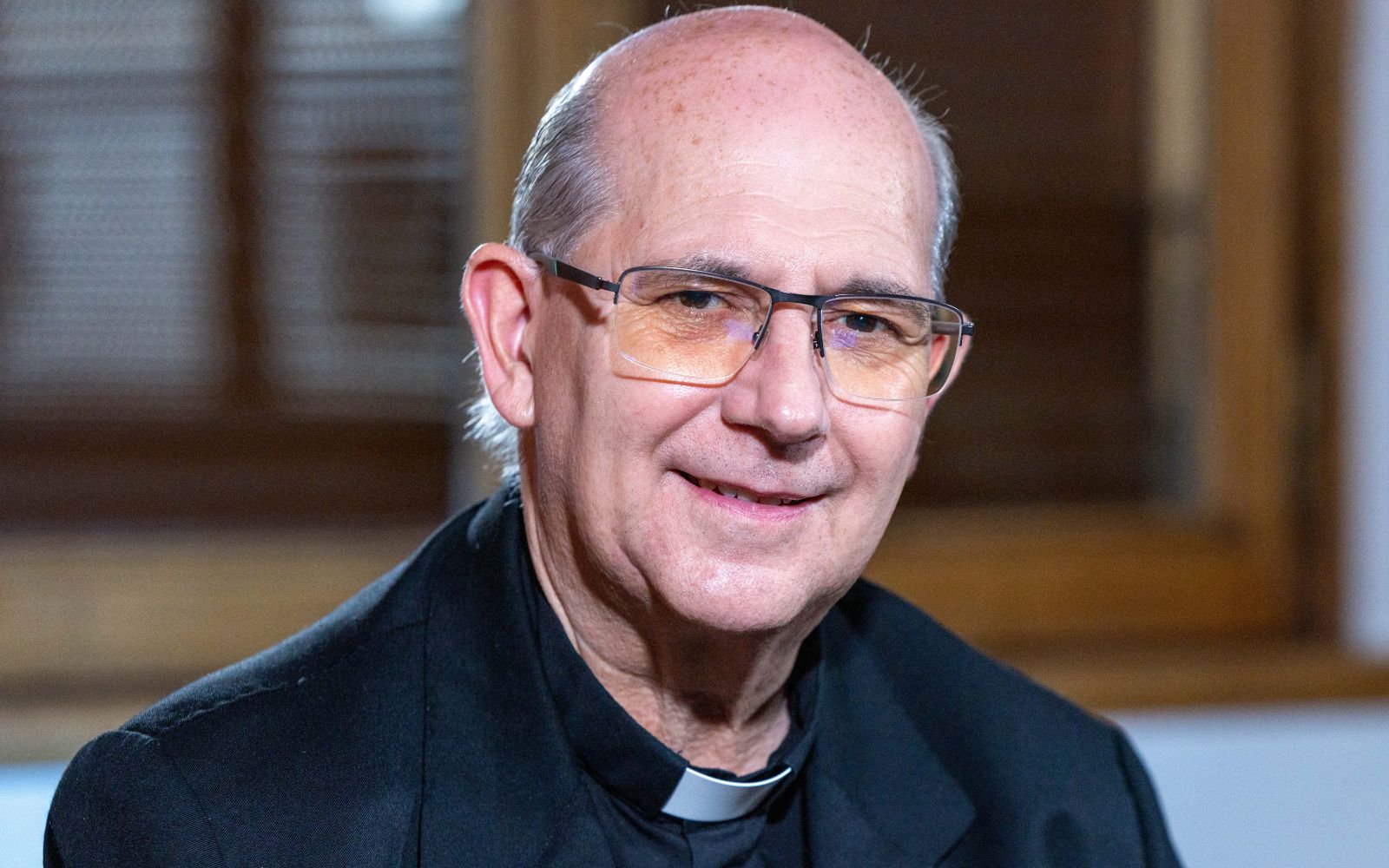
Nicaraguan dictatorship detains Bishop Abelardo Mata again #Catholic Nicaraguan police detained Bishop Emeritus Abelardo Mata again on June 30, just one day after his initial detention and subsequent release on June 29. The 80-year-old prelate is reportedly now under house arrest.Mata, bishop emeritus of Estelí, was arrested at a clinic where he had gone for a checkup for his pacemaker. This occurred the day after he celebrated a Mass in which he prayed for the persecuted Church in Nicaragua, an act that may have provoked the ire of the dictatorship of President Daniel Ortega and his wife and vice president, Rosario Murillo.Following the new detention, the bishop is reportedly under house arrest at his home in the town of Tisma, according to the Nicaraguan newspaper La Prensa.In addition to the bishop, Father Francisco Morales, pastor of Calvary’s Cross Church in Estelí, where Mata celebrated Mass on June 28, and Deacon Wilfred Arauz Rodríguez were also detained. Both were released but remain subject to conditions.“Bishop Mata holds no administrative responsibilities within the Diocese of Estelí but continues to assist that diocese with its pastoral needs. He thus went to celebrate Mass last Sunday at the request of the parish priest. However, the Sandinista dictatorship has forbidden him from being in the department of Estelí,” ​​Martha Patricia Molina explained on July 2 to ACI Prensa, the Spanish-language sister service of EWTN News. She is the author of the report “Nicaragua: A Persecuted Church,” which documents thousands of attacks by the dictatorship against Catholics since 2018.Molina further highlighted that “the Diocese of Estelí has ​​always been a target of repression by the Sandinista dictatorship due to the hatred the dictatorial couple harbors toward Bishop Rolando José Álvarez, the apostolic administrator. Although Álvarez is not voicing opinions, the dictatorship views him as a constant focus of their attention.”Álvarez, apostolic administrator of Estelí since 2021, following Mata’s resignation, currently lives in Rome after being exiled in January 2024 while serving a 26-year prison sentence. The prelate was a consistent critic of the Ortega-Murillo dictatorship.Even though Álvarez is living in exile, Pope Francis confirmed him in his position as bishop of Matagalpa and apostolic administrator of Estelí.Molina also told ACI Prensa that the situation in Estelí “is being aggravated because Mata has been critical of the arbitrary actions committed by the Sandinista dictatorship. Currently, we only learn of 10% of the attacks committed against the Catholic Church because the rest go unreported due to the fear and caution priests and laypeople have about speaking out in the news media or on social media.”The researcher noted that the number of reports could reach “400 a day” if Catholics were able to speak freely in public.The ‘dire’ situation in EstelíMolina noted that the dictatorship is now persecuting the Church in a different way: “They had stopped abducting priests, but now they have gone back to it; furthermore, there are cases of priests having to report to police stations to give statements, and also there’s the constant monitoring and harassment of priests across the countryʼs various dioceses by the police.”The researcher pointed out that the Diocese of Estelí, “the one most persecuted by the Ortega-Murillo dictatorship after Matagalpa,” is currently forced to “operate without [its bishop] and with only 42% of its clergy. This makes pastoral work difficult and places a heavier workload on the active priests.”These priests must also take on “the duties of those who are in exile due to persecution, those who have passed away, or those who, for one reason or another, are not exercising their ministry in Nicaragua,” she pointed out.“The situation is worsening because the Sandinista dictatorship has banned diaconal and priestly ordinations in that diocese,” she emphasized. Ordinations are also forbidden in Matagalpa, Jinotega, and Siuna. None of the four dioceses has its bishop present, as they have all been exiled from Nicaragua.The need to be vigilant“We have to remain vigilant regarding Bishop Mata because his health is fragile and requires professional care. What worries me is that the last individuals who have been under surveillance by the dictatorship or the police have ended up in worse condition or even dead,” Arturo McFields, Nicaragua’s former ambassador to the Organization of American States (OAS), told ACI Prensa on July 2.A recent example of this situation is the case of Brooklyn Rivera, an Indigenous leader and political prisoner whom the Ortega-Murillo dictatorship held incommunicado for over 970 days. He passed away in late May at the age of 73, following several statements from the regime regarding his critical health condition.“If the dictatorship’s actions are not strongly denounced, the regime would not hesitate to bring about the death of Bishop Mata, as they harbor deep resentment toward this man of God because of his courage and clarity for many years,” McFields emphasized.An exiled Nicaraguan priest who prefers to remain anonymous to avoid reprisals told ACI Prensa that the situation involving Mata “is sad, but it can also be viewed as a sign of the fear the dictatorship has of an elderly bishop, an 80-year-old (with health issues) because his presence as a shepherd strengthens the lives of the faithful,” ensuring that “the faith remains alive.”The priest emphasized that he continues to prepare “our hearts for a future in which we can rebuild the Church in Nicaragua not only socially but also through faith because spiritual and pastoral reconstruction work must also be done.”Call for releaseFélix Maradiaga, president of the Freedom for Nicaragua Foundation, issued “an urgent call to the international community, human rights organizations, the world’s democracies, and all people of goodwill to remain vigilant, demand the immediate release of Bishop Juan Abelardo Mata and all arbitrarily detained members of the clergy, and firmly condemn this new escalation of repression.”“Nicaragua cannot normalize a dictatorship imprisoning priests, silencing pulpits, and persecuting the faith. The moral voice of the Church has historically stood with the Nicaraguan people during their most difficult times, and that is precisely why the regime seeks to intimidate it,” Maradiaga told ACI Prensa.This story was first published by ACI Prensa, the Spanish-language sister service of EWTN News. It has been translated and adapted by EWTN News English.

Nicaraguan dictatorship detains Bishop Abelardo Mata again #Catholic Nicaraguan police detained Bishop Emeritus Abelardo Mata again on June 30, just one day after his initial detention and subsequent release on June 29. The 80-year-old prelate is reportedly now under house arrest.Mata, bishop emeritus of Estelí, was arrested at a clinic where he had gone for a checkup for his pacemaker. This occurred the day after he celebrated a Mass in which he prayed for the persecuted Church in Nicaragua, an act that may have provoked the ire of the dictatorship of President Daniel Ortega and his wife and vice president, Rosario Murillo.Following the new detention, the bishop is reportedly under house arrest at his home in the town of Tisma, according to the Nicaraguan newspaper La Prensa.In addition to the bishop, Father Francisco Morales, pastor of Calvary’s Cross Church in Estelí, where Mata celebrated Mass on June 28, and Deacon Wilfred Arauz Rodríguez were also detained. Both were released but remain subject to conditions.“Bishop Mata holds no administrative responsibilities within the Diocese of Estelí but continues to assist that diocese with its pastoral needs. He thus went to celebrate Mass last Sunday at the request of the parish priest. However, the Sandinista dictatorship has forbidden him from being in the department of Estelí,” ​​Martha Patricia Molina explained on July 2 to ACI Prensa, the Spanish-language sister service of EWTN News. She is the author of the report “Nicaragua: A Persecuted Church,” which documents thousands of attacks by the dictatorship against Catholics since 2018.Molina further highlighted that “the Diocese of Estelí has ​​always been a target of repression by the Sandinista dictatorship due to the hatred the dictatorial couple harbors toward Bishop Rolando José Álvarez, the apostolic administrator. Although Álvarez is not voicing opinions, the dictatorship views him as a constant focus of their attention.”Álvarez, apostolic administrator of Estelí since 2021, following Mata’s resignation, currently lives in Rome after being exiled in January 2024 while serving a 26-year prison sentence. The prelate was a consistent critic of the Ortega-Murillo dictatorship.Even though Álvarez is living in exile, Pope Francis confirmed him in his position as bishop of Matagalpa and apostolic administrator of Estelí.Molina also told ACI Prensa that the situation in Estelí “is being aggravated because Mata has been critical of the arbitrary actions committed by the Sandinista dictatorship. Currently, we only learn of 10% of the attacks committed against the Catholic Church because the rest go unreported due to the fear and caution priests and laypeople have about speaking out in the news media or on social media.”The researcher noted that the number of reports could reach “400 a day” if Catholics were able to speak freely in public.The ‘dire’ situation in EstelíMolina noted that the dictatorship is now persecuting the Church in a different way: “They had stopped abducting priests, but now they have gone back to it; furthermore, there are cases of priests having to report to police stations to give statements, and also there’s the constant monitoring and harassment of priests across the countryʼs various dioceses by the police.”The researcher pointed out that the Diocese of Estelí, “the one most persecuted by the Ortega-Murillo dictatorship after Matagalpa,” is currently forced to “operate without [its bishop] and with only 42% of its clergy. This makes pastoral work difficult and places a heavier workload on the active priests.”These priests must also take on “the duties of those who are in exile due to persecution, those who have passed away, or those who, for one reason or another, are not exercising their ministry in Nicaragua,” she pointed out.“The situation is worsening because the Sandinista dictatorship has banned diaconal and priestly ordinations in that diocese,” she emphasized. Ordinations are also forbidden in Matagalpa, Jinotega, and Siuna. None of the four dioceses has its bishop present, as they have all been exiled from Nicaragua.The need to be vigilant“We have to remain vigilant regarding Bishop Mata because his health is fragile and requires professional care. What worries me is that the last individuals who have been under surveillance by the dictatorship or the police have ended up in worse condition or even dead,” Arturo McFields, Nicaragua’s former ambassador to the Organization of American States (OAS), told ACI Prensa on July 2.A recent example of this situation is the case of Brooklyn Rivera, an Indigenous leader and political prisoner whom the Ortega-Murillo dictatorship held incommunicado for over 970 days. He passed away in late May at the age of 73, following several statements from the regime regarding his critical health condition.“If the dictatorship’s actions are not strongly denounced, the regime would not hesitate to bring about the death of Bishop Mata, as they harbor deep resentment toward this man of God because of his courage and clarity for many years,” McFields emphasized.An exiled Nicaraguan priest who prefers to remain anonymous to avoid reprisals told ACI Prensa that the situation involving Mata “is sad, but it can also be viewed as a sign of the fear the dictatorship has of an elderly bishop, an 80-year-old (with health issues) because his presence as a shepherd strengthens the lives of the faithful,” ensuring that “the faith remains alive.”The priest emphasized that he continues to prepare “our hearts for a future in which we can rebuild the Church in Nicaragua not only socially but also through faith because spiritual and pastoral reconstruction work must also be done.”Call for releaseFélix Maradiaga, president of the Freedom for Nicaragua Foundation, issued “an urgent call to the international community, human rights organizations, the world’s democracies, and all people of goodwill to remain vigilant, demand the immediate release of Bishop Juan Abelardo Mata and all arbitrarily detained members of the clergy, and firmly condemn this new escalation of repression.”“Nicaragua cannot normalize a dictatorship imprisoning priests, silencing pulpits, and persecuting the faith. The moral voice of the Church has historically stood with the Nicaraguan people during their most difficult times, and that is precisely why the regime seeks to intimidate it,” Maradiaga told ACI Prensa.This story was first published by ACI Prensa, the Spanish-language sister service of EWTN News. It has been translated and adapted by EWTN News English.

Mata was detained on June 29, released the same day, and as of June 30 reportedly is under house arrest. At a June 28 Mass he asked for prayers for the persecuted Church, triggering retaliation.

Read More
97-year-old cardinal, tortured under communism, climbs Medjugorje’s Apparition Hill #Catholic Cardinal Ernest Simoni, 97, who was tortured by Albaniaʼs communist regime, climbed Apparition Hill in Medjugorje on June 23, the day before the 45th anniversary of the start of the alleged apparitions.Six young people claimed to have seen the Virgin Mary for the first time on June 24, 1981, the feast day of St. John the Baptist, on Mount Podbrdo. Since then, some of those visionaries say they still receive messages from the Mother of God on a daily basis.Following a lengthy investigation, the Dicastery for the Doctrine of the Faith approved a document in 2024 titled The Queen of Peace, which acknowledges the spiritual fruits that have been borne, finds no obstacles in the alleged messages received, and makes no pronouncement regarding the supernatural nature of the phenomena.Assisted by young people from the Cenacolo Community, who carried the cardinal part of the way as he was seated on a litter, the Albanian cardinal traversed a portion of the rocky path on foot, though not without difficulty.
 
 Members of the Cenacolo Community carry Cardinal Simoni in Medjugorje. | Credit: Courtesy of Maria Vision Medjugorje
 
 Along the way, he blessed those present who stopped to greet him. Upon reaching the summit of the mountain, he prayed the rosary beside the statue of the Virgin Mary and blessed the water with which he sprinkled the crowd before returning.The footage of this pilgrimage, provided by María Visión Medjugorje, bears witness to the determination of the cardinal who, as a priest, endured the communist dictatorship of Enver Hoxha, the man who proclaimed Albania to be “the first atheist state in the world."A priest twice sentenced to deathBorn in 1928 in the village of Troshani, the young Simoni underwent formation with the Franciscans from 1938 to 1948, until a bloody religious persecution eliminated the communityʼs superiors and forced him to continue his formation in secret.In 1956, he was ordained a priest at St. Stephenʼs Cathedral in the Archdiocese of Shkodrë-Pult. Seven years later, after celebrating Christmas Eve Mass on Dec. 24, 1963, he was arrested by four agents and informed that he would be executed by hanging, accused of having celebrated a Mass for the repose of the soul of recently assassinated U.S. President John F. Kennedy at the behest of St. Paul VI. According to his own account, an attempt was made to entrap him by placing another prisoner in his cell who began complaining about the Communist Party. News of his preaching about love for oneʼs enemies while in prison reached the dictator, who decided to commute his sentence to 28 years of forced labor. During those years, he continued to celebrate Mass and exercise his priestly ministry clandestinely.In 1973, he was once again sentenced to death, accused of inciting a rebellion. However, exonerating testimony prevented the immediate execution of the sentence, and he remained in prison for another 18 years until his release in 1981.He continued his pastoral work in secret for another nine years, until the fall of the communist regime in 1990. “The Lord has helped me to serve so many people and to reconcile many, driving hatred and the devil away from the hearts of men,” he stated upon concluding his testimony before Pope Francis in October 2016.A month later, Simoni was created a cardinal at the consistory held on Nov. 19, 2016.This story was first published by ACI Prensa, the Spanish-language sister service of EWTN News. It has been translated and adapted by EWTN News English.

97-year-old cardinal, tortured under communism, climbs Medjugorje’s Apparition Hill #Catholic Cardinal Ernest Simoni, 97, who was tortured by Albaniaʼs communist regime, climbed Apparition Hill in Medjugorje on June 23, the day before the 45th anniversary of the start of the alleged apparitions.Six young people claimed to have seen the Virgin Mary for the first time on June 24, 1981, the feast day of St. John the Baptist, on Mount Podbrdo. Since then, some of those visionaries say they still receive messages from the Mother of God on a daily basis.Following a lengthy investigation, the Dicastery for the Doctrine of the Faith approved a document in 2024 titled The Queen of Peace, which acknowledges the spiritual fruits that have been borne, finds no obstacles in the alleged messages received, and makes no pronouncement regarding the supernatural nature of the phenomena.Assisted by young people from the Cenacolo Community, who carried the cardinal part of the way as he was seated on a litter, the Albanian cardinal traversed a portion of the rocky path on foot, though not without difficulty. Members of the Cenacolo Community carry Cardinal Simoni in Medjugorje. | Credit: Courtesy of Maria Vision Medjugorje Along the way, he blessed those present who stopped to greet him. Upon reaching the summit of the mountain, he prayed the rosary beside the statue of the Virgin Mary and blessed the water with which he sprinkled the crowd before returning.The footage of this pilgrimage, provided by María Visión Medjugorje, bears witness to the determination of the cardinal who, as a priest, endured the communist dictatorship of Enver Hoxha, the man who proclaimed Albania to be “the first atheist state in the world."A priest twice sentenced to deathBorn in 1928 in the village of Troshani, the young Simoni underwent formation with the Franciscans from 1938 to 1948, until a bloody religious persecution eliminated the communityʼs superiors and forced him to continue his formation in secret.In 1956, he was ordained a priest at St. Stephenʼs Cathedral in the Archdiocese of Shkodrë-Pult. Seven years later, after celebrating Christmas Eve Mass on Dec. 24, 1963, he was arrested by four agents and informed that he would be executed by hanging, accused of having celebrated a Mass for the repose of the soul of recently assassinated U.S. President John F. Kennedy at the behest of St. Paul VI. According to his own account, an attempt was made to entrap him by placing another prisoner in his cell who began complaining about the Communist Party. News of his preaching about love for oneʼs enemies while in prison reached the dictator, who decided to commute his sentence to 28 years of forced labor. During those years, he continued to celebrate Mass and exercise his priestly ministry clandestinely.In 1973, he was once again sentenced to death, accused of inciting a rebellion. However, exonerating testimony prevented the immediate execution of the sentence, and he remained in prison for another 18 years until his release in 1981.He continued his pastoral work in secret for another nine years, until the fall of the communist regime in 1990. “The Lord has helped me to serve so many people and to reconcile many, driving hatred and the devil away from the hearts of men,” he stated upon concluding his testimony before Pope Francis in October 2016.A month later, Simoni was created a cardinal at the consistory held on Nov. 19, 2016.This story was first published by ACI Prensa, the Spanish-language sister service of EWTN News. It has been translated and adapted by EWTN News English.

In an act of great devotion, the elderly cardinal reached the top with assistance, prayed the rosary and blessed those present with holy water.

Read More
Picture of the day


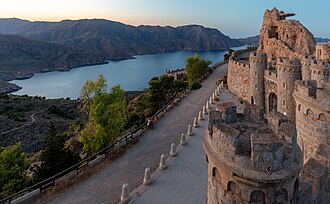
View of the coastal artillery site Castillitos, Cartagena, Spain. It was built together with the coastal artillery Cenizas in order to protect the entrance to the Bay of Cartagena in the Mediterranean Sea. The construction took place between 1933 and 1936 following a project from 1926 during the dictatorship of Primo de Rivera. It’s a Spanish National Heritage Monument since 1985.
 #ImageOfTheDay
Picture of the day
View of the coastal artillery site Castillitos, Cartagena, Spain. It was built together with the coastal artillery Cenizas in order to protect the entrance to the Bay of Cartagena in the Mediterranean Sea. The construction took place between 1933 and 1936 following a project from 1926 during the dictatorship of Primo de Rivera. It’s a Spanish National Heritage Monument since 1985.
Read More