discipline

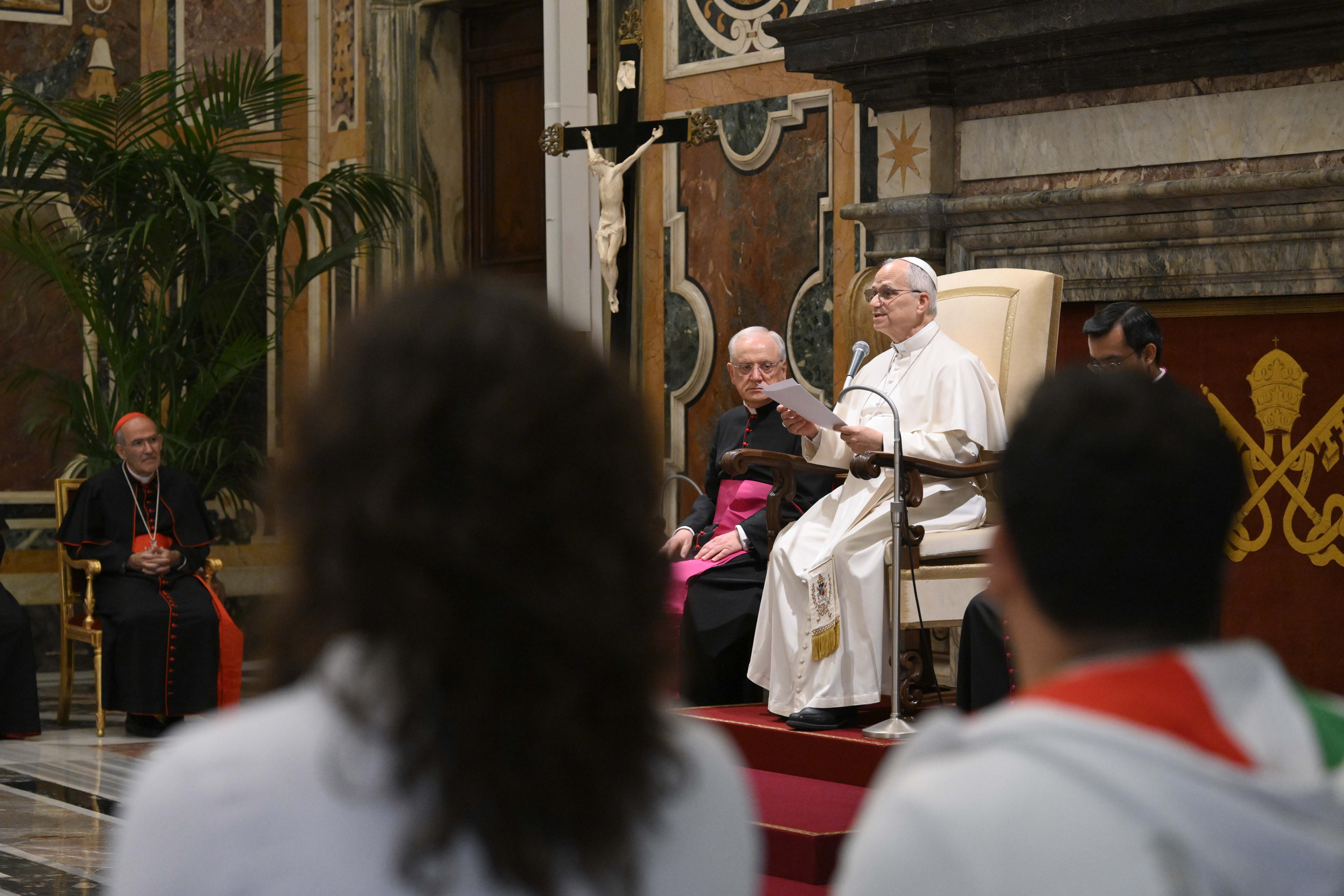
Pope Leo XIV: Sport must be a ‘space for encounter’ #Catholic VATICAN CITY — Pope Leo XIV on Thursday praised athletes from the Milan-Cortina 2026 Olympic and Paralympic Games, saying sport “can and must truly become a space for encounter” in a world marked by “polarization, rivalry, and conflicts that escalate into devastating wars.”Speaking in the Clementine Hall at the Vatican on April 9, the Holy Father welcomed the athletes “with joy” shortly after the conclusion of the Winter Games and thanked them for their witness.“Thank you for what you have shown,” the pope said. “Truly, sport, when lived authentically, is not merely a performance: It is a form of language, a narrative made up of gestures, of effort, of anticipation, of falls, and of new beginnings.”Leo XIV said the games revealed not only athletic achievement but also “stories of sacrifice, of discipline, of tenacity.”“In particular, in Paralympic competitions we have seen how a limitation can become a source of revelation: not something that holds a person back but something that can be transformed, even transfigured into newfound qualities,” he said. “You athletes have become life stories that inspire a great number of people.”The pope also emphasized the communal dimension of athletic success, saying: “No one wins alone.”“Your team spirit reminds us that no one wins alone, because behind every victory there are many people involved — from family to teams — as well as many days of training, pressure, and solitude,” he said.Quoting Psalm 18, he added: “It is often precisely in these moments that God reveals himself, as the psalmist sings: ‘Thou didst give a wide place for my steps under me, and my feet did not slip.’”Leo XIV said sport helps mature the human person by fostering discipline, humility, and right relationships.“Sport contributes to the maturing of our character, requires a steadfast spirituality, and is a fruitful form of education,” he said. “By training the mind, along with the limbs, sport is authentic when it remains humane — that is, when it remains faithful to its first vocation: to be a school of life and talent.”“A school in which one learns that true success is measured by the quality of relationships: not by the amount of prizes but by mutual respect, by shared joy in the game,” he continued.Referring to his Feb. 6 apostolic letter “Life in Abundance,” written for the occasion of the Olympics and Paralympics, the pope said the Gospel’s vision of abundant life points to harmony between the physical and interior dimensions of the person.Turning to the present global situation, Leo XIV said the athletes’ witness carries special importance.“At the present time, so marked by polarization, rivalry, and conflicts that escalate into devastating wars, your commitment takes on an even greater value: Sport can and must truly become a space for encounter!” he said. “Not a show of strength but an exercise in relationship.”Recalling the value of the Olympic truce, he thanked the athletes for making visible “this possibility of peace as a prophecy that is by no means rhetorical: breaking the logic of violence to promote that of encounter.”The pope also warned against distortions in sport, including doping, commercialism, and the reduction of athletes to mere spectacle.“We are well aware that sport also brings with it certain temptations: that of performance at any cost, which can lead to doping; that of profit, which transforms the game into a market and the athlete into a star; that of spectacle, which reduces the athlete to an image or a number,” he said. “Against these excesses, your witness is essential.”Leo XIV concluded by thanking the athletes for showing “an honest and beautiful way of inhabiting the world” and urged them to keep the human person at the center of sport in all its forms.Following the audience, several of the athletes spoke to journalists about their experience of the audience and competing in the Winter Games, including speed skater Francesca Lollobrigida, who won two gold medals at Milan-Cortina this year.
 
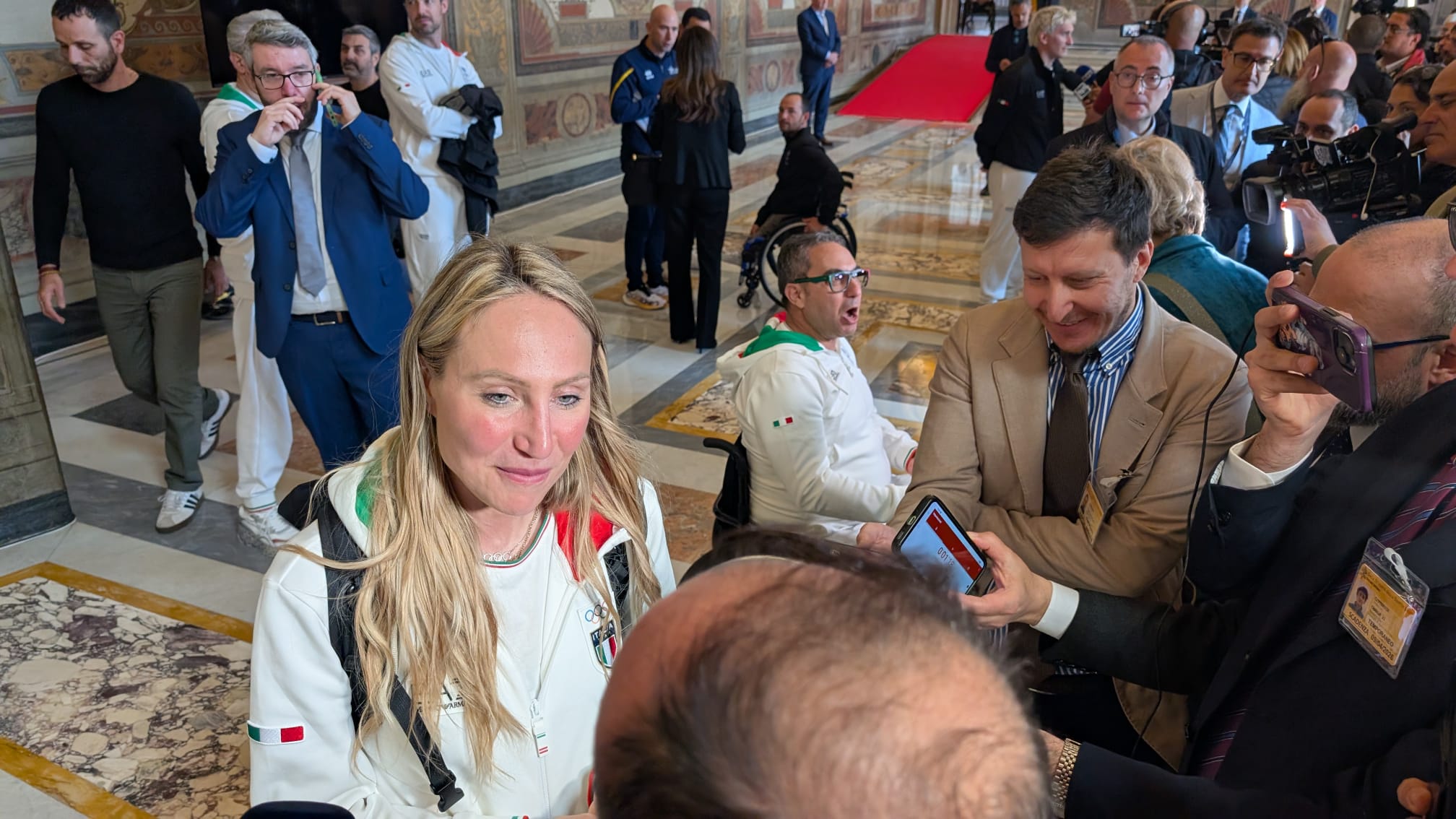
 Francesca Lollobrigida responds to journalists after a papal audience at the Apostolic Palace in Vatican City on April 9, 2026. | Credit: Ishmael Adibuah/EWTN News
 
 “My goal was just to show that in my sport; I was able to combine, you know, being a mother and a top athlete,“ Lollobrigida told EWTN News. ”Iʼm just doing this for the other women, you know, that maybe at some points during their career they want to stop to focus on the family and then to come back.”Nikko Landeros, an American-born Catholic who lost both his legs in 2007, represented Italy in ice hockey at the latest Paralympic games. He described to EWTN News the role of Catholicism in his athletic journey.“At home, I started pretty much Catholic. You know, I went to Catholic school in the U.S. Weʼve been going to church now… not as much as I should, but, you know, I still pray every day, and Iʼm thankful to be here. You know, if it werenʼt for God, I wouldnʼt be alive. So, you know, Iʼm super thankful,” Landeros said.This story was first published by ACI Stampa, the Italian-language sister service of EWTN News. It has been translated and adapted by EWTN News English.

Pope Leo XIV: Sport must be a ‘space for encounter’ #Catholic VATICAN CITY — Pope Leo XIV on Thursday praised athletes from the Milan-Cortina 2026 Olympic and Paralympic Games, saying sport “can and must truly become a space for encounter” in a world marked by “polarization, rivalry, and conflicts that escalate into devastating wars.”Speaking in the Clementine Hall at the Vatican on April 9, the Holy Father welcomed the athletes “with joy” shortly after the conclusion of the Winter Games and thanked them for their witness.“Thank you for what you have shown,” the pope said. “Truly, sport, when lived authentically, is not merely a performance: It is a form of language, a narrative made up of gestures, of effort, of anticipation, of falls, and of new beginnings.”Leo XIV said the games revealed not only athletic achievement but also “stories of sacrifice, of discipline, of tenacity.”“In particular, in Paralympic competitions we have seen how a limitation can become a source of revelation: not something that holds a person back but something that can be transformed, even transfigured into newfound qualities,” he said. “You athletes have become life stories that inspire a great number of people.”The pope also emphasized the communal dimension of athletic success, saying: “No one wins alone.”“Your team spirit reminds us that no one wins alone, because behind every victory there are many people involved — from family to teams — as well as many days of training, pressure, and solitude,” he said.Quoting Psalm 18, he added: “It is often precisely in these moments that God reveals himself, as the psalmist sings: ‘Thou didst give a wide place for my steps under me, and my feet did not slip.’”Leo XIV said sport helps mature the human person by fostering discipline, humility, and right relationships.“Sport contributes to the maturing of our character, requires a steadfast spirituality, and is a fruitful form of education,” he said. “By training the mind, along with the limbs, sport is authentic when it remains humane — that is, when it remains faithful to its first vocation: to be a school of life and talent.”“A school in which one learns that true success is measured by the quality of relationships: not by the amount of prizes but by mutual respect, by shared joy in the game,” he continued.Referring to his Feb. 6 apostolic letter “Life in Abundance,” written for the occasion of the Olympics and Paralympics, the pope said the Gospel’s vision of abundant life points to harmony between the physical and interior dimensions of the person.Turning to the present global situation, Leo XIV said the athletes’ witness carries special importance.“At the present time, so marked by polarization, rivalry, and conflicts that escalate into devastating wars, your commitment takes on an even greater value: Sport can and must truly become a space for encounter!” he said. “Not a show of strength but an exercise in relationship.”Recalling the value of the Olympic truce, he thanked the athletes for making visible “this possibility of peace as a prophecy that is by no means rhetorical: breaking the logic of violence to promote that of encounter.”The pope also warned against distortions in sport, including doping, commercialism, and the reduction of athletes to mere spectacle.“We are well aware that sport also brings with it certain temptations: that of performance at any cost, which can lead to doping; that of profit, which transforms the game into a market and the athlete into a star; that of spectacle, which reduces the athlete to an image or a number,” he said. “Against these excesses, your witness is essential.”Leo XIV concluded by thanking the athletes for showing “an honest and beautiful way of inhabiting the world” and urged them to keep the human person at the center of sport in all its forms.Following the audience, several of the athletes spoke to journalists about their experience of the audience and competing in the Winter Games, including speed skater Francesca Lollobrigida, who won two gold medals at Milan-Cortina this year. Francesca Lollobrigida responds to journalists after a papal audience at the Apostolic Palace in Vatican City on April 9, 2026. | Credit: Ishmael Adibuah/EWTN News “My goal was just to show that in my sport; I was able to combine, you know, being a mother and a top athlete,“ Lollobrigida told EWTN News. ”Iʼm just doing this for the other women, you know, that maybe at some points during their career they want to stop to focus on the family and then to come back.”Nikko Landeros, an American-born Catholic who lost both his legs in 2007, represented Italy in ice hockey at the latest Paralympic games. He described to EWTN News the role of Catholicism in his athletic journey.“At home, I started pretty much Catholic. You know, I went to Catholic school in the U.S. Weʼve been going to church now… not as much as I should, but, you know, I still pray every day, and Iʼm thankful to be here. You know, if it werenʼt for God, I wouldnʼt be alive. So, you know, Iʼm super thankful,” Landeros said.This story was first published by ACI Stampa, the Italian-language sister service of EWTN News. It has been translated and adapted by EWTN News English.

The pontiff addressed athletes from the Milan-Cortina 2026 Olympic and Paralympic Games.

Read More
Official delegation announced for Pope Leo XIV’s upcoming visit to Equatorial Guinea #Catholic EBEBIYÍN, Equatorial Guinea — Preparations for the planned apostolic visit of Pope Leo XIV to Equatorial Guinea have gained momentum, with Church authorities unveiling details of the high-level delegation expected to accompany the Holy Father during his visit scheduled for April 21–23.The announcement was made by Father Cristino Ela Engonga, secretary-general of the Episcopal Conference of Equatorial Guinea (CEGE) and general coordinator of the Church commission for the papal visit, during a strategic meeting that was held on March 28 at the bishop’s house in Bata Diocese.The meeting brought together members of various subcommissions from the dioceses of Bata, Ebibeyín, Evinayong, and Mongomo to assess ongoing preparations and receive updates from the Holy See regarding the historic visit, which will mark Pope Leo XIV’s first trip to Africa.According to Engonga, nearly 50 Vatican officials are expected to accompany the pontiff, including five cardinals. Among them is Cardinal Robert Sarah, prefect emeritus of the Dicastery for Divine Worship and the Discipline of the Sacraments.The pope is expected to visit key cities, including Malabo, Mongomo, and Bata, accompanied by senior Vatican officials such as Secretary of State Cardinal Pietro Parolin and Cardinal Luis Antonio Tagle, pro-prefect of the Dicastery for Evangelization.Other prominent members of the papal entourage include Cardinal George Jacob Koovakad, prefect of the Dicastery for Interreligious Dialogue, and Cardinal Peter Kodwo Appiah Turkson, chancellor of the Pontifical Academy of Social Sciences.They will be joined by 42 additional Vatican officials, including Monsignor José Nahúm Jairo Salas, who is responsible for coordinating papal international travels, as well as leading Vatican communicators such as Paolo Ruffini and Matteo Bruni.Beyond the papal entourage, the meeting also highlighted the participation of special guests, including Cardinal Fridolin Ambongo, president of the Symposium of Episcopal Conferences of Africa and Madagascar (SECAM), as well as Archbishop Luis Javier Argüello García, president of the Spanish Episcopal Conference (CEE).Engonga further said that more than 40 Catholic bishops from six central African countries have expressed their intention to attend the event.During the meeting, participants also received a report from the masters of ceremonies of CEGE, Fathers Julio Enrique Meheme and Diosdado Márquez Sabadell, who recently traveled to Rome to prepare the liturgical celebrations the pope will preside over.The Holy Father is expected to arrive in Malabo on Tuesday, April 21, the final leg of his four-nation African trip. Following the official welcome ceremony, he will meet the president of Equatorial Guinea and address political leaders, civil society representatives, and the diplomatic corps.In the afternoon, the pope will engage with academics and artists during a meeting with representatives of the world of culture at the León XIV Campus of the National University. A pastoral visit to patients and staff at the Jean Pierre Olie Psychiatric Hospital is also scheduled for this day.On Wednesday, April 22, the pope will travel to Mongomo to celebrate Mass at the Basilica of the Immaculate Conception before visiting the Pope Francis Technology School.Later in the day, the Holy Father will continue to Bata, where he is scheduled to visit a prison; pray at a memorial dedicated to victims of the March 7, 2021, explosion; and meet young people and families at Bata Stadium.The apostolic journey to Africa is to conclude on Thursday, April 23, with a final Mass celebrated by the pope at Malabo Stadium.Following the farewell ceremony at Malabo International Airport, the Holy Father will depart for Rome, arriving later that evening at Rome’s Fiumicino International Airport.This story was first published by ACI Africa, the sister service of EWTN News in Africa, and has been adapted by EWTN News.

Official delegation announced for Pope Leo XIV’s upcoming visit to Equatorial Guinea #Catholic EBEBIYÍN, Equatorial Guinea — Preparations for the planned apostolic visit of Pope Leo XIV to Equatorial Guinea have gained momentum, with Church authorities unveiling details of the high-level delegation expected to accompany the Holy Father during his visit scheduled for April 21–23.The announcement was made by Father Cristino Ela Engonga, secretary-general of the Episcopal Conference of Equatorial Guinea (CEGE) and general coordinator of the Church commission for the papal visit, during a strategic meeting that was held on March 28 at the bishop’s house in Bata Diocese.The meeting brought together members of various subcommissions from the dioceses of Bata, Ebibeyín, Evinayong, and Mongomo to assess ongoing preparations and receive updates from the Holy See regarding the historic visit, which will mark Pope Leo XIV’s first trip to Africa.According to Engonga, nearly 50 Vatican officials are expected to accompany the pontiff, including five cardinals. Among them is Cardinal Robert Sarah, prefect emeritus of the Dicastery for Divine Worship and the Discipline of the Sacraments.The pope is expected to visit key cities, including Malabo, Mongomo, and Bata, accompanied by senior Vatican officials such as Secretary of State Cardinal Pietro Parolin and Cardinal Luis Antonio Tagle, pro-prefect of the Dicastery for Evangelization.Other prominent members of the papal entourage include Cardinal George Jacob Koovakad, prefect of the Dicastery for Interreligious Dialogue, and Cardinal Peter Kodwo Appiah Turkson, chancellor of the Pontifical Academy of Social Sciences.They will be joined by 42 additional Vatican officials, including Monsignor José Nahúm Jairo Salas, who is responsible for coordinating papal international travels, as well as leading Vatican communicators such as Paolo Ruffini and Matteo Bruni.Beyond the papal entourage, the meeting also highlighted the participation of special guests, including Cardinal Fridolin Ambongo, president of the Symposium of Episcopal Conferences of Africa and Madagascar (SECAM), as well as Archbishop Luis Javier Argüello García, president of the Spanish Episcopal Conference (CEE).Engonga further said that more than 40 Catholic bishops from six central African countries have expressed their intention to attend the event.During the meeting, participants also received a report from the masters of ceremonies of CEGE, Fathers Julio Enrique Meheme and Diosdado Márquez Sabadell, who recently traveled to Rome to prepare the liturgical celebrations the pope will preside over.The Holy Father is expected to arrive in Malabo on Tuesday, April 21, the final leg of his four-nation African trip. Following the official welcome ceremony, he will meet the president of Equatorial Guinea and address political leaders, civil society representatives, and the diplomatic corps.In the afternoon, the pope will engage with academics and artists during a meeting with representatives of the world of culture at the León XIV Campus of the National University. A pastoral visit to patients and staff at the Jean Pierre Olie Psychiatric Hospital is also scheduled for this day.On Wednesday, April 22, the pope will travel to Mongomo to celebrate Mass at the Basilica of the Immaculate Conception before visiting the Pope Francis Technology School.Later in the day, the Holy Father will continue to Bata, where he is scheduled to visit a prison; pray at a memorial dedicated to victims of the March 7, 2021, explosion; and meet young people and families at Bata Stadium.The apostolic journey to Africa is to conclude on Thursday, April 23, with a final Mass celebrated by the pope at Malabo Stadium.Following the farewell ceremony at Malabo International Airport, the Holy Father will depart for Rome, arriving later that evening at Rome’s Fiumicino International Airport.This story was first published by ACI Africa, the sister service of EWTN News in Africa, and has been adapted by EWTN News.

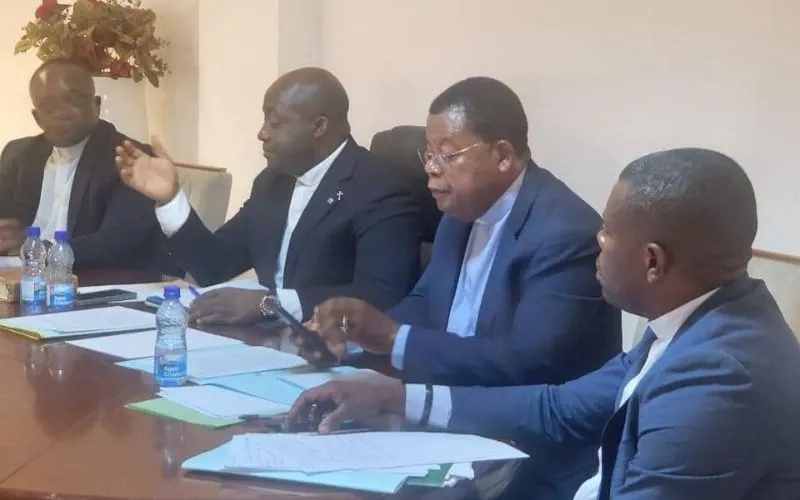
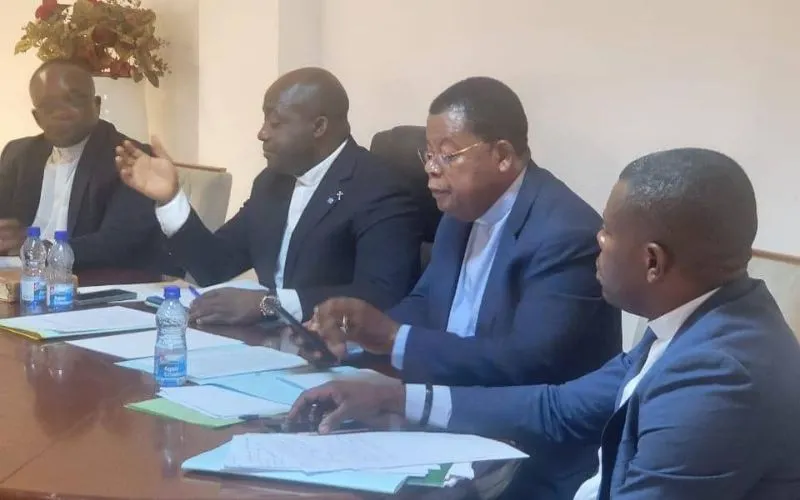
Church authorities unveiled details of the official delegation expected to accompany the Holy Father during his visit scheduled for April 21–23.
Read More
Archbishop Lori issues pastoral letter on political life in honor of 250th anniversary of the U.S. #Catholic Archbishop William Lori of Baltimore urged Catholics to foster a political culture grounded in Christ by prioritizing human dignity and genuine encounter amid partisan divisions.“In Charity and Truth: Toward a Renewed Political Culture,” released in anticipation of the 250th anniversary of the Declaration of Independence, is among the nine pastoral letters and reflections Lori has written as archbishop of Baltimore. The Feb. 9 letter explored how the anniversary can be “a moment of grace” and one of “responsibility.”The U.S. can both take pride in its achievements and “the vibrancy of our Catholic faith” while also recognizing “the fractures, wounds, and crises that mark both our national life and, sadly, even at times our ecclesial life,” Lori wrote.“As our nation approaches the 250th anniversary of the signing of the Declaration of Independence, we find ourselves invited into a moment of profound reflection and renewal,” Lori said. “Anniversaries are not merely occasions for nostalgia or celebration. Authentic remembrance always orients us toward renewal; it calls us to consider not only who we have been and who we are becoming — but, by God’s grace, who we are called to be.”The letter draws on teachings from the popes, the Second Vatican Council, the Constitution, and the lives of the saints.Addressing political discourse from a Catholic viewThe letter highlighted the U.S. political atmosphere, noting that “political discourse has become more vitriolic than usual.” Lori called for synodal listening, civic virtue, and patriotic charity — as exemplified by Blessed Michael McGivney — to renew public life with truth, responsibility, and hope.McGivney, founder of the Knights of Columbus, served immigrant families and addressed their economic insecurity and exclusion. Lori said genuine charity, unity, fraternity, and patriotic love should guide how Catholics engage with migrants and support their dignity and inclusion.
 
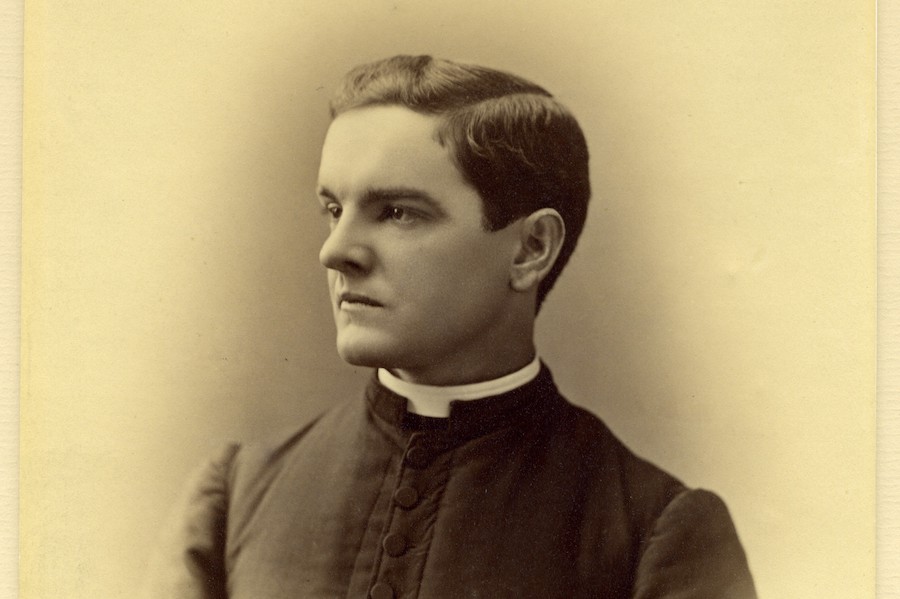
 Father Michael McGivney. | Credit: John Tierney/Father McGivney Guild
 
 Lori said ideological and cultural polarization “has produced an epidemic of loneliness and isolation — an aching sense of being unmoored, misunderstood, or unheard.”Lori wrote: “Synodality is, at its heart, a commitment to listening with humility, speaking with honesty, and discerning with the Holy Spirit — all while walking together, not apart.”“Such unity does not mean uniformity, nor does it eliminate disagreement,” Lori said. “Rather, it reflects a deeper truth. Our communion in Christ precedes our differences.”Synodality “does not dissolve disagreement. It expects it, because diverse people will inevitably see the world from different angles,” Lori said. The letter detailed what “synodality in politics looks like,” including a renewed willingness to listen, a refusal to demonize, a commitment to discernment, and a shared journey.Our world also needs “a new kind of politics — one that begins not with power but with the truth of the human person revealed in Jesus Christ,” Lori said. “Christ, in his incarnation, affirms the goodness of the human body and the meaning of human history.”According to Lori, this new type of politics includes resisting the idolatry of ideology. It must also honor the inherent dignity of every human life from conception to natural death, protect the vulnerable and the marginalized, engage in dialogue rather than accusation, and place the common good above partisan loyalty.A “mature Catholic political presence will” always defend human life in all its stages, advocate for the poor and the vulnerable, insist on racial and social justice, promote peace and reject violence, and uphold religious freedom for all, Lori said.In order to build a better political culture, “we must learn once more how to encounter, by stepping outside our ideological comfort zones, seeking out conversations with those on the margins or those with differing points of view, healing the wounds that divide us, committing ourselves to forgiveness,” Lori said.Virtue in public lifeLori called on U.S. citizens to employ the cardinal virtues in public life to create a “healthy political engagement.”People can use prudence by “evaluating policies not by slogans or emotional appeal but by their actual impact on human dignity,” Lori said. The virtue “helps us to see clearly, to judge wisely, and to act firmly.”Justice “is foundational to political life,” Lori said. “It is the virtue that moves us to honor the dignity of every human person and to recognize that each person has rights that must be protected and responsibilities that must be fulfilled.”Fortitude “strengthens us to pursue what is right despite fear, intimidation, or difficulty,” Lori said. “It empowers each of us to resist the pressure to conform to divisive rhetoric, to endure criticism when standing for truth, and to advocate for the vulnerable even when it is politically inconvenient.”Lastly, temperance “moderates our impulses and helps us resist the allure of excess,” Lori said. “In political culture, temperance is perhaps the virtue most needed today. Temperance invites us to slow down, to choose words carefully, to avoid rash judgments, and to discipline the desire to ‘win’ at the expense of relationship, truth, or the common good.”RenewalLori called for renewal ahead of the 250th anniversary of the U.S. He invited all Catholics and all people of goodwill to commit themselves to a renewed political culture and to answer the call of hope.The letter concluded by detailing “a path forward” on how to renew political culture, including: renewing prayer for the nation, practicing civil dialogue, rejecting hatred and violence, serving the common good, forming consciences, and encountering those different from oneself.“In the midst of political upheaval, the Church does not withdraw from public life, nor does she align herself with any partisan identity,” Lori said. “She remains what she has always been: a sacrament of unity, a beacon of hope, and a teacher of truth.”“Her mission is not to win elections but to form saints. Not to secure power but to proclaim the Gospel. Not to mirror the divisions of society but to heal them,” Lori said.“Our nation needs Catholics who embody this mission — women and men whose lives witness to the dignity of every human person, whose love bridges divides, whose courage resists hatred, and whose faith insists that despair does not have the final word. The civic landscape may look dark at times, but the Church has lived through darker times and emerged stronger, purified, and more faithful. So, too, can our nation,” he said.

Archbishop Lori issues pastoral letter on political life in honor of 250th anniversary of the U.S. #Catholic Archbishop William Lori of Baltimore urged Catholics to foster a political culture grounded in Christ by prioritizing human dignity and genuine encounter amid partisan divisions.“In Charity and Truth: Toward a Renewed Political Culture,” released in anticipation of the 250th anniversary of the Declaration of Independence, is among the nine pastoral letters and reflections Lori has written as archbishop of Baltimore. The Feb. 9 letter explored how the anniversary can be “a moment of grace” and one of “responsibility.”The U.S. can both take pride in its achievements and “the vibrancy of our Catholic faith” while also recognizing “the fractures, wounds, and crises that mark both our national life and, sadly, even at times our ecclesial life,” Lori wrote.“As our nation approaches the 250th anniversary of the signing of the Declaration of Independence, we find ourselves invited into a moment of profound reflection and renewal,” Lori said. “Anniversaries are not merely occasions for nostalgia or celebration. Authentic remembrance always orients us toward renewal; it calls us to consider not only who we have been and who we are becoming — but, by God’s grace, who we are called to be.”The letter draws on teachings from the popes, the Second Vatican Council, the Constitution, and the lives of the saints.Addressing political discourse from a Catholic viewThe letter highlighted the U.S. political atmosphere, noting that “political discourse has become more vitriolic than usual.” Lori called for synodal listening, civic virtue, and patriotic charity — as exemplified by Blessed Michael McGivney — to renew public life with truth, responsibility, and hope.McGivney, founder of the Knights of Columbus, served immigrant families and addressed their economic insecurity and exclusion. Lori said genuine charity, unity, fraternity, and patriotic love should guide how Catholics engage with migrants and support their dignity and inclusion. Father Michael McGivney. | Credit: John Tierney/Father McGivney Guild Lori said ideological and cultural polarization “has produced an epidemic of loneliness and isolation — an aching sense of being unmoored, misunderstood, or unheard.”Lori wrote: “Synodality is, at its heart, a commitment to listening with humility, speaking with honesty, and discerning with the Holy Spirit — all while walking together, not apart.”“Such unity does not mean uniformity, nor does it eliminate disagreement,” Lori said. “Rather, it reflects a deeper truth. Our communion in Christ precedes our differences.”Synodality “does not dissolve disagreement. It expects it, because diverse people will inevitably see the world from different angles,” Lori said. The letter detailed what “synodality in politics looks like,” including a renewed willingness to listen, a refusal to demonize, a commitment to discernment, and a shared journey.Our world also needs “a new kind of politics — one that begins not with power but with the truth of the human person revealed in Jesus Christ,” Lori said. “Christ, in his incarnation, affirms the goodness of the human body and the meaning of human history.”According to Lori, this new type of politics includes resisting the idolatry of ideology. It must also honor the inherent dignity of every human life from conception to natural death, protect the vulnerable and the marginalized, engage in dialogue rather than accusation, and place the common good above partisan loyalty.A “mature Catholic political presence will” always defend human life in all its stages, advocate for the poor and the vulnerable, insist on racial and social justice, promote peace and reject violence, and uphold religious freedom for all, Lori said.In order to build a better political culture, “we must learn once more how to encounter, by stepping outside our ideological comfort zones, seeking out conversations with those on the margins or those with differing points of view, healing the wounds that divide us, committing ourselves to forgiveness,” Lori said.Virtue in public lifeLori called on U.S. citizens to employ the cardinal virtues in public life to create a “healthy political engagement.”People can use prudence by “evaluating policies not by slogans or emotional appeal but by their actual impact on human dignity,” Lori said. The virtue “helps us to see clearly, to judge wisely, and to act firmly.”Justice “is foundational to political life,” Lori said. “It is the virtue that moves us to honor the dignity of every human person and to recognize that each person has rights that must be protected and responsibilities that must be fulfilled.”Fortitude “strengthens us to pursue what is right despite fear, intimidation, or difficulty,” Lori said. “It empowers each of us to resist the pressure to conform to divisive rhetoric, to endure criticism when standing for truth, and to advocate for the vulnerable even when it is politically inconvenient.”Lastly, temperance “moderates our impulses and helps us resist the allure of excess,” Lori said. “In political culture, temperance is perhaps the virtue most needed today. Temperance invites us to slow down, to choose words carefully, to avoid rash judgments, and to discipline the desire to ‘win’ at the expense of relationship, truth, or the common good.”RenewalLori called for renewal ahead of the 250th anniversary of the U.S. He invited all Catholics and all people of goodwill to commit themselves to a renewed political culture and to answer the call of hope.The letter concluded by detailing “a path forward” on how to renew political culture, including: renewing prayer for the nation, practicing civil dialogue, rejecting hatred and violence, serving the common good, forming consciences, and encountering those different from oneself.“In the midst of political upheaval, the Church does not withdraw from public life, nor does she align herself with any partisan identity,” Lori said. “She remains what she has always been: a sacrament of unity, a beacon of hope, and a teacher of truth.”“Her mission is not to win elections but to form saints. Not to secure power but to proclaim the Gospel. Not to mirror the divisions of society but to heal them,” Lori said.“Our nation needs Catholics who embody this mission — women and men whose lives witness to the dignity of every human person, whose love bridges divides, whose courage resists hatred, and whose faith insists that despair does not have the final word. The civic landscape may look dark at times, but the Church has lived through darker times and emerged stronger, purified, and more faithful. So, too, can our nation,” he said.

Archbishop William Lori urged Catholics to approach public life with synodal listening and civic virtue, drawing on Blessed Michael McGivney’s example of serving immigrant families.

Read More