Day: April 5, 2026

Gospel and Word of the Day – 06 April 2026 – A reading from the Book of the Acts of the Apostles 2:14, 22-33 On the day of Pentecost, Peter stood up with the Eleven, raised his voice, and proclaimed: “You who are Jews, indeed all of you staying in Jerusalem. Let this be known to you, and listen to my words. “You who are children of Israel, hear these words. Jesus the Nazorean was a man commended to you by God with mighty deeds, wonders, and signs, which God worked through him in your midst, as you yourselves know. This man, delivered up by the set plan and foreknowledge of God, you killed, using lawless men to crucify him. But God raised him up, releasing him from the throes of death, because it was impossible for him to be held by it. For David says of him: I saw the Lord ever before me, with him at my right hand I shall not be disturbed. Therefore my heart has been glad and my tongue has exulted; my flesh, too, will dwell in hope, because you will not abandon my soul to the nether world, nor will you suffer your holy one to see corruption. You have made known to me the paths of life; you will fill me with joy in your presence. My brothers, one can confidently say to you about the patriarch David that he died and was buried, and his tomb is in our midst to this day. But since he was a prophet and knew that God had sworn an oath to him that he would set one of his descendants upon his throne, he foresaw and spoke of the resurrection of the Christ, that neither was he abandoned to the netherworld nor did his flesh see corruption. God raised this Jesus; of this we are all witnesses. Exalted at the right hand of God, he poured forth the promise of the Holy Spirit that he received from the Father, as you both see and hear.”From the Gospel according to Matthew 28:8-15 Mary Magdalene and the other Mary went away quickly from the tomb, fearful yet overjoyed, and ran to announce the news to his disciples. And behold, Jesus met them on their way and greeted them. They approached, embraced his feet, and did him homage. Then Jesus said to them, “Do not be afraid. Go tell my brothers to go to Galilee, and there they will see me.” While they were going, some of the guard went into the city and told the chief priests all that had happened. The chief priests assembled with the elders and took counsel; then they gave a large sum of money to the soldiers, telling them, “You are to say, ‘His disciples came by night and stole him while we were asleep.’ And if this gets to the ears of the governor, we will satisfy him and keep you out of trouble.” The soldiers took the money and did as they were instructed. And this story has circulated among the Jews to the present day.According to the Judaic Law of that time, women and children could not bear a trustworthy, credible witness. Instead in the Gospels women play a fundamental lead role. Here we can grasp an element in favour of the historicity of the Resurrection: if it was an invented event, in the context of that time it would not have been linked with the evidence of women. Instead the Evangelists simply recounted what happened: women were the first witnesses. This implies that God does not choose in accordance with human criteria: the first witnesses of the birth of Jesus were shepherds, simple, humble people; the first witnesses of the Resurrection were women. And this is beautiful. This is part of the mission of women; of mothers, of women! Witnessing to their children, to their grandchildren, that Jesus is alive, is living, is risen. Mothers and women, carry on witnessing to this! It is the heart that counts for God, how open to him we are, whether we are like trusting children. However this also makes us think about how women, in the Church and on the journey of faith, had and still have today a special role in opening the doors to the Lord, in following him and in communicating his Face, for the gaze of faith is always in need of the simple and profound gaze of love. (Pope Francis – General Audience, 3 April 2013)

A reading from the Book of the Acts of the Apostles
2:14, 22-33

On the day of Pentecost, Peter stood up with the Eleven,
raised his voice, and proclaimed:
“You who are Jews, indeed all of you staying in Jerusalem.
Let this be known to you, and listen to my words.

“You who are children of Israel, hear these words.
Jesus the Nazorean was a man commended to you by God
with mighty deeds, wonders, and signs,
which God worked through him in your midst, as you yourselves know.
This man, delivered up by the set plan and foreknowledge of God,
you killed, using lawless men to crucify him.
But God raised him up, releasing him from the throes of death,
because it was impossible for him to be held by it.
For David says of him:

I saw the Lord ever before me,
with him at my right hand I shall not be disturbed.
Therefore my heart has been glad and my tongue has exulted;
my flesh, too, will dwell in hope,
because you will not abandon my soul to the nether world,
nor will you suffer your holy one to see corruption.
You have made known to me the paths of life;
you will fill me with joy in your presence.

My brothers, one can confidently say to you
about the patriarch David that he died and was buried,
and his tomb is in our midst to this day.
But since he was a prophet and knew that God had sworn an oath to him
that he would set one of his descendants upon his throne,
he foresaw and spoke of the resurrection of the Christ,
that neither was he abandoned to the netherworld
nor did his flesh see corruption.
God raised this Jesus;
of this we are all witnesses.
Exalted at the right hand of God,
he poured forth the promise of the Holy Spirit
that he received from the Father, as you both see and hear.”

From the Gospel according to Matthew
28:8-15

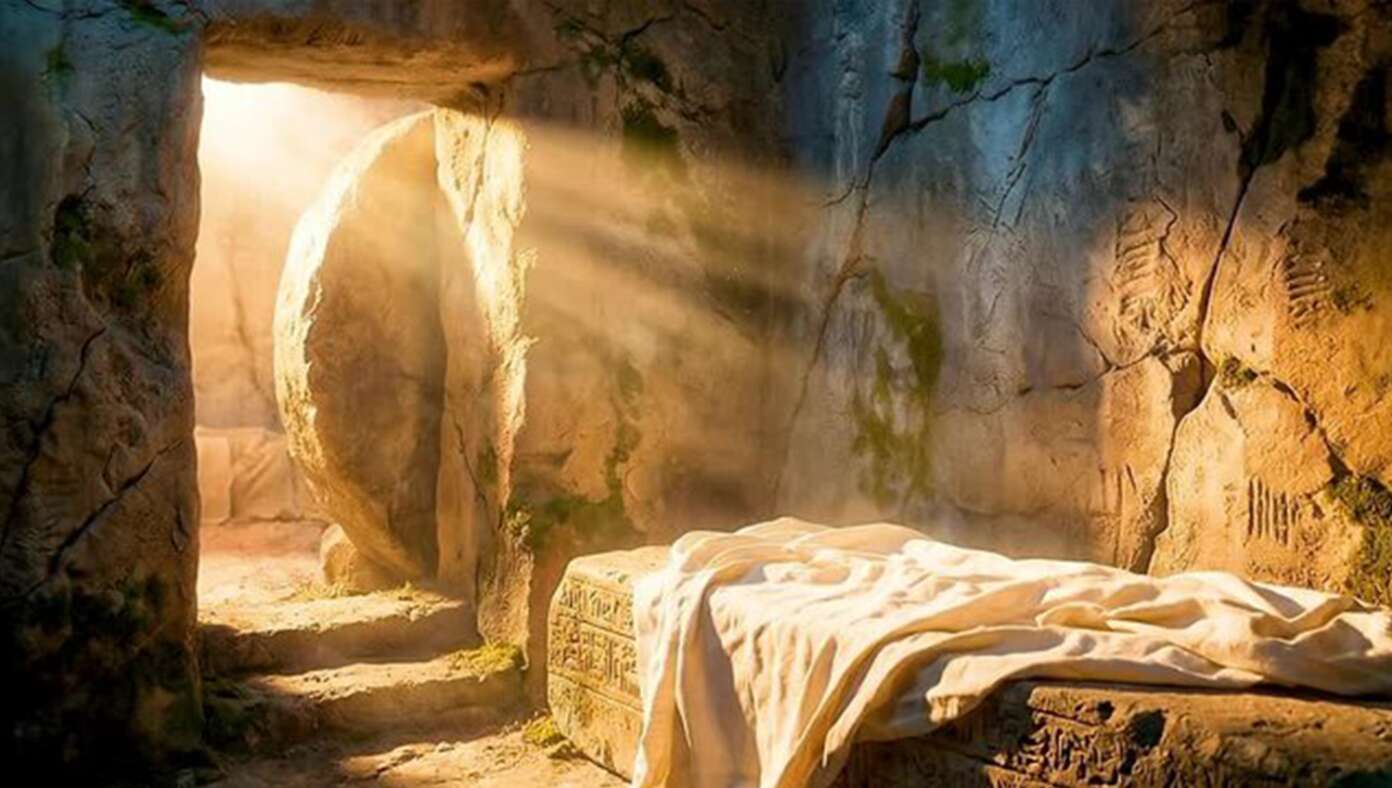
Mary Magdalene and the other Mary went away quickly from the tomb,
fearful yet overjoyed,
and ran to announce the news to his disciples.
And behold, Jesus met them on their way and greeted them.
They approached, embraced his feet, and did him homage.
Then Jesus said to them, “Do not be afraid.
Go tell my brothers to go to Galilee,
and there they will see me.”

While they were going, some of the guard went into the city
and told the chief priests all that had happened.
The chief priests assembled with the elders and took counsel;
then they gave a large sum of money to the soldiers,
telling them, “You are to say,
‘His disciples came by night and stole him while we were asleep.’
And if this gets to the ears of the governor,
we will satisfy him and keep you out of trouble.”
The soldiers took the money and did as they were instructed.
And this story has circulated among the Jews to the present day.

According to the Judaic Law of that time, women and children could not bear a trustworthy, credible witness. Instead in the Gospels women play a fundamental lead role. Here we can grasp an element in favour of the historicity of the Resurrection: if it was an invented event, in the context of that time it would not have been linked with the evidence of women. Instead the Evangelists simply recounted what happened: women were the first witnesses. This implies that God does not choose in accordance with human criteria: the first witnesses of the birth of Jesus were shepherds, simple, humble people; the first witnesses of the Resurrection were women. And this is beautiful. This is part of the mission of women; of mothers, of women! Witnessing to their children, to their grandchildren, that Jesus is alive, is living, is risen. Mothers and women, carry on witnessing to this! It is the heart that counts for God, how open to him we are, whether we are like trusting children. However this also makes us think about how women, in the Church and on the journey of faith, had and still have today a special role in opening the doors to the Lord, in following him and in communicating his Face, for the gaze of faith is always in need of the simple and profound gaze of love. (Pope Francis – General Audience, 3 April 2013)

Read More
A special Easter Blessing for you from Bishop Kevin J. Sweeney #Catholic – “Do not be afraid!
I know that you are seeking Jesus the crucified.
He is not here, for he has been raised just as he said.
Come and see the place where he lay.
Then go quickly and tell his disciples,
‘He has been raised from the dead…’” Mt. 28: 5-7
Dear Brothers and Sisters in Christ,
Happy Easter! Please know of my prayers for you, your family and loved ones, and for the whole Church of our beloved Diocese of Paterson. We hear the words of Matthew’s Gospel, “…for he has been raised just as he said…” and we reflect on the meaning of Easter Joy, the Joy of the Risen Lord, His victory over sin and death, and the promise of everlasting life in Heaven. As Lent and Holy Week have led us to this Easter Day, we give thanks for the gifts of Faith, Hope, and Love and continue to pray for the gift of Peace, the true Peace, that only Jesus can give. We also rejoice with all those who have entered our Church as they received the Sacraments of Baptism, Confirmation, and Holy Communion at the Easter Vigil.
Please be assured of my prayers for you, your families, and for all the faithful in our Diocese. Let us continue to pray for one another, for the whole Church, and for Peace, as we celebrate the Resurrection of Jesus on Easter Sunday and throughout the 50 days of the Easter Season.
Devotedly yours in Christ,
Most Reverend Kevin J. Sweeney, DD.
Bishop of Paterson
 

A special Easter Blessing for you from Bishop Kevin J. Sweeney #Catholic –

“Do not be afraid!
I know that you are seeking Jesus the crucified.
He is not here, for he has been raised just as he said.
Come and see the place where he lay.
Then go quickly and tell his disciples,
‘He has been raised from the dead…’” Mt. 28: 5-7

Dear Brothers and Sisters in Christ,

Happy Easter! Please know of my prayers for you, your family and loved ones, and for the whole Church of our beloved Diocese of Paterson. We hear the words of Matthew’s Gospel, “…for he has been raised just as he said…” and we reflect on the meaning of Easter Joy, the Joy of the Risen Lord, His victory over sin and death, and the promise of everlasting life in Heaven. As Lent and Holy Week have led us to this Easter Day, we give thanks for the gifts of Faith, Hope, and Love and continue to pray for the gift of Peace, the true Peace, that only Jesus can give. We also rejoice with all those who have entered our Church as they received the Sacraments of Baptism, Confirmation, and Holy Communion at the Easter Vigil.

Please be assured of my prayers for you, your families, and for all the faithful in our Diocese. Let us continue to pray for one another, for the whole Church, and for Peace, as we celebrate the Resurrection of Jesus on Easter Sunday and throughout the 50 days of the Easter Season.

Devotedly yours in Christ,

Most Reverend Kevin J. Sweeney, DD.
Bishop of Paterson


“Do not be afraid! I know that you are seeking Jesus the crucified. He is not here, for he has been raised just as he said. Come and see the place where he lay. Then go quickly and tell his disciples, ‘He has been raised from the dead…’” Mt. 28: 5-7 Dear Brothers and Sisters in Christ, Happy Easter! Please know of my prayers for you, your family and loved ones, and for the whole Church of our beloved Diocese of Paterson. We hear the words of Matthew’s Gospel, “…for he has been raised just as he said…” and we

Read More
Official delegation announced for Pope Leo XIV’s upcoming visit to Equatorial Guinea #Catholic EBEBIYÍN, Equatorial Guinea — Preparations for the planned apostolic visit of Pope Leo XIV to Equatorial Guinea have gained momentum, with Church authorities unveiling details of the high-level delegation expected to accompany the Holy Father during his visit scheduled for April 21–23.The announcement was made by Father Cristino Ela Engonga, secretary-general of the Episcopal Conference of Equatorial Guinea (CEGE) and general coordinator of the Church commission for the papal visit, during a strategic meeting that was held on March 28 at the bishop’s house in Bata Diocese.The meeting brought together members of various subcommissions from the dioceses of Bata, Ebibeyín, Evinayong, and Mongomo to assess ongoing preparations and receive updates from the Holy See regarding the historic visit, which will mark Pope Leo XIV’s first trip to Africa.According to Engonga, nearly 50 Vatican officials are expected to accompany the pontiff, including five cardinals. Among them is Cardinal Robert Sarah, prefect emeritus of the Dicastery for Divine Worship and the Discipline of the Sacraments.The pope is expected to visit key cities, including Malabo, Mongomo, and Bata, accompanied by senior Vatican officials such as Secretary of State Cardinal Pietro Parolin and Cardinal Luis Antonio Tagle, pro-prefect of the Dicastery for Evangelization.Other prominent members of the papal entourage include Cardinal George Jacob Koovakad, prefect of the Dicastery for Interreligious Dialogue, and Cardinal Peter Kodwo Appiah Turkson, chancellor of the Pontifical Academy of Social Sciences.They will be joined by 42 additional Vatican officials, including Monsignor José Nahúm Jairo Salas, who is responsible for coordinating papal international travels, as well as leading Vatican communicators such as Paolo Ruffini and Matteo Bruni.Beyond the papal entourage, the meeting also highlighted the participation of special guests, including Cardinal Fridolin Ambongo, president of the Symposium of Episcopal Conferences of Africa and Madagascar (SECAM), as well as Archbishop Luis Javier Argüello García, president of the Spanish Episcopal Conference (CEE).Engonga further said that more than 40 Catholic bishops from six central African countries have expressed their intention to attend the event.During the meeting, participants also received a report from the masters of ceremonies of CEGE, Fathers Julio Enrique Meheme and Diosdado Márquez Sabadell, who recently traveled to Rome to prepare the liturgical celebrations the pope will preside over.The Holy Father is expected to arrive in Malabo on Tuesday, April 21, the final leg of his four-nation African trip. Following the official welcome ceremony, he will meet the president of Equatorial Guinea and address political leaders, civil society representatives, and the diplomatic corps.In the afternoon, the pope will engage with academics and artists during a meeting with representatives of the world of culture at the León XIV Campus of the National University. A pastoral visit to patients and staff at the Jean Pierre Olie Psychiatric Hospital is also scheduled for this day.On Wednesday, April 22, the pope will travel to Mongomo to celebrate Mass at the Basilica of the Immaculate Conception before visiting the Pope Francis Technology School.Later in the day, the Holy Father will continue to Bata, where he is scheduled to visit a prison; pray at a memorial dedicated to victims of the March 7, 2021, explosion; and meet young people and families at Bata Stadium.The apostolic journey to Africa is to conclude on Thursday, April 23, with a final Mass celebrated by the pope at Malabo Stadium.Following the farewell ceremony at Malabo International Airport, the Holy Father will depart for Rome, arriving later that evening at Rome’s Fiumicino International Airport.This story was first published by ACI Africa, the sister service of EWTN News in Africa, and has been adapted by EWTN News.

Official delegation announced for Pope Leo XIV’s upcoming visit to Equatorial Guinea #Catholic EBEBIYÍN, Equatorial Guinea — Preparations for the planned apostolic visit of Pope Leo XIV to Equatorial Guinea have gained momentum, with Church authorities unveiling details of the high-level delegation expected to accompany the Holy Father during his visit scheduled for April 21–23.The announcement was made by Father Cristino Ela Engonga, secretary-general of the Episcopal Conference of Equatorial Guinea (CEGE) and general coordinator of the Church commission for the papal visit, during a strategic meeting that was held on March 28 at the bishop’s house in Bata Diocese.The meeting brought together members of various subcommissions from the dioceses of Bata, Ebibeyín, Evinayong, and Mongomo to assess ongoing preparations and receive updates from the Holy See regarding the historic visit, which will mark Pope Leo XIV’s first trip to Africa.According to Engonga, nearly 50 Vatican officials are expected to accompany the pontiff, including five cardinals. Among them is Cardinal Robert Sarah, prefect emeritus of the Dicastery for Divine Worship and the Discipline of the Sacraments.The pope is expected to visit key cities, including Malabo, Mongomo, and Bata, accompanied by senior Vatican officials such as Secretary of State Cardinal Pietro Parolin and Cardinal Luis Antonio Tagle, pro-prefect of the Dicastery for Evangelization.Other prominent members of the papal entourage include Cardinal George Jacob Koovakad, prefect of the Dicastery for Interreligious Dialogue, and Cardinal Peter Kodwo Appiah Turkson, chancellor of the Pontifical Academy of Social Sciences.They will be joined by 42 additional Vatican officials, including Monsignor José Nahúm Jairo Salas, who is responsible for coordinating papal international travels, as well as leading Vatican communicators such as Paolo Ruffini and Matteo Bruni.Beyond the papal entourage, the meeting also highlighted the participation of special guests, including Cardinal Fridolin Ambongo, president of the Symposium of Episcopal Conferences of Africa and Madagascar (SECAM), as well as Archbishop Luis Javier Argüello García, president of the Spanish Episcopal Conference (CEE).Engonga further said that more than 40 Catholic bishops from six central African countries have expressed their intention to attend the event.During the meeting, participants also received a report from the masters of ceremonies of CEGE, Fathers Julio Enrique Meheme and Diosdado Márquez Sabadell, who recently traveled to Rome to prepare the liturgical celebrations the pope will preside over.The Holy Father is expected to arrive in Malabo on Tuesday, April 21, the final leg of his four-nation African trip. Following the official welcome ceremony, he will meet the president of Equatorial Guinea and address political leaders, civil society representatives, and the diplomatic corps.In the afternoon, the pope will engage with academics and artists during a meeting with representatives of the world of culture at the León XIV Campus of the National University. A pastoral visit to patients and staff at the Jean Pierre Olie Psychiatric Hospital is also scheduled for this day.On Wednesday, April 22, the pope will travel to Mongomo to celebrate Mass at the Basilica of the Immaculate Conception before visiting the Pope Francis Technology School.Later in the day, the Holy Father will continue to Bata, where he is scheduled to visit a prison; pray at a memorial dedicated to victims of the March 7, 2021, explosion; and meet young people and families at Bata Stadium.The apostolic journey to Africa is to conclude on Thursday, April 23, with a final Mass celebrated by the pope at Malabo Stadium.Following the farewell ceremony at Malabo International Airport, the Holy Father will depart for Rome, arriving later that evening at Rome’s Fiumicino International Airport.This story was first published by ACI Africa, the sister service of EWTN News in Africa, and has been adapted by EWTN News.

Church authorities unveiled details of the official delegation expected to accompany the Holy Father during his visit scheduled for April 21–23.

Read More
U.S., Canadian seminarians prepare in Mexico to serve Hispanic community #Catholic In response to the growing Hispanic Catholic community in the United States and Canada, seminarians from both countries are being sent to study in Mexico at the Hispanic Seminary of Our Lady of Guadalupe, a multicultural formation center for future priests.The seminary was founded on Aug. 31, 1999, by the then-primate archbishop of Mexico, Cardinal Norberto Rivera, after the Catholic Church recognized the need to form priests capable of understanding the cultural richness of Hispanics in North America.
 
 Study group at the Hispanic seminary in Mexico. | Credit: EWTN Noticias
 
 Rivera was inspired by the call issued by St. John Paul II in the January 1999 apostolic exhortation Ecclesia in America, which called the American Church to a new evangelization.The seminary opened in August 2000 with the arrival of five seminarians from the archdioceses of Los Angeles and Milwaukee. Since then, more than 200 graduates from at least 55 dioceses across the U.S. have passed through the formation center.‘A Church without borders’In an interview with ACI Prensa, the Spanish-language sister service of EWTN News, Father Juan Antonio Vértiz Gutiérrez, the seminary’s rector, explained that the learning experience goes beyond language. The seminarians gain firsthand insight into what the Church in Mexico is like as well as its ecclesial and cultural traditions, particularly through apostolates.
 
 Seminarians visit the Isabel the Catholic Monarch nursing home in Mexico City. | Credit: Hispanic Seminary of Our Lady of Guadalupe
 
 According to the priest, this enables them to “better serve our fellow countrymen and our brothers and sisters of Hispanic origin” in their home dioceses in the U.S. He emphasized that this formation helps these young men understand two distinct cultural realities that, while united in faith, have different cultural expressions.For Vértiz, one of the greatest beauties of Catholicism is that it “doesn’t have any borders.” In a time marked by tensions stemming from immigration policies, he noted that the experience of the Hispanic seminary demonstrates that for the Catholic Church, regardless of one’s background, every person “already belongs to the family of the children of God.”The programLife at the seminary follows the rhythm of any house of priestly formation but with a particular emphasis on cultural encounter. Mornings are dedicated to philosophical and theological studies at Lumen Gentium Catholic University, while in the afternoons, seminarians delve deeper into language learning and spiritual formation.During Holy Week, seminarians are often sent to communities outside Mexico City.The admissions process is typically conducted through diocesan vocations offices in the U.S. “We do not accept young men who do not belong to a diocese,” the rector explained. Currently, the seminary hosts 16 young men hailing from California, Nevada, Washington, Texas, Illinois, Alabama, and Georgia.
 
 A map marks the seminarians’ states of origin. | Credit: EWTN Noticias
 
 Diverse testimonies of faithRamsés Yates, originally from the Diocese of Yakima, Washington, arrived at the seminary a year and a half ago to complete his theological formation and learn Spanish.In an interview with ACI Prensa, he said his experience in Mexican communities has filled him with “much hope and much joy.” In them, he said, it’s possible to witness what it means to “be a community that lives out Catholicism to the fullest.”He noted that he is eagerly preparing to return to Yakima, knowing that he will now be able to speak “with many more people in my diocese, people with whom I previously could not communicate effectively. That fills me with great enthusiasm.”Ramón Pérez, originally from Guanajuato, Mexico, migrated to Fresno, California, at the age of 17. There, his life was defined by work until he felt “the call to the priesthood, to a more complete dedication to the service of the Church.”
 
 A seminarian prays at the Hispanic Seminary of Our Lady of Guadalupe. | Credit: EWTN Noticias
 
 He told ACI Prensa that following a lengthy process of discernment, he requested admission to the seminary. His diocese decided to send him to Mexico “to continue nurturing my culture and to support the various people entering the United States” from Spanish-speaking countries.The seminarian said the experience has enabled him “to know and become conscious of my origins, my roots, and my culture, of where I was born and where I come from.” Growing up in two different cultures, he acknowledged, can be challenging, but it has also “profoundly shaped this aspect of my vocation.”This story was first published by ACI Prensa, the Spanish-language sister service of EWTN News. It has been translated and adapted by EWTN News English.

U.S., Canadian seminarians prepare in Mexico to serve Hispanic community #Catholic In response to the growing Hispanic Catholic community in the United States and Canada, seminarians from both countries are being sent to study in Mexico at the Hispanic Seminary of Our Lady of Guadalupe, a multicultural formation center for future priests.The seminary was founded on Aug. 31, 1999, by the then-primate archbishop of Mexico, Cardinal Norberto Rivera, after the Catholic Church recognized the need to form priests capable of understanding the cultural richness of Hispanics in North America. Study group at the Hispanic seminary in Mexico. | Credit: EWTN Noticias Rivera was inspired by the call issued by St. John Paul II in the January 1999 apostolic exhortation Ecclesia in America, which called the American Church to a new evangelization.The seminary opened in August 2000 with the arrival of five seminarians from the archdioceses of Los Angeles and Milwaukee. Since then, more than 200 graduates from at least 55 dioceses across the U.S. have passed through the formation center.‘A Church without borders’In an interview with ACI Prensa, the Spanish-language sister service of EWTN News, Father Juan Antonio Vértiz Gutiérrez, the seminary’s rector, explained that the learning experience goes beyond language. The seminarians gain firsthand insight into what the Church in Mexico is like as well as its ecclesial and cultural traditions, particularly through apostolates. Seminarians visit the Isabel the Catholic Monarch nursing home in Mexico City. | Credit: Hispanic Seminary of Our Lady of Guadalupe According to the priest, this enables them to “better serve our fellow countrymen and our brothers and sisters of Hispanic origin” in their home dioceses in the U.S. He emphasized that this formation helps these young men understand two distinct cultural realities that, while united in faith, have different cultural expressions.For Vértiz, one of the greatest beauties of Catholicism is that it “doesn’t have any borders.” In a time marked by tensions stemming from immigration policies, he noted that the experience of the Hispanic seminary demonstrates that for the Catholic Church, regardless of one’s background, every person “already belongs to the family of the children of God.”The programLife at the seminary follows the rhythm of any house of priestly formation but with a particular emphasis on cultural encounter. Mornings are dedicated to philosophical and theological studies at Lumen Gentium Catholic University, while in the afternoons, seminarians delve deeper into language learning and spiritual formation.During Holy Week, seminarians are often sent to communities outside Mexico City.The admissions process is typically conducted through diocesan vocations offices in the U.S. “We do not accept young men who do not belong to a diocese,” the rector explained. Currently, the seminary hosts 16 young men hailing from California, Nevada, Washington, Texas, Illinois, Alabama, and Georgia. A map marks the seminarians’ states of origin. | Credit: EWTN Noticias Diverse testimonies of faithRamsés Yates, originally from the Diocese of Yakima, Washington, arrived at the seminary a year and a half ago to complete his theological formation and learn Spanish.In an interview with ACI Prensa, he said his experience in Mexican communities has filled him with “much hope and much joy.” In them, he said, it’s possible to witness what it means to “be a community that lives out Catholicism to the fullest.”He noted that he is eagerly preparing to return to Yakima, knowing that he will now be able to speak “with many more people in my diocese, people with whom I previously could not communicate effectively. That fills me with great enthusiasm.”Ramón Pérez, originally from Guanajuato, Mexico, migrated to Fresno, California, at the age of 17. There, his life was defined by work until he felt “the call to the priesthood, to a more complete dedication to the service of the Church.” A seminarian prays at the Hispanic Seminary of Our Lady of Guadalupe. | Credit: EWTN Noticias He told ACI Prensa that following a lengthy process of discernment, he requested admission to the seminary. His diocese decided to send him to Mexico “to continue nurturing my culture and to support the various people entering the United States” from Spanish-speaking countries.The seminarian said the experience has enabled him “to know and become conscious of my origins, my roots, and my culture, of where I was born and where I come from.” Growing up in two different cultures, he acknowledged, can be challenging, but it has also “profoundly shaped this aspect of my vocation.”This story was first published by ACI Prensa, the Spanish-language sister service of EWTN News. It has been translated and adapted by EWTN News English.

A seminary was established in Mexico in 1999 to serve the growing Hispanic community in North America, forming future priests who learn Spanish as well as ecclesial and cultural traditions.

Read More

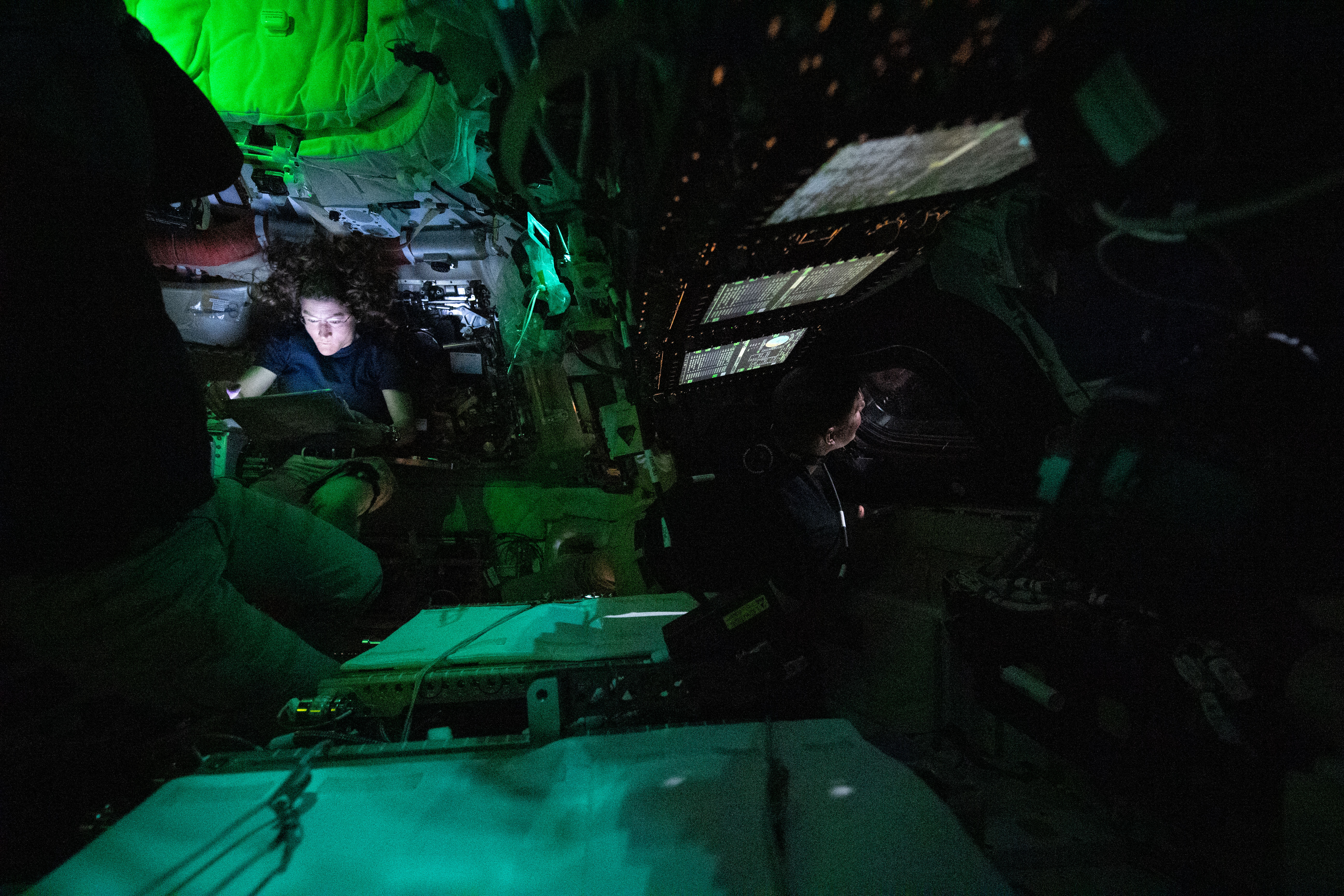
NASA astronaut Christina Koch is illuminated by a screen inside the darkened Orion spacecraft on the third day of the agency’s Artemis II mission. To the right of the image’s center, CSA (Canadian Space Agency) astronaut Jeremy Hansen is seen in profile peering out of one of Orion’s windows. Lights are turned off to avoid glare on the windows.

Read More