![New film depicts the transformative power of Eucharistic adoration #Catholic A new movie is bringing the transformative power of Eucharistic adoration to the big screen. “Adore Him: He Is Here” uses firsthand accounts of real encounters and transformation and depictions of salvation history to portray the powerful love of God that is found in the Blessed Sacrament.The docudrama features several prominent Catholic figures including Archbishop Paul Coakley of the Archdiocese of Oklahoma City; Archbishop José Gómez of the Archdiocese of Los Angeles; Father Chris Alar of the Marian Fathers of the Immaculate Conception; Curtis Martin, the founder of FOCUS; evangelist Chris Stefanick; and many more.The film will be in theaters across the United States Oct. 4–8.The inspiration for the film came as a response to the docudrama “Jesus Thirsts: The Miracle of the Eucharist,” which was released in theaters in 2024. Created by the same filmmakers as “Adore Him,” “Jesus Thirsts” was made in response to a poll that showed that roughly 70% of Catholics don’t believe in the real presence of Jesus in the Eucharist.“We wanted to demonstrate that Jesus is real in the Eucharist,” Deacon Steve Greco, the filmmaker behind both films, told EWTN News in an interview. “So the people who saw that movie, many of them were inspired to say, ‘OK, now that Jesus is real, I have to do something different. My life has to be different.’ And in changing your life and your world, it really comes down to ‘I need to really be connected with him.’”He added: “So “Adore Him: He Is Here” is really meant to be a continuation, almost like a sequel, to the very first movie in which in order to activate Jesus, to activate the Holy Spirit in our hearts, we need to understand how to worship him. And Eucharistic adoration changes our entire life.”Greco also believes this film is necessary for today because “the Church is really being led back to Eucharist in a way like never before.”
Deacon Steve Greco in the new film “Adore Him: He Is Here.” | Credit: Spirit Filled Hearts
“We have this great activation going on in which people are really desiring the Blessed Sacrament and the Eucharist and going before the Blessed Sacrament in a way like never before,” he said. “We see more and more churches going to 24/7 adoration. Theyʼre expanding their hours of adoration. More and more people are going before the Blessed Sacrament to really be energized and to receive graces.”For those who are feeling called to go to Eucharistic adoration, potentially for the first time, Greco would advise them to “start with 10 minutes and just talk to the Lord. Just have a conversation like with your best friend and just be quiet.”Then those 10 minutes can turn into 20, then half an hour, and finally a full hour. But, the most important thing you need to do, he said, is to “open up your heart to his love.”“You will find that when you go before the Blessed Sacrament, if you open your heart and youʼre silent before the Lord and youʼre listening before the Lord, … God will come to you in a powerful way and show you that you are his beloved,” Greco added.With this in mind, he said he hopes viewers of the film will take away “that first of all, Jesus is real; the Blessed Sacrament, the Eucharist is real. The Blessed Sacrament is there for us to allow us to get to really experience his love in a way like never before. We hope that people go to the Blessed Sacrament, to the chapel.”“When they see this movie [we hope] they just start going and believing and get into the habit of going a few times a week if not every day and just let God love you and that will transform their life. That will give them hope and joy.”](https://unitedyam.com/wp-content/uploads/2026/10/new-film-depicts-the-transformative-power-of-eucharistic-adoration-catholic-a-new-movie-is-bringing-the-transformative-power-of-eucharistic-adoration-to-the-big-screen-adore-him-he-is-here-scaled.png "New film depicts the transformative power of Eucharistic adoration #Catholic A new movie is bringing the transformative power of Eucharistic adoration to the big screen. “Adore Him: He Is Here” uses firsthand accounts of real encounters and transformation and depictions of salvation history to portray the powerful love of God that is found in the Blessed Sacrament.The docudrama features several prominent Catholic figures including Archbishop Paul Coakley of the Archdiocese of Oklahoma City; Archbishop José Gómez of the Archdiocese of Los Angeles; Father Chris Alar of the Marian Fathers of the Immaculate Conception; Curtis Martin, the founder of FOCUS; evangelist Chris Stefanick; and many more.The film will be in theaters across the United States Oct. 4–8.The inspiration for the film came as a response to the docudrama “Jesus Thirsts: The Miracle of the Eucharist,” which was released in theaters in 2024. Created by the same filmmakers as “Adore Him,” “Jesus Thirsts” was made in response to a poll that showed that roughly 70% of Catholics don’t believe in the real presence of Jesus in the Eucharist.“We wanted to demonstrate that Jesus is real in the Eucharist,” Deacon Steve Greco, the filmmaker behind both films, told EWTN News in an interview. “So the people who saw that movie, many of them were inspired to say, ‘OK, now that Jesus is real, I have to do something different. My life has to be different.’ And in changing your life and your world, it really comes down to ‘I need to really be connected with him.’”He added: “So “Adore Him: He Is Here” is really meant to be a continuation, almost like a sequel, to the very first movie in which in order to activate Jesus, to activate the Holy Spirit in our hearts, we need to understand how to worship him. And Eucharistic adoration changes our entire life.”Greco also believes this film is necessary for today because “the Church is really being led back to Eucharist in a way like never before.”
Deacon Steve Greco in the new film “Adore Him: He Is Here.” | Credit: Spirit Filled Hearts
“We have this great activation going on in which people are really desiring the Blessed Sacrament and the Eucharist and going before the Blessed Sacrament in a way like never before,” he said. “We see more and more churches going to 24/7 adoration. Theyʼre expanding their hours of adoration. More and more people are going before the Blessed Sacrament to really be energized and to receive graces.”For those who are feeling called to go to Eucharistic adoration, potentially for the first time, Greco would advise them to “start with 10 minutes and just talk to the Lord. Just have a conversation like with your best friend and just be quiet.”Then those 10 minutes can turn into 20, then half an hour, and finally a full hour. But, the most important thing you need to do, he said, is to “open up your heart to his love.”“You will find that when you go before the Blessed Sacrament, if you open your heart and youʼre silent before the Lord and youʼre listening before the Lord, … God will come to you in a powerful way and show you that you are his beloved,” Greco added.With this in mind, he said he hopes viewers of the film will take away “that first of all, Jesus is real; the Blessed Sacrament, the Eucharist is real. The Blessed Sacrament is there for us to allow us to get to really experience his love in a way like never before. We hope that people go to the Blessed Sacrament, to the chapel.”“When they see this movie [we hope] they just start going and believing and get into the habit of going a few times a week if not every day and just let God love you and that will transform their life. That will give them hope and joy.”")

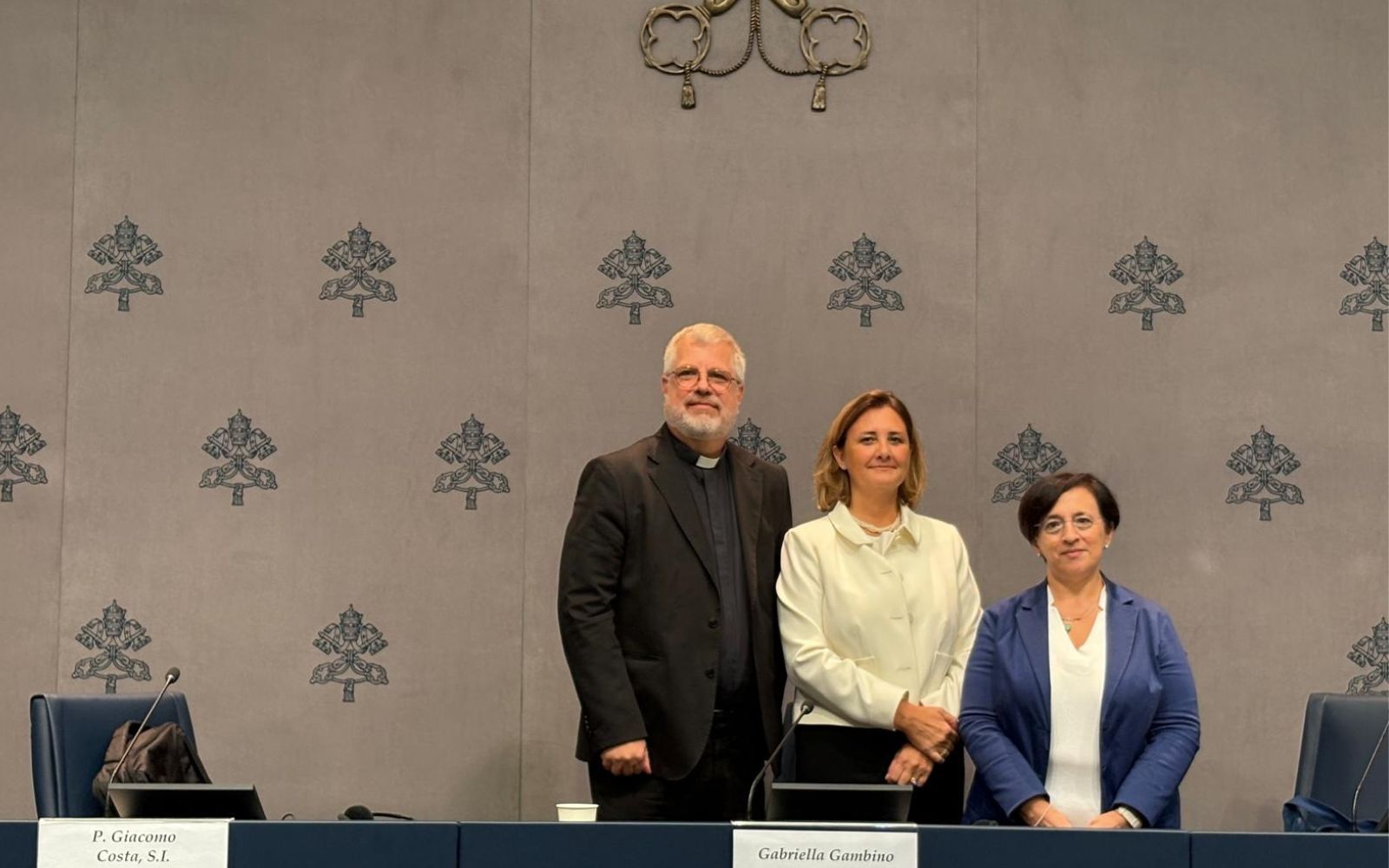
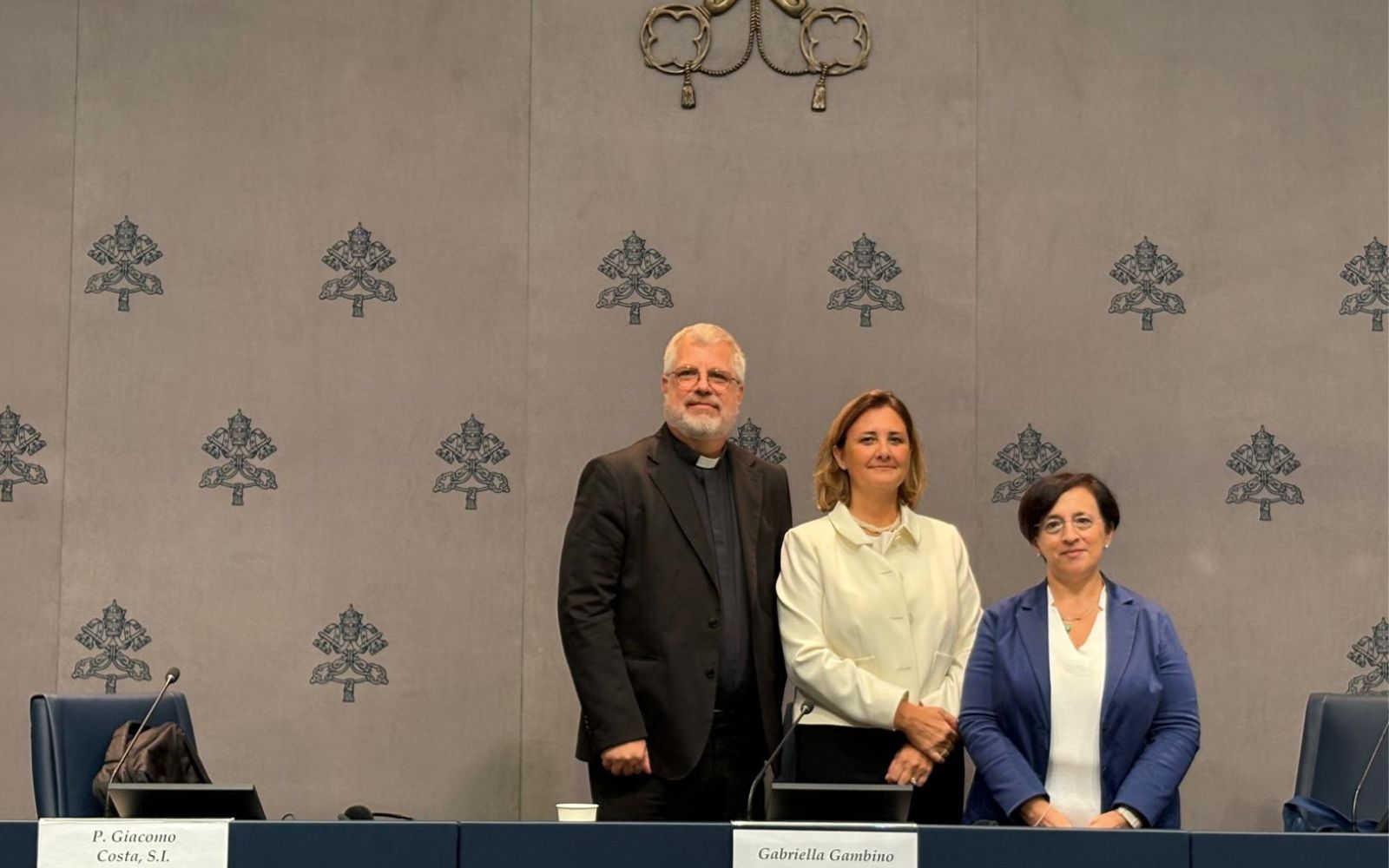
Vatican officials said the weeklong meeting is neither a synod, nor an evaluation of Amoris Laetitia.
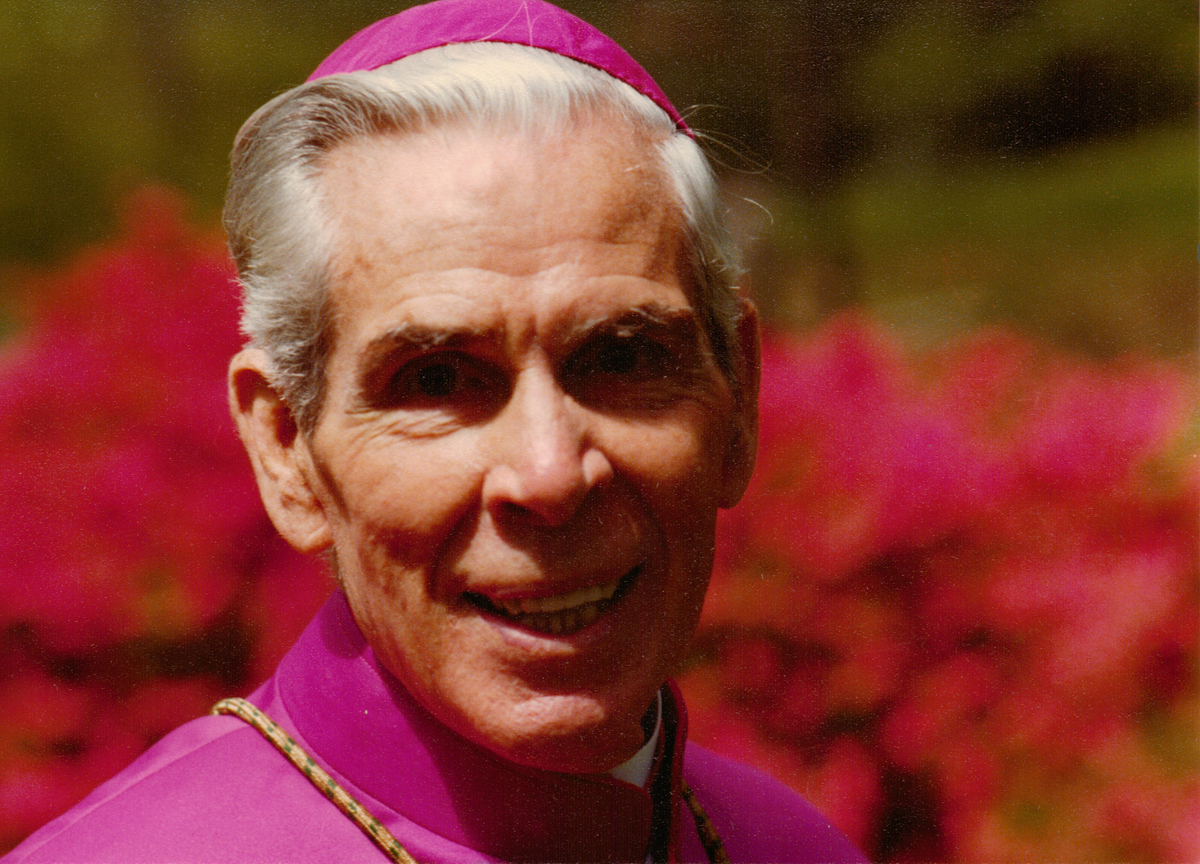
![As beatification nears, new book explains why Fulton Sheen was ‘America’s Apostle’ #Catholic With the beatification of Archbishop Fulton Sheen approaching, a new book on the life and legacy of the evangelist and television and radio show host explains why he was “America’s Apostle.”Allan Smith, founder and director of the Archbishop Fulton J. Sheen Mission Society of Canada, published the book “America’s Apostle” on Sept. 15, just ahead of the archbishop’s beatification on Sept. 24.“I think … the title is a perfect one — ‘Americaʼs Apostle,’ because he really was an apostle to the American people in the great tradition of apostles,” Vice President and Editorial Director of EWTN News Matthew Bunson told “EWTN News Nightly” anchor Veronica Dudo on Sept. 22.The book was published through EWTN Publishing and Sophia Institute Press.“[Sheen] was a brilliant communicator; he had immense gifts on television, radio, as a writer, as a poet,” Bunson said. “But all of that was geared toward proclaiming Jesus Christ in exactly the same way that a good apostle should.”Sheen began his media career as a priest, hosting an hourlong radio show called “The Catholic Hour” in 1930 until he was consecrated an auxiliary bishop in New York in 1951 and transitioned to television, hosting “Life Is Worth Living.” At its peak, Sheen’s radio show was reaching about 4 million people weekly, and his television show was reaching about 30 million people.“Like a good apostle, he used all the means of communications at his disposal,” Bunson said. “I just mentioned television, radio, you name it. He wanted to use it. So itʼs perfectly appropriate, I think, for him to be called ‘Americaʼs Apostle.’”Sheen also reserved one hour every day for prayer in front of the Blessed Sacrament, beginning this when he was ordained in 1919 until he died in 1979. He was found dead at the age of 84 in his chapel in front of the Blessed Sacrament.Bunson explained that Sheen “made a promise on the day of his ordination” that he would do a Holy Hour in front of the Blessed Sacrament. He also noted Sheen wrote in his autobiography, “Treasure in Clay,” that he prepared for his homilies, his books, and his speeches in front of the Eucharist.
The book cover for “America’s Apostle: Celebrating the Life and Legacy of Blessed Fulton J. Sheen” features a portrait of Sheen. It was released days before Sheen’s beatification set for Sept. 24, 2026. | Credit: EWTN
“He made the Blessed Sacrament his way of not just preparing, but making himself holy and worthy of the people he was talking to,” Bunson said. “Because thatʼs how seriously he took what he was saying.”“So as a communicator, it wasnʼt just communicating about himself,” he said. “He was always proclaiming a person, and that was Jesus Christ. And he did that by developing and fostering his love for the Eucharist. And he did it in the Holy Hour.”“Fulton Sheen, pray for us,” Bunson concluded.](https://unitedyam.com/wp-content/uploads/2026/09/as-beatification-nears-new-book-explains-why-fulton-sheen-was-americas-apostle-catholic-with-the-beatification-of-archbishop-fulton-sheen-approaching-a-new-book-on-the-li.png "As beatification nears, new book explains why Fulton Sheen was ‘America’s Apostle’ #Catholic With the beatification of Archbishop Fulton Sheen approaching, a new book on the life and legacy of the evangelist and television and radio show host explains why he was “America’s Apostle.”Allan Smith, founder and director of the Archbishop Fulton J. Sheen Mission Society of Canada, published the book “America’s Apostle” on Sept. 15, just ahead of the archbishop’s beatification on Sept. 24.“I think … the title is a perfect one — ‘Americaʼs Apostle,’ because he really was an apostle to the American people in the great tradition of apostles,” Vice President and Editorial Director of EWTN News Matthew Bunson told “EWTN News Nightly” anchor Veronica Dudo on Sept. 22.The book was published through EWTN Publishing and Sophia Institute Press.“[Sheen] was a brilliant communicator; he had immense gifts on television, radio, as a writer, as a poet,” Bunson said. “But all of that was geared toward proclaiming Jesus Christ in exactly the same way that a good apostle should.”Sheen began his media career as a priest, hosting an hourlong radio show called “The Catholic Hour” in 1930 until he was consecrated an auxiliary bishop in New York in 1951 and transitioned to television, hosting “Life Is Worth Living.” At its peak, Sheen’s radio show was reaching about 4 million people weekly, and his television show was reaching about 30 million people.“Like a good apostle, he used all the means of communications at his disposal,” Bunson said. “I just mentioned television, radio, you name it. He wanted to use it. So itʼs perfectly appropriate, I think, for him to be called ‘Americaʼs Apostle.’”Sheen also reserved one hour every day for prayer in front of the Blessed Sacrament, beginning this when he was ordained in 1919 until he died in 1979. He was found dead at the age of 84 in his chapel in front of the Blessed Sacrament.Bunson explained that Sheen “made a promise on the day of his ordination” that he would do a Holy Hour in front of the Blessed Sacrament. He also noted Sheen wrote in his autobiography, “Treasure in Clay,” that he prepared for his homilies, his books, and his speeches in front of the Eucharist.
The book cover for “America’s Apostle: Celebrating the Life and Legacy of Blessed Fulton J. Sheen” features a portrait of Sheen. It was released days before Sheen’s beatification set for Sept. 24, 2026. | Credit: EWTN
“He made the Blessed Sacrament his way of not just preparing, but making himself holy and worthy of the people he was talking to,” Bunson said. “Because thatʼs how seriously he took what he was saying.”“So as a communicator, it wasnʼt just communicating about himself,” he said. “He was always proclaiming a person, and that was Jesus Christ. And he did that by developing and fostering his love for the Eucharist. And he did it in the Holy Hour.”“Fulton Sheen, pray for us,” Bunson concluded.")
The book by Allan Smith was published on Sept. 15, about one week before the beatification. EWTN’s Matthew Bunson discusses the book and Sheen’s legacy on “EWTN News Nightly.”
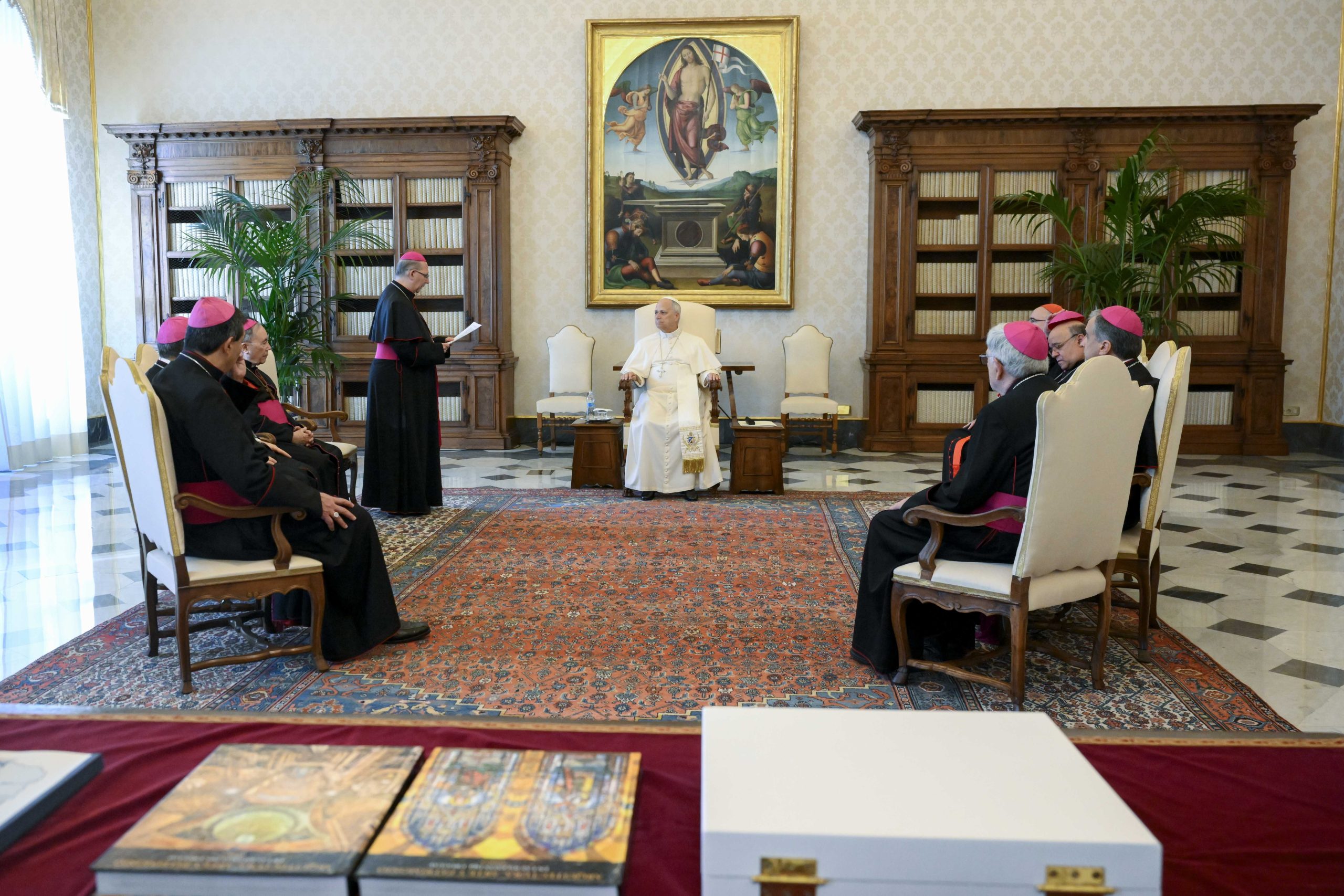
Although church attendance is low and the society is quite s quite secularized, the president of Uruguay’s bishops’ conference believes Pope Leo’s visit will give a boost to the country’s spiritual renewal.
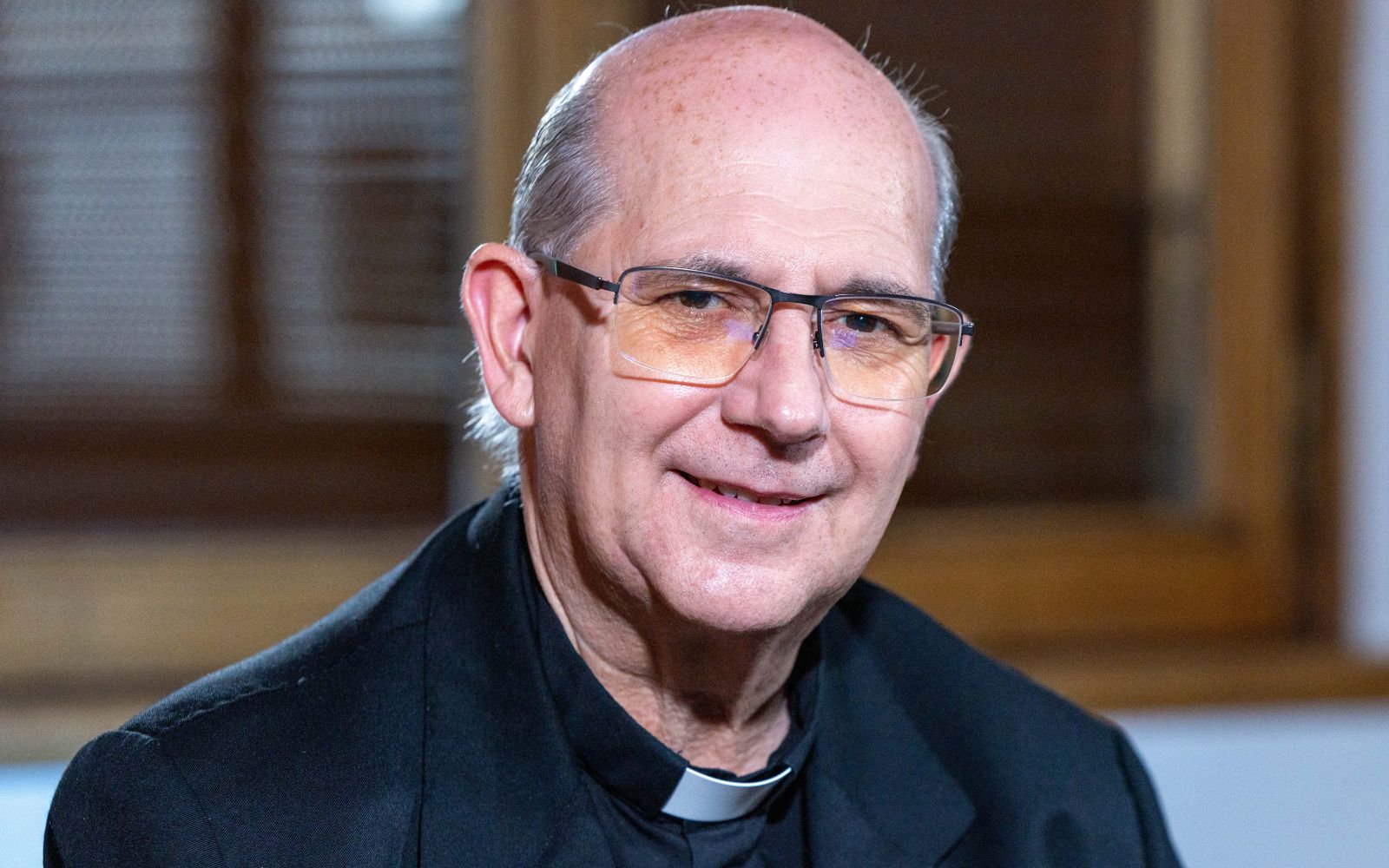

This past Sept. 7, the “Creed of the Ecclesial Base Communities” was included as part of a Mass marking Brazil’s annual “Cry of the Excluded” event.
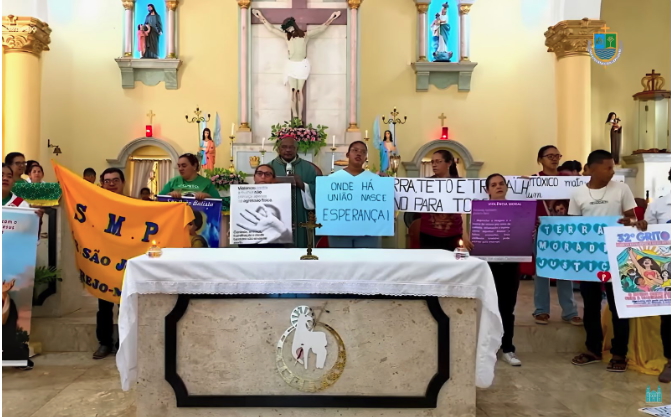
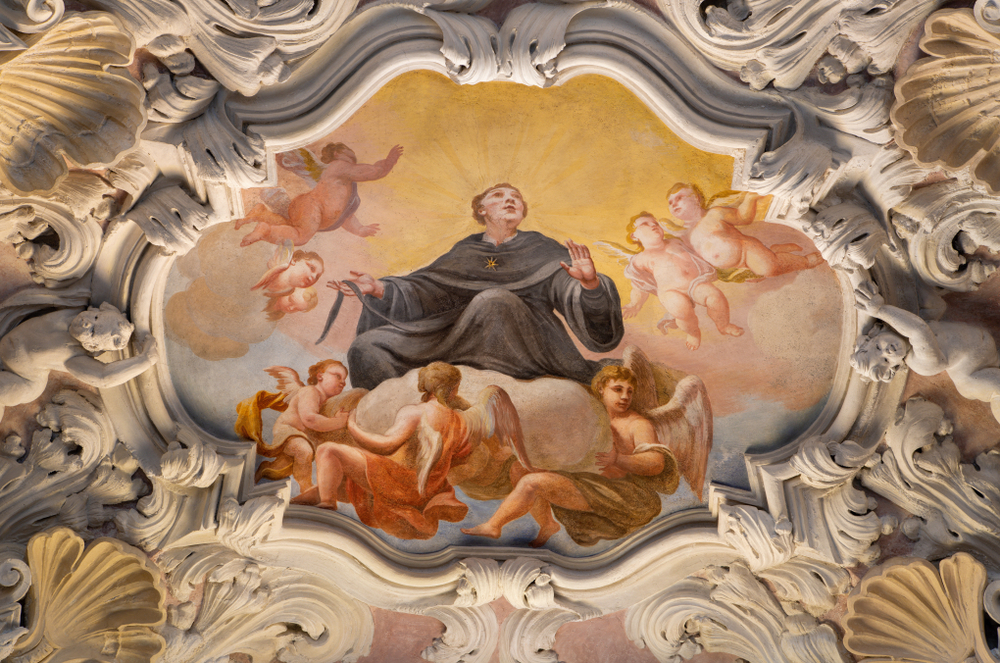
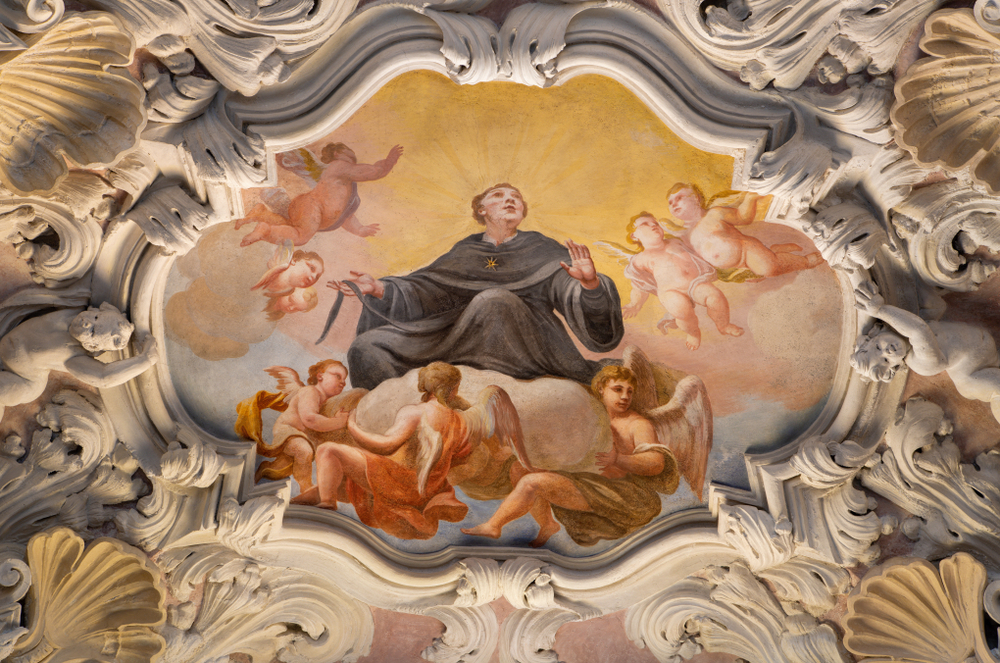
For St. Nicholas of Tolentino, the Catholic imperative to pray for the dead was made very real to him when a deceased friend appeared to him asking for prayers.
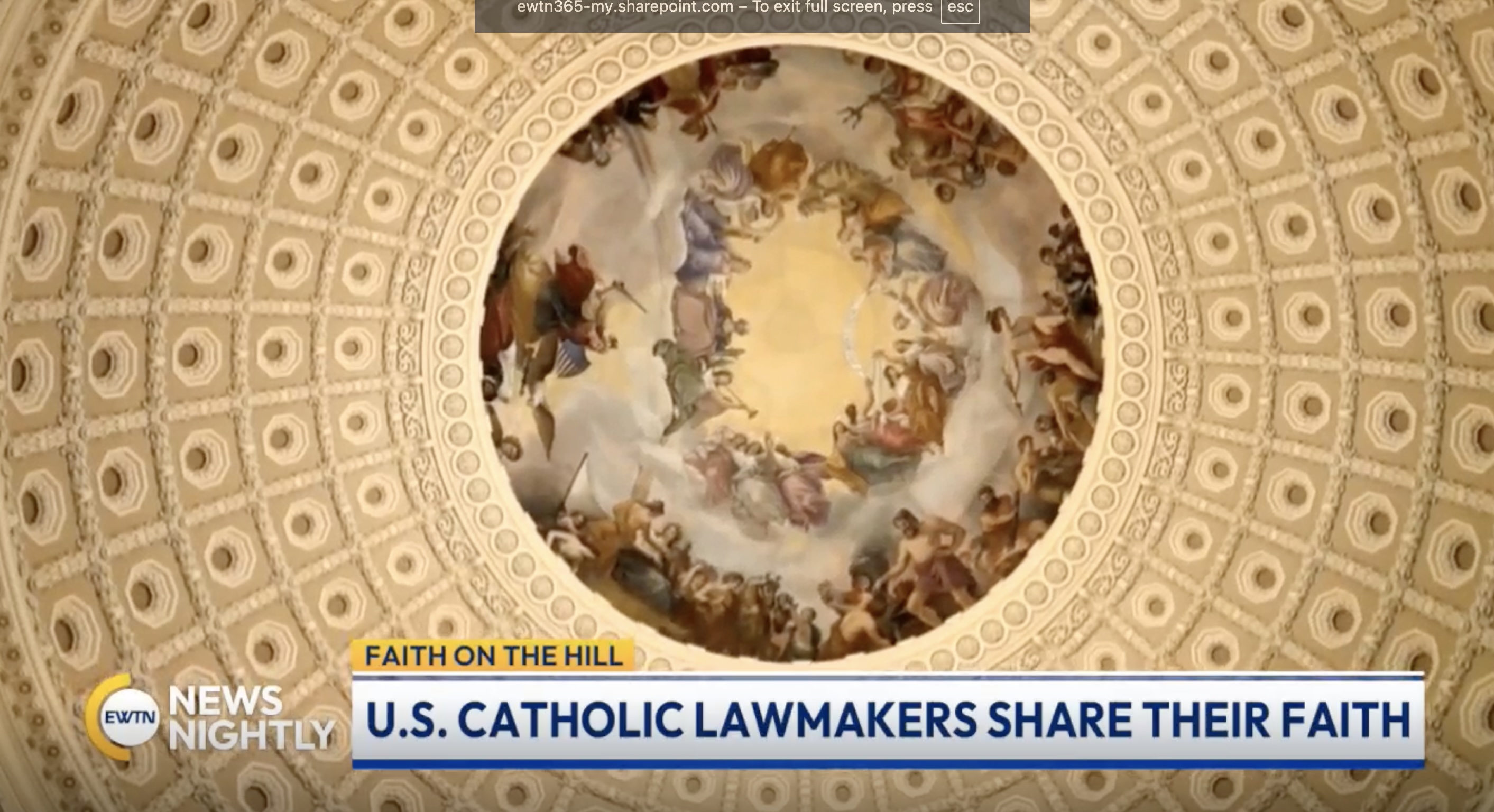
![Faith on the Hill: Catholic members of Congress share how faith shapes their lives and work #Catholic For many of the 150 Catholics serving in the 119th Congress, faith plays an important role in their lives and work.The current number of Catholic lawmakers on Capitol Hill is slightly higher than the previous Congress, with Catholics accounting for more than 28% of the members of the United States House of Representatives and Senate. Of the Catholic members, 126 serve in the House and 24 in the Senate, according to a report from the Pew Research Center.In this special report, EWTN News Capitol Hill correspondent Erik Rosales spoke with various Catholic members of Congress about their faith and how they live it in their work.Sen. Eric SchmittSen. Eric Schmitt, R-Missouri, grew up a cradle Catholic and said his parents instilled in him the importance of having a personal relationship with Christ at a young age.“I grew up in St. Louis, which is a very Catholic town and has been referred to as the Rome of the West because per capita, very Catholic,” Schmitt told Rosales.A “conversation back home, it might very easily start … ‘What parish are you at? or ‘What parish did you grow up in?’” Schmitt said.At 17, Schmitt went to a Jesuit retreat house that had a profound impact on him. Later, when his son was born with a rare genetic condition, Schmitt would often return to the Jesuits for prayer.It “was a seed that was planted … when I was confronted with this really kind of difficult situation. I went back there, and it was a profound experience,” he said. “I go back every year. Itʼs a … weekend silent retreat. And that keeps me very rooted.”When working busy days on the Hill, Schmitt said he looks to prayer.“Iʼll listen to a podcast by Bishop [Robert] Barron or Father Michael Schmitz,” he said. “I think technology now too has allowed a different avenue for people to … maintain their faith and grow their faith.”Even “if itʼs five or 10 minutes, it really does help me kind of start the day right,” Schmitt said.Rep. John RutherfordRep. John Rutherford, R-Florida, also spoke about leaning on his faith when working in a hectic position, often by attending Mass and saying the rosary.“In Ephesians 2:10, it says, ‘for we are all Godʼs workmanship, created in the image of Christ Jesus to do good work,’ which he prepared … in advance for us to do,’” Rutherford said. “So heʼs got work out there that heʼs prepared for me to do,” he continued.While Rutherford’s Catholic faith is incorporated into his day-to-day life, he shared that was not always the case. He grew up in the United Methodist Church, but at about 14 years old, “fell away from the church,” he said.After becoming a police officer in Jacksonville, Florida, Rutherford’s perspective on faith changed. Witnessing crimes made him question his own mortality.“So I went back to the Bible, and I read the Bible literally cover to cover, not once but twice,” he said.Rutherford returned to the Methodist Church, while his wife and kids attended Catholic Mass. After reading about the Methodist Churchʼs seven principles, he realized he didnʼt agree with them.“It was a long process, but I finally read a book by Pope John Paul II, ‘Crossing the Threshold of Hope,’ and that explained where the authority of the Church is,” Rutherford said. “And how itʼs passed down through the papacy.”After his research, and inspired by the true Church and presence of Jesus in the Eucharist, Rutherford entered the Catholic Church.Rep. Mark MessmerRep. Mark Messmer, R-Indiana, said he has spent his life putting God, family, and community first.It was during his time as a state legislator that a colleague invited Messmer and his wife to attend a Cursillo, a retreat focused on showing Christian laity how to become effective leaders and how to use the Gospel in daily life.“It ignited a passion and a love for Christ, and a love for the Eucharist that I always said I wanted. And then it gives you the tools [for] your prayer life, study life, and evangelization, how to live that out on a daily basis,” he said.Messmer said he stays grounded with daily Mass and his Friday morning prayer group. He and his family also all join together for a weekly group call to catch up and join for “spiritual reinforcement.”Rep. Stephanie BiceRep. Stephanie Bice, R-Oklahoma, converted to Catholicism in college after she started going to Mass with her now husband.Bice served six years in the Oklahoma Senate and later ran for U.S. Congress. She joined a number of women who have been elected over the past two cycles.“Not every woman believes that … you should be able to terminate pregnancies up to birth,” Bice said. “So you had a groundswell of women consider running for congressional seats and Senate seats,” she said.While serving on Capitol Hill, Bice said she turns to prayer and the comfort of the Blessed Mother.“I stumbled across a group of staffers that actually pray the rosary on fly-in days in the morning,” she explained. “I said, ‘Hey, can a member come?’ And they were delighted that I would even ask.”One highlight of her congressional career was meeting Pope Francis at the Vatican. The invitation came from Rep. James Langevin, a fellow Catholic and Democrat from Rhode Island.Pope Francis “looked at my husband and I after blessing us both, and he said: ‘Will you pray for me?’ And that was pretty profound,” Bice said.Rep. Robert Onder“Really, my Catholic faith has motivated me my whole life, my whole career, and really motivated in many ways the direction my life has taken,” Rep. Robert Onder, R-Missouri, said.Onder said his faith was present in his work trying to pass a religious liberty bill in the Missouri Senate and through his fight to protect the conscience rights of physicians who are forced to perform abortions.As a medical doctor, Onder detailed the present problem in some states and hospitals, which “want to force physicians to participate in abortions, participate in vitro fertilization or artificial contraception, and, of course, more recently, participate in euthanasia.”Onder said his political service has been motivated by love of God, family, and country. He said he stays rooted in faith by attending daily Mass. He said he also enjoys talking with other lawmakers about their love for Christ.“Speaker [Mike] Johnson is absolutely a brother in the Christian faith and a very, very strong believer,” Onder said. “It does give me a lot hope and a lot of encouragement to serve with other people who really take their faith seriously.”Rep. Riley MooreRep. Riley Moore, R-West Virginia, said his Catholic faith is “is the most important thing” in his life.“It forms me — every decision I make, everything that I do here on the Hill, it is central to my life. Iʼm always praying to be able to deepen my faith, be a strong family man, and then also my service.”“So itʼs my faith, my family, my service to my state, my country. But faith comes first.”“Canʼt always be easy to discern Godʼs will, particularly in a place that is more about individual will and not Godʼs will,” Moore said. “Iʼm trying to re-center myself towards that. Thatʼs that gravitational pull for me that Iʼm always trying to get back to.”Moore started as a Hill staffer on the House Foreign Affairs Committee, working under the late Rep. Henry Hyde, R-Illinois. One of his priorities is drawing attention to the persecution of Christians around the world, especially in Nigeria.While in Nigeria, “I met a woman who had had all five of her children murdered, murdered by Islamic terrorists,” Moore said. “I met another woman who had her two daughters and husband killed right in front of her, and then they killed her unborn child.”“As we know and weʼve heard many times, and itʼs so true that there is salvation through suffering. I think that … their suffering offers us salvation as well by doing something here,” he said.House Majority Whip Tom EmmerMajority Whip of the U.S. House of Representatives Tom Emmer discussed how his faith was largely inspired by his family, including his father, who attended daily Mass.“The example that they set is, I believe, why I am who I am,” said Emmer, R-Minnesota.Emmer also detailed the trials of his faith, including the loss of his sister Bridget, who died of breast cancer at 38 years old.Emmer said he was angry at the Lord and had doubts about Godʼs will because of his sisterʼs suffering. A conversation with Bridget during her chemotherapy treatment was a pivotal moment for him and his faith.“She looked at me and she said, ‘Tom, would I love to live forever? Absolutely. But Iʼm not going to,’” he explained. His sister added: “I have lived a good life. If God comes and calls me today, so be it.”Emmer said her words brought him away from his own anger with the Lord. Now his message to others is to put God first while living each moment to the fullest.](https://unitedyam.com/wp-content/uploads/2026/09/faith-on-the-hill-catholic-members-of-congress-share-how-faith-shapes-their-lives-and-work-catholic-for-many-of-the-150-catholics-serving-in-the-119th-congress-faith-plays-an-important-role-in-thei-scaled.jpg "Faith on the Hill: Catholic members of Congress share how faith shapes their lives and work #Catholic For many of the 150 Catholics serving in the 119th Congress, faith plays an important role in their lives and work.The current number of Catholic lawmakers on Capitol Hill is slightly higher than the previous Congress, with Catholics accounting for more than 28% of the members of the United States House of Representatives and Senate. Of the Catholic members, 126 serve in the House and 24 in the Senate, according to a report from the Pew Research Center.In this special report, EWTN News Capitol Hill correspondent Erik Rosales spoke with various Catholic members of Congress about their faith and how they live it in their work.Sen. Eric SchmittSen. Eric Schmitt, R-Missouri, grew up a cradle Catholic and said his parents instilled in him the importance of having a personal relationship with Christ at a young age.“I grew up in St. Louis, which is a very Catholic town and has been referred to as the Rome of the West because per capita, very Catholic,” Schmitt told Rosales.A “conversation back home, it might very easily start … ‘What parish are you at? or ‘What parish did you grow up in?’” Schmitt said.At 17, Schmitt went to a Jesuit retreat house that had a profound impact on him. Later, when his son was born with a rare genetic condition, Schmitt would often return to the Jesuits for prayer.It “was a seed that was planted … when I was confronted with this really kind of difficult situation. I went back there, and it was a profound experience,” he said. “I go back every year. Itʼs a … weekend silent retreat. And that keeps me very rooted.”When working busy days on the Hill, Schmitt said he looks to prayer.“Iʼll listen to a podcast by Bishop [Robert] Barron or Father Michael Schmitz,” he said. “I think technology now too has allowed a different avenue for people to … maintain their faith and grow their faith.”Even “if itʼs five or 10 minutes, it really does help me kind of start the day right,” Schmitt said.Rep. John RutherfordRep. John Rutherford, R-Florida, also spoke about leaning on his faith when working in a hectic position, often by attending Mass and saying the rosary.“In Ephesians 2:10, it says, ‘for we are all Godʼs workmanship, created in the image of Christ Jesus to do good work,’ which he prepared … in advance for us to do,’” Rutherford said. “So heʼs got work out there that heʼs prepared for me to do,” he continued.While Rutherford’s Catholic faith is incorporated into his day-to-day life, he shared that was not always the case. He grew up in the United Methodist Church, but at about 14 years old, “fell away from the church,” he said.After becoming a police officer in Jacksonville, Florida, Rutherford’s perspective on faith changed. Witnessing crimes made him question his own mortality.“So I went back to the Bible, and I read the Bible literally cover to cover, not once but twice,” he said.Rutherford returned to the Methodist Church, while his wife and kids attended Catholic Mass. After reading about the Methodist Churchʼs seven principles, he realized he didnʼt agree with them.“It was a long process, but I finally read a book by Pope John Paul II, ‘Crossing the Threshold of Hope,’ and that explained where the authority of the Church is,” Rutherford said. “And how itʼs passed down through the papacy.”After his research, and inspired by the true Church and presence of Jesus in the Eucharist, Rutherford entered the Catholic Church.Rep. Mark MessmerRep. Mark Messmer, R-Indiana, said he has spent his life putting God, family, and community first.It was during his time as a state legislator that a colleague invited Messmer and his wife to attend a Cursillo, a retreat focused on showing Christian laity how to become effective leaders and how to use the Gospel in daily life.“It ignited a passion and a love for Christ, and a love for the Eucharist that I always said I wanted. And then it gives you the tools [for] your prayer life, study life, and evangelization, how to live that out on a daily basis,” he said.Messmer said he stays grounded with daily Mass and his Friday morning prayer group. He and his family also all join together for a weekly group call to catch up and join for “spiritual reinforcement.”Rep. Stephanie BiceRep. Stephanie Bice, R-Oklahoma, converted to Catholicism in college after she started going to Mass with her now husband.Bice served six years in the Oklahoma Senate and later ran for U.S. Congress. She joined a number of women who have been elected over the past two cycles.“Not every woman believes that … you should be able to terminate pregnancies up to birth,” Bice said. “So you had a groundswell of women consider running for congressional seats and Senate seats,” she said.While serving on Capitol Hill, Bice said she turns to prayer and the comfort of the Blessed Mother.“I stumbled across a group of staffers that actually pray the rosary on fly-in days in the morning,” she explained. “I said, ‘Hey, can a member come?’ And they were delighted that I would even ask.”One highlight of her congressional career was meeting Pope Francis at the Vatican. The invitation came from Rep. James Langevin, a fellow Catholic and Democrat from Rhode Island.Pope Francis “looked at my husband and I after blessing us both, and he said: ‘Will you pray for me?’ And that was pretty profound,” Bice said.Rep. Robert Onder“Really, my Catholic faith has motivated me my whole life, my whole career, and really motivated in many ways the direction my life has taken,” Rep. Robert Onder, R-Missouri, said.Onder said his faith was present in his work trying to pass a religious liberty bill in the Missouri Senate and through his fight to protect the conscience rights of physicians who are forced to perform abortions.As a medical doctor, Onder detailed the present problem in some states and hospitals, which “want to force physicians to participate in abortions, participate in vitro fertilization or artificial contraception, and, of course, more recently, participate in euthanasia.”Onder said his political service has been motivated by love of God, family, and country. He said he stays rooted in faith by attending daily Mass. He said he also enjoys talking with other lawmakers about their love for Christ.“Speaker [Mike] Johnson is absolutely a brother in the Christian faith and a very, very strong believer,” Onder said. “It does give me a lot hope and a lot of encouragement to serve with other people who really take their faith seriously.”Rep. Riley MooreRep. Riley Moore, R-West Virginia, said his Catholic faith is “is the most important thing” in his life.“It forms me — every decision I make, everything that I do here on the Hill, it is central to my life. Iʼm always praying to be able to deepen my faith, be a strong family man, and then also my service.”“So itʼs my faith, my family, my service to my state, my country. But faith comes first.”“Canʼt always be easy to discern Godʼs will, particularly in a place that is more about individual will and not Godʼs will,” Moore said. “Iʼm trying to re-center myself towards that. Thatʼs that gravitational pull for me that Iʼm always trying to get back to.”Moore started as a Hill staffer on the House Foreign Affairs Committee, working under the late Rep. Henry Hyde, R-Illinois. One of his priorities is drawing attention to the persecution of Christians around the world, especially in Nigeria.While in Nigeria, “I met a woman who had had all five of her children murdered, murdered by Islamic terrorists,” Moore said. “I met another woman who had her two daughters and husband killed right in front of her, and then they killed her unborn child.”“As we know and weʼve heard many times, and itʼs so true that there is salvation through suffering. I think that … their suffering offers us salvation as well by doing something here,” he said.House Majority Whip Tom EmmerMajority Whip of the U.S. House of Representatives Tom Emmer discussed how his faith was largely inspired by his family, including his father, who attended daily Mass.“The example that they set is, I believe, why I am who I am,” said Emmer, R-Minnesota.Emmer also detailed the trials of his faith, including the loss of his sister Bridget, who died of breast cancer at 38 years old.Emmer said he was angry at the Lord and had doubts about Godʼs will because of his sisterʼs suffering. A conversation with Bridget during her chemotherapy treatment was a pivotal moment for him and his faith.“She looked at me and she said, ‘Tom, would I love to live forever? Absolutely. But Iʼm not going to,’” he explained. His sister added: “I have lived a good life. If God comes and calls me today, so be it.”Emmer said her words brought him away from his own anger with the Lord. Now his message to others is to put God first while living each moment to the fullest.")
EWTN News Capitol Hill correspondent Erik Rosales spoke with various Catholic lawmakers about how their faith intersects with their public service.
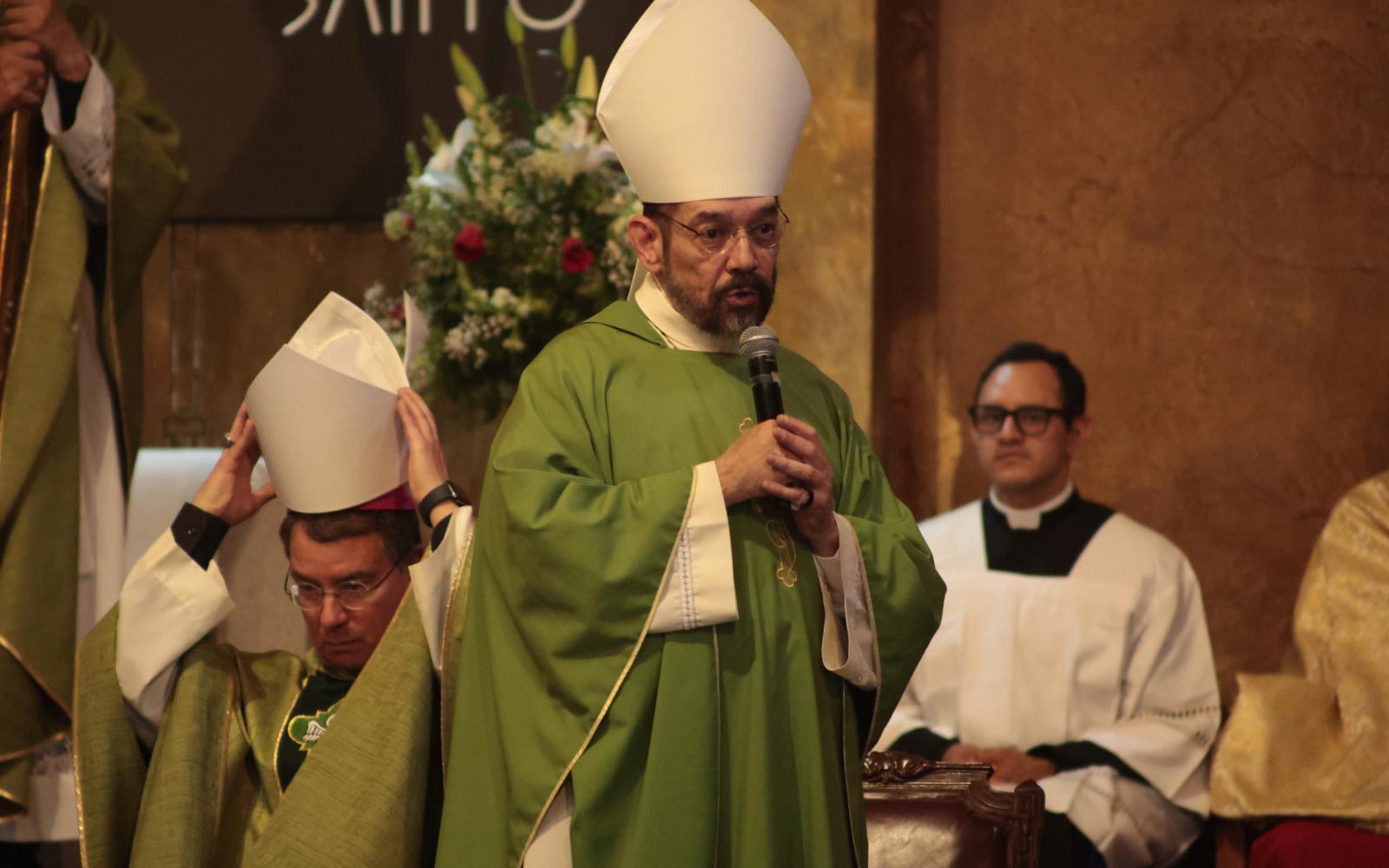
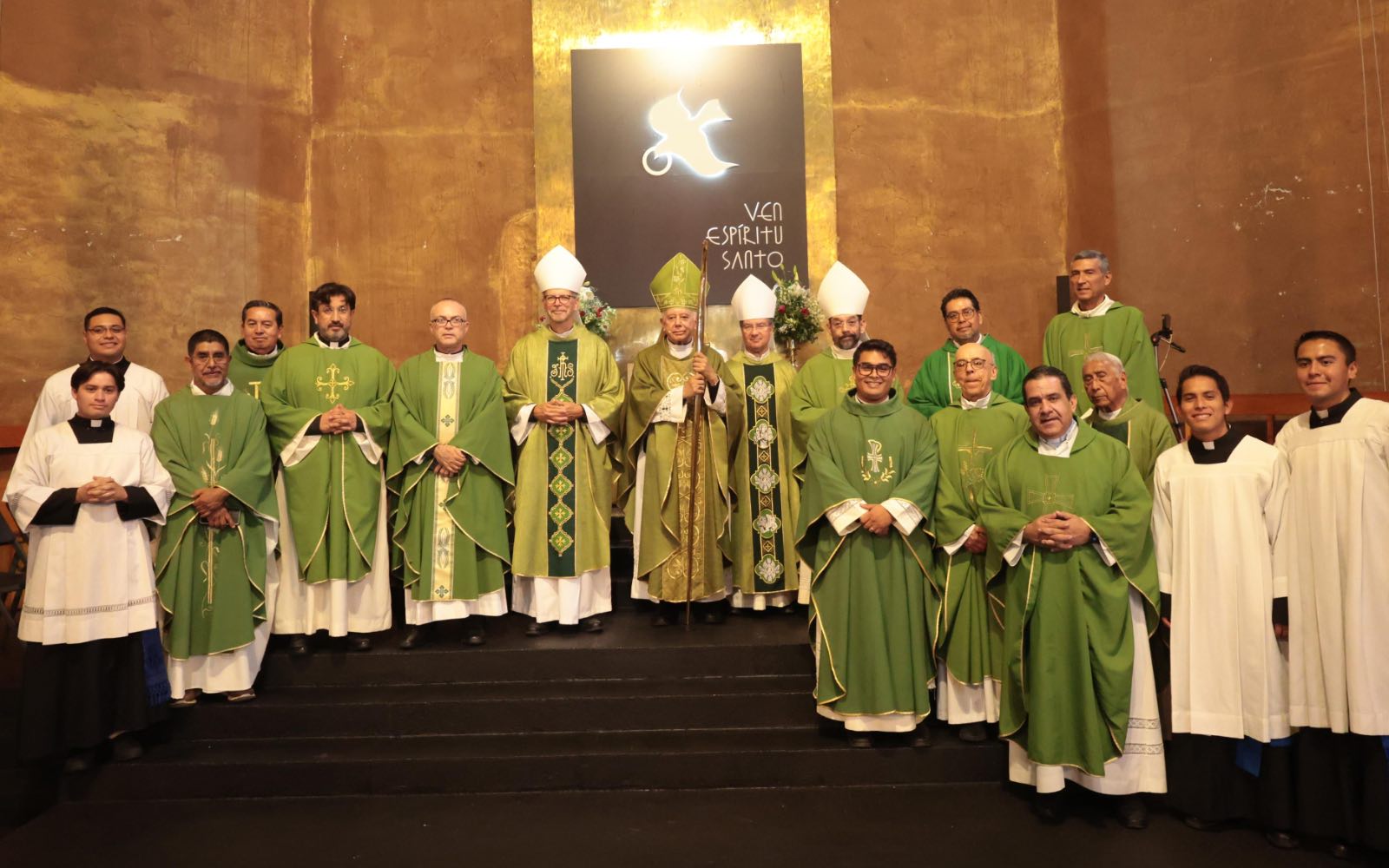
The bishops discussed the pastoral challenges facing the Church in North America as a whole and concelebrated a Mass on Aug. 30 in the Cuernavaca, Mexico, cathedral.

This rendition would maintain the realistic representation of the Eucharist, yet the bread and wine would take on a new dimension. They would shimmer and pulse with radiant colors, embodying the body and blood of Christ in a more abstract and mystical manner. The transformation of water into wine, one of the central miracles depicted, would be portrayed with swirling, dynamic brushstrokes that convey a sense of fluid motion and transcendence. The ordinary elements of the scene, through this vivid color palette and expressive technique, would be elevated to the sacred, emphasizing the miraculous nature of the event.
Read More