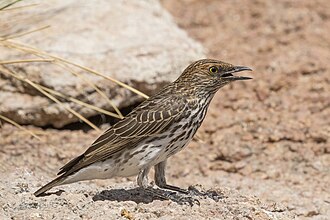
female

Government favors natural family planning over contraception in key health funding #Catholic New 2027 guidelines by the U.S. Department of Health and Human Services (HHS) will ban key federal abortion funding while favoring fertility education and natural family planning.The April 3 “2027 Notice of Funding Opportunity” for Title X, the federal family planning grant program, bans funds from being used “in programs where abortion is a method of family planning.”The move came days after the Trump administration released the fifth and final year of grant funding to Planned Parenthood under Title X, a decision that garnered criticism throughout the pro-life movement. The White House cited legal challenges for the controversial decision to continue the funding.“The administration has issued the fifth and final year of Title X grants that were locked in place during the Biden presidency,” the White House told EWTN News in a statement. “The administration faced significant legal challenges in stopping any of these dollars from going out.”Previous Republican administrations, including that of Trump’s first term, also banned abortion funding via Title X. What makes this year’s criteria unique is that it encourages fertility education in place of contraception.The notice highlighted “fertility-awareness-based methods” or “natural family planning,” a method encouraged by the Catholic Church that involves tracking a woman’s biological markers to determine when ovulation occurs.The administration also teased a new pro-family grant that will be announced soon.“HHS will soon be releasing a new Title X funding opportunity for the next five-year funding cycle that prioritizes life and promotes the pro-family agenda,” the White House statement read.The notice also promoted “body literacy” on fertility-related conditions, such as “education on menstrual cycle physiology, hormonal health, male and female fertility awareness, and early indicators of reproductive disorders such as endometriosis, polycystic ovary syndrome (PCOS), thyroid dysfunction, metabolic disorders, and other conditions that often first emerge in adolescence.”An estimated 1 in 10 women have endometriosis; 1 in 8 women develop a thyroid disorder; and roughly 1 in 10 have PCOS — all conditions that can negatively affect fertility and overall health.“For example, endometriosis often goes undiagnosed for years because symptoms such as severe menstrual pain or irregular bleeding are frequently normalized or minimized,” the HHS notice read.“Body literacy counseling helps patients recognize that these experiences are not ‘normal’ features” but instead “potential indicators of an underlying condition, prompting earlier discussion with providers, timely diagnosis, appropriate treatment, and improved long-term reproductive and overall health outcomes,” the notice continued.The 2027 plan is not prioritizing contraception funding; instead the government said that contraception is part of an overreliance on “pharmaceutical and surgical treatments.” The health department noted that fewer women than in previous years are using contraception (54% of reproductive-age women) and that “the most common reason women reported discontinuing use related to dissatisfaction was side effects.” For instance, hormonal contraception can cause depression in some patients, among other negative side effects.“This approach has failed to adequately address the root causes of the nation’s chronic disease burden, resulting in ongoing health challenges that affect fertility, pregnancy outcomes, and long-term health outcomes,” the notice read.HHS said it will focus instead on “underlying behavioral and lifestyle factors of health — such as nutrition, sleep, physical activity, stress management, and environmental factors.”The White House told EWTN News that “the administration remains committed to realigning the Title X program with the president’s pro-life and pro-family agenda going forward.”Michael New, an assistant professor of practice at the Busch School of Business at The Catholic University of America as well as a Charlotte Lozier Institute senior associate scholar, called the decrease in Planned Parenthood funding “a win for the pro-life movement,” though with a caveat.“Cutting funding to Planned Parenthood may not have a large impact on the incidence of abortion in the short term due the increasing prevalence of telehealth abortions,” New said.The professor also noted that “defunding contraception programs and supporting natural family planning is a win for pro-lifers.”“Since the Title X program started in 1970, the federal government has spent hundreds of millions of dollars, if not billions of dollars, into promoting contraception,” New said. “This money has been poorly spent. Many places that distribute contraception also perform abortions, so some of this money indirectly funds abortion.”“Many Catholics do not want their tax dollars spent on programs, such as contraception programs, they find morally objectionable,” New continued. “Even though many Americans support contraceptive use, pro-life Catholics would like the government to stay out of the issue: no funding, no mandates, no distribution. As such, defunding contraception programs has been a longtime policy goal for many pro-life Catholics.”“​​Natural family planning, when done correctly, has a strong track record of success,” New said. “However, it has been marginalized in many secular public health circles. The fact that HHS is promoting natural family planning will give NFP more visibility and credibility.”

Government favors natural family planning over contraception in key health funding #Catholic New 2027 guidelines by the U.S. Department of Health and Human Services (HHS) will ban key federal abortion funding while favoring fertility education and natural family planning.The April 3 “2027 Notice of Funding Opportunity” for Title X, the federal family planning grant program, bans funds from being used “in programs where abortion is a method of family planning.”The move came days after the Trump administration released the fifth and final year of grant funding to Planned Parenthood under Title X, a decision that garnered criticism throughout the pro-life movement. The White House cited legal challenges for the controversial decision to continue the funding.“The administration has issued the fifth and final year of Title X grants that were locked in place during the Biden presidency,” the White House told EWTN News in a statement. “The administration faced significant legal challenges in stopping any of these dollars from going out.”Previous Republican administrations, including that of Trump’s first term, also banned abortion funding via Title X. What makes this year’s criteria unique is that it encourages fertility education in place of contraception.The notice highlighted “fertility-awareness-based methods” or “natural family planning,” a method encouraged by the Catholic Church that involves tracking a woman’s biological markers to determine when ovulation occurs.The administration also teased a new pro-family grant that will be announced soon.“HHS will soon be releasing a new Title X funding opportunity for the next five-year funding cycle that prioritizes life and promotes the pro-family agenda,” the White House statement read.The notice also promoted “body literacy” on fertility-related conditions, such as “education on menstrual cycle physiology, hormonal health, male and female fertility awareness, and early indicators of reproductive disorders such as endometriosis, polycystic ovary syndrome (PCOS), thyroid dysfunction, metabolic disorders, and other conditions that often first emerge in adolescence.”An estimated 1 in 10 women have endometriosis; 1 in 8 women develop a thyroid disorder; and roughly 1 in 10 have PCOS — all conditions that can negatively affect fertility and overall health.“For example, endometriosis often goes undiagnosed for years because symptoms such as severe menstrual pain or irregular bleeding are frequently normalized or minimized,” the HHS notice read.“Body literacy counseling helps patients recognize that these experiences are not ‘normal’ features” but instead “potential indicators of an underlying condition, prompting earlier discussion with providers, timely diagnosis, appropriate treatment, and improved long-term reproductive and overall health outcomes,” the notice continued.The 2027 plan is not prioritizing contraception funding; instead the government said that contraception is part of an overreliance on “pharmaceutical and surgical treatments.” The health department noted that fewer women than in previous years are using contraception (54% of reproductive-age women) and that “the most common reason women reported discontinuing use related to dissatisfaction was side effects.” For instance, hormonal contraception can cause depression in some patients, among other negative side effects.“This approach has failed to adequately address the root causes of the nation’s chronic disease burden, resulting in ongoing health challenges that affect fertility, pregnancy outcomes, and long-term health outcomes,” the notice read.HHS said it will focus instead on “underlying behavioral and lifestyle factors of health — such as nutrition, sleep, physical activity, stress management, and environmental factors.”The White House told EWTN News that “the administration remains committed to realigning the Title X program with the president’s pro-life and pro-family agenda going forward.”Michael New, an assistant professor of practice at the Busch School of Business at The Catholic University of America as well as a Charlotte Lozier Institute senior associate scholar, called the decrease in Planned Parenthood funding “a win for the pro-life movement,” though with a caveat.“Cutting funding to Planned Parenthood may not have a large impact on the incidence of abortion in the short term due the increasing prevalence of telehealth abortions,” New said.The professor also noted that “defunding contraception programs and supporting natural family planning is a win for pro-lifers.”“Since the Title X program started in 1970, the federal government has spent hundreds of millions of dollars, if not billions of dollars, into promoting contraception,” New said. “This money has been poorly spent. Many places that distribute contraception also perform abortions, so some of this money indirectly funds abortion.”“Many Catholics do not want their tax dollars spent on programs, such as contraception programs, they find morally objectionable,” New continued. “Even though many Americans support contraceptive use, pro-life Catholics would like the government to stay out of the issue: no funding, no mandates, no distribution. As such, defunding contraception programs has been a longtime policy goal for many pro-life Catholics.”“​​Natural family planning, when done correctly, has a strong track record of success,” New said. “However, it has been marginalized in many secular public health circles. The fact that HHS is promoting natural family planning will give NFP more visibility and credibility.”

New directives by the U.S. Department of Health and Human Services ban Title X abortion funding while favoring fertility education and “body literacy.”

Read More
The religious sisters in Vatican leadership #Catholic VATICAN CITY — Religious sisters and consecrated women are a formidable presence inside Vatican City State and the Roman Curia, with recent years seeing their number and prominence rise.The increasing presence of women in the Vatican has been well documented. According to the Vatican, the percentage of women grew from 19.2% to 23.4% during the first decade of Pope Francis’ pontificate.According to a study done at the end of 2024, there were 1,318 women in a total workforce of around 6,000. There is no publicly available data on how big a share of the female presence is composed of consecrated women and religious sisters.Sister Nathalie Becquart, XMCJ, was one of the first women to be appointed to a major role at the Vatican when she was named undersecretary of the General Secretariat of the Synod of Bishops in 2021. She was also the first woman to vote at a synodal assembly.Becquart told EWTN News that during her five years at the Vatican not only have women been given more key positions, but they are also serving in less visible, though no less important, roles.“At the Vatican now, you have more women as consultors to the different dicasteries or member of the dicasteries, on different commissions,” she said. “We had women in all our commissions as experts, as facilitators, inside the synod.”In August 2025, Pope Leo appointed Sister Iuliana Sarosi, CMD, and Sister Martha Driscoll, OCSO, consultors of the Dicastery for Clergy.
 
 Sister Raffaella Petrini, FSE, president of the Governorate and of the Pontifical Commission for Vatican City State. | Credit: Daniel Ibáñez/EWTN News
 
 Sister Raffaella Petrini of the Franciscan Sisters of the Eucharist is the first woman in the history of the Church to head the Vatican City State.She was appointed president of the Governorate and of the Pontifical Commission for Vatican City State — the equivalent of a kind of governor — in March 2025 after serving as secretary general of the city state for four years.Petrini is also one of the first women to be a member of the Dicastery for Bishops. Pope Francis appointed Petrini, consecrated virgin María Lía Zervino, and Sister Yvonne Reungoat, FMA, members in July 2022.Since 2023, the undersecretary of the Administration of the Patrimony of the Apostolic See (APSA) is also a religious sister: Sister Silvana Piro, FMGB.Serving at the VaticanBecquart described coming to the Vatican to work as “an adventure.”“For me, being appointed at the Vatican has been a little bit like being sent to be a missionary in Papua New Guinea or in Brazil. It’s arriving in a new context, a new experience, learning a new language, new ways of working. A new culture, I would say, a new environment,” the sister said.
 
 Sister Nathalie Becquart, XMCJ, is an undersecretary for the General Secretariat of the Synod of Bishops. | Credit: Daniel Ibañez/EWTN News
 
 Becquart noted that one of the qualities religious sisters in general bring to their service at the Vatican is “a deep connection with real life.” As well, many “have started at the grassroots [ministering to] the people where they are. So we bring also this experience of being with others, especially with the poor and the most marginalized.”Margherita Romanelli, a non-religious sister who recently retired after working for 31 years in the Dicastery for Promoting Integral Human Development, told EWTN News “the recent appointments of women to top positions have greatly helped other women working [in the Vatican] to feel valued and to commit themselves to working for the common good, alongside men.”Romanelli, who is also president of the Women in the Vatican Association (DIVA), said the association was founded in 2016 because some women “felt the need to come together to respond to the needs of their female colleagues and, above all, to gain greater visibility within the Vatican. Their goal is therefore to create a network of friendship and solidarity.”In the Dicastery for Promoting Integral Human Development, where Romanelli worked, economist Sister Alessandra Smerilli, FMA, is the first woman to hold the No. 2 position.Smerilli was named secretary in April 2022 after serving for eight months as interim secretary and, prior to that, almost half a year as undersecretary, starting in March 2021. Before starting in the Roman Curia, Smerilli was also a councilor of the Vatican City State.
 
 Sister Alessandra Smerilli, FMA, secretary of the Vatican Dicastery for Promoting Integral Human Development. | Credit: Daniel Ibáñez/EWTN News
 
 Religious sisters serving religiousIn one department at the Vatican, there has been a revolution of women religious in leadership over the last year.In 2025, first Pope Francis, and then Pope Leo XIV, put two religious sisters in charge of the Dicastery for Institutes of Consecrated Life and Societies of Apostolic Life, starting with Sister Simona Brambilla of the Consolata Missionaries.Appointed prefect in January 2025, Brambilla is the first woman ever named prefect of a dicastery. She leads together with Cardinal Ángel Fernández Artime, SDB, who is pro-prefect of the same dicastery.Brambilla, who served as superior general of the Consolata Missionary Sisters from 2011 to 2023, was secretary of the dicastery for religious and consecrated life since October 2023.The sister, who trained as a nurse before entering religious life, was a missionary in Mozambique in the late 1990s. She then returned to Italy, where, with her advanced degree in psychology, she taught at the Pontifical Gregorian University in its Institute of Psychology. She was head of the institute of Consolata Missionary Sisters from 2011 until May 2023.In May 2025, Pope Leo XIV named Sister Tiziana Merletti, a Franciscan Sister of the Poor, secretary of the same dicastery.Merletti, a former superior general of her order, is an expert in canon law who taught at the Pontifical University Antonianum.With Sister Carmen Ros Nortes, NSC, who has been undersecretary of the same dicastery since 2018, three of the department’s top five positions are filled by religious sisters.

The religious sisters in Vatican leadership #Catholic VATICAN CITY — Religious sisters and consecrated women are a formidable presence inside Vatican City State and the Roman Curia, with recent years seeing their number and prominence rise.The increasing presence of women in the Vatican has been well documented. According to the Vatican, the percentage of women grew from 19.2% to 23.4% during the first decade of Pope Francis’ pontificate.According to a study done at the end of 2024, there were 1,318 women in a total workforce of around 6,000. There is no publicly available data on how big a share of the female presence is composed of consecrated women and religious sisters.Sister Nathalie Becquart, XMCJ, was one of the first women to be appointed to a major role at the Vatican when she was named undersecretary of the General Secretariat of the Synod of Bishops in 2021. She was also the first woman to vote at a synodal assembly.Becquart told EWTN News that during her five years at the Vatican not only have women been given more key positions, but they are also serving in less visible, though no less important, roles.“At the Vatican now, you have more women as consultors to the different dicasteries or member of the dicasteries, on different commissions,” she said. “We had women in all our commissions as experts, as facilitators, inside the synod.”In August 2025, Pope Leo appointed Sister Iuliana Sarosi, CMD, and Sister Martha Driscoll, OCSO, consultors of the Dicastery for Clergy. Sister Raffaella Petrini, FSE, president of the Governorate and of the Pontifical Commission for Vatican City State. | Credit: Daniel Ibáñez/EWTN News Sister Raffaella Petrini of the Franciscan Sisters of the Eucharist is the first woman in the history of the Church to head the Vatican City State.She was appointed president of the Governorate and of the Pontifical Commission for Vatican City State — the equivalent of a kind of governor — in March 2025 after serving as secretary general of the city state for four years.Petrini is also one of the first women to be a member of the Dicastery for Bishops. Pope Francis appointed Petrini, consecrated virgin María Lía Zervino, and Sister Yvonne Reungoat, FMA, members in July 2022.Since 2023, the undersecretary of the Administration of the Patrimony of the Apostolic See (APSA) is also a religious sister: Sister Silvana Piro, FMGB.Serving at the VaticanBecquart described coming to the Vatican to work as “an adventure.”“For me, being appointed at the Vatican has been a little bit like being sent to be a missionary in Papua New Guinea or in Brazil. It’s arriving in a new context, a new experience, learning a new language, new ways of working. A new culture, I would say, a new environment,” the sister said. Sister Nathalie Becquart, XMCJ, is an undersecretary for the General Secretariat of the Synod of Bishops. | Credit: Daniel Ibañez/EWTN News Becquart noted that one of the qualities religious sisters in general bring to their service at the Vatican is “a deep connection with real life.” As well, many “have started at the grassroots [ministering to] the people where they are. So we bring also this experience of being with others, especially with the poor and the most marginalized.”Margherita Romanelli, a non-religious sister who recently retired after working for 31 years in the Dicastery for Promoting Integral Human Development, told EWTN News “the recent appointments of women to top positions have greatly helped other women working [in the Vatican] to feel valued and to commit themselves to working for the common good, alongside men.”Romanelli, who is also president of the Women in the Vatican Association (DIVA), said the association was founded in 2016 because some women “felt the need to come together to respond to the needs of their female colleagues and, above all, to gain greater visibility within the Vatican. Their goal is therefore to create a network of friendship and solidarity.”In the Dicastery for Promoting Integral Human Development, where Romanelli worked, economist Sister Alessandra Smerilli, FMA, is the first woman to hold the No. 2 position.Smerilli was named secretary in April 2022 after serving for eight months as interim secretary and, prior to that, almost half a year as undersecretary, starting in March 2021. Before starting in the Roman Curia, Smerilli was also a councilor of the Vatican City State. Sister Alessandra Smerilli, FMA, secretary of the Vatican Dicastery for Promoting Integral Human Development. | Credit: Daniel Ibáñez/EWTN News Religious sisters serving religiousIn one department at the Vatican, there has been a revolution of women religious in leadership over the last year.In 2025, first Pope Francis, and then Pope Leo XIV, put two religious sisters in charge of the Dicastery for Institutes of Consecrated Life and Societies of Apostolic Life, starting with Sister Simona Brambilla of the Consolata Missionaries.Appointed prefect in January 2025, Brambilla is the first woman ever named prefect of a dicastery. She leads together with Cardinal Ángel Fernández Artime, SDB, who is pro-prefect of the same dicastery.Brambilla, who served as superior general of the Consolata Missionary Sisters from 2011 to 2023, was secretary of the dicastery for religious and consecrated life since October 2023.The sister, who trained as a nurse before entering religious life, was a missionary in Mozambique in the late 1990s. She then returned to Italy, where, with her advanced degree in psychology, she taught at the Pontifical Gregorian University in its Institute of Psychology. She was head of the institute of Consolata Missionary Sisters from 2011 until May 2023.In May 2025, Pope Leo XIV named Sister Tiziana Merletti, a Franciscan Sister of the Poor, secretary of the same dicastery.Merletti, a former superior general of her order, is an expert in canon law who taught at the Pontifical University Antonianum.With Sister Carmen Ros Nortes, NSC, who has been undersecretary of the same dicastery since 2018, three of the department’s top five positions are filled by religious sisters.

The percentage of Vatican employees who are women grew from 19.2% to 23.4% during the first decade of the last pontificate.

Read More
Pope Leo XIV warns of wider Middle East conflict #Catholic Pope Leo XIV on Sunday appealed for peace as violence and fear continue to spread in Iran and across the Middle East, praying in particular for Lebanon and warning that the conflict could widen.Speaking after the Angelus on March 8, the pope said “deeply disturbing news continues to arrive from Iran and the entire Middle East.”“In addition to the episodes of violence and devastation as well as the widespread climate of hatred and fear, there is also the concern that the conflict will spread and that other countries in the region, including beloved Lebanon, may again sink back into instability,” he said.“We lift up our humble prayer to the Lord, so that the thunderous sound of bombs may cease, weapons may fall silent, and a space for dialogue may open up in which the voice of the people can be heard,” the pope said. He added that he was entrusting that intention to the Virgin Mary, “that she may intercede for those who suffer because of war and lead hearts along the paths of reconciliation and hope.”Before the Marian prayer in St. Peter’s Square, Leo reflected on the day’s Gospel and said that “since the first centuries of the Church’s history, the dialogue between Jesus and the Samaritan woman, the healing of the man born blind and the resurrection of Lazarus illuminate the path of those who, at Easter, will receive Baptism and begin a new life.”“These great Gospel passages, which we read beginning this Sunday, are intended for the catechumens to help them on their journey to become Christians,” he said. “At the same time, these passages are heard once again by the entire community of believers to help them to be more authentic and joyful Christians.”Referring to Jesus’ encounter with the Samaritan woman, the pope said: “Indeed, Jesus is the response to our thirst. As he suggested to the Samaritan woman, the encounter with him stirs in the depths of each person ‘a spring of water gushing up to eternal life.’”“How many people in the entire world are searching even today for this spiritual spring!” he said.Quoting the diary of Etty Hillesum, a Dutch Jewish writer who died in Auschwitz during World War II, Leo said: “‘Sometimes I am there too. But more often stones and grit block the well, and God is buried beneath. Then he must be dug out again.’”“Dear friends, there is no energy better spent than that dedicated to freeing our heart,” the pope said. “For this reason, Lent is a gift: we are starting the third week and now we are able to intensify the journey!”He went on to reflect on the disciples’ reaction in the Gospel: “His disciples came [and] they were astonished that he was speaking with a woman.” The Master, he said, had to prompt them: “‘Do you not say, “Four months more, then comes the harvest”? But I tell you, look around you, and see how the fields are ripe for harvesting.’”“The Lord still says to his Church: ‘Lift up your eyes and recognize God’s surprises!’” Leo said. “In the fields, four months prior to the harvest, one sees practically nothing. But there, where we see nothing, grace is already at work and its fruits are ready to be gathered.”“The harvest is great: perhaps the workers are few because they are distracted by other activities,” he continued. “Jesus, on the other hand, is attentive. According to custom, he ought to have simply ignored that Samaritan woman; instead, Jesus speaks with her, listens to her, and shows her respect — without a hidden agenda and without disdain.”“How many people seek in the Church this same sensitivity, this availability!” the pope said.“And how beautiful it is when we lose track of time in order to give attention to the person we are encountering, as we see in this passage,” he added. “Jesus was so spiritually nourished by God’s desire to reach people on the deepest levels that he even forgot to eat.”Leo said that “the Samaritan woman becomes the first of many female evangelizers.” Because of her testimony, “many from her village of despised and rejected people came to meet Jesus, and also in them faith bubbled forth like pure water.”The pope also marked International Women’s Day, observed March 8, saying: “We renew our commitment, which for us Christians is based on the Gospel, to recognize the equal dignity of man and woman.”“Unfortunately many women, from childhood onwards, are still discriminated against and suffer various forms of violence,” he said. “In a special way, I offer to them my solidarity and my prayers.”This article was originally published by ACI Stampa, CNA’s Italian-language news partner, and has been translated and adapted by EWTN News.

Pope Leo XIV warns of wider Middle East conflict #Catholic Pope Leo XIV on Sunday appealed for peace as violence and fear continue to spread in Iran and across the Middle East, praying in particular for Lebanon and warning that the conflict could widen.Speaking after the Angelus on March 8, the pope said “deeply disturbing news continues to arrive from Iran and the entire Middle East.”“In addition to the episodes of violence and devastation as well as the widespread climate of hatred and fear, there is also the concern that the conflict will spread and that other countries in the region, including beloved Lebanon, may again sink back into instability,” he said.“We lift up our humble prayer to the Lord, so that the thunderous sound of bombs may cease, weapons may fall silent, and a space for dialogue may open up in which the voice of the people can be heard,” the pope said. He added that he was entrusting that intention to the Virgin Mary, “that she may intercede for those who suffer because of war and lead hearts along the paths of reconciliation and hope.”Before the Marian prayer in St. Peter’s Square, Leo reflected on the day’s Gospel and said that “since the first centuries of the Church’s history, the dialogue between Jesus and the Samaritan woman, the healing of the man born blind and the resurrection of Lazarus illuminate the path of those who, at Easter, will receive Baptism and begin a new life.”“These great Gospel passages, which we read beginning this Sunday, are intended for the catechumens to help them on their journey to become Christians,” he said. “At the same time, these passages are heard once again by the entire community of believers to help them to be more authentic and joyful Christians.”Referring to Jesus’ encounter with the Samaritan woman, the pope said: “Indeed, Jesus is the response to our thirst. As he suggested to the Samaritan woman, the encounter with him stirs in the depths of each person ‘a spring of water gushing up to eternal life.’”“How many people in the entire world are searching even today for this spiritual spring!” he said.Quoting the diary of Etty Hillesum, a Dutch Jewish writer who died in Auschwitz during World War II, Leo said: “‘Sometimes I am there too. But more often stones and grit block the well, and God is buried beneath. Then he must be dug out again.’”“Dear friends, there is no energy better spent than that dedicated to freeing our heart,” the pope said. “For this reason, Lent is a gift: we are starting the third week and now we are able to intensify the journey!”He went on to reflect on the disciples’ reaction in the Gospel: “His disciples came [and] they were astonished that he was speaking with a woman.” The Master, he said, had to prompt them: “‘Do you not say, “Four months more, then comes the harvest”? But I tell you, look around you, and see how the fields are ripe for harvesting.’”“The Lord still says to his Church: ‘Lift up your eyes and recognize God’s surprises!’” Leo said. “In the fields, four months prior to the harvest, one sees practically nothing. But there, where we see nothing, grace is already at work and its fruits are ready to be gathered.”“The harvest is great: perhaps the workers are few because they are distracted by other activities,” he continued. “Jesus, on the other hand, is attentive. According to custom, he ought to have simply ignored that Samaritan woman; instead, Jesus speaks with her, listens to her, and shows her respect — without a hidden agenda and without disdain.”“How many people seek in the Church this same sensitivity, this availability!” the pope said.“And how beautiful it is when we lose track of time in order to give attention to the person we are encountering, as we see in this passage,” he added. “Jesus was so spiritually nourished by God’s desire to reach people on the deepest levels that he even forgot to eat.”Leo said that “the Samaritan woman becomes the first of many female evangelizers.” Because of her testimony, “many from her village of despised and rejected people came to meet Jesus, and also in them faith bubbled forth like pure water.”The pope also marked International Women’s Day, observed March 8, saying: “We renew our commitment, which for us Christians is based on the Gospel, to recognize the equal dignity of man and woman.”“Unfortunately many women, from childhood onwards, are still discriminated against and suffer various forms of violence,” he said. “In a special way, I offer to them my solidarity and my prayers.”This article was originally published by ACI Stampa, CNA’s Italian-language news partner, and has been translated and adapted by EWTN News.

At his Sunday Angelus, the pope voiced alarm over violence and fear spreading from Iran across the region.

Read More
Picture of the day


Margaret D. Foster, seen in her lab. The original caption by the National Photo Company is “Miss Margaret D. Foster, Uncle Sam’s only woman chemist, Oct. 4/19” – that’s possibly a bit misleading, though she definitely was the first female chemist in the United States Geological Survey team.
 #ImageOfTheDay
Picture of the day
Margaret D. Foster, seen in her lab. The original caption by the National Photo Company is “Miss Margaret D. Foster, Uncle Sam’s only woman chemist, Oct. 4/19” – that’s possibly a bit misleading, though she definitely was the first female chemist in the United States Geological Survey team.
Read More
Picture of the day


(purge this page’s cache)


Green garden lizard (Calotes calotes). A juvenile has climbed a flowering bush, hoping to catch the female common jezebel butterfly (Delias eucharis) in the Sinharaja Forest, Viharahena, Sri Lanka
 #ImageOfTheDay
Picture of the day
(purge this page’s cache)
Green garden lizard (Calotes calotes). A juvenile has climbed a flowering bush, hoping to catch the female common jezebel butterfly (Delias eucharis) in the Sinharaja Forest, Viharahena, Sri Lanka
Read More