Fires

Everything you need to know about devotion to the Sacred Heart of Jesus #Catholic The solemnity of the Sacred Heart of Jesus falls on the Friday after the Corpus Christi octave, which in 2026 is on June 12. What exactly is the meaning behind this feast day? Below are answers to some common questions.Why do Catholics venerate the Sacred Heart of Jesus?“Devoting ourselves to the Sacred Heart is one of the easiest, fastest, and most pleasant ways to grow in holiness,” Father Ambrose Dobrozsi, a priest of the Archdiocese of Cincinnati, told EWTN News.“Many saints have done many things to grow close to Jesus Christ, but no way is more sure and more pleasing to him than to consecrate ourselves to his Sacred Heart through the Immaculate Heart of his mother,” he added.Where does devotion to the Sacred Heart come from?The story behind the modern iteration of the devotion to the Sacred Heart of Jesus, however, begins on Dec. 27, 1673, at a monastery belonging to the Order of the Visitation of Holy Mary (Visitandines) in eastern France.There, a nun named Sister Margaret Mary Alacoque began experiencing visions of the Sacred Heart. Those visions continued for 18 months.During her visions, Sister Margaret Mary learned ways to venerate the Sacred Heart of Christ.These devotions included the concept of a Holy Hour on Thursdays, the creation of the feast of the Sacred Heart after Corpus Christi, and the reception of the Eucharist on the first Friday of every month.As with many mystics, many people were skeptical of Sister Margaret Mary’s claims of visions. Her confessor, the then-Father Claude La Colombière, SJ, (now St. Claude La Colombière) believed her, and eventually, the mother superior of her community began to believe as well.The first feast of the Sacred Heart was celebrated privately at the monastery in 1686.Sister Margaret Mary died in 1690 and was canonized by Pope Benedict XV on May 13, 1920.Initially, the Vatican was hesitant to declare a feast of the Sacred Heart but did allow the Visitandines to celebrate a Mass special to this day. As the devotion to the Sacred Heart of Jesus spread throughout France, the Vatican granted the feast of the Sacred Heart of Jesus to France in 1765.In 1856, after much lobbying by French bishops on behalf of the feast of the Sacred Heart, Pope Pius IX designated the Friday following the feast of Corpus Christi as the feast of the Sacred Heart for the entire Latin-rite Church.On May 25, 1899, Pope Leo XIII promulgated the encyclical Annum Sacrum, which consecrated the entire world to the Sacred Heart of Jesus. This encyclical was written after a nun, Sister Mary of the Sacred Heart, sent two letters to the pope requesting that he consecrate the world to the Sacred Heart of Jesus.Sister Mary of the Divine Heart wrote the letters, she said, after Jesus made the request to her. Pope Leo XIII called this encyclical and the subsequent consecration the “great act” of his papacy.“Finally, there is one motive which we are unwilling to pass over in silence, personal to ourselves it is true, but still good and weighty, which moves us to undertake this celebration. God, the author of every good, not long ago preserved our life by curing us of a dangerous disease,” Leo XIII wrote.“We now wish, by this increase of the honor paid to the Sacred Heart, that the memory of this great mercy should be brought prominently forward, and our gratitude be publicly acknowledged.”But why consecrate the world — or anyone — to the Sacred Heart of Jesus? What does that mean?Pope Leo XIII described the act of consecration as one that will “establish or draw tighter the bonds which naturally connect public affairs with God,” which was especially needed for the world at the turn of the century.“While many see religion as unnecessary in a world with more and more technology and resources, swearing allegiance and consecrating ourselves to Christ the King in his Sacred Heart shows that humanity still needs and longs for a compassionate and all-powerful God,” Dobrozsi, the Cincinnati priest, told EWTN News.“In a society where some live in decadence and prideful luxury while others are destitute, the burning love of Christ’s Sacred Heart reminds us that the fires of his mercy are also fires of justice. And when the culture, and so many of us, feel hopeless that we could ever change after falling to sins of the flesh, the heart of Our Lord beats with powerful love, eternally declaring that true charity has triumphed over sin and death,” he added.These are the promises the Sacred Heart of Jesus made to St. Margaret Mary Alacoque:1. I will give them all the graces necessary for their state of life.2. I will give peace in their families.3. I will console them in all their troubles.4. I will be their refuge in life and especially in death.5. I will abundantly bless all their undertakings.6. Sinners shall find in my heart the source and infinite ocean of mercy.7. Tepid souls shall become fervent.8. Fervent souls shall rise speedily to great perfection.9. I will bless those places wherein the image of my Sacred Heart shall be exposed and venerated.10. I will give to priests the power to touch the most hardened hearts.11. Persons who propagate this devotion shall have their names eternally written in my heart.12. In the excess of the mercy of my heart, I promise you that my all powerful love will grant to all those who will receive Communion on the first Fridays, for nine consecutive months, the grace of final repentance: They will not die in my displeasure, nor without receiving the sacraments; and my heart will be their secure refuge in that last hour.This story was first published on EWTN News on June 19, 2020, and has been updated.

Everything you need to know about devotion to the Sacred Heart of Jesus #Catholic The solemnity of the Sacred Heart of Jesus falls on the Friday after the Corpus Christi octave, which in 2026 is on June 12. What exactly is the meaning behind this feast day? Below are answers to some common questions.Why do Catholics venerate the Sacred Heart of Jesus?“Devoting ourselves to the Sacred Heart is one of the easiest, fastest, and most pleasant ways to grow in holiness,” Father Ambrose Dobrozsi, a priest of the Archdiocese of Cincinnati, told EWTN News.“Many saints have done many things to grow close to Jesus Christ, but no way is more sure and more pleasing to him than to consecrate ourselves to his Sacred Heart through the Immaculate Heart of his mother,” he added.Where does devotion to the Sacred Heart come from?The story behind the modern iteration of the devotion to the Sacred Heart of Jesus, however, begins on Dec. 27, 1673, at a monastery belonging to the Order of the Visitation of Holy Mary (Visitandines) in eastern France.There, a nun named Sister Margaret Mary Alacoque began experiencing visions of the Sacred Heart. Those visions continued for 18 months.During her visions, Sister Margaret Mary learned ways to venerate the Sacred Heart of Christ.These devotions included the concept of a Holy Hour on Thursdays, the creation of the feast of the Sacred Heart after Corpus Christi, and the reception of the Eucharist on the first Friday of every month.As with many mystics, many people were skeptical of Sister Margaret Mary’s claims of visions. Her confessor, the then-Father Claude La Colombière, SJ, (now St. Claude La Colombière) believed her, and eventually, the mother superior of her community began to believe as well.The first feast of the Sacred Heart was celebrated privately at the monastery in 1686.Sister Margaret Mary died in 1690 and was canonized by Pope Benedict XV on May 13, 1920.Initially, the Vatican was hesitant to declare a feast of the Sacred Heart but did allow the Visitandines to celebrate a Mass special to this day. As the devotion to the Sacred Heart of Jesus spread throughout France, the Vatican granted the feast of the Sacred Heart of Jesus to France in 1765.In 1856, after much lobbying by French bishops on behalf of the feast of the Sacred Heart, Pope Pius IX designated the Friday following the feast of Corpus Christi as the feast of the Sacred Heart for the entire Latin-rite Church.On May 25, 1899, Pope Leo XIII promulgated the encyclical Annum Sacrum, which consecrated the entire world to the Sacred Heart of Jesus. This encyclical was written after a nun, Sister Mary of the Sacred Heart, sent two letters to the pope requesting that he consecrate the world to the Sacred Heart of Jesus.Sister Mary of the Divine Heart wrote the letters, she said, after Jesus made the request to her. Pope Leo XIII called this encyclical and the subsequent consecration the “great act” of his papacy.“Finally, there is one motive which we are unwilling to pass over in silence, personal to ourselves it is true, but still good and weighty, which moves us to undertake this celebration. God, the author of every good, not long ago preserved our life by curing us of a dangerous disease,” Leo XIII wrote.“We now wish, by this increase of the honor paid to the Sacred Heart, that the memory of this great mercy should be brought prominently forward, and our gratitude be publicly acknowledged.”But why consecrate the world — or anyone — to the Sacred Heart of Jesus? What does that mean?Pope Leo XIII described the act of consecration as one that will “establish or draw tighter the bonds which naturally connect public affairs with God,” which was especially needed for the world at the turn of the century.“While many see religion as unnecessary in a world with more and more technology and resources, swearing allegiance and consecrating ourselves to Christ the King in his Sacred Heart shows that humanity still needs and longs for a compassionate and all-powerful God,” Dobrozsi, the Cincinnati priest, told EWTN News.“In a society where some live in decadence and prideful luxury while others are destitute, the burning love of Christ’s Sacred Heart reminds us that the fires of his mercy are also fires of justice. And when the culture, and so many of us, feel hopeless that we could ever change after falling to sins of the flesh, the heart of Our Lord beats with powerful love, eternally declaring that true charity has triumphed over sin and death,” he added.These are the promises the Sacred Heart of Jesus made to St. Margaret Mary Alacoque:1. I will give them all the graces necessary for their state of life.2. I will give peace in their families.3. I will console them in all their troubles.4. I will be their refuge in life and especially in death.5. I will abundantly bless all their undertakings.6. Sinners shall find in my heart the source and infinite ocean of mercy.7. Tepid souls shall become fervent.8. Fervent souls shall rise speedily to great perfection.9. I will bless those places wherein the image of my Sacred Heart shall be exposed and venerated.10. I will give to priests the power to touch the most hardened hearts.11. Persons who propagate this devotion shall have their names eternally written in my heart.12. In the excess of the mercy of my heart, I promise you that my all powerful love will grant to all those who will receive Communion on the first Fridays, for nine consecutive months, the grace of final repentance: They will not die in my displeasure, nor without receiving the sacraments; and my heart will be their secure refuge in that last hour.This story was first published on EWTN News on June 19, 2020, and has been updated.

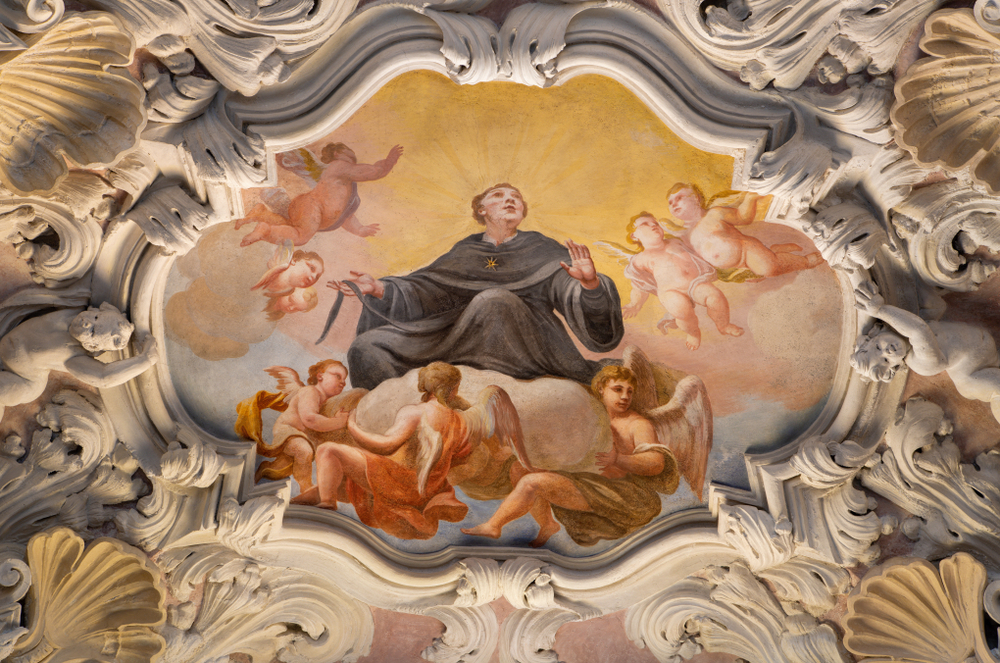
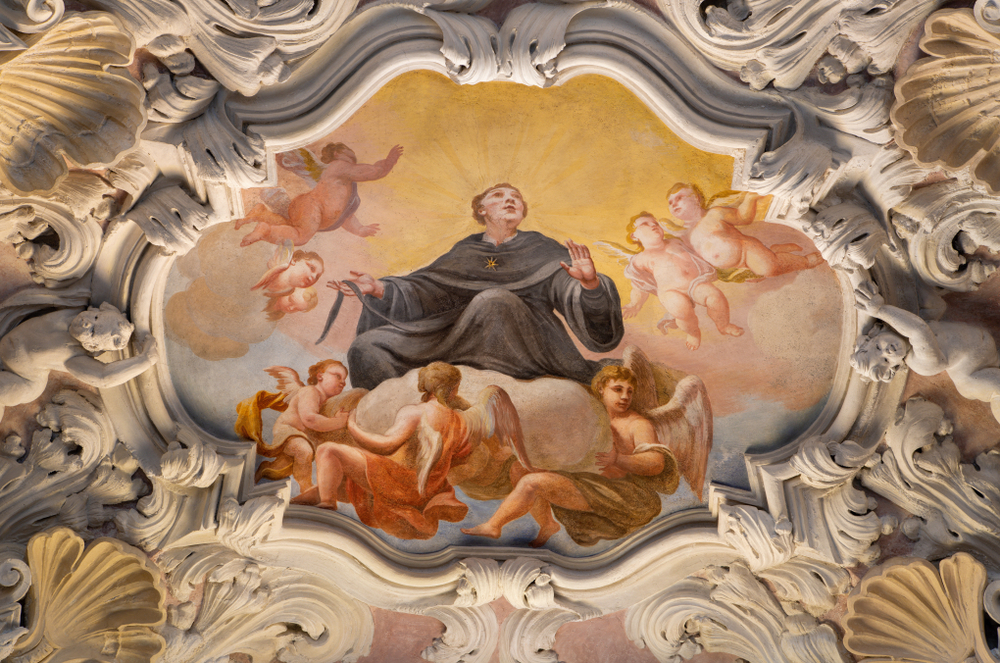
This year, the solemnity of the Sacred Heart of Jesus is celebrated on June 12.

Read More
In Italy’s ‘Land of Fires,’ Pope Leo XIV laments ‘the cry of creation and the poor’ #Catholic Pope Leo XIV arrived in Italyʼs “Terra dei Fuochi,” or “Land of Fires,” for a one-day visit on May 23, the first pope in history to meet with this population amid a yearslong battle against illegal waste disposal.The pope arrived in Acerra around 8:45 a.m., landing at the Arcoleo sports field, where he was immediately welcomed by Acerra Bishop Antonio Di Donna.Numerous dignitaries were also present, including Tito d’Errico, the mayor of Acerra.Pope Leo XIVʼs visit to the region also marks the 11th anniversary of the publication of the late Pope Francis’ landmark environmental encyclical Laudato Si'.Pope Francis himself was originally scheduled to visit the area for the encyclical’s fifth anniversary, though the visit was canceled due to the COVID-19 pandemic. From the sports field, Pope Leo XIV traveled immediately by car to the Cathedral of St. Mary of the Assumption in Acerra, where he met with bishops, clergy, members of religious orders, and the families of victims of environmental pollution. Approximately 12,000 faithful were present for the occasion.
 
 Pope Leo XIV greets the faithful at the Cathedral of Santa Maria Assunta in Acerra, Italy, May 23, 2026. The pope was visiting the so-called “Land of Fires” near Naples where illegal waste dumping has created a yearslong health crisis. | Credit: Daniel Ibáñez/EWTN News
 
 "Today we wish to fulfill Pope Francis’ desire, recognizing the great gift that the encyclical Laudato Si’ has represented for the Church’s mission in this land," the Holy Father said."Indeed, the cry of creation and of the poor among you has been felt most dramatically due to a deadly concentration of shadowy interests and indifference toward the common good — forces that have poisoned both the natural and social environments," he said, adding: "It is a cry that calls for conversion!” Di Donna himself recounted the history of the region at the cathedral, stating that the “environmental tragedy” began in the 1980s, “when certain industrialists in the north needed to dispose of vast quantities of toxic waste.”“Over the span of roughly 30 years, hundreds of thousands of tons of toxic waste arrived from numerous industries across northern Italy, only to be dumped in a specific part of this territory,” the bishop said. The environmental crisis triggered “a collapse of the agricultural industry,” the bishop said, describing the “Terra dei Fuochi” label as “a mark of infamy for our region.” Pope Leo XIV told the assembly he had come to listen to those in the region who have lost loved ones to the environmental devastation. The pope said he also wished to “thank those who have responded to evil with good.” 
 
 Pope Leo XIV greets crowds in Acerra, Italy, May 23, 2026. The pope was visiting the so-called “Land of Fires” near Naples where illegal waste dumping has created a yearslong health crisis. | Credit: Daniel Ibáñez/EWTN News
 
 “We suffer because of the devastation that has compromised a marvelous ecosystem — places, histories, and memories,” the pope said. “Faced with this reality, there are two possible attitudes: indifference or responsibility,” he continued. “You have chosen responsibility, and — with God’s help — you have embarked upon a path of commitment and the pursuit of justice.”“Can these lands come back to life?” the pope continued. “Be the answer yourselves: a united community, in faith and in commitment. Then life will multiply.”The pope was scheduled to return to Rome after his visit to Acerra, located a little over 130 miles southeast of Rome. The Holy Father also met with civic leaders and local residents of Acerra. This story was first published by ACI Stampa, the Italian-language sister service of EWTN News. It has been translated and adapted by EWTN News English.

In Italy’s ‘Land of Fires,’ Pope Leo XIV laments ‘the cry of creation and the poor’ #Catholic Pope Leo XIV arrived in Italyʼs “Terra dei Fuochi,” or “Land of Fires,” for a one-day visit on May 23, the first pope in history to meet with this population amid a yearslong battle against illegal waste disposal.The pope arrived in Acerra around 8:45 a.m., landing at the Arcoleo sports field, where he was immediately welcomed by Acerra Bishop Antonio Di Donna.Numerous dignitaries were also present, including Tito d’Errico, the mayor of Acerra.Pope Leo XIVʼs visit to the region also marks the 11th anniversary of the publication of the late Pope Francis’ landmark environmental encyclical Laudato Si'.Pope Francis himself was originally scheduled to visit the area for the encyclical’s fifth anniversary, though the visit was canceled due to the COVID-19 pandemic. From the sports field, Pope Leo XIV traveled immediately by car to the Cathedral of St. Mary of the Assumption in Acerra, where he met with bishops, clergy, members of religious orders, and the families of victims of environmental pollution. Approximately 12,000 faithful were present for the occasion. Pope Leo XIV greets the faithful at the Cathedral of Santa Maria Assunta in Acerra, Italy, May 23, 2026. The pope was visiting the so-called “Land of Fires” near Naples where illegal waste dumping has created a yearslong health crisis. | Credit: Daniel Ibáñez/EWTN News "Today we wish to fulfill Pope Francis’ desire, recognizing the great gift that the encyclical Laudato Si’ has represented for the Church’s mission in this land," the Holy Father said."Indeed, the cry of creation and of the poor among you has been felt most dramatically due to a deadly concentration of shadowy interests and indifference toward the common good — forces that have poisoned both the natural and social environments," he said, adding: "It is a cry that calls for conversion!” Di Donna himself recounted the history of the region at the cathedral, stating that the “environmental tragedy” began in the 1980s, “when certain industrialists in the north needed to dispose of vast quantities of toxic waste.”“Over the span of roughly 30 years, hundreds of thousands of tons of toxic waste arrived from numerous industries across northern Italy, only to be dumped in a specific part of this territory,” the bishop said. The environmental crisis triggered “a collapse of the agricultural industry,” the bishop said, describing the “Terra dei Fuochi” label as “a mark of infamy for our region.” Pope Leo XIV told the assembly he had come to listen to those in the region who have lost loved ones to the environmental devastation. The pope said he also wished to “thank those who have responded to evil with good.” Pope Leo XIV greets crowds in Acerra, Italy, May 23, 2026. The pope was visiting the so-called “Land of Fires” near Naples where illegal waste dumping has created a yearslong health crisis. | Credit: Daniel Ibáñez/EWTN News “We suffer because of the devastation that has compromised a marvelous ecosystem — places, histories, and memories,” the pope said. “Faced with this reality, there are two possible attitudes: indifference or responsibility,” he continued. “You have chosen responsibility, and — with God’s help — you have embarked upon a path of commitment and the pursuit of justice.”“Can these lands come back to life?” the pope continued. “Be the answer yourselves: a united community, in faith and in commitment. Then life will multiply.”The pope was scheduled to return to Rome after his visit to Acerra, located a little over 130 miles southeast of Rome. The Holy Father also met with civic leaders and local residents of Acerra. This story was first published by ACI Stampa, the Italian-language sister service of EWTN News. It has been translated and adapted by EWTN News English.

The Holy Father said Pope Francis’ encyclical Laudato Si’ is a framework for addressing the social and environmental crises of the region.

Read More
Picture of the day


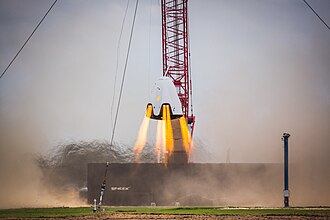
A full-size test article of the SpaceX Crew Dragon named DragonFly fires its eight SuperDraco engines in a development test of its ability to land with the accuracy of a helicopter using only the thrusters. The company conducted two tethered tests vehicle attached to a crane so engineers could refine the landing software and systems on the spacecraft. SpaceX envisions returning people to Earth from space on the power of thrust instead of beneath parachutes. SpaceX, in partnership with NASA’s Commercial Crew Program, is developing the Crew Dragon and Falcon 9 integrated system to take astronauts to launch astronauts to the International Space Station from the United States.
 #ImageOfTheDay
Picture of the day
A full-size test article of the SpaceX Crew Dragon named DragonFly fires its eight SuperDraco engines in a development test of its ability to land with the accuracy of a helicopter using only the thrusters. The company conducted two tethered tests vehicle attached to a crane so engineers could refine the landing software and systems on the spacecraft. SpaceX envisions returning people to Earth from space on the power of thrust instead of beneath parachutes. SpaceX, in partnership with NASA’s Commercial Crew Program, is developing the Crew Dragon and Falcon 9 integrated system to take astronauts to launch astronauts to the International Space Station from the United States.
Read More