flames

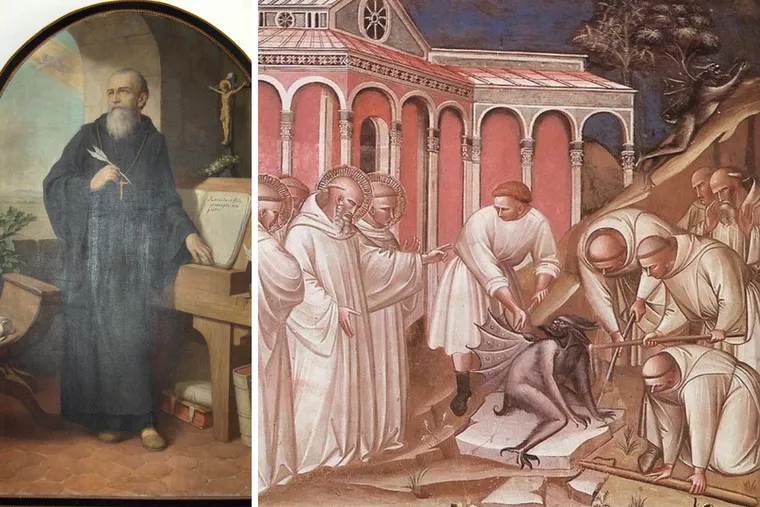
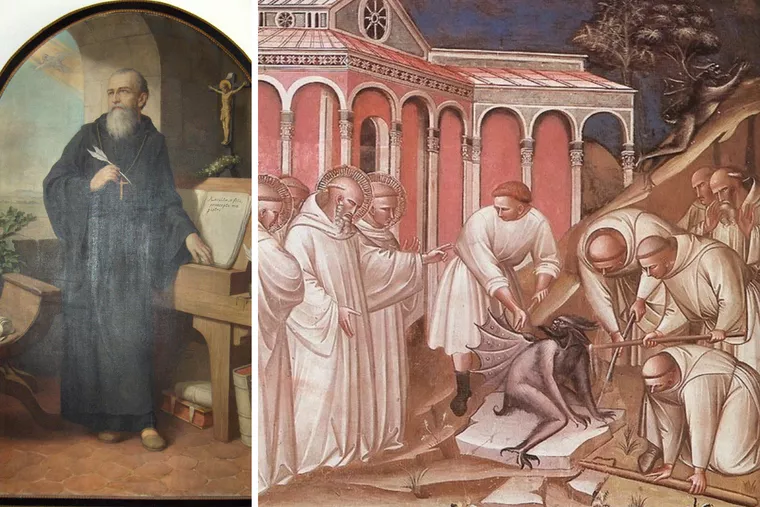
How the St. Benedict medal became a shield against the powers of darkness #Catholic Temptations in a fallen city, memories of a beautiful woman, a poisoned chalice, the attacks of an envious priest, curses from a pagan priest, a rock that won’t budge and another that falls on a young monk, a kitchen in flames, a dragon that lurks to devour a fleeing monk, threats from Gothic warlords, and the prospect of a destroyed monastery.These are some of the attacks that St. Benedict, whose feast the Catholic Church celebrates on July 11, endured throughout his life.Benedict even had to use force to manifest his authority as abbot over his monks oppressed by the enemy, as related in Father Robert Nixon’s book “The Cross and Medal of Saint Benedict: A Mystical Sign of Divine Power” (TAN, 2024):“Benedict found this monk outside wandering around aimlessly when he should have been in the oratory in prayer. With a certain degree of paternal severity and charitable discipline, he reprimanded him for his lack of wisdom and discernment and struck him with his staff. At this, the monk fell down, motionless. And after that, the devil … never troubled him again. It was as if the staff of Benedict had not struck the hapless monk but had rather driven away the wicked tempter himself!” (p. 14).St. Benedict has come to be recognized for the power of his actions against the enemy, alongside St. Michael the Archangel, as a major protector against evil — particularly through the medal that bears his image.Nixon’s book offers an overview of how the medal rose to prominence as a Catholic devotion and received papal approval, couching it within the story of St. Benedict’s life and the rise of his order of monks.The St. Benedict medalIf you’ve seen the back of a St. Benedict medal, you may have noticed a series of letters. The first set is arranged in and around the shape of the cross: C S P B C S S M L N D S M D. The next set is arranged in a circle around the cross: V R S N S M V S M Q L I V B.This arrangement first came to serious attention in the year 1647 in relation to the Benedictine Abbey of Metten in Bavaria, Germany, when it was believed to have prevented a series of diabolic attacks.Although some of the laity already had medals with these letters engraved, no one at the time understood their meaning. It was only in researching the library’s manuscripts that a 15th-century illustration of St. Benedict pointed to the full prayer they abbreviated:“Cross of our Holy Father Benedict. May the cross be light to me. May the dragon not be a leader to me. Get behind me, Satan: Never persuade me to vain things. What you like is evil; may you yourself drink your venom!”Due to a widespread story of the medal preventing the effect of curses and bringing about exorcisms and healings, which Nixon details in his book, its use spread across Europe, with Pope Benedict XIV approving an official blessing for it and granting it indulgences in 1741.The great father of modern Benedictine monasticism, Dom Prosper Guéranger, speculated why God would grant so many favors to those who invoke his help through St. Benedict’s medal. In an age when “rationalism is so rife,” God has deigned to offer help to those “who put their confidence in the sacred signs marked on the medal” with “strong and simple” faith (Guéranger, “The Medal or Cross of St. Benedict,” author’s preface). It’s as if to laugh at the devil and his plans to pull people away from God through the alleged sophistication of the modern world, overcoming them with simple signs pointing us to the cross and the protection of a holy monk.Of course, the medal should not be used in a superstitious way. It expresses our faith and confidence in God, which conquers the power of the enemy through the blood of Christ. Within God’s plan of salvation, there are certain key defenders of God’s people. St. Benedict proved himself as one over his own monks in spiritual combat. Through the efficacy of his medal, he has manifested himself as a fatherly defender of all who invoke his help.Throughout history, the monastic life has served as a constant beacon calling us to greater conversion of life and prayer. Turning to St. Benedict can lead us to embrace some of his spiritual principles, such as humility, obedience, stability, hospitality, the prayerful reading of Scripture in “lectio divina,” and viewing our work as a means of honoring God.While St. Benedict faced trials in his life as a monk, we all face trials and attacks from the enemy in the Christian life. Sacramentals can help us in our journey of faith, including our efforts to keep evil far away.St. Benedict medals and rosaries with the medal affixed can be purchased at religious gift stores and can be blessed after purchase. Medals are also available at EWTN’s Religious Catalogue site.This story was first published by the National Catholic Register, the sister partner of EWTN News, and has been adapted by EWTN News.

How the St. Benedict medal became a shield against the powers of darkness #Catholic Temptations in a fallen city, memories of a beautiful woman, a poisoned chalice, the attacks of an envious priest, curses from a pagan priest, a rock that won’t budge and another that falls on a young monk, a kitchen in flames, a dragon that lurks to devour a fleeing monk, threats from Gothic warlords, and the prospect of a destroyed monastery.These are some of the attacks that St. Benedict, whose feast the Catholic Church celebrates on July 11, endured throughout his life.Benedict even had to use force to manifest his authority as abbot over his monks oppressed by the enemy, as related in Father Robert Nixon’s book “The Cross and Medal of Saint Benedict: A Mystical Sign of Divine Power” (TAN, 2024):“Benedict found this monk outside wandering around aimlessly when he should have been in the oratory in prayer. With a certain degree of paternal severity and charitable discipline, he reprimanded him for his lack of wisdom and discernment and struck him with his staff. At this, the monk fell down, motionless. And after that, the devil … never troubled him again. It was as if the staff of Benedict had not struck the hapless monk but had rather driven away the wicked tempter himself!” (p. 14).St. Benedict has come to be recognized for the power of his actions against the enemy, alongside St. Michael the Archangel, as a major protector against evil — particularly through the medal that bears his image.Nixon’s book offers an overview of how the medal rose to prominence as a Catholic devotion and received papal approval, couching it within the story of St. Benedict’s life and the rise of his order of monks.The St. Benedict medalIf you’ve seen the back of a St. Benedict medal, you may have noticed a series of letters. The first set is arranged in and around the shape of the cross: C S P B C S S M L N D S M D. The next set is arranged in a circle around the cross: V R S N S M V S M Q L I V B.This arrangement first came to serious attention in the year 1647 in relation to the Benedictine Abbey of Metten in Bavaria, Germany, when it was believed to have prevented a series of diabolic attacks.Although some of the laity already had medals with these letters engraved, no one at the time understood their meaning. It was only in researching the library’s manuscripts that a 15th-century illustration of St. Benedict pointed to the full prayer they abbreviated:“Cross of our Holy Father Benedict. May the cross be light to me. May the dragon not be a leader to me. Get behind me, Satan: Never persuade me to vain things. What you like is evil; may you yourself drink your venom!”Due to a widespread story of the medal preventing the effect of curses and bringing about exorcisms and healings, which Nixon details in his book, its use spread across Europe, with Pope Benedict XIV approving an official blessing for it and granting it indulgences in 1741.The great father of modern Benedictine monasticism, Dom Prosper Guéranger, speculated why God would grant so many favors to those who invoke his help through St. Benedict’s medal. In an age when “rationalism is so rife,” God has deigned to offer help to those “who put their confidence in the sacred signs marked on the medal” with “strong and simple” faith (Guéranger, “The Medal or Cross of St. Benedict,” author’s preface). It’s as if to laugh at the devil and his plans to pull people away from God through the alleged sophistication of the modern world, overcoming them with simple signs pointing us to the cross and the protection of a holy monk.Of course, the medal should not be used in a superstitious way. It expresses our faith and confidence in God, which conquers the power of the enemy through the blood of Christ. Within God’s plan of salvation, there are certain key defenders of God’s people. St. Benedict proved himself as one over his own monks in spiritual combat. Through the efficacy of his medal, he has manifested himself as a fatherly defender of all who invoke his help.Throughout history, the monastic life has served as a constant beacon calling us to greater conversion of life and prayer. Turning to St. Benedict can lead us to embrace some of his spiritual principles, such as humility, obedience, stability, hospitality, the prayerful reading of Scripture in “lectio divina,” and viewing our work as a means of honoring God.While St. Benedict faced trials in his life as a monk, we all face trials and attacks from the enemy in the Christian life. Sacramentals can help us in our journey of faith, including our efforts to keep evil far away.St. Benedict medals and rosaries with the medal affixed can be purchased at religious gift stores and can be blessed after purchase. Medals are also available at EWTN’s Religious Catalogue site.This story was first published by the National Catholic Register, the sister partner of EWTN News, and has been adapted by EWTN News.

St. Benedict, whose feast the Catholic Church celebrates on July 11, endured constant attacks from the enemy throughout his life.
Read More
Irish bishops call for calm in Belfast following racially motivated civil unrest #Catholic Following its summer 2026 general meeting, the Irish Bishops’ Conference voiced its deep concern about the attack on human life and the wider violence and social disorder that has taken place in Belfast and across Northern Ireland this past week.The civil unrest followed a brutal knife attack in Belfast carried out by a Sudanese national. Footage of the incident has been widely circulated globally and on social media. Bishop Alan McGuckian, SJ, of Down and Connor said: “My thoughts and prayers are firstly with Stephen Ogilvie, who sustained life-changing devastating injuries in a brutal and horrific attack.”Referring to the rioting, intimidation, and vandalism toward immigrant people that followed, he said: “So many newcomers make an outstanding contribution to our communities, including our parishes. They are our friends. Shame on all those who have sought to mobilize, agitate, weaponize, and politicize the fear and concerns of others over the last few days. All of us have a responsibility to de-escalate societal tension rather than stoke the flames of racism.”Lebanese priest says ‘situation drastically deteriorating’ for ChristiansFather Youssef Semaan, parish priest of Kfour, Nabatieh District, in Lebanon, said the situation for Christians remaining in the country is continuing to worsen.“Every week is more dangerous than the last. The situation has become unbearable,” Semaan said, according to a press release from Aid to the Church in Need on Thursday. The priest, who was forced to leave Kfour due to safety reasons, said he has managed to return on two occasions. He said many Christians have been faced with the difficult decision to “stay and risk their lives or abandon our land without any guarantee that we will ever get our houses or our goods back.” In Kfour, the Christian population has dropped from 120 to around 12, ACN noted. “We still have hope,” Semaan said. “But hope itself is not enough. It has to be based on solid foundations that allow us to rebuild and go on living. We are human after all.”Zimbabwe bishops consecrate nation to Mary, a ‘model of courage’ in difficult timesMembers of the Zimbabwe Catholic Bishops’ Conference (ZCBC) have consecrated the Southern African nation to the Immaculate Heart of the Blessed Virgin Mary, entrusting the country to her maternal protection and presenting her as a model of faith, hope, courage, and love amid ongoing challenges.The consecration took place during a Mass marking the conclusion of the bishops’ 2026 plenary assembly at the Sacred Heart of Jesus Cathedral of the Archdiocese of Harare on June 10, ACI Africa, the sister service of EWTN News in Africa, reported Thursday. In his homily, ZCBC president Bishop Raymond Tapiwa Mupandasekwa said the bishops identified Mary as a fitting patroness for Zimbabwe, saying: “The act of surrender to God is indeed an imitation of this Holy Virgin. She is the woman who not only shows her total surrender to God in faith, but she is also a woman of great hope. At the foot of the cross she stands. A great sign of courage in a very difficult moment.”Legislation threatening the seal of confession in France failsA provision in a bill proposed to the French National Assembly that would have compelled priests to violate the seal of confession to report instances of abuse against minors has failed.The bill, aimed at preventing and combating violence in schools in the wake of a sex abuse scandal at a Catholic boarding school in southern France, was adopted on June 1 without the proposed clause that would have removed exemptions for priests from mandatory reporting of information regarding sexual abuse heard during the sacrament of confession. The French Bishops’ Conference expressed “grave concern” ahead of a debate on the bill, noting several articles in the bill that “call into question several fundamental freedoms,” including the right to secrecy under the seal of confession.Christians in Tyre face new wave of uncertaintyThe Christian community in the southern Lebanese city of Tyre is watching recent developments with growing concern after the area was included in an Israeli evacuation warning for the first time, ACI MENA, the Arabic-language sister service of EWTN News, reported Thursday.Church leaders fear that any military escalation could have lasting consequences for one of Lebanon’s oldest Christian communities, which has already endured years of economic hardship and emigration. Melkite Greek Catholic Archbishop Georges Iskandar called for urgent efforts to protect civilians and preserve the city’s historic and religious character, warning that further instability could accelerate the decline of the local Christian presence.Victims of clergy abuse in Australia clash with diocese over memorialA group representing victim survivors of clergy abuse has announced its agreement with the Diocese of Ballarat in Australia to build a memorial for victims “null and void” after an alleged communication breakdown with the diocese.“Throughout the memorial process, we have sought to engage with Church representatives in a respectful, transparent, and constructive manner. We have acted in good faith and demonstrated a genuine willingness to work collaboratively towards memorials at both sites: St. Patrick’s Cathedral and St. Alipius Old Boys School,” the Ballarat and District Survivors Memorial Committee said in a June 6 Facebook post. “Regrettably, we do not believe the same level of transparency and good faith has been demonstrated by the Church during these negotiations.”British National Trust reopens 420-year-old Catholic lodgeLyveden, a three-story Tudor lodge in Northamptonshire, England, known for its Catholic symbolism, has been reopened following conservation work.“Weʼre very excited to open Lyveden Lodge after 18 months and welcome visitors back inside this remarkable building,” Matthew Glasgow, senior building surveyor, said in a BBC News report on Friday. “While further conservation work will be needed in the coming years, the completed repairs mean visitors can once again enjoy this extraordinary unfinished vision of Sir Thomas Tresham.” Conservationists conducted repairs to the lodge’s stonework, replaced timber, and restored its Elizabethan garden. Constructed in the 16th century by Sir Thomas Tresham, a practicing Catholic who faced persecution for refusing to attend Anglican church services during the late 1500s and early 1600s, Lyveden is built in the shape of a Greek cross and features references to Christian numerology, according to the National Trust’s website.Rebaptisms raise questions in Syria’s Maronite communityReports that several Maronites in the Latakia countryside of Syria joined Protestant groups and underwent “rebaptism” have sparked discussion within the local Church about the challenges facing parish life in the region.The situation came to light in the village of Ain Halaqim, where community members pointed to years of pastoral difficulties, including the absence of a resident priest and limited opportunities for ongoing catechesis, ACI MENA reported Friday. Rather than focusing solely on the individuals who left, many local voices are asking broader questions about how the Church can better accompany the faithful, especially in communities affected by economic struggles and migration.

Irish bishops call for calm in Belfast following racially motivated civil unrest #Catholic Following its summer 2026 general meeting, the Irish Bishops’ Conference voiced its deep concern about the attack on human life and the wider violence and social disorder that has taken place in Belfast and across Northern Ireland this past week.The civil unrest followed a brutal knife attack in Belfast carried out by a Sudanese national. Footage of the incident has been widely circulated globally and on social media. Bishop Alan McGuckian, SJ, of Down and Connor said: “My thoughts and prayers are firstly with Stephen Ogilvie, who sustained life-changing devastating injuries in a brutal and horrific attack.”Referring to the rioting, intimidation, and vandalism toward immigrant people that followed, he said: “So many newcomers make an outstanding contribution to our communities, including our parishes. They are our friends. Shame on all those who have sought to mobilize, agitate, weaponize, and politicize the fear and concerns of others over the last few days. All of us have a responsibility to de-escalate societal tension rather than stoke the flames of racism.”Lebanese priest says ‘situation drastically deteriorating’ for ChristiansFather Youssef Semaan, parish priest of Kfour, Nabatieh District, in Lebanon, said the situation for Christians remaining in the country is continuing to worsen.“Every week is more dangerous than the last. The situation has become unbearable,” Semaan said, according to a press release from Aid to the Church in Need on Thursday. The priest, who was forced to leave Kfour due to safety reasons, said he has managed to return on two occasions. He said many Christians have been faced with the difficult decision to “stay and risk their lives or abandon our land without any guarantee that we will ever get our houses or our goods back.” In Kfour, the Christian population has dropped from 120 to around 12, ACN noted. “We still have hope,” Semaan said. “But hope itself is not enough. It has to be based on solid foundations that allow us to rebuild and go on living. We are human after all.”Zimbabwe bishops consecrate nation to Mary, a ‘model of courage’ in difficult timesMembers of the Zimbabwe Catholic Bishops’ Conference (ZCBC) have consecrated the Southern African nation to the Immaculate Heart of the Blessed Virgin Mary, entrusting the country to her maternal protection and presenting her as a model of faith, hope, courage, and love amid ongoing challenges.The consecration took place during a Mass marking the conclusion of the bishops’ 2026 plenary assembly at the Sacred Heart of Jesus Cathedral of the Archdiocese of Harare on June 10, ACI Africa, the sister service of EWTN News in Africa, reported Thursday. In his homily, ZCBC president Bishop Raymond Tapiwa Mupandasekwa said the bishops identified Mary as a fitting patroness for Zimbabwe, saying: “The act of surrender to God is indeed an imitation of this Holy Virgin. She is the woman who not only shows her total surrender to God in faith, but she is also a woman of great hope. At the foot of the cross she stands. A great sign of courage in a very difficult moment.”Legislation threatening the seal of confession in France failsA provision in a bill proposed to the French National Assembly that would have compelled priests to violate the seal of confession to report instances of abuse against minors has failed.The bill, aimed at preventing and combating violence in schools in the wake of a sex abuse scandal at a Catholic boarding school in southern France, was adopted on June 1 without the proposed clause that would have removed exemptions for priests from mandatory reporting of information regarding sexual abuse heard during the sacrament of confession. The French Bishops’ Conference expressed “grave concern” ahead of a debate on the bill, noting several articles in the bill that “call into question several fundamental freedoms,” including the right to secrecy under the seal of confession.Christians in Tyre face new wave of uncertaintyThe Christian community in the southern Lebanese city of Tyre is watching recent developments with growing concern after the area was included in an Israeli evacuation warning for the first time, ACI MENA, the Arabic-language sister service of EWTN News, reported Thursday.Church leaders fear that any military escalation could have lasting consequences for one of Lebanon’s oldest Christian communities, which has already endured years of economic hardship and emigration. Melkite Greek Catholic Archbishop Georges Iskandar called for urgent efforts to protect civilians and preserve the city’s historic and religious character, warning that further instability could accelerate the decline of the local Christian presence.Victims of clergy abuse in Australia clash with diocese over memorialA group representing victim survivors of clergy abuse has announced its agreement with the Diocese of Ballarat in Australia to build a memorial for victims “null and void” after an alleged communication breakdown with the diocese.“Throughout the memorial process, we have sought to engage with Church representatives in a respectful, transparent, and constructive manner. We have acted in good faith and demonstrated a genuine willingness to work collaboratively towards memorials at both sites: St. Patrick’s Cathedral and St. Alipius Old Boys School,” the Ballarat and District Survivors Memorial Committee said in a June 6 Facebook post. “Regrettably, we do not believe the same level of transparency and good faith has been demonstrated by the Church during these negotiations.”British National Trust reopens 420-year-old Catholic lodgeLyveden, a three-story Tudor lodge in Northamptonshire, England, known for its Catholic symbolism, has been reopened following conservation work.“Weʼre very excited to open Lyveden Lodge after 18 months and welcome visitors back inside this remarkable building,” Matthew Glasgow, senior building surveyor, said in a BBC News report on Friday. “While further conservation work will be needed in the coming years, the completed repairs mean visitors can once again enjoy this extraordinary unfinished vision of Sir Thomas Tresham.” Conservationists conducted repairs to the lodge’s stonework, replaced timber, and restored its Elizabethan garden. Constructed in the 16th century by Sir Thomas Tresham, a practicing Catholic who faced persecution for refusing to attend Anglican church services during the late 1500s and early 1600s, Lyveden is built in the shape of a Greek cross and features references to Christian numerology, according to the National Trust’s website.Rebaptisms raise questions in Syria’s Maronite communityReports that several Maronites in the Latakia countryside of Syria joined Protestant groups and underwent “rebaptism” have sparked discussion within the local Church about the challenges facing parish life in the region.The situation came to light in the village of Ain Halaqim, where community members pointed to years of pastoral difficulties, including the absence of a resident priest and limited opportunities for ongoing catechesis, ACI MENA reported Friday. Rather than focusing solely on the individuals who left, many local voices are asking broader questions about how the Church can better accompany the faithful, especially in communities affected by economic struggles and migration.

Bishops in Northern Ireland call for peace, abuse victims in Australia clash with diocese, anti-Catholic legislation in France fails, Zimbabwe, and more in this week’s Catholic world news roundup.

Read More