
| Picture of the day |
|---|

|
|
Gladiolus dalenii (parrot gladiolus) flower in the rain. About 4–5 cm (1.6–2.0 in) across. Garden plant in Ooty, The Nilgiris, south India. Focus-stack of 38 images.
|
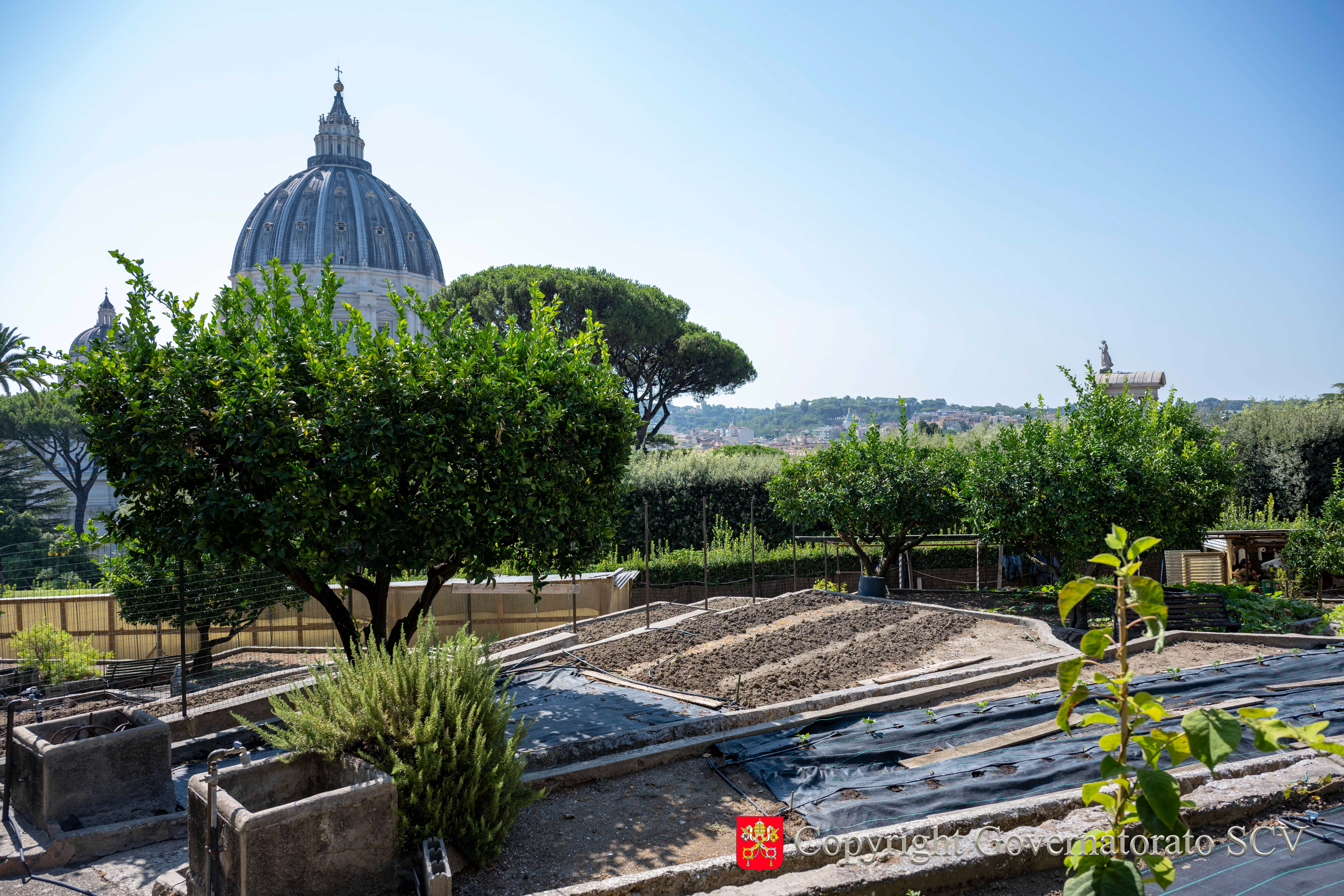
![Vatican vegetable garden goes 100% organic #Catholic A vegetable garden and orchard inside the Vatican walls, which historically provided food for the pope’s household, is now cultivated using exclusively organic farming techniques.The private garden covers almost a tenth of an acre of cultivable land inside the Mater Ecclesiae Monastery property, where Pope Benedict XVI lived during his retirement and now reside cloistered Benedictine nuns from the Abbey of St. Scholastica in Victoria, Argentina.Sometimes known as “the pope’s garden,” the vegetable plot “has always been a defining feature of the Vatican Gardens because, in fact, the Vatican Gardens were originally created primarily for that purpose — to provide sustenance for the [Apostolic] Palace,” Stefano Giampaolo, a forestry expert and head of the Gardens and Environment Service of the Vatican, told EWTN News.Giampaolo explained that now the plot is more accurately understood as the vegetable garden of the Vatican Gardens — an area that covers roughly half of Vatican City at 57 acres.
Mater Ecclesiae Monastery, built inside Vatican City in the 1990s to house nuns who support the ministry of the pope through prayer, has an adjoining vegetable garden and orchard. | Credit: Hannah Brockhaus/EWTN News
The Benedictine nuns at Mater Ecclesiae Monastery, who pray for the pope, eat the fruit and vegetables grown in the garden and use them to make jams and other food preserves. The excess produce is given to a Vatican soup kitchen run by the Missionaries of Charity.The move to biological farming techniques has been underway for several years, partly in response to Pope Francis’ 2015 encyclical Laudato Si’, Giampaolo said.The challenges of organicAccording to Gilberto Bianchi, the gardener responsible for the orchard and vegetable patch since 2008, the Vatican has a “desire to respect nature” in how it cares for the plants and trees on its land.But it’s far from easy.“Clearly, running a completely organic vegetable garden presents challenges, partly because insects are aggressive, and we use natural predators in the soil to control them,” Bianchi said. “No chemical fertilizers or insecticides are used.”He added that soil drainage and water conservation are also challenges.“This type of soil drains very well, so to conserve water, we add coconut fiber to retain moisture. And it’s watered with a drip irrigation system specifically to target the plants and avoid wasting water,” he said.Part of an organic agriculture also means respecting the seasons, he said. “Right now, the winter crops are being planted, while the summer crops are being harvested.”
The fresh produce grown in the vegetable garden and orchard in Vatican City feeds the Benedictine nuns living in the Mater Ecclesiae Monastery and supports the nearby Missionaries of Charity-run soup kitchen. | Credit: Governorate of Vatican City State
The end-of-summer harvest includes tomatoes, eggplants, green beans, zucchini, cucumbers, and peppers, while the fall and winter crop has broccoli, spinach, lettuce, and pumpkins.According to Vatican Media, the garden also includes garlic, basil, and a Peruvian variety of chili peppers known for its intensity. Kiwi plants were also added recently at the request of the Argentinian nuns.Next to the garden is a small orchard of around 15 citrus trees, some of which are 150 years old.“At this time, we’re planting savoy cabbage,” Bianchi said. “In short, whatever is in season. … So whatever is planted is because nature dictates it at that moment. The plants are grown from seed. We don’t use lab-grown plants.”A historic collection of gardensBianchi, who has worked for more than three decades in the Vatican Gardens, “is the one with the most expertise in this field, and he is now passing that knowledge on to a new gardener,” Giampaolo said.The expert gardener is part of a team of around 35 gardeners and administrators who oversee the Vatican’s green spaces and provide the flower arrangements for papal ceremonies.
Stefano Giampaolo, left, head of the Gardens and Environment Service of Vatican City, and expert gardener Gilberto Bianchi, right, the main caretaker of the orchard and vegetable garden commonly known as “the pope’s garden,” share their expertise with EWTN News in the Vatican Gardens on Sept. 9, 2026. | Credit: Hannah Brockhaus/EWTN News
“People expect to see a single garden, but in reality, as the name suggests, they are the Vatican Gardens — a collection of gardens,” Giampaolo said.The Gardens date to the mid-13th century, when Pope Nicolas III moved the papal residence from the Lateran Palace to the Vatican, had the city state’s walls built, and ordered the creation of a lawn, orchard, and “viridarium” — a Roman-style garden with flowerbeds and a fountain.Today, Giampaolo said, “there are countless different species, both trees and flowers. This is because, over time, the gardens have been enriched by donations and the search for specific botanical material, to the point of becoming a true botanical garden.”“Visitors are often struck by the diversity of the spaces — so many different gardens contained within this small area.”Ultimately, he said, the gardeners hope to one day eliminate all synthetic fertilizers and pesticides from their care of the entire Vatican territory.“It’s a process — the transformation of all the Gardens into organic ones,” he said.](https://unitedyam.com/wp-content/uploads/2026/09/vatican-vegetable-garden-goes-100-organic-catholic-a-vegetable-garden-and-orchard-inside-the-vatican-walls-which-historically-provided-food-for-the-popes-household-is-now-cultivated-using-scaled.jpg "Vatican vegetable garden goes 100% organic #Catholic A vegetable garden and orchard inside the Vatican walls, which historically provided food for the pope’s household, is now cultivated using exclusively organic farming techniques.The private garden covers almost a tenth of an acre of cultivable land inside the Mater Ecclesiae Monastery property, where Pope Benedict XVI lived during his retirement and now reside cloistered Benedictine nuns from the Abbey of St. Scholastica in Victoria, Argentina.Sometimes known as “the pope’s garden,” the vegetable plot “has always been a defining feature of the Vatican Gardens because, in fact, the Vatican Gardens were originally created primarily for that purpose — to provide sustenance for the [Apostolic] Palace,” Stefano Giampaolo, a forestry expert and head of the Gardens and Environment Service of the Vatican, told EWTN News.Giampaolo explained that now the plot is more accurately understood as the vegetable garden of the Vatican Gardens — an area that covers roughly half of Vatican City at 57 acres.
Mater Ecclesiae Monastery, built inside Vatican City in the 1990s to house nuns who support the ministry of the pope through prayer, has an adjoining vegetable garden and orchard. | Credit: Hannah Brockhaus/EWTN News
The Benedictine nuns at Mater Ecclesiae Monastery, who pray for the pope, eat the fruit and vegetables grown in the garden and use them to make jams and other food preserves. The excess produce is given to a Vatican soup kitchen run by the Missionaries of Charity.The move to biological farming techniques has been underway for several years, partly in response to Pope Francis’ 2015 encyclical Laudato Si’, Giampaolo said.The challenges of organicAccording to Gilberto Bianchi, the gardener responsible for the orchard and vegetable patch since 2008, the Vatican has a “desire to respect nature” in how it cares for the plants and trees on its land.But it’s far from easy.“Clearly, running a completely organic vegetable garden presents challenges, partly because insects are aggressive, and we use natural predators in the soil to control them,” Bianchi said. “No chemical fertilizers or insecticides are used.”He added that soil drainage and water conservation are also challenges.“This type of soil drains very well, so to conserve water, we add coconut fiber to retain moisture. And it’s watered with a drip irrigation system specifically to target the plants and avoid wasting water,” he said.Part of an organic agriculture also means respecting the seasons, he said. “Right now, the winter crops are being planted, while the summer crops are being harvested.”
The fresh produce grown in the vegetable garden and orchard in Vatican City feeds the Benedictine nuns living in the Mater Ecclesiae Monastery and supports the nearby Missionaries of Charity-run soup kitchen. | Credit: Governorate of Vatican City State
The end-of-summer harvest includes tomatoes, eggplants, green beans, zucchini, cucumbers, and peppers, while the fall and winter crop has broccoli, spinach, lettuce, and pumpkins.According to Vatican Media, the garden also includes garlic, basil, and a Peruvian variety of chili peppers known for its intensity. Kiwi plants were also added recently at the request of the Argentinian nuns.Next to the garden is a small orchard of around 15 citrus trees, some of which are 150 years old.“At this time, we’re planting savoy cabbage,” Bianchi said. “In short, whatever is in season. … So whatever is planted is because nature dictates it at that moment. The plants are grown from seed. We don’t use lab-grown plants.”A historic collection of gardensBianchi, who has worked for more than three decades in the Vatican Gardens, “is the one with the most expertise in this field, and he is now passing that knowledge on to a new gardener,” Giampaolo said.The expert gardener is part of a team of around 35 gardeners and administrators who oversee the Vatican’s green spaces and provide the flower arrangements for papal ceremonies.
Stefano Giampaolo, left, head of the Gardens and Environment Service of Vatican City, and expert gardener Gilberto Bianchi, right, the main caretaker of the orchard and vegetable garden commonly known as “the pope’s garden,” share their expertise with EWTN News in the Vatican Gardens on Sept. 9, 2026. | Credit: Hannah Brockhaus/EWTN News
“People expect to see a single garden, but in reality, as the name suggests, they are the Vatican Gardens — a collection of gardens,” Giampaolo said.The Gardens date to the mid-13th century, when Pope Nicolas III moved the papal residence from the Lateran Palace to the Vatican, had the city state’s walls built, and ordered the creation of a lawn, orchard, and “viridarium” — a Roman-style garden with flowerbeds and a fountain.Today, Giampaolo said, “there are countless different species, both trees and flowers. This is because, over time, the gardens have been enriched by donations and the search for specific botanical material, to the point of becoming a true botanical garden.”“Visitors are often struck by the diversity of the spaces — so many different gardens contained within this small area.”Ultimately, he said, the gardeners hope to one day eliminate all synthetic fertilizers and pesticides from their care of the entire Vatican territory.“It’s a process — the transformation of all the Gardens into organic ones,” he said.")
The move to biological farming techniques has been underway for several years in response to Pope Francis’ 2015 encyclical Laudato Si’.
![Apostolic nuncio calls for ‘moral voice’ in AI development #Catholic Archbishop Gabriele Giordano Caccia, apostolic nuncio to the United States, discussed the need for a “moral voice” in artificial intelligence (AI) development during a panel discussion hosted by Georgetown University on Sept. 9.The panel, titled “AI, Catholic Social Teaching, and Pope Leoʼs Invitation to Dialogue with the World,” examined Pope Leo XIV’s encyclical Magnifica Humanitas and its call for a shared human effort to develop technology that serves the common good rather than harms it.Speakers noted that the Holy Father’s encyclical stopped short of prescribing specific policy ideas for addressing the moral and ethical concerns, but the nuncio said “there is the perception that we need a moral voice” on the subject.“A moral voice is what?” he said. “Not everything which is possible to be done should be done. Not everything that technology offers should be taken. This is a moral choice.”Caccia stressed that decisions affecting human lives should not be handed over to AI, citing distinctions between AI algorithms and the human conscience, as the Holy Father discussed in Magnifica Humanitas.Leo drew a distinction between artificial intelligence and human intelligence in the encyclical, focusing on how each approaches moral questions. The pope wrote that he rejected ideas of “artificial moral agents” and the notion that a machine can “distinguish between right and wrong with greater consistency than a human being.”“Moral judgment cannot be reduced to calculation, for it involves conscience, personal responsibility and the recognition of the other as a person,” Leo wrote. “Therefore, it is not permissible to entrust lethal or otherwise irreversible decisions to artificial systems.”Caccia said during the panel discussion that, as a society, “we have to keep the value of the human relationship.”“The problem is that [if] life and death is decided by a machine, not by the human being, who is accountable?” he said. “So these are very important, important questions. But I am confident, as I said, that together we can face this situation and find a way.”The nuncio said he has similar concerns about the use of AI in other types of decision-making that impacts humans.“I hear very troubling accounts of algorithms that can block access to healthcare, employment, and security on the basis of data tainted by prejudice and injustice,” he said. “And Iʼve heard the silence of those who have no voice. When decisions are made, decisions [are] likely to generate new forms of exclusion and suffering.”Quoting the encyclical, Caccia affirmed the pope’s call that AI “needs to be disarmed.”
Archbishop Gabriele Caccia, the Holy See’s permanent observer to the United Nations in New York, speaks on Aug. 29, 2025, the International Day Against Nuclear Tests. | Credit: Holy See Mission to the United Nations
“The word is strong, I know, but deliberately chosen because this moment needs words capable of attracting attention, awakening consciences, and indicating paths forward for humanity,” he said. “This is more or less a framework in which we can go on with the conversation.”Speaking to EWTN News after the panel, Caccia said the pope’s call to address moral concerns of AI is not just a call to Church leadership but to every Catholic.“There is, of course, the voice of the bishops,” he said. “But there is also the voice of Catholic people who are in the business or are engineers who are in the economy, who are in the field. So itʼs not just for those who have pastoral responsibility, but for the bigger community.”Pope’s impact on AI discussionSeveral panelists discussed the importance of Magnifica Humanitas in providing a type of moral guidance on AI development that focuses on the common good of humanity.Jasmine Sun, a journalist who writes about AI and Silicon Valley, said she “was actually surprised by how much folks I knew in Silicon Valley, in the AI industry did pay attention to Magnifica Humanitas.”“It was a lot more engagement, I think, than I expected,” she said. “And once again, I think itʼs because there is this sense that the profit motive that has driven Silicon Valley, that continues to drive Silicon Valley, is not enough.”Molly Kinder, CEO of the Breakwater Initiative, said the Church provides “wisdom and moral leadership” and believes its broad focus on humanity is why people listened.“Iʼm struck that in the opening pages of the Bible, there is a discussion of Adam and Eve being put on Earth to till the land as our fundamental reason for existing,” she said. “And it feels to me sometimes when Iʼm in Silicon Valley … they almost talk about almost a new Garden of Eden that AI is going to bring about, that maybe our purpose is not to work, or maybe itʼs leisure or a check and a hobby.”Caccia too said he was “positively surprised” by the reaction to the encyclical, saying “it seems that there was a need to do something about this.”“It didnʼt pretend to have the answers,” he said, “but he put questions, common questions that we have to tackle together to decide where we want to go.”](https://unitedyam.com/wp-content/uploads/2026/09/apostolic-nuncio-calls-for-moral-voice-in-ai-development-catholic-archbishop-gabriele-giordano-caccia-apostolic-nuncio-to-the-united-states-discussed-the-need-for-a-moral.jpg "Apostolic nuncio calls for ‘moral voice’ in AI development #Catholic Archbishop Gabriele Giordano Caccia, apostolic nuncio to the United States, discussed the need for a “moral voice” in artificial intelligence (AI) development during a panel discussion hosted by Georgetown University on Sept. 9.The panel, titled “AI, Catholic Social Teaching, and Pope Leoʼs Invitation to Dialogue with the World,” examined Pope Leo XIV’s encyclical Magnifica Humanitas and its call for a shared human effort to develop technology that serves the common good rather than harms it.Speakers noted that the Holy Father’s encyclical stopped short of prescribing specific policy ideas for addressing the moral and ethical concerns, but the nuncio said “there is the perception that we need a moral voice” on the subject.“A moral voice is what?” he said. “Not everything which is possible to be done should be done. Not everything that technology offers should be taken. This is a moral choice.”Caccia stressed that decisions affecting human lives should not be handed over to AI, citing distinctions between AI algorithms and the human conscience, as the Holy Father discussed in Magnifica Humanitas.Leo drew a distinction between artificial intelligence and human intelligence in the encyclical, focusing on how each approaches moral questions. The pope wrote that he rejected ideas of “artificial moral agents” and the notion that a machine can “distinguish between right and wrong with greater consistency than a human being.”“Moral judgment cannot be reduced to calculation, for it involves conscience, personal responsibility and the recognition of the other as a person,” Leo wrote. “Therefore, it is not permissible to entrust lethal or otherwise irreversible decisions to artificial systems.”Caccia said during the panel discussion that, as a society, “we have to keep the value of the human relationship.”“The problem is that [if] life and death is decided by a machine, not by the human being, who is accountable?” he said. “So these are very important, important questions. But I am confident, as I said, that together we can face this situation and find a way.”The nuncio said he has similar concerns about the use of AI in other types of decision-making that impacts humans.“I hear very troubling accounts of algorithms that can block access to healthcare, employment, and security on the basis of data tainted by prejudice and injustice,” he said. “And Iʼve heard the silence of those who have no voice. When decisions are made, decisions [are] likely to generate new forms of exclusion and suffering.”Quoting the encyclical, Caccia affirmed the pope’s call that AI “needs to be disarmed.”
Archbishop Gabriele Caccia, the Holy See’s permanent observer to the United Nations in New York, speaks on Aug. 29, 2025, the International Day Against Nuclear Tests. | Credit: Holy See Mission to the United Nations
“The word is strong, I know, but deliberately chosen because this moment needs words capable of attracting attention, awakening consciences, and indicating paths forward for humanity,” he said. “This is more or less a framework in which we can go on with the conversation.”Speaking to EWTN News after the panel, Caccia said the pope’s call to address moral concerns of AI is not just a call to Church leadership but to every Catholic.“There is, of course, the voice of the bishops,” he said. “But there is also the voice of Catholic people who are in the business or are engineers who are in the economy, who are in the field. So itʼs not just for those who have pastoral responsibility, but for the bigger community.”Pope’s impact on AI discussionSeveral panelists discussed the importance of Magnifica Humanitas in providing a type of moral guidance on AI development that focuses on the common good of humanity.Jasmine Sun, a journalist who writes about AI and Silicon Valley, said she “was actually surprised by how much folks I knew in Silicon Valley, in the AI industry did pay attention to Magnifica Humanitas.”“It was a lot more engagement, I think, than I expected,” she said. “And once again, I think itʼs because there is this sense that the profit motive that has driven Silicon Valley, that continues to drive Silicon Valley, is not enough.”Molly Kinder, CEO of the Breakwater Initiative, said the Church provides “wisdom and moral leadership” and believes its broad focus on humanity is why people listened.“Iʼm struck that in the opening pages of the Bible, there is a discussion of Adam and Eve being put on Earth to till the land as our fundamental reason for existing,” she said. “And it feels to me sometimes when Iʼm in Silicon Valley … they almost talk about almost a new Garden of Eden that AI is going to bring about, that maybe our purpose is not to work, or maybe itʼs leisure or a check and a hobby.”Caccia too said he was “positively surprised” by the reaction to the encyclical, saying “it seems that there was a need to do something about this.”“It didnʼt pretend to have the answers,” he said, “but he put questions, common questions that we have to tackle together to decide where we want to go.”")
Speakers at a Georgetown University event said Magnifica Humanitas offers moral guidance without policy steps, and the nuncio noted rising concern that debates over AI need a moral voice.


| Picture of the day |
|---|

|
|
Earth bumblebee on a cosmea flower in a garden in Bamberg, Upper Franconia, Bavaria, Germany. Focus stack of 28 pictures.
|
| Picture of the day |
|---|

|
|
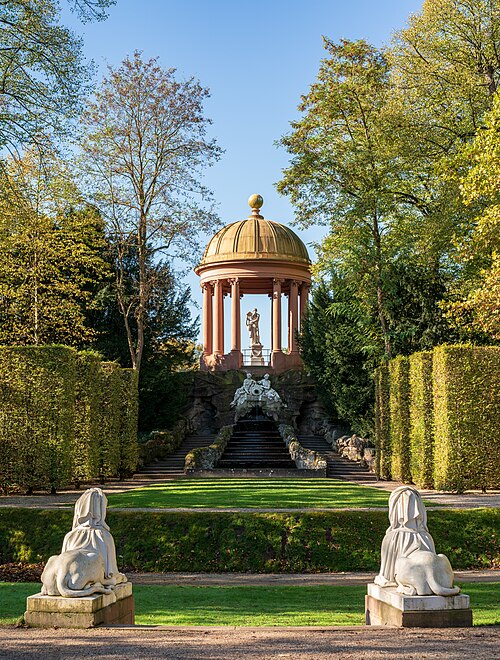
Schwetzingen Palace gardens, Schwetzingen, Germany: view from the Garden Theatre to the Temple of Apollo.
|
