his book

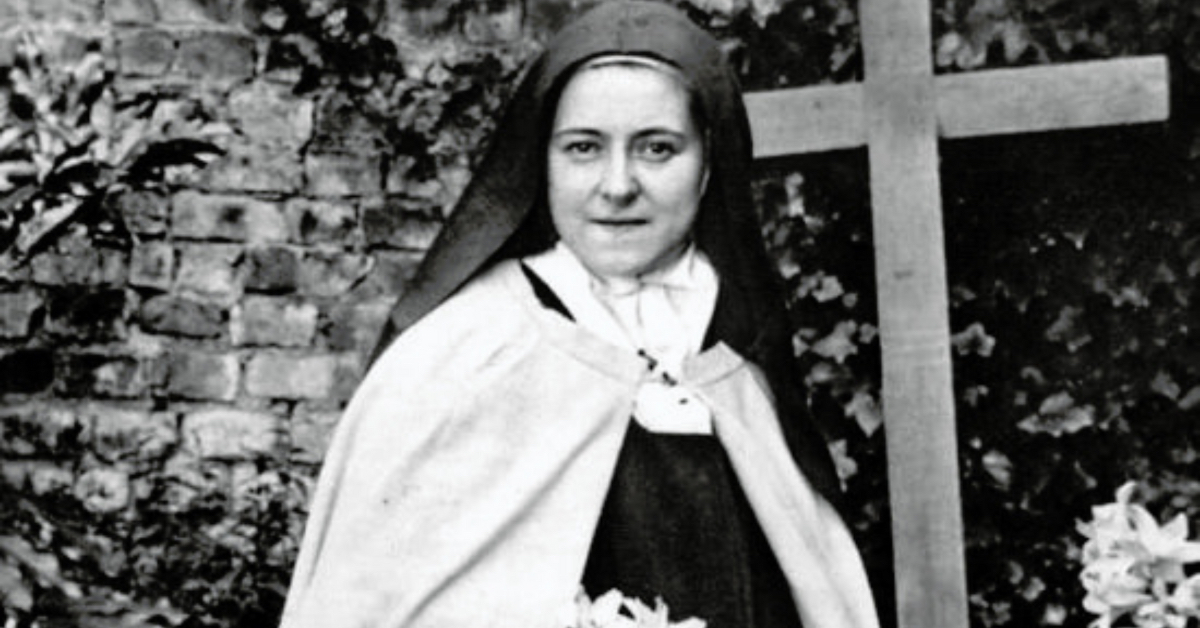
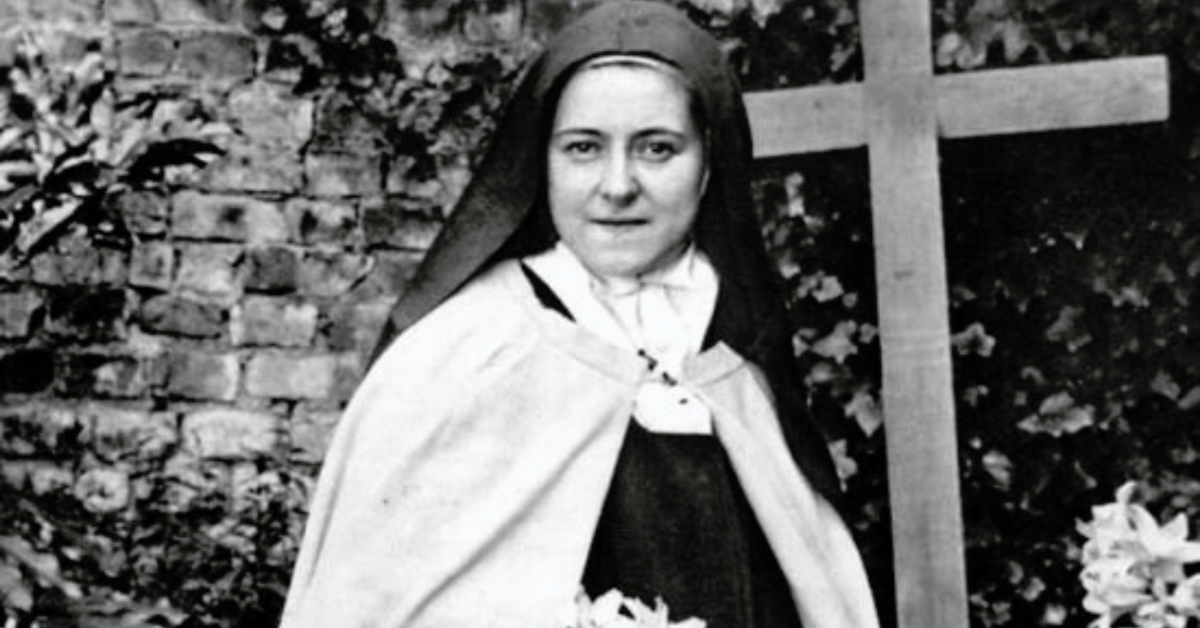
The enduring appeal of St. Thérèse of Lisieux, one of France’s most beloved saints #Catholic During the First World War, before being proclaimed a saint, devotion to St. Thérèse of Lisieux became particularly widespread in France. Soldiers carried medals and images of her, and many French Catholics saw her as a spiritual companion and intercessor.The Carmelite nun, patron saint of missions, and the youngest doctor of the Church died at the age of 24 and was canonized in 1925 by Pope Pius XI. She was declared the second patron saint of France in 1944, during the Battle of Normandy, by Pope Pius XII.The town of Lisieux, a 90-minute train ride from Paris, is where Thérèse spent her entire religious life. It is the second most visited pilgrimage destination in France, after Lourdes, with over 2 million pilgrims every year.Last year, in Pope Leo XIV’s message on the occasion of the 10th anniversary of the canonization of St. Thérèse’s parents, Louis and Zélie Martin, he called the faithful to “put Jesus at the centre of your families, your activities, and your choices. Help your children discover His boundless love and tenderness, and strive to make them love Him in return as He deserves: this is the great lesson that Louis and Zélie teach us today, and which the Church and the world so urgently need. How could Thérèse have loved Jesus and Mary so much — and then passed on such a beautiful doctrine to us — if she had not learned it from her saintly parents from an early age?”Thérèse lost her mother when she was just 4 years old and endured periods of illness and intense emotional sensitivity as a child. At 14, however, she experienced a moment of spiritual transformation where she received a special grace from God. In France, young children left their shoes by the hearth at Christmas, and parents would fill them with gifts. But her sister Celine didnʼt want Thérèse to grow up, so they continued to place gifts in “baby” Thérèseʼs shoes. As she and Celine climbed the stairs to take off their hats their fatherʼs voice rose from the parlor below. Standing over the shoes, he said: “Thank goodness thatʼs the last time we shall have this kind of thing!” Thérèse froze, and her sister looked at her helplessly, knowing that in a few minutes she would be in tears over what their father had said. But the tantrum never came. A special grace came over Thérèse as Jesus had done what she could not do herself. She swallowed her tears, walked slowly down the stairs, and went over the gifts in the shoes, as if she had never heard a word her father said. In her autobiography, “Story of Soul,” she referred to that Christmas as her “conversion.”From childish to childlikeIn his book “The Way of Trust and Love,” French priest Jacques Philippe explores St. Thérèse of Lisieuxʼs “Little Way” to holiness. He recalls that “through seemingly insignificant events, God can heal us deeply. Sometimes we feel a call from the Lord to step outside ourselves, to take a step forward, to become more mature, more free. There are times in life when we dwell on our immaturity, our complaints, our laments, our dependencies, and then suddenly one day we are given grace, a gift from God, but one that also calls upon our freedom. There is a choice to be made; it is both healing and conversion: freedom must choose to perform an act of courage.”He then later proposes: “Let us then ask God this question: What is the ‘yes’ you are asking of me today? What is the small act of courage and trust you are asking me to do today?”For St. Thérèse, it was about overcoming her emotional sensitivity. For others, it might be learning to control their tongue, be more optimistic, or manage their temper.A ‘Little Way’ for everyoneFrom the very beginning of her life, Thérèse desired to be a saint; still, when she entered the convent, she also thought how inaccessible and unrealizable it was when she compared herself to others.And here, perhaps, is where we can learn one of her most powerful teachings: never lose courage.She goes on: “Instead of being discouraged, I told myself: God would not make me wish for something impossible and so, in spite of my littleness, I can aim at being a saint. It is impossible for me to grow bigger, so I put up with myself as I am, with all my countless faults. But I will look for some means of going to heaven by a little way which is very short and very straight, a little way that is quite new … It is your arms, Jesus, which are the lift to carry me to heaven, and so there is no need for me to grow up. In fact, just the opposite: I must stay little and become less and less.”But by “little,” Thérèse does not suggest we think of ourselves as of small value; instead, she reminds us of an unchanging truth: We are children of God.As St. John Paul II on his apostolic trip to France in June 1980 recalled: “There is something unique about it, a characteristic of St. Thérèse of Lisieux. In it, one finds both the confirmation and the renewal of the most fundamental and universal truth. What truth in the Gospel message is more fundamental and universal than this: God is our Father, and we are his children?”And like children who trust, even if thrown into the air, in the safety of returning to their parents' arms, we must trust in the providence of our Father, with a deep knowledge of his unlimited and unconditional love for us: “In truth I tell you, unless you change and become like little children you will never enter the kingdom of heaven” (Mt 18:3).A missionary without ever leaving homeProclaimed the patron saint of missionaries for her support of the missions through constant prayer and sacrifice despite being a cloistered nun who never left her convent, she said: “My strength lies in prayer and sacrifice; they are invincible weapons, and touch hearts more surely than words can do, as I have learned by experience.”To many, even in the convent, she seemed like an average, ordinary person. Her greatness showed in the constancy of her love for others in the simplest ways. Perhaps some of the missionary work we are called to do today doesn’t necessarily begin externally but within our hearts. As the saint herself wrote: “A word, a kindly smile, will often suffice to gladden a wounded and sorrowful heart.”Thérèse also found strength in Scripture: “But above all it is the Gospels that occupy me during my prayers; in them I find everything that is necessary for my poor little soul. I constantly discover in them new lights, hidden and mysterious meanings.”Her life was characterized by austerity, far from recognition and noise from the world. She died anonymously in 1897 at the young age of 24, and no more than 30 people attended her funeral.This saint’s life and journal is a legacy for all who want to learn a simple and practical approach toward their relationship with God. Her advice is for everyone: “Miss no single opportunity of making some small sacrifice, here by a smiling look, there by a kindly word; always doing the smallest right and doing it all for love.”

The enduring appeal of St. Thérèse of Lisieux, one of France’s most beloved saints #Catholic During the First World War, before being proclaimed a saint, devotion to St. Thérèse of Lisieux became particularly widespread in France. Soldiers carried medals and images of her, and many French Catholics saw her as a spiritual companion and intercessor.The Carmelite nun, patron saint of missions, and the youngest doctor of the Church died at the age of 24 and was canonized in 1925 by Pope Pius XI. She was declared the second patron saint of France in 1944, during the Battle of Normandy, by Pope Pius XII.The town of Lisieux, a 90-minute train ride from Paris, is where Thérèse spent her entire religious life. It is the second most visited pilgrimage destination in France, after Lourdes, with over 2 million pilgrims every year.Last year, in Pope Leo XIV’s message on the occasion of the 10th anniversary of the canonization of St. Thérèse’s parents, Louis and Zélie Martin, he called the faithful to “put Jesus at the centre of your families, your activities, and your choices. Help your children discover His boundless love and tenderness, and strive to make them love Him in return as He deserves: this is the great lesson that Louis and Zélie teach us today, and which the Church and the world so urgently need. How could Thérèse have loved Jesus and Mary so much — and then passed on such a beautiful doctrine to us — if she had not learned it from her saintly parents from an early age?”Thérèse lost her mother when she was just 4 years old and endured periods of illness and intense emotional sensitivity as a child. At 14, however, she experienced a moment of spiritual transformation where she received a special grace from God. In France, young children left their shoes by the hearth at Christmas, and parents would fill them with gifts. But her sister Celine didnʼt want Thérèse to grow up, so they continued to place gifts in “baby” Thérèseʼs shoes. As she and Celine climbed the stairs to take off their hats their fatherʼs voice rose from the parlor below. Standing over the shoes, he said: “Thank goodness thatʼs the last time we shall have this kind of thing!” Thérèse froze, and her sister looked at her helplessly, knowing that in a few minutes she would be in tears over what their father had said. But the tantrum never came. A special grace came over Thérèse as Jesus had done what she could not do herself. She swallowed her tears, walked slowly down the stairs, and went over the gifts in the shoes, as if she had never heard a word her father said. In her autobiography, “Story of Soul,” she referred to that Christmas as her “conversion.”From childish to childlikeIn his book “The Way of Trust and Love,” French priest Jacques Philippe explores St. Thérèse of Lisieuxʼs “Little Way” to holiness. He recalls that “through seemingly insignificant events, God can heal us deeply. Sometimes we feel a call from the Lord to step outside ourselves, to take a step forward, to become more mature, more free. There are times in life when we dwell on our immaturity, our complaints, our laments, our dependencies, and then suddenly one day we are given grace, a gift from God, but one that also calls upon our freedom. There is a choice to be made; it is both healing and conversion: freedom must choose to perform an act of courage.”He then later proposes: “Let us then ask God this question: What is the ‘yes’ you are asking of me today? What is the small act of courage and trust you are asking me to do today?”For St. Thérèse, it was about overcoming her emotional sensitivity. For others, it might be learning to control their tongue, be more optimistic, or manage their temper.A ‘Little Way’ for everyoneFrom the very beginning of her life, Thérèse desired to be a saint; still, when she entered the convent, she also thought how inaccessible and unrealizable it was when she compared herself to others.And here, perhaps, is where we can learn one of her most powerful teachings: never lose courage.She goes on: “Instead of being discouraged, I told myself: God would not make me wish for something impossible and so, in spite of my littleness, I can aim at being a saint. It is impossible for me to grow bigger, so I put up with myself as I am, with all my countless faults. But I will look for some means of going to heaven by a little way which is very short and very straight, a little way that is quite new … It is your arms, Jesus, which are the lift to carry me to heaven, and so there is no need for me to grow up. In fact, just the opposite: I must stay little and become less and less.”But by “little,” Thérèse does not suggest we think of ourselves as of small value; instead, she reminds us of an unchanging truth: We are children of God.As St. John Paul II on his apostolic trip to France in June 1980 recalled: “There is something unique about it, a characteristic of St. Thérèse of Lisieux. In it, one finds both the confirmation and the renewal of the most fundamental and universal truth. What truth in the Gospel message is more fundamental and universal than this: God is our Father, and we are his children?”And like children who trust, even if thrown into the air, in the safety of returning to their parents' arms, we must trust in the providence of our Father, with a deep knowledge of his unlimited and unconditional love for us: “In truth I tell you, unless you change and become like little children you will never enter the kingdom of heaven” (Mt 18:3).A missionary without ever leaving homeProclaimed the patron saint of missionaries for her support of the missions through constant prayer and sacrifice despite being a cloistered nun who never left her convent, she said: “My strength lies in prayer and sacrifice; they are invincible weapons, and touch hearts more surely than words can do, as I have learned by experience.”To many, even in the convent, she seemed like an average, ordinary person. Her greatness showed in the constancy of her love for others in the simplest ways. Perhaps some of the missionary work we are called to do today doesn’t necessarily begin externally but within our hearts. As the saint herself wrote: “A word, a kindly smile, will often suffice to gladden a wounded and sorrowful heart.”Thérèse also found strength in Scripture: “But above all it is the Gospels that occupy me during my prayers; in them I find everything that is necessary for my poor little soul. I constantly discover in them new lights, hidden and mysterious meanings.”Her life was characterized by austerity, far from recognition and noise from the world. She died anonymously in 1897 at the young age of 24, and no more than 30 people attended her funeral.This saint’s life and journal is a legacy for all who want to learn a simple and practical approach toward their relationship with God. Her advice is for everyone: “Miss no single opportunity of making some small sacrifice, here by a smiling look, there by a kindly word; always doing the smallest right and doing it all for love.”

The beloved Carmelite nun, patron saint of the missions, and youngest doctor of the Church is celebrated in the universal Church on Oct. 1.
Read More
Catholic professor calls families to reclaim the home in a technological age #Catholic John Cuddeback, a professor of philosophy at Christendom College, says families today don’t often know how to achieve what they desire in their homes and family life. As a remedy, drawing from both ancient and modern thinkers, he has released "The Intentional Household: Living as if People Matter,” a book that outlines eight pillars for reclaiming the home as a place of human flourishing. “Families today are struggling to achieve what they so badly want: to have the kind of relationships we’re made for, beginning in the home, especially between spouses and between parents and children,” Cuddeback said. “They know they want something different, something better, but they feel hamstrung. In a culture that works against them in many ways, they are frustrated because they lack clear vision and examples to pattern themselves after.”
 
 “The Intentional Household: Living as if People Matter” by Christendom College professor John Cuddeback. | Credit: Ken Oliver-Méndez/EWTN News
 
 Cuddeback, who teaches a course on family and household and is also the author of “True Friendship,” spoke to EWTN News about how he hopes his book conveys that “[a]nyone can choose to be intentional about their household and make real progress with dramatic fruits in the lives of those we love most.” EWTN News: What do you see as the biggest challenge to building and maintaining an intentional home?Cuddebach: It all begins with priorities. As a society we have turned away from the intense focus that our household requires — and this is evident in how we struggle in marriage, raising children, and relating to the elderly. Even many traditionally-minded folks struggle to realize and enact the demanding, even while ordinary, aspects of God’s plan for our homes.Aristotle says that a society tends to produce the kind of people it honors. We do not honor those who prioritize home life — either women or men. This means that many of the structures, practices, and assumptions of our age are at odds with the real good of home life. This is especially evident in our obsession with the latest technologies.This book is a call to all of us to do something radically different and profoundly better — while always recognizing we must be people of our time and place. It calls us to discover that looking first to what our children and our elderly really need is the high road to deeper fulfillment for all of us.How has Pope Leo XIV’s encyclical Magnifica Humanitas influenced your thought on how technology should be incorporated in the home?Pope Leo makes clear that we have come to a crisis point. The time is now to be honest, serious, and persistent in examining our use of technology in view of real human flourishing. This must start in the home. No one else is going to do this for us.But as the pope makes clear, right practice must flow from an understanding of who we are and what we’re made for. “The Intentional Household” offers the rich and positive view of daily life in the home that grounds such an examination. It gives the “yes” that strengthens the “nos” we need to say. It gives direction for rising to the challenges of our age, including how to channel technology to true human flourishing.Approaching homelife intentionally — especially attending to the ordinary in good work and true leisure as essential to our relationships — we can take real steps to become those biblical good stewards so honored by the Lord.How does this apply to those across all walks of life, including single people, married couples without children, those who are divorced or separated?The principles of a vibrant home life are both perennial and flexible. Wherever we find ourselves we can discover how the plan that God wrote into human nature is much better than we have realized.Brokenness and suffering today are widespread. God’s plan encompasses these realities. By the grace of God, anyone who is humble and willing to take an intentional approach can affect real, and indeed dramatic change by applying the book’s eight principles. We can all take real steps to make our homes a place of vibrant life, with deep belonging, connection, and presence.One of the thinkers you cite in your book is Wendell Berry. In light of his recent passing can you speak to his influence on your life and thinking?Wendell Berry saw clearly how the loss of activities of work and leisure in the home has led to our experience of disconnection and isolation. Home should be a place of deep connection: between us and loved ones and neighbors, between soul and body, between us and the earth.One of Berry’s pivotal insights is the key role of a certain kind of work in the home. Berry has pointed out that the work of traditional home arts is much more important than we have realized. He argues that as the breakdown of home life came especially through the loss of good work, the renewal will likewise come through a rediscovery of work that connects us to one another as it connects us to our bodies and to the earth, and ultimately to God.Wendell Berry was a prophet of the extraordinary beauty and importance of the ordinary. Making our home an intentional household means rediscovering the power of ordinary things, such as mealtimes with the whole household, shared work in the kitchen and other home arts, and “porch time” and other such leisure times. Attention to these things can transform our marriage, parenting, and other key relationships.

Catholic professor calls families to reclaim the home in a technological age #Catholic John Cuddeback, a professor of philosophy at Christendom College, says families today don’t often know how to achieve what they desire in their homes and family life. As a remedy, drawing from both ancient and modern thinkers, he has released "The Intentional Household: Living as if People Matter,” a book that outlines eight pillars for reclaiming the home as a place of human flourishing. “Families today are struggling to achieve what they so badly want: to have the kind of relationships we’re made for, beginning in the home, especially between spouses and between parents and children,” Cuddeback said. “They know they want something different, something better, but they feel hamstrung. In a culture that works against them in many ways, they are frustrated because they lack clear vision and examples to pattern themselves after.” “The Intentional Household: Living as if People Matter” by Christendom College professor John Cuddeback. | Credit: Ken Oliver-Méndez/EWTN News Cuddeback, who teaches a course on family and household and is also the author of “True Friendship,” spoke to EWTN News about how he hopes his book conveys that “[a]nyone can choose to be intentional about their household and make real progress with dramatic fruits in the lives of those we love most.” EWTN News: What do you see as the biggest challenge to building and maintaining an intentional home?Cuddebach: It all begins with priorities. As a society we have turned away from the intense focus that our household requires — and this is evident in how we struggle in marriage, raising children, and relating to the elderly. Even many traditionally-minded folks struggle to realize and enact the demanding, even while ordinary, aspects of God’s plan for our homes.Aristotle says that a society tends to produce the kind of people it honors. We do not honor those who prioritize home life — either women or men. This means that many of the structures, practices, and assumptions of our age are at odds with the real good of home life. This is especially evident in our obsession with the latest technologies.This book is a call to all of us to do something radically different and profoundly better — while always recognizing we must be people of our time and place. It calls us to discover that looking first to what our children and our elderly really need is the high road to deeper fulfillment for all of us.How has Pope Leo XIV’s encyclical Magnifica Humanitas influenced your thought on how technology should be incorporated in the home?Pope Leo makes clear that we have come to a crisis point. The time is now to be honest, serious, and persistent in examining our use of technology in view of real human flourishing. This must start in the home. No one else is going to do this for us.But as the pope makes clear, right practice must flow from an understanding of who we are and what we’re made for. “The Intentional Household” offers the rich and positive view of daily life in the home that grounds such an examination. It gives the “yes” that strengthens the “nos” we need to say. It gives direction for rising to the challenges of our age, including how to channel technology to true human flourishing.Approaching homelife intentionally — especially attending to the ordinary in good work and true leisure as essential to our relationships — we can take real steps to become those biblical good stewards so honored by the Lord.How does this apply to those across all walks of life, including single people, married couples without children, those who are divorced or separated?The principles of a vibrant home life are both perennial and flexible. Wherever we find ourselves we can discover how the plan that God wrote into human nature is much better than we have realized.Brokenness and suffering today are widespread. God’s plan encompasses these realities. By the grace of God, anyone who is humble and willing to take an intentional approach can affect real, and indeed dramatic change by applying the book’s eight principles. We can all take real steps to make our homes a place of vibrant life, with deep belonging, connection, and presence.One of the thinkers you cite in your book is Wendell Berry. In light of his recent passing can you speak to his influence on your life and thinking?Wendell Berry saw clearly how the loss of activities of work and leisure in the home has led to our experience of disconnection and isolation. Home should be a place of deep connection: between us and loved ones and neighbors, between soul and body, between us and the earth.One of Berry’s pivotal insights is the key role of a certain kind of work in the home. Berry has pointed out that the work of traditional home arts is much more important than we have realized. He argues that as the breakdown of home life came especially through the loss of good work, the renewal will likewise come through a rediscovery of work that connects us to one another as it connects us to our bodies and to the earth, and ultimately to God.Wendell Berry was a prophet of the extraordinary beauty and importance of the ordinary. Making our home an intentional household means rediscovering the power of ordinary things, such as mealtimes with the whole household, shared work in the kitchen and other home arts, and “porch time” and other such leisure times. Attention to these things can transform our marriage, parenting, and other key relationships.

Christendom College professor John Cuddeback spoke to EWTN News about his new book “The Intentional Household: Living as if People Matter,” and treating our homes as places of human flourishing.

Read More