Landscape

Slowing of religious decline points to ‘shifting’ faith landscape, experts say at New York Encounter #Catholic Recent claims of an emerging religious revival in the West may overstate the case, but there are clear signs that belief in God is rising, experts said Saturday at the New York Encounter, the annual conference hosted by members of Communion and Liberation.Speaking at the gathering, Chip Rotolo, a research associate at the Pew Research Center, cited data showing that religious affiliation in the United States has declined steadily for decades. Yet recent findings from Pew’s Religious Landscape Study have offered reasons for cautious optimism among those concerned about the nation’s secularization.According to Pew’s data, the share of U.S. adults identifying as Christian (63%) is down from 2007 levels (78%) but has held steady since 2020.
 
 Panelists Brandon Vaidyanathan, Chip Rotolo, Lauren Jackson, and Justin Brierley speak on the panel “Hungry for Belonging” at New York Encounter on Saturday, Feb. 14, 2026. | Credit: Jeff Bruno
 
 “The fact that the religious decline we’re so used to seeing is leveled off is a huge shift,” Rotolo said, noting that recent data shows that the number of Americans who are religiously affiliated, attend church, and pray daily have “been very stable.”He noted that this stabilization began during the COVID-19 pandemic, when many might have expected religious participation to drop as churches closed and communities were forced to rethink worship and parish life.“If you already had one foot out the door at your church, it would have been easy to step away,” Rotolo said. “But we’ve seen this remarkable stability. That has drawn a lot of attention, curiosity, and hope.”A second key finding has further fueled interest. According to Pew’s research, 92% of Americans express some form of spiritual outlook — meaning they believe in at least one of the following: that people have souls, that God exists, that there is something spiritual beyond the natural world, or that there is an afterlife.
 
 Attendees listen to the panel “Hungry for Belonging” at New York Encounter on Saturday, Feb. 14, 2026. | Credit: Jeff Bruno
 
 “Something is definitely shifting in American religious life,” Rotolo said. “We can disagree and continue figuring out exactly what that is, but it’s certainly an interesting time to study.”Also speaking at the panel was Justin Brierley, author of “The Surprising Rebirth of Belief in God.” Brierley said that although there have been questions raised about the methodology of surveys showing an increase in religiosity in the West, there has been a noticeable cultural shift away from the “New Atheism” popularized in the early 2000s by figures such as Richard Dawkins, author of “The God Delusion.”By the 2010s, Brierley said, he began to see public intellectuals acknowledging Christianity’s formative role in shaping Western civilization. Some, he added, have gone further — openly professing religious belief.He pointed to the conversion of the Somali-born Dutch and American writer Ayaan Hirsi Ali, who in late 2023 published a viral essay titled “Why I’m Now a Christian.”“When she came out with that article, it made a lot of people say, ‘If Ayaan Hirsi Ali — arguably one of the most prominent former atheists in the world — has changed her mind, it could happen to anyone,’” Brierley said.Lauren Jackson, a religion columnist at The New York Times, said her outlet recently launched a series titled “Believing,” inspired in part by Pew’s findings on religious life in America.“We took all this data together and made the claim that Americans haven’t found a satisfying alternative to religion,” Jackson said. Through interviews and surveys, she added, many in the U.S. have expressed “an intense desire for belonging, for meaning, for community, for connection to the transcendent.”That desire, however, is not always expressed within the walls of a church. The series has explored other avenues through which Americans seek spiritual meaning and communal identity, including the growing popularity of saunas and the sense of belonging fostered by soccer communities.While the speakers stopped short of declaring a religious revival at work, they agreed that the current moment reflects a significant shift — one marked by a renewed openness to faith and the enduring human search for transcendence.Brierley noted that to most people the once-popular atheists’ arguments in favor of science and technology as an alternative to religion haven’t been convincing.“I think as we’ve lost the Christian story in the modern West, it has led to people looking for other stories to make sense of their life. I think some people did for a while reach for the atheist materialist story,” he explained.“When you look at where culture has actually gone and the science and technology we put in, it turns out we have made ourselves unhappier,” he said.

Slowing of religious decline points to ‘shifting’ faith landscape, experts say at New York Encounter #Catholic Recent claims of an emerging religious revival in the West may overstate the case, but there are clear signs that belief in God is rising, experts said Saturday at the New York Encounter, the annual conference hosted by members of Communion and Liberation.Speaking at the gathering, Chip Rotolo, a research associate at the Pew Research Center, cited data showing that religious affiliation in the United States has declined steadily for decades. Yet recent findings from Pew’s Religious Landscape Study have offered reasons for cautious optimism among those concerned about the nation’s secularization.According to Pew’s data, the share of U.S. adults identifying as Christian (63%) is down from 2007 levels (78%) but has held steady since 2020. Panelists Brandon Vaidyanathan, Chip Rotolo, Lauren Jackson, and Justin Brierley speak on the panel “Hungry for Belonging” at New York Encounter on Saturday, Feb. 14, 2026. | Credit: Jeff Bruno “The fact that the religious decline we’re so used to seeing is leveled off is a huge shift,” Rotolo said, noting that recent data shows that the number of Americans who are religiously affiliated, attend church, and pray daily have “been very stable.”He noted that this stabilization began during the COVID-19 pandemic, when many might have expected religious participation to drop as churches closed and communities were forced to rethink worship and parish life.“If you already had one foot out the door at your church, it would have been easy to step away,” Rotolo said. “But we’ve seen this remarkable stability. That has drawn a lot of attention, curiosity, and hope.”A second key finding has further fueled interest. According to Pew’s research, 92% of Americans express some form of spiritual outlook — meaning they believe in at least one of the following: that people have souls, that God exists, that there is something spiritual beyond the natural world, or that there is an afterlife. Attendees listen to the panel “Hungry for Belonging” at New York Encounter on Saturday, Feb. 14, 2026. | Credit: Jeff Bruno “Something is definitely shifting in American religious life,” Rotolo said. “We can disagree and continue figuring out exactly what that is, but it’s certainly an interesting time to study.”Also speaking at the panel was Justin Brierley, author of “The Surprising Rebirth of Belief in God.” Brierley said that although there have been questions raised about the methodology of surveys showing an increase in religiosity in the West, there has been a noticeable cultural shift away from the “New Atheism” popularized in the early 2000s by figures such as Richard Dawkins, author of “The God Delusion.”By the 2010s, Brierley said, he began to see public intellectuals acknowledging Christianity’s formative role in shaping Western civilization. Some, he added, have gone further — openly professing religious belief.He pointed to the conversion of the Somali-born Dutch and American writer Ayaan Hirsi Ali, who in late 2023 published a viral essay titled “Why I’m Now a Christian.”“When she came out with that article, it made a lot of people say, ‘If Ayaan Hirsi Ali — arguably one of the most prominent former atheists in the world — has changed her mind, it could happen to anyone,’” Brierley said.Lauren Jackson, a religion columnist at The New York Times, said her outlet recently launched a series titled “Believing,” inspired in part by Pew’s findings on religious life in America.“We took all this data together and made the claim that Americans haven’t found a satisfying alternative to religion,” Jackson said. Through interviews and surveys, she added, many in the U.S. have expressed “an intense desire for belonging, for meaning, for community, for connection to the transcendent.”That desire, however, is not always expressed within the walls of a church. The series has explored other avenues through which Americans seek spiritual meaning and communal identity, including the growing popularity of saunas and the sense of belonging fostered by soccer communities.While the speakers stopped short of declaring a religious revival at work, they agreed that the current moment reflects a significant shift — one marked by a renewed openness to faith and the enduring human search for transcendence.Brierley noted that to most people the once-popular atheists’ arguments in favor of science and technology as an alternative to religion haven’t been convincing.“I think as we’ve lost the Christian story in the modern West, it has led to people looking for other stories to make sense of their life. I think some people did for a while reach for the atheist materialist story,” he explained.“When you look at where culture has actually gone and the science and technology we put in, it turns out we have made ourselves unhappier,” he said.

According to Pew data, the share of U.S. adults identifying as Christian is down from 2007 levels but has held steady since 2020.

Read More
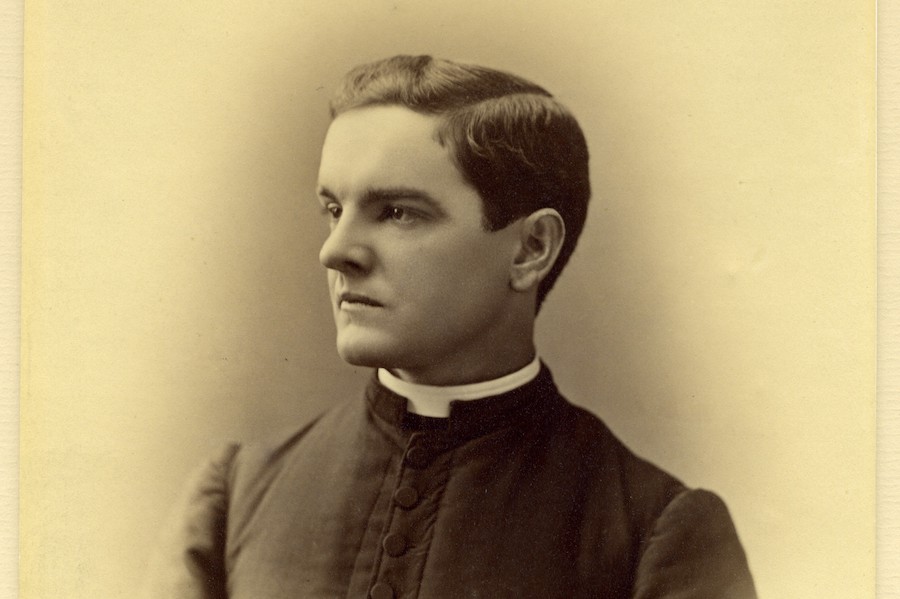
Archbishop Lori issues pastoral letter on political life in honor of 250th anniversary of the U.S. #Catholic Archbishop William Lori of Baltimore urged Catholics to foster a political culture grounded in Christ by prioritizing human dignity and genuine encounter amid partisan divisions.“In Charity and Truth: Toward a Renewed Political Culture,” released in anticipation of the 250th anniversary of the Declaration of Independence, is among the nine pastoral letters and reflections Lori has written as archbishop of Baltimore. The Feb. 9 letter explored how the anniversary can be “a moment of grace” and one of “responsibility.”The U.S. can both take pride in its achievements and “the vibrancy of our Catholic faith” while also recognizing “the fractures, wounds, and crises that mark both our national life and, sadly, even at times our ecclesial life,” Lori wrote.“As our nation approaches the 250th anniversary of the signing of the Declaration of Independence, we find ourselves invited into a moment of profound reflection and renewal,” Lori said. “Anniversaries are not merely occasions for nostalgia or celebration. Authentic remembrance always orients us toward renewal; it calls us to consider not only who we have been and who we are becoming — but, by God’s grace, who we are called to be.”The letter draws on teachings from the popes, the Second Vatican Council, the Constitution, and the lives of the saints.Addressing political discourse from a Catholic viewThe letter highlighted the U.S. political atmosphere, noting that “political discourse has become more vitriolic than usual.” Lori called for synodal listening, civic virtue, and patriotic charity — as exemplified by Blessed Michael McGivney — to renew public life with truth, responsibility, and hope.McGivney, founder of the Knights of Columbus, served immigrant families and addressed their economic insecurity and exclusion. Lori said genuine charity, unity, fraternity, and patriotic love should guide how Catholics engage with migrants and support their dignity and inclusion.
 
 Father Michael McGivney. | Credit: John Tierney/Father McGivney Guild
 
 Lori said ideological and cultural polarization “has produced an epidemic of loneliness and isolation — an aching sense of being unmoored, misunderstood, or unheard.”Lori wrote: “Synodality is, at its heart, a commitment to listening with humility, speaking with honesty, and discerning with the Holy Spirit — all while walking together, not apart.”“Such unity does not mean uniformity, nor does it eliminate disagreement,” Lori said. “Rather, it reflects a deeper truth. Our communion in Christ precedes our differences.”Synodality “does not dissolve disagreement. It expects it, because diverse people will inevitably see the world from different angles,” Lori said. The letter detailed what “synodality in politics looks like,” including a renewed willingness to listen, a refusal to demonize, a commitment to discernment, and a shared journey.Our world also needs “a new kind of politics — one that begins not with power but with the truth of the human person revealed in Jesus Christ,” Lori said. “Christ, in his incarnation, affirms the goodness of the human body and the meaning of human history.”According to Lori, this new type of politics includes resisting the idolatry of ideology. It must also honor the inherent dignity of every human life from conception to natural death, protect the vulnerable and the marginalized, engage in dialogue rather than accusation, and place the common good above partisan loyalty.A “mature Catholic political presence will” always defend human life in all its stages, advocate for the poor and the vulnerable, insist on racial and social justice, promote peace and reject violence, and uphold religious freedom for all, Lori said.In order to build a better political culture, “we must learn once more how to encounter, by stepping outside our ideological comfort zones, seeking out conversations with those on the margins or those with differing points of view, healing the wounds that divide us, committing ourselves to forgiveness,” Lori said.Virtue in public lifeLori called on U.S. citizens to employ the cardinal virtues in public life to create a “healthy political engagement.”People can use prudence by “evaluating policies not by slogans or emotional appeal but by their actual impact on human dignity,” Lori said. The virtue “helps us to see clearly, to judge wisely, and to act firmly.”Justice “is foundational to political life,” Lori said. “It is the virtue that moves us to honor the dignity of every human person and to recognize that each person has rights that must be protected and responsibilities that must be fulfilled.”Fortitude “strengthens us to pursue what is right despite fear, intimidation, or difficulty,” Lori said. “It empowers each of us to resist the pressure to conform to divisive rhetoric, to endure criticism when standing for truth, and to advocate for the vulnerable even when it is politically inconvenient.”Lastly, temperance “moderates our impulses and helps us resist the allure of excess,” Lori said. “In political culture, temperance is perhaps the virtue most needed today. Temperance invites us to slow down, to choose words carefully, to avoid rash judgments, and to discipline the desire to ‘win’ at the expense of relationship, truth, or the common good.”RenewalLori called for renewal ahead of the 250th anniversary of the U.S. He invited all Catholics and all people of goodwill to commit themselves to a renewed political culture and to answer the call of hope.The letter concluded by detailing “a path forward” on how to renew political culture, including: renewing prayer for the nation, practicing civil dialogue, rejecting hatred and violence, serving the common good, forming consciences, and encountering those different from oneself.“In the midst of political upheaval, the Church does not withdraw from public life, nor does she align herself with any partisan identity,” Lori said. “She remains what she has always been: a sacrament of unity, a beacon of hope, and a teacher of truth.”“Her mission is not to win elections but to form saints. Not to secure power but to proclaim the Gospel. Not to mirror the divisions of society but to heal them,” Lori said.“Our nation needs Catholics who embody this mission — women and men whose lives witness to the dignity of every human person, whose love bridges divides, whose courage resists hatred, and whose faith insists that despair does not have the final word. The civic landscape may look dark at times, but the Church has lived through darker times and emerged stronger, purified, and more faithful. So, too, can our nation,” he said.

Archbishop Lori issues pastoral letter on political life in honor of 250th anniversary of the U.S. #Catholic Archbishop William Lori of Baltimore urged Catholics to foster a political culture grounded in Christ by prioritizing human dignity and genuine encounter amid partisan divisions.“In Charity and Truth: Toward a Renewed Political Culture,” released in anticipation of the 250th anniversary of the Declaration of Independence, is among the nine pastoral letters and reflections Lori has written as archbishop of Baltimore. The Feb. 9 letter explored how the anniversary can be “a moment of grace” and one of “responsibility.”The U.S. can both take pride in its achievements and “the vibrancy of our Catholic faith” while also recognizing “the fractures, wounds, and crises that mark both our national life and, sadly, even at times our ecclesial life,” Lori wrote.“As our nation approaches the 250th anniversary of the signing of the Declaration of Independence, we find ourselves invited into a moment of profound reflection and renewal,” Lori said. “Anniversaries are not merely occasions for nostalgia or celebration. Authentic remembrance always orients us toward renewal; it calls us to consider not only who we have been and who we are becoming — but, by God’s grace, who we are called to be.”The letter draws on teachings from the popes, the Second Vatican Council, the Constitution, and the lives of the saints.Addressing political discourse from a Catholic viewThe letter highlighted the U.S. political atmosphere, noting that “political discourse has become more vitriolic than usual.” Lori called for synodal listening, civic virtue, and patriotic charity — as exemplified by Blessed Michael McGivney — to renew public life with truth, responsibility, and hope.McGivney, founder of the Knights of Columbus, served immigrant families and addressed their economic insecurity and exclusion. Lori said genuine charity, unity, fraternity, and patriotic love should guide how Catholics engage with migrants and support their dignity and inclusion. Father Michael McGivney. | Credit: John Tierney/Father McGivney Guild Lori said ideological and cultural polarization “has produced an epidemic of loneliness and isolation — an aching sense of being unmoored, misunderstood, or unheard.”Lori wrote: “Synodality is, at its heart, a commitment to listening with humility, speaking with honesty, and discerning with the Holy Spirit — all while walking together, not apart.”“Such unity does not mean uniformity, nor does it eliminate disagreement,” Lori said. “Rather, it reflects a deeper truth. Our communion in Christ precedes our differences.”Synodality “does not dissolve disagreement. It expects it, because diverse people will inevitably see the world from different angles,” Lori said. The letter detailed what “synodality in politics looks like,” including a renewed willingness to listen, a refusal to demonize, a commitment to discernment, and a shared journey.Our world also needs “a new kind of politics — one that begins not with power but with the truth of the human person revealed in Jesus Christ,” Lori said. “Christ, in his incarnation, affirms the goodness of the human body and the meaning of human history.”According to Lori, this new type of politics includes resisting the idolatry of ideology. It must also honor the inherent dignity of every human life from conception to natural death, protect the vulnerable and the marginalized, engage in dialogue rather than accusation, and place the common good above partisan loyalty.A “mature Catholic political presence will” always defend human life in all its stages, advocate for the poor and the vulnerable, insist on racial and social justice, promote peace and reject violence, and uphold religious freedom for all, Lori said.In order to build a better political culture, “we must learn once more how to encounter, by stepping outside our ideological comfort zones, seeking out conversations with those on the margins or those with differing points of view, healing the wounds that divide us, committing ourselves to forgiveness,” Lori said.Virtue in public lifeLori called on U.S. citizens to employ the cardinal virtues in public life to create a “healthy political engagement.”People can use prudence by “evaluating policies not by slogans or emotional appeal but by their actual impact on human dignity,” Lori said. The virtue “helps us to see clearly, to judge wisely, and to act firmly.”Justice “is foundational to political life,” Lori said. “It is the virtue that moves us to honor the dignity of every human person and to recognize that each person has rights that must be protected and responsibilities that must be fulfilled.”Fortitude “strengthens us to pursue what is right despite fear, intimidation, or difficulty,” Lori said. “It empowers each of us to resist the pressure to conform to divisive rhetoric, to endure criticism when standing for truth, and to advocate for the vulnerable even when it is politically inconvenient.”Lastly, temperance “moderates our impulses and helps us resist the allure of excess,” Lori said. “In political culture, temperance is perhaps the virtue most needed today. Temperance invites us to slow down, to choose words carefully, to avoid rash judgments, and to discipline the desire to ‘win’ at the expense of relationship, truth, or the common good.”RenewalLori called for renewal ahead of the 250th anniversary of the U.S. He invited all Catholics and all people of goodwill to commit themselves to a renewed political culture and to answer the call of hope.The letter concluded by detailing “a path forward” on how to renew political culture, including: renewing prayer for the nation, practicing civil dialogue, rejecting hatred and violence, serving the common good, forming consciences, and encountering those different from oneself.“In the midst of political upheaval, the Church does not withdraw from public life, nor does she align herself with any partisan identity,” Lori said. “She remains what she has always been: a sacrament of unity, a beacon of hope, and a teacher of truth.”“Her mission is not to win elections but to form saints. Not to secure power but to proclaim the Gospel. Not to mirror the divisions of society but to heal them,” Lori said.“Our nation needs Catholics who embody this mission — women and men whose lives witness to the dignity of every human person, whose love bridges divides, whose courage resists hatred, and whose faith insists that despair does not have the final word. The civic landscape may look dark at times, but the Church has lived through darker times and emerged stronger, purified, and more faithful. So, too, can our nation,” he said.

Archbishop William Lori urged Catholics to approach public life with synodal listening and civic virtue, drawing on Blessed Michael McGivney’s example of serving immigrant families.


Read More
Chandra, Webb Catch Twinkling Lights – This stellar landscape is reminiscent of a winter vista in a view from NASA’s James Webb Space Telescope (red, green, and blue). Chandra data (red, green and blue) punctuate the scene with bursts of colored lights representing high-energy activity from the active stars.

This stellar landscape is reminiscent of a winter vista in a view from NASA’s James Webb Space Telescope (red, green, and blue). Chandra data (red, green and blue) punctuate the scene with bursts of colored lights representing high-energy activity from the active stars.

Read More

Landsat 9 Sees Buccaneer Archipelago

In the sparsely populated Kimberley region of Western Australia, jagged landforms reach like fingers into the turquoise-blue ocean waters. Along the coastline north of Derby, they used to reach even farther. But rising sea levels submerged part of the coastal landscape, giving rise to hundreds of islands and low-lying reefs that compose the Buccaneer Archipelago.

Read More
Picture of the day


Clouds over the Greater Caucasus Range, along with fog and atmospheric mist. The landscape represents geological features from different geological epochs: Triassic, Jurassic, and the Oligocene. View from Mount Asbestnaya, Republic of Adygea, Caucasus Mountains.
 #ImageOfTheDay
Picture of the day
Clouds over the Greater Caucasus Range, along with fog and atmospheric mist. The landscape represents geological features from different geological epochs: Triassic, Jurassic, and the Oligocene. View from Mount Asbestnaya, Republic of Adygea, Caucasus Mountains.
Read More
Central Brazil Cerrado

Amid a patchwork of fields, towns, and winding rivers and roads in central Brazil stands a monolithic oval-shaped plateau. This conspicuous feature, the Serra de Caldas (also known as the Caldas Novas dome and Caldas Ridge), is perched about 300 meters (1,000 feet) above the surrounding landscape in the state of Goiás.

Read More
NASA’s Spirit Rover Gets Looked Over

This plaque commemorating the STS-107 space shuttle Columbia crew looks over the Mars landscape after the Mars Exploration Rover, Spirit, landed and deployed onto the red planet on Jan. 4, 2004. The plaque, mounted on the high-gain antenna, is shown while the rover underwent final checkout March 28, 2003, in the Payload Hazardous Servicing Facility at NASA’s Kennedy Space Center in Florida.

Read More