lunch

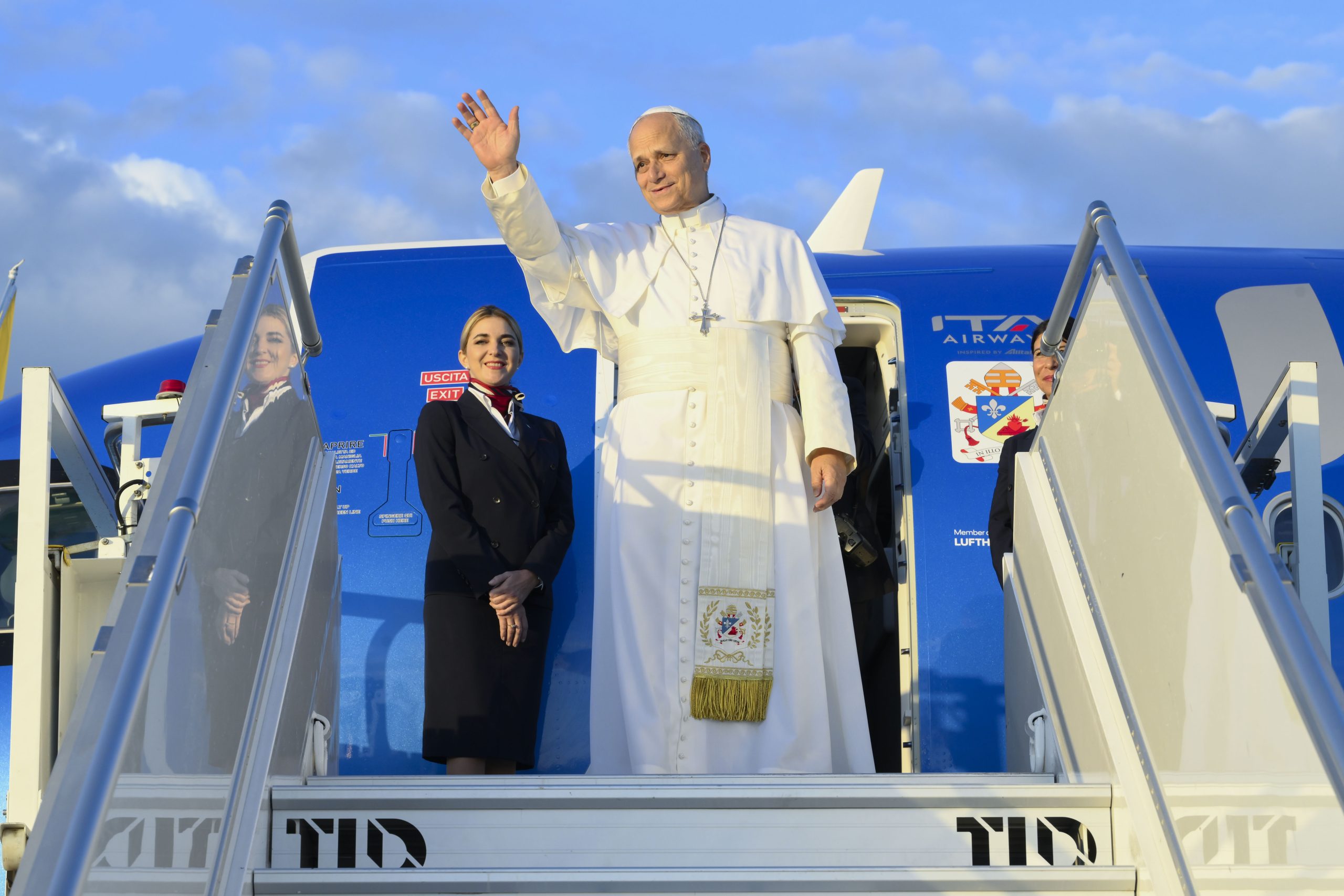
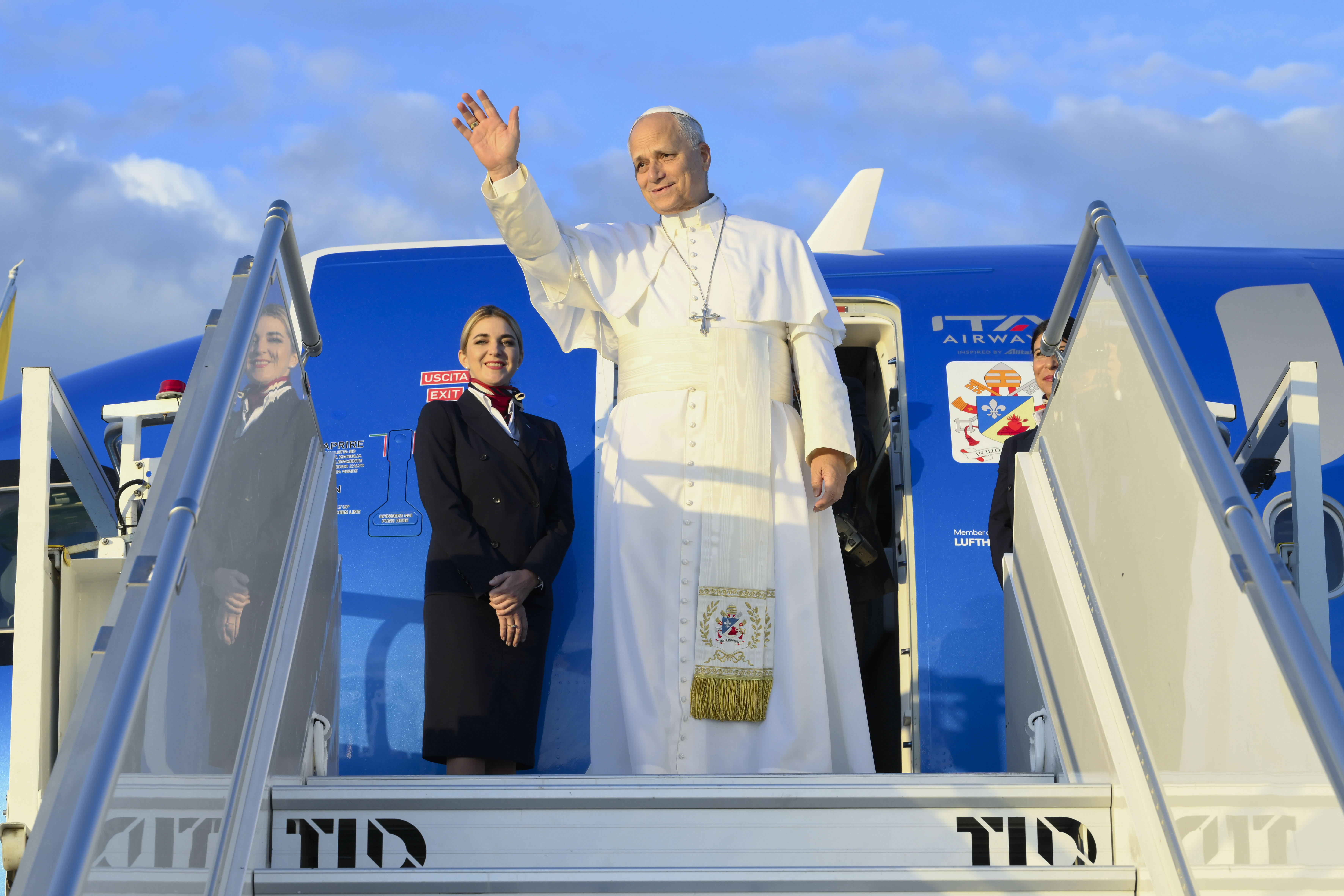
Leo XIV makes Marian pilgrimage on 1-year anniversary as pope #Catholic POMPEI, Italy — Pope Leo XIV placed his pontificate under the protection of Mary during a visit to two cities in southern Italy on Friday — the first anniversary of his election to the papacy on May 8, 2025.Leo celebrated Mass for an estimated 20,000 people outside the Shrine of Our Lady of the Rosary of Pompei, whose feast day is May 8, during the day trip to Pompei and Naples.“Exactly one year ago,” the pope said in his homily, amid thunderous applause from the assembled faithful, “when the ministry of successor of Peter was entrusted to me, it was precisely the day of the Supplication to the Virgin, this beautiful day of the Supplication to the Virgin of the Holy Rosary of Pompei! I therefore had to come here, to place my service under the protection of the Holy Virgin.”“Having then chosen the name Leo places me in the footsteps of Leo XIII, who, among his many merits, also developed a rich magisterium on the holy rosary. Added to all of this is the recent canonization of St. Bartolo Longo, apostle of the rosary,” Leo added.Before Mass, the pope — who flew about 150 miles from Rome to Pompei by helicopter early on May 8 — visited the Shrine of Our Lady of Pompei. Despite forecasts of rain, thousands of people filled Bartolo Longo Square from the first light of dawn.At the shrine, the Holy Father met the “Temple of Charity,” an organization that welcomes and assists people coming from situations of hardship.
 
 Pope Leo XIV meets the “Temple of Charity,” an organization that welcomes and assists people coming from situations of hardship, during a pastoral visit to Pompei, Italy, on May 8, 2026. | Credit: Vatican Media
 
 “Good morning, Pompei! Our Mother Mary — our mom — is always with us,” the pope said, informally greeting the faithful who were waiting for Mass. Before the Eucharistic celebration, Leo also greeted the sick and people with disabilities inside the shrine.The pope’s homily at the outdoor Mass focused on the power of the rosary.“The Hail Mary repeated in the holy rosary is an act of love,” he said. “Generations of believers have been shaped and safeguarded by this prayer — simple and popular, yet at the same time capable of mystical heights and a treasure chest of the most essential Christian theology.”He also called the Hail Mary prayer “an invitation to joy.”“It tells Mary, and in her all of us, that upon the ruins of our humanity, tried by sin and therefore always inclined to abuses, oppression, and war, the caress of God has come — the caress of mercy, which in Jesus takes on a human face. Mary thus becomes the mother of mercy.”“When St. John Paul II proclaimed the Year of the Rosary [2002–2003], he wished to place it in a special way under the gaze of the Virgin of Pompei,” Leo XIV continued. “Times have not improved since then. The wars still being fought in so many regions of the world call for renewed commitment, not only economic and political, but also spiritual and religious.”“Peace is born within the heart,” he added. “We cannot resign ourselves to the images of death that the news presents to us every day. St. Bartolo Longo, reflecting on Mary’s faith, called her ‘omnipotent by grace.’ Through her intercession, may an abundant outpouring of mercy come from the God of peace — touching hearts, calming resentments and fratricidal hatred, and enlightening those who bear special responsibilities of governance. No earthly power will save the world, but only the divine power of love.”At the conclusion of Mass, Pope Leo prayed together with the faithful the traditional Supplication to Our Lady of Pompei.The Supplication to the Queen of the Holy Rosary of Pompei was written in 1883 by St. Bartolo Longo. It is solemnly recited twice a year, at noon on May 8 and on the first Sunday of October. The supplication was composed in response to the invitation that Pope Leo XIII addressed to Catholics in his first encyclical on the rosary, Supremi Apostolatus Officio, calling for a spiritual commitment to confront the evils of society.
 
 Pope Leo XIV prays at the Cathedral of the Assumption of Mary in Naples, Italy, on Friday, May 8, 2026. | Credit: Vatican Media
 
 Visit to NaplesAfter lunch in private, Pope Leo took a helicopter about 16 miles northwest to Naples, the capital city of the Campania region of Italy, where he met with priests and religious brothers and sisters in the Naples cathedral.During his visit to the cathedral, Leo stopped in the Chapel of the Treasure of St. Januarius, where the miracle of the liquefaction of the blood of St. Januarius had taken place on May 3. The pope kissed the relic and with it blessed those in the packed cathedral.After some time in adoration of the Blessed Sacrament, the pope addressed the Catholic community: “What I therefore ask of you is this: Listen to one another, walk together, create a symphony of charisms and ministries, and in this way find ways to move from a pastoral ministry of maintenance to a missionary pastoral ministry, capable of engaging with the concrete lives of people.”“In a city marked by inequality, youth unemployment, school dropout rates, and fragile family situations, the proclamation of the Gospel cannot be separated from a concrete and supportive presence that involves everyone — priests, religious, and laypeople alike,” he added.Pope Leo XIV then arrived in the popemobile to Piazza del Plebiscito, the main square of Naples, where authorities estimate about 50,000 people were present.The pope’s address focused on peace and justice: a peace that “begins in the human heart, passes through relationships, takes root in neighborhoods and on the outskirts, and expands to embrace the entire city and the world.” A peace that needs justice “to be authentic” and that “can never be separated from charity.”Leo also spoke about the “Neapolitan paradox:” on the one hand, the significant increase in tourism, which however struggles to correspond to “economic dynamism capable of truly involving the entire social community.” He described a city “marked by a social divide that no longer separates the center from the outskirts but is even evident within every area, with existential peripheries nested even in the heart of the historic center.” Faced with these disparities, Pope Leo XIV recalled the presence of the state as “more necessary than ever, to provide security and confidence to citizens and to take space away from organized crime.”He then encouraged moving forward with the projects of hope taking shape in the city: “Gather your strength, work together, walk united — institutions, Church, and civil society — to connect the city, protect your children from the snares of hardship and evil, and restore to Naples its vocation to be a capital of humanity and hope.”This story was first published in multiple parts by ACI Stampa, the Italian-language sister service of EWTN News. It has been translated and adapted by EWTN News English.

Leo XIV makes Marian pilgrimage on 1-year anniversary as pope #Catholic POMPEI, Italy — Pope Leo XIV placed his pontificate under the protection of Mary during a visit to two cities in southern Italy on Friday — the first anniversary of his election to the papacy on May 8, 2025.Leo celebrated Mass for an estimated 20,000 people outside the Shrine of Our Lady of the Rosary of Pompei, whose feast day is May 8, during the day trip to Pompei and Naples.“Exactly one year ago,” the pope said in his homily, amid thunderous applause from the assembled faithful, “when the ministry of successor of Peter was entrusted to me, it was precisely the day of the Supplication to the Virgin, this beautiful day of the Supplication to the Virgin of the Holy Rosary of Pompei! I therefore had to come here, to place my service under the protection of the Holy Virgin.”“Having then chosen the name Leo places me in the footsteps of Leo XIII, who, among his many merits, also developed a rich magisterium on the holy rosary. Added to all of this is the recent canonization of St. Bartolo Longo, apostle of the rosary,” Leo added.Before Mass, the pope — who flew about 150 miles from Rome to Pompei by helicopter early on May 8 — visited the Shrine of Our Lady of Pompei. Despite forecasts of rain, thousands of people filled Bartolo Longo Square from the first light of dawn.At the shrine, the Holy Father met the “Temple of Charity,” an organization that welcomes and assists people coming from situations of hardship. Pope Leo XIV meets the “Temple of Charity,” an organization that welcomes and assists people coming from situations of hardship, during a pastoral visit to Pompei, Italy, on May 8, 2026. | Credit: Vatican Media “Good morning, Pompei! Our Mother Mary — our mom — is always with us,” the pope said, informally greeting the faithful who were waiting for Mass. Before the Eucharistic celebration, Leo also greeted the sick and people with disabilities inside the shrine.The pope’s homily at the outdoor Mass focused on the power of the rosary.“The Hail Mary repeated in the holy rosary is an act of love,” he said. “Generations of believers have been shaped and safeguarded by this prayer — simple and popular, yet at the same time capable of mystical heights and a treasure chest of the most essential Christian theology.”He also called the Hail Mary prayer “an invitation to joy.”“It tells Mary, and in her all of us, that upon the ruins of our humanity, tried by sin and therefore always inclined to abuses, oppression, and war, the caress of God has come — the caress of mercy, which in Jesus takes on a human face. Mary thus becomes the mother of mercy.”“When St. John Paul II proclaimed the Year of the Rosary [2002–2003], he wished to place it in a special way under the gaze of the Virgin of Pompei,” Leo XIV continued. “Times have not improved since then. The wars still being fought in so many regions of the world call for renewed commitment, not only economic and political, but also spiritual and religious.”“Peace is born within the heart,” he added. “We cannot resign ourselves to the images of death that the news presents to us every day. St. Bartolo Longo, reflecting on Mary’s faith, called her ‘omnipotent by grace.’ Through her intercession, may an abundant outpouring of mercy come from the God of peace — touching hearts, calming resentments and fratricidal hatred, and enlightening those who bear special responsibilities of governance. No earthly power will save the world, but only the divine power of love.”At the conclusion of Mass, Pope Leo prayed together with the faithful the traditional Supplication to Our Lady of Pompei.The Supplication to the Queen of the Holy Rosary of Pompei was written in 1883 by St. Bartolo Longo. It is solemnly recited twice a year, at noon on May 8 and on the first Sunday of October. The supplication was composed in response to the invitation that Pope Leo XIII addressed to Catholics in his first encyclical on the rosary, Supremi Apostolatus Officio, calling for a spiritual commitment to confront the evils of society. Pope Leo XIV prays at the Cathedral of the Assumption of Mary in Naples, Italy, on Friday, May 8, 2026. | Credit: Vatican Media Visit to NaplesAfter lunch in private, Pope Leo took a helicopter about 16 miles northwest to Naples, the capital city of the Campania region of Italy, where he met with priests and religious brothers and sisters in the Naples cathedral.During his visit to the cathedral, Leo stopped in the Chapel of the Treasure of St. Januarius, where the miracle of the liquefaction of the blood of St. Januarius had taken place on May 3. The pope kissed the relic and with it blessed those in the packed cathedral.After some time in adoration of the Blessed Sacrament, the pope addressed the Catholic community: “What I therefore ask of you is this: Listen to one another, walk together, create a symphony of charisms and ministries, and in this way find ways to move from a pastoral ministry of maintenance to a missionary pastoral ministry, capable of engaging with the concrete lives of people.”“In a city marked by inequality, youth unemployment, school dropout rates, and fragile family situations, the proclamation of the Gospel cannot be separated from a concrete and supportive presence that involves everyone — priests, religious, and laypeople alike,” he added.Pope Leo XIV then arrived in the popemobile to Piazza del Plebiscito, the main square of Naples, where authorities estimate about 50,000 people were present.The pope’s address focused on peace and justice: a peace that “begins in the human heart, passes through relationships, takes root in neighborhoods and on the outskirts, and expands to embrace the entire city and the world.” A peace that needs justice “to be authentic” and that “can never be separated from charity.”Leo also spoke about the “Neapolitan paradox:” on the one hand, the significant increase in tourism, which however struggles to correspond to “economic dynamism capable of truly involving the entire social community.” He described a city “marked by a social divide that no longer separates the center from the outskirts but is even evident within every area, with existential peripheries nested even in the heart of the historic center.” Faced with these disparities, Pope Leo XIV recalled the presence of the state as “more necessary than ever, to provide security and confidence to citizens and to take space away from organized crime.”He then encouraged moving forward with the projects of hope taking shape in the city: “Gather your strength, work together, walk united — institutions, Church, and civil society — to connect the city, protect your children from the snares of hardship and evil, and restore to Naples its vocation to be a capital of humanity and hope.”This story was first published in multiple parts by ACI Stampa, the Italian-language sister service of EWTN News. It has been translated and adapted by EWTN News English.

Pope Leo XIV traveled around 150 miles south of Rome to the Italian cities of Pompei and Naples on the first anniversary of his election.

Read More
Pope Leo XIV in Algeria: Where there is conflict the Church brings reconciliation #Catholic ANNABA, Algeria — Pope Leo XIV concluded his visit to the land of St. Augustine by celebrating Mass at the Basilica of St. Augustine in Annaba, where he said the Church is continually reborn when it brings hope to the despairing, dignity to the poor, and reconciliation where there is conflict.The basilica, dedicated to the bishop of ancient Hippo, was built between 1881 and 1907 at the initiative of Algiers Archbishop Charles-Martial-Allemand Lavigerie and was elevated to the rank of minor basilica on April 24, 1914, by Pope Pius X. Restoration work was completed in 2013, with support that included a personal donation from Pope Benedict XVI.In his homily, the pope reflected on the Gospel account of Jesus’ nighttime encounter with Nicodemus, presenting it as a summons to renewal for the whole Church and especially for Algeria’s Christian community.“Today we listen to the Gospel, the good news for all time, in this basilica in Annaba dedicated to St. Augustine, bishop of the ancient city of Hippo,” the pope said. “Over the centuries, the names of the places that welcome us have changed, but the saints continue to serve as our patrons and faithful witnesses of a connection to the land that comes from heaven.”Leo said Jesus’ words to Nicodemus — “You must be born from above” — are not a burden but an invitation to freedom and new life in God.“Such is the invitation for every man and woman who seeks salvation!” he said. “Jesus’ invitation gives rise to the mission of the whole Church, and consequently to the Christian community in Algeria: to be born again from above, that is, from God. In this perspective, faith overcomes earthly hardships and the Lord’s grace makes the desert blossom.”The pope acknowledged that Christ’s command can sound impossible at first but said it reveals God’s power to renew human life.“On the contrary, the obligation expressed by Jesus is a gift of freedom for us, because it reveals an unexpected possibility: We can be born anew from above thanks to God,” Leo said. “We should do so, then, according to his loving will, which desires to renew humanity by calling us to a communion of life that begins with faith. While Christ invites us to renew our lives completely, he also gives us the strength to do so.”He then asked whether life can truly begin again and answered with hope rooted in the cross and Resurrection.“Yes! The Lord’s response, so full of love, fills our hearts with hope,” the pope said. “No matter how weighed down we are by pain or sin: The crucified One carries all these burdens with us and for us. No matter how discouraged we are by our own weaknesses: It is precisely then that God manifests his strength, the God who has raised Christ from the dead in order to give life to the world.”“Each one of us can experience the freedom of new life that comes from faith in the Redeemer,” he added. “Once again, St. Augustine offers us an example of this: We revere him for his conversion even more than for his wisdom.”Turning to the Acts of the Apostles, Leo said the life of the early Church remains the model for genuine ecclesial reform.“Even today, we must embrace this apostolic rule and put it into practice, meditating on it as an authentic criterion for ecclesial reform: a reform that must begin in the heart, if it is to be genuine, and must encompass everyone if it is to be effective,” he said.The pope said the first Christian community was not founded on a merely human agreement but on communion in Christ.“The early Church, therefore, was not based on a social contract but rather on the harmony of faith, affections, ideas, and life decisions centered on the love of God who became man to save all the peoples of the earth,” he said.That unity, he said, must bear fruit in charity, especially amid poverty and oppression.“Therefore, in the face of poverty and oppression, the guiding principle above all for Christians is charity: Let us do to those around us, as we would have them do to us,” Leo said. “Inspired by this law, inscribed in our hearts by God, the Church is continually reborn, for where there is despair she kindles hope, where there is misery she brings dignity, and where there is conflict she brings reconciliation.”Addressing bishops and priests, the pope said pastors are called above all to bear witness to God without fear or compromise.“The primary task of pastors as ministers of the Gospel is therefore to bear witness to God before the world with one heart and one soul, not permitting our concerns to lead us astray through fear, nor trends to undermine us through compromise,” he said.“Together with you, brothers in the episcopate and the priesthood, let us constantly renew this mission for the sake of those entrusted to us, so that through her service, the whole Church may be a message of new life for those we encounter,” he added.In his closing appeal, Leo addressed Algeria’s Christians directly, praising their fidelity and urging them to continue witnessing to the Gospel in ordinary life.“Dearest Christians of Algeria, you remain a humble and faithful sign of Christ’s love in this land,” he said. “Bear witness to the Gospel through simple gestures, genuine relationships, and a dialogue lived out day by day: In this way, you bring flavor and light to the places where you live.”He also praised their perseverance through hardship and invoked the example of the martyrs and of St. Augustine.“Your history is one of generous hospitality and resilience in times of trial,” the pope said. “Here the martyrs prayed; here St. Augustine loved his flock, fervently seeking the truth and serving Christ with ardent faith. Be heirs to this tradition, bearing witness through fraternal charity to the freedom of those born from above as a hope of salvation for the world.”Several cardinals concelebrated the Mass with the pope, including Cardinal Jean-Paul Vesco, archbishop of Algiers; Cardinal Cristóbal López Romero, archbishop of Rabat; and curial cardinals Pietro Parolin, George Koovakad, Luis Antonio Tagle, Peter Turkson, and Robert Sarah. Also among the concelebrants were Archbishop Paul Gallagher and Father Joseph Farrell, prior general of the Augustinians.Before the Mass, the pope visited the Augustinian community house and later had lunch with his confreres.At the end of the celebration, Bishop Michel Jean-Paul Guillaud of Constantine offered words of thanks to the pope.“Holy Father, your visit to this place, a source of your Augustinian roots, was brief, but it was an encouragement for us,” Guillaud said. “First of all, it strengthened our Christian community in its faith and in its trust in the goodwill and respect of the Algerian people. We could not have welcomed you without the support and active collaboration of the authorities and the joyful hospitality of our Algerian brothers and sisters.”The exchange of gifts followed: The pope received a ceramic work made by an Algerian artist, and he in turn gave a chalice.Leo then offered brief words of thanks of his own.“This journey has been for me a particular gift of God’s providence, a gift that the Lord has wished to make to the whole Church,” the pope said. “And it seems to me that I can sum it up this way: God is love; he is the Father of all men and women. Let us return to God with humility…”He continued: “We acknowledge that the current situation of the world is caught in a negative spiral that ultimately depends on our pride. We need him, we need his mercy, because only in him is the peace of the human heart found, and with him we will all be able to live together.”This story was first published by ACI Stampa, the Italian-language sister service of EWTN News. It has been translated and adapted by EWTN News English.

Pope Leo XIV in Algeria: Where there is conflict the Church brings reconciliation #Catholic ANNABA, Algeria — Pope Leo XIV concluded his visit to the land of St. Augustine by celebrating Mass at the Basilica of St. Augustine in Annaba, where he said the Church is continually reborn when it brings hope to the despairing, dignity to the poor, and reconciliation where there is conflict.The basilica, dedicated to the bishop of ancient Hippo, was built between 1881 and 1907 at the initiative of Algiers Archbishop Charles-Martial-Allemand Lavigerie and was elevated to the rank of minor basilica on April 24, 1914, by Pope Pius X. Restoration work was completed in 2013, with support that included a personal donation from Pope Benedict XVI.In his homily, the pope reflected on the Gospel account of Jesus’ nighttime encounter with Nicodemus, presenting it as a summons to renewal for the whole Church and especially for Algeria’s Christian community.“Today we listen to the Gospel, the good news for all time, in this basilica in Annaba dedicated to St. Augustine, bishop of the ancient city of Hippo,” the pope said. “Over the centuries, the names of the places that welcome us have changed, but the saints continue to serve as our patrons and faithful witnesses of a connection to the land that comes from heaven.”Leo said Jesus’ words to Nicodemus — “You must be born from above” — are not a burden but an invitation to freedom and new life in God.“Such is the invitation for every man and woman who seeks salvation!” he said. “Jesus’ invitation gives rise to the mission of the whole Church, and consequently to the Christian community in Algeria: to be born again from above, that is, from God. In this perspective, faith overcomes earthly hardships and the Lord’s grace makes the desert blossom.”The pope acknowledged that Christ’s command can sound impossible at first but said it reveals God’s power to renew human life.“On the contrary, the obligation expressed by Jesus is a gift of freedom for us, because it reveals an unexpected possibility: We can be born anew from above thanks to God,” Leo said. “We should do so, then, according to his loving will, which desires to renew humanity by calling us to a communion of life that begins with faith. While Christ invites us to renew our lives completely, he also gives us the strength to do so.”He then asked whether life can truly begin again and answered with hope rooted in the cross and Resurrection.“Yes! The Lord’s response, so full of love, fills our hearts with hope,” the pope said. “No matter how weighed down we are by pain or sin: The crucified One carries all these burdens with us and for us. No matter how discouraged we are by our own weaknesses: It is precisely then that God manifests his strength, the God who has raised Christ from the dead in order to give life to the world.”“Each one of us can experience the freedom of new life that comes from faith in the Redeemer,” he added. “Once again, St. Augustine offers us an example of this: We revere him for his conversion even more than for his wisdom.”Turning to the Acts of the Apostles, Leo said the life of the early Church remains the model for genuine ecclesial reform.“Even today, we must embrace this apostolic rule and put it into practice, meditating on it as an authentic criterion for ecclesial reform: a reform that must begin in the heart, if it is to be genuine, and must encompass everyone if it is to be effective,” he said.The pope said the first Christian community was not founded on a merely human agreement but on communion in Christ.“The early Church, therefore, was not based on a social contract but rather on the harmony of faith, affections, ideas, and life decisions centered on the love of God who became man to save all the peoples of the earth,” he said.That unity, he said, must bear fruit in charity, especially amid poverty and oppression.“Therefore, in the face of poverty and oppression, the guiding principle above all for Christians is charity: Let us do to those around us, as we would have them do to us,” Leo said. “Inspired by this law, inscribed in our hearts by God, the Church is continually reborn, for where there is despair she kindles hope, where there is misery she brings dignity, and where there is conflict she brings reconciliation.”Addressing bishops and priests, the pope said pastors are called above all to bear witness to God without fear or compromise.“The primary task of pastors as ministers of the Gospel is therefore to bear witness to God before the world with one heart and one soul, not permitting our concerns to lead us astray through fear, nor trends to undermine us through compromise,” he said.“Together with you, brothers in the episcopate and the priesthood, let us constantly renew this mission for the sake of those entrusted to us, so that through her service, the whole Church may be a message of new life for those we encounter,” he added.In his closing appeal, Leo addressed Algeria’s Christians directly, praising their fidelity and urging them to continue witnessing to the Gospel in ordinary life.“Dearest Christians of Algeria, you remain a humble and faithful sign of Christ’s love in this land,” he said. “Bear witness to the Gospel through simple gestures, genuine relationships, and a dialogue lived out day by day: In this way, you bring flavor and light to the places where you live.”He also praised their perseverance through hardship and invoked the example of the martyrs and of St. Augustine.“Your history is one of generous hospitality and resilience in times of trial,” the pope said. “Here the martyrs prayed; here St. Augustine loved his flock, fervently seeking the truth and serving Christ with ardent faith. Be heirs to this tradition, bearing witness through fraternal charity to the freedom of those born from above as a hope of salvation for the world.”Several cardinals concelebrated the Mass with the pope, including Cardinal Jean-Paul Vesco, archbishop of Algiers; Cardinal Cristóbal López Romero, archbishop of Rabat; and curial cardinals Pietro Parolin, George Koovakad, Luis Antonio Tagle, Peter Turkson, and Robert Sarah. Also among the concelebrants were Archbishop Paul Gallagher and Father Joseph Farrell, prior general of the Augustinians.Before the Mass, the pope visited the Augustinian community house and later had lunch with his confreres.At the end of the celebration, Bishop Michel Jean-Paul Guillaud of Constantine offered words of thanks to the pope.“Holy Father, your visit to this place, a source of your Augustinian roots, was brief, but it was an encouragement for us,” Guillaud said. “First of all, it strengthened our Christian community in its faith and in its trust in the goodwill and respect of the Algerian people. We could not have welcomed you without the support and active collaboration of the authorities and the joyful hospitality of our Algerian brothers and sisters.”The exchange of gifts followed: The pope received a ceramic work made by an Algerian artist, and he in turn gave a chalice.Leo then offered brief words of thanks of his own.“This journey has been for me a particular gift of God’s providence, a gift that the Lord has wished to make to the whole Church,” the pope said. “And it seems to me that I can sum it up this way: God is love; he is the Father of all men and women. Let us return to God with humility…”He continued: “We acknowledge that the current situation of the world is caught in a negative spiral that ultimately depends on our pride. We need him, we need his mercy, because only in him is the peace of the human heart found, and with him we will all be able to live together.”This story was first published by ACI Stampa, the Italian-language sister service of EWTN News. It has been translated and adapted by EWTN News English.

At the Basilica of St. Augustine, the pontiff urged Christians to bear witness through “simple gestures, genuine relationships and a dialogue lived out day by day.”

Read More