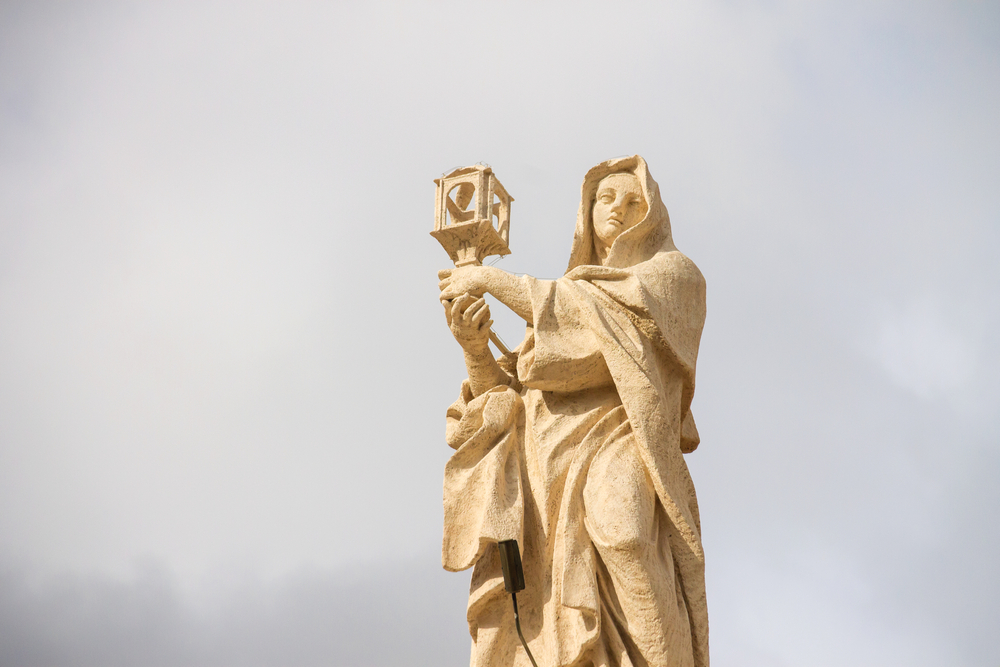
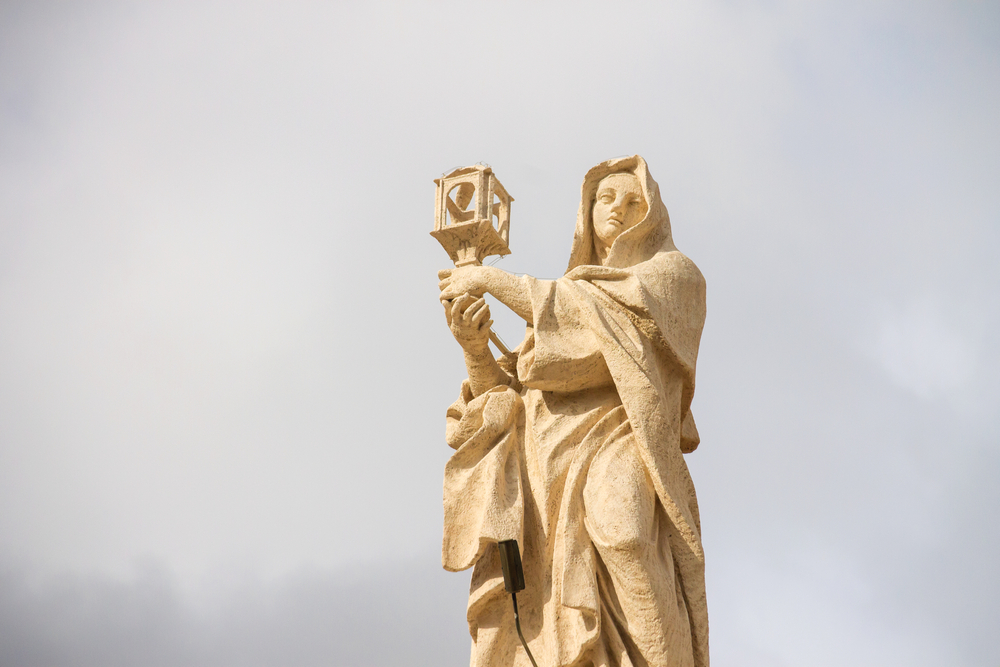
Read More 7 things to know about St. Clare of Assisi, the patron saint of television #Catholic On Aug. 11, the Catholic Church celebrates St. Clare of Assisi, one of the most beloved saints of the Middle Ages. Best known as the founder of the Poor Clares and a close friend of St. Francis of Assisi, Clareʼs life was marked by radical trust in God, profound Eucharistic devotion, and remarkable courage.Here are seven things to know about the woman whose witness continues to inspire Catholics more than 800 years later:1. She came from a wealthy noble family — but left everything behind.Clare was born in Assisi, Italy, on July 16, 1194, into one of the cityʼs most prominent noble families. As a young woman, she enjoyed a privileged upbringing and was expected to marry into another wealthy household.Instead, after hearing Francis — who is now known as St. Francis of Assisi — preach about living the Gospel with radical simplicity, Clare felt called to dedicate her life entirely to Christ. At age 18, she secretly left her family home on Palm Sunday night in 1212 to begin a new life of poverty.Her family attempted to bring her home by force, but Clare firmly refused and cut off her hair as a sign that she belonged to God alone.2. She founded the Poor Clares.With Francis' guidance, Clare established a community of women at the Church of San Damiano outside Assisi that would become known as the Poor Clares. She eventually became abbess and led the monastery for more than 40 years.Despite their similarities, Franciscans and Poor Clares have distinctive differences.The Franciscans, founded by St. Francis of Assisi in 1209, include men who are called to live the Gospel through poverty, fraternity, and service, often ministering in parishes, schools, missions, and charitable works around the world. The Poor Clares, founded by St. Clare of Assisi in 1212 with the guidance of St. Francis, are a contemplative order of women who live a cloistered life centered on prayer, the Eucharist, and community life.While both embrace the Franciscan ideals of simplicity and poverty, the Franciscans are primarily active in apostolic ministry, whereas the Poor Clares dedicate their lives to supporting the Church through prayer and contemplation.3. She was the first woman to write a rule for a religious order that received papal approval.One of St. Clareʼs most significant contributions to the Church was authoring the Rule for the Poor Clares. While many womenʼs religious communities of the time followed rules adapted from existing monastic traditions, Clare aimed to preserve the distinctive charism she had embraced alongside St. Francis.For decades, Clare resisted pressure from Church authorities to modify her communityʼs way of life by accepting property or financial endowments. Instead, she carefully composed a rule that reflected the Franciscan ideal while providing practical guidance for the sisters' communal life, prayer, governance, and observance of enclosure.On Aug. 9, 1253, just two days before Clareʼs death, Pope Innocent IV formally approved her rule, making her the first woman in the history of the Church to write a rule for a religious order that received papal approval. The rule remains the foundation of Poor Clare communities throughout the world and stands as a lasting testament to Clareʼs spiritual leadership and unwavering commitment to the Franciscan vision.4. She had an extraordinary devotion to the Eucharist.Perhaps no aspect of Clareʼs spirituality stands out more than her love for Jesus in the Blessed Sacrament. She spent countless hours in prayer before the Eucharist and encouraged her sisters to center their lives on Christʼs real presence.This Eucharistic devotion became especially evident during one of the most famous events of her life.One of the best-known stories about Clare occurred when invading Saracen mercenaries threatened the convent of San Damiano. Although seriously ill, Clare asked that the Blessed Sacrament be brought to her. Holding the monstrance before the attackers, she prayed for Godʼs protection, and the invaders fled.5. She is the patron saint of television.Near the end of Clare’s life, illness prevented her from attending Mass. According to tradition, she was miraculously able to see and hear the Christmas midnight Mass in 1252 being celebrated on the wall of her room in the convent. Because of this extraordinary supernatural event, Pope Pius XII declared her the patron saint of television in 1958.6. She and St. Francis shared one of the Churchʼs most remarkable friendships.The friendship between St. Clare and St. Francis of Assisi is one of the most enduring examples of holy companionship in Church history. Although Francis played a pivotal role in Clareʼs discernment and inspired her embrace of a life of poverty, their relationship was marked by mutual respect and a shared desire to follow Christ above all else. Francis entrusted Clare with establishing and leading the community at San Damiano, while Clare remained a steadfast guardian of the Franciscan charism, especially after Francis' death in 1226.Despite living separate vocations, the two maintained a deep spiritual bond rooted in prayer, humility, and service to the Gospel. More than eight centuries later, their example continues to inspire men and women to support one another in faithfully responding to Godʼs call.7. Her influence continues more than 800 years later.On Aug. 11, 1253, Clare died at the age of 59. She was canonized by Pope Alexander IV on Sept. 26, 1255.More than 800 years after she left her family home to follow Christ, St. Clareʼs witness continues to resonate with Catholics across the globe. Her unwavering trust in Godʼs providence, profound love for the Eucharist, and commitment to a life of simplicity remain as relevant today as they were in the 13th century.Through the monasteries of the Poor Clares, her spirit of contemplative prayer and poverty lives on, with thousands of religious sisters dedicating their lives to praying for the needs of the Church and the world.Today, there are approximately 20,000 Poor Clare nuns worldwide. They live in more than 500 monasteries in over 70 countries. unitedyam August 11, 2026August 11, 2026 The Catholic Church celebrates the feast of St. Clare of Assisi on Aug. 11. Read More