neighborhood

Major restoration in Minneapolis aims to renew ‘every square inch’ of country’s oldest basilica #Catholic If you want to clean more-than-century-old marble statues of the apostles, you don’t simply use soap and water. Rather, you must spray the figures with a “specialized conservation material” that subsequently dries into a “latex-like layer,” which is then “carefully peeled away,” thus preserving the statue’s original finish. The process “is labor intensive and takes significant time,” according to staff at the Basilica of Saint Mary, a towering and historic minor basilica in downtown Minneapolis. The massive church, which was dedicated in 1915 and became the first basilica in the United States when it was designated as such by Pope Pius XI in 1926, has been undergoing a major restoration project since 2025. 
 
 A specialty cleaning material is sprayed on a statue of St. Peter at the Basilica of Saint Mary in Minneapolis in an undated photo. | Credit: Ken Fournelle/Courtesy of the Basilica of Saint Mary
 
 Built in the Beaux-Arts style — what was at the time a popular architectural form in the United States — the co-cathedral boasts a towering flèche-topped central dome and an 82-foot-high barrel vault. Among its many adornments include the statues of the apostles, which were carved in Italy as half-scale replicas of statues at the Archbasilica of St. John Lateran, the cathedral of the pope in Rome. Church’s roots stretch back to 1860sOn its website, the basilica says its roots can be traced to 1868, when a simple “shed church” was constructed in Minneapolis. Years later another, more substantial Gothic Revival edifice was built, but burgeoning development in the neighborhood eventually pushed the parish to relocate to its present location on Hennepin Avenue. The cornerstone of the current structure was laid in 1908. The church, designated a pro-cathedral, celebrated its first Mass in 1914; it was dedicated the following year. It was still being worked on when the U.S. entered World War I in 1917. 
 
 An original print of the basilica, drafted by architect Emmanuel Louis Masqueray, hangs in the church’s undercroft. | Credit: Courtesy of the Basilica of Saint Mary
 
 In 1926, Pius XI raised the pro-cathedral to the rank of minor basilica, after which it took on its present name. It would enjoy a vibrant parish life in the following decades, though the construction of adjacent freeways in the 1960s “took a heavy toll” on the building. The 1980s and 1990s saw parishioners spearheading efforts at ongoing restoration. The latest restoration campaign, titled “Restoring Beauty, Inspiring Hope,” has aimed to raise a total of about  million in funding. Among the project’s goals are masonry repairs, roof repairs, pew restorations with new kneelers, plaster restoration, and numerous other projects. 
 
 Workers in an undated photograph clean a limestone surface in an ambulatory of the Basilica of Saint Mary in Minneapolis. | Credit: Photo courtesy of the Basilica of Saint Mary
 
 Johan van Parys, who has served as the basilica’s director of liturgy and the sacred arts since 1995, told EWTN News that the basilica has needed repairs almost from its inception. “Even from the beginning, the building had issues with moisture intrusion,” he said. The architect who designed the church, Emmanuel Louis Masqueray, was French, and he “didn’t completely understand the challenges of Minnesota summers and winters.” “He designed flat roofs over part of the building,” van Parys said. He jokingly described flat roofs as “the bane of our existence” due to their tendency to hold water. In existing photographs of the church taken in 1914, van Parys said, water damage is already visible. “We’ve had to do work on the building ever since,” he said. The church underwent a “somewhat major” restoration in the 1950s, van Parys said, during which for unknown reasons workers painted over intricate stenciling within coffers and other parts of the structure. Along with those details, van Parys said, the restoration effort is “bringing back the original look of the basilica.” The effort was formally launched in 2019 with a master plan for the entire church campus, but the COVID-19 pandemic the next year set the project back. The process resumed after a few years, and the restoration work itself formally began in 2025. 
 
 Scaffolding towers above the nave of the Basilica of Saint Mary in Minneapolis in an undated photograph. | Credit: Ken Fournelle/Courtesy of the Basilica of Saint Mary
 
 Van Parys said the basilica is being restored both inside and out from top to the bottom, including the plaster ceiling, which has suffered damage over the years and has to be replastered in parts. Work is also being done on the church’s extensive stained-glass window arrangements. Such windows are generally held in place with a lead matrix, but over time the weight of the glass can weaken the metal frame, leading the glass to bulge outward. A stained-glass specialist, however, told the restoration crew that the window fixtures were in “great condition,” meaning considerable amounts of work could be avoided. Some of the windows were still in need of repair, however, and were sent to a specialist in Newark, New Jersey. Limestone throughout the building is also being restored, van Parys said. The visible stone throughout the building is bolstered by several inches of reinforced concrete and bricks; moisture often makes its way through this sandwiching of materials, leading to a buildup of salt crystals on the stone, what is known as “efflorescence.” Removing this blemish beautifies the facade of the stone and also protects it from degradation. Crews use a spray-and-peel chemical similar to the process used on the statues of the apostles. 
 
 A century’s worth of visible soot and grime contrasts with a restored limestone surface in an undated photograph in the Basilica of Saint Mary, Minneapolis. | Credit: Photo courtesy of the Basilica of Saint Mary
 
 The restoration crews also removed the basilica’s pews in order to have them restored with cleaning, sanding, and shellac finishing.“We opted to restore the original 1914 pews,” van Parys said. “One of our principles in terms of restoration is that we don’t want to over-restore. We didn’t want it to be a new church. People have worshipped in here since 1914. We want this presence of prayer and generations before us to remain.”“So rather than have new pews we decided to restore the old ones,” he said. “In doing so we discovered that the people who built the pews in 1914 signed them. So we have the names of all the people who worked on the pews.”
 
 Workmen in an undated photo remove pews from the Basilica of Saint Mary in Minneapolis as part of the restoration of the church. | Credit: Ken Fournelle/Courtesy of the Basilica of Saint Mary
 
 Upon removing the pews, the work crews discovered that the flooring of the nave was not level. “One option was to put shims under all the pews,” van Parys said. “But that would have been a huge operation.” Since crews were already removing the wood flooring to restore it, they also removed part of the old concrete subfloor and re-leveled it.
 
 A worker at Fresh Air Finishers in Saint Paul, Minnesota, restores a pew from the Basilica of Saint Mary in an undated photograph. | Credit: Ken Fournelle/Courtesy of the Basilica of Saint Mary
 
 Numerous other restoration projects are ongoing, van Parys said, including restoring the church’s bronze doors, which were installed after it was designated a basilica. The church’s rector at the time, Monsignor James Reardon, had traveled to Rome and observed that the basilicas there had bronze doors. “He decided we needed bronze doors as well,” van Parys said. 
 
 Archbishop Bernard Hebda blesses and seals bronze doors at the Basilica of Saint Mary ahead of restoration of the century-old features of the historic church, April 5, 2026. | Credit: Photo courtesy of the Basilica of Saint Mary
 
 Crews are aiming to be done with the massive project by Palm Sunday 2027. At the moment the parish holds Masses in the building’s undercroft beneath the structure. “Every week at Mass, I tell people, for instance, ‘Last Sunday was Week 35, which means we have 34 weeks to go,’” van Parys said with a laugh. He said the work is “quite expedited” and progressing quickly. Ultimately the effort is meant not just to restore the church but to develop a “manual of preservation” for future generations to help protect it. “Our goal is to restore and to also make sure that everything is cared for in the best possible way, to extend the lifespan of the basilica as long as possible before another restoration is necessary,” he said. He said the entire project is being conducted “not only with liturgical principles but also historical preservation principles.”“It is really comprehensive,” he said. “Every square inch of the basilica will be restored.”

Major restoration in Minneapolis aims to renew ‘every square inch’ of country’s oldest basilica #Catholic If you want to clean more-than-century-old marble statues of the apostles, you don’t simply use soap and water. Rather, you must spray the figures with a “specialized conservation material” that subsequently dries into a “latex-like layer,” which is then “carefully peeled away,” thus preserving the statue’s original finish. The process “is labor intensive and takes significant time,” according to staff at the Basilica of Saint Mary, a towering and historic minor basilica in downtown Minneapolis. The massive church, which was dedicated in 1915 and became the first basilica in the United States when it was designated as such by Pope Pius XI in 1926, has been undergoing a major restoration project since 2025. A specialty cleaning material is sprayed on a statue of St. Peter at the Basilica of Saint Mary in Minneapolis in an undated photo. | Credit: Ken Fournelle/Courtesy of the Basilica of Saint Mary Built in the Beaux-Arts style — what was at the time a popular architectural form in the United States — the co-cathedral boasts a towering flèche-topped central dome and an 82-foot-high barrel vault. Among its many adornments include the statues of the apostles, which were carved in Italy as half-scale replicas of statues at the Archbasilica of St. John Lateran, the cathedral of the pope in Rome. Church’s roots stretch back to 1860sOn its website, the basilica says its roots can be traced to 1868, when a simple “shed church” was constructed in Minneapolis. Years later another, more substantial Gothic Revival edifice was built, but burgeoning development in the neighborhood eventually pushed the parish to relocate to its present location on Hennepin Avenue. The cornerstone of the current structure was laid in 1908. The church, designated a pro-cathedral, celebrated its first Mass in 1914; it was dedicated the following year. It was still being worked on when the U.S. entered World War I in 1917. An original print of the basilica, drafted by architect Emmanuel Louis Masqueray, hangs in the church’s undercroft. | Credit: Courtesy of the Basilica of Saint Mary In 1926, Pius XI raised the pro-cathedral to the rank of minor basilica, after which it took on its present name. It would enjoy a vibrant parish life in the following decades, though the construction of adjacent freeways in the 1960s “took a heavy toll” on the building. The 1980s and 1990s saw parishioners spearheading efforts at ongoing restoration. The latest restoration campaign, titled “Restoring Beauty, Inspiring Hope,” has aimed to raise a total of about $50 million in funding. Among the project’s goals are masonry repairs, roof repairs, pew restorations with new kneelers, plaster restoration, and numerous other projects. Workers in an undated photograph clean a limestone surface in an ambulatory of the Basilica of Saint Mary in Minneapolis. | Credit: Photo courtesy of the Basilica of Saint Mary Johan van Parys, who has served as the basilica’s director of liturgy and the sacred arts since 1995, told EWTN News that the basilica has needed repairs almost from its inception. “Even from the beginning, the building had issues with moisture intrusion,” he said. The architect who designed the church, Emmanuel Louis Masqueray, was French, and he “didn’t completely understand the challenges of Minnesota summers and winters.” “He designed flat roofs over part of the building,” van Parys said. He jokingly described flat roofs as “the bane of our existence” due to their tendency to hold water. In existing photographs of the church taken in 1914, van Parys said, water damage is already visible. “We’ve had to do work on the building ever since,” he said. The church underwent a “somewhat major” restoration in the 1950s, van Parys said, during which for unknown reasons workers painted over intricate stenciling within coffers and other parts of the structure. Along with those details, van Parys said, the restoration effort is “bringing back the original look of the basilica.” The effort was formally launched in 2019 with a master plan for the entire church campus, but the COVID-19 pandemic the next year set the project back. The process resumed after a few years, and the restoration work itself formally began in 2025. Scaffolding towers above the nave of the Basilica of Saint Mary in Minneapolis in an undated photograph. | Credit: Ken Fournelle/Courtesy of the Basilica of Saint Mary Van Parys said the basilica is being restored both inside and out from top to the bottom, including the plaster ceiling, which has suffered damage over the years and has to be replastered in parts. Work is also being done on the church’s extensive stained-glass window arrangements. Such windows are generally held in place with a lead matrix, but over time the weight of the glass can weaken the metal frame, leading the glass to bulge outward. A stained-glass specialist, however, told the restoration crew that the window fixtures were in “great condition,” meaning considerable amounts of work could be avoided. Some of the windows were still in need of repair, however, and were sent to a specialist in Newark, New Jersey. Limestone throughout the building is also being restored, van Parys said. The visible stone throughout the building is bolstered by several inches of reinforced concrete and bricks; moisture often makes its way through this sandwiching of materials, leading to a buildup of salt crystals on the stone, what is known as “efflorescence.” Removing this blemish beautifies the facade of the stone and also protects it from degradation. Crews use a spray-and-peel chemical similar to the process used on the statues of the apostles. A century’s worth of visible soot and grime contrasts with a restored limestone surface in an undated photograph in the Basilica of Saint Mary, Minneapolis. | Credit: Photo courtesy of the Basilica of Saint Mary The restoration crews also removed the basilica’s pews in order to have them restored with cleaning, sanding, and shellac finishing.“We opted to restore the original 1914 pews,” van Parys said. “One of our principles in terms of restoration is that we don’t want to over-restore. We didn’t want it to be a new church. People have worshipped in here since 1914. We want this presence of prayer and generations before us to remain.”“So rather than have new pews we decided to restore the old ones,” he said. “In doing so we discovered that the people who built the pews in 1914 signed them. So we have the names of all the people who worked on the pews.” Workmen in an undated photo remove pews from the Basilica of Saint Mary in Minneapolis as part of the restoration of the church. | Credit: Ken Fournelle/Courtesy of the Basilica of Saint Mary Upon removing the pews, the work crews discovered that the flooring of the nave was not level. “One option was to put shims under all the pews,” van Parys said. “But that would have been a huge operation.” Since crews were already removing the wood flooring to restore it, they also removed part of the old concrete subfloor and re-leveled it. A worker at Fresh Air Finishers in Saint Paul, Minnesota, restores a pew from the Basilica of Saint Mary in an undated photograph. | Credit: Ken Fournelle/Courtesy of the Basilica of Saint Mary Numerous other restoration projects are ongoing, van Parys said, including restoring the church’s bronze doors, which were installed after it was designated a basilica. The church’s rector at the time, Monsignor James Reardon, had traveled to Rome and observed that the basilicas there had bronze doors. “He decided we needed bronze doors as well,” van Parys said. Archbishop Bernard Hebda blesses and seals bronze doors at the Basilica of Saint Mary ahead of restoration of the century-old features of the historic church, April 5, 2026. | Credit: Photo courtesy of the Basilica of Saint Mary Crews are aiming to be done with the massive project by Palm Sunday 2027. At the moment the parish holds Masses in the building’s undercroft beneath the structure. “Every week at Mass, I tell people, for instance, ‘Last Sunday was Week 35, which means we have 34 weeks to go,’” van Parys said with a laugh. He said the work is “quite expedited” and progressing quickly. Ultimately the effort is meant not just to restore the church but to develop a “manual of preservation” for future generations to help protect it. “Our goal is to restore and to also make sure that everything is cared for in the best possible way, to extend the lifespan of the basilica as long as possible before another restoration is necessary,” he said. He said the entire project is being conducted “not only with liturgical principles but also historical preservation principles.”“It is really comprehensive,” he said. “Every square inch of the basilica will be restored.”

The massive church was dedicated in 1915 and became the first basilica in the United States when it was designated as such by Pope Pius XI in 1926.

Read More
2 historic churches in Mexico City reopen almost 9 years after earthquake damage #Catholic Almost nine years after the earthquakes that shook central and southwestern Mexico in September 2017, St. John of God Church and Holy True Cross Church, both located in Mexico City, have reopened their doors for worship.On July 8, a Mass was celebrated at Holy Cross Church, marking the communityʼs return to their church and concluding a lengthy restoration process.
 
 Start of the reopening Mass at Holy Cross Parish. | Credit: Holy True Cross Parish, Mexico City
 
 The earthquakes of Sept. 7 and 19, 2017, resulted in 468 deaths and caused damage to thousands of buildings.In Mexico City alone, around 160 Catholic churches suffered structural damage of varying severity such as these two churches located just a short distance apart.
 
 Restoration work at the Holy True Cross Parish. | Credit: Holy True Cross Parish, Mexico City
 
 5 centuries of historyHoly True Cross Church is considered one of the oldest churches in the country.According to tradition, the explorer and conquistador Hernán Cortés ordered the construction of a small chapel to commemorate the landing of the Spanish expedition at the port of what is now known as the state of Veracruz. Over time, that chapel gave rise to the parish as it is known today.Facebook postThe church also houses important works of sacred art, such as the Christ of the Seven Veils, which is said to have been a gift from Pope Paul III to King Carlos V of Spain. Additionally, a relic of the true cross is preserved there, considered by Christian tradition to be a fragment of the cross on which Jesus Christ died.
 
 Reliquary containing a splinter of the true cross. | Credit: “EWTN Noticias”
 
 In an interview with ACI Prensa, the Spanish-language sister service of EWTN News, Father Juan Carlos Guerrero Ugalde, the pastor of Holy True Cross and St. John of God, stated that restoring the churches was a priority of “not only ecclesiastical but also civic interest.”“This church [Holy True Cross] was the third parish established in the city and, therefore, holds a tradition of faith dating back to the 16th century,” he explained.9 years to returnGuerrero described the restoration process as “meticulous and slow” due to the complexity of the damage.Among other measures, the bell towers, which were at risk of collapse, were reinforced, cracks were repaired, the hydraulic piles supporting both structures were serviced, the roofs were waterproofed, and work was carried out to correct the effects of the ground settling.Facebook postThe work was overseen by the National Institute of Anthropology and History, as both buildings are part of the nationʼs historical heritage.In Mexico, religious buildings constructed prior to the 1992 constitutional reforms are state property, although they remain places of worship and are used by religious associations.The restoration of the Holy True Cross church faced an additional challenge: a fire in August 2020 caused by individuals living on the street. Reports indicate that a campfire spiraled out of control, damaging the choir loft, the dome, and sacred art.Today, those walking through the historic central part of Mexico City can once again enter the church. Marcela Eduardo, who works in the area and took a moment of free time to stop in and pray, did just that.“It brought me great joy to see it open and to see that repairs are underway,” she noted in an interview with ACI Prensa. She said that when she saw the parish church open, her first thought was to go in to see Christ and “greet him, make the sign of the cross, and ask him for something: that he give me more energy.” Much more than a churchThese churches are surrounded by some of Mexico’s most important cultural landmarks, such as the Franz Mayer Museum, the Palace of Fine Arts, and the Alameda Central, a large city park.
 
 Visible in the background of the photo are the Torre Latinoamericana, the Palace of Fine Arts, and part of the Alameda Central. | Credit: “EWTN Noticias”
 
 Although Holy True Cross and St. John of God churches might go unnoticed by some tourists amid so many other buildings, Guerrero noted that their value has been “significant for both the faith and the city.”He explained that, following the 1985 earthquake, the area welcomed numerous families from various places, necessitating the construction of a new community identity. Pastoral work at the time “consisted of gradually integrating the way of life of longtime residents and that of those who were newly arriving.”Over the years, he added, violence, drug trafficking, and social breakdown affected life in the neighborhood, making the Church’s presence even more necessary.Facebook postFor Betsabé Jara, who visited the church after touring the Franz Mayer Museum, the reopening represents an opportunity to regain a place for encountering God.“It brings peace of mind that the church is open, that one can enter and pray. Especially for people who couldnʼt go elsewhere because there wasnʼt a church nearby,” she said in an interview with ACI Prensa.Building the communityThe priest noted that reactivating community life will be the next challenge. He explained that a “call has already gone out to neighborhood residents to come for formation as pastoral workers.”
 
 Interior of Holy True Cross Church. | Credit: “EWTN Noticias”
 
 He also noted that they aim to develop social programs such as job training for individuals who did not complete their formal education as well as cultural initiatives in collaboration with nearby museums.“We want the spaces we have in both churches to be truly utilized and filled with formation programs,” Guerrero said.As the community gradually restores life to these churches, Masses are currently held regularly on Sundays, whereas weekday Masses take place only upon the request of the faithful.This story was first published by ACI Prensa, the Spanish-language sister service of EWTN News. It has been translated and adapted by EWTN News English.

2 historic churches in Mexico City reopen almost 9 years after earthquake damage #Catholic Almost nine years after the earthquakes that shook central and southwestern Mexico in September 2017, St. John of God Church and Holy True Cross Church, both located in Mexico City, have reopened their doors for worship.On July 8, a Mass was celebrated at Holy Cross Church, marking the communityʼs return to their church and concluding a lengthy restoration process. Start of the reopening Mass at Holy Cross Parish. | Credit: Holy True Cross Parish, Mexico City The earthquakes of Sept. 7 and 19, 2017, resulted in 468 deaths and caused damage to thousands of buildings.In Mexico City alone, around 160 Catholic churches suffered structural damage of varying severity such as these two churches located just a short distance apart. Restoration work at the Holy True Cross Parish. | Credit: Holy True Cross Parish, Mexico City 5 centuries of historyHoly True Cross Church is considered one of the oldest churches in the country.According to tradition, the explorer and conquistador Hernán Cortés ordered the construction of a small chapel to commemorate the landing of the Spanish expedition at the port of what is now known as the state of Veracruz. Over time, that chapel gave rise to the parish as it is known today.Facebook postThe church also houses important works of sacred art, such as the Christ of the Seven Veils, which is said to have been a gift from Pope Paul III to King Carlos V of Spain. Additionally, a relic of the true cross is preserved there, considered by Christian tradition to be a fragment of the cross on which Jesus Christ died. Reliquary containing a splinter of the true cross. | Credit: “EWTN Noticias” In an interview with ACI Prensa, the Spanish-language sister service of EWTN News, Father Juan Carlos Guerrero Ugalde, the pastor of Holy True Cross and St. John of God, stated that restoring the churches was a priority of “not only ecclesiastical but also civic interest.”“This church [Holy True Cross] was the third parish established in the city and, therefore, holds a tradition of faith dating back to the 16th century,” he explained.9 years to returnGuerrero described the restoration process as “meticulous and slow” due to the complexity of the damage.Among other measures, the bell towers, which were at risk of collapse, were reinforced, cracks were repaired, the hydraulic piles supporting both structures were serviced, the roofs were waterproofed, and work was carried out to correct the effects of the ground settling.Facebook postThe work was overseen by the National Institute of Anthropology and History, as both buildings are part of the nationʼs historical heritage.In Mexico, religious buildings constructed prior to the 1992 constitutional reforms are state property, although they remain places of worship and are used by religious associations.The restoration of the Holy True Cross church faced an additional challenge: a fire in August 2020 caused by individuals living on the street. Reports indicate that a campfire spiraled out of control, damaging the choir loft, the dome, and sacred art.Today, those walking through the historic central part of Mexico City can once again enter the church. Marcela Eduardo, who works in the area and took a moment of free time to stop in and pray, did just that.“It brought me great joy to see it open and to see that repairs are underway,” she noted in an interview with ACI Prensa. She said that when she saw the parish church open, her first thought was to go in to see Christ and “greet him, make the sign of the cross, and ask him for something: that he give me more energy.” Much more than a churchThese churches are surrounded by some of Mexico’s most important cultural landmarks, such as the Franz Mayer Museum, the Palace of Fine Arts, and the Alameda Central, a large city park. Visible in the background of the photo are the Torre Latinoamericana, the Palace of Fine Arts, and part of the Alameda Central. | Credit: “EWTN Noticias” Although Holy True Cross and St. John of God churches might go unnoticed by some tourists amid so many other buildings, Guerrero noted that their value has been “significant for both the faith and the city.”He explained that, following the 1985 earthquake, the area welcomed numerous families from various places, necessitating the construction of a new community identity. Pastoral work at the time “consisted of gradually integrating the way of life of longtime residents and that of those who were newly arriving.”Over the years, he added, violence, drug trafficking, and social breakdown affected life in the neighborhood, making the Church’s presence even more necessary.Facebook postFor Betsabé Jara, who visited the church after touring the Franz Mayer Museum, the reopening represents an opportunity to regain a place for encountering God.“It brings peace of mind that the church is open, that one can enter and pray. Especially for people who couldnʼt go elsewhere because there wasnʼt a church nearby,” she said in an interview with ACI Prensa.Building the communityThe priest noted that reactivating community life will be the next challenge. He explained that a “call has already gone out to neighborhood residents to come for formation as pastoral workers.” Interior of Holy True Cross Church. | Credit: “EWTN Noticias” He also noted that they aim to develop social programs such as job training for individuals who did not complete their formal education as well as cultural initiatives in collaboration with nearby museums.“We want the spaces we have in both churches to be truly utilized and filled with formation programs,” Guerrero said.As the community gradually restores life to these churches, Masses are currently held regularly on Sundays, whereas weekday Masses take place only upon the request of the faithful.This story was first published by ACI Prensa, the Spanish-language sister service of EWTN News. It has been translated and adapted by EWTN News English.

Work was slow and meticulous due to the complexity of the damage, but the two churches in the historic city center of Mexico City are now open to the faithful.

Read More
Earthquake survivor in Venezuela: ‘The Miraculous Medal saved me’ #Catholic In Playa Grande, a neighborhood in the city of La Guaira, Venezuela, Kamar Galíndez was on the top floor of Chipi’s Beach Hotel, preparing to start his daily workout in the gym, unaware that his life was about to change forever.It was Wednesday, June 24, the feast day of St. John the Baptist and a national holiday commemorating the anniversary of the decisive Battle of Carabobo. At 6:05 p.m., the peaceful atmosphere created by the stunning ocean view from the top of the hotel was shattered by the thunderous violence of two consecutive earthquakes that took everyone by surprise, sowing anguish and confusion.Speaking with ACI Prensa, the Spanish-language sister service of EWTN News, Galíndez, a 53-year-old lawyer, recalled how the heavy gym machines began moving from one side to the other, much like an air hockey puck. Disaster struck within seconds.“The floor split, and immediately I saw half the building tilting forward while the section I was in collapsed straight down; I felt my feet were no longer standing on anything, and the next thing [I knew], I was trapped in the rubble,” he recounted.
 
 Remains of Chipi’s Beach Hotel in Playa Grande, from which Kamar Galíndez managed to come out alive. | Credit: Andrés Henríquez/EWTN News
 
 Faced with imminent death: ‘Lord, have mercy!’Galíndez recounted that the only thing he managed to do was to seek protection beside a nearby wall. As he felt the building collapsing, what came to his mind was the image of the Lord Jesus as he first appeared to St. Faustina Kowalska on Feb. 22, 1931.“I remember thinking of the merciful Christ and praying, ‘Lord, have mercy,’” he said, on the verge of tears. “The next thing was feeling the building collapse because with that violent shaking, I kept saying, ‘It’s going to fall,’ and of course, it did.”Galíndez never lost consciousness. He said he felt every blow but that “amid the shock and fear, physical sensations become secondary.” Once the confusion of the collapse subsided, he realized he was alive, though his body was completely buried in the rubble and pinned by a massive beam crushing his chest.He couldn’t breathe properly. His head had not been buried, and through that immense mountain of twisted metal, bricks, and earth, he could see the sky, still lit by the last rays of the evening sun. All around, the desperate screams of other people trapped in the rubble could be heard.Galíndez wiped his face and tried to move to free himself. Then he realized his left arm was broken: “A lot of desperation, a lot of fear” is what he recalled feeling, yet amid the suffering, he didn’t hesitate to entrust himself to God’s protection.“Then I prayed to stay calm. What I did was to pray a lot: ‘OK, Father God, help me get out of here. Keep me calm’ was the first thing I prayed. ‘Keep me calm and tell me what I need to do,’” he recounted.He signaled for help as best he could. He said he has no idea how long he was underneath the rubble, but he knows it “felt like an eternity.” Finally, a man who had climbed the mountain of debris helped him break free.‘The Miraculous Medal saved me’Galíndez made his way down the remains of the collapsed building on his own. Upon realizing the magnitude of the tragedy, which claimed thousands of lives in a split second, he is positive that emerging virtually unharmed was a miracle, one he attributes to Our Lady of the Miraculous Medal, to whom he has always been devoted.“I was wearing a small chain with a crucifix and a tiny medal of the Miraculous Virgin. Among the things I lost track of, the chain broke, though, of course, I hadnʼt noticed it at the time,” he recalled.On his way to his home, which was also completely destroyed, a couple of young people helped Galíndez with first aid. While they were tending to him, he became aware of one of those small miracles that holds profound meaning for someone with sincere faith.He asked the young people to help him put his watch into one of the pockets of his shorts, as he needed to remove it to hold his fractured arm still. And then, the inexplicable happened.“I was wearing shorts with a small zippered pocket, and when I looked — don’t ask me where from, don’t ask me how — a piece of the chain and the Miraculous Medal were caught inside.”"Of course, I told the boy: ‘Please, put that little medal away for me too, because that was what saved me,’” he said. “I havenʼt the slightest doubt.”“Absolutely, absolutely,” he replied when asked if he truly believes his life is a miracle obtained through the intercession of the Blessed Virgin.
 
 The Miraculous Medal that Kamar Galíndez wore around his neck, which broke during the collapse and later appeared — inexplicably — in the pocket of his shorts. | Credit: Andrés Henríquez/EWTN News
 
 Many people didn’t make it out of what was left of the hotel. For Galíndez, having survived is the work of the mercy of God, who listened to his pleas in every instant and granted him his request for a reason he still does not know.“In the greatest adversity, you begin to see it in terms of what is most basic, because the most basic thing becomes impossible. When the most basic thing is impossible and you manage to do it anyway, you say: ‘Only God can do that,’” he reflected.“There is a God who looks after you in that moment, attending to what you are asking of him and what you need. From freeing up an arm or reminding you of his presence by leaving a small medal hanging from your [shorts],” he said. He then emphasized what he considers most important following his harrowing experience: "I have the greatest gift God [my dear] Father gave me, which is life.”Galíndez said he feels deeply grateful to be alive. For him, what happened serves as a humbling reminder that what we have comes from the will and mercy of God, who does not abandon his people; who does not abandon Venezuelans, especially during times of greatest suffering.At the time of publication, the official death toll in Venezuela from the double earthquake has risen to 3,535, while the number of injured has reached 16,740. Estimates by independent organizations indicate that tens of thousands of people are still missing.This story was first published by ACI Prensa, the Spanish-language sister service of EWTN News. It has been translated and adapted by EWTN News English.

Earthquake survivor in Venezuela: ‘The Miraculous Medal saved me’ #Catholic In Playa Grande, a neighborhood in the city of La Guaira, Venezuela, Kamar Galíndez was on the top floor of Chipi’s Beach Hotel, preparing to start his daily workout in the gym, unaware that his life was about to change forever.It was Wednesday, June 24, the feast day of St. John the Baptist and a national holiday commemorating the anniversary of the decisive Battle of Carabobo. At 6:05 p.m., the peaceful atmosphere created by the stunning ocean view from the top of the hotel was shattered by the thunderous violence of two consecutive earthquakes that took everyone by surprise, sowing anguish and confusion.Speaking with ACI Prensa, the Spanish-language sister service of EWTN News, Galíndez, a 53-year-old lawyer, recalled how the heavy gym machines began moving from one side to the other, much like an air hockey puck. Disaster struck within seconds.“The floor split, and immediately I saw half the building tilting forward while the section I was in collapsed straight down; I felt my feet were no longer standing on anything, and the next thing [I knew], I was trapped in the rubble,” he recounted. Remains of Chipi’s Beach Hotel in Playa Grande, from which Kamar Galíndez managed to come out alive. | Credit: Andrés Henríquez/EWTN News Faced with imminent death: ‘Lord, have mercy!’Galíndez recounted that the only thing he managed to do was to seek protection beside a nearby wall. As he felt the building collapsing, what came to his mind was the image of the Lord Jesus as he first appeared to St. Faustina Kowalska on Feb. 22, 1931.“I remember thinking of the merciful Christ and praying, ‘Lord, have mercy,’” he said, on the verge of tears. “The next thing was feeling the building collapse because with that violent shaking, I kept saying, ‘It’s going to fall,’ and of course, it did.”Galíndez never lost consciousness. He said he felt every blow but that “amid the shock and fear, physical sensations become secondary.” Once the confusion of the collapse subsided, he realized he was alive, though his body was completely buried in the rubble and pinned by a massive beam crushing his chest.He couldn’t breathe properly. His head had not been buried, and through that immense mountain of twisted metal, bricks, and earth, he could see the sky, still lit by the last rays of the evening sun. All around, the desperate screams of other people trapped in the rubble could be heard.Galíndez wiped his face and tried to move to free himself. Then he realized his left arm was broken: “A lot of desperation, a lot of fear” is what he recalled feeling, yet amid the suffering, he didn’t hesitate to entrust himself to God’s protection.“Then I prayed to stay calm. What I did was to pray a lot: ‘OK, Father God, help me get out of here. Keep me calm’ was the first thing I prayed. ‘Keep me calm and tell me what I need to do,’” he recounted.He signaled for help as best he could. He said he has no idea how long he was underneath the rubble, but he knows it “felt like an eternity.” Finally, a man who had climbed the mountain of debris helped him break free.‘The Miraculous Medal saved me’Galíndez made his way down the remains of the collapsed building on his own. Upon realizing the magnitude of the tragedy, which claimed thousands of lives in a split second, he is positive that emerging virtually unharmed was a miracle, one he attributes to Our Lady of the Miraculous Medal, to whom he has always been devoted.“I was wearing a small chain with a crucifix and a tiny medal of the Miraculous Virgin. Among the things I lost track of, the chain broke, though, of course, I hadnʼt noticed it at the time,” he recalled.On his way to his home, which was also completely destroyed, a couple of young people helped Galíndez with first aid. While they were tending to him, he became aware of one of those small miracles that holds profound meaning for someone with sincere faith.He asked the young people to help him put his watch into one of the pockets of his shorts, as he needed to remove it to hold his fractured arm still. And then, the inexplicable happened.“I was wearing shorts with a small zippered pocket, and when I looked — don’t ask me where from, don’t ask me how — a piece of the chain and the Miraculous Medal were caught inside.”"Of course, I told the boy: ‘Please, put that little medal away for me too, because that was what saved me,’” he said. “I havenʼt the slightest doubt.”“Absolutely, absolutely,” he replied when asked if he truly believes his life is a miracle obtained through the intercession of the Blessed Virgin. The Miraculous Medal that Kamar Galíndez wore around his neck, which broke during the collapse and later appeared — inexplicably — in the pocket of his shorts. | Credit: Andrés Henríquez/EWTN News Many people didn’t make it out of what was left of the hotel. For Galíndez, having survived is the work of the mercy of God, who listened to his pleas in every instant and granted him his request for a reason he still does not know.“In the greatest adversity, you begin to see it in terms of what is most basic, because the most basic thing becomes impossible. When the most basic thing is impossible and you manage to do it anyway, you say: ‘Only God can do that,’” he reflected.“There is a God who looks after you in that moment, attending to what you are asking of him and what you need. From freeing up an arm or reminding you of his presence by leaving a small medal hanging from your [shorts],” he said. He then emphasized what he considers most important following his harrowing experience: "I have the greatest gift God [my dear] Father gave me, which is life.”Galíndez said he feels deeply grateful to be alive. For him, what happened serves as a humbling reminder that what we have comes from the will and mercy of God, who does not abandon his people; who does not abandon Venezuelans, especially during times of greatest suffering.At the time of publication, the official death toll in Venezuela from the double earthquake has risen to 3,535, while the number of injured has reached 16,740. Estimates by independent organizations indicate that tens of thousands of people are still missing.This story was first published by ACI Prensa, the Spanish-language sister service of EWTN News. It has been translated and adapted by EWTN News English.

Kamar Galíndez credits his survival to the Blessed Virgin Mary. The Miraculous Medal he wore was torn from his neck as the building collapsed and inexplicably ended up in one of his zippered pockets.

Read More
Cleveland father and son live out sacrificial faith after mother’s near-death illness #Catholic In a time when the meaning of masculinity is often misunderstood and undervalued, Joe Soltis and his 15-year-old son, Jake, are a father/son pair from Cleveland, Ohio, who have made service to others the focus of their lives.After his mother’s serious illness, Jake, almost entirely by himself, built her a sauna and exercise room in the family’s basement in order to help her recover. Joe, the CEO of a marketing company, serves on the board of an ecumenical project that unites Catholics and Protestants called Prayer At The Heart, with the aim of igniting “a great spiritual awakening out of a national movement of unified, humble, desperate prayer, unity and evangelism.”The pair spoke with EWTN News about how their Catholic faith inspires them to be men who make it their mission to love as Jesus loves, and about how they hope to inspire others to do the same.‘There’s a good chance Mom won’t be coming home’In 2020, Joe’s wife and Jake’s mom, Becky, almost died after multiple medical issues led doctors to estimate she had only a 10% chance of survival. Joe said she was diagnosed with lupus, Lyme disease, a burst gall bladder, sepsis, and pancreatitis.“We weren’t allowed to see her in the hospital because it was during Covid,” said Joe, the father of five boys and one daughter, who had to tell his kids “there’s a good chance Mom won’t be coming home.”
 
 The Soltis family. | Credit: Photo courtesy of the Soltis family
 
 After weeks in the hospital, Becky began to recover, Joe said, and “by the grace of God, she pulled through.”“Out of that hardship, I have found a woman who is incredibly holy,” Joe said of his wife, who, though mostly recovered, still suffers ongoing symptoms from lupus. “She is an incredible mom and an incredible wife. I couldn’t ask for anyone better. She is a blessing to all of us.”Joe said that time “brought our family tremendously closer together.” A plan to ‘mobilize Christians’As Becky recovered from her health crisis, Joe watched the race riots that erupted all over the country that summer, leading him to conclude that “there are evil forces” at work leading to such division between Americans.“That’s not what Christ wants,” he said, and he wondered whether such division was “manufactured and intentional.” He read Saul Alinsky’s Rules for Radicals, which he called “diabolically brilliant.”On July 4, 2020, between his work, family, and other responsibilities, Joe “happened to be free to sit down and think.” He felt inspired to write out a plan that would address how to “mobilize Christians” in a “Catholic, Christian, biblical manner.” Becky helped him fine tune the plan, which Joe then sent to various Christian leaders. Tom Phillips, vice president of the Billy Graham Evangelistic Association, called him back and put him in touch with Doug Small, a Pentecostal leader with a similar vision who also lives in Ohio. Together, the men came up with Prayer at the Heart, an evangelistic endeavor with the goal of “one million Christians praying for one million friends to know Christ.”Of the ecumenical nature of their ministry, he said there is “great unity among” the team. “We can all unite around Christ.”  “Each congregation-denomination-ministry would brand the effort calling their constituents to prayer, evangelism-mission in their own way,” reads the website, on which Christians can sign up to pray for unbelievers. “The early apostles didn’t just stay in their church and pray,” Joe said. “They went out and evangelized. It’s time for Christians to get out of their homes and churches and bring Jesus to people.”The ministry’s strategy also involves other practical initiatives, such as the organization of local gatherings and outdoor prayer meetings, as well as a prayer request line available 24 hours a day, seven days a week.In addition, the ministry is organizing neighborhood prayer walks, weekly groups of Christians praying for coworkers, and a new missionary and mentorship program to train young adults in prayer and evangelism.“There’s no person or political party that’s going to save us. The only thing that’s going to save us is the love of Jesus Christ and the love of others,” Joe said.A message to fathers: ‘Love your wife’This Father’s Day, Joe has encouraging words for fathers: “Love your wife and kids the way Christ loved the Church.” “Sacrifice, be willing to lay your life down. Strive to love like Christ, knowing you will sometimes fall short,” he said. “Go to church every Sunday. Your kids wonʼt know faith is important if you don’t show it. Pray every day with your kids.”“Every night we say the Seven Sorrows of Mary, the St. Michael prayer, and the Angel of God prayer,” he said. “Then we say what we’re thankful for, and this is what we’d like God to help us with.”The Soltis’ also say a rosary once a week as a family, as well as in the car on long trips. “If your family is going through a difficult time, strongly follow the lead of the United States Conference of Catholic Bishops and consecrate your family to the Sacred Heart of Jesus,” Joe said.“One of the promises of that consecration is peace within your family. Ours didn’t have peace for a while but it does now, thank the Lord.”‘If I start, God will help me and guide me through it’Jake told EWTN News that “my dad and mom have always shown what love is. It’s a choice, You choose to love others, to love your enemy. Love is a choice and not an emotional feeling.”When he decided to build the sauna and exercise room for his mother in the family’s basement, he said he had “no idea what I was getting into.”Before beginning the basement renovation, Jake said he only “knew how to build a sub par table.” During the work, he said he “was just inspired. I just wanted to help my mom.”
 
 Becky Soltis and her son, Jake, in their basement, where Jake built a sauna and exercise room to aid in his motherʼs recovery. | Credit: Photo courtesy of the Soltis family
 
 Joe said his son “put a lot of pressure on himself because his mom’s health was at stake.” Becky had a grand mal seizure in 2025, which Joe called “scary.”“I have based the majority of my life on the saying ‘I will figure it out,’” Jake said. "I know that if I start something, and use the gifts I was given from God, I will be able to figure it out. I’m not wasting my ability, and I trust that if I start, God will help me and guide me through it.”His father said Jake “looked at two Google images” before starting the project. “He has the knack and ability to do this stuff. He would come home from school and work for thousands of hours.” “The only thing I did was I loaded the stuff in the back of the Chevy Tahoe at the hardware store. Every now and then I helped him out,” Joe laughed.“As an 8th grader, he took an unfinished basement, and now we have a fitness center, sauna, theater room, and theyʼre beautiful! They look professional. He did it all himself, for his mother,” Joe said proudly.

Cleveland father and son live out sacrificial faith after mother’s near-death illness #Catholic In a time when the meaning of masculinity is often misunderstood and undervalued, Joe Soltis and his 15-year-old son, Jake, are a father/son pair from Cleveland, Ohio, who have made service to others the focus of their lives.After his mother’s serious illness, Jake, almost entirely by himself, built her a sauna and exercise room in the family’s basement in order to help her recover. Joe, the CEO of a marketing company, serves on the board of an ecumenical project that unites Catholics and Protestants called Prayer At The Heart, with the aim of igniting “a great spiritual awakening out of a national movement of unified, humble, desperate prayer, unity and evangelism.”The pair spoke with EWTN News about how their Catholic faith inspires them to be men who make it their mission to love as Jesus loves, and about how they hope to inspire others to do the same.‘There’s a good chance Mom won’t be coming home’In 2020, Joe’s wife and Jake’s mom, Becky, almost died after multiple medical issues led doctors to estimate she had only a 10% chance of survival. Joe said she was diagnosed with lupus, Lyme disease, a burst gall bladder, sepsis, and pancreatitis.“We weren’t allowed to see her in the hospital because it was during Covid,” said Joe, the father of five boys and one daughter, who had to tell his kids “there’s a good chance Mom won’t be coming home.” The Soltis family. | Credit: Photo courtesy of the Soltis family After weeks in the hospital, Becky began to recover, Joe said, and “by the grace of God, she pulled through.”“Out of that hardship, I have found a woman who is incredibly holy,” Joe said of his wife, who, though mostly recovered, still suffers ongoing symptoms from lupus. “She is an incredible mom and an incredible wife. I couldn’t ask for anyone better. She is a blessing to all of us.”Joe said that time “brought our family tremendously closer together.” A plan to ‘mobilize Christians’As Becky recovered from her health crisis, Joe watched the race riots that erupted all over the country that summer, leading him to conclude that “there are evil forces” at work leading to such division between Americans.“That’s not what Christ wants,” he said, and he wondered whether such division was “manufactured and intentional.” He read Saul Alinsky’s Rules for Radicals, which he called “diabolically brilliant.”On July 4, 2020, between his work, family, and other responsibilities, Joe “happened to be free to sit down and think.” He felt inspired to write out a plan that would address how to “mobilize Christians” in a “Catholic, Christian, biblical manner.” Becky helped him fine tune the plan, which Joe then sent to various Christian leaders. Tom Phillips, vice president of the Billy Graham Evangelistic Association, called him back and put him in touch with Doug Small, a Pentecostal leader with a similar vision who also lives in Ohio. Together, the men came up with Prayer at the Heart, an evangelistic endeavor with the goal of “one million Christians praying for one million friends to know Christ.”Of the ecumenical nature of their ministry, he said there is “great unity among” the team. “We can all unite around Christ.”  “Each congregation-denomination-ministry would brand the effort calling their constituents to prayer, evangelism-mission in their own way,” reads the website, on which Christians can sign up to pray for unbelievers. “The early apostles didn’t just stay in their church and pray,” Joe said. “They went out and evangelized. It’s time for Christians to get out of their homes and churches and bring Jesus to people.”The ministry’s strategy also involves other practical initiatives, such as the organization of local gatherings and outdoor prayer meetings, as well as a prayer request line available 24 hours a day, seven days a week.In addition, the ministry is organizing neighborhood prayer walks, weekly groups of Christians praying for coworkers, and a new missionary and mentorship program to train young adults in prayer and evangelism.“There’s no person or political party that’s going to save us. The only thing that’s going to save us is the love of Jesus Christ and the love of others,” Joe said.A message to fathers: ‘Love your wife’This Father’s Day, Joe has encouraging words for fathers: “Love your wife and kids the way Christ loved the Church.” “Sacrifice, be willing to lay your life down. Strive to love like Christ, knowing you will sometimes fall short,” he said. “Go to church every Sunday. Your kids wonʼt know faith is important if you don’t show it. Pray every day with your kids.”“Every night we say the Seven Sorrows of Mary, the St. Michael prayer, and the Angel of God prayer,” he said. “Then we say what we’re thankful for, and this is what we’d like God to help us with.”The Soltis’ also say a rosary once a week as a family, as well as in the car on long trips. “If your family is going through a difficult time, strongly follow the lead of the United States Conference of Catholic Bishops and consecrate your family to the Sacred Heart of Jesus,” Joe said.“One of the promises of that consecration is peace within your family. Ours didn’t have peace for a while but it does now, thank the Lord.”‘If I start, God will help me and guide me through it’Jake told EWTN News that “my dad and mom have always shown what love is. It’s a choice, You choose to love others, to love your enemy. Love is a choice and not an emotional feeling.”When he decided to build the sauna and exercise room for his mother in the family’s basement, he said he had “no idea what I was getting into.”Before beginning the basement renovation, Jake said he only “knew how to build a sub par table.” During the work, he said he “was just inspired. I just wanted to help my mom.” Becky Soltis and her son, Jake, in their basement, where Jake built a sauna and exercise room to aid in his motherʼs recovery. | Credit: Photo courtesy of the Soltis family Joe said his son “put a lot of pressure on himself because his mom’s health was at stake.” Becky had a grand mal seizure in 2025, which Joe called “scary.”“I have based the majority of my life on the saying ‘I will figure it out,’” Jake said. "I know that if I start something, and use the gifts I was given from God, I will be able to figure it out. I’m not wasting my ability, and I trust that if I start, God will help me and guide me through it.”His father said Jake “looked at two Google images” before starting the project. “He has the knack and ability to do this stuff. He would come home from school and work for thousands of hours.” “The only thing I did was I loaded the stuff in the back of the Chevy Tahoe at the hardware store. Every now and then I helped him out,” Joe laughed.“As an 8th grader, he took an unfinished basement, and now we have a fitness center, sauna, theater room, and theyʼre beautiful! They look professional. He did it all himself, for his mother,” Joe said proudly.

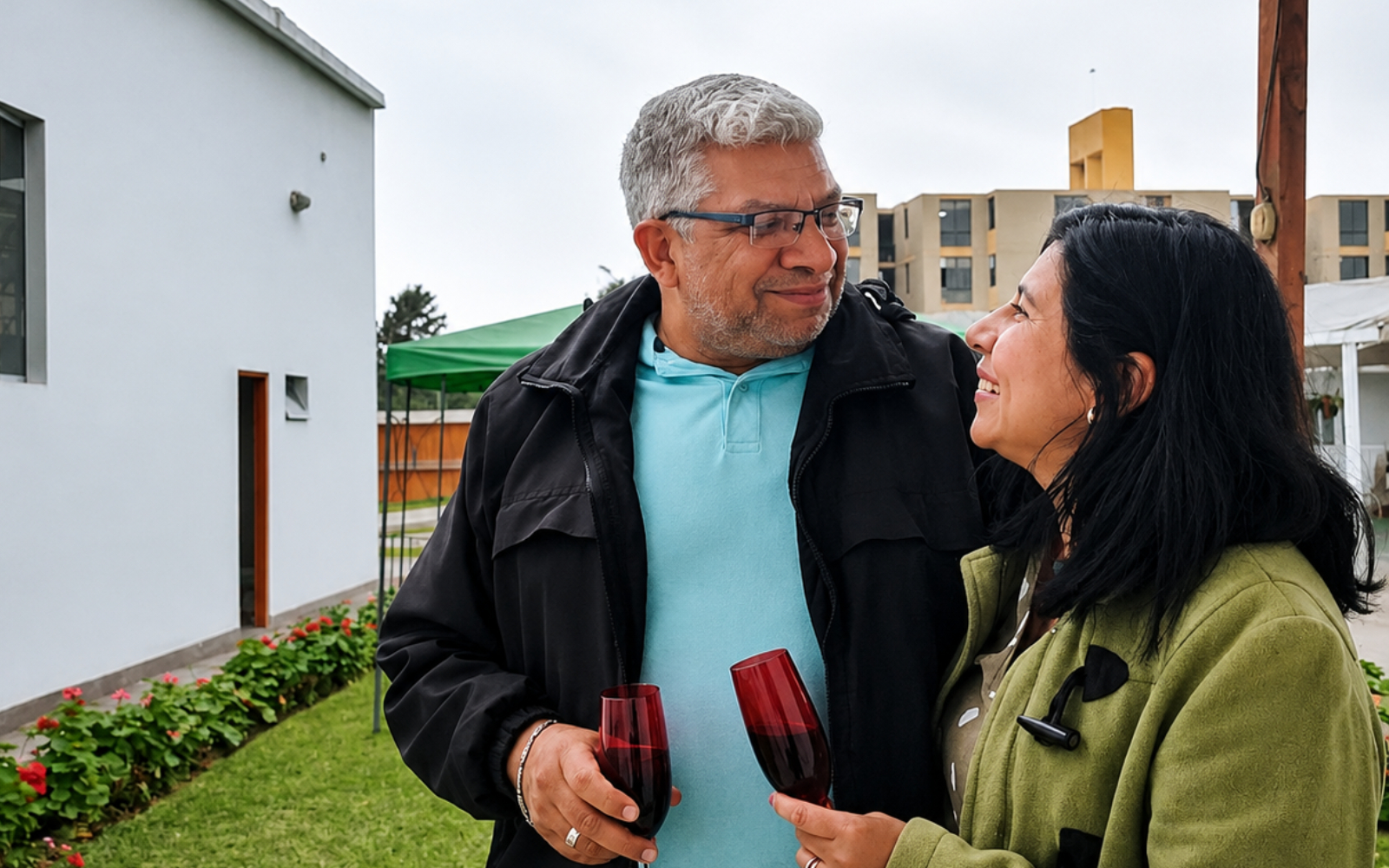
The pair spoke with EWTN News about how their faith inspires them to be men who make it their mission to love as Jesus loves, and about how they hope to inspire others to do the same.

Read More